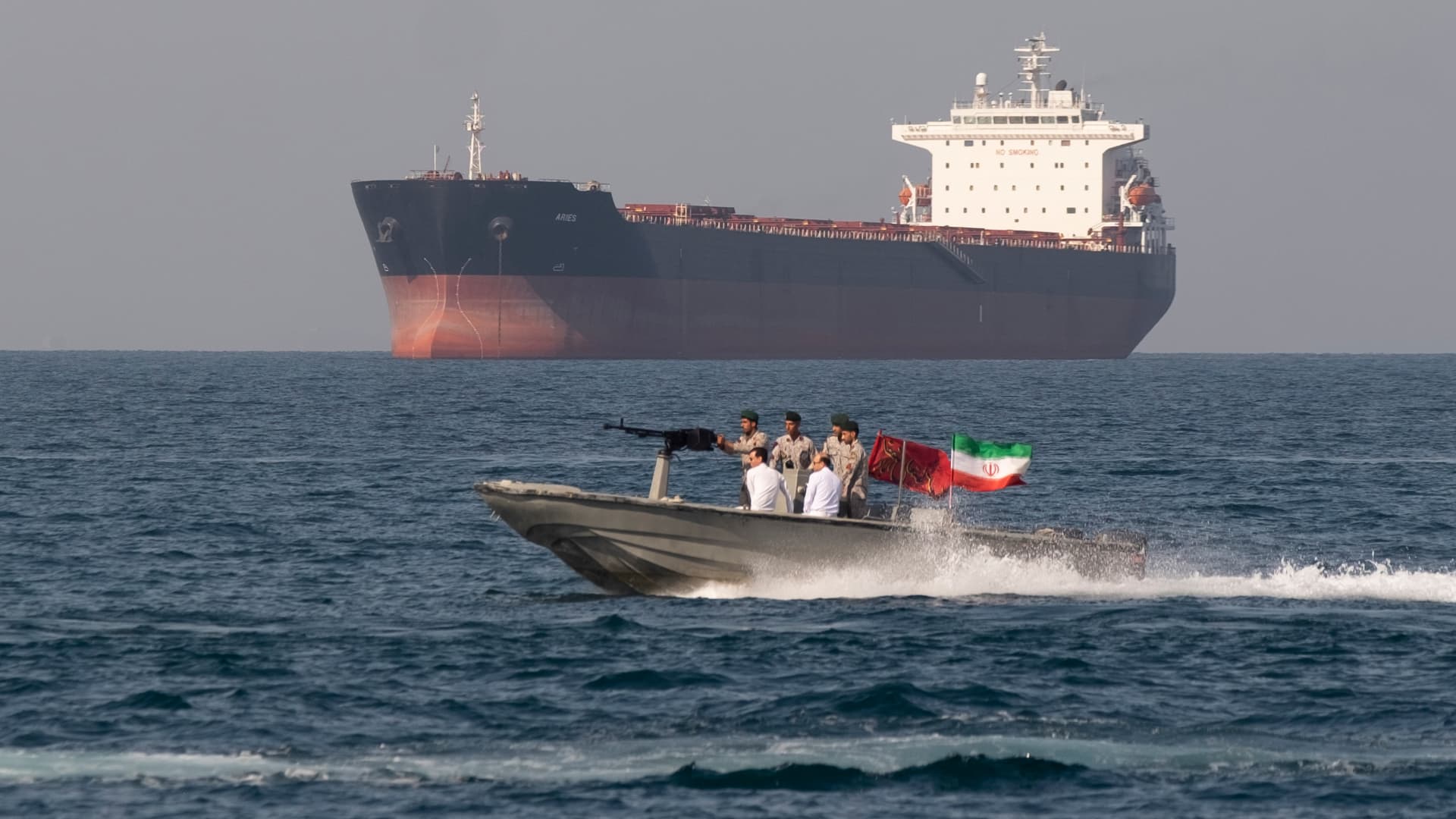
Trump demanded that the North Atlantic Treaty Organization (NATO) navies help reopen the strategic waterway last month after it was effectively closed amid the escalating conflict involving the United States, Israel and Iran.
Several European capitals reportedly rebuffed the request, saying such a move would be impossible while the conflict was ongoing, with some officials arguing that the confrontation was “not our war.”
The FT said Trump then threatened to suspend supplies to PURL, NATO’s weapon procurement initiative for Ukraine, funded by European countries.
It also reported that at the urging of NATO Secretary General Mark Rutte, a group of countries, including key alliance members France, Germany and Britain, issued a statement on March 19 which said, “We express our readiness to contribute to appropriate efforts to ensure safe passage through the Strait (of Hormuz).”
The newspaper said that one official briefed on the discussions indicated Rutte had pushed for the joint statement after Trump threatened to pull out of PURL and scale back broader support for Ukraine.
French Minister Delegate for the Armed Forces Alice Rufo said Wednesday that NATO is a military alliance focused on the security of territories in the Euro-Atlantic area and is not intended to conduct operations in the Strait of Hormuz.
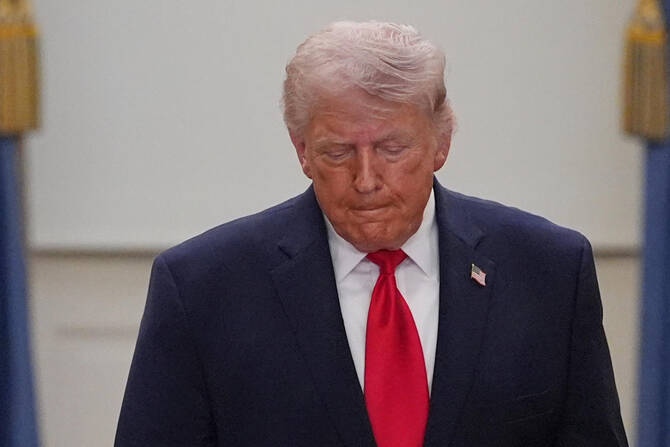
Her remarks came after Trump’s statement that he is strongly considering pulling the United States out of NATO after the alliance failed to join the attacks on Iran. He also described the alliance as “a paper tiger,” British newspaper The Telegraph reported on Wednesday.
In response to Trump’s threat to withdraw from NATO, British Prime Minister Keir Starmer on Wednesday said Britain would act in its national interest and would not change its position on the Iran war.
Trump insisted that the negotiations between the United States and Iran “are ongoing” despite Iran’s denial.
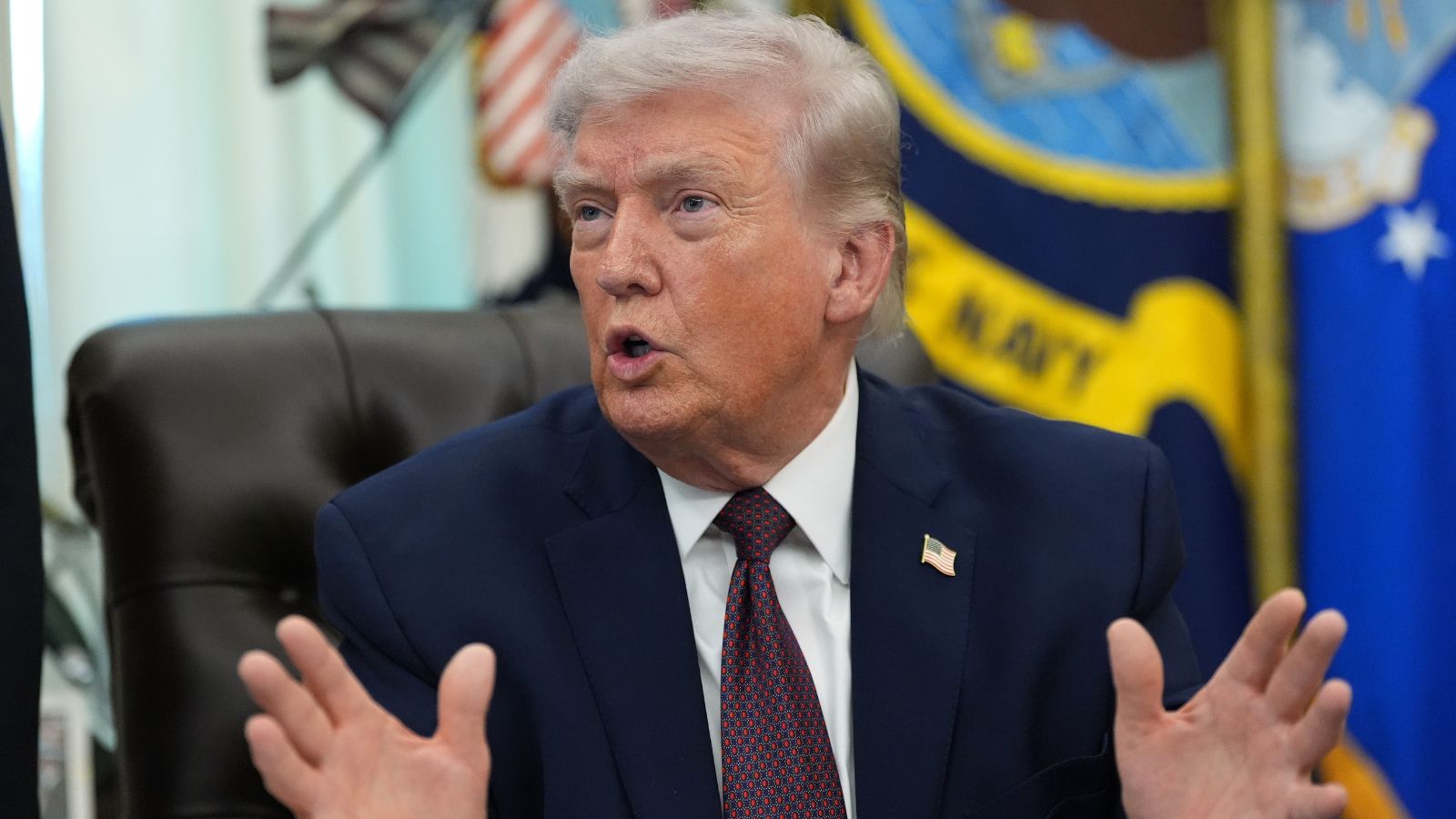
“I can say tonight that we are on track to complete all of America’s military objectives very shortly. We are going to hit them extremely hard over the next two to three weeks. We’re going to bring them back to the Stone Ages where they belong,” Trump said in a primetime address to the nation.
The president insisted that the negotiations between the United States and Iran “are ongoing” despite Iran’s denial, saying Iran’s “regime change has occurred because of all of their original leaders’ deaths” and “the new group is less radical and much more reasonable.”
“If there is no deal, we are going to hit each and every one of their electric generating plants very hard and probably simultaneously,” Trump said. He also signaled the U.S. military could target Iran’s oil infrastructure.
Trump again urged U.S. allies to “build up some delayed courage” and take the lead in reopening the Strait of Hormuz, suggesting Washington may end the U.S.-Israeli war with Iran without reopening the crucial global energy waterway, whose prolonged closure has fueled a global energy shock and sent oil and gas prices sharply higher.
“Go to the strait and just take it, protect it, use it for yourselves,” Trump urged U.S. allies, claiming again that the strait would “just open up naturally” with the end of the war.
Grappling with market volatility and public concerns over a drawn-out war, Trump argued the ongoing conflict, now in its fifth week, is far shorter than wars such as World War II, Vietnam or Iraq, and should be viewed as a necessary “investment” in the future rather than another prolonged conflict abroad.
Trump used the primetime address to justify the Iran war, tout U.S. military gains, and assure the U.S. public the war is nearing its end, local analysts say.
Markets reacted negatively to Trump’s address on his Iran war strategy, with S&P 500 futures falling 0.75 percent, Nasdaq futures down 1 percent, and Dow futures dropping more than 310 points.
Meanwhile, oil prices surged, with U.S. crude rising from about 98 U.S. dollars to nearly 104 dollars a barrel, while Brent crude climbed from around 99 dollars to 106 dollars.
Up to 67 percent of Americans believe that Trump does not have a clear plan for handling the situation in Iran, according to the latest CNN poll.
Trump insisted that the negotiations between the United States and Iran “are ongoing” despite Iran’s denial,
“We leave because there’s no reason for us to do this,” Trump told reporters at the White House.
“All I have to do is leave Iran, and we’ll be doing that very soon, and they’ll become tumbling down,” Trump said when asked about his plan for lowering gas prices.
The U.S. president, facing mounting pressure from energy market volatility and investor concerns over a prolonged conflict, has issued a number of conflicting remarks on the timeline of the war since the U.S. and Israel launched massive attacks on Iran on Feb. 28.
Trump said the U.S. and Iran are negotiating, and it’s possible that the war will come to an end sooner if the two countries reach a deal.
“It’s possible that we’ll have a deal because they want to make a deal. They want to make a deal more than I want to make a deal. But in a fairly short period of time, we’ll be finished,” Trump said.
“Now we have a group of people that’s very — that are very different. They’re much more reasonable,” Trump added.
Trump reiterated that it will be up to other countries to reopen the Strait of Hormuz and secure the crucial global energy waterway.
“If France or some other country wants to get oil or gas, you go up through the strait and — the Hormuz Strait — they’ll go right up there and they’ll be able to fend for themselves,” Trump said.
Trump said the U.S. and Iran are negotiating, and it’s possible that the war will come to an end sooner if the two countries reach a deal.
Flydubai said Iranian nationals holding a UAE “Golden Visa” are exempt from the restriction.
The restriction comes amid growing strains between Iran and Gulf nations.
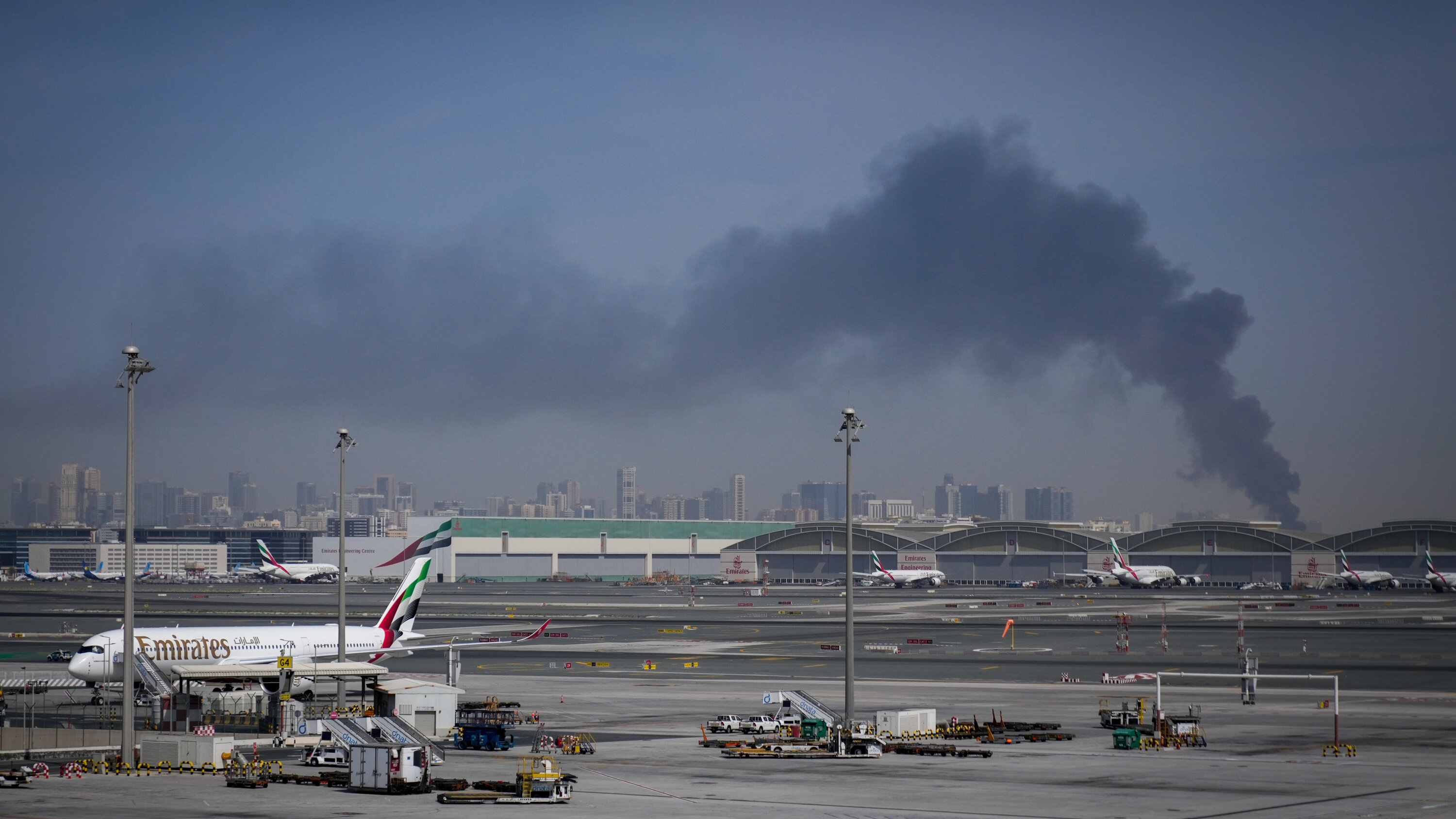
On Wednesday morning, loud explosions from intercepted missiles were heard across Dubai. Authorities in the emirate of Fujairah reported that one person was killed after debris from an intercepted drone fell on a farm in the Al-Rifa’a area.
The total value of the losses may exceed the cumulative regional GDP growth achieved in 2025, said the report from the United Nations Development Programme (UNDP).
Coupled with an estimated rise in unemployment of up to 4 percentage points or 3.6 million jobs lost, more than the total jobs created in the region in 2025, these reversals will push up to 4 million people into poverty, according to the report titled “Military Escalation in the Middle East: Economic and Social Implications for the Arab States Region.”
The assessment exposes the concerning reality of structural vulnerabilities characteristic to the region, which enable a short-lived military escalation to generate profound and widespread socioeconomic impacts that may persist over a long term, it said.
The findings highlight that impacts are not uniform, varying significantly across the region due to the structural characteristics of its main subregions.
Across the region, human development as measured by the Human Development Index is expected to decline by approximately 0.2 to 0.4 percent, corresponding to a setback of roughly half a year to nearly one year of human development progress, according to the report.
“This crisis rings alarm bells for countries of the region to fundamentally reevaluate their strategic choices of fiscal, sectoral, and social policies, representing an important turning point in the development trajectory of the region,” Abdallah Al Dardari, UN assistant secretary-general and director of the Regional Bureau for Arab States in UNDP, said in a press release.
“Our findings underline the pressing need to strengthen regional collaboration to diversify economies — beyond reliance on growth driven by hydrocarbons, and to expand production bases, secure trade and logistics systems, and broaden economic partnerships, to reduce exposure to shocks and conflicts,” he said.
The assessment employs Computable General Equilibrium modeling to capture the magnitude of disruptions caused by a four-week conflict, and models its effects through key transmission channels, including increased trade costs, temporary productivity losses and localized capital destruction.
It conducted five simulation scenarios, representing escalating levels of conflict scenarios, ranging from a “moderate disruption,” where trade costs increase by tenfold, to an “extreme disruption and energy shock,” where trade costs increase a hundred-fold, intensified by a stop of hydrocarbon production.
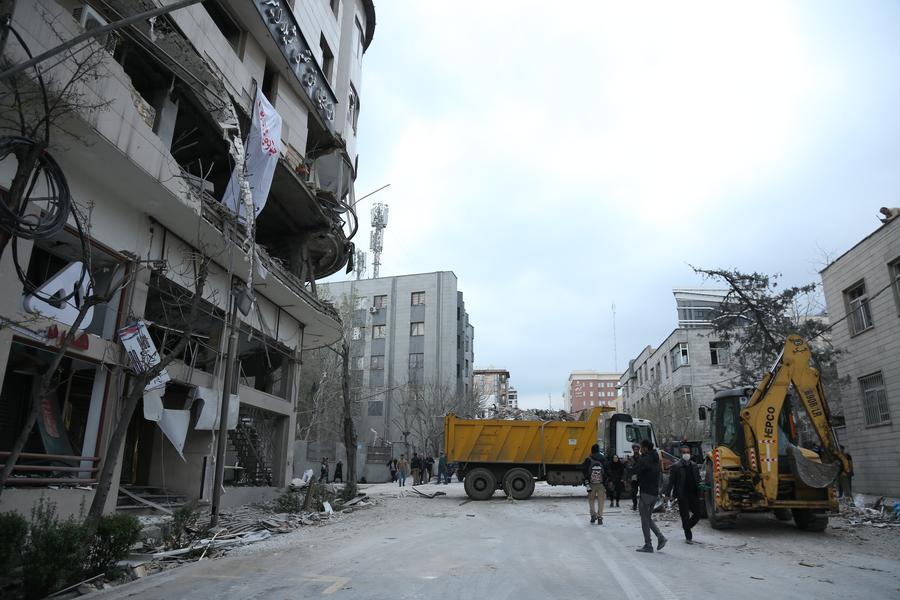
This photo shows a damaged building after joint U.S.-Israeli strikes in Tehran, Iran on March 29, 2026.
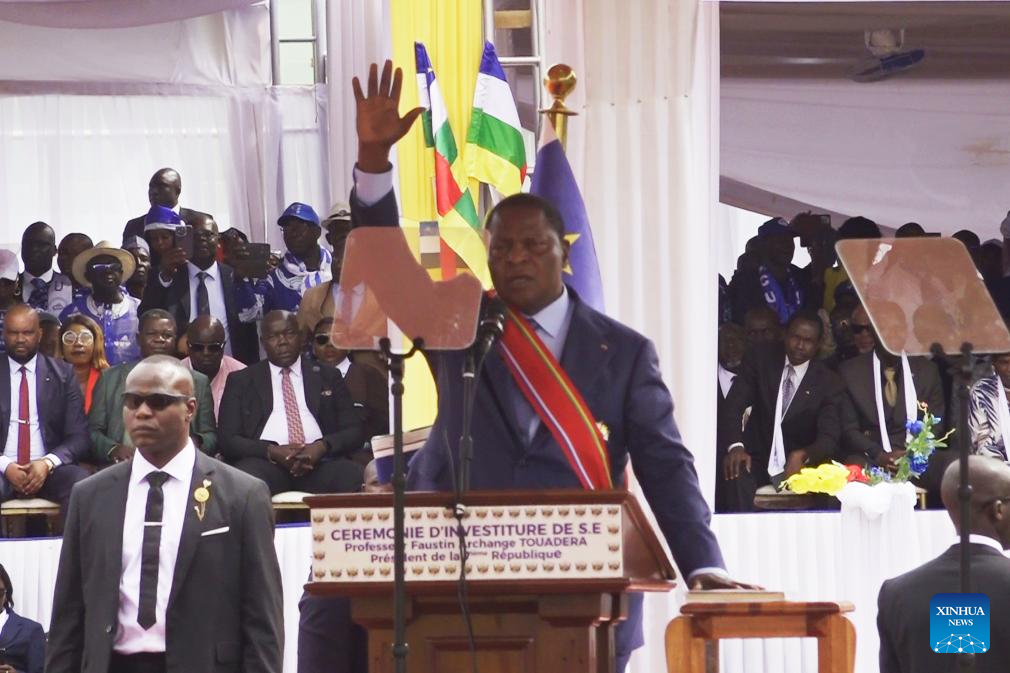
Touadera took the oath of office at the Barthelemy Boganda Sports Complex, with heads of state and diplomats in attendance.
Following the ceremony, Touadera expressed gratitude to the citizens for their trust and emphasized that his mandate would focus on women, youth, and national development.
He also reaffirmed his commitment to restoring peace and stability in the war-torn country.
The Central African Republic held its presidential election on Dec. 28, 2025, with Touadera winning 77.9 percent of the vote, according to the Constitutional Council.
The inauguration ushered in a seven-year mandate for Touadera, 68, who has served as president since 2016. This will be his third term in office.
Faustin-Archange Touadera (C) takes the oath of office at the Barthelemy Boganda Sports Complex in Bangui, capital of the Central African Republic, on March 30, 2026.
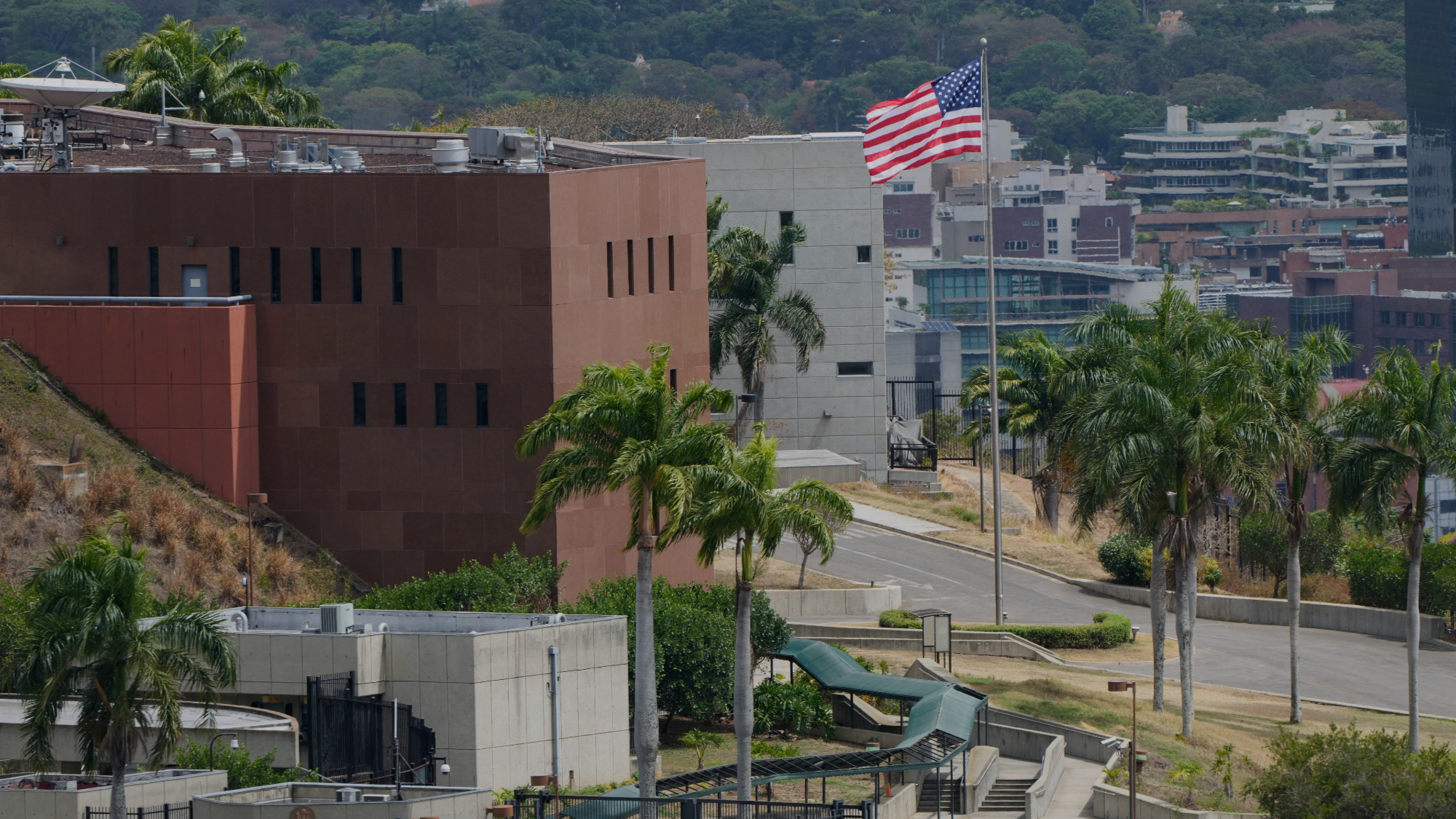
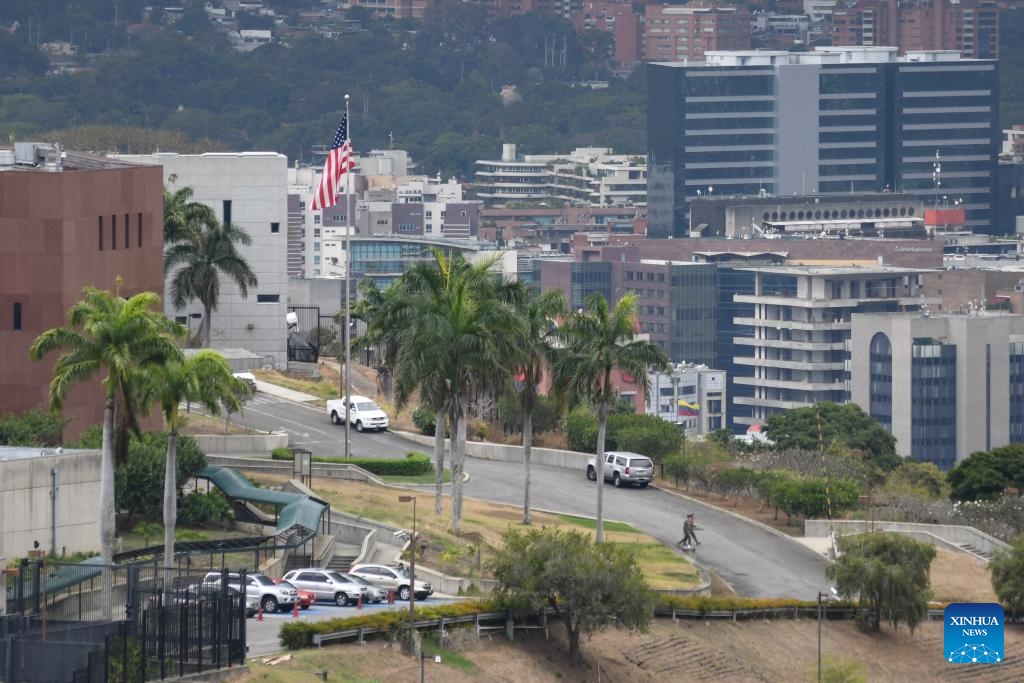
“Today, we are formally resuming operations at the U.S. Embassy in Caracas, marking a new chapter in our diplomatic presence in Venezuela,” the U.S. Department of State said in a statement, adding that the reopening of the embassy “is expected to strengthen direct engagement with the interim government, civil society and the private sector.”
The United States gradually resumed ties with Venezuela after Venezuelan Vice President Delcy Rodriguez took over as acting president in the wake of Maduro’s capture on Jan. 3.
The United States and Venezuela broke off diplomatic relations in 2019, when U.S. President Donald Trump, during his first term, recognized then opposition leader Juan Guaido as the interim president of Venezuela, accusing Maduro of rigging the presidential election.
The U.S. flag flutters at the U.S. Embassy in Caracas, capital of Venezuela, on March 30, 2026.
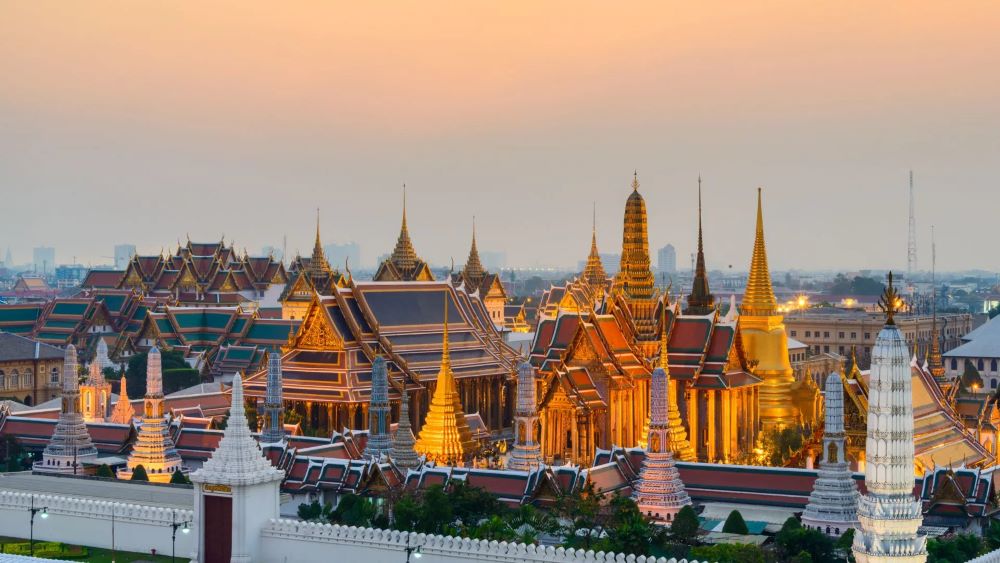
According to the TAT, the initiative leverages influencer marketing to convert online engagement into real-world travel, laying the foundation for sustainable tourism and distributing revenue to grassroots economies across the country.
TAT Governor Thapanee Kiatphaibool emphasized that the tourism industry is currently facing significant pressure from global energy price volatility, largely fueled by geopolitical tensions in the Middle East.
Thapanee said rising aviation and transport expenses have notably shifted consumer behavior, leading to a decline in long-haul travel and stricter budget controls.
The campaign seeks to turn this challenge into an opportunity to restructure Thai tourism by aligning it with a modern era that prioritizes sustainability, energy conservation, and the true value of travel experiences, she said in a statement.
In addition to the domestic market, the TAT said the campaign also actively targets short-haul international tourists.
A key focus is on visitors from Malaysia, Singapore and Indonesia, as these neighboring countries provide cross-border travelers to southern Thailand, a region currently undergoing recovery after last year’s severe flooding.
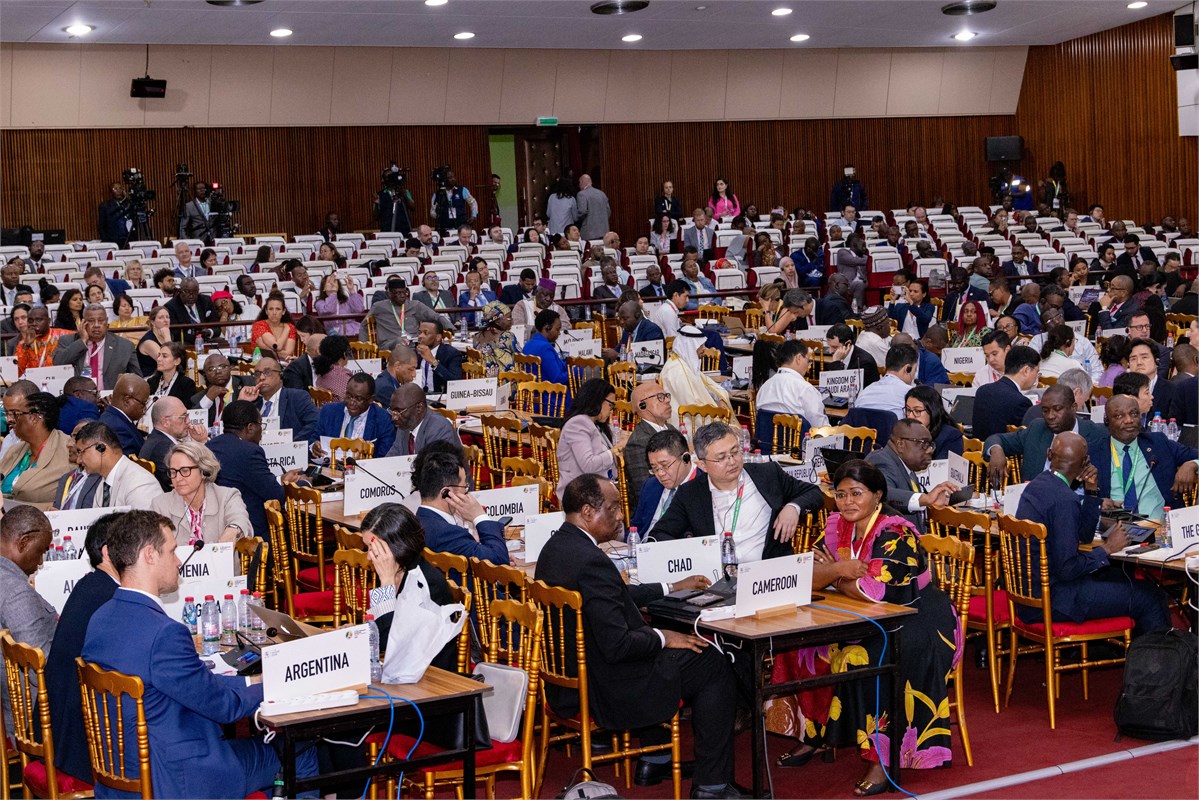
At the center of the deadlock was the e-commerce moratorium, a long-standing rule that prevents countries from imposing customs duties on electronic transmissions such as streaming services, software, and other digital products.
Diplomats worked through Sunday to bridge the gap between Washington and Brasília, but positions remained far apart. The United States initially pushed for a permanent extension of the moratorium, later showing flexibility by backing a compromise proposal for a four-year extension with a one-year sunset clause, which would run until 2031.
Brazil, which had earlier proposed a two-year extension, later signaled openness to four years but insisted on a mid-term review clause, a proposal that failed to gain support.
Developing countries broadly resisted a long-term extension, arguing that the moratorium deprives them of potential tax revenues that could be reinvested into their economies and limits their ability to shape domestic digital industries.
Rwanda takes a balanced approach to the e-commerce moratorium at the WTO. As part of the Organisation of African, Caribbean and Pacific States, it shares the view that more discussion is needed to fully understand how the moratorium affects developing countries, especially in terms of lost revenue and long-term economic benefits.
Rwanda supports keeping the issue open for negotiation rather than rushing into a permanent decision, and it agrees that development concerns should be at the center of any outcome.
At the same time, Rwanda tends to be more open to digital trade than some of its peers. The country sees the growth of the digital economy as a real opportunity — to attract investment, create jobs, and connect to global markets.
Despite intense negotiations, the Yaoundé summit ran out of time before a final deal could be reached.
Instead of focusing on taxing digital services, Rwanda is more focused on building its own capacity: improving infrastructure, supporting innovation, and helping local businesses compete. In simple terms, Rwanda is saying that digital trade should remain open, but the rules must also give developing countries a fair chance to grow and benefit from it.
With no agreement reached, the moratorium is now set to expire, effectively opening the door for countries to impose tariffs on digital services such as streaming platforms, software, and other electronic transmissions. Such a shift could significantly reshape global digital trade, increasing costs for businesses and consumers while introducing new uncertainty into cross-border data flows.
Negotiations are now expected to move back to the World Trade Organization headquarters in Geneva, where members will revisit the issue during a General Council meeting scheduled for May.
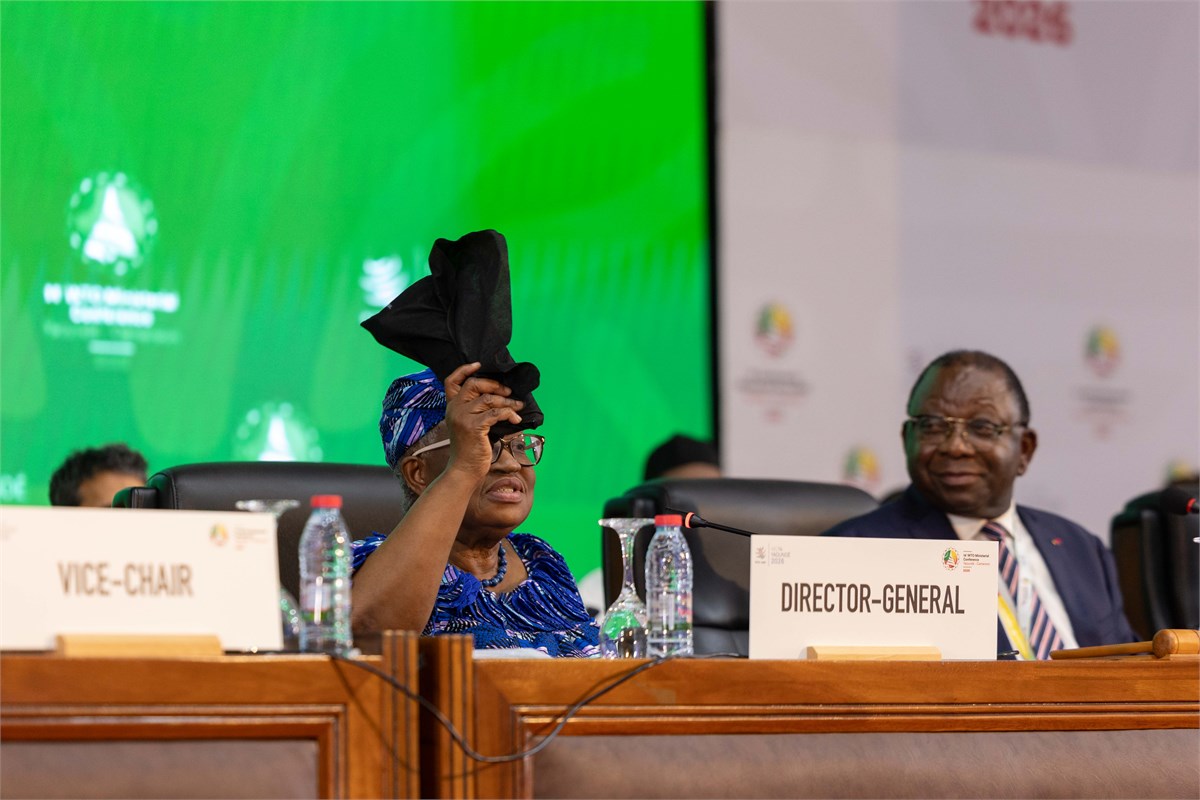
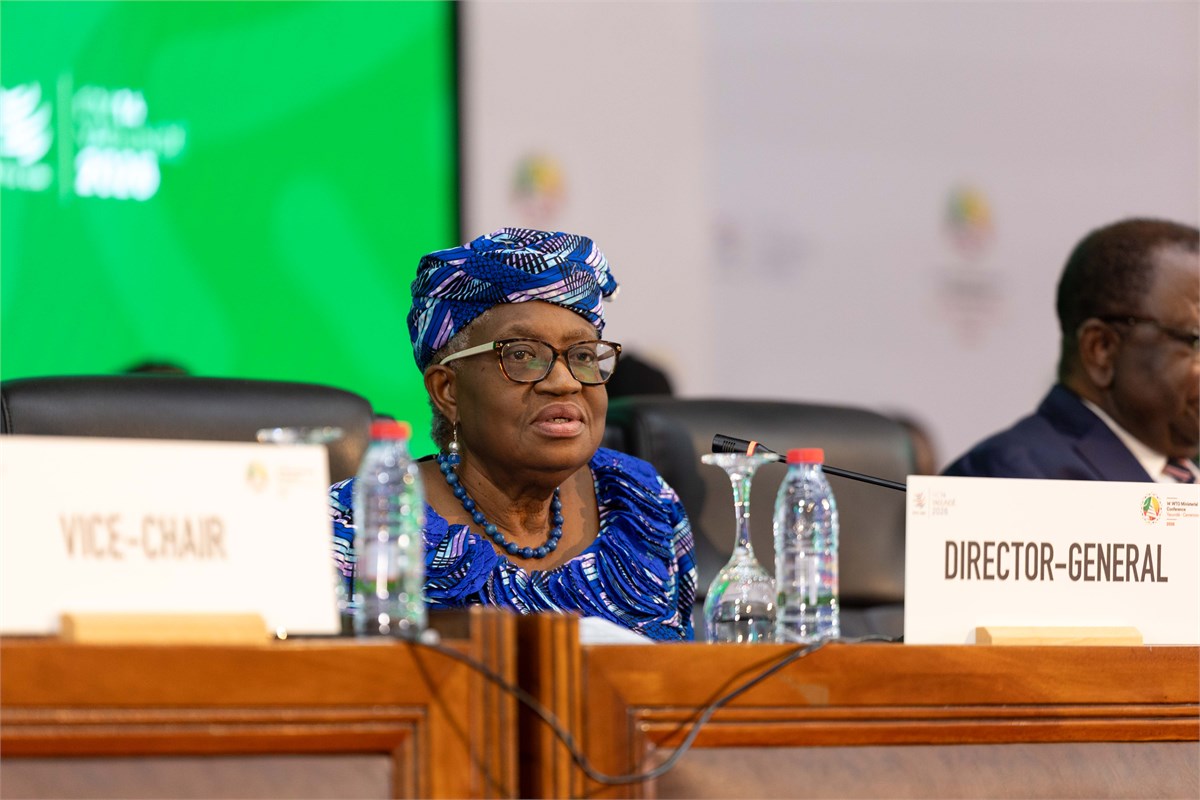
Director-General Ngozi Okonjo-Iweala praised progress in Yaoundé despite talks ending without a final agreement.
The failure to agree on the moratorium also derailed a broader reform package that had been taking shape during the four-day ministerial meeting in Yaoundé. A draft roadmap outlining timelines and key priorities for modernizing the WTO was reportedly close to agreement before talks ran out of time.
The reform plan aimed to improve decision-making in the WTO’s consensus-based system, increase transparency around industrial subsidies, and revisit rules governing special treatment for developing countries. The United States and the European Union have argued that current rules allow countries like China to benefit unfairly, while critics say reforms must also address development concerns.
Washington had also linked its support for the reform package to a satisfactory outcome on the moratorium, raising the stakes of the dispute and increasing pressure on negotiators.
Despite the failure to reach a deal, WTO Director-General Ngozi Okonjo-Iweala said negotiations in Yaoundé had made significant progress, even as time ultimately ran out.
“We were supposed to finish at 1pm today, and it is now almost midnight. It’s been a long, hard day and I am deeply grateful to all of you for the patience you have shown today, as we tried to bridge a handful of remaining differences on some of the key files before us,” she said.
She acknowledged that practical constraints, including ministers needing to leave, brought the negotiations to an end before consensus could be reached.
“However, we have run out of time. Some have already caught flights, and some have changed flights, and some will need to go soon,” she added.
Okonjo-Iweala stressed that members had come close to agreeing on a comprehensive package of outcomes that could shape the future of the organization.
“We are very close to a Yaoundé package of agreements that would be important for Members and the future of the organization. We’ve worked really hard here, and we are very close, but we’re not all the way there yet.”
She urged members not to abandon the progress made, noting that the work done in Yaoundé could still form the basis for an agreement in the next phase of negotiations.
“It would be regrettable to lose so much effort and work, with the finish line in our sights… we believe that it would be appropriate to preserve the important texts we have developed here, and use them as a basis to finalize agreements in Geneva.”
Looking ahead, she signaled that the process is far from over. “We have come a long way. All we need is time. And we can give ourselves that between now and the next General Council.”
The collapse leaves both the future of digital trade rules and the WTO reform agenda uncertain, with upcoming discussions in Geneva expected to determine whether members can salvage the progress made in Yaoundé or whether the deadlock signals a deeper crisis in the global trading system.
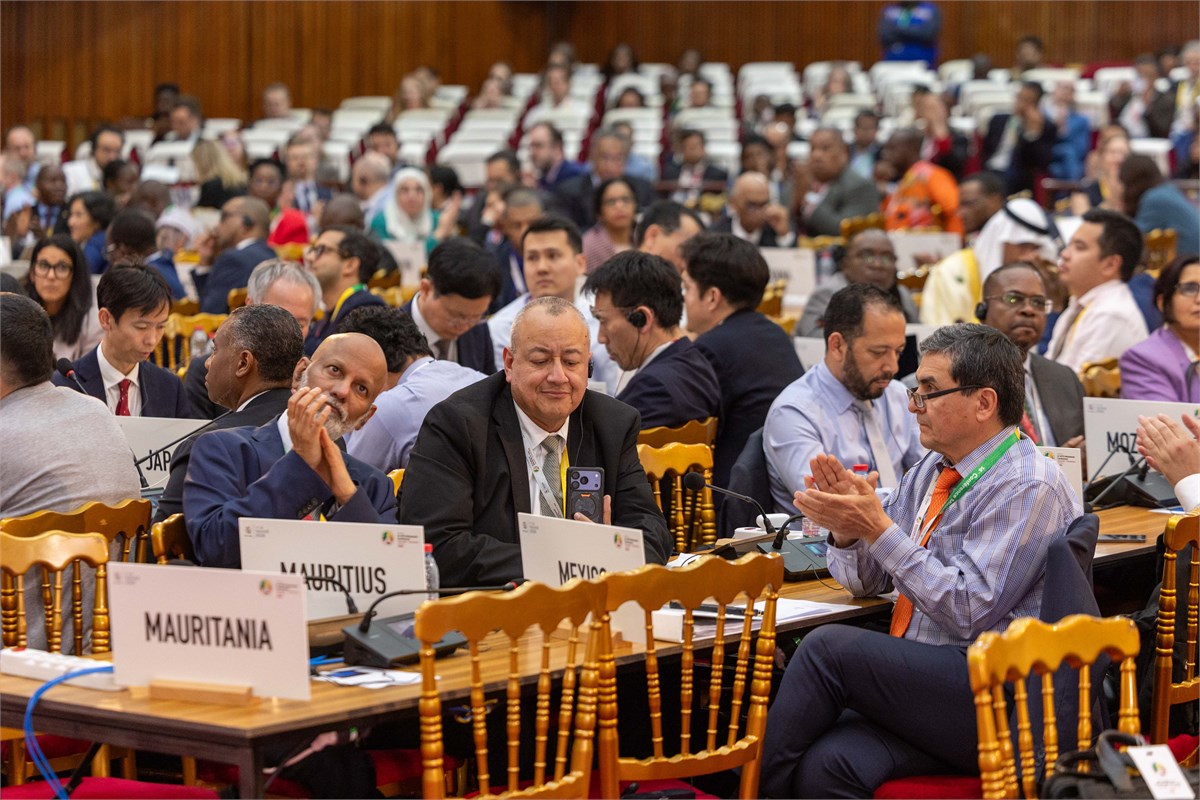
Negotiators at the Yaoundé summit struggled to resolve disagreements over the e-commerce moratorium.Okonjo-Iweala urged WTO members to preserve the Yaoundé texts as a foundation for future negotiations in Geneva.
In an interview with the Financial Times, Trump said, “To be honest with you, my favourite thing is to take the oil in Iran,” comparing the U.S. move to Venezuela, where Washington intends to control the oil industry “indefinitely” after it forcibly seized President Nicolas Maduro in January.
Taking Iranian oil would involve seizing Kharg Island, through which over 90 percent of Iran’s oil is exported, the Financial Times reported, warning that such “an assault” risks raising casualties and prolonging the war.
“Maybe we take Kharg Island, maybe we don’t. We have a lot of options,” it quoted Trump as saying. “It would also mean we had to be there for a while.”
He added that he believed Iran had little or no defense on the island. “We could take it very easily,” he said.
Trump’s remarks came as he steps up the U.S. military buildup in the Middle East while weighing a military operation to extract nearly 1,000 pounds of uranium from Iran, according to U.S. officials.
He has also encouraged his advisers to press Iran to agree to surrender the material as a condition for ending the war, The Wall Street Journal reported, citing an anonymous source familiar with Trump’s thinking.
The Pentagon is reportedly deploying up to 10,000 additional ground troops to the region, with the U.S. Central Command announcing Saturday that over 3,500 troops, including 2,500 Marines, had arrived in the Middle East.
Despite the threat, Trump noted that indirect talks between the United States and Iran via Pakistani “emissaries” were making progress. “A deal could be made fairly quickly,” he said.
Oil prices have surged since the United States and Israel launched massive attacks on Iran on Feb. 28, with Brent crude rising as high as 119.5 U.S. dollars a barrel in March, the highest since June 2022.
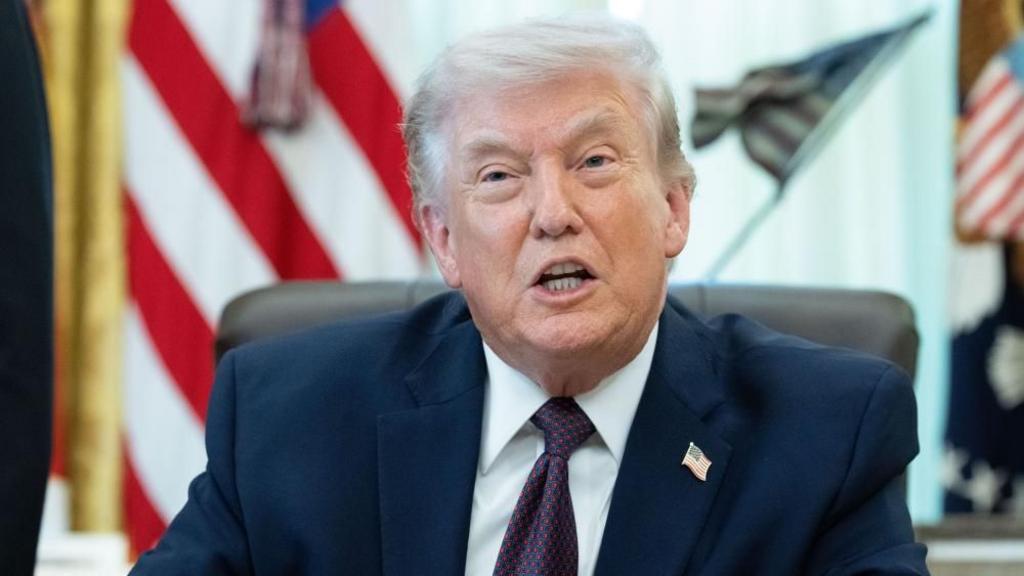
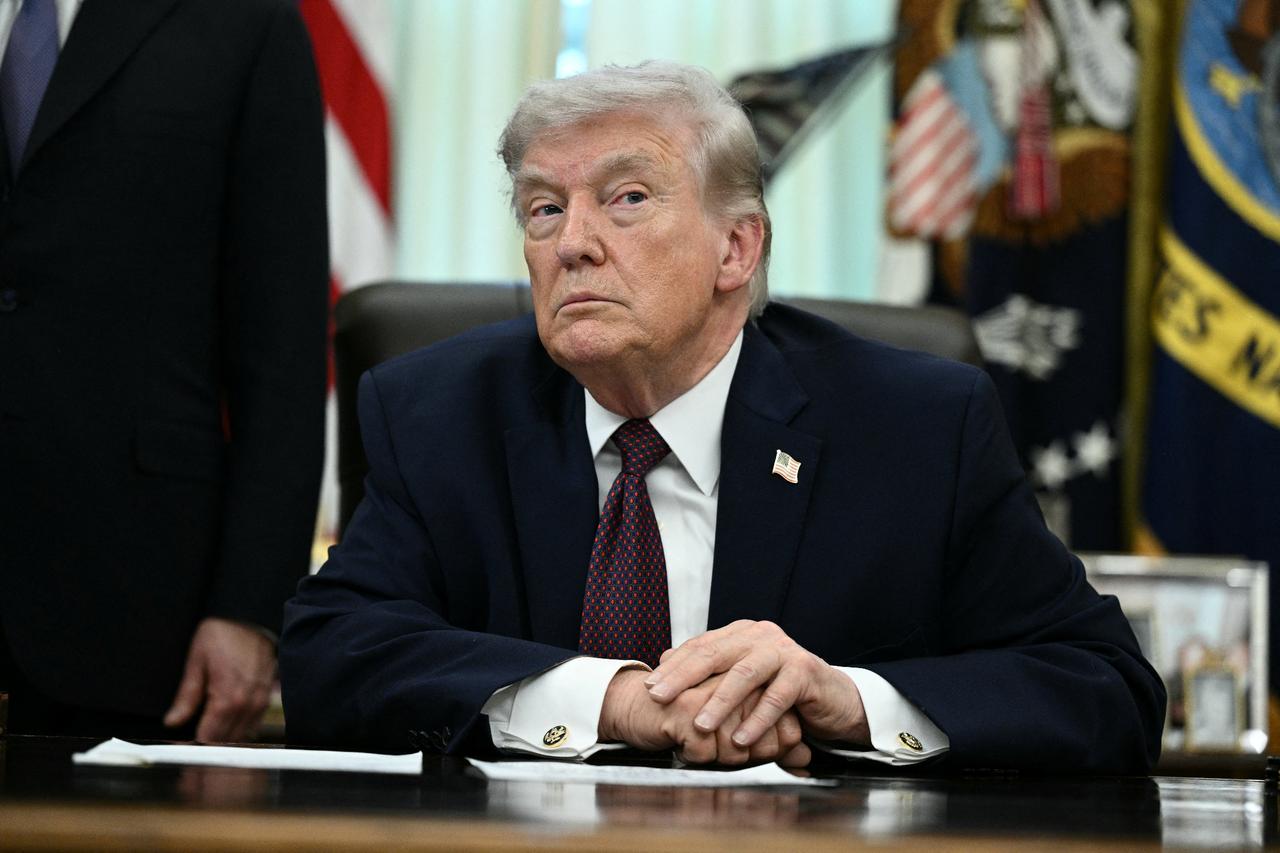
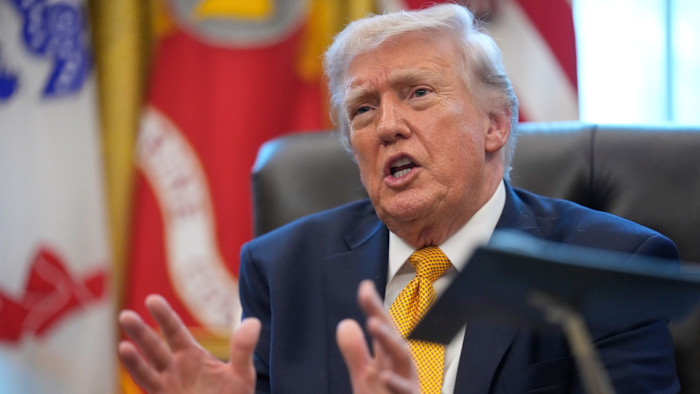
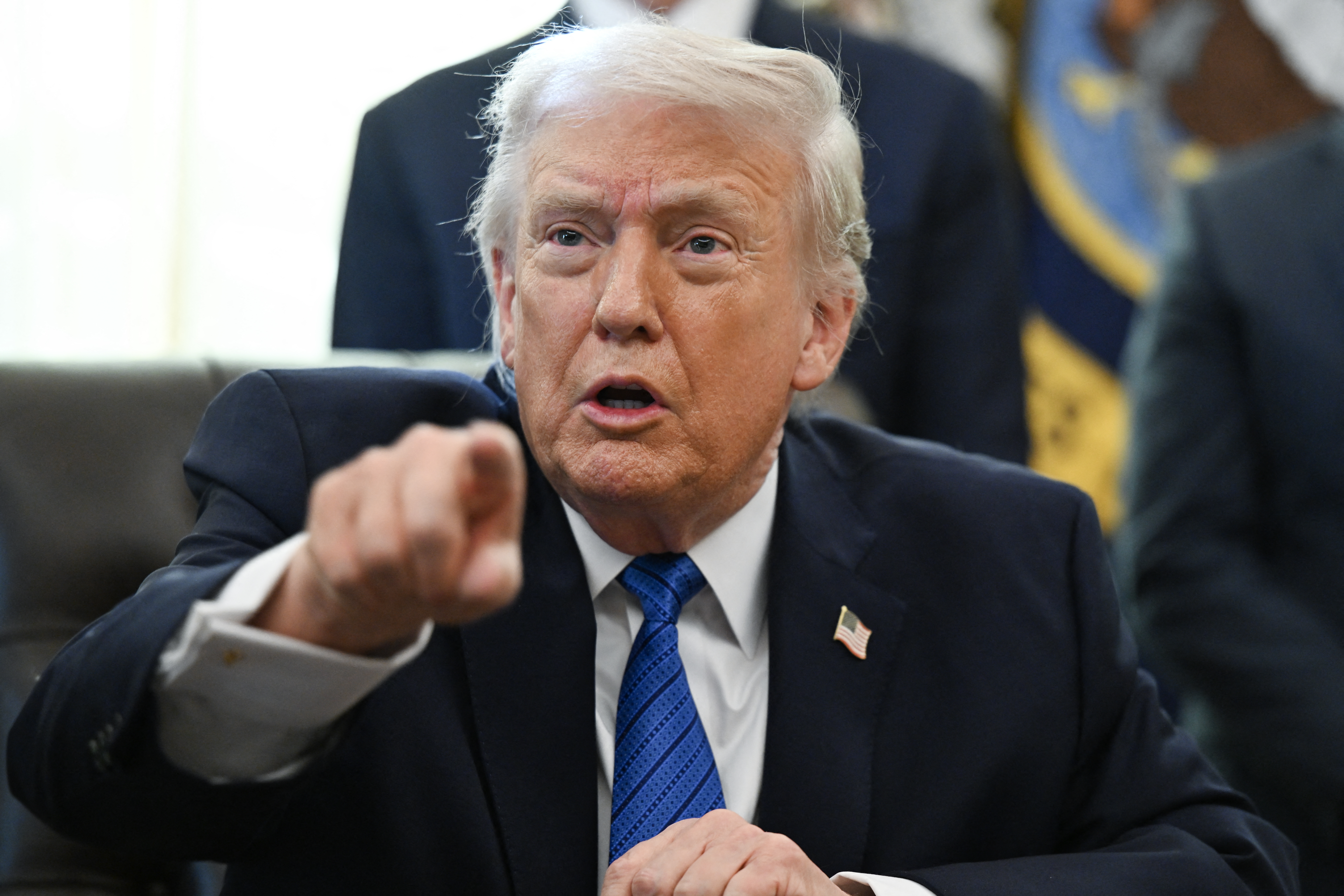
US President Donald Trump speaks before signing executive orders in the Oval Office in the White House in Washington, DC, on January 30, 2026. (Photo by ANNABELLE GORDON / AFP)