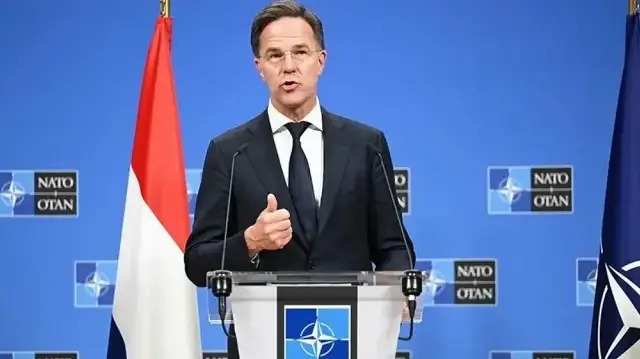
In a wide-ranging discussion with the German newspaper WELT AM SONNTAG, Rutte stated he does not foresee a future where the United States abandons its post-war security commitments. However, he balanced this reassurance with a stern call for a “stronger Europe within a stronger alliance,” suggesting that the burden of Western defense must be more equitably shared.
The remarks serve as a direct response to recent escalations from U.S. President Donald Trump. The President has intensified his “America First” stance, labeling NATO a “paper tiger” and expressing visible frustration over European involvement, or lack thereof, in Middle Eastern tensions, specifically regarding Iran. Trump’s repeated suggestions that he is “considering” a withdrawal have sent ripples of anxiety through Baltic and Eastern European capitals.
Rutte acknowledged that the U.S. commander-in-chief’s disappointment is not without merit.
“The President is visibly frustrated with certain members,” Rutte noted, acknowledging the long-standing U.S. grievance regarding defense spending. Currently, while more nations are hitting the 2% GDP spending target, several key European economies still fall short.
Despite the friction, Rutte emphasized that the structural foundations of the alliance remain indispensable. He reaffirmed that the U.S. nuclear umbrella continues to serve as the “ultimate guarantor” of European security, a deterrent that no individual European nation can currently replicate.
To ensure the alliance remains viable, Rutte argued that Europe must move beyond “rhetorical support” and invest in tangible military capabilities. Analysts suggest that by framing the issue as an opportunity for European growth, Rutte is attempting to bridge the gap between Trump’s isolationist leanings and Europe’s security requirements.
As the next NATO summit approaches, the focus will likely remain on these two pillars: maintaining the U.S. commitment while rapidly accelerating European defense autonomy to satisfy a frustrated Washington.
Leave a Reply