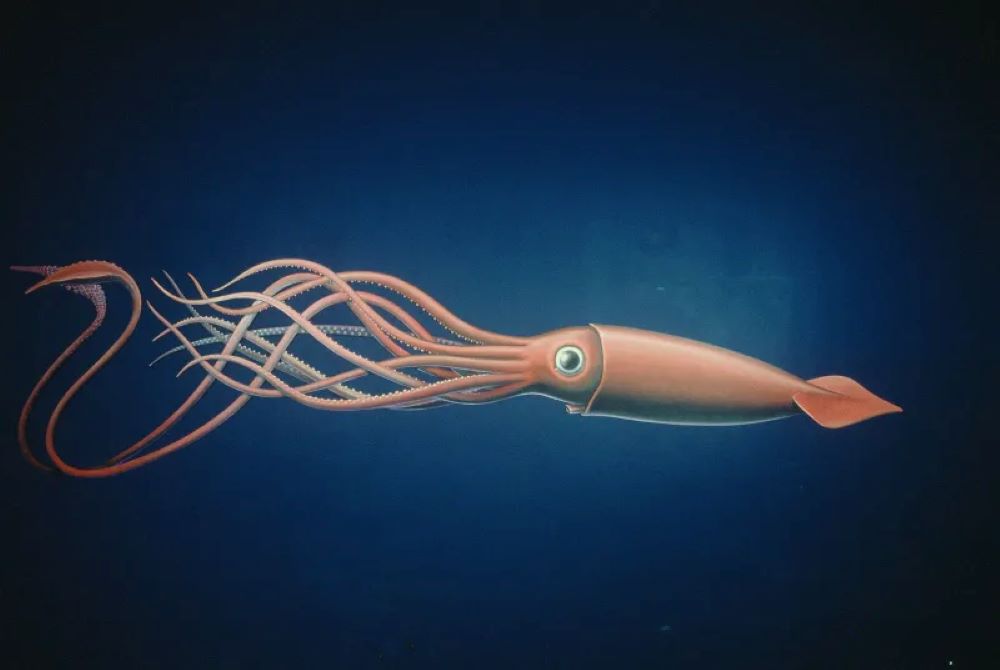
These sea creatures, known for their ability to change color and move quickly, have long puzzled scientists.
Their evolution has been difficult to trace because they leave behind very few fossils and have complex genetic structures. However, a recent study published in Nature Ecology & Evolution is now shedding light on their origins.
Researchers from the Okinawa Institute of Science and Technology combined large genetic datasets with newly sequenced squid genomes.
This allowed them to build the most complete evolutionary tree of squid and cuttlefish to date. Their findings show that these animals likely began in the deep ocean millions of years ago.
Around 66 million years ago, Earth experienced a major extinction event that wiped out about 75% of all species, including the dinosaurs.
Surprisingly, squid ancestors survived. Scientists believe they found refuge in deep, oxygen-rich parts of the ocean, where conditions were more stable compared to shallow waters affected by acidification.
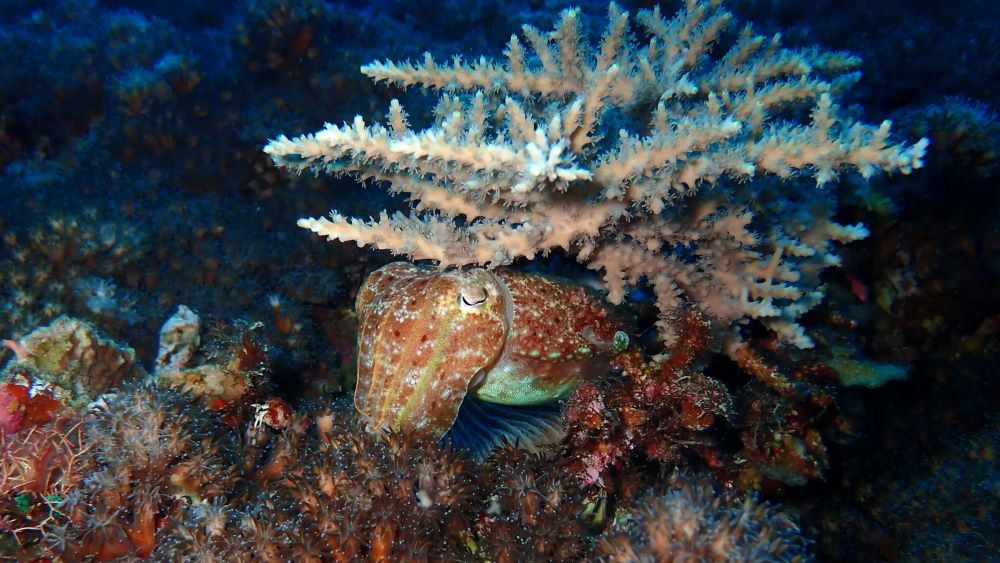
After the planet recovered, squid and cuttlefish began to spread into new environments such as coral reefs and coastal areas. The study describes this process as a “long fuse” evolution, where species change slowly for a long time, then suddenly diversify rapidly when conditions improve.
Today, squid and cuttlefish are among the most diverse and intelligent marine animals. This research not only explains their survival but also opens the door to understanding their unique features, from camouflage abilities to complex behavior.
Leave a Reply