“This year’s government work report emphasizes prioritizing people’s livelihoods,” Huang said, adding that a series of measures for education, social insurance, and medical and health services will be introduced to meet the people’s needs.
On social insurance, the country has pledged to allocate more financial support to increase basic pension benefits for urban and rural residents, provide child care subsidies, and strengthen care for functionally impaired elderly people, according to the government work report, which was unveiled on Wednesday.
Economic development and livelihood improvements provide mutual reinforcement, particularly amid economic headwinds and insufficient effective demand, he said.
“Through policies to enhance living standards, the government aims to promote a positive interplay between improvements to people’s lives, demand expansion and economic growth,” he added.
China has set targets of keeping the surveyed urban unemployment rate at around 5.5 percent in 2025, and creating over 12 million new urban jobs, according to a government work report unveiled Wednesday.
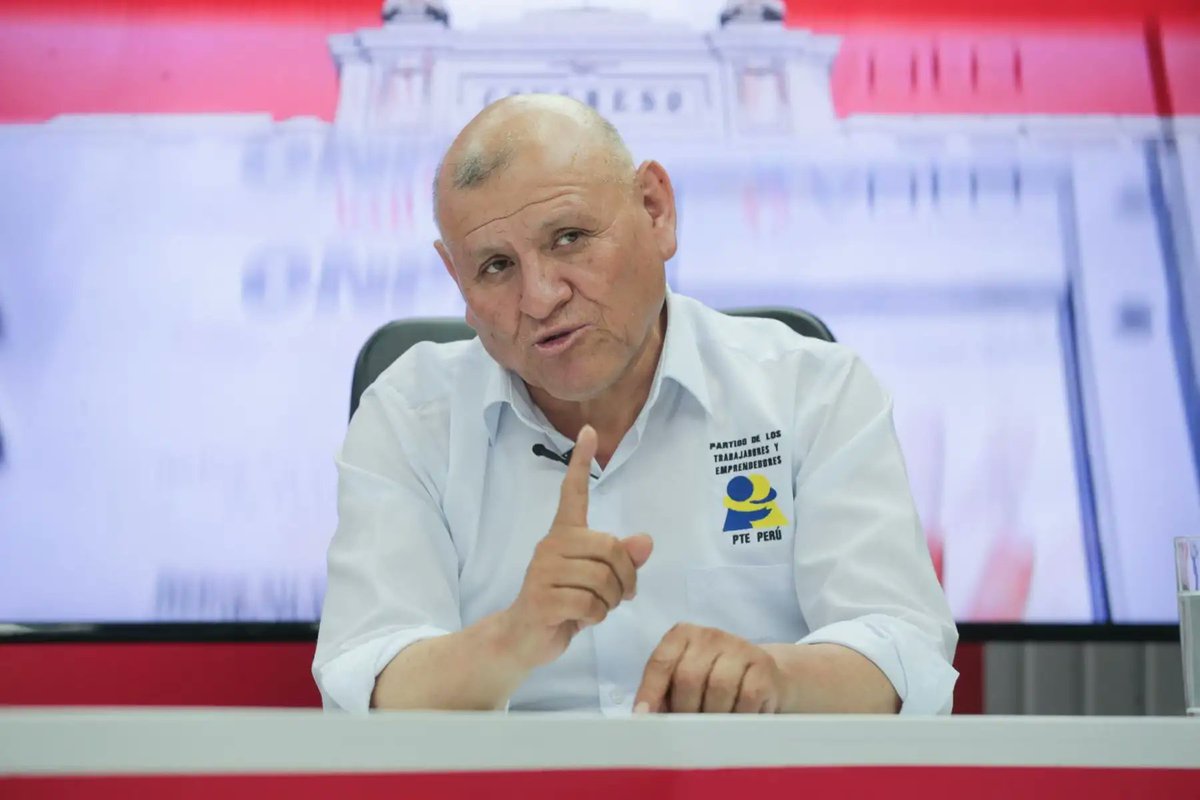
Despite steady economic recovery, China’s job market remains under pressure, particularly with 12 million college graduates this year, Huang Lianghao, an official with the Research Office of the State Council, said on the latest episode of the China Economic Roundtable, an all-media talk show hosted by Xinhua News Agency.
To expand employment opportunities, Huang highlighted key measures outlined in the government work report, including fully leveraging employment-related policies, supporting labor-intensive industries in creating jobs and stabilizing employment, and striking a balance between the application of new technologies and job relocation for employees.
Beyond job availability, more should be done to address structural employment mismatches, he said.
“Many individuals struggle to find suitable positions, while businesses grapple with hiring the right talent,” Huang noted, emphasizing the need to solve the problem.
He highlighted large-scale vocational skills training, saying that this will not only enhance the job-seekers’ competence but also generate new jobs, boost labor productivity, and drive industrial upgrading.
How did the world’s second-largest economy perform in the past year? What are its major development goals and policy directions for 2025? In the latest episode of China Economic Roundtable, an all-media talk show hosted by Xinhua News Agency, guest speakers shared insights on the nation’s commitment to achieving its growth target while advancing high-quality development.
{{STEADY PROGRESS AMID CHALLENGES}}
China’s GDP expanded by 5 percent last year to 134.9 trillion yuan (about 18.8 trillion U.S. dollars) and contributed about 30 percent to global economic growth, according to the government work report.
Huang Lianghao, an official with the Research Office of the State Council, described the achievements as “hard-won and extraordinary.”
“China promoted growth within a reasonable range and effectively improved the quality of its economy,” noted Huang, also a member of the drafting group for the government work report, highlighting a 3.4-percent reduction in carbon emissions per GDP unit.
“In 2024, China’s economy demonstrated resilience and the effectiveness of overall reform,” said national lawmaker Yuan Yuyu, chairman of Medprin Regenerative Medical Technologies Co., Ltd., a Guangzhou-based biotech firm.
Last year, the number of newly established business entities in China exceeded 20 million.
“The rapid development of enterprises vividly reflects the advancement of the country’s high-quality development and the steady growth of new quality productive forces,” noted Yuan.
{{STRATEGIC REFORMS FOR SUSTAINED GROWTH}}
As 2025 marks the final year of China’s 14th Five-Year Plan (2021-2025), experts believe that the around-5-percent growth target proposed in the government work report balances what is needed and what is possible.
Huang emphasized the target’s alignment with employment stabilization, risk prevention, and the country’s development goals through 2035.
“It not only demonstrates the government’s precise grasp of the general principle of pursuing progress while maintaining stability amid a complex economic environment, but also conveys a profound strategic consideration for medium- and long-term high-quality development,” said national political advisor Jin Li, vice president of Southern University of Science and Technology.
Huang expressed confidence in China’s economic fundamentals despite external pressures, citing positive factors such as burgeoning technological breakthroughs and expanding domestic demand.
Regarding employment, the report sets a goal of creating over 12 million new urban jobs and an around-5.5-percent surveyed urban unemployment rate. Huang underscored reforms in vocational training to address structural labor mismatches, while Jin stressed educational reforms to cultivate talent for emerging industries.
Yuan advocated for deeper industry-academia collaboration: “Universities hold talent resources while enterprises possess application scenarios. Bridging them will accelerate technological breakthroughs.”
{{PEOPLE-CENTERED POLICY ORIENTATION}}
More funds and resources will be used to serve the people and meet their needs, according to the government work report. China will raise the minimum basic old-age benefits for rural and non-working urban residents by 20 yuan and ensure an appropriate increase in the basic pension benefits for retirees. It will also continue to deepen the reform of public hospitals to better serve the public interest.
Highlighting healthcare commitments, Yuan said as health has become increasingly significant to the people, companies have the responsibility to provide more innovative products, drugs and medical apparatus and lower the costs to meet the people’s needs.
The government also plans 300 billion yuan in ultra-long special treasury bonds to support consumer goods trade-in programs.
“The concerns of the public are the key issues highlighted in the government work report. It proposes various measures to benefit the people and enhance their well-being,” said Huang.
Here, towering ice structures mimicking landmarks from across Asia, cheers from super-long ice slides, and the breathtaking view from a giant Ferris wheel attracted over 610,000 visitors during this year’s eight-day Spring Festival holiday, which ended Tuesday.
Near the entrance of the Harbin Ice-Snow World, an iconic winter attraction, a row of giant red characters stands out: “Snow and ice are also valuable assets.”
This statement, first made by Chinese President Xi Jinping about nine years ago, has reshaped the country’s ice-and-snow sector and spurred the stellar growth of related industries.
In March 2016, when taking part in a group discussion with Heilongjiang lawmakers at the annual national legislative session, Xi stressed the importance of leveraging the province’s winter resources. “Clear waters and green mountains are valuable assets, and so are Heilongjiang’s ice and snow,” he said.
Bordering frigid Siberia, Heilongjiang is known for its freezing temperatures and ample snowfall in winter. With winter temperatures sometimes dropping below minus 30 degrees Celsius, the provincial capital Harbin is dubbed China’s “ice city.”
Guided by Xi’s vision, the province has made sustained efforts to turn itself into a world-class winter tourist destination. Last year, Harbin alone welcomed 179 million visitors, with tourism revenue reaching 231.42 billion yuan (about 32 billion U.S. dollars), both rising over 30 percent year on year.
The 9th Asian Winter Games, set to open here on Friday, presents the latest opportunity to cement Harbin’s “ice city” reputation. Notably, winter sports and tourism are also gaining momentum across China.
Driven by policy support and increased demand, the number of ice-and-snow tourists in China is expected to reach 520 million in the 2024-2025 winter season, with revenue likely to exceed 630 billion yuan, according to the latest report by the China Tourism Academy.
{{300 MILLION PEOPLE IN WINTER SPORTS}}
Xi has identified China’s ice-and-snow sector as both a key economic driver and a vital means of promoting public fitness. A passionate sports enthusiast, he closely follows the development of winter sports.
The primary goal of hosting the Beijing 2022 Winter Olympics was to “engage 300 million people in ice-and-snow sports” and promote the leapfrog development of winter sports in the country, Xi told International Olympic Committee President Thomas Bach in 2014.
Before Beijing 2022, he conducted five on-site inspections across different competition zones in Beijing and the adjacent Hebei Province, meeting with athletes, construction workers and venue operators.
“The ultimate goal of building a sporting powerhouse and a healthy China is to strengthen the people’s fitness, which is also an essential part of China’s endeavors to build a modern socialist country in all respects,” Xi said.
The goal of “300 million people in winter sports” is now a reality, thanks to the promotion and popularization of ice-and-snow sports.
“This year, our facility has seen a greater number of people hitting the ice, with a year-on-year growth of about 15 percent,” said Meng Qingyou, who teaches skating at a winter sports center in Harbin.
Across the province, well-equipped facilities and professional coaching at ski resorts have drawn in new entrants from across the country.
In the city of Shuangyashan, a popular ski resort offers 14 trails of varying difficulty levels, catering to both novices and seasoned ski enthusiasts.
“This is my first time skiing,” said Zhao Dezhou, a tourist from east China’s Jiangsu Province. “At first, I was really nervous, but with the coach’s patient guidance, I can now glide freely across the snow and fully enjoy the thrill of this winter sport!”
Even in snow-scarce regions of the country, more people are embracing indoor ice-and-snow sports. According to a recent industry report, six of the world’s top 10 indoor ski resorts are in China, located in cities such as Shanghai, Guangzhou and Chengdu.
{{ICE-AND-SNOW ECONOMY}}
Beiji Village is nestled at the northernmost tip of China in the city of Mohe, Heilongjiang. As one of the coldest villages in China, Beiji endures an average temperature of below zero for over seven months a year.
This agricultural and fishing village was named a national top-level scenic spot in 2015, attracting an increasing number of visitors to experience its unique scenery and extreme cold.
“The tourism resources here are truly exceptional,” said Xi at the village during an inspection tour in September 2023. He stepped into villager Shi Ruijuan’s homestay and talked with the locals.
Noting the importance of the tourism sector in achieving high-quality development, Xi urged policy support to ensure that the distinctive snow-and-ice resources generate more income for local people.
In the past, the harsh cold and remote location drove many locals to leave Beiji. Nowadays, however, the very same factors are drawing tourists from far and wide. With ice-and-snow tourism gaining popularity in recent years, ice skating, skiing and fun activities like splashing water to create ice crystals have become big draws of the village.
“Tourists used to come mainly in summer, but now we get plenty of visitors in winter too,” said Shi, adding that she had never expected the bitter cold to become a major tourism attraction.
Shi has run the homestay business for more than a decade. “Previously, it was hard to make even 10,000 yuan a year. Now, we have visitors all year round, and during peak season I can earn over 10,000 yuan in just a week,” she said.
With its booming ice-and-snow tourism, northeast China as a whole has gained fresh appeal. Once known as the country’s rustbelt, the region has long struggled with a painful economic transition and talent outflows.
“Revitalizing northeast China” has been a recurring theme evident in Xi’s multiple inspection tours. In 2023, he stressed efforts to focus on developing the ice-and-snow economy as a new growth driver by promoting a full industrial chain of ice-and-snow sports, culture, equipment and tourism.
Under Xi’s guidance, the ice-and-snow boom has spread from northeast China to the entire country, fostering a new national growth engine.
Located in northwest China’s Xinjiang, Altay Prefecture is developing its reputation as a top skiing destination. In the 2023-2024 snow season, Altay welcomed about 4.89 million tourist visits, with tourism revenue totaling 5.1 billion yuan. It drove about half of the growth in terms of both tourist visits and revenue in Xinjiang last season.
Southwestern provinces, such as Yunnan and Sichuan, are also leveraging their unique plateau ice-and-snow resources, as well as their proximity to Southeast Asia, to attract tourists.
Peng Fuwei, a senior official of the National Development and Reform Commission, noted that the sector has formed a “dual-engine” structure, with winter manufacturing and services leading the way.
“China now produces a comprehensive range of winter sports equipment, from personal gear to high-end snowmaking machines and snow groomers. In 2023, winter equipment sales reached about 22 billion yuan,” he said.
The country aims to boost its ice-and-snow economy as a new source of growth, targeting an economic scale of 1.2 trillion yuan by 2027 and 1.5 trillion yuan by 2030, according to guidelines released by the State Council last year.
Xi made the remarks at a welcome banquet ahead of the opening ceremony of the Games in Harbin, capital city of northeast China’s Heilongjiang Province.
He called on Asia to hold fast to the common dream of peace and amity, jointly respond to all sorts of security challenges, and contribute to building an equal and orderly multipolar world.
Xi also stressed the shared pursuit of prosperity and development, calling on Asian people to seek common progress and inject impetus into economic globalization.
To realize the common wish of integration and affinity, Xi called for promoting inclusive coexistence, exchanges and mutual learning among different civilizations in Asia.
The growth of ice and snow tourism has transformed how Chinese people perceive and experience winter, according to Dai Bin, president of the China Tourism Academy, who shared his views during the latest episode of the China Economic Roundtable, an all-media talk show hosted by Xinhua News Agency.
In the past, particularly in northeast China, where bitter winter temperatures are the norm, people tended to stay indoors during the cold months. However, a noticeable shift is occurring as more people now embrace outdoor activities during winter.
Many people are flocking to Harbin, the capital of China’s northernmost province of Heilongjiang, which is renowned for its abundant snowfall and stunning ice sculptures, to immerse themselves in the icy atmosphere.
Research by the tourism academy projects that over 500 million people will participate in ice and snow tourism during the peak season in 2024-2025, driving consumption by more than 600 billion yuan (about 83.7 billion U.S. dollars), said Dai.
The passion for ice and snow sports has also ignited, noted Ai Yu, an official with the General Administration of Sport of China. The scope of people participating in winter sports has extended beyond traditional northern regions; additionally, winter sports have now shifted from winter-only activities to year-round offerings that are accessible both indoors and outdoors, Ai highlighted.
Regions with rare snowfall are also capitalizing on the trend, as winter wonderlands created by artificial snow are popping up in southern China to meet growing demand, Dai added.
China aims to boost its ice and snow economy as a new growth sector, targeting an economic scale of 1.2 trillion yuan by 2027 and 1.5 trillion yuan by 2030, according to guidelines issued by the General Office of the State Council in November 2024.
The annual Central Economic Work Conference, held in December last year, also called for active efforts to develop the country’s ice and snow economy.
Tourists are now more willing to pay for leisure and cultural activities related to ice and snow tourism, said Dai Bin, president of the China Tourism Academy, at the latest episode of the China Economic Roundtable, an all-media talk show hosted by Xinhua News Agency.
Dai said that various new business models are arising from the thriving industry. “Once tourists arrive at their destinations, they look for accommodation, dining options and interactions with locals. What attracts them most is often the unique folk customs and cultural heritage of the region.”
Harbin, China’s northernmost provincial capital, exemplifies the country’s thriving ice and snow economy. During the eight-day Spring Festival holiday that concluded on Tuesday, Harbin Ice-Snow World attracted over 610,000 visits. This ice theme park, featuring dazzling ice sculptures, saw more than 100,000 visits on Feb. 1, setting a new record for daily attendance compared to previous years.
In addition to Harbin, various new ice and snow tourism attractions have emerged across Heilongjiang Province. These include the snow-covered forests of Yichun, one of China’s most forested cities, winter birdwatching in Qiqihar, where native red-crowned cranes can be spotted, and aurora viewing in Mohe, near the China-Russia border, according to Qi Bin, deputy director of the Heilongjiang provincial department of culture and tourism.
Peng Fuwei, an official with the National Development and Reform Commission, China’s top economic planner, said that China has established a dual manufacturing-service model to develop its ice and snow economy. According to Peng, the country can now produce 15 kinds of ice and snow sports equipment, ranging from snowboards to snow-making machines.
In ice and snow services, Peng said multiple sectors flourish simultaneously, including competitions and performances, catering and accommodation, winter sports training, and leisure tourism.
Looking ahead, Peng said that the central budget will continue to support the construction of public service facilities for eligible ice and snow sports and tourism. Also, qualifying ice and snow tourism equipment will receive support through ultra-long special treasury bonds for equipment upgrades.
According to China’s national blueprint for the ice and snow economy, the industry is expected to play a greater role in expanding employment and promoting high-quality development by 2030. Ice and snow consumption will be a key growth driver for domestic demand.
By then, several high-quality destinations for ice sports and tourism will be established, and the total scale of the ice and snow economy is projected to reach 1.5 trillion yuan (about 209.2 billion U.S. dollars), the document says.
During the eight-day-long Spring Festival holiday that ended Tuesday, over 610,000 trips were made to the park. Daily trips on Saturday exceeded 100,000, setting a new record for single-day attendance. Since opening its doors this season, the park has received over 2.66 million visits.
The ice and snow tourism fervor is not limited to Harbin, but palpable nationwide. With its ambitious plans and growing public enthusiasm, China’s winter economy is poised to become a cornerstone of its cultural and economic landscape, experts noted in the latest episode of the China Economic Roundtable, an all-media talk show hosted by Xinhua News Agency.
{{Embrace the winter}}
The increasing popularity of Harbin Ice-Snow World is partly attributed to the city’s upcoming role as the host of the 2025 Asian Winter Games, marking China’s second major winter sports event following the Beijing 2022 Winter Olympics.
Ai Yu, a senior official of the General Administration of Sport of China, noted that the success of the Beijing 2022 Winter Olympics has reshaped China’s relationship with winter sports, and transformed the landscape of ice and snow activities across the country.
Public enthusiasm for winter sports has surged, extending far beyond traditional hubs such as Heilongjiang. The trend is now moving southward, westward, and eastward, with activities no longer limited to winter but available year-round, both indoors and outdoors, Ai said.
Dai Bin, president of the China Tourism Academy, highlighted the role of technology and investment in promoting winter sports, with artificial snow and ice facilities making winter sports accessible even in the warmest regions.
A survey from the academy showed more than 70 percent of the respondents are willing to engage in winter leisure activities, with over 60 percent planning to maintain or increase their spending on winter tourism. The 2024-2025 winter season is expected to attract some 520 million trips, generating over 630 billion yuan (about 87.87 billion U.S. dollars) in tourism revenue.
Winter has evolved from a season of dormancy to one of vibrant activities, Dai noted. “In the past, winter meant freezing temperatures and a pause in daily life. Now, people embrace the cold and explore northern regions.”
{{More than just fun}}
China’s winter economy is not just about sports and tourism; it’s also driving significant growth in manufacturing and services, experts said.
Peng Fuwei, a senior official of the National Development and Reform Commission, noted that the industry has formed a “dual-engine” structure, with winter manufacturing and services leading the way.
“China now produces a comprehensive range of winter sports equipment, from personal gear to high-end snowmaking machines and snow groomers. In 2023, winter equipment sales reached about 22 billion yuan,” he said.
Related service sectors are also thriving, with winter sports fueling growth in areas like event hosting, catering, accommodation, and training.
Heilongjiang, for example, has developed cutting-edge technologies like multi-robot ice sculpting and has established itself as a hub for testing and refining automobiles under extreme cold conditions. “Thanks to robotics, our ice sculptures are built faster and more efficiently,” said Qi Bin, deputy director of Heilongjiang’s culture and tourism department.
New cultural experiences, such as snowfield hot springs and concerts, are also emerging, further enriching the winter tourism ecosystem, Dai observed.
{{To make the snowball bigger}}
Seeking to leverage its vast ice and snow resources to drive economic growth, China is doubling down on its commitment to expanding its winter economy, which encompasses sports, culture, equipment, and tourism.
The sector has already reached a trillion-yuan scale, and the country aims to grow it to 1.2 trillion yuan by 2027 and 1.5 trillion yuan by 2030, according to an official guideline released in 2024.
To achieve these goals, the government is integrating winter sports and tourism into its national development plans.
“We will continue to support the industry through policies, funding, and infrastructure development,” Peng said, adding that key regions in places including Heilongjiang and Xinjiang will receive targeted support to become world-class winter sports destinations.
There are also plans to sustain the momentum of winter sports participation, expand their reach, and integrate sports events with tourism, according to Ai.
To further tap the industry’s potential, Dai called for extending the winter industry’s value chain. This includes combining winter equipment with personal gear and creating new travel routes, all in a bid to build a robust ecosystem for the winter economy.
Ultimately, the goal is to make winter sports and tourism an integral part of people’s lives, Dai added. “When people fall in love with winter activities, the foundation for a thriving winter economy will be firmly established.”
Noting that the governance team of the sixth-term Macao SAR government is young and energetic with high morale, Xi expressed confidence that they will bear in mind their oath, fulfill their mission, be accountable to both the country and Macao, and deliver outstanding results that will make the nation, Macao and themselves proud.