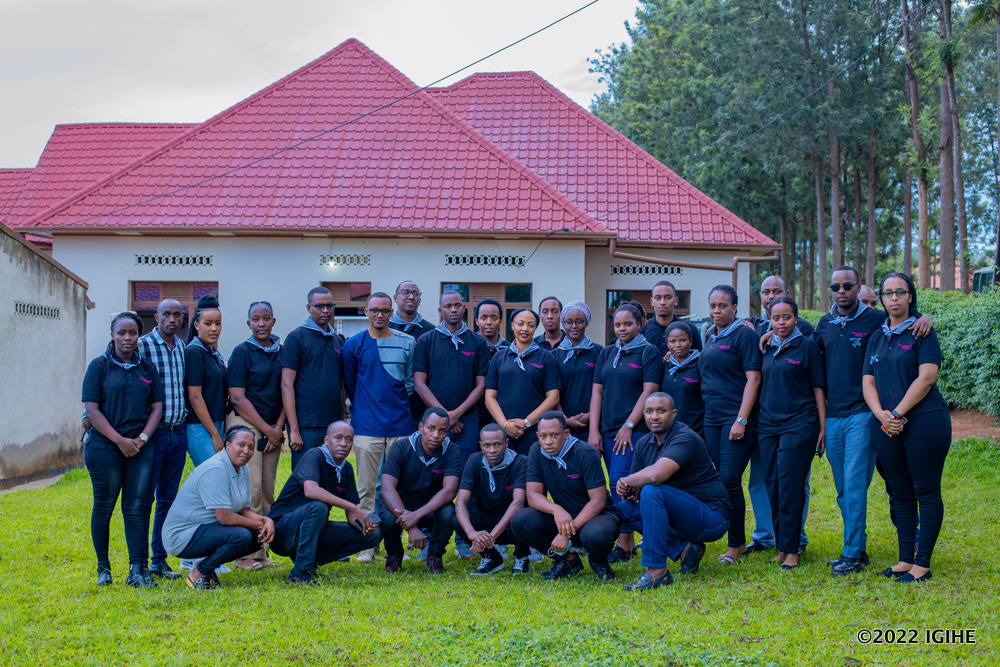
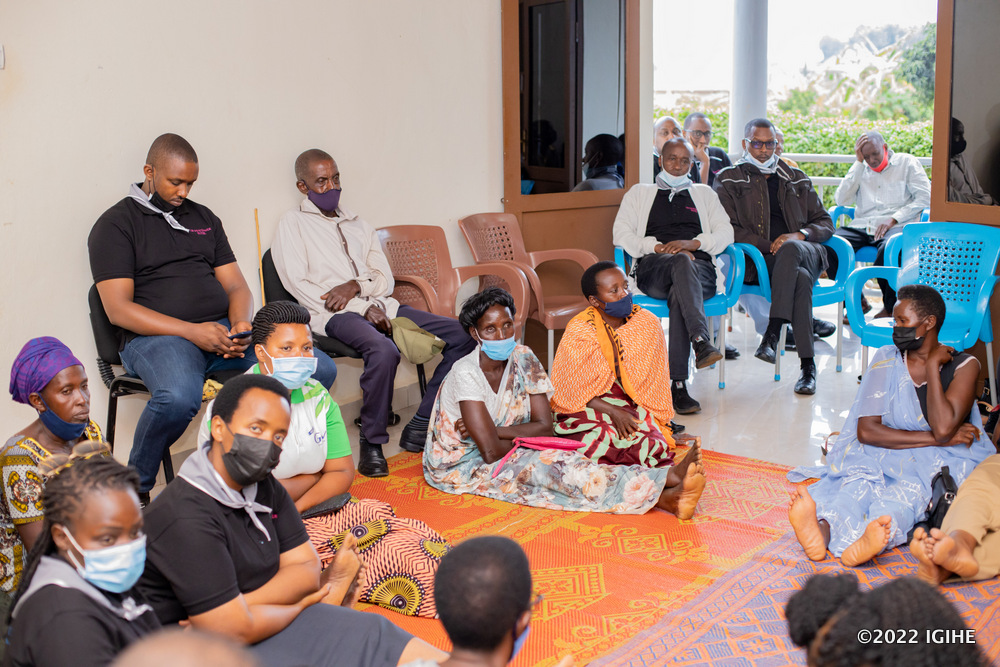
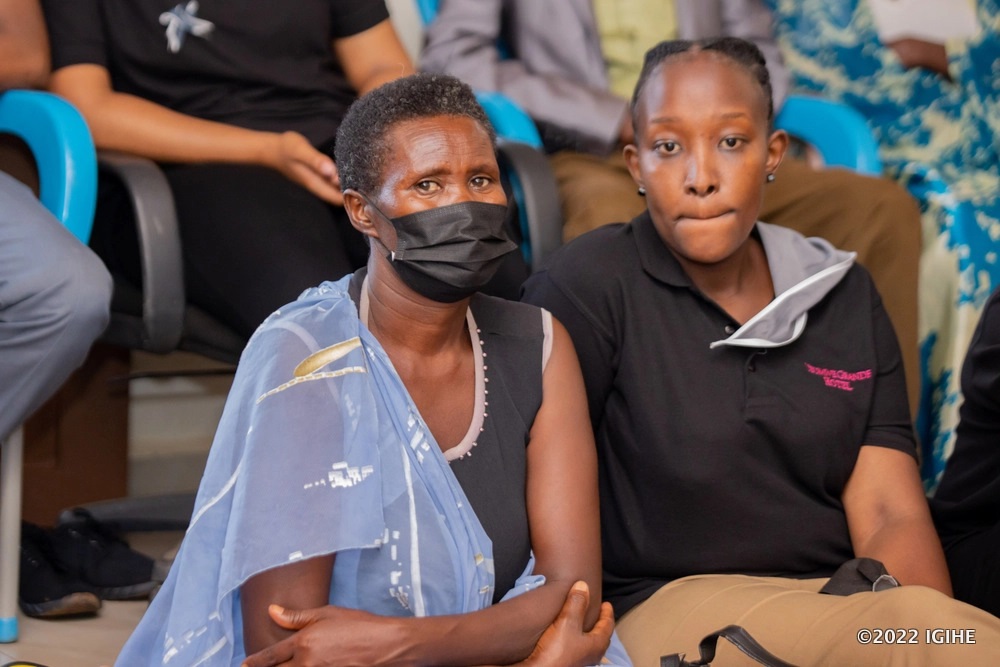
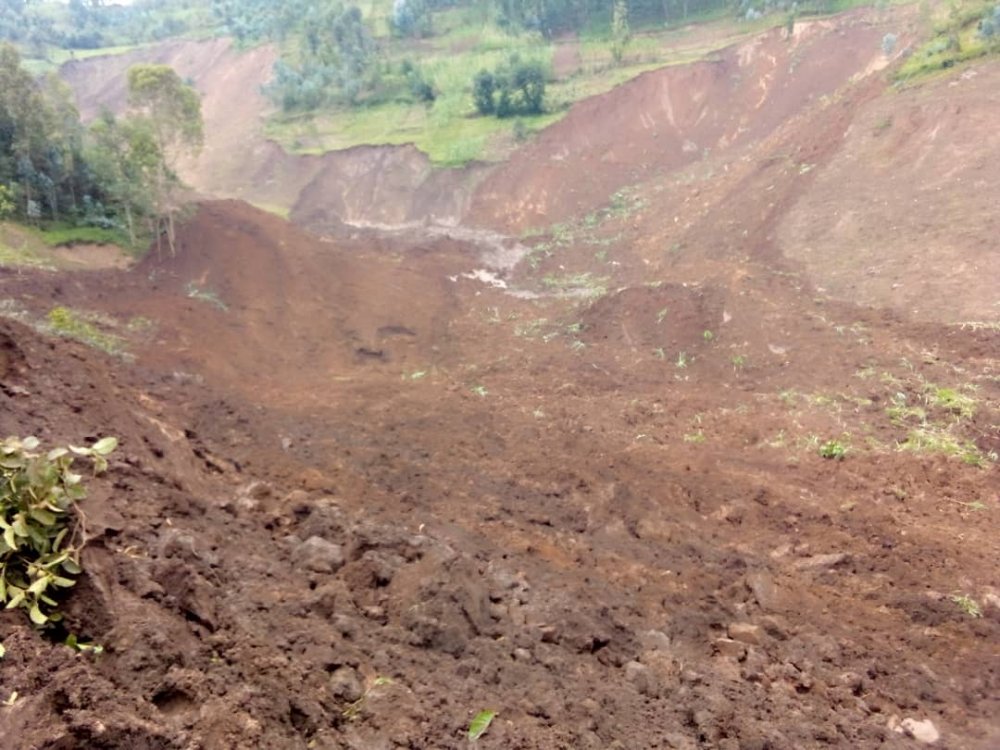
The dreadful incident occurred around 8:00 p.m last night in Huye Village, Nyundo Cell of Nyundo Sector.
Those already confirmed dead are Clementine Uwiduhaye,5, and Cyprien Bigengimana aged 8.
The Acting Executive Secretary of Nyundo Sector, Diogène Kagina has confirmed to IGIHE that the search for more people continues.
“There are two children who were carrying sugar canes and two others whose parents reported missing. We suspect that they might have also perished in the landslide. We are also thinking about the next course of action,” he said.
Kagina revealed that the landslide might have resulted from much water accumulated during the recent rain.
Similar incidents often happen in the districts of Rubavu and Rutsiro nearby River Sebeya and Gishwati Forest.
The revelation was made by NPPA Spokesperson, Faustin Nkusi on 27th April 2022 following the deportation of Jean Paul Micomyiza from Sweden to Rwanda.
Micomyiza is facing charges including role in crimes of Genocide, complicity in Genocide and crimes against humanity which he allegedly committed in Huye District of Southern Province.
Faustin Nkusi has revealed that Micomyiza is set to be informed about alleged crimes by Rwanda investigation Bureau (RIB) before being transferred to the Prosecution.
Rwanda has received 29 Genocide fugitives deported from foreign countries since 2005 yet the country issued 1147 arrest warrants. This shows that the number of deportees is still low compared to the number of Genocide fugitives.
Nkusi has observed that there is a step made so far even though a lot needs to be done.
Despite the fact that the number of deported Genocide fugitives remains low, Nkusi said that some countries like Sweden have made efforts to hold them accountable.
“Sweden has also tried other three fugitives in their domestic courts and they are currently serving life sentence, have extradited one fugitive and had seven extradition requests to handle. We commend them for doing a good job. They remain with three and we hope even the remaining three fugitives will be brought to our country,” said Nkusi.
So far, 24 Genocide suspects have been tried in 24 countries. These include Théodore Rukeratabaro, Claver Berinkindi and Stanisilas Mbanenande who were handed life sentence by Sweden courts.
Nkusi expressed optimism that in collaboration with different countries, perpetrators of the imprescriptible crimes will be brought to book.
“Each suspect has his own day. They will be brought to justice one day. They will be tried either in Rwanda or in those countries because cooperation is going on and we are working together with these countries to make sure that suspects are brought to justice, that those who have committed genocide and other crimes should not remain at large and in safe havens,” he said.
IBUKA, the umbrella organization of survivors of Genocide against Tutsi has disclosed that the deportation of Micomyiza should leave a lesson to other countries which have not yet handed over Genocide fugitives to face justice.
“We have welcomed the decision of Sweden judiciary to deport Jean Paul Micomyiza to Rwanda. It is a good move because Genocide is a crime against humanity. All countries should play a role to deliver justice,” the Executive Secretary of IBUKA, Ahishakiye Naphtal has told IGIHE.
“We commend this step by Sweden which serves as an example to other countries. We also hail other countries that take similar decision because it should be emulated by those relenting to follow the suit to send suspects to Rwanda,” he added.
According to the Prosecution, arrest warrants for Micomyiza were issued since 2013 while the last one which led to his detention was issued in 2020.
At the time, he was seized and taken to court to decide whether he would be extradited to Rwanda or tried in Sweden. It was resolved that he had to be taken back home to face justice.
Beneficiaries were seriously affected by disasters in 2021 which destroyed a large number of houses and other infrastructures, leaving them homeless.
After the handover of houses in the model village worth Rwf680 million, beneficiaries expressed delight and thanked Rwanda’s visionary leadership under the stewardship of President Paul Kagame which attaches great relevance to their wellbeing.
“We thank our President Paul Kagame for providing shelters. We used to live in old houses that were destroyed by disasters. I am very excited for his gift of a decent house,” said one of beneficiaries.
Nyamasheke District Vice Mayor for Social Affairs, Athanasie Mukankusi has told IGIHE that the model village will accommodate 117 disaster-hit families from Bushekeri Sector.
“Beneficiaries have already selected houses randomly. They are currently being cleaned but everyone knows his/her house. We request beneficiaries to take good care of these houses,” she said.
Assoumpta Ingabire, the Minister of State in Charge of Social Affairs said that the move is meant to facilitate residents from risky zones to move to safe places in decent shelters.
The new Bushekeri Model Village under final phases of construction in Nyarusange Cell will be completed in May 2022.
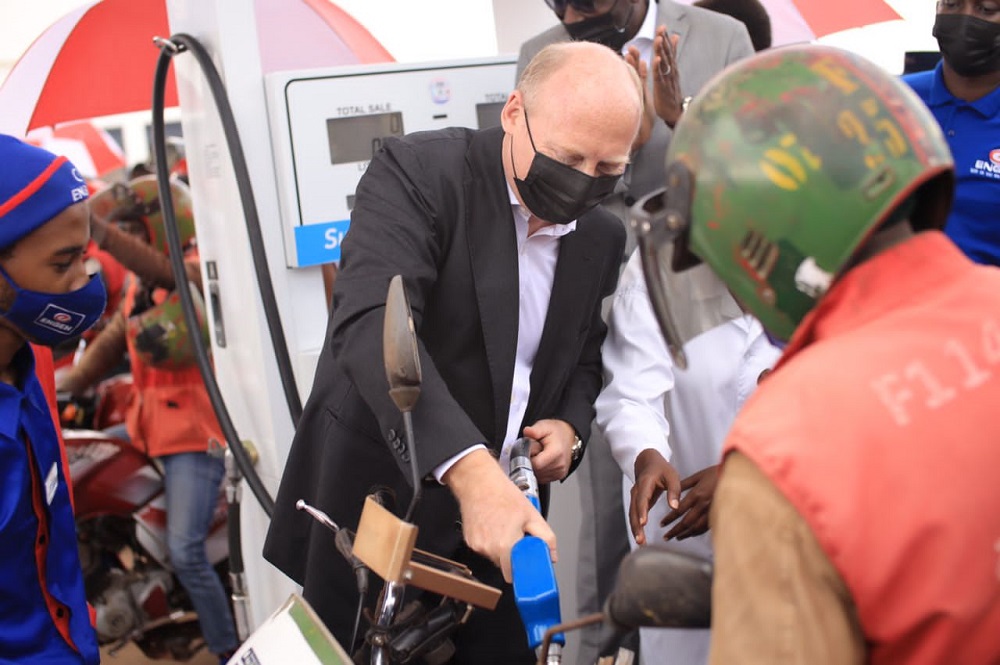
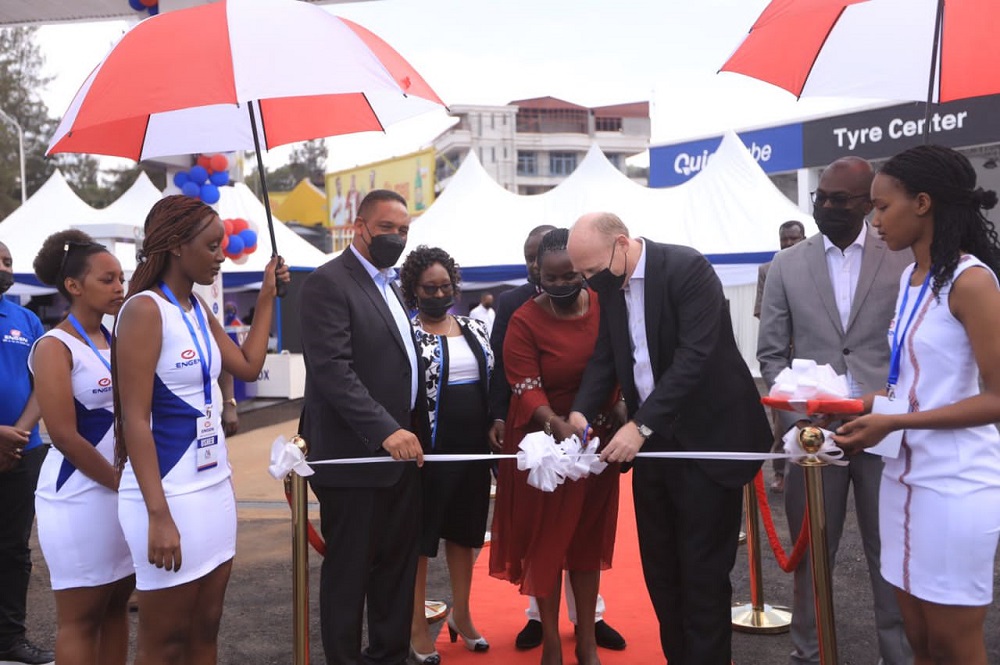
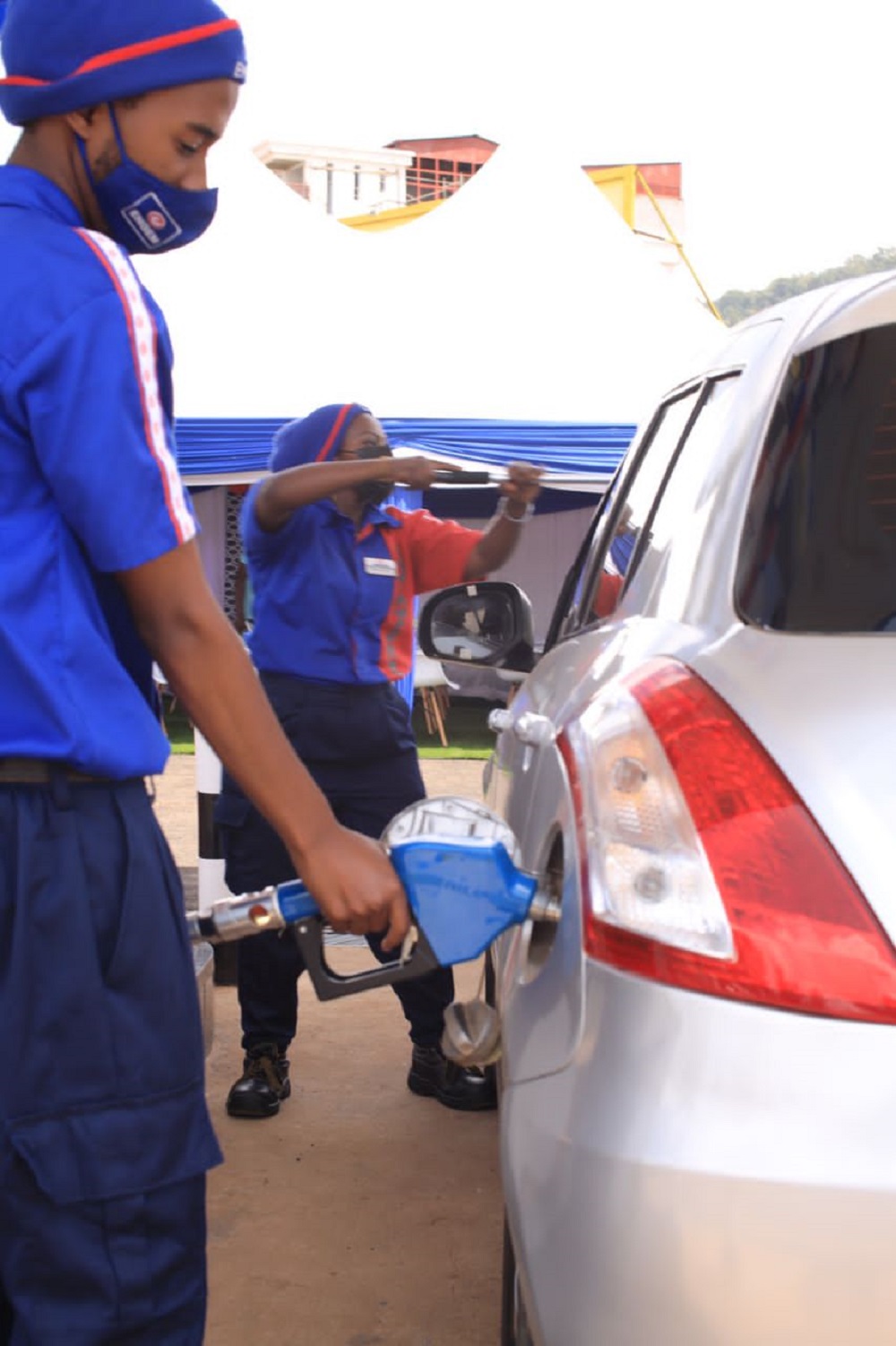
With this new service station, Vivo Energy Rwanda increases its retail network footprint across the country.
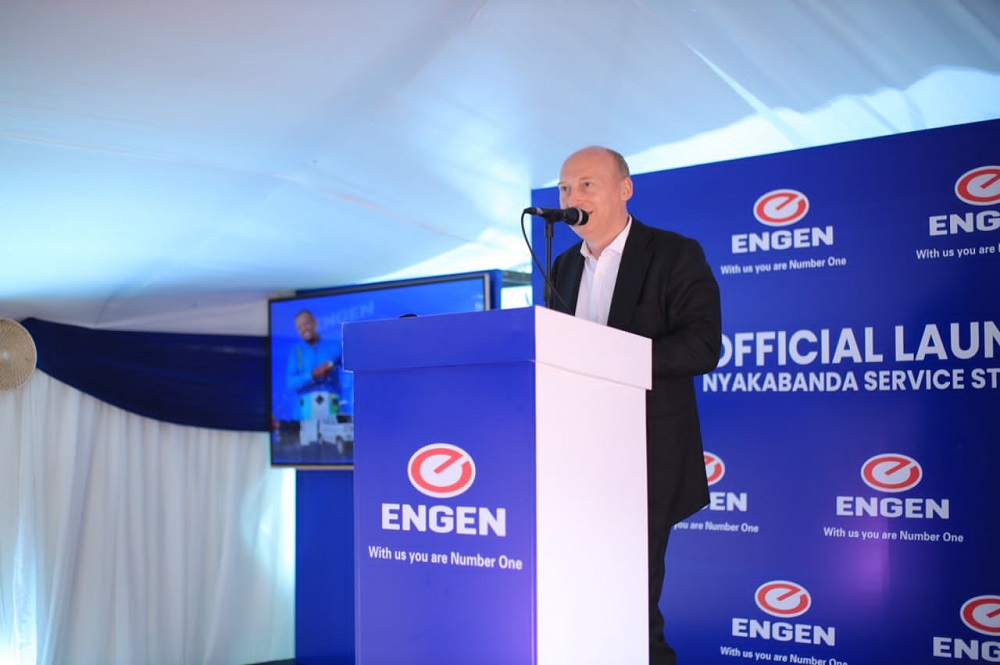
Commenting on the launch, Mr. Saibou Coulibaly, the Managing Director of Vivo Energy Rwanda said that the launch is part of efforts to expand footprints and maintain a leading position.
“Over the past three years, Vivo Energy Rwanda has grown to become one of the leaders of the energy industry in Rwanda. We have grown our network organically, doubling the number of Engen service stations since 2020. The launch of this new service station here in Kigali, and our expansion across the country, is a reflection of the country’s fast-economic growth,” he said.
Engen Nyakabanda service station will be the only one in the area having a shop and a lube bay which will help in satisfying customers’ needs.
Mr. Hans Paulsen, Vivo Energy’s Executive Vice President for East and Southern Africa also underscored that the company wants to renew its commitment and testament to the Rwandan market.
“We are constantly looking to go where there are investment opportunities, and Rwanda is well positioned to attract more capital flow in the energy sector. Pushing the boundaries of service, technology and innovation is what we do, and we strive to be part of our customers’ lives in ways that matter to them,” he noted.
Mr. Stan Mittelman, who was making his first visit to Rwanda since taking up his position as the Vivo Energy Group’s new CEO last month expressed delight to grace the new service station opening.
“I am particularly glad to be in Rwanda, the country of a thousand hills and a million smiles. Rwanda has inspired the world with its impressive transformation in all sectors of life and business. We have seen the country become a global powerhouse, thanks to its remarkable leadership. Vivo Energy is very proud to be associated with Rwanda and part of its growth story,” he revealed.
{{About Vivo Energy}}
Vivo Energy operates and markets its products in countries across North, West, East and Southern Africa. The Group has a network of over 2,500 service stations in 23 countries operating under the Shell and Engen brands and exports lubricants to a number of other African countries. Its retail offering includes fuels, lubricants, card services, shops, restaurants and other non-fuel services. It provides fuels, lubricants, liquefied petroleum gas (LPG), and solar energy solutions to business customers across a range of sectors including marine, mining, construction, power, transport, wholesalers and manufacturing.
The Company employs around 2,700 people, has access to over 1,000,000 cubic metres of fuel storage capacity and has a joint venture, Shell and Vivo Lubricants B.V., that sources, blends, packages and supplies Shell-branded lubricants.
Vivo Energy Plc has a primary listing on the London Stock Exchange, and is a member of the FTSE 250 index, with a secondary inward listing on the Johannesburg Stock Exchange.
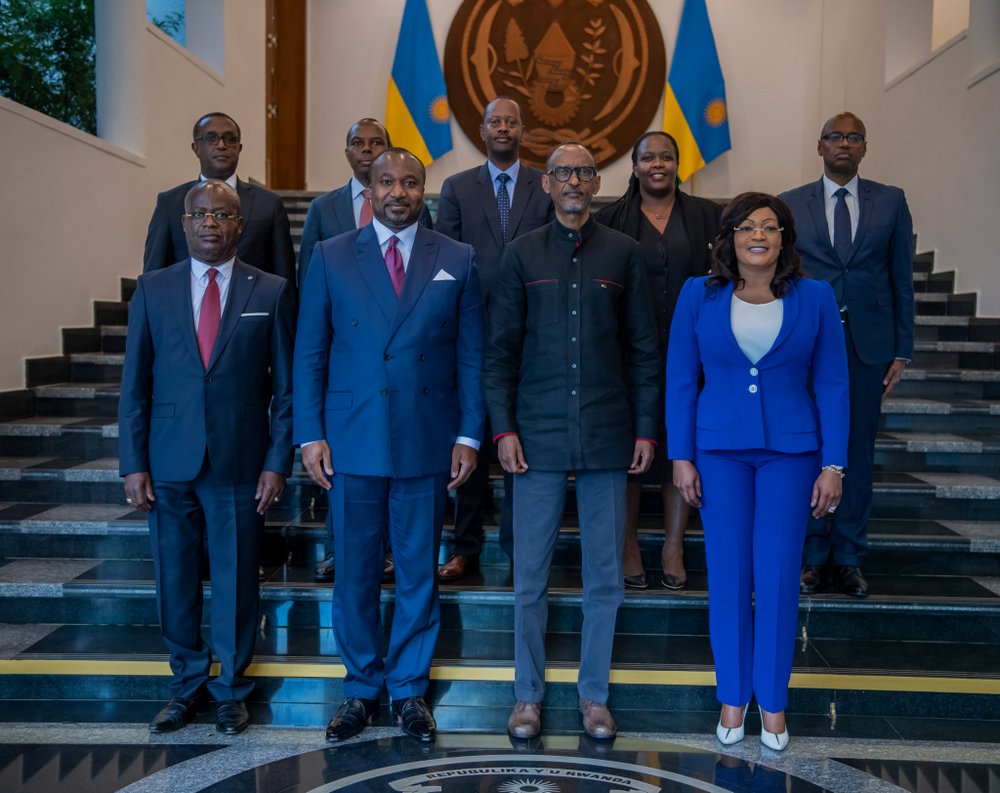
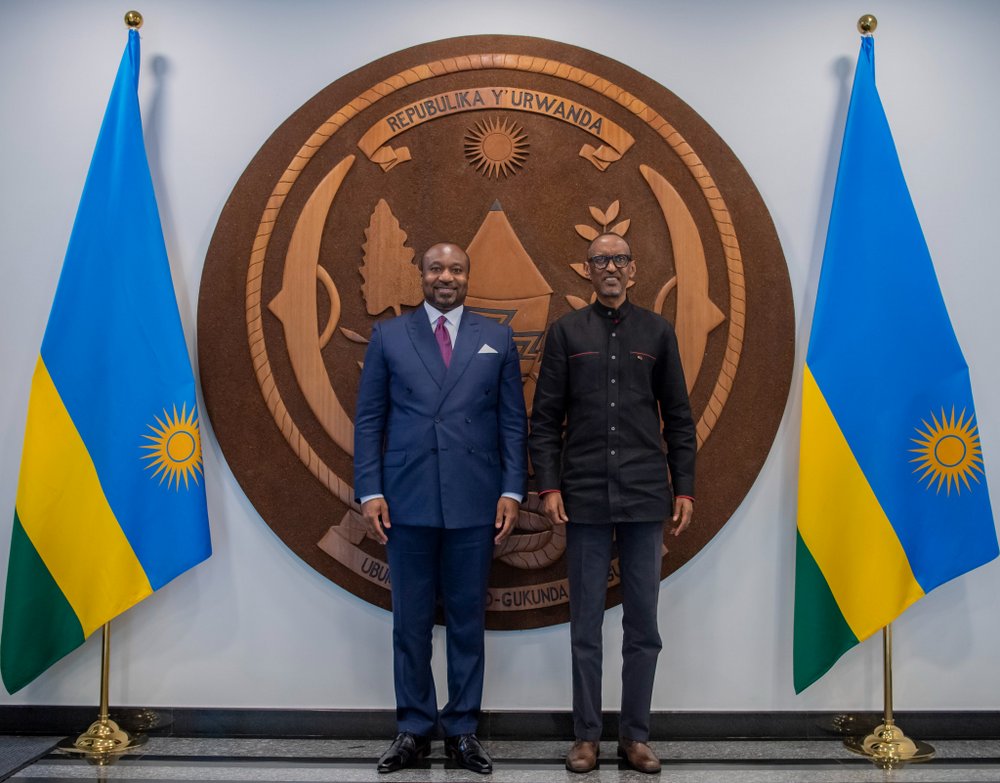
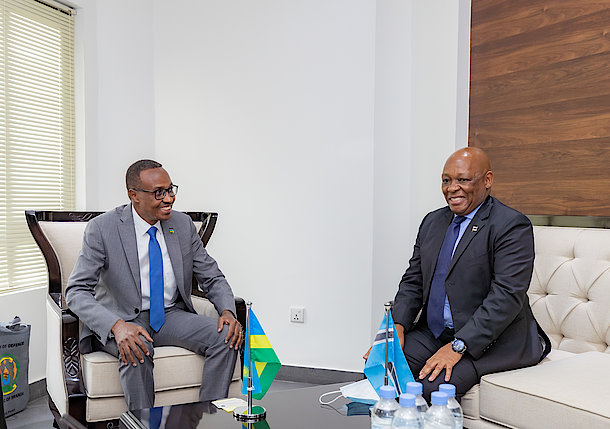
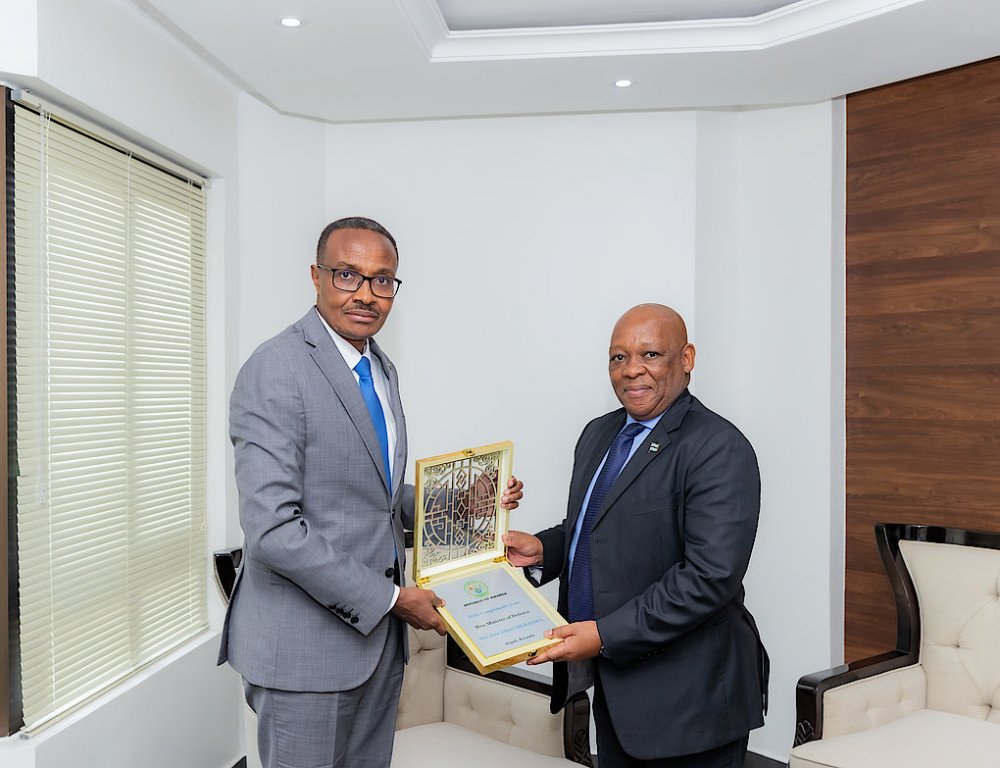
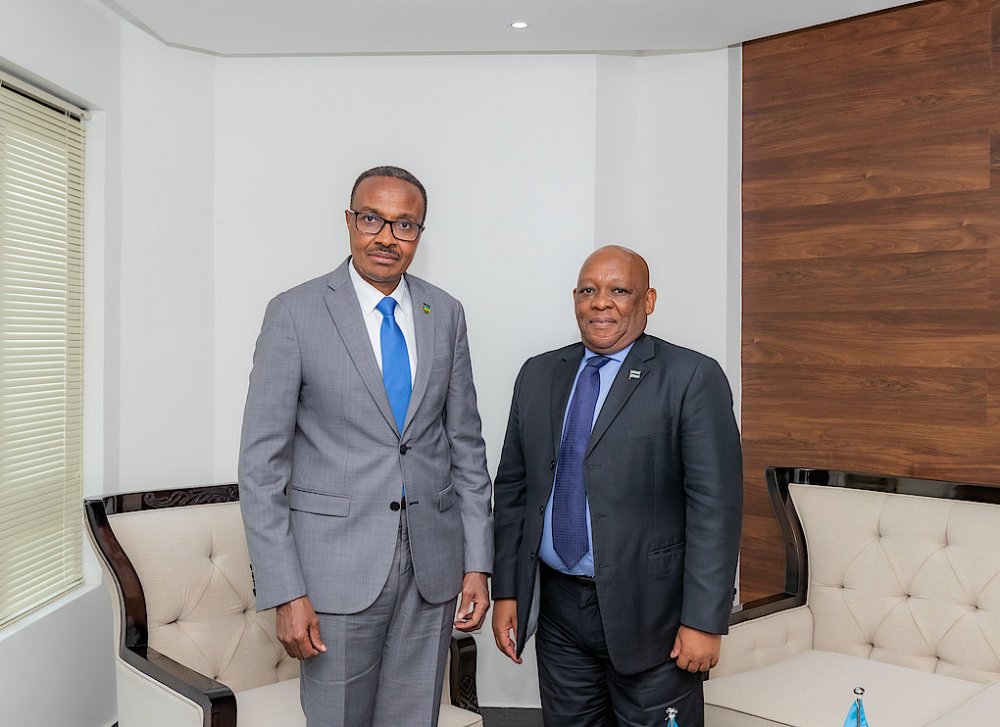
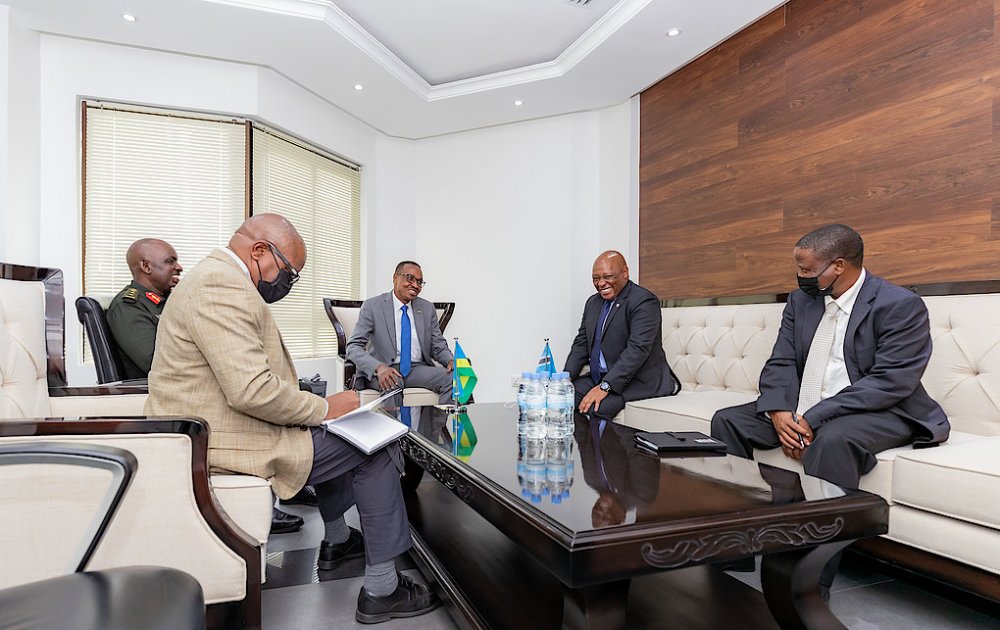
They discussed bilateral defence cooperation between Botswana and Rwanda.
In an interview after the meeting, Minister Kagiso Thomas Mmusi said that the aim of his visit is to strengthen mutual defence cooperation between Botswana and Rwanda.
“We are here to discuss our mutual relationship and see how we can strengthen it,” he said.
The Head of State made the revelation at a dinner event with members of the diplomatic corps accredited to Rwanda held at Kigali Convention Centre.
He was shedding light on the recent partnership between Rwanda and the United Kingdom (UK) where asylum seekers staying in the country illegally will be relocated to Rwanda.
Following agreements between both countries signed on 14th April 2022, different media houses and individuals majority of whom being from the western part of the world relentlessly criticized the deal saying its seems to be the trade of people because UK will provide funds to take care of asylum seekers in Rwanda.
Rwanda has however explained that the partnership reflects its commitments to protecting vulnerable people around the world, and ensuring development and prosperity for Rwanda and its people after enduring dark history that has embedded a responsibility to protect vulnerable people around the world.
Rwanda was once one of the world’s leading producers of refugees, and as such is particularly concerned with taking urgent steps towards more humane solutions to the global migration crisis.
Kagame has said that Rwanda did not agree to host asylum seekers to get money but highlighted that it is part of Rwandans values.
“I have seen some people saying, you know that the United Kingdom gave us money and then we want to dump people here. No, we don’t do that kind of thing. We don’t buy and sell people. We can’t do that because of our core values,” he said.
The Head of State hinted on Rwanda’s initial intervention regarding the issue of migrants in 2018 when thousands of Africans drowned in the Mediterranean Sea as they headed to Europe while others were stranded in detention centers of Libya.
That is when Rwanda started receiving migrants from Libya in collaboration with international organizations where they are accommodated and treated decently in a transit center before moving to third countries.
President Kagame said that Rwanda’s commitment initially arose from dreadful circumstances when he read a story of a young man from Ghana who sought money to be smuggled to Europe but ended up finding himself in enduring hard life in Libya living as a prisoner.
Realizing the dire conditions, the young man started negotiating smugglers to pay again US$900 to take him back home.
Kagame has revealed that he discussed the issue with other leaders and agreed to find a solution to save the lives of some migrants stuck in Libya.
“We agreed, if they arrived here, they could be easily taken back home if they choose to go back home. Second, those European countries that have allowed migrants to come to Europe, should come and stably select those they want to take to their countries and that would be still better than these people being trapped in Libya.
Then third, we provided another option. We said, for those who can’t go back, don’t want to go back for reasons of their own, and may not be selected by the countries that want to absorb them, we are giving them another option. We can actually find ways in which they can stay here. There were these three options in 2018,” he said.
The Head of State explained that the commitment was not influenced by someone else but rather Rwandans have values of welcoming people stuck in troubles.
“We don’t have to learn values from anybody. We have values in us that we go by. We can absorb people from wherever. If they are from Africa, we are even happier,” he noted.
“There are things you can’t buy about us. We are who we are and proud people. We are not involved in buying and selling people,” Kagame added.
{{I predicted this problem in 2015…}}
President Kagame has said that he realized the issue of migrants and Europeans would worsen further in 2015.
At the time, it was in October 2015 as he attended Rwanda Day in Amsterdam, in the Netherlands.
Considering the extent of the issue where Africans were heading to Europe in large number, the Head of State observed that Europeans would once be fed up.
“Rwandans had come in thousands and come from the whole of Europe. I asked them how they had come to Europe. I told them ‘you know what, there are some of you who came genuinely to Europe but some of you came here by telling lies’. Some of you told lies as victims of politics in Rwanda, some of you committed crimes in Rwanda and then you come here as innocent people running away from the evil Government of Rwanda,” he said.
“I said that one time; this Europe you are taking advantage of will get to know this truth, I am telling you. And they will come back to ask each of you how did you come here? They will know the truth about you, pack you in a container or something and send you back. I said that they will come to the truth because they have own problems as well,” Kagame added.
Kagame said that it was apparent that Europeans would one day wake up.
“I don’t think we are going to transfer half of Africa into Europe and Europe keeps silent. They will wake up,” he noted.
The Head of State also requested European countries to make an assessment to people who have been staying there for long claiming to be refugees or migrants because some of them might have committed crimes in countries of origin.
“I hope when UK sends these people, they should send to us some people they have accommodated for over 15 years who committed crimes here. We sent files and investigated. These are clear case files. Instead of being accommodated in that beautiful place in UK, many people should be in jail whether in UK or here. They are about five,” he stated.
These include Vincent Bajinya who was a doctor, Celestin Mutabaruka, who was a pastor; Celestin Ugirashebuja, Charles Munyaneza and Emmanuel Nteziryayo who served as former Bourgmestre suspected of Genocide crimes.
The President said that Rwanda is willing to partner with any country understanding the values around partnership.
In 2021, Europe received requests from over 600,000 asylum seekers applying for international protection.
The research carried out by Pew Research Center in 2016 indicates that Europe’s population might increase by 121 million in 2080 due to the issue of migrants if no action is taken.
The continent is predicted to register only 399 million population by 2080 excluding the number of migrants.
To ensure fire protection, the Rwanda National Police (RNP) Fire and Rescue Brigade (FRB) has strengthened its proactive measures of fire.
Hundreds of thousands of people across the country have so far been been equipped with knowledge and skills on how to avert fires.
Now, the training, which looks at the causes, components and classes of fire as well as evacuation procedures, has shifted to Police officers in their respective units.
The training of Police officers started this Wednesday, April 27, with 85 officers working at the RNP General Headquarters in Kacyiru, and it will last for two days.
It is a combination of the causes and components of fire, safer measures against fire and how to use different firefighting gadgets to put out fire.
“Fire emergencies endanger all lives, property, buildings or the environment. We have been training medical staff and employees in hospitals, clinics, traders in commercial buildings, market places, bus terminals and employees in other institutions. It is equally important for Police officers to also acquire the same knowledge and skills for their safety in their homes and places of work,” ACP Paul Gatambira, the commanding officer for FRB, said.
He added that for the next one month, FRB trainers will be moving to different Police units across the country to train officers.
“These trainings are creating impact; we are seeing a downward trend in fire cases. We are also seeing people, who respond safely and positively to fire emergencies like a recent case in Kirehe District where residents, who were trained, managed to put out fire caused by a gas cylinder, which exploded,” he added.
Last year, 123 cases of fire outbreak were recorded across the country, the majority resulting from gas.
“Since the beginning of this year, 66 cases of fire have been registered, but most of these also caused by reckless use of cooking gas, were extinguished by the people because they were trained on how to respond safely,” ACP Gatambira said.
The majority fire emergencies were registered in City of Kigali.
The decision was taken on 4th April 2022 when the Court of Appeal read the ruling for Rusesabagina and 20 co-accused terror convicts.
They were convicted of terrorism charges related to attacks by MRCD/FLN terror group in different parts of the country in the districts of Nyaruguru, Nyamasheke, Nyamagabe and Rusizi in Southern Province which claimed nine lives, left a car burnt and several valuables looted between 2018 and 2019.
The arrest of Rusesabagina in 2020 dominated the international media coverage and triggered mixed reactions where politicians, organizations and some European countries demanded the release of Rusesabagina.
President Paul Kagame has talked about the issue as he addressed diplomats accredited to Rwanda during a ceremony held at Kigali Convention center in the evening of 26th April 2022.
The Head of State has said that laws cannot tolerate the crimes committed by Paul Rusesabagina and co-accused individuals even in countries claiming for his release.
“It is absolutely surprising that people who have hundreds years of history of these sort of things I am talking about, justice, democracy, human rights and so on; sometimes rightly give us many lessons getting it so wrong in this particular case. But I understand it is not just getting it wrong like they don’t know. It is getting it wrong because of who they think we are. They just look down upon us. While you can look down upon me, you can disrespect me to that extent; it is my duty to make sure that I don’t agree with you. I would seriously object. That is what Rwanda is and should be, now and for the future.”
The President also disclosed how one of leaders once requested him to release Rusesabagina putting forward objections that ‘he is a hero who should not be jailed’.
“One time, one of these leaders you would really respect, came to me and said you know ‘you should have this man released’. First of all, I said that ‘I am not the court’. Secondly, even if I would use my authority as president which would be abusing my authority, ‘can you explain to me a little bit of why you think it should be the case?”
“He said, ‘you know he is a hero, people say, it is like he is rivaling you! I told this guy, ‘I am not a hero, I don’t even want it to be’. This is what I said during the commemoration on the 7th April. How can you be a hero in a situation like ours of Genocide. One would have been a hero if they had prevented this from happening in the first place; but we lost over a million people,” he added.
Paul Rusesabagina was renowned in Hotel Rwanda film which described him as a brave man who saved people at Hôtel des Mille Collines during the 1994 Genocide against the Tutsi. Some of victims who stayed at the hotel revealed that some implications of the film are different from the reality, because they paid the cost of living there unlike the man’s lie that they were housed for free.
Rusesabagina himself also admitted that Hotel Rwanda does not depict the whole truth because it was exaggerated to make it more appealing.
President Kagame said that he continued to talk to the leader who claimed for the release of Rusesabagina, asking him what to tell families who lost relatives during attacks plotted by the rebel groups of Rusesabagina.
“This person said, ooh, there are victims? We can also go to them and say sorry,” he noted.
“Then I said, how about others co-accused with him? There are around 20 of them who also testified and first of all accepted their responsibility themselves, and testified against this person because they were together in the same crime. Do we have this one released, these ones stay in prison and tell the victims to shut up?” Kagame added.
The Head of State emphasized that the leader seemed to show that Rusesabagina was made a hero to distort Rwanda’s history.
“The effort is about changing victims to be the perpetrators. […] So, there is a counter narrative,” he noted.
Kagame added that people intending to distort Rwanda’s history will not succeed.
“We have to have the capacity and we do, to really absorb this insult, I should say. We have developed capacity to absorb it, live our lives and move along. […] Sometimes, there are certain things about us, about our history, about the core of who we are that no amount of intimidation can work here,” he said.
“I really hope that even when I am not there, these other good Rwandans will stand out to this kind of challenge we face every day. I really hope so,” Kagame stressed.
The Head of State said that Rwandans have own values that they want to own up their problems and hold each other accountable and be held accountable by others.
The plane carrying the suspect popularly known as Mico landed at Kigali International Airport in the morning of 27th April 2022 at 6:30.
Micomyiza was born in 1975 in Agasengasenge Cell, Cyarwasumo Sector of Huye District in Southern Province. During the 1994 Genocide against the Tutsi, the suspect lived in Tumba Sector and was a level 2 student at the former National University of Rwanda in the Faculty of Applied Sciences.
As NPPA has revealed, Micomyiza was a member of ‘Comité de crise’ at the university whose mission was to search and identify Tutsi civilians to be killed.
NPPA has through a statement shared via Twitter handle commended Judicial Authorities of the Kingdom of Sweden for the extradition of the Genocide fugitive, continued cooperation and mutual legal assistance, as well as contribution to ‘the global effort to fight impunity’.
Rwanda requested for the deportation of the suspect in 2020 to face justice for his role in Genocide against Tutsi.
His defense lawyers including Thomas Bodström and Hanna Larsson Rampe had tampered with the extradition claiming that Rwanda’s judiciary is incompetent.
The suspect lived in Gothenburg City in Sweden for 15 years. He was denied nationality for having the status of a politician.
Micomyiza was arrested following Rwanda’s request to extradite him for his role in the Genocide.
He is facing charges including role in crimes of Genocide, complicity in Genocide and crimes against humanity.
Sweden accommodates three Genocide fugitives who were handed life sentence.
These include Théodore Rukeratabaro sentenced in 2018, Claver Berinkindi convicted in 2017 and Stanisilas Mbanenande sentenced in 2013.
Here are 7 reasons why you should choose University of Kigali:
{{1. A Plethora of Industry-relevant & Globally-recognized Academic Programmes}}
At UoK, you have the opportunity to choose from a plethora of industry-relevant and globally-recognized academic programmes ranging from undergraduate, graduate professional, languages as well as executive programmes in the fields of Business Information Technology, Marketing, Accounting, Finance, Economics, Law, Procurement & Supply Chain Management, Computer Science, Information Technology, Business Administration, Early Childhood Development Education, CPA (Rwanda), CPA (Kenya), ACCA, CIPS, CIA, IPSAS and many others.
{{2. Multiple Campuses and Easily-accessible Locations}}
UoK has 2 campuses situated at vantage locations in Rwanda. The university’s main campus is located in Kigali, next to the plush Kigali Heights and about 3 kilometers from the Kigali City Centre. The second campus is located within the RSSB Building in Musanze, in the northern district. These campuses and locations make it easy for local as well as international students to access quality higher education at UoK.
{{3. Flexible Payment Plan & Platforms}}
UoK has a flexible plan for tuition fee payment which allows students to pay fees either on monthly basis, per trimester or annually. There are also modern and flexible payment modes such as local and foreign bank transfers as well as mobile platforms.
{{4. Six World-class & Well-equipped Schools}}
UoK has six world-class and well-equipped schools which use effective and globally-acclaimed resources to deliver excellent academic services to students in diverse fields of study. The schools are:
• Graduate School
• School of Business Management & Economics
• School of Computing & Information Technology
• School of Education
• School of Law
• School of Professional and Executive Programmes.
{{5. Experienced and Diverse Faculty}}
UoK has diverse and experienced faculty from Rwanda, India, Kenya, Uganda, Nigeria, United Kingdom and United States of America. Currently, our programme modules are taught by 9 Professors and 32 PhD-holders in various disciplines, with exposure from different parts of the world and vast experience in both industry practice and academia.
{{6. International Partnerships}}
UoK believes in diversity, creation and dissemination of critical knowledge embedded in the wealth and potential of the region and the world. Consequently, we have partnered with reputable universities and institutions in Kenya, Uganda, India, South Africa, Germany, Italy, Canada, UK, Poland and Ghana among others to give students and staff international exchange opportunities. Some of our exchange programmes are AIESEC, Erasmus and Erasmus+ through the support of the European Union.
{{7. Massive International Student Population}}
As a university of choice for international students with a passionate drive towards internationalization and excellence, UoK has an international office which is solely responsible for the welfare of international students from the time of entry till they graduate. Currently, we have students from Angola, Nigeria, Gabon, Ivory Coast, Ethiopia, Sierra Leone, Malawi, China, Turkey, Burundi, Uganda, Kenya, DR Congo, India, Chad, etc.
University of Kigali is welcoming new students for the ongoing May 2022 Intake.