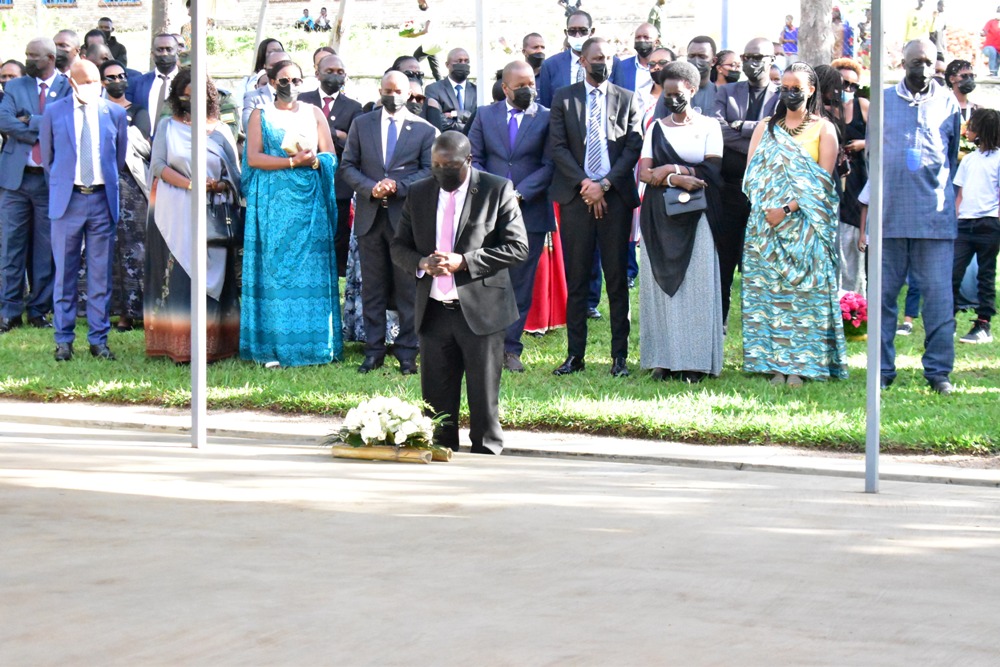
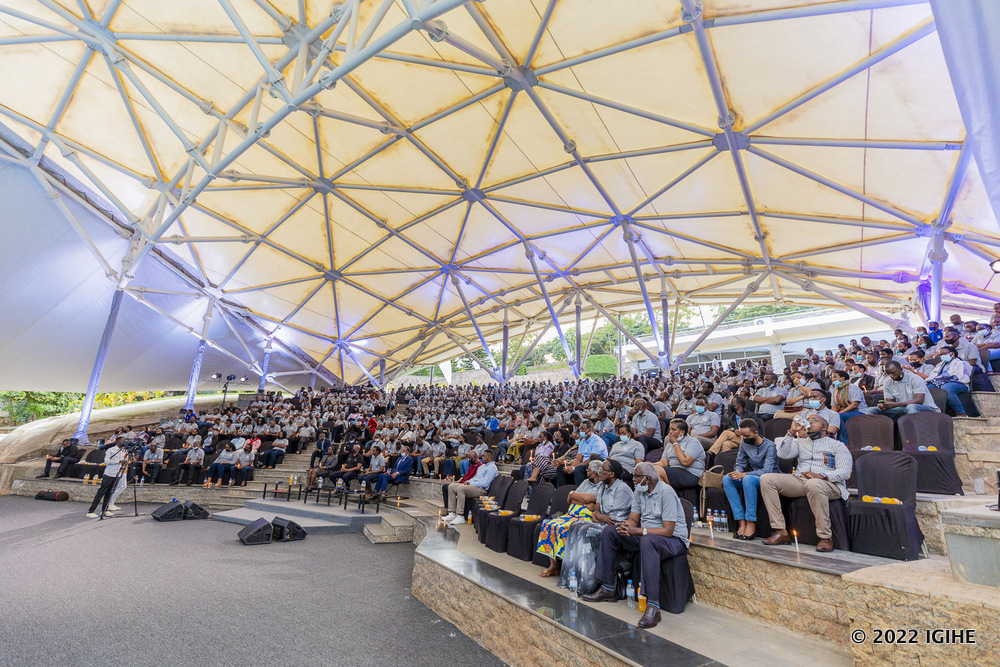
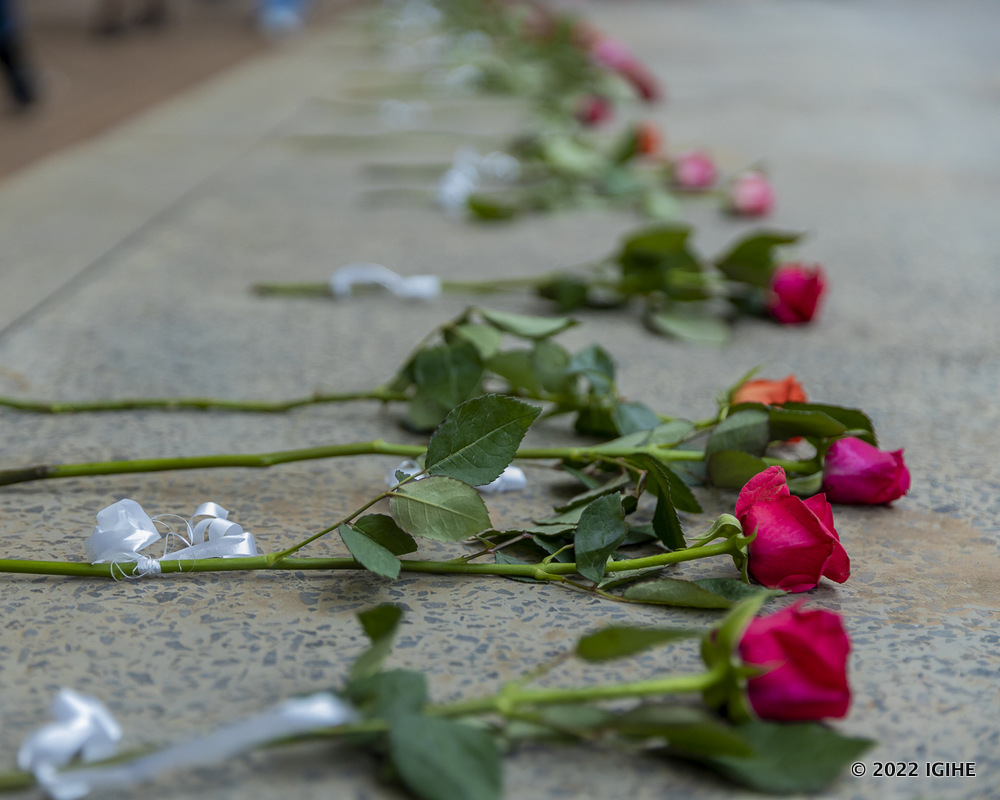
The remains were relocated from dilapidated graves to Kinazi Genocide Memorial which accommodates 163,150 remains.
The victims laid there were killed in former Commune Ntongwe and Mayaga.
Elise Mukarubuga, a survivor who provided testimonies at the event revealed she lost 42 relatives during Genocide against Tutsi.
“Our family was composed of 63 people but only 21 survived,” she said.
Mukarubuga disclosed that Interahamwe militiamen surrounded them, threw grenades and fired several bullets among them in the night of 20th April 1994.
Senator Prof. Jean Pierre Dusingizemungu who delivered a talk at the event, explained how the first and second republics resepctively led by Gregoire Kayibanda and Juvenal Habyarimana fuelled ethnic divisionism.
“A learner in primary school had a document showing his/her ethnic identity. The home was also known when the pupil turned seven years old,” he noted.
As Prof. Dusingizemungu explained, students at the time did not get equal opportunities to access education as those identified as Tutsis continued to be persecuted.
He however thanked the current government which reunited Rwandans and promoted reconciliation for people to live in harmony.
The President of IBUKA, Egide Nkuranga said that commemorating is a way to preserve memory of victims killed during Genocide against Tutsi.
“The youth need to be deeply taught the history of Genocide against Tutsi and learn more from testimonies,” he said.
The Ministry of Local Government, Jean Marie Vianney Gatabazi has said that the youth need to be properly raised lest they are lured by propagandists propagating Genocide ideology.
He also blamed the bad leadership which planned and executed Genocide, and comforted survivors reassuring them of continued support to promote their wellbeing through different programs.
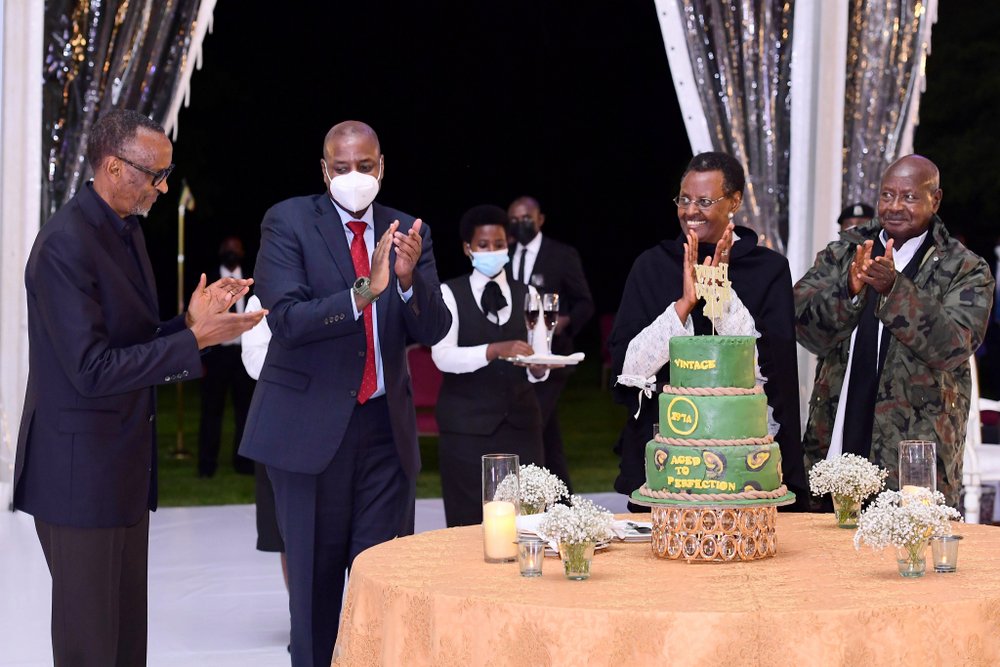
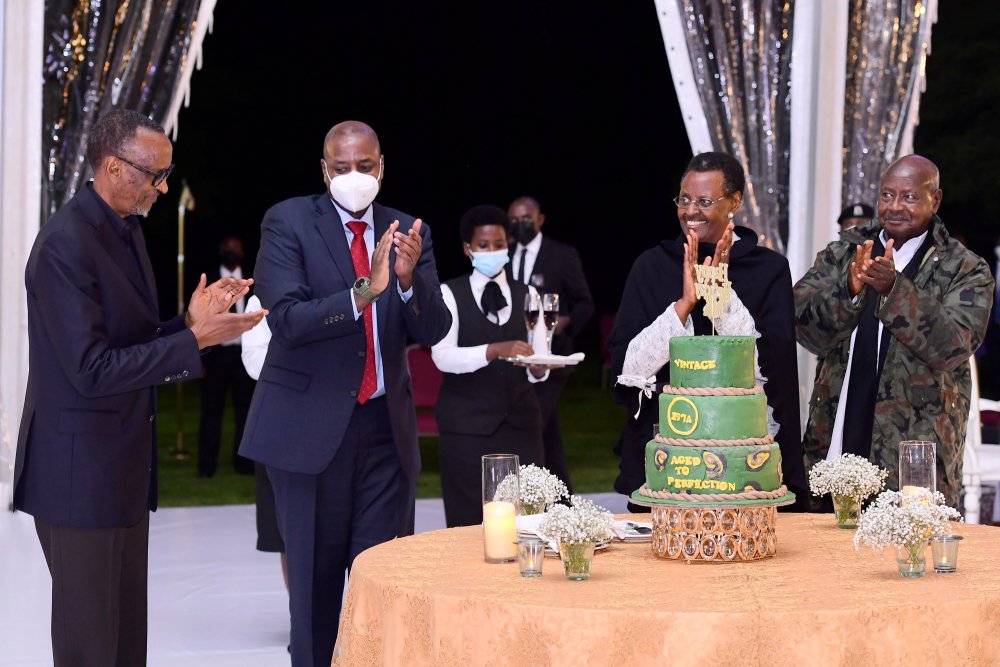
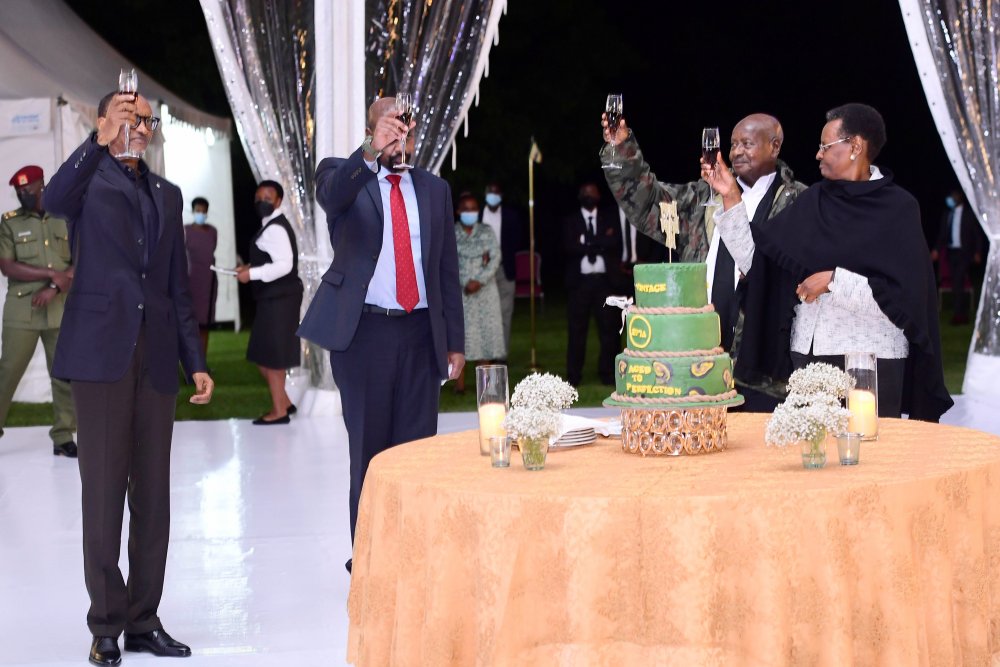
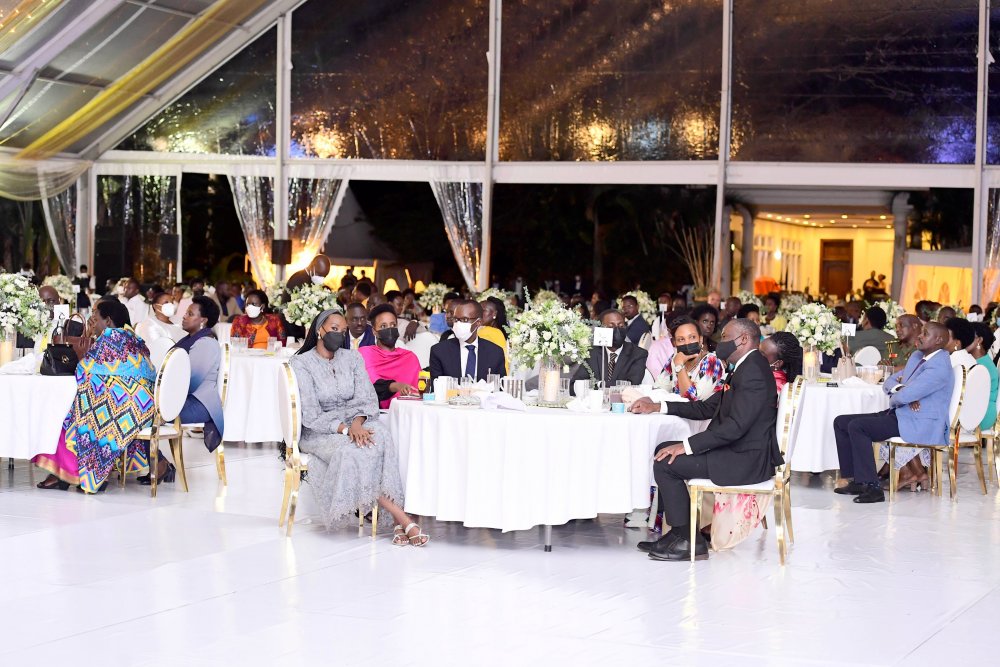
The Head of State made the appreciation on Sunday 24th April 2022 as he attended the 48th birthday of Lt Gen Muhoozi, the first born son of his counterpart of Uganda,Yoweri Kaguta Museveni, currently serving as Senior Presidential Advisor on Special Operations and Commander of Land Forces of the Uganda People’s Defence Forces (UPDF).
As he addressed participants of the event, Kagame thanked Lt Gen Muhoozi for his achievements in 48 years noting that he has used his time very well .
“So far, what we know, what we have been told, what is true is that the 48 years have been used very well. Therefore, there is no doubt that many more years we wish for him ahead, are going to be used even better. Thank you for inviting me to be here for this birthday.
I am really here for two major reasons. One is to celebrate your birthday with your parents and your family and your friends. The second is to also be happy that I am here again after four or five years, I hadn’t been coming to Uganda,” he said.
{{How Muhoozi asked for Kagame’s phone number}}
President Kagame has said that Lt Gen Muhoozi asked for his phone number to discuss issues between both countries’ relations.
“Muhoozi went through friends, and asked for my phone number. And so, I provided the direct line,” he said.
“He asked me in a message if I could accept talking to him in that direct way. Even before, I knew what he wanted to tell me. I accepted. He came. All this happened in a very short time of about two weeks,” Kagame added.
The commitment led to first talks with Lt Gen Muhoozi in January 2022 paving the way for normalized relations.
President Kagame went on to say that he did not only trust Muhoozi for his intentions to mediate the two countries but also was convinced that his father, Ugandan President Museveni was behind the good cause.
“When I received Muhoozi, I had been receiving emissaries from the president and government to talk about these difficulties. From the beginning, I knew the messages and messenger would be different from the usual ones. Messengers are not the same,” said Kagame.
“I was absolutely aware and convinced, in accepting to meet Muhoozi, that it was his father who was behind the message. I was under no illusion that it was Muhoozi operating on his own,” he added.
The President said that Rwanda and Uganda are on a path to peace and harmony where they continue to move forward.
He underscored that he was convinced that worsened relations would be temporary because of the strong bond between both countries and thanked Muhoozi for his contribution.
“Great generals are not those who fight and win wars,” said Kagame on Sunday night, adding, “greater generals are those who win peace.”
Speaking at his birthday celebration. Lt Gen Muhoozi thanked God for granting him life up to 48 years and parents who raised him.
“ I want to thank Almighty God for letting me live up to 48 years and taking me through everything he has taken me through. I want to thank my parents, President Museveni and Mama Janet for raising us the way they raised us.
Muhoozi also thanked Kagame whom he described as a straight person who never dodges the truth.
“I want to thank in a very special way, His Excellency President Paul Kagame for honouring my invitation. We are honoured and know it is the beginning for many good things to come,” he noted.
Lt Gen Muhoozi, the first born of Museveni was born in Tanzania on 24th April 1974. He is a father of three.
At the time, Museveni was among rebel outfits that had plans to overthrow the leadership of Idi Amin Dada who led Uganda from 1971 to 1979.
Museveni thanked Kagame for honouring the invitation highlighting that his son has a long history with the President of Rwanda.
“I want to thank His Excellency Paul Kagame for responding to positively and pay a visit to Uganda after a number of years of not coming here. President Kagame and Muhoozi have a long history together,” he noted.
In 1979 after overthrowing Idi Amin, Museveni said, Muhoozi was 5-year old where President Kagame and Museveni’s colleagues in the military used to spend long time together.
Janet Museveni also thanked God for having protected her entire family and requested Muhoozi to remain a God-fearing man.
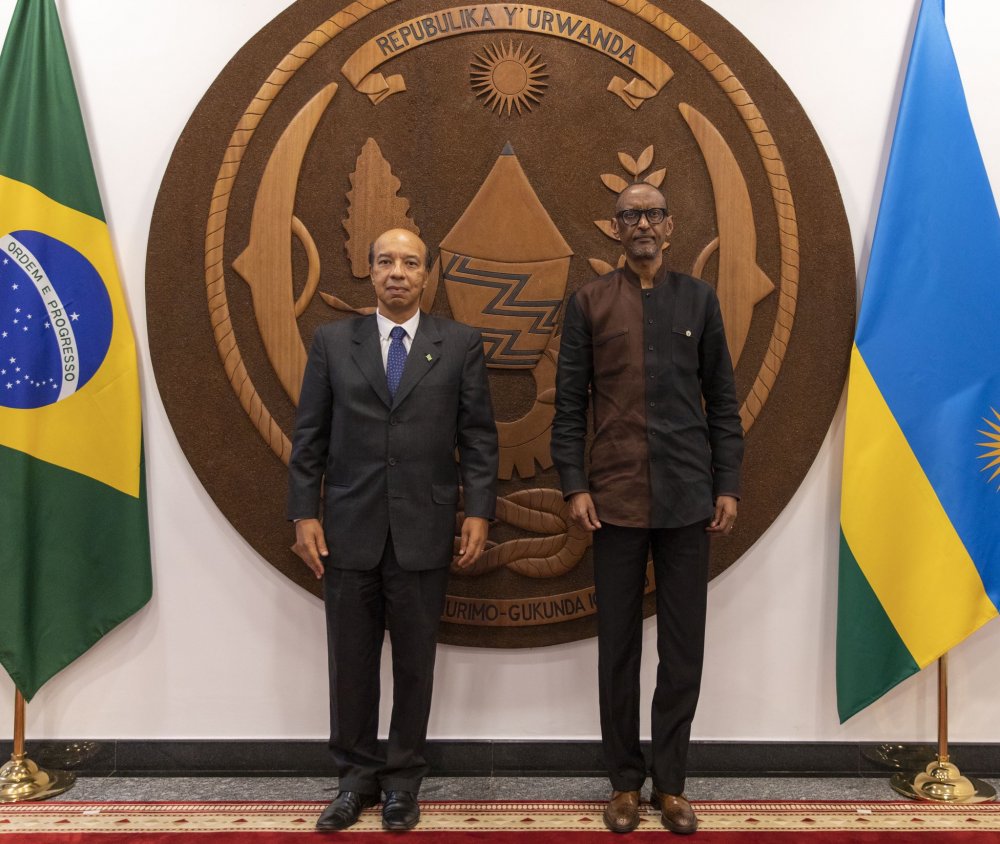
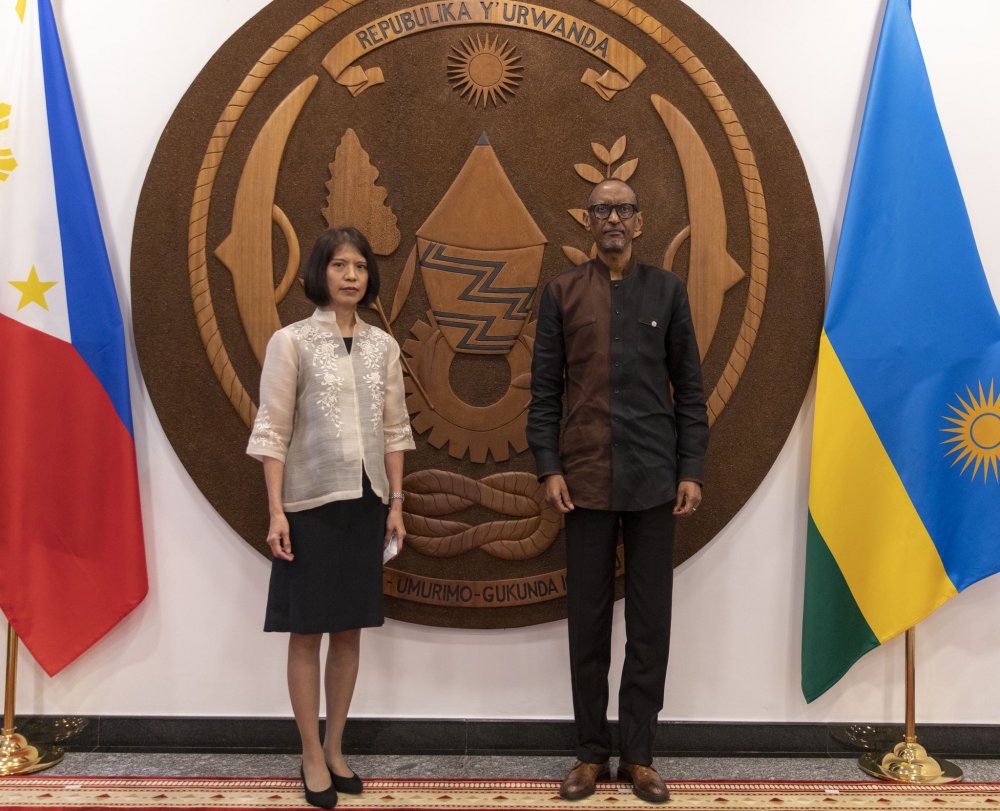
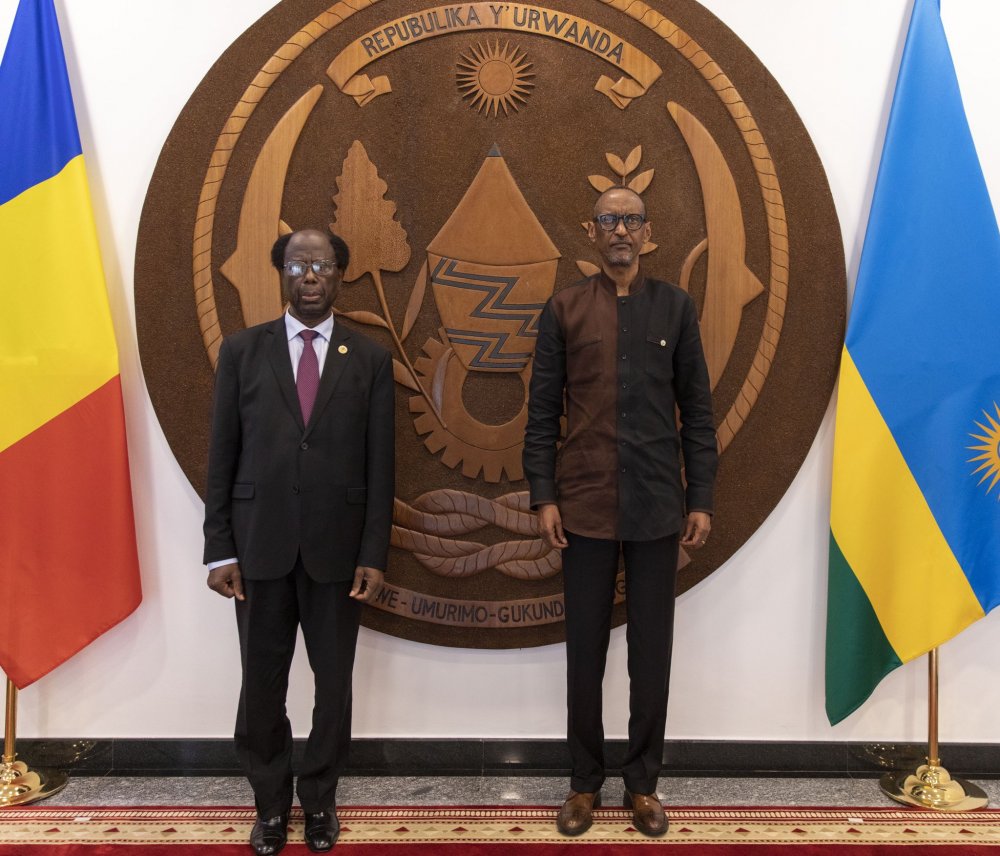
The new envoys received on Monday 25th April 2022 include Sommel Yabao Mbaidickoye of the Republic of Chad, Silvio José Albuquerque e Silva of the Federative Republic of Brazil and Marie Charlotte G. Tang of the Republic of the Philippines.
The Head of State also received credentials from new High Commissioners namely; Lebbius Tangeni Tobias of the Republic of Namibia and Esmond St. Clair Reid of Jamaica. The latter will have residence in Nigeria.
Amb. Reid presents credentials following the recent visit of President Kagame to Jamaica where he held talks with different top government officials and addressed the country’s parliamentarians.
Among others, Marie Charlotte Tang will oversee interests of Philippines to Rwanda with residence in Nairobi, the capital of Kenya; Amb. Silvio José Albuquerque e Silva of Brazil will also have residence in Kenya, Amb. Lebbius Tangeni Tobias has residence in Dar es Salaam, the capital of Tanzania while Sommel Yabao Mbaidickoye of Tchad has residence in Congo Brazzaville.
The envoys held talks with Kagame revolving around deepening bilateral relations.
“Back home after a happy 2 days-visit in Uganda for Gen Muhoozi Kainerugaba birthday during which I had productive discussions with H.E President Kaguta Museveni on bilateral, regional and global issues,” Kagame tweeted on Monday night.
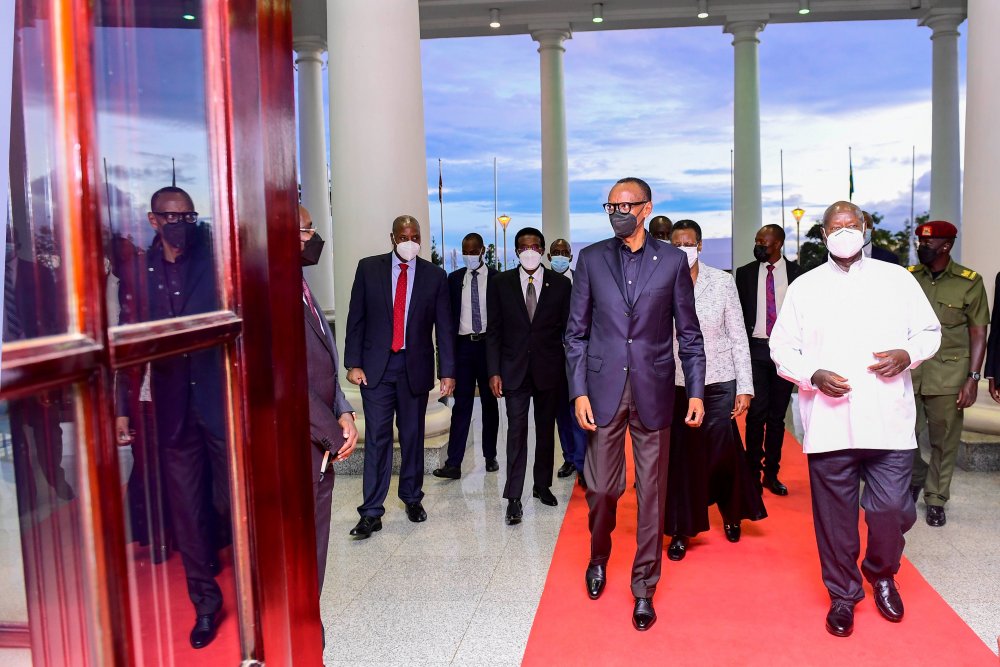
Kagame started his visit in Uganda on Sunday 24th April which he concluded on 25th April 2022.
Upon arrival, he was received by the Minister for National Security, Maj Gen Jim Muhwezi and Lt Gen Muhoozi Kainerugaba.
On the same day, Kagame was hosted by his counterpart of Uganda, Museveni and his wife Janet Museveni with whom they held talks on different issues including regional peace, stability and cooperation.
He also attended the birthday of Lt Gen Muhoozi which was also attended by different dignitaries from Uganda.
On Monday, Museveni revealed via Twitter handle that President Kagame has long history with Muhoozi and thanked him for accepting the invitation of his son.
Lt Gen Muhoozi disclosed that he decided to organize a formal birthday party to celebrate achieved progress towards restoring bilateral relations to normal.
President Kagame was last in Uganda on 25th March 2018 for discussions on spoiled relations between both countries.
The Head of State visited Uganda at a time when relations between both countries is on the mend following talks with envoys from Uganda including Muhoozi and Uganda’s Permanent Representative to UN, Adonia Ayebare.
Lt Gen Muhoozi has come to Rwanda two times this year on a mission to mend ties between Uganda and Rwanda that had worsened since 2017.
Since he was involved in the process to restore relations to normal, Lt Gen Muhoozi has been warning Rwanda’s dissidents that they have no place in Uganda. He recently revealed that no official fighting Rwanda would retain job in Uganda.
He also echoed similar message in February where he warned Kayumba against using his country to threaten Rwanda’s security.
His previous visit to Rwanda was on 22nd January 2022, a move that was followed by the reopening of Gatuna border.
Later on, Rwanda reopened all land borders on 7th March 2022.
On the occasion of his birthday celebration, Lt Gen Muhoozi said that both countries currently have good relations with optimism that the situation shall improve further in the future.
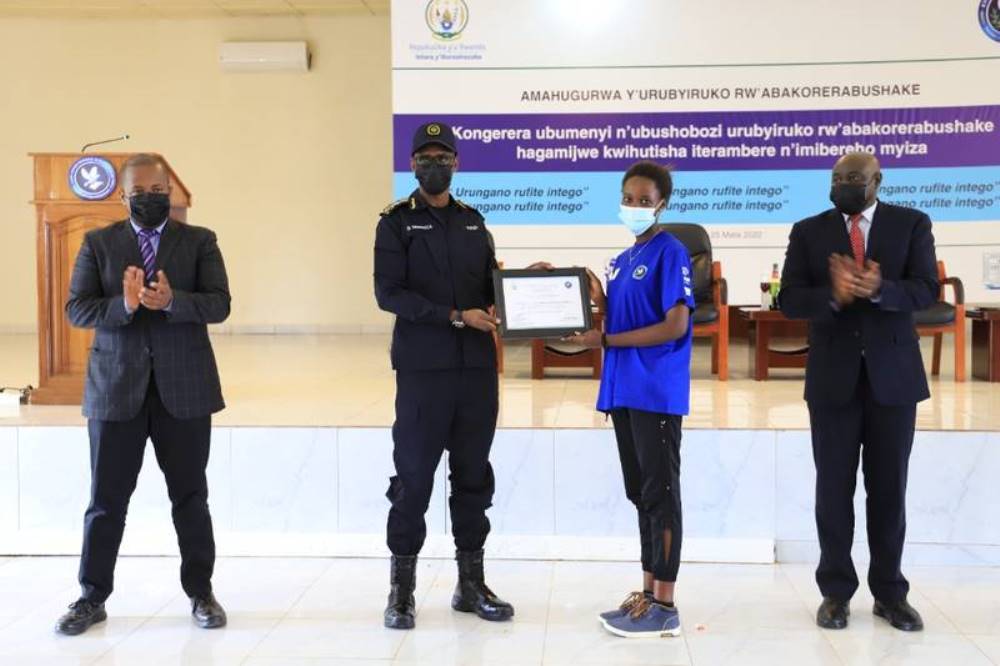
IGP Munyuza made the call on Monday, April 25, while officially closing a six-day training for 257 members of Rwanda Youth Volunteers in Community Policing (RYVCP) from the Eastern Province, at the Police Training School (PTS) Gishari in Rwamagana District, held under the theme: “A generation with purpose.”
The Governor of Eastern Province, CG Emmanuel K. Gasana and the Permanent Secretary in the Ministry of Local Government, Samuel Dusengiyumva, also attended the event.
IGP Munyuza observed that patriotism, discipline, being sober, and exemplary behaviours are key values for the young generation to stay focused and actively involved in individual and national development and security agenda.
“We need a generation of young people that is free from drugs, smuggling, gender-based violence and theft; youth who are hygienic, fight corruption, strive for service delivery and at the forefront in implementing security and socio-economic development programmes in communities,” IGP Munyuza said.
He encouraged them to double their efforts in fighting and preventing crimes, and sharing information on anything that can destabilize the peace, safety and security of the people.
During the six days, trainees looked at the Rwandan history and the role of youth in fighting genocide ideology, Rwandan values, crime prevention and community policing, innovation, and community development, among others.
On his part, the Permanent Secretary, Samuel Dusengiyumva urged the youth volunteers to be defined by actions and to create impact in their communities.
He, however, said that to achieve the intended purpose, it is imperative to share the gained knowledge and skills with all youth volunteers down to the grassroots level to act collectively.
“To the local and security leaders in districts, these young people are your responsibility. When you give them time, encourage and support them, they will be result-oriented,” Mr. Dusengiyumva said.
Governor Gasana noted that the country has witnessed the importance of youth volunteers, especially during this period of the Covid-19 pandemic where they played key roles in the enforcement of the national directives to contain the spread.
He further reiterated their impact in fighting cross-border crimes especially in Nyagatare and other districts in the province.
More than 400 members of youth volunteers in Nyagatare are working with security organs to fight crimes related to cross-border in the district.
“There are 76,593 members of RYVCP in the Eastern Province, and this is a pride to our country. You are an example to a generation with purpose; a generation that has values of unity, resilience, patriotic, works hard, and big-hearted,” Governor Gasana said.
Youth Volunteers in Community Policing, a group formed in 2013, has been credited for their volunteerism work valued in billions of money, including construction and renovation of houses for the disadvantaged families, roads, organic gardens, planting trees and supporting other human security and community development activities.
The meeting held at Umuganda stadium brought together local leaders, police, military and about 400 community night patrol personnel from the sectors of Gisenyi, Rubavu and Rugerero.
The mayor of Rubavu, Ildephonse Kambogo thanked members of community night locally known as Irondo for their dedication in supporting security organs to enforce the rule of law.
The meeting was also attended by the District Police Commander for Rubavu, Senior Superintendent of Police (SSP) Aphrodis Gashumba.
“People cannot thrive when they are insecure and Police cannot be everywhere. The District leadership recognizes your dedication and contribution to maintain safety and security which is the cornerstone for development here in Rubavu district and the country in general,” said Mayor Kambogo.
He urged them to refrain from drunkenness and other misconduct that makes them lose focus and tarnish their image.
The DPC, SSP Gashumba also echoed the role of Irondo in improving security in localities, and particularly during this period of Kwibuka.
He said that cases of theft, assault, drug trafficking and illegal cross-border trade are still relatively high, and urged Irondo personnel to strengthen their night patrols against such crimes.
Museveni made the appreciation through a long Twitter thread in which he talked about his life in exile before taking power and expressed gratefulness for Kagame’s visit to Uganda who attended the 48th birthday anniversary of his first born, Lt Gen Muhoozu Kainerugaba.
The celebration took place at State House in Entebbe.
Museveni has said that Lt Gen Muhoozi Lt Gen Muhoozi was a gift to him and his wife in young days of struggle.
He was born on 24th April 1974 at Kurasini, Dar es Salam, the capital of Tanzania.
Museveni has revealed that his wife Janet Museveni was driven to the hospital by a Dutch Lady.
At the time, Museveni was among rebel outfits that had plans to overthrow the leadership of Idi Amin Dada who led Uganda from 1971 to 1979. He was replaced by Milton Obote who led the country from who had governed the country between 1966 – 1971 and regained power between 1980 and 1985.
When he was arrested and rescued by soldiers, Museveni revealed that Muhoozi was a little boy.
“He was the earliest Kadogo of the Resistance (only second to Julius Kategaya who took another path). He is also an early veteran at 5 years when we were arrested in Kireka by our UPC allies, they were planning to send us to God but our force with Kagame and Saleh rescued us,” he tweeted.
Museveni went on to explain that he doesn’t know what impact that scenario had on Lt Gen Muhoozi, because he was a prisoner of war. He also thanked Janet Museveni ‘who looked after him and his siblings right all through these situations, even in exile’.
“I would like to thank H.E Paul Kagame, we are happy that you responded to Lt Gen Muhoozi’s invitation and came. President Kagame and Muhoozi have a long history together. They are old friends,” he added.
It is said that the man killed his wife hitting her with a small hoe on the head. They have been living together in Karambi Sector of Gishihe Cell in Kigoma Sector.
Local leaders have revealed that the incident happened last night around 12:00 midnight.
The executive secretary of Kigoma Sector, Cassien Dukundimana has told IGIHE that the man had become a gang unwilling to work with her wife for the progress of their household.
“It is apparent that her husband had become a gangster. He killed her over disputes related to mismanagement of household’s property. The husband wanted to spend all the money earned together on drinks,” he noted.
Dusabimana and his husband had sired together three children.
Neigbours have revealed that disputes arose when the husband failed to get Rwf10,000 reserved to buy a roofing sheet that the wife had used to solve other household needs.
The suspect is detained at Simbi Police Station while the deceased was taken to hospital for postmortem.
Dukundimana appealed on residents to settle disputes amicably or seek assistance from local leaders instead of dragging themselves into crimes.
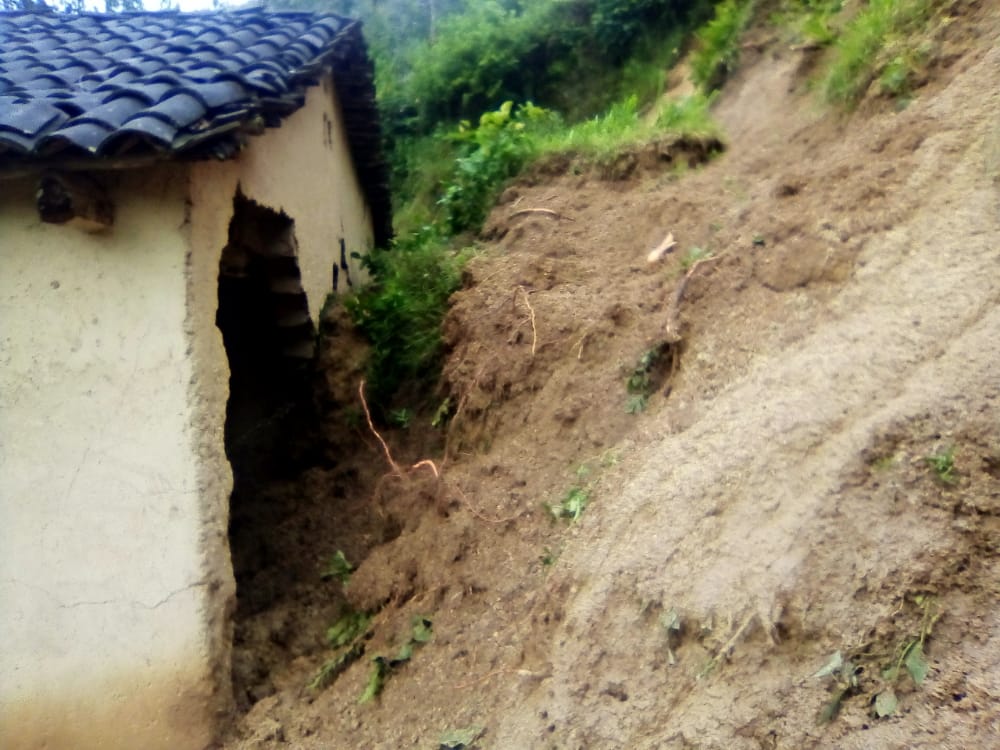
Nyamasheke District Vice Mayor for Social Affairs, Athanasie Mukankusi has told IGIHE that the incident happened on Saturday night around 11:00 p.m when landslide hit a house belonging to Gitsimbwe Village leader. She explained that a wall collapsed and fell on four children of whom three died on spot.
The survivor was taken to a nearby Karengera Health Center for medical attention. The deceased are respectively aged 8,9 and 12 while the survivor receiving medical attention is aged 15.
Similar incident also happened in Karengera Cell where landslide killed three people including two children and a woman.
Mukankusi has said that leaders have visited affected families, comforted them and requested residents to relocate from disaster-prone areas to avoid future incidents.
“We have also held a virtual meeting with sector executive secretaries and requested them to register houses in risky zones to be housed in churches,” she noted.
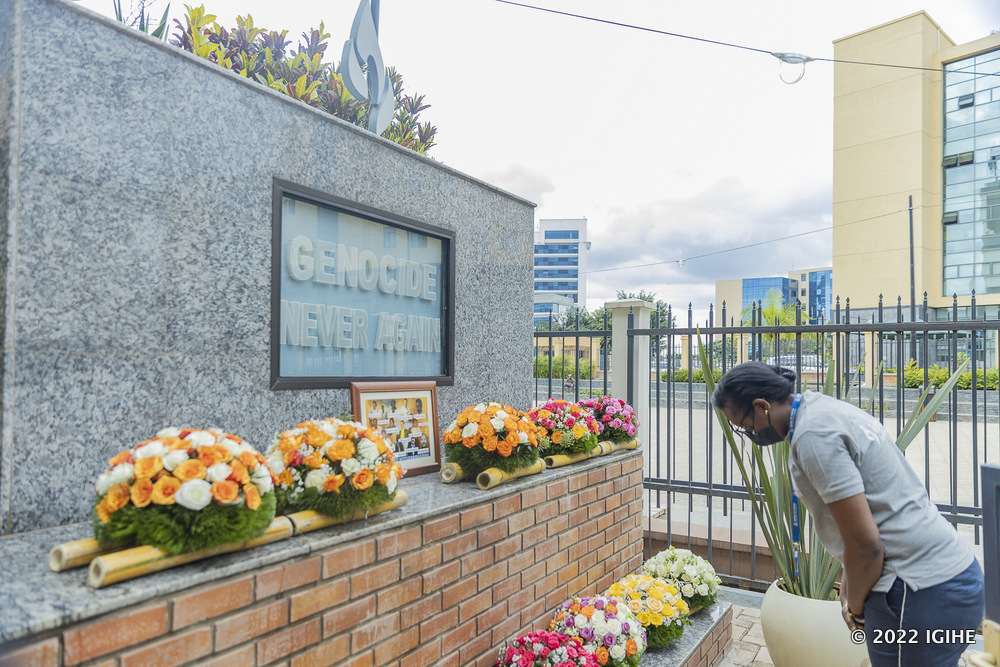
The ceremony took place on Friday 22nd April 2022 where the management of BK Group Plc and staff laid wreaths at the memorial monument carrying names of slain staff at its headquarters.
Commemoration activities continued with a visit to Kigali Genocide Memorial where the bank’s management and staff laid wreaths to the mass grave accommodating over 250,000 remains of Tutsis killed in different parts of Kigali.
The CEO of BK Group Plc, Dr. Diane Karusisi said that commemorating is everyone’s responsibility noting that BK employees need to pay tribute to slain colleagues regularly.
“Commemorating is not event which takes place one day or in April. It is our responsibility as BK employees to remember victims killed of torture, who contributed to the progress of this institution,” she said.
The Executive Director of Aegis Trust, Freddy Mutanguha thanked BK Group Plc for dedicating time for commemoration and its relentless support to Genocide survivors.
Athanase Murengerantwali who spoke on behalf of families whose relatives were BK employees killed during the Genocide, commended the bank for honouring them highlighting that its gives them hope for tomorrow.
BK Group Plc holds the event at a time when Rwanda is commemorating the Genocide against the Tutsi for the 28th time to honour over 1 million victims killed during 100 days.