It is said that the man who has been residing in Mukarange Sector held an impromptu to the former wife’s home in the daylight to greet two children sired together.
As the wife returned home, she asked her former husband to go back to his residence.
Sources reveal that the couple had divorced over persistent drunkard behavior of the husband that the woman could no longer tolerate.
The executive secretary of Kabarondo Sector, Jean Paul Kagabo has told IGIHE that the man had visited the home in daylight to check on his children.
As the woman asked the man to leave her home before sleeping overnight, sources have revealed, he stepped out and committed suicide nearby the house. His body was seen by the woman’s domestic servant in the next morning.
“The wife’s domestic worker saw a body under a tree early morning. He rushed to alert his boss who also found the ex-husband dead with a rope around the neck. She informed us that we went to the scene with RIB and Police. He is suspected to have committed suicide,” noted Kagabo.
The body has been taken to Kacyiru Hospital for postmortem.
The road will connect two important national paved roads from northern part of the City of Kigali to Northern Province. It will start at the junction of Kigali-Gatuna in Gasabo District and will end in the junction of Kigali – Musanze Road in Rulindo District.
Once complete, the road will improve safety of road users including pedestrian and other non-motorized traffic; promote trade, increase mobility and reduce transport costs by facilitating regional mobility of both goods and people. It will also act as a diversion to reduce traffic congestion on the national road network especially to and from the Northern Province and DRC.
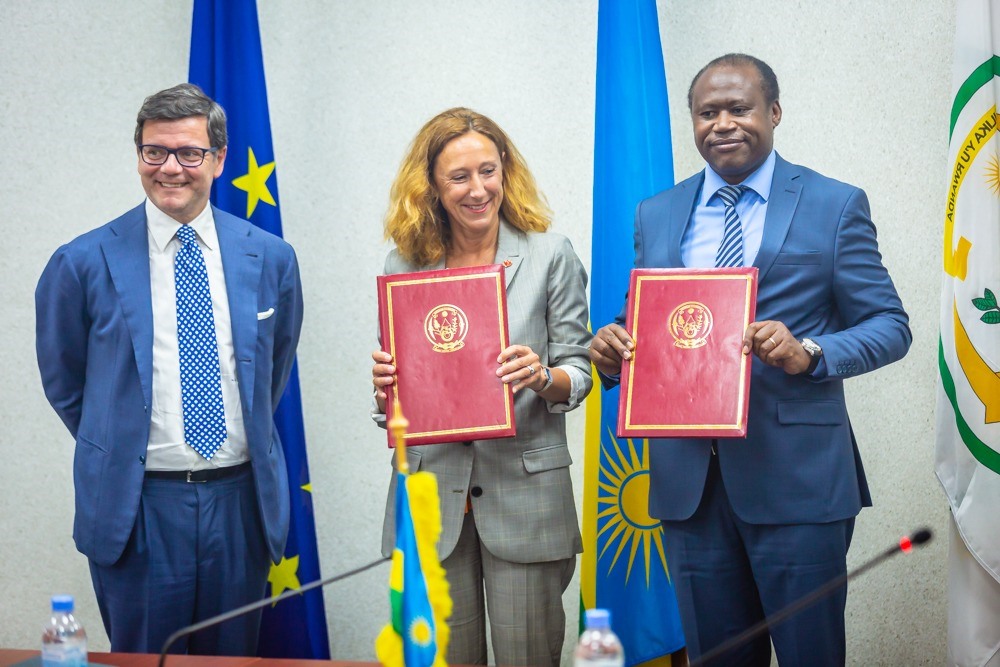
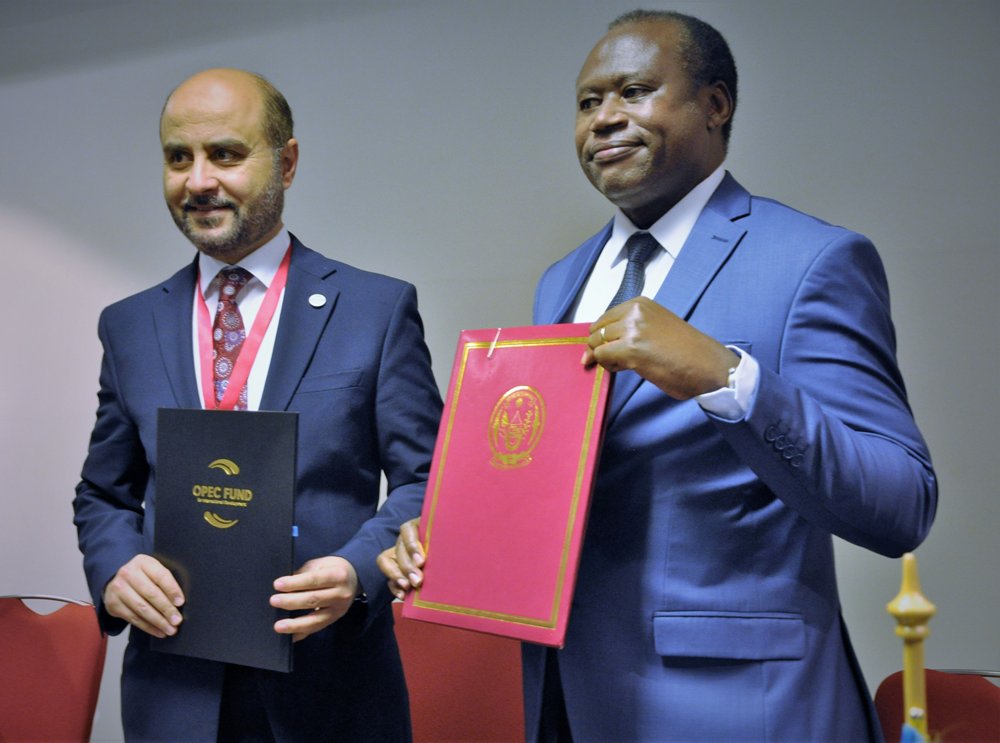
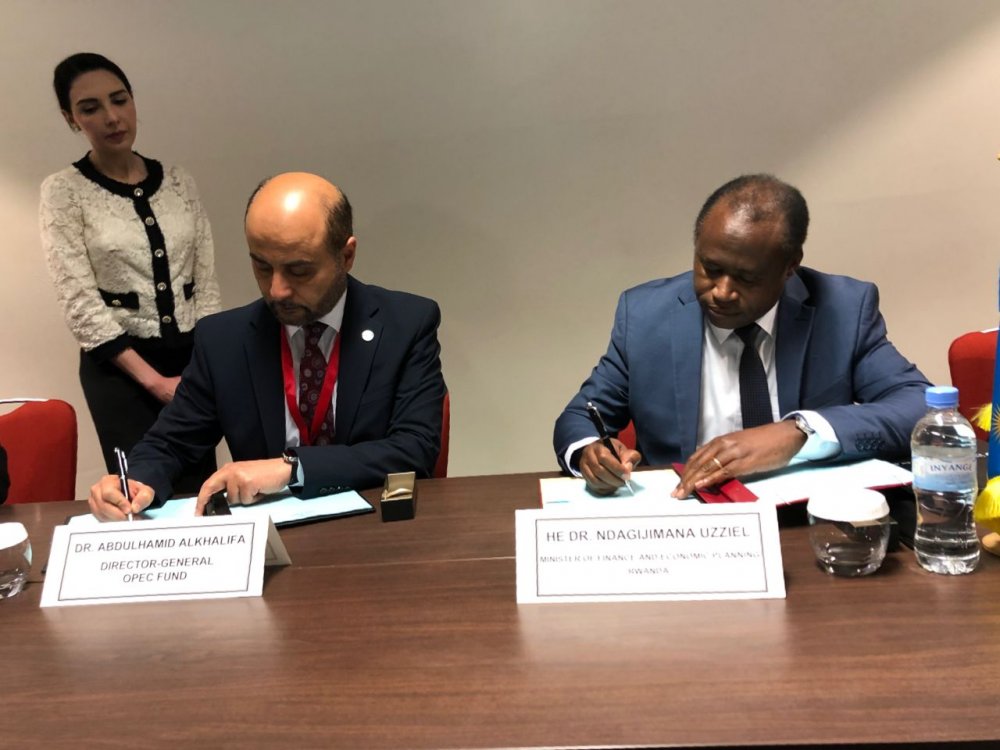
The financing agreement is concessional. It carries a 1.75% interest rate payment over 20 years including a grace period of 5 years. The entire project cost is estimated at US$ 41 million. The Arab Bank for Economic Development in Africa (BADEA) has committed a financing of US$ 18 million to this project while Government of Rwanda contribution is estimated at US$ 5 million which will mainly cater for payment of taxes and expropriation budget.
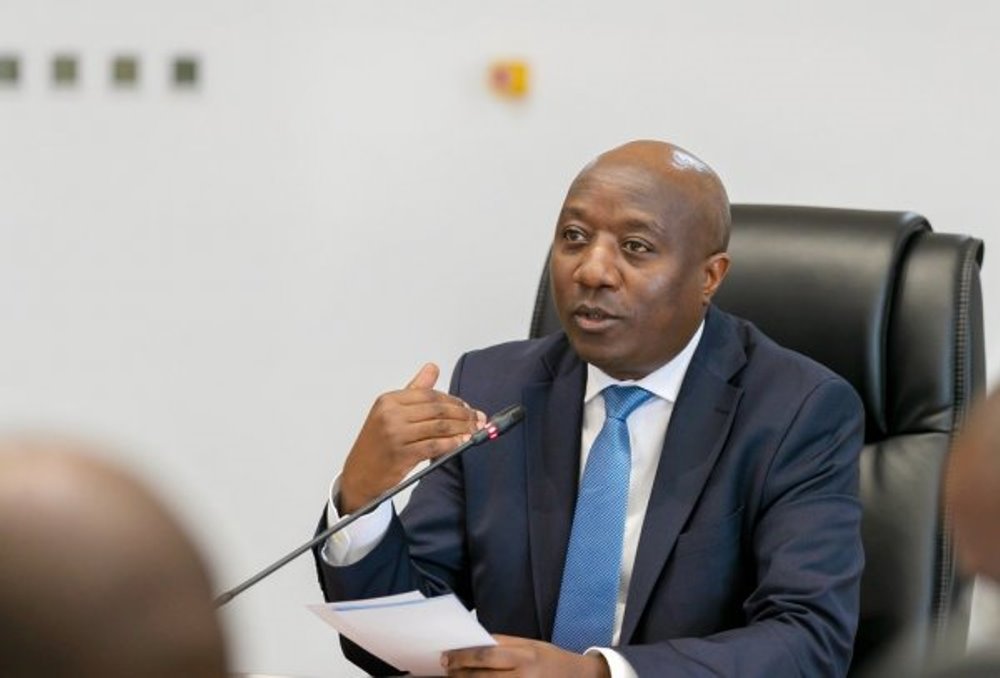
Speaking after the signing event on Tuesday 17th May 2022, the Minister of Finance and Economic Planning Dr. Uzziel Ndagijimana said: “The rehabilitation of Nyacyonga-Mukoto road will support Rwanda’s National Strategy for Transformation through accelerating sustainable urbanization with a focus on improvement of rural and urban transportation services through the establishment of 14,100km of scheduled bus routes countrywide. We thank the OFID for the longstanding partnership in different priority areas of our economy.”
OPEC Fund Director-General Abdulhamid Alkhalifa said: “We are proud to have partnered with Rwanda for decades, promoting socio-economic development and support key sectors as infrastructure, agriculture and the financial sector. Our new loan will further contribute to Rwanda’s sustainable development agenda and its efforts to achieve its ambitious 2050 Vision, which sets a strategic direction to lead the country to the living standards of high income countries by 2050.”
The Government of Rwanda and OFID have over the years established development partnerships in various sectors including energy, transport, as well as water and sanitation to the estimate of US$ 165 million and support to private sector through lines of credit.
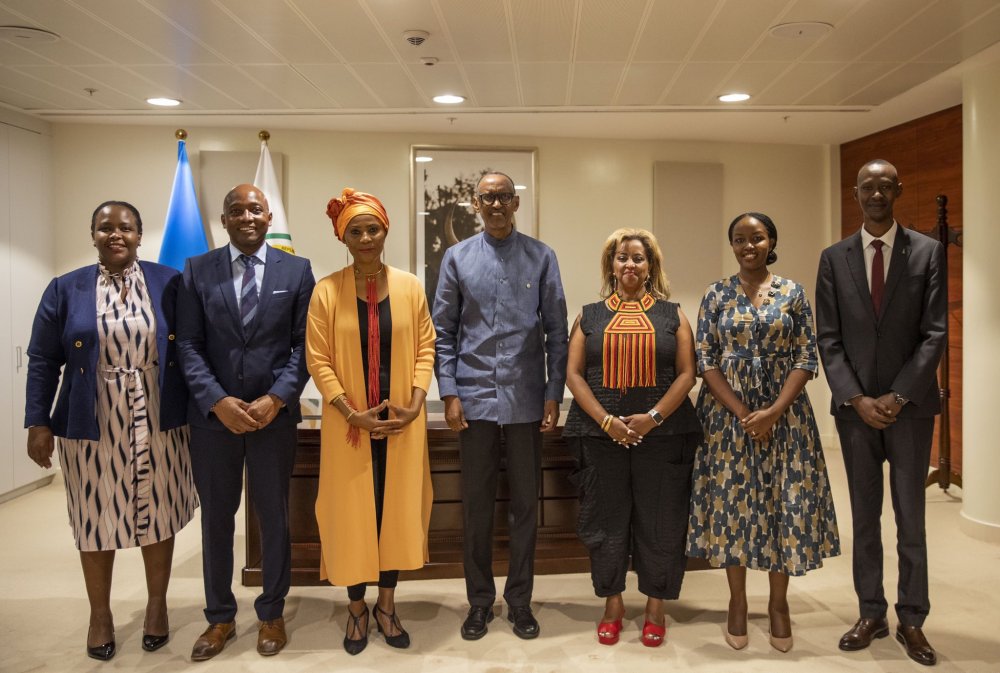
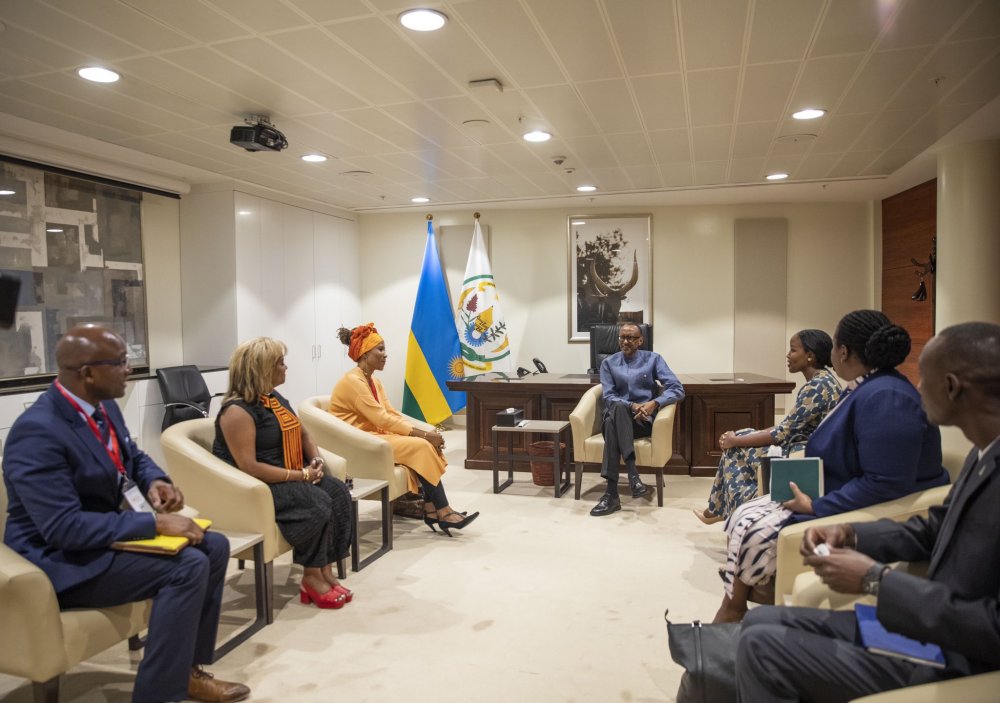
Eziakonwa and her delegation were hosted by President Kagame on Tuesday 17th May 2022 on the sidelines of the Sustainable Energy for ALL (SEforALL) Forum taking place in Kigali from 17th to 19th May 2022.
The discussions were also attended by Rwanda’s Minister of ICT and Innovation, Paula Ingabire and the CEO of Rwanda Development Board (RDB), Clare Akamanzi.
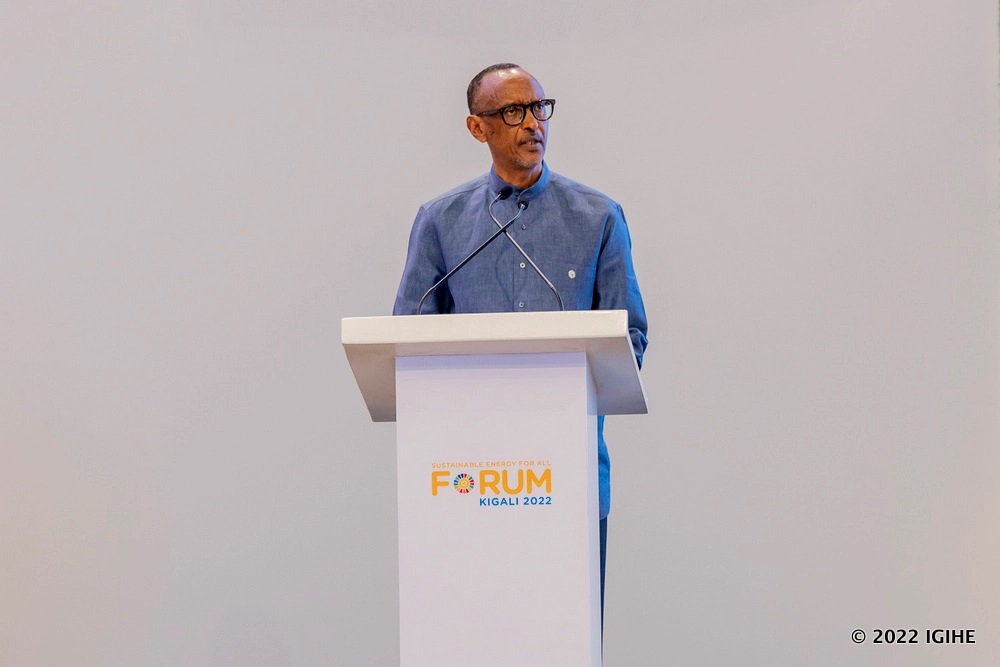
The Head of State was speaking at the Sustainable Energy for All Forum taking place in Kigali from 17th to 19th May 2022.
The Sustainable Energy for ALL (SEforALL) Forum was originally scheduled to take place from 6-8 May 2020, in Kigali, Rwanda. In light of the COVID-19 pandemic, it was initially postponed until February 2021. It was subsequently postponed until 2022.
Focusing on the theme, ‘Building Speed, Reaching Scale, Closing the Gap,’ this Forum provides a global platform to mobilize resources, connect partners and showcase action to realize the promise of the sustainable energy revolution for everyone.
The event taking place in Africa for the first time brought together a diverse group of more than 2000 participants attending in a hybrid format. These include energy stakeholders to take stock of progress towards implementing SDG 7 (Affordable and Clean Energy) and provides an opportunity to develop new partnerships, launch new financial instruments to close energy access gap, and connect with energy leaders from communities, cities, politics, business and finance.
Speaking at the event, President Kagame said that there are still gaps to be addressed despite registered progress towards universal clean energy.
“Over the past decade, significant progress has been achieved towards the seventh Sustainable Development Goal on affordable and clean energy for all. Nevertheless, the COVID-19 pandemic has reversed many of the gains,” he said.
“Today, in Africa, more than a half a billion people still do not have access to electricity. This energy crisis coincides with the threat of climate change to which our continent is especially vulnerable,” added Kagame.
To bridge the gap, the Head of State stressed the need to facilitate investment in sustainable energy.
“Switching to renewable energy is crucial. That is why creating an enabling environment to attract investment in sustainable energy is so important,” he noted.
President Kagame has highlighted that there needs to be increased financing to developing countries to support climate adaptation.
“By integrating sustainable energy in pandemic recovery plans, we can accelerate the transition to clean power. But the transition must be just and equitable,” he said.
“This means, it should align with Africa’s development priorities and aspirations to ensure no one is left behind. At the same time, there needs to be increased financing to developing countries to support climate adaptation in line with international agreements,” Kagame added.
The United Nations Environment Programme (UNEP) shows that developed countries account for around 80% of global greenhouse gas emissions which affects developing countries.
President Kagame has said that Africa should not carry the burden alone.
“Africa cannot carry the burden alone, especially given that its emissions did not create the climate emergency. However, Africa will be part of the solution,” he noted.
At least 800 million of the global population do not have access to electricity, majority of whom being from Africa.
Among others, 2.5 billion people mainly from Africa and Asia do not access clean cooking energy.
The UN Secretary General, António Guterres stressed the need to design special policies to deliver to the agenda 2030 to achieve universal access to electricity and take action on the climate change crisis.
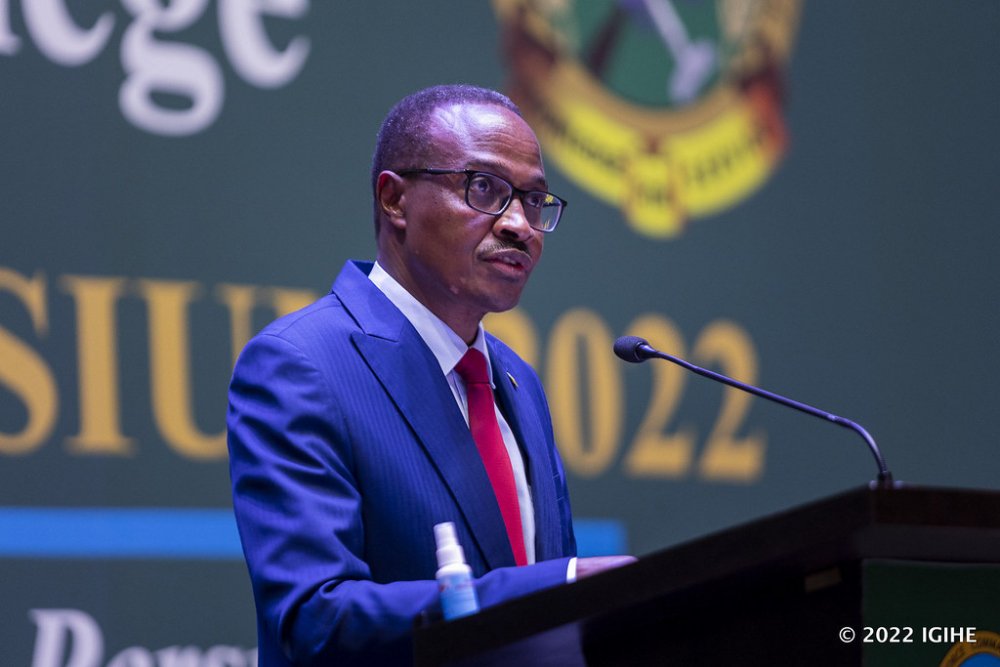
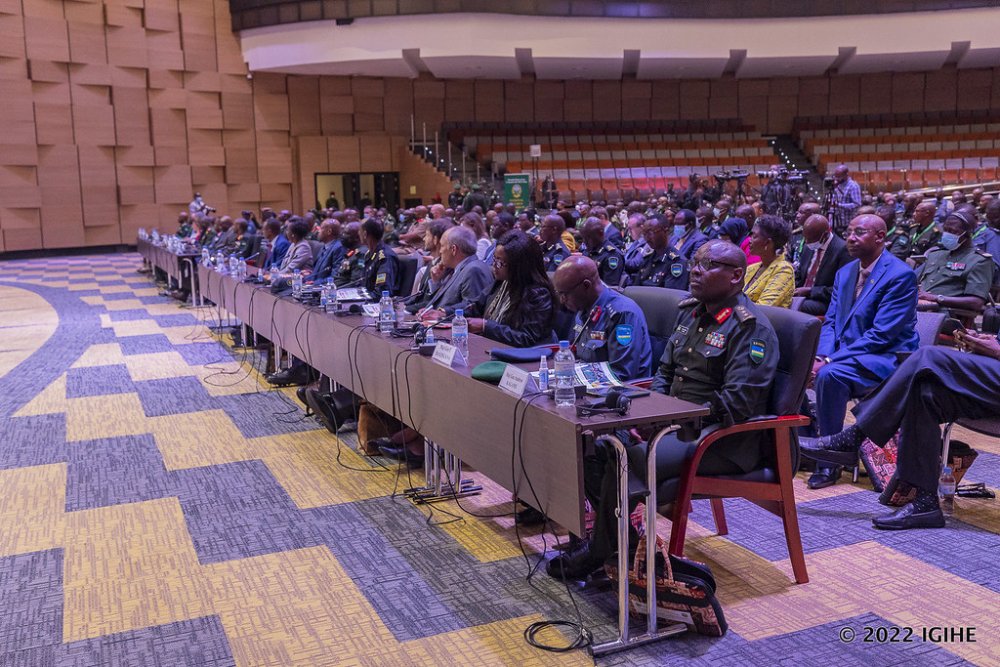
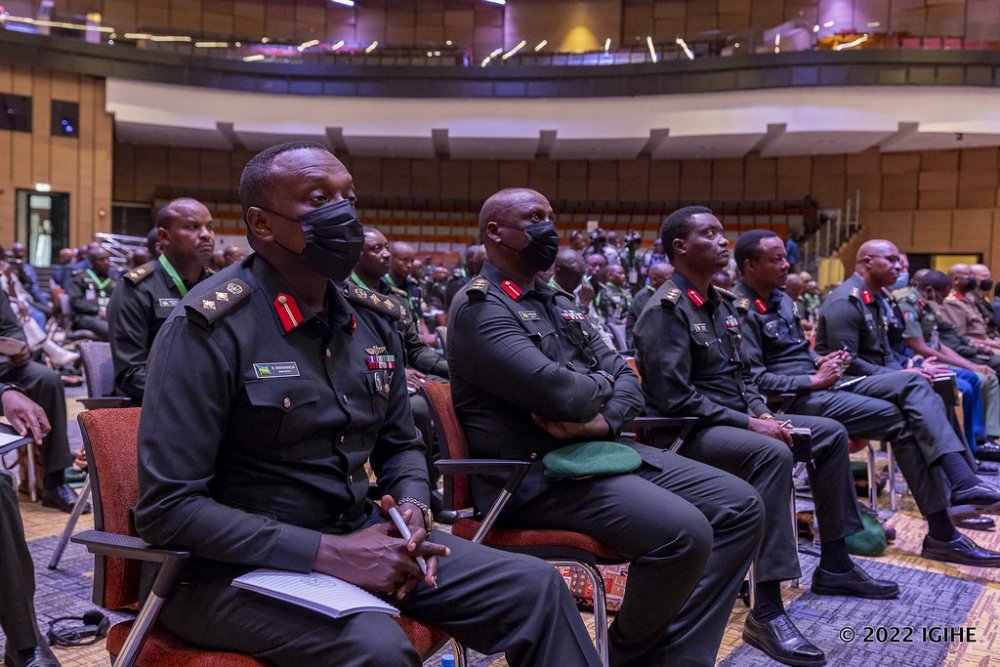
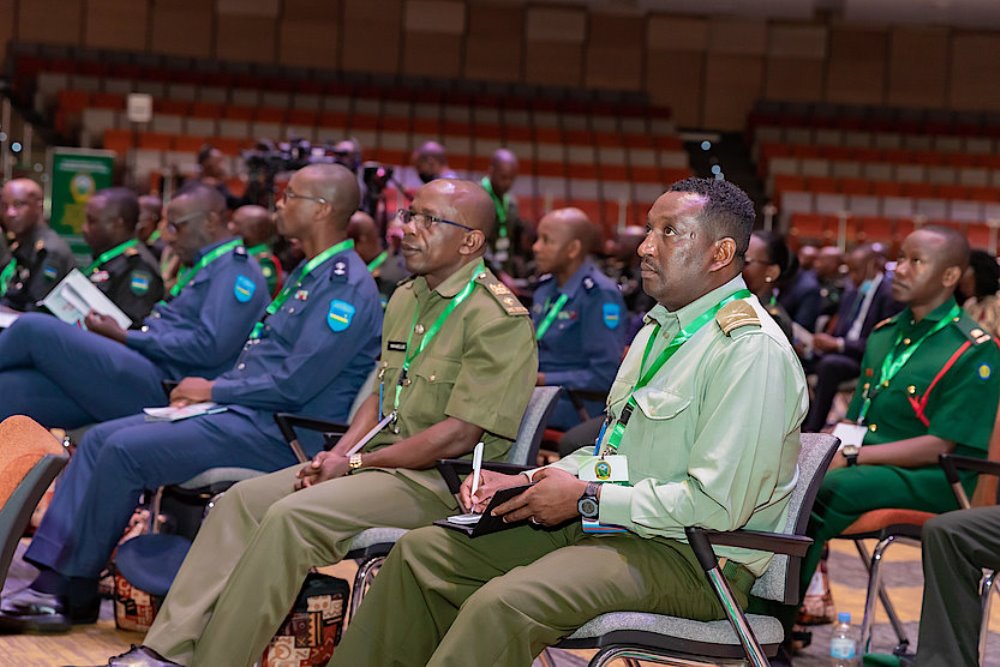
The symposium brings together academicians, government officials and subject matter experts including Generals and Senior Military Officers to discuss contemporary security issues.
The deliberations will focus on matters of national, regional and continental security.
It is also an opportunity for RDFCSC students, especially those undergoing the Master of Arts in Security Studies’ Programme, to interact with high level policy makers, security practitioners, subject matter experts and scholars in security studies.
This is the ninth National Security Symposium of this kind organized by RDF CSC in collaboration with the University of Rwanda.
The College is currently running the 10th Intake of 48 student officers from Rwanda and allied countries namely Botswana, Ethiopia, Ghana, Kenya, Malawi, Nigeria, Senegal, South Sudan, Tanzania, Uganda and Zambia.
RDFCSC is currently the highest military training institution in the country and its mission is to develop the students ability to understand national, regional, and global security challenges and how they impact on their military operating environment.
The week-long tour for the 34 students from eight African countries, started on Monday, May 16, as the officers collates classwork with fieldwork and field experiences.
The 10th PSCSC intake is attended by law enforcement officers from Kenya, Namibia, Malawi, Tanzania, South Sudan, Somalia, Zambia and Rwanda, the host.
Rwandan students include those from RNP, RIB and RCS.
On their first day of the study tour on Monday, the PSCSC participants visited three institutions, namely; the Carabinieri Provincial Commando of Rome, Carabinieri Command for the Protection of Cultural Heritage; and the Carabinieri Historical Museum in Rome.
The Carabinieri are the national gendarmerie of Italy, which primarily carries out domestic policing duties.
At the Provincial Commando of Rome, which is responsible for policing the City of Rome, participants were received by the Commander of the Unit, General Lorenzo Falferi, who hailed the good cooperation between Rwanda National Police and the Carabinieri.
“This visit and study tour strengthens this existing good working relationship,” said Gen. Lorenzo, who thanked the National Police College for selecting Italy and the City of Roma in particular, for the study tour.
RNP and Carabinieri signed a cooperation agreement in 2017 to partner in capacity development, including peace support operations, counter-terrorism, aviation security, public order management, VIP protection, cybercrime, traffic and road safety, environmental protection as well as acquisition of modern police equipment, among others.
Course participants were taken through the historical background of the Carabinieri Provincial Commando of Rome, its organizational structure and its activities in ensuring the security of the City of Rome.
They were explained on how it works hand-in-hand with other security agencies, namely; Italian Police, Italian Financial Investigation Unit and the military.
They also visited the operational center for the unit to learn how it responds to different calls including emergencies, for assistance. Participants also visit the Mobile Brigade whose activities include quick response and bomb disposal, among others.
Commissioner of Police (CP) Rafiki Mujiji, NPC Commandant, who is heading the students in the external tour, said that there is a lot to learn from Carabinieri’s policing experience.
“The External study tour is part of the training programme for the Police Senior Command and Staff Course and is undertaken for comparison and benchmarking purposes in a selected country. Italy was chosen for its model of policing, which responds to the emerging challenges of policing, especially terrorism,” CP Rafiki Mujiji
At the Carabinieri Command for the Protection of Cultural Heritage, the students were taken through its history since it was established in 1969 to protect Italian cultural heritage.
Its responsibilities also include to recover the stolen artifacts and to investigate crimes related to illicit export of Italian artifacts.
The PSCSC participants are also expected to visit other institutions, including the Officers Club of the Armed Forces of Italy (CUFA), Cyber Security Division; Parma Scientific Investigations Department, 2nd Mobile Brigade and the Center of Excellence for Stability Police Units (CoESPU), before they conclude the tour on May 21.
The CoESPU in Vicenza is a center for advanced studies and a doctrinal hub, serving as a think-tank and a training center. It was set up by Carabinieri in March 2005 as part of an agreement between the Italian Government and the G-8 Nations.
The opportunities were showcased during discussions on investment, trade partnerships and cooperation between both countries held in Kigali.
Investors will take advantage of these opportunities through Rwanda Development Board (RDB) and Slovak Investment and Trade Development Agency (SARIO).
Under this partnership, both countries will establish a joint committee to create avenues for cooperation in the areas of energy and agriculture among others.
During the meeting, Rwanda took Slovakian investors through best practices to facilitate investment where new businesses can begin operations after six hours of company registration.
Slovakian investors were also told that Rwanda is becoming an investment hub in Africa where business people’s security is guaranteed.
On another note, Slovakia also presented opportunities available for Rwandans where investing in the country will give them access to a wider marker of the European Union (EU) bloc to which the country belongs.
Rwanda’s exports to Slovakia include coffee, tea and art pieces among others.
Diane Sayinzoga, the Head of Special Economic Zones and Export Facilitation Department at RDB has said discussions on available opportunities between both countries are promising to yield good results.
“Rwanda also has what to offer to them, especially, high-value crops such as coffee and tea. We have a potential market for those products in Slovakia,” she noted.
Daniel Ondrus, heading the delegation from Slovakia revealed that the country decided to bring 18 business people to Rwanda to explore areas of investment after witnessing showcased opportunities at the recent Dubai expo.
He expressed optimism that the discussions will be fruitful and pave the way for collaboration between both countries.
Rwanda and Slovakia are also making preparations to sign trade cooperation agreements expected to facilitate investment on both sides.
The duo aged 21 and 37 respectively is suspected of murdering the girl on 26th April 2022 in Burera Village, Rugazi Cell of Katabagemu Sector in Nyagatare District.
The suspects are detained at Katabagemu RIB Post. Their files have been transferred to the Prosecution while the third suspect is at large.
If convicted of contemplated murder, the suspects are liable to a life sentence as per Rwanda’s penal code.
RIB has cautioned the general public against such crimes and reminded them that culprits will face justice.
It is said that the girl who was stabbed to death worked as a supervisor at a farm in the area. She would prepare the payroll and ensure everyone is fed at work.
A source has told IGIHE that the girl has been working at the farm for five years.
On the evening of 25th April 2022, it is said that the daughter left the farm heading to the main road along with a cow-keeper.
They shopped items that were taken home by the cowboy while the lady stayed behind.
It is said that the girl stayed with cow-keepers from neighboring farm with whom they were sharing foods.
Her body was later found with evidences that she was raped before being stabbed to death. The body was dumped at the farm where she worked in Rwanyingo.
The girl’s body was taken to Ngarama Hospital postmortem the next day before burial at his birthplace in Rwamagana District.
The report shows that these gaps in agriculture-related projects impeded ambitions to create new jobs and uplift citizens from poverty.
It has been observed that some of projects overseen by Rwanda Agriculture and Animal Resources Development Board (RAB) awarded contracts at an abnormal price higher than the prevailing market price which resulted into the wastage of public funds estimated at Rwf1.4 billion.
On 31st January 2020, the report indicates, Rwanda Agriculture and Animal Resources Board signed a framework contract with a contractor for the supply and installation of irrigation infrastructure in different locations in Rwanda. This contract provided for hiring of excavation machine at a cost of Rwf 3,800,000 per day.
According to prevailing market prices, this price is unreasonably high because the standard price ranges between Rwf300, 000 and Rwdf500, 000 in Kigali City or between Rwf600, 000 and Rwf1.6 million outside Kigali.
Similar contract was awarded during the execution of four projects including Gashora and Mukunguli Mashlands, Rwabiharamba dam and Bwera dyke.
During the year ended 30th June 2021, the government earmarked Rwf14 billion under the agricultural input subsidy scheme. This brought the total investment in the scheme since July 2017 to Rwf 53,935,236,289.
The Government through the Crop Intensification Program (CIP) provides agriculture inputs (seeds and mineral fertilizers) to farmers through a subsidy scheme to help them transition from subsistence agriculture to intensified agriculture for farmers to sustain the country’s food security.
However, the report indicated that the scheme is facing challenges in its implementation, which impinge on its intended objective of increasing agricultural production. These include weaknesses noted in the use of smart Nkunganire system, a digitized supply chain management system used in the management of the national farmer’s subsidy program.
A review of the system revealed weaknesses including information on arable land not shown for each farmer in the system and fertilizers sold without using Smart Nkunganire System yet all agro-dealers are required to use Mobile Ordering Processing Application (MOPA) to order and sale seeds and fertilizers to the farmers.
Other issues include the delay to pay suppliers’ invoices for agricultural inputs (fertilizers and seeds).
The audit noted that fifteen (15) districts delayed to pay suppliers’ invoices of seeds and fertilizers amounting to Rwf5.1 billion. The delays were up to 736 days. As a result, this may delay the supply of seeds and fertilizers to farmers.
There is also an issue of agro-inputs sold to neighbouring countries and failure to reconcile seeds distributed to agro-dealers with seeds received by farmers among others.
{{Weaknesses in the implementation of the irrigation program}}
The report has shown that some irrigation projects are not sustainable due to failure to correct pointed out defects.
One of key strategic interventions of National Strategy for Transformation (NST1) is to increase the acreage of consolidated and irrigated land from 48,508 ha (2017) to 102,284 ha in 2024 and to promote agricultural mechanization.
In responding to this national aspiration, RAB has invested heavily in mechanization and construction of irrigation projects in various marshlands across the country.
During this year’s audit, it was noted that there are rampant defects in constructed irrigation projects reported in previous audit that had not been addressed to enable efficient functioning of the irrigation schemes.
The report indicated that the government is not realizing value for money from funds invested in their construction as the beneficiaries are not using them for the intended purpose.
{{Problems in milk collection centres}}
The government has invested Rwf12.9 billion in Milk Collection Centres (MCCs) project with an aim of building milk collection centres to collect raw milk, where processors can get a greater volume and quality milk. However, the audit of this project revealed that many milk collection centres operate below their installed production capacity.
It was observed that 90 out of the 132 MCCs constructed (68%) are operating below 50% of the installed capacity, 17 MCCs (13%) were operating between 50-75%.
The milk collection centres were operating below their installed production capacity mainly due to low supply of milk from farmers.
Among others, three MCCs namely Busoro in Nyanza district, Bumbogo in Gasabo district and Nyamiyaga in Kayonza district that were constructed at a cost of Rwf 216,504,403 were not operating at the time of the audit. Further, twenty-nine (29) milk coolers and thirteen (13) generators worth Rwf 201,539,323 and Rwf133,195,010 respectively were idle.
{{Post-Harvest and Agri-Business Support Project }}
The Government invested funds amounting to Rwf 37,238,834,673 in the implementation of Post-Harvest and Agri-Business Support Project (PASP) with the objective of addressing challenges of post-harvest losses in priority crops to increase rural incomes and create new investment and employment opportunities for vulnerable groups.
PASP started in March 2014 without needs assessment and baseline data on the level of post-harvest losses and capacity of existing post-harvest handling infrastructure per commodity value chain in each district. The project was implemented without information about the capacity gaps in terms of facilities to be closed by the implementation of the project.
The investment committee approved beneficiary’s business plans without assessing whether the plans were viable and ready to be implemented. In aggregate, forty-four (44) approved projects involving investments of Rwf 3,365,149,212 including grant amounting to Rwf 899,709,733 have failed and were abandoned by business promoters before starting operations.
Regarding idle buildings and machines procured with PASP grant funds, the audit identified one (1) fruits and vegetables collection centre, five (5) processing plants and maize milling machines worth Rwf 907,073,852, that were idle for a period of up to four (4) years.
The fruits and vegetables collection centre lacked cold rooms, a key equipment in storage of fresh vegetables and fruits. On the other hand, the processing plants and maize milling machines lacked three-phased electricity connections which contributed to the assets being idle as these were not included in the project design as indicated by business plans approved by Business Development Fund.
Among others, thirteen (13) projects that cost Rwf 3,323,078,903 which received PASP grants amounting to Rwf 1,302,929,347 were completed and not put to use due to incompatibility of machines and solar systems, and equipment not being in conformity with technical specifications. As a result, government is not realizing value for money.
The report established that BDF held undisbursed funds amounting to Rwf765,918,178 and it was also expected to recover funds amounting to Rwf 790,249,471 from beneficiaries whose grant contracts were cancelled as a result of unsuccessfully implementation of funded projects. However, there is no provision on how the remaining funds will be used after the project’s closure.
{{Glitches in Gako Beef Project}}
Gako Beef Project started in October 2014 with the aim to establish a sustainable cattle production system for development of quality meat, and marketing value chain in Rwanda. The Government invested Rwf 14.6 billion in constructing infrastructure including roads, water and electricity.
The audit of this project has however pointed out gaps including the lack of project design and clear strategic direction.
The report shows that RAB did not have a project profile documents detailing specific objectives of Gako Beef Project, key performance indicators, roles and responsibilities of involved stakeholders, project technical design, required resources and market strategies.
Else, it is reported that RAB did not have a clear multi –year action plan detailing what and how activities and the targets were to be implemented from 2014 up to 2020 when Gako Meat Company was registered to replace Gako beef project.
This hindered the implementation, coordination and monitoring of the project.
Agreement between Government and investors stated that investors should have a business plan indicating the established breeds of cattle, the allocated land to grow pastures, the minimum number of cattle to deliver to the abattoir, the minimum beef production and the type of feedlot that will be constructed.
However, the audit did not get the business plans from investors for analysis. As a result, investors were rearing types of breeds that were not included as agreed, and they did not establish the minimum number of cattle to deliver to the abattoir. Consequently, the report reveals, type breeds unfit for meat production are being sold by Gako Meat Company.
{{Gaps in Girinka Program}}
Girinka program was initiated to reduce poverty through dairy cattle farming, improve livelihoods through increased milk consumption and income generation, improve agricultural productivity through the use of manure as fertilizer, improve soil quality and reduce erosion through the planting of grasses and tree.
From January 2016 to June 2021, the Government invested Rwf18 billion in this program. However, the audit of this program indicated that contradicting criteria between Ubudehe categorization and Girinka Program resulted in providing cows to beneficiaries incapable of managing them.
According to the program design, the eligible beneficiaries to benefit from Girinka Program should be in category 1 or 2 of Ubudehe, have well-constructed cowshed and at least 0.25 to 0.75 hectares of land for plantation and grazing. Category 1 is described as extremely poor family and category 2 as poor family. In addition, category 1 beneficiaries are those that neither own a house nor land.
This led districts to provide cows to beneficiaries who are incapable of keeping them to yield the intended quantities of milk. As a result, 23 beneficiaries returned cows to Districts’ authorities (Burera and Bugesera). Besides, the report noted instances where cowsheds were not adequate to keep cows in good condition. Consequently, the Districts registered death of 1,570 cows in three (3) years due to poor maintenance.
At the start of the program in 2016, MINAGRI identified 1,037,111 poor families to be considered for the program with equivalent number of cows needed to accomplish the program objectives. A baseline survey was not conducted to establish the number and localities of eligible beneficiaries who need cows as required in the concept note.
The audit has established that RAB continues to inject funds into the program without updated information on the needs in each district. Up to the time of audit in October 2021, RAB had not established key performance indicators to measure the extent to which the program has met the target objectives, key achievements and areas that need improvement.
The move has been announced by Lt Gen Muhoozi Kainerugaba, the Senior Presidential Advisor on Special Operations and Commander of Land Forces of the Uganda People’s Defence Forces (UPDF) via Twitter handle.
Lt Gen Muhoozi made the revelation on Monday 16th May 2022 following discussions with Rwanda Defence Force (RDF) delegation led by the Head of Defence Intelligence, Brig Gen Vincent Nyakarundi.
“After 4 days of fruitful deliberations we have reached good resolutions on how to work together. Once again, I thank our two great Presidents Kaguta Museveni and Paul Kagame on revitalising our strong alliance! Viva UPDF! Viva RDF!”
On the fourth day of discussions on Monday 16th May 2022, it was reported that Sgt Major Robert Kabera was arrested. He had fled Rwanda to Uganda in 2020.
Sources reveal that Sgt Maj Robert who fled Rwanda after he was suspected of defiling 15-year daughter might be deported to Rwanda to face justice.