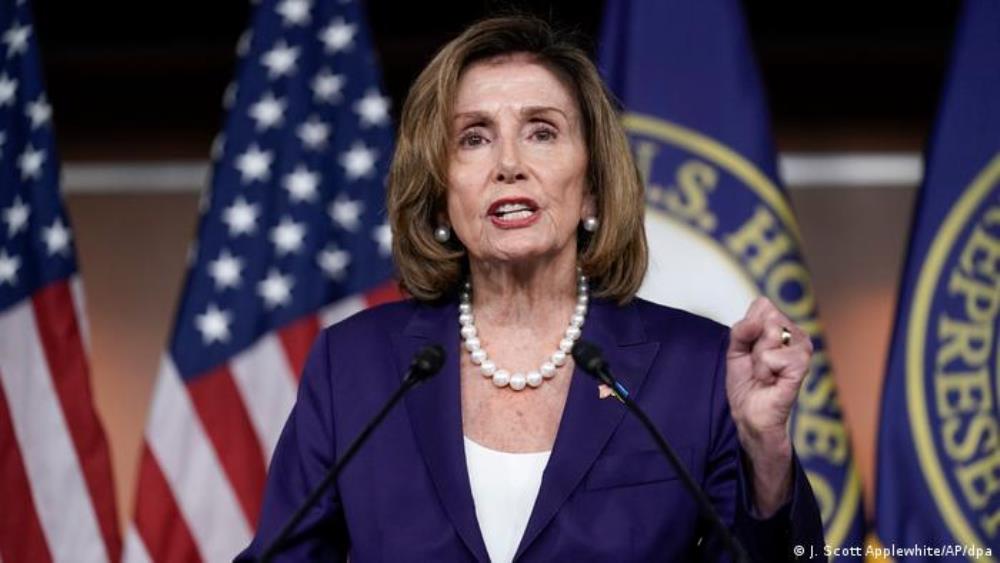
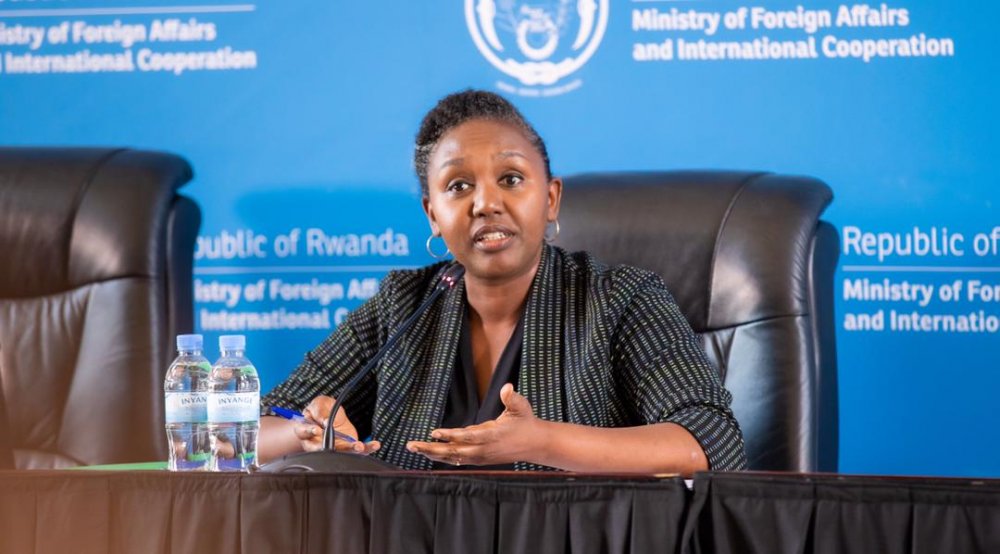
In disregard of China’s grave concerns and firm opposition, Nancy Pelosi insisted on visiting Taiwan. This constitutes a gross interference in China’s internal affairs. It gravely undermines China’s sovereignty and territorial integrity, seriously tramples on the one-China principle, and severely threatens peace and stability across the Taiwan Strait, the spokesperson added.
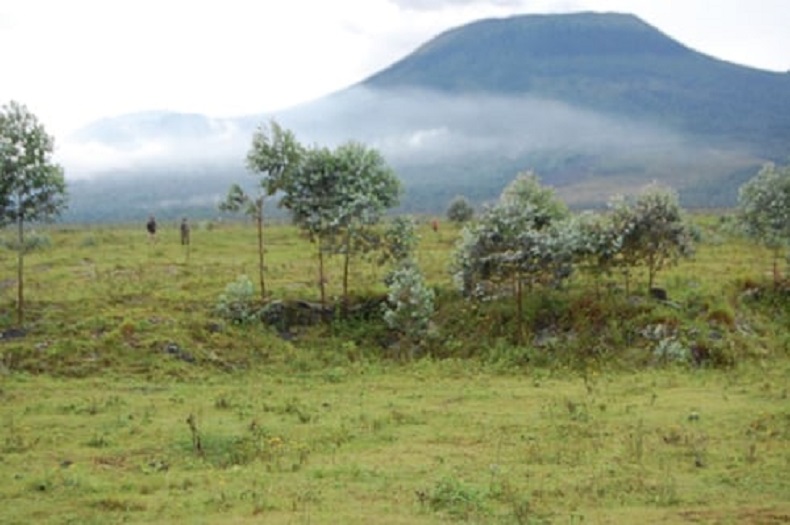
It is said that the incident took place in the evening of Thursday as a Congolese soldier chased children grazing sheep to seize their livestock. They were grazing sheep in a plain separating Rwanda and the Democratic Republic of Congo (DRC).
The Spokesperson of Rwanda Defence Force (RDF), Brig Gen Ronald Rwivanga has told IGIHE that the soldier was shot after crossing into Rwanda.
Following the incident, his body was handed over to Congolese leaders at Kabuhanga Border.
There have been different incidents in the plain separating Rwanda and DRC where smugglers attempting to sneak into Rwanda and Congolese soldiers crossing into Rwanda were confused with enemies and shot dead.
Combatants of the Democratic Forces for the Liberation of Rwanda (FDLR) terrorist group have been also maneuvering through the same plain to attack nearby sectors including Bugeshi, Busasamana and Cyanzarwe.
In June this year, a Congolese soldier was shot dead as he attacked Rwandan Policemen on guard with a rapid fire at the country’s small border with Rwanda in Rubavu District commonly known as ‘Petite Barrière’.
At the time, RDF released a statement indicating that the attacker who also opened fire on civilians crossing the border was shot back in self-defence.
“This morning at around 08:45 a.m., an unidentified Congolese soldier armed with an AK 47 rifle crossed the “Petite Barrière” border in Rubavu District and began shooting at Rwandan security personnel and civilians crossing the border, injuring two Rwandan police officers. A Rwanda National Police officer on duty shot back in self defence, to protect civilians crossing the border and border agents,” reads part of the statement released in June.
RDF also disclosed that the Congolese soldier was shot dead 25 metres inside Rwandan territory and requested probe into the circumstances.
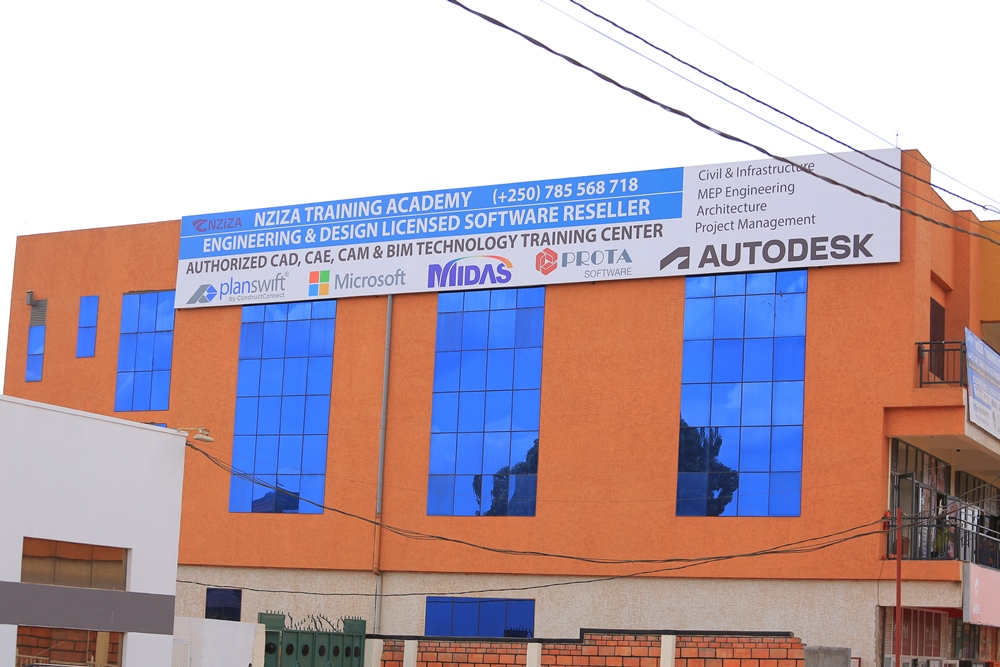
The agreement will see Nziza Training Academy representing and selling its technological solutions in Rwanda.
Based in the United States of America (USA), Bentley Systems develops, manufactures, licenses, sells, and supports computer software and services for the design, construction, and operation of infrastructure.
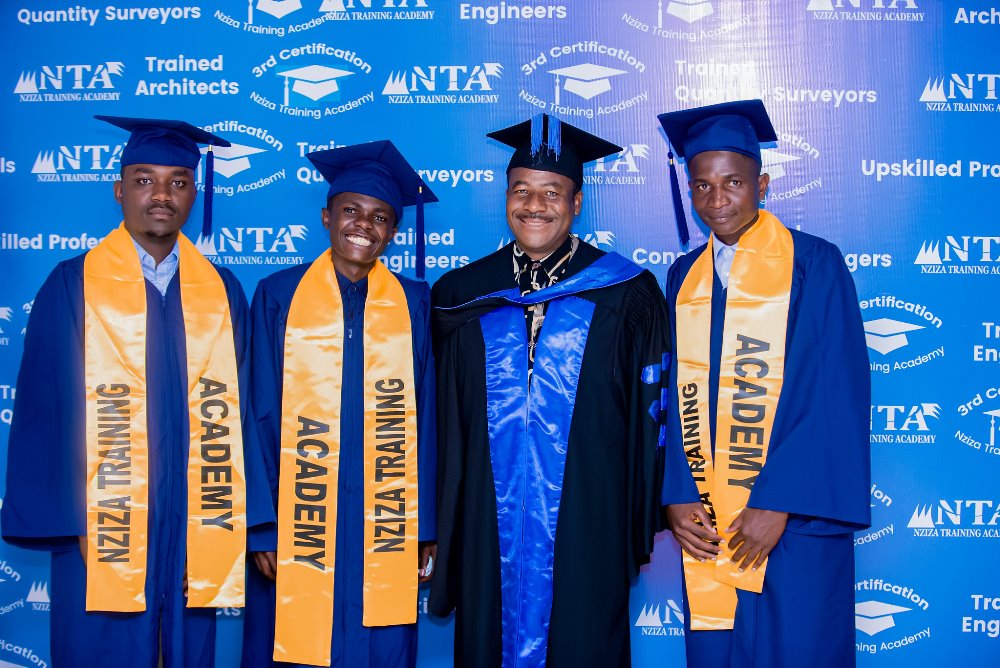
Meanwhile, Nziza Training Academy is a skills development center for architecture, engineering, construction and manufacturing professionals that offers high-level professional training on computer aided programs used in technical projects’ studies.
Apart from existing professional training programs, Nziza Training Academy enjoys the exclusivity to represent, train, and resell engineering and design technologies in architecture, engineering, construction, and manufacturing industries from other world’s giant companies including Autodesk, Midas, Protasoftware, Microsoft and Planswift.
With the recent agreement, Bentley Systems joins the circle of the world’s giant tech companies that have already approved working partnership with Nziza Training Academy.
The approval was also witnessed by the management of Bentley Systems all the way from their office in Dublin- Ireland to sign the deal authorizing Nziza Training Academy to work as a channel partner in Rwanda.
As per regulations of Bentley Systems, Bentley Channel Partners deliver, implement, train, support, and enhance its offerings to users through their industry expertise and proven sales and technical knowledge of our products and solutions.
Its channel partners are carefully chosen, selectively authorized companies that focus on small and medium-sized organizations to improve Bentley users’ long-term growth and satisfaction.
Following the agreement, Nziza Training Academy will be offering the full-size delivery of Bentley’s famous products including AutoPipe, MicroStation, OpenFlows, OpenGround, Plaxis, ProjectWise, SoilVision, Staad Pro, Synchro Pro, and so on.
Recently on January 31, 2022, Bentley Systems completed the acquisition of Power Line Systems, an American company also known as a leader in software for the design of overhead electric power transmission lines and their structures that owns software technologies known as PLS-CADD, PLS-POLE and TOWER among others.
The move will see Rwandan companies and entities within the energy sector benefiting from access to Bentley and power lines systems locally.
For any software needs or more information, you can contact Nziza Training Academy at +250785568718 or email the sales department via sales@nzizatraining.ac.rw
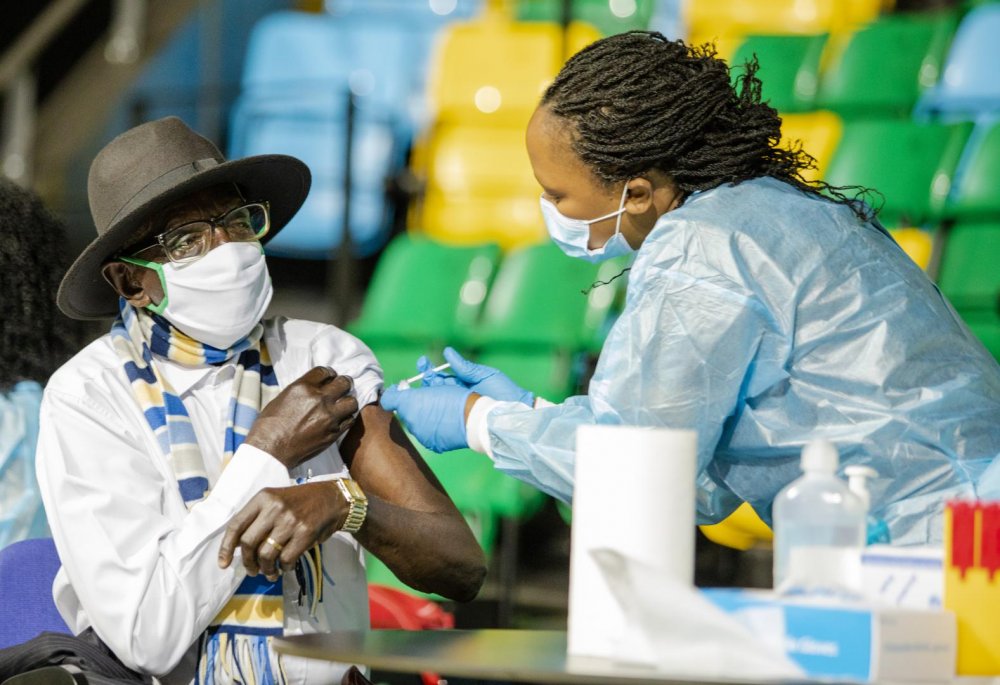
“Effective from 08.08.2022, the booster dose will be administered at all vaccination sites focusing on members of the elderly aged above 60 and others with low body immunity,” reads a statement released by the Ministry of Health.
Figures from the ministry show that a total of 8,870,113 people (97.9%) have so far received two doses of COVID-19 while 5,269,254 (58.1%) received the first booster dose.
Among others, the country has registered 1466 COVID-19 deaths since the pandemic emerged in March 2020.
The types of vaccines used to administer booster doses include Pfizer-BioNTech and Moderna among others.
The supposedly leaked report of UN Group of Experts indicates that it has “solid evidence” that Rwandan troops have been fighting alongside the M23 rebel group in eastern Democratic Republic of Congo and providing it with weapons, ammunitions and uniforms among other support.
The Government of Rwanda released a statement announcing that it cannot comment on an unpublished and unvalidated report.
Reuters has published a story featuring findings of the supposedly leaked report that Rwandan troops and the M23 jointly attacked the Congolese army camp in Rumangabo in May.
“When the M23 took control of the strategic border town of Bunagana in June, Rwandan soldiers were either present or had provided equipment to the rebels,” reads part of the report’s findings published by Reuters.
The report reads that the target of the M23 and Rwandan operations in Congo has been the Democratic Forces for the Liberation of Rwanda (FDLR), a terrorist group which Rwanda accuses Congo of using as a proxy.
It also indicates that some members of Congo’s army have supported and fought alongside a coalition of armed groups including the FDLR.
These allegations were not part of a recent experts’ report submitted to UN Security Council in June 2022.
On the other hand, it is said that the mid-term report will be released in December where the Government of Rwanda considers the allegations as a tactic to distract people from the real issues.
“Until the problem of FDLR, which operates in close collaboration with the DRC army, is taken seriously and addressed, security in the Great Lakes region cannot be achieved. This is happening in full view of MONUSCO, which has been present in DRC for more than twenty years, but with no solution in sight,” reads part of a statement released by Rwanda.
Meanwhile, Rwanda reported different incidents where rockets shelled on its territory from DRC injured civilians and destroyed houses.
It is said that investigations were made and were part of UN Group of Experts’ report in June.
“Rwanda has a legitimate and sovereign right to defend our territory and citizens, and not just wait for disaster to unfold,” adds the statement.
It also indicates that the presence of M23 and its origins are well-known as a problem of the DRC, which they seek to make a burden of other countries yet Rwanda hosts tens of thousands of Congolese refugees, some of whom stayed there for more than 25 years.
“As regional frameworks are trying to manage the situation in Eastern DRC, Rwanda has consistently raised the alarm with the United Nations and other international actors about this infringement of the security of our country. Rwanda is working for peace and stability, from which Rwanda and all our neighbours can benefit,” reads the statement.
Among others, the beverage’s revenue increased by 28.2% to Rwf72.9 billion in the first half year of 2022 from Rwf 56.8 billion of 2021. The revenue growth was driven by the increase in volume and pricing to mitigate rising input costs.
Bralirwa’s operating result also increased to Rwf20 billion from Rwf12.6 billion of the same period last year resulting from good topline performance and strict cost management.
In the second half of this year, Bralirwa expects continued increase in volume and revenue in line with the trend of the first half of 2022 even though further impact of input cost increase is expected.
Commenting on the performance, the Vice Chairman of the Board and Managing Director of Bralirwa, Etienne Saada said: “Bralirwa Plc has been able to perform well in the first half of 2022. Both volume and revenue increased driven by the relaxation of COVID-19 related restrictions on trade, events and gatherings and continued execution of Bralirwa’s commercial strategy. This promising first half top line performance, translated to a favorable operating result further improved by a continued focus on cost management.”
{{About Bralirwa}}
Bralirwa Plc is a Rwandan company producing and selling beers and soft drinks.
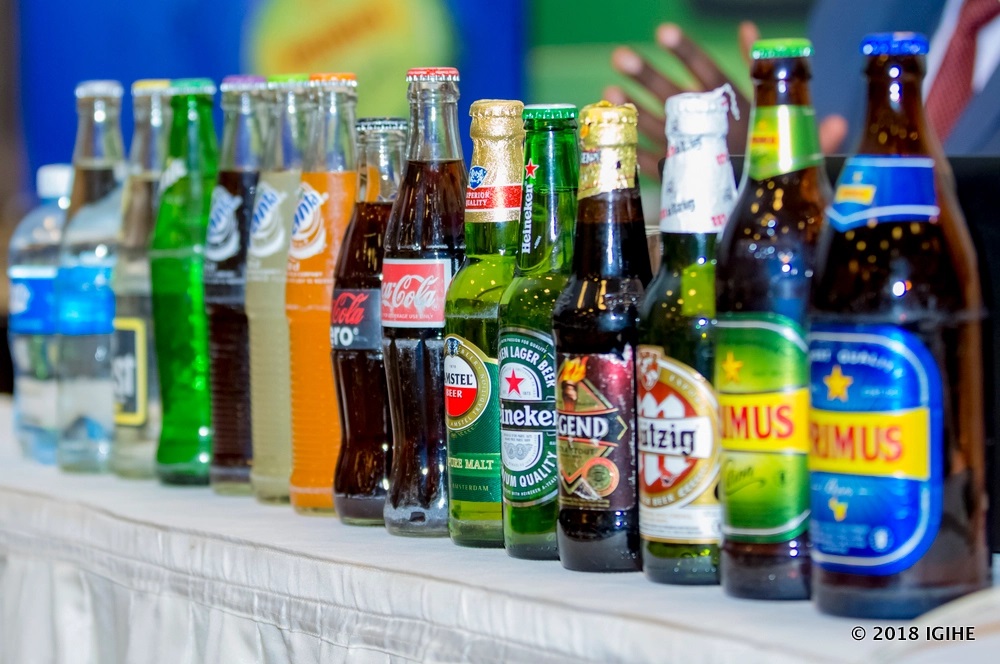
The Company’s beer brand portfolio includes Heineken, Primus, Mützig, Legend, Amstel and Turbo King produced in the Gisenyi Brewery. Primus, the Company’s largest selling beer brand has been available to consumers since 1959.
Since 1974, the Company has been producing and selling soft drink brands under a licensing agreement with The Coca-Cola Company. These include Coca Cola, Fanta, Sprite, Krest, Tonic, Stoney, Pineapple and the Company’s own brands Vital’O and Cheetah – energy drink.
The Company was founded in 1957 with the construction of a brewery located in Gisenyi. Since 1971, Bralirwa is a subsidiary of Heineken N.V., which holds 75% of the shares of Bralirwa with the remaining 25% listed on the Rwanda Stock Exchange. As a socially responsible company, Bralirwa supports a variety of projects from Health to Environment.
Blinken is awaited in Kigali next week for the first visit of US top official since the incumbent President Joe Biden took office.
MINAFETT has through statement disclosed that Rwanda looks forward to further strengthening the relationship with the United States and discuss partnership in the areas including peacekeeping, global health, global food and energy security, trade and investment, counterterrorism and climate action.
Discussions with Blinken are also expected to address security challenges in the Great Lakes Region where Rwanda remains committed to various regional mechanisms in place to find durable solutions.
“Rwanda looks forward to a robust exchange of views on governance and human rights, as has always been the case in the Rwanda-U.S. relationship,” reads the statement in part.
The US Assistant Secretary of State for African Affairs, Molly Phee recently told the media that Blinken will meet with President Paul Kagame on his visit to Rwanda where the arrest of Rusesabagina will be part of topics of discussions.
She said that the State Secretary has been expressing concerns that Rusesabagina was illegally arrested.
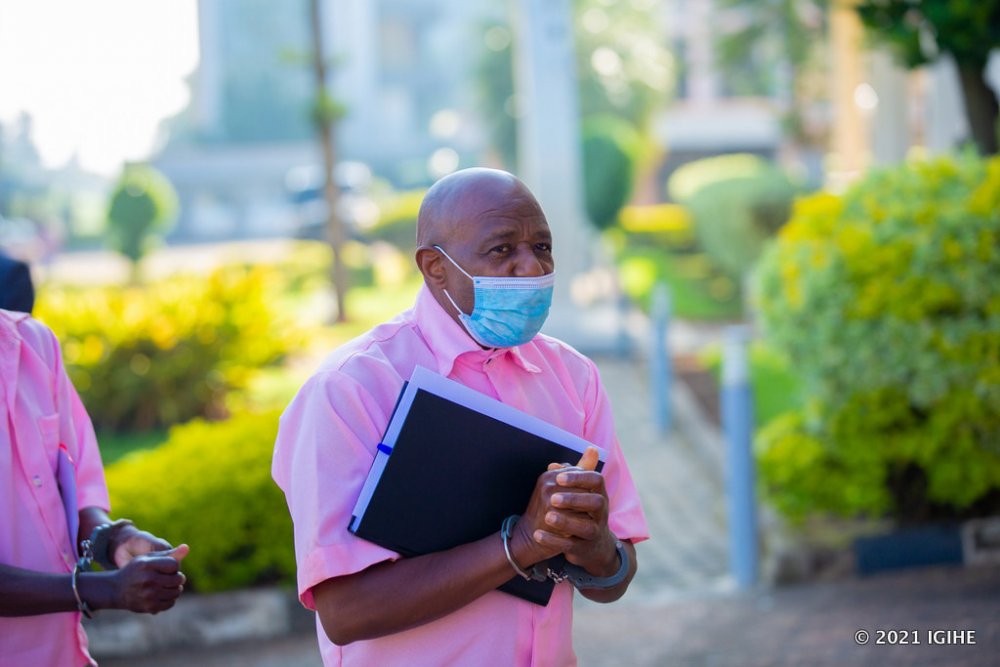
Rwanda and US enjoy cordial relations but some of its officials have been exerting pressure on Rwanda over the arrest of Paul Rusesabagina, the former President of MRCD-FLN terrorist group who was handed 25-year jail term.
Some US lawmakers proposed sanctions against Rwanda accusing the country of having kidnapped Paul Rusesabagina.
As the statement released by MINAFFET reads, Rwanda will make clear that the arrest of Rusesabagina was lawful.
“On the case of Rwandan citizen Paul Rusesabagina, on which we had engaged with the United States for more than a decade, Rwanda welcomes the opportunity to once again make clear that his arrest and conviction for serious crimes against Rwandan citizens [alongside 20 other accomplices in the same trial], while residing in the United States, were lawful under both Rwandan and international law,” adds the statement.
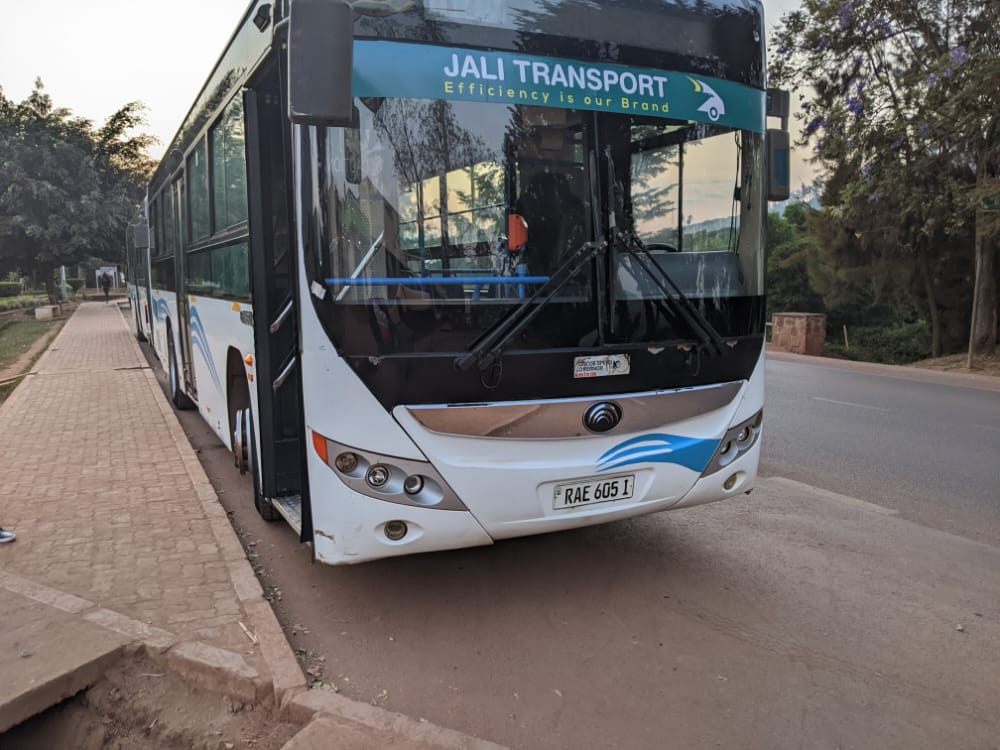
The transport company has confirmed the development to IGIHE following concerns raised by passengers over long queues at bus stops.
The company has already placed an order for 20 large buses expected to have arrived in Rwanda by the end of December this year.
Jali Transport is among transport companies operating in Kigali City since 2013.
At the time, the company which was operating as RFTC was given five-year license to carry passengers to different destinations which have been increased to 30.
The license was recently renewed and extended for three more years. As of today, the company has 202 buses including 59 with the capacity of 70 passengers and more 143 that can carry up to 30 passengers.
The management of Jali Transport has disclosed that the company is under process to solve transport problems.
The Managing Director of Jali Transport, Innocent Twahirwa has said that the 20 buses to be imported is part of a broad plan to improve services.
“We plan to import 20 large buses expected to arrive in the country in December this year,” he noted.
According to Twahirwa, the number of buses with the capacity of 40 seated and 30 standing passengers will be increased gradually.
As construction of the bridge began in April this year, passengers and traders with businesses in the surroundings welcomed the infrastructure that was expected to contain floods and accidents occasioned by Mpazi drainage channel overflow.
The bridge was expected to be operational by June this year but has not yet been inaugurated.
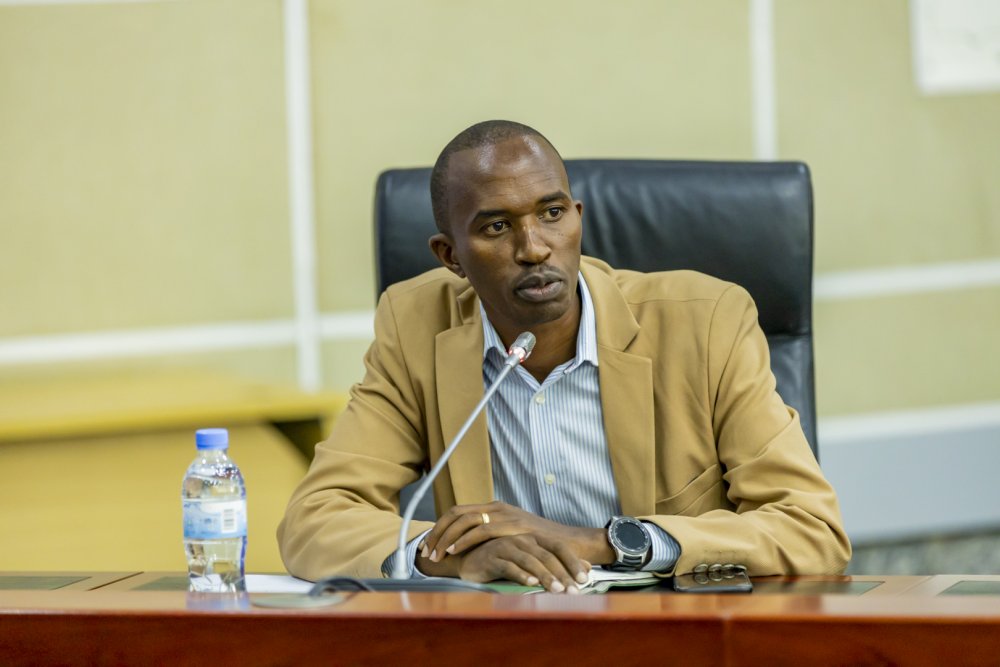
Kigali City Engineer, Emmanuel Asaba Katabarwa has said that the duration of construction activities was extended due to different considerations including the great relevance attached to the project and the extent at which it would affected by floods.
“It is a project that requires due diligence to be executed smoothly. The duration was extended but we are glad that fruits of our efforts are coming out. Recently, it rained heavily but the structures were not affected,” he noted.
Katabarwa said that the bridge has been completed pending road maintenance and other minor works to be finished in the near future.
He made the disclosure on Monday 1st August 2022 as he presented achievements in the education sector under the National Strategy for Transformation (NST1) to both chambers of parliament.
Hiked water and electricity tariffs particularly for schools are among issues raised by residents during a recent visit by parliamentarians held between 12th to 30th March 2022 to all districts.
“The water and electricity tariffs in schools are higher compared to their means where catering for this cost becomes a huge blow,” said Parliamentarian Veneranda Uwamariya.
Rwanda Utilities Regulatory Authority (RURA) last announced revised power tariffs in 2020. The prices increased depending on consumers.
At the time, RURA maintained lifeline tariffs for residential customers who consume below 15 kilowatts (kWh) per month at Rwf89 per kWh while those consuming between 15 and 50 kilowatts saw the price increasing by 15% from Rwf182 to Rwf212.
Residential customers who consume beyond 50 kilowatts per month are charged Rwf249 per KWh from the previous Rwf210.
For non-residential customers with monthly consumption of 100 kilowatts, the price increased to Rwf227 per kWh from Rwf204, while the tariff for customers consuming more than 100 kilowatts went up to Rwf255 per kWh from Rwf222.
The price for small, medium and large industries also increased from Rwf110 to Rwf134; Rwf87 to Rwf103 and Rwf80 to Rwf94 respectively.
Tariffs for water treatment plants and water pumping stations were also maintained at Rwf126 kWh.
Commenting on the issue, Premier Ngirente said that it will be solved soon.
“Only schools in the city can be affected by water tariffs because they use water from WASAC. However, we recommend the same low price charged to residents for schools in rural areas,” he said.
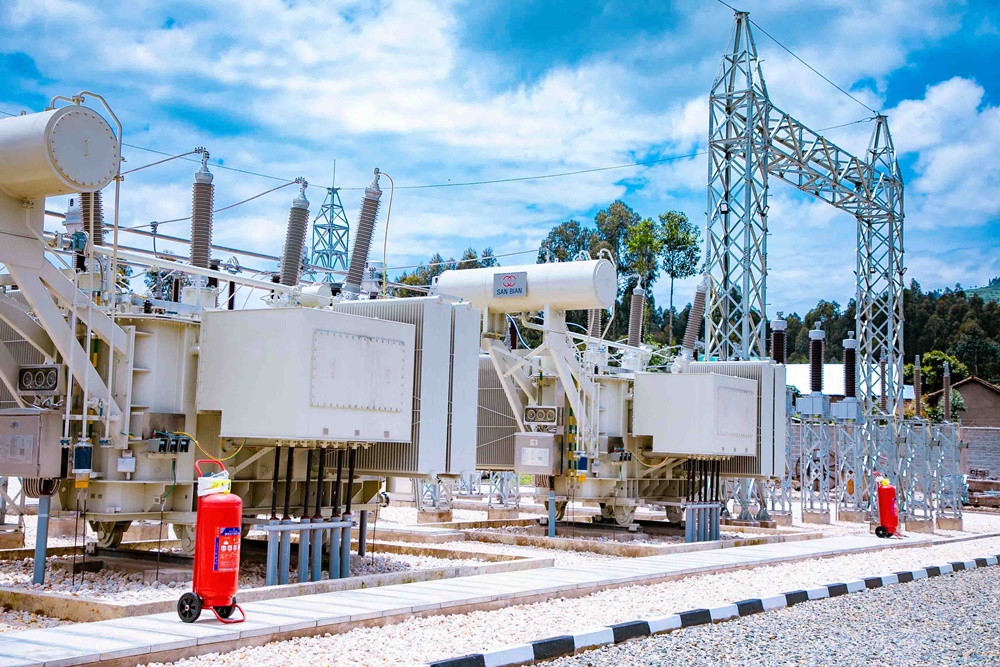
“We are aware of the issue of electricity where some health posts claim that the tariff is high. To this end, we are currently revising all electricity tariffs in Rwanda,” added Premier Ngirente.
He assured that new tariffs are set to be announced in the near future following citizens’ concerns on electricity.
“We will announce new prices not lather than two months. This does not only concern schools but also health facilities will be given special attention lest the budget allocated to feed children or buy pharmaceuticals is spent on electricity,” said Dr. Ngirente.