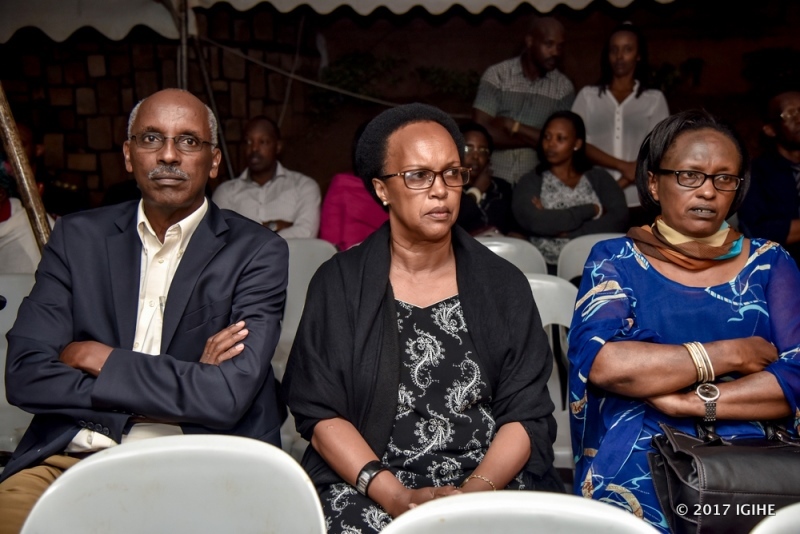
{The late Sayinzoga Jean, former chairman Rwanda Demobilization and Reintegration Commission has been commended for his deeds and bravery when he was alive and serving. His deeds were appreciated last evening in a tribute to his achievements held at his home in Intashyo village, Bibare cell of Kimironko sector in Gasabo district,Kigali. }
The celebration was attended by relatives, friends and top government officials including Prime Minister, Anastase Murekezi, the Minister of Local Government, Francis Kaboneka and the Minister of Justice Johnston Busingye among others.
The representative of the bereaved family, Mathias Abimana described Sayinzoga as a parent and brave who could dare anything for the family and the country.
“ He was brave, parent, adviser, leader in family and the country,” he said.
Mathias said he won’t forget words of Sayinzoga who always encouraged them to strive for greatness and success.
Jeanne Mukantwari, sister to Sayinzoga, said his brother would strive to fend for the family and recalled how he stopped studies in junior seminary to help her grow younger orphaned sisters.
{Police in Nyamagabe and Gastibo districts have seized an assortment of contrabands that were being trafficked into the country.}
They were seized in separate operations conducted on April 18, during which three people were arrested red-handed.
Police identified the suspects as Tharcisse Ndayisaba, 31, Frank Munezero, 27, and Patrick Bizumutima, 30.
Munezero and Bizumutima were arrested in Gatsibo.
The Southern region police spokesperson, Chief Inspector of Police (CIP) Andre Hakizimana, said that one of the suspects, Ndayisaba, a resident of Kitabi Sector in Nyamagabe was also a wanted man over similar crimes committed in the recent past.
“He was on the list of renowned drug traffickers, and when people saw him, they immediately called the police, and at the time of his arrest he was also trafficking illicit gin,” said CIP Hakizimana.
“We received information from a vigilant member of the public who was also a passenger in a vehicle he was traveling in. The phone SMS message specified the vehicle they were traveling in and the direction and that how officers were able to arrest him with Zebra Waragi,” he added.
On the other hand, Munezero and Bizumutima were apprehended in Kabarore sector en route to Kigali.
{Cutting out certain amino acids — the building blocks of proteins — from the diet of mice slows tumor growth and prolongs survival, according to new research published in Nature.}
Researchers at the Cancer Research UK Beatson Institute and the University of Glasgow found that removing two non-essential amino acids — serine and glycine — from the diet of mice slowed the development of lymphoma and intestinal cancer.
The researchers also found that the special diet made some cancer cells more susceptible to chemicals in cells called reactive oxygen species.
Chemotherapy and radiotherapy boost levels of these chemicals in the cells, so this research suggests a specially formulated diet could make conventional cancer treatments more effective.
The next stage would be to set up clinical trials with cancer patients to assess the feasibility and safety of such a treatment.
Dr Oliver Maddocks, a Cancer Research UK scientist at the University of Glasgow, said: “Our findings suggest that restricting specific amino acids through a controlled diet plan could be an additional part of treatment for some cancer patients in future, helping to make other treatments more effective.
Professor Karen Vousden, Cancer Research UK’s chief scientist and study co-author said: “This kind of restricted diet would be a short term measure and must be carefully controlled and monitored by doctors for safety. Our diet is complex and protein — the main source of all amino acids — is vital for our health and well-being. This means that patients cannot safely cut out these specific amino acids simply by following some form of home-made diet.”
Amino acids are the building blocks that cells need to make proteins. While healthy cells are able to make sufficient serine and glycine, cancer cells are much more dependent on getting these vital amino acids from the diet.
However, the study also found that the diet was less effective in tumors with an activated Kras gene, such as most pancreatic cancer, because the faulty gene boosted the ability of the cancer cells to make their own serine and glycine. This could help to select which tumors could be best targeted by diet therapy.
Dr Emma Smith, science communication manager at Cancer Research UK, said: “This is a really interesting look at how cutting off the supply of nutrients essential to cancer cell growth and division could help restrain tumors.
“The next steps are clinical trials in people to see if giving a specialised diet that lacks these amino acids is safe and helps slow tumor growth as seen in mice. We’d also need to work out which patients are most likely to benefit, depending on the characteristics of their cancer.”
{Police have warned motorists against reckless driving; saying violators of road safety standards that put people’s live in danger, risk prosecution and suspension of their licenses.}
The warning follows two separate accidents that happened on April 18 leaving five people dead.
One of the accidents occurred in Nduba Sector of Gasabo District killing four people, including a driver and three pedestrians, after a loaded truck registration number RAD 731J, lost control.
The truck belongs to a local construction company also rammed in a nearby house but, fortunately, nobody was inside.
Another incident happened in Kabuga Cell of Kageyo Sector Gicumbi District when a Coaster bus with plate number RAD 792 B knocked a pedestrian, who died on spot.
The spokesperson for Traffic and Road Safety department, Chief Inspector of Police (CIP) Emmanuel Kabanda, attributed the accident to “reckless driving” and warned drivers who violate traffic regulations.
“We have said it time and again for road users, especially drivers and motorcyclists, to abide by traffic rules and regulations, avoid driving while talking on phone, overtaking in dangerous corners, over-speeding and other careless driving practices,” CIP Kabanda said.
“It’s also in the interest of drivers to abide by the road precautions. They will be sparing their lives and that of their passengers and their automobiles. When driving, safety should be put forward,” he explained.
He further warned owners of vehicles with mechanical faults to take them for inspection and to fix them to avoid likely accidents.
The presidential decree No. 85/01 of September 02, 2002, regulating general traffic police and road traffic; stipulates, in part, that “vehicles not satisfying the set technical criteria will not be issued a certificate. Owners of vehicles using public roads without the certificate will also be liable to a fine of Rwf25, 000.”
“Driving a vehicle without due care or attention is a sign of reckless that puts all other road users at risk of fatal accidents” CIP Kabanda.
“Most road accidents are avoidable; they are due to bad driving habits, carelessness such as driving while distracted, driving aggressively and failing to inspect vehicles for mechanical problems…all these are things that are avoidable and prevent accidents. To a lesser extent, pedestrians also cross the roads carelessly, and this single act can cause a devastating accident.”
As part of the effort to prevent accidents largely caused by over-speeding, Police has ordered installation of speed governors in all public vehicles which limit drivers to a maximum speed of 60 kilometre per hour.
{Scientists at The Scripps Research Institute (TSRI) in La Jolla have revealed new clues to the wiring of the brain. A team led by Associate Professor Anton Maximov found that neurons in brain regions that store memory can form networks in the absence of synaptic activity.}
“Our results imply that assembly of neural circuits in areas required for cognition is largely controlled by intrinsic genetic programs that operate independently of the external world,” Maximov explained.
A similar phenomenon was observed by the group of Professor Nils Brose at the Max Planck Institute for Experimental Medicine in Germany. The two complementary studies were co-published as cover stories in the April 19, 2017, issue of the journal Neuron.
{{The “Nature vs. Nurture” Question}}
Experience makes every brain unique by changing the patterns and properties of neuronal connections. Vision, hearing, smell, taste and touch play particularly important roles during early postnatal life when the majority of synapses is formed. New synapses also appear in the adult brain during learning. These activity-dependent changes in neuronal wiring are driven by chemical neurotransmitters that relay signals from one neuron to another. Yet, animals and humans have innate behaviors whose features are consistent across generations, suggesting that some synaptic connections are genetically predetermined.
The notion that neurons do not need to communicate to develop networks has also been supported by earlier discoveries of synapses in mice that lacked transmitter secretion in the entire brain. These studies were performed in the laboratory of Professor Thomas Südhof, who won the 2013 Nobel Prize in Physiology or Medicine.
“We thought these experiments were quite intriguing,” Maximov said, “but they also had a major limitation: mice with completely disabled nervous systems became paralyzed and died shortly after birth, when circuitry in the brain is still rudimental.”
The TSRI team set out to investigate if neurons can form and maintain connections with appropriate partners in genetically engineered animals that live into adulthood with virtually no synaptic activity in the hippocampus, a brain region that is critical for learning and memory storage. “While the idea may sound crazy at the first glance,” Maximov continued, “several observations hinted that this task is technically feasible.” Indeed, mammals can survive with injuries and developmental abnormalities that result in a massive loss of brain tissue.
Inspired by these examples, Richard Sando, a graduate student in the Maximov lab, generated mice whose hippocampus permanently lacked secretion of glutamate, a neurotransmitter that activates neurons when a memory is formed. Despite apparent inability to learn and remember, these animals could eat, walk around, groom, and even engage in rudimental social interactions.
Working closely with Professor Mark Ellisman, who directs the National Center for Microscopy and Imaging Research at the University of California, San Diego, Sando and his co-workers then examined the connectivity in permanently inactive areas. Combining contemporary genetic and imaging tools was fruitful: the collaborative team found that several key stages of neural circuit development widely believed to require synaptic activity were remarkably unaffected in their mouse model.
The outcomes of ultra-structural analyses were particularly surprising: it turns out that neurotransmission is unnecessary for assembly of basic building blocks of single synaptic connections, including so-called dendritic spines that recruit signaling complexes that enable neurons to sense glutamate.
Maximov emphasized that the mice could not function normally. In a way, their hippocampus can be compared to a computer that goes though the assembly line, but never gets plugged to a power source and loaded with software. As the next step, the team aims to exploit new chemical-genetic approaches to test if intrinsically-formed networks can support learning.
{Residents of Karongi District have been called upon to stand up against gender based violence and fully take part in public safety activities.}
The call was made by the District vice Mayor in Charge of Economic Development, Innocent Gakuru, during a campaign held in Mushubati Sector and attracted about 2000 residents.
Present was also the District Police Commander (DPC) Supt. Boniface Kagenza.
This was after an exercise to spray pesticides against Armyworms – a type of crop pest– has infested farmers’ crops mainly cereals.
The vice mayor told residents to be active partners of the Police through real time information sharing especially on GBV and child abuse related crimes.
He noted that there are some people, who take advantage of other’s vulnerability to abuse them, violate their rights adding that combating such irregularities “requires ownership of every individual and reporting every single case you come across.”
“GBV is real and it’s a responsibility for each one of us to use the possible means in our midst to eliminate it. This is not a one man’s fight…it concerns everyone,” said Gakuru
Supt. Kagenza, in his remarks, said: “Sharing such information is a contribution to national development since it helps in ensuring that our societies are safe from any form of violence. Remember, a community that is safe focuses more on developing itself than spending much time in conflicts.”
He noted that overcoming crimes committed against women, girls and children such as rape, battery, child neglect and human trafficking requires collective efforts.
“Anything that results in physical, sexual or psychological harm or suffering to women should be prohibited and fought against by everyone in society. Such acts are a challenge to public health, a barrier to social and economic development, and undermine the safety and dignity of individuals,” said the DPC.
He urged them to always attend community meeting and help to increase awareness about GBV as well as find proactive ways to provide counseling and support survivors of GBV.
An analysis of the microscopic wear on the teeth of the legendary “man-eating lions of Tsavo” reveals that it wasn’t desperation that drove them to terrorize a railroad camp in Kenya more than a century ago.
“Our results suggest that preying on people was not the lions’ last resort, rather, it was simply the easiest solution to a problem that they confronted,” said Larisa DeSantis, assistant professor of earth and environmental studies at Vanderbilt University.
The study, which she performed with Bruce Patterson, MacArthur Curator of Mammals at The Field Museum of Natural History in Chicago, is described in a paper titled “Dietary behavior of man-eating lions as revealed by dental microwear textures” published online Apr. 19 by the journal Nature: Scientific Reports.
“It’s hard to fathom the motivations of animals that lived over a hundred years ago, but scientific specimens allow us to do just that,” said Patterson, who has studied the Tsavo lions extensively. “Since The Field Museum preserves these lions’ remains, we can study them using techniques that would have been unimaginable a hundred years ago.”
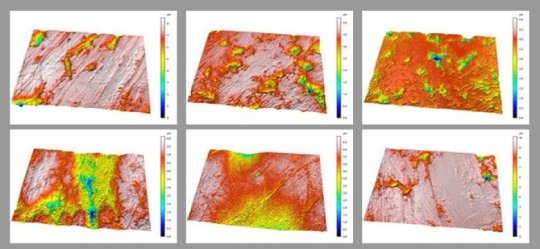
In order to shed light on the lion’s motivations, DeSantis employed state-of-the-art dental microwear analysis on the teeth of three man-eating lions from the Field Museum’s collection: the two Tsavo lions and a lion from Mfuwe, Zambia which consumed at least six people in 1991. The analysis can provide valuable information about the nature of animal’s diet in the days and weeks before its death.
DeSantis and Patterson undertook the study to investigate the theory that prey shortages may have driven the lions to man-eating. At the time, the Tsavo region was in the midst of a two-year drought and a rinderpest epidemic that had ravaged the local wildlife. If the lions were desperate for food and scavenging carcasses, the man-eating lions should have dental microwear similar to hyenas, which routinely chew and digest the bones of their prey.
“Despite contemporary reports of the sound of the lion’s crunching on the bones of their victims at the edge of the camp, the Tsavo lion’s teeth do not show wear patterns consistent with eating bones,” said DeSantis. “In fact, the wear patterns on their teeth are strikingly similar to those of zoo lions that are typically provisioned with soft foods like beef and horsemeat.”
The study provides new support for the proposition that dental disease and injury may play a determining role in turning individual lions into habitual man eaters. The Tsavo lion which did the most man-eating, as established through chemical analysis of the lions’ bones and fur in a previous study, had severe dental disease. It had a root-tip abscess in one of its canines — a painful infection at the root of the tooth that would have made normal hunting impossible.
“Lions normally use their jaws to grab prey like zebras and buffalos and suffocate them,” Patterson explained. “This lion would have been challenged to subdue and kill large struggling prey; humans are so much easier to catch.”
The diseased lion’s partner, on the other hand, had less pronounced injuries to its teeth and jaw — injuries that are fairly common in lions which are not man eaters. According to the same chemical analysis, it consumed a lot more zebras and buffalos, and far fewer people, than its hunting companion.
The fact that the Mfuwe lion also had severe structural damage to its jaw provides additional support for the role of dental problems in triggering man-eating behavior, as do a number of reports of man-eating incidents by tigers and leopards in colonial India that cite similar infirmities, the researchers pointed out.
“Our data suggests that these man-eating lions didn’t completely consume the carcasses of their human or animal prey,” said DeSantis. “Instead, people appear to have supplemented their already diverse diet. Anthropological evidence suggests that humans have been a regular item on the menu of not only lions, but also leopards and the other great cats. Today, lions seldom hunt people but as human populations continue to grow and the numbers of prey species decline, man-eating may increasingly become a viable option for many lions.”
{Most left-handers can rattle off a list of their eminent comrades-in-arms: Oprah Winfrey, Albert Einstein, and Barack Obama, just to name three, but they may want to add on cockatoos, “southpaw” squirrels, and some house cats. “Handed-ness” or left-right asymmetry is prevalent throughout the animal kingdom, including in pigeons and zebrafish. But why do people and animals naturally favor one side over the other, and what does it teach us about the brain’s inner workings? Researchers explore these questions in a Review published April 19 in Neuron.}
“Studying asymmetry can provide the most basic blueprints for how the brain is organized,” says lead author Onur Güntürkün, of the Institute of Cognitive Neuroscience at Ruhr-University Bochum, in Germany. “It gives us an unprecedented window into the wiring of the early, developing brain that ultimately determines the fate of the adult brain.” Because asymmetry is not limited to human brains, a number of animal models have emerged that can help unravel both the genetic and epigenetic foundations for the phenomenon of lateralization.
Güntürkün says that brain lateralization serves three purposes. The first of those is perceptual specialization: the more complex a task, the more it helps to have a specialized area for performing that task. For example, in most people, the right side of the brain focuses on recognizing faces, while the left side is responsible for identifying letters and words.
The next area is motor specialization, which brings us to the southpaw. “What you do with your hands is a miracle of biological evolution,” he says. “We are the master of our hands, and by funneling this training to one hemisphere of our brains, we can become more proficient at that kind of dexterity.” Natural selection likely provided an advantage that resulted in a proportion of the population — about 10% — favoring the opposite hand. The thing that connects the two is parallel processing, which enables us to do two things that use different parts of the brain at the same time.
Brain asymmetry is present in many vertebrates and invertebrates. “It is, in fact, an invention of nature, which evolved because many animals have the same needs for specialization that we do,” says Güntürkün, who is also currently a visiting fellow at the Stellenbosch Institute for Advanced Study in South Africa. Studies have shown that birds, like chickens, use one eye to distinguish grain from pebbles on the ground while at the same time using the other eye to keep watch for predators overhead.
Research on pigeons has shown that this specialization often is a function of environmental influences. When a pigeon chick develops in the shell, its right eye turns toward the outside, leaving its left eye to face its body. When the right eye is exposed to light coming through the shell, it triggers a series of neuronal changes that allow the two eyes to ultimately have different jobs.
A zebrafish model of lateralization, meanwhile, has enabled researchers to delve into the genetic aspects of asymmetrical development. Studies of important developmental pathways, including the Nodal signaling pathway, are uncovering details about how, very early in an embryo’s development, the cilia act to shuffle gene products to one side of the brain or the other. By manipulating the genes in Nodal and other pathways, researchers can study the effects of these developmental changes on zebrafish behaviors.
Güntürkün says that this research can provide insight into the effects of asymmetry on brain conditions in humans. “There are almost no disorders of the human brain that are not linked to brain asymmetries,” he says. “If we understand the ontogeny of lateralization, we can make a great leap to see how brain wiring early in the developmental process may go wrong in these pathological cases.”
{{ {That law reflects the will of the government only, not our will} }}
{It’s a sunny afternoon in Munyiginya Sector of Rwamagana District in the east of Rwanda. Men and women are seated on the lawn of Nkomangwa Cell’s football pitch. What brings together about 300 people this afternoon is a community debate, organized by the journalists network “Pax Press” in partnership with “Rwanda Women’s Network” to discuss with citizens the new law governing family relationship adopted last September. }
The main change is the fact that now both spouses – man and woman – are jointly responsible for the management of the household, including moral and material support as well as its maintenance as article 209 of the law puts it. “The performance of those duties by only one spouse is only allowed if the other spouse is unable to do so. In case of a disagreement, competent authorities make a decision.”
Elie Nizeyimana, a lawyer, explains the changes from the old law that bestowed a husband as superior over the wife in the household’s management. Some men crease and furrow, frown and murmur with grumbling grunts of dissatisfaction. “They deprived us, men, of our powers when they made the new law”, complains an old man, adding that he had never heard of the changes which he is to shoulder as the last resort.
Soon after, Munyiginya residents start sharing their thoughts on the new law. Whereas men blame the law to relegate them from their superior position in their families, women say they are not quite ready yet to take up the responsibilities as equal leaders of households.
Emmanuel Ntawuyirushintege says: “It is not possible to have two heads of one institution. The same should be respected regarding the family because it always needs a last signature by one head over any discussion to reach a decision. And this last signature will be the husband’s signature, as it always has been. That law reflects the will of the government only, not our will.”
Benithe Mukamana admits that she didn’t know about the changes in the law. “My husband is the head of the family. We don’t have the same powers and I am comfortable with that,” she tells the audience.
“Men’s powers have been reduced in favour of women, but I think the changes that will come with it are going to improve the family situation if women take up equal responsibilities as men in providing for the family,” says Theoneste Ruzindana.
Sarah Simbi, the Executive Secretary of Munyiginya Sector, is confident the revised law will bring solutions to some conflicts in families. “We used to receive conflict cases whereby men gave away or donated the family’s property without their wives’ consent. These cases will no longer come up as spouses will have to agree on everything,” she says.
{{Reasons behind law revision}}
Lawyer Nizeyimana says the law has not deprived men of their powers but gives equal responsibilities to women for the better of the family. “Women will take on more ownership of household activities and take up responsibilities to ensure its development instead of leaving heavy burden to men,” he said.
Referring to the new law’s preamble, Nizeyimana says the old law was outdated and not meeting gender equality principles including international conventions and African protocols that Rwanda has currently ratified. He says Rwanda remains the sole country in the region that has linked its family law to international standards while countries like Kenya, Tanzania and Uganda still use culture-based laws that give men superiority over women.
The preamble stipulates that the law was revised pursuant to the Constitution of 2003 revised in 2015; the Convention on the Elimination of All Forms of Discrimination against Women opened for signature in New York on 18 December 1979 that Rwanda ratified in 1980; the Protocol to the African Charter on Human and People’s Rights on the Rights of Women in Africa opened for signature in Maputo on 11 July 2003 that Rwanda ratified in 2004.
{President Paul Kagame has addressed the National Assembly of Djibouti where he has highlighted the importance of Africa states’ need to complement each other to reach development goals and overcome challenges. }
Kagame noted that much as Rwanda and Djibouti do not share borders, the distance between both countries is not an obstacle to friendship.
He lauded Djibouti’s rapid development saying it has had an impact beyond its borders.
Kagame said that Rwanda and Djibouti have common aspirations for a stable, prosperous, continent, where all Africans live in dignity.
“We seek the same things for our people: education, health, knowledge and prosperity. An essential element of Rwanda’s development strategy is integration, both economic and political with partner states,” said Kagame.
“Africa has everything needed to create the opportunities for a hopeful present, and a bright future, for all of us.We are united by universal values and principles, but each country’s challenges are unique,” he added.
Kagame explained that the most successful nations have a clear understanding of their own circumstances, history and needs of citizens. He called African nations to speak as one voice ‘whatever challenges we face collectively and in our respective countries’.
Kagame has also talked on Rwanda-Djibouti relations calling for improved relations between citizens of both countries.
“We want more Rwandans and Djiboutians to visit each other, learn from each other, and invest in each other’s countries.We are making good progress in ensuring that our close bilateral cooperation results into tangible benefits for our people.The solidarity between Rwanda and Djibouti is a firm foundation for our joint pursuit of social and economic transformation. We look forward to deepening our partnership in the years ahead,” he said.
President Kagame left has also visited Djibouti’s Port of Doraleh, marking the end of two-day State visit accompanied by First Lady and government officials.
President Kagame arrived in Djibouti where he and the delegation that accompanied him have signed various agreements regarding air transport, investment, cooperation in technology, removing visa costs for diplomats and service passports along with establishing a joint commission of both countries.