{The Mayor of Kayonza District, Innocent Hakizakumeza has asked heads of financial institutions to heighten security at their premises to further prevent the possibility of robberies.}
He also urged private security companies in the district to up their professional standards.
The mayor made the call on April 18, during a consultative meeting with bank officials and managers of security companies operating in Kayonza.
The meeting which brought together about 30 participants aimed at devising means of streamlining security at all commercial banks and micro-finance institutions to close all loop holes.
Hakizakumeza noted such gaps as having few security guards and ill-motivated and less vigilant security staff.
“We see at some financial institutions one or two guards, some standing in an idle manner, this is unprofessional,” said the mayor.
Present at the same meeting was the acting District Police Commander, Chief Inspector of Police (CIP) John Nsazimana, who reechoed the mayor’s call about “alertness.”
He noted professionalism goes with continuos training, and inspection to ensure that every security personnel is up to the task.
The DPC further appealed to heads of commercial institutions to also take precaution and acquire security gadgets including installing CCTV cameras and alarm systems.
{The type of pillowcase you use can have an effect on how quickly your face ages. This is according to skincare expert Laura Lynch.}
According to Daily Mail, Lynch revealed sleeping on cotton pillowcases could be adding years to your looks.
Lying face-down into your pillow or on the side could also cause ageing.
Lynch suggests opting for silk pillowcases.
“Cotton doesn’t allow for the skin to slide so it catches the skin, pulling it into a position and it doesn’t really allow the skin to bounce back to its natural form,” Lynch said as quoted on Daily Mail.
“Silk is a natural fibre, it’s hypoallergenic, it allows for the skin to breathe and it allows the skin to slide over the surface.
“So it doesn’t pull at the skin and therefore prevents these wrinkles from occurring.”
Lynch also warned against sleeping face-down into the pillow or on the side as it causes ageing.
“If you’re creasing your face constantly against your pillow, you could also be causing a permanent wrinkle,” Lynch added.
“If you’re a side sleeper or a tummy sleeper, you can definitely find that those positions would cause creases or lines to form on your skin.
“Even though they may disappear couple of hours after you wake up in the morning, overtime, they can cause the development of lines and wrinkles.”
{As part of the Rwanda National Police (RNP) outreach programmes to prevent accidents and further improve road security, Police in Musanze District conducted a road safety awareness campaign on April 19, urging commercial motorcyclists and cyclists to abide by traffic rules.}
In a meeting held in Busogo Sector, the sector Executive Secretary Edward Twagirimana reminded close to 300 motorcyclists and cyclists to always put their lives forward and that of others, by respecting roadside signs.
“We cannot let accidents be part of our daily lives. That is why we consider awareness on road safety as significant and a continuous process,” he said.
He urged them to forge a close partnership and report any criminal act to the police.
The meeting was also attended by the District Community Liaison Officer (DCLO) Inspector of Police (IP) Viateur Ntiyamira and the in-charge traffic, Assistant Inspector of Police (AIP) Richard M Rafiki.
The DCLO tutored motorcyclists and cyclists on road safety signs and urged to respect zebra crossing, pedestrian pathways, avoid speeding and dangerous maneuvers.
Speaking about Zebra Crossings, IP Ntiyamira reminded them that a zebra crossing typically gives priority rights of way to pedestrians.
He added that road safety means each and everyone having knowledge on safe usage of the road and the meaning of signposts.
IP Ntiyamira reminded them that pavements were constructed entirely for pedestrians and that riding on them contravenes road safety standards.
“As we aspire for a sustainable and peaceful country, let every road user promote self-discipline as their duty to the nation,” he added.
“When you are using the road, remember there are other people also using it. Bad maneuvers and speeding leave your lives and that of other road users in danger,” he said.
The majority of the accidents involving motorcyclists and cyclist are due to speeding, and recklessness.
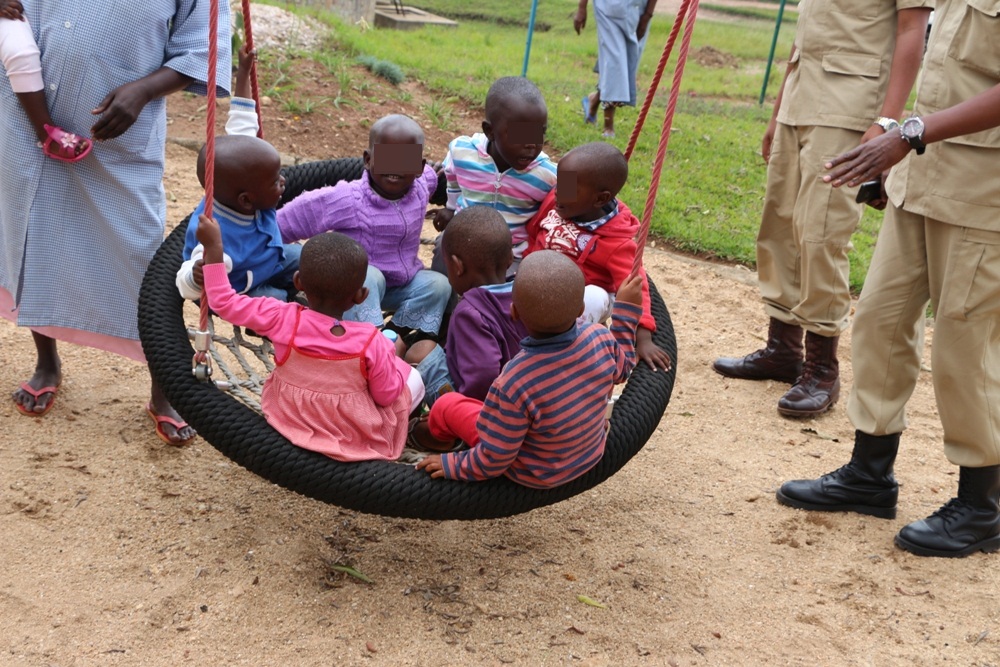
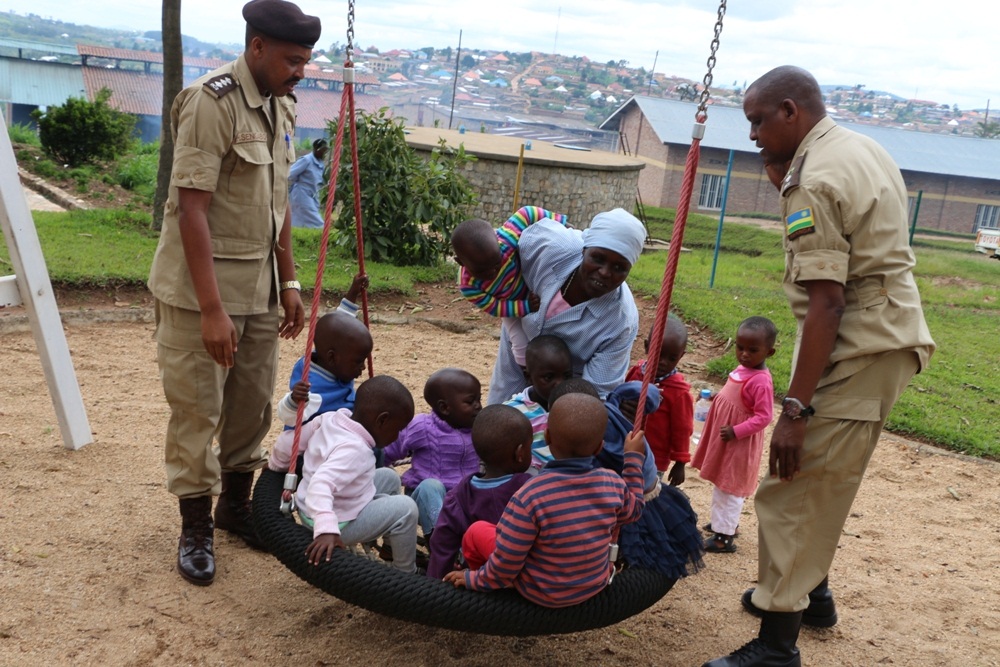
{A favorite childhood pastime — swinging on the playground swing set — also may be teaching kids how to get along.}
The measured, synchronous movement of children on the swings can encourage preschoolers to cooperate on subsequent activities, University of Washington researchers have found.
A study by the UW’s Institute for Learning & Brain Sciences (I-LABS) shows the potential of synchronized movement in helping young children develop collaborative skills. The study is published online in the Journal of Experimental Child Psychology.
“Synchrony enhances cooperation, because your attention is directed at engaging with another person, at the same time,” explained Tal-Chen Rabinowitch, a postdoctoral researcher at I-LABS. “We think that being ‘in time’ together enhances social interaction in positive ways.”
Previous studies, including others by Rabinowitch, have linked music and being in sync with other pro-social behaviors, such as helping, sharing and empathizing, among young children: Marching together to a song, for example, might prompt one child to share with another.
In this study, Rabinowitch, along with I-LABS co-director and psychology professor Andrew Meltzoff, sought to focus on movement alone, without music, and examined how children cooperated with one another afterward. Cooperation — adapting to a situation, compromising with someone else, working toward a common goal — is considered a life skill, one that parents and teachers try to develop in a child’s early years.
For the I-LABS study, researchers built a swing set that enabled two children to swing in unison, in controlled cycles of time. Pairs of 4-year-olds — who were unfamiliar to one another — were randomly assigned to groups that either swung together in precise time, swung out of sync with each other, or didn’t swing at all. The pairs in all three groups then participated in a series of tasks designed to evaluate their cooperation. In one activity, the children played a computer game that required them to push buttons at the same time in order to see a cartoon figure appear. Another, called the “give and take” activity, involved passing objects back and forth through a puzzle-like device.
Researchers found that the children who swung in unison completed the tasks faster, indicating better cooperation than those who swung out of sync, or not at all. On the button-push task, for instance, the pairs who had been swinging together showed a greater tendency to strategically raise their hands before they pushed the button so as to signal their intent to the other child, which proved to be a successful tactic for the task.
For 4-year-olds, moving in sync can create a feeling of “being like” another child that, consequently, may encourage them to communicate more and try to work together, Rabinowitch said.
“Cooperation has both a social and cognitive side, because people can solve problems they couldn’t solve alone,” Meltzoff said. “We didn’t know before we started the study that cooperation between 4-year-olds could be enhanced through the simple experience of moving together. It’s provocative that kids’ cooperation can be profoundly changed by their experiences.”
Rabinowitch believes the results of this study can have implications outside the lab. Teachers and parents can provide “in sync” opportunities for groups of children, whether through music, dance or play.
{Negativity is the opposite of anything positive; negativity will block peace, happiness, success and any beautiful thing that you should have in life.}
If you give negativity the chance, it’ll ruin your life. These tips will help you block negativity from ruining your life.
{{1. Choose to spend your time productively}}
If you’d notice, negativity is mostly borne out of idleness. It’s in your idle moments your mind tricks you into thinking negatively. If you can be more productive with your time, you wouldn’t have the time to let negativity settle.
{{2. Guard your thoughts }}
You have the power to control what you think about, and it’s important to guard your thoughts because it eventually becomes your actions. Channel your mind to more positive thoughts and negativity will be far from you.
{{3. Spend time with positive people }}
The people you also spend time with will have a lot of impact on your thoughts and actions. Spend time with positive people and you’d find yourself being more positive, no matter what.
{{4. Cut negative relationships }}
Just as you must spend time with more positive people, you ought to cut off every form of negative relationship. Relationships that are bringing you down, making you think low and channeling your positive energy in the wrong direction aren’t good for you – steer clear from such relationships.
{{5. Create time for happiness }}
Create time to be happy and spend time with people who make you happy. Spending time with family, friends and loved ones will boost your happiness, and happiness is a good source of positivity.
{{6. Choose your attitude }}
You could be confronted with situations that will make you unhappy, angry, sad, bitter and draw out other forms of negative attitude from you, but if you search deep within, you have the power to control your attitude and never let anything bring out the beast or ugly part of you.
{{7. Think of solutions and not problems }}
We’ll be faced with challenges and difficult situations – that is life for you; it wasn’t meant to be a bed of roses, and it’s in overcoming those difficulties that you become a better and stronger man/woman.
When faced with problems and challenges, think of solutions because that’s what will bail you out. Thinking of the problem will only ruin your positivity and it wouldn’t add any tangible thing to your life.
Have you been battling negativity in your life? You actually have the power to win that battle and let positivity guide you.
{Salk scientists and collaborators have shed light on a long-standing question about what leads to variation in stem cells by comparing induced pluripotent stem cells (iPSCs) derived from identical twins. Even iPSCs made from the cells of twins, they found, have important differences, suggesting that not all variation between iPSC lines is rooted in genetics, since the twins have identical genes.}
Because they can differentiate into almost any cell type in the body, stem cells have the potential to be used to create healthy cells to treat a number of diseases. But stem cells come in two varieties: embryonic stem cells (ESCs), which are isolated from embryos, and iPSCs, which are created in the lab from adult cells that are reprogrammed using mixtures of signaling molecules and are a promising tool for understanding disease and developing new treatments.
Although iPSCs resemble ESCs in most ways, scientists have found that iPSCs often have variations in their epigenetics — methyl marks on the DNA that dictate when genes are expressed. These epigenetic markers aren’t the same between iPSCs and ESCs, or even between different lines of iPSCs. In the past, it’s been hard to determine what drives these differences.
“When we reprogram cells, we see small differences when we compare them to stem cells that come from an embryo. We wanted to understand what types of differences are always there, what is causing them, and what they mean,” says Juan Carlos Izpisua Belmonte, a professor in Salk’s Gene Expression Laboratory and co-senior author, with Kelly Frazer of the University of California, San Diego, on the new paper, which was published in Cell Stem Cell in April 2017. A better understanding of these differences will help researchers refine stem-cell based treatments for disease.
Izpisua Belmonte and Frazer, along with co-first authors of the paper Athanasia Panopoulos, formerly a postdoctoral fellow at Salk and now at the University of Notre Dame, and Erin Smith of UCSD, turned to twins to help sort it out.
Although identical twins have the same genes as each other, their epigenomes — the collection of methyl marks studding their DNA — are different by the time they reach adulthood due in part to environmental factors. Reprogramming the skin cells of adult identical twins to their embryonic state eliminated most of these differences, the researchers found when they studied cells from three sets of twins. However, there were still key epigenetic differences between twins in terms of how the iPSCs compared to ESCs.
When the team looked more in depth at the spots of the genome where this variation between methyl marks tended to show up in twins, they found that they often fell near binding sites for a regulatory protein called MYC.
“In the past, researchers had found lots of sites with variations in methylation status, but it was hard to figure out which of those sites had variation due to genetics,” says Panopoulos. “Here, we could focus more specifically on the sites we know have nothing to do with genetics.” That new focus, she says, is what allowed them to home in on the MYC binding sites.
The MYC protein — which is one of the molecules used to reprogram iPSCs from adult cells — likely plays a role in dictating which sites in the genome are randomly methylated during the reprogramming process, the researchers hypothesized.
“The twins enabled us to ask questions we couldn’t ask before,” says Panopoulos. “You’re able to see what happens when you reprogram cells with identical genomes but divergent epigenomes, and figure out what is happening because of genetics, and what is happening due to other mechanisms.”
The findings help scientists better understand the processes involved in reprogramming cells and the differences between iPSCs and ESCs, which has implications on future studies aiming to understand the specific causes and consequences of these changes, and the way iPSCs are being used for research and therapeutics.
{A High Court in Rwanda on Thursday sentenced a man to life in prison for leading and coordinating attacks on Tutsis during the 1994 genocide against Tutsi.}
In the genocide, over one million innocent Tutsis were killed in just 100 days.
Bernard Munyagishari, who headed a government-allied militia known as the Interahamwe in Rwanda’s west, was convicted of crimes of genocide and crimes against humanity.
Lawyers for Munyagishari said they would appeal.
Timothée Kanyegeri, one of the three judges who convicted him, said Munyagishari had trained the militia in how to distinguish the Hutu from Tutsis.
He also “told them that to kill as (for a) snake, you have to hit hard the head, otherwise it will sneak away”, the judge said.
Kanyegeri said Munyagishari had transported members of the militia in buses as they went to kill the Tutsis in Rwanda’s former prefecture of Gisenyi and had personally helped to distribute guns, machetes, axes and clubs used in the killings.
Munyagishari was arrested in neighboring Democratic Republic of Congo in 2011. His case was transferred to Rwanda in 2013 from Arusha, Tanzania, where the now-closed International Criminal Tribunal for Rwanda was based.
Munyagishari is being held in Kigali’s central prison and was absent during Thursday’s sentencing. (Reuters/NAN)
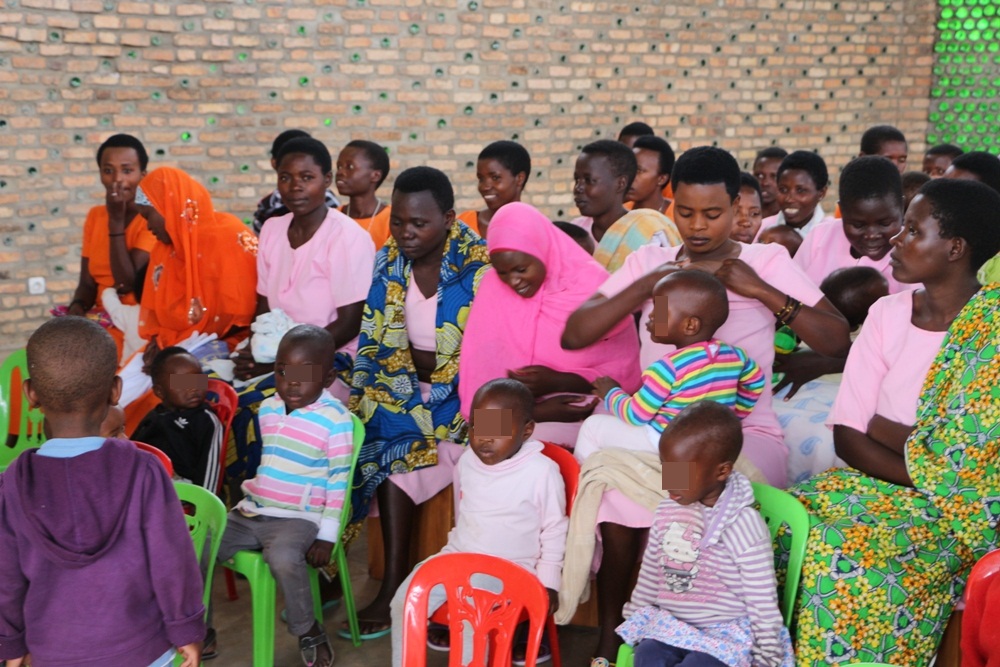
The fact that the children are living with their parents in prison does not turn them into prisoners but they stay there just because a child aged below three years has rights to live with their mother as long the conditions allow.
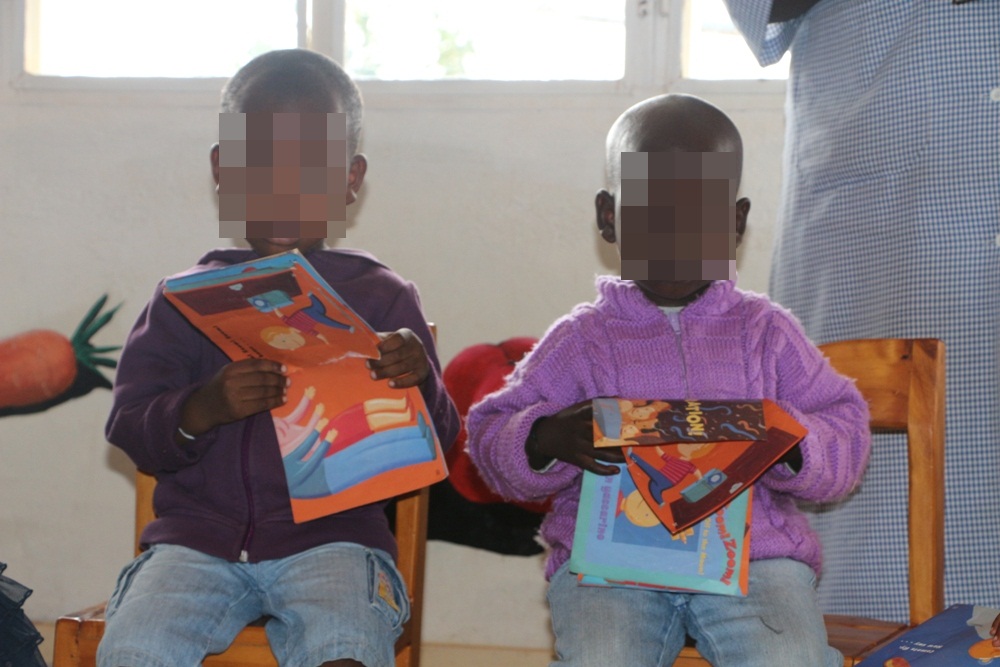
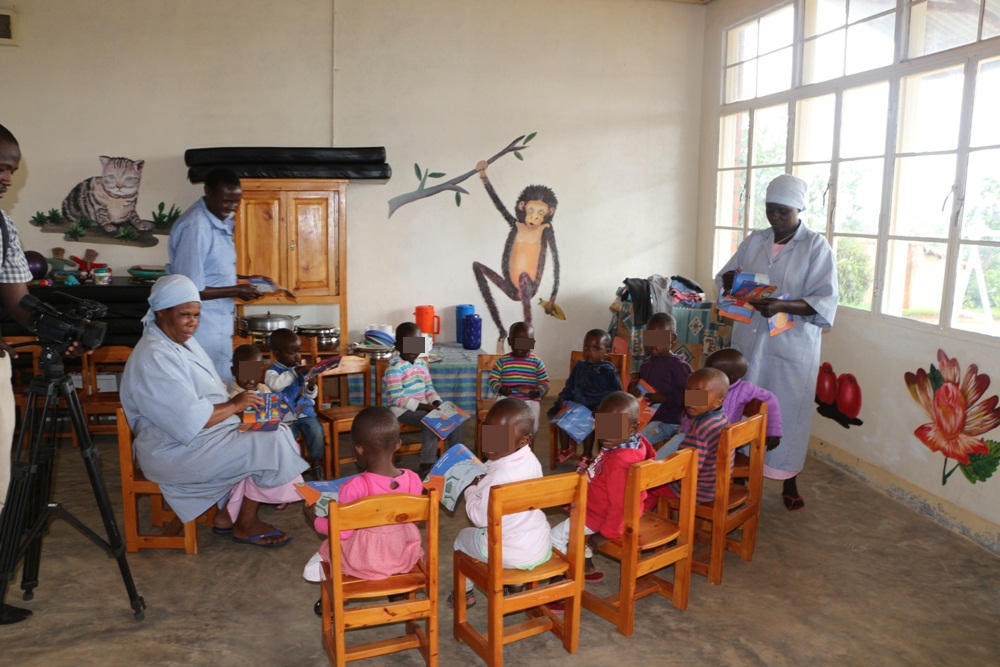
Since 2011, children who accompanied their parents and those born in Muhanga Prison have acquired childcare centre from which they are raised in normal conditions and prepared to be reintegrated into families having good health and manners at the same level as children out there in the community.
With the help of Rwanda Correctional Services (RCS), IGIHE’s Emmanuel Kanamugire was able to enter the Muhanga Prison where he found 52 children belonging to female inmates. The children are enjoying their legal rights of staying with their mothers
Children at three years and below are taken to the childcare centre every morning, handed to their caregivers who do their cleanliness, give them food and drinks and teach them some basic life skills that are also offered at nursery schools in the country.
Ms. Eugenie Musayidire who, in partnership with different sponsors, opened the childcare centre in Muhanga Prison, and currently monitoring the children’s life on a daily basis, says that she decided to help the inmates’ children acquire the same care as what other children are acquiring in their families.
“Children living in their families are cared for on a daily basis as usual but these ones living with their mothers in prison would not have caregivers without this initiative. We are caring for their lives. We pick them in the morning and spend daytime with them, teaching them good manners. We provide them with meals, teachers, playthings and more. After taking their lunch, they take a nap, serve them with milk or porridge when they wake up and we take them back to their mothers in the evening,” she says.
Despite the care rendered to these children, they still face challenges that include lack of life skills outside prisons like the language used in the society because they have no interactions with people outside the prison. For instance, it is hard to get these children into a car because cars are strange to them and they also confuse cows’ colours with clothes’ whereby some say that a cow is putting on a dress.
As a response to this problem of lacking exposure to society’s life, RCS has committed to taking these children for regular tours around the country for them to understand the life outside prisons.
RCS’s Spokesperson Mr. Hillary Sengabo, says “We have set up adequate conditions for those children’s proper development. They spend daytime outside the prison and go back to sleep in their mothers’ chest at night. We take them outside of prisons to learn about the conditions there and we are doing our best to provide them with the necessary needs.”
He says that when a child grows up to three years, is separated from an inmate mother and joins the family at home.
RCS first examines the ability of the child’s receiving family to provide adequate life conditions and the transfer must be approved by the child’s mother who stays in prison.
The government cares for children who cannot find families to receive them at three years of age.
Mothers of these children appreciate the education and care that their children are receiving and they have hope that their children will be marked by good manners when they are reintegrated into families.
”Our children are well catered for during daytime. They receive food, drinks and education and they come back to us in the evening telling us what they have acquired at the centre. We believe that they will be having good manners as they go back home,” says one of the inmate mothers in Muhanga Prison.
{{Child’s rights in prison}}
Mr. Francois Bisengimana, the Director of Adoption, Protection and Promotion of Child Rights at the National Commission for Children (NCC), says that a child living with her mother in prison has rights as any other child living at home.
NCC reveals that every prison accommodating children is supported with at least Rwf1 million annually according to the number of children therein and the funds help prisons in childcare.
Minister for Gender and Family Promotion, Ms. Esperance Nyirasafari urges families and individuals to foster children who are regularly sent from prisons.
“As we usually reintegrate children from orphanages into families, we keep asking families to receive these innocent children regardless of biological connection but anyone with a loving heart and ability can adopt a child,” she says.
There are five women prisons in Rwanda namely prison of Kigali, Ngoma in the Eastern Province, Nyamagabe in the Southern Province, , Musanze in the Northern Province and Muhanga which alone has a childcare centre.
Muhanga prison’s administration says that figures of inmates’ children who have been reintegrated into families are unavailable because of the fire which gutted the prison’s files in 2014.
{A man identified as Mahoro Jean Bosco has been shot dead as he tried to escape from detention. }
Mahoro was arrested yesterday at Kamembe police station in Kamembe sector of Rusizi district after stabbing a staff of District Administration Security Support Organ (DASSO) in the head with machete as the official on duty accompanied law enforcers to raze down his house constructed without following standards.
The police spokesperson in Western Province, CIP Theobald Kanamugire has confirmed the information saying Mahoro’s escape may have been triggered by fear of gravity of the crime he committed.
“He may have feared the gravity of committed crime which prompted his escape. The policeman shot him dead as he tried to scape. The incident happened around 5:00 hours,” he said.
{IBUKA, an umbrella of organization of survivors of the 1994 genocide against the Tutsi has requested concerned parties to revise the law relating to genocide ideology and recommend heavier punishments to the offenders. According to existing laws, a genocide ideology convict is subjected to a sentence ranging from five to nine years.}
The president of IBUKA, Prof. Dusingizemungu Jean Pierre made the request yesterday during the commemoration of genocide against Tutsi in Nyange.
“We feel that the current punishment of genocide ideology is inadequate. It seems that convicts don’t draw a lesson because the punished emerge again among people violating genocide survivors. This calls for heavier punishments,” he said.
The senate preside Bernad Makuza requested government , private investors and religious institutions to work together for positive social interests other than unity meant to destroy as it happened in the country’s history especially in Nyange.
Newly retrieved remains of 242 victims following the 1994 genocide against Tutsi were accorded decent burial during the commemoration yesterday.
Nyange memorial is home to 2,478 genocide victims of whom the majority were killed as they fled to the church of Nyange parish where father Athanase Seromba ordered their killing and demolishing the church.
Father Seromba was handed a life sentence by TPIR .He is detained in Benin.