Those arrested are Wellars Dushimimana, 30, Assoumpta Byukusenge, 35, and Vincent Ukwizagira, 25. They were found in possession of combined 491 pieces of assorted lotions including Caro light, Miss White, Princess Clair, G.G and Hypprogel.
At least 254 pieces of assorted creams were found in the shop owned by one Daniel Dushimiyimana, who is still at large.
The arrest of the trio came few days after three other three dealers in skin whitening cosmetics were also arrested Kigali Sector, Nyarugenge District with 156 pieces of assorted skin whitening creams including Caro light, Eclair 600, Extra Clair, White Max and Beauty.
On June 1, Police also arrested two people in Kigarama and Gikondo sectors of Kicukiro District with combined 1,451 pieces of assorted creams and oils worth Frw768,100.
Late last month, RNP recovered 90 boxes of skin bleaching products worth over Frw9 million from the house of one John Hakizimana (also arrested) located in Ingenzi Village, Kivugiza Cell of Nyamirambo Sector, Nyarugenge District.
The boxes had been trafficked into Rwanda from DRC, through Rubavu before sneaking them into Kigali.
Earlier in March, four people were also arrested in Kicukiro District with 36 types of bleaching creams worth about Rwf3 million.
The cosmetics are among the 1,342 listed cream and oil brands with hydroquinone and mercury, which are prohibited in Rwanda.
The skin bleaching products are labeled illegal under the ministerial order determining the list of cosmetics, whose use is prohibited in Rwanda; law relating to offences and penalties in general, the law on organization, functioning, and competence of the Council of Pharmacists; and the law relating to the regulation and inspection of food and pharmaceutical products.
“The existing good collaboration with the public is playing a big role in identifying those dealing in these outlawed creams and oil brands, and these are continuous operations. We can only advise anyone still involved in such unlawful acts to stop before they are arrested,” CP Kabera warned, while parading Dushimimana, Byukusenge, and Ukwizagira on Saturday, June 12.
According to one of the suspects, Byukusenge, they were buying the skin bleaching creams from street vendors at cheap prices. Byukusenge added that she started selling the outlawed cosmetics last year.
Wellars Dushimimana, who operates a shop in Downtown taxi-park, said he started selling the banned skin whitening products eight months ago.
“We have heightened operations against shops and other people selling these products, which have ill-effects on people’s health. We call upon the public to continue reporting dealers,” said CP Kabera.
{{Side effects}}
The outlawed creams and oil brands contain chemicals such as mercury and hydroquinone, which can cause liver damage, reduce resistance to bacterial and fungal infections, and increase anxiety, according to the World Health Organization.
If it enters the bloodstream, it also results into fatal liver and kidney damage, although medics say the most immediate visible side effect is skin scarring.
Health experts confirm that prolonged use of corticosteroid creams and lotions can also decrease levels of collagen in the skin.
Collagen strengthens and supports the skin, and a reduced amount can increase the risk of striae commonly known as stretch marks.
{{Legal framework}}
Article 266 of the law determining offenses and penalties in general, states that any person, who produces, sells, or prescribes harmful products; cosmetics or body hygiene substance or any other products derived from plants, commits an offence.
Upon conviction, he/she is liable to imprisonment for a term of not less than one year and not more than two years and a fine of not less than Frw3 million and not more than Frw5 million or one of these penalties.
The statement released last night shows that 284 people have caught the virus.
Rwanda confirmed the first Coronavirus case on 14th March 2020. Since then, 28 146 people have been tested positive of whom 26 341 recovered, 1435 are active cases while 370 have succumbed to the virus.
A total of 389,389 people have been vaccinated since Rwanda began countrywide inoculation programme on 5th March 2021.
Coronavirus symptoms include coughing, flu, and difficulty in breathing. The virus is said to be transmitted through the mucous membranes of the respiratory tract.
Rwandans are urged to adhere to COVID-19 health guidelines, washing hands frequently using soaps and safe water, wearing face masks and respecting social distancing.
They were nominated during the cabinet meeting held on Saturday 12th June 2021 chaired by President Paul Kagame.
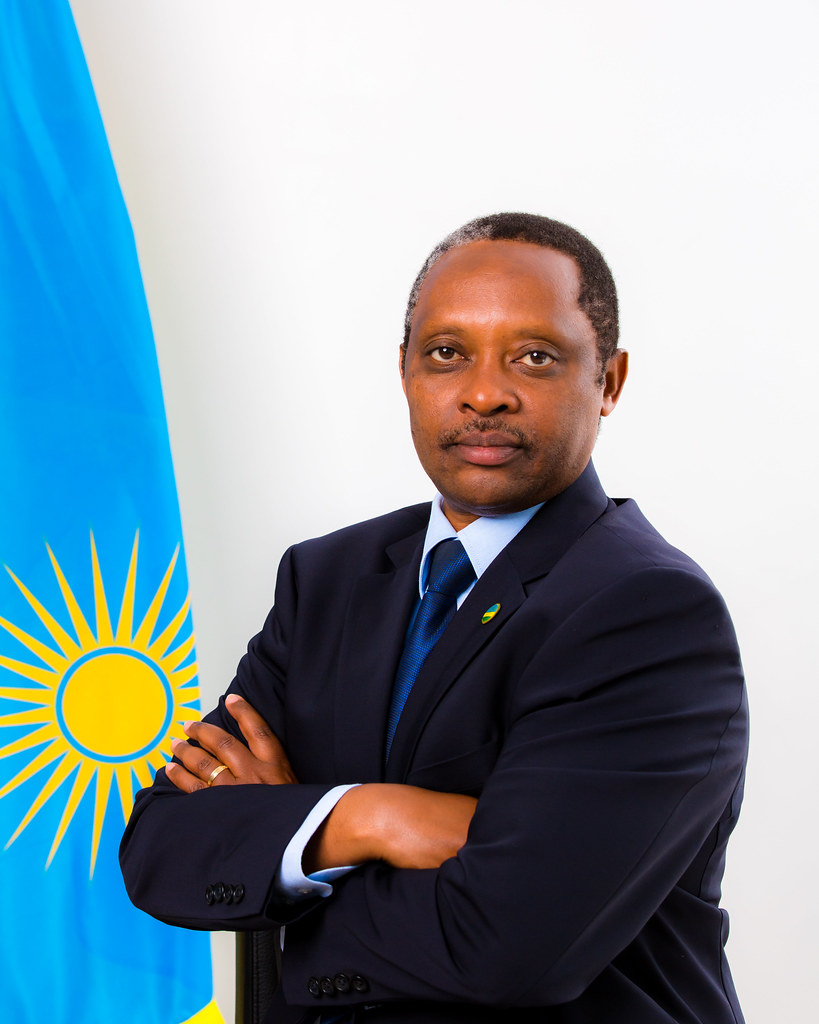
The new appointments saw Dr. Gashumba becoming Rwanda’s ambassador to the Kingdom of Sweden, Prof. Shyaka became Rwanda’s ambassador to the Republic of Poland while James Gatera will represent Rwanda to the State of Israel.
Michel Sebera has been also appointed Minister Counsellor in the Embassy of Rwanda to the Kingdom of Netherlands.
The cabinet meeting has also approved Antoine Anfré as the new French Ambassador to Rwanda with residence in Kigali. The post has been vacant for six years.
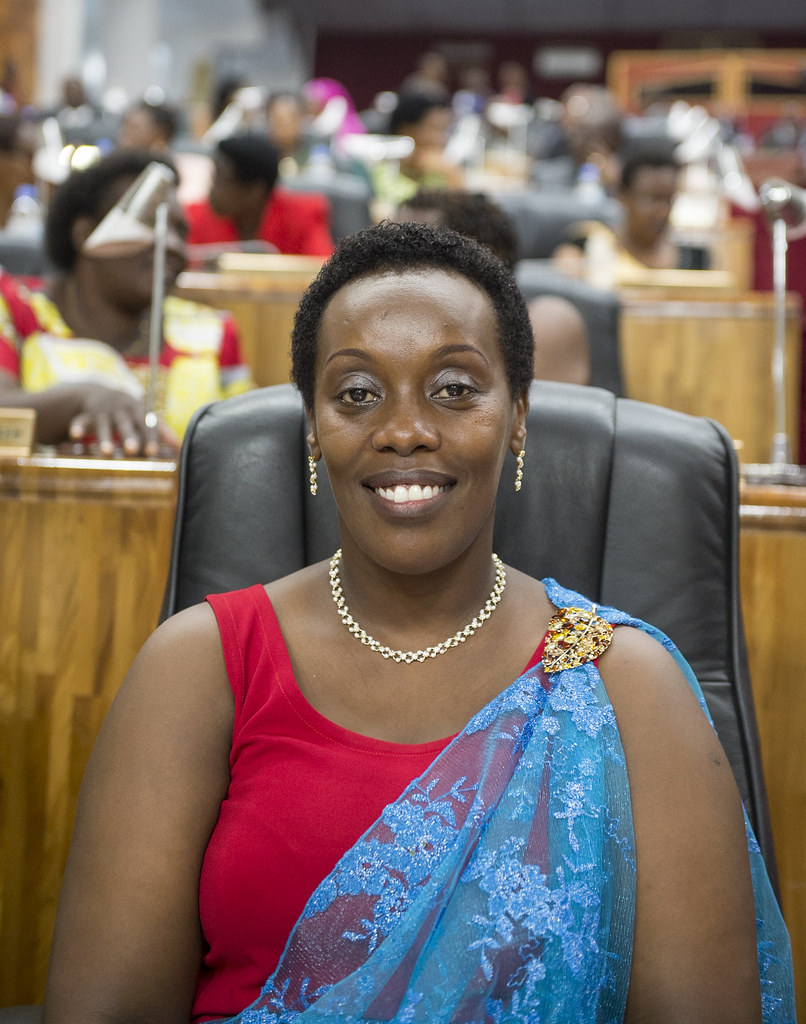
Dr. Gashumba holds a Doctor of Medicine degree and a Masters in Medicine specializing in Pediatrics. She started practicing in 1999. She was appointed Minister of Health on October 4th, 2016 replacing Dr. Agnes Binagwaho.
Prior to that position, she was the Cabinet Minister of Gender and Family Promotion in the cabinet of Prime Minister Anastase Murekezi.
She also served as the Director General at Kibagabaga Hospital for 3 years.
Between 2010 and 2016, she worked with a USAID-funded child and maternal health project as “Senior Team Leader”.
Dr. Gashumba resigned from her position as the Minister of Health on 14th February 2020 and had no other official duties prior to the ambassadorial post.
Prof. Shyaka is a politician who served as the Minister of Local Government from October 2018 to March 2021. Prior to that, he worked as CEO of Rwanda Governance Board since 2011.
He once served as the Director of the Center for Conflict Management at the University of Rwanda.
James Gatera appointed Rwanda’s ambassador to the state of Israel previously worked as CEO of Bank of Kigali from 2007 to 2016 when he was appointed the CEO of Crystal Ventures.
Michel Minega Sebera has been also serving as the Permanent Secretary in the Ministry of Trade and Commerce.
The statement released last night shows that the decision will take effect starting 14th June 2021 and be reviewed after two weeks upon health assessment.
New measures follows steady surge in COVID-19 cases where 899 people have been tested positive within the past 11 days.
Among others, public transport buses should not exceed 50% capacity. Bus operators are requested to ensure that passengers maintain social distancing and only passengers with masks will be allowed on board.
Public offices will continue with essential staff at no more than 30% capacity while other employees continue working from home on a rotational basis.
Places of worship adhering to health guidelines are allowed to continue functioning at 30% maximum occupancy against the previous 50%.
Restaurants and cafés shall operate at 30% occupancy limit and shall receive clients until 8pm.
Individual and non-contact outdoor sports activities will continue and must comply with health preventive measures.
The cabinet statement also reads that gyms will continue to operate at 10% of venue capacity and must comply with health preventive measures.
Civil and religious wedding shall not exceed 30 persons while local authorities have to be informed prior to the event. Any event happening in hotels, public venues, gardens should not exceed 30% of the venue’s capacity and should comply with instituted directives. All participants are required to have a valid negative COVID-19 test, not exceeding three days prior to the event.
Social gatherings at homes are also prohibited.
Citizens have been reminded of the critical importance of complying with health measures including physical distancing, wearing face masks and ensuring hand hygiene. Penalties will be applied for non-compliance.
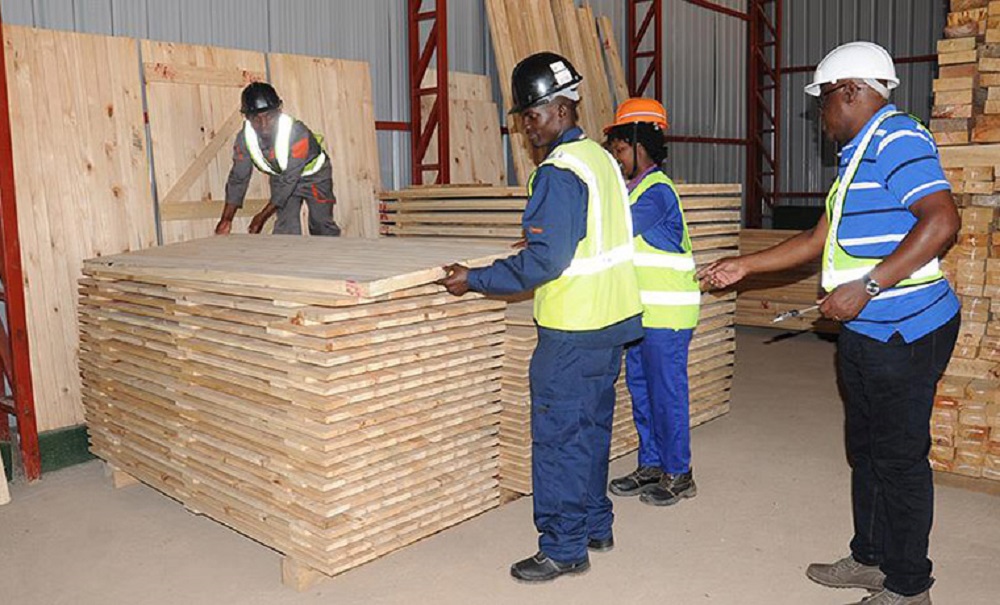
Approximately 100 entrepreneurs will benefit from the program every year.
Beneficiaries will be segmented into two categories with the first including startups to be offered business incubation programs, facilitated to acquire equipment and linked to financial institutions among others.
The second category includes entrepreneurs with wood processing enterprises that have been operating for over 12 months.
The two-year project will be implemented through “ICON Institute” and “NIRAS IP Consult” companies from Germany expected bring experts in wood processing and project management.
Jean Claude Rwubahuka, the Head of Incubation/Acceleration Facility at ICON-Institute has told IGIHE that the application is open for interested entrepreneurs from 10th to 25th June 2021 via provided website link nirda.gov.rw
“The support is meant to enhance productivity and competitiveness of wood processing firms. We shall equip entrepreneurs with technical know-hows, project management among other relevant skills to grow businesses,” said Rwubahuka.
The research carried out by NIRDA in 2019 identified gaps in timber processing industry related to quality standards, lack of environment friendly practices and use of outdated technology among others.
Due to the global COVID-19 pandemic and with the health, safety, and well-being of Fellows and Partners as the highest priority, the 2021 will be organized virtually.
While participating from home, Fellows will participate in sessions of virtual Leadership Institute including leadership training, mentoring, and professional development. Each Institute will offer insights into US society and will help strengthen connections between the United States and Africa by establishing partnerships between Fellows, local communities, and private businesses. Fellows will also network with US community members.
After their Leadership Institutes, Fellows will participate in a virtual Summit. Additionally, up to 100 competitively-selected Fellows will virtually engage in professional development with US organizations in the public, private, or non-profit sector. Fellows can participate in alumni programming after their Fellowships to further build their professional skills and networks.
Launched in 2014, the Mandela Washington Fellowship for Young African Leaders is the flagship program of the Young African Leaders Initiative (YALI) and embodies the US commitment to invest in the future of Africa. YALI was created in 2010 and supports young Africans as they spur economic growth and prosperity, strengthen democratic governance, and enhance peace and security across Africa. Since 2014, nearly 4,400 young leaders from every country in Sub-Saharan Africa have participated in the Mandela Washington Fellowship.
Since the inaugural of Young African Leadership Initiative (YALI) Washington Fellowship last held in 2014, there are 66 Rwandans that have been awarded to attend the prestigious Fellowship. This year’s recipients include, Marie Christelle Igihozo, Mary Musoni, Niceson Karungi, Elie Habimana, Jean Claude Mbonigaba, Sheila Uwase, Germaine Umuraza, Shilla Ndegeya, Gisele Kayitasirwa Ituze, Jean Paul Sekarema, Donat Nzigiyimana, and Justin Byiringiro Murengera.
{{2018 YALI recipients’ bios}}
{{Marie Christelle Igihozo, 25, F, Business & Entrepreneurship}}
Marie Christelle is the customer demand lead at Zipline International, a U.S.-based start-up that is earning world-wide recognition for its work in Rwanda delivering medical supplies by drone. In her day-to-day duties, Marie Christelle is responsible of supply chain integration and works closely with the 25 district hospitals served by Zipline drones, making sure that emergency blood donations and other medical supplies are delivered safely and securely.
Marie Christelle understands the important challenges facing Rwanda in her domain and is determined to offer her best in addressing them. During the interview, for example, she explained how the supply chain of medical product is inefficient and lacks proper forecasting. Marie Christelle is a graduate of the University of Rwanda. She will do her leadership institute in Business track with University of Nevada-Reno.
{{Mary Musoni, 30, F, Civic Engagement}}
Mary is a Legal Aid Attorney at Legal Aid Forum, a local non-governmental organization that provides legal aid services to vulnerable populations, mainly refugees and asylum seekers.
In 2019 , she represented more than 20 refugees before the court, and assisted more than 30 other refugees with their casework. She also coordinates at team of 13 volunteer lawyers. After realizing that access to information related to law and justice is one of the important challenges facing Rwandans, Mary worked with other lawyers to develop a mobile app that helps rural Rwandans access basic information on popular issues such as succession, land, divorce, etc. Mary is a graduate of the University of Rwanda. She will do her leadership institute in Civic Engagement track with Drexel University. (Note: Mary was an active participant in our Amicus Curiae training series.)
{{Niceson Karungi, 31, F, Public Management}}
Niceson is an IT business analyst and software development specialist at the Judiciary of Rwanda. She led the implementation of Integrated Electronic Case Management System that has helped more than 300,000 Rwandans file cases online without going physically to court, significantly reducing the time and cost litigants incurred before. Niceson has been active in mentorship of young women in STEM fields. She has earned a bachelor’s degree from Makerere University in Uganda and a master’s degree from the University of Glasgow. She will do her leadership institute in the Public Management track with Georgia State University
{{Elie Habimana, 30, M, Business & Entrepreneurship}}
Elie is the Operations Manager at the African Leadership University (ALU) campus in Kigali, a rapidly-growing pan-African undergraduate university with campuses in Rwanda and Mauritius. In this capacity, Elie manages a budget of more than $3 million annually, and supervises ten permanent employees and 60 student workers.
Elie understands that the lack of a skilled workforce capable of leading big and innovation projects in a challenge for Rwanda and hopes his passion and dedication for quality education will help address that. Elie graduated from the Adventist University of Central Africa and earned an online MBA through Oklahoma Christian University. He will do his leadership institute in Business track with Lehigh University.
{{Jean Claude Mbonigaba, 31, M, Civic Engagement}}
Jean Claude is an information and communication technology officer at Home de la Vierge des Pauvres (HVP) Gatagara, an orthopedic and rehabilitation hospital for people with disability in Nyanza, southern Rwanda. In addition, Jean Claude is a board member and legal representative of people living with disabilities in the Rwanda Scout Association.
As a board member, he encouraged boy scouts to be more inclusive and accept young people with various disability to join the association, something that did not exist before he joined. Jean Claude also volunteers with Uwezo Youth Empowerment, a local NGO advocating for disabled youth. Jean Claude earned a bachelor’s degree from the University of Rwanda and is working on a master’s degree at the University of Kigali.
Jean Claude has a mobility disability, but will not need substantial accommodation to participate. He will do his leadership institute in Civic Leadership track with Appalachian State University (Note: You met Jean Claude at HVP Gatagara in May 2021.)
{{Sheila Uwase, 31, F, Public Management}}
Sheila is a public transport officer for the city of Kigali, Rwanda’s beautiful capital city. A graduate of the University of Rwanda in Civil Engineering, Sheila is charged with monitoring public transport services, ensuring smooth service delivery, and following compliance with terms and contracts by transport service providers and transport infrastructure developers. Sheila understands that public transport is a growing challenge as Kigali grows and wants to help forestall the environmental impact of a poorly-managed public transportation policy. Sheilla will do her leadership institute in Public Management track with the University of California – Davis.
{{Germaine Umuraza, 31, F, Civic Engagement}}
Germaine is the head of programs at the Rwanda Girl Guides Association (GGA). In five years with the organization, Germaine has developed a variety of programs that focus on empowering girls and young women. One of the important changes that Germaine brought to GGA is convincing the board to create a National Youth Committee, a team of the younger girl guides that better understands issues of importance to girl guides and the concerns of their peers. Germaine holds a bachelor’s degree from INES-Ruhengeri and a master’s degree from the University of Lay Adventists of Kigali. She will do her leadership institute in Civic Engagement trach with Rutgers University – New Jersey
{{Shilla Ndegeya, 28, F, Public Management}}
Shilla is the National Director for Special Olympics Rwanda, a non-profit organization that promotes sports training and competition opportunities for children and adults with intellectual disabilities. In her current role, Shilla is in charge of day-to-day technical operations of the organization and report directly to the Board of Directors.
She earned a degree in business administration from Mount Kenya University and has advanced through the business side of the organization. Shilla’s said that her preferred approach toward empowering persons with disabilities is to focus on their ability side — what they are able to do — instead of their disability and what they might not be able to do. Shilla will do her leadership institute in Public Management with Arizona State University. Note tha Sheilla is the only one approved for PDE.
{{Gisele Kayitasirwa Ituze, 27, F, Business & Entrepreneurship}}
Gisele owns a fashion design business that makes all types of closes and bag. Gisele partners with the Rwanda National Union of the Deaf (RNUD) to train and empower other deaf women in tailoring and other handicraft skills that result in economic self-reliance. Gisele’s workshop currently trains 20 deaf women and works closely with several deaf women cooperatives. Gisele completed a two-year fashion design course in Uganda. Gisele is deaf and will require accommodation during the pre-departure process and throughout the fellowship. Gisele will do her leadership in Business track with the University of Texas at Austin. (Note: Gisele’s regular sign language interpreter is also named Gisele.)
{{Jean Paul Sekarema, 31, M, Civic Engagement}}
Jean Paul is a Grants Officer for the National Union of Disability Organizations of Rwanda (NUDOR), an umbrella organization that brings together many local NGOs that advocate for people living with disabilities. His current grants portfolio includes projects that are being implemented by 27 grant recipient organizations.
Jean Paul also serves as an advisor on the National Paralympic Committee of Rwanda as an advisor. He is a graduate of the University of Rwanda. Post highly recommends Jean Paul for a fellowship in the Civic Engagement track. Jean Paul has a cerebral palsy, but will not need substantial accommodation to participate.He will do his leadership institute with Civic Engagement Track with Kansas State University.
{{Donat Nzigiyimana, 34, M, Public Management}}
Donat is the Director of Admission and Recruitment at the Rwanda Institute for Conservation Agriculture (RICA), a new tertiary education institution focusing on conservation agriculture. The institute has been established within the past year by support from the Buffet Foundation, in close collaboration with the University of Nebraska. Donat is a graduate of the University of Rwanda and has worked on post-graduate degrees in law, business administration, and education administration.
Donat will do his leadership institute in the Public Management track with University of Minnesota – Twin Cities.
{{Justin Byiringiro Murengera, 26, M, Business & Entrepreneurship}}
Justin is the Founder and CEO of Ikivi-Link, a social enterprise with a vision to promote peace, eradicate poverty, and empower rural women. His organization is currently working with six women’s cooperatives from Musanze, on assignments including the assembly of cardboard boxes for chocolates. Justin will do his leadership institute in Busines Track with Rutgers University – New Jersey.
Damascene Nsabimana alias Kibombo, 38, and Jean Twizeyimana, 33, were arrested on Thursday, June 10, separately in residents’ fields in Gatwa and Mugambazi cells of Murambi Sector, where they were mining coltan.
Police and local leaders also rescued 32 minors aged between 12 and 16, whom they were using to extract coltan.
The two men had influenced the children to drop out of school and using them in these child labour activities, residents said.
The arrest of the duo and subsequent rescue of the minors followed complaints raised by the residents, according to Rulindo acting District Police Commander, Chief Inspector of Police (CIP) Laurent Rafiki.
“Residents complained about people, who are destroying their fields mining coltan. We conducted operations in fields surrounding Rutongo mines where we arrested Nsabimana and Twizeyimana. Sadly, we found them with 32 children whom they were using in these hectic activities, which are harmful to such a very young age,” said CIP Rafiki.
The children also said that they were influenced by Nsabimana and Twizeyimana to drop out of school, work for them in extracting minerals and get paid.
According to the children, they were paid between Rwf7, 000 and Rwf8, 000 for 1kg mined.
Statistics indicate that 64 children dropped out of school in Murambi sector, including 39 in Primary and 25 Secondary school students.
CIP Rafiki warned against “destroying lives of children in such hazardous activities.”
Article 6 of law No. 71/2018 of 31/08/2018 relating to the protection of the child defines a child as “any person under eighteen (18) years of age.”
Article 6 of the law regulating to Labour in Rwanda prohibits subjecting a child below the age of 18 to any form of works, which is physically harmful to the child.
This includes work underground, underwater, at dangerous heights or in confined spaces; around dangerous machinery, equipment, and tools, or which involves manual handling or transporting heavy loads.
Also, work in an environment that exposes the child to temperatures, noise levels or vibrations damaging his/her health; work for long hours or during the night or performed in confined spaces.
Article 117 of the same law states that; an employer who subjects a child to any of the prohibited forms of work for the child referred to under article 6 of this law, commits an offence.
Upon conviction, he/she is liable to imprisonment for a term of not less than two years and not more than five years and a fine of not less than Rwf500, 000 and not more than Rwf5 million or one of these penalties.
The children were also taken back to their respective schools. This was after their parents were also located and sensitized on their parental responsibilities to ensure children go to school.
CIP Rafiki said using children in mining exposes them to hazardous activities, injuries and death and denying them the right to education and a barrier to child development.
Nsabimana and Twizeyimana were taken to RIB at Murambi station for further legal process.
Article 54 of the law N° 58/2018 of 13/08/2018 on mining and quarry operations, states that; any person, who undertakes mineral or quarry exploration, exploitation, processing or trading without a licence commits an offence.’’
Upon conviction, the offender is liable to imprisonment for a term of between two and six months and a fine of not less than Rwf1 million and not more than Rwf5 million or only one of these penalties.
The court also orders confiscation of any seized minerals or quarry in storage, trading or processing without a license.
The statement released last night shows that 202 people caught the virus out of 5927 sample tests while no one recovered.
Rwanda confirmed the first Coronavirus case on 14th March 2020. Since then, 27 862 people have been tested positive of whom 26 341 recovered, 1153 are active cases, 6 are critically ill while 368 have succumbed to the virus.
A total of 389,389 people have been vaccinated since Rwanda began countrywide inoculation program on 5th March 2021.
Coronavirus symptoms include coughing, flu, and difficulty in breathing. The virus is said to be transmitted through the mucous membranes of the respiratory tract.
Rwandans are urged to adhere to COVID-19 health guidelines, washing hands frequently using soaps and safe water, wearing face masks and respecting social distancing.
Kagame delivered the message on Friday 11th June 2021 interacting with over 300 opinion leaders from Rubavu and Musanze districts, mayors from Northern and Western Provinces, and businesspeople from Musanze and Rubavu operating in Kigali and other districts.
The President interacted with them few hours after officiating the graduation ceremony of 47 students from the RDF and the Rwanda National Police at the Rwanda Defence Force Command and Staff College in Musanze District.
He told businesspeople and leaders from Western and Northern provinces that their efforts were of critical importance along Rwanda’s resilience journey after the 1994 Genocide against Tutsi.
Kagame told them that Rwanda was at the bottom of a pit with two choices to stay or get out.
“Every pit has a bottom. Rwanda reached the bottom of the pit with nowhere else to go but up. Today, we have emerged from this pit and we are above it,” he said.
“Getting out of this pit required hard work. To keep moving forward requires consistent efforts. We must use our strength to continue building the nation together. It is our fundamental pillar for good governance and unity,” added Kagame.
The President explained that some people including Rwandans were not happy to see the country getting out of the pit.
“By the time we tried to come out of the pit, many people made possible attempts to hold us back. This means, we had to increase efforts thrice or four times to be where we are today,” he noted.
Rwandans frustrated to see the country coming out of the pit fled but Kagame stressed that their living conditions never improved.
“Some of us against the country’s good politics fled the country. Of these people, no one is leading better life than his/her situation here. They depend on spreading lies to survive,” he said.
“In Rwanda, their plan has failed. What those countries helped them to do is to sing to the same tune as them, insulting us. But who has been killed by insults? What kills is the lies and the hunger they now live with,” stated Kagame.
He thanked Rwandans for their efforts to rebuild the country they ‘know the truth, where they come from, where they are and where they want to go’.
“Rwandans are far ahead of those petty insults and have chosen to move forward with their business of transforming their country. Insults and lies meant to tarnish our image cannot delay us from reaching our goals,” he affirmed.
Kagame made the remarks on Friday 11th June 2021 at the Rwanda Defence Force Command and Staff College in Musanze District, as he officiated the 9th graduation ceremony of 47 students from the RDF and the Rwanda National Police.
Kagame told graduates that they are officers of the 21st Century where they will operate ‘in volatile geopolitical and security environment as part of an ever more interconnected world and unequal as well’.
He reminded them that they have a major part to play in addressing different challenges facing the world.
“Therefore, adds another dimension of responsibility. How do we base on this knowledge and commitment; and even with limited resources, how can we raise ourselves to that level, where we feel we are equal with others,” noted Kagame.
“Raising ourselves to the level where we feel we are equal with others is loaded with many other things. It is also an issue of mindset. It’s an issue of choices we have made or we want to make going forward. Being equal shouldn’t be just words, it should be demonstrated in real life,” he added.
Kagame emphasized that everyone needs to work hard for Rwanda to achieve its aspirations to a desired extent.
“You have even gained more capabilities from this course, and therefore, more is expected from you. I hope you will step into your new roles with fresh insight and enthusiasm. There are important challenges that require your leadership as well as constant collaboration with other institutions. First, we must continue to consolidate the values of trust, consensus and the accountability that characterize our society and to which our defence and security institutions have always actively contributed,” he said.
Kagame told graduating officers that cooperation is paramount to address security matters and advised them against helping to deal with matters of security on one hand while contributing to creating insecurity on the other hand.
He pointed out an example where some people who graduated from the school run into problems of their own making, fled to partner countries and got involved in acts to destabilize national security.
“The same people run to countries called our partners, tell a lot of lies, they are welcomed. They turn around and get involved in acts that cause insecurity for the country. I am saying this because it has become a trend and doesn’t matter how much time you take to explain. It seems to go on and on with our partners,” noted Kagame.
“I am just telling our partners, don’t help on one hand to deal with problems of security meaning helping and building capabilities, development among other things and the same time give ground for insecurity to develop that will come and reverse what we have been building together,” he added.
Kagame also talked about complex global challenges including terrorism, pandemics, and natural disasters noting that no single country can provide durable solutions on its own without cooperation.
He urged graduates to look ahead and work with peers to address challenges.
“No single country can provide durable solutions on its own, no matter how big or well-resourced they are. You are therefore called upon to look ahead to assess threats and opportunities and collaborate with peers in the region and beyond in order to address them successfully,” stressed Kagame.
He reminded them of their duties to continue protecting Rwandans and Africans in general to usher them into a new era of achieving great more things.
“There is a battlefield beyond the physical one, where RDF must always be ready to protect Rwanda’s security and stability uncompromisingly. This is the struggle to instill the mindset amongst ourselves, that Rwandans and Africans areas equally deserving as others in terms of freedom, respect, and prosperity. We must be diligent in securing better lives for our people, and contributing to a better world for all,” noted Kagame.
Brig General Didas Ndahiro, the Commandant of Rwanda Defense Force Command and Staff College (RDFCSC) congratulated graduates and urged them to efficiently utilized acquired knowledge to deliver.
RDF Command and Staff College was established in 2012 to develop military professionalism.