The call was made on Tuesday 22nd June by Zandile Makhoba, JCI Vice President for Africa and Middle East as she interacted with members of JCI Rwanda.
Discussions were organized in adherence to COVID-19 preventive measures.
Makhoba who is in Rwanda for five-day working visit reminded the youth to stay focused always, set goals and pull lessons from all circumstances.
Taking example of COVID-19 pandemic which has shaken global economy, Makhoba explained how some far-sighted people invested in technology to facilitate virtual meetings and yielded big.
“Before COVID-19, no one thought that ‘zoom’ platform would be used to generate income. Those who rushed to invest in technology created more jobs. The youth has a lot to offer in such unusual times. They need to foster innovations and seek solutions to address challenges facing the society, create jobs and contribute to other areas of national development,” she noted.
Makhoba called upon the youth to strive for excellence, mirror good values and outstanding deeds bringing positive transformations to their communities.
Cisse Harira, JCI Executive Vice President for Africa and the Middle East also requested the youth to work hard and remain committed to their goals to change the society.
The President of JCI Rwanda, Origene Igiraneza has reminded participants not to be bystanders but share tips with colleagues.
One of participating youth, Diane Uwimana revealed that they learnt a lot from the discussions helpful in daily lives.
“These discussions have reminded me how to perform my duties with great perfection to meet aspirations while gaining new knowledge. It is also an opportune moment to reflect on benefits of being part of this organization and my contribution to the society as well,” she said.
Initiated in 2002 by Imbuto Foundation, the ‘Edified Generation Scholarship’ programme financially supports bright students from economically vulnerable backgrounds in their pursuit of education.
A total of 9601 students have been sponsored through the programme.
The Managing Director of Vivo Energy Rwanda, Saibou Coulibaly has said that the company is proud of existing partnership to change lives of children from vulnerable families.
“We are honored to join hands with Imbuto to support 10 young, vulnerable girls through the ‘Edified Generation Scholarship Program’. Five years ago, we started a long and impactful partnership with Imbuto Foundation in an Education Sponsorship program. Education is one of our fundamental pillars at Vivo Energy. We are delighted to be able to impact the lives of these young girls,” he said.
“When the opportunity arises, we will go the extra mile and enroll some of them in our ‘young talent program’ aimed at equipping young graduates with first-hand skills through an internship at Vivo Energy Rwanda,” added Coulibaly.
He revealed that each of girls will get a package of US$300 to cater for school fees, health insurance, uniform and other scholastic material.
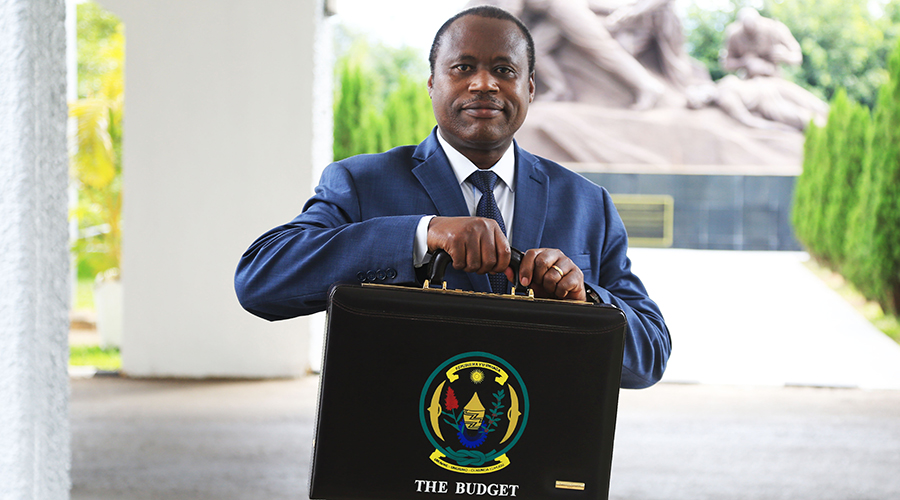
Addressing both chambers, Minister Ndagijimana pointed out that the fiscal policy of 2021/22 will prioritize spending to deliver on investments aimed at achieving National Strategy for Transformation (NST1) goals.
“Significant budget spending will focus on the needs under the Economic Recovery Plan and the National Strategy for Transformation with much attention to the key economic sectors, as well as the rollout of the Covid-19 vaccination program,” he said.
{{Resources }}
The total resources estimated for the fiscal year 2021/22 will amount to Rwf3,807 billion. This amount is made up of domestic revenues amounting to Rwf1,993.0 billion comprising of Rwf 1,717.2 billion from tax revenue and Rwf275.8 billion from other revenue collection. External grants are estimated at Rwf 612.2 billion whilst external loans of Rwf 651.5 billion is envisaged for accrual to the Treasury.
{{Expenditure }}
Equally to the projected resources, total expenditure in the fiscal year 2021/22 is projected at Rwf3,807 billion. This figure is made up of recurrent spending of Rwf 2,431.7 and capital spending worth Rwf1,393.3 billion. Furthermore, projected spending include an amount of Rwf 5.7 billion on inventory, Rwf 43.8 billion under various equity investment and fund shares for government and loans spending amount of Rwf 134.9 billion.
{{NST-1 and Resources Allocation}}
Government’s expenditure policies in fiscal year 2021/22 are guided by National Strategy for Transformation priorities and objectives. To this end, the Economic Transformation pillar takes the lion’s share of the resources at Rwf 2,234 billion amounting to 58.7 % of the total budget. Social transformation will take up Rwf 1,034 billion (27.2 %) while Transformational Governance is allocated Rwf538 billion representing 14.01% of the total budget.
In line with NST-1 strategic objectives, some of the priority areas agreed during planning and budgeting consultations formed the basis for resource allocation in 2021/22 fiscal year as shown below;
Agriculture productivity will be increased through scaling up use of inputs.
The budget will cater for increased access to electricity and clean water through construction of water supply systems.
Promoting urbanization will include execution of urban development project in secondary cities. Affordable housing projects will be supported with basic infrastructure.
Other areas of focus include; accelerating transport projects and construction of national roads, promoting innovation and increasing digital literacy, strengthening the health system by increasing access to quality health, improving the quality of education, strengthening social protection programs by Scaling up the coverage of Social Protection programs and support businesses affected by Covid-19 through Economic recovery fund.
The 2021/22 draft finance bill is in line with the 2021/22–2023/24 Budget Framework Paper presented to Parliament on May 5th 2021 and was amended to reflect the recommendations from the Parliament as submitted on June 3rd, 2021.
The new directives will take effect from Wednesday, June 23, and Rwanda National Police (RNP) has reminded all residents of Rwanda adhere to the revised guidelines maximumly.
The force has called upon the public to support the national prevention efforts through maximum compliance and to support the enforcement process.
It warned of severe actions to anyone, who acts contrary to the government directives.
“In any way you view the new directives, they are meant to save people’s lives from the pandemic and we urge the public to be responsive, respect them and support the national efforts by doing the right thing,” said RNP spokesperson, CP John Bosco Kabera.
On Monday, Rwanda registered new 622 Covid-19 positive cases, the highest daily cases since the pandemic was reported in Rwanda in March 2020.
On the same day, six related deaths were recorded.
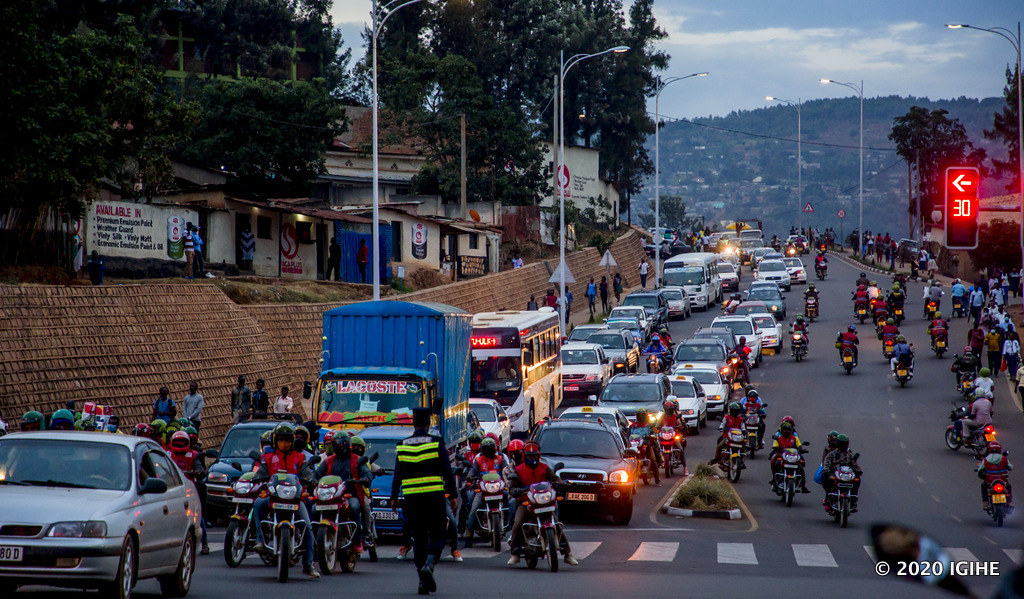
For the next two weeks, movements are prohibited between 7pm and 4am, all businesses must close by 6pm and passenger service vehicles should not exceed 50% capacity.
Movements between Kigali and other provinces, and movements between districts across the country are also prohibited except for medical reasons and other essential services.
However, vehicles transporting goods will continue to operate with no more than two people on board.
All social gatherings including celebrations of all kinds are prohibited both in public and private settings and places of worship will operate at 30% capacity.
Wedding, civil and traditional marriage ceremonies are among the events that have been suspended for the next two weeks under the new Covid-19 prevention directives.
Attendance at vigil should not exceed 10 people at any one time while funeral gatherings should not exceed 30 persons.
Places of worship that were okayed to resume after meeting all the health standards, will host only 30 percent of their normal congregation capacity but prevention measures must be adhered to before and during the service.
“Adhering to the government measures is a must and it is the only solution to address the current rise in Covid-19 cases and related deaths,” CP Kabera said.
He added: “Be on the prevention side not the spreading corner by being home before 7pm, avoid unnecessary movements; stay in Kigali or in your respective district, avoid any prohibited social events and gatherings and wear face mask, exercise social distancing, sanitize or wash hands regularly with soap and water.”
He reminded the public to plan their daily errands well to be home early instead of starting the journey back home late resulting into thick traffic jam and likely accidents while racing against 7pm.
“The thinking that you will start the journey few minutes to the top of the hours and that you will be home in time, remember that you are not the only one using the road.”
{{Movement permit}}
CP Kabera said that movement clearance will only be given to those with valid and sound reasons where necessary with supporting documents.
He, however, warned against misusing or using the movement clearance contrary to its original purpose.
The movement clearance permit can be applied online through www.mc.gov.rw, e-mail (movementclearance@police.gov.rw) or dial *127# and follow the prompts.
{{For further information regarding movement clearance, the public is required to call the following contacts:}}
The statement released last night shows that the majority of new cases were found in Kigali: 388, Rubavu; 83, Musanze: 61, Burera: 50, Kamonyi: 47, Rutsiro: 35, Rwamagana: 27, Nyanza: 24, Gicumbi: 23 and Gakenke: 23.
Among others, four people from Kigali have succumbed to the virus while eight recovered.
The deceased include two women aged 42 and 56 as well as two men aged 52 and 67.
Rwanda confirmed the first Coronavirus case on 14th March 2020. Since then, 32 296 people have been tested positive of whom 26 712 recovered, 5192 are active cases, 10 are critically ill while 392 have succumbed to the virus.
A total of 391, 001 people have been vaccinated since Rwanda began countrywide inoculation programme on 5th March 2021.
The assorted skin whitening products were found in Minani’s shop located in Karembure Cell of Gatenga Sector.
Minani said that he started selling the banned lotions three months ago. He, however, claimed that he was not aware that the products were outlawed.
“I started selling these lotions in March and I was buying them from street vendors but I got to know that they were outlawed two weeks ago. I wanted to sell the stock I had and stop this business,” said Minani.
RNP spokesperson, Commissioner of Police (CP) John Bosco Kabera said the arrest is part of the ongoing operations targeting anyone dealing in the outlawed skin bleaching products.
“These operations have been going on and some of those arrested in previous operations were showed to the media and Rwandans.
This is a warning to anyone still involved; these operations are continuous and are targeting shops selling these products and individuals or groups that traffic them into Rwanda,” CP Kabera said.
He added: “If you have these creams and oils in your shop, I can only advise you to take them out of the shelves before you are arrested.”
He commended the role of the public in identifying and reporting people dealing in skin bleaching products and called for the continued community policing spirit.
The outlawed creams and oil brands contain chemicals such as mercury and hydroquinone, which can cause liver damage, reduce resistance to bacterial and fungal infections, and increase anxiety, according to the World Health Organization (WHO).
Article 266 of the law determining offenses and penalties in general, states that any person, who produces, sells, or prescribes harmful products; cosmetics or body hygiene substance or any other products derived from plants, commits an offence.
Upon conviction, he/she is liable to imprisonment for a term of not less than one year and not more than two years and a fine of not less than Rwf3 million and not more than Frw5 million or one of these penalties.
UN member states, UN agencies, regional and international organisations, and representatives of the private sector, were gathered ahead of the eighth Tokyo International Conference on African Development (TICAD 8), which will be held in Tunisia next year. Participants also underscored that active tourism policies will be critical to ensure sustainability as bedrock for recovery.
In these difficult times, policies should ensure tourism can benefit the communities relying on the sector need to be supported and implemented.
These include addressing air transport policies to improve connectivity within the continent, reinforce SMES skills, digitalization and financing, step up marketing and promotion, promote inclusion policies and green investment. In the short term, it is also critical to implement and communicate clear and seamless safety and security protocols regarding entry requirements as well as on the ground to regain travelers’ confidence.
“Tourism is a pillar of prosperity, poverty reduction, sustainable development and stability in Africa,” explained Tarek Ladeb, Ambassador and Permanent Representative of Tunisia to the United Nations and host of TICAD 8. “It contributes to Africa’s recovery and economic integration, boosts its transformative and inclusive growth.”
“As the world reopens, now is the time to deploy innovation and green-led tourism models and policies that unlock competitiveness, identify niche sectors and maximize potential, including for the “One Africa market” in the African Continental Free Trade Area (AfCFTA),” emphasized Ms. Ahunna Eziakonwa, UN Assistant Secretary-General and United Nations Development Programme’s Assistant Administrator & Regional Director for Africa.
In 2019, the African continent had the world’s second fastest growing tourism sector. As many as 70 million international tourists visited Africa and travel and tourism brought about US$170 billion to the continent’s gross domestic product. However, the pandemic had a devastating effect on all social and economic sectors, particularly tourism. According to the United Nations World Tourism Organization (UNWTO), one billion less international tourists travelled globally in 2020 and Africa recorded a 74-percent fall in international tourist arrivals and a decline of 64 percent in tourism related exports. With a recovery that is expected to be slow and uneven among regions, supporting the sector in Africa in these challenging times is critical, while adjusting to a more sustainable and inclusive model.
Ms. Elcia Grandcourt, UNWTO Regional Director for Africa, clarified that “tourism offers communities across Africa the chance to build back better, providing jobs and opportunities for marginalized groups, women and youth. As we continue to respond to the COVID-19 crisis, we must join forces to accelerate the safe and sustainable restart of African tourism.”
Discussions at the high-level panel also focused on the important changes needed within the tourism sector to ensure it benefits the economic recovery of destination communities, while promoting youth and women’s employment and entrepreneurship – all with an eye on sustainability.
“Disruptions in the travel and tourism industry provide new opportunities to revisit the business model and improve competitiveness in Africa. It is crucial to use this momentum to reshape existing travel policies and frameworks to make tourism an anchor of endogenous and sustainable socio-economic growth,” said Ms. Cristina Duarte, Under-Secretary-General and Special Adviser to the UN Secretary-General on Africa.
“Young Africans in the tourism sector have continuously shown great talent, creativity and resilience,” underlined Ms. Rica Rwigamba, Rwanda Country Head of the Mastercard Foundation. “Investing in them is both validation of their tenacity and an act of hope, the hope that we will emerge on the other side of the pandemic stronger.”
Senior Tourism Specialist at the World Bank, Shaun Mann, confirmed that “A competitive tourism sector is too important for countries in Africa not to prioritize a greener, resilient and more inclusive recovery.”
Some countries have started reopening their borders, but the situation remains dire as waves of the pandemic continue to rage through the African continent. The implementation of the African Continental Free Trade Area (AfCFTA) is expected to further boost domestic and intra-regional travel. The AfCFTA could potentially ease cross-border movement restrictions and infrastructural and transport challenges, including the high cost of air transport, poor connectivity, and inflexible visa regimes, while fostering regional value chains and the manufacture of value-added products. Hope is firm on tourism as it is one of the priority sectors for the AfCFTA Protocol on Trade in Services.
“One cannot mention tourism without mentioning Africa,” stated Ms. Fatima Kyari Mohammed, Ambassador and Permanent Observer of the African Union to the United Nations.
“The cradle of ancient innovations and human history are interwoven in Africa’s natural and cultural heritage. I am fully convinced that the continent has an opportunity with the AfCFTA, to support future growth of tourism in the continent. We have what it takes to build back better.”
The event was a follow-up high-level panel discussion to this year’s Africa Dialogue Series, which focused on “Cultural Identity and Ownership: Reshaping mindsets” and the African Union Theme of the Year for 2021: “Year of the Arts, Culture and Heritage: Levers for Building an African We Want”. It was an opportunity to reimagine the potential of tourism to help societies recover from the pandemic and promote positive changes for all, including sustainable development and sustainable peace.
Recommendations will feed into the global discussions on the preparation of TICAD8, aiming at scaling up the international community’s collective support to Africa’s recovery and building back better.
“The future for tourism in Africa is bright. It is a time for the tourism sector to build forward better. The AfCFTA will open the continent like never before,” stated Mr. Achim Steiner, UN Under-Secretary-General and UNDP Administrator. “We must go beyond the mere economic reforms of the sector. We must measure its added value to our natural world, for instance. This is essential to mobilise new stimulus, financial support and investments, and should be underpinned by new efforts to expand access to affordable broadband, at a time when only 80 percent of households enjoy.”
“Let’s seize the opportunities for reshaping Africa’s narrative, unlocking the full potential of Africa’s rich natural and cultural assets and human capital” declared Mr. Ishikane Kimihiro, Ambassador and Permanent Representative of Japan to the United Nations. “TICAD8 in Tunisia 2022 will boost global collective efforts towards more resilient and vibrant societies and economies across Africa in the post-COVID-19 era.”
{{About TICAD}}
The Tokyo International Conference of African Development (TICAD) was launched in 1993 by the Government of Japan, to promote Africa’s development, peace and security, through the strengthening of relations in multilateral cooperation and partnership
The launch of TICAD was catalytic for refocusing international attention on Africa’s development needs. In the course of the past 20 years, TICAD has evolved into a major global and open and multilateral forum for mobilizing and sustaining international support for Africa’s development under the principles of African “ownership” and international “partnership.
Kagame made the observation yesterday as he attended ‘Qatar Economic Forum’ on topics revolving around leadership in a Post-Pandemic World.
Macron visited Rwanda for two-day official visit from 27th to 28th May 2021.
On his visit, the French President admitted his country’s responsibility in Genocide against Tutsi.
“Standing here today, with humility and respect, by your side, I have come to recognize our responsibilities,” said Macron.
He revealed that France had a duty to admit the “suffering it inflicted on the Rwandan people by too long valuing silence over the examination of the truth.”
Macron said that only those who had survived the horrors “can perhaps forgive; give us the gift of forgiveness”.
When asked what he thought about the apology, Kagame said that the visit of President Macron and the statement he made were important in outlining the basis of the apology he made to Rwanda and Rwandans referring to French involvement in Genocide against Tutsi.
“This was very important not only in terms of the apology but also about the truth of what happened,” he stated.
The President highlighted that admitting the responsibility is important to desisting propagandists denying and trivializing Genocide against Tutsi.
“Admitting this responsibility was important in many ways because in the recent years, we have noticed increase in the denial and revision of the Genocide history and all kind of narratives beginning to form to create a different story. France has been big part of that. The truth that came from President Macron and the admission he made on France’s responsibility is helpful to managing this otherwise negative development that we have noticed in the recent years,” said Kagame.
Kagame explained that with better relations and the basis of the truth that came out and putting things largely in the right perspective, both countries are likely to enjoy ‘better cooperation and joint investments in places and areas that matter for our development as Rwanda and I am sure in the end it benefits France as well’.
“This kind of cooperation is very important and we are looking forward to that and building on living this ugly history of ours behind us and being able to forge ahead is what Rwanda is looking for,” he emphasized.
Kagame made the revelation on Monday 21st June 2021 at he attended Qatar Economic Forum.
The President explained that local manufacturing is the optimal way for Africa to have adequate vaccines for its people.
“Simply, Africa has to be equal partner with the rest of the World when it comes to manufacturing vaccines instead of waiting for vaccines from those places where they are manufactured. Right now, Africa is busy trying to do exactly that to find partners. To start manufacturing vaccines on our continent, we have IFC, European Union, other partners that are willing to come and do exactly that with our continent,” he said.
Kagame revealed that Rwanda, South Africa and Senegal have been selected as vaccine manufacturing hubs.
“Once that is up and running, I think we should be able to get vaccines we need on time or at the same time with the rest of the World. There are going to be three hubs on our continent and these countries are advanced on that. These include South Africa, Senegal and Rwanda,” he said.
Kagame underscored that these hubs will manufacture vaccines using mRNA technology adding that Rwanda has reached advanced stage in preparations of vaccine manufacturing plant.
“We will be among these hubs where the manufacturing on the continent is going to happen. For Rwanda in particular, we have partnered with some industries that are specialized in mRNA technology,” he noted.
“This is a new technology that has wide applications in agriculture or other diseases. We have already discussed with people owning that technology. We are discussing with people who will help with the financing and I think in few months we should hear a different story,” added Kagame.
Currently, two COVID-19 vaccines using Messenger RNA (mRNA) technologies have proved safe and highly efficacious. These include one developed by Pfizer and BioNTech and another by Moderna. This type of technology induces cells to produce a protein, or a piece of a protein, that triggers an immune response in the body.
World Health organization (WHO) Director-General Tedros Adhanom Ghebreyesus recently revealed that ‘the benefit of this technology, which has been in development for decades, is that it is potentially easier to scale than alternatives and could be faster and easier to adapt for COVID-19 variants of concern’.