The statement released last night shows that 867 people have caught the virus out of 9047 sample tests. The majority of new cases was found in Kigali: 208, Kamonyi: 74, Rubavu: 73, Gicumbi: 66, Musanze: 46, Rusizi: 46 and Burera: 46.
Rwanda confirmed the first Coronavirus patient on 14th March 2020. Since then, 39 914 have been tested positive of whom 27 272 recovered, 12194 are active cases, 37 are critically ill while 448 have succumbed to the virus.
A total of 391, 870 people have been vaccinates since Rwanda began countrywide inoculation program on 5th March 2021.
Coronavirus symptoms include coughing, flu, and difficulty in breathing. The virus is said to be transmitted through the mucous membranes of the respiratory tract.
Rwandans are urged to adhere to COVID-19 health guidelines, washing hands frequently using soaps and safe water, wearing face masks and respecting social distancing.
Byigero’s dismissal has been announced in a communiqué signed by Prime Minister, Dr. Edouard Ngirente on behalf of President Paul Kagame.
The communiqué which also announced Gisèle Umuhumuza as the Acting CEO of WASAC reads that the decision takes immediate effect.
Byigero was appointed CEO of WASAC on 15th December 2020 taking over from Eng Aimé Muzola.
The reason for his dismissal has not been communicated.
Umuhumuza has been serving as the Deputy CEO and Board Member at WASAC.
WASAC has 1500 employees at its headquarters, 20 branches and 25 water treatment plants across the country. Rwanda targets universal access to safe water by 2024.
It is among public institutions reportedly mired by funds mismanagement where the Auditor General’s report indicates that WASAC lost Rwf 2.7 billion in 2019 and Rwf9.4 billion in 2020.
Habarugira is a finance and business development professional with over 14 years of professional experience specialising in financial institutions, business (investment, treasury, payments, export, and trade finance) and economic development in emerging markets.
Speaking to IGIHE recently, the new CEO of Cogebanque appointed on 1st May 2021, expressed delight for the trust bestowed upon him and pledged to overhaul the bank’s services to meet customers’ expectations.
“I welcomed the appointment with humility. It is a demanding responsibility to serve the institution diligently, manage employees, offer top notch services to customers, consolidate gains and maintain constant improvement to satisfy customers,” he said.
Habarugira’s appointment was announced during difficult times of COVID-19 pandemic which brought unprecedented effects and affected financial institutions globally among others.
In 2020, Cogebanque registered Rwf3.8 billion net profit in 2020 translating into a decrease by 4.7% compared to Rwf4 billion of 2019.
Despite dropped net profit in 2020, Habarugira explained that the bank’s operations remain steady and expressed optimism to continue helping customers to mitigate COVID-19 effects.
“The management of the bank has expended much effort to mitigate effects brought by the pandemic. We have extended loan repayment tenor for customers in hospitality and transport businesses affected by COVID-19,” he noted.
Habarugira also attributed last year’s performance to Government’s efforts to fight the pandemic.
Generally, the bank’s non-performing loans increased to 8% which is above 5% maximum ratio set by the National Bank of Rwanda (BNR).
Habarugira explained that the high percentage of non-performing loans is expected to reduce gradually as businesses return to normal working conditions.
He revealed that Cogebanque stands firm to maintain its operations, continue offering loans and reassured customers of the bank’s commitment to meet their expectations.
“Clients should rest assured because we have active shareholders willing to take the bank to greater heights. We still have enough funds and hope borrowers will continue the repayment process appropriately as much as the economy continues to thrust forward,” he stated.
{{Prioritizing technology}}
Habarugira has emphasized that Cogebanque pulled many lessons from COVID-19 pushing it to increase investment in technology.
“Revising the way we used to work is mandatory to promote technology and serve customers fast. It is part of existing projects but the pandemic convinced us that we need to fast track their implementation,” he said.
Among other areas of priority, Habarugira explained that the bank will draw much attention to supporting e-commerce businesses and help customers to embrace digital transactions.
As he said, the bank has gone far with digital uptake which is set to undergo upgrading to reach all customers.
“We are going leverage technology to improve service delivery. We are undergoing this process and understand the need to embrace digitalization as a way to reduce workloads and sustainably serve clients with convenience,” noted Habarugira.
During his first year at Cogebanque, Habarugira wants to speed up response to customers seeking different services.
“Within the first year of duty, customers should expect quicker feedback whether the loan application is approved or need an update,” he said.
Habarugira further stressed that the bank wants to streamline sources of income without heavy reliance on interest rates and service charges.
The bank’s profit was previously generated from interest rates accounting for 81%. Non-Interest Income accounts for 17% while the remaining 2% comes from other activities.
“We will prioritize other services instead of heavily relying on loans. We want profit from other services to reach 21%,” explained Habarugira.
Habarugira also seeks to decentralize services where branch managers will have a certain level of autonomy in decision making.
“We want to build capacity among branch managers where they will make some decisions to solve customers’ problems without interventions from main headquarters in the near future,” he noted.
In 2020, Cogebanque disbursed Rwf 158 billion in loans from Rwf 144 billion of 2019. The bank’s deposits also hit Rwf 213 billion in 2020 from Rwf 179 billion of 2019.
Established in 1999, Cogebanque has 28 branches countrywide, 600 agents and 36 Automated Teller Machines (ATMs).
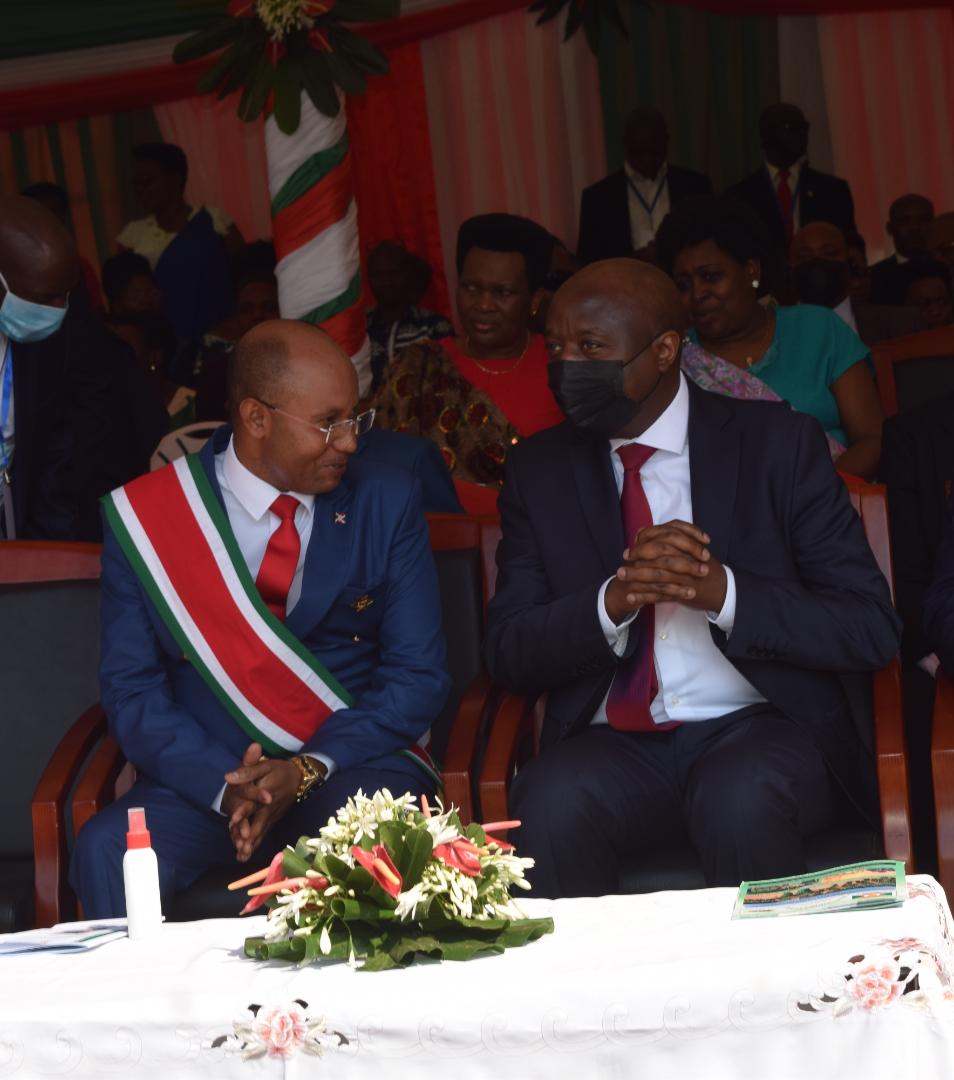
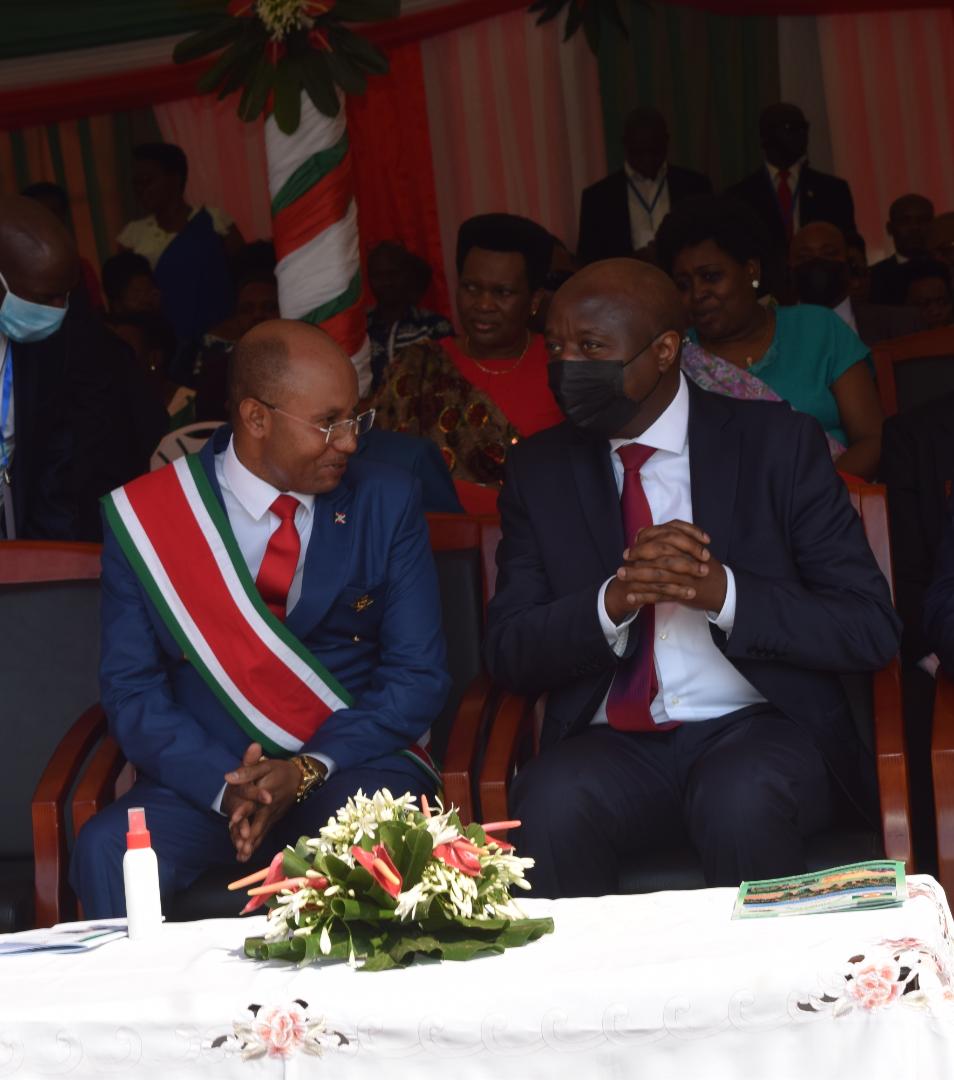
As he arrived in Bujumbura Airport, Minister Ngirente was received by Prosper Bazombanza, the Vice-President of Burundi.
Burundi and Rwanda celebrate Independence Day every 1st July to commemorate the day in 1962 when their gained freedom from Belgian colonial rule.
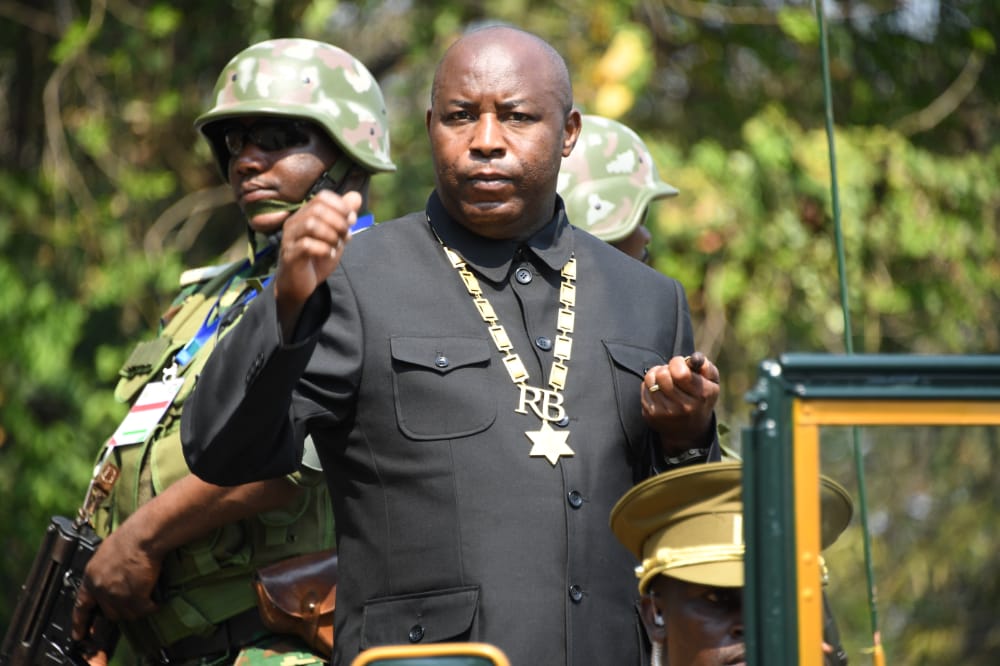
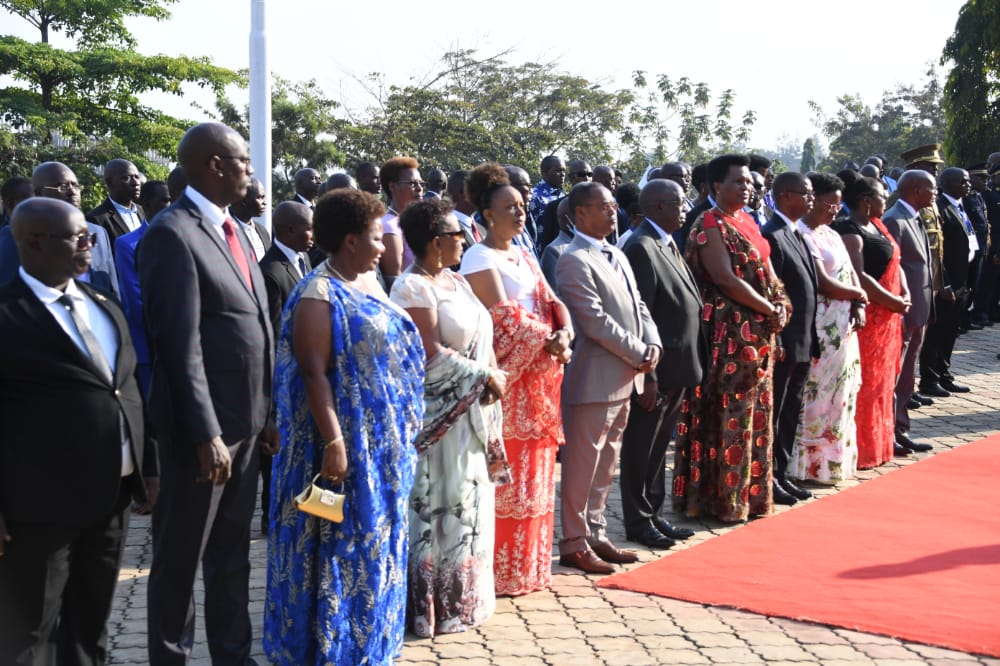
Participants of the ceremony presided over by President Evariste Ndayishimiye paid tribute to Prince Louis Rwagasore, Burundi’s hero credited for resisting colonial rule.
Belgians had maintained a strong colonial rule by avoiding a unified Burundi nationalist movement by pitting the different ethnic groups against each other.
Louis Rwagasore, the son of King Mwambutsa IV was active in nationalist movements and campaigned for independence from Belgium.
In September 1961 elections before independence, he won 80% of the vote and became the first Prime Minister-elect.
However, Rwagasore was gunned down in a hotel restaurant a few weeks later on 13th October 1961. Though his assassin was Greek, suspicions remain that his murder was sponsored by a pro-Belgian group.
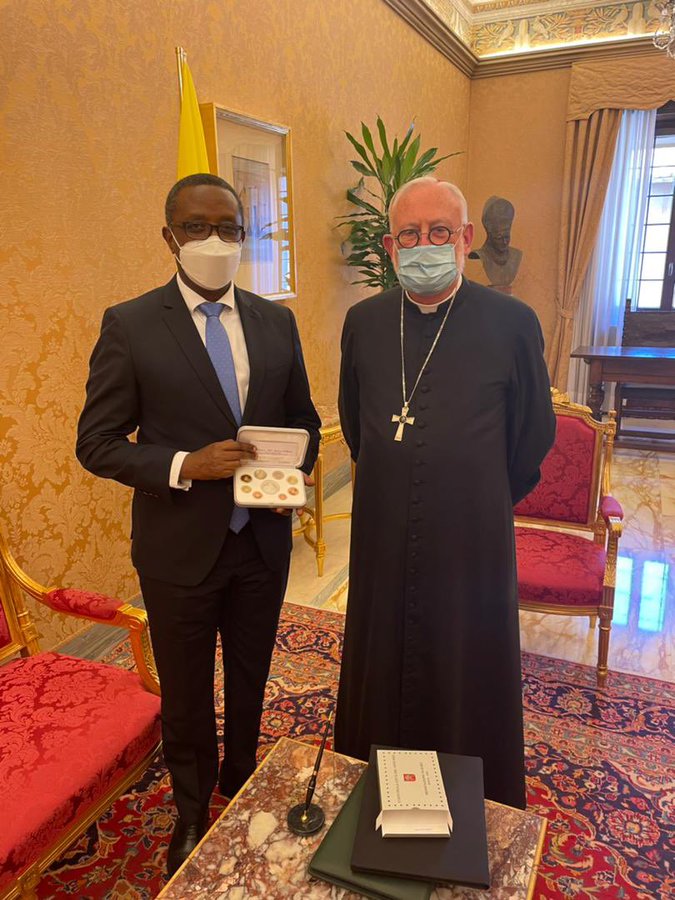
The Ministry of Foreign Affairs has via Twitter handle revealed that Minister Biruta and Archbishop Gallagher discussed ways to strengthen cooperation between Rwanda and the Catholic Church.
Rwanda is among 24 African countries with Bishops elevated to the rank of Cardinal.
On 28th November 2020, His Eminence Antoine Kambanda became Rwanda’s first ever cardinal installed by Pope Francis.
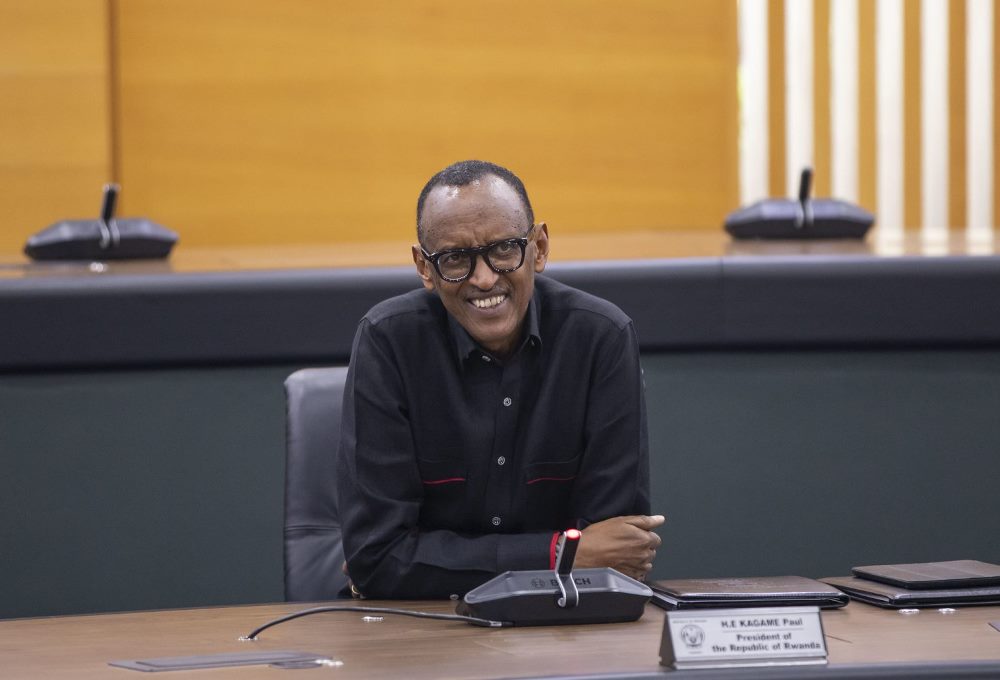
As he joined catholic faithfuls from across the country towards the end of last year at Kigali Arena, in a thanksgiving ceremony in honour of the first ever Rwandan cardinal, President Paul Kagame expressed gratitude to Pope Francis for trusting Cardinal Kambanda to be amongst the Pope’s closest advisors.
Kagame said that the trust is founded on the wise judgement and proven commitment throughout Cardinal Kambanda’s service to the Church in Rwanda who also showed that he is able to contribute to the Church on the global stage.
In March 2017, Kagame visited Vatican where he met with Pope Francis and held talks at the Apostolic Palace in Vatican City.
At the time, Kagame and the Holy Father discussed several aspects of the relationship between Rwanda and the Holy See. They also discussed the Church’s role in the most tragic chapters of Rwanda’s past, leading to the 1994 Genocide against Tutsi in 1994.
This agreement is expected to strengthen the capacity of the Rwanda Food and Drug Authority (RFDA), which is key to enhancing the attractiveness of Rwanda for investments in the manufacturing of vaccines and other pharmaceuticals, thus helping to improve access to medicines.
Commenting on the development, the European Commissioner for International Partnerships, Jutta Urpilainen welcomed the agreement considered a major milestone towards local manufacturing of vaccines.
“This is an important step in supporting local manufacturing of health products in Africa. As announced by President Von Der Leyen , Team Europe will continue to support the country and Africa in strengthening the regulatory framework and attracting investment in the pharmaceutical sector,” she said.
Rwanda’s Minister of Health, Dr. Daniel Ngamije highlighted that upgrading Rwanda’s regulatory capabilities to the required international standards is a critical step on the journey to vaccine manufacturing.
“The European Union is a central partner in our efforts to bridge the gap in vaccine equity in Africa by building pharmaceutical production capacity,” he noted.
Clare Akamanzi, the CEO of the Rwanda Development Board (RDB) stressed that access to vaccines is critical, especially for Africa where only around 1% of vaccines are manufactured on the continent.
“This agreement boosts Rwanda’s efforts to build a vaccine and pharmaceutical manufacturing ecosystem to contribute to health security of our region and our continent,” she stated.
The initiative agreed yesterday will help the RFDA to establish a strong quality control laboratory for medical products and supply new equipment for an integrated information management system.
This will help the RFDA in achieving the required level of certification by the World Health Organization (WHO) to be able to fully play its role to ensure the safety, efficacy, and quality of vaccines and pharmaceutical products.
The agreement is part of a comprehensive medium-term Team Europe support to bring the authority’s laboratory, technical and organizational capacity to high levels of performance.
As part of this effort, the EU Delegation will also seek to facilitate a peer-to-peer partnership between the RFDA and national regulatory authorities from EU Member States.
Among others, the EU and the European Investment Bank are in discussions to partner with the Government of Rwanda to facilitate and promote investment by pharmaceutical and biotech companies in the country, including exploring opportunities for co-financing and de-risking potential investments.
In May 2021, the EU announced at the G20 Global Health Summit in Rome a Team Europe initiative on manufacturing and access to vaccines, medicines, and health technologies in Africa. The initiative will help to create an enabling environment for local vaccine manufacturing in Africa and tackle barriers on both the supply and demand sides, backed by €1 billion from the EU budget and the European development finance institutions, such as the European Investment Bank (EIB). This amount will be further enhanced by contributions from EU Member States.
Bicamumpaka, who was trafficking the narcotics on a motorcycle, was arrested on Tuesday, June 29 enroute to Tare from Mushubi Sector, Police said.
The Southern region Police spokesperson, Superintendent of Police (SP) Theobald Kanamagire said that Bicamumpaka was traveling on the motorcycle with another person, who escaped.
“On Tuesday at about 12 noon, Police officers in a patrol vehicle encountered two people along Mushubi-Tare road, who were traveling on the same motorcycle. They had a big sack which raised the officers’ suspicions owing to the fact that the route is used by drug traffickers and in some cases using motorcycle,” SP Kanamugire said.
He added: “When the two men on the motorcycle saw the Police vehicle they threw down the sack and turned to a different direction. When officers checked the dropped sack they found it contained cannabis.
Police officers trailed the motorcycle, and with the help of residents they found the moto hidden in the bush. They also located and arrested Bicamumpaka, the owner of the narcotics, who was roaming in the area.”
The motorcycle and the narcotics were impounded to Uwinkingi RIB station, where Bicamumpaka is also detained as the search for his accomplice is still underway. The spokesperson warned taxi-moto operators against aiding drug dealers.
The Ministerial order nº 001/MoH/2019 of 04/03/2019 establishing the list of narcotic drugs and their categorisation classifies cannabis in the category of “very severe narcotics.’’
Article 263 of law No. 68/2018 of 30/08/2018 determining offenses and penalties in general states that any person, who unlawfully produces, transforms, transports, stores, gives to another or who sells narcotic drugs and psychotropic substances, commits an offence.
Upon conviction for very severe narcotics, the offender faces between 20 years and life imprisonment, and a fine of up to Rwf30 million.
The statement released last night also shows that 849 people have caught the virus.
The majority of new cases were found in Kigali: 199, Muhanga: 96, Rubavu: 95, Gicumbi: 64, Musanze: 54 and Rulindo: 40.
Rwanda confirmed the first Coronavirus case on 14th March 2020. Since then, 39 047 have been tested positive of whom 27 272 recovered, 11 337 are active cases, 39 are critically ill while 438 have succumbed to the virus.
A total of 391, 805 have been vaccinated since Rwanda began countrywide inoculation programme on 5th March 2021.
Coronavirus symptoms include coughing, flu, and difficulty in breathing. The virus is said to be transmitted through the mucous membranes of the respiratory tract.
Rwandans are urged to adhere to COVID-19 health guidelines, washing hands frequently using soaps and safe water, wearing face masks and respecting social distancing.
The Southern region Police spokesperson, Superintendent of Police (SP) Theobald Kanamugire said that the brews were seized from separate distillers and sellers in the three districts, who were reported by area residents.
“Four people were arrested in Tumba, Ruhashya and Huye sectors in Huye District with 650 litres of muriture. They are Jean Marie Vianney Uhagaze, Goreth Nyirampakaniye, Seraphine Mukagasana and Jonas Nshimiyimana,” SP Kanamugire said.
He added: “In similar operations conducted by the Police and local leaders in Ruhango and Nyanza districts; three people were caught with 290 litres. They are Alphonse Ngendahimana arrested in Ruhango Sector and the duo of Alphred Uwizeyimana and Eric Niyomugabo apprehended in Nyagisozi Sector, Nyanza District in possession of found of 100 litres and 120 litres, respectively.”
He warned against producing, selling and consuming such harmful substances.
“Muriture is classified as a simple narcotic drug because it is harmful to consumers. Its alcoholic content and products used are either unknown or they are not authorized for human consumption. Again, these are also illegal distilleris operating in unhygienic places using dirty containers which makes it a healthy concern,” SP Kanamugire observed.
As Rwanda continues to fight the pandemic of Covid-19, these remote bars selling illicit brew as well as those producing the substances can also be the source of spread.
Moreover, bars are still closed to prevent related social gatherings seen to be another means of Covid-19 spread.
Article 5 of the Ministerial order Nº 001/MoH/2019 of 04/03/2019 establishing the list of narcotic drugs and their categorisation classifies alcoholic drinks produced without complying with standards and other laws; on the list of simple narcotic drugs.
Article 263 of the law determing offences and penalties in general states that; any person who, unlawfully produces, transforms, transports, stores, gives to another or who sells narcotic drugs and psychotropic substances, commits an offence.
Upon conviction, he/she is liable to imprisonment for a term of not less than seven years and not more than ten years and a fine of not less than Rwf5 million and less than Rwf10 million in regard to “simple narcotics.”
Mukeshabatware breathed the last on Wednesday June 2021 succumbing to natural cause.
Speaking to IGIHE on Wednesday, his son Philbert Nyirimigambi revealed that his father died at King Faisal Hospital where he was getting treatment.
“My father has been feeling unwell. He went for medical attention yesterday feeling backaches. He was supposed to undergo diagnostic radiology today but died before checkup around 12:00,” he said.
Marie Hélène Mukakarangwa, the wife of Mukeshabatware also died on 30th November 2017.
Mukeshabatware was born in Nyarurguru in 1950 at the reign of King Rudahigwa.
He completed primary school in 1965 from where he continued studies at Saint André after successfully passing national exams.
As he completed the ordinary level, Mukeshabatware worked as a teacher in Nyarurguru and later joined the military in 1970.
Upon recruitment, Mukeshabatware once told IGIHE that he was taken at Ecole de Sous Officers (school of non-commissioned officers) for three months where he passed exams to write for newspapers and got scholarship to study in Belgium.
Mukeshabatware explained that he spent one year and three months in Belgium and established military printing house upon arrival. He was at the rank of Corporal at the time.
Mukeshabatware quit the military after eight years of service claiming meager payment.
In 1980, he was recruited to the former Rwanda Information Office (ORINFOR) printing section and later in 1982 joined the drama team of ORINFOR called Indamutsa where he gained popularity.