The statement released last night shows that 608 people have caught the virus, 16 recovered while 42 are critically ill.
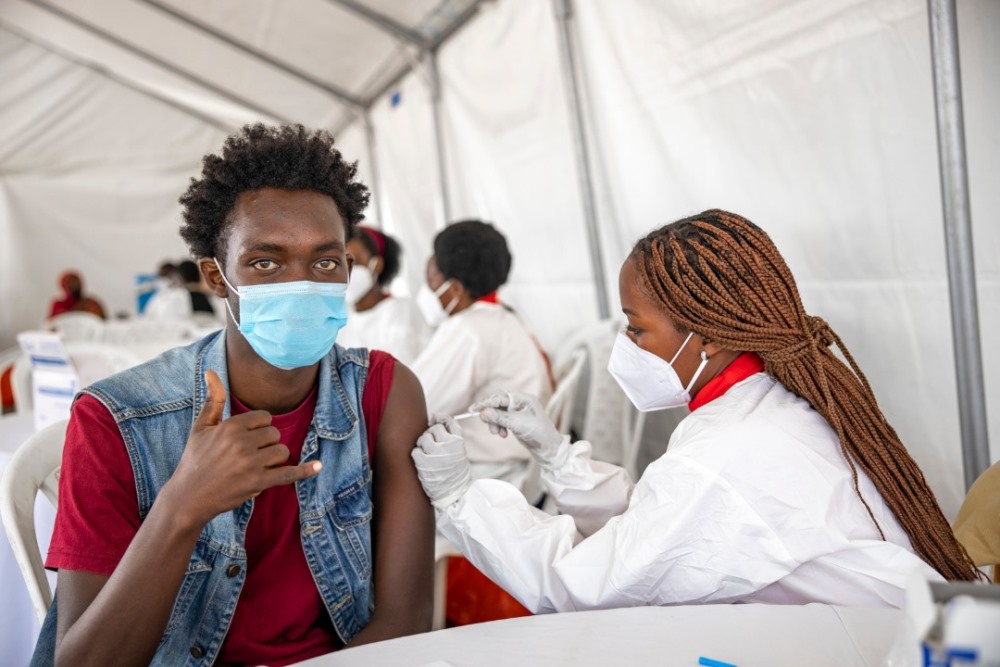
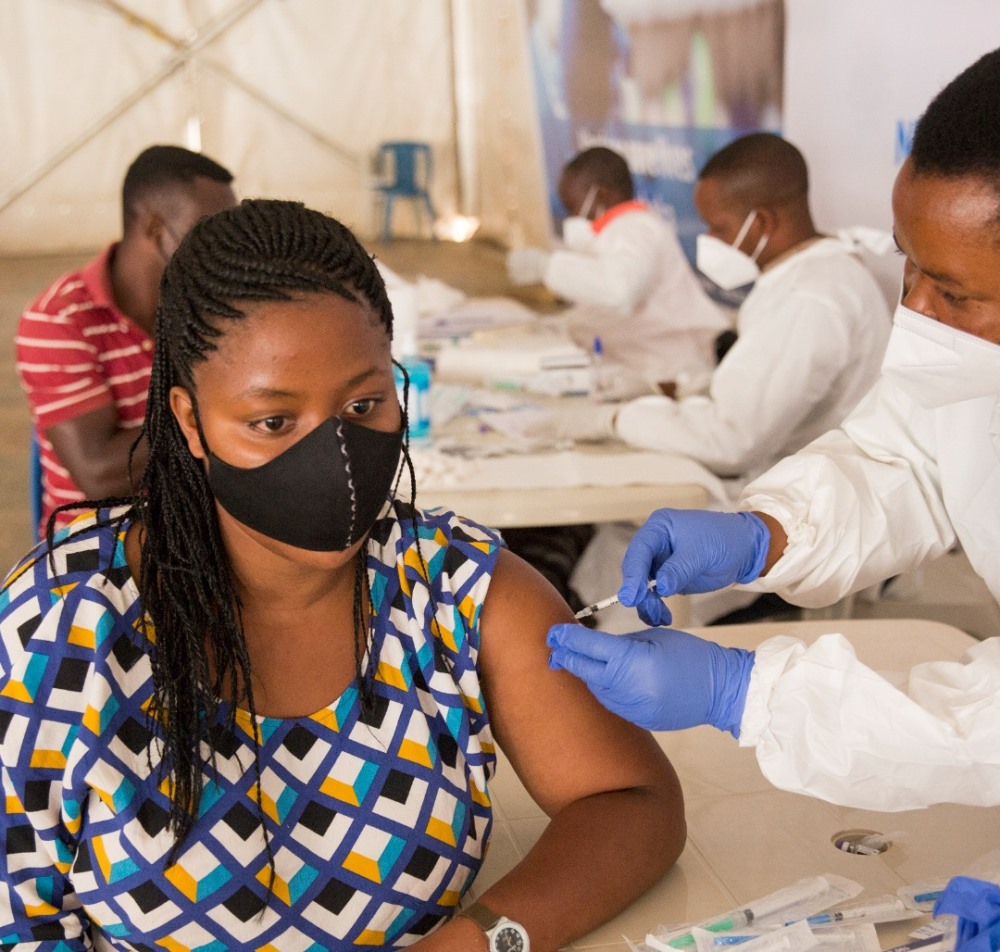
A total of 445,107 people have been fully vaccinated while 1,157,725 received the first dose of COVID-19 vaccine since Rwanda began countrywide inoculation program on 5th March 2021.
Coronavirus symptoms include coughing, flu, and difficulty in breathing. The virus is said to be transmitted through the mucous membranes of the respiratory tract.
Rwandans are urged to adhere to COVID-19 health guidelines, washing hands frequently using soaps and safe water, wearing face masks and respecting social distancing.
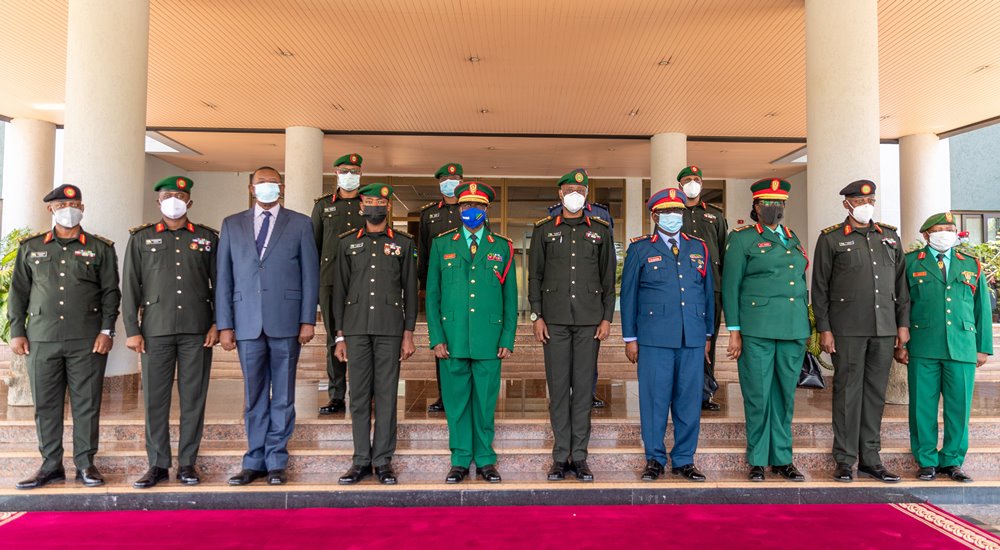
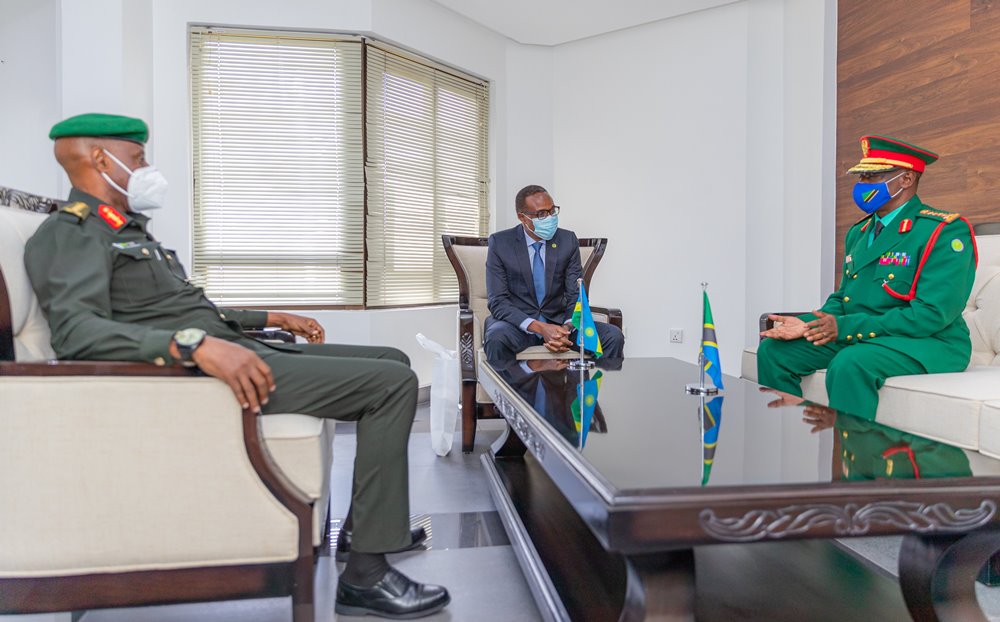
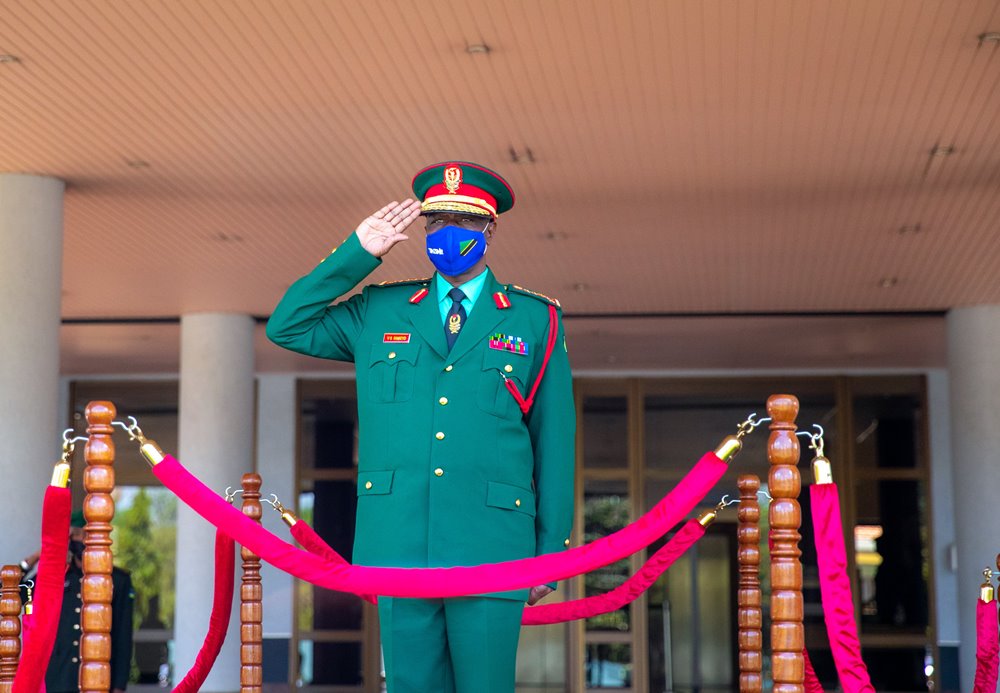
Today, Gen Mabeyo paid a courtesy call on the Minister of Defence, Maj General Albert Murasira and thereafter, held bilateral discussions with his counterpart, Gen J Bosco Kazura at Rwanda Defence Force (RDF) Headquarters in Kimihurura.
In an interview, Gen Mabeyo said that this visit aims at strengthening cooperation between TPDF and RDF.
He added that it was a reciprocal visit to the recent visit by the RDF CDS Gen Kazura to Tanzania and stressed that such visits are a sign of the level of confidence and ‘mutual trust between our respective militaries’.
Among others, the TPDF Chief of Defence Forces and his delegation paid respect to the victims of the 1994 Genocide against Tutsi at Kigali Genocide Memorial and also visited the Campaign Against Genocide Museum.
He will also visit the RDF Command and Staff College and Kinigi IDP Model Village in Musanze District.
Following the approval of different types of vaccines by the World Health Organization (WHO), developing countries initially struggled to secure vaccine doses.
As days went by, some African countries started receiving COVID-19 vaccines through initiatives aimed at ensuring equitable distribution, even though the continent still lags behind the vaccination program.
Africa is using several types of vaccines, which were obtained in different ways.
African nations are both purchasing new doses and receiving them from other countries. Donations came from all over the world, such as China, the United Arab Emirates, India, and Russia.
According to Statista, a German company specializing in market and consumer data; the United Nations-led COVAX initiative already provided Oxford/AstraZeneca and Pfizer/BioNTech doses to some African countries.
Within this program, the continent is supposed to receive a total of 600 million doses by December 2021 to vaccinate 60 percent of the African population by June 2022.
Latest figures from WHO show that some countries including the United States of America (USA) have vaccinated over 50% of their population while some African countries have not yet covered 10%.
It is reported that 32.7% of the world population has received at least one dose of a COVID-19 vaccine, and 24.6% is fully vaccinated.
5 billion doses have been administered globally while 33.56 million are administered each day.
Only 1.4% of people in low-income countries have received at least one dose.
On the African continent, Morocco has the highest number of vaccine recipients with 36.8% while South Africa vaccinated 8% of its population.
Rwanda is among African countries that have started administering vaccines since March this year starting with people whose line of duty puts them at risk of catching the virus.
So far, Rwanda has 432,429 fully vaccinated people since the exercise began.
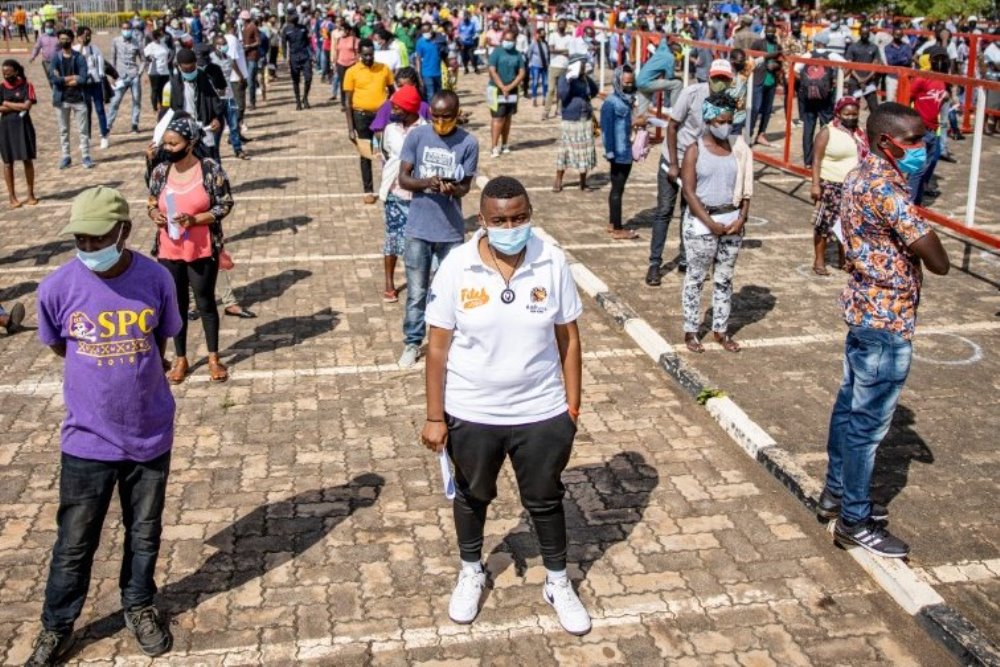
On Monday 23rd August 2021, Rwanda started COVID-19 mass vaccination targeting all people aged 18 and above.
The mass vaccination campaign started with Kigali City expected to be extended countrywide later depending on available vaccine doses.
With the exercise in place, Rwanda has become the second African country following South Africa which also started mass vaccination for people aged18 years and above.
People below the age of 18 are not eligible for the vaccine as per guidelines from the World Health Organization.
According to health experts, Rwanda’s rolling out of mass vaccination is a great milestone to mitigate effects of the pandemic.
The State Minister in Charge of Primary Healthcare in the Ministry of Health, Dr. Tharcisse Mpunga has told IGIHE that the mass vaccination came after different phases targeting people in advanced ages, health workers, and people with chronic diseases among others whose duties expose them.
He explained that Rwanda has been handling the situation with unique approaches and expressed optimism for the situation to normalize in case a large segment of the population is inoculated.
“I think it is Rwanda’s unique approach considering expended efforts since the pandemic emerged in the country. A large number of positive cases was found among people in the age brackets between 25 and 39 of whom the majority live in towns,” he said.
“As a result, some parts of towns were placed under lockdown at different times which negatively affected the economy,” added Dr. Mpunga.
Kigali, which generates close to 50% of Rwanda’s national GDP, has been hit hard particularly and went into lockdown three times since the pandemic emerged in March 2020.
Dr. Mpunga has revealed that the mass vaccination program starting with the youth will pave the way for the resumption of operations given that a large number will have been immunized.
“We started vaccinating elders and the exercise is ongoing. We also found it necessary to target the youth among vaccine recipients so that we can recover the economy,” said Dr. Mpunga.
The third phase of COVID-19 mass vaccination targeting people aged 18 and above kicked off yesterday. It is expected to have covered 90% of Kigali City dwellers within two weeks.
Rwanda plans to vaccinate 30 per cent of the population by the end of 2021 and continues efforts to acquire sufficient doses through direct purchases and other arrangements, to ensure as many Rwandans as possible are protected from COVID-19.
Dr. Mutesa Leon, a lecturer of human genetics at the University of Rwanda has also welcomed the COVID-19 mass vaccination program considering it a milestone towards reducing the transmission of the virus.
In the Police operations conducted between February and August this year, RNP seized over 501, 600 pellets of cannabis from dealers, weighing 627kgs.
Also seized during the six-month operations include 523 sachets of Simba and 11 litres of Kanyanga, both banned illict gin and classified as psychotropic substances in Rwanda.
The narcotic drugs and psychotropic substances valued at over Rwf100.8 million, were disposed of on Monday, August 23, in Nyakiliba Sector, Gikombe Cell, Nyabibuye Village.
The public destruction exercise was presided over by local leaders, security organs, RIB and prosecution as well as few local residents to abide by the national Covid-19 prevention protocol.
According to the District Police Commander (DPC) for Rubavu, Senior Superintendent of Police (SSP) Aphodis Gashumba, majority of the narcotics were seized from traffickers and dealers in Bugeshi and Busasamana sectors.
The two sectors lie on the borderline with the DRC and dealers use porous border points to easily sneak the narcotics into Rwanda.
“These are big quantities of narcotics seized in a short period–six months–and this was largely the impact of community policing. Because of the responsiveness of the public, we were able to know the identities of rackets involved, tricks they employ, trafficking routes and hide-outs,” SSP Gashumba said.
Deogratias Nzabonimpa, the vice mayor for Rubavu in charge of Finance and Economic Development embarked on the harmful side of abusing drugs and how it affects economic development.
“Millions of money were wasted in buying these narcotics instead of investing it in legal businesses to support families and contribute to the country’s development. The end result is long-term imprisonment which is another blow to dependants,” said Nzabonimpa.
According to medical experts, abusing drugs causes, among others, mental illness, heart, liver and kidney complications.
Nzabonimpa urged residents to continue sharing information on dealers and to support national efforts in breaking chains of supply.
Prosecutor Theogene Sibomana dwelt much on the legal repercussions for anyone caught in drug related crimes, including life imprisonment, and urged residents to protect their children from becoming victims by reporting drug dealers.
At least 48 dossiers involving some people apprehended with the narcotics in Rubavu have been handed over to prosecution, according to RIB.
The Ministerial order nº 001/MoH/2019 of 04/03/2019 establishing the list of narcotic drugs and their categorisation classifies cannabis in the category of “very severe narcotics.’’
Article 263 of law No. 68/2018 of 30/08/2018 determining offenses and penalties in general states that any person, who unlawfully produces, transforms, transports, stores, gives to another or who sells narcotic drugs and psychotropic substances, commits an offence.
Upon conviction for very severe narcotics, the offender faces between 20 years and life imprisonment, and a fine of between Rwf20 million and Rwf30 million.
The statement released last night shows that 496 people have caught the virus out of 8 251 sample tests, 11 recovered while 43 are critically ill.
A total of 432,429 people have been fully vaccinated while 1,092,466 received the first dose of COVID-19 vaccine since Rwanda began countrywide inoculation program on 5th March 2021.
Coronavirus symptoms include coughing, flu, and difficulty in breathing. The virus is said to be transmitted through the mucous membranes of the respiratory tract.
Rwandans are urged to adhere to COVID-19 health guidelines, washing hands frequently using soaps and safe water, wearing face masks and respecting social distancing.
The revelation follows a statement released last week by the US Secretary of State Antony Blinken saying that 13 countries have agreed to temporarily host at-risk Afghans evacuated from Afghanistan and a dozen more have agreed to serve as transit points for evacuees, including Americans and others.
In evacuating Afghans who previously worked with its forces, the US has sought third countries to house refugees while their applications are processed.
Blinken said that potential Afghan refugees not already cleared for resettlement in the United States will be housed at facilities in countries including Rwanda, Albania, Canada, Colombia, Costa Rica, Chile, Kosovo, North Macedonia, Mexico, Poland, Qatar, Ukraine and Uganda.
Transit countries include Bahrain, Britain, Denmark, Germany, Italy, Kazakhstan, Kuwait, Qatar, Tajikistan, Turkey, the United Arab Emirates and Uzbekistan.
The White House said Monday that the US has evacuated or helped to get approximately 48,000 people out of Afghanistan since Aug. 14, with about 10,900 of them airlifted out during 12 hours Monday.
These include workers of non-governmental organizations, public servants and others at risk depending on the nature of their jobs like journalists, interpreters and human rights activists among others.
According to CNBC, the tally represents an apparent acceleration in the military’s colossal efforts to relocate as many people as possible amid a Taliban takeover. In addition, coalition forces evacuated approximately 5,900 people over the weekend.
Since the end of July, the US has relocated approximately 53,000 people, the White House said. There are still several thousand Americans believed to be awaiting evacuation, according to the State Department.
The Pentagon said evacuees are flying from Kabul to temporary safe-haven locations across the Middle East and Europe, including US installations in Qatar, United Arab Emirates, Kuwait, Bahrain, Italy, Spain and Germany.
Afghan nationals arriving in the United States will be housed at Fort McCoy in Wisconsin, Fort Lee in Virginia, Joint Base McGuire-Dix-Lakehurst in New Jersey and Fort Bliss in Texas.
As desperate Afghans were trying to escape the Taliban and board planes, during chaotic scenes at Kabul airport, the UN Secretary-General António Guterres, on Monday last week, called for international unity on Afghanistan, in a briefing to an emergency session of the Security Council.
“The following days will be pivotal”, said the UN chief. “The world is watching. We cannot and must not abandon the people of Afghanistan”.
After seizing large swaths of territory in recent months, the Taliban on Sunday took control of the capital, Kabul, home to some six million people.
President Ashraf Ghani has fled the country, according to media reports, and desperate residents have been scrambling to the airport to get flights out.
Afghanistan’s UN ambassador, Ghulam M. Isaczai, recently spoke of the fear that has gripped Kabul where people displaced from other provinces had flocked to the capital, viewed as the last refuge in the country.
As Isaczai said, Kabul residents reported that Taliban forces started house to house searches in some neighborhoods in Kabul, registering names and looking for people in their target list.
“There are already reports of target killings and looting in the city,” he revealed last week.
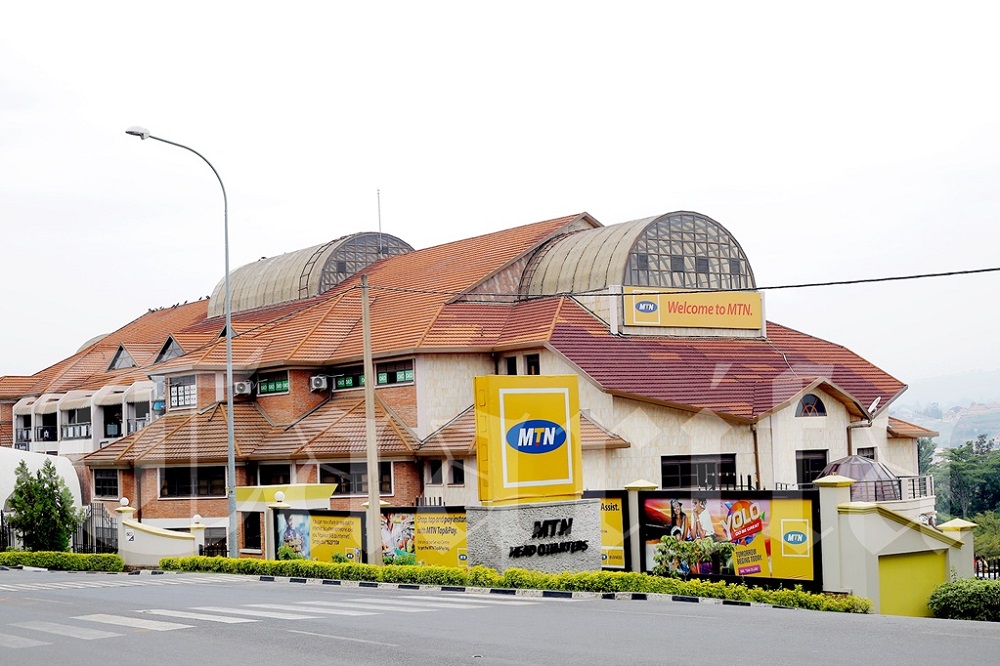
As per RURA’s statement dated 19th August 2021, the telecom must have solved all network issues related to poor calls connections (first attempts failures), dropped calls and silent garbled-speech by the aforementioned dates.
RURA has revealed that the decision follows the hearing session held on 23rd July 2021 during which the management of MTN Rwanda acknowledged the gap between Key Performance Indicators (KPIs) and the translation of these improvements into customer oriented experience.
“Should these deadlines be exceeded, further sanctions including the monetary sanction shall be applied immediately,” reads the statement in part.
The regulatory has also explained that MTN Rwanda failed to meet the initial deadline of the remediation plan to improve the quality of services in the City of Kigali and upcountry districts as submitted in the letter dated 9th April 2021.
In June 2021, MTN Rwanda explained that 40 new telecommunication towers have been installed to improve service delivery.
At the time, the telecom said that these infrastructures have been installed in different parts of Kigali city namely; Nduba, Jabana, Rusororo, Bumbogo among others to enrich customers’ with improved experience.
The recently announced upgrade followed subscribers’ complaints for network failures, dropped calls, unclear calls and slow internet.
Speaking to the media in June; Eugene Gakwerere, the Chief Technical Officer at MTN Rwanda revealed that the telecom is installing 27 more towers to be completed by August 2021 to maintain improved service delivery to over 6 million customers who subscribed to its network.
According to the Ministry of Health (MoH), the campaign targets residents aged 18 years and above starts with Kigali as a densely populated zone with highest infection rate in the country.
Vaccines are being administered at multiple sites across the Kigali districts of Gasabo, Kicukiro and Nyarugenge.
Mobile teams are also moving door to door to vaccinate people with mobility challenges during the exercise expected to last two weeks.
According to a statement by MoH released ahead of the third phase of mass vaccination, people who received the first dose earlier this month are also reminded to return to their respective facilities across Kigali for their second dose.
Kigali, which generates close to 50% of Rwanda’s national GDP, has been hit particularly hard and went into lockdown three times since the beginning of the pandemic in March 2020.
Rwanda plans to vaccinate 30 per cent of the population by the end of 2021 and continues efforts to acquire sufficient doses through direct purchases and other arrangements, to ensure as many Rwandans as possible are protected from COVID-19.
The country has been administering other types of vaccines including AstraZeneca manufactured from the United Kingdom and Pfizer from the United States.
Recently, health officials told the media that Rwanda was undergoing discussions to start administering Johnson & Johnson and other types of vaccines approved by the World Health Organization (WHO).
On Thursday19th August 2021, the Government of Rwanda received over 200,000 Sinopharm vaccine doses of COVID-19 from China to support ongoing inoculation program being rolled out countrywide.
The Sinopharm COVID-19 doses were an addition the first batch of 480,000 Pfizer vaccines Rwanda received on Wednesday last week from the United States.
So far, Rwanda has 1021 COVID-19 deaths since the pandemic emerged.
A total of 424, 768 people have been fully vaccinated while 1,048,640 received the first dose of COVID-19 vaccine since Rwanda began countrywide inoculation program on 5th March 2021.
Liquid, diverse and well-regulated local capital markets are an essential source of local-currency financing for the government, financial sector participants, and end users such as small businesses.
Under the Rwanda Capital Market Development project, IFC will advise the National Bank of Rwanda, CMA, and other key stakeholders on increasing secondary market liquidity in the government debt market, increasing the supply and issuance of non-government bonds, and developing a professional investor base.
The statement released recently shows that IFC will also provide advice on adopting appropriate investment guidelines and help assess the potential for alternative investment vehicles and instruments to mobilize long-term financing for key sectors.
While Rwanda’s capital market has developed a basic enabling regulatory framework since its inception in 2007, it requires further development to enable more issuance of securities and strengthen the capacity of market players, intermediaries, investors and issuers.
Commenting on the development, John Rwangombwa, the Governor of the National Bank of Rwanda said: “IFC’s support will enable the local capital market industry to play a key role in supporting Rwanda’s economic development by improving the framework for money markets and government securities markets, among others. Strengthening the financial management and governance of businesses will benefit the banks that lend to them and enable them to access capital markets for funding.”
Eric Bundugu, Ag. Executive Director of the Rwanda Capital Market Authority stressed that the Rwanda Capital Market Development project will contribute to further developing the local capital market industry by making it more diverse and liquid.
He however highlighted that tapping into the Rwandan capital markets as an essential source of local currency financing for both the private sector and government ‘requires the development of financing techniques and instruments that meet the requirements of capital market investors’.
Dan Kasirye, IFC’s Resident Representative for Rwanda also stated that the support will be allocated to key sectors driving economic development.
“Through the Rwanda Capital Market Development project, IFC will support the creation of a solid enabling environment for crowding in private sector finance into key sectors for economic development. Better developed domestic capital markets can help allocate investment more efficiently and allow for better risk-sharing, while providing an alternative funding source to complement bank financing,” he noted.
The initiative follows IFC’s support in 2008 to CMA and other key stakeholders under the Efficient Securities Markets Institutional Development Africa program to help improve local expertise and design effective environments for mobilizing long-term capital.
{{About the Rwanda Capital Market Authority}}
CMA is a Rwandan public institution responsible for developing and regulating the capital markets industry, collective investment schemes (CIS), commodities exchange and related contracts as well as warehouse receipts system. The CMA continues to maintain a conducive legal and regulatory environment to enable Rwanda’s economy to access long-term funding through the capital markets as well as ensuring investor protection. For more information, visit https://www.cma.rw/index.php?id=2
{{About the National Bank of Rwanda}}
BNR is the Central Bank of the Republic of Rwanda. BNR supervises and regulates the activities of financial institutions: banks, micro finance institutions, insurance companies, social security institutions and pension funds institutions.
BNR also issues government securities on behalf of the Government of Rwanda. It further houses the Central Securities Depository (CSD) for the Rwandan market. For more information, visit https://www.bnr.rw
{{About IFC}}
IFC—a member of the World Bank Group—is the largest global development institution focused on the private sector in emerging markets. We work in more than 100 countries, using our capital, expertise, and influence to create markets and opportunities in developing countries. In fiscal year 2020, we invested $22 billion in private companies and financial institutions in developing countries, leveraging the power of the private sector to end extreme poverty and boost shared prosperity. For more information, visit www.ifc.org
In Burera District, Francine Mukurizehe, 38, was found in possession of 10kgs of cannabis while the duo of Redempta Mukandamutsa, 28, and Damascene Akimana, 32, was respectively arrested with 3,000 and 2,116 pellets in Nyabihu District.
The District Police Commander (DPC) for Burera, Superintendent of Police (SP) Aphrodis Nkundineza said that Mukurizehe was intercepted by residents in Rwerere sector sneaking drugs into Rwanda from Uganda.
“Residents were conducting Umuganda when Mukurizehe, who was with another man carrying a luggage, bypassed without joining them for the community work. However, at that moment, the man run away which prompted the residents to get suspicious and apprehended Mukurizehe, searched their luggage and found it contained cannabis, they called and handed her to the Police,” SP Nkundineza said.
Mukurizehe claimed that the narcotics belong to the man, who run away, although she could not disclose his identities.
She claimed that she was just hired by the said man to transport the narcotics to Base for Frw10, 000, where he would board the bust to Kigali, to deliver the narcotics to another dealer.
SP Nkundineza lauded the residents for the vigilance and community policing spirit, which he said plays a big role in identifying and arresting wrongdoers as well as fighting and preventing crimes.
On the same day, the two other drug dealers; Mukandamutsa and Akimana were respectively arrested in Jenda and Bigogwe sectors of Nyabihu District, while trafficking drugs to their clients.
The Western region Police spokesperson, Chief Inspector of Police (CIP) Bonaventure Twizere Karekezi said that Police arrested Mukandamutsa, who availed further information on Akimana, who is also a member of the same trafficking ring.
“Police had information that Mukandamutsa was a major drug dealer, who sneaks the narcotics into the Rwanda from Democratic Republic of Congo (DRC). Police went to her home where she was found at about 5am where she was arrested with 3000 pellets of cannabis.
Following her arrest, Mukandamutsa revealed that she hired a taxi-moto operator identified as Emmanuel Nzayituriki, to bring the drugs from DRC and she had supplied other narcotics to her client Damascene Akimana, who operates in Bigogwe sector, where he was also arrested at his home with other 2116 rolls of cannabis,” CIP Karekezi said.
The suspects were handed over to RIB for further legal process while the search of their accomplices is still ongoing.
The Ministerial order nº 001/MoH/2019 of 04/03/2019_ establishing the list of narcotic drugs and their categorisation go classifies cannabis in the category of “very severe narcotics.’’
Article 263 of law No. 68/2018 of 30/08/2018 determining offenses and penalties in general states that any person, who unlawfully produces, transforms, transports, stores, gives to another or who sells narcotic drugs and psychotropic substances, commits an offence.
Upon conviction for very severe narcotics, the offender faces between 20 years and life imprisonment, and a fine of between Rwf20 million and Rwf30 million.