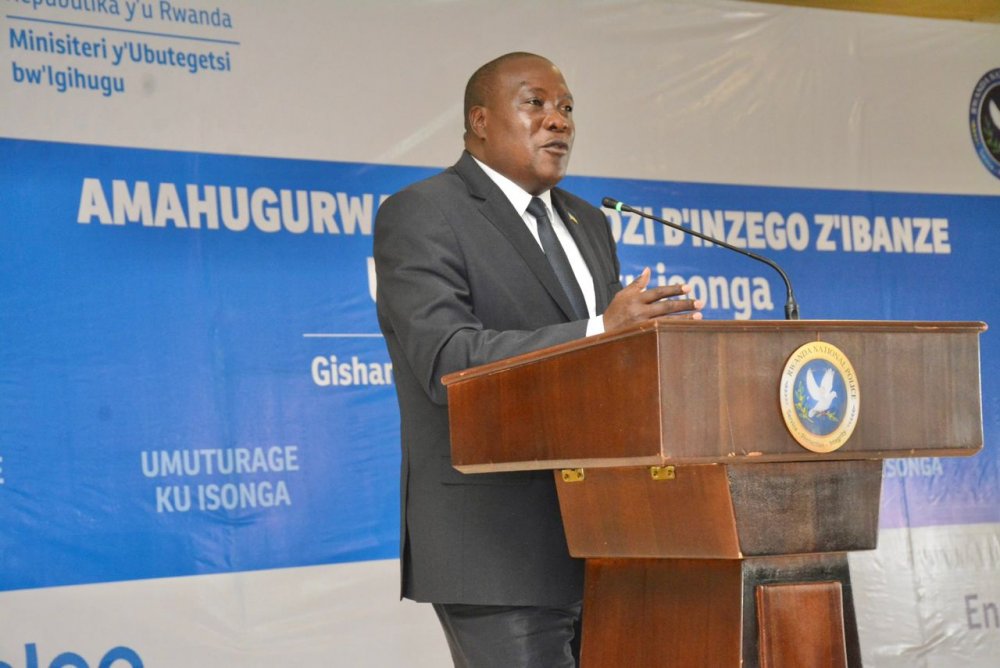
Gatabazi made the call on Tuesday 23rd November 2021 as he opened training for 459 district councillors elected recently. Each district elected 17 councilors, among whom the Executive Committees and the bureau of the Advisory Council were selected.
The training taking place at Police Training School in Gishari, Rwamagana district will be concluded on 29th November 2021.
Minister Gatabazi said that the training was organized to enlighten councilors on Rwanda’s leadership and duties awaiting them.
“The goal of our leadership is to put citizens’ interests first to spur development. We are gathered here to bring to your attention, the duties awaiting you,” he said.
“We want you to be caring leaders. Such qualities will be helpful to win trust and build cooperation leading to desired goals,” added Gatabazi.
It is expected that the district councillors will be taken through Rwanda’s history, vision of the country’s leadership, concepts of democracy, financial management and leadership decentralization among others.
Outgoing mayors and other Government officials will also be invited to share their experience.
Gatabazi also revealed that such training will be organized regularly to build local leaders’ capacity with a view to promote citizen-centered governance.
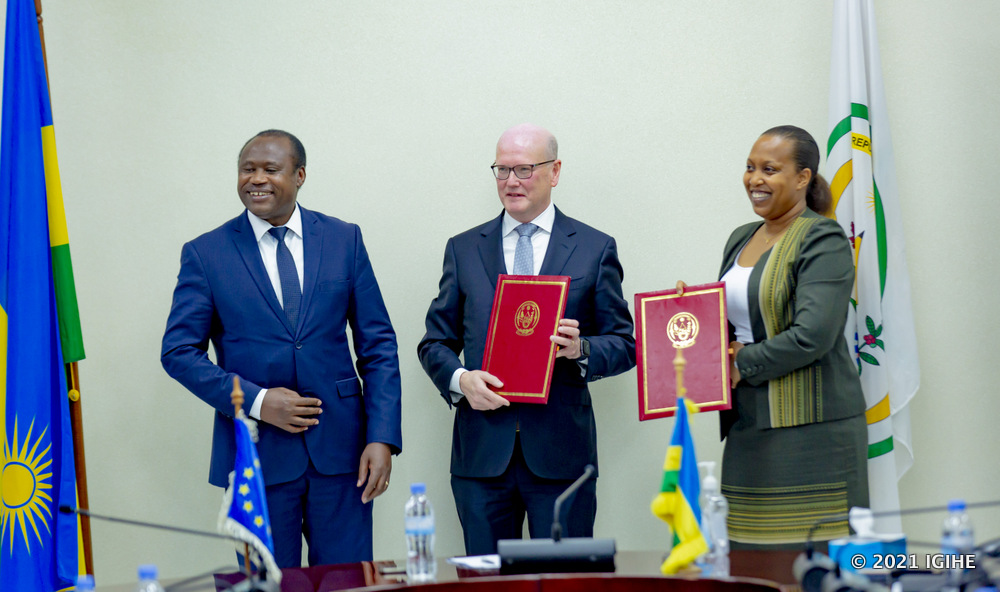
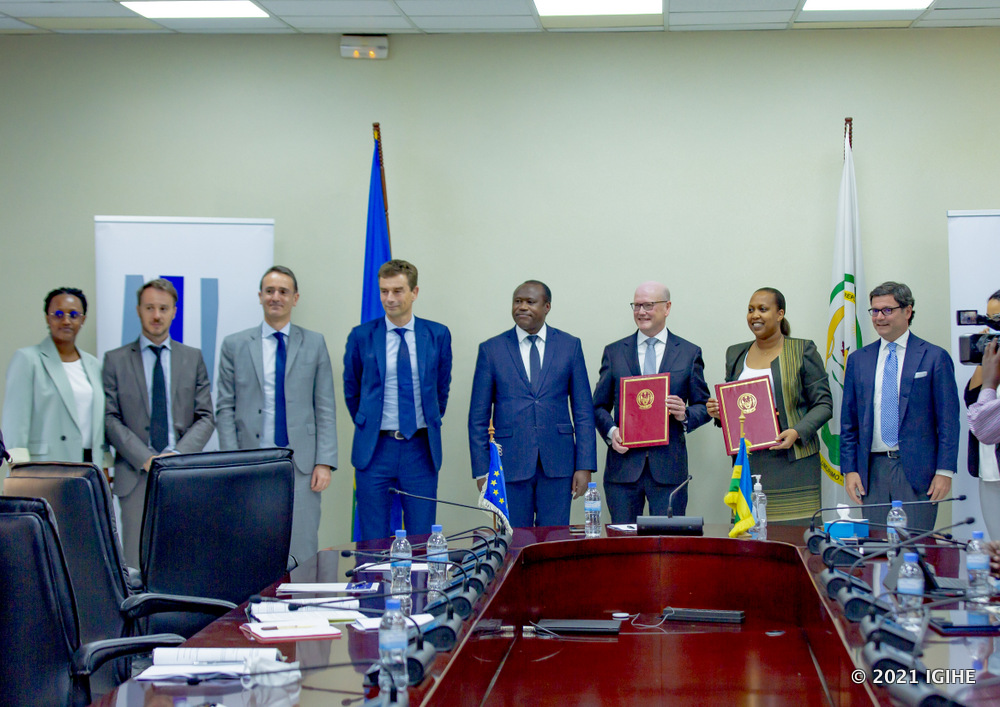
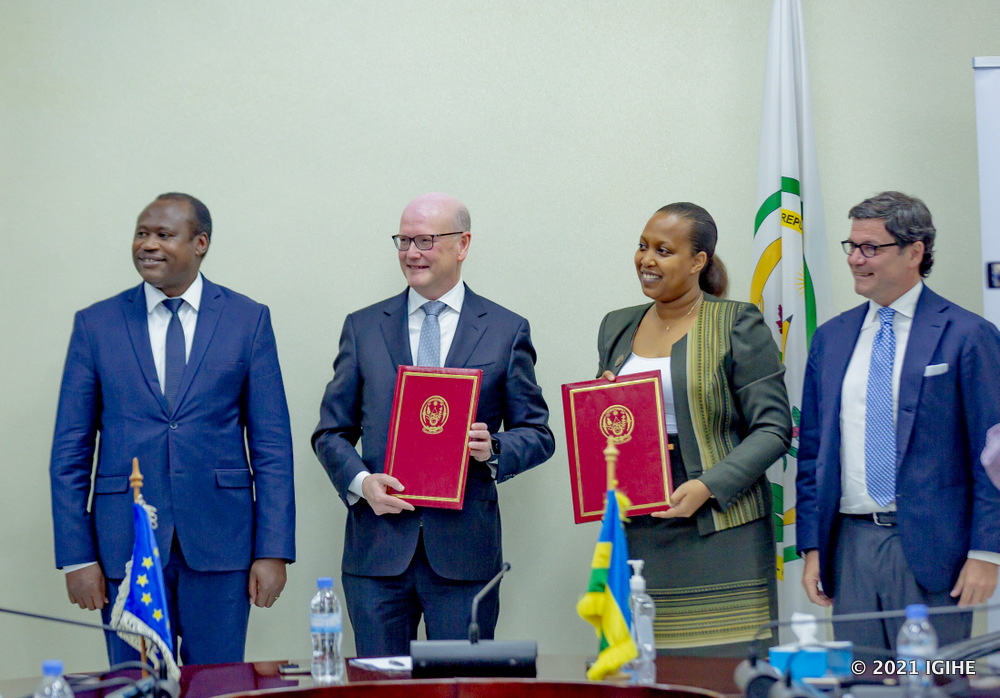
Under this arrangement, the European Investment Bank will provide EUR 15 million new long-term financing under its East Africa COVID-19 Rapid Response facility, which will be complemented by EUR 15 million counter financing from the Development Bank of Rwanda thus unlocking EUR 30 million (approximately Rwf35 billion) to Rwandan business investments.
Businesses will be able to access long-term loans in Rwandan Francs, US$, and EUR, with tenors of up to 10 years.
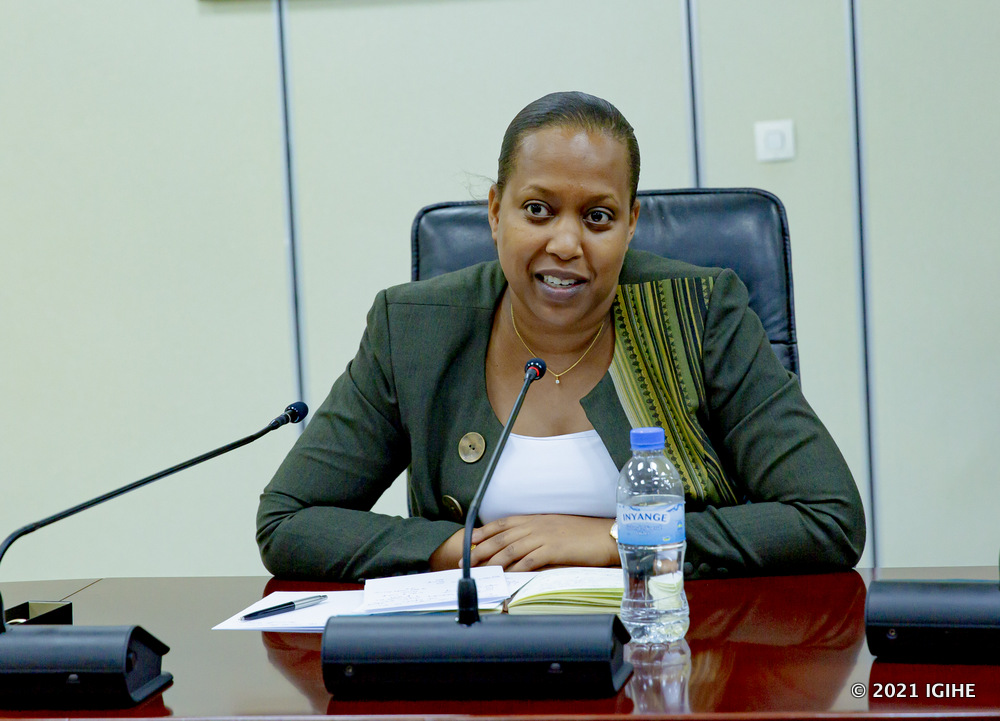
Commenting on the development; the CEO of BRD, Kampeta Sayinzoga explained that the investment from European Investment Bank will facilitate private sector development especially Small and Medium Enterprises.
“This illustrates the growing trust that international financial institutions place on BRD. More specifically, this investment will enable BRD to provide long term loans to companies ready to invest directly in Rwanda’s recovery journey. Together, we will capitalize on job creation and value addition,” she said.
The EIB Vice President Thomas Ostros who was on his first official visit to Rwanda to participate in the formal announcement emphasized that the EUR 30 million of new financing to be managed by the Development Bank of Rwanda will help strengthen economic recovery from COVID-19 in Rwanda.
“Since the start of the COVID-19 pandemic, the European Investment Bank has worked with leading banks and financial institutions in Rwanda and across Africa to ensure that companies can continue to invest, protect jobs, and harness new business opportunities,” he noted.
Last month, EIB signed a credit line worth EUR 55 million with commercial banks which saw Bank of Kigali and KCB Rwanda allocated EUR 40 million and EUR 15 million respectively.
On top of supporting the private sector investments, the credit lines also allow female led companies and firms that contribute to gender quality to benefit from improved access to finance up to 30% of the total financing.
Dr. Uzziel Ndagijimana, the Minister of Finance and Economic Planning who was also present during the ceremony revealed that the Lines of Credits to the banking sector come to complement Government of Rwanda’s efforts to support private businesses which are facing risks of collapse, in order to recover from COVID-19 and invest for economic recovery and resilience in the post COVID-19 pandemic.
The new targeted financing scheme will include support to companies in sectors most impacted by the trade, economic and health challenges triggered by COVID-19 and unlock investment to accelerate private sector recovery from the pandemic.
Key sectors that are set to benefit include agribusiness, manufacturing, and the health sector
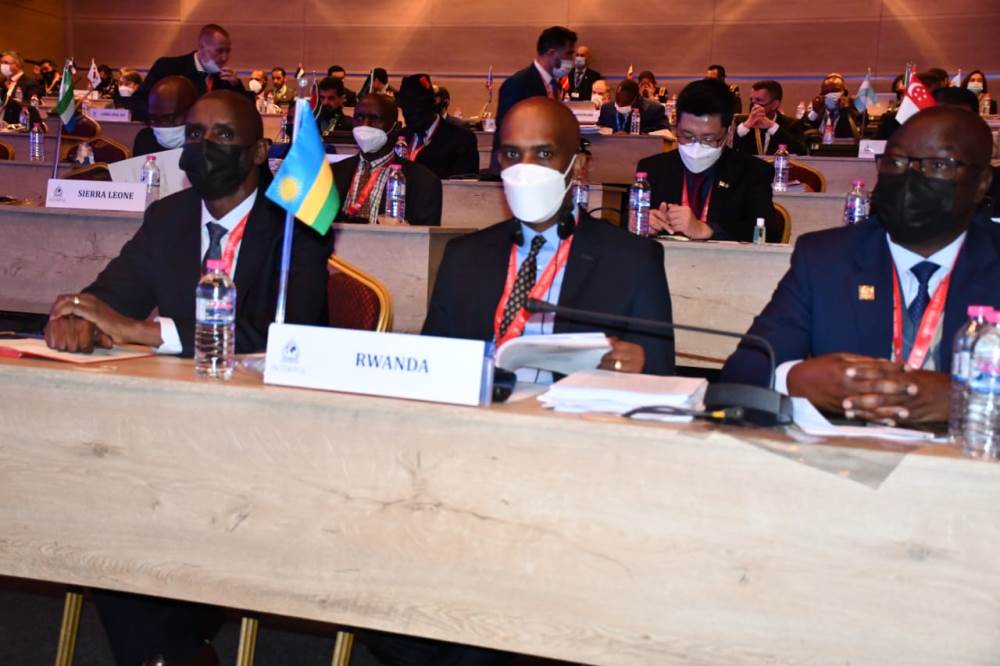
Minister Ugirashebuja is heading a Rwandan delegation for the three-day General Assembly, which includes the Inspector General of Police (IGP) Dan Munyuza and the Secretary-General for Rwanda Investigation Bureau (RIB), Col (rtd) Jeannot K. Ruhunga.
The annual General Assembly for INTERPOL’s supreme governing body comes at the time when the world is faced with the pandemic of COVID-19.
Top on the agenda is, therefore, the ratification of measures taken to address the impact of the Covid-19 pandemic on Interpol’s statutory cycle.
More than 2.16 million people have so far succumbed to the pandemic globally, with 1341 deaths registered in Rwanda so far.
The delegates will also look at the Police operations and technology, Interpol strategic framework 2022-2025, and operational and strategic partnerships. It will conclude on November 25, with elections of the new Executive Committee.
Rwanda hosted the 84th Interpol General Assembly in 2015.
Delegates appointed by the governments of member countries, who form the supreme body of Interpol, meet once a year and take all the major decisions affecting general policy, the resources needed for international cooperation, working methods, finances and programmes of activities. These decisions are in the form of resolutions.
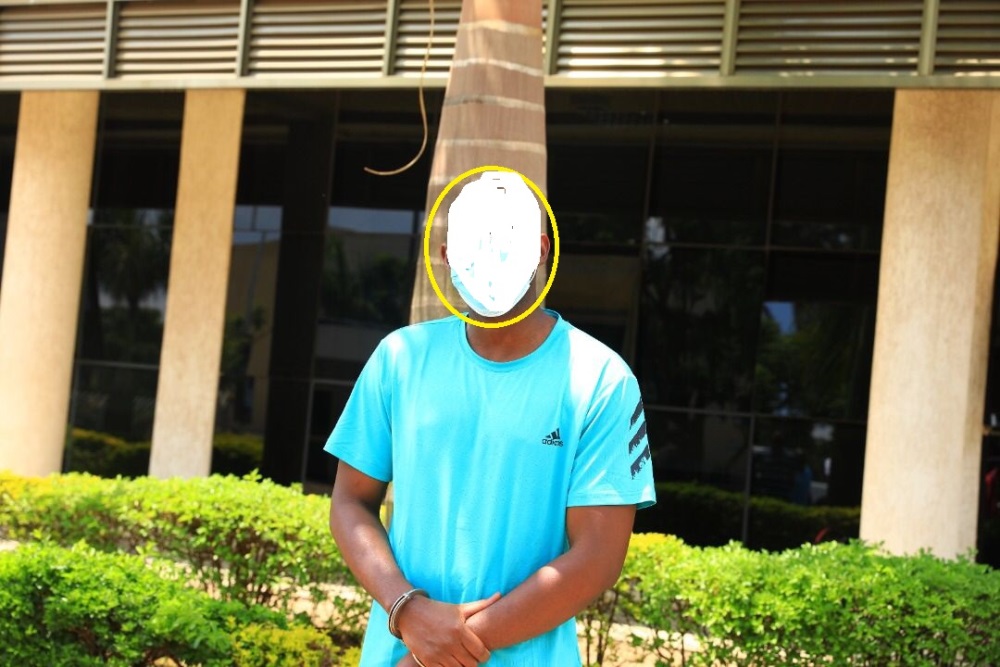
The money was recovered on Monday, 22nd November 2021 from the suspected thief identified as Christian Manzi, 24, who was located and arrested shortly after sneaking into the shop.
The Western region Police spokesperson, Chief Inspector of Police (CIP) Bonavanture Twizere Karekezi said that Manzi sneaked into the shop belonging to Fabrice Ruvumba, at about 2pm as the latter moved out to attend to other matters in the backyard.
“Ruvumba had just stepped out when Manzi, who was loitering in the area, entered the shop and broke into the locker where the money was kept, and took all the money that was there,” CIP Karekezi said.
When Ruvumba returned to his shop, he found that the locker had been vandalized and all the money missing.
“Fortunate enough, residents, who were nearby, had seen Manzi coming out of the shop. They went after him and apprehended him. However, Manzi managed to escape from them again but Police officers, who were called in, had just arrived, they pursued and arrested him.
When they searched him, they recovered all the Rwf7,953,500 which he had hidden in his underwear.”
CIP Karekezi lauded the residents for the neighbourhood watch, which facilitated swift response to arrest the suspected thief and to recover the money.
On his part, Ruvumba thanked the Police and residents for the quick response to recover his money and to arrest the suspected thief.
Manzi was handed over to RIB at Gisenyi station for further investigations and legal process.
Article 166 of the law determining offences and penalties in general states; any person convicted for theft is liable to imprisonment for a term of not less than one year and not more than two years and a fine of not less than Rwf1 million and not more than Rwf2 million, community service in a period of six months or only one of these penalties.
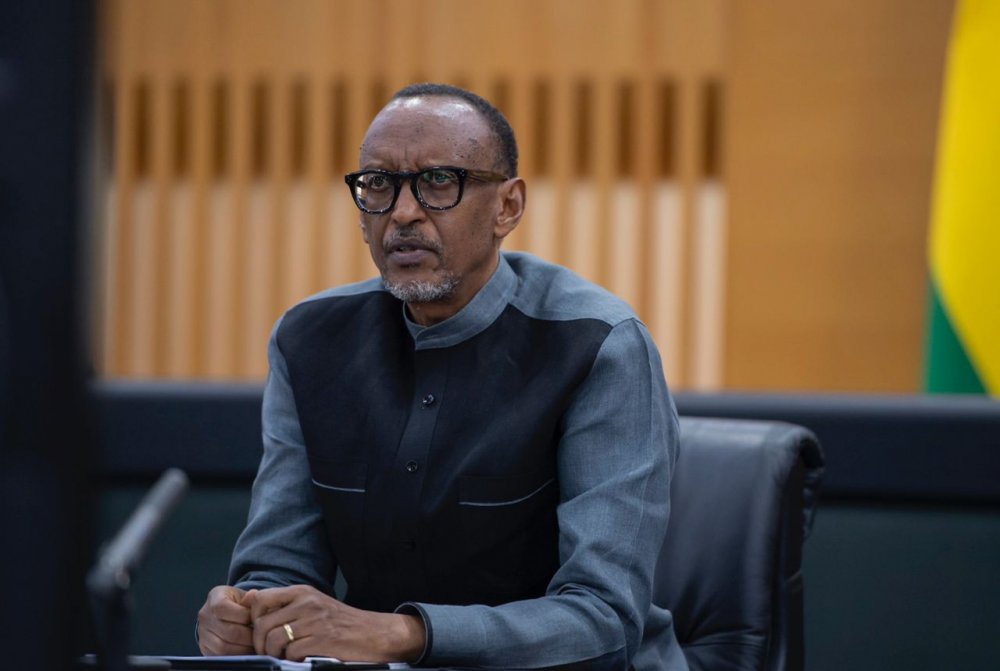
The President delivered the message on Tuesday 23rd November 2021 as he virtually joined other leaders from across the African continent for the 21st Common Market for Eastern and Southern Africa (COMESA) Heads of State and Government Summit, to discuss economic integration priority issues and review the status of the COVID-19 pandemic in the region.
The previous meeting was held in 2018 in Lusaka, the capital of Zambia.
Kagame said that COMESA did not lose sight of its agenda during the COVID-19 pandemic and continues to implement important trade facilitation programs.
He further stated that the approval of the COMESA Online Trade Portal last year by the Council of Ministers ‘exemplifies this continuity’.
“While this is a first step towards integrating digital technologies in trade, our efforts should not end here. We need to ensure that our citizens have access to these tools,” Kagame noted.
The President called on countries to work together for the benefits of citizens and made suggestions on how it can be achieved.
“First, we must foster digital literacy. In Rwanda, we are prioritising digital economic integration and working to achieve a 60% digital literacy rate for adults by 2024,” he said.
Kagame highlighted that combined efforts of COMESA partner states can act as catalysts for the continent’s digital integration.
“Second, we need to implement policies in the COMESA bloc that create affordable, transparent, and secure platforms for digital cross-border payments by small- and medium-sized enterprises. The COMESA Business Council, through its Digital Financial Inclusion Program, has already started this work, and they have our support,” he said.
“Youth-led enterprises account for many businesses on our continent, and we cannot afford to leave them behind. Lastly, Africa’s integration agenda will be achieved by continuing to put stability at the forefront of our continent’s growth and development,” Kagame added.
He also welcomed the report of the 17th meeting of the COMESA Ministers of Foreign Affairs held earlier this month and reiterated Rwanda’s commitment to work with partners in COMESA to maximise the opportunities for trade and prosperity in the region.
COMESA is the largest regional economic organization in Africa, with 21 member states including Burundi, DRC, Djibouti, Egypt, Eritrea, Eswatini, Ethiopia, Kenya, Libya, Madagascar, Malawi, Mauritius, Rwanda, Seychelles, Somalia, Sudan, Tunisia, Uganda, Zambia and Zimbabwe.
The management of SKOL has revealed that the yearly scholarship program will support parents to cater for the cost of tuition fees, uniforms, books, and transport organized by schools.
The intent behind establishing the scholarship is to harness and nourish the capabilities that lie within the Rwandan youth, particularly SBL employees’ children and contribute to their education and skills development.
Employees interested in the program fill an application form and submit it with required documents. The applications are reviewed, whereafter scholarships are awarded in consideration of submitted documents and meeting set criteria. The awarded amounts are transferred directly to schools once every trimester/semester.
One of SKOL Brewery objectives is to develop its employees and their families’ well-being and contribute to the development of the Rwandan community in general. SKOL believes this yearly scholarship program will help achieving this.
“It is time for the Graduate School to claim its rightful place,” Dr Kwena Ronald, the Dean of the school affirmed. The school, hosts all the Masters’ programmes that are fully accredited by the Higher Education Council. Among the flagship programmes targeted is the Master of Science in Information technology which has provided cutting edge technology to students in readiness for the dynamic technology world.
“The students in our Master of Science in Information Technology programme are doing amazing work in the Information technology industry.” Dr Michael Sanja, an Information Technology expert in the Graduate School acknowledged.
The School also understands that the country needs the knowledge to address macro and microeconomic problems. The solution is the Master of Science in Economics that provides an all-round economic perspective.
For students who are interested in achieving development objectives for commercial, social and not for profit organizations, the Master of Science in Project Management as well as the Master of Business Administration in Project Management are the to go to programmes. The school is in the process of signing a Memorandum of Understanding, that will enable students to acquire Project management certifications such as PRINCE 2, PMP and IPMA among others at a discounted rate.
One of the graduands in the December 2021 graduation, Denyse Mugabekazi attests that the knowledge she acquired has been of great benefit. “The knowledge I gained from the Master of Science in Project Management helped me start my nonprofit organization that assists vulnerable children.” She said. Dr. Kwena Ronald, the Dean of the Graduate School and a project management expert noted that the impact of the current programmes’ restructuring will not only enable the graduates to contribute to Rwanda National Transformation Agenda, but also in its quest to become a middle economy.
Another key programme at the Graduate School, is the Master of Science in Procurement and Supply Chain Management which addresses all issues in procurement, logistics and contract administration. Our students are integral in the delivery of the National and international agenda which heavily rely on supply chain and value chains. The Master of Science in Finance and the Master of Business Administration Finance and Accounting provide students with pivotal knowledge in financial management and accounting procedures.
“Students can also benefit from the Certified Public Accountants (CPA) certifications based at the University of Kigali.” said Dr Rusibana Claude, a finance and accounting expert in the graduate school.
The School also understands that people management is not an easy task. In this regard, the school has the Master of Science in Human Resource Management which gives students human resource planning, recruitment, retention, industrial and labour law knowledge.
The Master of Education Administration and Management at University of Kigali recently attracted the attention of the community when the Ministry of Education announced the winner of the best teacher Public Secondary School category at the national level as Mr. RUZIBIZA Obed.
Mr. RUZIBIZA is currently undertaking a Master of Education Administration and Management at our Graduate School. For two consecutive years, UoK students from the same programme have won the national award. Prof. Abdulrazaq Olayinka Oniye, a Professor of Education in the Graduate School is proud of the achievements of the school.
“We are proud of the impact our students are making across Rwanda,” he Stated.
“We are in the process of identifying and profiling several other programmes, to make them industry oriented,” Dr. Kwena emphasized. Among the programmes, the school plans to reignite starting January 2022 is the Master of Science in Business Information Technology, Master of Commerce, and Master of Science in Entrepreneurship, Master in Public Policy and Management and Executive Master of Business Administration.
“The most exciting programme we are looking forward to in the New Year is the Executive Master of Business Administration.” Prof. Robert Hinson, the Deputy Vice Chancellor Academic noted. The Programme is targeting Chief Executive Officers, Directors, Senior Executives and Managers in public and private institutions. The school has structured a practical approach to the programme, steered by renowned Professors, Doctors and industry experts.
The course will be offered in a blended approach, allowing some percentage of learning to be conducted online. Prof. Hinson, a renowned scholar of Marketing across Africa, and a visiting Professor in several European universities, added that the University now has the potential to train the top executives in the country.
“The year 2022 looks bright for entrepreneurs in the country.” Professor Ogbe Allosius, A Professor of Management, with a bias in Entrepreneurship at the graduate school posed. The Master of Science in Entrepreneurship and the Master of Commerce are repositioned to target Small and Medium Enterprises, which is a major driver of the Rwandan economy. The programmes seek to address gaps and provide solutions to problems in the business environment.
The Graduate School will benefit from the University Scholarship Scheme which targets all first class Alumni.
“All first class graduates are entitled to a scholarship if they choose to enroll in our Masters programmes,” Dr Kwena affirmed.
Other alumni who were not lucky enough to get first classes can also target the multiple opportunities that are available upon request. We call upon all other students, including those who have just received their national results, to join the undergraduate programmes. Those at the graduate level, University of Kigali Graduate School is your Answer!!
He was speaking during an interview with AlJazeera journalist, Ali al-Dhafiri who him to shed light on the duration of Rwanda’s troops to the country.
The President explained that Rwandans intervened because Mozambique sought support from Africans and friends of Africa to solve its problems.
“We responded the way we could, have worked with the Mozambicans to address the problems. […] I think, much success has been achieved. Again, it is between us and Mozambicans and whoever else they asked to help to decide their way forward. This will be dictated by the conditions of ground and the work that has to be done in view of that,” Kagame said.
When asked if Rwandan troops will stay forever, the President a lot has to depend on circumstances on ground and feelings of Mozambicans who asked for help.
“We are capable of discussing and seeing what issues on ground to address, how and what time does it take. But you don’t just give a date to some of these things. Even when we were going, we were not assuming to resolve this problem in one week or month and we are gone. It doesn’t happen that way,” he said.
“There is a lot of discussion that goes on in knowing what to do next. That is not a big problem,” added Kagame.
Rwanda started the deployment of 1000 troops of the Rwanda Defence Force (RDF) and the Rwanda National Police (RNP) to Mozambique on 9th July 2021, to fight rebel groups linked to the Islamic State of Iraq and the Levant (ISIL).
The group sometimes calls themselves al-Shabaab, although they do not have known links with the Somali al-Shabaab.
The situation started worsening in October 2017 when armed extremists linked ISIL launched an insurgency in the Cabo Delgado region of Mozambique.
Since then, Mozambique Defence Armed Forces have been battling the extremists while many civilians were displaced by the fighting.
The joint operations between Rwandan and Mozambican troops have started yielding big where different regions including Palma, Awasse, Mocímboa Da Praia, Quionga, Tete, Maputo, Nhica Do Rovuma, Quelimane, Chinda and Mumu were seized from rebels.
As at 5th September 2021, Rwandan and Mozambican troops who were joined by the military mission of the Southern African Development Community (SADC) had captured almost all areas of Cabo Delgado Province where the remaining work was predominantly about launching offensives to quell enemy pockets from their hideouts and help displaced citizens to return to their homes.
Rwanda initially sent 1000 troops to Cabo Delgado honoring the request of Mozambique to support efforts to quell terrorist groups.
The troops have increased to nearly 2000.
Approximately 3100 troops from different African countries are present in Mozambique to help the country quell insurgency in Cabo Delgado Province.
The Chinese embassy in DRC has revealed that the incident took place on Sunday.
The incident took place early that morning in South Kivu province, according to a Sunday statement issued by the embassy.
According to Caixin Global report, the incident happened near the village of Mukera.
Chinese embassy in DRC has also said the security situation in the provinces of Ituri, North Kivu and South Kivu is ‘extremely complicated and severe,’ where incidences such as armed robbery and kidnapping that involve Chinese citizens have occurred many times.
The incident took place in Matinza village, Nkondo cell of Rwinkwavu sector in Kayonza district in the night of Sunday 21st November 2021.
The executive secretary of Rwinkwavu sector, Claude Murekezi has told IGIHE that security officials have launched investigation.
“The deceased is a pregnant woman who was found dead in her garden. We have not yet identified hooligans behind the murder but it is apparent that she was stabbed to death. She was in the last month of pregnancy,” he said.
Murekezi explained that the woman had no apparent clashes with residents but revealed she has been experiencing strain relationships with her husband who cohabited with other wives.
“There has been no reported clashes between the spouses but it is apparent that their marriage was strained because the husband cohabited with two more wives. Rwanda Investigation Bureau has so far arrested two suspects including her husband for interrogation,” he said.
Murekezi appealed on residents to report disputes and other suspected gangs on time to prevent similar incidents.
The body was taken to Rwinkwavu Hospital for postmortem.