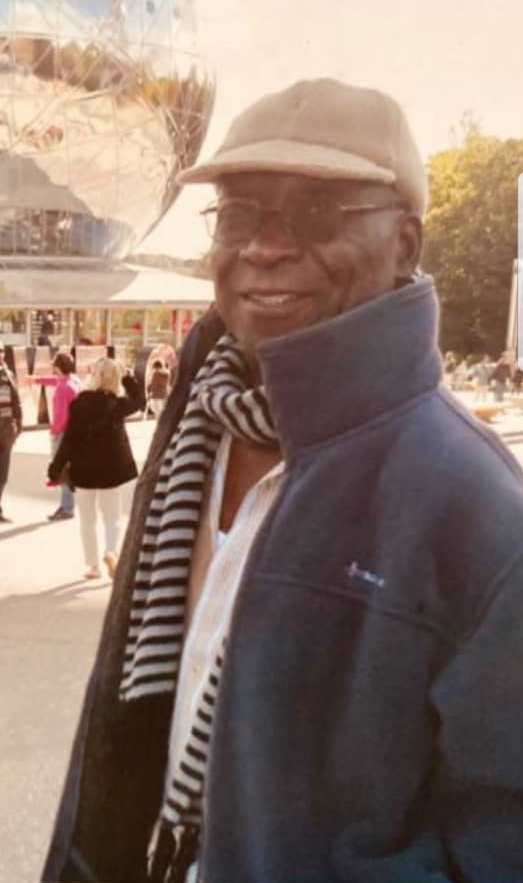
Mayaka breathed the last on Friday 7th January 2022 succumbing to natural cause.
The Manager of Cine Elmay, Rabbini Hamin Karambizi has told IGIHE that Mayaka died in Kigali.
“He has been sick for some days. We heard such sad news around 9:30p.m. He recently returned to Rwanda from the Democratic Republic of Congo for medical attention,” he said.
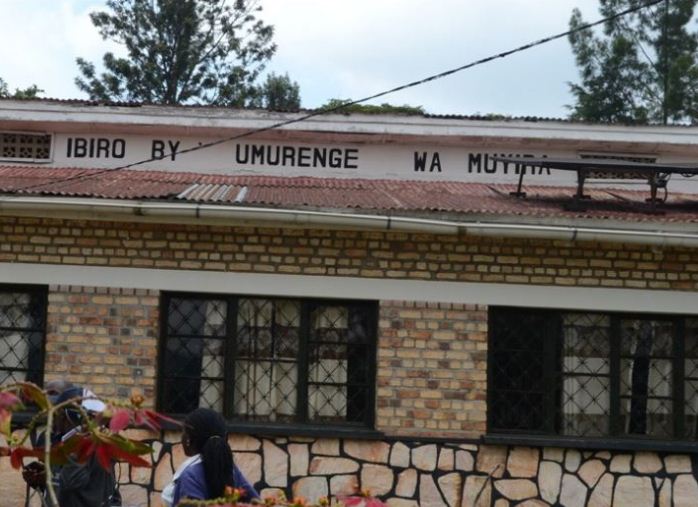
Many sports and film enthusiasts in Kigali used to watch movies and live matches from Europe at his movie house known as ‘Kwa Mayaka’ in Biryogo.
Established in 1980, Cine Elmay was the first cycling team in Rwanda.
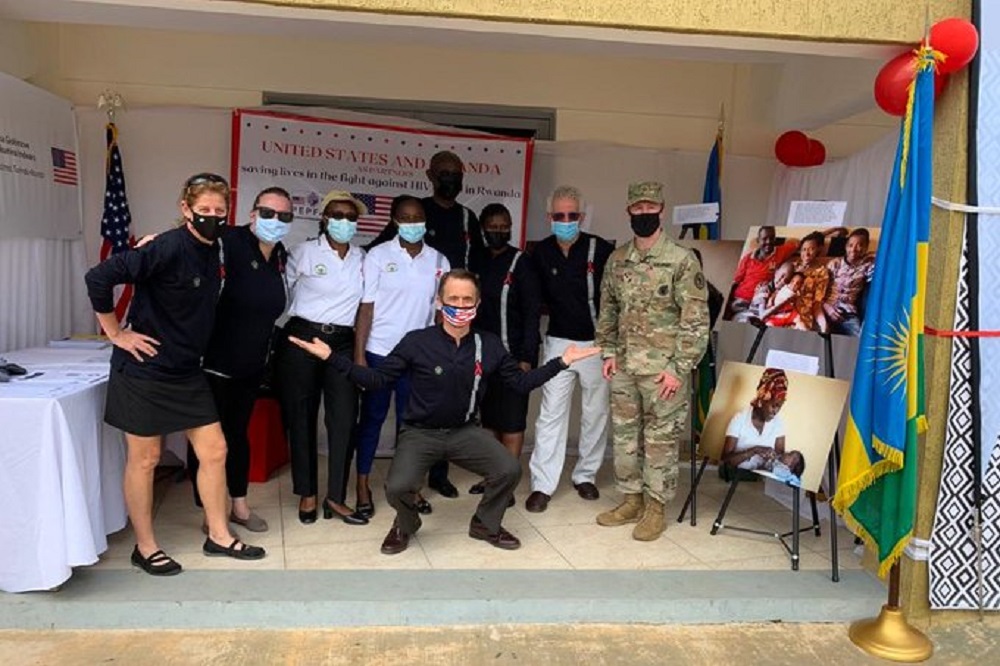
The program’s interventions draw emphasis on mass tests and helping HIV positive patients to prevent further transmission of new infections among others.
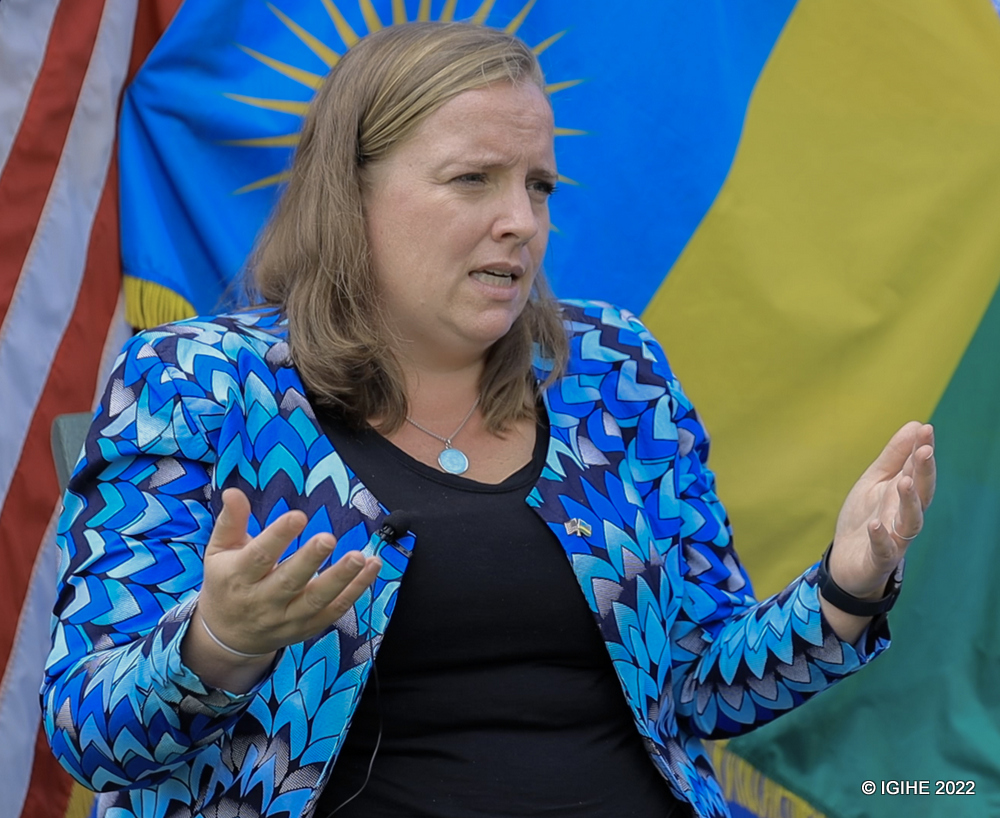
Speaking to IGIHE, the coordinator of PEPFAR in Rwanda, Alexandra Hoagland has reflected on the program’s achievements and commended Rwanda’s efforts to implement policies aimed at fighting against HIV/AIDS.
“More recently, PEPFAR has been investing in a lot of systems in Rwanda, specifically in all countries of intervention. When I say systems, I mean data collection systems, laboratory systems and how we purchase drugs that are used to treat HIV/AIDS,” she said.
“There has been a lot of successes but I will just highlight a couple. First, HIV positive patients were helped to access medication. For many people who were diagnosed in the 1999 and 2000, it was a stressful time because they didn’t know how they were going to survive. People were getting sick quickly but with the introduction, patients got relief. When they take medication as prescribed, they live long and lead healthy life,” added Hoagland.
She explained that PEPFAR has supported that through the clinical services provision and other interventions including the prevention of mother to child transmission for HIV positive pregnant mothers.
Considering Rwanda’s remarkable progress towards HIV/AIDS response, Hoagland expressed optimism that with proper diagnosis and treatment, the risk of transmission can be minimized.
“Now, Rwanda has a huge success story. 98.4% of HIV positive pregnant mothers do not pass on HIV to their children. It is a tremendous success which other countries should learn from,” added Hoagland.
Before 2016, a patient tested positive for HIV had to wait for some time to start receiving treatment but the situation has changed as patients start receiving medication soon after testing positive to strengthen his/her body’s immunity.
Hoagland who has been working in the health sector for the past 12 years has told IGIHE that men circumcision was among other programs that helped Rwanda to fight against HIV/AIDS.
Health experts show that circumcising men reduces HIV transmission by 60%.
Figures from PEPFAR Rwanda indicate that a total of 1,227,295 men had undergone voluntary circumcision in Rwanda by September 2021.
“It is a great investment because it is a one-time procedure that gives lifetime protection. Circumcision does not mean you can go freely but one sure thing is that it offers certain level of protection,” Hoagland observed.
{{Rwanda’s promising efforts}}
As of today, Rwanda registers 220,000 HIV positive patients equivalent to 3% of the population while the African continent has about 23.8 million.
Overall, the research carried out by Rwanda Biomedical Center (RBC) in November 2020 indicated that new HIV positive cases reduced by half between 2015 and 2019 while transmission of the virus from mother to child was cut to less than 2 percent in the past four years.
The research also highlighted that 5400 people catch HIV every year in Rwanda where the majority are from urban areas.
Through PEPFAR; a total of 125,789 HIV/AIDS patients receive antiretroviral therapy while 246,716 HIV/AIDS orphans and underprivileged children also receive different kinds of support.
PEPFAR helps them through provision of screening for sexually transmitted infections and training helping to reach other segments of the population in need of support.
Hoagland has also attributed Rwanda’s success to collaboration with different institutions.
“What is interesting to see in Rwanda, is that the Ministry of Health makes decisions that are in the best interests of the people of Rwanda,” she said.
Rwanda has ambitious targets to achieve zero new HIV infections by 2030.
The milestone will complement the Joint United Nations Programme on HIV/AIDS (UNAIDS) goal to achieve universal access to HIV treatment by 2020.
The goal (90-90-90) read that 90% of all people living with HIV would know their HIV status, 90% of all people diagnosed with HIV infection would receive sustained antiretroviral therapy while 90% of all people receiving antiretroviral therapy would have had the viral suppression by 2020.
“Rwanda has achieved the target. We are now working towards 95-95-95 goal. To achieve an AIDS free generation, we have to work in parallel working with people who don’t know their HIV status ensuring that they are tested and those who tested positive to receive treatment,” Hoagland said.
In Rwanda, at least 98% of the population was tested for HIV. PEPFAR continues to work with relevant institutions to test groups of people vulnerable to new infections including sex workers to be tested.
“I am confident that Rwanda will be one of the first countries to achieve these targets. The country has been expending much effort to achieve envisaged goals and ensure citizens receive needed services,” Hoagland underscored.
{{Dr. Nkengasong’s anticipated contribution}}
In September 2021, the United States President Joe Biden made official his intent to nominate Dr. John Nkengasong as the head of PEPFAR.
His nomination is good news for Rwanda and African continent in the fight against HIV/AIDS.
Hailing from Cameroun, Dr John Nkengasong currently serves as the first Director of the Africa Centres for Disease Control and Prevention (Africa CDC). He is a leading virologist with nearly 30 years of work experience in public health.
Prior to his appointment with Africa CDC, he was the Deputy Principal Director (acting) of the Centre for Global Health at the United States Centres for Disease Control and Prevention, and Associate Director of Laboratory Science and Chief of the International Laboratory Branch at the Division of Global HIV/AIDS and TB.
Hoagland said that Dr. Nkengasong has a lot to offer along the journey to combat HIV.
“We look forward to working with him as someone coming with a very interesting background. He worked in different African countries and now as the head of CDC that he has great experience. Besides, being from Cameroun helps giving him some context. As PEPFAR Rwanda, we are excited to work with him and see how he wants to put the program forward,” she noted.
Figures released by WHO in November 2021 show that HIV continues to be a major global public health issue, having claimed 36.3 million lives so far.
There is no cure for HIV infection. However, with increasing access to effective HIV prevention, diagnosis, treatment and care, including for opportunistic infections, HIV infection has become a manageable chronic health condition, enabling people living with HIV to lead long and healthy lives.
PEPFAR is regarded as one of the most effective and efficient U.S. foreign assistance programs. By focusing its efforts on where the AIDS epidemic is the largest and the need is the highest, PEPFAR hastens progress towards ending the epidemic, and reduces the future costs required to sustain the HIV/AIDS response.
Through PEPFAR, the U.S. government has invested nearly $100 billion in the global HIV/AIDS response, the largest commitment by any nation to address a single disease in history, saving 21 million lives, preventing millions of HIV infections, and accelerating progress toward controlling the global HIV/AIDS epidemic in more than 50 countries.
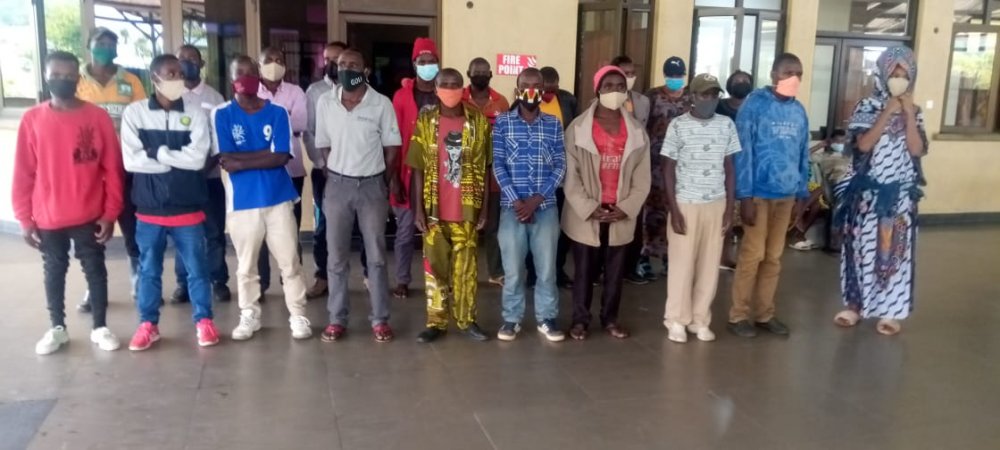
The Rwandans who arrived on Friday around 2p.m were evicted after spending days in the country’s detention facilities.
Upon arrival, the deportees were tested for COVID-19 and received emergency assistance.
Rwanda has received over 50 nationals deported from Uganda since December 2021.
Uganda accuses them of spying for Rwanda yet sources reveal that they are often detained and tortured after refusing to join RNC terror group intending to destabilize Rwanda’s security.
The recent deportation follows series of circumstances under which Uganda has been expelling Rwandans after enduring torture in its detention facilities accusing them of being spies yet they had traveled to the country to run businesses or visit relatives among other reasons.
Rwanda, Uganda relations worsened since 2017. Rwanda has been expressing concerns over Rwandans who travel to Uganda for business purposes but are abducted, imprisoned and tortured accused of being spies.
Rwanda also accuses Uganda of hosting dissidents posing threat to national security.
In March 2019, the Government of Rwanda officially advised citizens not to travel to Uganda for their security following testimonies of over 1000 Rwandans tortured and deported from Uganda.
In August 2019, President Yoweri Museveni of Uganda and his Rwandan counterpart, Paul Kagame signed memorandum of understanding ‘Luanda Agreement’ in a bid to solve conflicts between both countries.
Despite efforts to sign the agreement between both heads of state witnessed by mediators including the President of Angola, Joao Lourenço and Felix Tshisekedi of the Democratic Republic of Congo (DRC), the situation is still worsening as Uganda continues with arbitrary detention of Rwandans who are subjected to torture in its facilities.
The Eastern region Police spokesperson, Chief Inspector of Police(CIP) Hamduni Twizeyimana said that Police and local leaders first arrested four suspected illegal mineral traders in Rwimishinya Cell with 107kgs of cassiterite.
“The four people, who were reported by residents, disclosed after their arrest that they bought the minerals from a group of illegal miners. They then led Police and local leaders to the villages of Kinunga and Karagari also in Rwimishinya cell, Rukara sector where 11 people were arrested in residents’ farms where they were digging in search for minerals,” CIP Twizeyimana said.
The 11 people belong to a group of illegal miners that calls itself Imparata.
Article 54 of the law N° 58/2018 of 13/08/2018 on mining and quarry operations, states that; any person, who undertakes mineral or quarry exploration, exploitation, processing or trading without a licence, commits an offence.
Upon conviction, the offender is liable to imprisonment for a term of between two and six months and a fine of not less than Rwf1 million and not more than Rwf5 million or only one of these penalties.
The court also orders confiscation of any seized minerals or quarry in storage, trading or processing without a license.
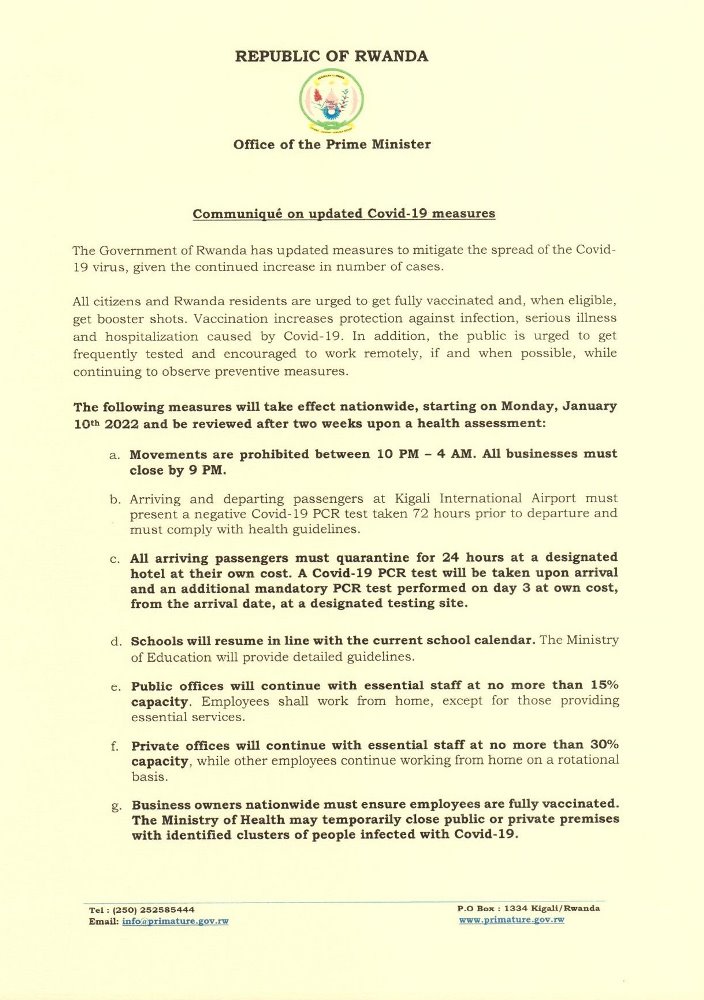
The revised measures feature no adjustments on curfew hours and requirements for incoming and departing passengers who must present negative COVID-19 PCR test results taken in 72 hours.
Among others, all arriving passengers must quarantine for 24 hours at a designated hotel at their own cost.
The statement also reads that schools will resume in line with the current school calendar. Public offices will continue with essential staff at no more than 15% capacity while private offices must not exceed 30% capacity.
Business owners have been also ordered to ensure that employees are fully vaccinated.
“The Ministry of Health may temporarily close private or public premises with identified clusters of people infected with COVID-19,” reads part of the communiqué.
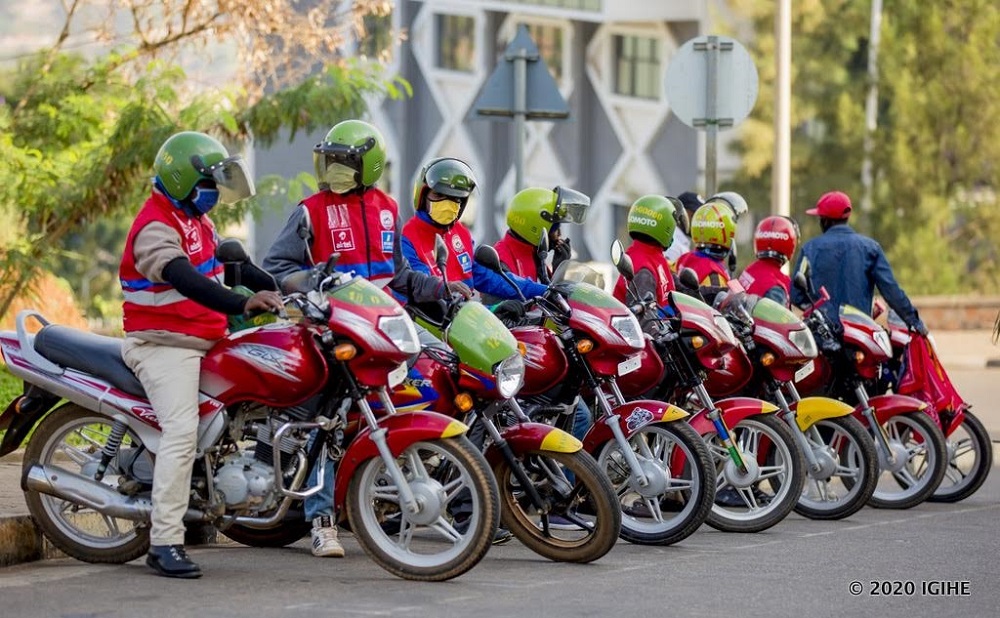
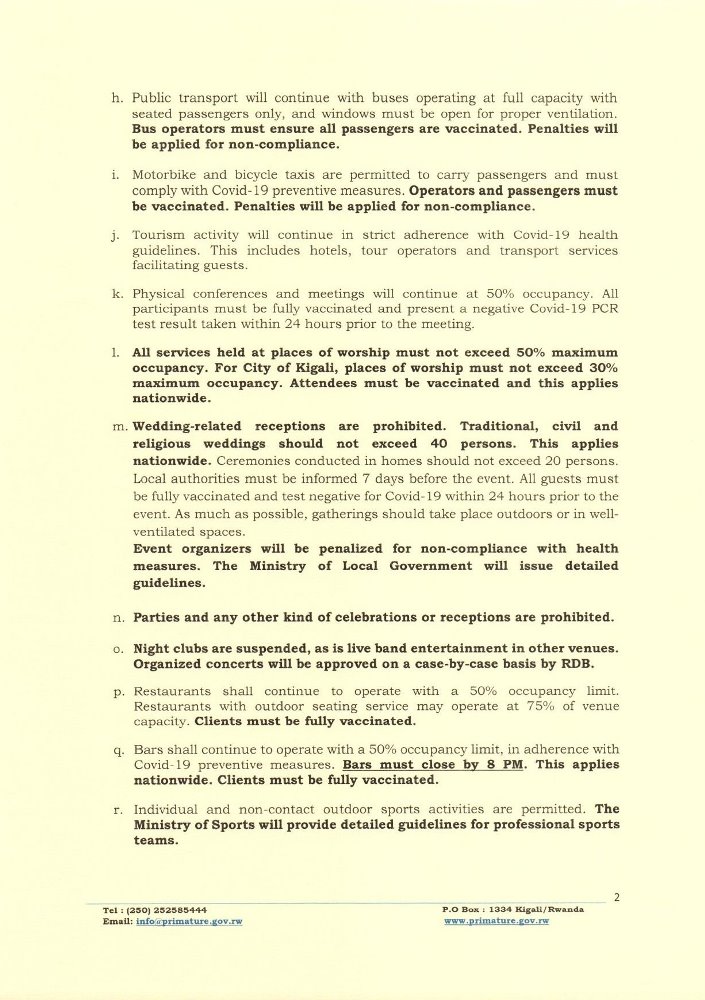
Public bus operators have been urged to ensure that all passengers onboard are vaccinated. The same directive applies to motorcyclists and cyclists.
“Motorbike and bicycle taxis are permitted to carry passengers and must comply with COVID-19 preventive measures. Operators and passengers must be vaccinated. Penalties will be applied for non-compliance.”
All services held at places of worship must not exceed 30% of maximum occupancy in the City of Kigali and 50% in other parts of the country. All attendees are required to be vaccinated against COVID-19.
These measures take effect from 10th January 2022.
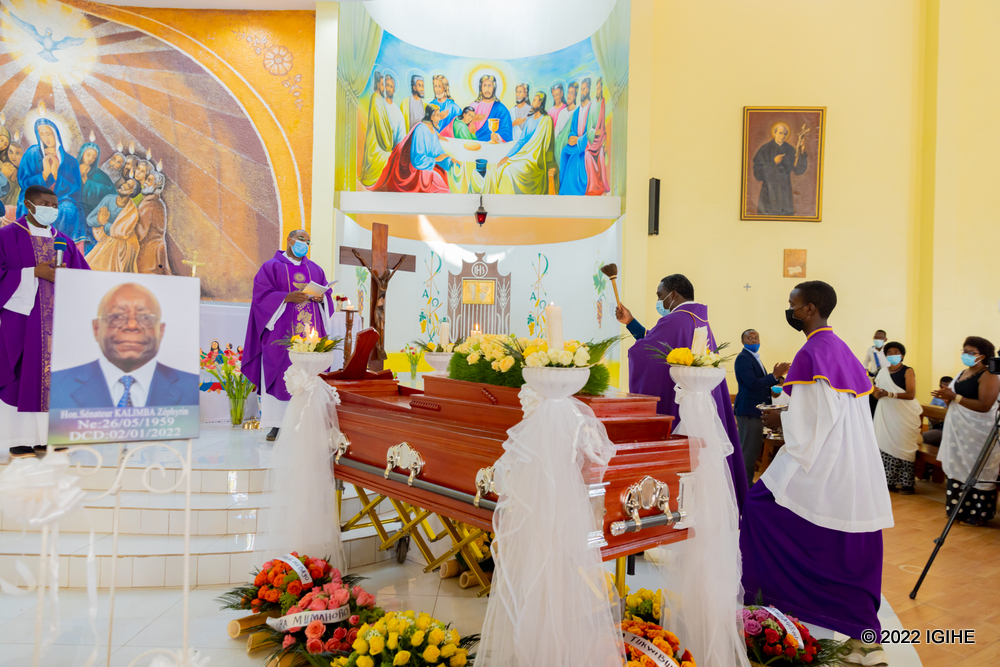
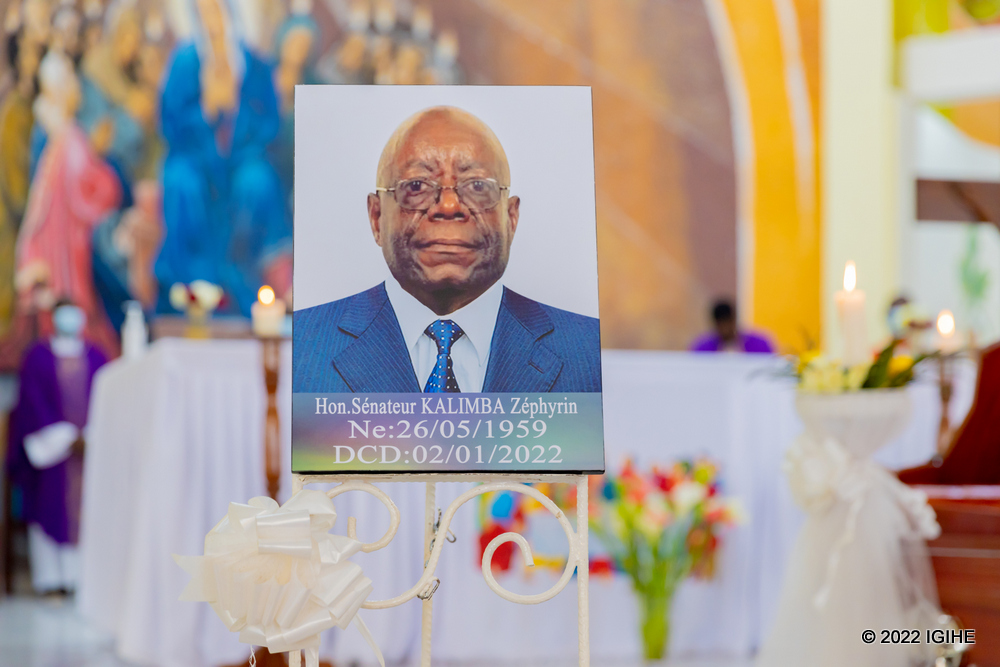
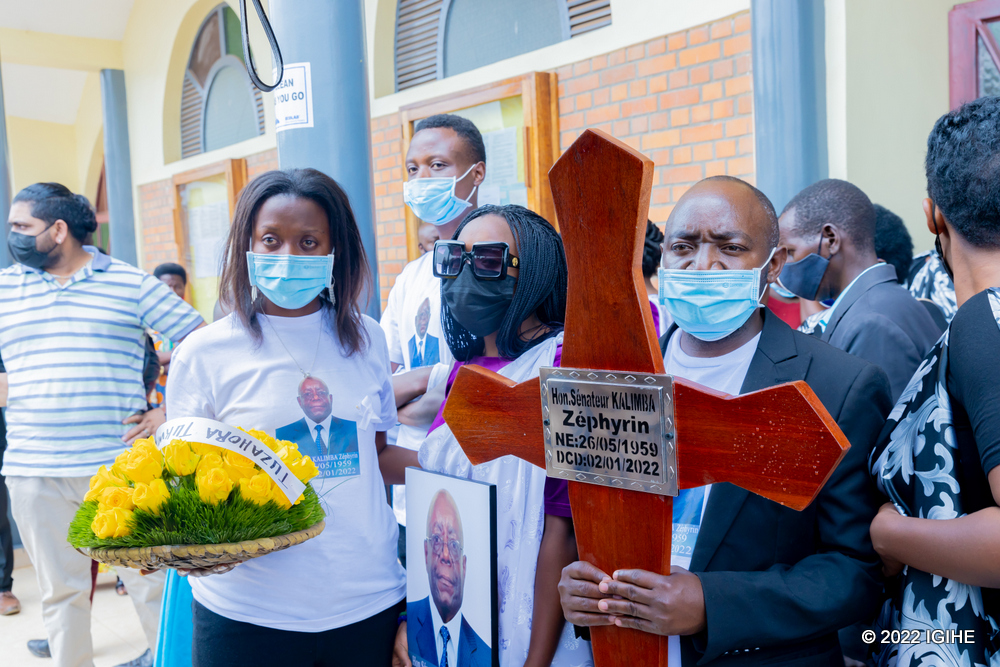
Kalimba who breathed the last on 2nd January 2022 succumbing to natural cause at King Faysal Hospital was laid to rest on Thursday 6th January.
The ceremony to bid last farewell took place at his home in Gikondo, Kicukiro district followed by a requiem mass at Gikondo Parish before laying him to rest.
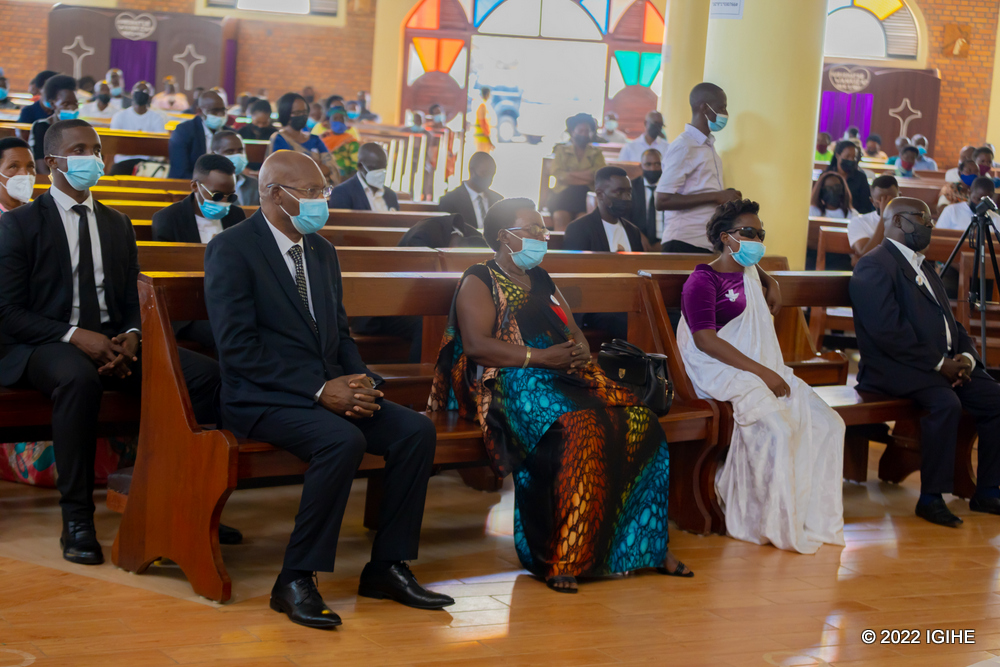
It was attended by relatives, friends and Government officials who reflected on virtues that characterized Kalimba and wished him Eternal Rest In Peace.
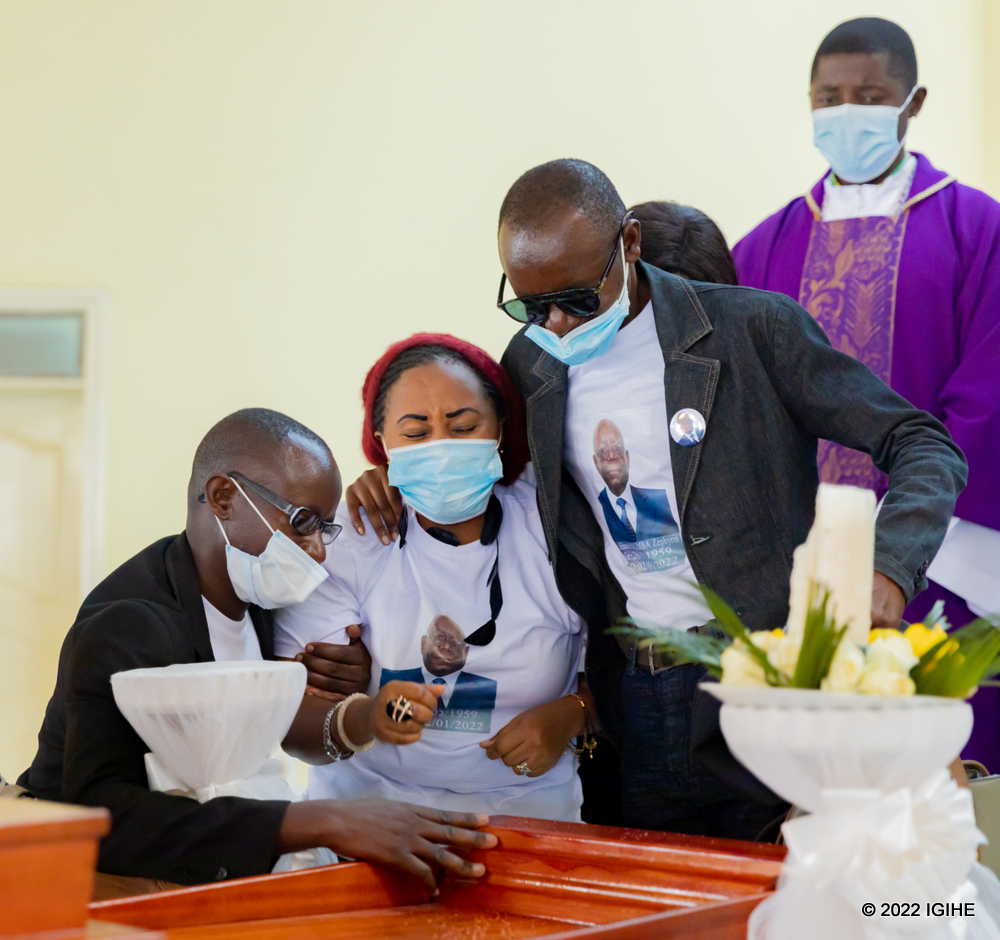
Eugenie Kantore, the wife of late Kalimba said that her husband will always be remembered as a brave man who always lived in harmony with relatives and neighbors.
She also revealed that Kalimba was a humble man who loved God and warmly welcomed all guests including children and the elderly.
Kalimba’s son also disclosed that his father was social interactive and would make possible efforts to live with everyone in peace.
“ I am convinced that he leaves a good legacy which we pledged to uphold. He did not only do good things for our family but also changed many people’s lives. My father’s legacy will continue to live on,” he said.
Kantore revealed that her husband fell sick when he was still serving the Senate.
“He was hospitalized for a long time but we are thankful that God extended his lifespan until the day he breathed the last,” she said.
Kalimba will also be membered as an activist who advocated for human rights, particularly, the rights of historically marginalized people.
The President of Senate, Dr. Augustin Iyamuremye said that Kalimba was a zealous man with outstanding contribution to national development.
“Here, I stand as one of officials who worked with him. I was lucky to meet him before working together at the Senate. I remember how truthful he was,” he noted.
“I would like to tell everyone gathered here that Kalimba used to share strong ideas at the Senate. We have made it a routine to note down individual’s ideas at the Senate. His speech will be remembered,” added Dr. Iyamuremye.
He revealed that the senate will make possible efforts to follow up his advocacy for people with vulnerable backgrounds.
{{Brief history}}
Zéphyrin Kalimbawas born on 26th May 1959.
He held different positions before and after the 1994 Genocide against the Tutsi.
Kalimba worked for gendarmerie, para-military policing unit during the pre-Genocide period and led the Rwandese Community of Potters.
Kalimba is among activists who advocated for the rights of historically marginalized people.
He headed the International Alliance of Indigenous and Tribal Peoples of the Tropical Forests in 1997.
Kalimba was among eight senators appointed by President of the Republic in 2012 and held the position until his tenure ended in 2020.
He was born in Ruhango district in Southern Province where he studied and pursued secondary education at Karubanda Junior Seminary.
In 1978, he became a gendarme (paramilitary police officer) at the regime of President Juvenal Habyarima for four years and eight months and later worked in the Ministry of Trade and Industry.
Kalimba later founded associations that advocated for human rights, particularly, the historically marginalized people.
He also established different schools and organizations supporting people with vulnerable backgrounds particularly historically marginalized ones.
Zéphyrin Kalimba died at the age of 63. He leaves a woman, 10 children and 10 grand children.
It is said that the child was seen falling ion the pond by a young girl aged 19 who alerted residents.
According to sources, efforts to save his life remained futile as they retrieved him dead.
Irène Gasengayire, the sector official in charge of finance and administration has said that relevant authorities have launched investigation into the case.
Residents have been urged to stay closer with their children to avoid incidents that could lead to loss of life.
The one meter deep pond is often used by residents fetching water for use in construction activities.
Jean Damascene Habiyaremye was intercepted on Wednesday, January 5, in Gakenke village, Rusagara cell, Gakenke sector with the outlawed non-biodegrable products, which he had concealed in a sack of potatoes.
He was reported by residents as he was boarding a public bus to City of Kigali where he intended to supply the plastic bags, according to Chief Inspector of Police (CIP) Alex Ndayisenga, the Regional Police Civic Education Officer (RPCEO) for the Northern Province.
“Residents of Rusagara have been seeing Habiyaremye for the past two days with the same sack trying to board public buses to Kigali, which raised their suspicions and called the Police. When Police officers searched his sack, they recovered over 2000 pieces of polythene bags covered with potatoes leading to his arrest,” said CIP Ndayisenga.
After his arrest, Habiyaremye disclosed that he was buying the plastic bags from dealers in Kamubuga also in Gakenke District.
He added that his alleged suppliers traffic the outlawed bags from Uganda.
CIP Ndayisenga warned against selling outlawed products especially plastic bags which pose negative effects to the environment.
The suspect was handed over to RIB at Gakenke station for further legal process.
Manufacturing, use, importation or sale of plastic carry bags and single-use plastic items are prohibited under article 3 of law N° 17/2019 of 10/08/2019 relating to the prohibition of manufacturing, importation, use, and sale of plastic carry bags and single-use plastic items in Rwanda.
In article 10, any person, who imports plastic carry bags and single-use plastic items is liable to the dispossession of those plastic carry bags and such items, and to an administrative fine equivalent to ten times the value of those plastic carry bags and single-use plastic items.
In article 11, a wholesaler of plastic carry bags and single use plastic items is liable to an administrative fine of Rwf700, 000 and dispossession of those plastic carry bags and such items.
In article 12, a retailer of plastic carry bags and single-use plastic items is liable to an administrative fine of Rwf300, 000 and dispossession of those plastic carry bags and such items.
The IGNITE Food Systems Challenge is a first-of-its-kind initiative to support Rwandan start-ups, small and medium enterprises (SMEs) and cooperatives to scale up their solutions, contributing to the economy while addressing different gaps in the food system. The call for applications opened on 5th January 2022 and will close on 4th February 2022.
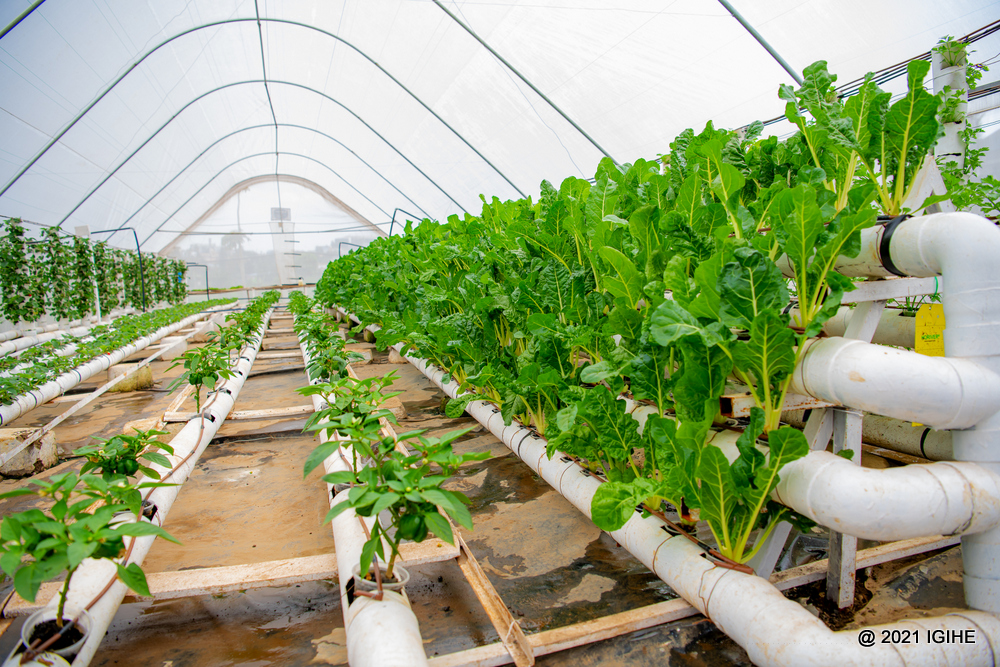
The programme seeks innovative solutions that contribute to food security in areas such as resilience to shocks and stress, access to safe and nutritious food, improved food supply chains, the empowerment of smallholder farmers, and the advancement of food security for all. Selected ventures will have the opportunity to receive grant funding of up to US$50,000 as well as 6 months acceleration support, including connections to experts, mentors and partners, and other tailored support to address business gaps.
The IGNITE Food Systems Challenge will be simultaneously running in Rwanda, South Sudan and Uganda, and is being made possible with the support of US$2 million from USAID. The initiative comes at a time of worsening food insecurity in the region due to the effects of climate change, natural disasters like droughts, floods, locusts, and the COVID-19 pandemic among others.
Commenting on the development, Mr Jeremie Pigé, the head of the WFP IGNITE Innovation Hub for Eastern Africa said that the biggest challenge for many entrepreneurs in Eastern Africa is not only access to funding, but also technical support that furthers their concepts.
“Through this generous support by USAID, we are confident that we will be able to reach many bright and talented entrepreneurs in the region who might have been left behind,” he noted.
Piloting, implementing and scaling innovative ideas lies at the heart of WFP and Impact Hub Kigali’s work. This programme is expected to have an impact on promoting innovation in the food systems and advancing efforts towards achieving zero hunger in the world.
Mafer Betancourt, the Managing Director of Impact Hub Kigali also underscored that the IGNITE Food Systems Challenge will help to provide tailored support for local entrepreneurs to scale their impact in the Rwandan food system.
“Ventures will undergo diagnostics at the start of the programme and will be able to co-design their own acceleration journey, indicating the support they require, from coaching to peer and expert support such as legal or accounting services, among others,” he said.
The country has not been registering five deaths in one day for quite some time.
The statement released last night also shows that 1066 people have caught the virus bringing the total number of positive cases to 8053 in seven days.
Rwanda confirmed the first case of COVID-19 on 14th March 2020. Since then, 117,123 people have been tested positive out of 4,093,759 sample tests while 1362 succumbed to the pandemic.
In a bid to mitigate effects of the pandemic, Rwanda has ramped up vaccination efforts where a total of 5, 55,134 have been fully inoculated.
Citizens are also reminded of the critical importance of continuing to adhere to preventive measures including social distancing, washing hands and properly wearing face masks among others.