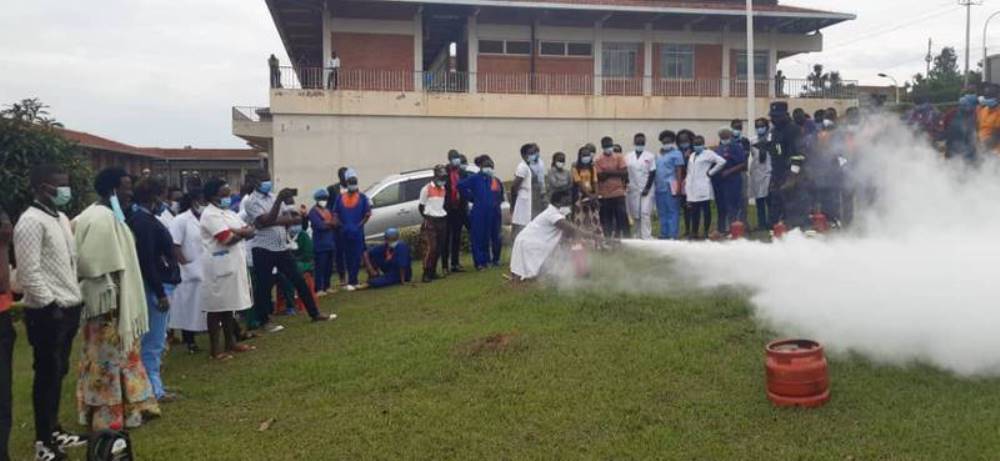
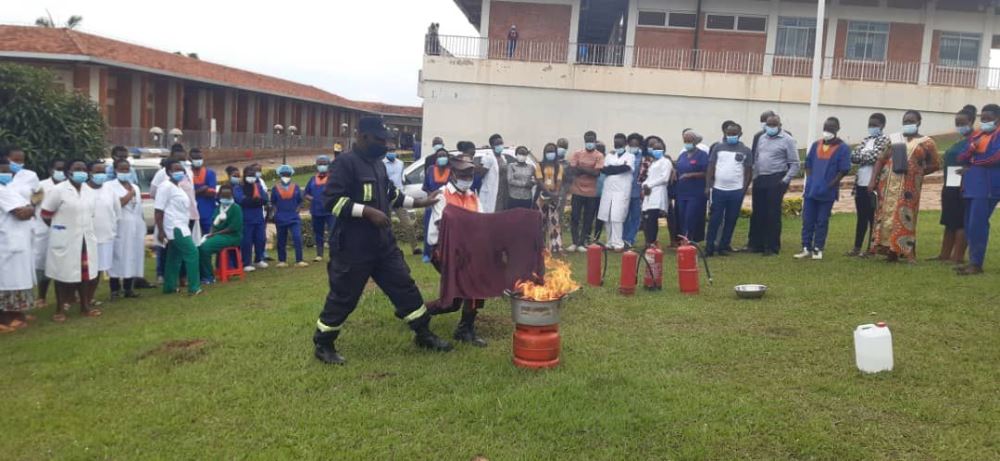
Participants in the one-day training held on Monday, January 17, include medical workers, administration staff, cleaners and security guards.
The training is part of Police initiative to extend knowledge and skills to different institutions and groups on fire safety to fight prevent fire outbreak.
“These trainings targeting employees in public and private entities including hospitals, and other groups to will go a long way to enlighten people’s understanding on how to prevent fire outbreak or to fight it in emergency times. It is all about preventing loss of lives and property,” said the Commanding Officer for FRB, Assistant Commissioner of Police (ACP) Paul Gatambira.
“Masaka hospital staff, like in other institutions trained, were introduced to the causes and components of fire, evacuation procedures, fire drills along with demonstration on how to fight fires using different types of gadgets including the fire blanket, sand and portable fire extinguishers,” said ACP Gatambira.
The FRB team also inspected the hospital facilities and advised the management to fix the identified electric installation gaps.
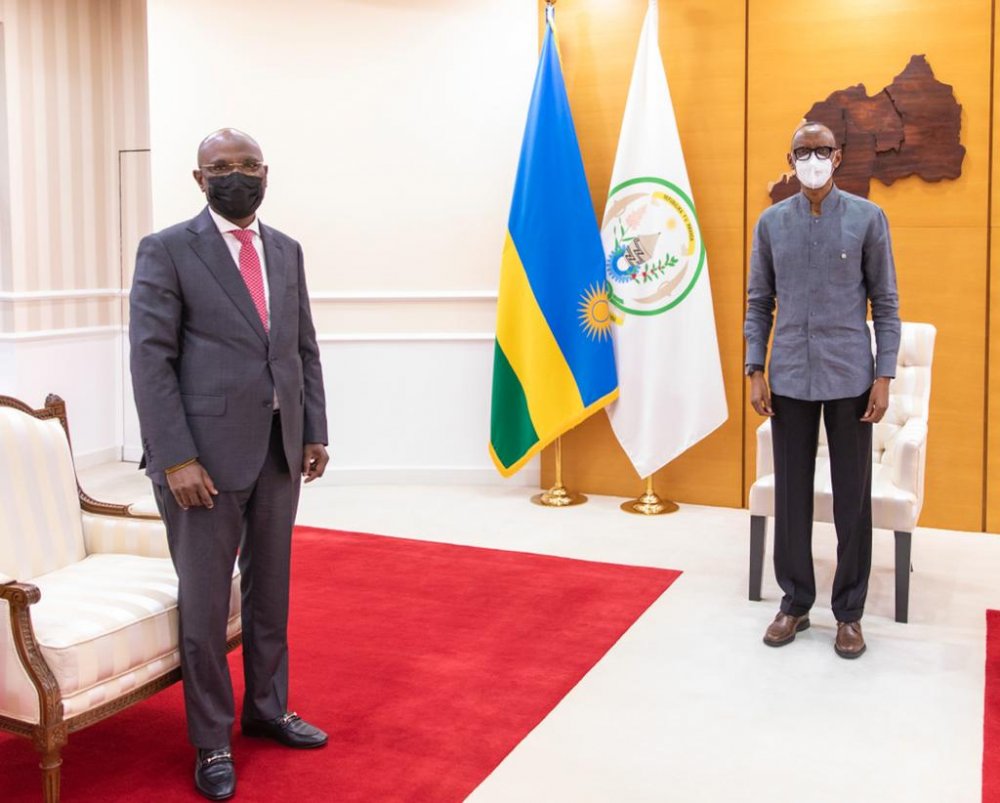
Kagame received Amb. Adonia Ayebare on Monday 17th January 2022 as Rwanda’s Ministry of Foreign Affairs has revealed via Twitter handle.
Political analysts have considered the milestone as a step further towards restoring relations to normal.
Amb. Ayebare was last in Rwanda on 29th December 2019 where he delivered a message from Museveni to his counterpart of Rwanda.
Since then, there has been no significant progress towards normalizing both countries relations.
Rwanda, Uganda relations worsened since 2017. Rwanda has been expressing concerns over Rwandans who travel to Uganda for business purposes but are abducted, imprisoned and tortured accused of being spies.
It is said that some of these Rwandans are tortured after refusing to join rebel groups intending to threaten Rwanda’s security.
Rwanda also accuses Uganda of hosting dissidents posing threat to national security.
In March 2019, the Government of Rwanda officially advised citizens not to travel to Uganda for their security following testimonies of over 1000 Rwandans tortured and deported from Uganda.
Rwanda has been explaining that it has no interests in supporting rebels posing threat to Uganda adding that there no Ugandans illegally detained in Rwanda.
In August 2019, President Yoweri Museveni of Uganda and his Rwandan counterpart, Paul Kagame signed memorandum of understanding ‘Luanda Agreement’ in a bid to solve conflicts between both countries.
Despite efforts to sign the agreement between both heads of state witnessed by mediators including the President of Angola, Joao Lourenço and Felix Tshisekedi of the Democratic Republic of Congo (DRC), the situation is still worsening as Uganda continues with arbitrary detention of Rwandans who are subjected to torture in its facilities.
Since the beginning of 2022, Rwanda has received over 50 nationals deported from Uganda. They were dumped at different borders connecting both countries.
The Minister of State in charge of Primary Healthcare, Dr. Tharcisse Mpunga has said that the situation might return to normal in case the country doesn’t register new variants of COVID-19.
Dr. Mpunga made the revelation during a press conference held on 15th January 2022 where he explained that the sharp decrease in new positive cases registered between 3rd and 14th January might be considered to ease COVID-19 related restrictions.
The report of the Ministry of Health released on 16th January 2022 indicates that the positivity rate stands at 3.2% from 5.1% recorded between 4th and 10th January 2022.
The percentage was confirmed after 7162 people tested positive out of 147,000 sample tests.
Last week, the country announced plan to inoculate 1.6 million people against COVID-19 in 15 days. Dr. Mpunga has expressed optimism for the situation to be back to normal in consideration of reducing positive cases and increasing number of vaccine recipients.
“The current efforts are promising for life to be back to normal in case the country doesn’t confirm emergence of new variants of COVID-19. Considering the pace at which patients are recovering without falling critically ill following the emergence of Omicron variant and developed higher level of immunity among vaccine recipients; there is optimism that measures will be eased if the number of vaccinated people goes higher,” he said.
Dr. Mpunga further revealed that the country did not register a large number of critically ill patients after the confirmation of new variant of COVID-19 in December 2021.
As at 15th January 2021, Rwanda reported 11 admitted COVID-19 patients out of more than 4,000 people who tested positive.
The decline in critically ill patients is mainly attributed to increasing number of vaccine recipients where close to 8 million people have received the first dose, over 6 million received two doses while more than 600,000 received the booster jab.
Rwanda targets to vaccinate 70% of its population by July 2022.
[The current COVID-19 preventive measures were instituted on 7th January 2022.->https://en.igihe.com/news/article/rwanda-makes-covid-19-vaccination-mandatory-for-motorcyclists-passengers]
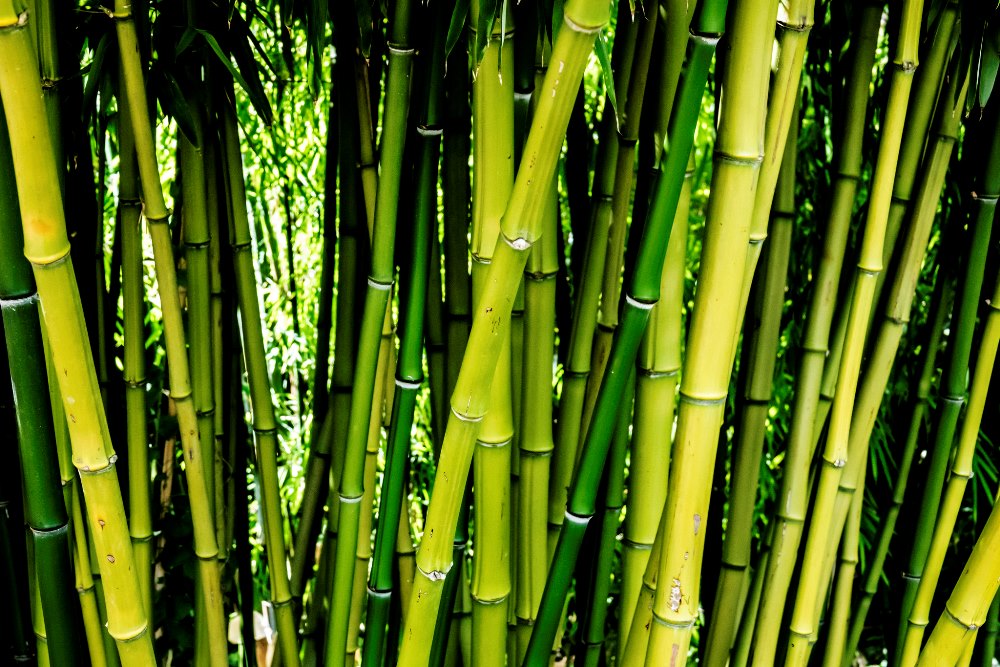
The bamboo processing (furniture making and weaving) training center is located in Masaka Incubation Business Center, in Masaka sector, Kicukiro district of Kigali, the Rwandan capital, where the young people have witnessed the processing of bamboo products.
Chinese experts of the China-Aid Rwanda Bamboo Team have been undertaking training projects about bamboo cultivation, processing and utilization in Rwanda since 2009.
“The Chinese experts introduced bamboo cultivation and processing in our country. They supported us with bamboo processing equipment and trained us on how to cultivate bamboo, harvest it and process it into final products for home use such as furniture, baskets, lamp holders, decorations, toothpicks and among others,” Irenee Gumyushime, one of the students at the center, told Xinhua in an exclusive interview.
He said that bamboo processing has enabled him and his colleagues to acquire the necessary skills and expertise to be self-employed which is a key factor in reducing youth unemployment in the country.
“The Chinese experts taught us bamboo processing skills and I am now an expert in furniture making. I am also a trainer at the center. I thank the Chinese experts for their efforts in making our lives better through this training,” said Gumyushime.
He pointed out that they are now facing a challenge of getting new equipment for bamboo processing, because the existing equipment is old and worn-out, saying that the China-Aid Rwanda which has been supporting them has since phased out.
Gumyushime said that there are 20 students at the center engaged in bamboo processing and among those, nine are women.
According to him, students at the center are capable of producing various types of furniture for home and office, or other areas and there is already a market for bamboo products in Rwanda.
“From bamboo processing, I am able to earn income to sustain my livelihood and at the same time I am saving the environment,” said Gumyushime.
Jean de Dieu Niyonkuru, another student at the center, told Xinhua that he specializes in bamboo furniture making after learning from Chinese bamboo processing experts.
“I joined this center in 2015 where I was trained by the Chinese experts in bamboo processing for a period of six months. I also spent another three months on hands-on training while receiving mentorship support from the Chinese,” said Niyonkuru.
“The Chinese also offered me an opportunity to go to China to get further training on bamboo processing. I am now doing very well. There is good business in bamboo products.”
Niyonkuru attributes all his success in bamboo furniture making to great expertise training by the Chinese experts.
“All my home furniture, arts and crafts are made in bamboo because I have a great passion for bamboo products. My livelihood depends on bamboo processing. I thank the Chinese for supporting me and my colleagues to improve our livelihoods through bamboo processing,” said Niyonkuru.
Speaking to Xinhua, Yu Qinhong, a Chinese expert at the center, said that he has trained Rwandan students at the center on how to make quality products from bamboo to attract more customers.
“Rwanda is suitable for developing the bamboo industry. They have bamboo raw materials and a large population of young people and Rwandans like the bamboo products,” said Yu.
Yu reckoned that Rwanda’s dry climate is favorable for bamboo furniture, which keeps the mold away from the bamboo furniture.
“I am happy to see the fruit of China-aid work that the bamboo production and weaving develop into an industry which allows more young people to earn money.”
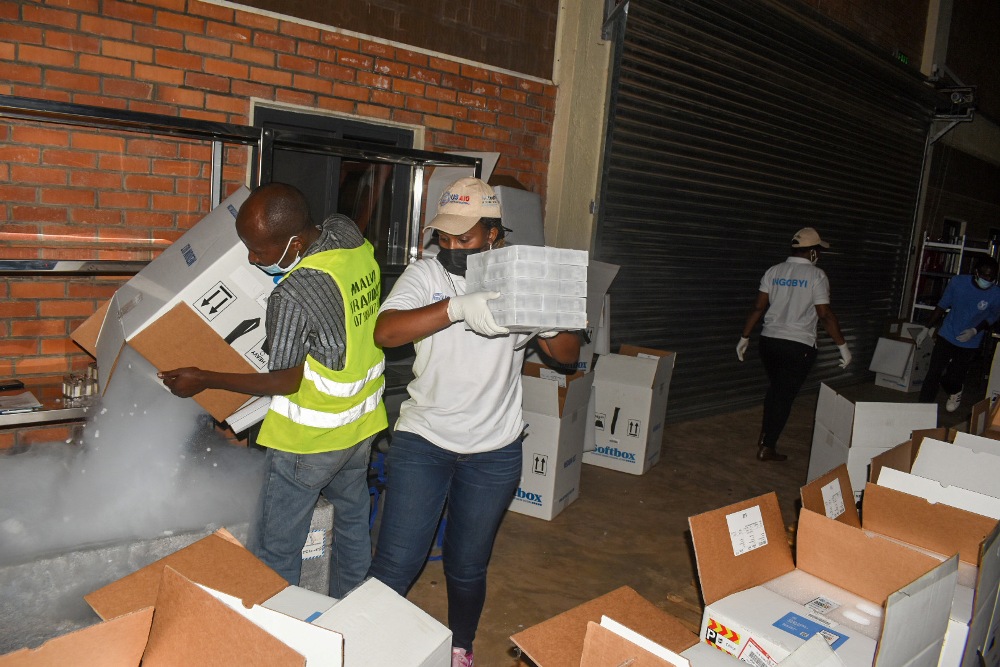
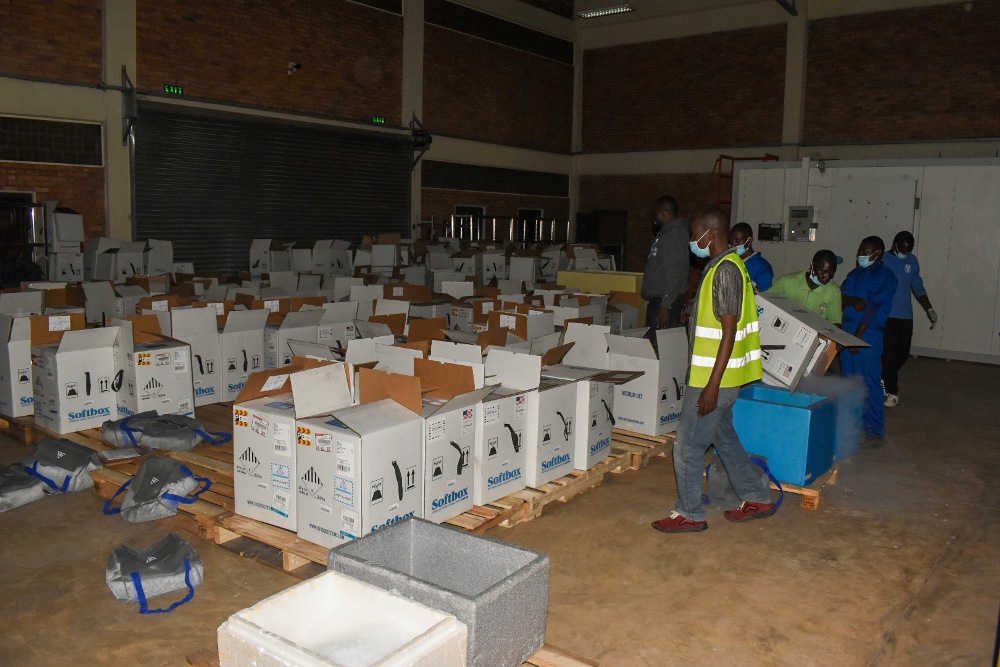
With the latest shipment of Pfizer vaccine doses that arrived at Kigali International Airport on Saturday 15th January 2022, the contribution of US to Rwanda’s response to COVID-19 has reached Rwf28 billion.
Following the delivery of new doses, the US Ambassador in Rwanda, Peter H. Vrooman said that his country is honored to continue partnership with Rwanda to defeat the pandemic.
“4 Million vaccine doses! With last night’s new shipment of more than 1 million doses, the United States celebrates with Rwanda our continued partnership to fight COVID-19,” he tweeted on Sunday.
So far, US has donated a total of 4,296,450 COVID-19 vaccine doses to Rwanda.
Since the start of the pandemic, the United States has stood side-by-side with the Rwandan people committing nearly Rwf30 billion to combat COVID-19. The United States has pledged to donate at least 1.1 billion doses of COVID-19 doses globally by 2023.
US has also helped Rwanda to renovate three hospitals, donated Personal Protective Equipment (PPE) and medical supplies, X-ray machines, and other equipment to fight COVID-19.
Other US COVID-19 support to Rwanda include state-of-the-art ventilators; construction of handwashing stations across Rwanda; public communications to fight COVID-19; vehicles to support contact tracing; patient monitors, hospital beds, and intensive care unit equipment; and other supplies such as biohazard bags, alcohol and hand washing soap.
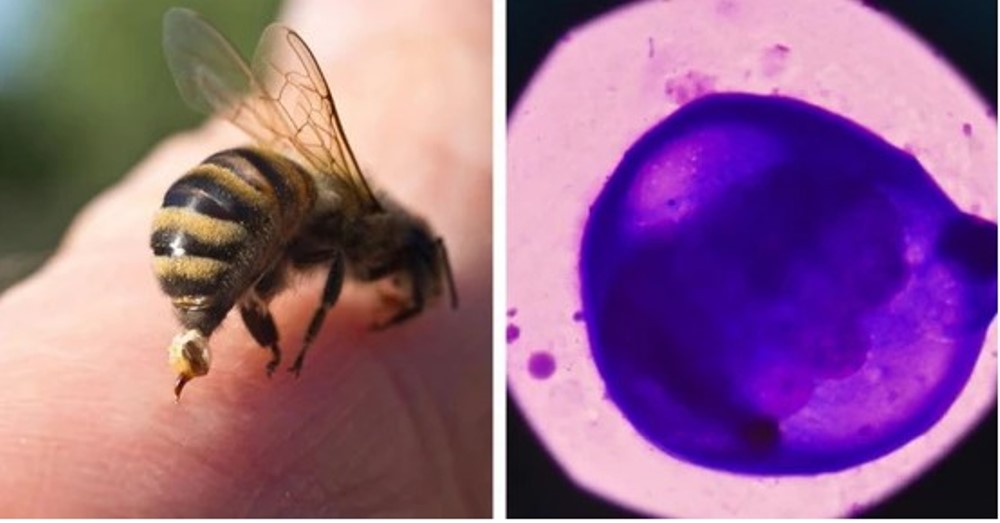
Scientists at the Harry Perkins Institute of Medical Research in Western Australia tested venom from more than 300 honeybees and bumblebees against two types of aggressive, hard to treat breast cancer: triple negative and human epidermal growth factor receptor 2 (HER2) enriched.
They found that a compound in the venom called melittin could destroy breast cancer cells within an hour, without causing harm to other cells. They also found that when used in conjunction with chemotherapy drugs, the melittin helped formed pores in the cancer cell membrane which could potentially allow therapies to better penetrate the cells.
While the tests for this study were only done in a lab setting, the researchers believe the compound can be synthetically reproduced as a treatment for breast cancer.
Dr. Marilena Tauro, a breast cancer researcher at Moffitt Cancer Center, says while the discovery is impressive, more research would need to be done before it could become a viable therapy. “The good news is this study has shown that melittin can disrupt signaling pathways in breast cancer cells that are responsible for growth and spread of the disease,” she said. “However, there have been many studies where compounds have proved successful at killing cancer cells in the lab or animal models, but it has taken many years for those discoveries make it to patients, if at all.”
Tauro added that approximately half of all current drugs are derived from natural products, which demonstrates the potential of using bee venom for drug discovery.
“Nature is a great supplier of active elements and chemical synthesis has made it possible to provide many drugs of natural origin in the dosage required for therapeutic use, despite the often very limited supply from their original sources,” she said.
Gakiza, who was arrested Saturday, January 15, was at the time traveling in a bus when it was stopped and searched in Gihinga Village, Gisiza Cell in Musasa Sector along Rubavu-Karongi highway.
The Western region Police spokesperson, Chief Inspector of Police (CIP) Bonaventure Twizere Karekezi, said that the arrest of Gakiza is part of the ongoing Police operations targeting drug dealers and smugglers.
“Majority of the smugglers and drug traffickers use Rubavu-Karongi via Rutsiro highway. On Saturday, at a check point mounted in Gihinga Village, Police officers while searching vehicles, they recovered a bundle containing 808 rolls of cannabis under one of the seats belonging to Gakiza, in the bus that she was traveling in en-route to Karongi. Gakiza was immediately arrested,” CIP Karekezi said.
Gakire did not disclose where she got the narcotics or where he was going to supply them. He was handed over to RIB at Gihango station for further investigations.
CIP Karekezi advised people engaged in drug related crimes to think of better business alternative instead of wasting their future in prison.
Art 3 of the Ministerial order nº 001/moh/2019 of 04/03/2019 establishing the list of narcotic drugs and their categorisation classifies cannabis in the category of very severe narcotics.
Article 263 of the law No. 68/2018 of 30/08/2018 determining offences and penalties in general states that any person who, unlawfully produces, transforms, transports, stores, gives to another or who sells narcotic drugs and psychotropic substances, commits an offence.
In case of “very severe narcotic drugs” the offender is liable to between 20 years and life imprisonment and a fine of between Rwf20 million and Rwf30 million.
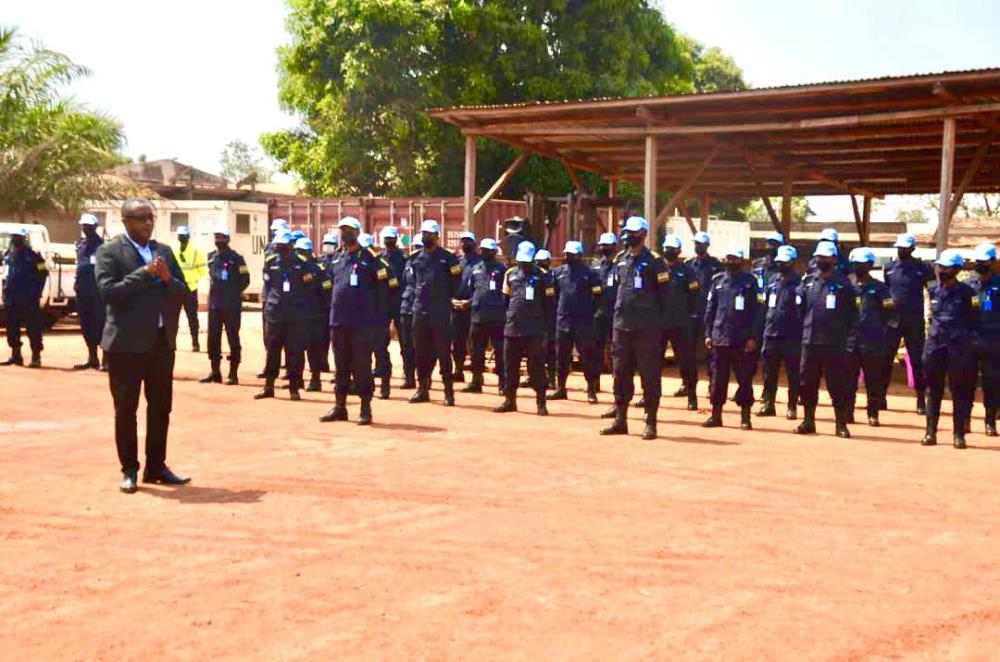
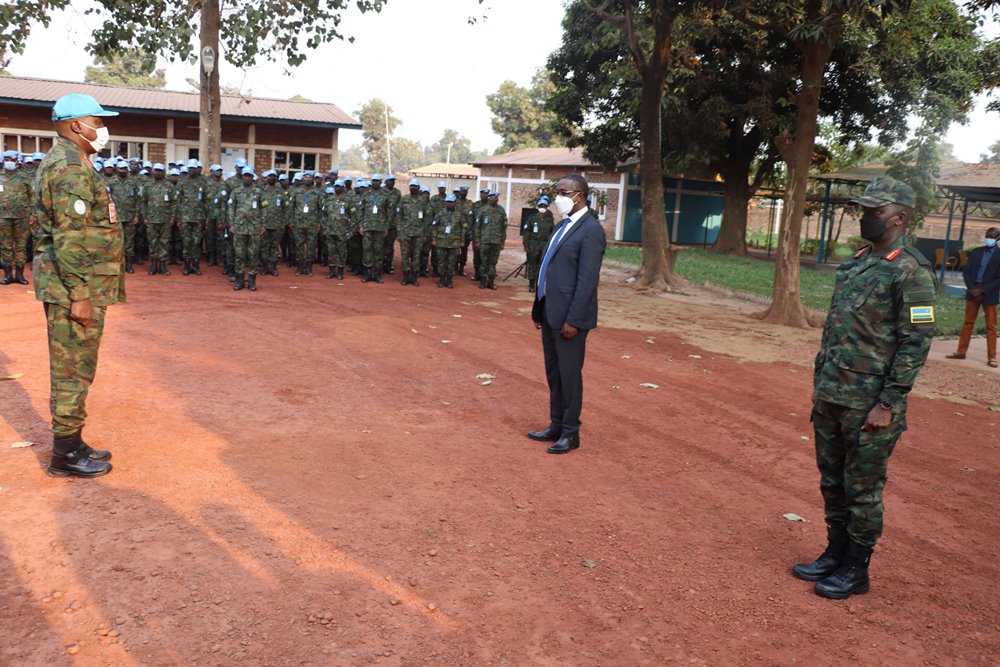
Minister Biruta who briefed officers of Rwanda Formed Police Unit One (FPU-1) and the Protection Support Unit (PSU), delivered a message from His Excellency Paul Kagame, the President of the Republic of Rwanda thanking them for the selfless service and job well done to represent the country in the international peacekeeping duties.
The Minister was also briefed by the contingent commanders on their core tasks, including protection of civilians, protection of UN personnel and facilities, protection of CAR government official, Special Penal Court judges and MINUSCA high profile personnel as well as escort duties, among others.
He commended all Police officers for the courage, discipline and professionalism demonstrated in accomplishing their assigned tasks.
“Your country and His Excellency the President thanks you for your sacrifice, resilience, and the commitment you continue to demonstrate in accomplishing your mandated tasks. Your professionalism demonstrate the values and the image of Rwanda, which you stand for as ambassadors,” Minister Biruta told the officers.
He further briefed them on Rwanda’s status of cooperation with other countries, which continues to improve.
Minister Biruta also updated them on Rwanda’s strengthened measures against the pandemic of Covid-19, including vaccinating all people aged 12 years and above.
More than six million Rwandans have so far been fully vaccinated against Covid-19.
The Minister challenged the officers to continue to uphold the Rwandan values, maintain discipline and to always strive to raise the Rwandan flag during their tour-of-duty.
Rwanda maintains over 500 police peacekeepers under MINUSCA. The FPU-1 and PSU, each composed of 140 officers, are among the three Rwandan Police contingents deployed in CAR. Another FPU-2 contingent of 180 officers is deployed in Kaga- Bandoro in Nana–Grebizi prefecture about 400 kilometres from the capital Bangui.
The PSU is particularly charged with the protection of the SRSG, his two deputies, the Prime Minister of CAR, President of the National Assembly, Minister of Justice and the Head of MINUSCA Police Component.
Rwanda was the first country to deploy a Police contingent (FPU-1) in CAR in 2014.
The program’s final virtual event took place on January 12th-13th, where the six finalists pitched their concepts to a prestigious jury panel.
The statement released on Friday 14th January 2022 reads that the winners will share a prize fund of €200,000 and receive a year-long mentorship with internal experts from Tommy Hilfiger and from INSEAD, one of the world’s leading and largest graduate business schools. They also secured a place in an INSEAD program that brings people, cultures, and ideas together to cultivate innovative leaders.
More than 430 startups and scaleups from 22 countries submitted their ideas in January 2021 for this initiative, which echoes Tommy Hilfiger’s sustainability vision to Waste Nothing and Welcome All.
This year’s program particularly sought to amplify and support Black, Indigenous and People of Color (BIPOC) entrepreneurs who are working to advance their communities, while fostering a more inclusive future for the fashion industry. For the first time, fans of the TOMMY HILFIGER brand were able to participate in the initial phases of the challenge, where they cast their digital vote to help narrow down the applications to identify the finalists. Alongside Tommy Hilfiger associates at the final event, they were also invited to vote for their favorite pitch to award an additional €15,000 to one of the finalists.
“This empowering challenge brought together passionate and hard-working individuals with fresh ideas on how to create a future of fashion we can all look forward to,” said Tommy Hilfiger. “It was an impressive final event, and I am proud to continue this journey with the entrepreneurs who presented groundbreaking and impactful solutions that challenge how we think, build, and create.”
Lalaland, a Netherlands-based platform that uses artificial intelligence to generate customized and inclusive synthetic models, was awarded €100,000.
“Creating technology that drives a more inclusive and diverse e-commerce platform is at the heart of our vision at Lalaland,” said Michael Musandu, co-founder, and CEO of Lalaland. “Being part of the Tommy Hilfiger Fashion Frontier Challenge brought incredible insights and will elevate our A.I. solution to reach more people than we could have imagined. Through donning this achievement, our team cannot wait to empower a welcoming online shopping experience, so no consumer feels under-represented.”
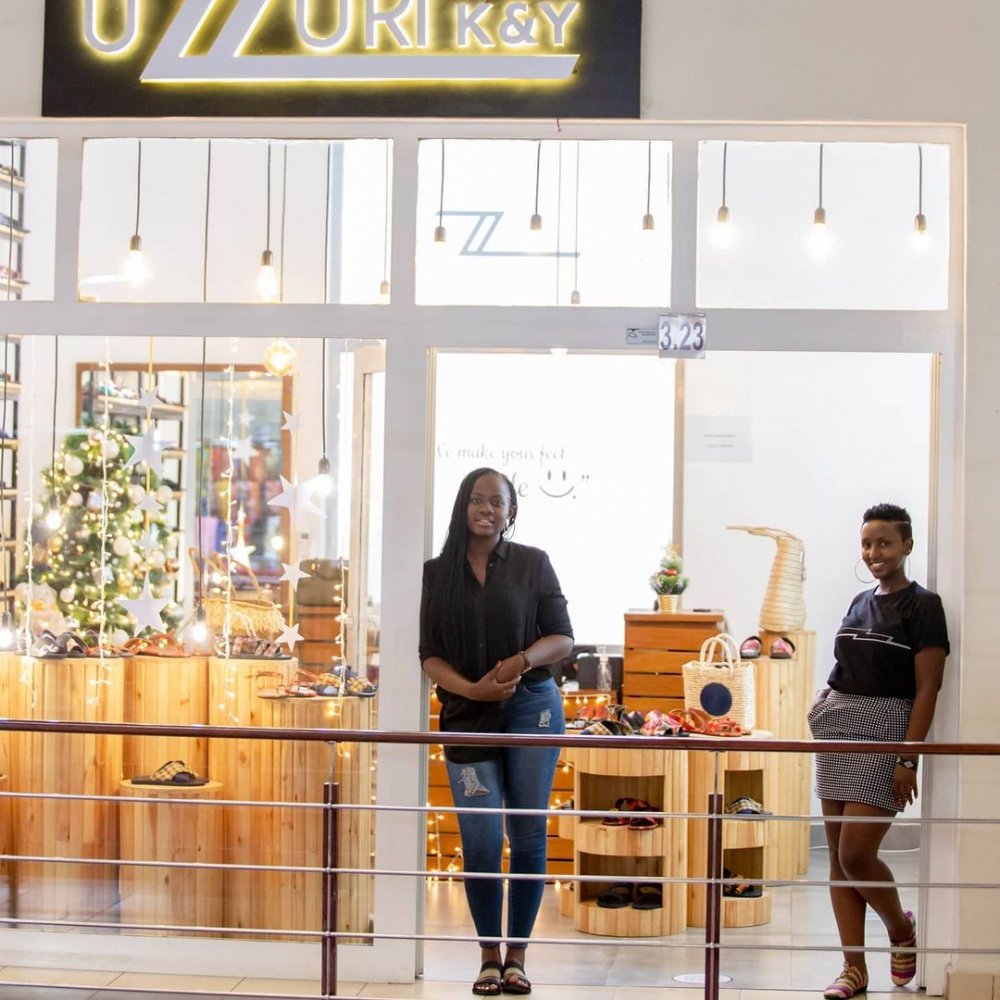
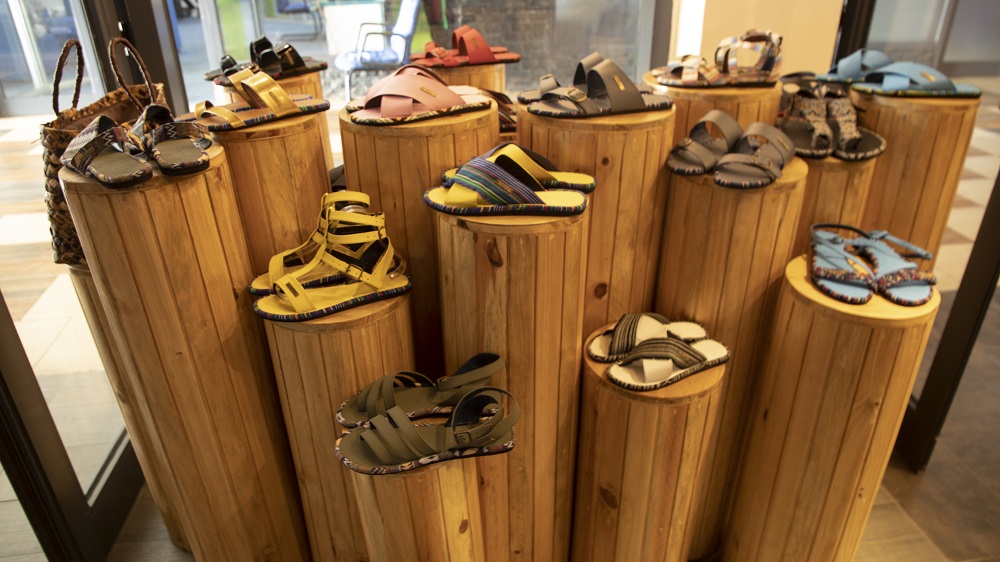
UZURI K&Y, a Rwandan-based eco-friendly shoe brand that uses recycled car tires from sub-Saharan Africa and employs 80 local youth, was also awarded €100,000.
Commenting on the development, Kevine Kagirimpundu, co-founder, and CEO of UZURI K&Y said: “We are honored to be named a winner of the Tommy Hilfiger Fashion Frontier Challenge. This opportunity has provided mentorship, strategic guidance, and given us a platform to share our dream of bringing sustainable footwear options from Africa to the global market. We are dedicated to drive real impact and inspire the youth of today to craft a cleaner future.”
Clothes to Good, a South African-based social enterprise that creates micro-business opportunities and jobs for people with disabilities through textile recycling, was also awarded €15,000.
“We feel blessed to be recognized by the Tommy Hilfiger Fashion Frontier Challenge viewers, it’s an experience we will never forget,” said Tammy Greyling, Operations Director and Occupational Therapist at Clothes to Good. “It’s humbling to know others believe in our dream to really make a difference for people with disabilities and their families. Receiving this award will empower Clothes to Good to continue creating micro-business and job opportunities through textile recycling from the South African community.”
Entries for the next challenge will open in March.
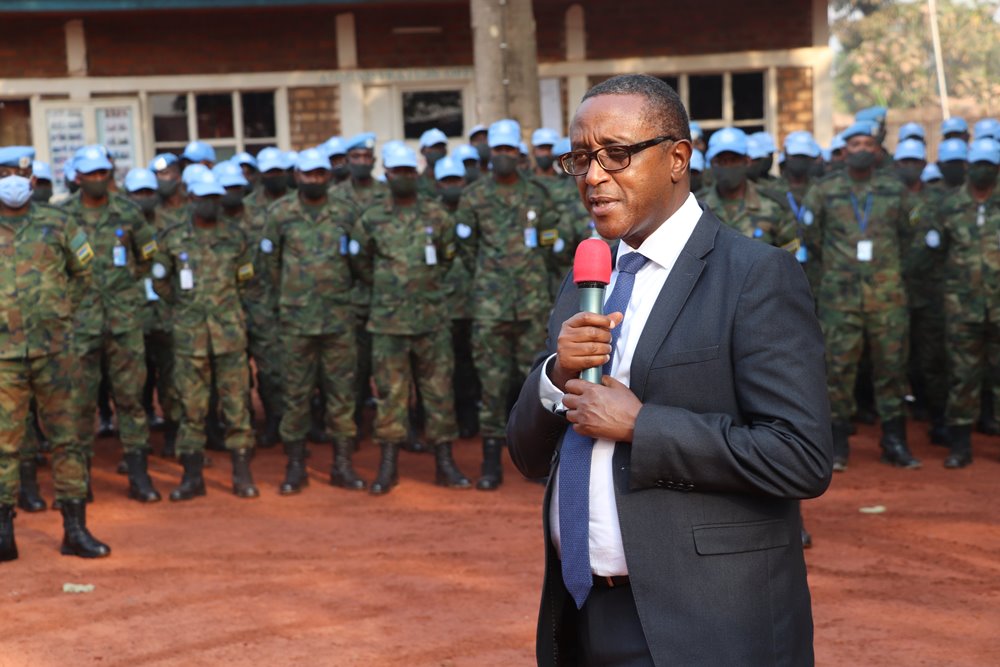
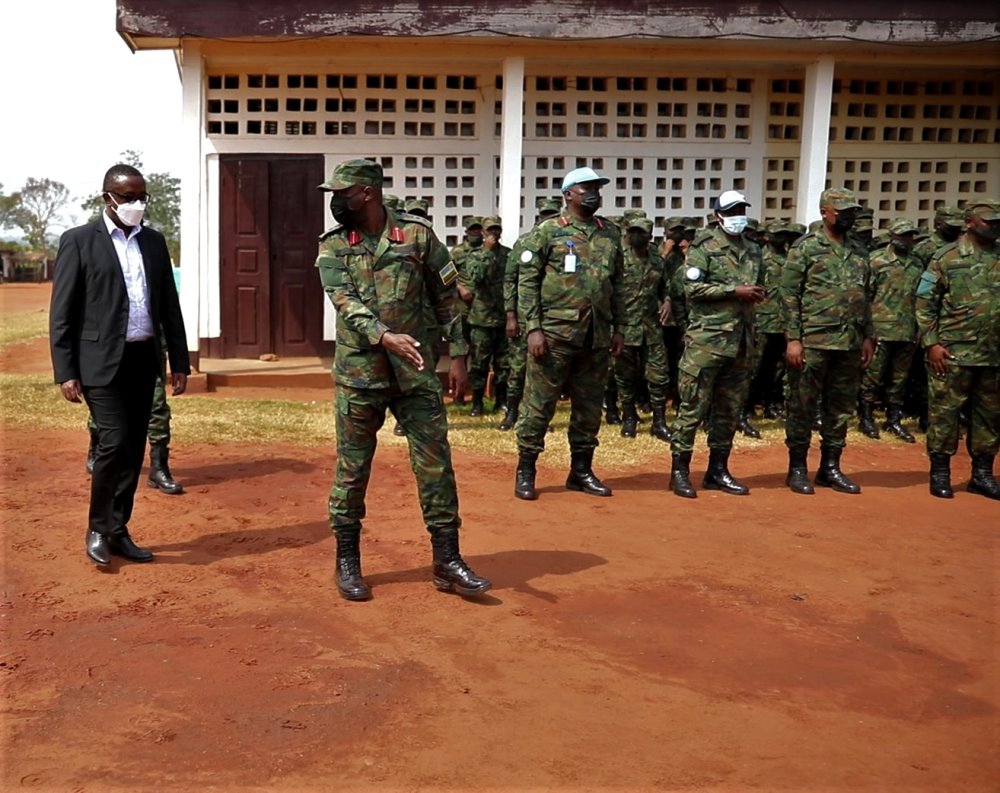
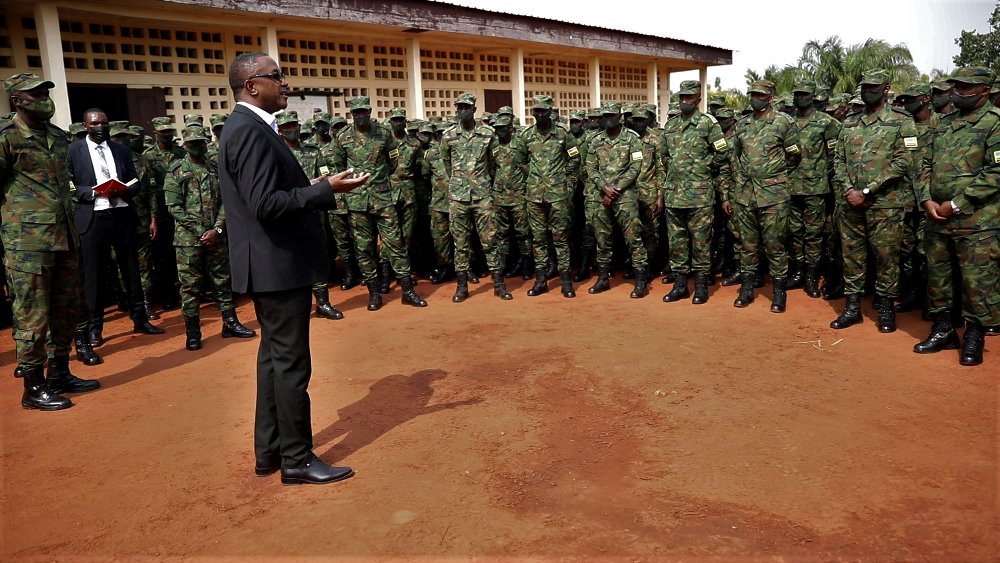
Minister Biruta conveyed a message from President Paul Kagame, the President of the Republic of Rwanda and Commander -In- Chief of the Rwanda Defence Force, wishing them a happy New Year and thanking them for fulfilling their mission with discipline and professionalism in Central African Republic.
Minister Biruta updated the Forces on current security situation in Rwanda and also on efforts the country has made in fighting the Covid-19 pandemic including giving vaccines to the population. He also briefed them on current relations between Rwanda and neighbouring countries.
The Head of Defence Intelligence, Brig Gen Vincent Nyakarundi urged the Forces to remain very determined in accomplishing their tasks.
Rwanda Defence Force is the largest troop contributing to the United Nations Multidimensional Integration Stabilization Mission in Central African Republic.