The Western region Police spokesperson, Superintendent of Police (SP) Bonaventure Twizere Karekezi said Masengesho, who was looking for a driving license ‘Category C’ had failed the test.
“Masengesho successfully passed through the cones, he entered the car with two Police officers, who were meant to supervise his circular driving skill. Unfortunately, he failed the circular driving test and he tried to give a bribe of Frw100,000 to the two Police officers, prompting his arrest,” SP Karekezi said.
SP Karekezi advised all those seeking a driver’s license to follow due process and refrain from the criminal behaviours of bribery.
“Getting a driver’s license is the right of anyone, who qualifies. Follow the process and prepare yourself well for the test. Thinking that you will bribe Police officers to flout the rules and law will only lead to arrest and spending years in prison for something avoidable,” said SP Karekezi.
Masengesho was handed over to RIB at Rubengera Station for further legal process.
Under article 4 of law n° 54/2018 of 13/08/2018 on fighting against corruption, any person who solicits, accepts or receives, by any means, an illegal benefit for himself/ herself or another person or accepts a promise in order to render or omit a service under his or her mandate or uses his or her position to render or omit a service commits an offence.
Upon conviction, he/she is liable to imprisonment for a term of more than five years but not more than seven years with a fine of three to five times the value of the illegal benefit offered, solicited or received.
Penalties provided under this article also apply to a person, who offers or promises to offer a benefit, by any means, an illegal benefit for him/ herself or another person to have a service rendered or omitted.
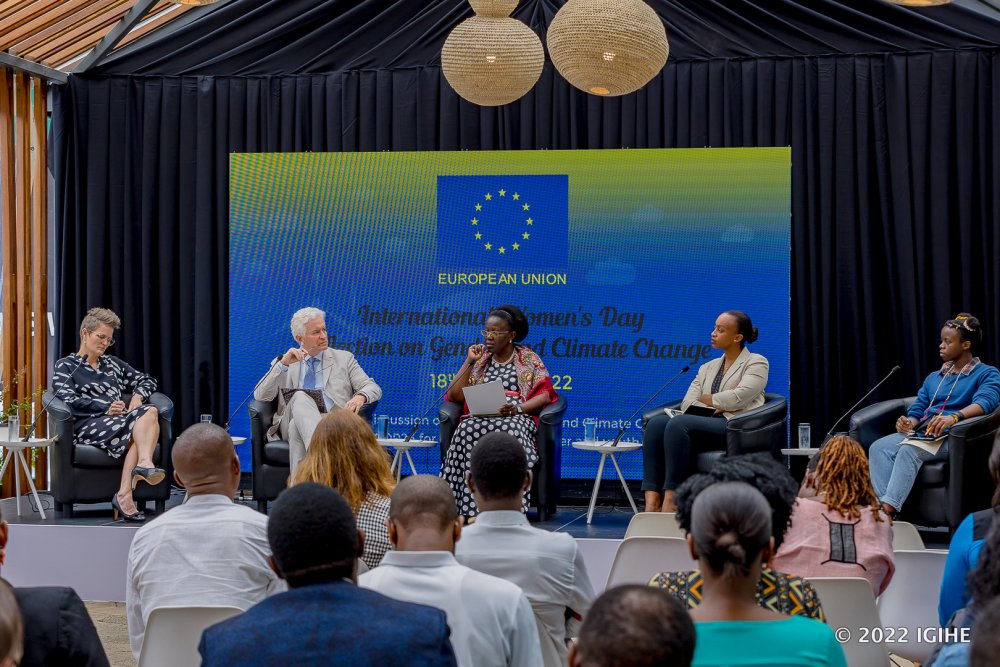
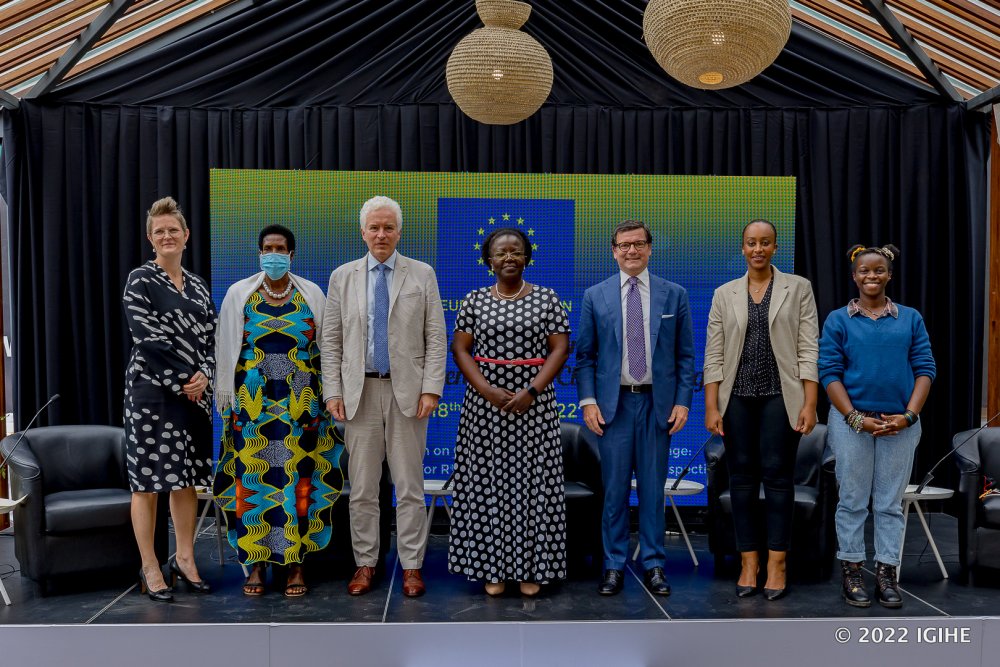
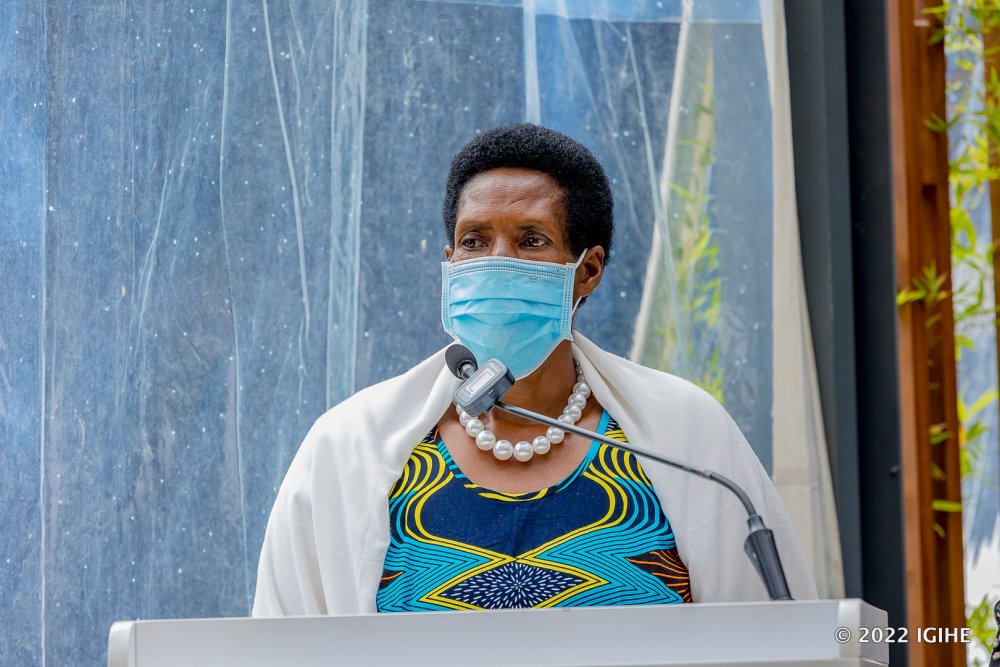
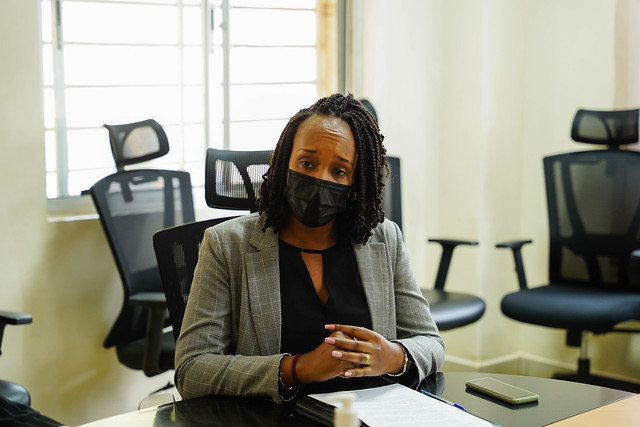
She was speaking on Friday 18th March 2022 during discussions hosted by the European Union delegation Rwanda in the context of International Women’s Day celebrated every year on 8th March .
The discussions centered around gender equality and climate change, recognizing the contribution of women and girls around the world in climate change response.
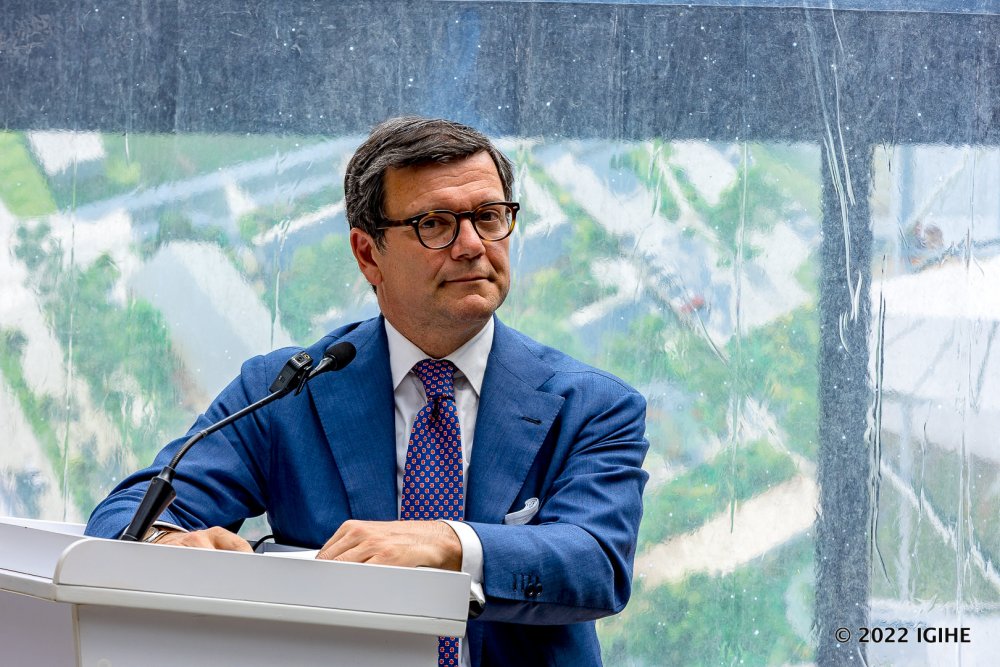
Also present at the event is Nicola Bellomo, the EU Ambassador to Rwanda who observed that women have largely contributed to the management of climate change and reiterated EU commitment to continue supporting them.
“A goal without a plan is worthless, which is why we have set in motion the gender action plan that pledges to ensure freedom from gender based violence, promoting equality in all sectors and addressing gender related issues,” he said.
One of the initiatives include the Regreening Africa project by Word Vision which has set an ambitious target to restore ecosystems in Bugesera, Kayonza, Gatsibo and Nyagatare districts in Rwanda.
One of the beneficiaries of the project, Jane Batamuliza who is a farmer in Nyagatare District revealed that the project has changed their lives.
“Nyagatare was usually like a desert, there was no rain at all. Since the project started, we have received occasional rainfall. As the project is ending, most people are currently warming up to the idea of fighting climate change collectively,” she noted.
Batamuliza said that most women have been actively and consistently engaged in the project, that the opportunities and gains are evident.
“Through planting trees and collecting wood, women have been able to feed their families and most people working in the project are women,” she revealed.
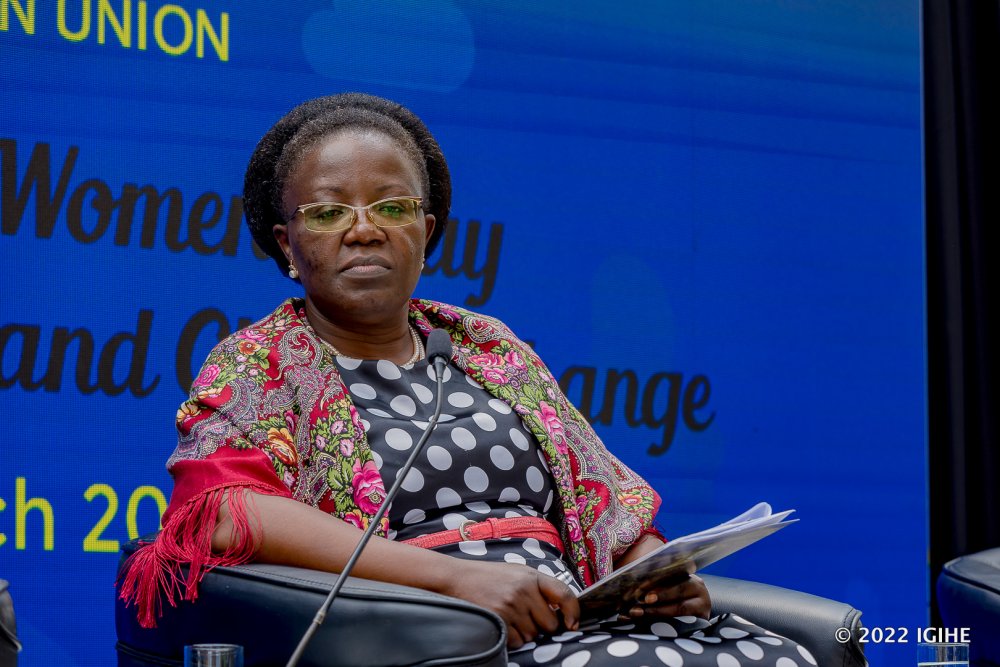
The Minister of Environment, Dr. Jeanne d’Arc Mujawamariya said that women like Jane are the ones mostly affected by climate change.
She explained that climate change is intertwined with gender equality where all sectors should work together to establish initiatives and solutions to the problem.
“Women are on the frontline when it comes to dealing with the consequences of climate change, in times like famine and flood women suffer the most,” Dr. Mujawamariya said.
The minister underscored that seeking solutions to address these problems should be done through collective efforts.
“It all starts with education, these young girls and boys should be taught together on how to deal with climate change but also how to deal with gender inequalities,” she noted.
The EU ambassador to Rwanda Nicola Bellomo said that the EU is ready to continue working closely with partners such as the Ministry of Environment and other relevant organizations.
“We look forward to working closely with the ministry and also other sectors to set gender indicators and implement our set strategies,” he said
Amb. Bellomo thanked the Government of Rwanda for its continuous role in promoting gender equality and also the steps taken to deal with climate change.
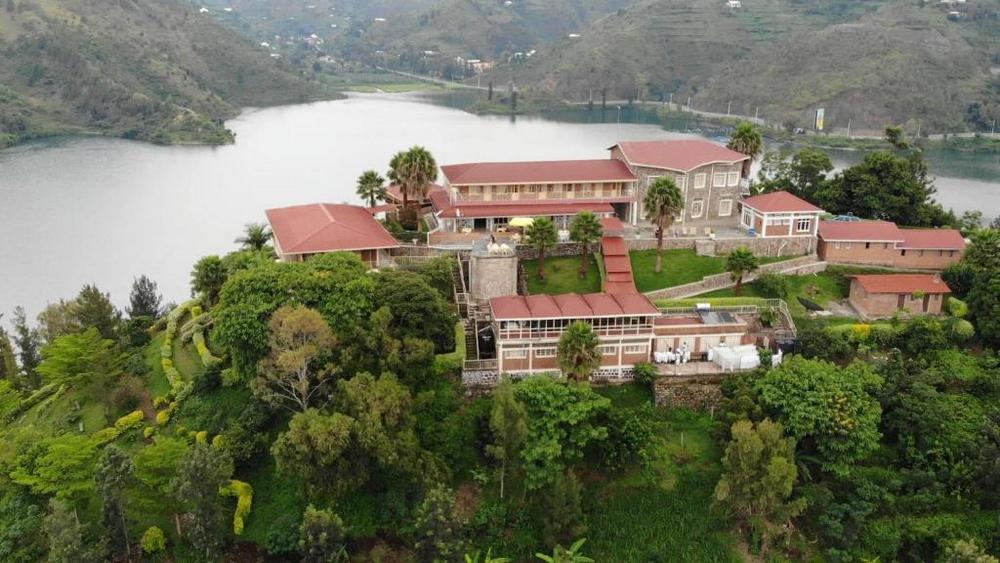
It is among districts with natural features and other touristic attractions luring visitors to prolong their stay. Located in Western Province, the district has been taking advantage of its proximity to Lake Kivu separating Rwanda and the Democratic Republic of Congo to fast track development.
Like many other districts, Karongi is characterized by a hilly topography with attractive features as well as cultural and historical vestiges of great significance to the country.
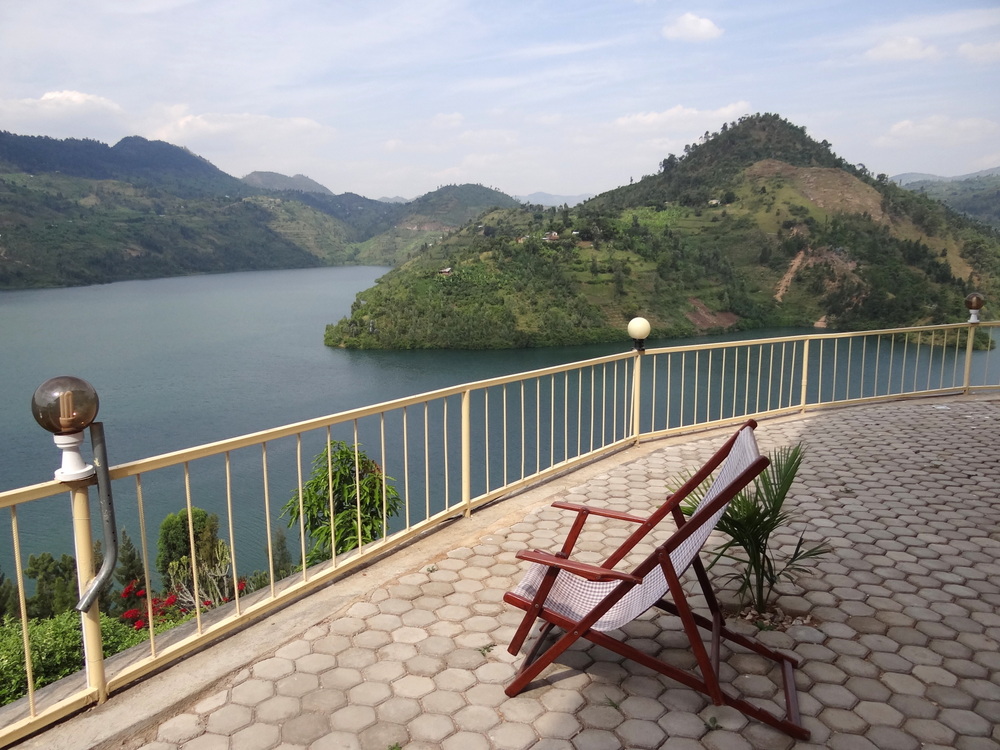
These include the Congo Nile Divide, spectacular view of Lake Kivu shores, Methane Gas, Nyungwe National Park, Gisovu Tea Plantation, Muciro natural forest and Ndaba rock among others.
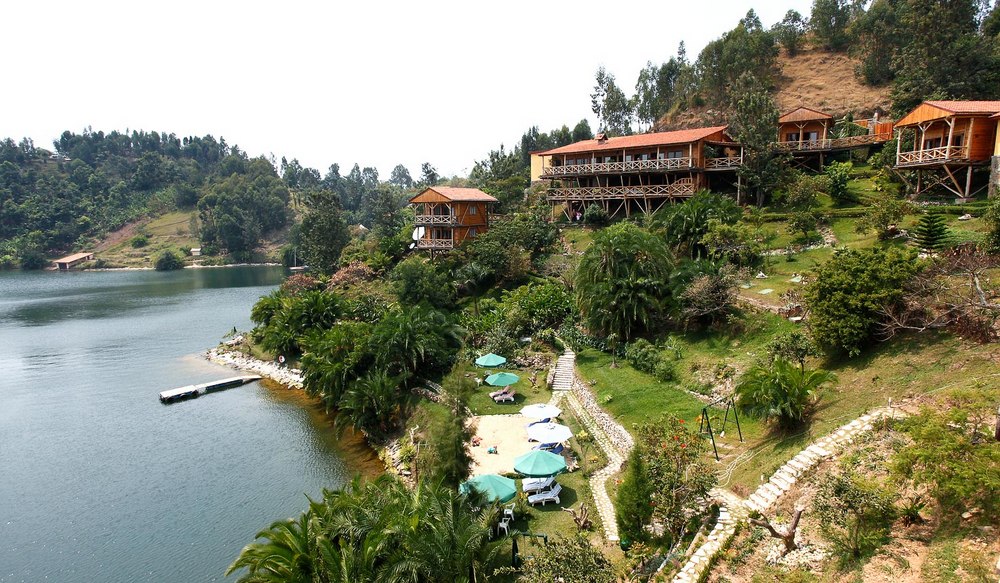
In consideration of these attractions, investors have also taken advantage of this opportunity to set up hospitality establishments for visitors to enjoy a memorable sojourn in the district. So far, the district has registered 14 hotels, majority of which being constructed at the shores of Lake Kivu.
Apart from hotels, the upgrading of infrastructures is also ongoing to make Karongi more attractive.
Below is a list of top ten hospitality establishments adding up to the magnificence of Karongi district:
{{Cleo Lake Kivu Hotel}}
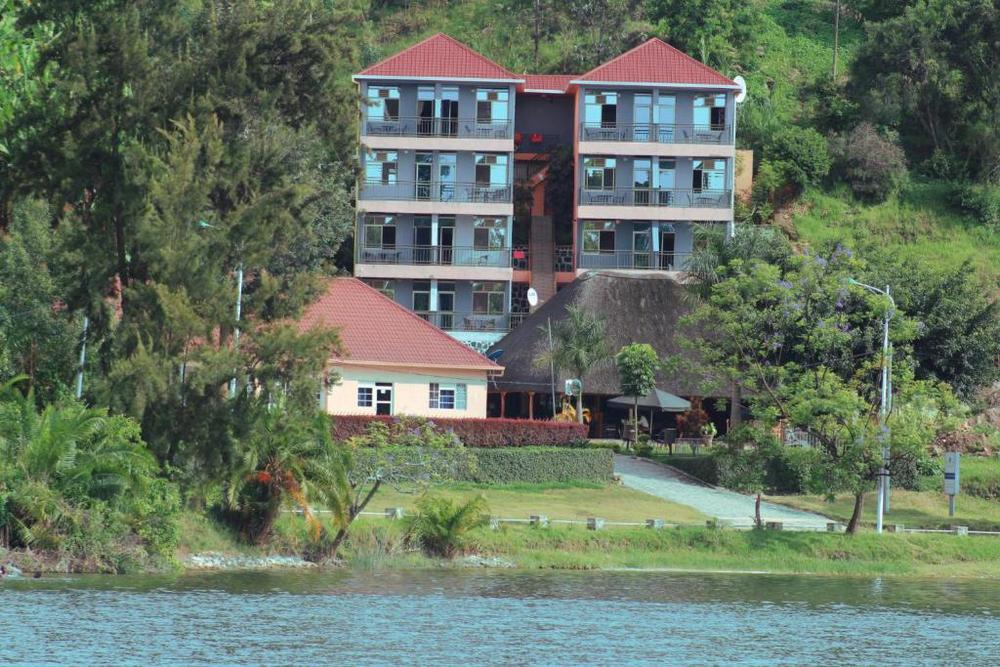
Cleo Lake Kivu Hotel is a five-star facility located in Bwishyura sector at the shores of Lake Kivu. It has 10 rooms where the cheapest one is booked at US$200 per night.
{{Moriah Hill Resort}}
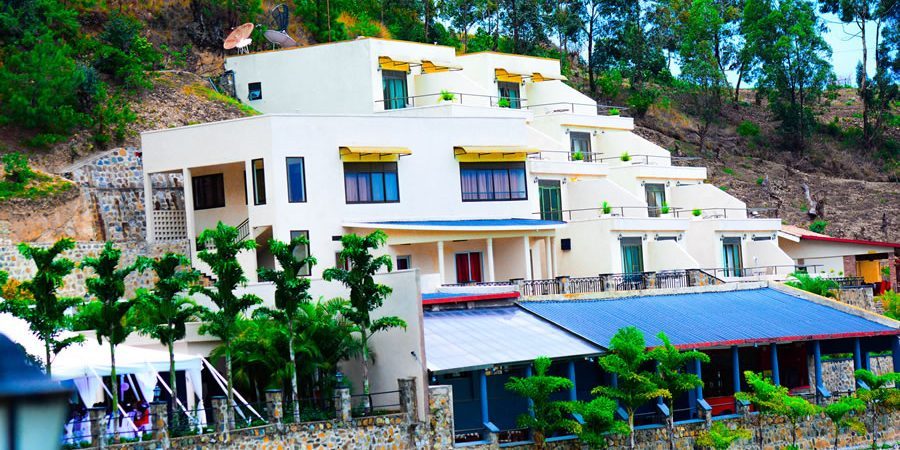
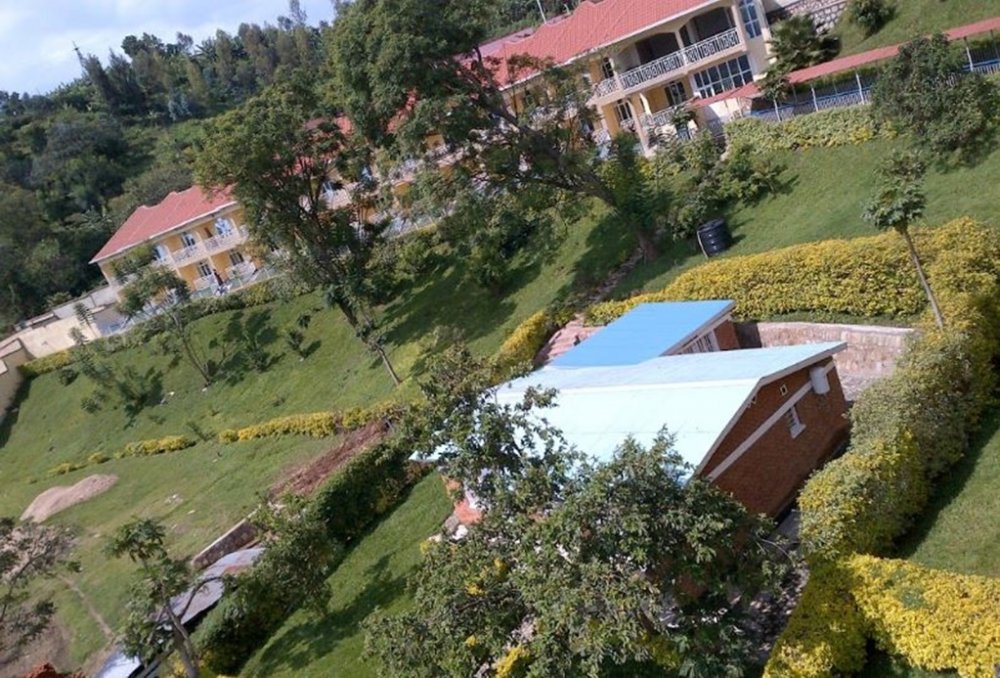
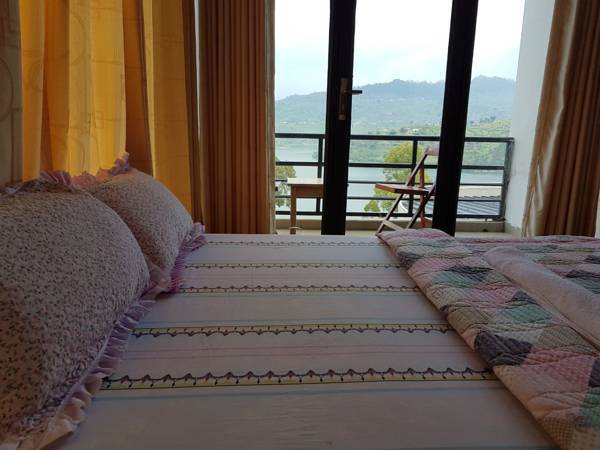
The four-star hotel is also built in the vicinity of Lake Kivu. A guest standing in each of the hotel’s room gets a better view of Lake Kivu.
Moriah Hill Resort has 19 rooms and a multipurpose hall with the capacity to accommodate 150 guests.
{{Kivu Lodge Hotel}}
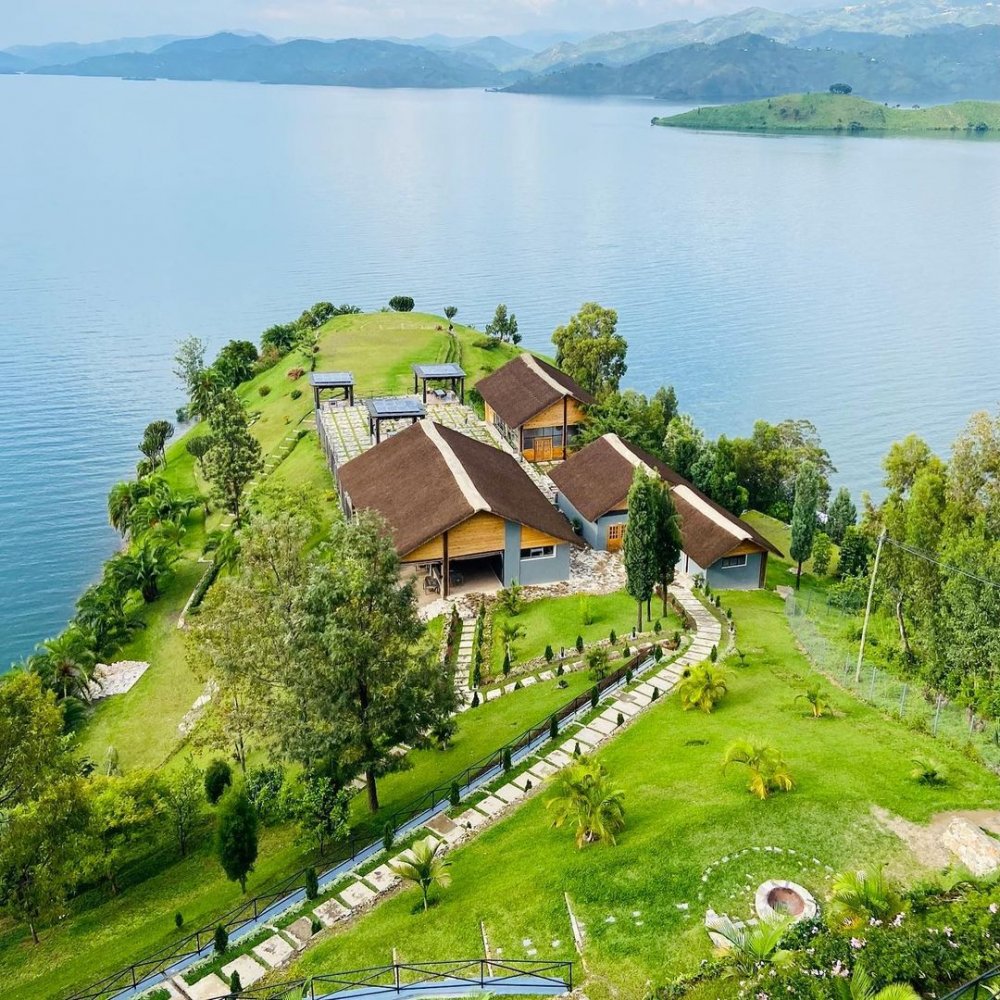
Kivu Lodge Hotel is a four-star facility with 21 rooms and one conference hall. It is built at a peninsula located in Gishyita sector.
{{Bethany Hotel}}
Bethany Hotel is among hospitality establishments welcoming a large number of guests in Karongi. The four-star hotel has 55 rooms and four conference halls.
{{Golf Eden Rock Hotel}}
Golf Eden Rock Hotel is among prominent hotels in Karongi. The two-star hotel has 116 rooms, 3 multipurpose halls, with the capacity to accommodate from 300 to 30 people.
{{Romantic Hotel}}
The hotel located at the shores of Lake Kivu has 35 rooms, 2 conference halls with the capacity to accommodate from 80 to 25 people.
{{Delta Resort Hotel}}
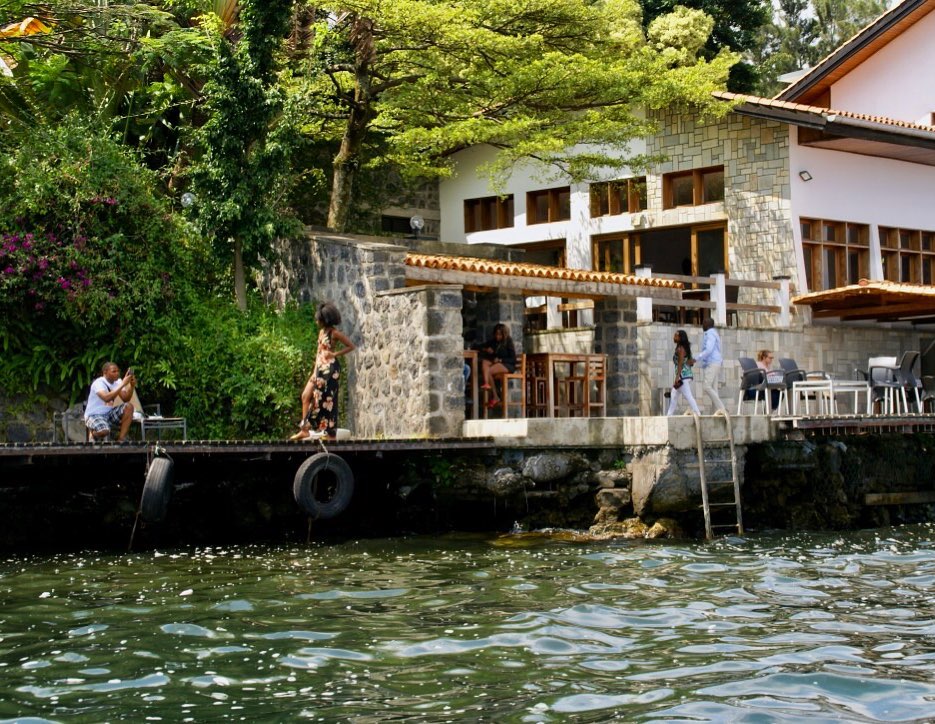
Delta Resort Hotel is a three-star facility situated in few meters from the Environmental Museum in Karongi town. Located at the edges of Lake Kivu, the hotel has 20 rooms.
{{Rwiza Village Resort}}
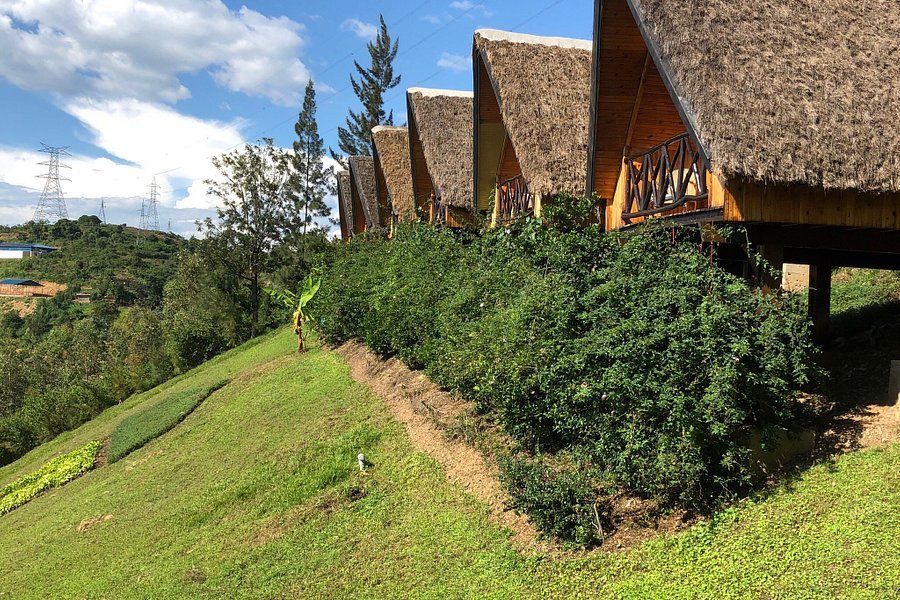
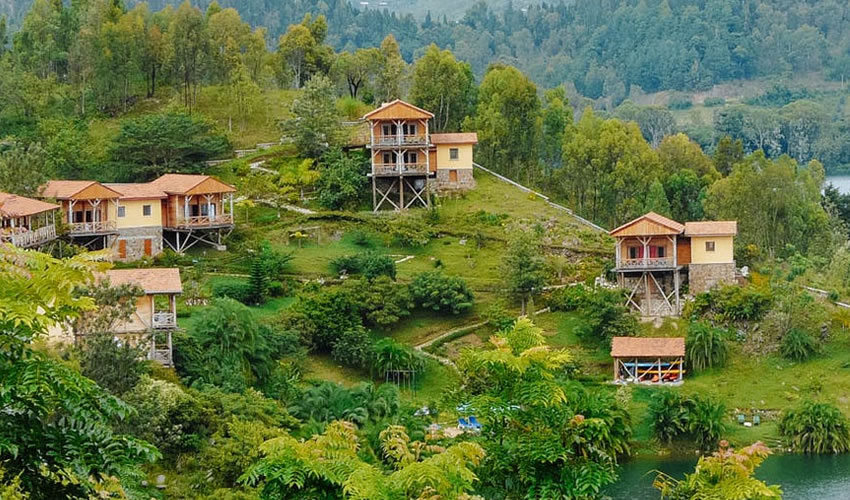
The three-star hotel comprised of traditional buildings is located at the shores of Lake Kivu. It has 10 rooms and 1 multipurpose hall.
{{Home Saint Jean}}
Home Saint Jean is a two-star facility build at the edges of Lake Kivu. It has 33 rooms and 2 conference rooms.
{{Cormoran Lodge}}
The three-star hotel is situated at the shores of Lake Kivu and has seven rooms with the capacity to accommodate up to 10 people.
Speaking to the East African, the British High Commissioner to Rwanda, Omar Daair confirmed the development.
“Some of these processes take time; different countries take different amounts of time to deal with these things. I won’t comment on details of that process, but the result is the appointment has been approved. We are looking forward to having the high commissioner arrive in the UK, and my colleagues are looking forward to working with him and the government of Rwanda ahead of CHOGM,” Mr Daair said.
Johnson Busingye will replace Amb. Yamina Karitanyi who was named CEO of Rwanda Mines, Gas and Petroleum Board (RMB).
He had served as the Minister of Justice for eight years prior his new appointment.
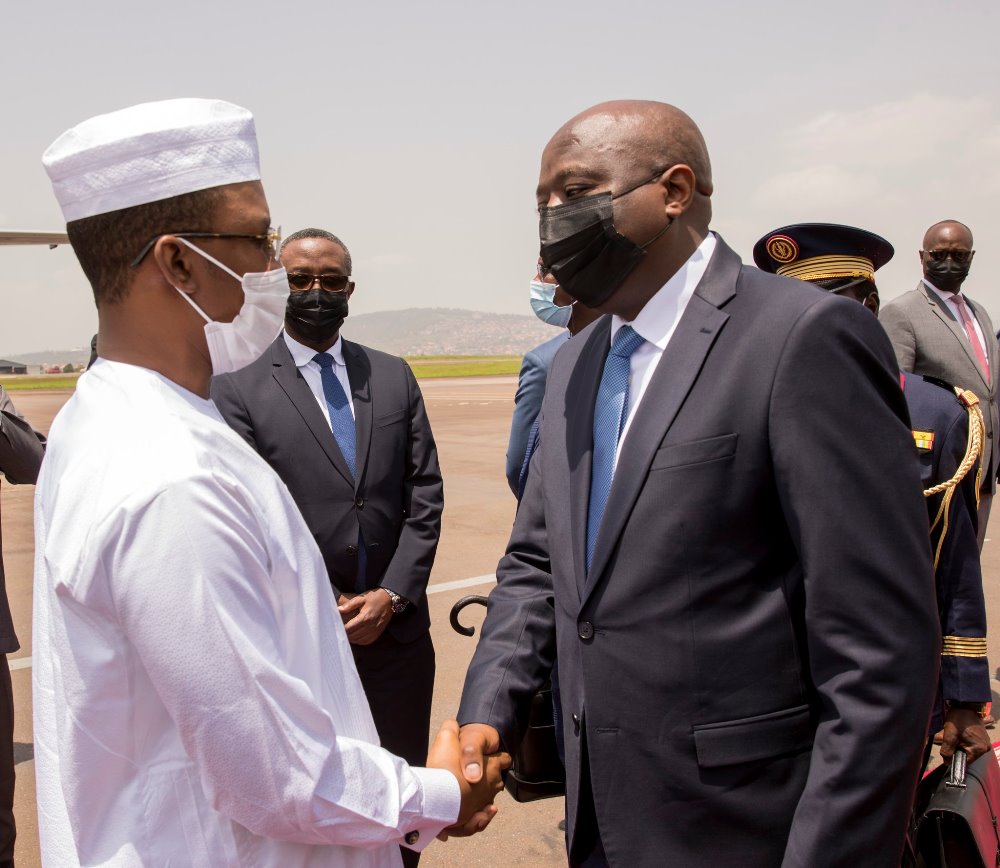
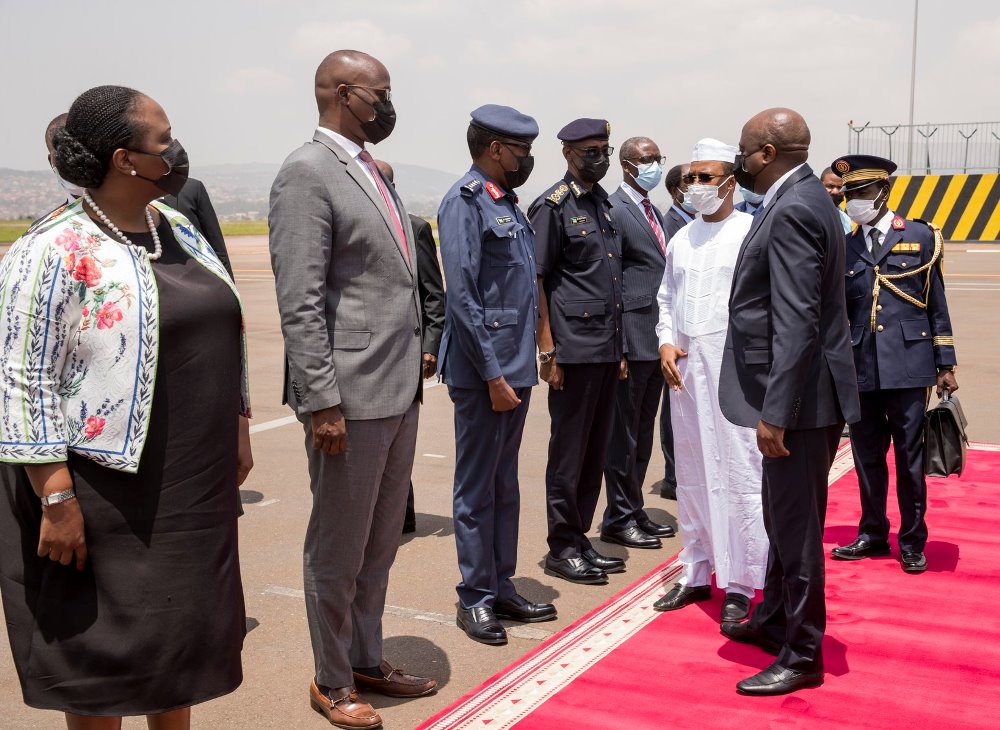
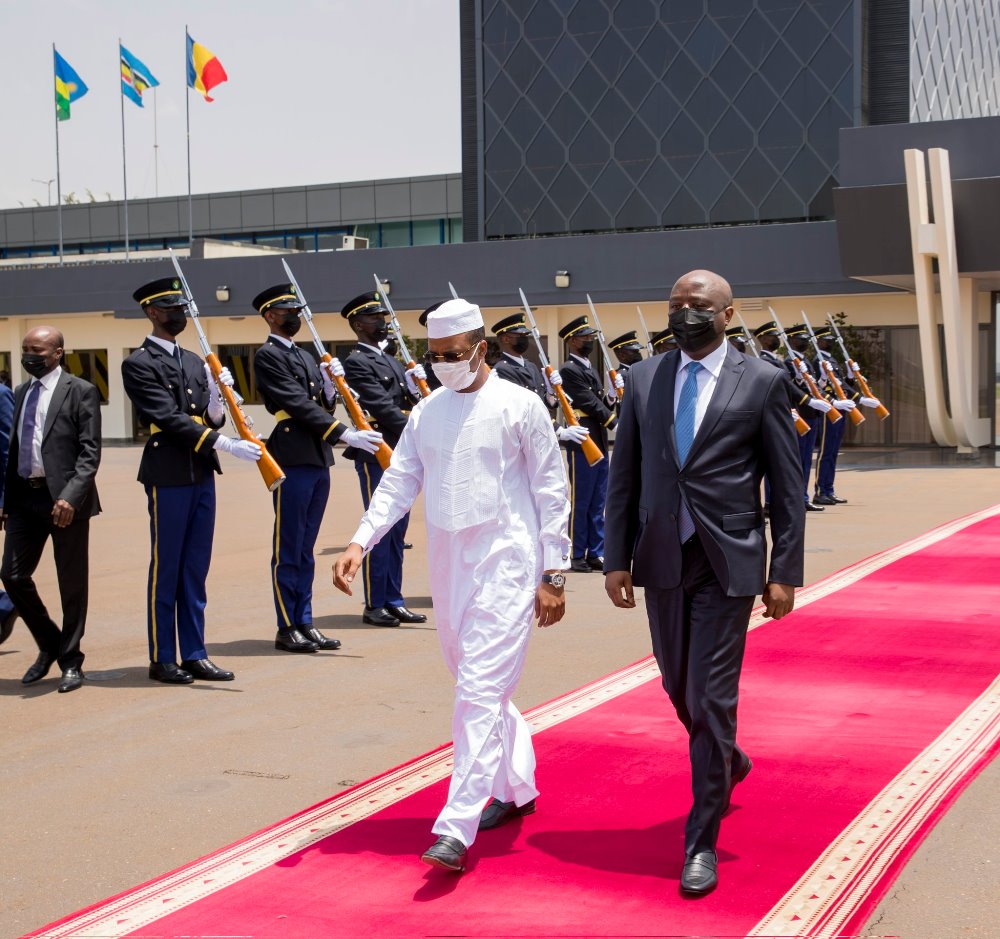
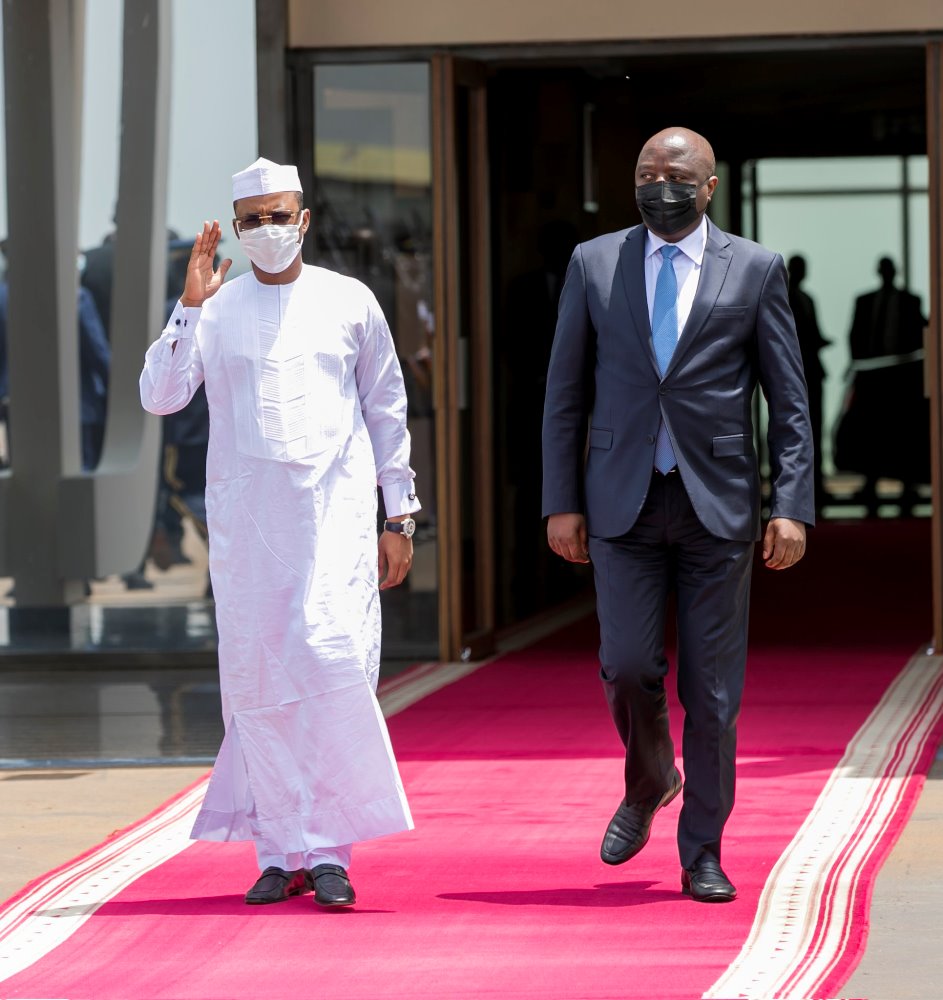
Gen Mahamat arrived in Rwanda on Friday 18th March 2022 where he was received by the Minister of Foreign Affairs, Dr. Vincent Biruta at Kigali International Airport.
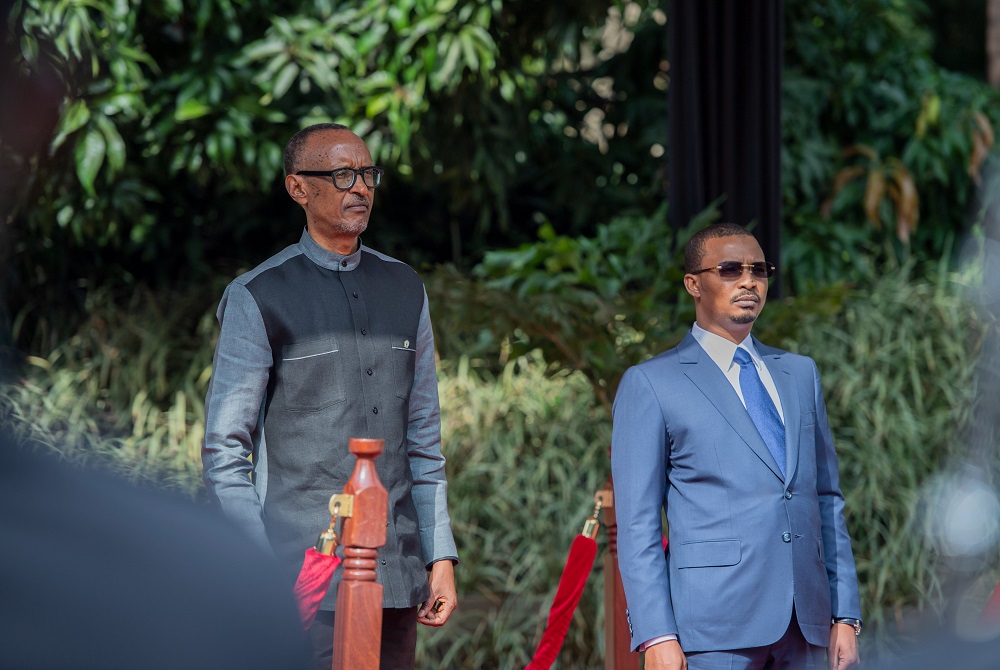
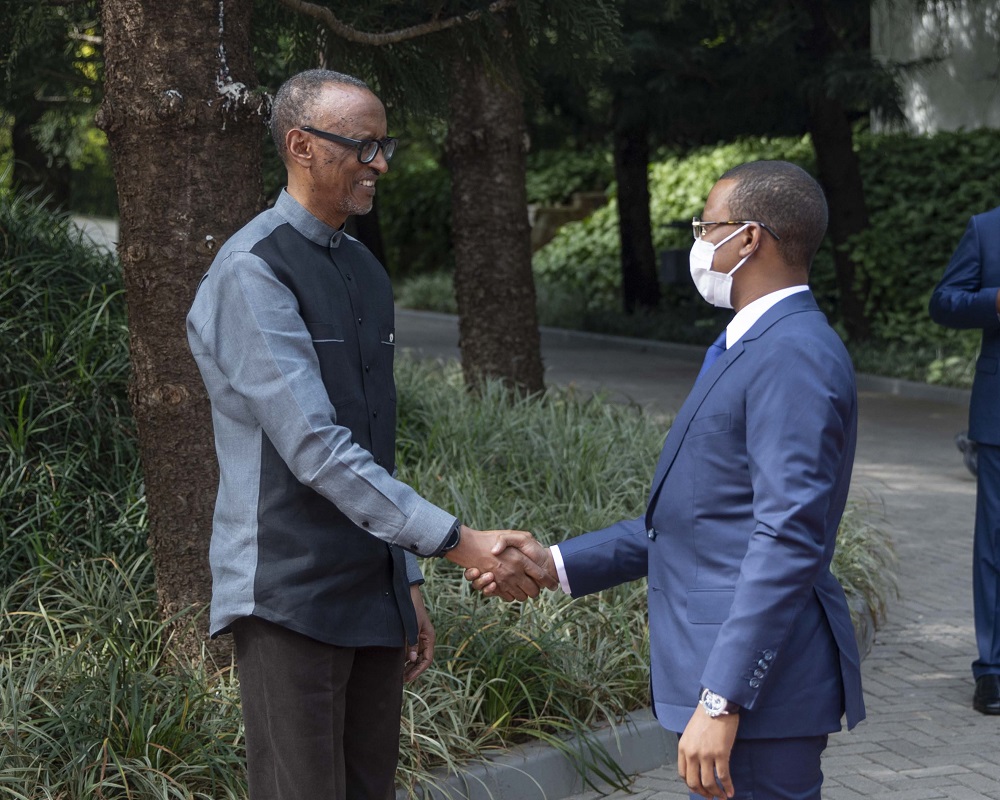
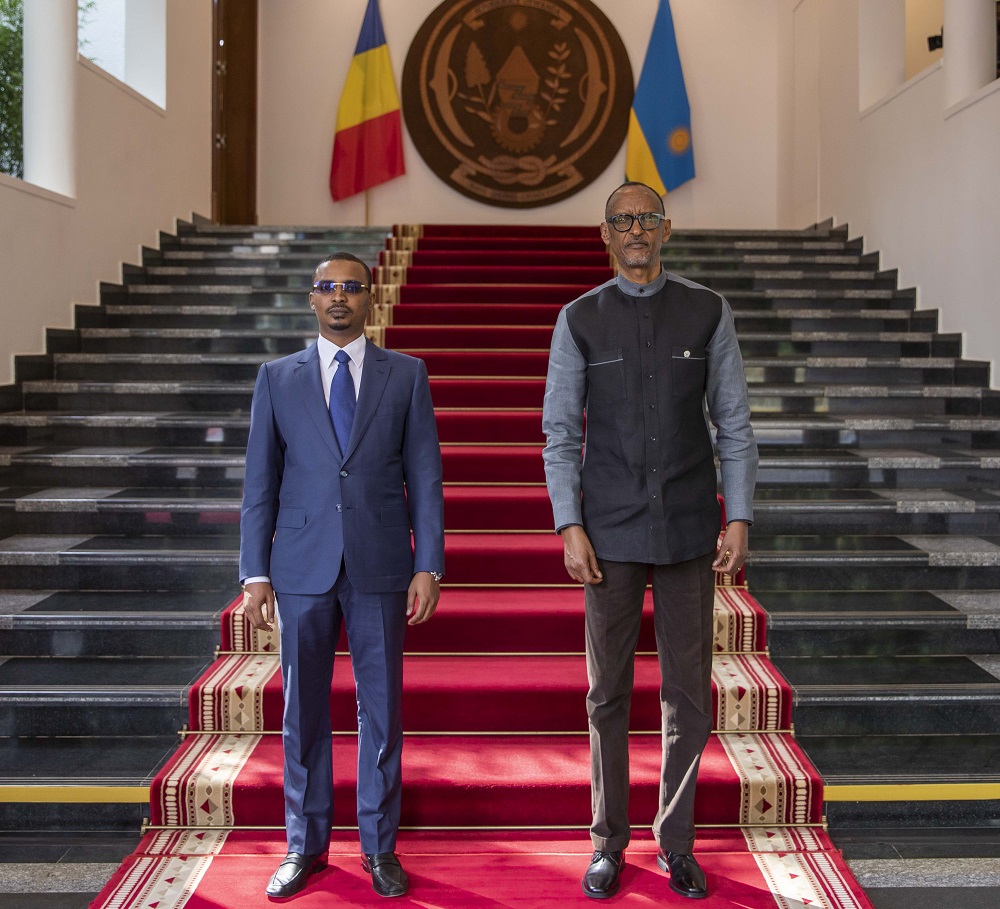
On the first day of his visit, he also held a tête-à-tête with with President Paul Kagame and visited Kigali Genocide Memorial.
After holding tête-à-tête with the visiting Head of State, Kagame said that it the right time to strengthen bilateral relations and deepen collaboration in areas of mutual interest.
He also assured Gen Mahamat of much closer collaboration along his country’s development journey to deal with effects of COVID-19 and instability. .
The visiting President, Gen Mahamat thanked Rwanda for being close to Chad during difficult times, particularly offensives of Boko Haram and tragic moments in April last year when his father died on the frontline.
Gen Mahamat also congratulated President Kagame for his leadership as a Panafrican and his leadership in leading African Union reforms through the African Continental Free Trade Area (AfTCA) and facilitating Africans to come to Rwanda without Visa. He commended the model noting that more countries should follow the suit.
Among others, Gen Mahamat expressed willingness to open doors for RwandAir and invited the carrier to visit Chad and explore available opportunities.
During his stay in Rwanda, both countries signed general cooperation agreements.
The President of Chad and President of the Transitional Military Council, Gen Mahamat arrived in Rwanda on Friday 18th March 2022 for a two-day official visit.
Upon arrival at Kigali International Airport, he was received by the Minister of Foreign Affairs, Dr. Vincent Biruta. On the first day of his visit, he also met with President Paul Kagame and visited Kigali Genocide Memorial.
After holding tête-à-tête with the visiting Head of State, Kagame said that ‘our experience as Rwandans have shown us that reconciliation must indeed be an inclusive process’ highlighting that it the right time to strengthen collaboration.
“The general cooperation agreement to be signed today, is a chance to continue exchanging and sharing lessons such as this with each other. This is the right time to strengthen our relations and deepen our collaboration in areas of mutual interests,” he noted.
Chad is undergoing difficult moments to rebuild the economy and promote citizens’ livelihoods following a long period of conflicts.
Rwanda has also overcome dark moments, restored peace and promoted reconciliation through different initiatives which other countries can learn from.
The Head of State revealed that COVID-19 pandemic has reversed the development gains that countries had made and are witnessing more instability on African continent noting that a lot is at stake for all.
President Kagame assured Gen Mahamat of close collaboration with his country to deal with effects of COVID-19 and instability.
“We must combine our individual efforts and confront our common challenges together. Rwanda is ready for much closer cooperation,” he said.
Chad is a landlocked country surrounded by countries faced with insecurity. Its capital, N’Djamena is located nearby the north of Nigeria , a region that is often subject to Boko Haram threats.
Chadian President Gen Mahamat Idriss Déby Itno has thanked Rwanda for being close to Chad during difficult times, particularly offensives of Boko Haram and tragic moments in April last year when his father died on the frontline.
He said that Rwanda endured horrendous moments during the 1994 Genocide against Tutsi but has overcome the tragic past to embark on a resilience journey with bold transformation agenda where many countries are learning from it after more than 20 years.
“Our countries have face challenges. Your country has gone through the worst atrocities. We discover today a beautiful country in a couple of decades has become a role model for the entire world.
You country and mine have many similarities, be it cultural and others. Chad will benefit a lot in this transitional period to learn from Rwanda’s success stemming from good governance. Your Excellency, we want to draw an inspiration from Rwanda’s model,” he said.
Gen Mahamat also congratulated President Kagame for his leadership as a Panafrican and his leadership in leading African Union reforms through the African Continental Free Trade Area (AfTCA) and facilitating Africans to come to Rwanda without Visa. He commended the model noting that more countries should follow the suit.
Gen Mahamat expressed willingness to open doors for RwandAir and invited the carrier to visit Chad and explore available opportunities.
Among others, he invited Kagame to visit Chad.
During his visit, both countries signed general cooperation agreements.
Gen Mahamat is expected to meet with close to 1000 Chadians studying in Rwanda on Saturday 19th March 2022.
The official closing of the training, which was organized by Rwanda National Police (RNP) in partnership with the Dallaire Institute for Children, Peace and Security, was presided over by the Deputy Inspector General of Police (DIGP) in Charge of Administration and Personnel, Jeanne Chantal Ujeneza
The closing was also attended by the Acting Director at the Dallaire Institute for Peace and Security – African Center of Excellence, Francisca Mujawase.
Gen (rtd) Romeo Dallaire is a Canadian who was commanding the UN peacekeeping troop deployed in Rwanda during the 1994 Genocide against the Tutsi.
DIGP Ujeneza stressed that in order to prevent the recruitment and use of children in violence, it requires real shift from “simply saying ‘prevention’ to put words into action.”
“In order to prevent the recruitment and use of children in violence – be it trafficking, sexual violence, criminal networks, radicalization, or armed forces, groups or gangs – what is needed now is the real shift not just to say “prevention”, but to be practical with tangible approaches such as training police officers to equip them with knowledge and skills… to create more peaceful societies,” said DIGP Ujeneza.
By training female police officers, she added, RNP complements Rwanda’s efforts to implement the United Nations Security Council Resolution (UNSCR 1325), the Kigali Principles on the protection of civilians in peace operations and the Vancouver principles on peacekeeping and prevention of the recruitment and use of children as soldiers.
The DIGP noted that the training also gives RNP an opportunity to create a wider impact in peacekeeping.
She reminded the trained officers to make a difference in their daily duties and to be good ambassadors for children’s rights, both at home and abroad where they will be deployed.
DIGP Ujeneza further thanked the Dallaire Institute leadership for the partnership to protect the rights of children.
On her part, Francisca Mujawase said that improved training and capacity building for the police enhances the protection of children abroad and at home
“The knowledge on prevention of the use of children as soldiers isn’t only important for our troops engaged in peacekeeping forces but also for the benefit of our domestic security. Rwanda as an exemplary country globally, understands the importance of security sector-oriented approach to protect children and the need to invest in the children, peace and security as children are the leaders of tomorrow,” said Mujawase.
“This is the second Dallaire institute training that will lead to certification of the RNP trainers who will be supporting the Dallaire institute mission in training other troops. The audience is also unique because we all acknowledge the importance of the women, peace and security agenda and the recognized gender roles in peacekeeping,” Mujawase added.
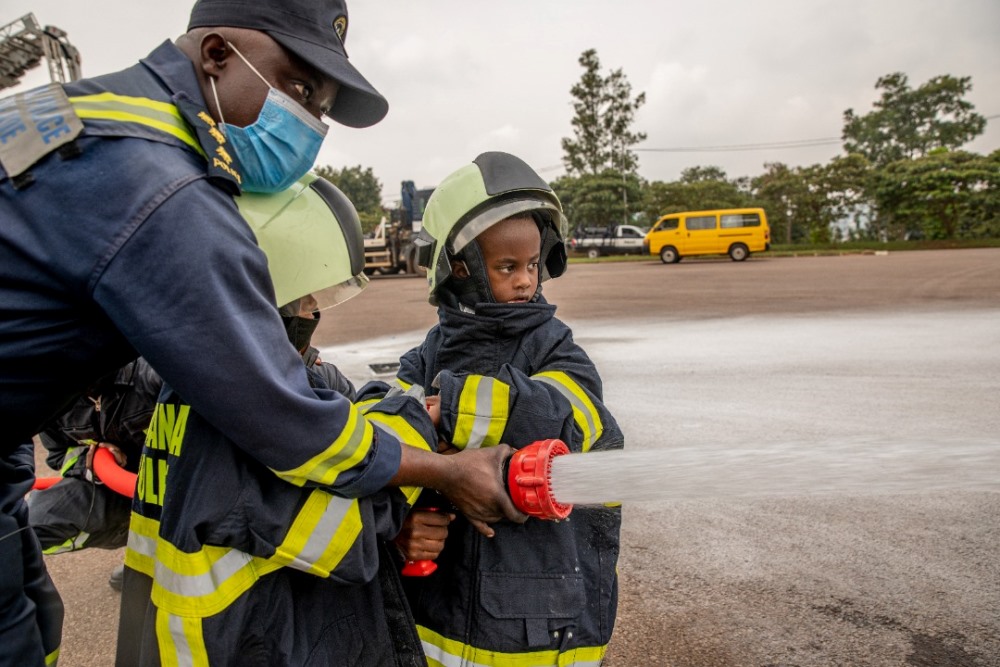
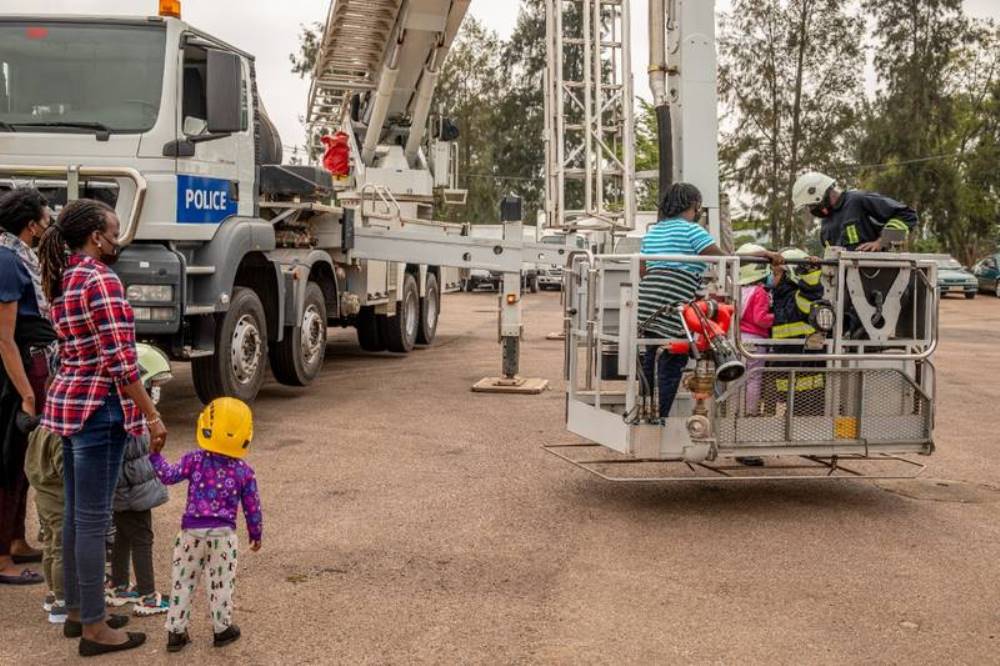
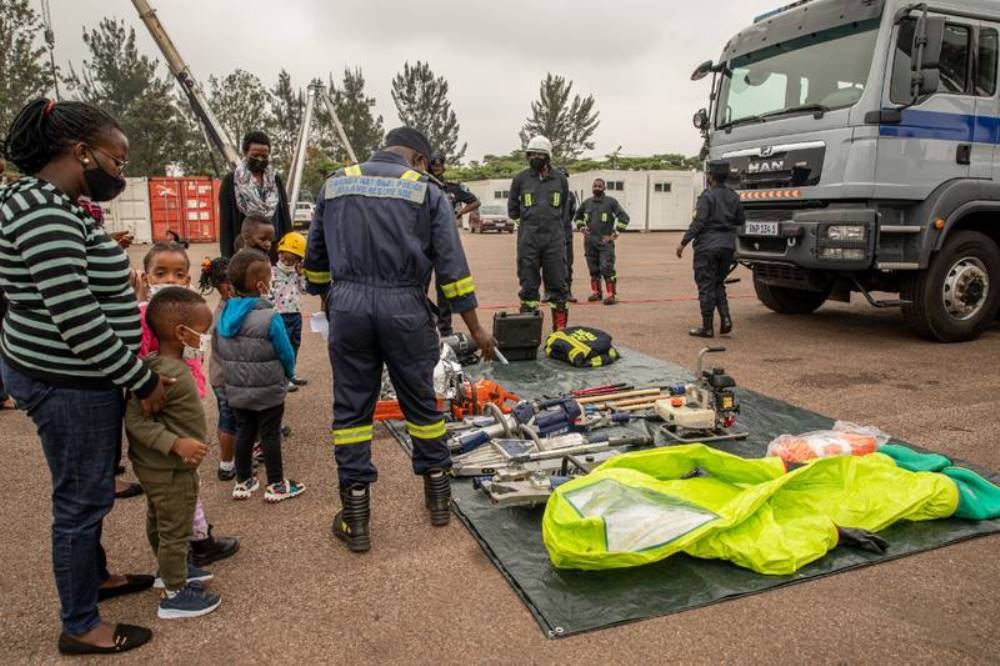
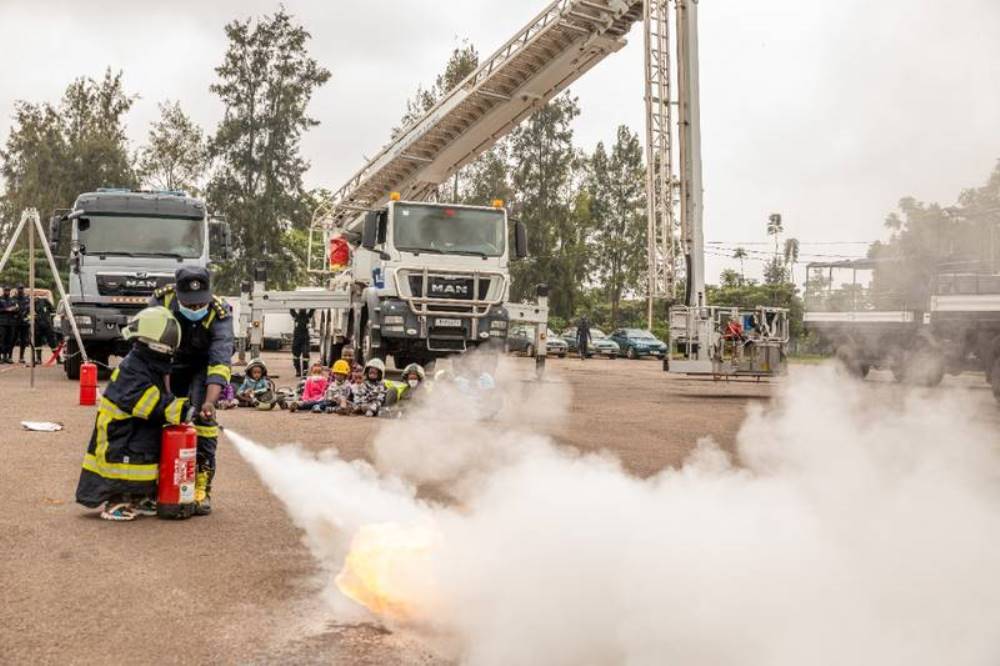
The outreach is part of the RNP countrywide awareness programme to
improve public knowledge and skills towards prevention and response to fire emergencies.
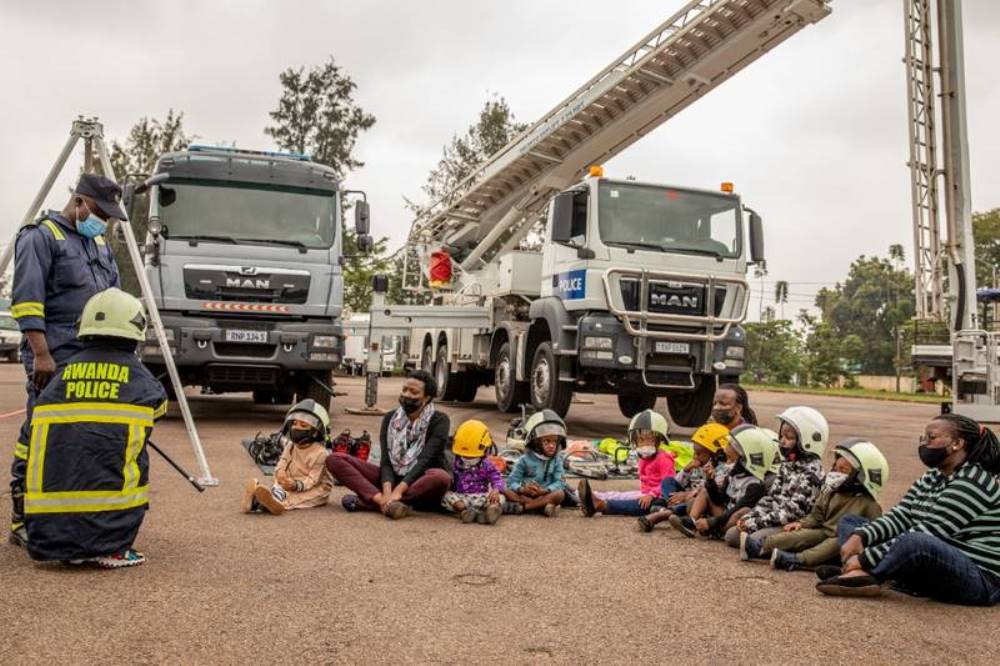
At the RNP General Headquarters in Kacyiru, the pupils were taught on causes of fire and showed different equipment that RNP uses in fire fighting including the Carbon dioxide fire extinguisher, fire trucks and the crane truck used to rescue people trapped in tall buildings.
Assistant Commissioner of Police (ACP) Paul Gatambira, the Commanding Officer for Fire and Rescue Brigade, said that equipping children with fire safety knowledge helps them to grow up as responsible people and to keep them safe.
“This fire safety training outreach has not ignored children. Children are often curious and tend to manipulate or tamper with electric equipment at home, which can cause fire outbreak. So, when they are informed about fire safety, they keep reminding and take precautionary measures when using electric appliances. Here, they also get to know what to do immediately when fire breaks out to swiftly call for intervention and who to call,” said ACP Gatambira.
Barbara Mutabazi, the Director at Jardin de tout Petits Nursery school, thanked RNP for organizing the training.
“From this important training, children and the teaching staff have acquired vast knowledge and skills required to know fire and safety practices at home and places of work,” Mutabazi said.
Similar awareness and training was also later in the day extended to 72 staff of Ruli hospital Saint martin Porres located in Ruli Sector, Gakenke District.
They include doctors, nurses, heads of departments, cleaners and security guards at the hospital.
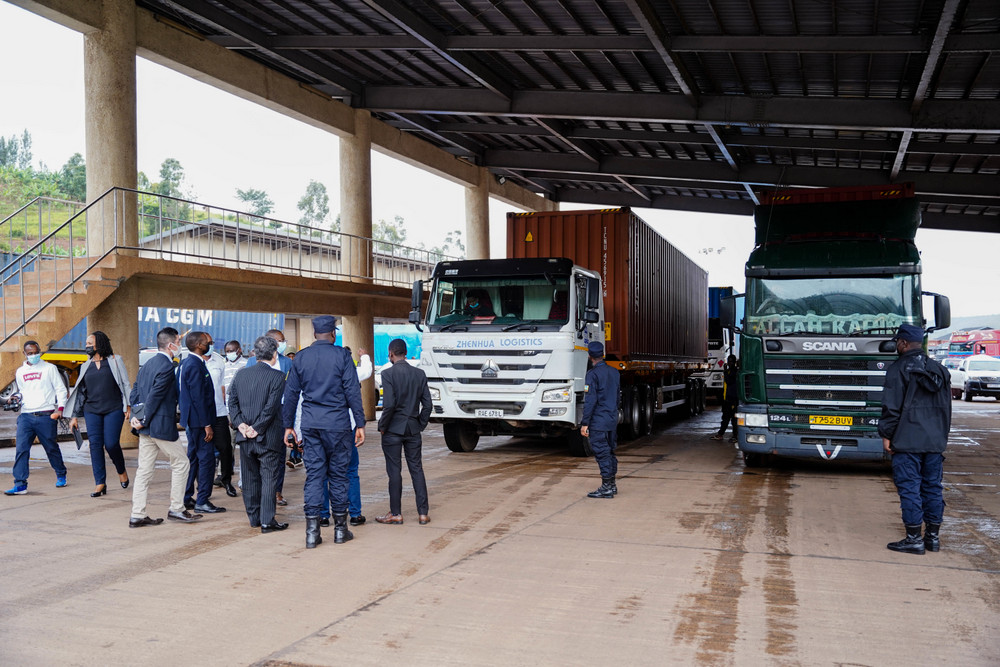
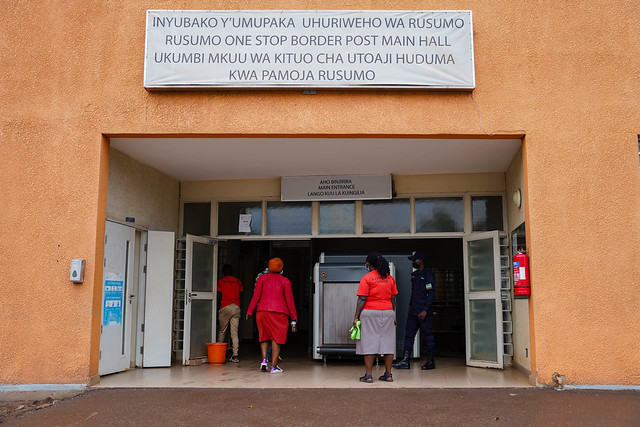
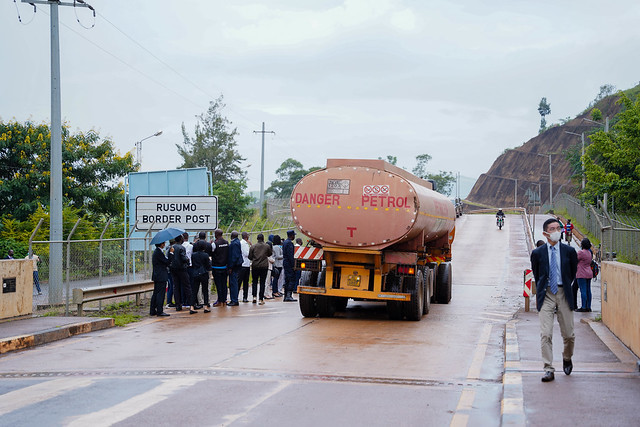
Today, travellers access services at one spot unlike the past when documents were processed at two locations – one in Rwanda and the other across the Tanzanian border.
Passengers attest that the development is coupled the upgrading of border infrastructures which contributed to improved services and reduced time it would take from four hours to 30 minutes.
Faustin Niyonzima, a truck driver has revealed that the one stop border post enhanced easy access to services and enabled uninterrupted travels.
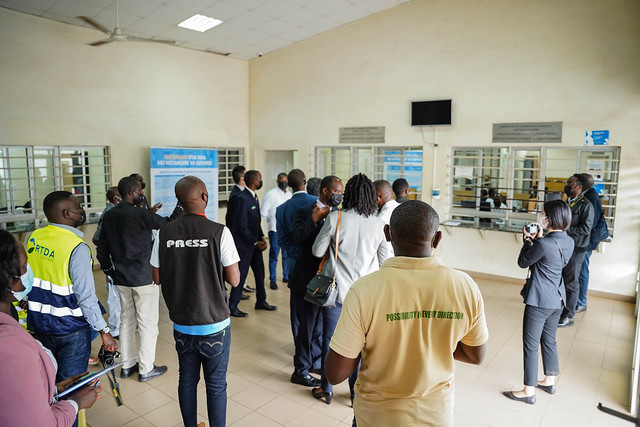
“Immigration and emigration officers from Tanzania and Rwanda operate in the same building, hence easing service delivery unlike the past when a passenger had to get documents processed twice,” he said.
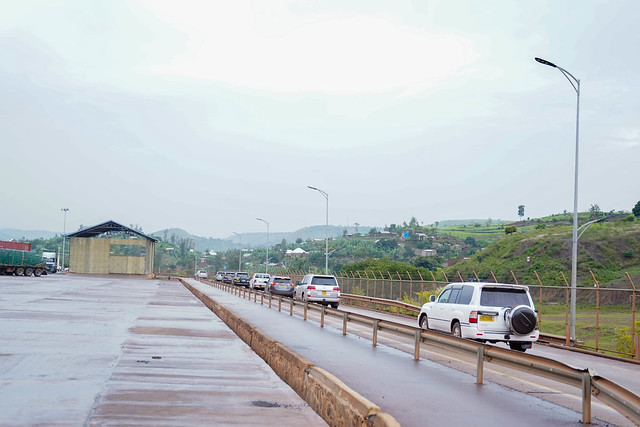
Niyonzima explained that set up infrastructures including a modern, ample Parking have played a big part to fast track service delivery at the border. The latter has the capacity to accommodate over 100 trucks.
The Assistant Commissioner in charge of Customs Operations at Rwanda Revenue Authority (RRA), Yvonne Gatera has said that the establishment of one stop border improved services and reduced time it would take to clear goods.
“The facility has been helpful in many ways, particularly enhancing trade. For instance, the time spent on procedures to verify goods at the border reduced from four hours to thirty minutes,” she said.
The time has also reduced for passengers.
Rusumo border plays a significant role to national economy where of imports are transited through. The border is crossed by cargo 300 trucks and up to 1000 passengers every day.
“Having an ample office building has been helpful. Employees and passengers sit comfortably because there is enough space. Apart from that, the integrated border management system has been upgraded. All these efforts have contributed to improved services,”
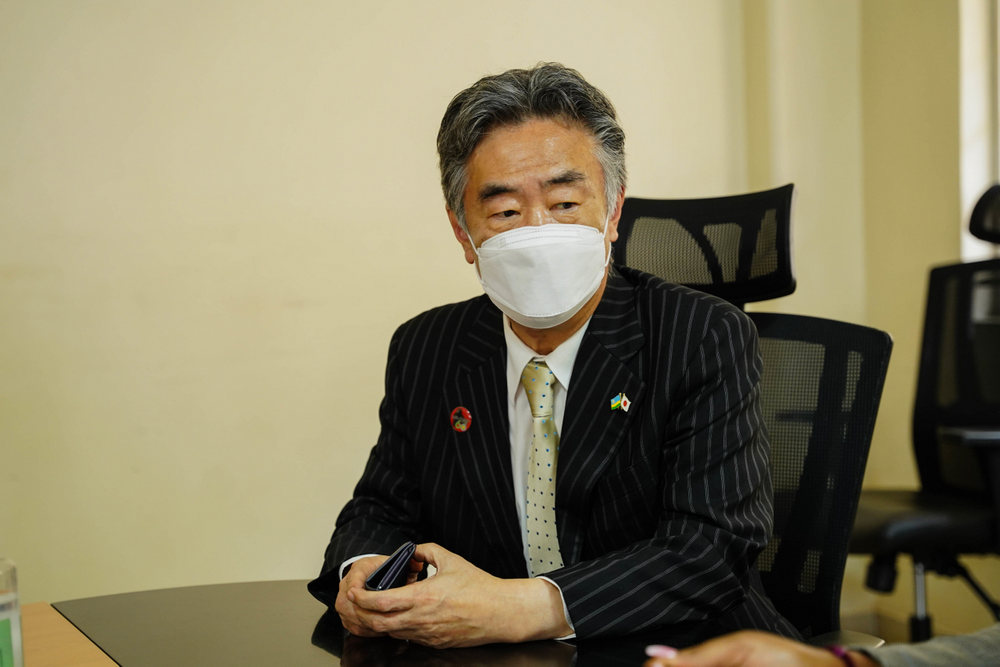
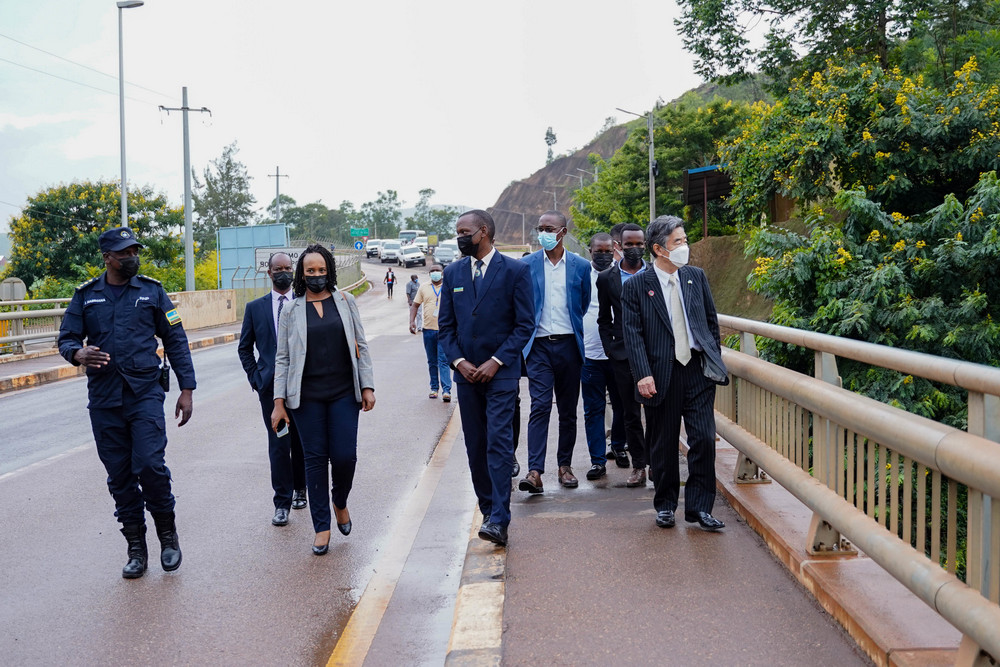
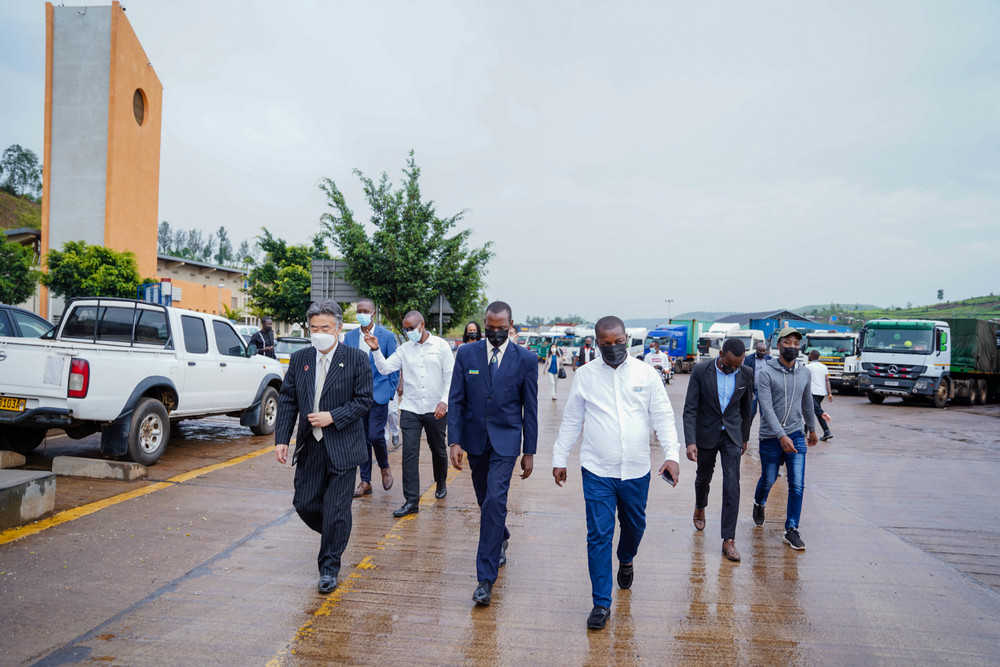
The Ambassador of Japan to Rwanda, Imai Masahiro has said that financing the harmonized border between Rwanda and Tanzania is part of initiatives to promote trade in the East African Community (EAC) and ease movements of people and goods between both countries.
“We have supported projects that enhanced free movement of goods and people. This also gave boost to inter-regional trade which will be a key driver for achieving Rwanda’s goal of becoming an upper middle-income country by 2035,” he said.
Amb. Masahiro explained that the development of Rwanda in the transport sector particular is the evidence of the cordial relations between Japan and Rwanda, and it includes facilitation of cross-border trade.
The construction of OSBP facilities, financed by Japan at a tune of approximately US$ 19 million, started in 2012 and the completion ceremony was held in January 2015.
Japan also funded other development projects in Eastern Province namely; the improvement of Kayonza-Rusumo along 92 kilometers, roads connecting towns in Kayonza, Ngoma and Kirehe districts, as well as the upgrade of Ngoma-Ramiro road along 64 kilometers to connect some parts of Eastern Province to Southern Province.
{{Rusumo Bridge renovated}}
Before the renovation, Rusumo Bridge was old and narrow that it could not allow vehicles to pass one another. The state of the bridge also sparked fears that it could collapse one day.
Today, the bridge has been renovated and expanded with two lanes through Japan’s grant aid program.
The mayor of Kirehe district, Bruno Rangira has said that the bridge has helped vehicles to cross directly instead of waiting for others to cross first which improved the quality of services.
“It was a small bridge that vehicles would not pass one another. The new bridge is large enough as vehicles can cross directly without waiting for others to pass. This translates into improved services and fast movement of cargo,” he said.
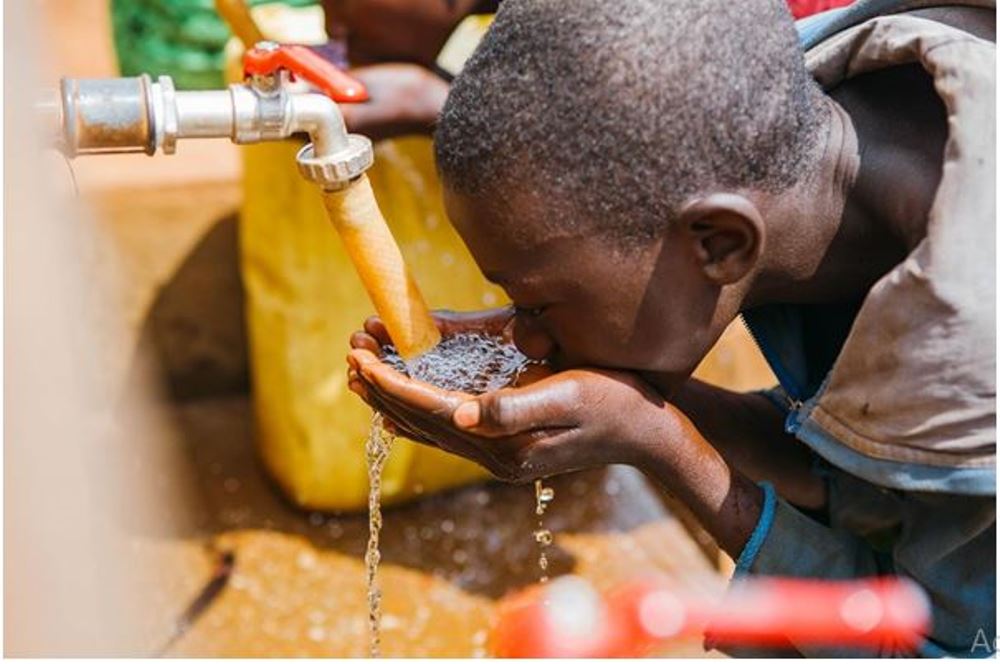
However, diseases associated with inaccessibility to Water, Sanitation, and Hygiene (WASH), malnutrition such as stunting, waterborne diseases including diarrhea, remain the main threat for children to thrive and the families’ improved well-being.
The recent Rwanda Demographic and Health Survey (DHS 2019/2020) indicates that around 33% of children are stunted. Other surveys highlighted the existing gaps in access to quality rehabilitation and assistive technology services for people with disabilities.
With the country’s efforts for achieving universal coverage in WASH services for the Rwandan population, 20% of households in Rwanda lack access to an improved water source, and 28% of households don’t have access to improved sanitation, adds the DHS.
Domestically, 52% of children under age 5 have symptoms of diarrhea according to the same study; and it wouldn’t be implausible to link this situation to scarcity of clean water, sanitation, and hygiene services for families, especially in rural areas.
The United States Government (USG) through USAID, and the Government of Rwanda have officially launched two new five-year programs on March 17, 2022, namely Gikuriro Kuri Bose and Isoko y’Ubuzima, aimed respectively to improve the health, functioning, nutritional status and wellbeing of women of reproductive age and children under six years of age as well as improve Water, Sanitation, and Hygiene (WASH) services for Rwandans. The USAID’s total investment in the two projects over the next 5 years is US$59 million.
“A healthy and prosperous Rwanda is a driving force behind all progress for the Government of Rwanda and we welcome the commitment by the United States Government to continue supporting and accompanying us in this development journey.” said the Minister of Health, Dr. Daniel Ngamije, while officially launching the two new projects.
The two programs are aligned with Rwanda national policies and strategies, and will work to prevent malnutrition, provide water access, sanitation, and disability care for better health outcomes of the Rwandan people.
Gikuriro Kuri Bose and Isoko y’Ubuzima will build on previous USAID funded projects that ended in 2020, to strengthen governance, coordination, early childhood development, nutrition, and disability inclusion in all sectors, cells, and villages of the ten districts where each program will be implemented.
The US Government’s commitment through Isoko y’Ubuzima and Gikuriro Kuri Bose activities is aligned with Rwanda’s national policies and strategies to promote nurturing care, comprehensive health and nutrition outcomes of children, women, and families.
{{Towards reducing stunting and combating malnutrition}}
USAID in the past five years funded the Gikuriro program which aimed to improve outcomes in nutrition for women of reproductive age and children under the age of five years by blending initiatives in agriculture, health education, savings, lending, and water access.
Over the past five years, the program successfully rehabilitated more than 12,000 children under five years of age from both acute and moderate malnutrition, around 192,896 under-five year children were reached with growth monitoring and promotion and other nutrition-specific services, constructed 509 community water supply infrastructures (60 boreholes, 104 water kiosks, 315 water springs, 9 community water supply extension lines) among other achievements. This contributed to the reduction of diarrheal disease prevalence from 22% to 12.7% in five years.
The Government of Rwanda has put in place several policies, strategies, systems, and structures to fight malnutrition through early childhood development, adolescent, and maternal nutrition interventions.
However, in the 10 target districts where Gikuriro Kuri Bose will be implemented, the current context indicates that stunting range between 10.7% in Kicukiro to 46.7% in Nyabihu; and as such, the program will leverage a $ 43.7 million budget to contribute to the significant reduction of these rates in the coming five years by reaching 4,592 villages in 10 districts and working with over 30,000 frontline providers to reach 820,000 women of reproductive age and 725,000 children under five and their families.
“Joining hands with our development partners, like USAID, and mobilizing our own resources, Rwanda is determined to reduce all forms of malnutrition, including decreasing stunting from 33% in 2020 to 18% by 2024”.
Gikuriro Kuri Bose will support households to deliver high-quality, integrated, and inclusive nurturing care services. These services include health, adequate nutrition, responsive caregiving, safety and security, and opportunities for early learning. This activity will benefit all children including those with disabilities through rehabilitation and Assistive Technology (AT) services.
The project will be implemented by a consortium led by the Catholic Relief to improve the health, functioning, nutritional status, and wellbeing of women of reproductive age and children under six years of age, with an emphasis on the 1,000-day window, strengthen the inclusion of children and adults with disabilities, and improve positive parenting and child development.
Other members of the consortium are Humanity and Inclusion, UMUHUZA, University of Global Health Equity, Three Stones International, and four implementing partners namely African Evangelical Enterprise (AEE), Caritas Rwanda, DUHAMIC ADRI, and Young Women Christian Association (YWCA) operating in the selected 10 districts of the program including Kayonza, Ngoma, Nyabihu, Nyanza, Kicukiro, Nyarugenge, Rwamagana, Burera, Rulindo, and Nyamasheke.
{{Improved WASH services}}
For 5 years from 2016 to 2020, USAID funded the Isuku Iwacu project to improve WASH services. Through Isuku Iwacu, more than half a million Rwandans were supported to access basic sanitation services.
Despite these positive gains, critical challenges still exist. The 2021 Ministry of Infrastructure WASH Management Information System Report indicates that 23.7% of households have no access at all to water supply services, while 24.3% on average are households with access to only basic hygiene services.
Based on the 2021 Water and Sanitation Corporation (WASAC) customers categories and the monthly consumption block, the average applicable water tariff was RWF 701.625/m3. The latest Rwanda Utilities Regulatory Authority Annual Report puts the quantity of water produced last year at 59,524,525 m3. This implies that Private Operators in the water sector expected revenue above RWF 41.7 billion.
However, this revenue was not generated as almost half of produced water, 42%, didn’t reach the consumers according to the same report, thus was not paid for. This water loss is attributed to leakages in the pipe networks, water theft, improper metering, and billing errors. In terms of revenue loss, the number talked about here is 17.6 billion.
And how much does the revenue loss translate into water systems? The Water For People organization in Rwanda estimates that building one kilometer of a water system costs on average around RWF 25 million. And the lost water revenue, if invested, could fund more than 704.9 km of new systems and increase the quantity of water generated, and ultimately the number of households accessing water supply services.
These occurrences are in part linked to low access and willingness to invest in improvements of WASH facilities, low demand for improved sanitation and willingness to pay, lack of WASH coordination between central and local governments, absence of District WASH Investment Plans, and skilled WASH staff.
Isoko y’Ubuzima with a $ 21 million budget will leverage achievements under former USAID Isuku Iwacu project to improve access to and encourage correct, consistent use of household WASH services to decrease diseases related to the lack of proper water, sanitation, and hygiene services.
The project will strengthen the capacity of the government and private sector to sustain water systems for 20 years, even 40 years, build the capacity of private operators to identify water losses and stop them and contribute to the reduction at a 25% rate the revenue loss due to non-revenue water over the next 5 years.
This will ensure that more Rwandans have improved sanitation and hygiene, and therefore greater protection against water-borne diseases, improved nutritional status, improved household economy – fewer days lost from work and less spent on hospitals – improved school attendance. It will increase and sustain equitable access to and use of safe drinking water and sanitation services. This will also reduce families’ health, economic, and social burdens due to the lack of WASH services.
Over the next 5 years, 120,000 people will gain access to basic drinking water services, 100,000 people will have increased access to basic sanitation services, while 96,000 will receive improved service quality from an existing basic or safely managed drinking water service in Rwamagana, Kayonza, Ngoma, Kirehe, Nyagatare, Ruhango, Nyanza, Nyamagabe, Ngororero and Nyabihu.
The program is being implemented from July 2021 by a consortium led by Water For People to improve WASH governance, drinking water services, and sanitation and handwashing services and products. Other members of the consortium are IRC, Vitens Evides International, CARE International, and African Evangelistic Enterprise.