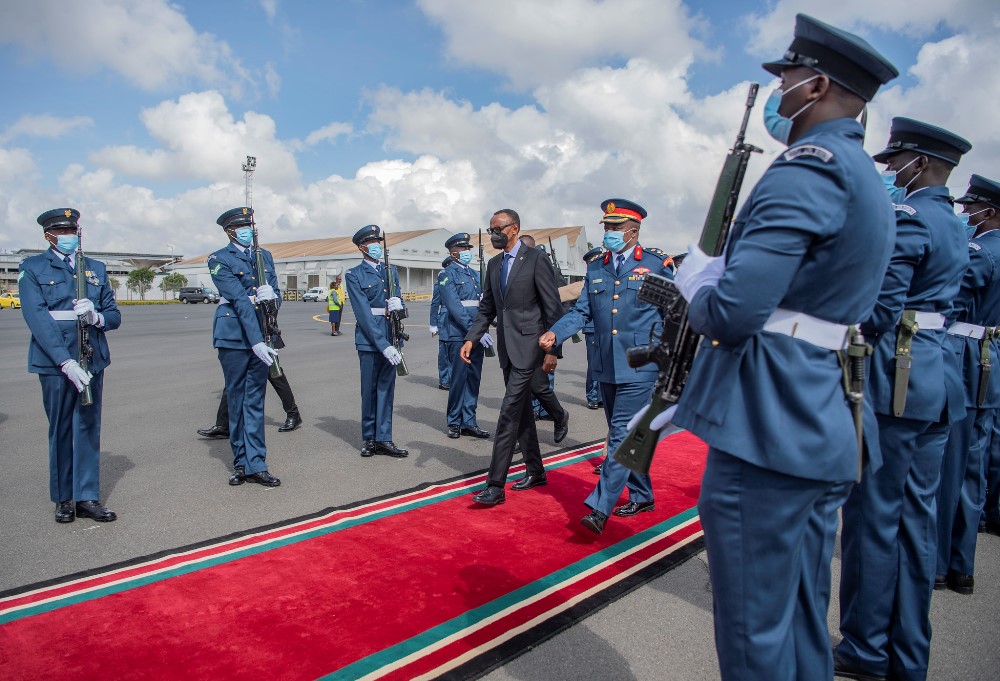
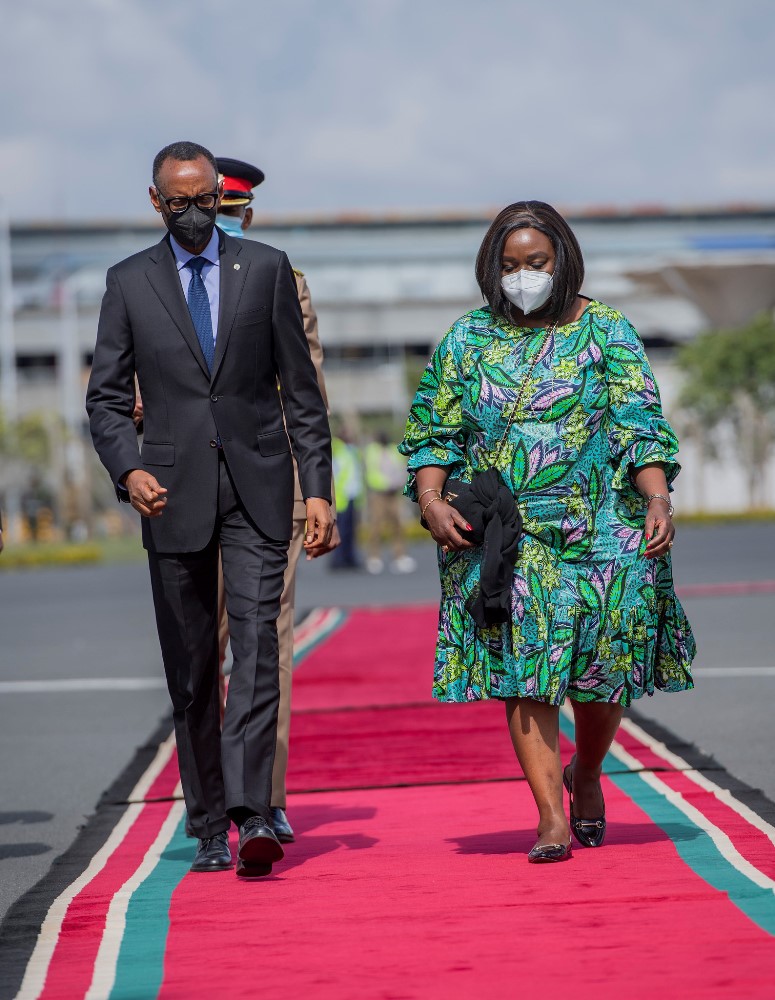
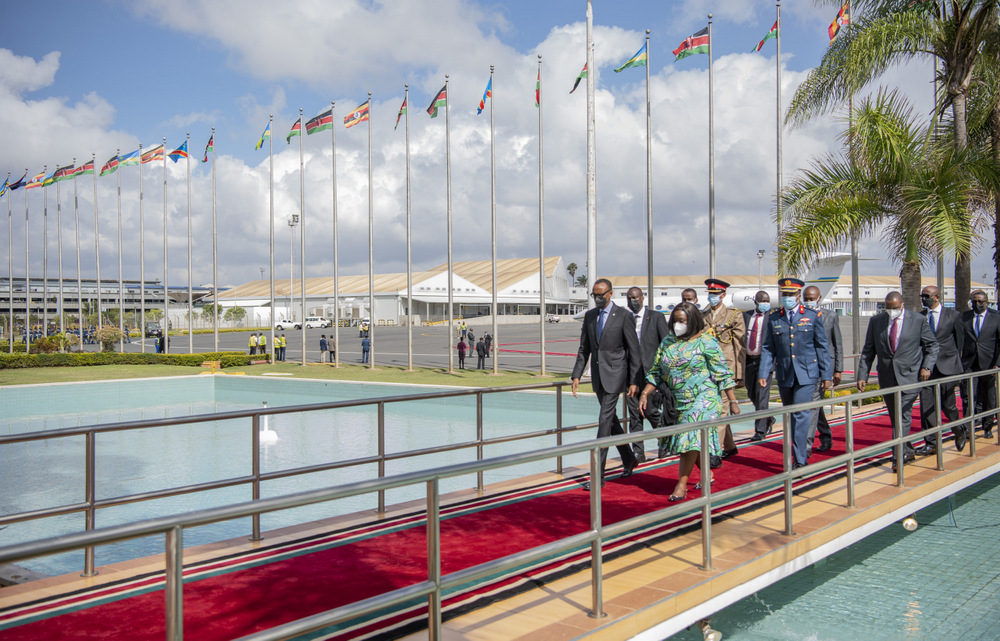
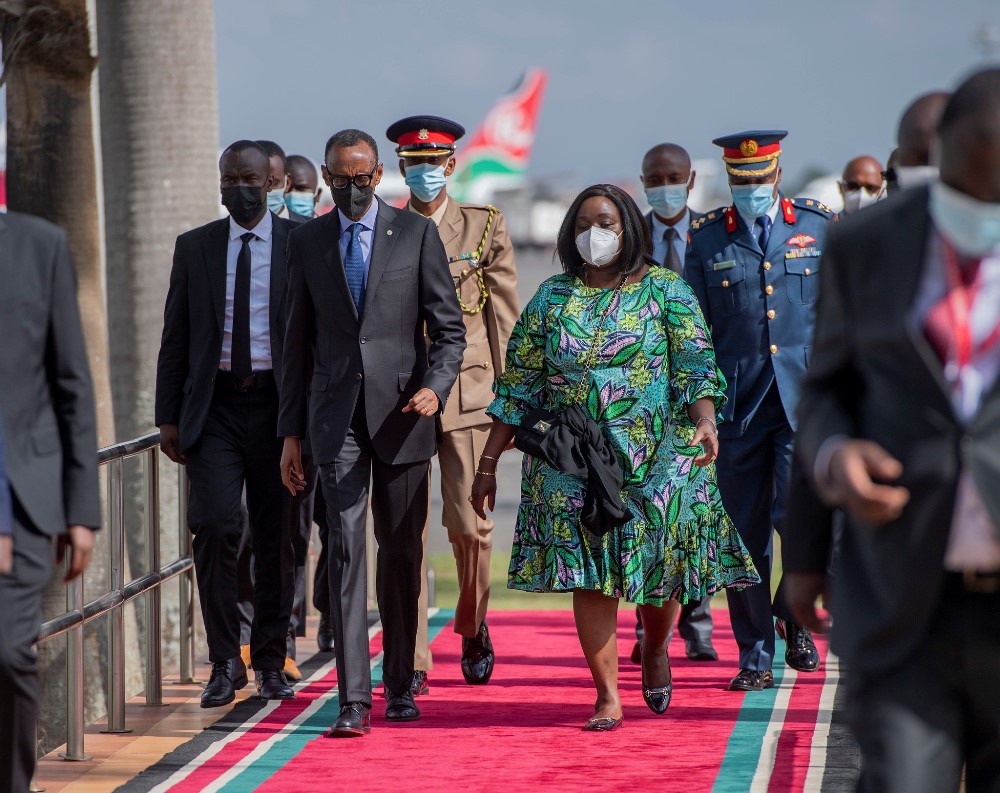
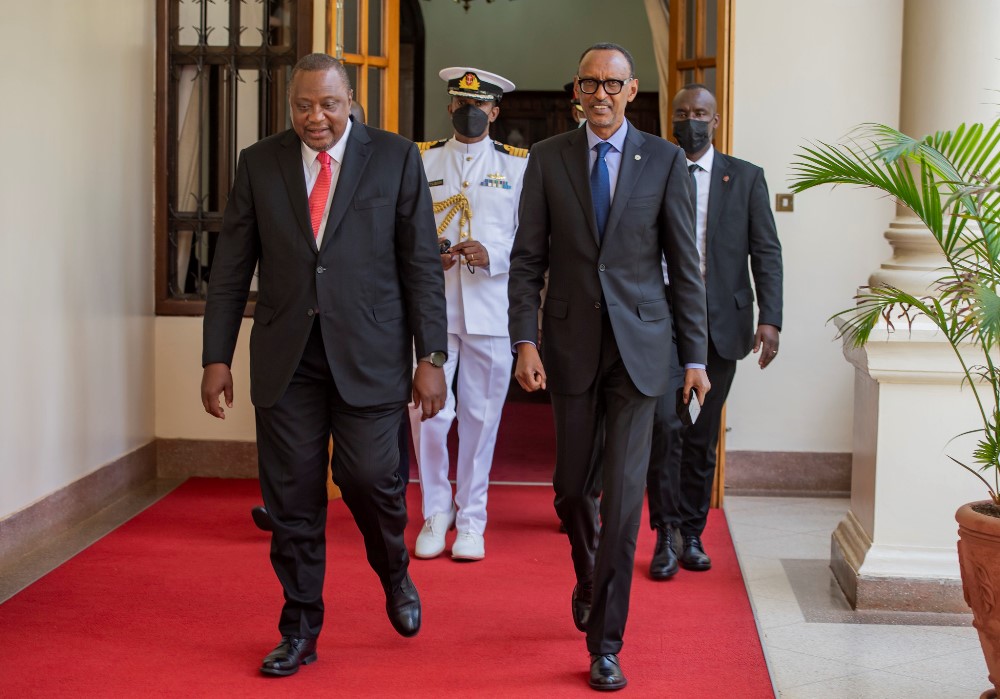
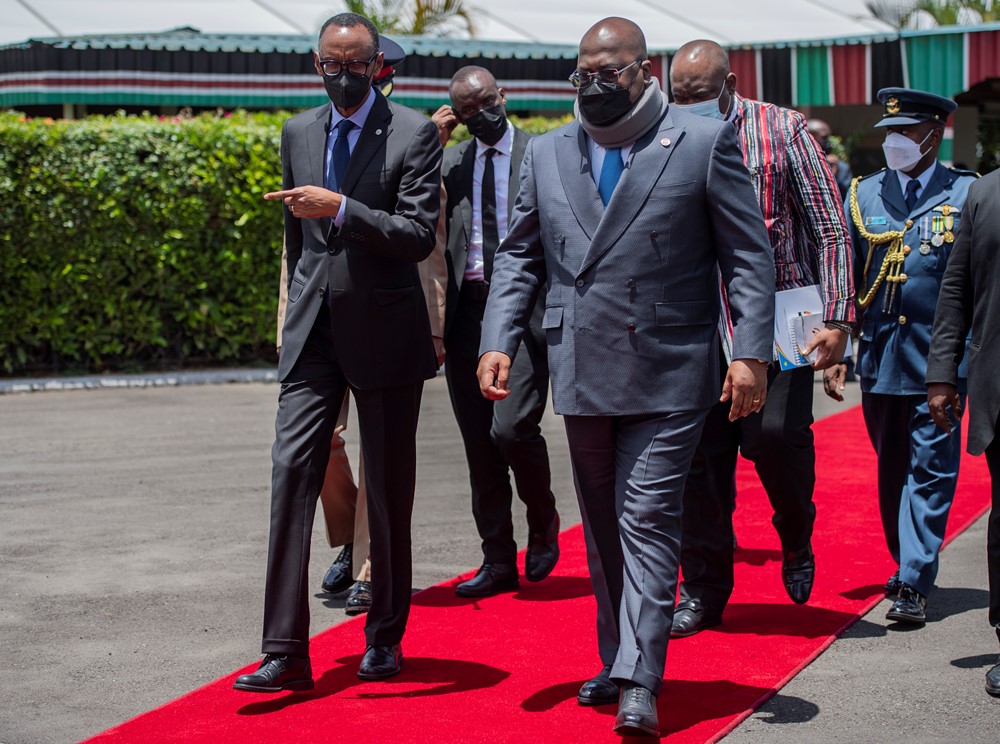
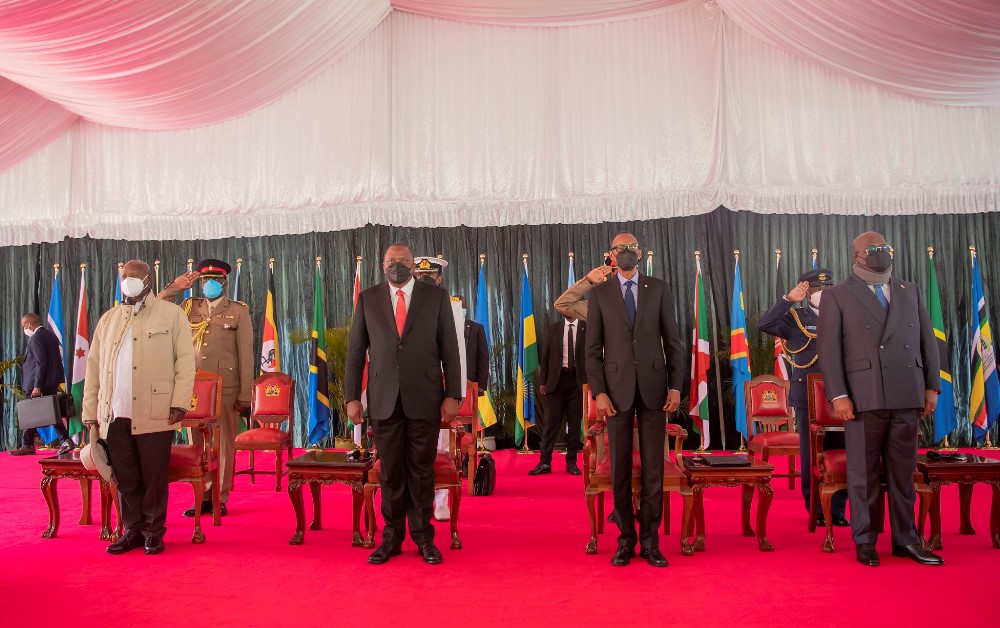
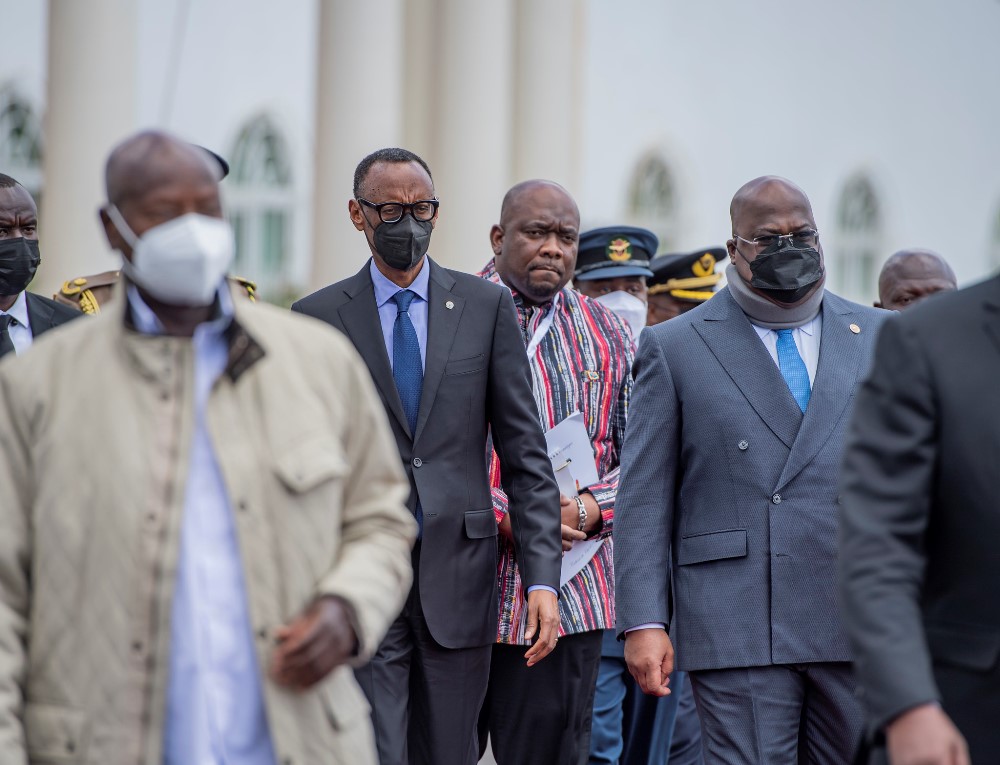
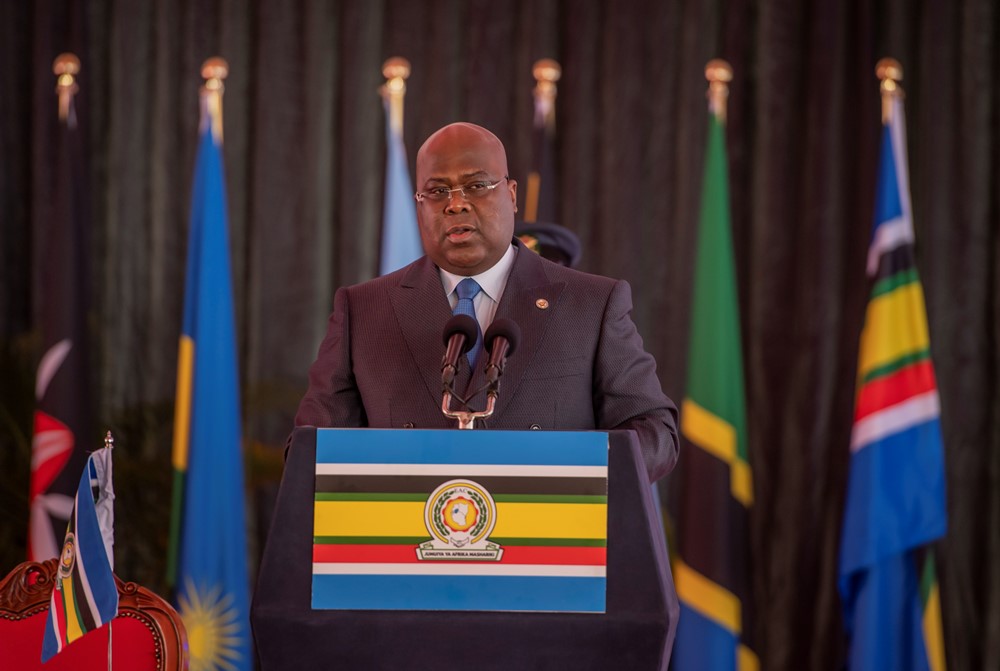
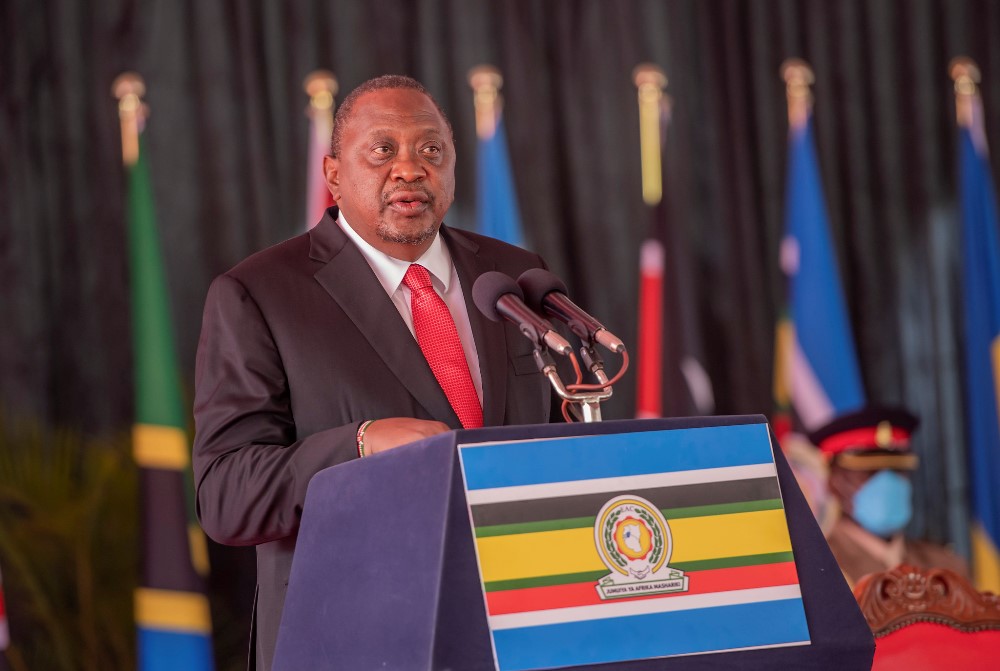
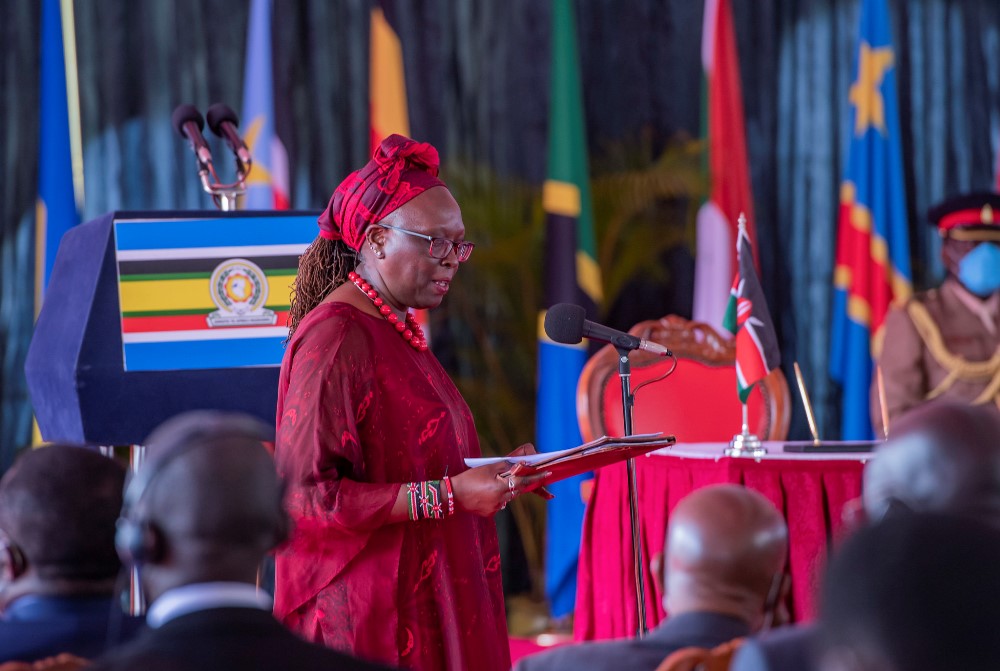
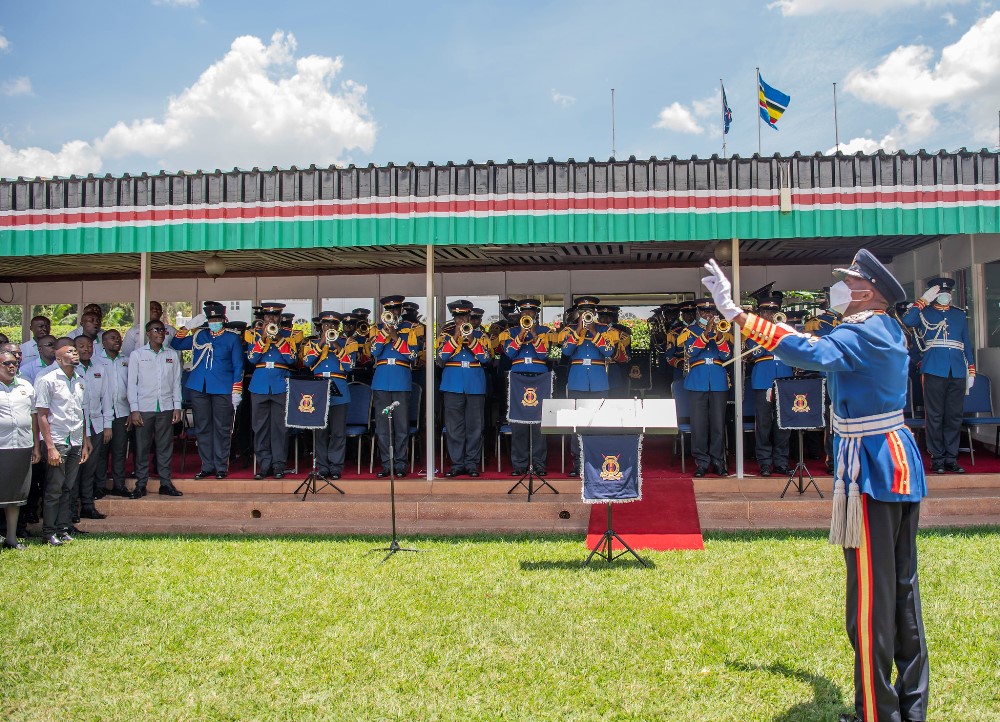
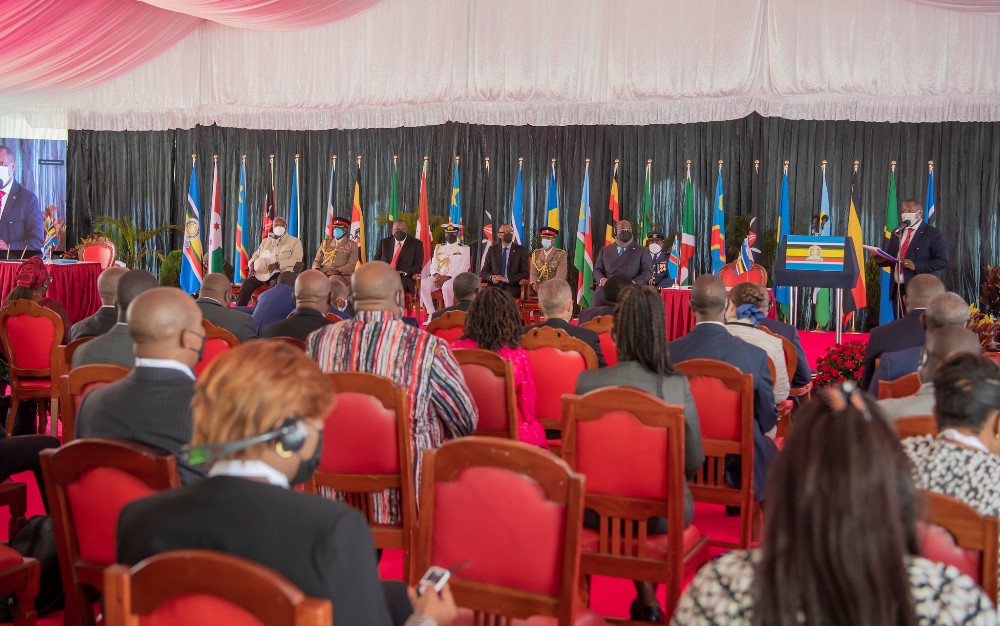
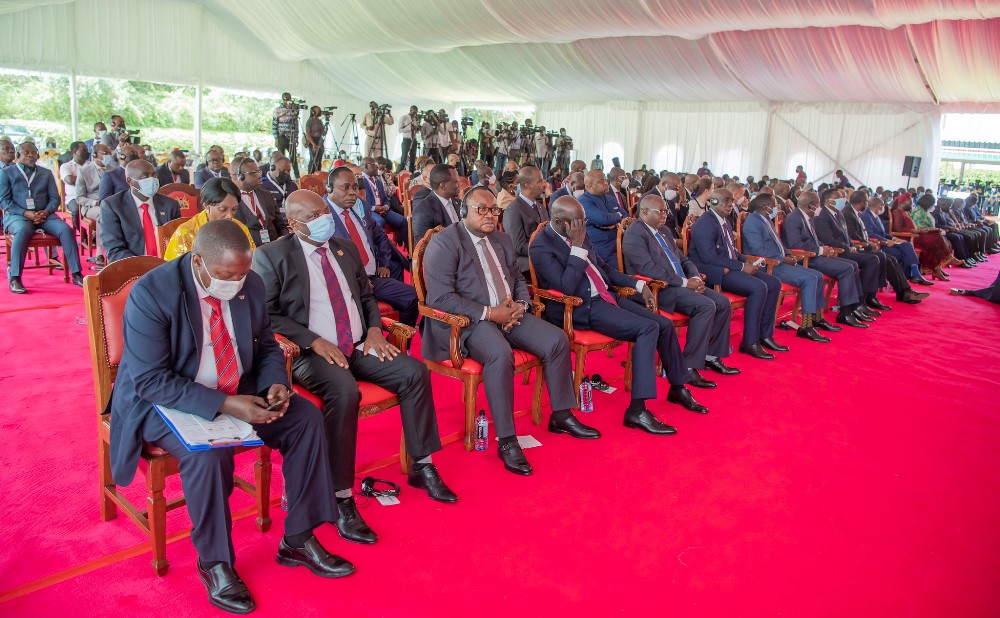
The ceremony took place at Kenya’s State House in Nairobi, one week after the country was admitted into the regional bloc becoming the seventh member state.
DRC was given the deadline of 14th April to have signed the accession treaty to formally join EAC and be added to the bloc’s map.
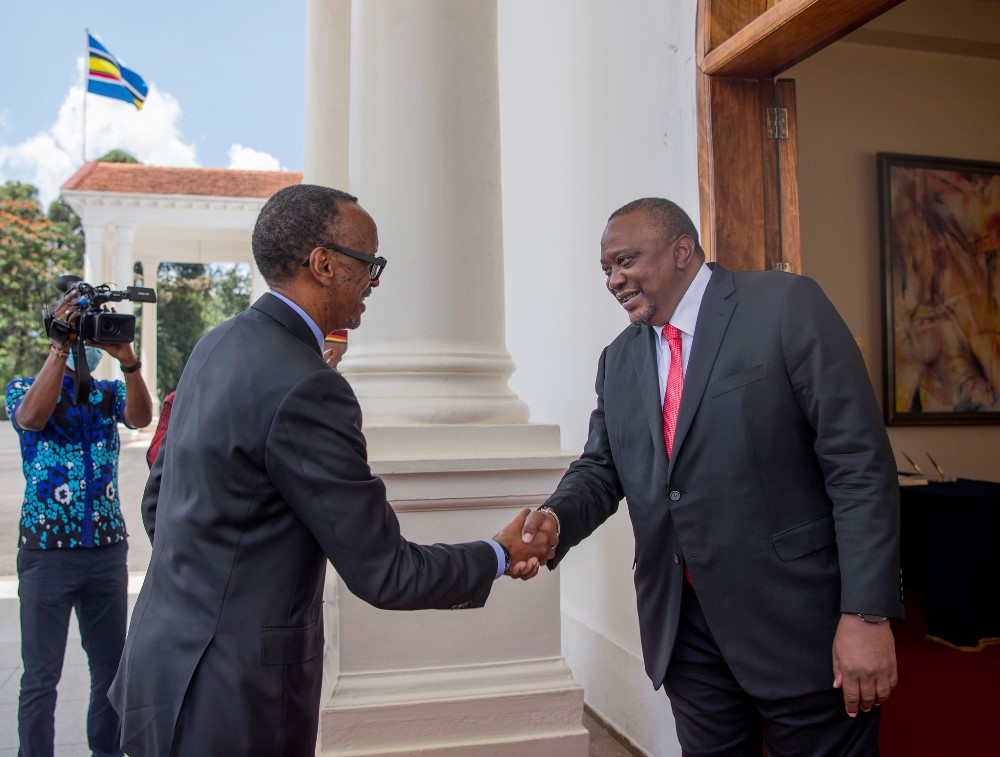
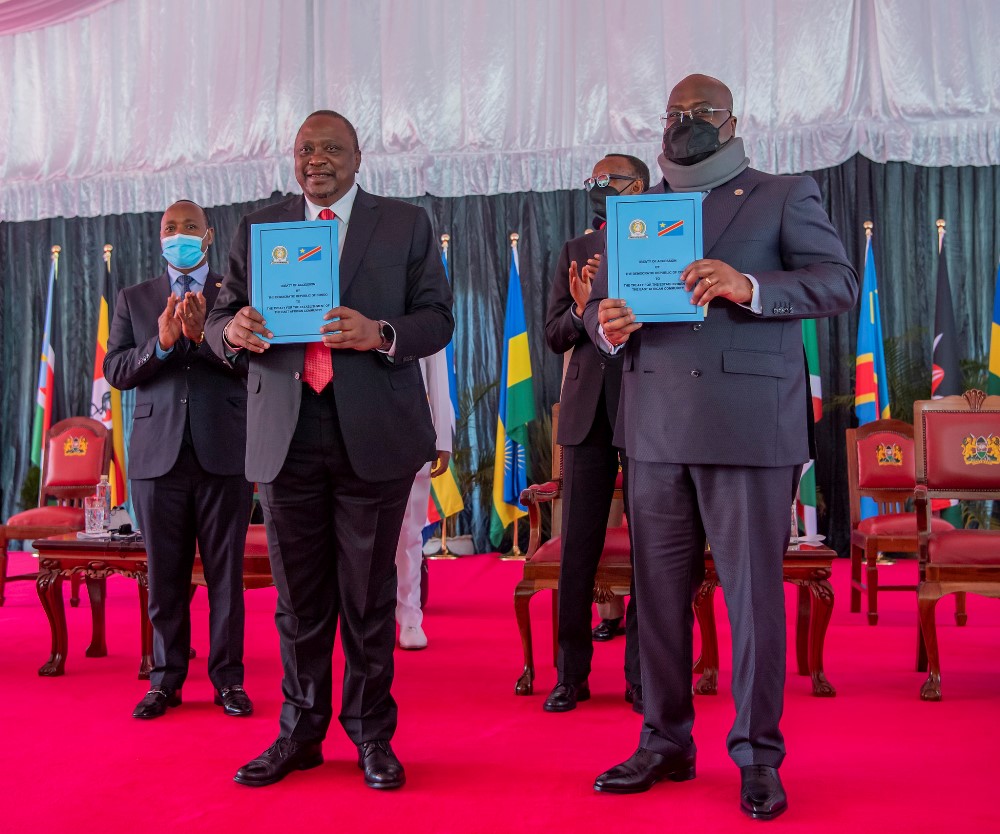
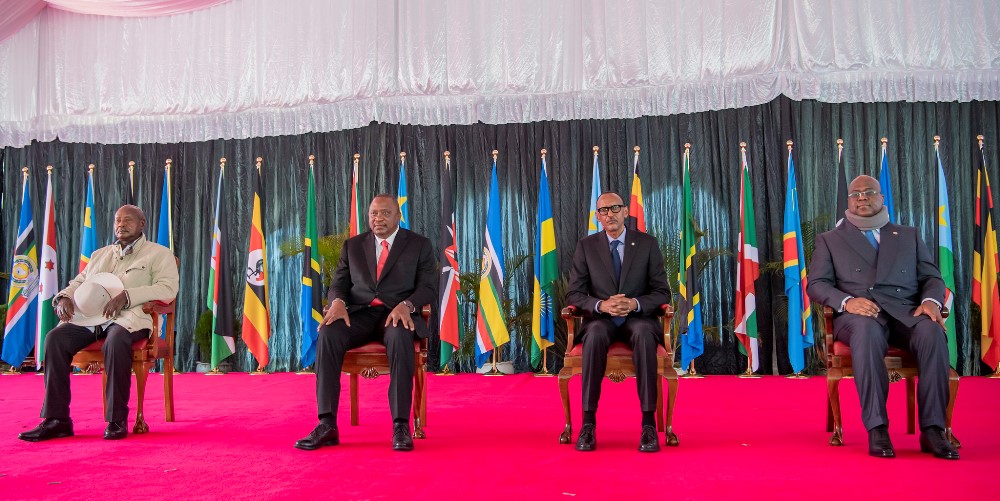
Rwandan President Paul Kagame and his counterpart of Uganda witnessed the signing ceremony between the President of DRC Felix Tshisekedi and Uhuru Kenyatta of Kenya who also serves as the current Chairperson of the African union.
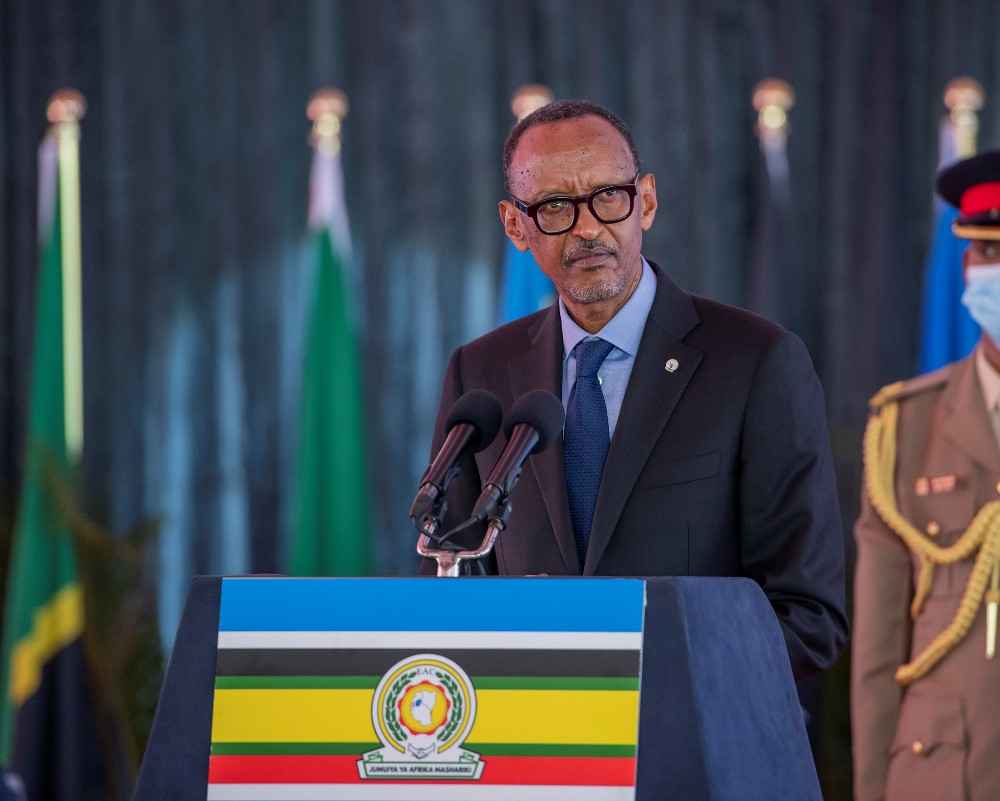
Speaking after the ceremony, Kagame reiterated commitment to work with his counterparts to deepen the bloc’s integration.
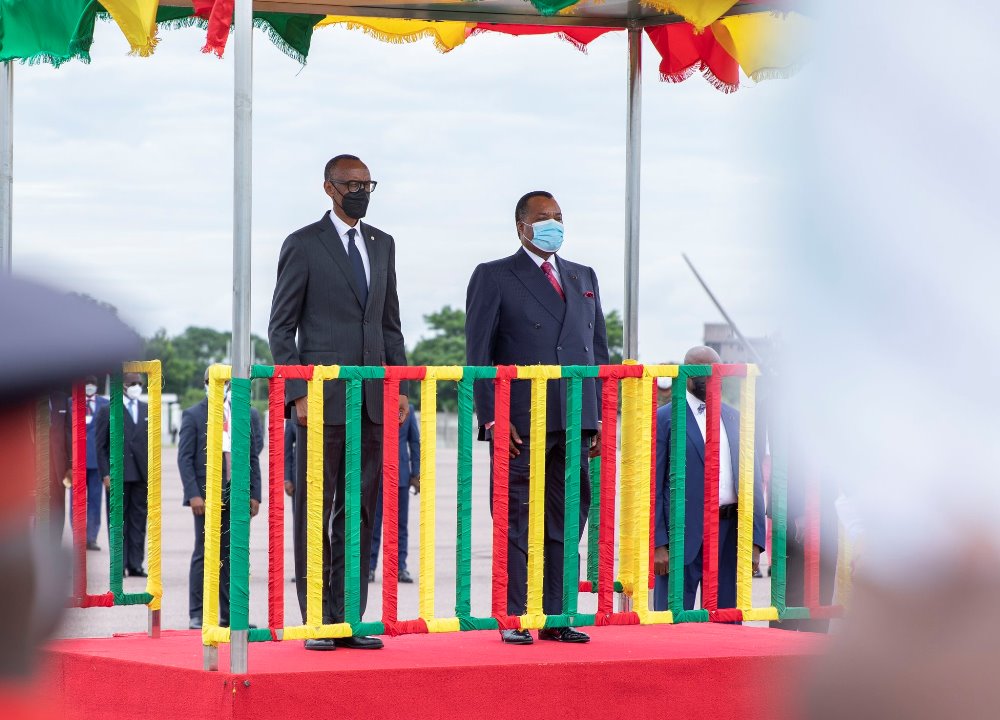
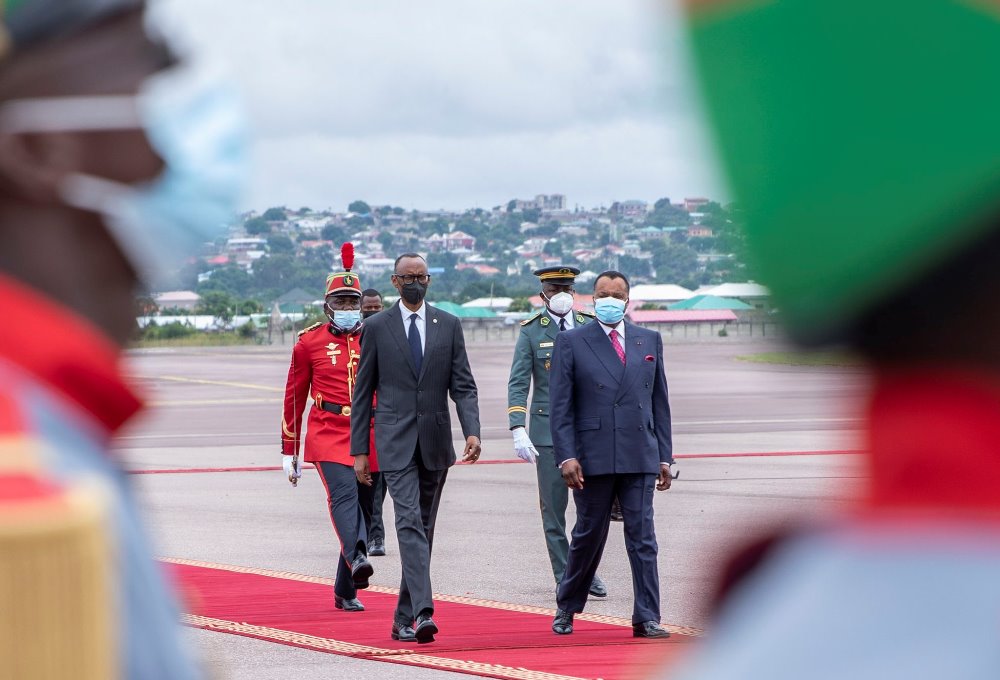
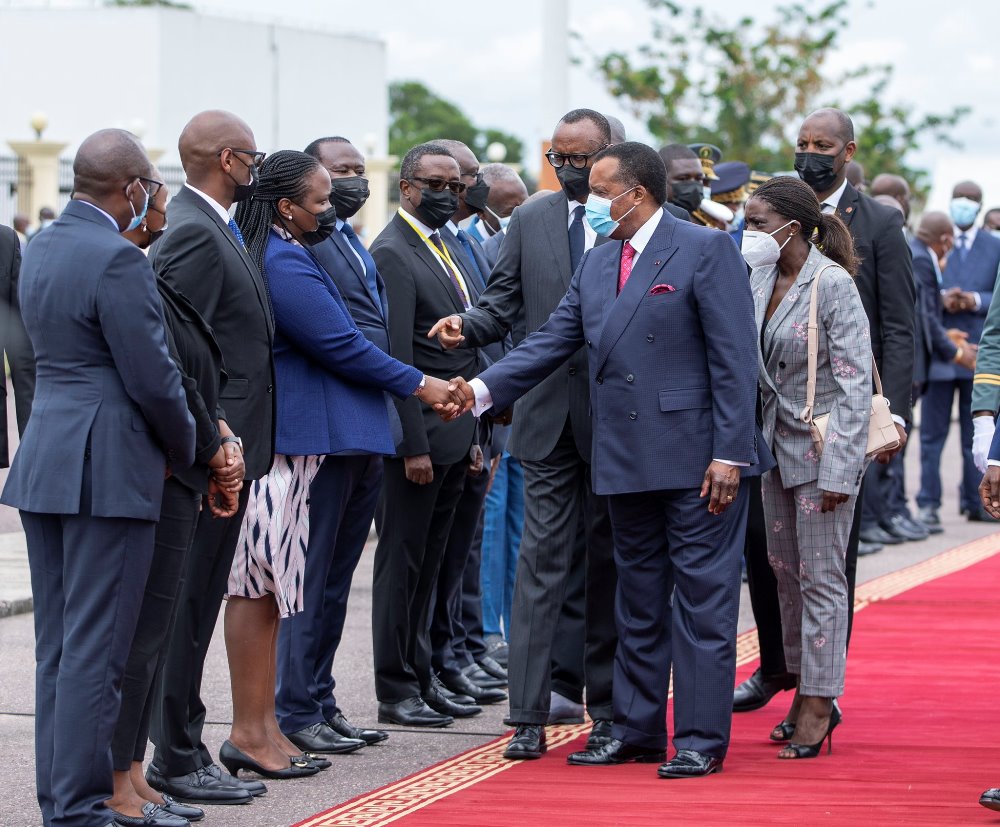
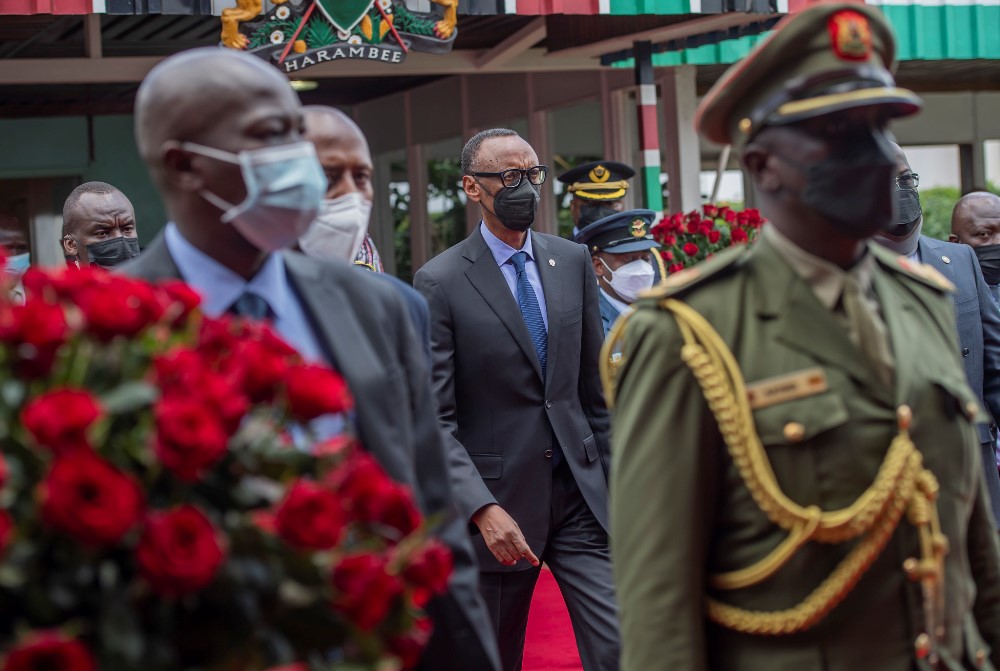
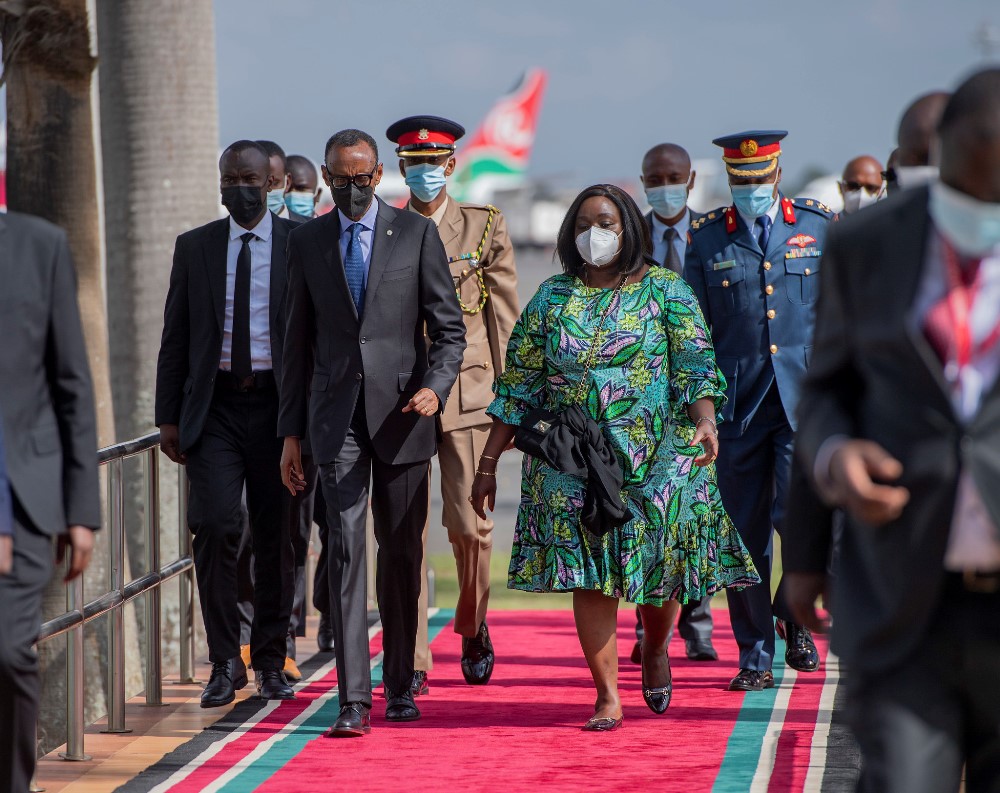
Below are pictures that marked the visit of President Kagame on his visit to Kenya to attend the ceremony.
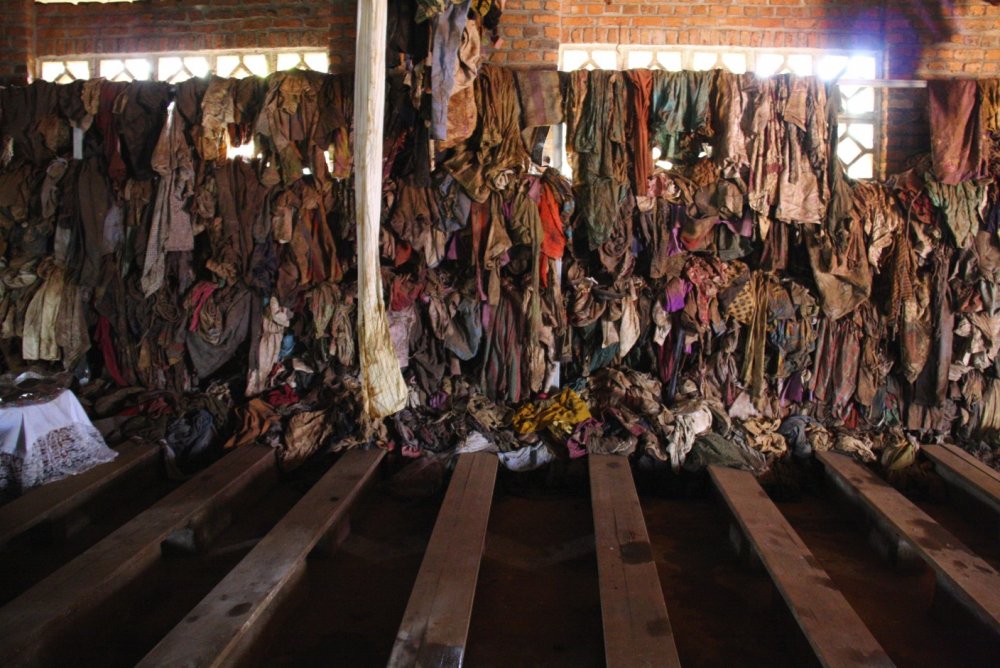
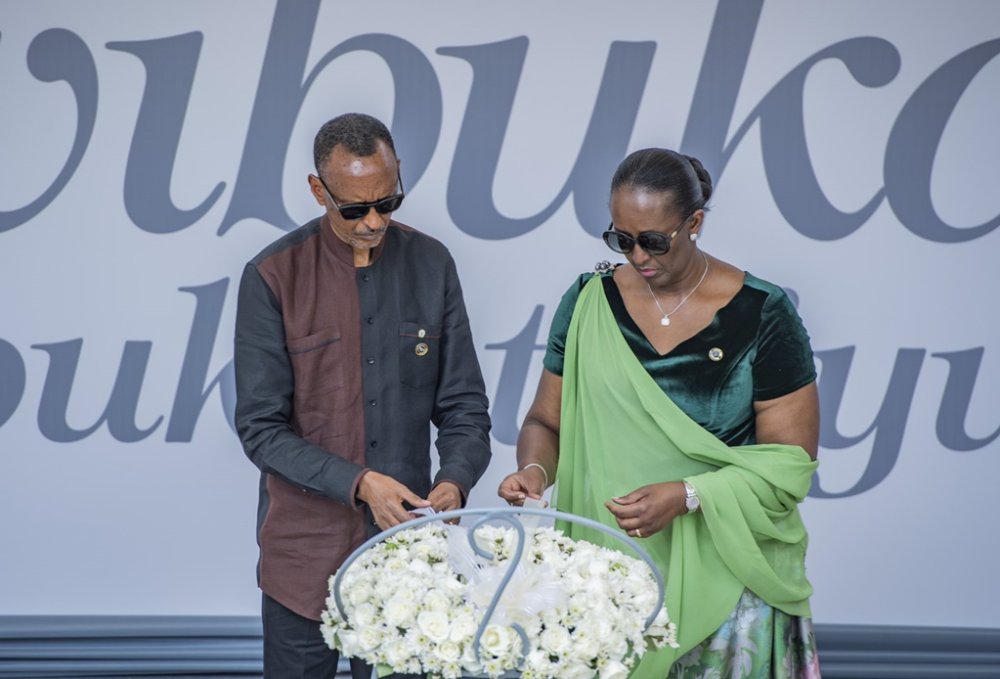
This year’s commemoration activities started on 7th April 2022 during an event presided over by President Paul Kagame and First Lady Jeannette Kagame who lit the flame of hope at Kigali Genocide Memorial.
In a message released via Twitter handle, the team revealed that it stands in solidarity with Rwandans during difficult times of remembering Genocide against Tutsi which claimed lives of more than 1 million victims killed for their innate personality.
“In this week of national mourning, in Rwanda, the PSG stand in solidarity with all Rwandans, and pays tribute to the victims of the Genocide perpetrated against the Tutsi in 1994. Remember, Unite, Renew,” reads the tweet.
The team signed partnership with Rwanda Development Board (RDB) three years ago to market Rwanda’s touristic attractions, creative culture and its openness to welcome business partnerships from France and across the world among others.
He paid homage to victims as Rwanda began the 28th commemoration of Genocide against Tutsi on 7th April 2022.
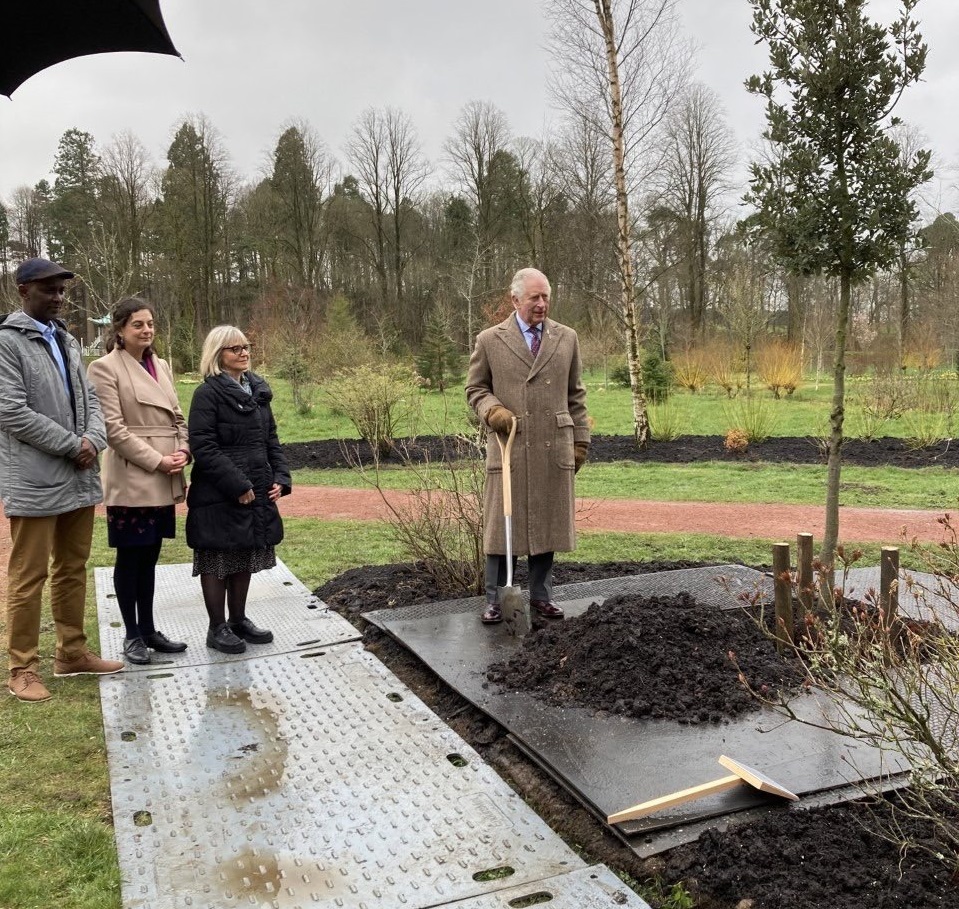
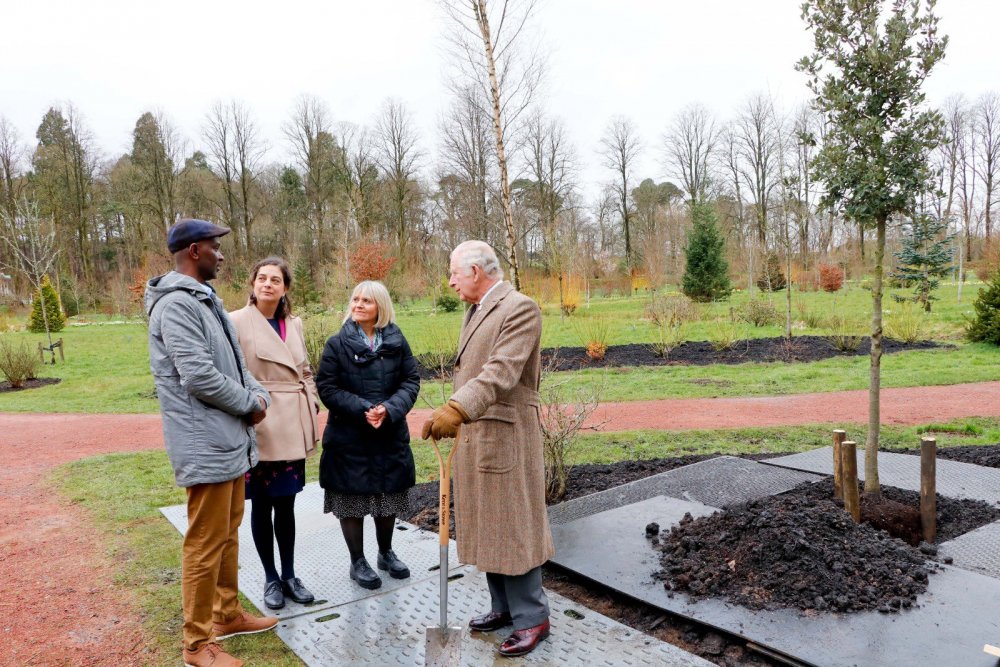
“Kwibuka means remember and Kwibuka 28 commemorates and reflects on the victims of the 1994 Genocide against the Tutsi that took place in Rwanda. Yesterday, The Prince of Wales planted a tree at Dumfries House in memory of those who were killed,” reads a message posted via Twitter handle of Charles.
The Prince was joined by people including former Rwandan international football player and Genocide survivor, Eric Murangwa Eugène.
In 2018, Eugène Murangwa was given an MBE award in Queen’s New Year’s Honours for raising awareness and education about the 1994 Genocide against the Tutsi in UK schools.
The Queen’s New Year’s Honours are traditionally given to individuals who have gone an extra mile to help others or for those who have achieved outstandingly in a particular field.
The MBE means Member of the Most Excellent Order of the British Empire.
An MBE is given for an “outstanding achievement or service to the community.
Prince Charles is among dignitaries expected to attend the Commonwealth Heads of Government Meeting (CHOGM) scheduled to take place in Kigali, Rwanda during the week of 20th June 2022.
Affected residents were immediately taken to Mushaka Health Center while four of them were transferred to Mibirizi Hospital.
The executive secretary of Nzahaha Sector, Jean de Dieu Rwango has comforted relatives and urged residents to prevent whatever that might put lives at risk.
“We assure to keep standing in solidarity with families whose relatives have been struck by lightning as we rushed to provide emergency assistance following the incident. We also request them to continue following measures aimed at preventing lighting,” he said.
Affected residents are in good state except one of them receiving intensive care.
Recently, lightning struck dead a student in the same area.
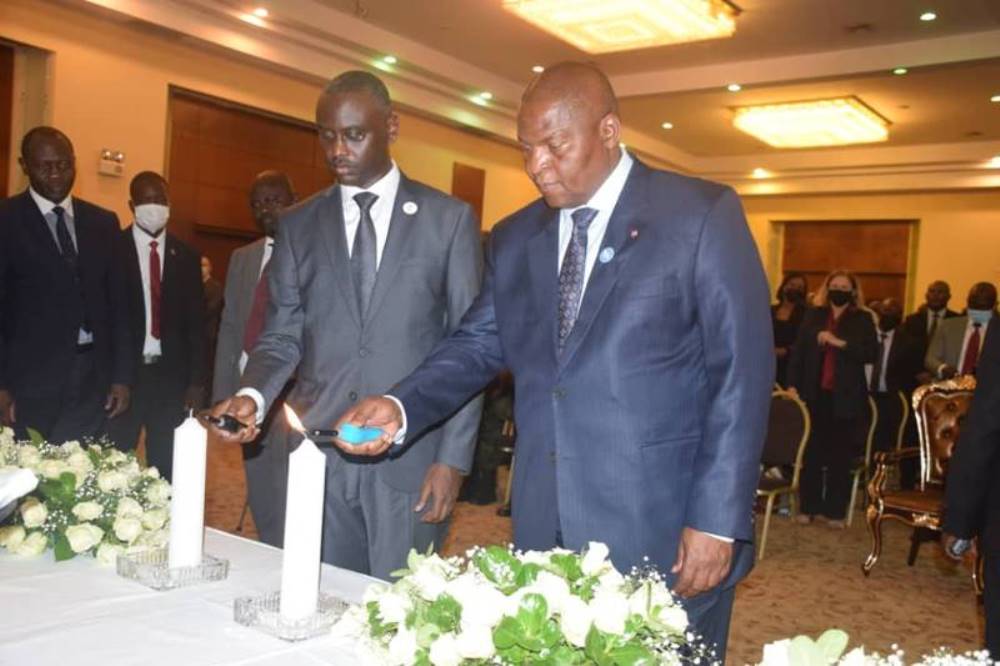
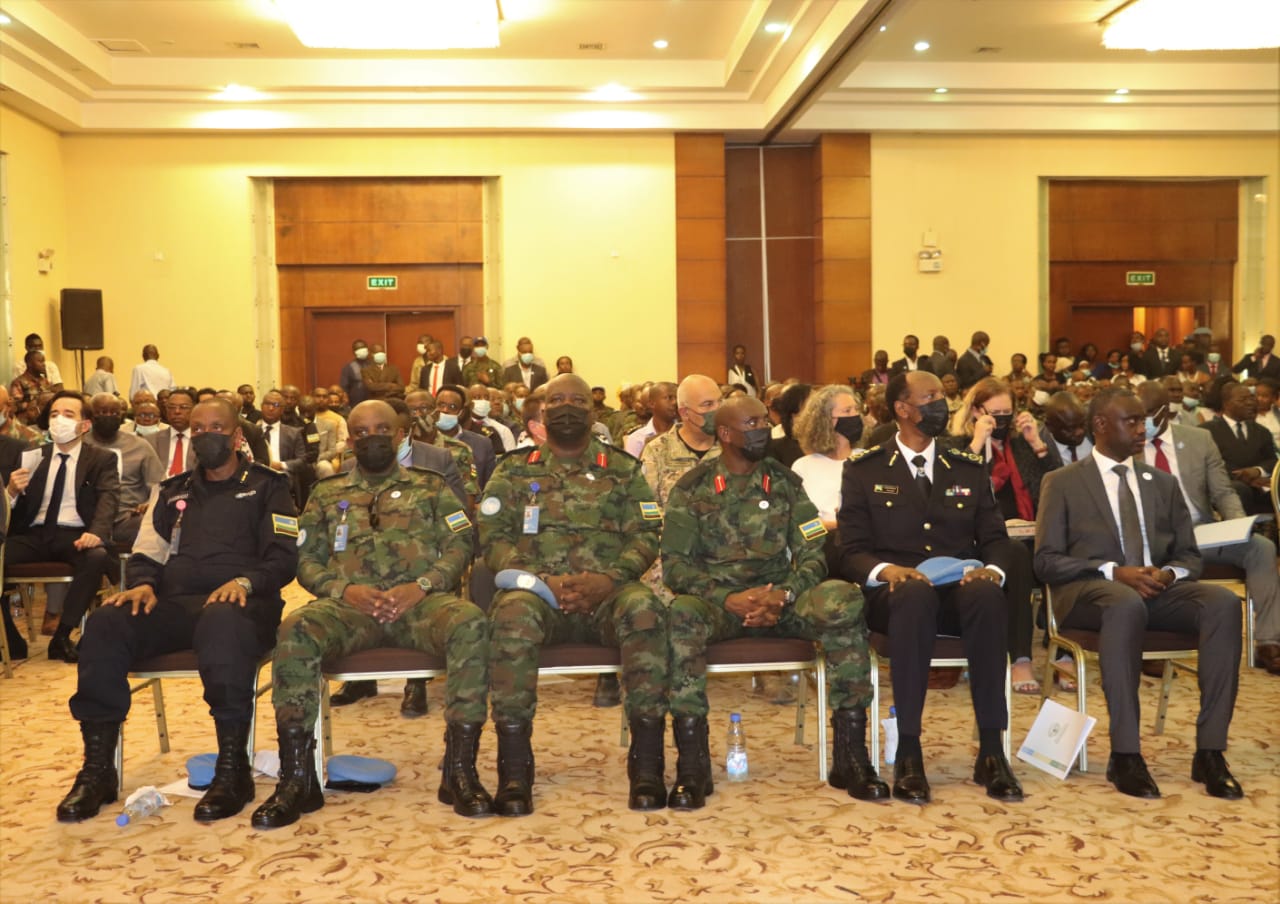
In CAR, President Faustin Archange Touadera joined Rwandans living and working there to pay tribute to more than one million innocent lives massacred during the 100 days of horror, in the event held in the capital Bangui.
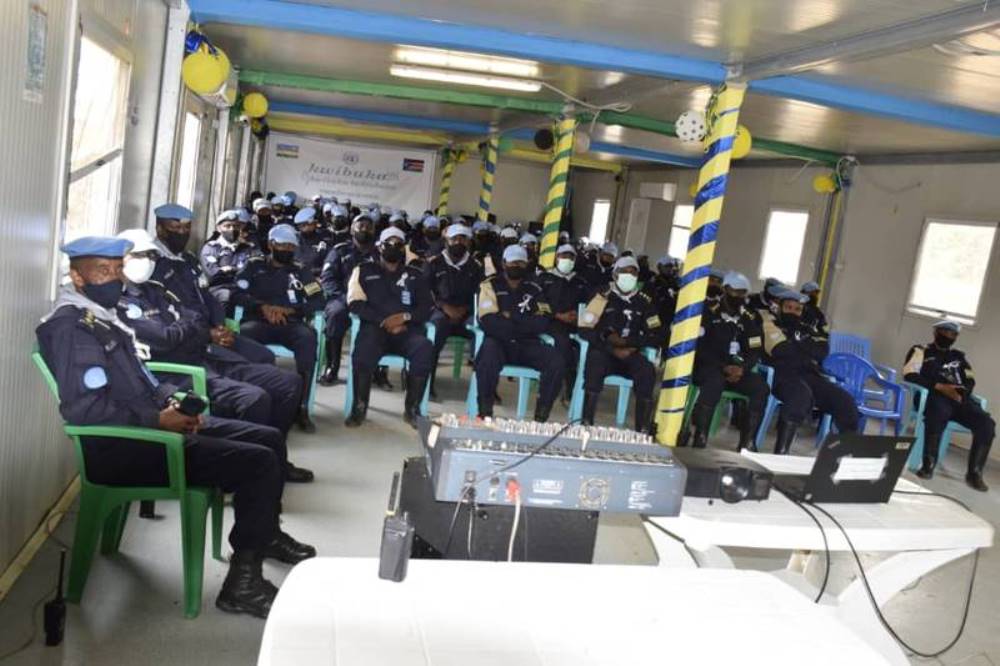
Rwanda maintains three Police contingents under the UN Multidimensional Integrated Stabilization Mission in the Central African Republic (MINUSCA), with two of them operating the Bangui.
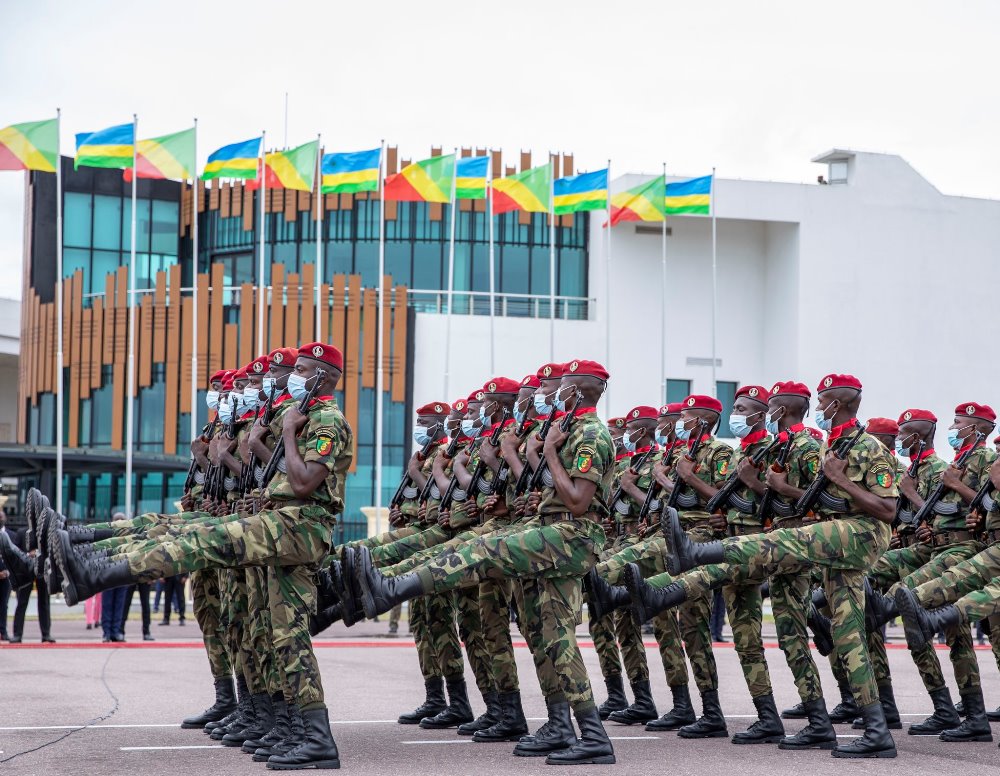
The commemoration was marked with the lighting of the candles as sign of hope and one minute of silence to pay respect to the victims of the Genocide against Tutsi in Rwanda in 1994.
The event was also attended by diplomats and consulates accredited to CAR as well as top leaders of MINUSCA. It was characterized with testimonies from survivors depicted the long journey they lived during the horror period and how, despite being minors, took over the challenging parental responsibilities.
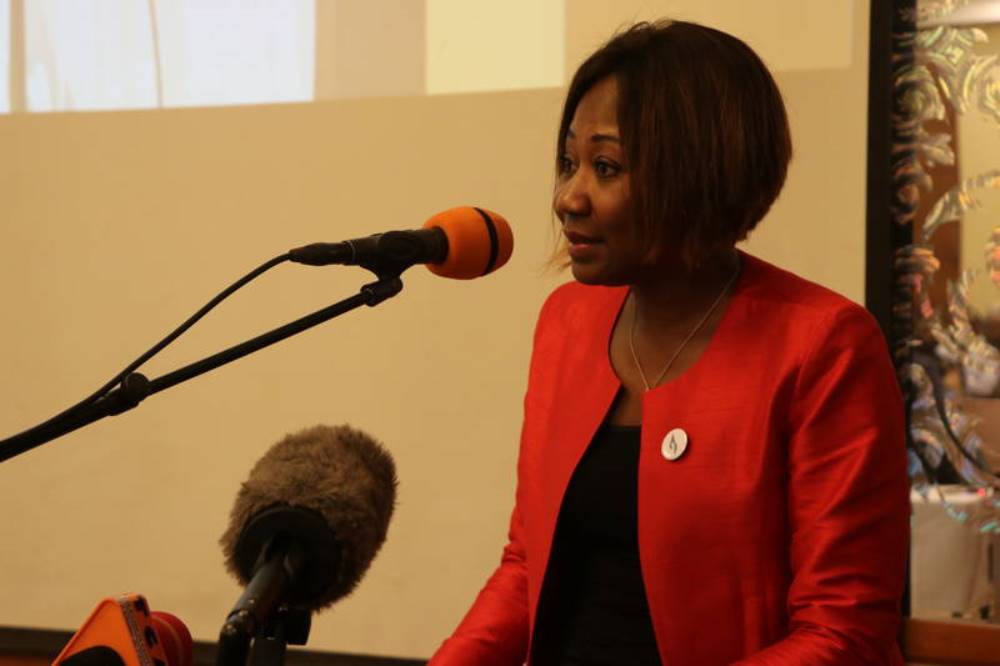
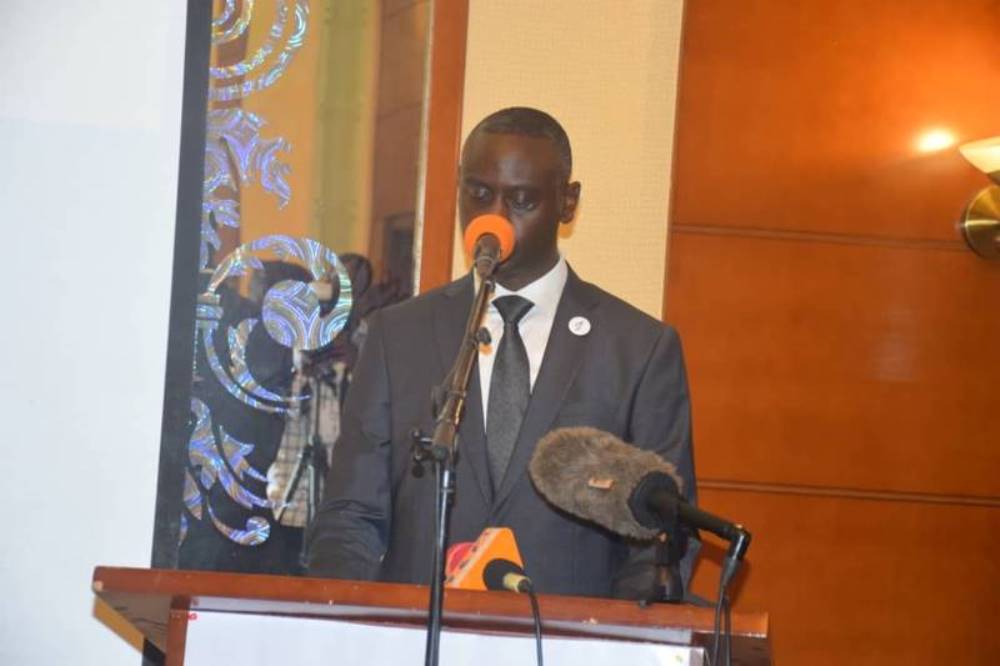
Olivier Kayumba, the Head of Rwanda Diplomatic Mission in CAR thanked President Touadera for joining Rwandan community to commemorate, adding that it demonstrates “strong relationship to the prevailing good cooperation between two brotherly countries.”
He emphasized it was the history characterized by hatred, divisionism and dehumanization among the Rwandans that resulted into the loss of more than one million innocent people 28 years ago.
Kayumba explained how the Genocide was not caused by the crash of the presidential plane as some perceived.
“The Genocide against Tutsi was planned and taught through divisionism, dehumanization to exterminate a group of Rwandans,” Kayumba said.
He called on countries still harboring masterminds and perpetrators to do the right thing to bring them to justice, as well as fight genocide denial.
Minister of Foreign Affairs, Francophonie and Centrafrican Community abroad, Madam Sylvie Baïpo-Temon, who spoke on behalf of the Government of CAR, appreciated the invitation to share the history of Rwanda as a friend and a sister country.
She acknowledged the efforts by the Rwandan Government and the people of Rwanda in the reconciliation and national unity as sign of “hard work and good political will” of President Paul Kagame, who focuses on good governance and social economic development.
A moment to remember was also held in the Rwandan Police base-camp in Kaga-Bandora, about 400kms from Bangui, where another Formed Police Unit (FPU) contingent is deployed.
{{South Sudan}}
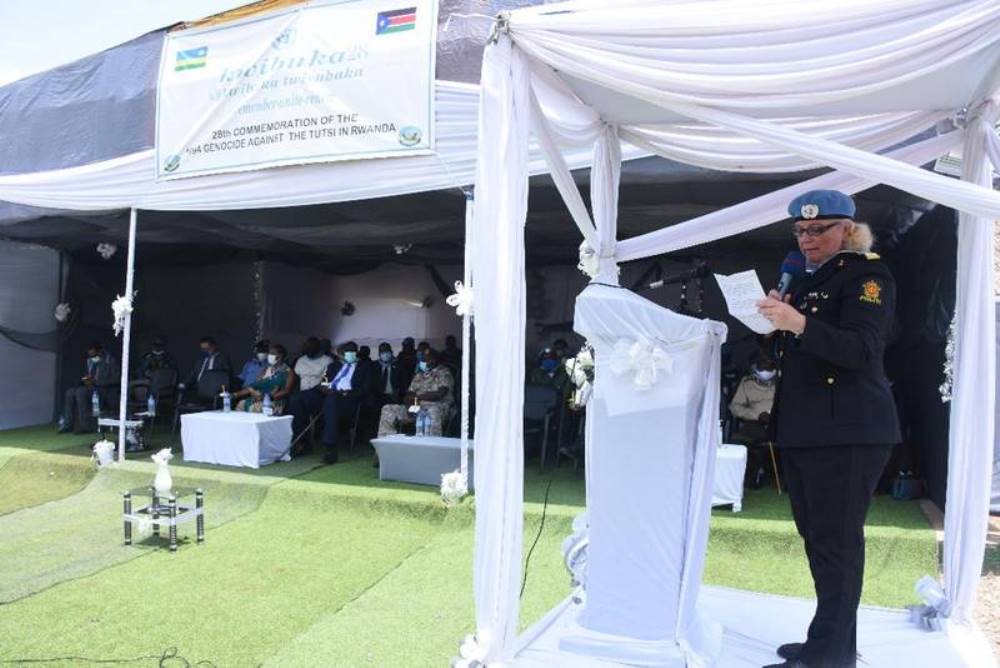
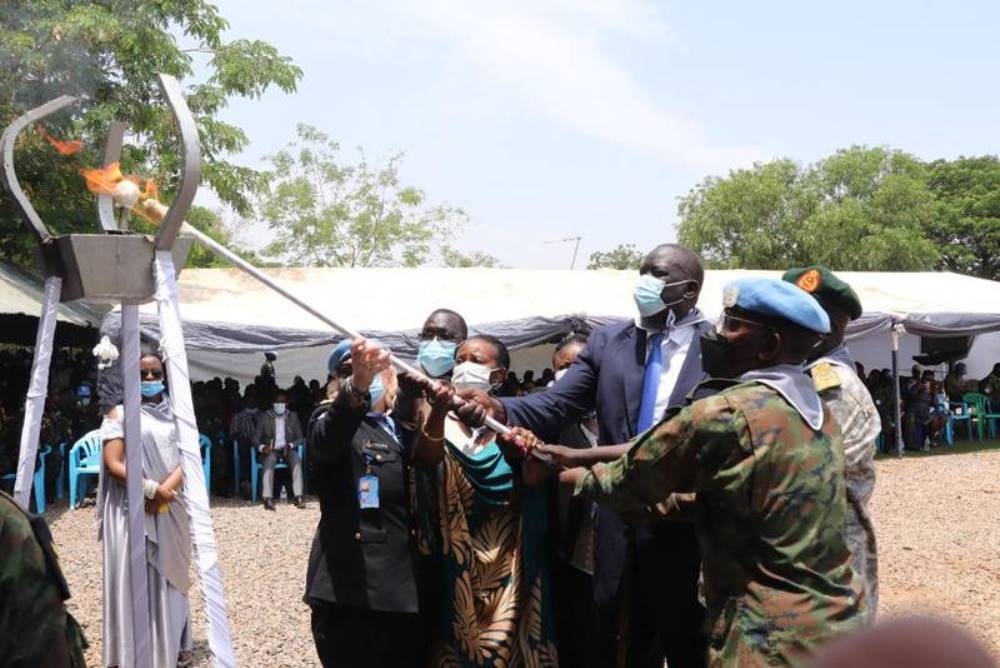
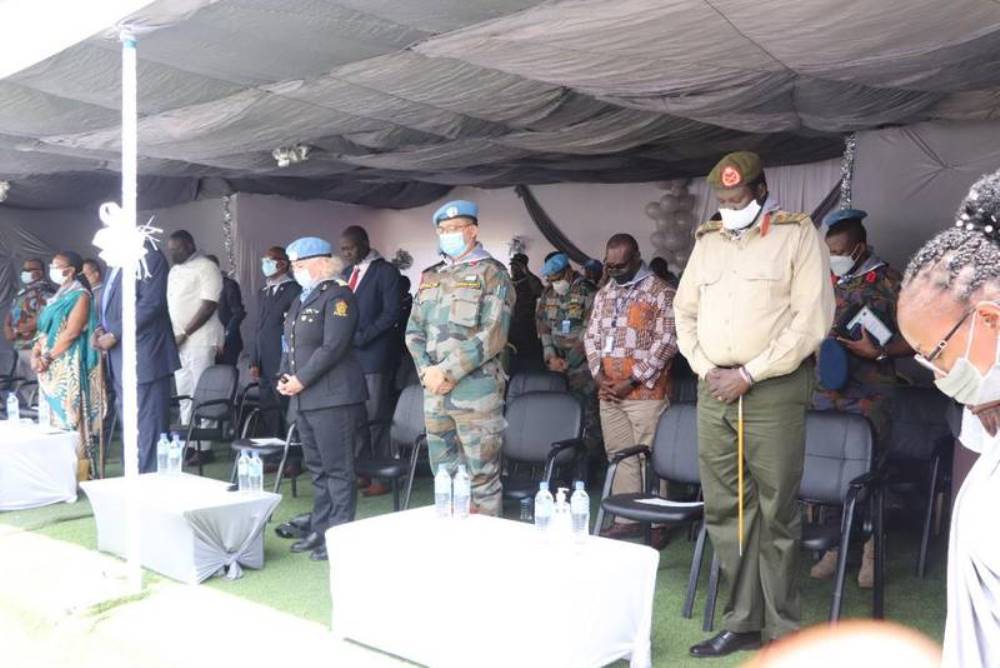
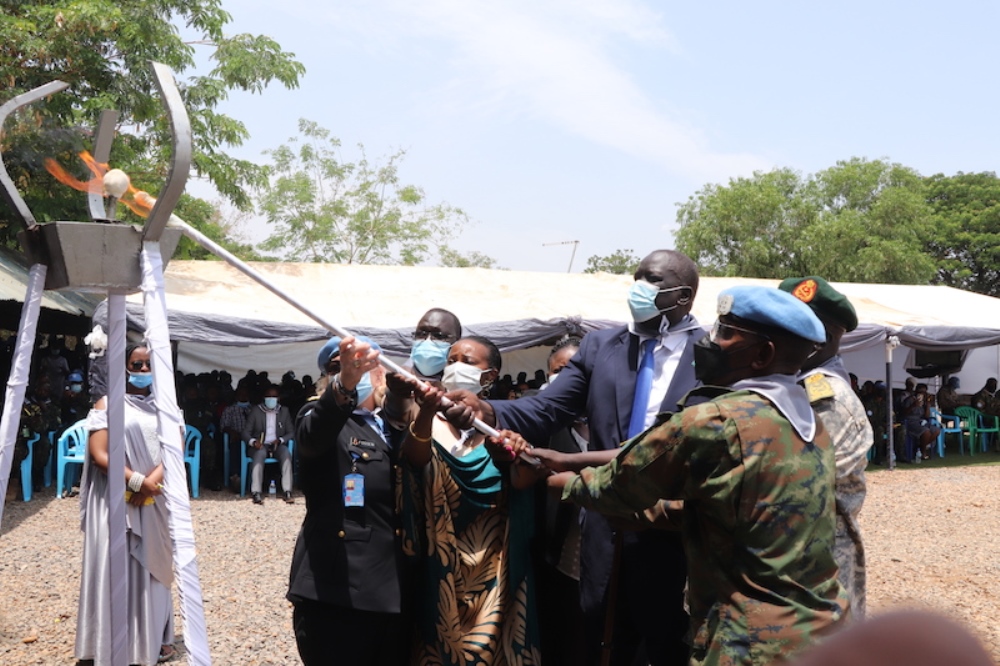
In South Sudan, where Rwanda maintains two FPU contingents, the commemoration in Juba was presided over by the Minister for Cabinet Affairs, Dr. Martin Lomuro.
It was also attended by the UNMISS Police Commissioner, Madam Christine Fossen, senior officials in South Sudan military and Police as well as officials from UNMISS leadership and other contributing countries.
Minister Lomuro appreciated Rwanda’s progress under the strategic leadership of President Paul Kagame, adding that the presence of Rwandan peacekeepers is of value and a lesson to the people of South Sudan to borrow a leaf.
In Malakal, Upper Nile State where Rwanda FPU-1 of 240 officers are deployed, they also joined the rest of Rwandans and friends of Rwanda to remember.
It can often be difficult for people to know how to comfort their loved ones when it comes to a pain they can’t change.
It can either be your parents, spouse or a person you love. Here is how you can comfort them.
{{Make the first step }}
When it comes to grieving, it is hard to make the first step and approach people to tell them how you feel.
It is better to make the first step and approach your loved one who is grieving and ask them how they feel and how you should help.
{{Being there without forcing them to talk }}
Sometimes we think helping is telling someone to talk but often silence can be fundamental.
When you tell your loved one you are there to listen, they should not be forced to talk about their testimonies. They can talk about how they feel at the moment but going deep into what happened is not really essential.
{{Be proactive}}
Sentences like ‘call me if you need me’ or ‘I’ll be there if you need me’ are usually not very effective.
What is more effective is to be proactive, grieving people will not usually call you if they need something. What they really need is for people around them to figure out something that would be helpful and just do it.
Small actions like helping them in their day-to-day activity are all that they need from you.
{{Watching your words}}
Words like ‘It is what it is’ or ‘It happened for a reason’ or ‘I know how you feel’ are never helpful.
Even though they can be true at some point it is not wise to use them at the moment, those can intensify their pain or make them angry.
Be soft and be gentle and most importantly be attentive.
{{Knowing your limits }}
When you love someone, you can often want to rid them of their pain but you have to know that you cannot change their situation. You can’t reverse what happened. That is why you need to accept that there is a limit to what you can do.
Nothing you can say or do will fix this. You can, however, tell them your heart is with them. Let them know you are willing to sit with them and their pain.
{{Do not ignore them and their pain}}
You should not ignore what they are going through because you do not know what to do or how to do it. Acknowledging them and their pain is crucial.
They need to hear from you that you are there for them, that you will help them, listen to them and give them time to grieve and express their loss.
Under the terms of the MoU, the two parties will evaluate the feasibility of circular economy projects focused on collecting used cooking oil and waste oils, waste management valorisation and recycling. Other fields of interest are agriculture, especially bio-feedstock production and the transformation into decarbonised products.
This is in addition to forestry, especially forest conservation and generation of carbon credits through a wide range of initiatives, such as reducing CO2 emissions from the wood-fuel value chain and other service activities.
Other sectors of cooperation under the MoU include innovation and digital information technology targeting circular economy, agriculture, forestry, off-grid energy, and other business areas, such as sustainability, health, safety, security and environment.
The MoU aligns with Rwanda’s goal to fast-track economic development by enabling private sector growth and Eni’s commitment to increasing energy efficiency in African countries, leveraging agro-industrial projects in a sustainable framework.
Commenting on the signing, RDB CEO, Clare Akamanzi said: “The government of Rwanda is committed to working with the private sector to ensure sustainable development, which is critical for present and future generations. The partnership with Eni boosts the achievement of this goal. We are hopeful that together we will implement tangible actions that will ensure improved quality of life for our people.”
Luigi Ciarrocchi, CCUS, Forestry and Agro-Feedstock Director at Eni said that the MoU will be helpful to develop a solid roadmap to deliver on the energy transition in areas where both Eni and Rwanda are at the forefront.
“The business model we are willing to implement in Rwanda focuses on long-term value creation for all stakeholders, combining economic, financial and environmental sustainability, to improve communities’ quality of life and foster the country’s development in line with the United Nations Sustainable Development Goals,” he noted.
Eni’s business model focuses on long-term value creation for all stakeholders, combining economic, financial and environmental sustainability to contribute to the United Nations Sustainable Development Goals. To this end, Eni is committed to promoting more rational use of fossil sources and greater recourse to circular and renewable sources in compliance with the provisions of the Paris Agreement.
{{About Eni}}
Eni is an integrated energy company with over 30,000 employees in 68 countries around the world. Its activities range from the development of new energy solutions to the more traditional exploration and production of hydrocarbons, the refining and marketing of oil products and biofuels; from the generation and commercialization of electricity to the production of renewable energy; from the development of chemical and bio-based products to environmental activities.
“We have made many speeches in the recent past. We just have to get down to do the work that is entailed in the statements we have made to our people. I am with you all the way to achieve the objective of deeper and wider integration of our community,” he said.
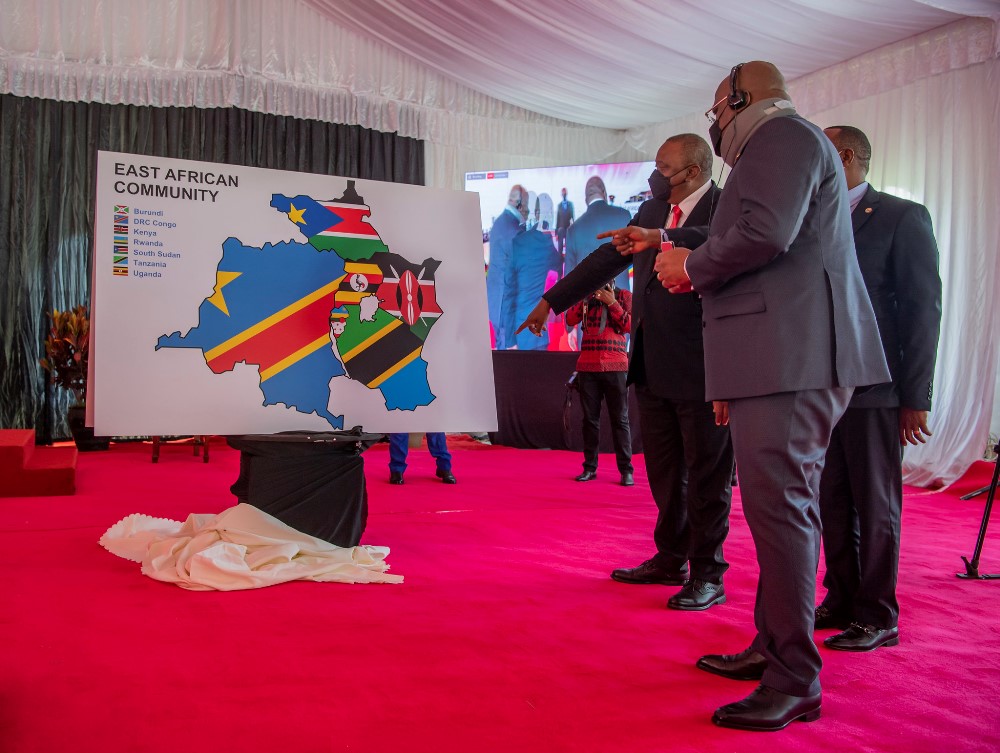
The signing of the treaty on Friday 8th April 2022 at Kenya’s State House in Nairobi saw DRC becoming the 7th EAC member state.
The ceremony hosted by Kenya’s President Uhuru Kenyatta was also attended by DRC President Felix Tshisekedi who signed the treaty, Uganda’s President Yoweri Kaguta Museveni, Paul Kagame of Rwanda, EAC Secretary General Dr. Peter Mutuku Mathuki and Kenya’s Industrialization and Trade Cabinet Secretary Betty Maina who holds the East African Community docket in acting capacity.
The signing of the treaty of accession follows the admission of DR Congo into the EAC as the seventh member of the regional bloc during the virtual 19th Extraordinary Summit of EAC Heads of State chaired by President Kenyatta on March 29.
Welcoming DR Congo into the EAC, President Kenyatta said that the coming of the new member into the Community will open doors of opportunity for expanded trade and cooperation.
“With the accession of the DRC, our Community’s population now stands at about 300 million and our combined Gross Domestic Product (GDP) will now stand at $250 billion,” Kenyatta said.
The Head of State added that the accession of DR Congo as a member of the EAC will also strengthen the economic muscle and competitiveness of the regional economic bloc in the continent as well as globally.
“To my brother and friend President Tshishekedi and the people of the DRC, we welcome you to the EAC Customs Union and the EAC Common Market.
These two are the signature pillars of our community and the foundation upon which the social, political, trade, investment and economic interests stand,” President Kenyatta said.
He pointed out that the accession signature immediately brings DR Congo into the realms and provisions of all the protocols and regional policies of the EAC.
He said the signing will be followed by the immediate removal of all existing Non-Tariff Barriers as well as limitations on the movement of capital, goods, services and people, saying with time this will lead to a major increase in inter-EAC trade.
In this regard, President Kenyatta urged DR Congo to conclude the remaining domestic processes as per its constitution and deposit the instruments of ratification within the stipulated six months period.
The President assured that the Community shall also develop a mechanism for the speedy ratification by DR Congo of the admission of submissions of the Community to the African Continental Free Trade Area Agreement (AfCFTA) processes.
“As agreed by the EAC partner states, the joint submission by EAC will strengthen our voice in the AfCFTA,” President Kenyatta said.
On his part, President Tshishekedi said the admission of DR Congo into the EAC was a fulfilment of dreams held by his country’s ancestors more than 60 years ago, adding that it marked a decisive shift in the country’s foreign and economic policy.
“DR Congo will actively play its role within the community so that it can become more stronger and more prosperous,” President Tshishekedi said.
President Museveni emphasized the importance of integration, saying it accelerates prosperity through the provision of a broader market for goods and improves regional strategic security.
The Ugandan leader added that the integration of African countries is easier because they share common social infrastructure including language unlike in Europe where language barrier is a big problem.
The EAC Heads of State wrapped up the ceremony, also witnessed by development partners and representatives of the private sector, by unveiling the new map of the East African Community.
The entrance of the DR Congo into the EAC adds some 90 million people into the bloc’s already existing 177 million citizens.
EAC was established in 1967.
Both Heads of State met in Kenya where they attended the signing ceremony of the treaty of accession by the Democratic Republic of Congo to the East African Community (EAC).
The development has been communicated by Museveni via Twitter handle.
“I met with H.E Paul Kagame, the President of the Republic of Rwanda shortly before we both witnessed the signing of the Treaty of Accession by the Democratic Republic of Congo to EAC at State House, Nairobi,” he tweeted.
President Kagame last met with Museveni in February 2020 during discussions held at Gatuna border aimed at seeking a solution to spoiled relations between Rwanda and Uganda.
Kagame has been receiving envoys from Museveni including Uganda’s Permanent Representative to the United Nations, Ambassador Adonia Ayebare and Lt Gen Muhoozi Kainerugaba, the first born son of Uganda’s President who serves as Senior Presidential Advisor on Special Operations and Commander of Land Forces of the Uganda People’s Defence Forces (UPDF).
The Heads of State meet at a time when efforts to restore relations to normal have reached commendable stages following discussions between President Kagame and Lt Gen Muhoozi.
The ceremony took place on Friday 8th April 2022 at Kenya’s Presidential Palace in the country’s capital, Nairobi.
The EAC Treaty has been signed in presence of Heads of State including Paul Kagame of Rwanda, Yoweri Kaguta museveni of Uganda and Uhuru Kenyatta of Kenya who is the current chair of EAC.
DR Congo became the seventh member of the Community on March 29 when the EAC Heads of State, during their 19th Ordinary Summit, admitted the country following recommendation by the Council of Ministers.
Since DRC was admitted recently, leaders have hailed its entrance into the bloc, terming it an opportunity for the bloc to become even better.
The entrance of the DR Congo into the EAC adds some 90 million people into the bloc’s already existing 177 million citizens.
Established in 1967, the EAC is a regional intergovernmental organization, also comprising Burundi, Kenya, Rwanda, South Sudan, Tanzania and Uganda, with its headquarters in Arusha, Tanzania.