The recent collapse of housing units in Kinyinya of Gasabo District is a glaring testimony of the catastrophic aftermaths of such negligence.
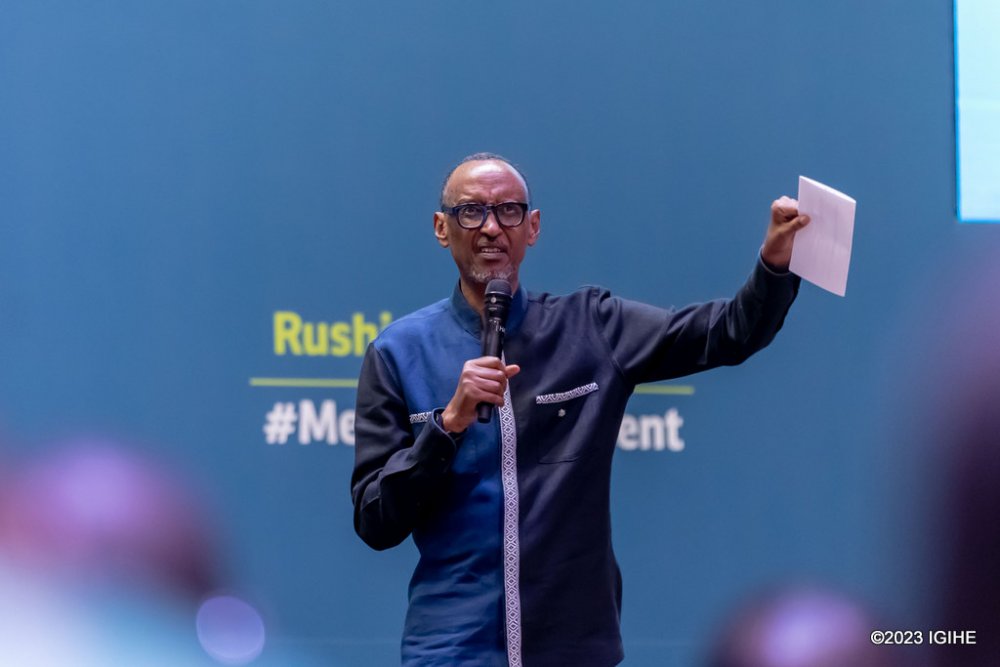
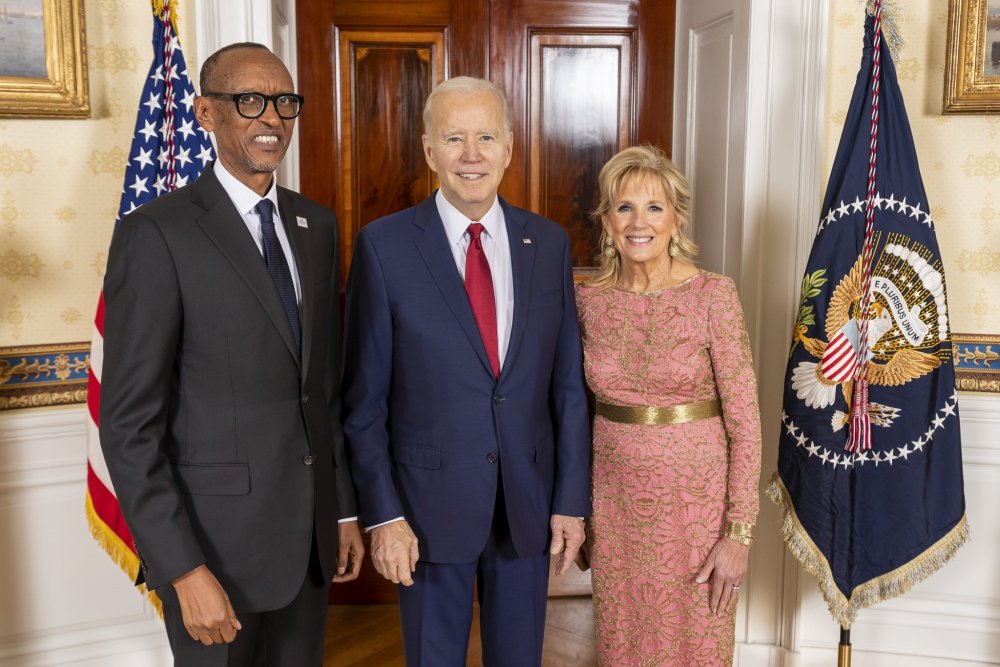
Kagame articulated his disapproval on Tuesday 28th March 2023 while officiating the closing ceremony of the National Civic Training, Itorero, where over 2,000 Cell Executive Secretaries from all over the country at Intare Arena.
He recalled the recent incident where houses built in Kinyinya of Kigali City crumbled to the ground, an event that could have been prevented had leaders acted on the telltale signs of poor quality.
Considering this situation, the Head of State requested the Minister of Infrastructure, Dr. Nsabimana Ernest to provide explanations regarding circumstances under which such unfortunate events occur.
Dr. Nsabimana revealed that an investigation into the recent collapse of housing units in Urukumbuzi Estate, developed by investor Jean Nsabimana, had unearthed a revelation that the houses were built with substandard equipment.
The President expressed his dismay at how such irregularities go undetected until buildings are officially inaugurated and handed over to citizens, leaving them vulnerable to the disastrous consequences of such faulty constructions.
Minister Nsabimana attributed the failure to report irregularities on time, poor collaboration and gaps in the implementation of policies.
Kagame exhorted leaders to undertake the necessary measures to reverse the status quo and ensure that buildings adhere to the required standards.
He also urged Cell Executive Secretaries to work collaboratively towards the attainment of shared goals, underscoring that their achievements will count only when they work together.
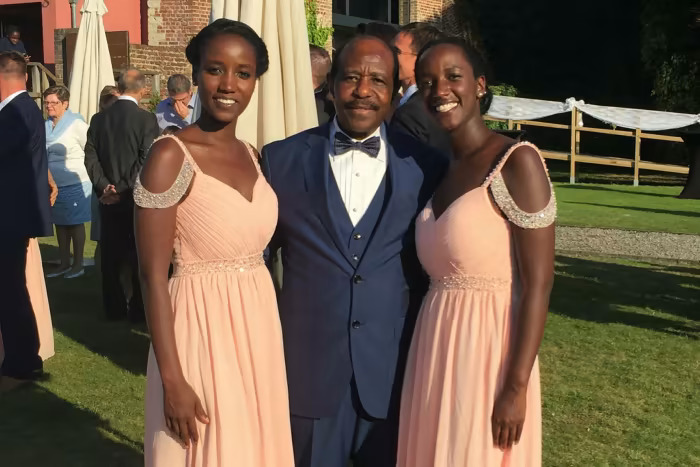
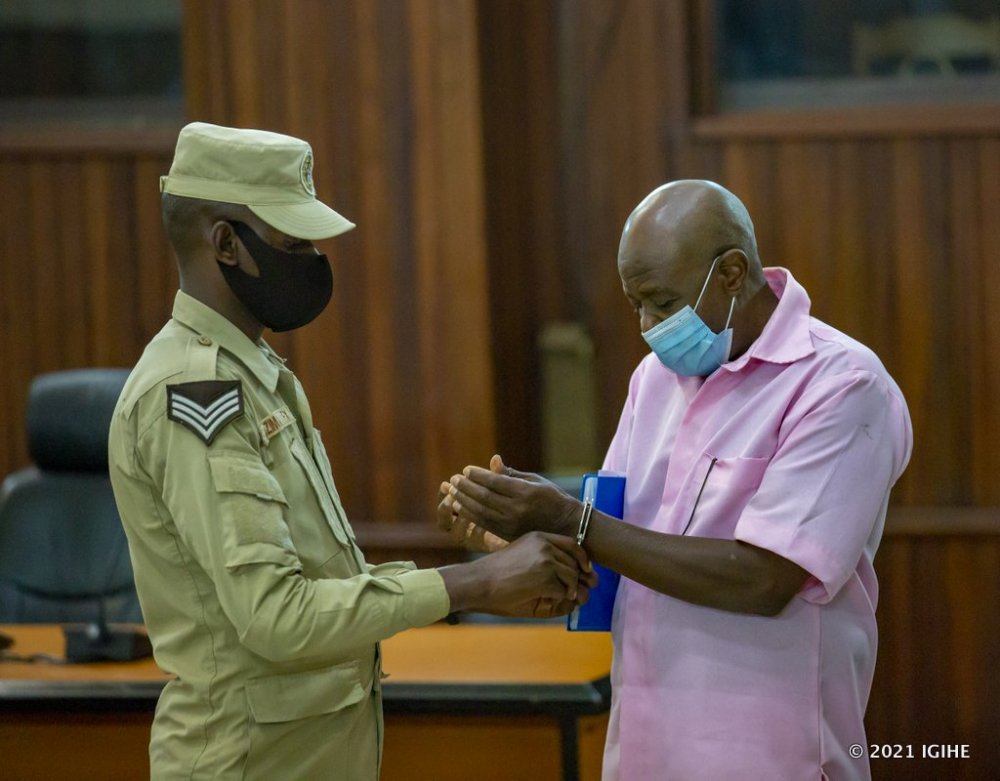
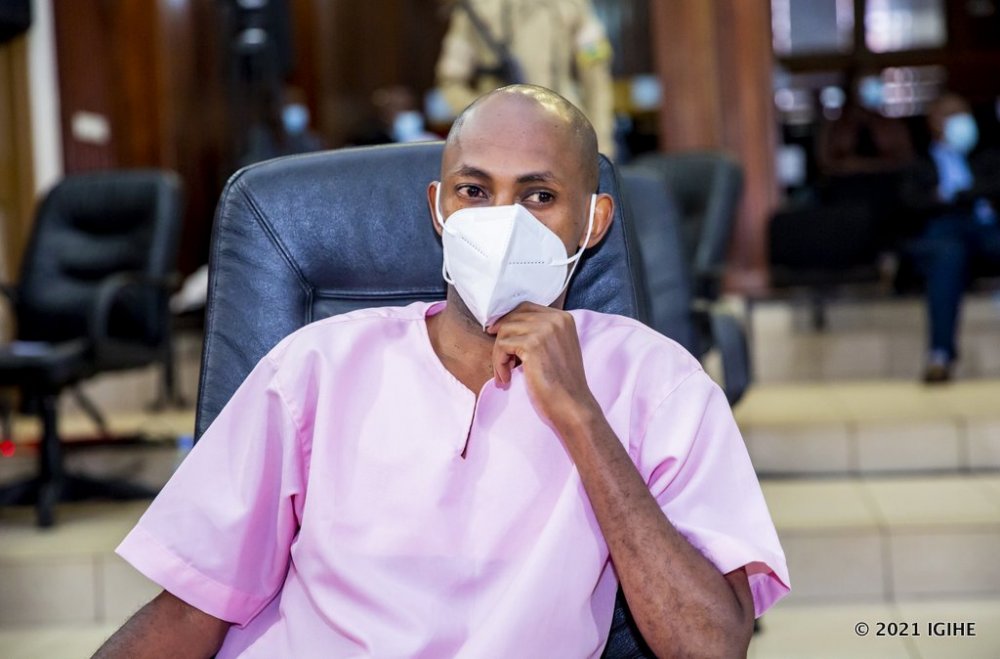
Over the past three months, the family of Paul Rusesabagina, who was convicted of terrorism charges before receiving presidential clemency last week, remained silent.
Even his daughter, Carine Kanimba, who had previously been vocal in advocating for her father’s release through various news outlets, kept quiet during this period.
This signaled how the United States and Rusesabagina’s family changed their attitudes in this case.
After the announcement of Rusesabagina’s release on Friday last week, the US officials the decision through different statements but his family remained silent.
IGIHE has learnt that his family has designated a representative to comment on Rusesabagina’s case.
The representative is identified as Juleanna Glover who serves as a consultant for different organizations.
Juleanna Glover is a well-known consultant who has worked with a variety of organizations. Some of the notable institutions she has provided consultation services to include Uber, Tesla, Microsoft, Oracle, eBay, the Smithsonian, Snapchat, JP Morgan Chase, Netflix, Tata Sons, CVS Health, SpaceX, Chobani, AT&T, LVMH, PepsiCo, Google, and Alibaba, among others.
Responding to an email sent by IGIHE about Rusesabagina’s release, he said: “The family of Paul Rusesabagina is pleased to hear the news about his release. They hope to reunite with him soon.”
Juleanna has declined to comment on questions regarding Rusesabagina’s release and his expected arrival time in the United States.
It is said that Rusesabagina will not receive any special ceremonies upon his arrival and will be treated as an ordinary citizen, without being portrayed as a hero.
Sources indicate that the United States accepted it. Besides, Rusesabagina also indicated it in his letter requesting for clemency saying that he will not involve himself in Rwandan politics.
As Rusesabagina was released in the night of Friday 27th March 2023 around 10 p.m., he was accompanied by officials from US embassy from Mageragere Prison to the residence of United Arab Emirates (UAE) Ambassador in Kigali.
He had to stay at the embassy’ residence until he is granted permission by the Minister of Justice to leave the country for Doha where he will spend few days before travelling the US.
One of persons who met with Rusesabagina on Saturday told IGIHE that he was safe.
According to sources, Rusesabagina might depart from Rwanda this Monday.
However, details have not yet emerged whether he is still in Rwanda or not.
Other sources say that his departure may be delayed due to incomplete travel documents.
The release of Rusesabagina is a significant milestone in the ongoing efforts to improve relations between Rwanda and the United States, which had faced challenges over the past three years.
While the US had exerted pressure for Rusesabagina’s release, Rwanda maintained that it could not be forced to free a person who had committed such crimes.
The situation prompted a visit from Antony Blinken, who traveled to Rwanda last year, with the release of Rusesabagina being among the key issues on the agenda.
Stephanie Nyombayire, the Press Secretary for the Office of the Presidency, recently disclosed that Rusesabagina’s release is the outcome of a joint effort to reset the relationship between the United States and Rwanda.
Rusesabagina, the former President of the MRCD-FLRN terror group, was sentenced to 25 years for terrorism charges along with Nsabimana Callixte, alias “Sankara,” who served as the FLN’s spokesperson, and 18 others linked to the same case.
Rusesabagina had been arrested in 2020. Following his release, Qatar affirmed that it was involved in the mediation that led to the clemency granted to Rusesabagina that plans to send him to Doha were underway.
FDLR is a terrorist group formed by individuals responsible for the 1994 Genocide against the Tutsi.
Rwanda and Uganda continue to scale up efforts geared towards restoring bilateral ties that experienced setbacks since 2017 over reciprocal accusations.
At the time, Rwanda accused Uganda of illegal detention of Rwandans and working with groups intending to threaten its security including FDLR.
Meanwhile, Uganda also accused Rwanda of sending spies to the country.
On Friday last week, Rwanda and Uganda signed memoranda of understanding to facilitate cooperation in different fields.
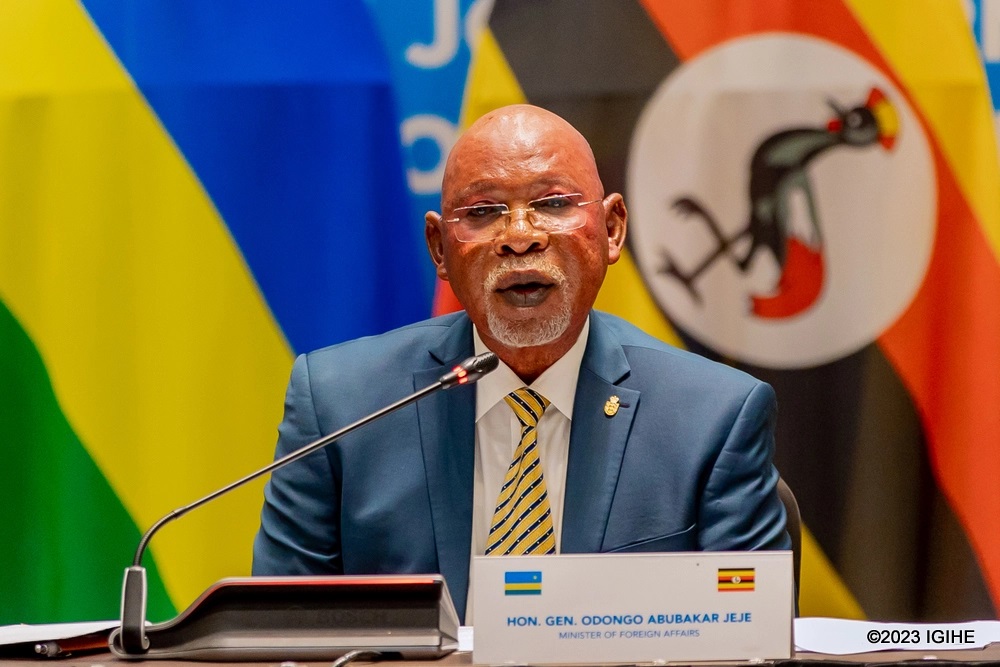
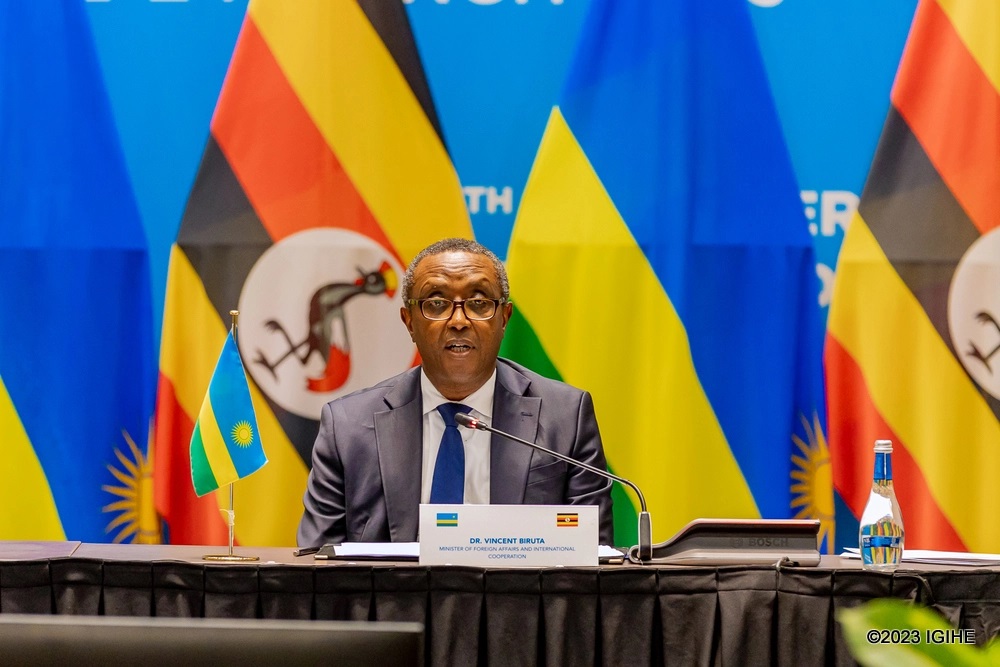
They were signed between Rwanda’s Minister of Foreign Affairs, Dr. Vincent Biruta and his counterpart of Uganda, Uganda Gen Jeje Odongo in Kigali during a meeting of the 11th Joint Permanent Commission (JPC) between Rwanda and Uganda.
The agreements are in the fields of justice and constitutionalism, mutual legal assistance, diplomatic and political consultations, and migration matters, according to the Rwandan Ministry of Foreign Affairs.
Minister Biruta expressed optimism that the consultations will further strengthen bilateral ties.
Minister Odongo said that Rwanda and Uganda are members of the East African Community (EAC) where they should work together, along with other member states, in finding a solution to security problems of eastern DRC as they are both affected in the same way.
As he said, this should be done in the spirit of African solutions for African problems.
“Security problems that occur in eastern DRC affect both of us in a similar way. ADF which affects Uganda is resident in the eastern DRC. FDLR which affects Rwanda is in eastern DRC,” he noted.
“Two hands are better than one. That is why I said, we should continue to work together so that, with the region, both in East Africa as the region, under the International Conference of the Great Lakes Region, we are able to put our contribution in finding a solution,” added Gen Odongo.
He highlighted that consultations that have been agreed will help to reach common ground in finding a solution to problems in eastern DRC.
Apart from ADF which threatens Uganda’s security, Rwanda Investigation Bureau (RIB) in collaboration with Rwanda National Police (RNP) confirmed on 1st October 2021 that law enforcement agencies had arrested 13 people between August and September in the same year suspected of working with ADF while plotting a plan to conduct terrorist attacks in different parts of Kigali.
At the time, RNP revealed that the suspects were arrested with different improvised explosive devices (IEDs) materials that include; wires, nails, phones, explosives and videos for radicalization.
They were arrested at different times in Kigali City, Rusizi and Nyabihu districts.
The suspects said that they were assigned to shatter different buildings including Kigali City Tower, Downtown and others in Nyabugogo.
These attacks were being plotted in revenge for Rwanda’s intervention to fight terrorists in Cabo Delgado of Mozambique.
The US Presidency, White House conveyed their appreciation through a brief statement that acknowledged Rusesabagina’s release and thanked the Rwandan and Qatari governments for facilitating it.
“I welcome today’s release of Paul Rusesabagina by the Government of Rwanda. Paul’s family is eager to welcome him back to the United States, and I share their joy at today’s good news,” reads the statement in part.
“I thank the Rwandan Government for making this reunion possible, and I also thank the Government of Qatar for facilitating Paul’s release and return to the United States. I add my gratitude to those across the U.S. Government who have worked with the Government of Rwanda to achieve today’s happy outcome,” adds the statement.
Stephanie Nyombayire, the Press Secretary for the Office of the Presidency, disclosed that Rusesabagina’s release is the outcome of a joint effort to reset the relationship between the United States and Rwanda.
Rusesabagina, the former President of the MRCD-FLRN terror group, was sentenced to 25 years for terrorism charges. Along with Nsabimana Callixte, alias “Sankara,” who served as the FLN’s spokesperson, and 18 others linked to the same case, he was released on presidential clemency. Rusesabagina was arrested in 2020.
The Statement released by Rwanda’s Ministry of Justice (MINJUST) indicates that their pardon was approved by the cabinet meeting that convened on Friday 24th March 2023.
They have been commuted by Presidential Order, after consideration of their requests for clemency.
Rusesabagina and Nsabimana Callixte have been granted collective commutation along with 18 members of MRCD-FLN convicted alongside their leaders Paul Rusesabagina.
Under Rwandan law, commutation of sentence does not extinguish the underlying conviction. If any individual benefitting from early release repeats offences of a similar nature, the commutation can be revoked and the remainder of the prison sentence will be served, in accordance with the conditions specified in the Presidential Order.
According to MINJUST, other penalties imposed by the Court, such as compensation owed to victims, are not affected by this commutation ‘and thus remain in force. The letters requesting clemency are being released in the public interest’.
The Ministry of Justice has also revealed that more 358 individuals convicted of various offences were also granted collective commutation.
On 20th September 2021, the High Court Special Chamber for International and Cross-border crimes convicted the former President of MRCD-FLN terrorist group, Paul Rusesabagina of terrorism charges and handed him 25-year jail term.
He had been arrested in August 2020 while his trial began on 20th January 2021.
Rusesabagina and co-accused individuals including Nsabimana Callixte alias ’Sankara’ (former spokesperson of MRCD-FLN terror group) faced charges including the formation of an irregular armed group, membership of a terrorist group, financing terrorism, murder as an act of terrorism, arson as an act of terrorism, attempted murder as an act of terrorism, and assault and battery as an act of terrorism.
The crimes were committed since 2018 when MRDC/FLN combatants plotted attacks to Rwanda which claimed lives of nine innocent residents in the Southern Province.
They left many others gravely injured, and caused significant material and economic damage in South-West Rwanda.
Apart from Rusesabagina, Sankara, the former spokesperson for the terror group was sentenced to 20 years behind bars.
Sankara was later handed 15-year sentence after pleading guilty and appealing for leniency.
In March 2023, Rwandan President Paul Kagame on Monday said there were discussions about “resolving” the fate of Paul Rusesabagina that signaled his possible release.
This decision is a significant step forward in the normalization of bilateral relations between the two countries, which have experienced setbacks since 2017.
General Odongo made this announcement on the final day of the 11th Joint Permanent Commission (JPC), which was established to follow up on mechanisms aimed at restoring bilateral relations to normal.
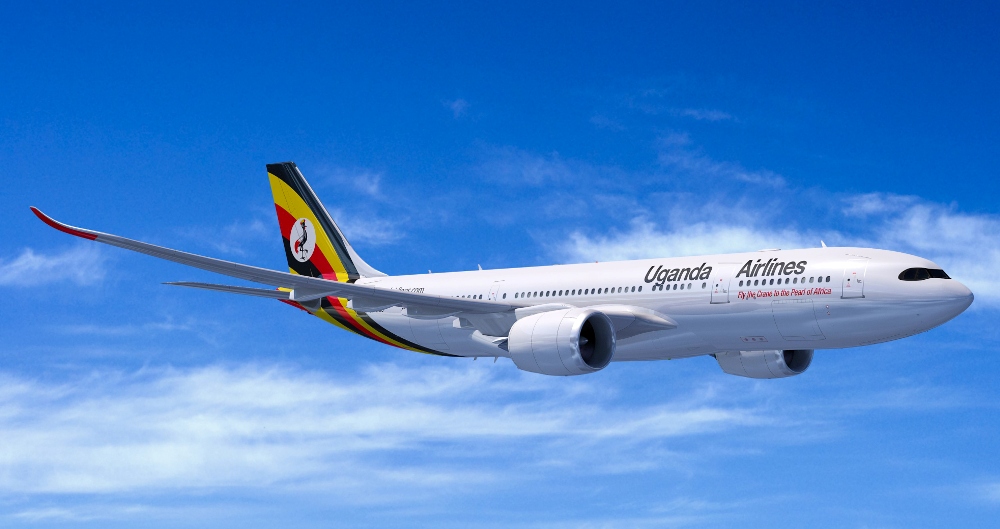
“Uganda welcomes the acceptance of the designation of our national carrier -Uganda Airlines by the Rwanda authorities, which will lead to its commencing of direct flights from their hub in Entebbe to Kigali. This will further boost trade, enhance connectivity, and contribute to strengthen people-to-people exchanges,” said Gen Odongo.
IGIHE has learned that Uganda Airlines has been asked to fulfill additional requirements after approval, although the date for the inauguration of the new flights has not been announced.
Uganda Airlines had announced plans to conduct direct flights from Kampala to Kigali in December 2019.
The current Uganda Airlines is a revival if an older version of the airline that operated from 1977 to 2001. The airline recommenced commercial operations in August 2019, with a flight to Nairobi, Kenya.
In December 2019, Uganda Airlines announced plans to conduct direct flights from Kampala to Kigali. The airline, which had operated from 1977 to 2001, was revived in August 2019 with a flight to Nairobi, Kenya. However, mismanagement and losses have delayed the implementation of envisioned projects.
According to Uganda’s Auditor General Report for 2021/2022, Uganda Airlines incurred a loss of 164.5 billion shillings (US$43.9 million) at the end of the financial year 2020/2021. This loss reportedly increased to 266 billion shillings in the following year. As reported by Chimpreports recently, the airline has experienced a loss of 532 million shillings in the past three years.
Although the airline initially planned to operate flights to 19-21 destinations, it has only reached 11 so far.
Currently, Uganda Airlines conducts flights to various destinations, including Bujumbura in Burundi, Dar es Salaam, Kilimanjaro, and Zanzibar in Tanzania, Johannesburg in South Africa, Kinshasa in the DRC, Mogadishu in Somalia, Nairobi in Kenya, and Dubai.
On 20th September 2021, the High Court Special Chamber for International and Cross-border crimes convicted the former President of MRCD-FLN terrorist group, Paul Rusesabagina of terrorism charges and handed him 25-year jail term.
He had been arrested in August 2020 while his trial began on 20th January 2021.
Rusesabagina and co-accused individuals including Nsabimana Callixte alias ‘Sankara’ (former spokesperson of MRCD-FLN terror group) faced charges including the formation of an irregular armed group, membership of a terrorist group, financing terrorism, murder as an act of terrorism, arson as an act of terrorism, attempted murder as an act of terrorism, and assault and battery as an act of terrorism.
The crimes were committed since 2018 when MRDC/FLN combatants plotted attacks to Rwanda which claimed lives of nine innocent residents in the Southern Province.
They left many others gravely injured, and caused significant material and economic damage in South-West Rwanda.
Apart from Rusesabagina, Sankara, the former spokesperson for the terror group was sentenced to 20 years behind bars.
Sankara was later handed 15-year sentence after pleading guilty and appealing for leniency.
In March 2023, Rwandan President Paul Kagame on Monday said there were discussions about “resolving” the fate of Paul Rusesabagina that signaled his possible release.
He made the disclosure during a video interview at the recent Global Security Forum in Doha, Qatar.
“We’re not people who want to get stuck in one place and not make any movement forward,” said Kagame.
“There is a discussion looking at all possible ways of resolving that issue without compromising the most fundamental aspects of that case and I think there’s always going to be a way forward,” he added.
The Head of State also reminisced on some cases related to the Rwanda’s history where the country took decisions that people some people believed to be ‘impossible.
He pointed out an example of people convicted of the 1994 Genocide against the Tutsi who were pardoned and reintegrated into Rwandan society.
Since the arrest of Rusesabagina in 2020, countries including the United States of America and Belgium where he was granted citizenship, continuously advocated for his release.
Rwanda has 95% 4G coverage and a broadband fibre backbone in all major cities, but due to Rwanda’s geography, some areas of the country are hard to reach at an affordable cost and good reliability, using these technologies. In February 2023, Rwanda officially launched Starlink satellite internet services, to improve access to affordable, fast and reliable internet connectivity in remote areas.
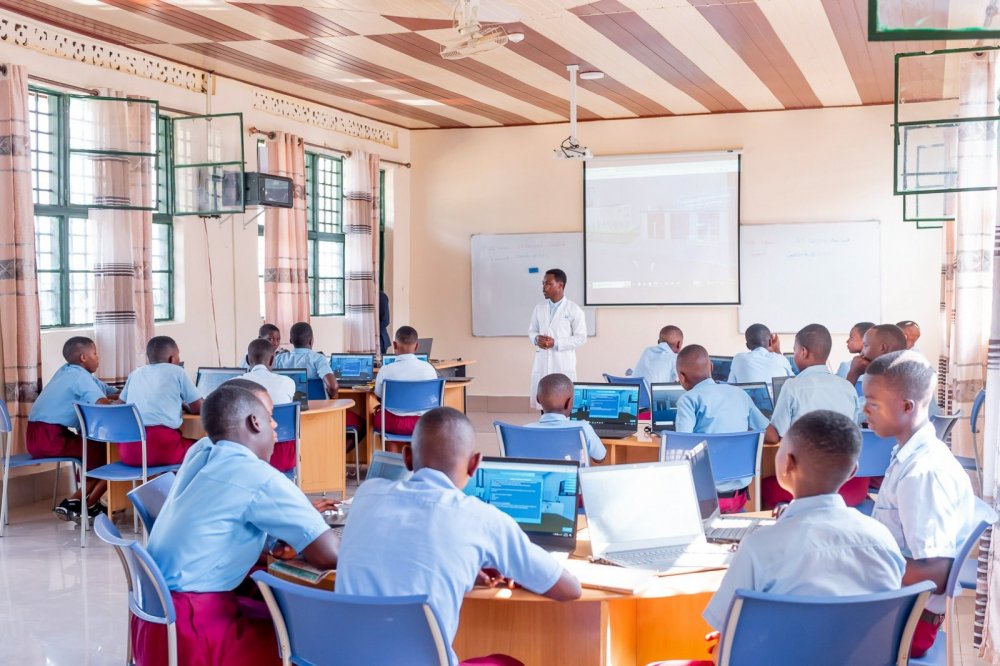
The Government of Rwanda has already connected 44.5% of public schools across the country via fibre optic, the One Government Network project, and the Giga Initiative. Through the Tomorrow Partnership with the Government of Rwanda, the Tony Blair Institute (TBI) has committed to connect 50 of the 500 pilot schools.
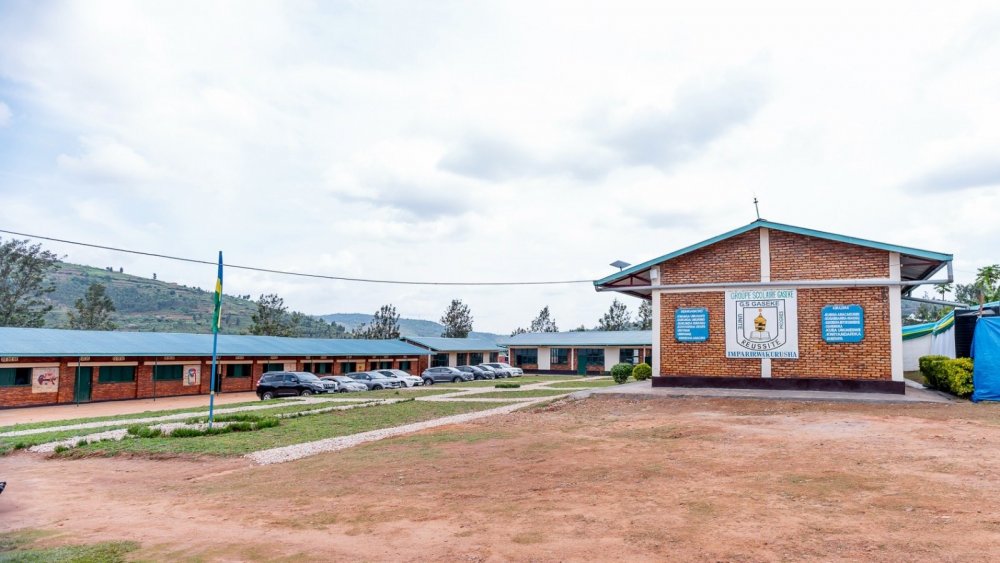
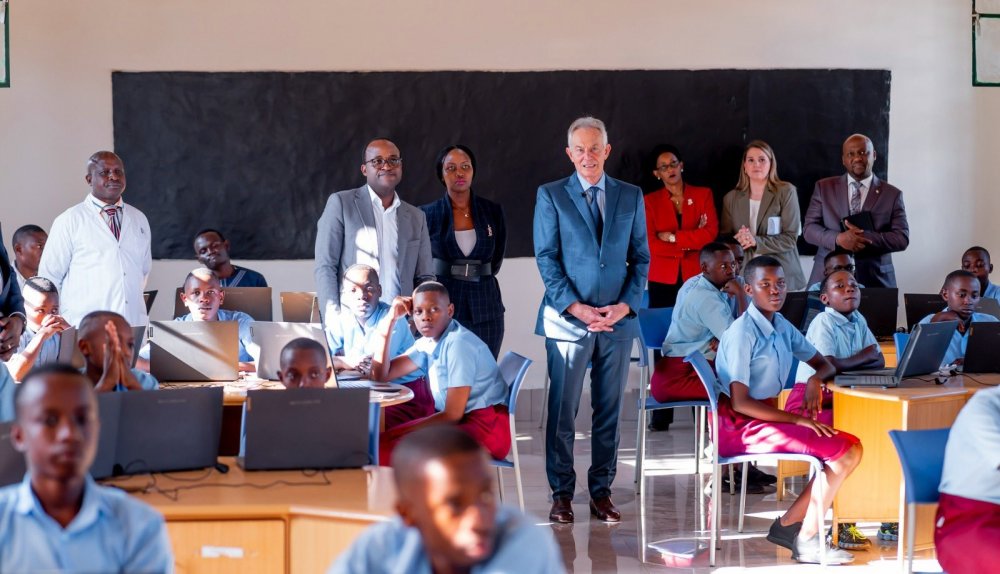
On Wednesday, The Rwandan Minister of ICT and Innovation accompanied by the Minister of State in charge of Primary and Secondary Education at the Ministry of Education and Mr. Tony Blair, visited the first school to be connected under this program, the Groupe Scolaire Gaseke, in Gicumbi District.
“The Tony Blair Institute’s initiative through the Tomorrow Partnership, is supporting the Government of Rwanda by providing expertise and technical assistance, so that we are able to dream together, co-design and implement impactful programmes, like this week’s launch of high-speed satellite connectivity for schools in Rwanda,” said Paula Ingabire, Rwandan Minister of ICT and Innovation.
One of the key sectors for increasing access to broadband services being the Education sector, Gaspard Twagirayezu, Minister of State in charge of Primary and Secondary Education said: “We want to have all our schools connected to the internet, but there are regions that do not have coverage or are difficult to connect. So having the option of satellite is really important, and we are looking forward to connecting some of our most remote schools using this type of connectivity.”
Talking about their partnership with the Government of Rwanda, Stella Mugabo, TBI Country Director for Rwanda, said: “Connecting these schools demonstrates the art of the possible, and the fundamental mission of The Tomorrow Partnership: provide problem-solvers the technology to enable the best possible solutions. It’s clear that when we bring policymakers who are committed to accelerating the delivery of real change for their people together with technology companies like Starlink, you can feel the energy and a real excitement around the potential for progress.”
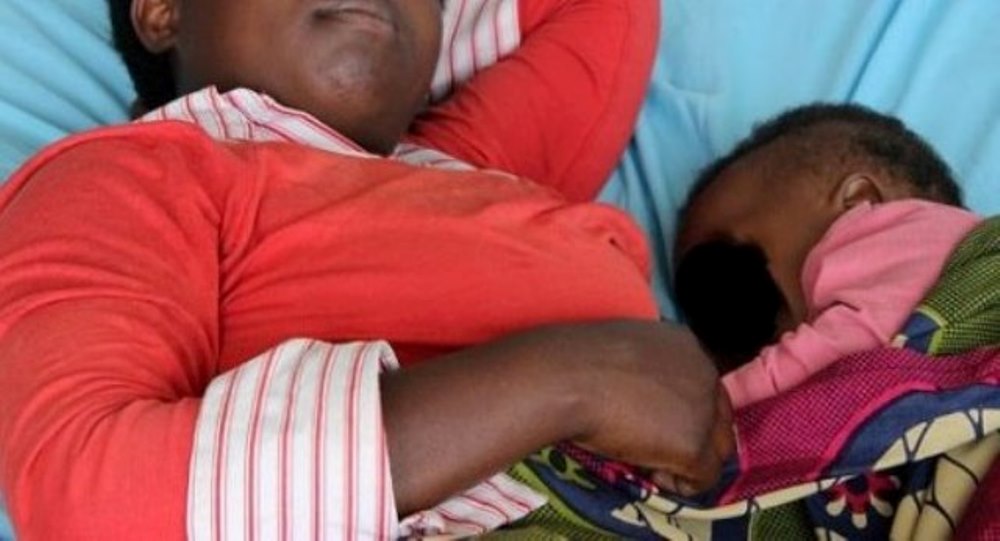
Currently, working mothers in Rwanda are entitled to a three-month leave, while fathers are allowed only four days. The bill provides for maternity leave, but without specifying its length, while proposing that the Order of the Minister in charge of labor determines the number of days for both maternity and paternity leave.
MP Frank Habineza, one of the lawmakers who proposed the amendment, noted that the current four-day paternity leave was too small, as fathers often spend most of it at the healthcare facility. Habineza argued that a month of paternity leave would allow fathers to take care of their partners and help them bond with their newborns.
MP Annoncée Manirarora, another proponent of the proposed amendment, emphasized the importance of a longer paternity leave for fathers whose partners may have complications during childbirth. She noted that, in such situations, the father is often the primary caregiver for both the mother and the newborn.
The Ministry of Public Service and Labor, however, maintains that fathers are entitled to five additional days in the event of complications, bringing the total to nine days.
Lawmakers, however, believe that nine days are still insufficient and argue that the law should specify longer paternity leave.
The Minister of Public Service and Labor, Fanfan Kayirangwa Rwanyindo, said that the current labor law in Rwanda does not clearly specify paternity leave. She proposed that paternity leave and maternity leave be determined by an order of the Minister in charge of labor.
While some MPs have expressed concern that such determinations should be made by the actual law and not an order, Minister Rwanyindo noted that the proposed amendment is an improvement towards increasing the number of days for both maternity and paternity leave.
In Africa, paternity leave policies vary widely depending on the country. Some countries, such as Nigeria, South Africa, and Zimbabwe, have laws that provide for paternity leave ranging from one to two weeks.
Other countries, such as Somalia and Eritrea, do not have any paternity leave policies.
Globally, there is also significant variation in paternity leave policies. In countries such as Sweden, Norway, and Iceland, fathers are entitled to several months of paid paternity leave. In contrast, in countries such as the United States and Japan, there are no federal laws mandating paternity leave, although some companies may offer it as a benefit.
Malaria is endemic in 93 countries across the world. In 2015, WHO adopted a strategy aimed at reducing global malaria incidence and mortality rates.
The strategy sets the target of reducing malaria cases by 40% by 2020, 75% by 2025, and 90% of global malaria incidence and deaths by 2030.
Speaking to IGIHE, Dr. Ngamije stated that the Global Malaria Control Programme is responsible for implementing these strategies.
He explained that this programme will coordinate partners involved in malaria control, as well as others who conduct advocacy to mobilize resources.
Partners include the Global Fund, the Presidential Malaria Initiative of the United States of America, European countries, researchers, and others.
Dr. Ngamije is a physician and public health specialist who served as Rwanda’s Minister of Health from February 2020 to November 28th, 2022, when he was replaced by Dr. Sabin Nsanzimana. Before this, he served as the Director for Malaria and Neglected Tropical Diseases in WHO’s Country Office based in Kigali.
From 2007-2017, Dr. Ngamije spent ten years coordinating the mobilization of resources and implementation of projects funded by multilateral and bilateral partners of the Ministry of Health through a single project’s implementation unit. He has also served in various leadership positions throughout the entire Rwandan Health System since 1995.
During his time as Rwanda’s Minister of Health, Dr. Ngamije led the development and successful implementation of the COVID-19 comprehensive response plan.
His appointment as the Director of the Global Malaria Control Programme is a significant step forward in the fight against malaria and recognition of the critical role that African leaders and experts play in achieving global health goals.