Central to this partnership is the shared commitment to nurturing youth football talent among boys and girls in Rwanda. An integral aspect of the agreement entails showcasing the Visit Rwanda branding on LED boards during matchdays at Bayern Munich’s impressive 75,000-seater Allianz Arena. Furthermore, a series of curated activities will be rolled out to spotlight Rwanda’s tourism potential and attract investment opportunities.
Speaking to RBA on Sunday, Minister of Sports, Aurore Mimosa Munyangaju, elucidated the multifaceted nature of the partnership, which can be delineated into two key domains. “This encompasses the promotion of Rwanda’s tourism through Visit Rwanda, as well as the pivotal emphasis on sports development,” she remarked.
Underlining the paramount importance of nurturing young football talent, she explained, “Our primary focus lies in fostering football development across diverse dimensions, with special attention to identifying and nurturing emerging football prodigies.”
Minister Munyangaju expounded upon the strategic role that Bayern Munich will play in talent scouting and subsequent training by the club’s seasoned coaches.
“Youth talent cultivation entails a comprehensive approach, encompassing activities such as organizing training camps for aspiring young footballers and handpicking a cohort of 20 players who will benefit from mentorship under a Bayern Munich coach,” she articulated.
Notably, this partnership will also extend its benefits to Rwandan coaches, equipping them with enhanced skills and knowledge.
Minister Munyangaju emphasized, “The preparation of coaches is an indispensable facet when it comes to honing the skills of young athletes and unearthing new talents. Thus, enhancing the capacities of our coaches remains an integral component of this partnership.”
A noteworthy feature of this collaboration is the active participation of Bayern Munich’s players and representatives in live training sessions with Rwandan counterparts. This interaction is envisaged to facilitate a knowledge exchange that contributes to the growth of both football cultures.
Furthermore, an ambitious venture within this partnership will see Bayern Munich collaborating closely with Rwanda’s Ministry of Sports to establish a football academy, aimed at fortifying football’s foundation in the nation.
“The establishment of the FC Bayern Academy, in coordination with Rwanda’s Ministry of Sports, will involve the deployment of two coaches from FC Bayern. This academy will identify and nurture 30 young and gifted footballers from across Rwanda,” Minister Munyangaju revealed.
The long-term impact of this alliance extends beyond the realm of sports, encompassing a comprehensive advancement of Rwanda’s sporting landscape. Notably, this collaboration mirrors the strides made by Arsenal, which has also dispatched coaches to Rwanda, and Paris Saint-Germain, having successfully established an academy in Huye District.
Rwanda’s partnership with Bayern Munich represents a pivotal juncture in the nation’s sporting and tourism narrative. This multifaceted alliance encapsulates the mutual commitment to nurturing youth talent, fortifying sports infrastructure, and spotlighting Rwanda’s tourism potential on the global stage.
As the nation continues to reap the benefits of these partnerships, the trajectory for Rwanda’s football and tourism sectors seems undeniably promising.
The partnership, unveiled during FC Bayern’s first home game of the season, will see the club work specifically with Rwanda’s Ministry of Sports to set up a football academy to strengthen the development of football in the country.
In addition, the club will display Visit Rwanda branding on matchday LED boards at the club’s 75,000-seater Allianz Arena and different activities will be organised to promote tourism and investment opportunities in Rwanda.
Commenting on the development, Jan-Christian Dreesen, Chief Executive Officer FC Bayern, said: “I am very pleased with this collaboration agreed upon until the summer of 2028. FC Bayern can become active on the African continent and gather important experiences.
The new platinum partnership is aligned with long-term goals. We will promote ‘Visit Rwanda’ and help Rwanda grow in sports with projects for youth football. These are challenging and responsible tasks. Africa is a continent of opportunities. For FC Bayern, this is the next important step in internationalization.”
Andreas Jung, Executive Board Member Marketing FC Bayern, said: “I am looking forward to this new, very exciting collaboration. We will support the Rwandan Ministry of Sports in developing youth football programs, including our FC Bayern Youth Cup. We want to spread “Visit Rwanda” as a tourism destination, and we also welcome the new partner to our business network.”
Aurore Mimosa Munyangaju, Rwandan Minister of Sports also expressed delight for the partnership. “We’re thrilled to partner with FC Bayern to support the development of youth football for boys and girls in Rwanda. We look forward to setting up the FC Bayern Academy where their expert coaches will share knowledge of the game with local coaches and players. The potential is there for Rwandans to excel in football and this partnership provides a great platform for Rwanda to strive for excellence in sports.”
Clare Akamanzi, CEO of the Rwanda Development Board, said the institution is pleased to welcome yet another strategic partner in FC Bayern Munich.
“It’s been five outstanding years since the Government of Rwanda announced the Visit Rwanda campaign and adding FC Bayern as another additional partner allows us to reach out to its millions of fans across the globe and tell them to visit Rwanda. Germany is among Rwanda’s top five tourism source markets and we aim to use this partnership to attract more tourists to Rwanda, showcase investment and business opportunities and encourage all to stay in Rwanda,” she noted.
Germany has good relations with Rwanda. For instance, Rhineland-Palatinate has maintained a partnership with Rwanda for 40 years.
The Goethe Institute and Friedrich Ebert Foundation have offices in Kigali. The Federal Ministry for Economic Cooperation and Development (BMZ) is engaging with Rwanda in the fields of climate, energy, internal and external peace, education, and employment. A “German Desk” in the capital city of Kigali is intended to support investments. Volkswagen and BioNTech are already in the market.
{{About Rwanda}}
Rwanda’s unique landscapes have earned it the name ‘the Land of a Thousand Hills’.
Over the past two decades, the country has experienced political and social stability supported by strong economic growth. Rwanda is recognized for the quality of its governance, a commitment to sustainability and the important role played by women in the life of the nation.
Rwanda recognizes sports as one of the pillars of social transformation and development. The country is promoting sports in all corners of society unbiased to gender, age, or physical capacity. Rwanda’s most popular sport is football, which is played in all corners of the country. Basketball, cycling and volleyball continue to grow in popularity.
{{About FC Bayern}}
FC Bayern Munich is the largest sports club in the world and one of the most successful soccer clubs in Europe. Founded on February 27, 1900, FC Bayern now has around 300,000 members and over 150 million followers on social networks.
With 33 German championships, the club is the German record champion, with 20 successes in the DFB Cup German record cup winner.
Internationally, FC Bayern has won the Champions League 6 times, as well as the FIFA Club World Cup and the World Cup 2 times each, among others. The club’s women’s soccer team and basketball team are also among the top teams nationally and internationally.
Over the decades, FC Bayern has succeeded in combining sporting and economic success. The club is now represented internationally with its own offices in New York City, Shanghai and Bangkok. The club headquarters and training grounds are located on Säbener Strasse in Munich. The club also operates its own youth training center. FC Bayern plays its home games in the club’s own Allianz Arena (75,000 spectators).
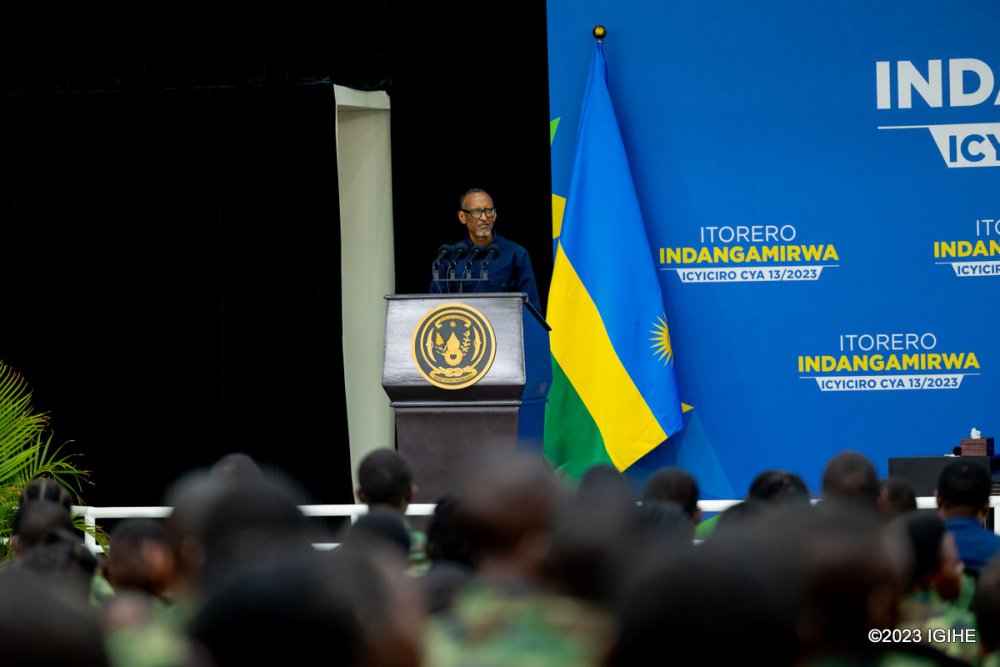
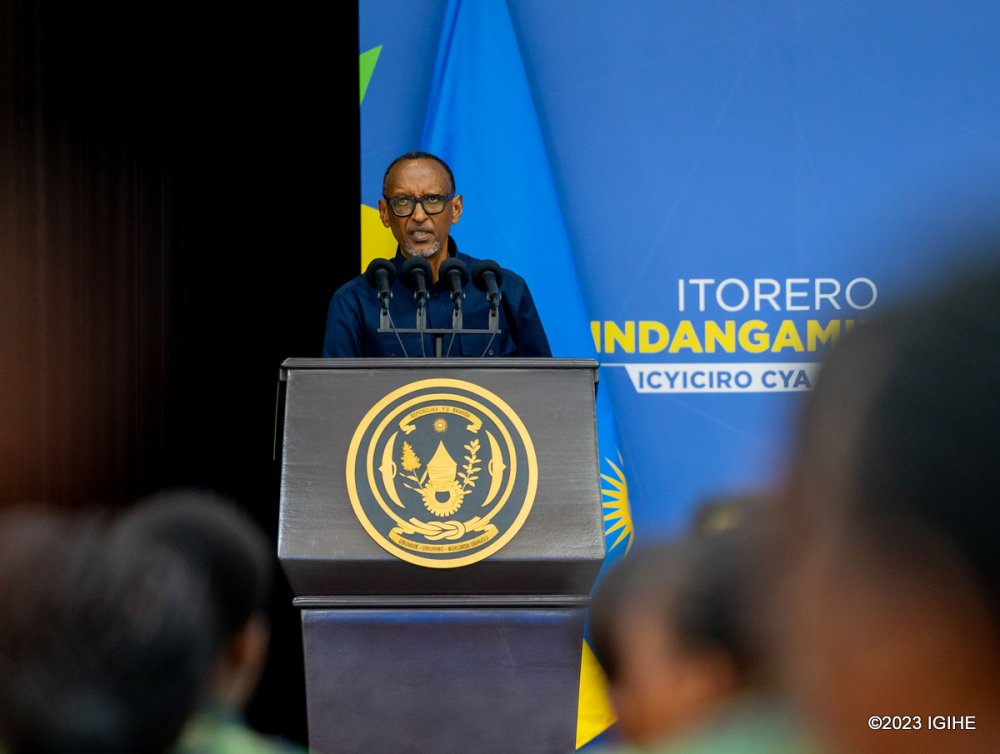
Kagame stressed the significance of using their newfound knowledge to drive Africa and Rwanda’s development forward. He likened their presence to drawing from a river of ideas for the nation’s rebuilding, cultural preservation, and defense. Kagame also highlighted Rwanda’s history as a reminder of the importance of safeguarding their accomplishments.
Among others, Kagame urged the graduates to become custodians of Rwandan culture, emphasizing the value of their individual contributions. He prompted them to ponder the reasons behind Africa’s lag in development compared to the rest of the world. While acknowledging potential employment opportunities abroad, Kagame encouraged the youth to remain connected to their homeland.
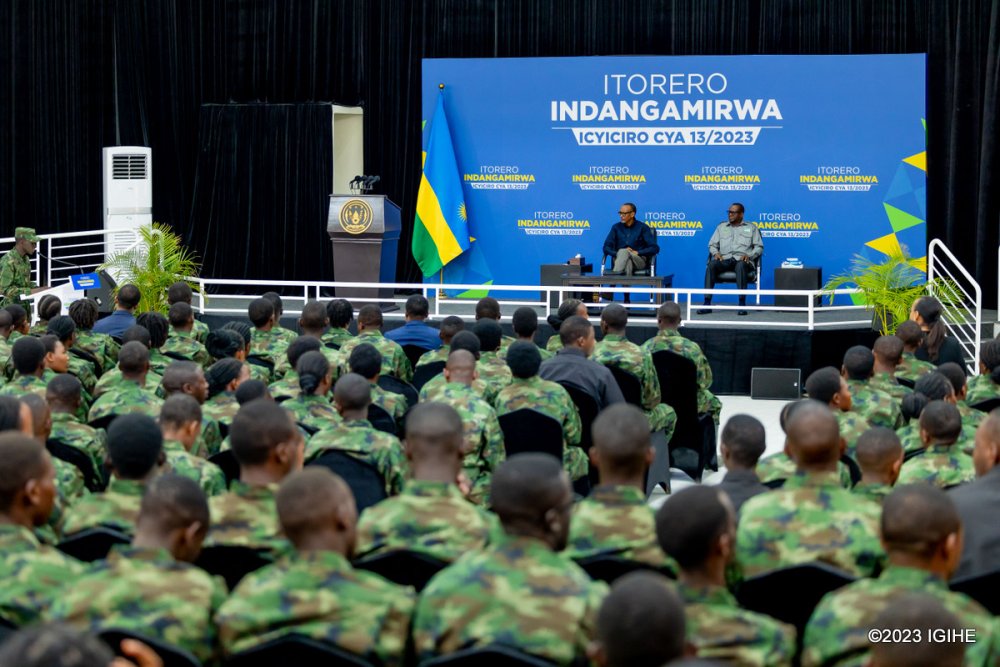
Furthermore, Kagame suggested that completing the training could open doors to the Rwanda Defence Force (RDF) profession, welcoming various academic backgrounds. He emphasized that joining the RDF should be driven by passion rather than pressure. The training, which saw participation from students worldwide, showcased the continued growth of the Indangamirwa program since its inception in 2008 where 4,624 young Rwandans have taken part of it.
This institution plays a pivotal role in shaping national education policy, overseeing entities responsible for curriculum development, teaching standards, examinations, schools’ management, and various other aspects of education.
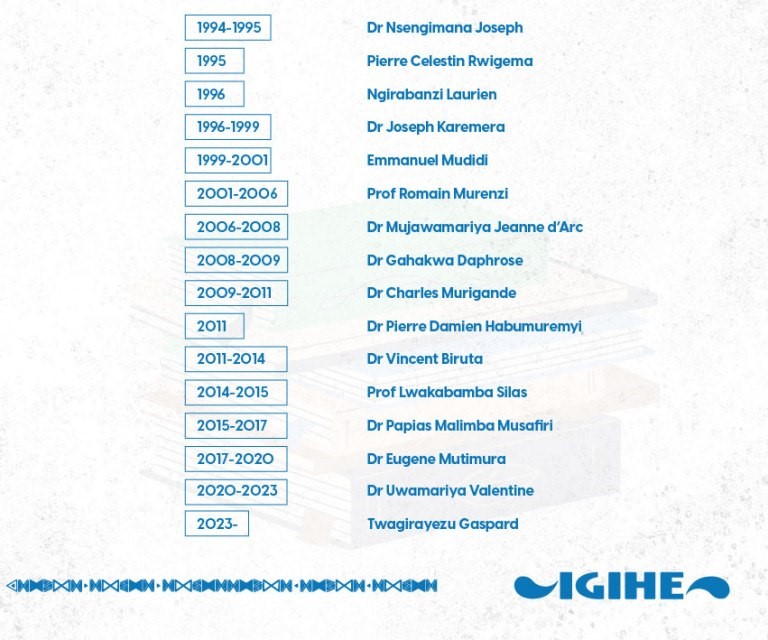
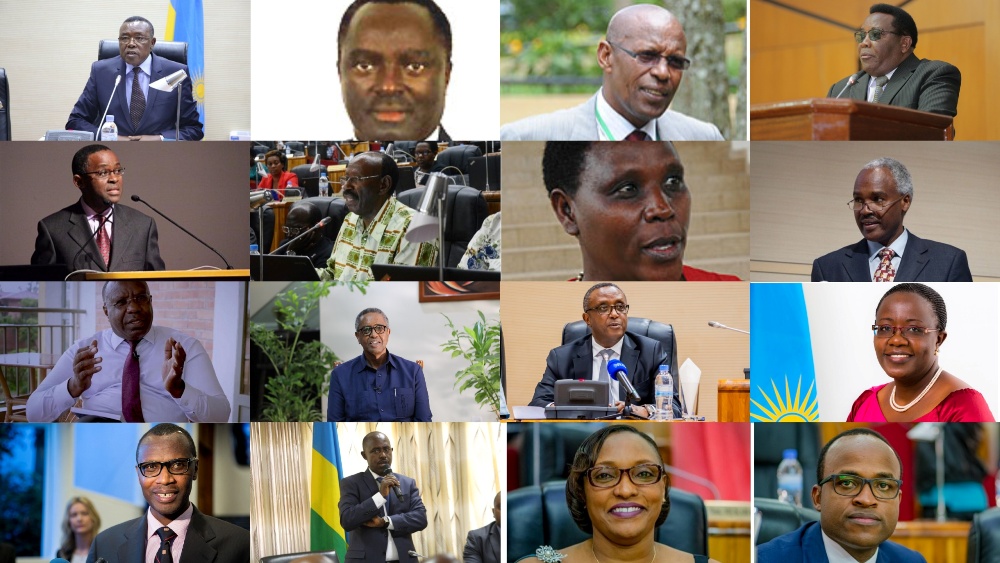
From the post-Genocide against the Tutsi leadership under Dr. Joseph Nsengimana, the inaugural minister, to the recent reassignment of Dr. Uwamariya Valentine, the longest recorded tenure was that of Prof. Romain Murenzi, who served from 2001 to 2006.
{{Below is the list of sixteen ministers who have successively led MINEDUC until the present day.}}
Throughout these 29 years, numerous substantial challenges have been confronted. Ministers grappled with reintroducing education in the aftermath of the genocide, constructing primary schools, training educators, and redesigning curricula. The primary objective was to ensure maximum enrollment of children in schools.
The period spanning from 2003 to 2010 was marked by efforts to counteract the infiltration of genocidal ideology in schools. This was coupled with a significant transition in language preference, favoring English over French. The government also initiated the Education for All program, which spanned 9 years and aimed to boost enrollment in vocational schools among young people.
Nonetheless, the last 13 years have been notably tumultuous for Mineduc, with nearly half of all ministers experiencing turnover. However, this period was far from stagnant. Starting in 2010, the government invested in extending basic education to a 12-year duration, established a national university, welcomed foreign universities to establish campuses in Rwanda, and improved the salary conditions of teachers.
Yet, according to education journalist Joseph Hakuzwumuremyi, in an interview with IGIHE, the instability of educational policy remains a significant challenge that many ministers have grappled with. He asserts that the absence of a consistent educational policy and the prevalence of commercial interests are issues that have hindered any minister from effectively steering the ship of education.
Nevertheless, it is important not to overlook the achievements that have been accomplished. The literacy rate has shown remarkable improvement: in 2000, nearly 50% of Rwandans struggled with reading and writing, whereas by 2019, the figure had risen to 89%.
Technological advancements have also been evident, with 51.6% of the population utilizing the internet, which now covers 95% of the national territory.
Residing in the tight-knit Valencia Hills neighborhood, he became a beloved figure, renowned for hosting joyous holiday gatherings, coaching youth sports teams, and adorning the streets with Halloween delights for children.
Ewert’s love for the Violin developed as he grew up. His grandfather and father both played the Violin and so does all his children. Ewerts says it is a very important instrument to his family.
His journey has been a testament to the power of music, resilience, and compassion. From his family’s musical heritage, Ewert’s melodies have touched hearts and transcended boundaries.
Through adversity, he emerged stronger, fueled by the love of his family and the desire to make a positive impact on the world.
Beyond his exceptional musical talent, Ewert was known for his philanthropic endeavors and missionary work. His legacy continues to resonate, a testament to the transformative power of compassion and artistry.
Ewert’s journey as a violinist led him to Hollywood, where he played a pivotal role in shaping the soundtracks of over a thousand movies and some of these include ‘Black Panther’ , ‘The Notebook’ and ‘Titanic’.
The world-famous Hollywood, California, is renowned for its role in the entertainment industry and is home to many famed celebrities and personalities.
In an exclusive interview with IGIHE during his recent visit to Rwanda, Ewert recalled his Hollywood experiences and shared nostalgic memories.
“The opportunity to play music in Hollywood is a rare and wonderful experience,” he recalls, remembering his time working on the iconic film “Jurassic Park” with the celebrated composer, John Williams.
Through his work, Ewert has witnessed the universal power of music to connect with people, transcending backgrounds and languages. As Ewert plays his violin, he crafts a symphony of hope and inspiration, uniting people from diverse backgrounds.
As the conversation shifts to the impactful movie “Black Panther,” Ewert’s excitement is evident.
“We were all waiting and waiting and waiting for a black hero. And we got the Black Panther,” he exclaims, acknowledging the movie’s significance in representing a black superhero on the big screen.
He also recognizes the film’s exploration of sensitive historical themes, particularly those related to slavery. Ewert believes in the importance of using film to address such issues and hopes for more inclusive storytelling in the future.
In 2005, tragedy struck Ewert’s life when a fire engulfed his home during Christmas, leaving him, his son Michael, and his father Hugh with severe burns. It took him 6 months to play again.
Reflecting on this challenging period, Ewert shares: “After my big fire, my big fall in my life, my mother was so sad. She had no joy. Until she heard this music. So, may I play it for you?” His experience during recovery deepened his appreciation for life and family, strengthening his resolve to find higher purpose and meaning.
After surviving the fire, Ewert embarked on a new chapter in his life, embracing new opportunities with a sense of purpose.
“I have also been to the country of Peru, and I recommend it. They also have a jungle, and it’s very beautiful. I played my violin there many times,” he says, underscoring his belief in using his violin to bring hope and joy to people across cultures and countries.
“Music has taught me in my life. You play for the pleasure of the other person,” Ewert imparts his wisdom, believing that music is meant to be shared and cherished.
His passion for music is deeply intertwined with his desire to give back to others. “You make something beautiful to give to another person, and this is my joy in life. I have the violin, and I try to play nice and sweet for you,” he explains, infusing his music with emotion and compassion.
From Hollywood’s grand stages to the heart of Rwanda, Ewart’s unwavering passion for music and his boundless compassion continue to resonate, leaving an enduring legacy for generations to come.
Ewert leaves a message for everyone to always find a way forward irrespective of any setbacks.
“In life we will fall down and get up. Always look back, reflect on the past, rise and move forward. No one should be discouraged by setbacks, we should move forward in life because the Future is Bright,” he enthuses.
In this pursuit of success, while securing funding remains undeniably significant, the roles of innovation and astutely identifying market demands cannot be understated. This collective effort underscores the urgency of creating more avenues for growth and employment.
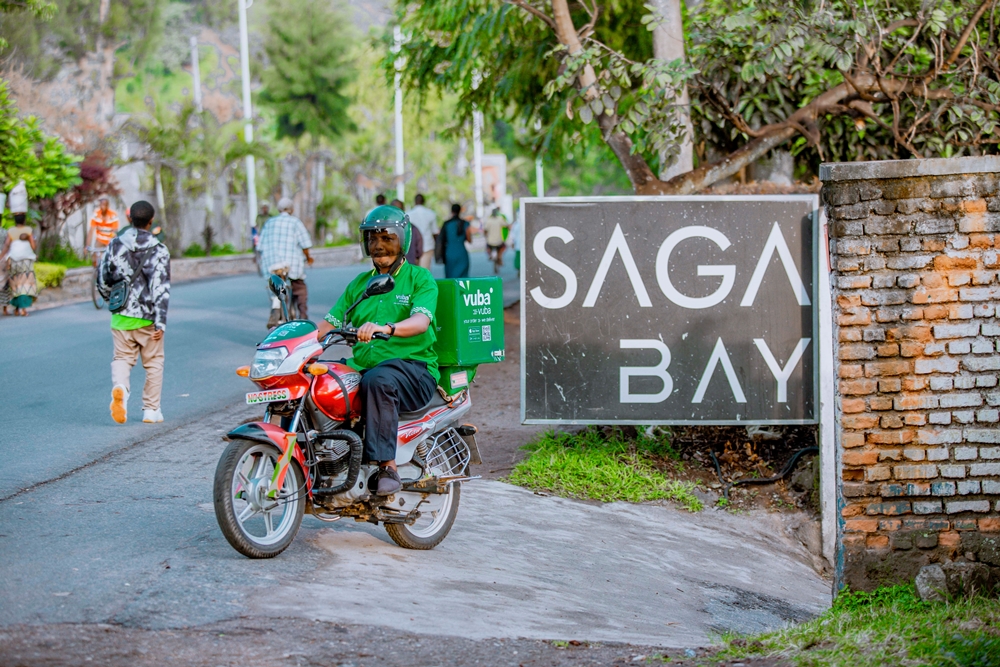
Among the examples of such endeavors, Vuba Vuba Ltd, a startup that emerged with a purpose, encapsulates the transformative power of innovative ideas.
The company, operating within the domain of food delivery services via a robust e-commerce platform, has emerged as a disruptor. The fruits of their labor are becoming evident, epitomized by their recent distinction as one of the top 20 finalists in this year’s prestigious [Africa’s Business Heroes (ABH)->https://africabusinessheroes.org/en/] competition.
ABH, a cornerstone initiative now in its fifth consecutive year, embodies the promise of surmounting challenges and propelling the continent toward greater heights. This ambitious Prize Competition, championed by the Jack Ma Foundation and Alibaba Philanthropy, resonates as a philanthropic beacon.
It aspires to support and ignite the ambitions of the next generation of African entrepreneurs across a spectrum of industries. The ultimate vision is to cultivate an economy that is both sustainable and inclusive, nurturing the continent’s future.
Rwanda’s unwavering participation in ABH since its inception in 2019 has yielded tangible results. Four Rwandan entrepreneurs have achieved coveted positions among the top 10 winners in the years 2019, 2021, and 2022, respectively.
Cumulatively, Rwanda’s triumphs have translated into a substantial grant amounting to over US$385,000, a testament to the program’s profound impact. This accomplishment serves as an inspiring precedent, illuminating the path for more Rwandan startups, as well as those from other nations, to seize the forthcoming five editions of ABH. The rewards that stem from active participation hold the potential to accelerate the growth trajectory of their enterprises.
The current year witnesses a remarkable surge in submissions to ABH, a testimony to the burgeoning entrepreneurial zeal across Africa. Amidst a staggering pool of 27,267 applications hailing from all 54 African countries, the CEO & Co-Founder of Vuba Vuba Africa Ltd, Albert Munyabugingo, stands tall. Alongside the remaining top 20 entrepreneurs, he has emerged from this competitive crucible. Among these contenders, Rwanda claims representation through a single entrepreneur within the ABH Top 20.
As the journey advances, these 20 visionary entrepreneurs inch closer to the pivotal moment when they will present their exceptional business propositions to global luminaries in Kigali this early September. The pitching session will ascertain the elite top 10, who will collectively share the substantial grant of US$1.5 million.
In an exclusive interview with IGIHE, Munyabugingo elaborated on his brainchild’s nuances, its potential impact on Africa’s entrepreneurship ecosystem, and the expedition that has earned him a spot among the top 20.
{{Excerpts: }}
{{1. Could you provide a brief overview of your company’s mission and the innovative solution it offers to the community?}}
{{Munyabugingo:}} [Vuba Vuba->https://www.vubavuba.rw/] is an e-commerce mobile app that provides a convenient solution currently for residents in Kigali, Musanze and Rubavu to order meals and daily essentials for delivery to their homes or offices in less than an hour.
{{2. Poverty reduction through entrepreneurship is a crucial goal, especially in African countries. How does Vuba Vuba Africa Ltd contribute to this goal, and what inspired you to start this venture?}}
Vuba Vuba contributes to poverty reduction through empowering entrepreneurs at an entry level in Rwanda to scale.
For instance, we work with more than 10 start-ups registered as restaurant businesses in Rwanda with no space for dining. They just cook and deliver through Vuba Vuba.
Since its launch in January 2020, Vuba Vuba has a team of 31 full-time employees, 100 delivery riders, and 50 casual workers.
Together, they have facilitated the delivery of more than 1,000,000 orders, maintaining an impressive daily average of 1,000 deliveries.
I co-founded Vuba Vuba Africa Ltd in January 2020 with my colleague Innocent Kaneza.
We wanted to build a strong local tech solution for e-commerce. The inspiration to start an e-commerce mobile app was to fill in the gap that was left on the market after Jumia exited the Rwandan market in 2019.
We believed we are the best fit for it and to build a strong local tech solution for e-commerce, we decided to retain Jumia’s former employees who had been left jobless. Last week we launched a new version of the app that we are very excited about as it speaks to growth.
{{3. Vuba Vuba Africa Ltd operates in the agri-food sector. Could you delve into the specific ways your company addresses challenges in delivery services and contributes to national development?}}
Vuba Vuba collaborates with fresh produce sellers to bridge the gap for clients facing time or distance challenges. Our services enhance access to fresh produce, empowering local businesses to reach a wider customer base. We are also working on connecting farmers with our partner restaurants directly.
{{4. Innovation plays a pivotal role in today’s business landscape. How do you foster a culture of innovation within your company, and what role has it played in your success?}}
At Vuba Vuba, we drive growth by incentivizing staff contributions. Our inclusive recruitment seeks innovative minds to tackle challenges head-on, fostering creativity and driving solutions for our business. From Junior positions, we allow sharing of ideas on how to tackle growth challenges.
{{5. You were recently selected as one of the top 20 entrepreneurs by the Jack Ma Foundation’s Africa’s Business Heroes initiative. Could you share your initial reaction when you found out you were among the top 20 out of over 27,000 applicants from across Africa?}}
The email came in late at night and it’s the first thing I saw in the morning; you can imagine the smile on my face since then. This is a huge milestone being selected to be supported by one of the world’s greatest pioneers of e-commerce, a sector in which I am.
{{6. How was the journey of participating in Africa’s Business Heroes? }}
Africa’s Business Heroes (ABH) is one of the biggest platforms one would love to be part of. To me, it is the first with so many giants in the entrepreneurship ecosystem in Africa and beyond. I have learnt more so far, have connected with great minds and even looking to continue doing so as we want to expand Vuba Vuba to more African countries.
{{7. The upcoming ABH event in Kigali sounds exciting. Can you please tell us about your expectations for pitching your business idea to global business legends and the potential impact winning the grant could have on Vuba Vuba Africa Ltd?}}
As we approach the pitching session, we are diligently preparing day and night, with the goal of winning the prize that would fuel our growth strategies. This encompasses broadening the range of products and services we provide, as well as extending our solution to reach a wider audience across the African continent.
{{8. Rwanda has been consistently successful in the ABH initiative, with several entrepreneurs emerging among top winners. What factors do you think have contributed to Rwanda’s success, and how can other aspiring entrepreneurs learn from this experience?}}
Rwanda as a country, has created a very promising environment with incentives for innovation and entrepreneurship generally for local and international companies looking at having Rwanda as their first market of operations as well as expansion. Vuba Vuba is a practical example of such companies. I have not had any business outside of Rwanda but from different conversations, Rwanda really works.
{{9. The entrepreneurial spirit in Africa seems to be growing rapidly. What advice would you give to young entrepreneurs who are looking to make a positive impact through their business ideas, especially considering the current economic challenges?}}
My advice to upcoming entrepreneurs is quite simple: build an impactful solution, spend time defining your processes, adapt your processes to your market, speak to your users/customers to understand their needs because I believe – as ABH’s theme states it, {{IT’S AFRICA’S TIME }} and we will have enough customers for different products if they are well designed for the market. If this works well, I strongly believe investment will follow you.
{{10. Lastly, for other entrepreneurs who might be considering participating in future editions of Africa’s Business Heroes, what key takeaways or insights would you like to share from your own experience?}}
My experience with ABH is that the application is long for a very good reason. It gives you time to go back to your business’ basics and understand them even deeper. From any sector you might be operating in, not necessarily tech, this is a very good platform for mentorship, meeting the right investors and connecting with fellow founders.
While applying, be real, do not fake numbers, [the ABH application->https://africabusinessheroes.org/en/] opens every year for another 5 years ahead from now.
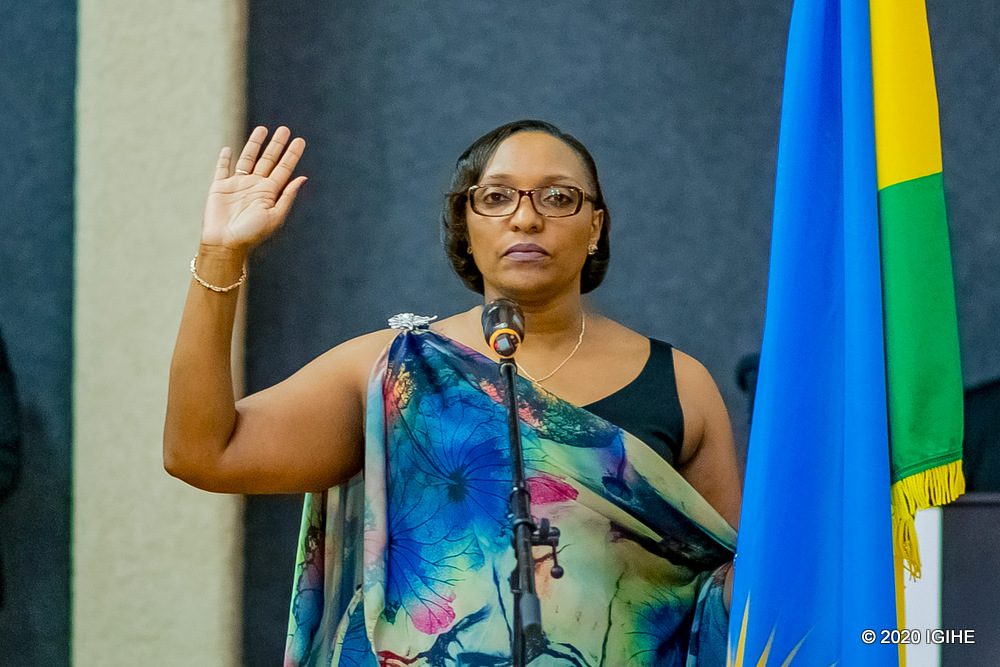
Minister Uwamariya takes over her new role from Prof. Jeannette Bayisenge, who has been designated as the Minister of Public Service and Labour (MIFOTRA), replacing Fanfan Rwanyindo.
In this reshuffle, Gaspard Twagirayezu assumes the position of Minister of Education. Prior to this appointment, he fulfilled the role of State Minister in charge of Primary and Secondary Education.
Furthermore, as part of these adjustments, Claudette Irere steps into the role of the new Minister of State for Education. She previously held the position of State Minister in charge of ICT & TVET within the same ministry since 2020.
In light of these changes, Maj. Gen. Albert Murasira has been designated as the Minister of Emergency Management, taking over from Solange Kayisire. Murasira brings with him prior experience, having previously held the position of Minister of Defence.
Kayisire will be assuming her new responsibilities as the Minister of State for Local Government, succeeding Assumpta Ingabire in this role.
Concurrently, Sandrine Umutoni, previously the Director General of the Imbuto Foundation, has been appointed as the Minister of State for Youth.
In another capacity, Claudine Uwera has been appointed as the new Minister of State for Environment, while Jeanine Munyeshuli will take on the position of Minister of State for Public Investment and Resource Mobilization at the Ministry of Economic Planning and Finance.
Additional changes encompass the appointment of Eric Rwigamba as the Minister of State for Agriculture and Animal Resources. Rwigamba previously held the portfolio of Minister of Public Investments and Privatisation, a role that has been transferred to the finance ministry.
The recent adjustments also involve the appointment of Maj. Gen. (Rtd) Charles Rudakubana as the proposed Ambassador to Angola, and Margaret Nyagahura as the proposed Ambassador to Hungary.
Assumpta Ingabire is now positioned as the Director General of the National Child Development Agency, succeeding Nadine Gatsinzi Umutoni, who assumes a new role as the Chief Gender Monitor of the Gender Monitoring Office.
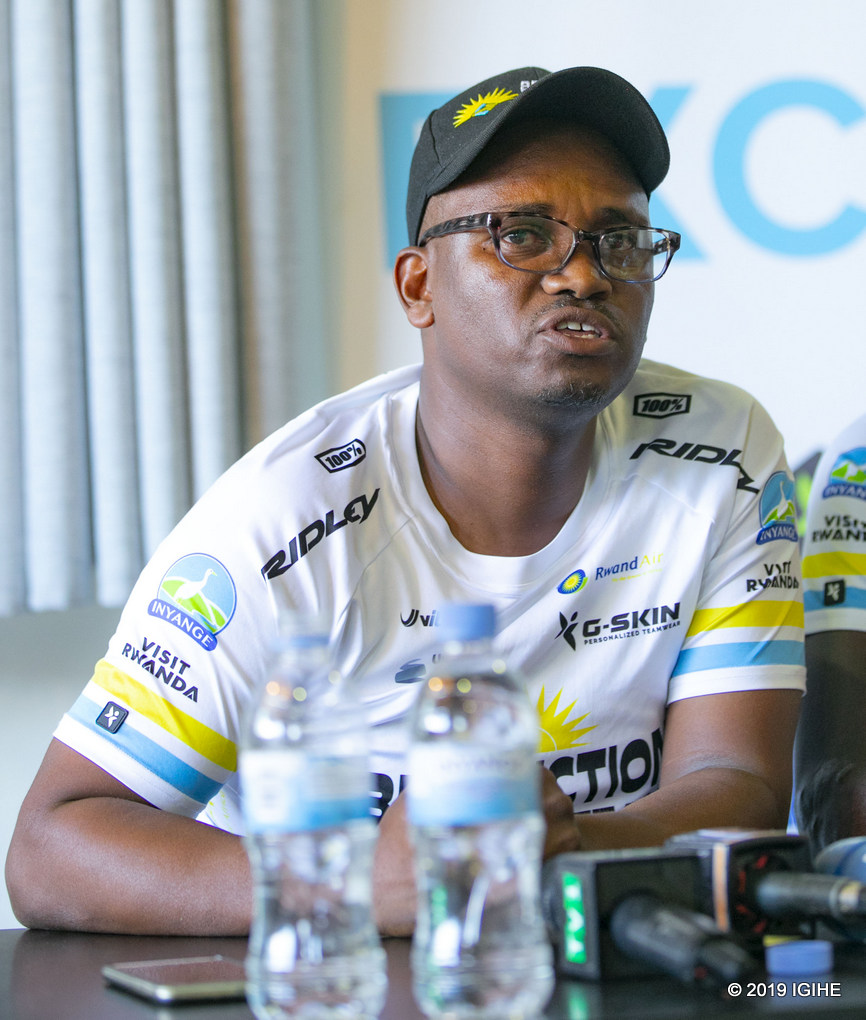
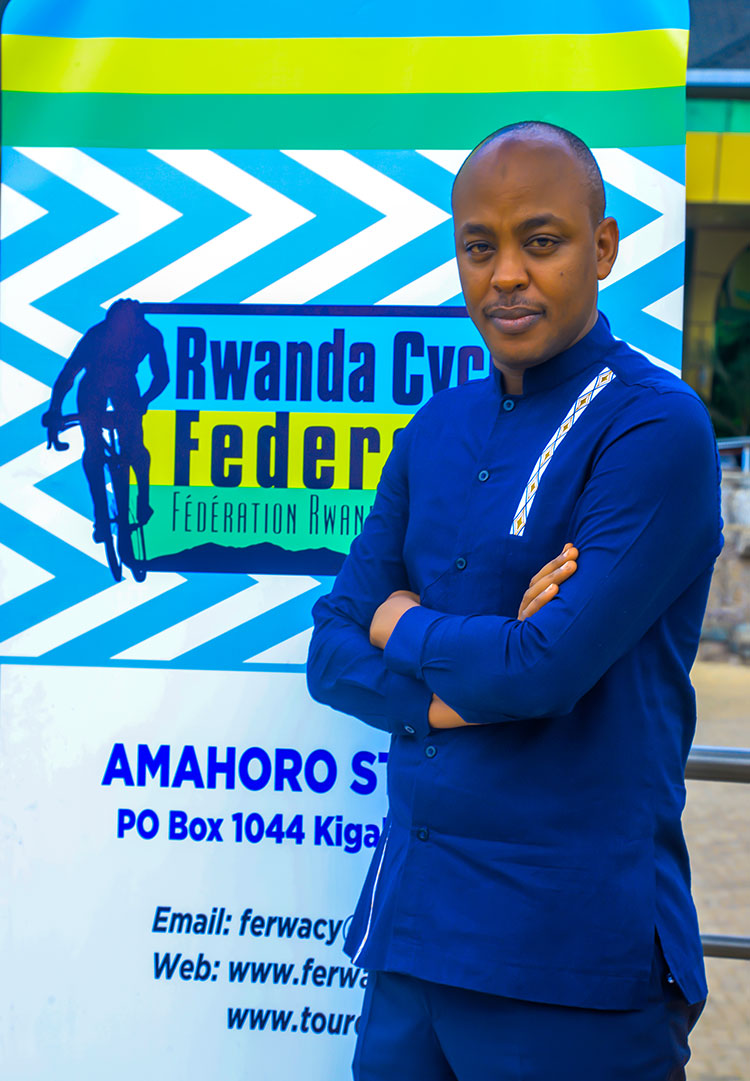
Munyankindi is detained at RIB Station in Kimihurura.
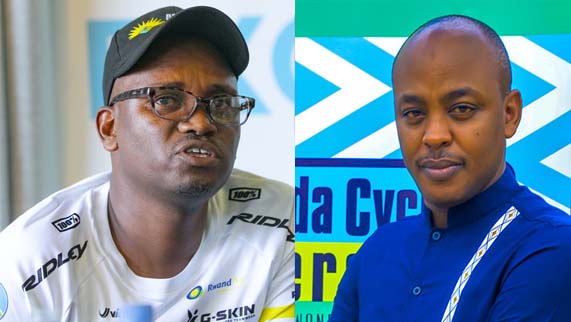
This incident follows closely on the heels of an ongoing investigation into the activities of FERWACY’s President, Abdallah Murenzi, who also faces substantial scrutiny for his suspected involvement in the matter.
The RIB’s investigation indicates that Munyankindi’s arrest on the 21st August 2023, is linked to suspicions of his decision-making being motivated by personal gains.
While President Murenzi is not currently detained, RIB is actively monitoring his activities, assessing his potential complicity as an accomplice in conjunction with their ongoing inquiry.
Rwanda maintains stringent anti-corruption legislation, and should the charges be substantiated, Munyankindi could potentially face a prison term of up to seven years along with a fine ranging from Rwf1 to 2 million.
Further complicating matters is the revelation of a Visa-related scandal. It is alleged that Munyankindi used his position to secure a Visa for his wife to accompany the national delegation to a cycling tournament in Glasgow, even though she held no official role within the delegation. This incident appears to underscore the concept of clientelism.
Even young national cyclists, en route to the World Championships in Scotland, faced difficulties, which only heightened suspicions regarding FERWACY’s operations.
A delegation list seen by IGIHE shows Providence Uwineza, Munyankindi’s wife, prominently placed as the third applicant for the group Visa, despite her absence of responsibilities within the official delegation.
Speaking to IGIHE recently on 8th August, Munyankindi explained that his wife intended to attend the event as a spectator.
The situation took an even more controversial turn with indications that Uwineza encountered obstacles preventing her departure from Rwanda due to irregularities in her travel arrangements.
Munyankindi has also been serving at the helm of Benediction Excel Energy cycling team.
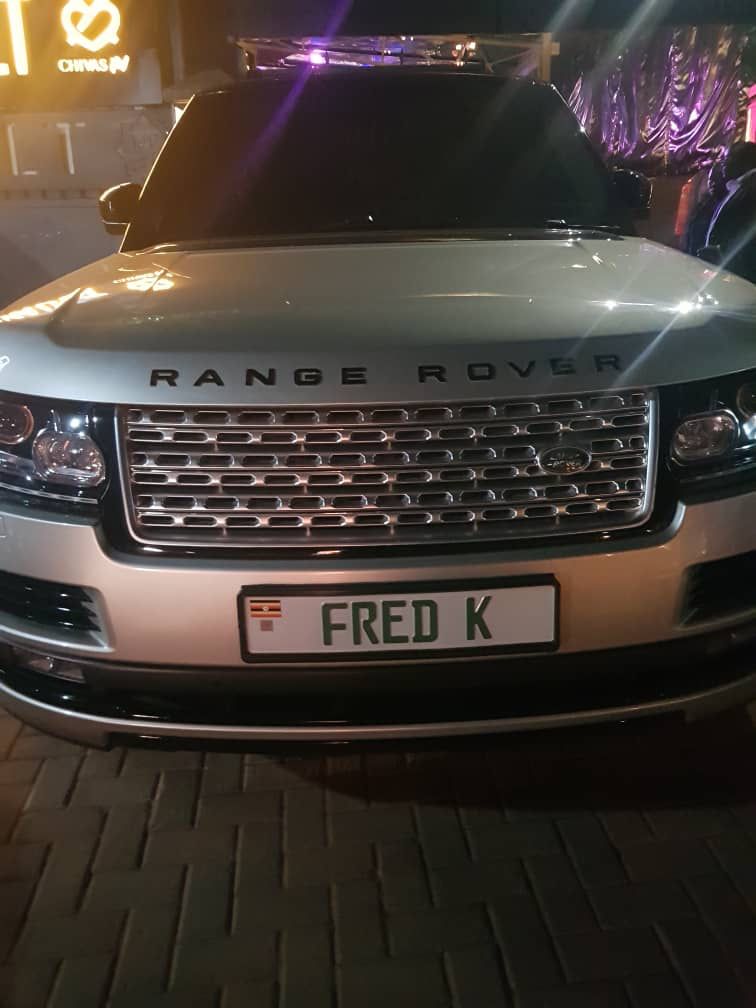
The circumstances leading to his demise remain shrouded in uncertainty. Kayitare, a well-known figure in Kampala, was often spotted driving his personalized Range Rover with a ‘Fred K’ registration plate.
CMI, the investigative branch of the Uganda People’s Defence Forces (UPDF), has yet to provide an official statement regarding the incident, which was made public on Monday evening.
Sources familiar with the situation have indicated that operatives reported Kayitare’s death to the police on Saturday, categorizing it as a suicide. They claimed that he had jumped from the second floor of the CMI headquarters building in Mbuya, a suburb of the city, during an interrogation session.
However, doubts have been raised about this account, as interrogations typically occur on the ground floor of the building, rather than the location from which Kayitare allegedly jumped.
It has been reported that members of CMI and the Joint Anti-Terrorism Taskforce (JATT) apprehended Kayitare in the middle of last week. The precise reason for his detention remains speculative, with conflicting reports of alleged involvement in fraud and cybercrime that could not be independently verified.
Relatives of Kayitare expressed shock upon learning of the army’s claim that he had taken his own life. A vigil was held in his honor in Kampala on Sunday, and his widow revealed plans to repatriate his body to Rwanda. She however said that this process has been hindered by the fact that his wallet, containing his identity card, is still held by authorities.
The Deputy Spokesman of UPDF/Defence, Col Deo Akiiki, informed The Monitor that he was not privy to the details of the case but would seek to ascertain further information.
This incident isn’t the first time that Rwandans have been detained at CMI’s facility in Mbuya under ambiguous circumstances. Tensions escalated in 2017 amid deteriorating relations between Rwanda and Uganda.
Negotiations aimed at easing these tensions ultimately led to the release of detained Rwandans. In June of the previous year, Maj Gen James Birungi, the head of CMI, visited Rwanda and engaged with senior military officials in an attempt to improve relations.
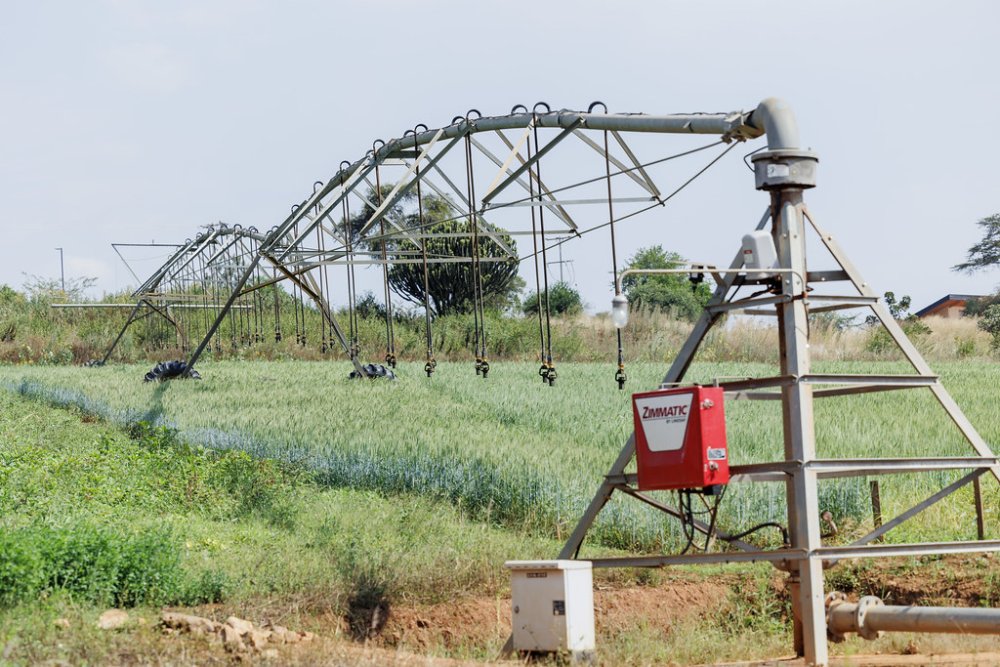
The fifth Population and Housing Census highlighted that a significant 53.4% of Rwandans depend on agriculture. Aligning with the Vision 2050, Rwanda aims to transition 70% of its population away from agricultural practices and toward modern methodologies. To realize this transition, the Imbuto Foundation has taken proactive measures by organizing events like the ‘Imali Agribusiness Challenge’. This initiative fosters the empowerment of young individuals, encouraging them to embrace modern agricultural practices.
A prime example of such initiatives is the “Imali Agribusiness Challenge”, organized by the Imbuto Foundation in collaboration with Friends of Imbuto and the Ministry of Agriculture and Animal Resources (MINAGRI). The competition showcased innovative projects with the potential to revolutionize the agricultural landscape in Rwanda.
{{Drones to revolutionize agriculture}}
Among the promising projects that caught attention is the “Rwanda Drone Innovation,” spearheaded by Patient Dukeshimana, Elysee Karemera, and Florence Ishimirwe Inkesha through their venture, Agrinet Rwanda Ltd.
This project focuses on employing drones for agricultural applications, including the precision application of fertilizers and pesticides. Moreover, these drones are meant to offer real-time crop monitoring, facilitating the early detection of potential crop diseases and enabling informed decision-making.
Dukeshimana emphasizes that the adoption of drone technology not only reduces manual labor costs but also significantly decreases the time required to cover extensive fields. These advancements hold great promise in contributing to increased agricultural productivity.
{{Transforming waste into fertilizer}}
Chantal Kamashazi, with her project under “Mind Valley Rwanda Ltd,” is addressing the issue of fertilizer scarcity in the Kayonza District. Her project involves the production of compost from cow dung, which is abundant in the Eastern Province due to a large number of cows.
Kamashazi with a Master’s degree in Agriculture from Korea, has mobilized local communities and created employment opportunities while addressing a critical agricultural need.
In Bugesera, another group is actively tackling fertilizer scarcity. Aline Nayituriki, Sylvestre Karorero, Bonheur Nshuti, and Patrick Rugamba, through their joint venture known as “Agri-ThinkTank,” have established a company focused on producing compost from garbage.
Their innovative approach, tested in the Rweru area of Bugesera District, has demonstrated remarkable results. Farmers utilizing their manure, named ‘Ongera Compost,’ witnessed a 30% increase in their agricultural yields.
To bridge the fertilizer supply gap, Rwanda is ambitiously working towards establishing the Rwanda Fertilizer Company Ltd in Bugesera, a collaborative endeavor involving the Agaciro Development Fund, APTC investor, and OCP Africa, a Moroccan company.
{{Mushroom farming and pineapple wine production}}
Gildas Kwitonda, through his company G-Proud Company Ltd, is taking a unique route into agriculture with his “Iby’iwacu Project,” focusing on mushroom cultivation. Based in Kigali City’s Bumbogo area, Kwitonda crafts mushroom substrates using crop residues and nutrient-rich components, generating up to 2000 substrates daily.
In Kamonyi District, a project by Marie Faustine Niyomubyeyi, Steven Munyantwaza Cyiza, and Sabine, operating under Vynes Ltd, is bringing forth Made in Rwanda wine made from pineapples.
This initiative not only aims to bolster pineapple farming in the region but also endeavors to reduce the reliance on imported wines while adding value to locally grown pineapples.
{{Innovative ingredients for culinary delights}}
“Volcano Green Invest Ltd,” established by Aime Rukundo, Kevin Ndayisaba, Belyse Uwineza, and Jeannette Kwizera, is making its mark by processing tree tomatoes and vegetables into a unique ingredient named “Tamarilo Jam.”
This versatile ingredient finds its application in bread-making and culinary preparations, providing a cost-effective option with an exceptional taste profile and nutritional benefits. The production hub for this ingredient is located in Musanze District.