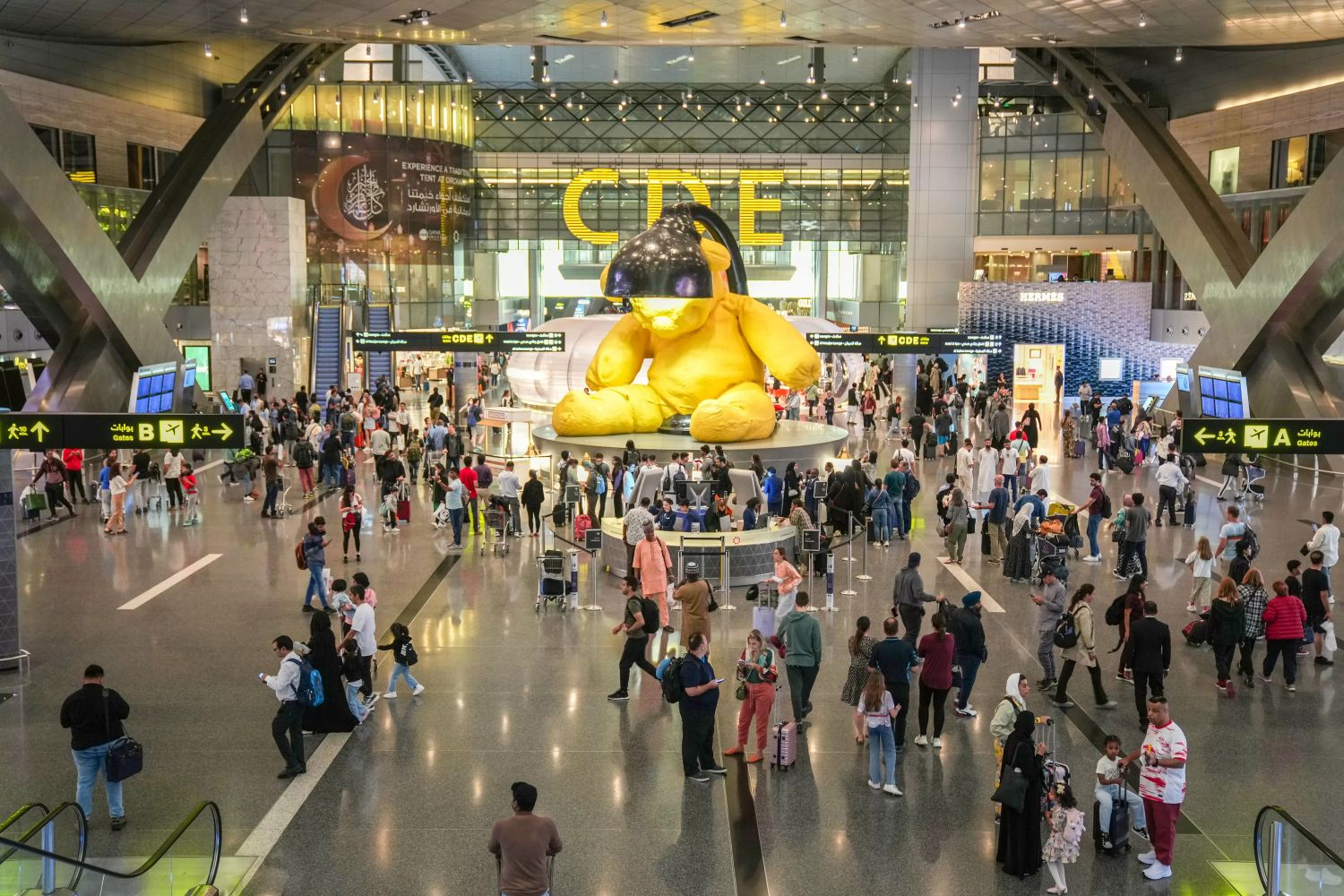
In a statement issued on April 20, 2026, QCAA said it had released a Notice to Airmen (NOTAM) authorising the phased restart of international airline services.
The authority said the decision followed a comprehensive assessment of the prevailing situation, conducted in coordination with all relevant national entities, to ensure the highest levels of readiness and operational efficiency.
QCAA emphasised that all flights and related airport operations would be conducted in line with internationally recognised safety and security standards, with all necessary precautions in place to protect passengers, crew, and aviation personnel.
“The safety and security of all remain our top priority,” the authority said.
Several international carriers had suspended or adjusted their services to Qatar as regional instability intensified, including RwandAir, which was among the airlines affected by the disruptions.
The ongoing Middle East conflict began in late February 2026, when coordinated US and Israeli strikes on Iranian military targets significantly heightened tensions across the region. Iran responded with retaliatory actions that quickly transformed the situation into a broader multi-front regional conflict.
The escalation severely disrupted global travel routes, trade flows, and energy markets, with airlines forced to reroute, delay, or suspend operations due to security concerns and airspace restrictions across parts of the Gulf and wider Middle East.
Qatar’s decision to gradually reopen operations for foreign carriers is expected to ease pressure on regional aviation and restore confidence among international airlines and travellers using Doha as a major transit hub.
The gradual resumption of operations for foreign airlines in Qatar through Hamad International Airport signals a cautious return to normalcy after months of disruption caused by the escalating Middle East conflict.
The recognition followed a viral video shared on X, showing Ngabo confidently interacting with cows in Switzerland, an encounter that highlighted his deep-rooted connection with livestock.
Responding to the post, Dr. Tedros wrote: “Nkunda u Rwanda! Thank you for sharing your story, dear Ngabo. The love and connection you have with your cows and your village is truly special. It’s beautiful that you turned your childhood into a welcoming experience for others. Keep being that caring person. Wishing you and @Visit_Bigogwe all the best.”
Ngabo, widely known locally as “Umushumba” (herdsman), replied by sharing his personal story and identity: “Hello, I am called Ngabo, but in my country, Rwanda, they call me ‘Umushumba,’ which means a herdsman or cowboy depending on where you’re from. I am the guy in the video. I was raised with cows, and they are like family to me—but sometimes my parents would help take care of them.”
Reflecting on his childhood with a touch of humor, he added: “Young me loved cows more than my parents because they used to beat me, but the cows didn’t. Thank you for your love and kind words. I didn’t know I was going to go viral.”
Ngabo also used the moment to highlight his growing tourism initiative in Bigogwe: “I created tourism in my green village, Bigogwe, where I host people and make them cowboys like me. Check @Visit_Bigogwe. Be blessed.”
His efforts have not only attracted global attention online but also institutional backing. In 2023, the Government of Rwanda allocated public land to Ibere rya Bigogwe Tourism Company Ltd, a venture focused on promoting cattle-based tourism experiences.
The decision was approved during a Cabinet meeting held on January 30, 2023, chaired by President Paul Kagame.
Today, Bigogwe is emerging as a distinctive tourism destination, drawing visitors ranging from senior officials to everyday travelers both Rwandan and international eager to experience its authentic blend of culture, agriculture, and hospitality.
Ngabo Karegeya Steps Up Efforts to Develop Cattle-Based Tourism Hub.
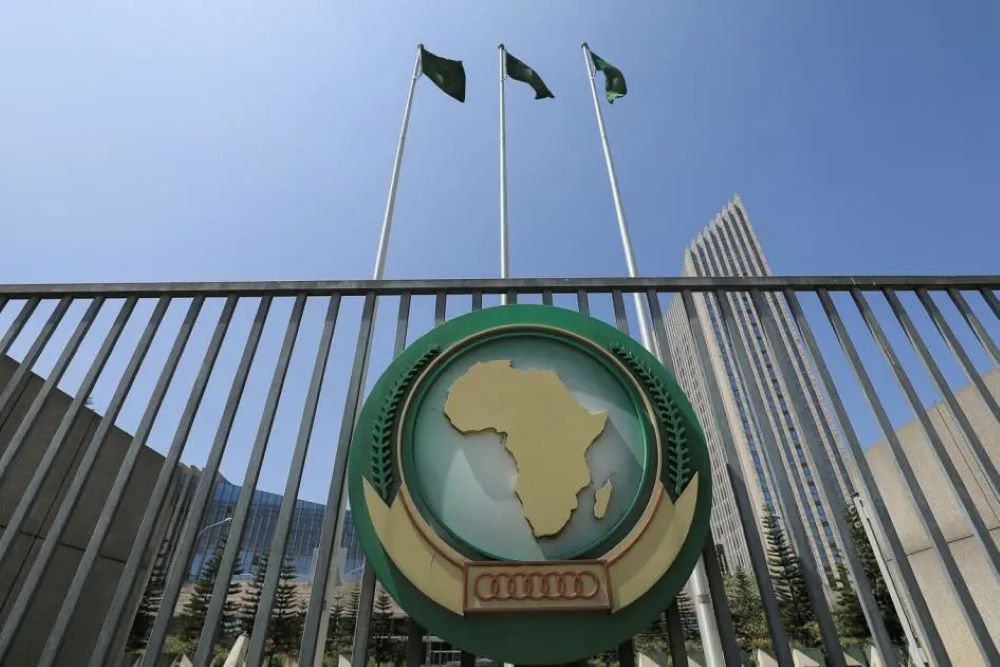
In a statement issued on Sunday, the 55-member continental organization expressed “deep concern” regarding recent developments on Israel’s reported decision to appoint a diplomatic envoy to Somaliland, a self-declared region of Somalia.
The AU reaffirmed its “unwavering respect for the sovereignty, unity, and territorial integrity of Somalia” in accordance with the Constitutive Act of the African Union and international law.
“The African Union does not recognize Somaliland as an independent state,” the statement read. “The AU remains committed to supporting Somalia’s peace, governance, and national cohesion.”
Recalling an AU Peace and Security Council communique that was issued in January, it underscored that “any unilateral recognition of Somaliland is null and void.” It warned that such actions risk undermining regional stability.
On Dec. 26, 2025, Israel became the first country in the world to formally recognize Somaliland as a sovereign state, prompting immediate condemnation from Somalia and the international community.
In a ministerial-level meeting held on Jan. 6, the AU Peace and Security Council rejected the unilateral recognition of Somaliland by Israel and called for its immediate revocation.
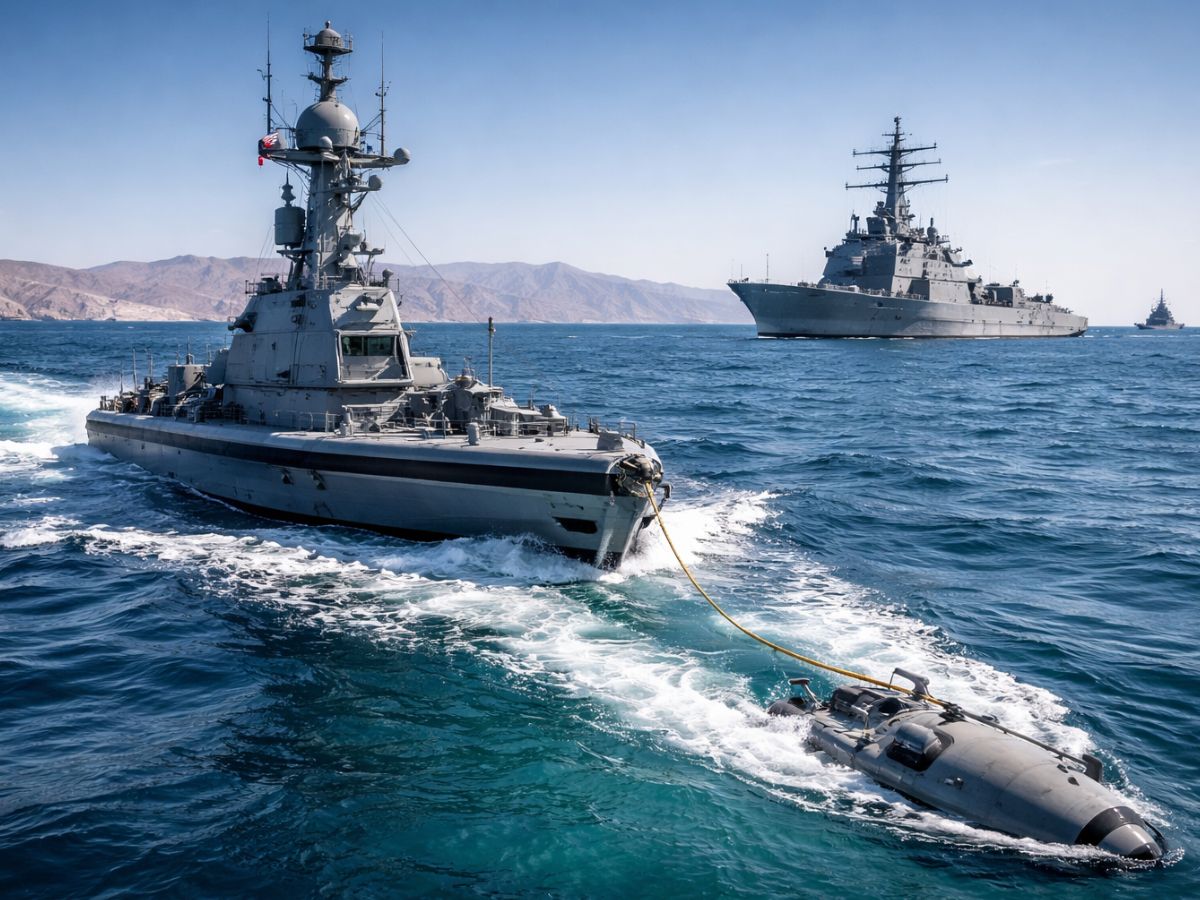
A demining operation combining manned and unmanned systems is adopted by the U.S. military to remove the mines laid by Iran, using both surface and underwater drones equipped with sonar detectors, a U.S. defense official was quoted as saying.
U.S. President Donald Trump said on Friday on his Truth Social platform that “Iran, with the help of the U.S.A., has removed, or is removing, all sea mines!” Iran did not respond to the claim.
After Iran re-closed the strait following a brief opening, 35 outbound vessels have turned back over 36 hours, according to a report by Britain-headquartered maritime analytics company Windward.
Iran tightened control over the strait after the United States and Israel launched joint attacks on the country on Feb. 28. The United States also imposed a naval blockade on the strait following its failed negotiations with Iran in Islamabad, Pakistan.
US Navy deploys unmanned robots and underwater drones to clear sea mines in Strait of Hormuz
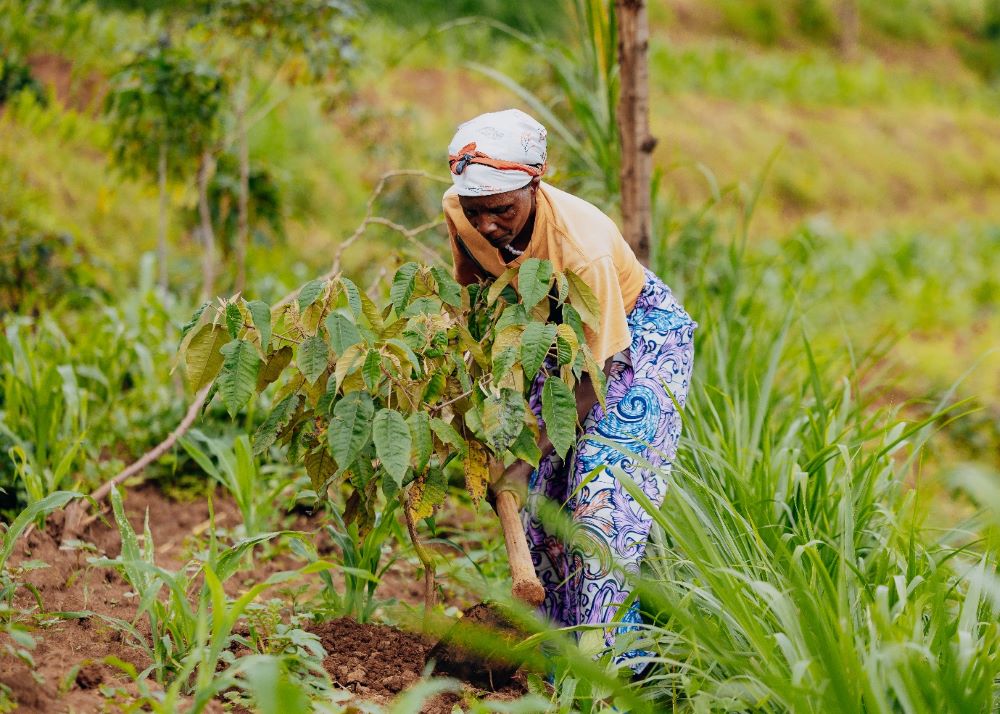
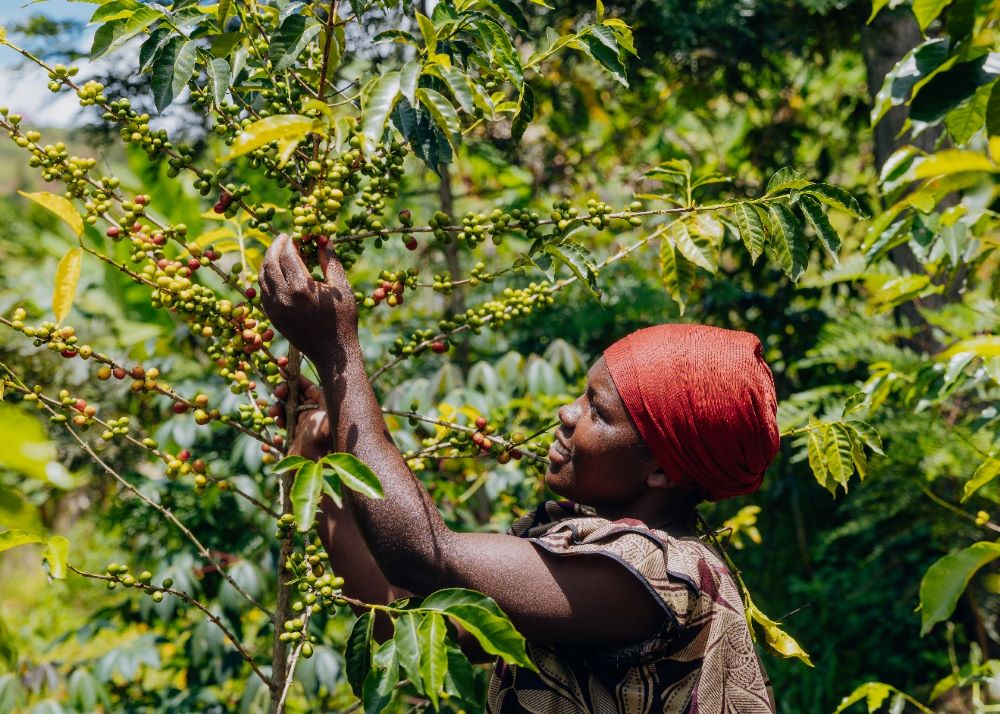
What is taking shape across western Rwanda, environmental leaders say, is more than land restoration, it is a synergy between climate action and human development.
“MuLaKiLa shows that restoring landscapes is not only about nature, it is equally about people,” says Dr. Sam Kanyamibwa, Founder and CEO of ARCOS, the organization implementing the project on the ground. “When farmers are empowered with knowledge and financial resources, conservation becomes a pathway to dignity, resilience, and long‑term development.”
That philosophy underpins the MuLaKiLa Project, a large‑scale landscape restoration and livelihood initiative operating around the Mukura–Gishwati Forest and the Lake Kivu catchment landscape.
According to Dr. Amani MABANO, Project Manager of MuLaKiLa, this carbon project was officially launched in 2023 to restore 22,266 hectares (ha) of degraded agricultural land and improve the livelihoods of 40,000 smallholder farmers’ households owning the land in Ngororero and Rutsiro districts.
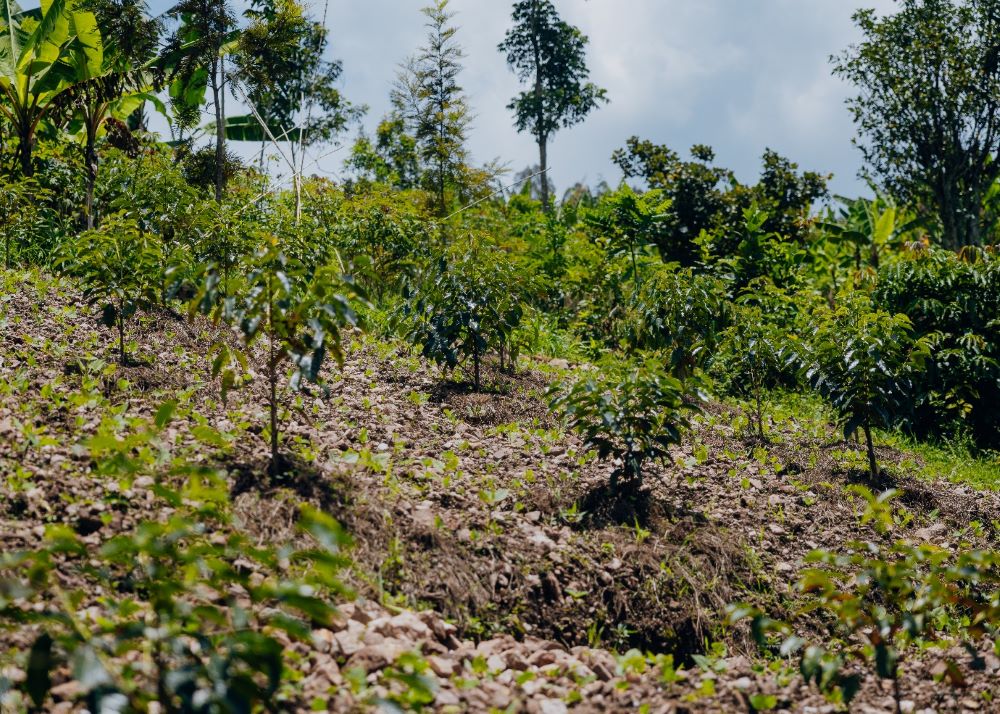
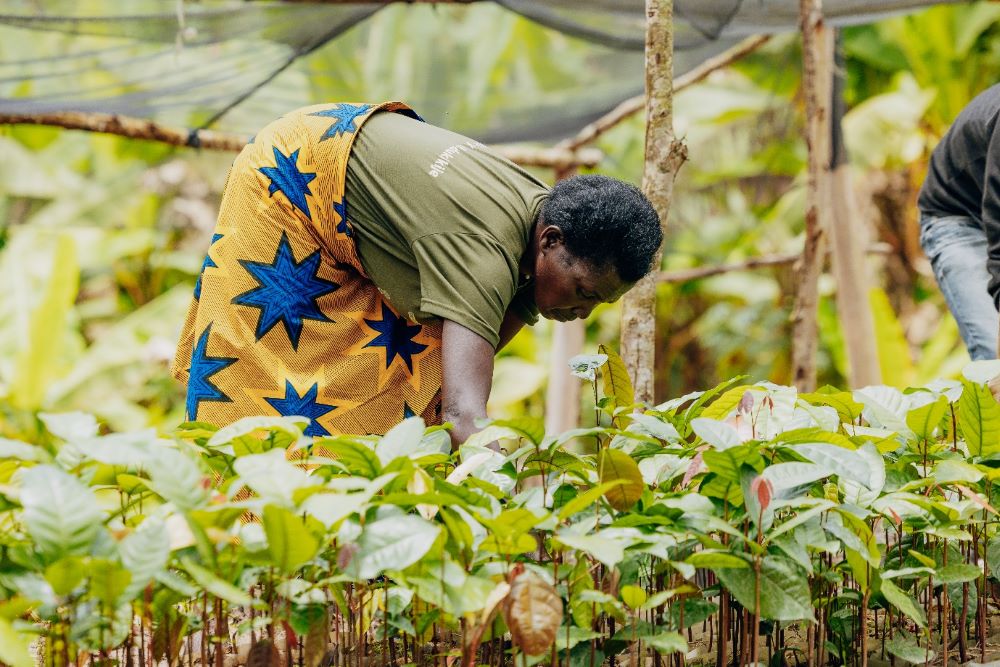
The land is being restored through two key initiatives: tree plantation and establishment of radical and progressive terraces. The project aims to plant 6 million carbon trees comprising native (50% of the trees), fruit (30% of the trees), exotic (20% of the trees) species.
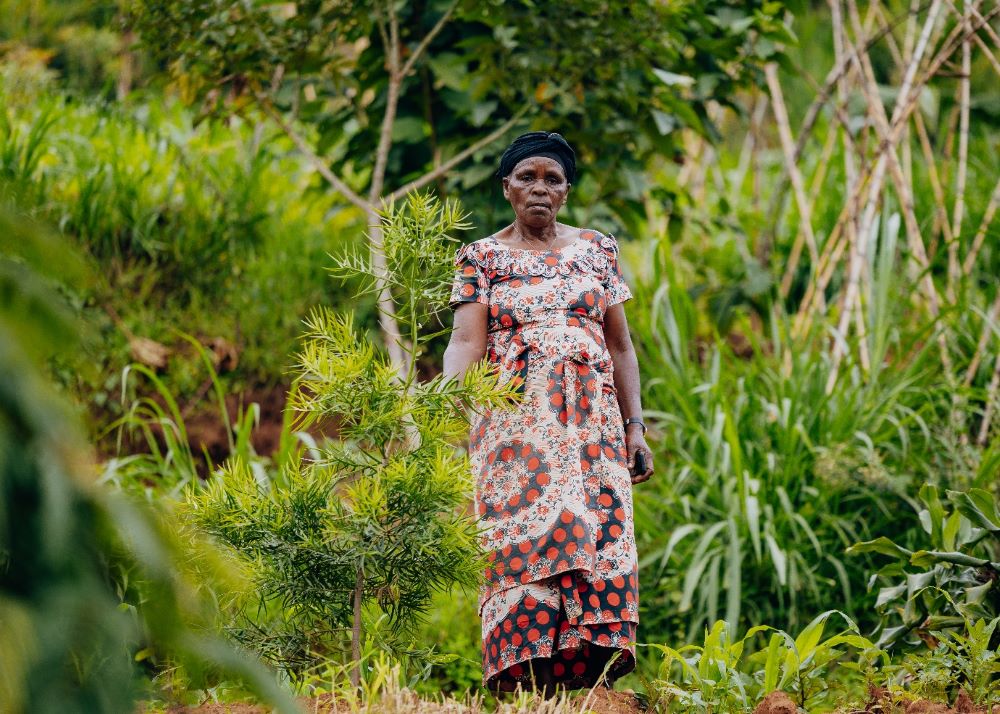
A project beneficiary standing next to Podocarpus falcatus. MuLaKiLa ensures that 50% of the tree species planted are indigenous.
The radical terraces to be established on 2,400 ha and progressive terraces will cover 7,739 ha. The establishment of these terraces comes with package of organic manure, lime, shrubs, elephant grass, and seeds for the agriculture season following the construction of the terraces. As of March 2026, 5.7 million trees have been planted and radical terraces established on 1,650 plus 5,208 ha of progressive terraces.
The livelihoods of local communities will be improved through several initiatives, including a well-designed set of training modules, increased crop yield, employment, tree maintenance incentive, value chain development for different agro-products, implementation of green projects funded through the Umusave Fund (an NBCF), and carbon benefit sharing.
“Thus, the project intends to build resilience to climate change for the vulnerable landscape and its residents,” says Amani.
For farmers like Ildephonse Bizimana, a smallholder in Rutsiro District, the results are already tangible.
“Before the project, rain used to wash away our soil and our harvests were poor,” he says. “Now, with terraces and trees on my land, the soil is stable and my crops are growing better. I can already see the difference in my yields.”
For Devota Uwajeneza, a farmer in Ngororero District, the impact has reshaped farming itself.
“Before, we cultivated but never harvested enough,” she says. “Now the terraces hold water, the soil is getting fertile again, and even during heavy rains, our fields remain intact.”
From the outset, communities have been central to the project’s design and execution. The initiative operates entirely on smallholder land and has engaged farmers and local leaders through village‑level consultations since its inception.
“These farmers are our key stakeholders,” Amani underlines. “They were involved from the beginning and are the drivers of implementation.”
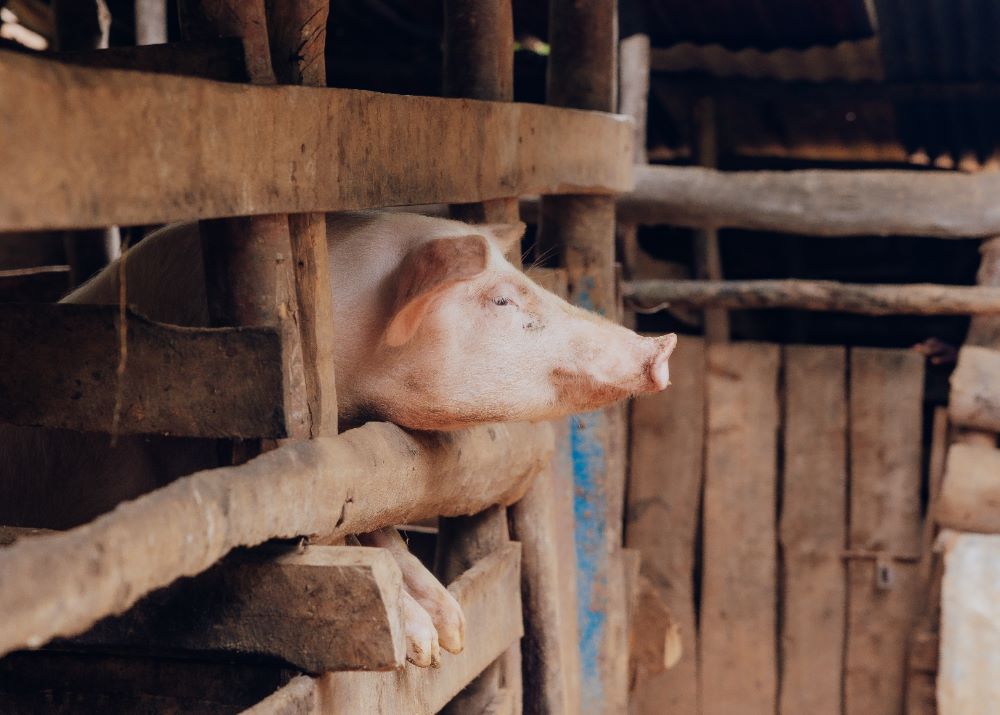
Beyond land restoration, MuLaKiLa targets economic resilience through the Nature‑Based Community Fund (NBCF), a revolving financing mechanism established in 73 cells across the project area. In 2024, €840,000 was deposited into the fund. By early 2026, communities had launched around 450 green projects, with nearly 900 million Rwandan francs invested in climate‑friendly enterprises. For Kankindi Chantal, one of the beneficiaries, access to the fund was decisive.
“Through the community fund, our association was able to invest in livestock farming,” she says. “We repaid the loan and earned enough to plan to upscale our project. We are no longer just farming to survive; we are farming as a business.”
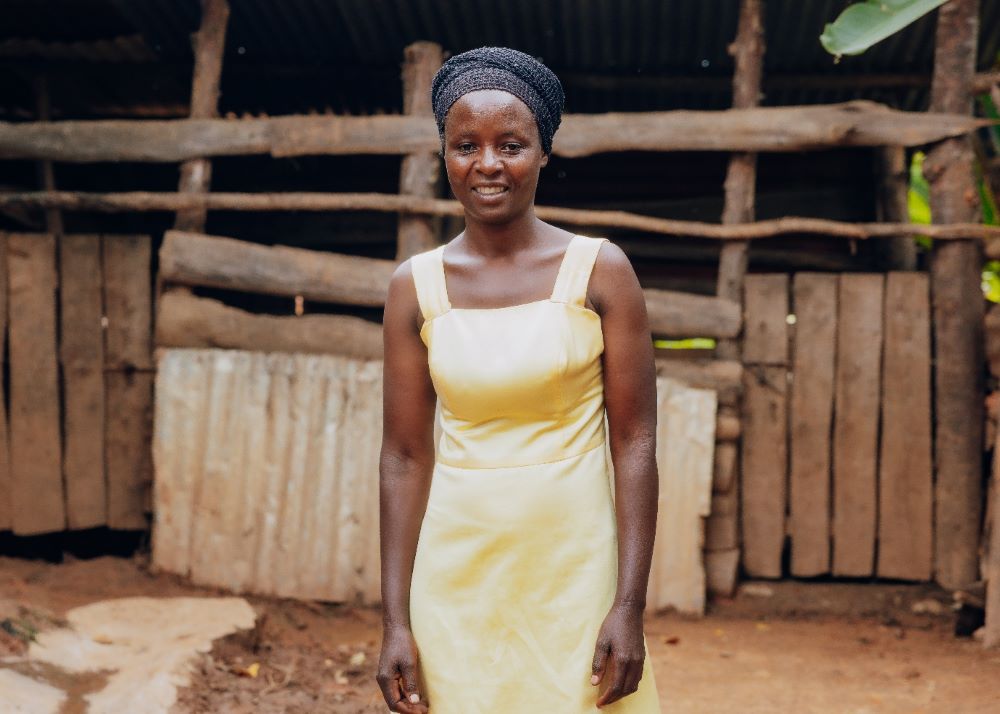
Chantal Kankindi, a project beneficiary of the MuLaKiLa.
All loans have been fully repaid, with interest, an outcome project leaders describe as evidence of growing confidence and financial discipline among communities.
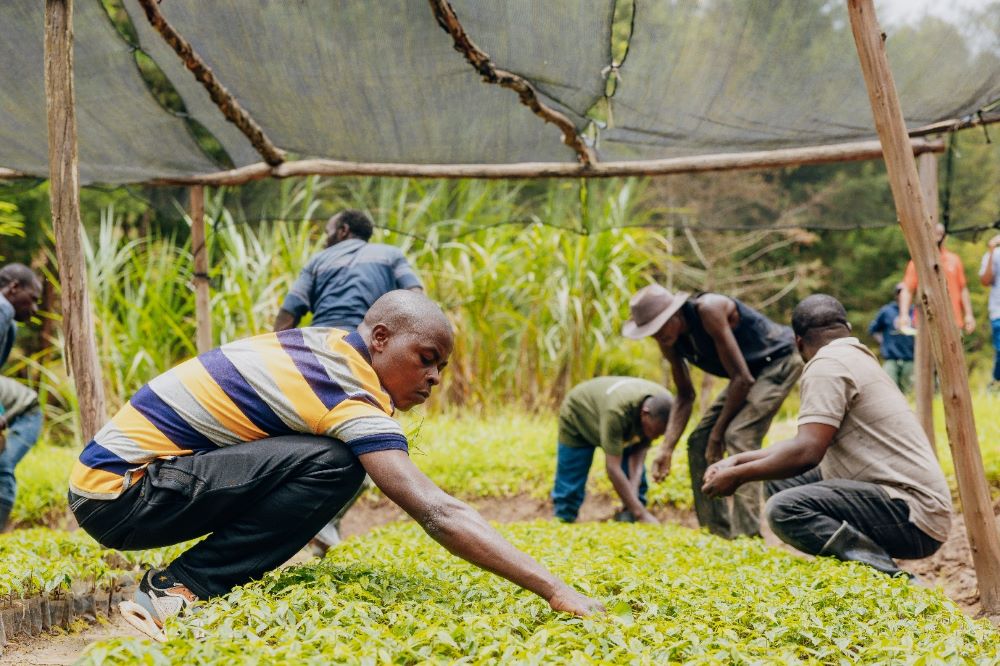
Training has reinforced this transformation. Farmers receive instruction in project management, nursery establishment, and sustainable agricultural practices, alongside basic farming tools and continuous technical support.
“The training also changed how we think,” added Chantal Kankindi. “We now plan, set objectives, and work together. Even when the project ends, these skills will remain with us.”
MuLaKiLa is also structured as a carbon project, allowing communities to benefit directly from climate action. Farmers receive annual incentives to maintain planted trees, while a share of revenue from carbon credits will be returned to communities.
“They are the stewards of the land,” Amani says. “So they should benefit from protecting it.”
The project is the result of collaboration among farmers, district authorities, national institutions, and partners such as Reforest’Action, the project developer. Mabano also credits AstraZeneca for providing the financial support that made the initiative possible.
Much work remains before MuLaKiLa reaches full maturity. But across western Rwanda’s hillsides, terraces are holding, trees are growing, and farmers who once watched their land degrade are now planning for the future.
“What makes us proud,” Amani says, “is when communities succeed. That is when our project succeeds.”
The project invested in key agricultural value chains, including coffee, bananas, beekeeping, and avocado.The project created 280,000 jobs, thanks to nursery management work and terraces establishment.
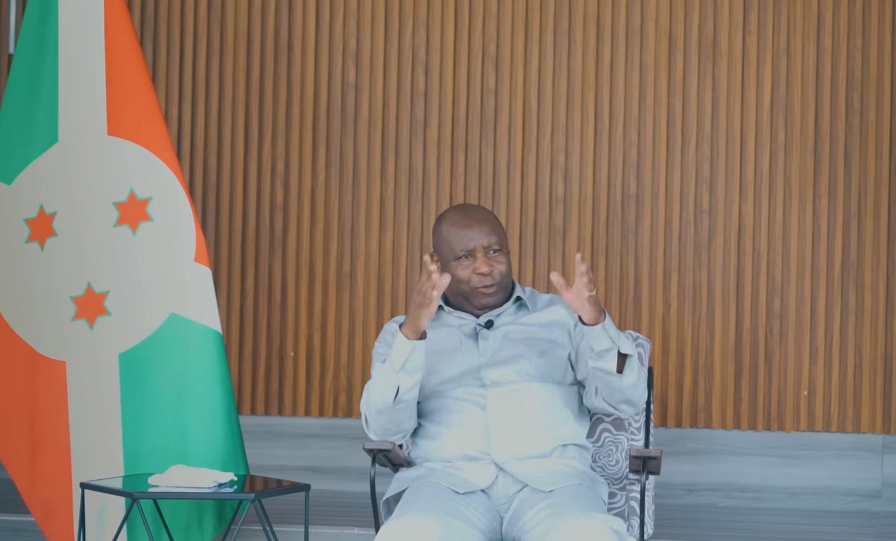
In an interview with Yaga Burundi, Ndayishimiye defended his decision to keep Burundi’s border with Rwanda closed, arguing that it was necessary to prevent cross-border infiltration by people intent on undermining Burundi’s security.
“We disagree with Rwanda on the issue of criminals who come to attack Burundi,” he said. “Rwanda opens the way for them, and they come to attack Burundi. Burundi has never opened its territory for anyone to go and attack Rwanda.”
Since late 2023, when Ndayishimiye began making these accusations publicly, Rwanda has consistently rejected them, maintaining that it has never collaborated with groups opposed to his administration and reminding the Burundian government of that position.
When asked whether Burundi could not secure itself with open borders, Ndayishimiye argued that unrestricted movement creates security gaps, saying some attackers manage to bypass security forces and carry out operations inside Burundi.
“Even if we lined up all 12 million Burundians from Ruhwa to Muyinga and left no gate unchecked, the way we manage security, you would understand it the day they come,” he said. “If we opened the border, you could find them already attacking you right here.”
Despite Ndayishimiye’s assertion that no attacks against Rwanda have originated from Burundi, armed groups, including FLN, have repeatedly crossed from Burundi’s Kibira forest into Rwanda’s south-western region, carrying out deadly attacks against civilians.
Among the notable incidents were attacks by FLN fighters in Nyabimata and Kitabi sectors of Nyaruguru and Nyamagabe districts in 2018 and 2019, after infiltrating from Burundi.
In May 2021, the group launched another attack in Bweyeye Sector of Rusizi District, but was repelled by Rwandan forces.
The Rwanda Defence Force later stated that the attackers had crossed from Giturashyamba in Mabayi Commune, Burundi. After being pushed back, they reportedly retreated across the Ruhwa River into Kibira forest.
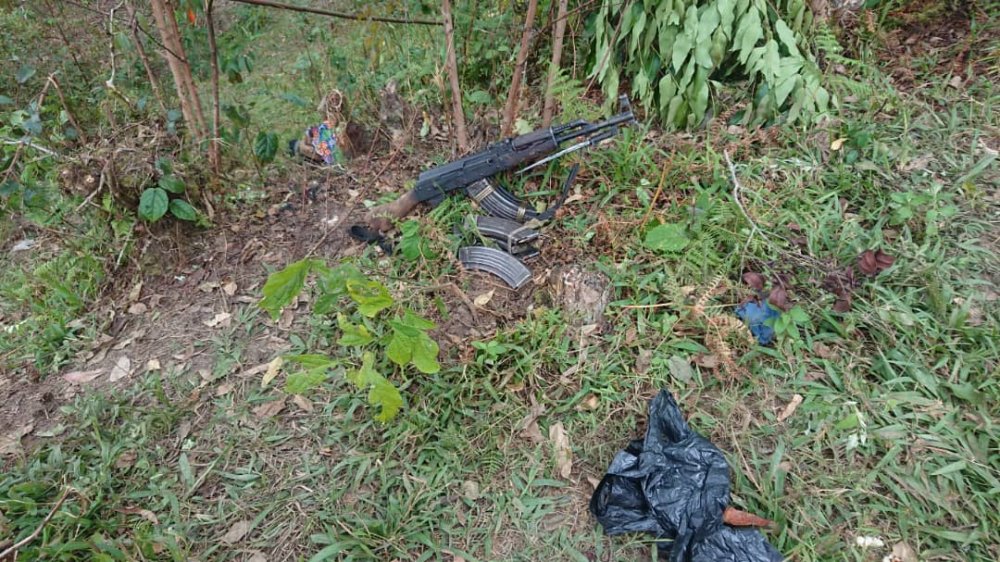
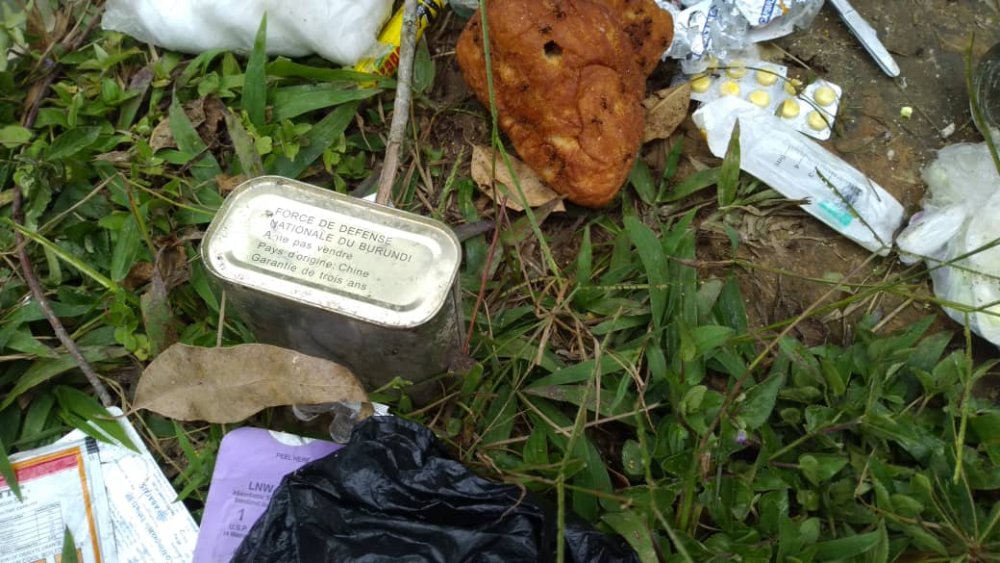
According to the RDF, the fighters were found with military equipment bearing the insignia of the Burundian army, strengthening claims that elements within Burundi were cooperating with FLN in operations aimed at destabilising Rwanda.
In May 2022, FLN fighters again launched an attack from Burundi, targeting a passenger bus travelling through Nyungwe National Park and killing two civilians. The group has continued to operate from Kibira forest.
Another case involved RED Tabara fighters who entered Kibira from the Democratic Republic of Congo and clashed with Burundian forces in September 2020. While fleeing, 19 of them lost their way in Nyungwe National Park and were arrested by Rwandan soldiers on patrol.
In October 2021, Rwanda handed the fighters over to Burundi, emphasising that it could not provide refuge to individuals seeking to destabilise a neighbouring country. At the time, Ndayishimiye had been in office for one year and three months.
A report by United Nations experts later indicated that as relations between Rwanda and Burundi deteriorated in late 2023, Burundi renewed and intensified cooperation with armed groups seeking to destabilise Rwanda, including FLN.
Beyond FLN, Burundi has also been linked to cooperation with the genocidal FDLR militia group, particularly in military operations against the AFC/M23 rebel movement active in North and South Kivu provinces of the Democratic Republic of Congo. Reports also indicate that such collaboration extends to broader plans aimed at undermining Rwanda’s security.
Ndayishimiye, in an interview with Yaga Burundi, insisted that no individuals who have carried out attacks against Rwanda have originated from Burundi.
In May 2021, between 10 and 15 FLN fighters crossed from Burundi and launched an attack on Bweyeye, during which they abandoned their equipment as they were repelled.Among the items used by FLN during their incursion into Rwanda were some bearing the insignia of the Burundian army
West Texas Intermediate crude oil futures for May delivery reached as high as 91.2 U.S. dollars per barrel at the start of trading for the new week, up 8.76 percent from the settlement on Friday. Meanwhile, Brent crude oil futures for June delivery had a high of 97.5 U.S. dollars per barrel, up from the previous session’s settlement of 90.38 dollars per barrel.
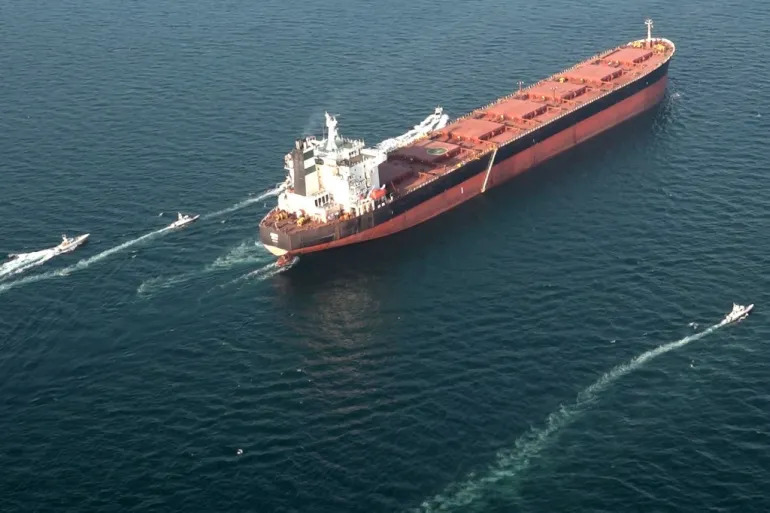
Thirty-five outbound vessels reversed course over the past 36 hours after Iran reimposed control over the Strait of Hormuz, a London-based maritime analytics firm said on Sunday.
On Saturday evening, the Navy of Iran’s Islamic Revolution Guards Corps announced that the Strait of Hormuz had been blocked. This announcement followed the Iranian government’s declaration on Friday that the strait would be open to all commercial vessels for the duration of the Lebanon-Israel ceasefire.
Moreover, Iran’s official news agency IRNA said on Sunday the country has rejected taking part in the second round of the peace talks with the United States.
The renewed tensions also sent U.S. stock index futures plummeting on Sunday evening, with precious metal futures dropping significantly.
The optimism over resumption of trade flows in the Strait of Hormuz led to an over 11 percent drop of West Texas Intermediate crude oil futures for May delivery, and sent the S&P 500 Index and Nasdaq Composite Index to new record highs on Friday.
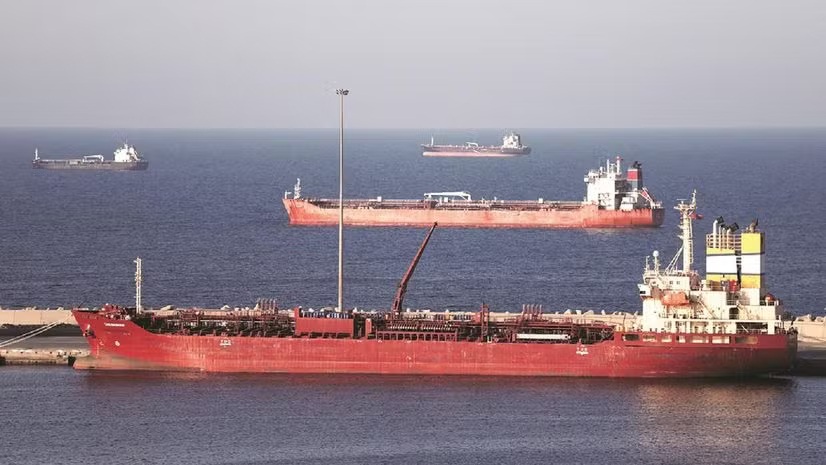
The Strait of Hormuz, a vital shipping corridor accounting for around 20 percent of global oil flows, has effectively been closed to oil tanker transit since the outbreak of conflict in the Middle East at the end of February.
Thirty-five outbound vessels reversed course over the past 36 hours after Iran reimposed control over the Strait of Hormuz, a London-based maritime analytics firm said on Sunday.
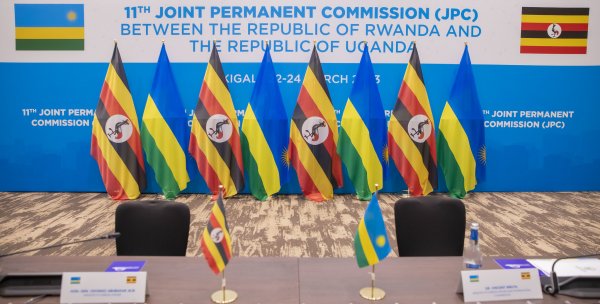
The meetings, organised by Uganda’s Ministry of Foreign Affairs in collaboration with the Ugandan Embassy in Kigali, are scheduled to take place from April 20 to 22, 2026, in Kampala.
The discussions are expected to bring together representatives from more than 15 ministries, with a focus on reviewing and enhancing cooperation across key sectors of mutual interest.
Uganda’s delegation will be led by the Minister of State for Foreign Affairs, John Mulimba, while the Rwandan delegation will be headed by the Minister of State in the Ministry of Foreign Affairs and International Cooperation, Dr. Usta Kaitesi.
According to Uganda’s daily NewVision, the meetings will be held at Mestil Hotel in Kampala. In addition to technical discussions, high-level closed-door sessions between ministers from both sides are expected, ahead of the adoption of joint resolutions and the signing of cooperation agreements.
Uganda’s Permanent Secretary in the Ministry of Foreign Affairs, Ambassador Richard Kabonero, said the talks will cover a wide range of areas, including defence and security cooperation, infrastructure development, immigration and border management, police cooperation, education, and other strategic sectors.
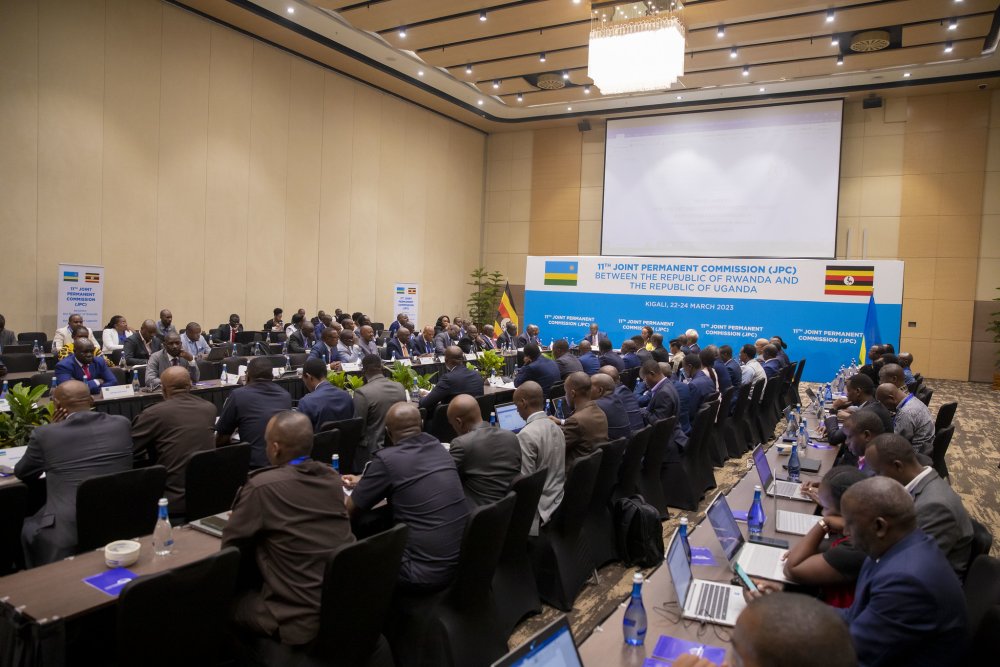
He added that the two sides will also review progress made in implementing previous agreements, particularly those reached during the 11th PJC session held in Kigali in 2023.
The Ugandan Ministry of Foreign Affairs further noted that the session will also explore new opportunities to deepen bilateral relations, boost trade and investment, and develop joint development initiatives aimed at fostering regional integration and mutual growth.
At the most recent session of the Permanent Joint Commission between Uganda and Rwanda, held in Kigali, the two countries concluded cooperation agreements aimed at strengthening bilateral relations.Representatives of Rwanda and Uganda are set to meet once again to discuss and strengthen bilateral cooperation between the two countries.
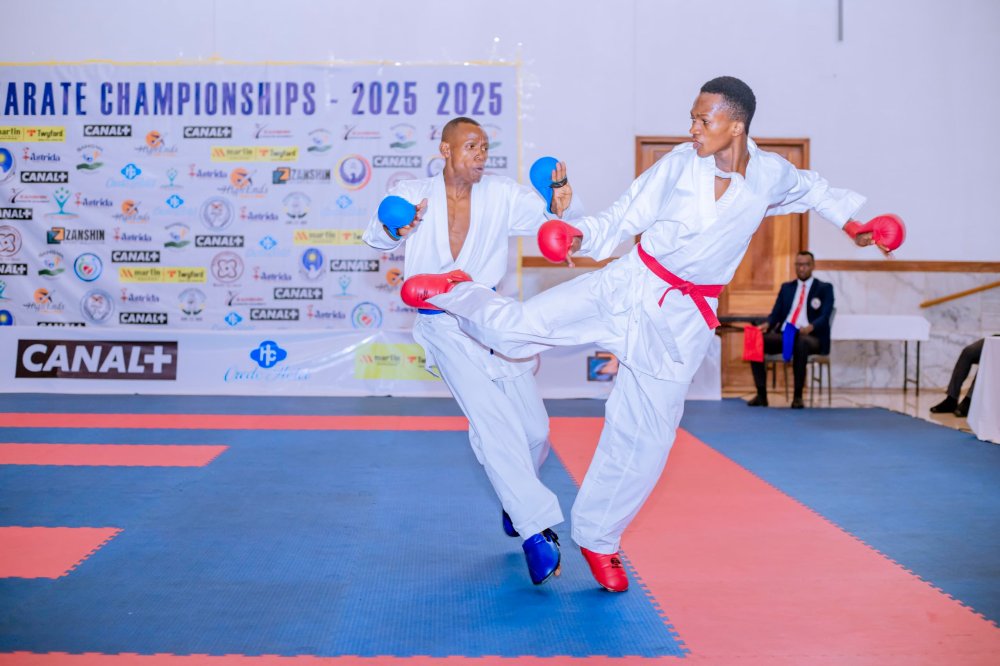
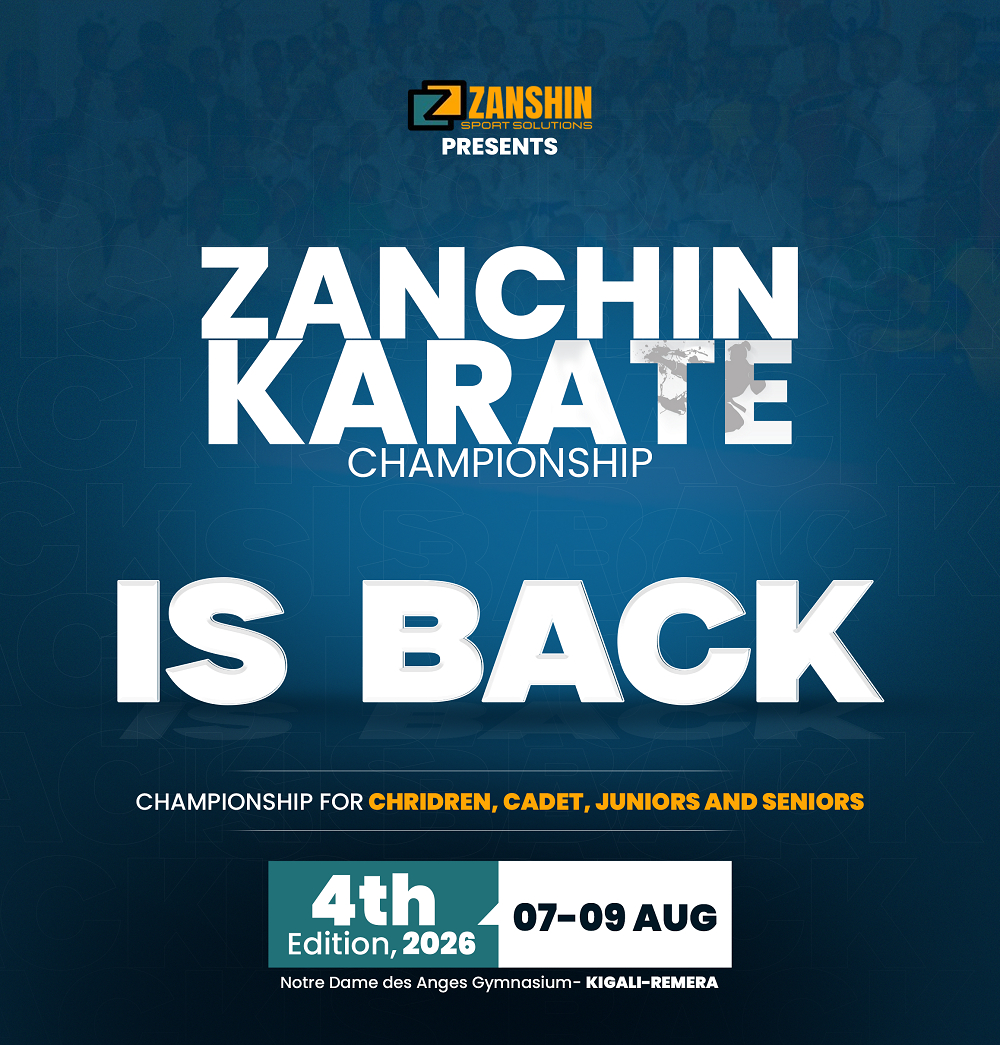
The international karate tournament will be held at the indoor sports and entertainment hall of Ecole Notre Dame des Anges in Remera, bringing together children, cadet, juniors, and senior athletes from Rwanda and beyond.
Previously staged in Huye, the championship features both male and female competitors aged six years and above, competing across different age and weight categories.
Young participants will compete in Kata (forms demonstration) and Kumite (sparring) based on age groups, while senior athletes will contest Kumite bouts according to weight divisions, in line with World Karate Federation regulations.
One of the tournament’s distinguishing features is the use of advanced Video Review (VAR) technology in scoring, allowing coaches to challenge refereeing decisions when they believe their athletes were denied deserved points.
The championship is also officiated by international referees and experts drawn from across the African continent.
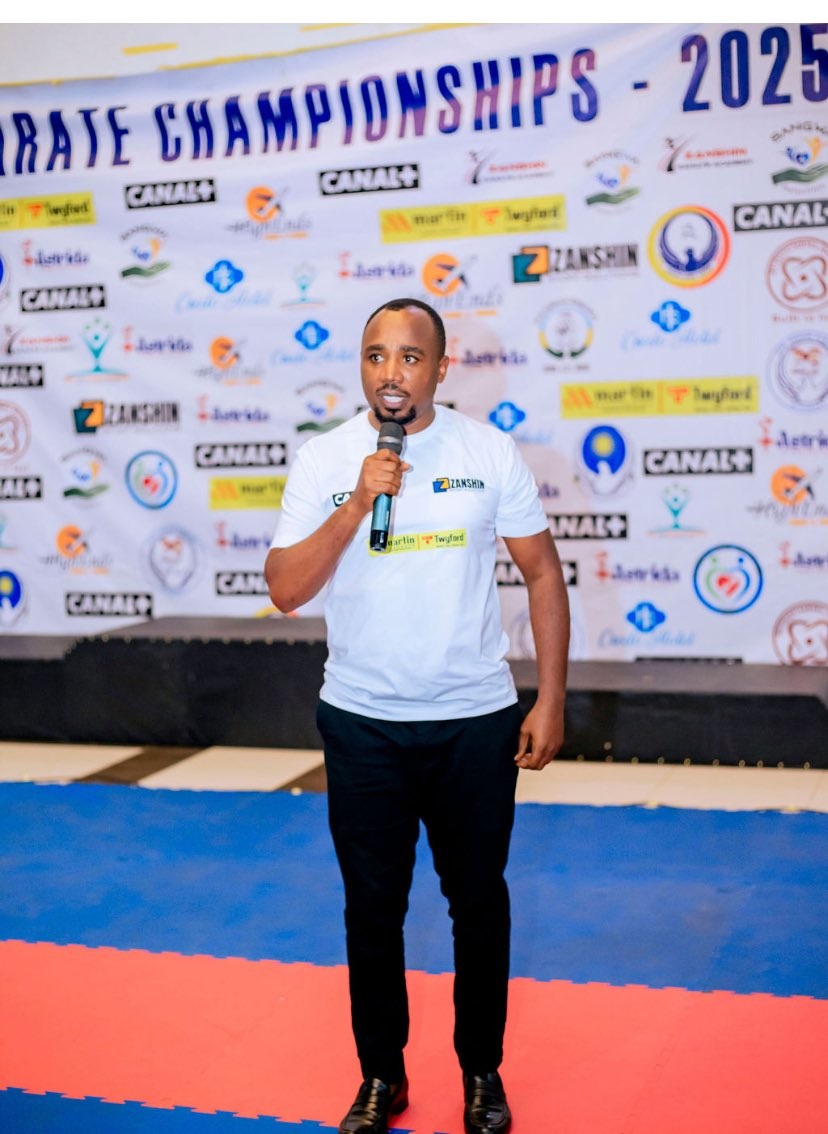
Dieudonné Mwizerwa, Director of Zanshin Sport Solutions and the tournament organiser, said registration will open in June and run until the end of July 2026.
“This year, all preparations are well in place. We expect top international athletes to participate, and international referees from different African countries will officiate the matches,” he said.
Mwizerwa urged teams to register their athletes early and in large numbers, while also calling on supporters to attend and cheer on the competitors.
He also thanked FERWAKA and Martin Hardware & Twyford Rwanda, the main sponsor of the tournament, for their continued support.
He further encouraged other partners to collaborate with Zanshin in promoting karate development and nurturing young talent.
In the 2025 edition, Flying Eagles Karate Club won the Zanshin Karate Championship for Children, Cadets and Juniors (3rd Edition).
APR Karate-Do claimed the Zanshin Seniors Open Karate Championships (2nd Edition), which brought together senior athletes and was held at Hotel Credo in Huye District.
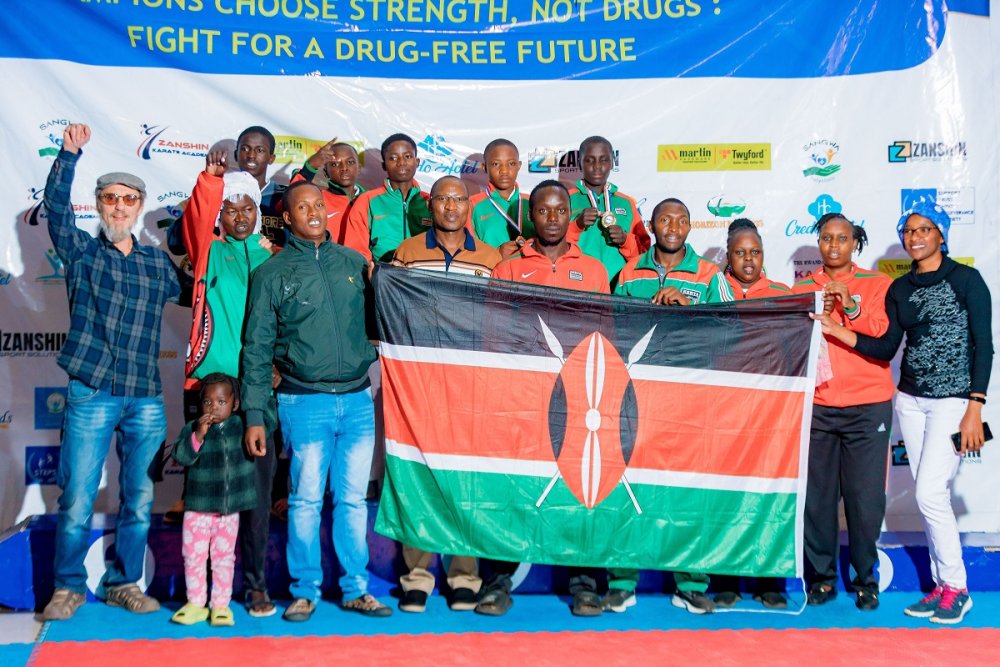
Participating teams included clubs from Rwanda and Kenya, as well as individual athletes from Gabon and the Democratic Republic of Congo.
The “Zanshin Karate Championship 2026” tournament will take place in Kigali from August 7–9. The karate tournament features both junior and senior categories.Dieudonné Mwizerwa, Director of Zanshin Sport Solutions and the tournament organiser, said registration will open in June and run until the end of July 2026.Teams from Kenya were among those that participated in the tournament during its most recent edition in 2025, which was held in Huye.
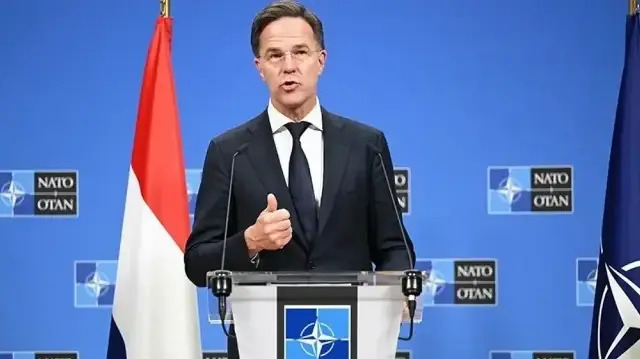
In a wide-ranging discussion with the German newspaper WELT AM SONNTAG, Rutte stated he does not foresee a future where the United States abandons its post-war security commitments. However, he balanced this reassurance with a stern call for a “stronger Europe within a stronger alliance,” suggesting that the burden of Western defense must be more equitably shared.
The remarks serve as a direct response to recent escalations from U.S. President Donald Trump. The President has intensified his “America First” stance, labeling NATO a “paper tiger” and expressing visible frustration over European involvement, or lack thereof, in Middle Eastern tensions, specifically regarding Iran. Trump’s repeated suggestions that he is “considering” a withdrawal have sent ripples of anxiety through Baltic and Eastern European capitals.
Rutte acknowledged that the U.S. commander-in-chief’s disappointment is not without merit.
“The President is visibly frustrated with certain members,” Rutte noted, acknowledging the long-standing U.S. grievance regarding defense spending. Currently, while more nations are hitting the 2% GDP spending target, several key European economies still fall short.
Despite the friction, Rutte emphasized that the structural foundations of the alliance remain indispensable. He reaffirmed that the U.S. nuclear umbrella continues to serve as the “ultimate guarantor” of European security, a deterrent that no individual European nation can currently replicate.
To ensure the alliance remains viable, Rutte argued that Europe must move beyond “rhetorical support” and invest in tangible military capabilities. Analysts suggest that by framing the issue as an opportunity for European growth, Rutte is attempting to bridge the gap between Trump’s isolationist leanings and Europe’s security requirements.
As the next NATO summit approaches, the focus will likely remain on these two pillars: maintaining the U.S. commitment while rapidly accelerating European defense autonomy to satisfy a frustrated Washington.
NATO Secretary General Mark Rutte dismissed growing concerns over a potential U.S. withdrawal from the alliance in an interview published Saturday.