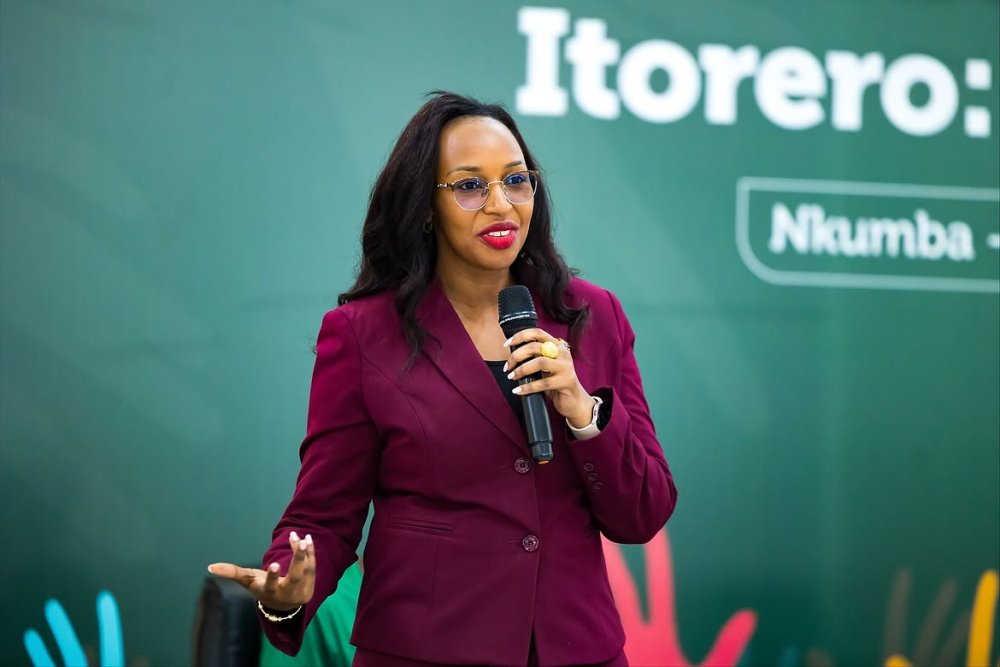
Held under the theme “Rooted. Growing. Thriving ”, the event builds on the success of the first edition organized in 2025.
The initiative aims to provide young Rwandans with a platform for dialogue, reflection, and collaboration, while supporting their personal, academic, and professional development and reinforcing their connection to Rwandan values.
Equipping young people to thrive in a changing world
Students, young professionals, entrepreneurs, as well as young people born and raised in Germany, represent a generation navigating a multicultural and constantly evolving environment.
This reality offers numerous opportunities, but also raises important questions related to identity, belonging, civic responsibility, and integration into social, professional, and economic systems that can sometimes be complex.
Rwandan Youth Connect Germany seeks to create constructive spaces where young people can share experiences and develop solutions adapted to their realities.
This second edition will focus on several key themes, including cultural identity in the digital age, personal development, resilience, social responsibility, and the skills needed to succeed in international professional environments.
Participants will also have the opportunity to discuss topics related to financial literacy, entrepreneurship, and opportunities for collaboration between Rwanda and Germany.
The goal is to encourage young people to develop critical thinking skills, make informed decisions, and become positive contributors within their communities.
Strengthening the connection between the diaspora and Rwanda
Beyond the discussions, the initiative seeks to strengthen ties between Rwandan youth in the diaspora and Rwanda itself.
Organizers aim to encourage young people to leverage their international experiences to contribute to the country’s development and foster cooperation among Rwandan communities living abroad.
The summit is supported by the Embassy of Rwanda in Germany, which continues to promote youth engagement and empowerment within the diaspora.
With this second edition, Rwandan Youth Connect Germany reaffirms its ambition to become a sustainable platform serving a new generation of young Rwandans.
Photos from the previous edition
The initiative aims to strengthen identity, skills, and future readiness among young Rwandans living in Germany.The event focuses on key themes including identity, resilience, entrepreneurship, and opportunities between Rwanda and Germany.Organizers say the initiative seeks to strengthen ties between the Rwandan diaspora and Rwanda while empowering youth to contribute to national development.Rwandan Youth Connect Germany provides a platform for dialogue, reflection, and collaboration among young members of the diaspora.
The 60-day agreement is intended to pave the way for broader negotiations toward a permanent ceasefire. Among its 14 key provisions are the cessation of hostilities between the two sides in the Middle East, mutual respect for sovereignty and territorial integrity, the reopening of the Strait of Hormuz, and the reopening of Iranian ports.
Iran is required under the deal to halt nuclear weapons development, while the United States has agreed to ease sanctions and release frozen Iranian funds held in international banks. Washington has also committed to contributing an estimated $300 billion for reconstruction of war-damaged areas.
Following the announcement, global oil prices quickly dropped back to pre-conflict levels. During peak tensions, crude oil had risen to as high as $120 per barrel, but it has since fallen to around $77.69. U.S. crude is trading at approximately $74.90 per barrel.
The Strait of Hormuz, through which about 20% of the world’s oil supply passes daily, is a critical route for energy and trade shipments between the Middle East and global markets.
The earlier spike in international oil prices had a direct impact on Rwanda, where fuel prices reached historic highs. On June 5, 2026, a litre of petrol cost 2,938 Rwandan francs, while diesel rose to Rwf 2,927, driven by global market volatility.
Speaking to the media on June 6, Prime Minister Dr. Justin Nsengiyumva said that without government subsidies, a litre of diesel would have cost Rwf 3,581, meaning the state was covering about 18.16% of the cost through subsidies.
U.S. President Donald Trump signed the agreement while attending a G7 meeting in France. Iran also confirmed that President Masoud Pezeshkian signed the document on June 17.
Speaking to the press on June 16, Minister of Finance and Economic Planning Yusuf Murangwa said that while the agreement was welcome news, Rwanda would take a cautious approach.
“So far, we have received good news that there are initial agreements on the war in the Middle East. But our principle is to wait and see. There are two main reasons for this. First, we want to see whether the agreement is actually effected and whether it holds for a long period of time,” he said.
Fuel prices in Rwanda are reviewed every two months, and the country also maintains strategic reserves to cushion against supply shocks.
Shipping routes from ports such as Dubai or Bandar Abbas typically take between six and 12 days to reach Mombasa in Kenya or Dar es Salaam in Tanzania, with additional time required for transport into Rwanda. This means that goods already in transit or stored in warehouses may still reflect earlier, higher prices.
Murangwa noted that even if global conditions normalize immediately, local markets would continue to feel the effects of previous disruptions.
“Second, even if everything were to stabilize today, there would still be a backlog of issues. So, we still expect that we’ll continue to see the effects of the blockage that happened.
“It is not yet clear when this will be resolved. We will have to observe how the global business and supply chain communities manage to unlock the backlog of goods that were stuck in the Gulf,” he said.
The initial agreement also provides for the removal of naval mines and other maritime obstacles in the Strait of Hormuz within 30 days. During this period, shipping volumes are expected to return to pre-conflict levels, with the United States withdrawing naval forces deployed in the area.
The agreement stipulates that commercial shipping should return to normal levels under Iranian supervision.
Rwanda maintains that its fuel reserves have not been affected since the start of the Iran conflict and says it is working to ensure stable supply in the domestic market, along with other essential goods.
According to the National Institute of Statistics of Rwanda, consumer prices increased by 12.9% in May 2026 compared to the same period in 2025.
The Strait of Hormuz is a key route for global oil shipments.
The annual event, commonly known as the King’s Birthday Party, brought together government officials, diplomats, business leaders, and artists for an evening that blended formal diplomacy with a festival-style celebration.
British High Commissioner to Rwanda Alison Thorpe said the choice of June for the celebration reflects a longstanding British tradition of marking the monarch’s birthday twice, once in June and again in November during the actual birthday month.
“For those of you who were here in November, you might be wondering why we are celebrating again so soon. The answer is a wonderfully British tradition,” she said, noting that the June timing was also chosen for its favourable summer weather.
Thorpe said this year’s theme focused on music festivals, describing them as spaces where people come together for “great music, good friends, and lots and lots of dancing.”
She highlighted the cultural parallels between global festivals such as Glastonbury in the United Kingdom and Rwanda’s own Kivu Fest, saying both reflect the power of music to connect communities.
The High Commissioner also used the occasion to outline the United Kingdom’s evolving approach to Africa, saying London has shifted from a traditional donor model to what she described as a more balanced partnership focused on investment and shared growth.
“In plain terms, that means we have moved from being an old-fashioned donor to a genuine investor and partner,” she said, adding that the new approach prioritises trade, development partnerships, and people-to-people links.
She highlighted growing economic ties between Rwanda and the UK, including efforts to increase exports of Rwandan tea and coffee to British supermarkets, expand high-value investment projects, and deepen cooperation through the British Chamber of Commerce in Rwanda.
Thorpe also emphasised long-standing institutional partnerships, noting cooperation between Rwandan institutions such as the National Institute of Statistics of Rwanda (NISR) and the Rwanda Revenue Authority (RRA), as well as more than 60 university partnerships between the two countries.
On development cooperation, she said the relationship has evolved into one built on shared expertise and mutual learning, while reaffirming commitments in areas such as education, climate resilience, financial sector development, and Ebola preparedness.
The UK has recently committed £800,000 (about Rwf 1.6 billion) in new funding to strengthen Rwanda’s preparedness for Ebola and other viral haemorrhagic diseases.
“We have long partnerships and we can and will do more,” she affirmed.
Rwanda’s Minister of State for Foreign Affairs, Dr. Usta Kaitesi, who was the guest of honour, echoed the message of strong bilateral ties, describing the relationship between Rwanda and the United Kingdom as one grounded in mutual respect, regular dialogue, and shared development goals.
She noted that while differences may occasionally arise on regional or international issues, such moments do not define the partnership.
“Such moments do not define our relationship. Rather, they remind us that genuine partnerships are strengthened through honest dialogue, mutual understanding, and continued engagement,” she remarked.
Dr. Kaitesi highlighted key areas of cooperation, including education, social protection, climate resilience, public financial management, and Ebola preparedness. She also pointed to expanding economic engagement, with British investment active in sectors such as renewable energy, mining, agriculture, hospitality, infrastructure, and financial services.
She welcomed the establishment of the British Chamber of Commerce in Rwanda as a milestone in strengthening trade and investment relations.
The Minister also acknowledged cultural and creative initiatives supported by the UK, including efforts to connect Rwandan fashion designers with their British counterparts through the Rwanda Fashion Entrepreneurship Programme, describing it as an example of diplomacy extending beyond policy into people-centred collaboration.
“This initiative demonstrates that diplomacy is not only about governance, it is equally about creating opportunities for people, innovation, and cultural exchange,” she noted.
Dr. Kaitesi reaffirmed Rwanda’s commitment to working with the UK to promote peace, stability, and shared prosperity before proposing a toast to His Majesty King Charles III and the continued friendship between the two nations.
Beyond the formal speeches, the celebration featured live performances by Okay Bisoke, Umuriri Band, Coco, DJ Cynthasizer, DJ JP Zed, and DJ Trick. Guests also enjoyed traditional drumming, gymnastics, juggling, and fire-eating performances.
The festival-themed event included food stalls, craft beers, cocktails, silent disco and lounge areas, with menus inspired by the traditional King’s Birthday Parade offerings, including dishes such as cod.
The vibrant evening reflected what both sides described as a growing partnership, one that blends diplomacy, economic cooperation, and cultural exchange into a shared celebration of friendship between Rwanda and the United Kingdom.
The annual event, commonly known as the King’s Birthday Party, brought together government officials, diplomats, business leaders, and artists for an evening that blended formal diplomacy with a festival-style celebration.British High Commissioner to Rwanda Alison Thorpe said the choice of June for the celebration reflects a longstanding British tradition of marking the monarch’s birthday twice, once in June and again in November during the actual birthday month.Rwanda’s Minister of State for Foreign Affairs, Dr. Usta Kaitesi, who was the guest of honour, echoed the message of strong bilateral ties, describing the relationship between Rwanda and the United Kingdom as one grounded in mutual respect, regular dialogue, and shared development goals.Dr. Kaitesi reaffirmed Rwanda’s commitment to working with the UK to promote peace, stability, and shared prosperity before proposing a toast to His Majesty King Charles III and the continued friendship between the two nations.It was a night to celebrate music, culture, and friendship under the stars.The festival-themed event included food stalls, craft beers, cocktails, silent disco and lounge areas, with menus inspired by the traditional King’s Birthday Parade offerings, including dishes such as cod.One of the guests won a two-night all-inclusive stay for two at the newly refurbished Sambora Kinigi Lodge through a raffle draw.
The decision was made following the presentation of a report by the Senate Committee on Foreign Affairs, Cooperation, and Security, which assessed the suitability of the nominees.
Among those approved is Lt Gen (Rtd) Emmanuel Karenzi Karake, who was nominated as Rwanda’s ambassador to China.
Presenting the committee’s findings, Senator Murangwa Ndangiza Hadidja said Karenzi Karake brings extensive experience and expertise that will enable him to effectively carry out his diplomatic duties.
His previous roles include serving as a consultant at the Ministry of Interior, advisor to the President of the Republic, Secretary-General of the National Intelligence and Security Service, and Commander of the Rwanda Peace Academy, among other senior positions in the Rwanda Defence Force.
Karenzi Karake said he intends to strengthen bilateral relations and cooperation between Rwanda and China, with a focus on security, technology, trade, industry, and existing partnership agreements between the two countries.
Maj Gen Aimable Bayingana, who was approved as Rwanda’s ambassador to Israel, has also held several senior positions, including chairing a committee on the history of Rwanda’s liberation struggle, Permanent Secretary in the Ministry of Defence, Air Force Chief of Staff, and Vice Chairperson of the National Itorero Commission.
He said he will focus on learning from Israel’s innovation systems, strengthening security cooperation, preserving the history of the Genocide against the Tutsi and combating its denial and distortion, and promoting technology-driven agriculture.
He also emphasized the importance of attracting Israeli agricultural experts to Rwanda, arguing that this would be more effective than sending Rwandans abroad for training. He further highlighted the need for Rwanda to learn from Israel’s vocational education system.
Col (Rtd) Jeannot Ruhunga was approved as Rwanda’s ambassador to Poland.
He previously served as Secretary-General of the Rwanda Investigation Bureau (RIB) and Head of Military Intelligence in the RDF, among other roles.
Ruhunga said he will focus on providing accurate information about Rwanda to European countries, many of which, he said, still hold misconceptions about the country.
He also pledged to learn from Poland’s development model, strengthen cooperation in education, improve social welfare collaboration, and identify new areas of partnership between the two countries.
Ambassador Christine Nkulikiyinka will become Rwanda’s first resident ambassador to Spain. Until now, Rwanda’s representation in Spain was handled through its embassy in France.
As the new ambassador, she pledged to contribute to the implementation of defense cooperation agreements between Rwanda and Spain, attract Spanish investors to Rwanda, explore opportunities for Spanish universities to open branches in Rwanda, and strengthen cooperation on gender equality, among other priorities.
Senator Murangwa also noted that senators urged the new ambassadors to play a role in combating genocide ideology, learn from their host countries, and strengthen cooperation in key sectors such as education.
Senator John Bonds Bideri said the nominees have the experience and capacity needed to fulfill their responsibilities.
“There is no doubt they have the willingness to serve their country. Many of them contributed to the liberation of Rwanda and have continued to serve in different capacities over the years. Their appointment gives us confidence that they will perform well,” he said.
Senator Sosthène Cyitatire noted that the ambassadors have a strong commitment to serving their country, given their long history of public service since the 1994 Genocide against the Tutsi.
He also welcomed the decision to appoint ambassadors with military backgrounds to key countries such as China, Israel, and Poland, saying modern diplomacy increasingly includes military diplomacy.
He said, “It was a timely decision because modern diplomacy today includes military diplomacy.”
Among other appointments approved by the Senate were Florien Habiyaremye Rurihose, who was reappointed as Deputy Chief Gender Monitor in Charge of Gender Mainstreaming; Maximilien Byilingiro, appointed Director General of the Energy Utility Corporation Limited (EUCL); and Michelle Umurungi, appointed Deputy CEO in charge of investments at the Rwanda Social Security Board (RSSB).
Lt Gen (Rtd) Karenzi Karake has been approved as Rwanda’s ambassador to ChinaCol (Rtd) Jeannot Ruhunga has been approved as Rwanda’s ambassador to PolandMaj Gen Emmanuel Bayingana pledged to strengthen Rwanda–Israel relationsAmbassador Nkulikiyinka will oversee Rwanda’s interests in Spain
The DRC national football team secured a historic 1-1 draw against Portugal in its opening match at the FIFA World Cup.
Tshisekedi, who watched the match from the stadium, saw Les Léopards earn their first-ever World Cup point and score their first goal in the tournament. The DRC is making only its second World Cup appearance, 52 years after its debut.
Instead of focusing solely on the team’s achievement, Tshisekedi later addressed members of the Congolese diaspora in the United States, linking the result to the ongoing conflict in his country.
He praised the players for their performance despite the challenges facing the DRC, saying many had expected them to struggle against a Portuguese side featuring global football star Cristiano Ronaldo.
Turning to politics, Tshisekedi claimed that his government had identified individuals collaborating with the AFC/M23 coalition, which controls large parts of eastern DRC. He said he had initially believed such collaborators were based only in Rwanda but had discovered they had also infiltrated Kinshasa.
“Do not betray your country. Sorcerers exist. We thought they were only in Rwanda, but they have infiltrated our country.”
Tshisekedi said that after the rule of Mobutu Sese Seko, the DRC had a good leader in Laurent-Désiré Kabila, but that later those he called enemies entered their country and removed him from power, installing someone he referred to as a “dog” and training him to do what they wanted.
In addition to targeting Joseph Kabila, Tshisekedi told Congolese citizens living in the United States that, in the near future, they would retake the cities of Goma and Bukavu, which have been outside government control for more than a year.
“I am confident that in the coming days, the whole of Congo will be liberated,” he said. “Our brothers and sisters in Goma and Bukavu will celebrate with us. We have learned lessons from what has happened and must now build something stronger.”
Reacting on X, Rwanda’s government spokesperson Yolande Makolo said the DRC team’s performance had united and inspired Africans, but Tshisekedi had chosen to undermine the occasion.
“The Leopards gave Africa a moment of great joy during their opening World Cup match. President Tshisekedi chose to spoil that moment by insulting Rwandans and Congolese alike and, while on U.S. soil, declaring his intention to continue military offensives in eastern DRC.
“Tshisekedi not only exploited a remarkable sporting achievement for petty political purposes, but his belligerent rhetoric also demonstrates disregard for both the letter and spirit of the Washington Agreement,” she said.
The Washington Agreement, signed between Rwanda and the DRC on December 4, 2025, outlines measures aimed at addressing security concerns in the region. It includes commitments by the DRC to dismantle the FDLR, a terrorist group responsible for the 1994 Genocide against the Tutsi.
Once those measures are implemented, Rwanda is expected to lift defensive measures taken along its border. The agreement also includes provisions on refugee repatriation.
Beyond security, the deal provides for deeper economic cooperation between the two countries. Rwanda and the DRC are expected to strengthen collaboration on the Rusizi III hydropower project, a 206-megawatt plant expected to supply electricity to more than 300,000 people. The $800 million project is scheduled for completion by 2030.
The agreement also promotes cooperation in the minerals sector, encouraging both countries to move beyond raw mineral extraction toward local processing and value addition. It further calls for harmonized regulations to enhance the security and transparency of mineral trade.
In addition, the agreement envisages joint efforts to extract methane gas from Lake Kivu and convert it into electricity. Despite the signing of the deal, implementation on the Congolese side has reportedly been slow.
The Rwandan government maintains that both countries have significant opportunities to benefit from cooperation and believes that fully implementing the Washington Agreement could contribute to lasting peace in the region.
Iran’s Supreme National Security Council (SNSC) made the announcement in a statement carried by Iranian media hours after Iranian President Masoud Pezeshkian and his U.S. counterpart Donald Trump signed the MoU, electronically.
The SNSC said under the MoU, no fee will be charged for 60 days for passage by ships requesting to cross the Strait of Hormuz, and all the expenses will be covered by the Iranian government.
Vessels seeking to transit the waterway are required to send their requests to the Persian Gulf Strait Authority (PGSA), it said.
“Given the specific circumstances and existence of some safety hazards along the passage route, and due to the necessity to ensure safe traffic and prevent maritime accidents, it is necessary for ships to pass through along the announced route and at the announced time,” it said, giving the assurance that traffic in the waterway would gradually increase.
It said the executive arrangements and technical details for passage through the strait will be announced through the PGSA.
Iran, the United States and Pakistan early Monday announced the finalization of the MoU aiming to end conflict on all fronts, including Lebanon. Pezeshkian and Trump signed the MoU electronically early Thursday.
This photo taken with a mobile phone shows merchant vessels stranded in the waters of the Strait of Hormuz, near Khasab, a small town in northern Oman, May 29, 2026. (Xinhua/Wen Xinnian)
“We expect a complete Ceasefire on all fronts, including Lebanon, Hezbollah, and Israel,” Trump wrote in a post on Truth Social.
“The United States is committed to PEACE, and we encourage everyone in the Middle East Region to maintain their commitment to allowing our negotiations to beautifully unfold,” he added.
Trump signed a Memorandum of Understanding (MoU) Wednesday with Iran in France, launching a 60-day negotiation period beginning Thursday aimed at reaching a final agreement.
The MoU calls for “the immediate and permanent termination of military operations on all fronts, including in Lebanon.” However, Israel has said it does not intend to withdraw its forces from Lebanon.
The intervention comes just hours after Mutesi threatened to escalate the matter legally, instructing her lawyers at Mbidde & Co. Advocates to pursue defamation proceedings against Bebe Cool over allegations linking her to a fraud scheme. She had given him a 48-hour deadline to issue an apology.
In a statement posted on X, Mutesi said she had taken the accusations seriously and formally handed the matter to her legal counsel, attaching a notice from her lawyers indicating intent to pursue legal action.
“To the general public, I would like to tell you that I didn’t take allegations made by MOSES SSALI aka BEBE COOL lightly and in the interest of ensuring that all matters are handled appropriately, I have formally referred this matter to my legal counsel,” she wrote.
The legal notice, issued by Kampala-based Mbidde & Co. Advocates on June 17, 2026, accused Bebe Cool of publishing defamatory statements on his verified X account, alleging that Mutesi was involved in fraudulent activity in 2025. The lawyers described the claims as false, malicious, and damaging to her reputation.
The letter further stated that Mutesi had no dealings with the musician and disputed the alleged phone number cited in the accusations, describing it as linked to impersonators and unrelated to her identity. It also demanded an immediate retraction, a public apology, and a written undertaking within 48 hours, warning of legal proceedings if these demands were not met.
The dispute originated from earlier posts by Bebe Cool in which he alleged that Mutesi had scammed him using the names of Rwanda and Arsenal F.C. The claims sparked public backlash and prompted Mutesi to deny any involvement, suggesting she may have been impersonated online.
However, the situation shifted after Gen. Muhoozi intervened, announcing that he had spoken to both parties and helped broker a resolution.
“My brother @BebeCoolUG has apologised to Miss @JollyMutesi. Jolly has accepted the apology. All is well. So everybody relax,” he wrote.
Following the intervention, Mutesi confirmed acceptance of the apology, posting: “Apology accepted sir. Thank you for guidance.”
Bebe Cool also confirmed that he had received a call from Gen. Muhoozi, who advised him to de-escalate the matter and resolve it privately rather than continue the exchange on social media.
“This morning, I received a call from my big brother, Kainerugaba, regarding the issue with Jolly. As my elder and leader, he advised me to drop it, delete the tweets, and resolve it amicably off social media since we are both family to him and there is no need for a public spat,” he said.
He added that he accepted the guidance and agreed to move on, effectively bringing an end to the public confrontation.
The resolution closes a dispute that had drawn significant attention online, shifting from social media accusations to formal legal threats before being resolved through high-level intervention.
The intervention comes just hours after Mutesi threatened to escalate the matter legally, instructing her lawyers at Mbidde & Co. Advocates to pursue defamation proceedings against Bebe Cool over allegations linking her to a fraud scheme. Gen. Muhoozi announced in a post on X that he had spoken to both parties and helped broker a resolution.Bebe Cool also confirmed that he had received a call from Gen. Muhoozi, who advised him to de-escalate the matter and resolve it privately rather than continue the exchange on social media.
According to analytics firm Sensor Tower’s State of AI Report 2026, ChatGPT’s market share fell to 46.4% by the end of May, down from more than 50% in January.
The decline comes as users increasingly turn to alternative AI assistants, with Gemini capturing 27.7% of the market and Claude reaching 10.3%. Other platforms, including Grok, Perplexity, DeepSeek and Meta AI, each account for less than 5%.
Despite the drop in market share, ChatGPT remains the world’s most widely used AI assistant, boasting more than 1.1 billion monthly users. Sensor Tower also noted that the chatbot became the fastest application ever to surpass one billion monthly users, cementing its position as the industry’s leading platform.
The report found that users are becoming more willing to switch between AI assistants based on performance, ecosystem integration and company decisions.
It noted that OpenAI’s agreement with the U.S. Department of Defense in February coincided with a measurable increase in app uninstalls, suggesting that “brand trust and values alignment matter to users, not just features.”
Meanwhile, Gemini has gained momentum through its integration across Google’s ecosystem, while Claude has built a strong reputation for productivity and is closing in on ChatGPT’s user-retention rate.
The broader AI market continues to expand rapidly. Sensor Tower estimates that users are on track to download nearly 2.3 billion AI apps and spend more than $4.2 billion during the first half of 2026, up from $1.83 billion during the same period last year. The report said the figures indicate the industry is gradually shifting its focus from rapid user growth toward monetization.
OpenAI has also expanded advertising within ChatGPT, with about 17% of daily users seeing ads by May. At the same time, ChatGPT is increasingly directing shopping traffic to retailers including Walmart, Target and Costco, highlighting the growing influence of AI assistants on consumer purchasing decisions.
Despite the drop in market share, ChatGPT remains the world’s most widely used AI assistant, boasting more than 1.1 billion monthly users.
Barone, who now practices at New Health Therapy Centre in Kigali, says the country’s safety, welcoming people and favorable climate convinced him to settle in Rwanda after years of working abroad.
“I spent many years in a very dangerous country, and I was looking around for a very safe place,” he said. “I’ve never been here before, and I think I found a little paradise here. It’s very safe, people are very kind, and the weather is nice.”
Having previously worked in countries including Mexico, Guatemala and Colombia, Barone established his practice in Rwanda last year. After initially operating in Kimihurura, he later relocated to Kacyiru, where he now provides osteopathy, chiropractic care and other natural therapies.
According to Barone, his interest in alternative forms of treatment began with a personal health challenge.
“I started with this because I had a problem myself. Conventional medicine did not find a solution,” he explained. “When I was young, I tried chiropractic treatment for the first time, and it helped me. So I came to trust that kind of medicine, natural medicine.”
At the centre, Barone focuses on helping patients improve spinal alignment, posture and overall wellbeing. He explained that chiropractic treatment is based on the belief that proper spinal alignment supports the healthy functioning of the nervous system.
“The body is smart and it can heal itself,” he said. “We are helping people put the spinal column back in the right position.”
Beyond treatment, he also emphasizes prevention by teaching patients proper posture, sleeping positions and healthy exercise habits.
“People don’t know how to sit properly, especially when spending a long time seated in an office. The same applies to students in school and university,” he noted.
Barone describes the therapies offered at the centre as natural and non-invasive, arguing that they work with the body’s healing processes.
“All are natural therapies. They are not invasive,” he said. “We provide chiropractic, osteopathy and other natural treatments. These help the body heal itself.”
He also encouraged people to be cautious about relying excessively on painkillers and anti-inflammatory drugs.
“Sometimes they can lead to dependency, making the problem worse and worse,” he said. “People should become more comfortable with natural therapies such as chiropractic treatment and try them one time.”
Looking to the future, Barone says he hopes to continue building his practice in Rwanda and expand its services to reach more patients.
“I would like to stay here, maybe forever,” he said. “I would like to grow into a bigger place and continue improving for the benefit of patients. I want to grow together with them.”
Barone helps patients improve posture, spinal alignment and overall wellbeing through osteopathy and chiropractic care.The Italian practitioner hopes to expand his services in Rwanda as he continues helping patients explore natural approaches to health and wellness.Italian osteopath and physiotherapist Filippo Barone provides natural, non-invasive therapies at New Health Therapy Centre in Kigali.Filippo Barone says Rwanda’s safety and welcoming environment convinced him to settle in Kigali after years of working abroad.