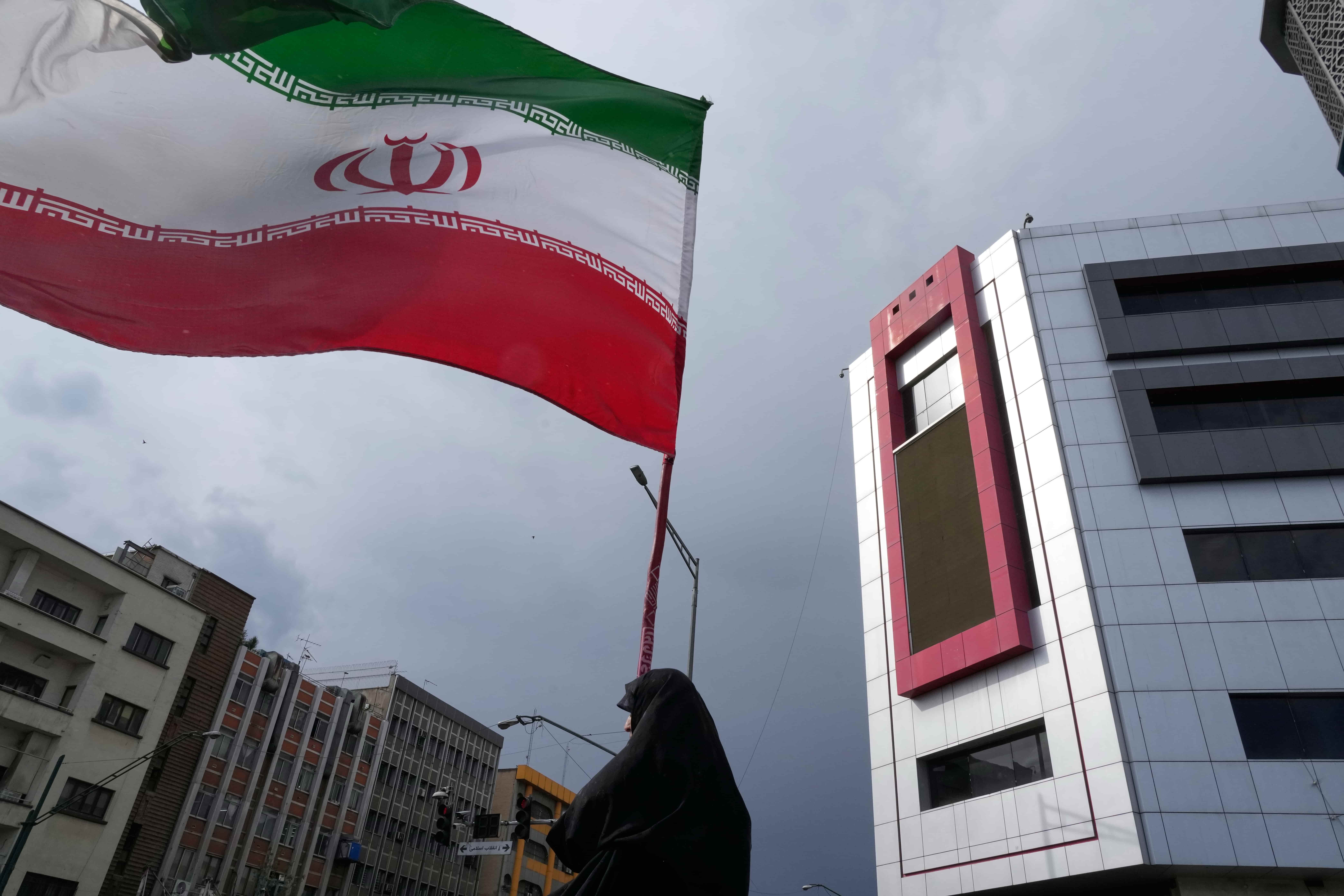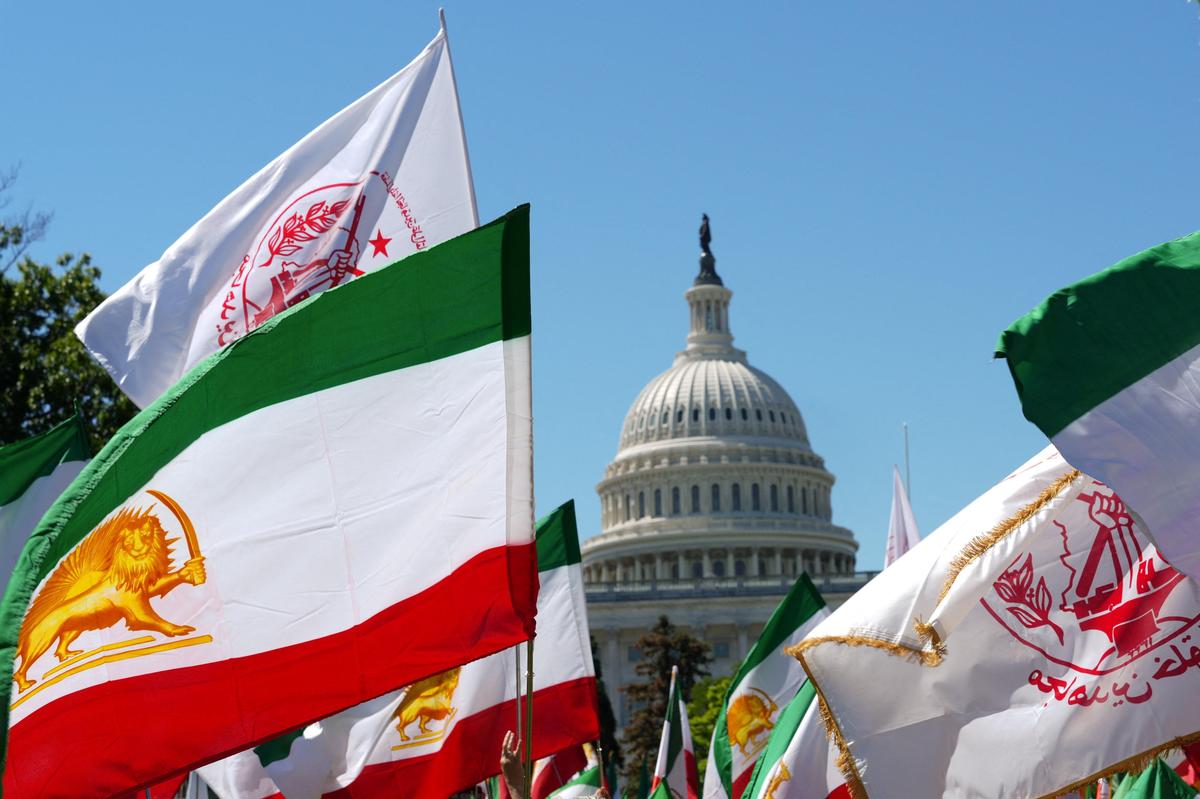
Trump’s remarks followed reports that Iran hit Qatar’s liquefied natural gas (LNG) facilities, after Israel launched an attack on Wednesday against Iran’s South Pars offshore natural gas field in the Persian Gulf it shares with Doha.
Qatar reported fires and extensive damage at its LNG facilities targeted by Iran, adding that emergency response teams had been deployed to contain the situation.
“The United States knew nothing about this particular attack, and the country of Qatar was in no way, shape, or form, involved with it, nor did it have any idea that it was going to happen,” Trump said.
“NO MORE ATTACKS WILL BE MADE BY ISRAEL pertaining to this extremely important and valuable South Pars Field unless Iran unwisely decides to attack” Qatar again, he added.
If Iran attacks Qatar again, “the United States of America, with or without the help or consent of Israel, will massively blow up the entirety of the South Pars Gas Field at an amount of strength and power that Iran has never seen or witnessed before,” he warned.
Meanwhile, Oman’s Foreign Ministry condemned the targeting of energy facilities in Iran’s South Pars gas field, describing it as a dangerous escalation that threatens regional security and global energy supplies.
The United States and Israel launched massive attacks on Iran on February 28, disrupting global shipping, sending oil prices soaring and shaking the global economy.
Trump’s remarks followed reports that Iran hit Qatar’s liquefied natural gas (LNG) facilities, after Israel launched an attack on Wednesday against Iran’s South Pars offshore natural gas field in the Persian Gulf it shares with Doha.
As Iran’s top security official, Larijani’s killing represents a major loss for Iran’s leadership and has sparked more intense retaliatory attacks from Tehran on Israeli and U.S. targets. Here is what you need to know about Larijani’s death:
Who was Larijani?
Born in 1958, Larijani served as a senior official in Iran for several decades.
After Iran’s 1979 Islamic Revolution, he joined the Islamic Revolution Guard Corps (IRGC) in the early 1980s, before transitioning to government, serving as Culture Minister between 1994 and 1997.
During the early stages of Iran’s nuclear crisis, Larijani, who once served as Iran’s chief nuclear negotiator, played a key role in the process that ultimately led to a nuclear agreement.
In 2008, Larijani ran for a seat in the Iranian parliament and was elected speaker, a position he held until 2020.
Larijani tried to run for president in 2021 and again in 2024, but on both occasions, the Constitutional Council disqualified him.
In 2025, following the 12-day war between Israel, the United States and Iran, President Masoud Pezeshkian appointed Larijani as secretary of the Supreme National Security Council.
How did Larijani die?
Since Iran’s former Supreme Leader Ali Khamenei was killed in an Israeli strike in February, Larijani had played a key role in Iran’s national affairs, frequently issuing tough statements in response to U.S. and Israeli attacks.
On Tuesday, the Israel Defense Forces said that it carried out precision airstrikes in Tehran, killing Gholamreza Soleimani, commander of Iran’s Basij volunteer force, and Larijani.
Israeli Prime Minister Benjamin Netanyahu said later on Tuesday that Israel had killed Larijani, adding, “There are many more surprises.”
Late Tuesday night, Iran’s Supreme National Security Council confirmed that its secretary, Larijani, had been killed.
In a statement, the council said Larijani died early Tuesday alongside his son Morteza Larijani, deputy for security affairs at the council’s secretariat Alireza Bayat, and several others.
The council praised Larijani’s long service to Iran’s development and called for national unity in the face of external threats.
Reactions to Larijani’s death
Iran’s Supreme Leader Mojtaba Khamenei offered his condolences on Wednesday over the death of Larijani, while hinting at retaliation.
In a statement on social media, he condemned the “assassination,” stating that those responsible would inevitably “pay the price for their crimes.”
In an interview with Al Jazeera on Wednesday, Iranian Foreign Minister Seyed Abbas Araghchi said Israel’s killing of Larijani will not deal a fatal blow to Iran’s leadership.
“I do not know why the Americans and the Israelis still have not understood this point: The Islamic Republic of Iran has a strong political structure with established political, economic, and social institutions,” Araghchi said. “The presence or absence of a single individual does not affect this structure.”
Russia on Wednesday condemned the killing of Larijani. “We certainly condemn actions intended to harm health or, even more so, to kill representatives of the leadership of a sovereign and independent Iran, as well as other countries. We condemn such actions,” Kremlin spokesman Dmitry Peskov told reporters in a daily briefing.
Hamas on Wednesday also condemned the “treacherous” Israeli strike on Tehran that killed Larijani.
Praising Larijani’s support for the Palestinian cause, the group extended condolences to Iran’s leadership and people, calling the attack a “flagrant aggression” against Iran.
As Iran’s top security official, Larijani’s killing represents a major loss for Iran’s leadership and has sparked more intense retaliatory attacks from Tehran on Israeli and U.S. targets. Here is what you need to know about Larijani’s death:
Among these trailblazers is Clarisse Nzungize, Managing Director of COOPAC Ltd, a family-owned coffee company that has become a beacon of innovation, sustainability, and empowerment in Rwanda’s coffee industry.
COOPAC Ltd, founded in 2001 by Emmanuel Nzungize Rwakagara and Maggie Kagimbanyi, started as a small initiative nestled in the hills surrounding Lake Kivu. Over the years, the company has grown into one of Rwanda’s most respected specialty coffee producers. Today, it not only produces and exports high-quality Arabica coffee but also stands as a testament to the power of female leadership in traditionally male-dominated industries.
Nzungize, the third-generation leader at COOPAC, is at the helm of a company that combines a rich family heritage with modern innovation. Her leadership exemplifies how women in Rwanda are reshaping the coffee sector.
Under her guidance, COOPAC continues to grow, focusing on quality, sustainability, and empowering local farmers. The company now works with over 5,300 farming families across three districts, helping to elevate their livelihoods while producing top-tier coffee that has earned Fairtrade and Organic certifications.
COOPAC’s success story is rooted in its people-centered business model. The company doesn’t just produce coffee; it reinvests in the communities that make its success possible. COOPAC actively empowers farmers through training in best agricultural practices, offering fair and stable prices, and providing women with leadership opportunities in the industry. This approach drives social change, making each harvest a step forward for community development.
The company is equally committed to sustainability, with environmental initiatives like planting thousands of indigenous trees each year, soil conservation through terracing, and safeguarding natural resources around Lake Kivu.
Besides, the company’s livestock programs have distributed over 3,000 cows and goats, improving nutrition and boosting household income. In addition, COOPAC supports education and healthcare by constructing and renovating classrooms and assisting local health centers and community clinics.
As COOPAC looks to the future, its vision remains rooted in the values of family, sustainability, and community. With a commitment to inspiring the next generation of coffee farmers, the company continues to share the rich culture of Lake Kivu’s coffee with the world.
Nzungize’s leadership exemplifies the role of women entrepreneurs in transforming industries and creating lasting social impact. As Rwanda celebrates women’s rights this month, it is leaders like Nzungize who are turning coffee into a powerful tool for empowerment, change, and hope.
Clarisse Nzungize is the Managing Director of COOPAC Ltd Clarisse Nzungize, Managing Director of COOPAC Ltd, takes part in many exhibitions showcasing Rwanda. This illustration photo was taken in Morocco.Clarisse Nzungize, Managing Director of COOPAC Ltd attends many exhibitions.This photo shows her along with officials including NAEB CEO, Claude Bizimana at a past exhibition and Amb. Umutoni Shakilla, Rwanda’s Ambassador to Morocco.COOPAC Ltd stand at a past exhibition in Morocco. This photo shows samples of COOPAC Ltd coffee presented at the exhibition held in Marrakech.
The race will test riders’ speed, endurance, and determination as they navigate the rugged terrain. Open to all motorcycle enthusiasts, the event welcomes both experienced racers and newcomers eager to experience the thrill of enduro racing.
Spectators can expect a day filled with high-energy action as riders take on the demanding track. With free entry for all attendees, the event promises an exciting outdoor atmosphere, where fans can enjoy watching powerful bikes tackle the course while sipping on ice-cold Virunga Beer.
For those interested in competing, registration is open by calling 0789 628 762. Sponsored by Virunga Beer, the event is set to be an unforgettable gathering for motorsport fans, combining adrenaline-fueled racing with the vibrant energy of the crowd.
The event is sponsored by SKOL BREWERY through Virunga Beer brand
This growth highlights the success of the Group’s strategic transformation, which includes diversified revenue streams, enhanced efficiency, and strong regional contributions.
The Group’s balance sheet expanded by 9% to KSh1.97 trillion, with customer deposits rising by 4% to KSh1.46 trillion and net loans increasing by 8% to KSh882.5 billion. Additionally, the number of customer accounts grew to 22.4 million, supported by a robust regional distribution and digital ecosystem.
Equity’s total income increased by 12% to KSh217.7 billion, reflecting strong performance across various income streams, including a 17% rise in net interest income and a 7% growth in non-funded income.
Operational efficiency saw a notable improvement, with the cost-to-income ratio dropping from 58.2% to 51%. Over 98% of customer transactions were processed outside branches, with 88.4% of these through digital channels, demonstrating the continued demand for digital services.
Dr. James Mwangi, Equity Group’s Managing Director and CEO, attributed the performance to the Group’s successful transformation into a diversified regional financial services group.
“Our regional subsidiaries now contribute about half of our banking profitability, demonstrating the value of our pan-African footprint,” he said.
Equity’s regional operations, including those in the DRC, Uganda, Rwanda, and Tanzania, contributed significantly to the Group’s profitability, with profits rising by 58% in the DRC and 500% in Uganda.
Subsidiaries accounted for 51% of banking profit before tax and 48% of banking profit after tax.
Equity Bank Kenya Limited (EBKL) also posted a strong performance, with a 63% increase in PAT to KSh39.2 billion, driven by a 28% rise in net interest income. The Bank’s leadership in MSME financing was recognized at the Kenya Bankers Association Sustainable Finance Initiative (KBA SFI) Awards, where it was named the Best Bank for MSME Financing, contributing 45% of all bank lending to SMEs.
The Group’s insurance subsidiary, Equity Insurance Group, also saw substantial growth, with gross written premiums rising 75% to KSh9.17 billion. Profit Before Tax for the insurance unit grew by 36%, and insurance revenue surged by 150%.
Equity’s strong performance is underpinned by its commitment to social impact. Through the Equity Group Foundation (EGF), the Group supported 1,115 scholars with global university scholarships, empowered nearly 1 million entrepreneurs, and provided over KSh401 billion in credit to MSMEs.
Additionally, EGF is training over 600,000 youth in AI, machine learning, and data analytics, further contributing to the continent’s sustainable growth.
As part of its growth strategy, Equity Group continues to execute its 2030 vision, which includes expanding its operations to 15 countries and serving 100 million customers by 2030. The Group is positioning itself as a “Transformation Finance Institution,” mobilizing capital and driving inclusive prosperity across Africa.
Dr. Mwangi concluded, “Through our Africa Recovery and Resilience Plan, we are investing in next-generation digital and AI-enabled capabilities that enhance customer experience, strengthen risk management, and lower the cost-to-serve, while extending access to affordable credit, insurance, and investment solutions.”
Equity Group remains focused on building a future-ready institution that drives inclusive, sustainable growth across Africa, leveraging digital transformation and strategic partnerships.
From L-R: Equity Group Chairman, Prof. Isaac Macharia, Group Managing Director and CEO, Dr. James Mwangi and Equity Bank Tanzania Managing Director, Isabela Maganga, during the FY 2025 Investor Briefing event.From L-R: Equity Group Chairman, Prof. Isaac Macharia, Group Managing Director and CEO, Dr. James Mwangi and Equity Bank Rwanda Managing Director, Hannington Namara, during the FY 2025 Investor Briefing event. From L-R: Equity Group Chairman, Prof. Isaac Macharia, Group Managing Director and CEO, Dr. James Mwangi and Equity Bank Kenya Managing Director, Moses Nyabanda, during the FY 2025 Investor Briefing event.From L-R: Equity Group Chairman, Prof. Isaac Macharia, Group Managing Director and CEO, Dr. James Mwangi and EquityBCDC Managing Director, Willy Mulamba, during the FY 2025 Investor Briefing event. From L-R: Equity Group Chairman, Prof. Isaac Macharia, Group Managing Director and CEO, Dr. James Mwangi and Equity Life Assurance Kenya Limited Managing Director, Angela Okinda, during the FY 2025 Investor Briefing event.From L-R: Equity Group Chairman, Prof. Isaac Macharia, Group Managing Director and CEO, Dr. James Mwangi and Director Equity Group Foundation Operations, Dr. Joanne Korir, during the FY 2025 Investor Briefing event. From L-R: Equity Bank Uganda Executive Director, Claver Serumaga, Equity Group Chairman, Prof. Isaac Macharia, Group Managing Director and CEO, Dr. James Mwangi and Equity Bank Uganda Managing Director, Gift Shoko, during the FY 2025 Investor Briefing event.
He made the remarks at the tribunal as hearings over an unimplemented asylum agreement between Rwanda and the United Kingdom began on Monday, March 18, 2026.
The three-day session runs March 18–20, with Rwanda represented by Minister of Justice and Attorney General Emmanuel Ugirashebuja.
Rwanda accuses the UK of abandoning the Migration and Economic Development Partnership (MEDP), formalized in 2024 after initial agreements in April 2022, without honouring its commitments, including a £100 million fund (ETIF) intended to support refugees and host communities.
Rwanda initiated arbitration following the UK’s decision under new Prime Minister Keir Starmer in July 2024 to abandon the “Rwanda scheme,” a move that Rwanda learned about through media reports.
Speaking before the tribunal, Dr. Ugirashebuja, highlighted Rwanda’s historical empathy for displacement.
“Many Rwandans have experienced what it means to be displaced. It is this collective experience which has shaped the Rwandan Government’s policies on migration and asylum,” he noted.
Rwanda currently hosts over 130,000 refugees and asylum seekers registered with the United Nations High Commissioner for Refugees (UNHCR) welcoming people from neighboring countries like the Democratic Republic of Congo and Burundi, as well as from Libya and Afghanistan.
Recent examples include receiving 164 asylum seekers from Libya last month and relocating the School of Leadership Afghanistan (SOLA) to Kigali in 2021 for Afghan girls barred from education under the Taliban regime.
In 2023, Rwanda welcomed over 200 Sudanese medical students displaced by civil war.
Dr. Ugirashebuja explained Rwanda’s progressive refugee philosophy, noting that ‘Rwanda firmly believes that refugees make social, cultural and economic contributions to the societies in which they integrate, if they are allowed to do so’.
He referenced the 2021 joint UNHCR-Rwanda strategy for economic inclusion, contrasting it with traditional “warehousing” of refugees.
The MEDP, he said, aligned with this approach by deterring dangerous irregular migration while promoting economic opportunities.
“Both Parties described their partnership as the Migration and Economic Development Partnership, or MEDP… It reflected Rwanda’s commitment to protecting vulnerable people and built on Rwanda’s track record of welcoming and hosting refugees from around the world.”
Rwanda implemented reforms swiftly, including constitutional changes, legislation, an appeals tribunal, and reception facilities. The agreement included the Economic Transformation and Integration Fund (ETIF), with binding commitments in a June 2024 exchange of notes for £50 million payments in April 2025 and 2026.
However, after the UK government changed, the new Prime Minister declared the scheme “dead and buried.”
According to Dr. Ugirashebuja, the UK did not formally notify Rwanda in advance, with termination notice caming in December 2025.
“The simple fact remains that the United Kingdom did not give notice to terminate the Treaty until December 2025. The termination took effect only on Monday.
“The MEDP was in force for just over two months under the previous British Government, and the Finance Note for just over two weeks. Both of these binding legal instruments have been in force for over 18 months under the British Government that won the elections in July 2024.”
Rwanda claims breaches of financial obligations and Article 19 resettlement provisions for vulnerable refugees.
Dr. Ugirashebuja explained that Rwanda ‘seeks a modest sum in compensation, less than 10% of the UNHCR’s budget for Rwanda for one year alone, or alternatively an apology for the United Kingdom’s blatant disregard of this obligation’.
“The United Kingdom may well have wished Rwanda to forgo significant sums of money… Rwanda ultimately chose not to provide its consent,” Dr. Ugirashebuja said, noting Rwanda’s clear refusal in diplomatic notes.
He concluded by expressing regret over the need for arbitration but confidence in the tribunal; “Rwanda has enormous faith in this Tribunal to reach the right legal result. Whatever the outcome, Rwanda remains committed to finding solutions to the global migration crisis, including providing safety, dignity and opportunity to refugees and migrants who come to our country.”
The Peace Palace is an international law administrative building in The Hague, the Netherlands that is often called “the seat of international law” because it houses the Permanent Court of Arbitration and International Court of Justice. Photo by Stephanie YeowThe Migration and Economic Development Partnership between Rwanda and UK had been signed in April 2022, before unilateral cancellation.
Lumumba, who became prime minister of the newly independent Democratic Republic of Congo in 1960, was reportedly overthrown and killed in January 1961 by Belgian-backed mercenaries, just months after taking office. In 2002, a Belgian parliamentary investigation acknowledged Belgium’s “moral responsibility” for Lumumba’s death.
Davignon, who was a junior diplomat at the time, is facing charges of war crimes, including complicity in the unlawful detention, transfer, and mistreatment of Lumumba.
He is also accused of being involved in the murder of Lumumba’s political allies, Maurice Mpolo and Joseph Okito. Prosecutors claim that Davignon participated in depriving Lumumba of a fair trial and subjected him to degrading treatment.
According to Reuters, the trial is a significant victory for Lumumba’s family, with his granddaughter, Yema Lumumba, describing it as a “step in the right direction.”
It also signals a reckoning with Belgium’s colonial history, as Davignon becomes the first Belgian official to face trial in connection with the 1961 killing.
Congo’s Prime Minister Patrice Lumumba waves as he sits in car for the drive from Idlewild Airport, New York July 24, 1960 [AP]
Priced at nearly $2,899 (approximately Rwf 4.2 million), the 10-inch trifold smartphone was primarily sold in South Korea and the United States, but its innovative design has drawn global attention as a glimpse into the future of mobile devices.
The Galaxy Z TriFold was first announced on December 1, 2025, made its debut in South Korea on December 12, and went on sale in the US on January 30. It features a 6.5-inch cover screen and two hinges that allow it to unfold into a 10-inch main display, combining smartphone portability with tablet-sized functionality.
According to Bloomberg, Samsung will begin the phase-out in its home market of South Korea and will stop selling the device in the US once current inventory is depleted. While the report cited a Samsung spokesperson, the company has not issued a formal public statement on the decision. In the US, the TriFold was available through Samsung’s website and select Experience Stores, with a few units reportedly sold recently in Texas and New York, shared by buyers on online communities.
Industry experts say the TriFold was never intended to be a regular part of Samsung’s lineup. South Korea’s Dong-A Ilbo reported that the device was designed as a “flagship showcase” to demonstrate Samsung’s technical prowess rather than to generate long-term profits. Only 3,000 units were sold on each of two days following the official release.
Rising component costs have also contributed to the device’s short market run. DRAM, NAND flash, and application processors, which power memory, storage, and operating systems, have surged in price this year due to increased demand for AI-related computing workloads. These higher costs reduced profit margins for the Galaxy Z TriFold, making it a niche luxury device rather than a mainstream smartphone.
Some of the tech enthusiasts who tested the device described it as “versatile, innovative and practical,” while noting that it is “not for everyone.” Its high price and limited availability have reinforced its status as a collectible tech statement rather than a mass-market product.
The Samsung Galaxy Z TriFold has two hinges and opens up into a 10-inch tablet.
Senegal had beaten Morocco 1-0 in the January 18 final, but the match was marred by controversy when Senegal’s players refused to continue after Morocco was awarded a stoppage-time penalty with the score level.
Play resumed after a 17-minute delay. Brahim Diaz’s penalty was saved before Pape Gueye scored the winner for Senegal in extra time.
CAF said an appeals board had since ruled that Senegal forfeited the match. The result was recorded as a 3-0 victory for Morocco.
Morocco has been awarded the 2025 Africa Cup of Nations title after the Confederation of African Football overturned the result of the final following Senegal’s walk-off.
Senegal had beaten Morocco 1-0 in the January 18 final, but the match was marred by controversy when Senegal’s players refused to continue after Morocco was awarded a stoppage-time penalty with the score level.
Play resumed after a 17-minute delay. Brahim Diaz’s penalty was saved before Pape Gueye scored the winner for Senegal in extra time.
CAF said an appeals board had since ruled that Senegal forfeited the match. The result was recorded as a 3-0 victory for Morocco.
In a statement, CAF said Senegal breached Article 82 of the Africa Cup of Nations regulations, triggering the application of Article 84.
Article 82 states that a team that refuses to play or leaves the field without the referee’s authorization is considered to have lost and is eliminated from the competition. Article 84 adds that such a violation results in a 3-0 defeat and permanent elimination.
Senegal players celebrate with Africa Cup of Nations trophy after the final against Morocco in Rabat, Morocco, Jan. 18, 2026.Players of Morocco express their despair after the Africa Cup of Nations final between Senegal and Morocco in Rabat, Morocco, Jan. 18, 2026.
The courses have equipped them to serve as professional company commanders, platoon commanders, company sergeant majors, and platoon sergeants.
While presiding over the graduation ceremony, the Chief of Defence Staff, Gen MK Mubarakh congratulated the trainees for their dedication and achievement. He noted that the courses are essential in shaping professional military leaders.
The CDS commended the discipline and commitment demonstrated throughout the training.
He emphasized the relevance of the training in modern operations, highlighting that the experience gained is critical for today’s complex security environment.
He further stressed that training goes beyond theory, urging the graduates to apply what they have learned in their respective duties.
The comprehensive training focused on enhancing military skills, tactical thinking, leadership, and management, marking a significant step in ongoing efforts to professionalise the force and prepare for current and future security challenges.
The comprehensive training focused on enhancing military skills and tactical thinking among others. The CDS commended the discipline and commitment demonstrated throughout the training.Trainees underwent militart career courses at Gabiro Combat Training Centre.