Owinow, a retired major-general, replaces Charles Tai Gituai, who served since 2020. His appointment comes at a crucial time, with key provisions of the revitalized peace agreement still pending ahead of South Sudan’s elections in December 2026.
With over four decades in military and diplomatic roles, Owinow previously served as Kenya’s High Commissioner to Uganda (2020-2022) and as Deputy Force Commander for the African Union Mission in Somalia (2019-2020).
RJMEC has urged swift financial and political action to implement critical reforms, including unifying forces, to meet the extended election deadline.
In its latest report, the body emphasized the need for stronger political will to secure lasting peace.
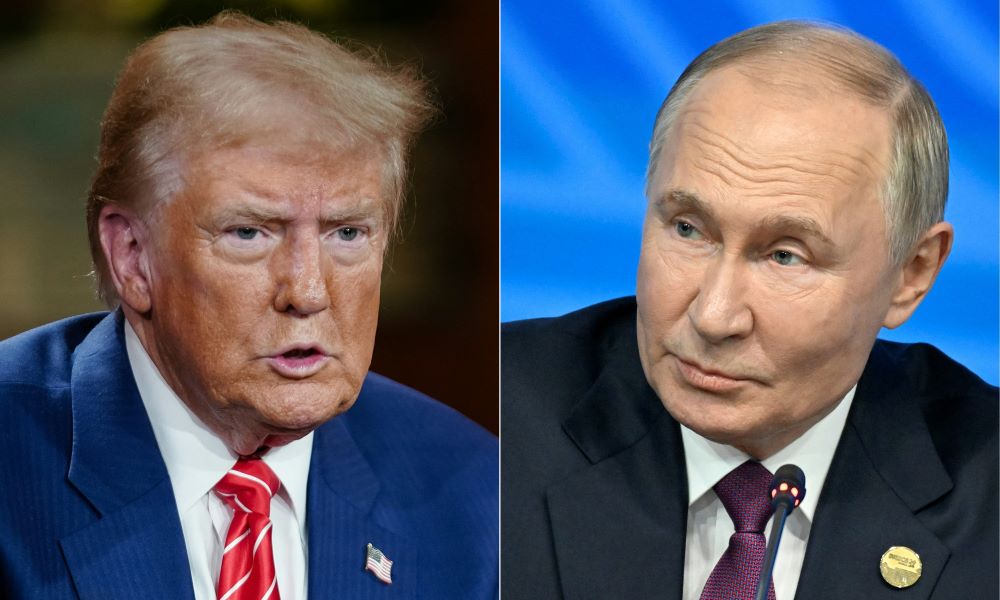
Trump’s order specifically criticizes the Expropriation Act 13 of 2024, which allows the South African government to take private land without compensation in certain cases.
The order states, “It is in shocking disregard of its citizens’ rights that the Republic of South Africa recently enacted a law that enables the government to seize land owned by ethnic minority Afrikaners without compensation.”
The U.S. government announced that it will stop providing aid to South Africa and will offer refugee status to White Afrikaners who want to leave the country due to alleged racial discrimination.
“The United States will promote the resettlement of Afrikaner refugees escaping government-sponsored race-based discrimination,” the order emphasized.
Beyond the land law, Trump’s administration also accuses South Africa of taking positions that go against U.S. interests, such as supporting Palestine in the International Court of Justice and strengthening its relationship with Iran.
The order states that South Africa’s actions “undermine U.S. foreign policy and pose national security threats to “our” nation and allies.
The South African government responded on Saturday, strongly rejecting the claims. Chrispin Phiri, a spokesperson for the International Relations Department, called the executive order misleading and lacking factual accuracy.
“It is disappointing to see such misinformation being spread about our country,” he posted on X. The ruling African National Congress (ANC), which leads South Africa’s government, also reacted to Trump’s offer of refugee status for Afrikaners.
The party’s secretary general posted an image online showing a Black man standing at an open door, appearing to gesture Afrikaners to leave the country.
The South African government insists that land reform is necessary to address historic inequalities. It argues that White South Africans, not just Afrikaners, still own about 70% of the country’s land.
Officials say the law is not meant to target any race but will be used only when land is needed for public projects, such as schools, and that owners will receive “fair and equitable compensation.”
Emma Powell, a spokesperson for the opposition Democratic Alliance (DA), criticized the government’s approach. She told the media, “For decades, the DA has opposed the ANC’s race-based policies. These policies have only benefited the political elite while most South Africans remain in poverty.”
Powell added that her party plans to take legal action to protect property rights and will send representatives to Washington, D.C., to discuss the issue with U.S. officials. “It is time for the ANC to rethink both its domestic and foreign policies, which are hurting our country,” she said.
The executive order has been welcomed by some Afrikaner groups. AfriForum, a civil rights organization representing many Afrikaners, said it was grateful for Trump’s intervention.
“This is a direct response to President Cyril Ramaphosa’s irresponsible actions,” the group said in a statement. However, AfriForum insisted that Afrikaners still have a future in South Africa and called for solutions to protect their rights.
Not everyone in South Africa is concerned about Trump’s move. Julius Malema, firebrand leader of the Economic Freedom Fighters (EFF), dismissed the order and called for even stronger ties with countries like Russia and China.
“Given the U.S. aggression against South Africa, we should strengthen our alliances with BRICS nations to avoid unnecessary confrontations with maniacs like Donald Trump,” Malema wrote on X.
Malema has been a controversial figure, having faced hate speech charges for singing an anti-apartheid struggle song with lyrics calling for violence against White farmers.
The dispute between Trump and South Africa adds another layer of tension between the two nations, raising questions about the future of their diplomatic and economic relationship.
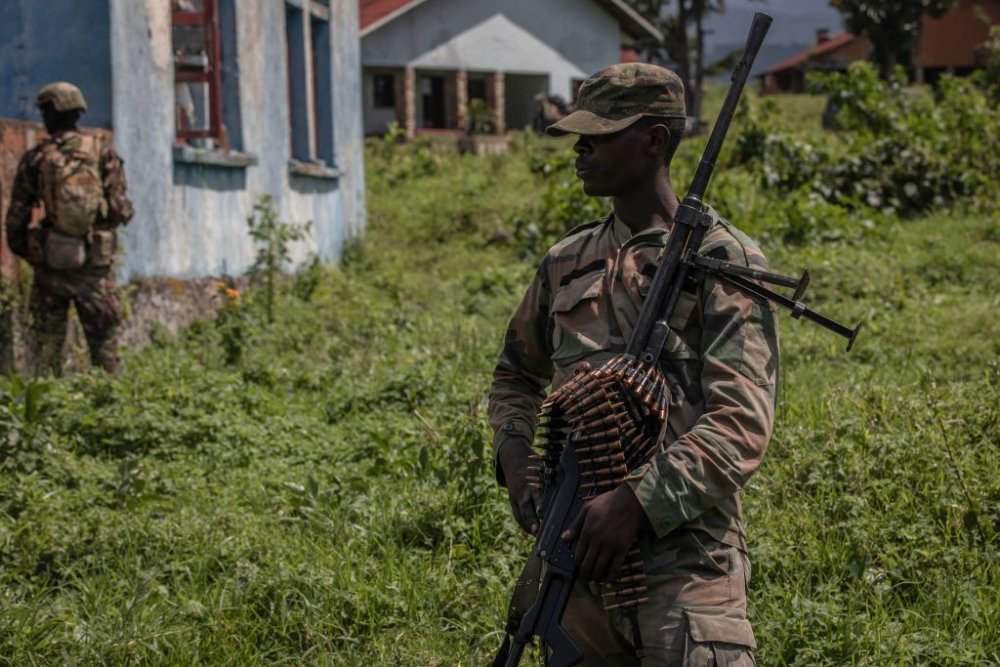
Speaking in an interview with Kenya’s NTV on Saturday, February 8, 2025, Makolo addressed the ongoing insecurity in eastern DRC and the repeated accusations that Rwanda is backing M23.
She reiterated that Rwanda’s focus is on strengthening its own security and not interfering in the internal affairs of its neighbor.
She maintained that the conflict in eastern DRC is a Congolese issue that must be resolved internally. She also pointed out that Rwanda is directly affected by the instability across the border, making security a top priority.
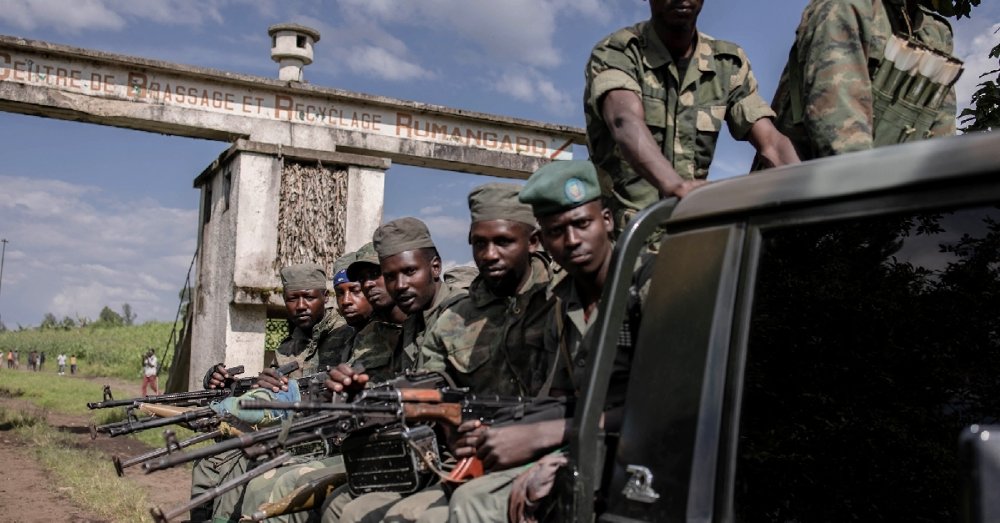
During the interview, NTV journalist Michelle Ngele Odhiambo questioned Makolo about M23’s growing military strength, noting that the rebel group has continued to gain ground, including the strategic city of Goma.
She referenced analysts who argue that the scale of M23’s operations suggests external support and further mentioned President Paul Kagame’s recent visit to Turkey, where Rwanda reportedly acquired new military equipment.
There have been claims that some of these weapons found their way into M23’s hands, a suggestion she put forward to Makolo for clarification.
In response, Makolo firmly stated that Rwanda, like any sovereign nation, has the right to develop its military to safeguard national security. She dismissed the notion that Rwanda’s defense investments were meant for anything other than protecting its own borders and people.
“Every country, including Kenya and the DRC, buys weapons from different suppliers. It is every nation’s right to protect its security and build its military. This is not a matter for debate,” she said.
She went on to explain that the weapons in M23’s possession were largely obtained from the Congolese army itself. According to Makolo, each time M23 defeats the Congolese forces in battle, they leave behind significant amounts of military equipment, which the rebel group then uses.
“The primary supplier of weapons to M23 is the Congolese military itself. Every time they engage in battle with M23 and lose, they leave behind large quantities of weapons and equipment. That is how M23 has been able to amass weapons,” she explained.
Makolo reiterated that Rwanda’s primary concern is its own national security, not M23’s activities.
“We are not preoccupied with M23. They are fighting their own battle for their survival and their right to live on their land in peace, without discrimination or ethnically motivated killings,” she said.
“Our concern is the safety of Rwandans and ensuring that our borders remain secure from the Congolese army, the FDLR, or the over 200 armed groups operating in eastern DRC.”
Her remarks come as M23 continues to advance, raising concerns about their next possible target, including Bukavu in South Kivu.
In response to the growing crisis, leaders from the East African Community (EAC) and the Southern African Development Community (SADC) recently met in Tanzania.
The summit called for an immediate ceasefire and urged a peaceful resolution through dialogue between the DRC government and all stakeholders, including M23.
He died at Kampala Hospital for an injury sustained during the Nile Special Rugby Premiership fixture between Buffaloes Rugby Club and Kampani Eagles RFC on February 8, 2025, at Kyadondo Rugby Club in Kampala.
“It is with deep sorrow that the Kampani Eagles RFC and the Uganda Rugby Union announce the passing of Kayondo Ronnie, a valued member of the Kampani Eagles RFC,” the statement read.
The statement, signed by Adam Kabalega, Chairman of Kampani Eagles Rugby Club, and Godwin Kayangwe, President of the Uganda Rugby Union, further expressed grief over the loss of the young player:
“The Uganda Rugby Union, Kampani Eagles RFC and the wider rugby community mourn the loss of this promising young player, who had so much more to offer. Our thoughts and prayers are with Ronnie’s family, friends, and loved ones during this incredibly difficult time.”
While comprehensive statistics on rugby-related fatalities in Uganda are scarce, the sport has witnessed tragic incidents in the past. In 2012, a Kenyan women’s rugby player Lillian Shikoyi died after sustaining a spinal injury during a match at Kyadondo.
Globally, rugby union is recognized as a full-contact sport with a relatively high risk of injury, including fatal and catastrophic spinal injuries.
The Ugandan rugby community has expressed an outpouring of condolences for Kayondo, whose passion and dedication to the sport were widely recognized. His passing is a heartbreaking loss, and he will be remembered for his contributions to Kampani Eagles RFC and the sport in Uganda.
“May the soul of the dearly departed rest in eternal peace,” the statement concluded.
This was due to registered businesses that never operated or ceased operations for various reasons. The closure of these accounts led to a reduction of nearly 100,000 small taxable businesses.
Jean Paulin Uwitonze, the Deputy Commissioner for Taxpayer Services and Communications at RRA, told the national broadcaster (RBA) that the decrease resulted from technological reforms that enabled the identification of registered businesses and taxpayers that were not actually operational.
“With the adoption of digital systems, RRA was able to access information that was previously unavailable, allowing us to make informed decisions. For instance, some young graduates eager to become entrepreneurs would register businesses and receive TINs, but later, many found formal employment, leaving their TINs unused with no tax payments, no imported goods, and no business transactions within the country,” he explained.
Previously, RRA’s digital system imposed penalties on these inactive accounts as non-compliant taxpayers. However, after thorough investigations confirmed that these businesses never operated, the authority opted to close the TINs instead.
Additionally, some TINs were either closed or suspended due to businesses that had been active but later ceased operations.

“There were TINs that were once used for tax payments but later became dormant. After a period of inactivity with no indication of ongoing business operations, some owners even approached us to explain that they had secured employment and stopped running their businesses. Should we continue treating them as taxable businesses? In such cases, we closed or suspended their TINs,” Uwitonze added.
He emphasized that this move was aimed at ensuring that only those required to pay taxes are taxed, clarifying that it does not indicate a decline in the number of taxpayers.
The decision also relieved individuals who had inactive TINs from penalties for non-compliance, despite no longer engaging in business.
In the past fiscal year, RRA closed over 40,000 tax accounts and suspended more than 130,000 others. As a result, the number of taxable small businesses dropped from 465,378 to 382,318, while the number of taxable medium-sized businesses declined from 842 to 786.
The decision, reached during a meeting of the EALA Commission and Committee Chairpersons on February 6, 2025, comes as the Assembly struggles with financial constraints linked to delayed contributions from some East African Community (EAC) Partner States.
“This decision was reached during a Sitting of the EALA Commission and Committee Chairpersons held on the 6th February 2025, to review the Assembly’s calendar,” EALA stated in a statement.
The cash crunch has been an ongoing issue, with some Partner States failing to remit their financial obligations on time. In recent years, South Sudan and Burundi have been among the worst defaulters, with South Sudan alone owing over $22 million in past contributions, as reported in late 2022.
The financial instability has forced EALA to suspend legislative sessions and other critical activities in the past.
In response to the crisis, Joseph Ntakirutimana, Speaker of EALA, has initiated discussions with key EAC leaders to resolve the matter.
“The Speaker of EALA has initiated a follow-up discussion with the Hon. Beatrice Asukul Moe, The Chairperson of the EAC Council of Ministers, and H.E. Veronica Mueni Nduva, the Secretary General of the East African Community, to urge Partner States that have outstanding contributions to remit their dues promptly to enable the resumption of activities,” the statement added.
A review of the financial situation is expected within the next three weeks. In the meantime, the Assembly has reaffirmed its dedication to fostering regional integration despite the setback.
“EALA remains committed to its mandate of promoting regional integration through Legislation, Oversight, and Representation. We are optimistic that the ongoing consultations will yield positive outcomes, allowing the Assembly to resume its critical functions as soon as it is practicable,” EALA assured in its statement.
The financial challenges facing EALA point to the broader issue of funding sustainability within the EAC. Without timely contributions from Partner States, the regional legislative body risks further disruptions, which could hinder the progress of key legislative and oversight functions necessary for deepening East African integration.
The comfort zone is more than just a place of security; it is a psychological state where routine and predictability reign. While it offers a sense of stability, it can also become a barrier to taking risks, exploring new possibilities, and reaching one’s full potential.
Dependence on the comfort zone often manifests in subtle patterns that can hold individuals back. Identifying these behaviors is the first step toward breaking free and pursuing meaningful growth.
While routines help structure daily life, an overly rigid schedule can stifle creativity and limit experiences. When every day unfolds in an identical manner, it may indicate a reluctance to step into the unknown.
Signs of being trapped in a routine include difficulty adapting to change, discomfort with unpredictability, and a gradual decline in problem-solving abilities.
One of the biggest barriers to growth is an aversion to risk. Many people avoid stepping outside their comfort zones due to fear of failure, judgment, or discomfort.
This hesitance can lead to excessive over planning, missed opportunities, and an unwillingness to embrace challenges that could lead to personal or professional advancement.
Yet, true progress often requires stepping into uncertainty and trusting the process of learning through experience. In reality, overcoming obstacles fosters resilience and paves the way for greater satisfaction.
Many equate staying in their comfort zone with peace and fulfillment, but real growth often comes from facing challenges. The belief that avoiding difficulties leads to a content life can be misleading.
More to this, comfort zone dependency can suppress creativity and hinder innovation. When individuals become too accustomed to the status quo, they resist adopting new ideas or approaches.
This is especially evident in workplaces where employees hesitate to embrace evolving technologies or strategies, limiting both personal and organizational progress. The fear of making mistakes often holds back breakthroughs that could lead to significant achievements.
Another consequence of remaining in the comfort zone is the underutilization of talent and skills. Those who avoid new challenges may find themselves stuck in career stagnation, leading to dissatisfaction and a lack of fulfillment. Without taking initiative to grow, opportunities for career advancement remain limited.
When individuals prioritize comfort over progress, personal and professional goals often take a backseat. The safety of routine can lead to procrastination, with aspirations left unfulfilled. A deep attachment to familiarity may prevent people from taking necessary steps toward success.
Ironically, those who stay in their comfort zones often struggle with impatience when they do attempt growth. Expecting instant results, they become frustrated with the gradual nature of development.
This mindset can make it difficult to embrace the process and appreciate the small victories along the way.
Stepping out of one’s comfort zone is a conscious choice that requires effort and persistence. It involves embracing uncertainty, taking small but deliberate risks, and being open to challenges.
A strategic approach to breaking free includes setting incremental challenges, building resilience through exposure to discomfort, surrounding oneself with a supportive network, and celebrating progress, no matter how small.
Shifting one’s mindset is key to overcoming the limitations of the comfort zone. A growth mindset fosters the belief that challenges present learning opportunities rather than obstacles. By viewing discomfort as a necessary part of development, individuals can push past their fears and unlock their full potential.
Recognizing the restrictive nature of the comfort zone and taking proactive steps to move beyond it can lead to a life filled with growth, fulfillment, and success.
The path to personal and professional advancement begins with the willingness to embrace the unknown and challenge oneself to evolve.
The decision, which Trump announced in an exclusive interview with the New York Post, is part of his broader crackdown on his most vocal opponents.
Among those affected are Manhattan District Attorney Alvin Bragg, New York Attorney General Letitia James, former National Security Advisor Jake Sullivan, Biden’s Deputy Attorney General Lisa Monaco, and attorneys Andrew Weissmann, Mark Zaid, and Norm Eisen.
The move follows Trump’s decision to revoke President Joe Biden’s security clearance and access to daily intelligence briefings just a day earlier.
Revoking these clearances means the individuals may be unable to enter key federal buildings, including courthouses, prisons, and law enforcement facilities. This could impede their ability to carry out official duties, particularly for those involved in ongoing legal cases against Trump.
Trump has made no secret of his animosity toward the targeted individuals. In reference to Blinken, he told the New York Post, “Bad guy. Take away his passes.”
Blinken played a key role in the infamous “Dirty 51” letter, which dismissed the contents of Hunter Biden’s laptop as Russian disinformation ahead of the 2020 election.
James and Bragg have both been instrumental in legal actions against Trump. James pursued a civil fraud case that resulted in Trump being ordered to pay over $450 million, while Bragg oversaw the “hush money” case involving Stormy Daniels. Trump has vowed to ensure both are treated “exactly the same” as Biden in terms of clearance restrictions.
The revocation also affects key figures involved in Trump’s past legal troubles. Sullivan, who was Hillary Clinton’s chief foreign policy adviser in 2016, is among those targeted. Monaco, who oversaw the Department of Justice’s response to the January 6 insurrection, has also been affected.

Weissmann, known for his role as lead prosecutor in Robert Mueller’s investigation into Trump’s alleged ties to Russian election interference, is another high-profile individual impacted.
Meanwhile, attorneys Zaid and Eisen, who were involved in Trump’s 2019 impeachment, have also had their security clearances revoked.
Trump’s decision is seen as retaliation for Biden’s 2021 move to block him from accessing intelligence briefings, a courtesy typically extended to former presidents. At the time, Biden cited Trump’s ‘erratic behaviour’ and concerns about his handling of classified information.
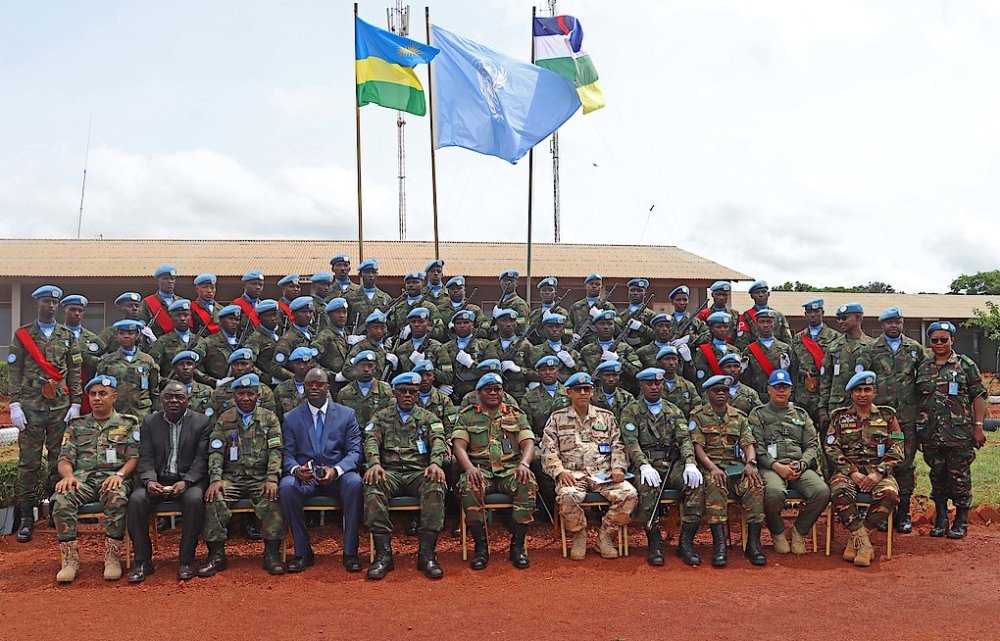
The training, which lasted four and a half months, was designed to equip participants with the necessary skills to serve as professional company commanders, platoon commanders, company sergeant majors, and platoon sergeants.
RDF Chief of Defence Staff, General MK Mubarakh presided over the graduation ceremony on Saturday, February 8. He lauded the trainees for their dedication, discipline, and sacrifice, which enabled them to reach this significant milestone.
At the same time, General Mubarakh stressed the importance of continuous military training in ensuring operational effectiveness and readiness to address evolving security challenges.
“It is the norm in any military that, to operate effectively, officers and NCOs must undertake rigorous training continuously. Military training prepares individuals to effectively perform physically and mentally demanding tasks at the highest possible levels of proficiency. Training pays off with significant achievements in theatre and routine force duties. This is in line with leadership guidance as constantly stressed by the Commander-in-Chief of the RDF,” said General Mubarakh.
He urged the graduates to apply the knowledge and skills gained from the training in their respective roles while upholding discipline as a core value of the RDF.
The comprehensive program focused on enhancing military skills, tactical planning, leadership, and administrative management, reinforcing RDF’s commitment to professionalism and preparedness for present and future security challenges.
The completion of this training marks another step in the RDF’s mission to strengthen the capabilities of Rwanda’s security forces, ensuring they remain well-equipped to maintain national and regional stability.
Nujoma rose to head the lightly populated southern African country on March 21 1990 and was formally recognized as “Founding Father of the Namibian Nation” through a 2005 act of parliament.
He was a longtime ally of Zimbabwean strongman Robert Mugabe, backing Mugabe’s land seizures from white farmers, though at home Nujoma stuck to a “willing buyer, willing seller” policy.
“The foundations of the Republic of Namibia have been shaken. Our venerable leader, Dr. Nujoma did not only blaze the trail to freedom, but he also inspired us to rise to our feet and to become masters of this vast land of our ancestors,” the presidency posted on X.
The presidency said Nujoma had been hospitalized for medical treatment over the past three weeks, adding: “Unfortunately, this time, the most gallant son of our land could not recover from his illness.”
Nujoma served his three terms as president from 1990 to 2005 and sought to project himself as a unifying leader bridging political divides. In a country scarred by the legacy of apartheid and German colonial rule, Nujoma’s SWAPO party oversaw a national reconciliation programme under the motto “One Namibia, One Nation”.
In his speeches, Nujoma made a point of repeating the phrase: “A united people, striving to achieve a common good for all members of the society, will always emerge victorious.” His achievements included establishing democratic institutions and prioritizing reconciliation.
Nujoma was born in a village in northwestern Namibia in 1929, when his country was under South African administration. SA had controlled Namibia since World War 1 after a brutal few decades of German colonial rule remembered for the genocide of the Herero and Nama people.
As a boy he looked after his family’s cattle and attended a Finnish mission school, before moving to the coastal town of Walvis Bay and then the capital Windhoek, where he worked for South African Railways, according to a biography posted on the website of Nujoma’s charitable foundation.
Nujoma left his job on the railways to focus his energies on bringing down the apartheid system. In the late 1950s he became leader of the Owambo People’s Organisation, a precursor to liberation movement SWAPO, organizing resistance to the forced relocation of Black people in Windhoek that culminated in the police killing 12 unarmed people and wounding dozens more.
Nujoma was charged with organizing the resistance and arrested. In 1960, he went into exile. He travelled across Africa before reaching the US, where he petitioned the United Nations for Namibia’s independence.
Made SWAPO leader in absentia, Nujoma established its armed wing and in 1966 launched a guerrilla war against the apartheid government.
It took more than a decade of pressure from Nujoma and others before a UN Security Council resolution in 1978 proposed a ceasefire and elections, and another decade for the ceasefire deal to be signed and elections held in late 1989.
SWAPO won a majority in those elections, and Nujoma took office in March the following year.