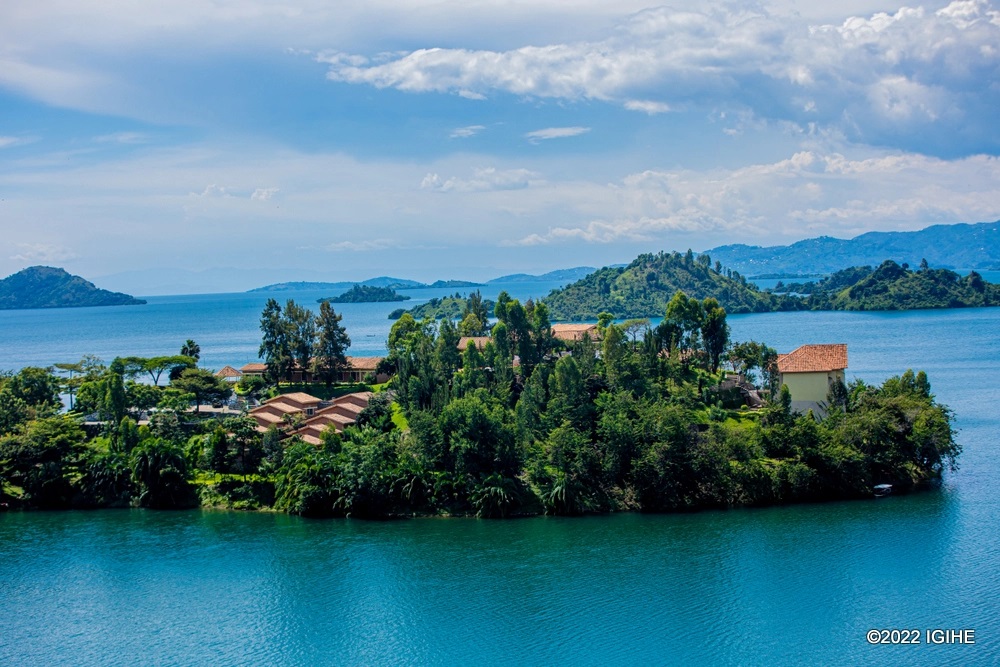
Janet Karemera, CEO of the Rwanda Convention Bureau, said rapid advancements in air connectivity, MICE and hospitality infrastructure development and visa facilitation position the country as a premier business travel destination.
“RwandAir, in partnership with Qatar Airways, provides access to over 160 destinations and connectivity is set to expand further through Bugesera International Airport, which will have capacity for up to 14 million passengers,” she said.
Rwanda’s National Strategy for Transformation 2024-2029 aims to increase MICE revenue from US$95 million in 2023 to US$224 million. Construction of the new Bugesera International Airport is underway and slated for completion in 2027.
MICE infrastructure has been bolstered with the US$165 million upgrade of the Amahoro Stadium in 2024. It accommodates 45 000 people for sporting and other events. This adds to existing infrastructure such as the Kigali Convention Centre, the Intare Conference Arena and BK Arena.
Karemera said the growing presence of international hotel brands has also enhanced the country’s reputation.
“International hotel brands such as Marriott, Radisson Blu and Four Points by Sheraton are well-established and high-end lodges such as One & Only Gorilla’s Nest and Wilderness Bisate cater to premium incentive travellers.”
The Mövenpick brand will enter Kigali in 2025 after redevelopment of the Umubano Hotel by Kasada Capital Management.
Karemera said waiving visa requirements for travelers from all African Union member states in 2023 was a key selling point attracting intra-African business. She also highlighted the country’s intensified focus on sustainability.
“Rwanda is actively working towards a carbon-neutral economy by 2050 with initiatives including e-mobility, eliminating single-use plastics and increasing investments in renewable energy.”
By hosting 32 internationally recognized in-person meetings in 2023, the country climbed seven places in the International Congress and Convention Association rankings to 55th – the second-highest ranking in Africa behind South Africa.
Tsheole underscored the pivotal role of capital market in unlocking funding for fintech enterprises, emphasizing the importance of a structured regulatory environment to consolidate resources and support sustainable sectoral growth.
“We are establishing a market that enables private investors and funds to finance various businesses. Providers of capital require assurance that their investments remain secure,” he stated.
He further highlighted the necessity of fostering robust local networks for private capital, urging stakeholders to leverage fintech solutions in mobilizing funds. “People must utilize fintech solutions to facilitate funding,” he said.
As part of ongoing market reforms, Tsheole noted that the Capital Market Authority had revamped collective investment schemes, providing individuals with surplus capital the opportunity to access the market through other means.
They include private equity, specialized funds, or crowdfunding mechanisms which enhancements a more inclusive and dynamic financial ecosystem.
The Capital Market Authority remains committed to advancing regulatory frameworks and market structures that support private investment, innovation, and sustainable fintech development.
The Authority will continue to engage with stakeholders to build a resilient capital market that fosters economic growth and financial inclusion.
He, however, disputed reports that the troops were injured in the conflict with M23 rebels, saying the soldiers are suffering from chronic illnesses.
“I can confirm the soldiers are already here. But get the information from me; these are not injured soldiers, but those with chronic illnesses such as high blood pressure. They have been withdrawn together with their South African and Tanzanian counterparts,” he said.
Phiri also confirmed that the bodies of two other soldiers who were killed in the conflict have since been repatriated home.
But both the commander and Minister of Defence Monica Chang’anamuno did not state whether the withdrawal is part of an order issued by President Lazarus Chakwera.
“MDF was directed to do this. MDF will be in a good position to give you the update,” said Chang’anamuno in a brief response to the press. The troops travelled by road from DRC through Rwanda to Uganda where they were flown to Malawi.
The development comes three weeks after Chakwera directed MDF to start the process of withdrawing Malawian troops from eastern DRC following the declaration of a ceasefire.
Chakwera’s decision was made in response to the Southern African Development Community (SADC) Troika Summit that he attended in Dar es Salaam, Tanzania, on the sidelines of the Africa Energy Summit.
In a message circulated via a flyer, the President said the withdrawal is intended to honor the ceasefire and facilitate planned negotiations aimed at achieving lasting peace.
Malawi is among the countries in the SADC region called to immediately repatriate its soldiers who were killed and injured in the DRC.
Rebels, led by the M23, seized Goma City, the capital of North Kivu last month before expanding their attacks and capturing Bukavu, the capital of South Kivu.
It serves as a premier platform showcasing agricultural and livestock products, farming equipment, and innovations in agricultural technology. The event also highlights key developments and advancements in the sector over the years.
Rwanda is represented by the National Agricultural Export Development Board (NAEB), the Rwanda Development Board (RDB), and the Rwandan Embassy in France, which plays an active role in coordinating the country’s participation.
At the exhibition, representatives from Rwandan companies involved in agricultural trade and exports are engaging with major international agribusiness firms to explore market expansion opportunities, foster trade partnerships, and exchange industry insights.
As part of these efforts, Ann Christin Ishimwe, Head of Sales & Marketing at Kinazi Cassava Plant Ltd, and Janet Basiima, Head of Market Development and Innovation at NAEB, visited Phoenix International, a leading French company specializing in importing and distributing fresh fruits and vegetables worldwide.
In an interview with IGIHE, Phoenix International manager Bikoo Prem expressed his admiration for Rwandan coffee and honey, indicating a strong interest in importing these products to introduce them to his customer base.
Prem also praised the improved packaging of Rwandan agricultural products, emphasizing its role in maintaining quality.
“Packaging is crucial as it enhances the value of the product, ensures proper preservation, and protects it from air exposure or contamination. It also facilitates transportation by air, sea, or road,” he noted.
Another key engagement was with TAI YAT, a French enterprise specializing in exotic food imports.
The company’s Associate Director, Marc Lao, also commended the packaging of Rwandan products and expressed interest in establishing trade relations.
Discussions between with Ann Christin Ishimwe of Kinazi Cassava Plant Ltd resulted in promising prospects for future collaboration.
{{The photos below show Ann Christin Ishimwe, the Market Manager at Kinazi Casava Plant Ltd, alongside Janet Basiima, the Head of the Market Development and Innovation Department at NAEB during discussions on the sidelines of the trade fair}}
Both teams started the match with high intensity, seeking an early goal. In the 9th minute, AS Kigali’s striker, Emmanuel Okwi, found the back of the net, scoring the opening goal.
Positioned outside the penalty box, Okwi spotted Police FC goalkeeper Niyongira Patience off his line and struck the ball past his outstretched hands.
The goal ignited Police FC’s determination, and they responded in the 19th minute with a powerful strike from Bigirimana Abedi, who scored from outside the box to equalize.
The first half, which included three minutes of added time, ended with both teams tied at 1-1.
The second half was tightly contested in midfield. Early on, Police FC came close to scoring when AS Kigali’s defender misjudged a pass to Cyuzuzo Aime Gael, whose effort narrowly missed the target as the goalkeeper was caught off his line.
In the 71st minute, substitute Ani Elijah, who had replaced Byiringiro Lague, capitalized on a defensive lapse by AS Kigali to score Police FC’s second goal. The AS Kigali defense appeared to hesitate, believing Elijah was offside.
With the 2-1 victory, Police FC takes an advantage into the second leg, scheduled between March 4-5, 2025.
The verdict was delivered on Wednesday, 26 February 2025, by Judge Hamidu Mwanga, who ruled that the prosecution had proven its case beyond a reasonable doubt.
Prior to sentencing, a team of two state attorneys, led by Principal State Attorney Yasinta Peter and assisted by Senior State Attorney Ashura Mnzava, urged the court to impose a severe punishment to serve as a deterrent against gender-based violence in marriage.
“The act committed by the accused was brutal and raises serious concerns for women in marriage and those intending to get married. We urge the court to impose a harsh sentence to deter men who use marriage as a cover for violence,” said Attorney Mnzava.
In criminal case number 44/2023, Luwongo, a resident of Gezaulole in Kigamboni District, was charged with murdering his wife on 15 May 2019.
The court heard that he burned her body using two sacks of charcoal inside a chicken coop before burying the remains on his farm and planting banana trees over them.
The prosecution closed its case on 18 November 2024 after presenting 14 witnesses and nine pieces of evidence. The defence, however, closed its case a day later, calling only one witness, the accused himself, without submitting any additional evidence.
In his defence, Luwongo denied the charges, claiming his wife had run away and was still alive. He argued that his confessions to the police, in which he admitted to killing and burning her body before burying the remains, were false and made under duress.
He further claimed that the bone fragments he led the police to were not those of his wife but were from an animal carcass found while clearing his land. He alleged that forensic tests conducted by the Chief Government Chemist failed to provide conclusive proof that the remains belonged to his wife.
During proceedings, the prosecution requested a psychiatric evaluation of the accused. Dr. Sadiki Mandari, a psychiatrist from Mirembe National Mental Health Hospital, initially presented a report suggesting Luwongo suffered from a mental disorder at the time of the crime.
However, when summoned for questioning, Mandari disowned the report, instead presenting a new assessment stating the accused was mentally sound at the time of the offence.
Judge Mwanga criticised the inconsistency, questioning why a professional would submit two conflicting reports in such a serious case. The accused also accused the doctor of damaging the reputation of his institution.
During further questioning, Mandari admitted that a relative of the accused had contacted him about the initial psychiatric report. When asked whether he had informed the accused’s family about the new report, he admitted he had not.
Following deliberations, the court ruled in favor of the prosecution’s argument and sentenced Luwongo to death by hanging. The case has reignited discussions on gender-based violence and the legal measures in place to protect victims of domestic abuse.
“Rwanda stands ready to support the work of this Council in promoting and ensuring that human rights are respected universally, provided that they are respected without double standards,” Nduhungirehe declared.
The Minister expressed concern over the resurgence of violent ethnic extremism and genocide ideology in the Great Lakes region.
“Communities continue to be targeted for who they are, how they look or even which language they speak, a grim reminder of the horrors witnessed during the 1994 Genocide against the Tutsi in Rwanda,” he said.
He described a disturbing pattern of violence against Tutsi communities in the DRC. “In eastern DRC, hate speech, persecution, lynching, and even acts of cannibalism against Congolese Tutsi have become distressingly commonplace,” he warned.
Nduhungirehe detailed government sponsored crimes against humanity, particularly in South Kivu, where Tutsi communities known as the Banyamulenge are under attack.
“In South Kivu, Tutsi communities known as the Banyamulenge are bombed in Minembwe by Government forces and are subject to unprecedented persecutions in different cities such as Uvira,” he said.
He further revealed that in Bujumbura, Burundi, Tutsi are “rounded up like in the old days and taken to unknown destinations.”
“In Kinshasa, Congolese Tutsi and even Swahili speakers are persecuted and lynched in broad daylight. In Ituri, up north far away from Rwanda’s border, the Hema ethnic group is being slaughtered by the CODECO militia allied to the DRC Government and the Islamic State-backed ADF, in total impunity,” he stated.
He criticized political figures like Justin Bitakwira, a close ally of President Félix Tshisekedi, who has publicly declared that every Tutsi is a natural born criminal and questioned if the God that created the Tutsi are the same that created Congolese.
He also recalled similar rhetoric from 1998 when former DRC Vice-President Abdoulaye Yerodia dehumanized Tutsi by calling them “vermin and microbes that must be eradicated methodically.”
Nduhungirehe condemned recent inflammatory remarks by DRC’s Foreign Minister, Thérèse Wagner, who, on January 28, 2025, warned the UN Security Council that without its intervention, “the streets will take care of it.”
“Indeed, after her speech, the streets took care of it. The targeting, the killing and the lynching of Tutsi in Eastern DRC, as well as in Kinshasa, intensified,” he explained.
The Minister described the destruction of Nturo village in North Kivu as a shocking example of state-sponsored violence.
“This horror reminds me of the Nturo village in Masisi territory in North Kivu, where 300 homes of Congolese Tutsi were burned down by government militias in October 2023 in broad daylight, while Burundian forces were looking on,” he said.
Nduhungirehe cited a United Nations report showing that in the last trimester of 2024, more than 30% of human rights violations in conflict zones were committed by DRC security forces.
“Under the universal declaration of human rights, all rights are equal. Yet a double standard is evident in the treatment of Tutsi communities in Congo. How can this Council remain silent in the face of such injustice?” he asserted.
He urged the council to act decisively. “In light of this worrying situation, Rwanda calls on the Human Rights Council to take immediate and decisive action to halt these persecutions. The suffering of these people cannot be tolerated any longer; ethnic politics has no place in our region.”
Nduhungirehe emphasized the need for an impartial investigation by the recently established fact-finding mission on the DRC.
“We hope that the recently established fact-finding mission on DRC will conduct impartial investigations into these abuses based on facts, which are currently being politicized by the DRC Government with the support of countries and organizations holding vested interests in the region,” he said.
He concluded by calling for long-term solutions to the conflict. “Lasting peace in our region requires addressing the root causes of the conflict. It is imperative that all citizens of the DRC receive the full spectrum of human rights and protections to which they are entitled,” he said.
The signing of the project, dubbed Africa’s Next-Gen Digital Payment Infrastructure, took place on Tuesday, February 25, at the Inclusive Fintech Forum 2025.
Also known as Project 54, the initiative marks a significant step toward integrating Africa’s financial ecosystem.
GFTN is a not-for-profit organisation established by the Monetary Authority of Singapore (MAS) in 2024 to expand Singapore’s fintech ecosystem globally. Its partnership in the initiative underscores Africa’s growing significance in the global digital economy.
Outgoing Central Bank Governor John Rwangombwa participated in the signing ceremony, praising the initiative for its potential to address the high costs and inefficiencies of cross-border transactions, thereby enhancing trade and financial inclusion.
The project was conceived through discussions at key global forums, including the 3i Africa Summit in Accra, the Zurich Point Zero Forum, and the Singapore FinTech Festival.
Recognising Africa’s dynamic financial landscape, stakeholders sought to develop a solution that enables seamless cross-border transactions, ultimately benefiting small businesses, entrepreneurs, and financial institutions.
The implementation of Africa’s Next-Gen Digital Payment Infrastructure is built on four fundamental pillars, each essential to creating a robust and future-ready financial system.
A strong governance framework is at the core, establishing clear scheme rules, dispute resolution mechanisms, and liability structures. This also includes enhanced local currency settlement models, ensuring stability and reliability across cross-border transactions.
Technology integration and advancement play a pivotal role, with a focus on innovations such as tokenisation and digital currency applications. By embracing these emerging technologies, the initiative aims to future-proof Africa’s financial sector and enhance efficiency.
A sustainable pricing model underpins the initiative, promoting financial viability through cost-effective solutions tailored for both high-value and low-value transactions. This ensures accessibility and affordability while maintaining long-term operational stability.
Equally important is the engagement of key stakeholders, including regulators, financial institutions, fintech innovators, and investors. By fostering collaboration, the initiative seeks to build a resilient digital payments ecosystem that aligns with the needs of Africa’s evolving financial landscape.
Bank of Ghana Governor Johnson Asiama described the launch as a milestone toward an integrated African capital market, offering new opportunities for entrepreneurs and small businesses.
“The pursuit of a safe, affordable, and efficient cross-border regional payment architecture, backed by a licence passporting framework, represents another significant step forward,” he said.
With Africa’s fintech industry projected to generate $40 billion in revenue by 2028, overcoming regulatory and infrastructure challenges remains crucial. Project 54 aims to bridge this gap, unlocking new pathways for inclusive financial growth and positioning Africa at the forefront of global digital payments innovation.
Gilmore secured the win in a sprint finish, mirroring his triumph in Stage Two in Musanze.
This victory marks his second stage win in the Tour du Rwanda.
As a result, Rwanda, particularly Musanze and Rubavu, will always hold a special place in his memory as the locations where he celebrated his first professional victories.
Eric Manizabayo of Java-InovoTec was the highest-placed Rwandan, finishing ninth in Rubavu, just six seconds behind the winner.
The top seven riders, including yellow jersey holder Fabien Doubey, all completed the stage in 2 hours, 55 minutes, and 14 seconds.
Agaba alleged that his property was vandalized by National Unity Platform (NUP) supporters, leaving his family homeless. He set himself ablaze while donning yellow attire accusing the NRM of neglecting their supporters.
Reports indicate that Agaba was pushed to the wall after being neglected by his party after his house was allegedly vandalized. It’s alleged that he has sought help from the NRM secretariat for over a year without help hence opting to take his life.
In videos makings rounds on social media, the man is seen covered in fire and later being helped by police officers and motorcycle riders who poured water on him to cool off the fire but sustained serious burn injuries.