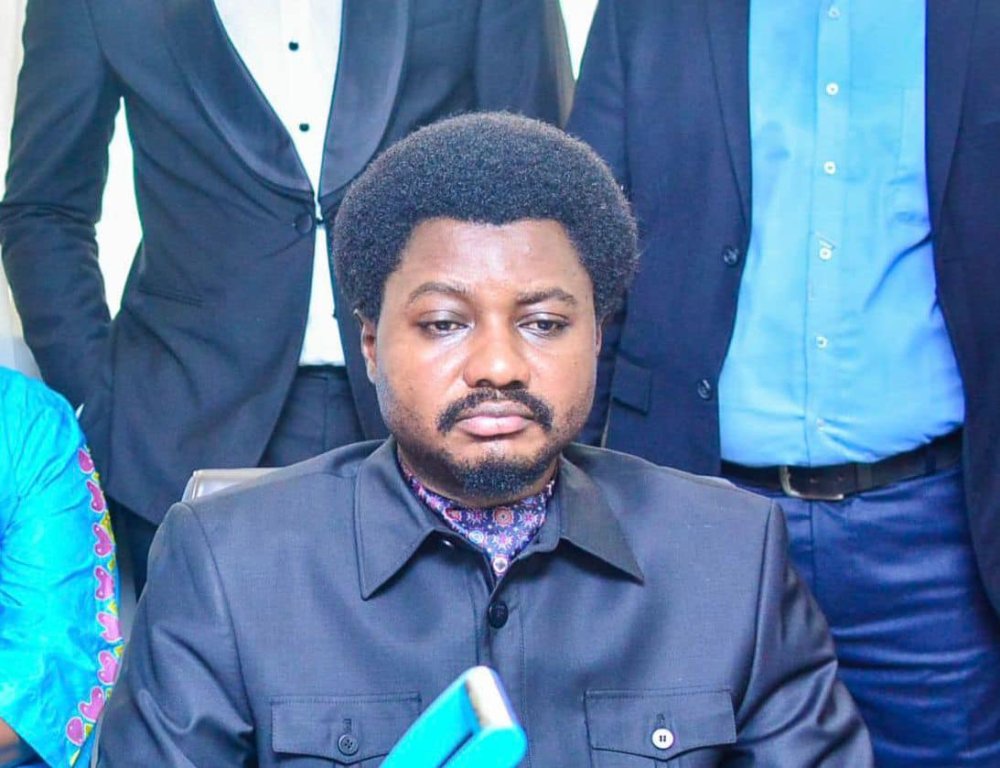
Media reports indicate that Mutamba submitted his resignation on Tuesday, May 17 and has since been accepted by President Félix Tshisekedi.
The resignation comes just days after the National Assembly voted overwhelmingly to authorise legal proceedings against Mutamba before the Court of Cassation.
The vote saw 322 of the 363 participating Members of Parliament support the move, with only 29 opposed and 12 abstaining.
Mutamba’s departure marks a dramatic fall for the young minister, who was appointed to the post in May 2024 with a mandate to reform what he had described as a “sick” judicial system.
However, Mutamba quickly found himself entangled in a scandal over the alleged diversion of funds meant for the construction of Kisangani Prison in Tshopo Province.
A parliamentary commission established to investigate the matter heard testimony from Mutamba in which he admitted that the $19 million had been misappropriated and transferred to the account of a fictitious company. He also issued a public apology during the hearing.
Despite admitting to the financial irregularities, Mutamba has insisted that the charges against him are politically motivated. He claims he is the victim of a personal vendetta led by Prosecutor General Firmin Mvonde, whom he accused of retaliating against his anti-corruption initiatives.
Mutamba also alleged that Mvonde himself is under scrutiny over the purchase of a €900,000 house in Belgium, raising questions about the prosecutor’s integrity.
The unfolding scandal has further exposed deep tensions within the DRC’s justice system and raises serious questions about the government’s ability to implement judicial reforms in the face of entrenched corruption and political infighting.
As the legal case moves forward, Mutamba’s resignation signals the beginning of what could be a lengthy and high-profile prosecution—one that may test the very system he had vowed to clean up.
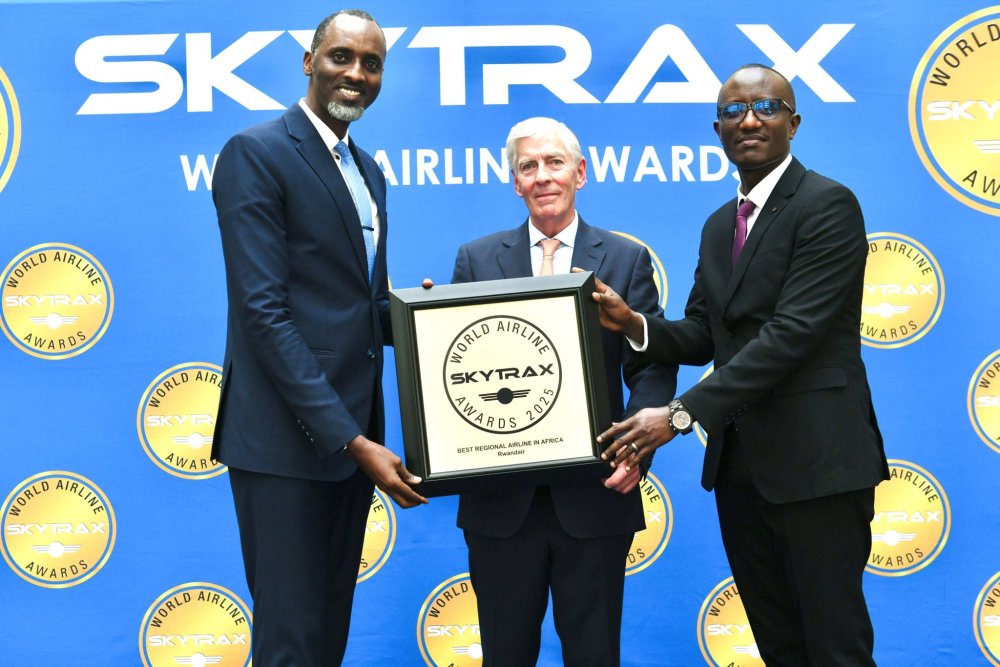
This accolade cements RwandAir’s growing reputation as a leader in African aviation, with passengers praising the airline’s meticulous attention to service across the entire travel experience.
The World Airline Awards, often dubbed “the Oscars of the aviation industry,” are based on a global customer satisfaction survey conducted by Skytrax, an international air transport rating organization.
Running from September 2024 to May 2025, the survey saw participation from over 100 nationalities, with 22.3 million eligible entries determining the winners. The awards remain independent, with no entry or registration fees for airlines, ensuring impartiality.
Edward Plaisted, CEO of Skytrax, commended RwandAir’s achievement, stating, “RwandAir continues to distinguish itself through a clear focus on service attention. The airline has created an experience that stands out in its category – professional, considered, and personal as it continues to evolve its regional product with confidence.”
RwandAir’s consistent presence at the awards reflects its rising prominence among regional travelers. In 2024, the airline ranked third among African carriers for exceptional service and customer care, signaling its upward trajectory in a rapidly growing African aviation market.
{{RwandAir’s journey and global partnerships}}
Established on December 1, 2002, as Rwandair Express, the airline rebranded to RwandAir in 2009 and has since become one of Africa’s fastest-growing carriers.
Operating a modern fleet that includes the Boeing 737-800NG, Boeing 737-700NG, Bombardier Q-400NG, and Airbus A330, RwandAir serves destinations across Africa, Asia, and Europe.
RwandAir’s partnership with Qatar Airways, which was named the world’s top airline at the 2025 awards, further enhances its global reach and service offerings.
Other global leaders in the awards included Singapore Airlines (second), Cathay Pacific (third), Emirates (fourth), ANA All Nippon Airways (fifth), and Turkish Airlines (sixth).
In Africa, Ethiopian Airways clinched the title of the best airline for the seventh consecutive year, recognized for its international operations, distinct from RwandAir’s focus on intra-Africa excellence.
As the airline continues to expand its network and refine its services, this recognition at the World Airline Awards highlights its pivotal role in shaping the future of regional air travel in Africa.
The agreement, first announced in May, includes tariff reductions on British car and aerospace exports, but several key sectors, notably steel, aluminium, and pharmaceuticals, remain unresolved.
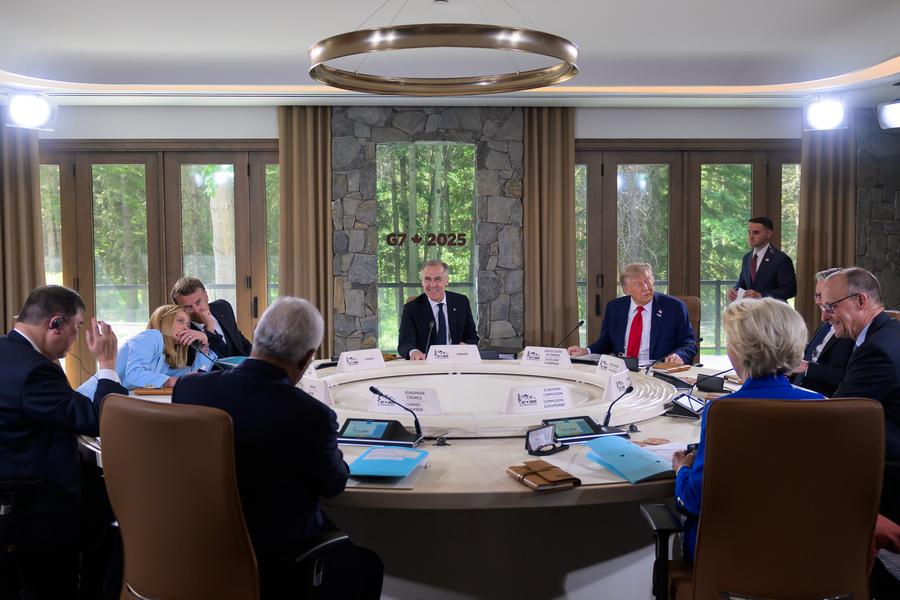
The deal came into effect after U.S. President Donald Trump signed an executive order to implement it. British Prime Minister Keir Starmer, who met with Trump at the summit, confirmed that the core tariff reduction measures would take effect “immediately.”
Under the agreement, the U.S. will reduce tariffs on up to 100,000 British-made cars per year from 27.5 percent to 10 percent. It also removes the 10 percent U.S. tariff on British aerospace products, including jet engines and aircraft components, a measure expected to take effect by the end of the month.
Britain has also agreed to a quota of 1.4 billion litres of tariff-free U.S. bioethanol imports, a volume roughly equivalent to the country’s total annual domestic demand. In return, the U.S. has committed to allowing limited British beef exports.
The British government said all American agricultural imports would still need to meet Britain’s food safety and animal welfare standards. However, British bioethanol producers and farming groups have expressed concern that the influx of U.S. products could undercut local industries.
Despite these developments, large parts of the agreement remain incomplete. According to reports by the Financial Times, both sides are still in negotiations over steel and aluminium tariffs.
Although Britain currently benefits from an exemption to the new 50 percent global steel duty announced by Trump, it continues to face a 25 percent tariff.
British officials said that final arrangements have been delayed due to “technical and legal” challenges, including U.S. rules requiring that steel must be “melted and poured” in its country of origin. Much of Britain’s steel is processed from imported material and may not qualify under that definition.
Pharmaceuticals represent another unresolved area. While the British government says both sides aim to secure “significantly preferential outcomes” for the British pharmaceutical industry, no binding provisions have been announced.
According to British media, Starmer has appointed his senior business adviser Varun Chandra to lead a delegation to Washington this week. The team, which includes embassy trade officials, is expected to focus on finalising the remaining elements of the agreement.
Industry analysts and trade experts have pointed out that the deal is limited in scope and relies on executive action rather than formal legislation. This raises questions about the long-term stability of the agreement, particularly if there is a change in U.S. leadership.
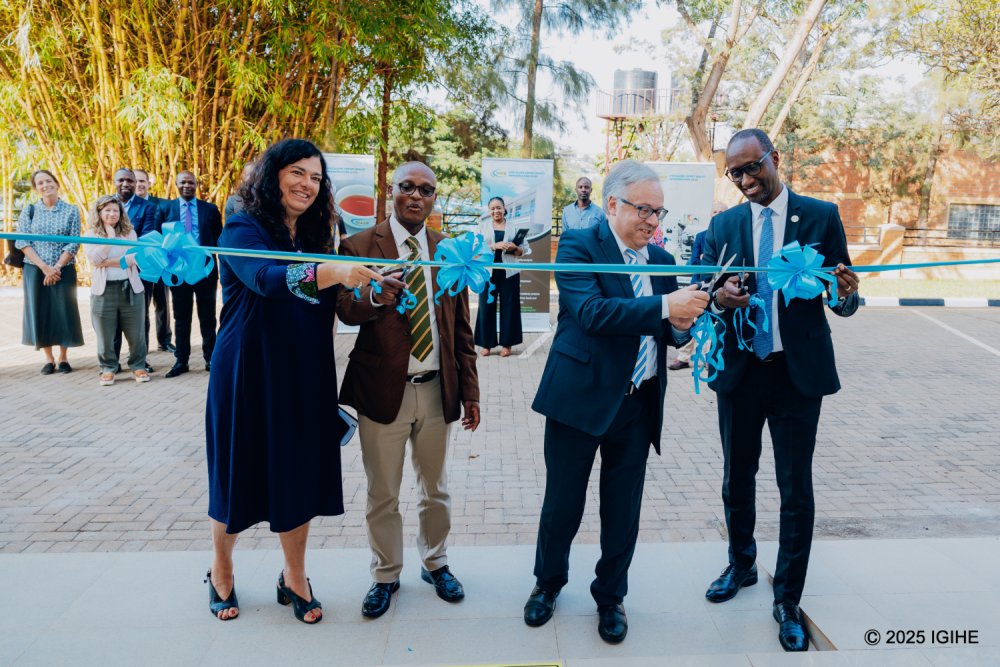
This milestone marks a significant step in Rwanda’s efforts to strengthen its testing capacity, enhancing the competitiveness of Rwandan agricultural products in global markets by ensuring they meet international quality standards.
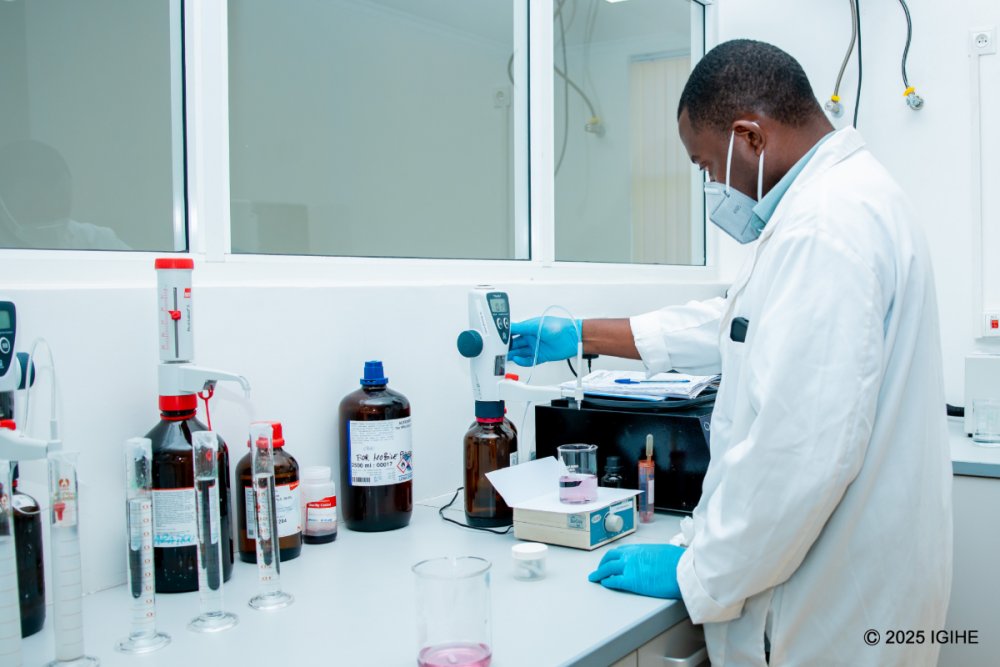
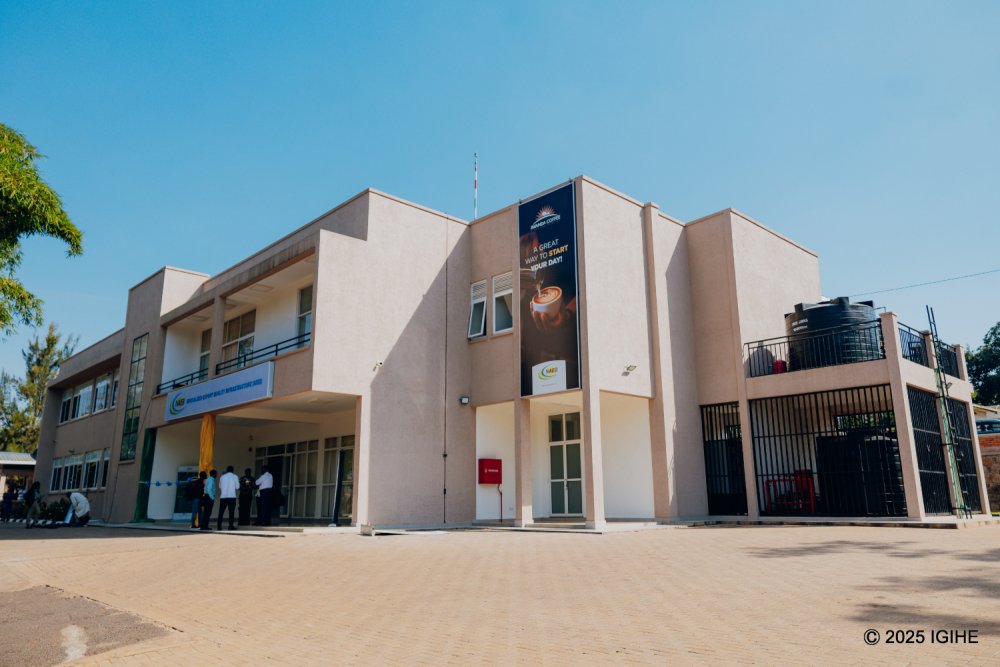
The SEQI is a purpose-built facility designed not only to offer laboratory testing services but also to provide certification and compliance services.
Its primary objective is to ensure that Rwandan export products meet both international quality standards and specific market requirements. SEQI operates on key pillars—standards, metrology, testing, certification, and accreditation—which support the conformity assessment processes essential for global market entry.
Beyond its laboratory services, SEQI plays a critical role in issuing export quality certificates following thorough product testing and analysis. The facility serves as a hub that will benefit farmers, processors, and exporters across various value chains, ensuring the integrity and quality of Rwanda’s agricultural products.
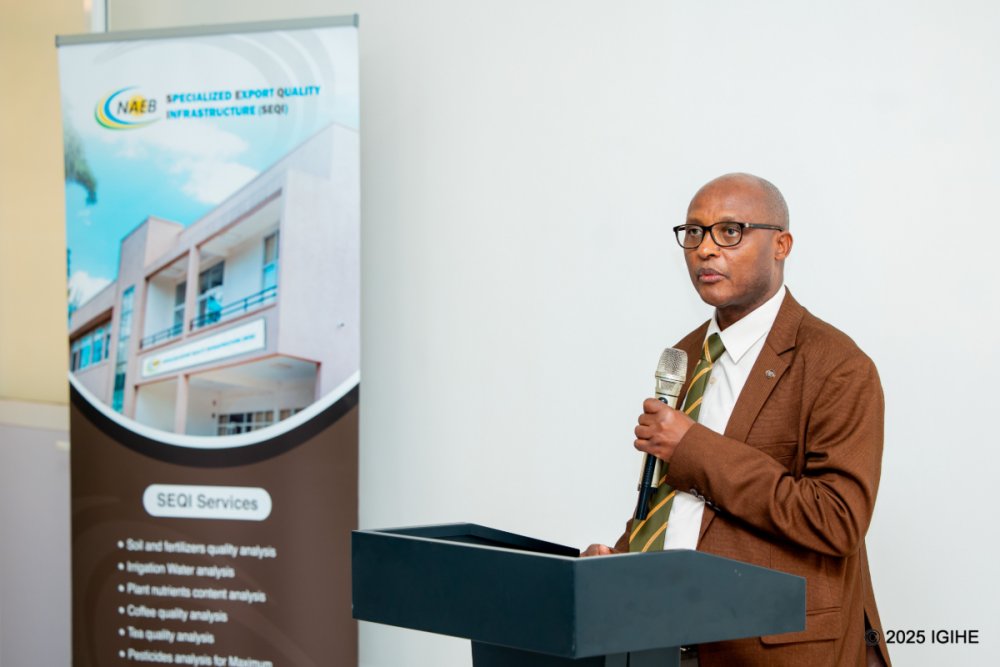
Speaking at the launch, the Minister of Agriculture and Animal Resources, Dr. Mark Cyubahiro Bagabe, highlighted the timeliness of the infrastructure, noting: “This infrastructure came on time where Rwanda aims at enhancing the competitiveness of agricultural products on the international market where SEQI is expected to play a key role in assuring quality for the exported products. Investing in quality infrastructure promotes sustainable development by ensuring food safety, protecting the environment, and supporting long-term economic growth.”
Dr. Bagabe also commended the European Union for their technical and financial support, which was instrumental in upgrading the export quality infrastructure, acquiring testing equipment, and providing technical assistance.
“Moving forward, NAEB has initiated the accreditation process for SEQI to demonstrate the laboratory’s competence and adherence to international standards. The SEQI accreditation is expected to reduce barriers to trade, facilitate market access, and enhance consumer confidence.” noted Dr. Bagabe added.
With an investment of €3.4 million (over Frw 5.6 billion), the facility, located at NAEB’s headquarters in Gikondo, Kigali, aligns with Rwanda’s long-term strategy to diversify exports, increase foreign exchange earnings, and ensure sustainable growth in agri-exports.
The SEQI is expected to significantly improve Rwanda’s ability to meet international buyer expectations, particularly in high-value markets.
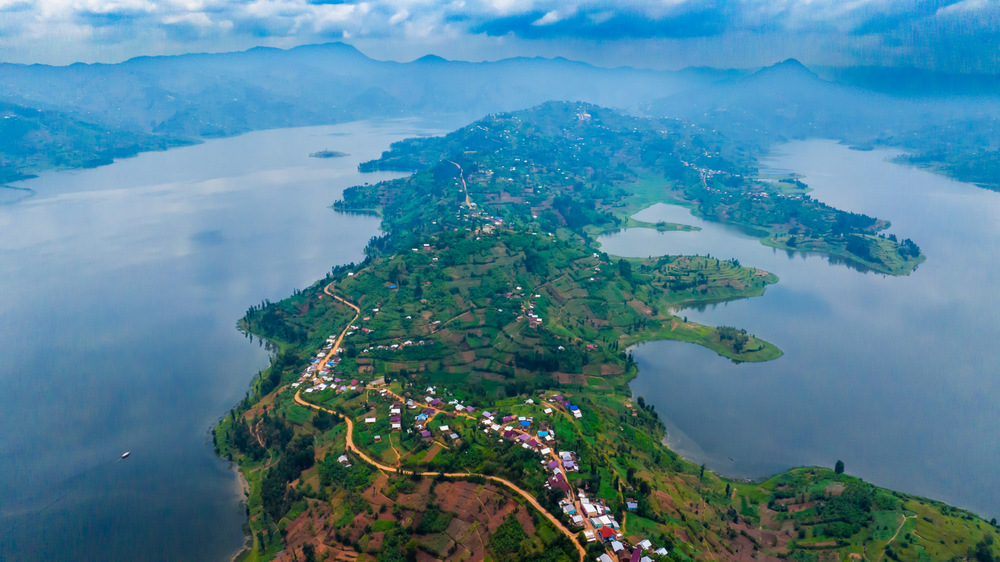
This announcement was made by Dr. Uwamariya Valentine, the Minister of Environment, during a discussion with members of the Senate’s Commission on Social Affairs and Human Rights on June 16, 2025. The discussion followed a report on the findings of a visit to various islands in Rwanda.
Dr. Uwamariya explained that three research studies, conducted in 2012, 2014, and 2024, aimed to assess the biodiversity of Rwanda’s islands and provide insights into their potential for development.
She highlighted that Rwanda’s islands come in various categories, including inhabited and uninhabited islands, large and small, with some requiring the use of drones for assessment, land registration, and documentation.
In Rusizi District, there are seven islands, three of which are inhabited and registered under local residents, while four are uninhabited. In Nyamasheke, there are 40 islands, 35 of which are uninhabited and five are inhabited, but only two are registered under local residents.
In Karongi, there are 25 islands, all uninhabited and not registered under local residents, while in Rutsiro, there are 42 islands, with 40 uninhabited and two inhabited, one of which is registered.
Musanze has two islands in Lake Ruhondo, one inhabited and the other uninhabited. In Bugesera District, there are two islands, one inhabited and one uninhabited. In Akagera National Park, there are five uninhabited islands, and in the Rugezi Wetlands, there are 15 uninhabited islands, some of which are registered under local residents.
In total, Rwanda has 153 islands, of which 19 are inhabited by local communities, while the remaining 138 are uninhabited. Of the 19 inhabited islands, eight are permanently settled, including islands like Nkombo, Ishywa, Gihaya, Iwawa, Bugarura, Kirehe, Mushongo, and Birwa.
Dr. Uwamariya stated that the islands inhabited permanently by communities have the necessary infrastructure and legal land documentation, except for Iwawa Island, which is registered under the government.
However, there are also islands where people live temporarily, and these areas lack basic infrastructure. Providing infrastructure to these areas would require significant investment, more than relocating the inhabitants.
“The residents on these islands are living there but their land is registered under the government. The residents need to be relocated so they can access essential services such as water and electricity,” she emphasized.
The Minister also pointed out the challenges of protecting the residents living on the islands, especially when they continue to farm or engage in other activities on land that was initially intended for relocation but without the proper rights.
She noted that some residents claim the land as their ancestral property or say they bought it, but it is not formally registered. In Rutsiro, for example, some individuals have documents dating back to 1990, claiming they were granted the land, even though it is being eroded and lacks infrastructure.
To address these issues, Dr. Uwamariya announced that a ministerial order will be introduced to classify the islands as state-owned land under public property. The order has already been discussed with relevant stakeholders and is expected to be presented to the cabinet for approval in July this year.
Once the order is announced, a management and conservation plan will be implemented for each island, outlining what can and cannot be done on these islands. Additionally, illegal activities currently taking place on the islands will be halted.
The new order will also grant residents the right to sell land on the islands they currently occupy.
Dr. Uwamariya further revealed plans to designate some islands as protected areas, which could be included in Rwanda’s UNESCO World Heritage sites due to their unique biodiversity. This initiative aligns with the country’s efforts to preserve its natural heritage while ensuring sustainable development.
He made the disclosure during a virtual press briefing on Tuesday, June 17, 2025.
“Iran is the biggest terror proliferator,” she stated, accusing the regime of targeting Israeli civilians with attacks that killed, injured many, and left countless traumatized.
“There are people whose homes are destroyed,” she added, emphasizing the human toll beyond mere numbers.
Weiss highlighted Israel’s “very well audited” strikes on Iran’s nuclear sites, like Natanz, which she said have damaged uranium enrichment facilities and eliminated key experts.
“We are doing the whole world a favor,” she asserted, noting that a nuclear Iran threatens not just Israel but global stability, potentially disrupting trade routes like Bab al-Mandeb.
“No country in the Middle East wants to see Iran nuclearized,” she stressed, suggesting Israel bears a disproportionate burden for collective security.
Commenting on the possibility for dialogue, Weiss said, “You cannot have a dialogue with someone who wants to eliminate you,” pointing to Iran’s missile inscriptions vowing Israel’s destruction and the Joint Comprehensive Plan of Action (JCPOA) on the Iranian nuclear issue violations.
She linked Iran’s nuclear ambitions to its support for proxies like Hamas, whose ideology, she warned, mirrors Iran’s.
“They were targeting their own people,” she said of Iran’s regime, urging international pressure to halt its alleged terror sponsorship.
Weiss praised Israel’s shelters for limiting losses but invited Rwandan media to see beyond “the number of casualties” and engage further.
“We are helping the international community,” she concluded, positioning Israel’s fight as a global shield against Iran’s alleged terror-driven chaos.
On Friday, June 13, 2025, Israel launched a large-scale military operation, dubbed “Operation Rising Lion,” targeting Iran’s nuclear and missile infrastructure.
The operation involved approximately 200 Israeli Air Force jets striking around 100 sites, including the Natanz uranium enrichment facility, a centerpiece of Iran’s nuclear program.
The strikes also killed key Iranian figures, including Gen. Hossein Salami, commander of the Islamic Revolutionary Guard Corps (IRGC), Gen. Mohammad Bagheri, chief of staff of Iran’s armed forces, and several nuclear scientists, marking a significant blow to Iran’s military and scientific leadership.
In retaliation, Iran launched hundreds of drones and ballistic missiles toward Israel, targeting cities like Tel Aviv and Jerusalem. Israeli defense systems, including the Iron Dome, intercepted most, though some strikes caused damage and casualties, with more than 20 deaths reported.
The escalation entered the fifth day of strikes on Tuesday, with civilians in key conflict zones bearing the impact of the fighting.
Reports indicate that Iran launched a new wave of missiles toward Israel on Tuesday evening.
Meanwhile, The U.S. Vice President JD Vance has said in a lengthy social media post defending the US president’s consistency on Iran policy.
He highlighted that President Donald Trump ‘may decide he needs to take further action to end Iranian enrichment’.
“That decision ultimately belongs to the president. And of course, people are right to be worried about foreign entanglement after the last 25 years of idiotic foreign policy,” Vance wrote on X.
[Related article: Israel envoy to Rwanda: Attack on Iran aimed at neutralising ’imminent’ nuclear threat->https://en.igihe.com/news/article/israel-envoy-to-rwanda-attack-on-iran-aimed-at-neutralising-imminent-nuclear]
The summit represents a historic first — the first time the gathering is being held in a Central Asian country. Chinese President Xi Jinping is expected to deliver a keynote speech.
According to Chinese Foreign Ministry Spokesperson Guo Jiakun, the summit will open up new space for Belt and Road cooperation and build an even closer China-Central Asia community with a shared future.
The inaugural summit was held two years ago in China’s northwestern city of Xi’an, where leaders agreed to hold the top-level gathering every two years alternately in China and Central Asia.
Xi arrived in Astana on Monday to a blue-carpet welcome. The color — featured on Kazakhstan’s national flag — symbolizes the sky and holds deep cultural significance in the country.
Kazakh President Kassym-Jomart Tokayev, leading a team of senior officials, welcomed the Chinese president at the airport, and hosted a grand ceremony to mark his arrival.
Kazakh children and teenagers recited heartfelt verses for Xi: “China-Kazakhstan friendship heart to heart, the Silk Road shines forever bright;” “You help me and I help you, peace and happiness forever true.”
During their talks later in the day, Xi told Tokayev that China has always viewed and developed its relationship with Kazakhstan from a strategic and long-term perspective.
The two countries should practice true multilateralism, and resolutely safeguard the common interests of the vast majority of developing countries, Xi said.
Kazakhstan-China relations are at the highest level, said Aidar Amrebayev, director of the Center for Political Studies at the Institute of Philosophy, Political Science, and Religious Studies of the Kazakh Ministry of Science and Higher Education.
“Both a partner and a friend to China,” said Amrebayev, “Kazakhstan, one could say, also serves as a bridge connecting China with many countries across Eurasia.”
There are various formats of cooperation with Central Asian countries, and the most effective and successful is precisely the China-Central Asia cooperation mechanism, he said.
During the Xi’an summit in May 2023, Xi and the presidents of the five Central Asian countries signed the Xi’an Declaration, vowing to work together to build a closer China-Central Asia community with a shared future.
The Belt and Road Initiative has played a central role in advancing cooperation between China and the Central Asian countries. Thanks to the initiative, China now stands as Central Asia’s top trading partner and major investment source. In 2024, two-way trade soared to almost 95 billion U.S. dollars, up by 5.4 billion dollars from the previous year.
In 2013, Xi first laid out his vision for building the Silk Road Economic Belt — a key component of the initiative in Astana when delivering a landmark speech at Nazarbayev University.
When talking with Tokayev, Xi called for efforts to consolidate strengths of traditional cooperation in trade, investment and energy, advance the construction of cross-border railway projects and the upgrading of port infrastructure, promote connectivity, high-tech cooperation as well as green and sustainable development.
Through the initiative, China is offering a lot of opportunities in energy, digital transformation, AI development and education, said Jessica Neafie, an assistant professor from the Political Science and International Relations Department of Nazarbayev University.
As Kazakhstan is a landlocked country, Neafie said, the initiative, along with broader trends in globalization, has helped people in the country become more globally connected and outward-looking.
Abdugani Mamadazimov, a scholar at Tajik National University, said that since the launch of the initiative, Central Asian countries have actively aligned their national development plans and strategies with it.
The upcoming summit, he noted, is expected to further deepen the Belt and Road cooperation in the region, particularly by accelerating progress in transcontinental land transportation and logistics infrastructure, and promoting the growth of joint ventures across a range of industries and service sectors.