“We are happy to welcome you back to your second home. We look forward to a strong partnership with Qatar Airways as we continue to position Kigali as a key hub in the region,” said Charles Habonimana, Managing Director of Rwanda Airports Company.
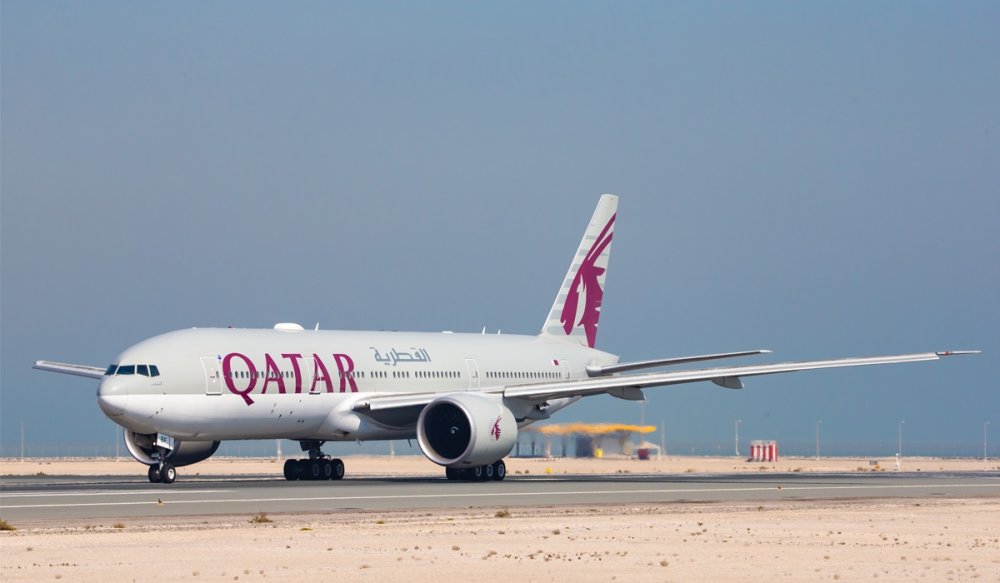
Qatar Airways, one of the world’s leading airlines, will operate four weekly flights between Doha and Kigali on Mondays, Wednesdays, Fridays, and Sundays. This expansion promises more connectivity, convenience, and choice for passengers travelling to and from Rwanda.
Yasser Mohamed Ali, Regional Manager for Qatar Airways, expressed enthusiasm about the relaunch: “We are happy to return to Kigali. Our aim is to work with our partners, RwandAir
to offer travellers more options, and greater convenience, especially as we look ahead to the opening of the new airport in 2028.”
The relaunch is also hailed as a reflection of the vision of Rwanda and Qatar’s leaders. “This relaunch reflects the vision of our leaders, H.E. President Paul Kagame and the Emir of Qatar. Together, we are building a new airport and deepening partnerships, including with Rwanda’s national carrier,” said Jules Ndenga, CEO of Aviation Tourism Logistics (ATL).
Ndenga added, “This relaunch will enhance the passenger experience, and we’re here to support Qatar Airways in raising the bar of operations in Rwanda.”
Rwanda is steadily positioning Kigali as a key regional aviation hub, with plans underway to open the state-of-the-art Bugesera International Airport by 2028. The Government of Rwanda initiated the project in 2017.
In 2019, Qatar Airways joined the venture by acquiring a 60% stake in the airport project, becoming the majority shareholder.
The return of Qatar Airways is expected to play a pivotal role in driving tourism, trade, and economic growth.
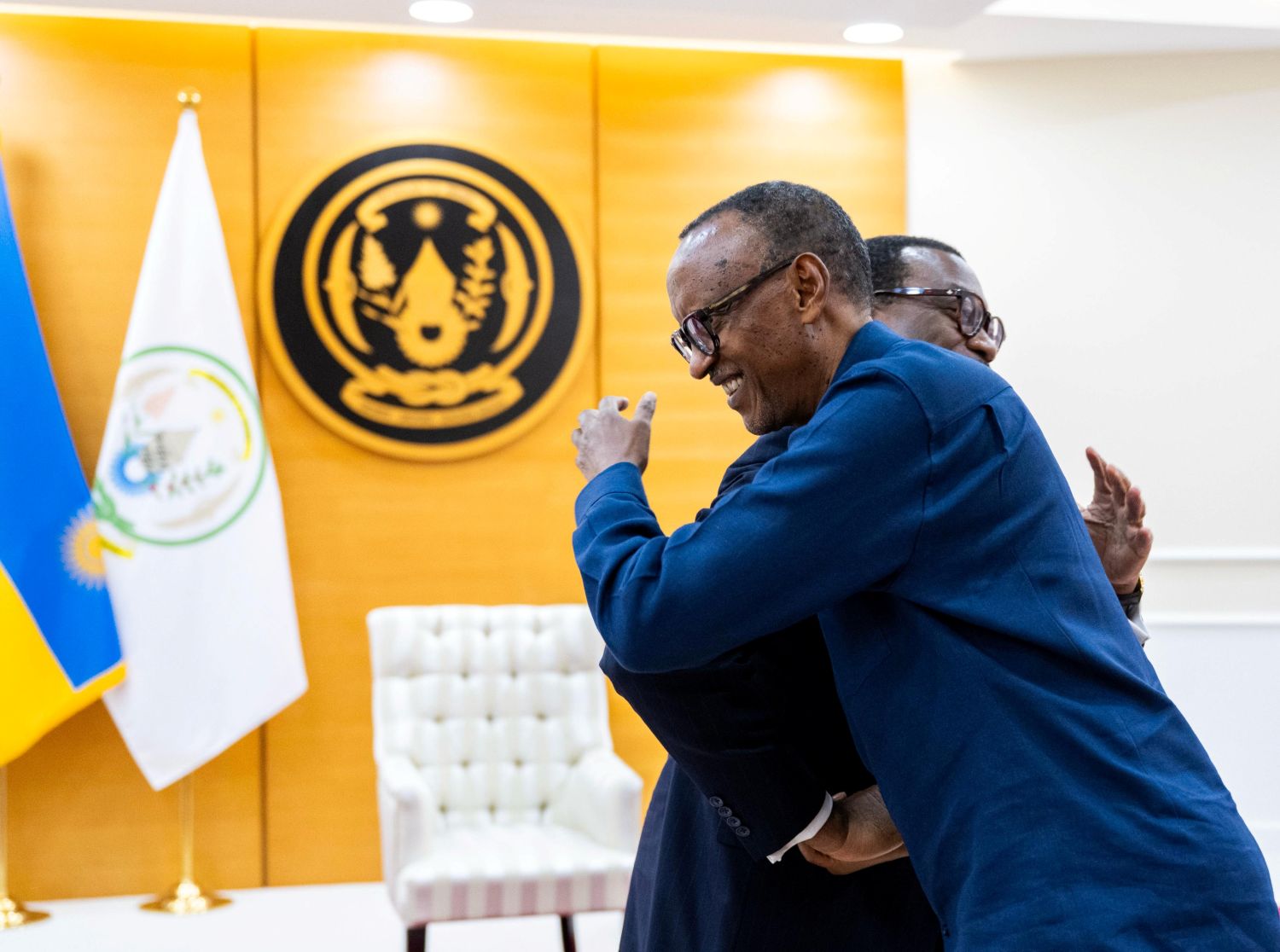
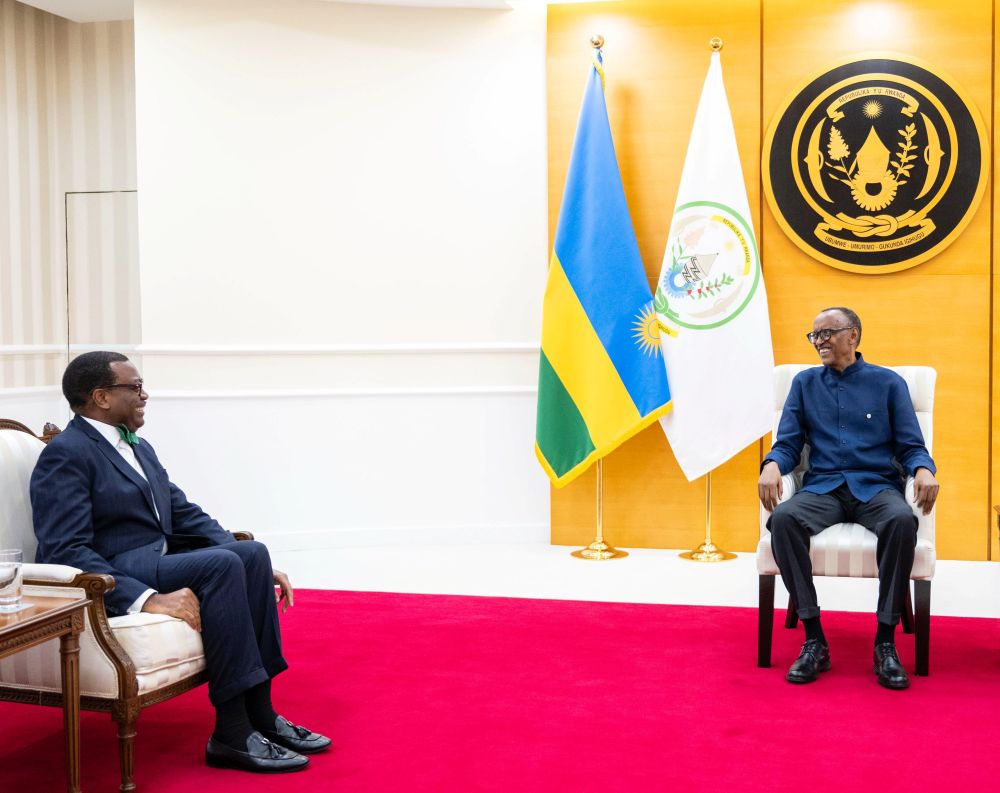
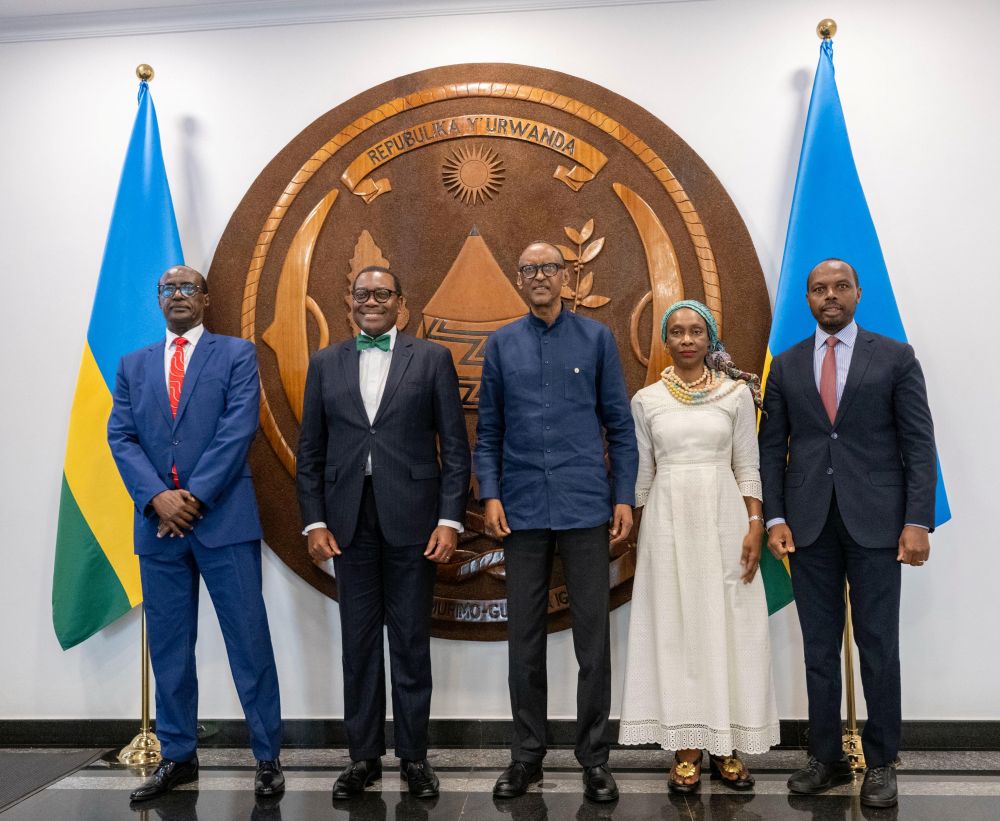
In a statement, the Office of the President said the duo’s meeting at Urugwiro Village focused on the enduring partnership between Rwanda and the AfDB, and the transformative development projects achieved under Dr. Adesina’s leadership over the past decade.
“Their discussion focused on the fruitful partnership between Rwanda and the African Development Bank, and the successful collaboration across key economic sectors under Dr.
@akin_adesina’s leadership,” the statement reads.
The visit coincides with the AfDB’s latest [approval of a $500,000 grant ->https://en.igihe.com/science-technology/article/afdb-backs-kigali-cable-car-project-with-500-000-grant] to fund a feasibility study for the Kigali Urban Cable Car Project, a pioneering 5.5 km aerial transit system set to be sub-Saharan Africa’s first urban cable car.
The project, valued at $100 million, aims to improve urban mobility, reduce emissions, and better connect communities to essential services.
“This transformative project aligns perfectly with the Bank’s vision for sustainable, green, climate-resilient urban mobility infrastructure,” said Dr. Adesina in a separate statement issued by AfDB.
The cable car will connect major routes including Nyabugogo to the Central Business District, and Kigali Convention Center to Sports City, integrating landmarks such as Amahoro Stadium, BK Arena, and Zaria Court. Construction is expected to begin in late 2026, with operations launching by 2028, and a projected capacity of over 50,000 passengers daily.
Dr. Adesina’s visit also comes ahead of his scheduled departure from the Bank. He is set to be succeeded by Dr. Sidi Ould Tah, former Mauritanian finance minister, who was elected in May and will assume office on September 1, 2025, after winning more than 75% of the shareholder vote.
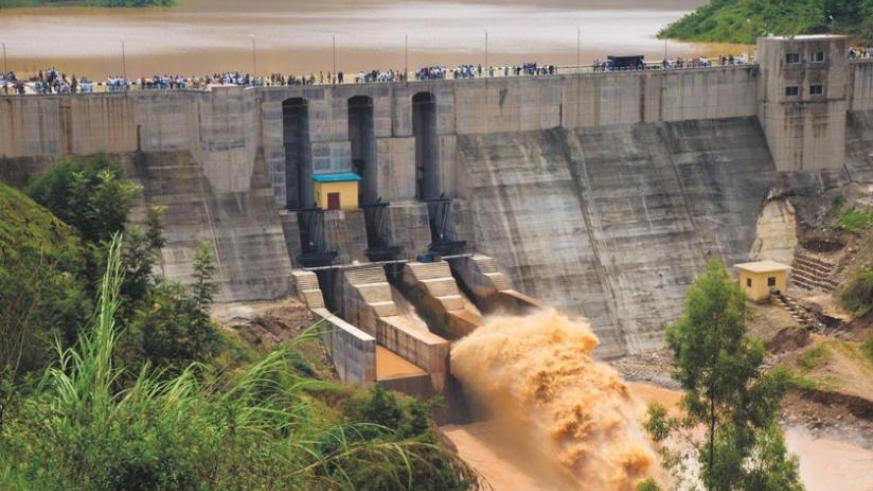
The announcement was made on Wednesday, June 25, 2025, during the U.S.-Africa Business Summit in Luanda, Angola, marking a milestone for the first tri-national Public-Private Partnership (PPP) of its kind, involving Burundi, the Democratic Republic of Congo (DRC), and Rwanda.
The 206 MW hydropower plant, located on the Ruzizi River between western Rwanda and eastern DRC, is expected to deliver reliable electricity to approximately 30 million people across the three nations.
The project will nearly double Burundi’s current power capacity, increase Rwanda’s by 30%, and provide critical baseload power to eastern DRC, fostering economic growth, regional integration, and energy security in one of Africa’s most underserved regions.
Anzana, known for developing and operating power projects across Africa, expressed enthusiasm for the partnership, with plans to acquire a minority equity interest in RHPCL.
“As an American company committed to powering opportunities across Africa, Anzana is proud to join RHPCL and the governments of Burundi, DRC, and Rwanda at this pivotal moment,” said Brian Kelly, CEO of Anzana.
“Through this partnership, we are not only powering homes, communities, and industries, we are helping to drive regional integration, strengthen energy security and stability, and pave the way for expanded U.S. investment and trade in Africa’s energy future,” he added.
RHPCL’s Director, Aleem Karmali, echoed this sentiment, stating, ““The Directors of RHPCL are enthusiastic about this potential strategic alliance and, assuming a successful outcome of the partnering process, look forward to harnessing Anzana’s expertise and experience to realize the full potential of the Ruzizi III Project, extending critical energy access and fostering development in the region.”
The two parties aim to finalize a binding Partnership Agreement by September 15, 2025, with Anzana acquiring at least a 10% equity stake in RHPCL.
The agreement will define governance, investment commitments, and future collaboration, setting the stage for a project that promises to transform the energy landscape of Rwanda, Burundi, and the DRC.
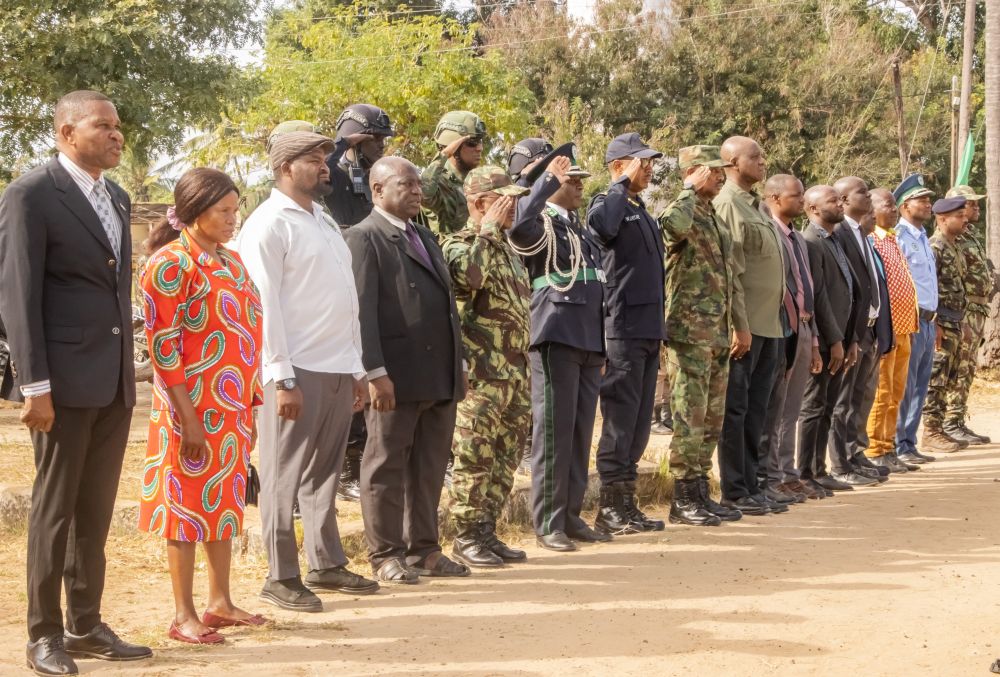
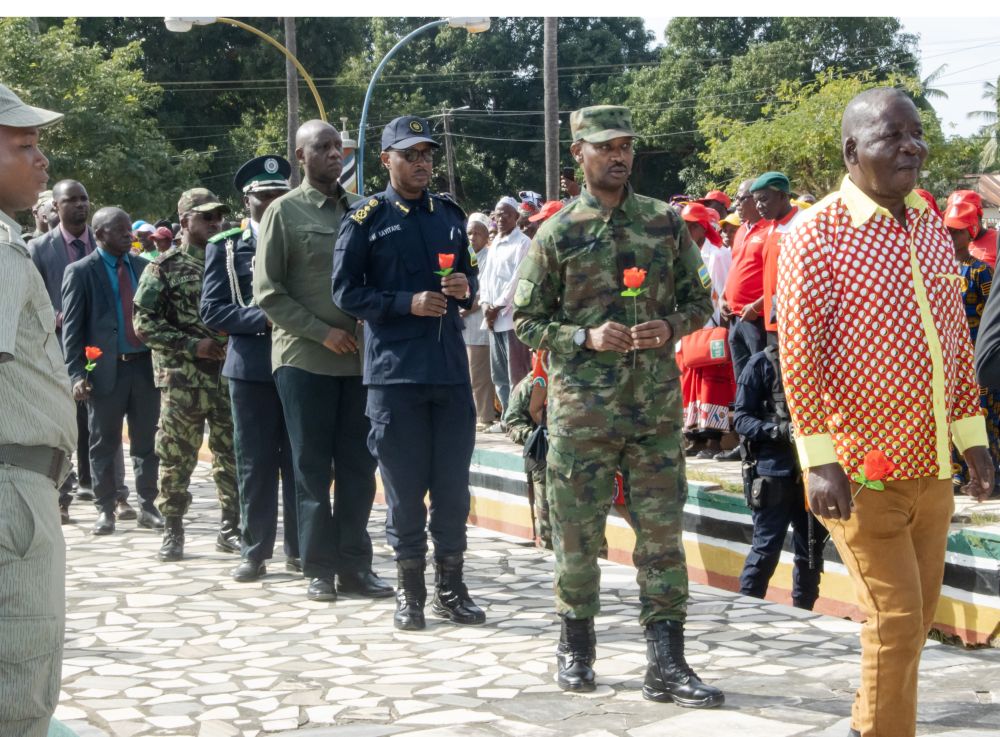
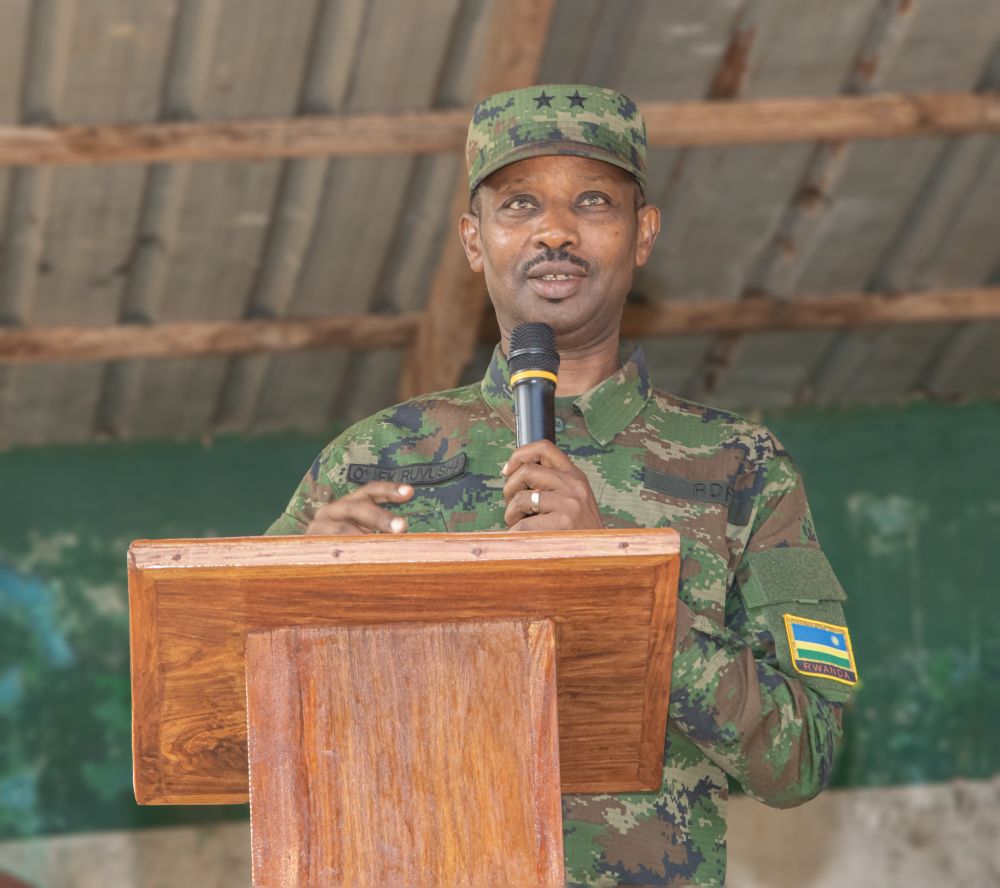
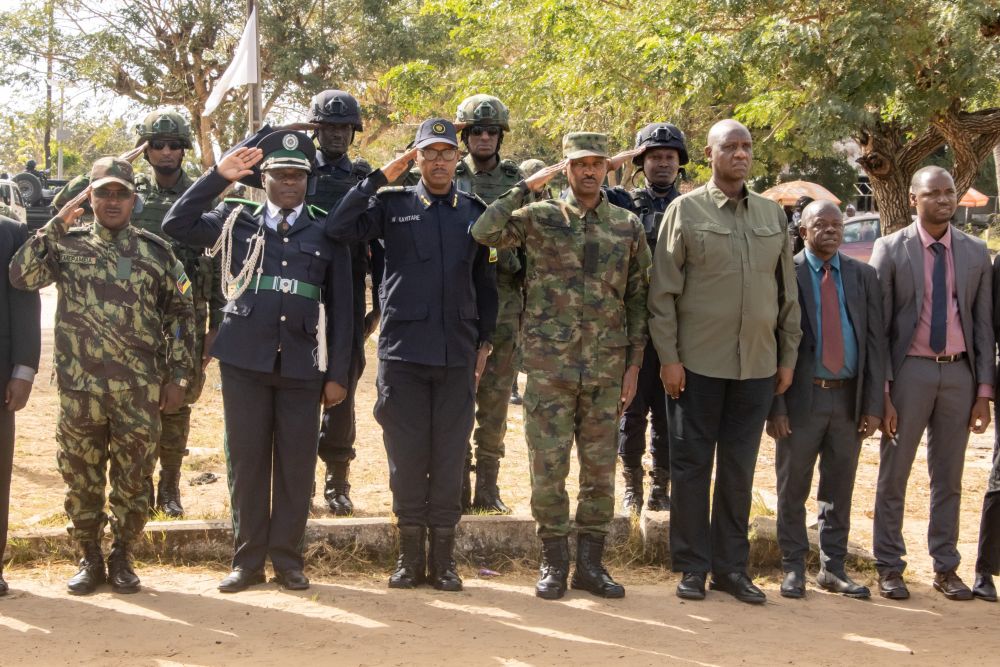
Speaking at the event, RSF Joint Task Force Commander, Maj Gen Emmy K. Ruvusha, reaffirmed Rwanda’s commitment to regional peace, cooperation and the shared legacy of African independence.
On behalf of the Government of Mozambique, the District Administrator of Mocímboa da Praia, Sérgio Cipriano expressed heartfelt gratitude to the RSF for their unwavering support in the fight against terrorism.
“Rwanda Security Force stood with us when our unity and peace were under threat. Today, as we celebrate 50 years of independence, we are reminded that true partnership is shown not only in moments of victory but also in the struggle that precedes it,” he said.
Since 2021, the Rwanda Security Force has been operating in Mozambique in close coordination with the Mozambican Defense and Security Forces to restore peace and stability in Cabo Delgado. The joint efforts have resulted in the recovery of key towns, restoration of civil authority, and the return of displaced communities.
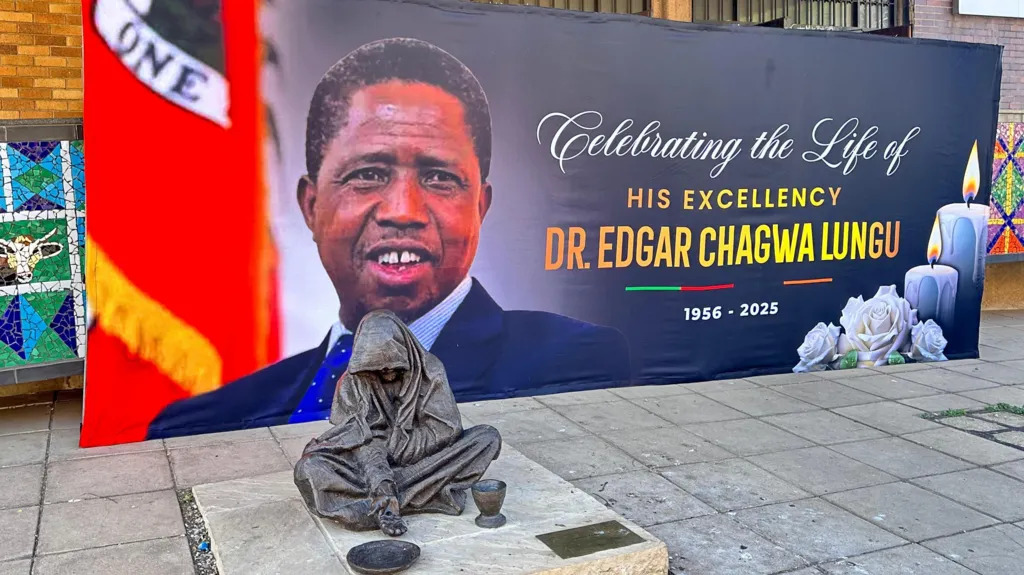
The Pretoria High Court intervened following an urgent application by the Zambian government, which opposed the family’s decision to bury the late president abroad without state involvement.
The court said the burial would not proceed, citing an “agreement between the parties,” and scheduled a special hearing on the matter for August 4 2025.
This means Lungu’s remains will not be laid to rest until at least that date.
Lungu died on 5 June 2025 in Pretoria at the age of 68, where he had been undergoing specialised treatment for an undisclosed illness. A former leader of the Patriotic Front, he served as Zambia’s sixth president from 2015 to 2021 before losing the presidency to Hakainde Hichilema by a wide margin.
The dispute over his final resting place is the latest chapter in a long-running feud between Lungu and President Hichilema—one that appears to have outlived the former leader.
While Lungu’s family insists he wished to exclude his successor from his funeral, the government maintains that, as a former head of state, he belongs to the nation and should be accorded a state funeral in Zambia.
Initially, both sides agreed on a state funeral. However, the deal collapsed over disagreements on the logistics and symbolism of the ceremony, leading the family to plan a private burial in South Africa instead. This move prompted the government to seek legal redress in South Africa to reclaim control over the burial process.
In its filing, the Zambian government argued that private wishes should not override national interest, citing the precedent set with Zambia’s founding president Kenneth Kaunda, whose family also objected to a state burial in 2021, but was overruled.
Zambia’s Attorney General Mulilo D Kabesha has until July 4 to submit an amended motion supporting Lungu’s repatriation. The former president’s family has until July 11 to respond with their opposing papers. The Pretoria High Court will then hear the case in August and decide who has the final say over the burial and who will bear the costs of the legal proceedings.
In a statement on Wednesday, AfDB said the funds will be drawn from the Bank Group’s Urban and Municipal Development Fund (UMDF) and are expected to lay the groundwork for the Kigali Urban Cable Car Project.
The 5.5 km aerial transit system, valued at $100 million, promises to ease traffic, cut emissions, and connect communities to vital services.
The project is designed to become a cornerstone of Kigali’s green and inclusive urban mobility strategy.
The first phase of the project will connect two major corridors: from Nyabugogo Taxi Park to the Central Business District (CBD), and from the Kigali Convention Center to Kigali Sports City, linking key landmarks such as Amahoro Stadium, BK Arena, and the new Zaria Court.
Construction is expected to commence in late 2026, with commissioning scheduled for 2028. Once operational, the cable car will carry more than 50,000 passengers daily, offering a 15-minute end-to-end commute and integrating seamlessly with the city’s broader transport network.
“This transformative project aligns perfectly with the Bank’s vision for sustainable, green, climate-resilient urban mobility infrastructure,” said AfDB President Dr. Akinwumi Adesina.
“By financing Rwanda’s urban cable car system, we are investing in a scalable model of low-carbon, inclusive public transport that cities across Africa can emulate.”
The project is deeply embedded in Rwanda’s national priorities, including its Green Taxonomy, E-mobility Strategy, and Climate and Nature Finance Strategy. It also supports the country’s ambition to reduce carbon emissions by 38% by 2030 and achieve net-zero emissions by 2050.
The feasibility study will incorporate best practices from successful systems in cities like La Paz, Bolivia, and Singapore. It will emphasise universal access, particularly for persons with disabilities, and promote inclusive employment opportunities, especially for women, youth, and low-income residents. The study will also assess the project’s viability gap to guide investment and risk management.
Solomon Quaynor, AfDB’s Vice President for Private Sector, Infrastructure, and Industrialisation, called the grant “a game-changing milestone,” adding that “through the UMDF, AfDB is laying the foundation for an investment-ready green infrastructure asset that offers both impact and returns.”
According to Imena Munyampenda, Director General of the Rwanda Transport Development Agency, the project will be implemented through a Public-Private Partnership (PPP) model.
The financing strategy for the $100 million infrastructure will combine grants, concessional loans, technical assistance, and blended finance. Alongside the Rwandan government and the AfDB, partners such as the International Finance Corporation (IFC), Africa50, Trade and Development Bank (TDB), Africa Finance Corporation (AFC), private sector investors, and the Alliance for Green Infrastructure in Africa (AGIA) are expected to contribute.
The project builds on previous UMDF support for Rwanda, including the Kigali Urban Transport Improvement project, and is expected to be a showcase for investment during forums such as the Africa Investment Forum (AIF).
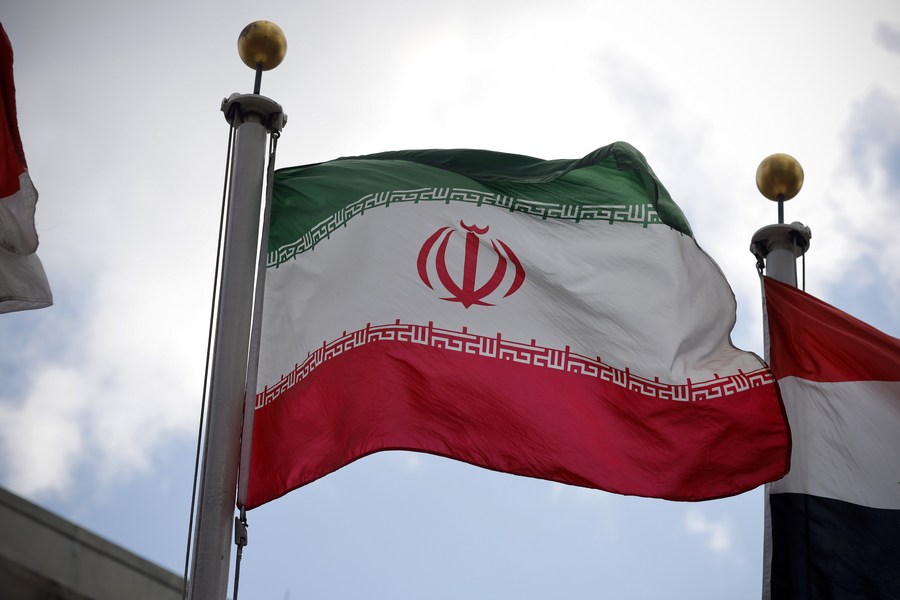
The men, identified as Edris Aali, Azad Shojaei, and Rasoul Ahmad-Rasoul, were hanged in a prison in the northwestern city of Urmia after being convicted of cooperating with Israel and importing equipment used in the assassination of Iranian figures, the report said.
Their executions followed full judicial proceedings and were upheld by Iran’s Supreme Court, it added.
Iran has executed several men on charges of spying for Mossad in recent months.
This decision, outlined in a public notice issued on June 24, 2025, aims to allow the RMB to review and enhance the current regulations governing mineral trading licenses.
The suspension is part of a broader initiative to improve service delivery and strengthen regulatory compliance across the mineral trading sector.
The RMB emphasized that this necessary measure will not affect the renewals and amendments of existing licenses, ensuring continuity for current license holders.
Supported by the Government of Ireland, the workshop was a collaborative effort between FAO, Rwanda’s Ministry of Agriculture and Animal Resources (MINAGRI), and the University College London Institute for Innovation & Public Purpose (IIPP).
This publication captures key insights from the workshop, highlighting Rwanda’s progress in areas such as sustainable farming, food security, and gender inclusion, while underscoring key problems that remain, particularly around malnutrition, climate impacts, and fragmented action.
Working in cross-sectoral groups, participants applied a range of tools to unpack the country’s agrifood challenges, helping to shape a national agrifood strategy that better reflects the complexity of Rwanda’s agrifood systems.
In terms of next steps, Rwanda’s existing innovation efforts, such as policy labs and circular economy pilots, were recognized as valuable opportunities to scale through structured learning and cross-sector coordination.
The workshop introduced participants to a range of methods, as well as institutional and policy tools, to improve agrifood systems transformation.
FAO and IIPP are using insights from the workshop to develop a handbook for facilitators supporting governments interested in improving the design and implementation of agrifood systems policies and plans.
The report is a recommended read for policymakers, development partners, academics, and other stakeholders involved in providing guidance to governments on the sustainable development of agrifood systems.
By rethinking conventional policy processes, policymakers can help drive change – ensuring better production, better nutrition, a better environment, and a better life for all.
For more insights into Rwanda’s approach to agrifood transformation, access the full report here: [Workshop Report on Agrifood Systems Transformation in Rwanda ->https://openknowledge.fao.org/items/e3f532dd-759c-480a-9b4b-9866aa5b5875]
Links: [Workshop Report on Training for Policymakers on Agrifood Systems Transformation->https://openknowledge.fao.org/items/e3f532dd-759c-480a-9b4b-9866aa5b5875]
Links: [Strategic Plan for the Transformation of Agriculture 2025-2030->chrome-extension://efaidnbmnnnibpcajpcglclefindmkaj/https://www.minagri.gov.rw/index.php?eID=dumpFile&t=f&f=121834&token=b03443f215e68c19e0523ae2cb91c140262bcaea]