The visit was confirmed through a cabinet communiqué on Thursday.
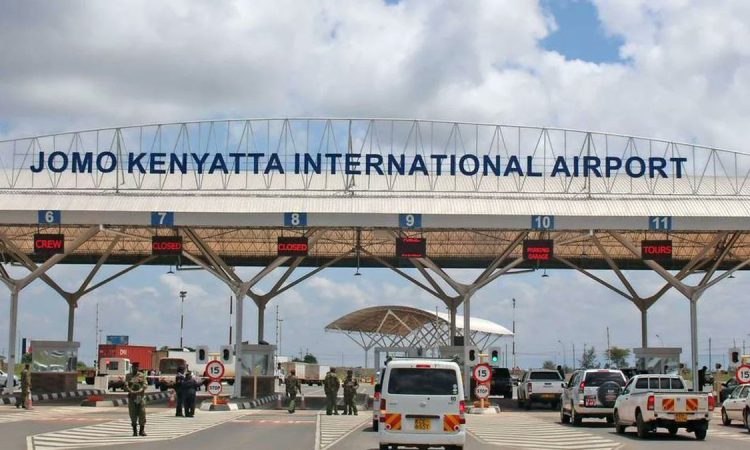
According to local news outlets in Senegal, the President will continue his East African tour with a visit to Nairobi, scheduled from October 19 to 21, at the invitation of Kenyan President William Ruto.
The leaders of both countries have continued to strengthen the relationship between Rwanda and Senegal.
President Kagame became the first Head of State to visit his Senegalese counterpart in May 2024, just a month after assuming office in April that year.
President Kagame has made several visits to Senegal, with the most recent one taking place from August 31 to September 1, 2025, when he attended the Africa Food Systems Forum.
The three roads, covering a total of 151 kilometers, are located in different districts across the country.
The official launch took place along the 73-kilometer Nyagatare–Rukomo road, which has already been in use for some time.
The other two are the Huye–Kitabi road (53 km) and the Rubengera–Gisiza road (25 km).
According to officials, the funds initially allocated for these road projects were efficiently managed, leading to a surplus that allowed the government to extend construction to other road sections and install street lighting along the 23-kilometer Rubengera–Gisiza stretch.
The inauguration event was attended by government officials, residents, and representatives of development partners who financed the projects, including the Arab Bank for Economic Development in Africa (BADEA) and other institutions such as The Saudi Fund for Development (SFD), Kuwait Fund for Arab Economic Development (KFAED) and the OPEC Fund for International Development (OFID).
Nyagatare District Mayor Stephen Gasana said the Rukomo–Nyagatare road has been a game changer for trade and transportation, especially by reducing travel time.
Jean de Dieu Uwihanganye, the Minister of State for Infrastructure, highlighted that the newly inaugurated roads are already contributing to economic growth by facilitating the movement of goods and people.
Uwihanganye also announced that plans are underway to install streetlights along the Nyagatare–Rukomo road, ensuring safer and more efficient transport.
He added that the total cost of constructing the three roads, together with other works financed from the remaining budget, exceeded Frw 200 billion.
Fahad Abdullah Aldossari, BADEA Board Chairman, said the bank remains committed to supporting Rwanda’s transport infrastructure, noting that out of the $300 million already provided to Rwanda, about $132 million has been directed toward road projects.
Northern Province Governor Maurice Mugabowagahunde emphasized that the newly opened roads will serve as key drivers of tourism and trade, pledging that the provincial leadership will continue investing in complementary infrastructure to maximize their economic potential.
His Royal Highness Oheneba Yaw Otchere, a prominent global entrepreneur and the Royal Ambassador to His Majesty Otumfuo Osei Tutu II, Asantehene (King of the Ashanti Kingdom), leads the Ashanti Kingdom Trust, which oversees the kingdom’s investments, business development projects, and diplomatic initiatives on behalf of the King.
During the visit, Prince Otchere, together with Ghana’s High Commissioner to Rwanda, Ernest Yaw Amporful, and the Ashanti delegation, engaged with several key Rwandan institutions, including the Rwanda Development Board (RDB), Rwanda Mining Board (RMB), Bank of Kigali, Kigali International Financial Center (KIFC), and the National Bank of Rwanda (BNR).
Prince Oheneba and his delegation also visited the Campaign Against the Genocide Museum, where they were inspired by the bravery of the Rwanda Patriotic Army and the nation’s remarkable post-genocide transformation, driven by the vision and transformational leadership of President Paul Kagame.
The delegation committed to continuing to advocate for investment and collaboration with Rwanda, noting that the country’s 30-year journey of resilience, reconciliation, and restoration is unmatched in Africa. Prince Oheneba described Rwanda’s success as an inspiring story that makes Ghana proud and sets an example for the continent.
Prince Oheneba also invited Rwandans to visit, invest, and collaborate with the Ashanti Kingdom and Ghana at large, promoting intra-African trade and exchange.
The visit culminated in the signing of a Memorandum of Understanding (MoU) between the Ashanti Kingdom Trust and RDB, outlining areas of common interest to guide collaboration.
The agreement aims to unlock business opportunities and explore private sector partnerships in mining, gold trading, and the construction of Africa’s Gold City in the Ashanti Kingdom, in collaboration with Rwandan-based companies and investors.
The two-day visit focused on exploring business opportunities in mineral trading, mining investments, and socio-economic development initiatives between Rwanda and the Ashanti Kingdom.
Both parties agreed to pursue a strategic long-term partnership to harness untapped resources in both countries and promote intra-African trade through innovative solutions, including AFREXIM Bank’s Pan-African Payment and Settlement System (PAPSS) for exchanged goods and services.
Prince Oheneba also highlighted the existing collaboration with their host, EPC Africa Group, guided by its vision of “Building a Prosperous and Self-Sustained African Community.”
Combined with the Ashanti Kingdom’s enduring legacy of unity, resilience, continuous innovation, and empowerment, this partnership aims to champion a new model of African cooperation and shared prosperity, rooted in self-reliance, mutual respect, and a collective drive toward continental transformation.
Before departing Rwanda, His Royal Highness and his delegation experienced the country’s remarkable progress in eco-tourism, visiting Nyandungu Eco Park and various key sites in Kigali.
The visit marks a significant step toward strengthening economic and cultural ties between Ghana and Rwanda, reflecting a shared vision for African-led partnerships and sustainable development.
Dr. Gasore made the remarks on Thursday, 9 October 2025, following a meeting with senators from the Committee on Foreign Affairs, Cooperation and Security, where strategies to reduce road accidents were also discussed.
“The construction is progressing well. Our target is to complete the airport by 2027 and have it operational by mid-2028,” Dr. Gasore said.
He added that once operational, the new airport will serve all major domestic and international flights, while Kanombe airport will be repurposed for other uses.
“Large passenger and cargo aircraft will no longer use the Kanombe facility. We will explore alternative ways to utilise it productively,” he said.
{{Road network to support Bugesera airport to start in 2026}}
Dr. Gasore also highlighted plans to build roads connecting the new airport to Kigali and other parts of the country, noting that at least three main routes are envisaged.
“These include a road linking Masaka to the airport, another connecting the southern part of Bugesera, and a major route from the Kicukiro bridge to the airport,” he said. While feasibility studies are complete, the minister did not disclose the construction budget, though he confirmed works are expected to begin in early 2026.
The new airport being constructed in a partnership with Qatar Airways, is designed to handle seven million passengers per year, with plans for a second phase to expand this to 14 million passengers annually by 2032.
According to the report released on Thursday, October 9, several categories recorded notable price increases during the month.
The “Food and non-alcoholic beverages” category rose by 4.2 percent on an annual basis and 1.3 percent month-on-month.
Prices for “Alcoholic beverages, tobacco, and narcotics” increased by 15 percent year-on-year and 1.6 percent compared to August.
Housing, water, electricity, gas, and other fuels rose by 4.1 percent year-on-year and 1.9 percent month-on-month, while transport prices increased by 8.6 percent annually and 1.7 percent monthly.
A sharp rise was also recorded in health, which surged by 71.1 percent year-on-year, remaining stable compared to the previous month.
Meanwhile, “Restaurants and hotels” saw a 17.7 percent annual increase, though prices slightly declined by 0.1 percent on a monthly basis.
The report shows that local products rose by 6.5 percent year-on-year and 1.3 percent month-on-month, while imported products increased by 9.5 percent annually and 1.5 percent monthly.
Prices of fresh products rose by 3.3 percent year-on-year and 1.8 percent month-on-month, while energy prices increased by 4.5 percent annually and 0.4 percent on a monthly basis.
The general index excluding fresh products and energy, often used to gauge underlying inflation trends, rose by 8.9 percent year-on-year and 1.3 percent month-on-month, reflecting persistent price pressures in non-volatile goods and services.
The deal on the “first phase” of a U.S.-backed peace plan, coming after intense negotiations in Egypt’s Sharm el-Sheikh mediated by Egypt, Qatar, Türkiye and the United States, outlines a phased Israeli withdrawal, while establishing mechanisms for prisoner exchanges and humanitarian aid delivery.
While both Gazans and Israelis are experiencing moments of emotional release, political divisions within Israel’s coalition government and Hamas’s demand for international guarantees have somehow threatened to undermine the implementation process.
Besides, the enormous task of rebuilding Gaza and determining its political future looms large, testing whether the deal can evolve from temporary ceasefire to lasting peace.
{{The path to a deal
}}
Both Israeli and Hamas’s officials have indicated that the ceasefire deal is set for Israeli government ratification. The Israeli side said the ceasefire will take effect within 24 hours after its security cabinet votes Thursday afternoon on the agreement in a meeting, whereas Hamas said the ceasefire will take effect immediately upon Israeli government approval.
According to Israel’s state-owned Kan TV, political resistance within Netanyahu’s coalition, including from far-right ministers Bezalel Smotrich and Itamar Ben-Gvir, threatens to complicate the voting process, but the deal will still secure majority support.
The deal establishes detailed reciprocal obligations. Senior Hamas official Osama Hamdan told Qatar’s Alaraby Television Network in an interview on Thursday that Israeli forces will withdraw from Gaza City, northern Gaza, as well as southern Gaza’s Rafah and Khan Younis, while five border crossings will reopen for humanitarian aid.
“Drone operations in the Gaza Strip’s airspace will cease during the prisoner release process,” which will involve “250 Palestinian prisoners serving life sentences and 1,700 other prisoners,” he added.
Informed Palestinian sources told Xinhua that Hamas has provided mediators with prisoner lists “according to agreed criteria,” awaiting final approval, and has begun relocating Israeli detainees to safe locations ahead of handover to the International Committee of the Red Cross.
The Israeli Public Broadcasting Corporation reported that three Israeli army divisions have started pulling out of Gaza City since Wednesday night in preparation for redeployment around Khan Younis.
The Israel Defense Forces confirmed Thursday that it has “begun operational preparations” for the first of a three-phase withdrawal from Gaza, adding that “preparations and combat protocols are underway to transition to adjusted deployment lines soon.”
However, Israeli Defense Minister Israel Katz also ordered the military to respond with “great force” to any potential threat or attack by Hamas in Gaza against Israeli forces.
According to an Israeli government spokeswoman, hostages would probably begin being released on Saturday or Sunday.
Hospitals in the Tel Aviv area, where the hostages are expected to arrive for medical checks and recovery, also said they are making preparations.
{{Voices from the ground
}}
In central Tel Aviv’s Hostages Square, family members of Israeli hostages embraced as reports spread of their loved ones’ imminent return. Einav Zangauker, mother of hostage Matan Zangauker, and Anat and Haggai Angrest, parents of soldier Matan Angrest, burst into tears of excitement in a video shared online.
“Matan and Matan are on their way home,” Zangauker said. “From now on, this square will be called the Square of Hope!”
In Gaza, news of the ceasefire triggered spontaneous celebrations amid the ruins. “I want to cry and dance at the same time,” Hussein al-Hindi, a 45-year-old displaced carpenter and father of three from the town of al-Zawaida in central Gaza, told Xinhua.
“For two years, we lived without sleep, listening only to explosions and the screams of the wounded,” said al-Hindi, who now lives in a makeshift tent. “I still can’t believe the war has truly stopped … I wake up every morning expecting the airstrikes to begin again. All we want now is to rebuild our homes, send our children back to school, and live normal lives.”
Yet for the many more Gazans traumatized by the devastating conflict, the joy hearing the news is just a flash in the pan. Abdul Majeed Haniyeh, a 52-year-old man from Deir al-Balah, who lost his teenage son in an Israeli airstrike last year, wept as he told Xinhua: “Nothing can compensate for the loss of my child, but at least no other fathers will bury their sons tonight.”
Many Gazans have expressed cautious optimism, aware that previous truces have collapsed and that rebuilding their shattered lives will take years.
“The Gaza we knew no longer exists,” Abed Dahman, a displaced father of five from Khan Younis, told Xinhua outside his tent. “We have to start from zero … What we need now is not just promises but real reconstruction and a future for our children.”
Despite the deal, 11 people were killed and 49 others injured by Israeli assaults across Gaza over the past 24 hours, including 13 wounded while seeking aid, Gaza-based health authorities said Thursday.
The conflict, erupted on Oct. 7, 2023 when a large-scale Hamas attack on southern Israel killed roughly 1,200 people and took about 250 hostages, has destroyed about 80 percent of Gaza’s infrastructure and displaced nearly 2 million residents, apart from creating human casualties, according to UN estimates.
{{Guarded optimism from Middle East
}}
The ceasefire deal has drawn widespread support from regional countries and organizations, which see it as a potential opening for broader political progress.
Hamdan described the deal as “the fruit of the steadfastness and sacrifices of the Palestinian people over two years of ongoing Israeli aggression,” while Palestinian President Mahmoud Abbas called for the deal to become “a prelude to reaching a permanent political solution.”
In a press statement, Abbas emphasized the need to establish an independent Palestinian state based on the 1967 borders with East Jerusalem as its capital, stressing that “sovereignty over Gaza belongs to the State of Palestine.” He also outlined key requirements for the deal’s success: immediate implementation, release of all hostages and prisoners, unrestricted humanitarian access, and a clear reconstruction process.
Jordan and Iraq emphasized the importance of full commitment to the deal and the urgency of addressing Gaza’s humanitarian crisis, while Turkish President Recep Tayyip Erdogan pledged to “closely monitor the strict implementation of the agreement,” and continue contributing to the process as well as advocating for Palestinian statehood.
Egypt, Lebanon, Syria and Oman also endorsed the deal. Egypt called it “a pivotal moment in the war of Gaza,” Lebanese President Joseph Aoun hoped the agreement “will serve as a first step towards a permanent ceasefire,” whereas the latter two highlighted the deal’s potential to facilitate aid delivery and regional stability.
The Arab League also welcomed the breakthrough, with Secretary-General Ahmed Aboul-Gheit calling it “good news for the people in Gaza after two years of bloodshed.”
Commissioner-General of the United Nations Relief and Works Agency for Palestine Refugees (UNRWA) Philippe Lazzarini on Thursday called the deal “a respite” for Gaza’s traumatized population.
The UNRWA has three months of supplies ready for immediate distribution, Lazzarini said in a press statement, urging the international community to support the agency in carrying out its work and assisting those in need during this critical period ahead.
However, analysts have cautioned that the deal represents only a first step. Gaza-based Palestinian political analyst Hussam al-Dajani told Xinhua that the deal, although marking an important step toward ending the war, “does not mean the conflict is over.”
“Implementing the deal on the ground requires concrete international guarantees to ensure both sides’ commitment,” al-Dajani said. “Past experiences show that without monitoring, truces collapse quickly.”
Gaza now faces two simultaneous challenges: rebuilding its devastated infrastructure and reorganizing its internal political situation, he said. “Ending the war does not end the suffering … Gaza needs more than words; it needs a sustained international effort to ensure this tragedy is not repeated.”
Yemeni political analyst Yasin Al-Tamimi said while the deal marks a diplomatic breakthrough, “the possibility of continued confrontation remains … as the political and security dynamics that fueled this conflict are far from resolved.”
“A genuine peace process requires a just solution to the Palestinian issue … Without this, any U.S. initiative is bound to fail,” Al-Tamimi told Xinhua.
Nabil al-Bukiri, director of the Arab Forum for Studies and Development, offered a more skeptical view, describing the U.S. role in the deal as more of political posturing and lacking sincerity and substance.
“Without addressing the root of the conflict — the occupation and denial of Palestinian rights,” he said, “talk of comprehensive peace remains an illusion.”
The commitment was made on Thursday, October 9, in Brussels, Belgium, following bilateral talks between President Paul Kagame and European Commission President Ursula von der Leyen on the sidelines of the Global Gateway Forum 2025.
President Kagame and von der Leyen were also joined by Nadia Calviño, President of the European Investment Bank (EIB), and BioNTech CEO Uğur Şahin to unveil the new funding package, which will support the next phase of vaccine production and innovation.
The EU’s Global Gateway strategy aims to build sustainable partnerships through investments in digital, energy, transport, and health infrastructure.
The new funding builds on earlier EU support of over €93 million towards BioNTech’s Kigali facility, which was inaugurated in 2023 as the company’s first mRNA manufacturing site in Africa.
The project has been hailed as a major step towards ensuring equitable access to vaccines and strengthening Africa’s capacity to respond to future health emergencies.
With the additional €95 million support, Rwanda is poised to scale up vaccine manufacturing and accelerate progress towards its goal of becoming a regional centre for pharmaceutical research, production, and distribution.
{{Support for peace efforts in the Great Lakes region
}}
Meanwhile, following her meeting with President Kagame, von der Leyen took to X to welcome the Washington-brokered pact between Rwanda and the Democratic Republic of Congo (DRC), aimed at easing tensions in the eastern region of the DRC.
She noted that the deal, facilitated by U.S. President Donald Trump, represents an important step towards lasting stability, adding that the EU stands ready to support the peace process “because it will pave the way for regional integration and investment.”
At the forum, Tshisekedi accused Rwanda of supporting the M23 rebel group, a claim Kigali has repeatedly denied. He called on Rwanda to halt the escalation of violence in eastern DRC and extended a public hand to President Paul Kagame, urging cooperation to resolve the crisis.
Tshisekedi insisted that the DRC had never been belligerent towards its neighbours, despite multiple reports of threats to invade Rwanda, bombard Kigali, and overthrow its leadership.
In a hard-hitting post on social media, Nyombayire highlighted contradictions in Tshisekedi’s narrative. She criticised him for presenting himself as a peace-loving leader while repeatedly threatening Rwanda and claiming victimhood in a conflict he has failed to resolve.
She outlined what she described as the true nature of Tshisekedi’s so-called “arm of peace.” Nyombayire alleged that he had armed and supported the FDLR, a genocidal militia formed by perpetrators of the 1994 Genocide against the Tutsi, and integrated them into the national army.
She further accused him of backing militias that persecute and kill civilians based on ethnicity. According to Nyombayire, he also denied the Congolese identity of the M23 to avoid responsibility for resolving the crisis.
Nyombayire added that Tshisekedi sought international assistance while simultaneously undermining signs of progress. She noted that he hired mercenaries to fight his wars, yet still failed to achieve results. Finally, she said he scapegoated Rwanda for the DRC’s failures while leaders enriched themselves at the expense of ordinary citizens.
President Kagame also appeared to dismiss Tshisekedi’s claims, calling them “noise of an empty drum” and urging the international community to ignore them.
“If one makes an issue of noise of an empty drum, they also have a problem! Better to let it pass or walk away from it!!!” President Kagame wrote on X the following remarks by the DRC president.
Citing President Kagame, Nyombayire wrote: “There is no use arguing with those who have repeated their lies long enough; they have come to believe them. There are no lessons Rwanda needs to be taught about the meaning of peace; those of us who have fought for peace know its price.”
The exchanges come amid ongoing tensions between Rwanda and the DRC over the M23 rebel group, which says it represents marginalised Congolese Tutsi and Banyamulenge communities. Rwanda continues to deny supporting the group, pointing instead to the DRC’s security lapses and involvement with armed militias, including the FDLR.
Despite multiple mediation efforts, including a peace deal signed in Washington and dialogue facilitated by Qatar, Rwanda has criticised the DRC for obstructing agreements and lacking the political will to ensure lasting peace.
“If one makes an issue of noise of an empty drum, they also have a problem! Better to let it pass or walk away from it!!!” President Kagame wrote on X following remarks by DRC President Félix Tshisekedi at the Global Gateway Forum 2025 in Brussels on Thursday, October 9, 2025.
At the forum, which was also attended by President Kagame, Tshisekedi accused Rwanda of supporting the M23 rebel group, a claim Rwanda has repeatedly denied.
He called on Rwanda to give the order for the M23 troops, which he claimed were backed by Rwanda, to halt the escalation in eastern DRC.
Tshisekedi, while calling for peace in the eastern DRC, also claimed that his country has never been belligerent towards its neighbours, despite his repeated threats to invade Rwanda, bombard Kigali, and overthrow Rwanda’s leadership, threats that can be validated through multiple pieces of evidence.
Meanwhile, Rwanda’s Minister of Foreign Affairs, Olivier Nduhungirehe, also swiftly responded to Tshisekedi’s claims, describing them as false and misleading.
“No, you are wrong on all counts. The only person who can stop this escalation is President Tshisekedi, and HE ALONE,” Nduhungirehe said, adding that Tshisekedi himself must cease his belligerent attitude, halt threats against Rwanda, and stop supporting armed militias, including the FDLR genocidaires and Wazalendo groups.
The Minister further condemned the DRC president for deploying foreign mercenaries and using international platforms for political manoeuvring, describing Tshisekedi’s statements at the Forum as a “ridiculous political farce.”
Diplomatic relations between Rwanda and the DRC have been tense since the resurgence of the M23 rebel group in 2021, which identifies as representing marginalised Congolese Tutsi and Banyamulenge communities.
Kigali has repeatedly denied allegations of supporting the M23, instead pointing to the DRC’s own security lapses and its involvement with armed militias, including the FDLR, a group formed by perpetrators of the 1994 Genocide against the Tutsi.
Despite multiple mediation efforts, including a peace deal in Washington and dialogue facilitated by Qatar, Rwanda has criticised the DRC for obstructing agreements and lacking the political will to ensure lasting peace in the region.
This includes the recent last-minute refusal to sign the Regional Economic Integration Framework, an agreement expected to mark a major step forward in bilateral and regional cooperation following months of U.S.-mediated negotiations.