The civilian sites included 7,943 residential homes, 1,617 commercial and service centers, 32 medical and pharmaceutical facilities, 65 schools and educational institutions, 13 Red Crescent buildings, and several energy supply facilities, Iravani told the press in a statement.
“They are deliberately and indiscriminately targeting civilians and civilian infrastructure across my country. They show no respect for international law and no restraint in committing these crimes,” he said.
“Densely populated residential areas and critical civilian infrastructure are deliberately targeted,” he said, adding that the figures continue to rise as the U.S.-Israeli military attacks continue.
Iravani listed several instances in which civilian targets were attacked, including heavy strikes on fuel storage facilities in Tehran and other cities on Saturday night, releasing large quantities of hazardous and toxic pollutants into the atmosphere.
The explosions caused severe air pollution and serious health risks for civilians, especially children, women, the elderly, and those with critical health conditions, he said, citing the Iranian Red Crescent Society.
“These heinous attacks also violate international environmental obligations, including those under the United Nations Framework Convention on Climate Change and the Convention on Biological Diversity,” he said.
Iravani noted that other instances included attacks on Mehrabad Airport in Tehran early Saturday morning, destroying or severely damaging several civilian aircraft and airport facilities, and attacks on a freshwater desalination plant on Qeshm Island in Hormozgan province, disrupting water supplies to 30 villages.
He also said that in the early hours of Sunday, Israel carried out “a deliberate terrorist attack” against the Ramada Hotel in Beirut, Lebanon, killing four Iranian diplomats. “The targeted killing of diplomats on the territory of another sovereign State is a grave terrorist act, a war crime, and a flagrant violation of international law.”
“The international community must act now to stop this bloody war against the Iranian people. We will take all necessary measures to defend our people, our territory, and our independence,” he said.
Iran has sadi that more than 1,300 civilians have been killed and 9,669 civilian sites destroyed in Iran in the military strikes launched by the United States and Israel since February 28.
The conflict has triggered large-scale displacement across the country. About 759,300 people have been registered as displaced, according to government data.
Authorities said 122,600 displaced people are currently staying in 580 shelters set up across various regions to house families forced to flee their homes amid the continuing hostilities.
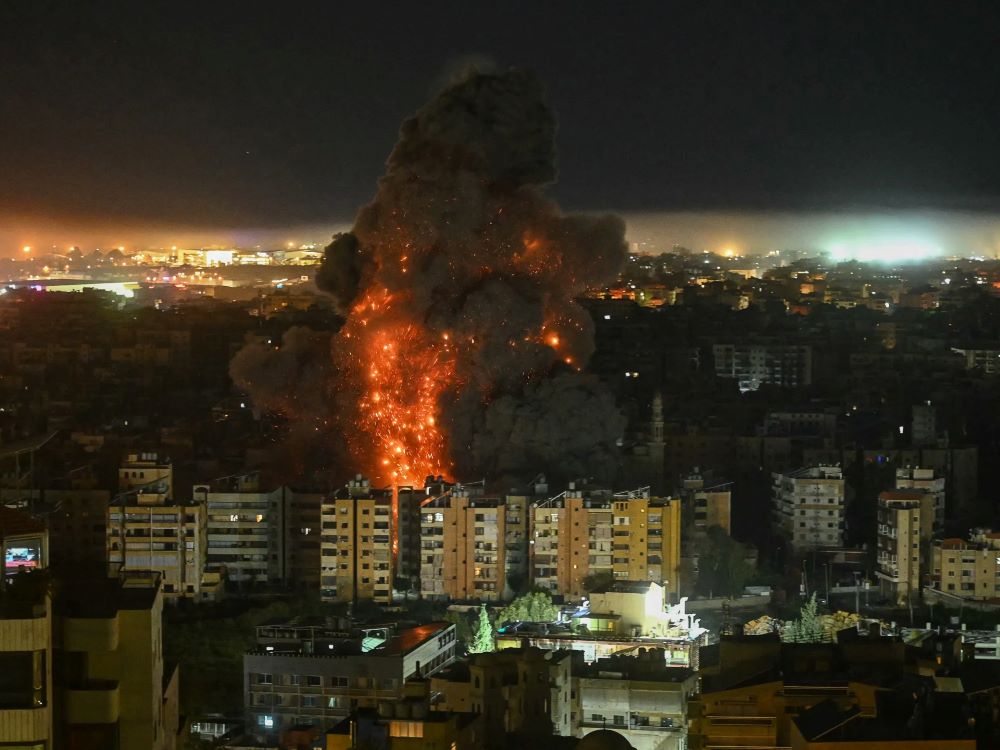
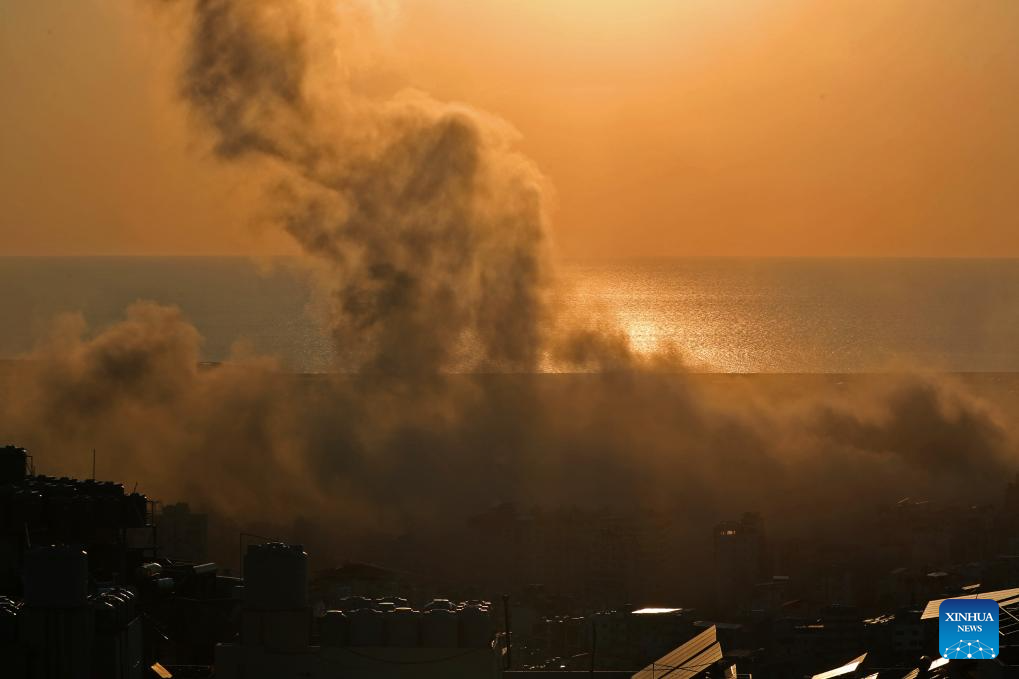
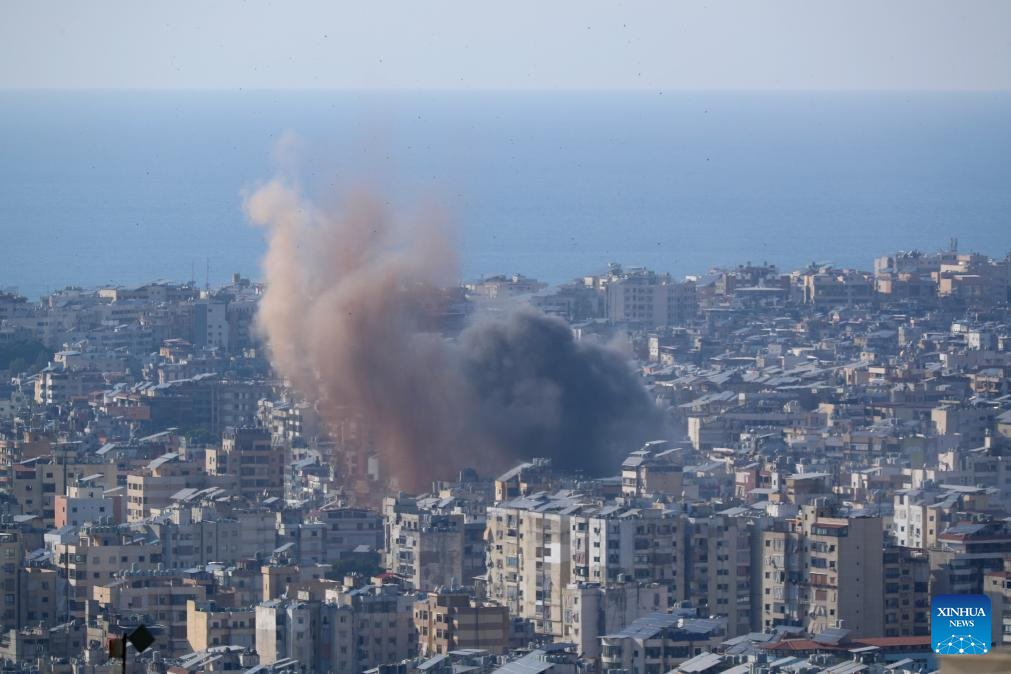
Meanwhile, Israel carried out three airstrikes on Beirut’s southern suburbs on Tuesday afternoon, Lebanon’s National News Agency reported, and continued strikes on several areas in southern Lebanon.
Hezbollah said it launched rockets from Lebanon toward Israel early on March 2 for the first time since a ceasefire was declared on Nov. 27, 2024. The move prompted the Lebanese government to ban the group’s security and military activities, limiting it to political work and requiring it to hand over its weapons.
The Israeli military said it had launched what it described as an “offensive military campaign” against Hezbollah, carrying out heavy airstrikes across multiple Lebanese areas and conducting ground incursions near the border. It also warned residents to evacuate areas south of the Litani River and Beirut’s southern suburbs.
Smoke rises following an Israeli airstrike in Beirut’s southern suburbs, Lebanon, on March 10, 2026. The death toll from ongoing Israeli attacks on Lebanon has risen to 570, with 1,444 others wounded since the escalation began on March 2, figures released on Tuesday by the Disaster Risk Management Unit at the Lebanese Council of Ministers showed. Smoke rises following an Israeli airstrike in Beirut’s southern suburbs, Lebanon, on March 10, 2026. The death toll from ongoing Israeli attacks on Lebanon has risen to 570, with 1,444 others wounded since the escalation began on March 2, figures released on Tuesday by the Disaster Risk Management Unit at the Lebanese Council of Ministers showed.
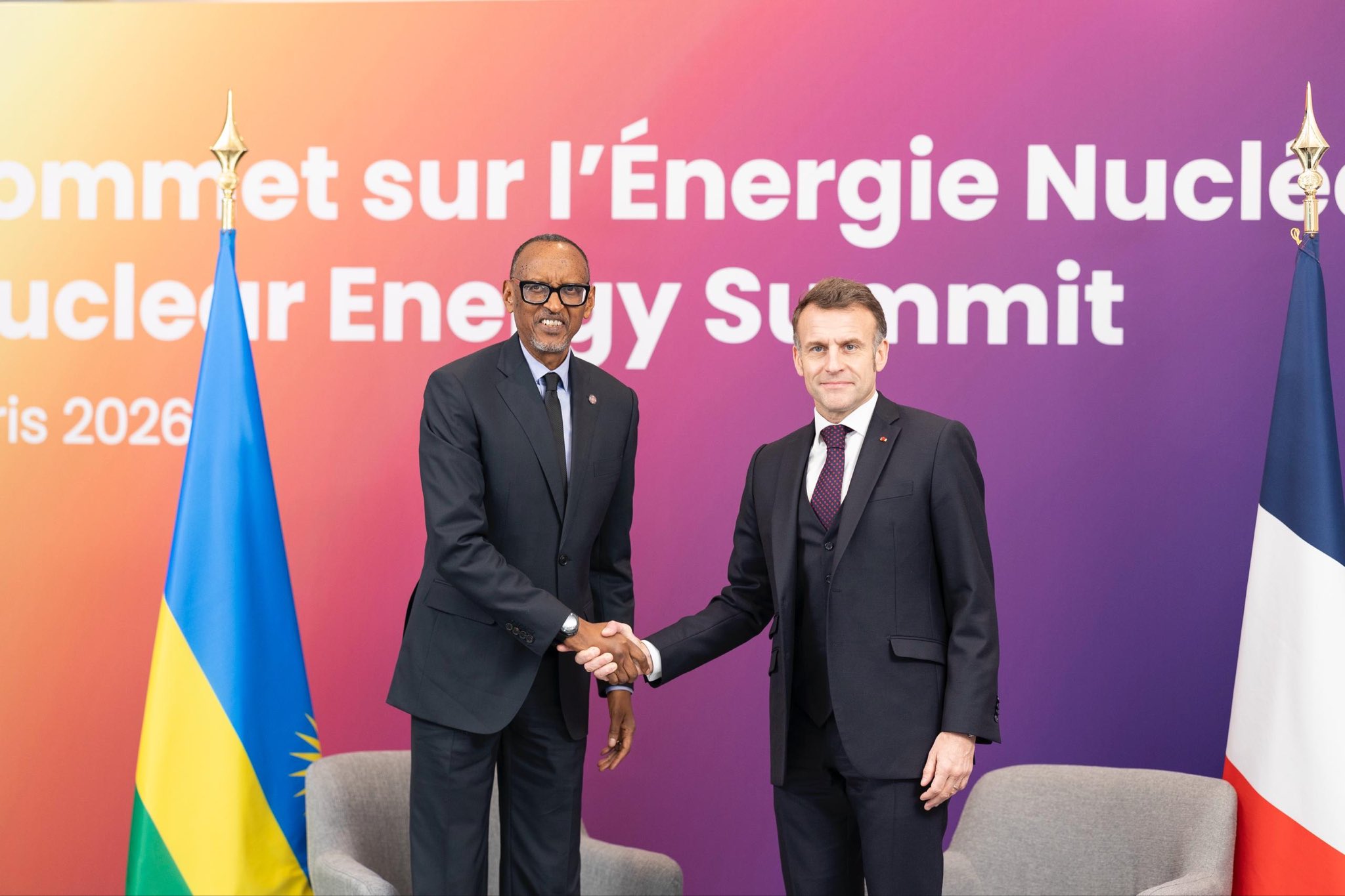
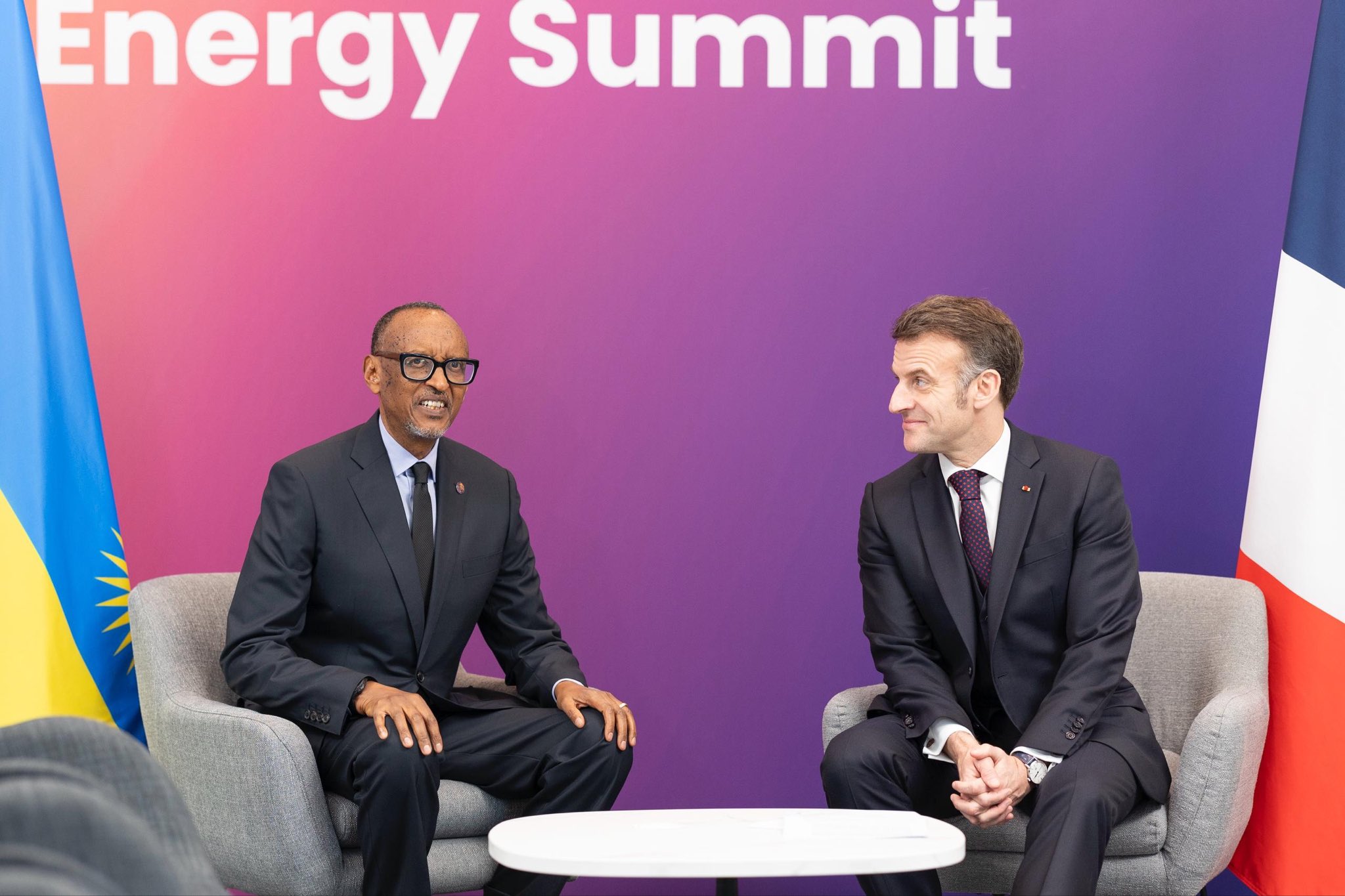
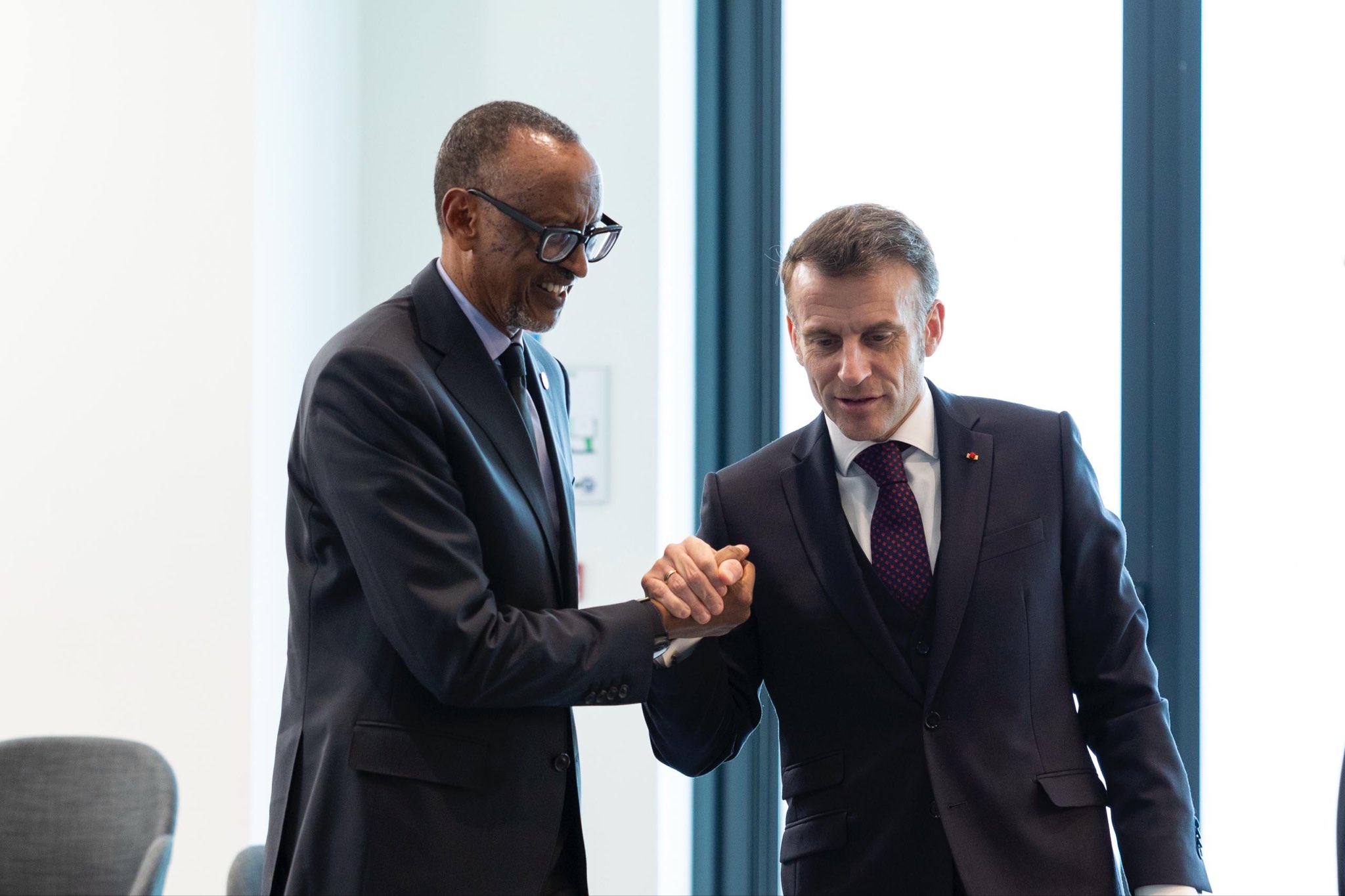
A brief statement released by the Office of the President indicated that the leaders discussed the strong and productive bilateral relations between Rwanda and France, as well as the security situation in the region, emphasising the need for sustained efforts to address its root causes.
The meeting comes against the backdrop of ongoing efforts to resolve the conflict in eastern Democratic Republic of the Congo, with Rwanda insisting that addressing the root causes is crucial to ending the decades-long conflict.
Meanwhile, the high-level summit in Paris brought together heads of state, government leaders, international organisations, financial institutions, nuclear industry representatives, and energy experts to discuss the future of civil nuclear energy. President Kagame attended the summit alongside a delegation from the Rwanda Atomic Energy Board (RAEB).
During his address at the summit, President Kagame reaffirmed Rwanda’s commitment to developing nuclear energy, describing it as a key pillar for powering the country’s industrial growth while meeting climate responsibilities.
He highlighted that Rwanda’s long-term ambition to become a high-income country by 2050 hinges on having a reliable and abundant electricity supply.
“Nuclear energy will play a central role in diversifying our energy mix and providing the stability needed for sustained economic transformation,” Kagame said.
President Kagame noted that nuclear power offers Rwanda a dependable source of electricity that can support industrial expansion while helping reduce carbon emissions.
“We have decided to make nuclear central to our strategy,” President Kagame said. “It will diversify our energy mix while providing the stability required for industrial growth and long-term transformation.”
President Paul Kagame and his French counterpart Emmanuel Macron met on the sidelines of the Nuclear Energy Summit in Paris on Tuesday afternoon.The two leaders discussed the strong and productive bilateral relations between Rwanda and France, as well as the security situation in the region.
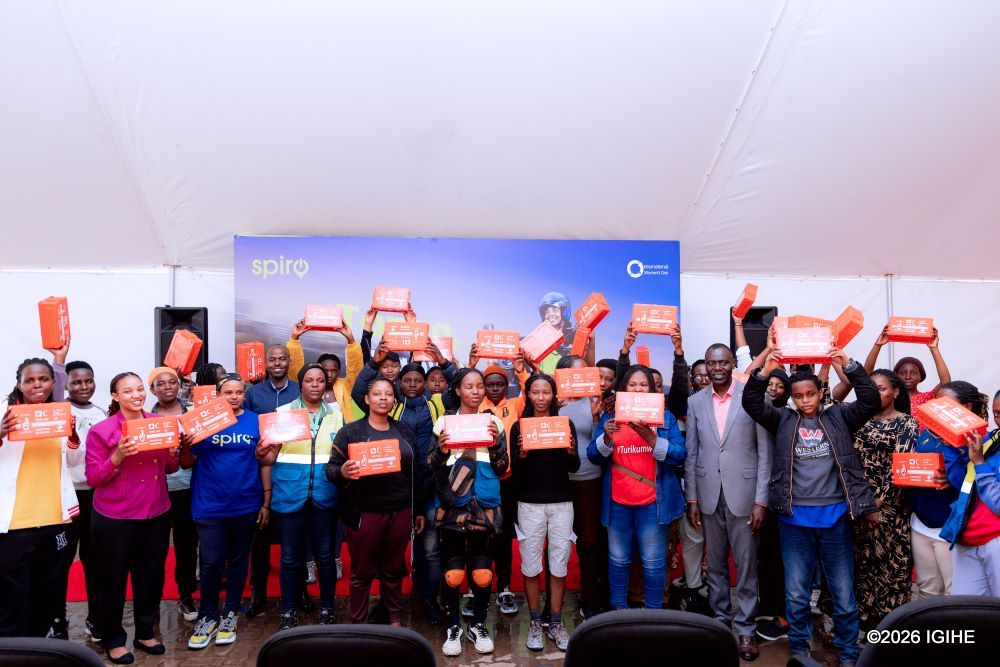
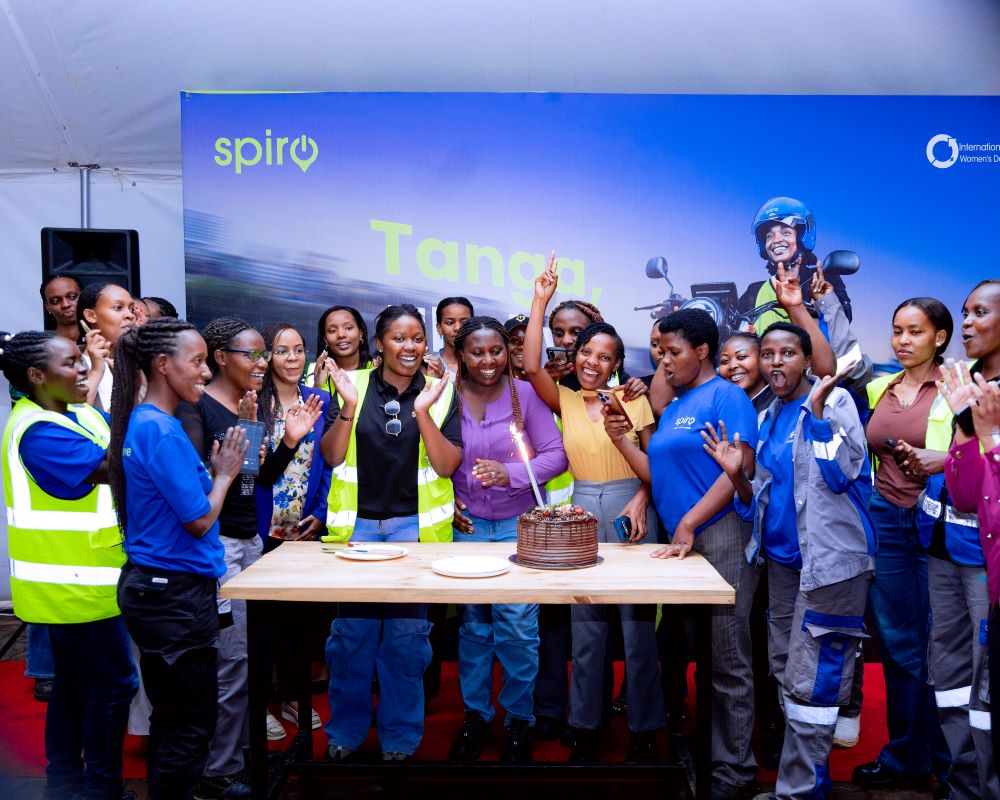
The celebration took place on March 9, 2026, at the company’s headquarters and brought together Spiro staff and motorcycle taxi operators, with a special focus on female riders who use Spiro motorcycles.
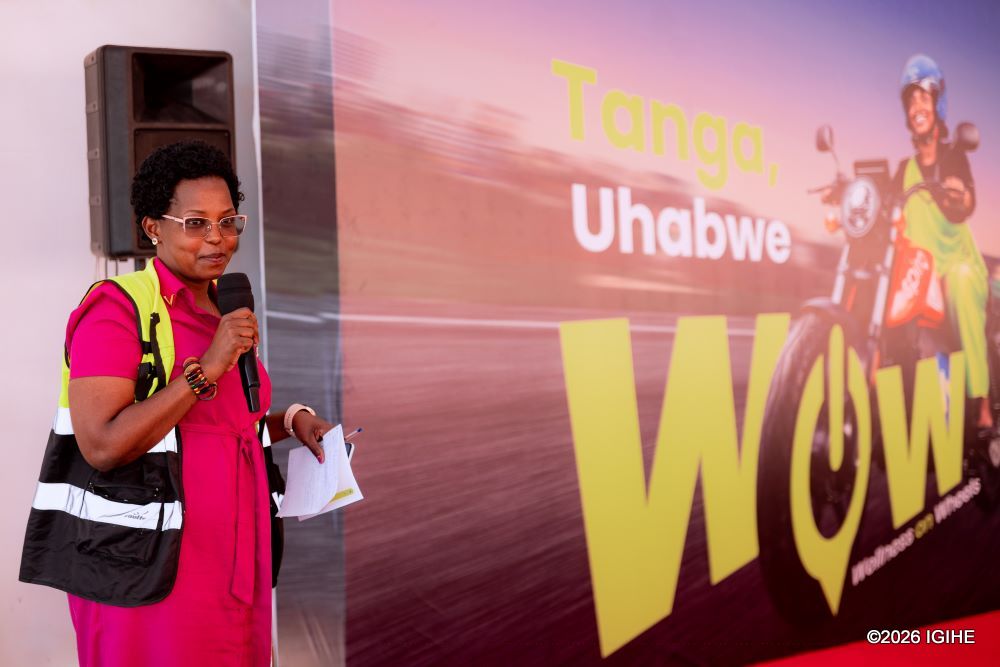
The company’s Senior Human Resources Officer, Dengeri Annet, said the firm is encouraged by the progress made so far, noting that the number of women using Spiro motorcycles continues to rise.
“While we celebrate Women’s Day today, we are also proud of the progress we have made, with more than 50 women now riding Spiro motorcycles,” she said. “Our goal is to continue increasing that number.”
She urged female riders to serve as role models by maintaining responsible conduct on the road, saying their professionalism could encourage more women to join the motorcycle taxi profession, a field traditionally dominated by men.
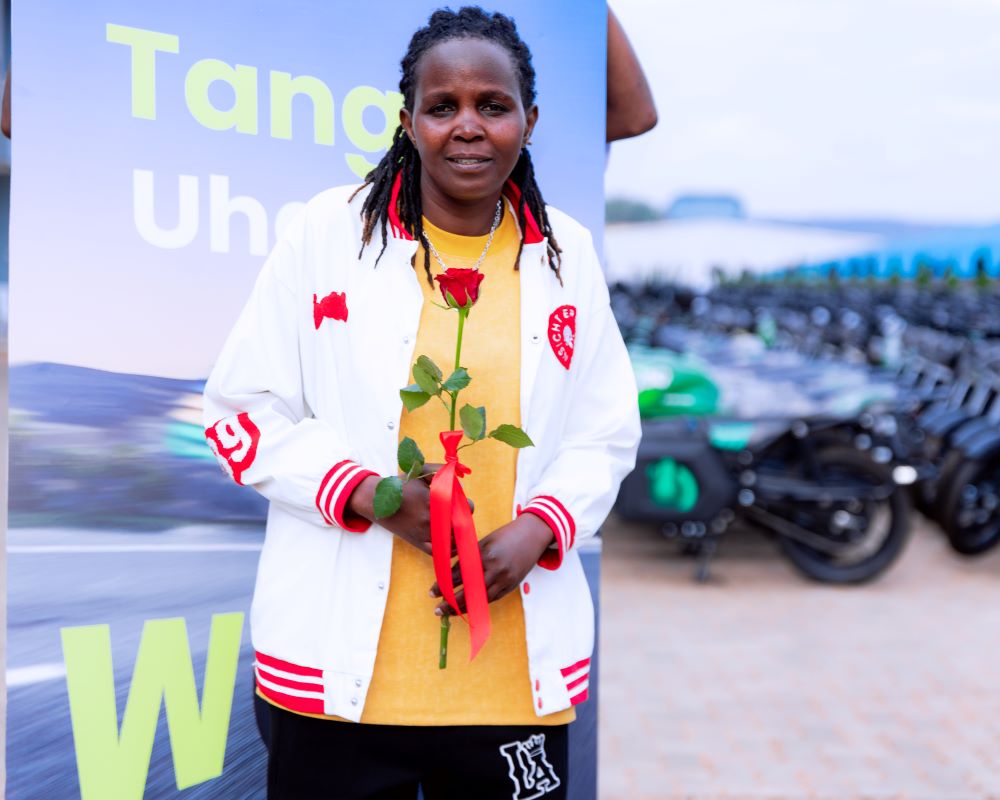
One of Spiro’s clients, Dusengimana Blanche, who has worked as a moto taxi rider for three years, said she chose Spiro motorcycles because they are more affordable and supported by financing options and after-sales services provided by the company.
“I had a motorcycle driving license for a long time but lacked the financial means to buy one,” she said. “Later, I approached Spiro and they helped me acquire a motorcycle. Now I work independently and no longer rely on a salary. On a good day, I can earn at least 20,000 Rwandan francs.”
Dusengimana said some women still hesitate to join the motorcycle taxi profession due to a lack of confidence, but stressed that this mindset should change, adding that women are equally capable of doing the work.
“They should stop thinking they have to wait for opportunities to be handed to them. That mindset is outdated,” she said.
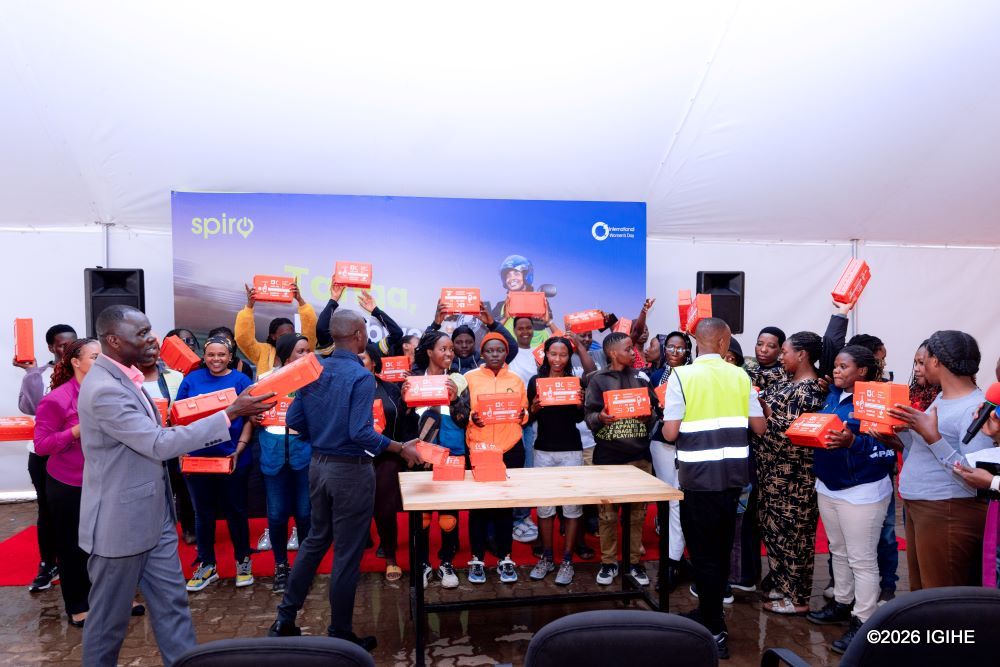
During the event, motorcycle riders received first-aid kits to help them respond to accidents and other emergencies involving them or their passengers.
Spiro began operations in Rwanda in 2023 and currently has 35 percent women within its workforce, including employees and female motorcycle riders who use its electric bikes.
In recent years, the company has also been ranked among Africa’s top 100 companies, recognised for its exceptional contributions to the continent’s development.
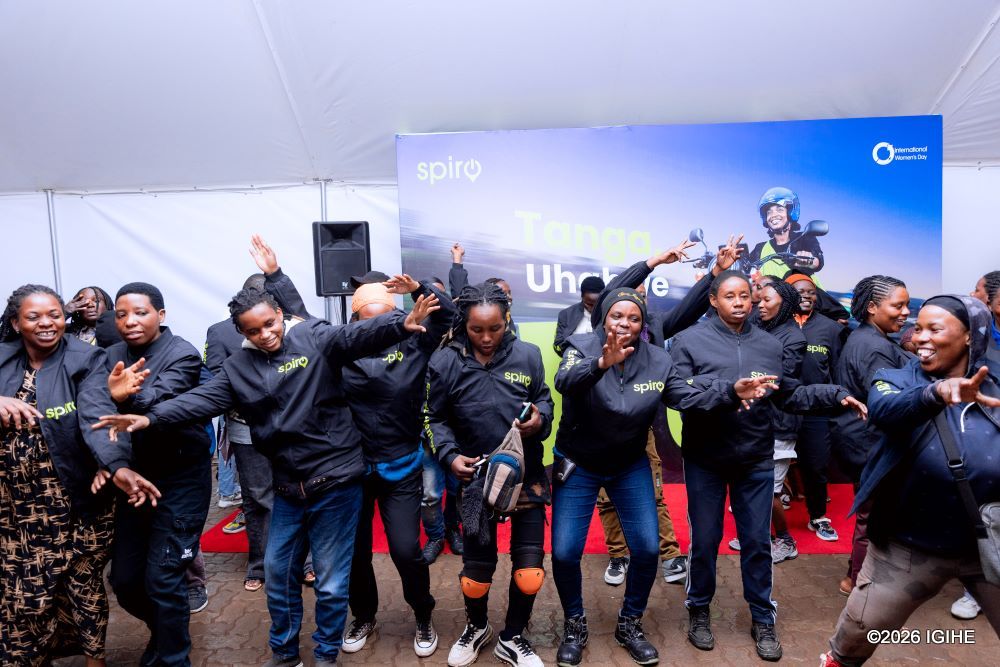
The company’s Senior Human Resources Officer, Dengeri Annet, said the firm is encouraged by the progress made so far, noting that the number of women using Spiro motorcycles continues to rise.Women motorcycle riders lauded Spiro for its continued support, highlighting the role the company plays in empowering them.Employees and clients of Spiro came together to mark International Women’s Day, celebrating the company’s ongoing efforts to empower women, particularly those working as motorcycle taxi riders.Women motorcycle riders celebrated the progress they have achieved.Dusengimana Blanche, a Spiro motorcycle rider, said she can earn up to 20,000 Rwandan francs on a good day.
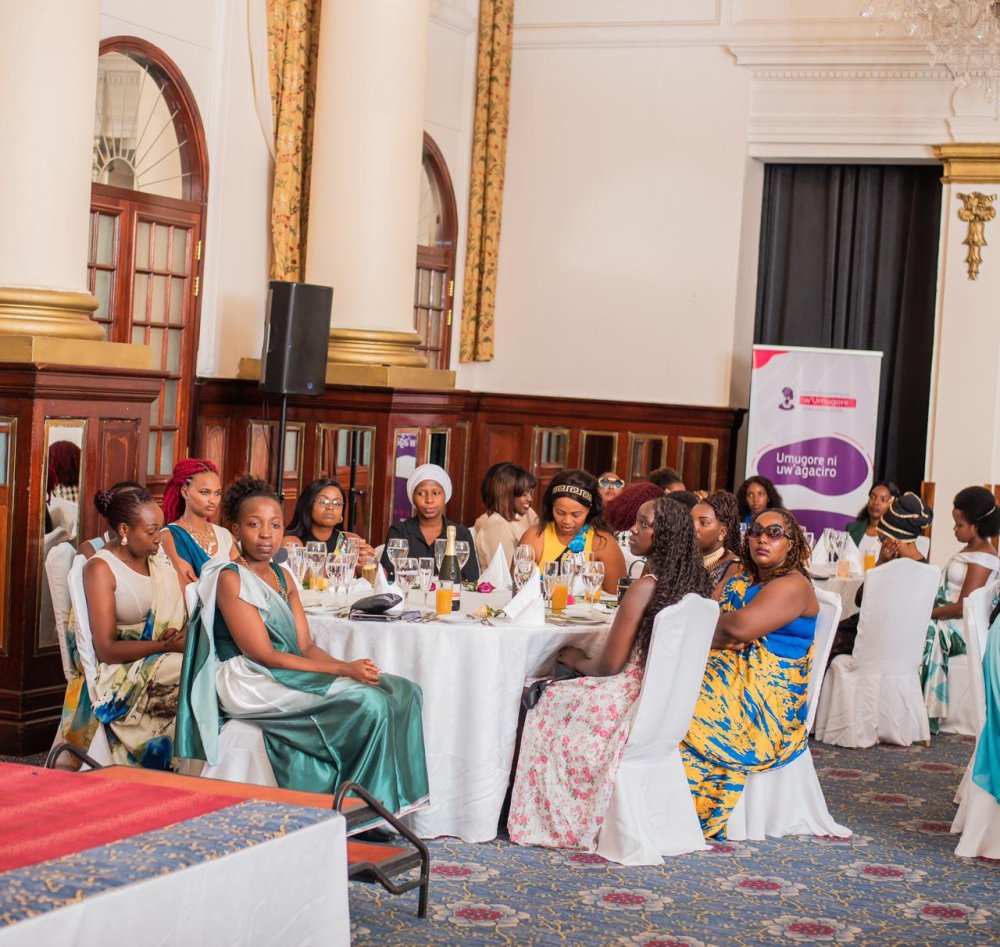
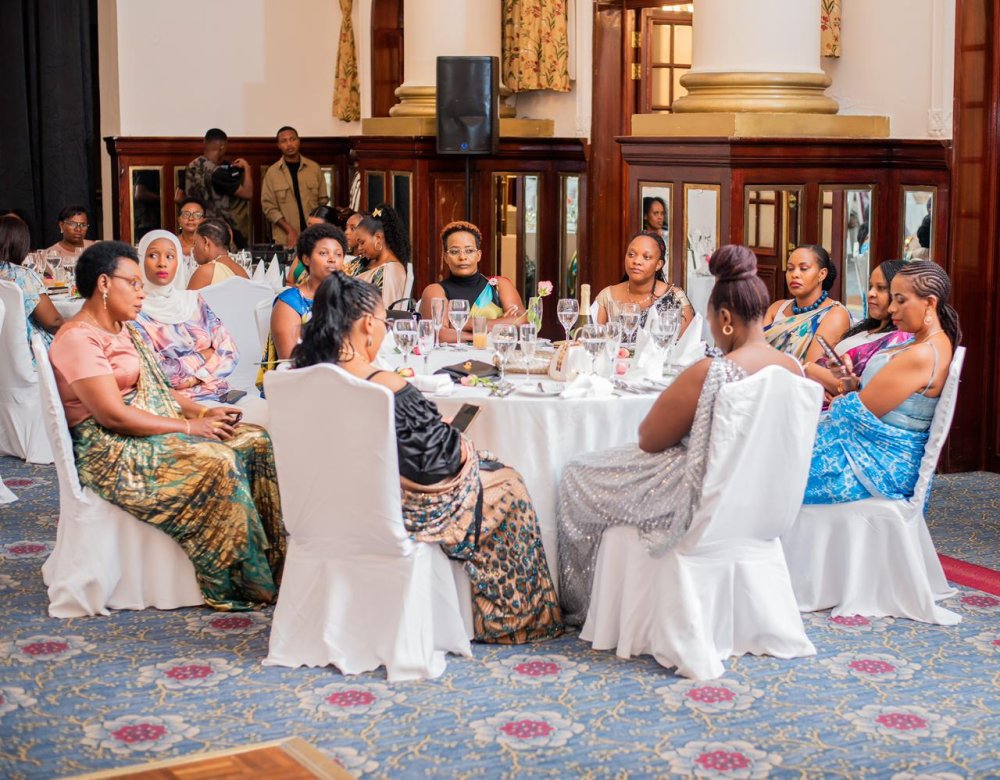
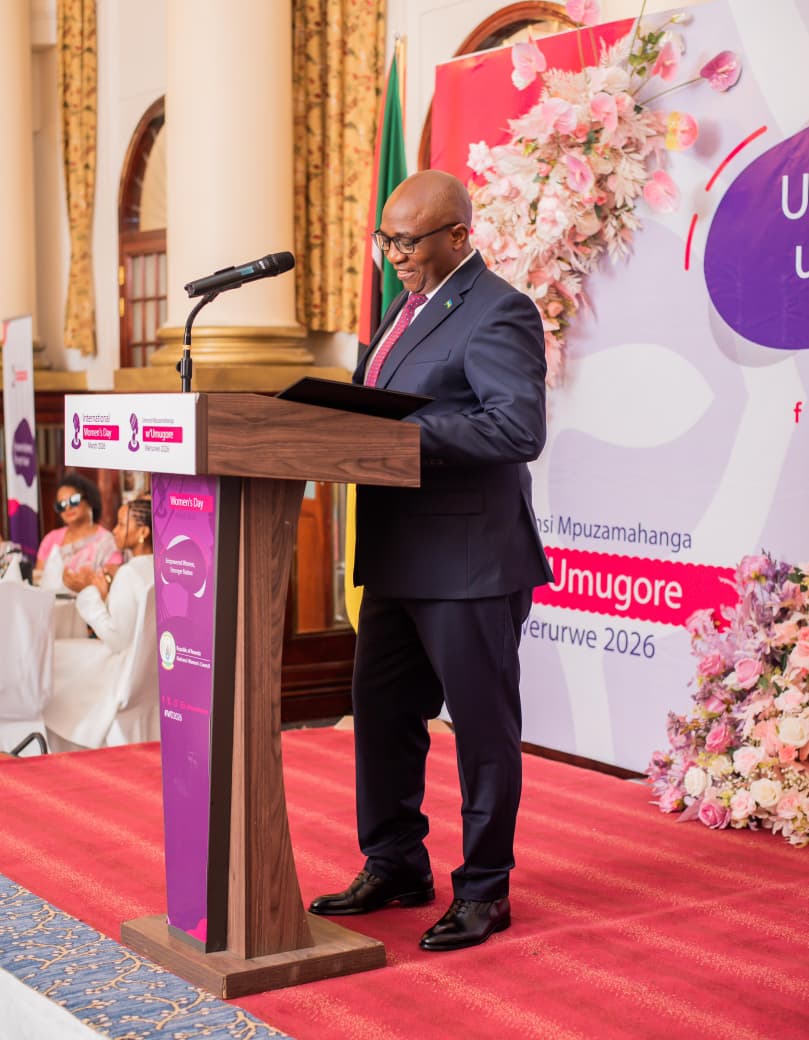
The event brough together over 120 people, including Kenneth Viagem Marizane, the Minister of State in the Ministry of Labor, Gender, and Social Affairs; Dr. Anabela Inguane, who represented the President of the Maputo City Council; and Rwanda’s Ambassador to Mozambique, Col (Rtd) Donat Ndamage.
Sangwa Aline, the Commissioner responsible for women’s development within the Rwandan community in Mozambique, emphasized that celebrating this day reaffirms the value women hold in the country’s development.
“Let us make the most of the opportunities granted to us by our country, build our self-confidence, and empower ourselves,” she stated.
Ambassador Col (Rtd) Donat Ndamage underscored that Rwandans have a duty to continue developing a nation that prioritizes gender equality, where women and girls play a full and active role in the country’s social, economic, and political life.
He remarked, “We must continue to build a country marked by equality, justice, and sustainable development, where women and girls are fully involved in the governance and life of the country. Women, do not hesitate, you are capable. In partnerships, you are no longer merely helpers.”
Ambassador Ndamage further stated, “Women have a significant role in the governance of the country. In the National Assembly, 63% are women, 28% of local government leaders are women, and 15% are deputy leaders of local governments. Although these numbers remain low, there is hope that they will continue to rise.”
He also expressed gratitude to President Paul Kagame and President Francisco Daniel Chapo of Mozambique for their continuous efforts in promoting women’s rights, gender equality, justice, and their inclusion in decision-making positions, reiterating that the citizens of both countries are one family.
Kenneth Viagem Marizane praised Rwandan women in Mozambique, saying, “Rwandan women are hardworking, intelligent, ethical, and truly beautiful.”
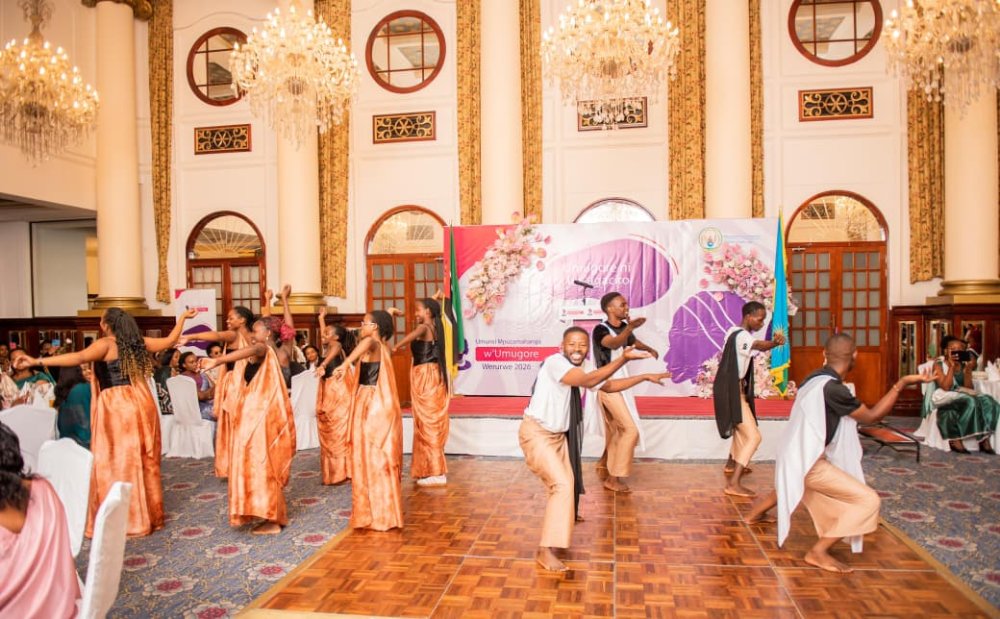
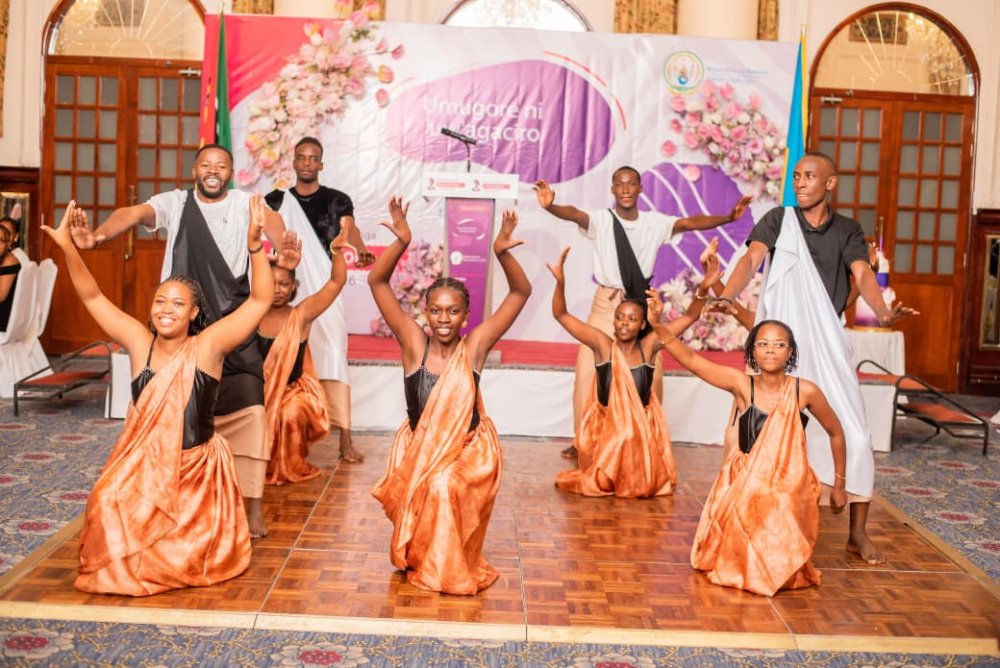
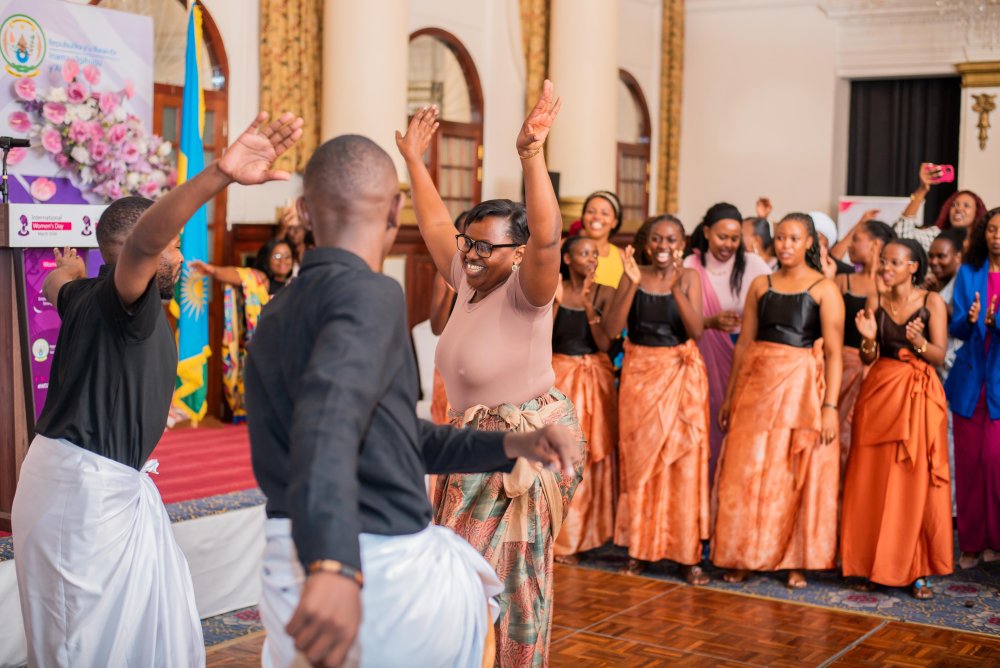
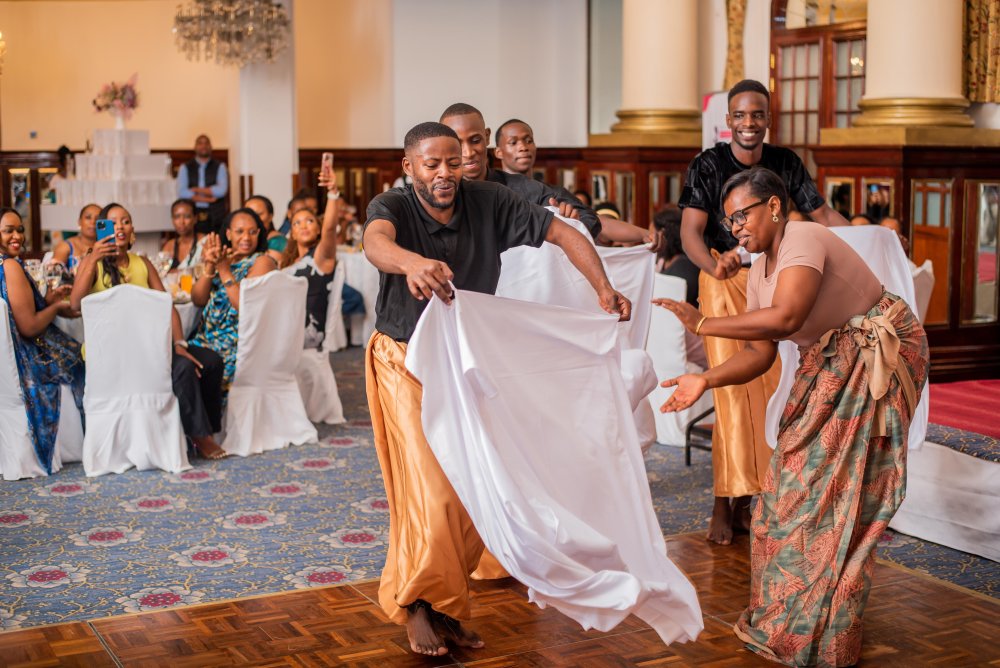
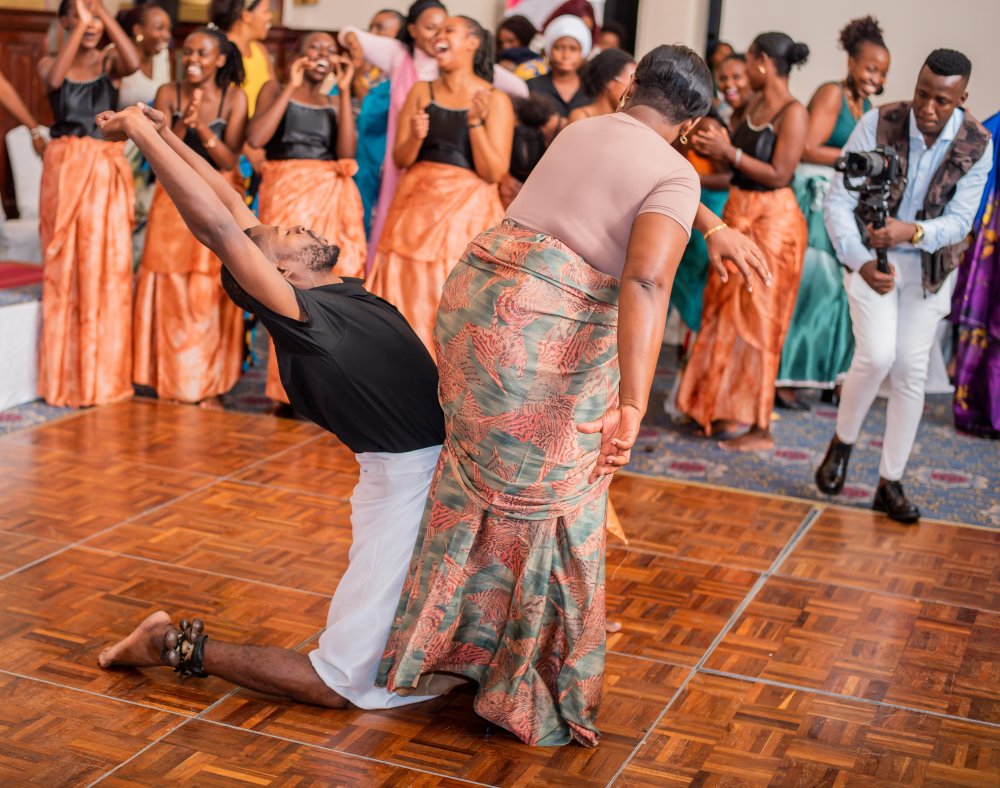
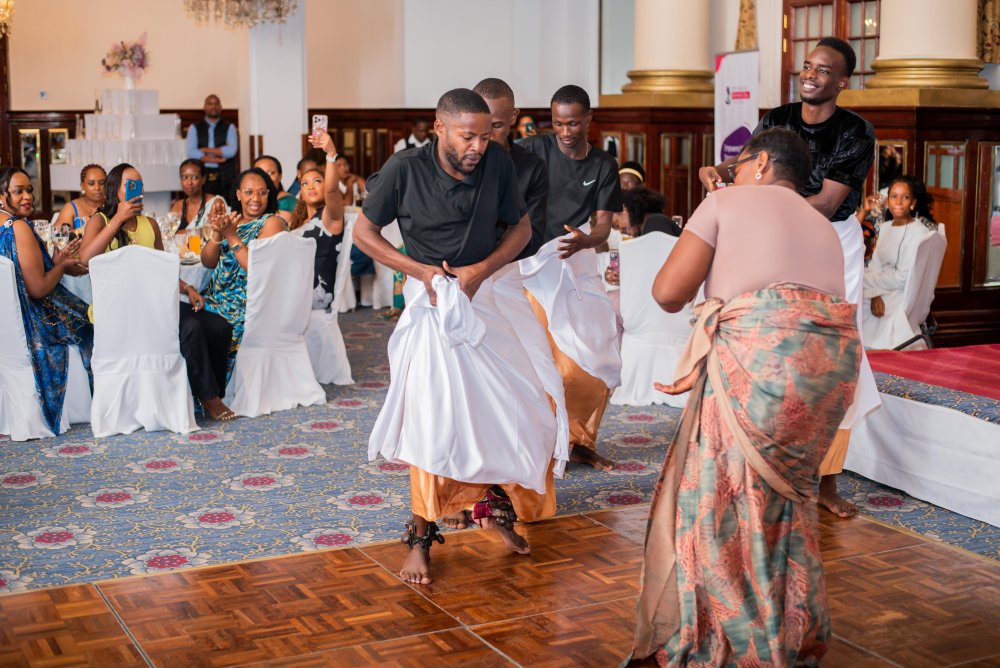
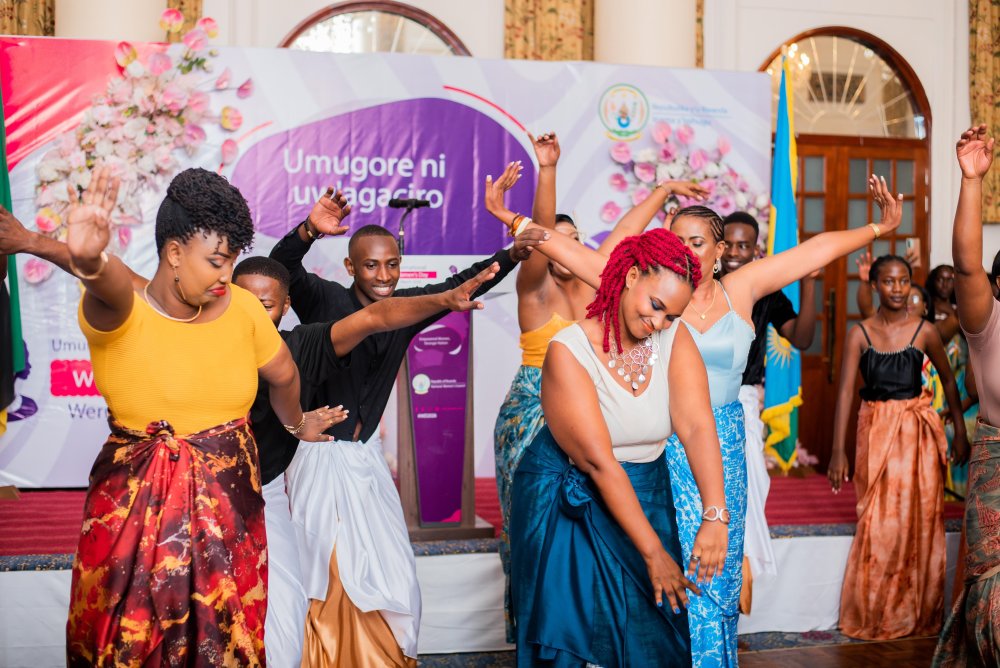
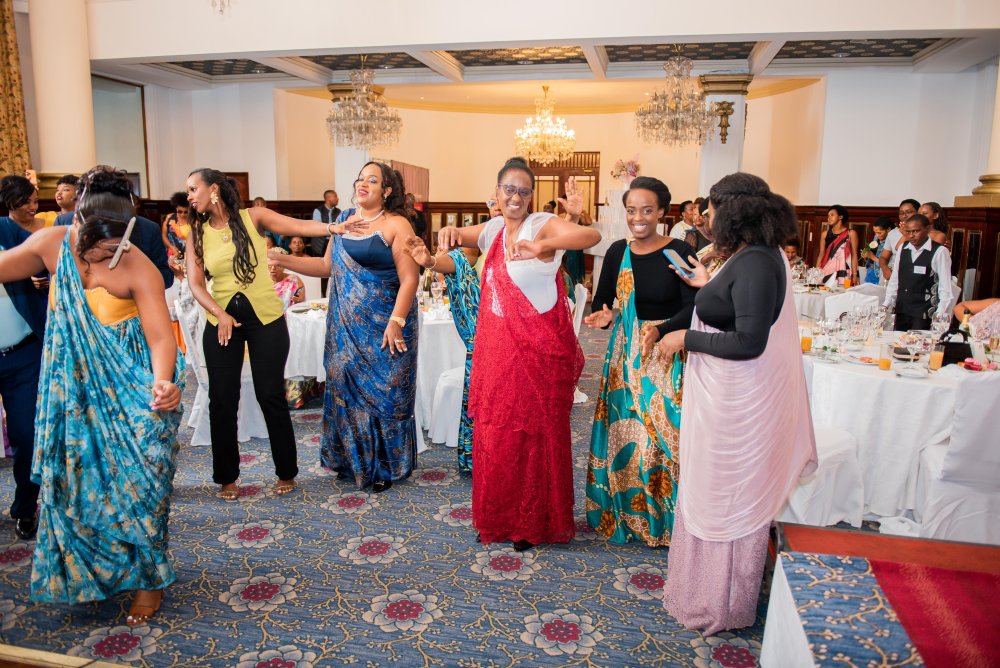
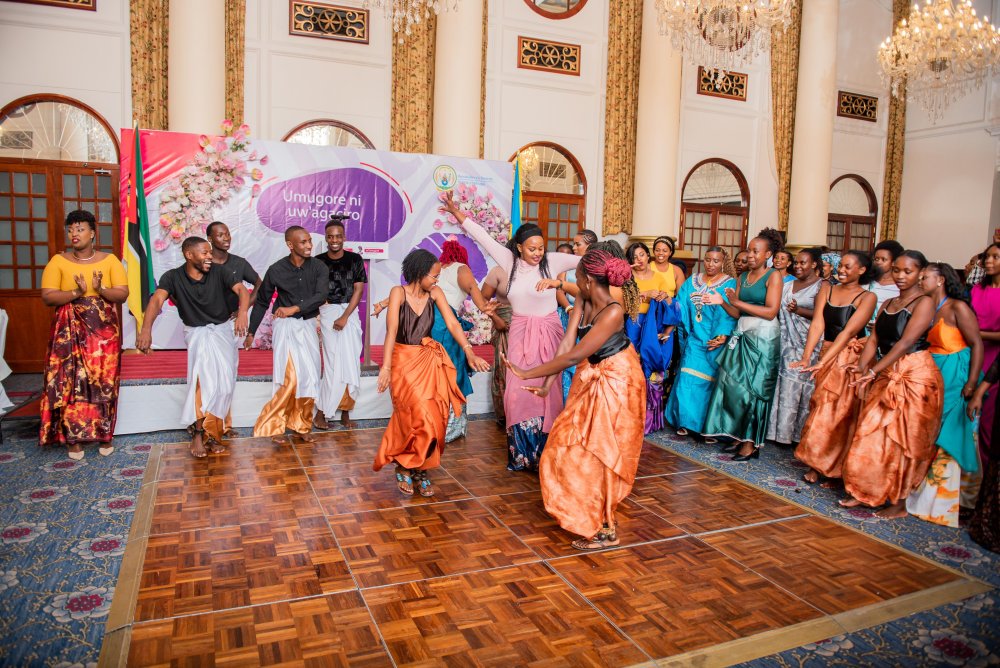
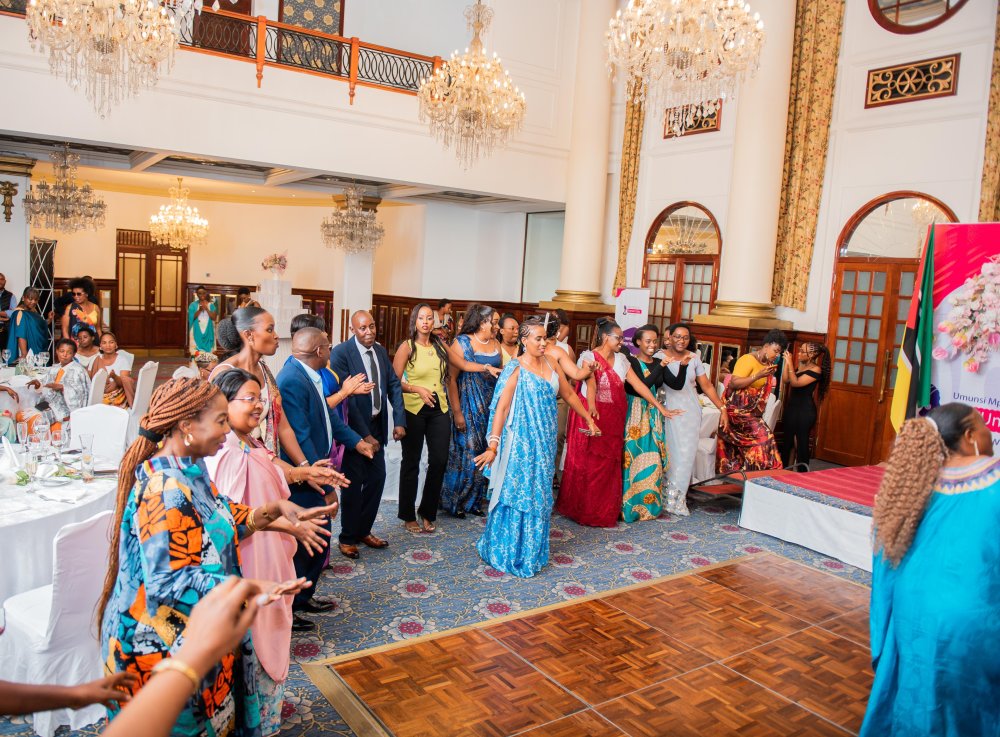
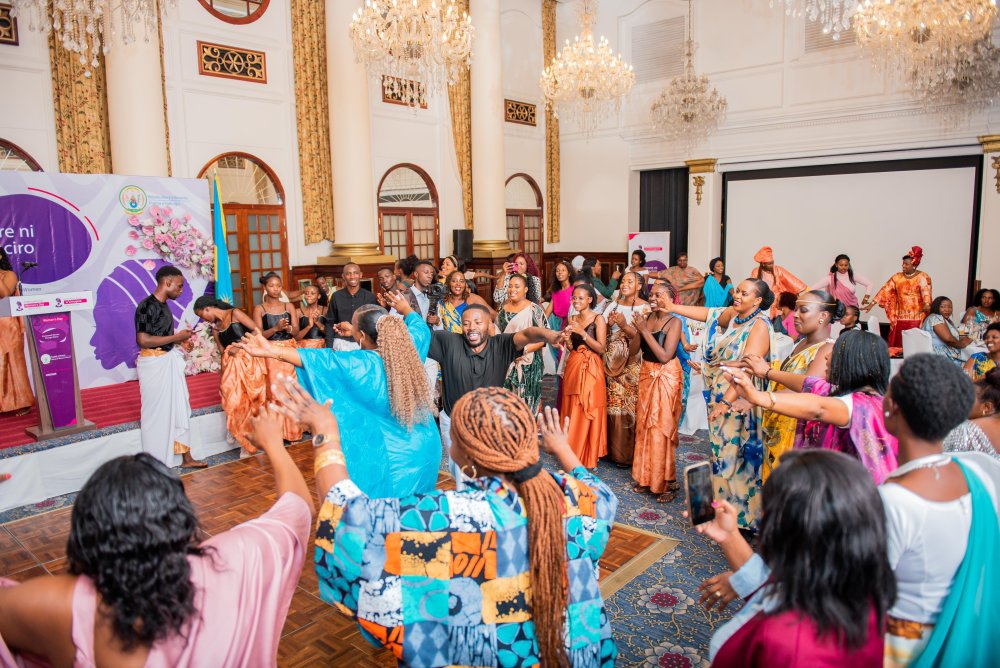
The Rwandan Embassy’s dance troupe in Mozambique entertained the attendees with traditional Rwandan songs and dances, particularly those celebrating the accomplishments of women. Following this, the event continued with social interaction and networking.
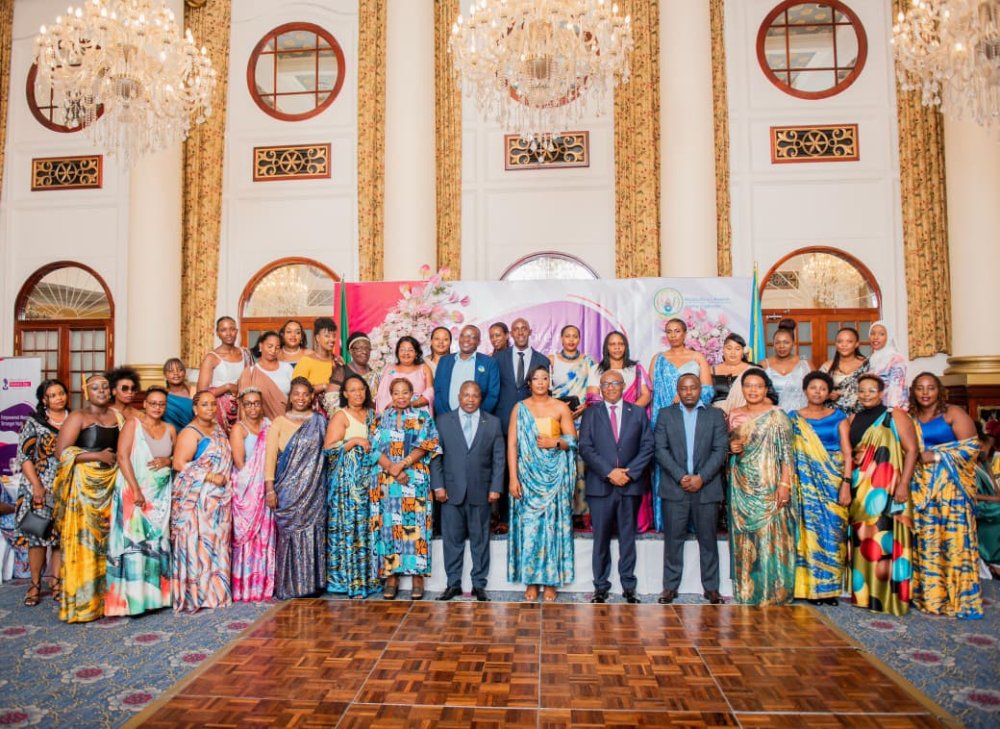
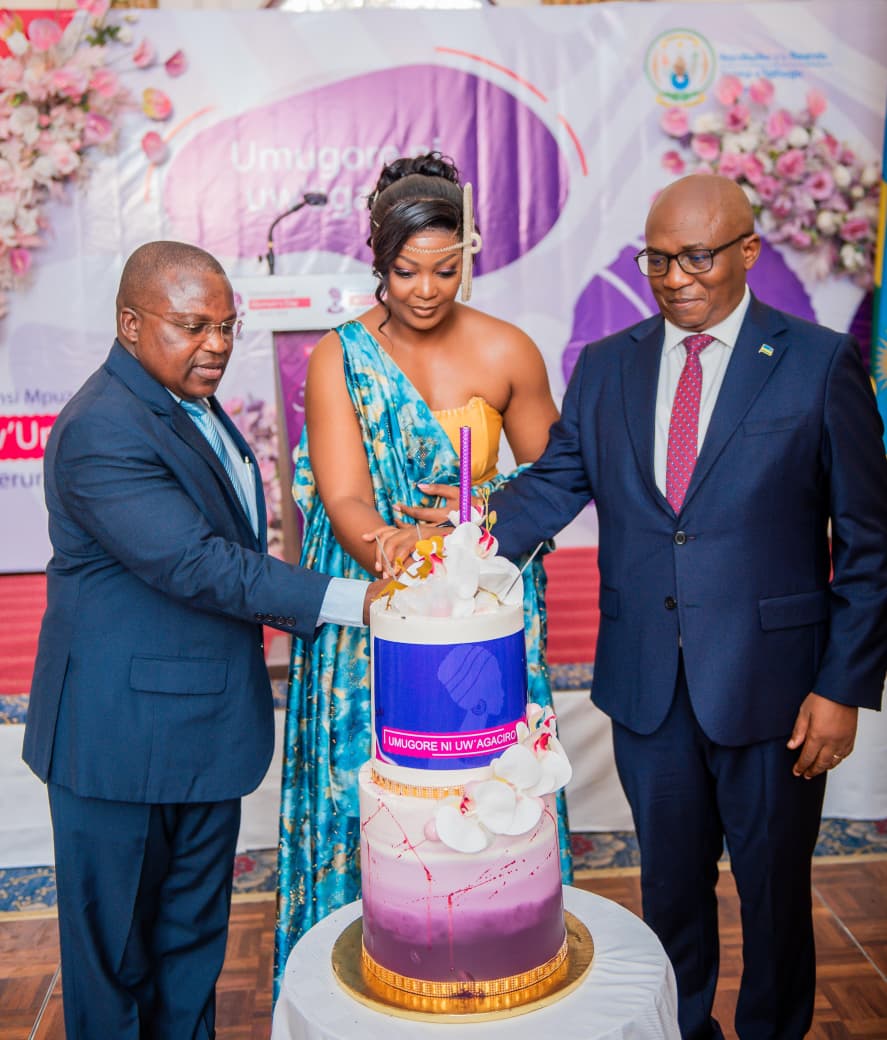
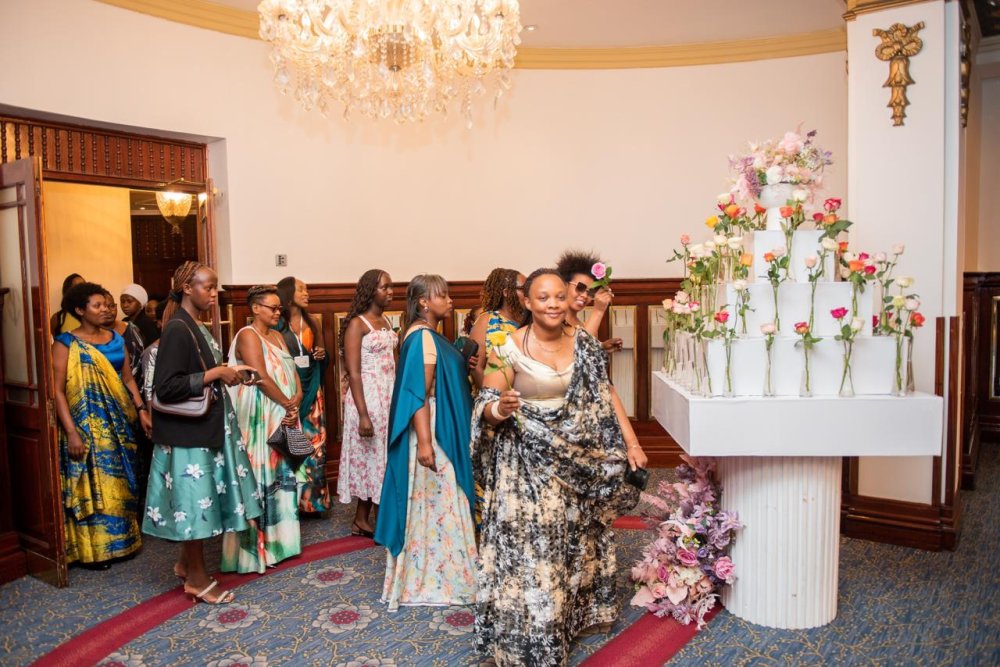
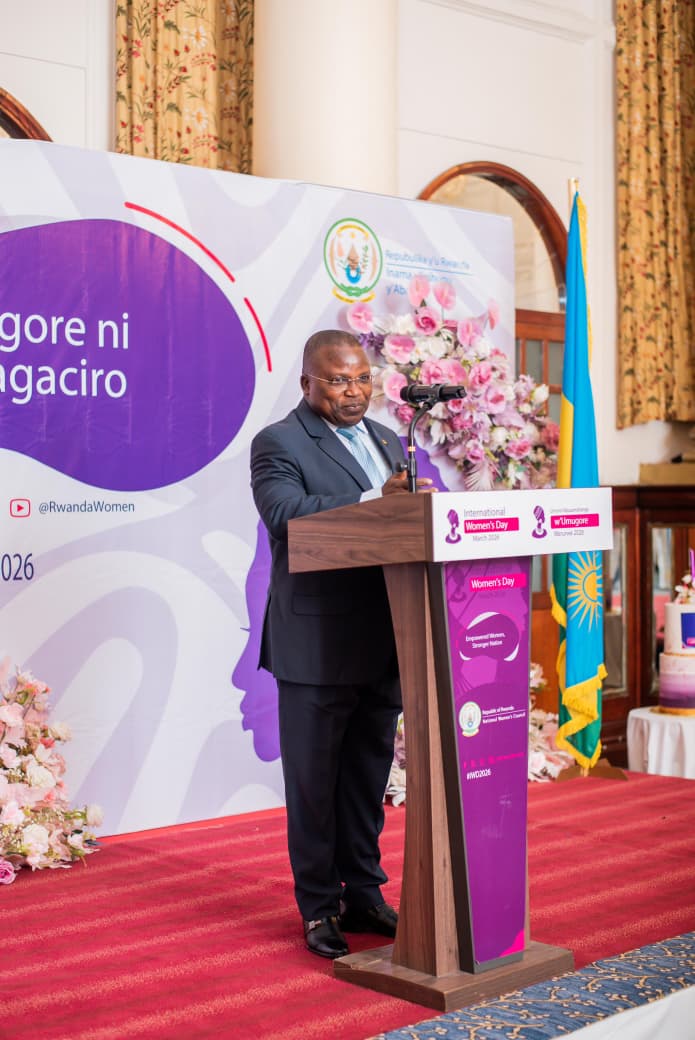
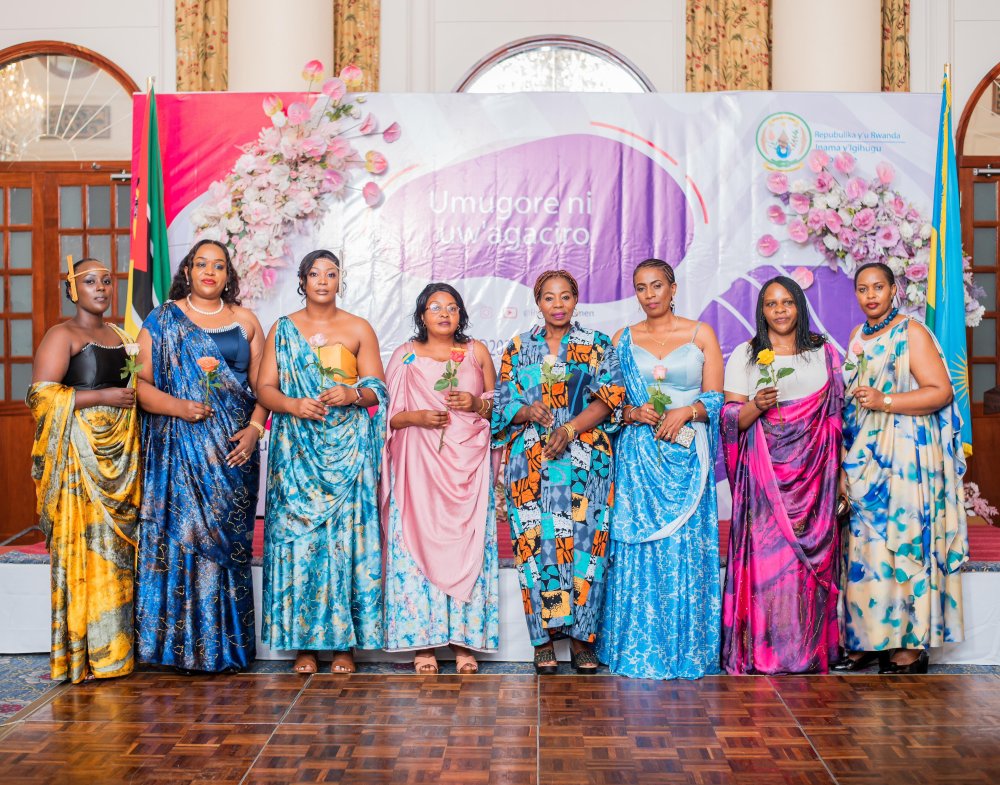
“A Woman is of Value” is the Theme for This Year’s International Women’s Day.The Rwandan Embassy’s dance troupe entertained the attendees at the event.The event also included a socializing session.Ambassador Col (Rtd) Donat Ndamage thanked the Presidents of Rwanda and Mozambique for their efforts in promoting women’s rights.Kenneth Viagem Marizane highlighted that Rwandan women are hardworking, intelligent, and ethical.The leaders gathered for a commemorative photo with Rwandan women living in Mozambique.It was an exciting atmosphere at the Polana Serena Hotel, where the event took place.Everyone danced to the best of their ability.
The program is being implemented in partnership with the Rwanda Biomedical Center (RBC), targeting more than 140,000 households across nine sectors in the Gasabo, Kicukiro, and Nyarugenge districts.
The affected sectors include Masaka in Kicukiro; Kanyinya and Mageragere in Nyarugenge; and Rutunga, Gikomero, Rusororo, Ndera, Jabana, and Kinyinya in Gasabo.
The campaign was launched in Masaka Sector, which has over 30,000 residents. Kicukiro District, where Masaka is located, has reported more than 115,000 malaria cases, making it the district with the highest number of infections.
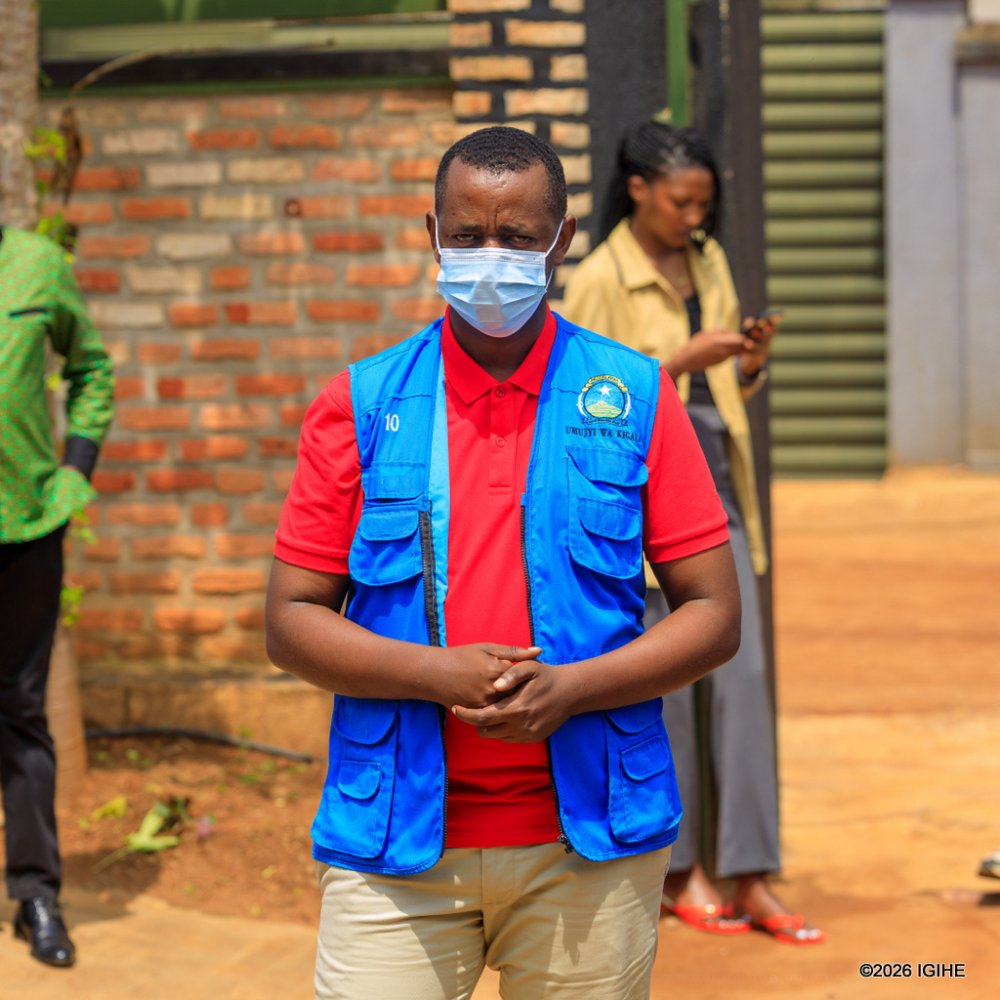
Alfred Nduwayezu, Masaka Sector Executive Secretary, attributed the high malaria rates to local environmental factors, including marshlands used for rice cultivation and areas with stagnant water.
He explained: “When we track the data, the increase in malaria cases is linked to the local environment — there are marshes, rice fields, and water accumulation. RBC and its partners recognised the problem and approved indoor spraying in our sector to help address it.”
In Masaka, around 20,000 households are expected to receive the insecticide treatment.
Nduwayezu added that, in collaboration with partners, the sector has implemented measures to curb malaria and reduce infection rates, particularly during and after the rainy season when cases typically spike.
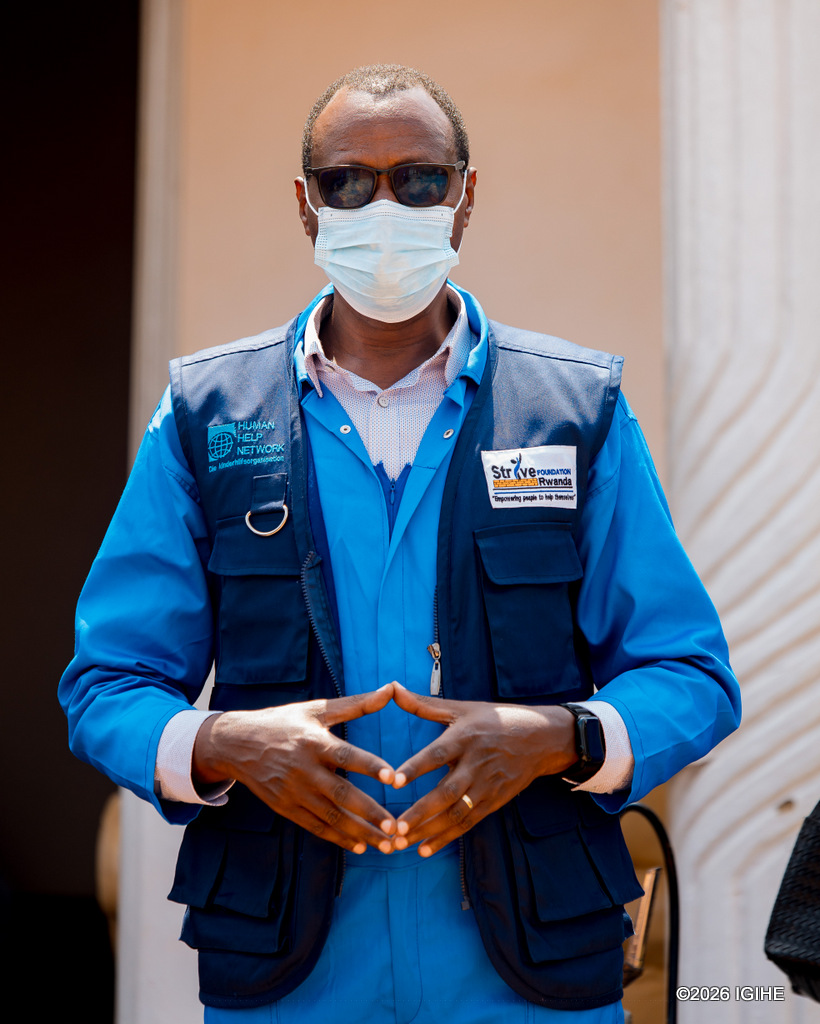
Léopold Ruzibiza, Programs Manager at Strive Foundation Rwanda, said previous interventions, including mass testing, clearing bushes, and other measures, had limited impact. Indoor spraying was therefore chosen as the most reliable method.
He emphasised the importance of residents following proper procedures during spraying:
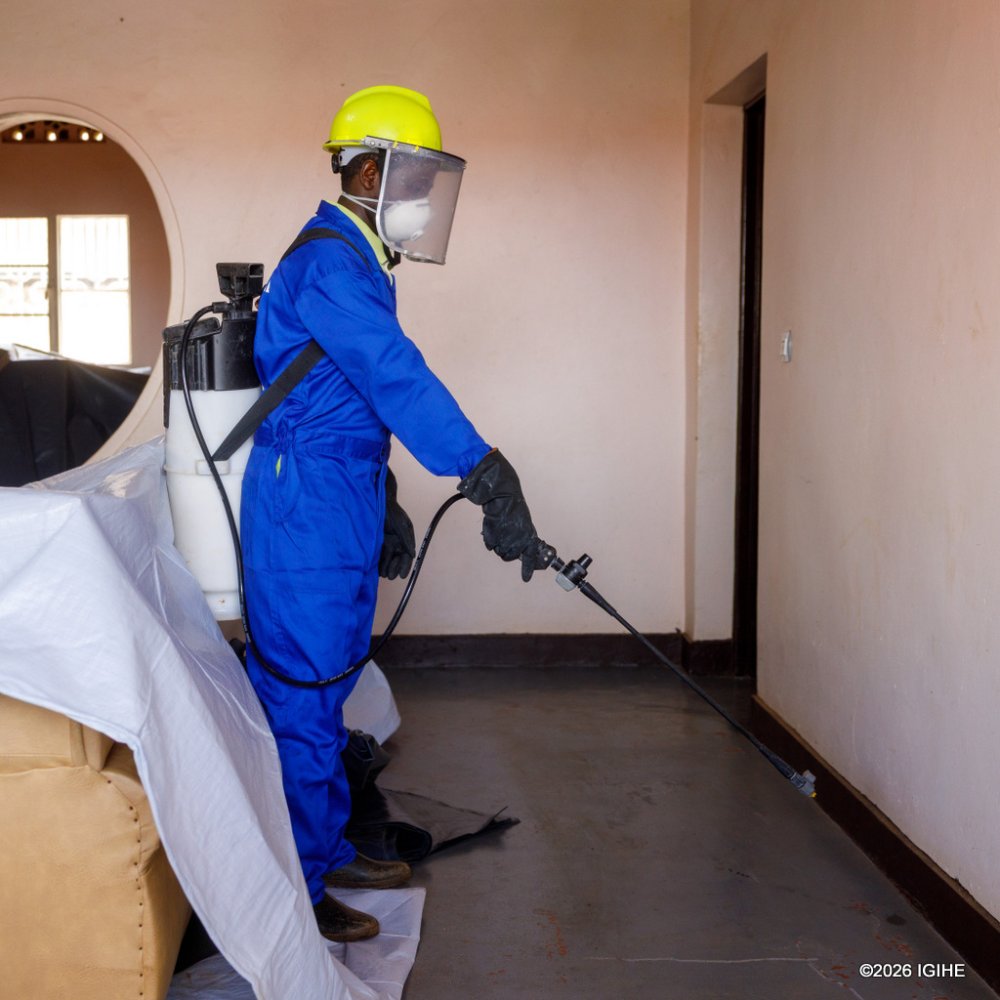
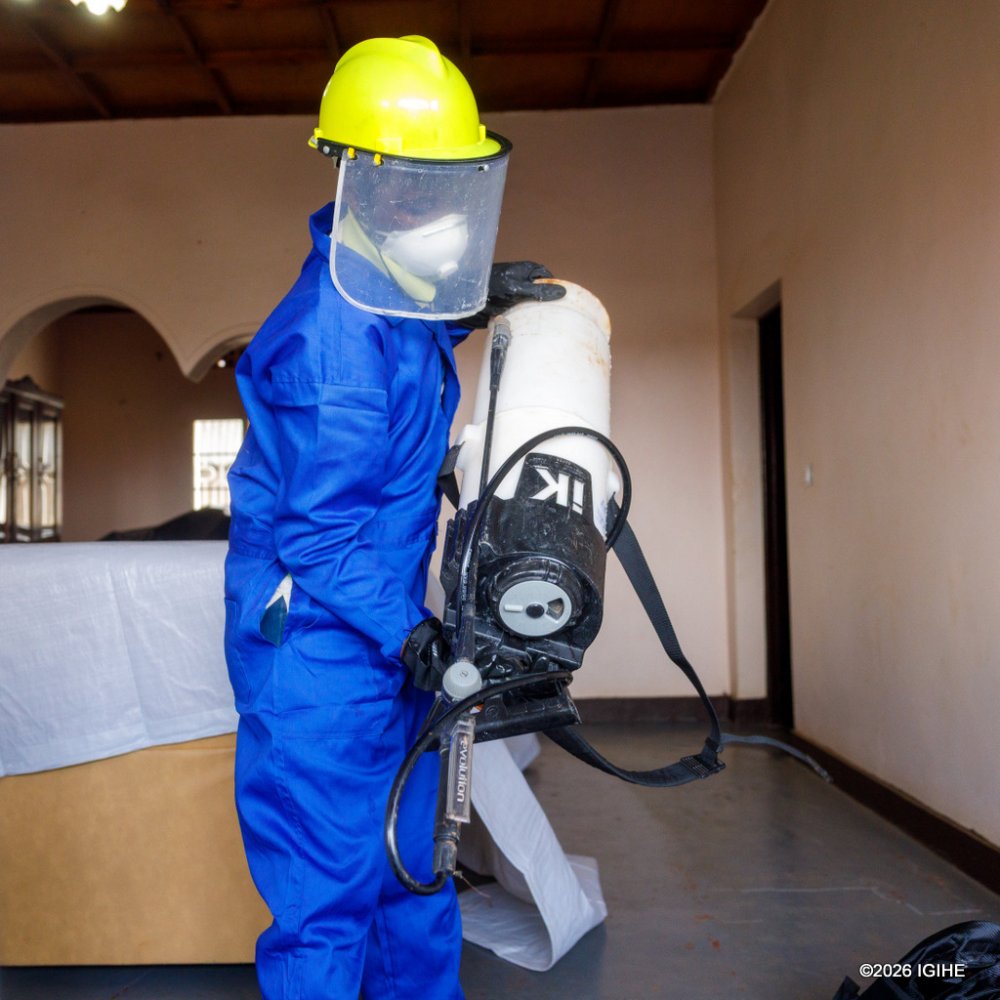
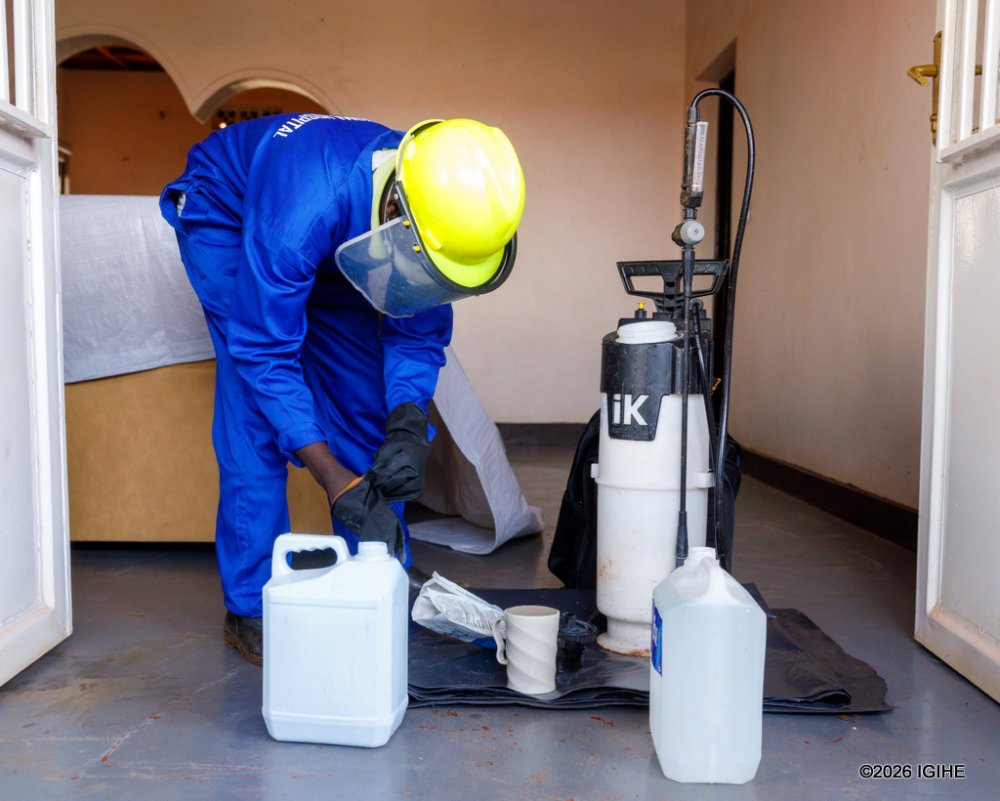
“Residents must vacate their homes, remove all belongings from the rooms, and allow health workers to mix and apply the insecticide at the approved dosage. Houses are then sealed for two hours.”
Residents are being urged to cooperate fully, as the campaign is being carried out by trained health workers.
In October and December 2025, the campaign will expand to 28 sectors most affected by malaria in the Gisagara, Nyanza, Bugesera, Kirehe, Rwamagana, and Nyagatare districts, covering 1,031,676 residents.
According to the Rwanda Biomedical Center (RBC), malaria claimed over 150 lives nationwide between 2024 and 2025.
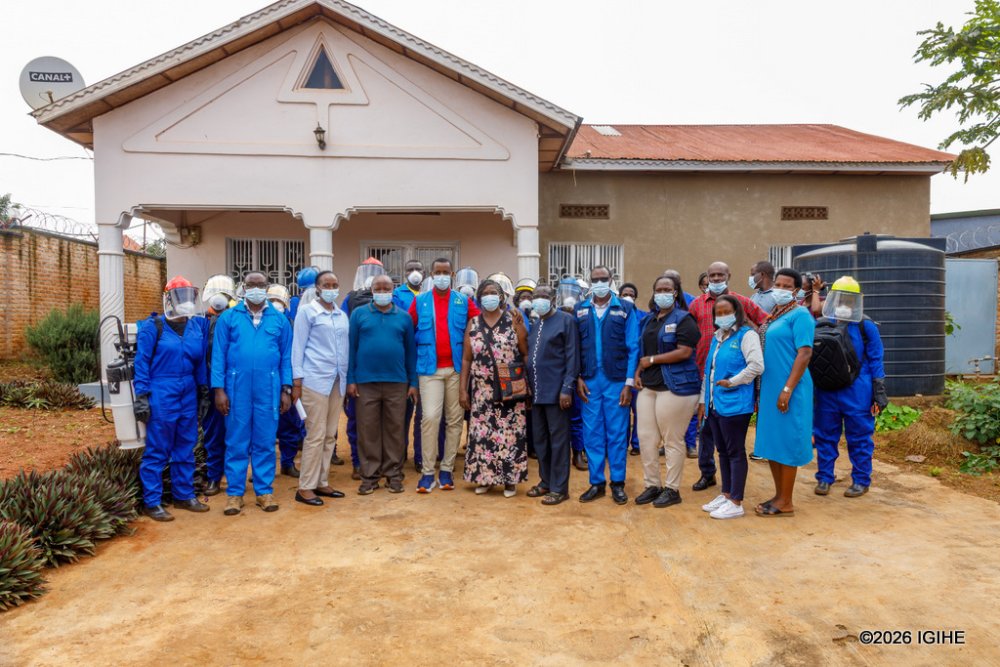
The person applying the insecticide must wear full protective clothing to prevent exposure to its harmful effects.The program is being implemented in partnership with the Rwanda Biomedical Center (RBC), targeting more than 140,000 households across nine sectors in the Gasabo, Kicukiro, and Nyarugenge districts.Léopold Ruzibiza, Programs Manager at Strive Foundation Rwanda, urged residents to actively cooperate in the insecticide spraying campaign.Alfred Nduwayezu, Masaka Sector Executive Secretary, attributed the high malaria rates to local environmental factors, including marshlands used for rice cultivation and areas with stagnant water.
The event, held at M-Hotel, was the first such reception organized by the High Commission since its establishment in Rwanda in September 2024.
It brought together diplomats, Rwandan government officials, members of the Ghanaian community and their friends.
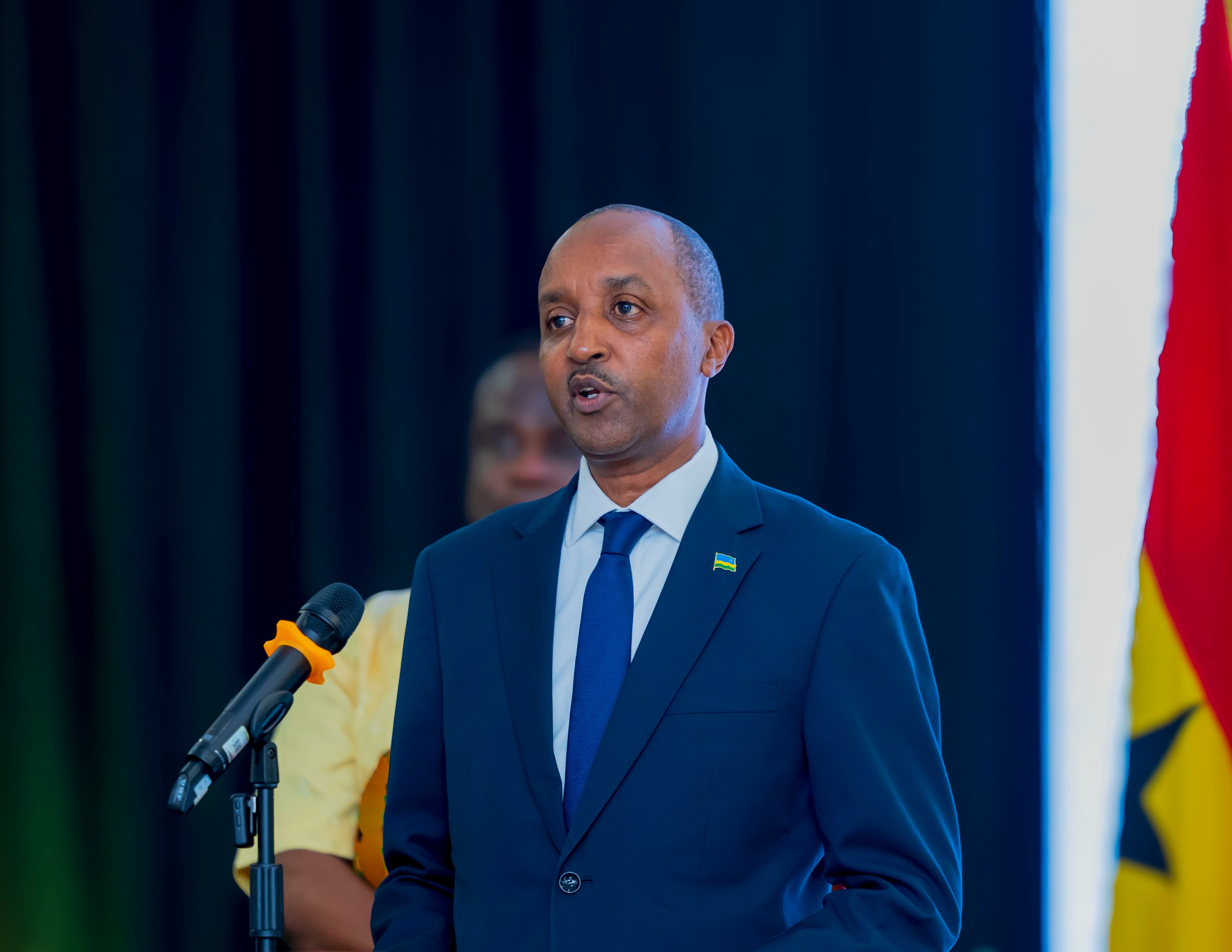
Speaking at the ceremony, Ghana’s resident High Commissioner to Rwanda, Ernest Yaw Amporful noted that the presence of members of the diplomatic corps and officials reflected the strong ties between Ghana, Rwanda and the wider international community.
Reflecting on Ghana’s history, the ambassador recalled that the country became the first sub-Saharan African nation to gain independence from colonial rule on March 6, 1957 under the leadership of Kwame Nkrumah, a moment that inspired liberation movements across the continent.
Nkrumah’s vision of Pan-African unity and his declaration that “Ghana’s independence is meaningless unless it is linked with the total liberation of the African continent” transformed the country into a hub and beacon of hope for freedom movements.
“Sixty-Nine years ago, Ghana blazed the trail as the first sub-Saharan African nation to break free from colonial rule, igniting a flame of freedom and self-determination across our continent,” he said.
Amb. Amporful said Ghana remains committed to democracy, peace and sustainable development, adding that the country continues to pursue economic transformation through new initiatives led by President John Dramani Mahama.
“This year’s celebration is anchored on the theme, ‘Building Prosperity, Restoring Hope’, a theme that speaks not only to Ghana’s aspirations but also to the collective yearning of Africa for economic transformation and a future of dignity and opportunity for all,” he said.
“They protected and saved lives during the Genocide against the Tutsis, even when ordered to withdraw. That act of courage and humanity forged a bond of trust and empathy between our peoples,” he said.
The ambassador noted that both countries are working toward their first Joint Permanent Commission of Cooperation, aimed at boosting trade, investment and innovation.
“Let us recommit ourselves to strengthening the bonds of friendship between our nations,” Amb. Amporful said, adding that such cooperation would help build prosperity and restore hope for both peoples.
Amb. Amporful also paid tribute to women, noting that the celebration came just a day after the world marked International Women’s Day.
“The prosperity of our nations and the hope of our continent rest upon the empowerment of women and girls, whose voices must be heard, whose rights must be protected, and whose dreams must be nurtured,” he said.
Speaking at the reception, the Permanent Secretary in the Ministry of Foreign Affairs, Amb. Fidelis Mironko, congratulated the government and people of Ghana on their 69th Independence Day and reflected on the broader meaning of such anniversaries. “I like to think of Independence Day as a call to action for the future. It is a reminder that the courage of our forebears must be matched by our determination today,” he said.
Amb. Mironko noted that the challenges facing the world today, including climate change, economic shocks and global uncertainty, require countries to work together with unity and strong leadership.
“As sister nations, Rwanda and Ghana will continue to stand shoulder to shoulder in advancing our shared vision of an Africa that is self-reliant, innovative, and globally competitive,” he said.
Rwanda and Ghana share long-standing relations that have grown over the years through cooperation in areas such as trade, defence and security, tourism, technology, culture and parliamentary exchanges.
The partnership also carries a strong historical dimension. In 1994, Ghanaian peacekeepers serving under the United Nations Assistance Mission for Rwanda (UNAMIR) were among the few who remained in the country to help protect civilians during the Genocide against the Tutsi, despite orders to withdraw.
Diplomatic ties have since deepened. Rwanda opened a resident High Commission in Accra in 2020 to strengthen political and economic cooperation, while Ghana established its High Commission in Kigali in 2024, marking another step in reinforcing relations between the two countries
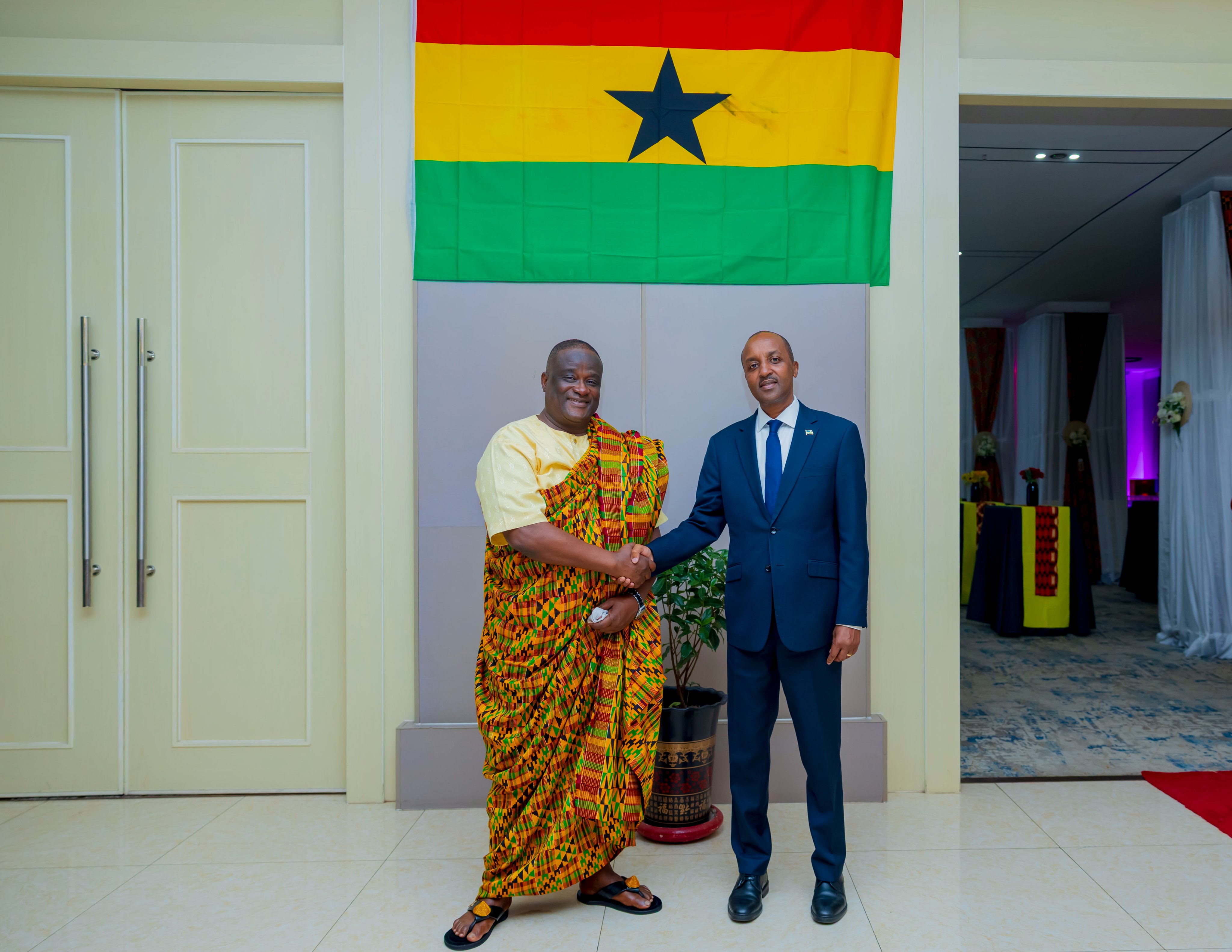
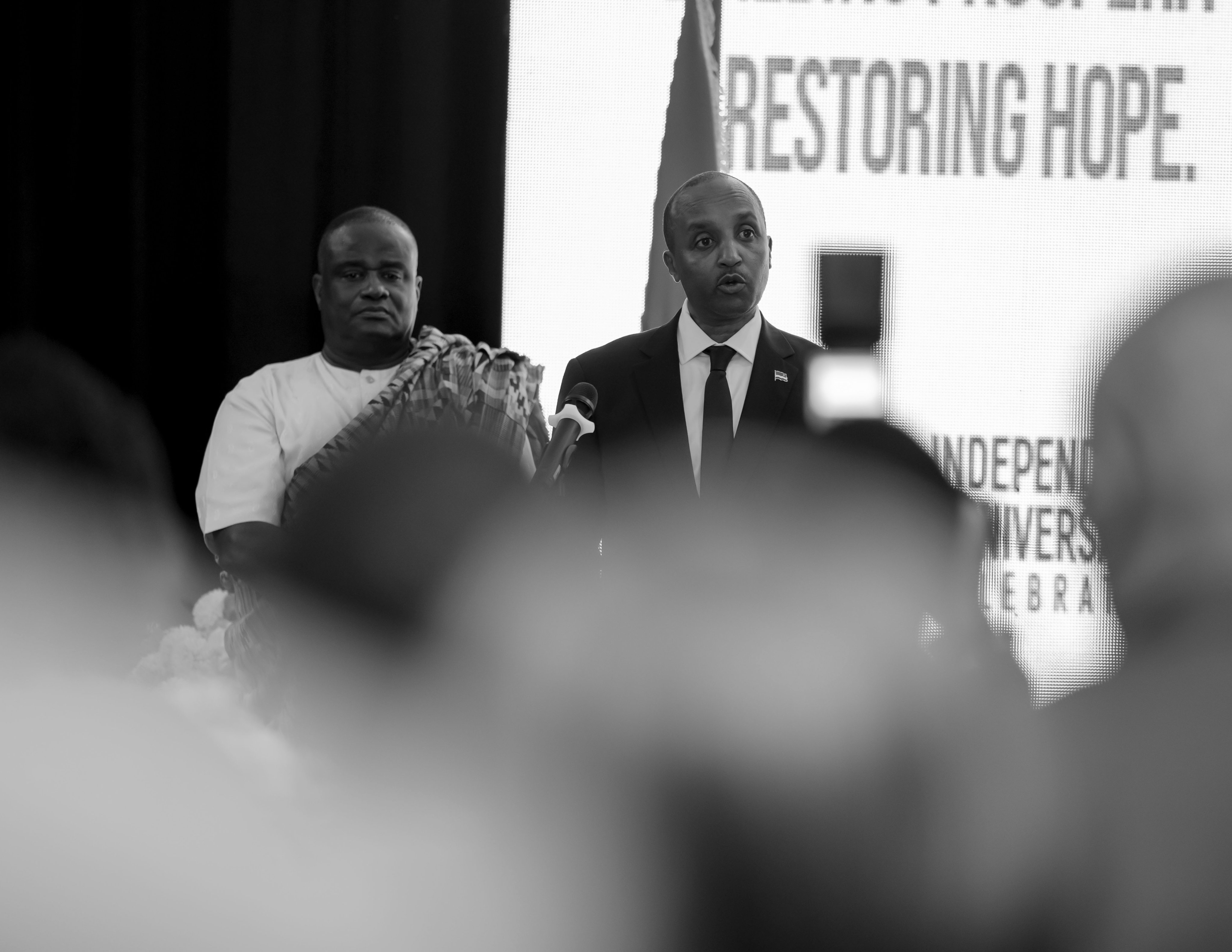
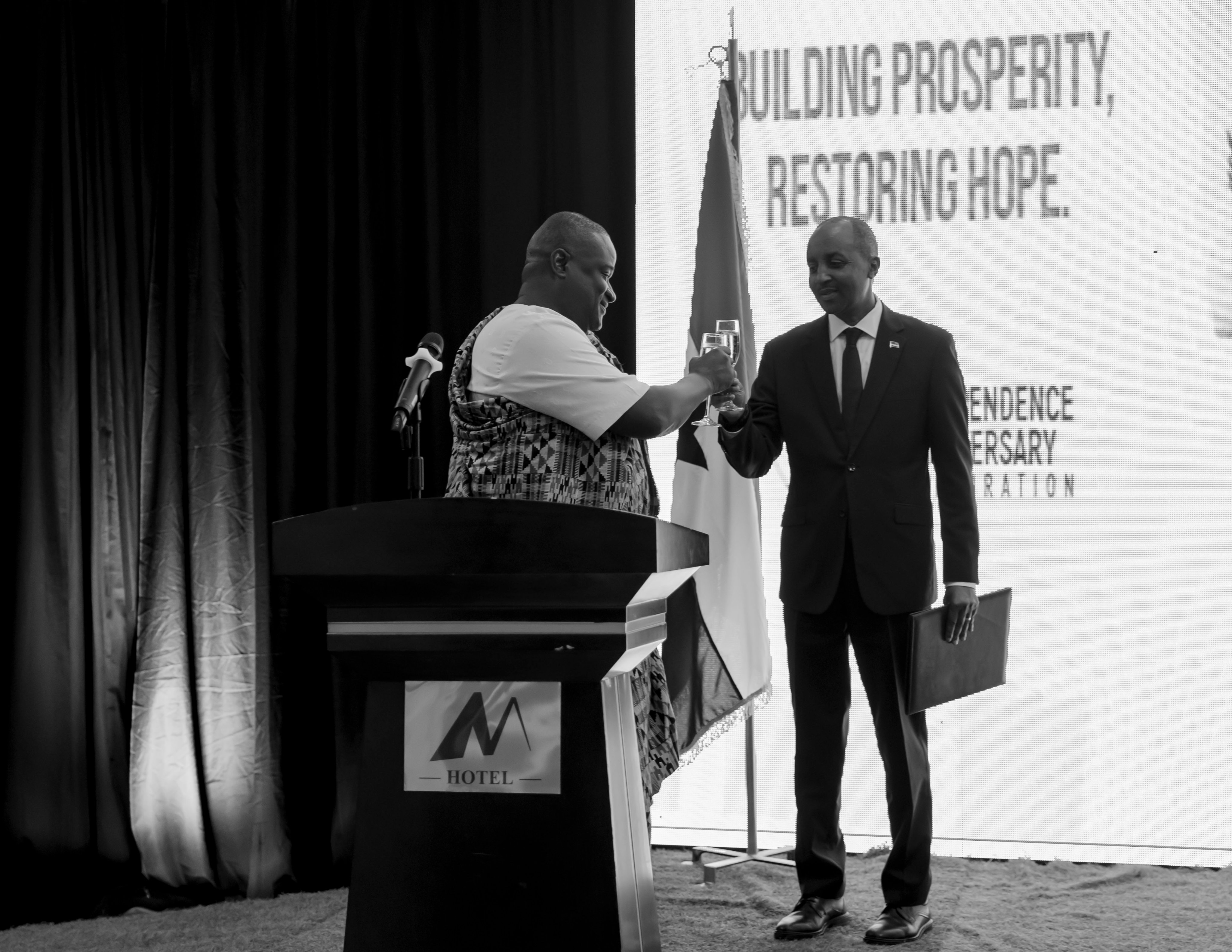
High Commissioner Amporful and Permanent Secretary in MINAFFET, Amb. Mironko pose together at the reception, symbolizing the strong ties between Ghana and Rwanda.High Commissioner Ernest Yaw Amporful and Permanent Secretary Fidelis Mironko toast to Ghana’s 69th Independence Anniversary at the Kigali reception on March 9, 2026.High Commissioner Amporful with Rwanda’s Permanent Secretary in the Ministry of Foreign Affairs, Amb. Fidelis Mironko, during the Independence Day reception at M-Hotel.Permanent Secretary Fidelis Mironko congratulated Ghana on its 69th Independence Day, emphasizing the importance of unity and shared action for Africa’s future.
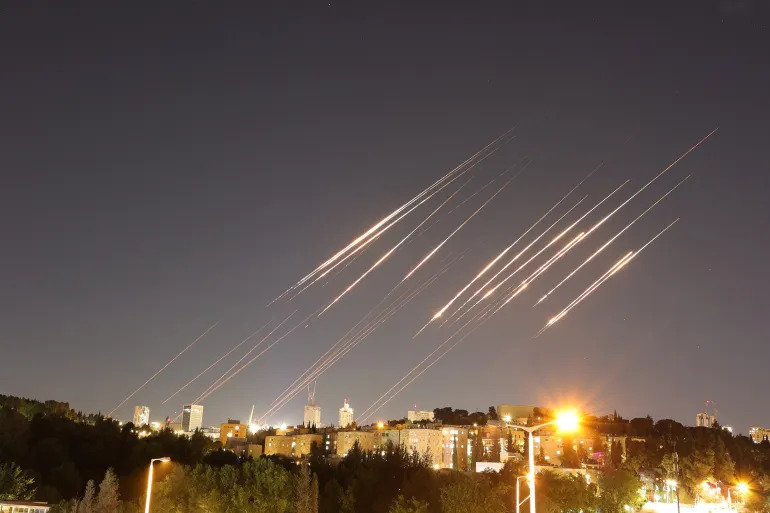
The Israeli military said in a statement that air defense systems are working to intercept the missiles.
Sirens were heard in the northern cities of Metula and Haifa, the southern city of Ashkelon, as well as in Jerusalem and several settlements in the occupied West Bank.
Debris fell in the Umm Al Faham area in southern Israel, causing damage. There were no immediate reports of injuries, the country’s Magen David Adom rescue service said.
The development came as the deadly regional conflict entered its 11th day. On February 28, Israel and the United States launched joint attacks on Tehran and several other Iranian cities, killing Iran’s Supreme Leader Ali Khamenei, along with senior military commanders and civilians. Iran responded by launching waves of missile and drone strikes targeting Israeli and U.S. assets in the Middle East.
Earlier on Tuesday, the Israeli military said it had begun a new series of airstrikes against Iranian government targets in Tehran, whereas Iran’s Foreign Minister Seyed Abbas Araghchi said Iran is well-prepared to continue missile attacks against Israel and U.S. bases in the West Asia region for as long as needed.
The designation, historically applied only to foreign adversaries, bars defence contractors from using Anthropic’s AI in Pentagon-related work and could cost the company billions in projected 2026 revenue.
The lawsuits were filed in the U.S. District Court for the Northern District of California and the U.S. Court of Appeals in Washington, D.C., and argue that the Pentagon’s blacklisting is unlawful and violates Anthropic’s free speech and due process rights.
The company is seeking to have the designation overturned and to block federal agencies from enforcing the restrictions.
Anthropic executives warned the consequences could extend beyond defence contracts. Chief Financial Officer Krishna Rao said the government’s actions could reduce 2026 revenue by “multiple billions of dollars” and cause damage that would be “almost impossible to reverse.”
Head of Public Sector Thiyagu Ramasamy added that the blacklist is already harming commercial relationships and could wipe out projected public sector revenue exceeding $500 million.
Chief Commercial Officer Paul Smith noted that a partner shifted from Claude to a rival AI model for a Food and Drug Administration project, eliminating an expected $100 million revenue pipeline, while negotiations with financial institutions totaling around $180 million were disrupted.
The dispute stems from Anthropic’s refusal to grant unrestricted government access to Claude, citing ethical limits on autonomous weapons and mass domestic surveillance.
Defence Secretary Pete Hegseth criticised these restrictions, prompting President Donald Trump to order federal agencies to cease using Claude, while allowing the Pentagon six months to comply due to Claude’s integration into classified systems.
Anthropic maintains it remains committed to national security work. “Seeking judicial review does not change our longstanding commitment to harnessing AI to protect our national security, but this is a necessary step to protect our business, our customers, and our partners,” a company spokesperson said.
A group of 37 engineers from Google and OpenAI filed an amicus brief supporting Anthropic, warning that the government’s actions could stifle innovation and debate over AI’s risks and applications.
The lawsuits mark the first time an American AI company has faced a formal supply-chain risk designation, setting a potential precedent for the tech industry’s relationship with the U.S. government.
Anthropic, the U.S.-based artificial intelligence company behind Claude, filed two federal lawsuits on Monday challenging the Pentagon’s decision to label it a “supply chain risk.”
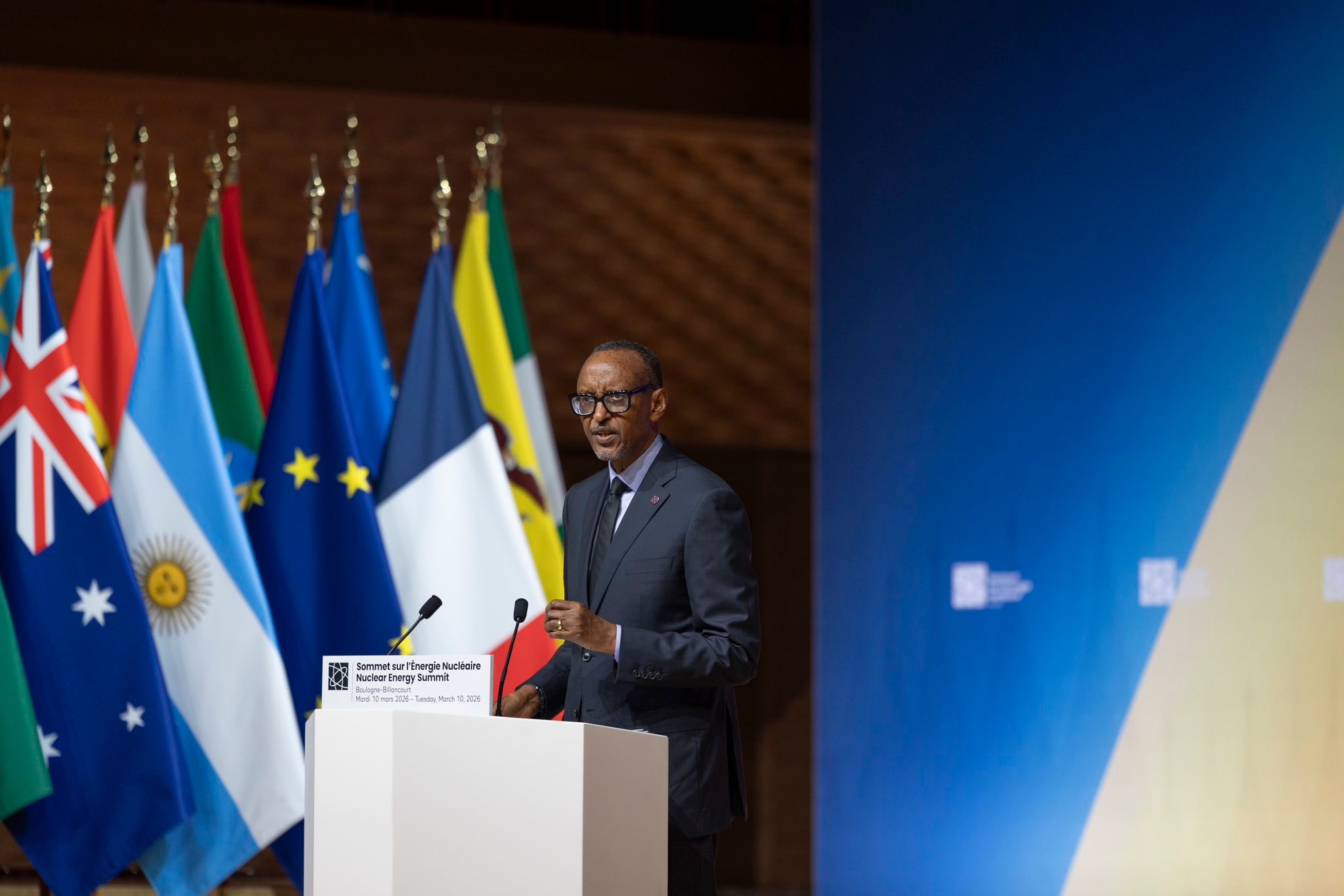
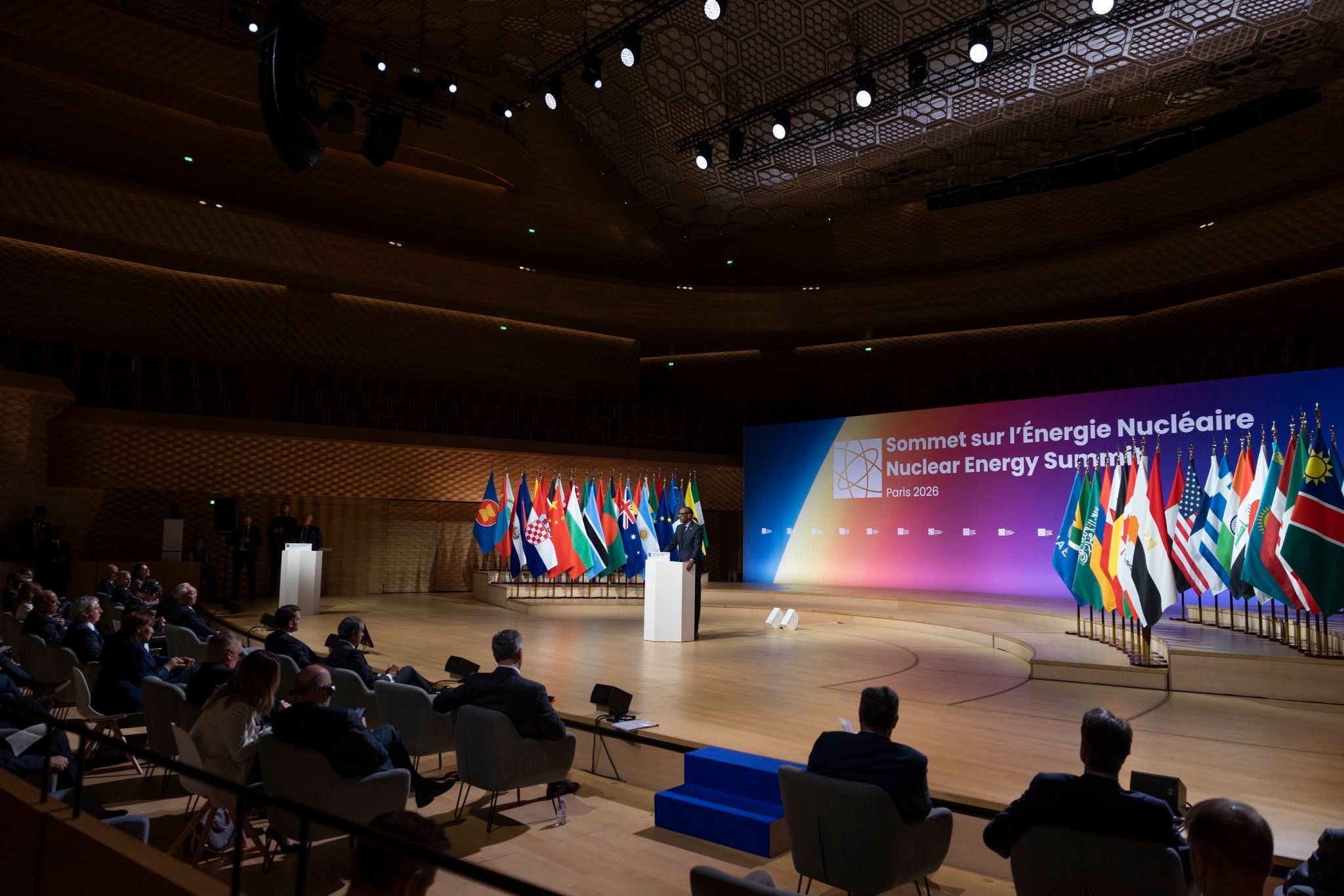
Speaking at the Nuclear Energy Summit in Paris, France, on Tuesday, President Kagame said Rwanda’s long-term ambition to become a high-income country by 2050 requires a reliable and abundant electricity supply. He noted that nuclear energy will play a central role in diversifying the country’s energy mix and providing the stability needed for sustained economic transformation.
According to the Head of State, nuclear power offers Rwanda a dependable source of electricity that can support industrial expansion while helping reduce carbon emissions.
“We have decided to make nuclear central to our strategy,” Kagame said. “It will diversify our energy mix while providing the stability required for industrial growth and long-term transformation.”
The president highlighted the importance of building strong institutions, regulatory systems and a skilled workforce to support Rwanda’s nuclear ambitions. He praised the support provided by the International Atomic Energy Agency (IAEA), led by Director General Rafael Grossi, in helping strengthen the country’s nuclear governance framework.
Rwanda has already made progress in developing human capital for the sector. Kagame noted that hundreds of Rwandans have been trained in nuclear science and engineering through partnerships with leading international institutions. The University of Rwanda has also introduced a new academic programme in nuclear science to build local expertise.
Recently, the IAEA conducted an Integrated Nuclear Infrastructure Review in Rwanda and confirmed progress across key pillars required to establish a nuclear energy programme.
“Our country is prepared to proceed through the agency’s milestone approach to the next stage,” he revealed.
Notably, Rwanda plans to establish a nuclear research centre in collaboration with Russia. The centre will focus on producing radioactive materials for cancer diagnosis and treatment, improving agriculture through radiation technologies, and advancing industrial testing methods.
Additionally, Rwanda is preparing to host Africa’s first demonstration of a Dual Fluid nuclear reactor and is exploring small modular reactor (SMR) technology to meet the country’s growing energy demands sustainably.
In his remarks, President Kagame emphasised the growing potential of emerging nuclear technologies for Africa. In particular, he said SMRs are well-suited to countries with smaller electricity grids and could allow African nations to become early adopters of advanced nuclear systems.
“I’m confident that Africa will emerge as one of the most important global markets for SMRs in the years ahead,” he said.
The president called for stronger international cooperation in three key areas: financing, technology partnerships and clear regulatory frameworks. He noted that nuclear energy projects often require specialised financing models that development banks are still unfamiliar with.
Kagame welcomed recent shifts in international policy, including the World Bank’s decision to lift its long-standing ban on financing nuclear power projects. He also referenced commitments made during COP28, encouraging international financial institutions to include nuclear energy in their portfolios.
“Now is the time to work together to make this shift a reality in Africa,” he said.
Looking ahead, Rwanda is preparing to host the 2026 Nuclear Energy Innovation Summit for Africa (NESA) in Kigali this May. Kagame said the summit will bring together leaders from governments, financial institutions and the nuclear industry to advance discussions on Africa’s nuclear future.
He extended an invitation to global partners to attend the event and support Rwanda’s efforts to harness nuclear energy for development.
“Rwanda is determined to do what it takes to power our development with nuclear energy,” Kagame said. “We look forward to you being part of this journey.”
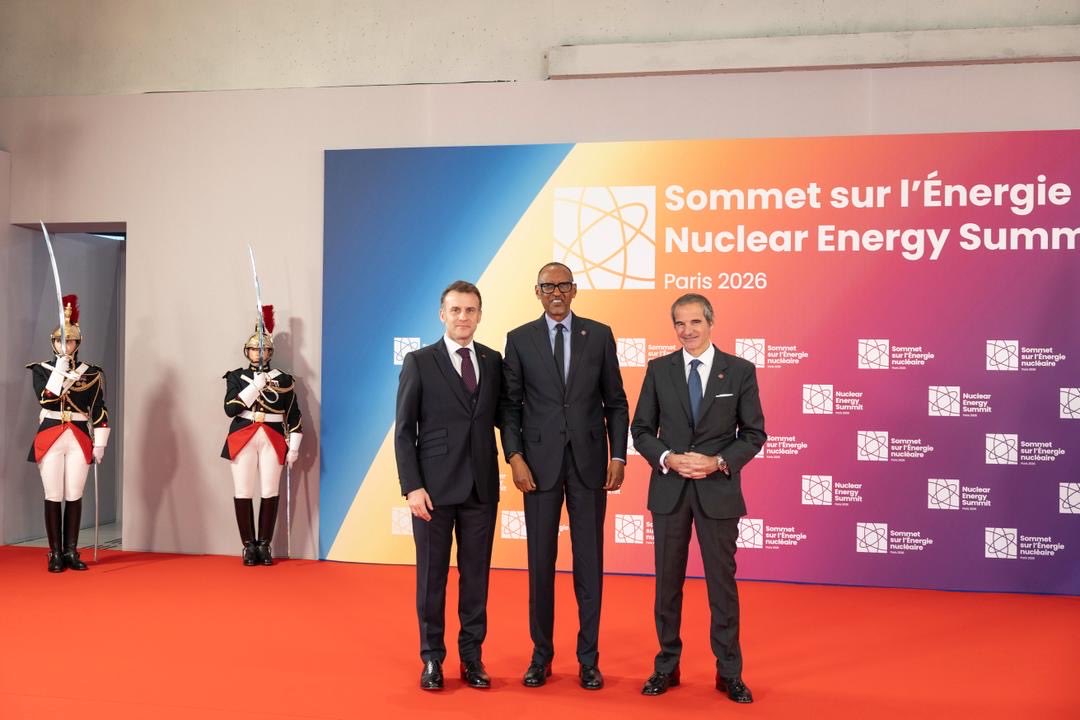
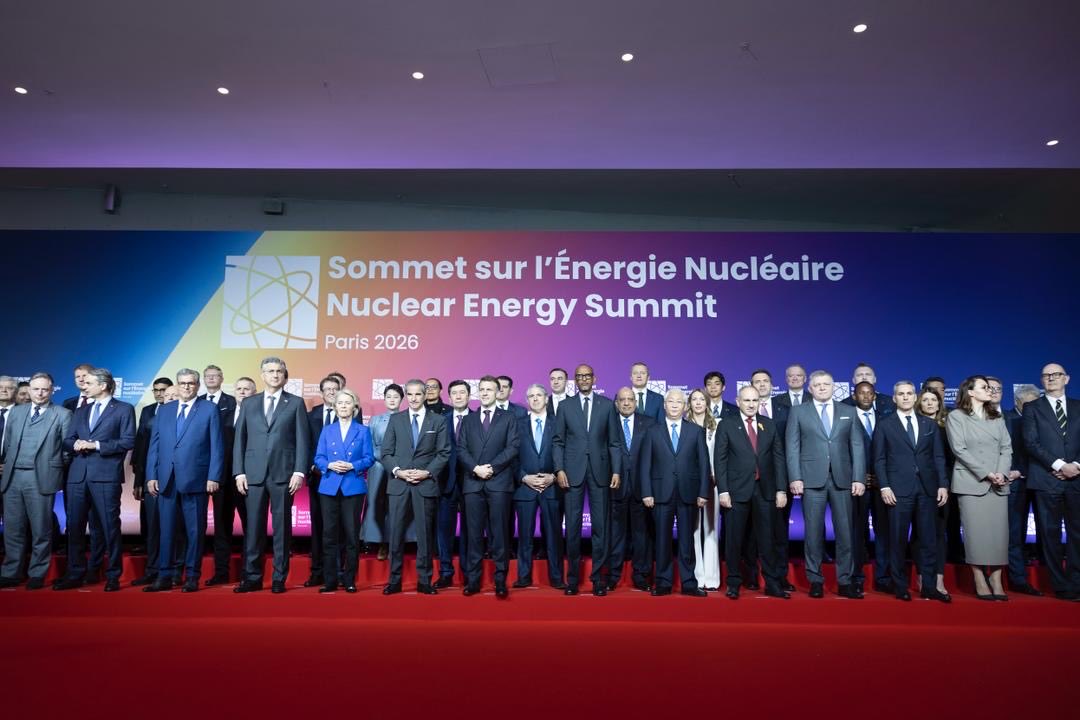
President Kagame said Rwanda’s long-term ambition to become a high-income country by 2050 requires a reliable and abundant electricity supply. President Paul Kagame joined Emmanuel Macron, Director General of the International Atomic Energy Agency (IAEA) Rafael Mariano Grossi, and other leaders for the opening of the 2nd Nuclear Energy Summit.