The U.S.-drafted Resolution 2803 won the support of 13 council members. Russia, which has presented a competing draft resolution, abstained, along with China.
The resolution endorses the 20-point Comprehensive Plan for Gaza announced by U.S. President Donald Trump in September.
It welcomes the establishment of a Board of Peace (BoP) as a “transitional administration” that will set the framework and coordinate funding for the redevelopment of Gaza “until such time as the Palestinian Authority (PA) has satisfactorily completed its reform program … and can securely and effectively take back control of Gaza.”
After the PA reform program is faithfully carried out and Gaza redevelopment has advanced, conditions may finally be in place for a credible pathway to Palestinian self-determination and statehood. The United States will establish a dialogue between Israel and the Palestinians to agree on a political horizon for peaceful and prosperous coexistence, reads the resolution.
It authorizes UN member states and the BoP to establish a temporary ISF in Gaza to deploy under a unified command, with forces contributed by participating states, and to use all necessary measures to carry out its mandate consistent with international law.
The ISF is tasked, among others, to help secure border areas, stabilize the security environment in Gaza by ensuring the process of demilitarizing the Gaza Strip, protect civilians, and coordinate with relevant states to secure humanitarian corridors, according to the resolution.
The ISF operates under the strategic guidance of the BoP and will be funded through voluntary contributions from donors and BoP funding vehicles and governments.
The resolution authorizes the BoP and the international civil and security presence in Gaza until Dec. 31, 2027, subject to further action by the Security Council.
It requests the BoP to provide a written report on progress to the Security Council every six months.
In a statement released by the official WAFA news agency, the PA welcomed the adoption of the resolution, reiterating its readiness to assume full responsibilities in the Gaza Strip within the framework of the unity of land, people, and institutions, and stressing that Gaza is an inseparable part of the State of Palestine.
The PA also voiced readiness to work with all relevant parties “to implement the resolution in a manner that ends the suffering of the Palestinian people in Gaza, the West Bank, and East Jerusalem, and advances a political path leading to peace, security, and stability between Palestinians and Israelis based on the two-state solution in line with international law and legitimacy.”
Hamas issued a statement on the same day, criticizing the resolution for not meeting the political and humanitarian needs of the Palestinian people, particularly those in Gaza.
It added that the proposal seeks to impose outcomes that Israel “failed to achieve militarily,” and separates Gaza from the rest of the Palestinian territory in a way that undermines Palestinian national rights.
Hamas also warned that assigning tasks to an international force inside Gaza would compromise the force’s neutrality and turn it into a party to the conflict. It said that any international force should operate only along the borders under full UN supervision and in coordination with official Palestinian institutions, and should focus on monitoring a ceasefire and facilitating humanitarian aid.
In a televised address from Chamwino State House in the capital Dodoma, Hassan confirmed that Mahmoud Thabit Kombo will continue serving as Minister for Foreign Affairs and East African Cooperation.
Khamis Mussa Omar has been appointed as the new minister for finance, succeeding Mwigulu Nchemba, who recently assumed the position of Prime Minister.
The president also appointed Rhimo Simeon Nyansaho as minister for defense and national service, replacing Stergomena Lawrence, who retired from public service.
As part of the restructuring, Hassan announced the creation of a new ministry dedicated to youth development, underscoring the government’s focus on empowering young people.
The newly appointed ministers are scheduled to be sworn in on Tuesday at Chamwino State House.
The two-day event, co-hosted by Xinhua News Agency, the African Union (AU) and South Africa’s Independent Media, among other partners, gathered more than 200 representatives from over 160 media outlets, think tanks, government organizations and other institutions from China and 41 African countries, as well as the AU.
It focuses on how collaboration between media and think tanks can contribute to shaping a fairer and more inclusive global governance under the theme “Reforming Global Governance: New Roles and Visions for China-Africa Cooperation.”
{{Strengthening China-Africa synergy}}
Against the backdrop of profound changes unseen in a century, the awakening of the Global South and its growing cooperation have become an indispensable part of the international landscape, with China-Africa cooperation at the core.
In 2015, 2018 and 2021, China successively announced at the Forum on China-Africa Cooperation (FOCAC) the implementation of the 10 cooperation plans, eight major initiatives and nine programs, drawing a blueprint for China-Africa cooperation.
Quoting an African proverb, “If you want to go fast, go alone; if you want to go far, go together,” Lyu Yansong, editor-in-chief of Xinhua News Agency, called on media and think tanks to take the conference as an opportunity to build consensus, strengthen solidarity and collaboration, and jointly create a better future in his keynote speech at the opening ceremony.
Addressing the event, Chinese Ambassador to South Africa Wu Peng shared three keywords on China-Africa cooperation — partnership, practicality and prospects.
“China is ready to work with African countries to implement the outcomes of the FOCAC Beijing Summit, further expand win-win cooperation across all fields, and speed up the common modernization of China and Africa,” said Wu.
Noting that the relationship between Africa and China has evolved over decades of solidarity, mutual respect and shared aspirations for development, Leslie Richer, the AU director of information and communication, said that Africa will work with China and other Global South partners to make its voice heard more strongly, while promoting more balanced narratives through closer media and think tank cooperation.
The event featured the launch of the Global South joint communication partnership network “United in Heart, Path and Action — 2026 China-Africa Partnership Empowerment Action Plan,” with the aim of better supporting the shared development of China and Africa.
Applauding the development of the Africa-China relationship, Jonathan Titus-Williams, deputy minister of planning and economic development of Sierra Leone, said that the partnership has long been characterized by solidarity and shared purpose grounded in mutual respect, equality, and a collective aspiration for a just and peaceful world.
As the permanent host of the China-Africa Economic and Trade Expo, China’s Hunan province has made great efforts in recent years to promote cooperation in various fields such as agriculture, green energy and industrial chains with African partners.
Recognizing the expo as an important initiative under the FOCAC’s major action plans, Shen Yumou, head of the Hunan provincial commerce department, said that Hunan has been aiming to enhance China-Africa cooperation, focusing on building six major centers for trade in non-resource products, cross-border e-commerce, industrial development, financial cooperation, logistics and trade promotion, to serve as a strategic hub for China-Africa economic ties.
{{Promoting inclusive governance}}
At the conference, the Xinhua Institute, a think tank affiliated with Xinhua News Agency, released a report titled “Jointly Building a New Model of Global Leadership — Work Together in Pursuit of a More Just and Rational Global Governance System.”
The report argues that the world faces a global leadership deficit, reflected in the failure of peace, imbalance in development and discord among civilizations. It calls for a “new model of global leadership,” one that does not emanate from any single country, bloc or international organization, but rather represents a multilateral form of leadership — a synergy forged by the international community in active response to global challenges.
Noting the Global Governance Initiative put forward by China at the Shanghai Cooperation Organization Tianjin Summit in September, Lyu said, “Let us put the initiative into practice and jointly shape a just and equitable international order.”
He emphasized that media and think tanks from China and Africa should comprehensively expound on the Global South’s solutions for advancing the reform of the global governance system, and demonstrate the Global South’s strength reflected in the solidarity and cooperation of developing countries.
The remarks by Xinhua’s editor-in-chief resonated strongly with the participants.
“Tunisia and many African countries are key partners in the Global Governance Initiative and support China’s aspiration for a fairer and more equitable world order,” said Najeh Missaoui, chairman and CEO of the Tunis Africa News Agency.
Stressing the media’s role in advancing shared governance, Missaoui noted that the media is no longer just a tool for delivering news or sharing information; it has become a powerful force of cultural influence — shaping public opinion, contributing to decision-making, and nurturing dialogue and mutual understanding among peoples.
Similarly, Ismaila Ceesay, minister for information of The Gambia, said that it is believed that the future of global governance must be inclusive, multipolar and reflective of the rich diversity of human experience.
“China’s support in fostering training, technology transfer and infrastructure development across Africa’s media landscape is a valuable contribution toward this goal,” he added.
{{Forging shared future}}
The highlights of China-Africa cooperation represent the Chinese vision of building a community with a shared future for humanity.
Since the establishment of FOCAC 25 years ago, China and Africa have cooperated on building or upgrading nearly 100,000 km of roads and more than 10,000 km of railways across Africa. Over the past three years, Chinese enterprises have created more than 1.1 million jobs on the African continent. The results of China-Africa cooperation are visible and palpable, and have truly benefited the people of both sides.
Iqbal Surve, chairman of South Africa’s Independent Media, hailed the Africa-China partnership as a beacon of what genuine cooperation can achieve, one grounded in mutual respect, shared goals, and a commitment to building a fairer, more inclusive world order.
“Together, we can build a world that is more balanced, more just, and more humane — a world where every voice counts and every nation thrives,” he added.
From Madagascar’s hybrid rice to agricultural poverty reduction demonstration villages in Sao Tome and Principe, from Ethiopia’s Eastern Industrial Zone to the China-Egypt TEDA Suez Economic and Trade Cooperation Zone, and from Mauritania’s China-Africa Green Technology Park to the geothermal power plant of Sosian Energy in Kenya, the Chinese solutions are boosting the continent’s modernization drive.
Erastus Mwencha, former deputy chairperson of the AU Commission, praised China as one of the countries that really speak and advocate for the Global South, noting that Africa’s Ubuntu philosophy, which means “I am because we are” holds that no one should be left behind, and reflects values that align closely with China’s vision and advocacy.
Noting the importance of an action-led global governance model to address the practical concerns of sustainable peace and development, Peter Kagwanja, president and chief executive of the Africa Policy Institute, said that Africa and China should partner in the proposed Global Governance Initiative as the surest pathway to a reformed and inclusive global governance system.
“It is key to realize the noble dream of a community with a shared future for humanity in a multipolar order,” he added.
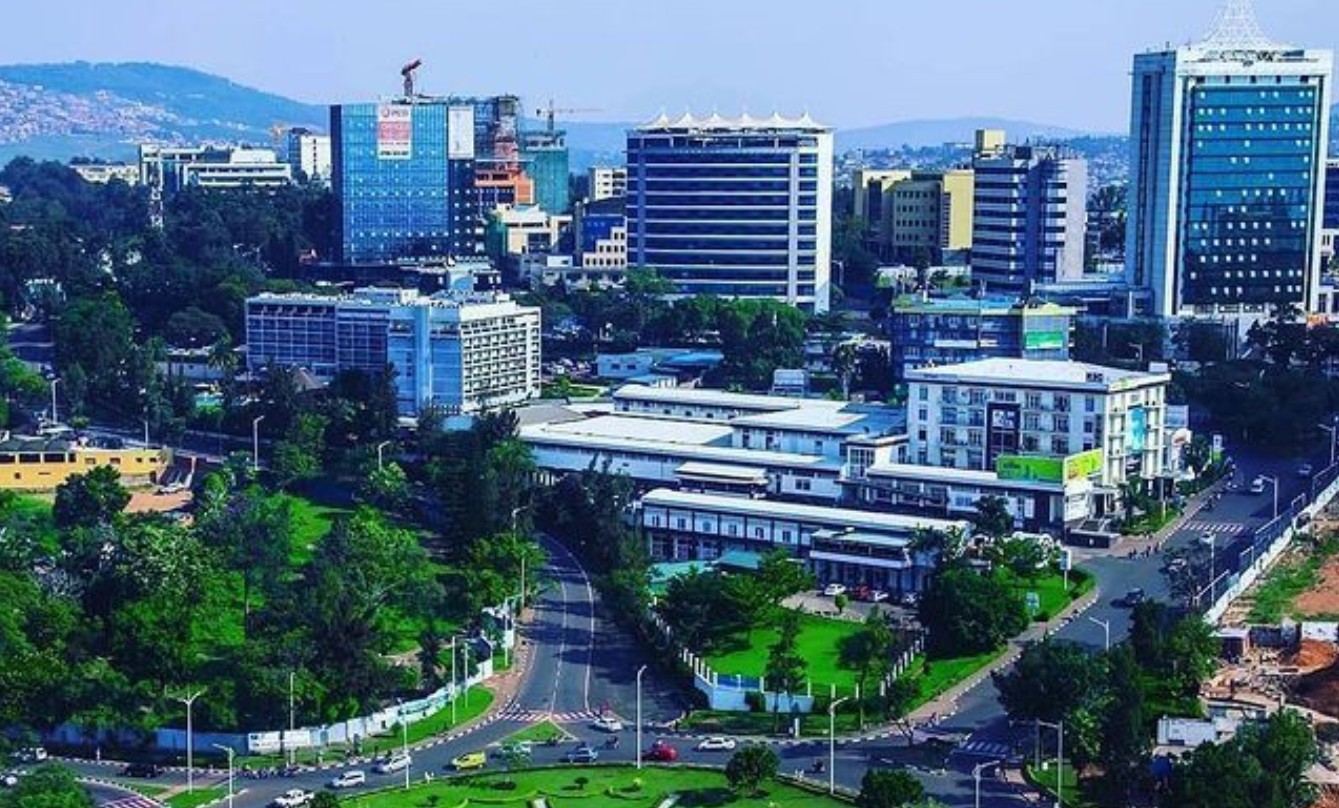
The event took place at the university’s main campus in Masoro, Kigali, Rwanda, where AUCA conferred degrees for the 31st time. Among the graduates, 528 received bachelor’s degrees in various fields, including Theology, Education, Information Technology, Nursing, Finance, and more.
Additionally, 199 students graduated with master’s degrees in programs such as Master of Business Administration, Master of Education, and Master of Science.
The graduates hailed from Rwanda and 22 other countries, predominantly from across Africa.
Aimé Nduwayesu, a graduate from the Education department and representative of the master’s degree holders, spoke about how the education received at AUCA will enable them to become catalysts for positive change and contribute solutions to Rwanda’s challenges.
“In Kinyarwanda, it is said that those who seek to wear a crown must bear its weight. That’s why we won’t disappoint; we are young leaders ready to be on the front lines,” said Nduwayesu.
AUCA Vice Chancellor Dr. Pacifique Nizeyimana, congratulated the graduates for their dedication and hard work.
“I know you worked hard and prayed to reach this goal,” he said, urging them to uphold integrity as they navigate the challenges ahead.
Dr. Edouard Kadozi, the Director-General of the Rwanda Higher Education Council (HEC), also commended AUCA for its continued contribution to the nation’s development through quality education.
He emphasized that the graduates are expected to play a pivotal role in the country’s efforts to build a knowledge-based economy, aligning with Rwanda’s Vision 2050 and the broader National Strategy for Transformation (NST2).
“As the country progresses towards a knowledge-based economy, you will be at the forefront as professionals driving these changes. No country can develop without a workforce equipped with the necessary skills in the labor market,” Dr. Kadozi said.
AUCA, which has been in existence for 41 years, was the first private university in Rwanda. It currently operates three campuses, two in Kigali and one in Karongi, Western Province.
The suspect, a 30-year-old dual Kenyan-US national, was apprehended on Sunday, November 16, 2025, at the Sirari border crossing in the Tarime-Rorya area, located near the border with Kenya.
According to Tanzanian police, the man, who was driving a Toyota Land Cruiser, was stopped during a routine security check as he crossed into Tanzania from Kenya.
During the search, the grenades were found in his possession. The police stated that even with permission, bringing hand grenades or any explosives into Tanzania is prohibited under the country’s arms ownership law.
The motive behind the suspect’s possession of the grenades remains unclear, and investigations are currently underway.
Tanzanian authorities have not yet disclosed further details regarding his destination or plans. He is being questioned, and authorities assured that appropriate legal action would be taken after the conclusion of the investigation.
The arrest comes amid nationwide crackdown on foreigners suspected of involvement in violent incidents following Tanzania’s elections held on October 29, 2025.
The elections saw President Samia Suluhu securing 98% of the votes.
Speaking to his cabinet, Netanyahu said Israel’s position has “not changed one bit”.
“Our opposition to the establishment of a Palestinian state on any land has not changed. I do not need affirmations, tweets, or lectures from anyone,” he added. Netanyahu has long argued that a Palestinian state would reward Hamas and could lead to a larger Hamas-run entity on Israel’s borders.
The U.S. resolution proposes a U.N. mandate to establish an international stabilisation force in Gaza, following the ceasefire deal brokered by U.S. President Donald Trump. Unlike previous drafts, it references a potential future Palestinian state, a prospect Netanyahu and his hard-line coalition partners reject.
Netanyahu also addressed the disarmament of Hamas in Gaza, saying, “Either this will happen the easy way, or it will happen the hard way.” Hamas and Palestinian factions criticised the U.S. proposal, describing it as biased toward Israel and a violation of Palestinian self-governance, insisting any international force should operate under U.N. supervision without Israel’s involvement.
International pressure on Netanyahu has grown following recent moves recognising Palestinian statehood. In September, the U.K., Australia, and Canada formally recognised Palestine, prompting Netanyahu to condemn the countries for offering what he called a “prize” to Hamas.
Netanyahu also commented on rising violence in the West Bank, including attacks by Jewish settlers and clashes with Palestinians. He described the violence as the work of a small minority, though Palestinian officials and human rights groups report a broader pattern, including seven deaths in recent weeks.
Defence Minister Israel Katz reiterated Israel’s position, stating, “Israel’s policy is clear: no Palestinian state will be established.” Foreign Minister Gideon Saar said the government “will not agree to the establishment of a Palestinian terror state in the heart of the Land of Israel,” while National Security Minister Itamar Ben Gvir dismissed the Palestinian identity as an “invention.”
The first phase of the U.S.-backed ceasefire deal has already seen the release of 20 surviving Israeli hostages and nearly all of the 28 deceased captives held by Palestinian militants. In return, Israel freed nearly 2,000 Palestinian prisoners and returned 330 bodies.
As the Security Council prepares to vote on Monday, Netanyahu’s stance signals that Israel will not accept Palestinian statehood under any circumstances.
According to the Greek official news agency AMNA, the letter of intent between Greece’s DEPA Commercial and Ukraine’s Naftogaz will enable the transport of American liquefied natural gas (LNG) to Ukraine through the so-called Vertical Corridor from December 2025 to March 2026.
The agreement was signed in Athens in the presence of Greek Prime Minister Kyriakos Mitsotakis and Zelensky.
Mitsotakis said the deal would provide Ukraine with “diversified and reliable energy sources,” noting that Greece has become an important hub for gas flows to Central and Eastern Europe.
During the visit, the two leaders also discussed reconstruction efforts in Ukraine, defense cooperation and Euro-Atlantic integration.
The fundamental strategy for building a new model of global leadership is transcending hegemonic logic with win-win logic, said the report titled “Jointly Building a New Model of Global Leadership — Work Together in Pursuit of a More Just and Rational Global Governance System,” released by Xinhua Institute, a think tank affiliated with Xinhua News Agency.
The international community calls for a new model of global leadership capable of responding powerfully and effectively to global challenges and leading humanity toward a better future, it said.
The new model of global leadership should represent an optimization and refinement of the global leadership framework established after World War II, said the report.
“It is imperative to take the common values of humanity as the value benchmark, the four China-proposed global initiatives as the systematic plan, the pursuit of equitable and orderly multi-polarization and inclusive, mutually beneficial economic globalization as the transformation path and the building of a community with a shared future for humanity as the future vision,” said the report.
Speaking to reporters, Trump said the U.S. is considering the possibility of engaging Maduro directly, adding that he had “sort of made up” his mind on the direction of American policy toward Venezuela. His comments come at a moment when tensions in the region remain high and U.S. military activity around the Caribbean has increased significantly.
“We may be having some discussions with Maduro, and we’ll see how that turns out,” Trump told reporters on Sunday in West Palm Beach, Florida, before getting on a flight back to Washington. “They would like to talk.”
The United States recently deployed the aircraft carrier USS Gerald R. Ford, along with a fleet of supporting warships, to the Caribbean as part of operations targeting drug-trafficking networks. Washington accuses elements within the Venezuelan government, including the alleged Cartel de los Soles, of involvement in narcotics operations. Maduro and his administration strongly deny the allegations, saying they are fabricated to justify external interference.
Despite hinting at possible dialogue, Trump made clear that pressure on Venezuela would not ease. U.S. officials are preparing to designate the Cartel de los Soles as a foreign terrorist organisation, a move that would mark one of the most aggressive steps taken against Caracas in years.
This opening toward potential talks marks a notable shift in tone. The U.S. has spent years isolating Maduro through economic sanctions and diplomatic pressure, and relations have been further complicated by Washington’s recognition of opposition figure Juan Guaidó as interim president in 2019, a position that has since lost momentum internationally.
A willingness to even consider discussions suggests the Trump administration may be exploring a new path, though it remains uncertain whether this reflects a firm policy change or an exploratory gesture.
Any diplomatic movement would carry significant consequences for the region. Venezuela’s economic collapse and political turmoil have forced millions to flee, impacting neighbouring countries and reshaping regional alliances.
Observers note that a U.S. shift, even symbolic, could influence political dynamics across Latin America. At the same time, the strong U.S. military presence in the Caribbean raises questions about whether diplomacy or pressure will ultimately shape Washington’s strategy.
For now, the future of U.S.-Venezuela relations remains unclear. Neither government has confirmed any formal steps toward negotiation, and deep mistrust continues to define their interactions. Trump’s remarks, however, have opened a rare possibility for dialogue between two governments whose relations have been frozen for years.
As events unfold, the prospect of talks, however uncertain, will be closely watched by regional leaders, international observers, and humanitarian groups hoping for stability in one of Latin America’s most complex political crises.
Lawyer Richard Gisagara submitted the complaint to the French media regulatory authority, ARCOM, on November 15, 2025.
The community cited an article published by RFI on November 10, 2025, titled “We will continue to resist until Kigali accepts dialogue: FDLR says” (Nous résisterons jusqu’à ce que Kigali accepte un dialogue”, affirment les FDLR).
The community argues that the article misrepresents the FDLR as a lightly armed faction operating in eastern Democratic Republic of Congo (DRC), while ignoring its genocidal history and the sanctions imposed on it by the UN Security Council, the United States, and the European Union.
“The FDLR has been responsible for mass killings in Rwanda and atrocities in eastern Congo over the past 30 years,” the association said in the complaint. “Some of its leaders have even been prosecuted in German courts. RFI’s report gives this group an undeserved legitimacy by failing to provide this critical context.”
The association emphasised that RFI, as a state media outlet, is expected to uphold democratic values and provide accurate, impartial reporting. Citing French law, France Médias Monde regulations, and RFI’s own code of conduct, CRF said journalists must not act as mouthpieces for armed groups.
The community also highlighted that this misreporting occurred in the context of prior intimidation of French media by the DRC government in January 2025, warning journalists that reporting contrary to government lines could lead to sanctions or even threats of death.
The Rwandan community has urged the French media regulator to review RFI’s practices and ensure that the station fulfils its legal and ethical responsibilities. The organisation also reaffirmed its commitment to preserving historical truth and combating hate speech and impunity.