President Cyril Ramaphosa officiated the ceremony at the Kinderle Monument in the Northern Cape province, where the remains, which had been taken to Europe and held in local museums and other institutions during the colonial era, were laid to rest following a years-long repatriation process involving South African authorities and overseas institutions.
The remains included six individuals repatriated from Scotland and others long held at Iziko Museums, formerly the South African Museum, since the early 20th century. Many were originally exhumed without consent between the late 1800s and early 1900s, during a period when the remains of indigenous people were collected, traded and studied in support of racist scientific theories.
“A dignified burial is but the least we can do as the democratic government to honor these, our countrymen and countrywomen, who were victims of a terrible past,” Ramaphosa said.
He described how indigenous communities were dispossessed of land and subjected to violence and exploitation under colonial rule, adding that “not even death would spare them from indignity.”
“Their remains were dug up from graves and sold to museums and medical institutions in Europe,” he said.
The reburial forms part of a broader national program led by the Department of Sport, Arts and Culture to repatriate human remains and heritage objects taken during colonialism and apartheid.
“The return of our ancestors to their descendant communities is a vital act of restoration and restitution that goes beyond acknowledging the colonial legacy. It is also a manifestation of Ubuntu, a recognition of our common humanity,” Ramaphosa stressed.
“Today, as their remains are finally returned to the land from which they were taken, we restore the dignity that was so cruelly denied to them in life and even in death,” he said.
“They were not nobodies … They were our people,” he added.
Ramaphosa reaffirmed South Africa’s commitment to restoring dignity to the victims of colonialism and apartheid, noting that the Constitution calls for healing the divisions of the past and advancing social justice.
“Our Constitution obliges us to advance restitution for all those who were the victims of colonial and apartheid atrocities,” he said.
Coffins are carried during the reburial of remains of dozens of Africans
This research involved a type of computing hardware known as neuromorphic computers, which are built to imitate how the human brain processes information.
Scientists have now shown that these machines can successfully solve partial differential equations (PDEs), a class of problems that are foundational to physics simulations, weather forecasting, fluid dynamics, and engineering tasks.
Until now, solving these equations typically required massive supercomputers that use enormous amounts of energy.
In contrast, the brain‑inspired systems demonstrated similar capabilities while using only a fraction of the power, suggesting a path toward far more energy‑efficient computing for scientific research and national security applications.
Researchers Bradley H. Theilman and James B. Aimone developed a new algorithm that allows this neuromorphic hardware to tackle such advanced calculations.
According to the team, the structure of this algorithm reflects how the brain might perform complex computations naturally, offering insight into both computing and brain function.
The study also highlights that these findings could greatly impact efforts to build the next generation of low‑energy computational systems.
If further developed, brain‑inspired computing could provide powerful alternatives to current systems used in high‑performance research, all while reducing electrical power demands.
Brain inspired machines are better at math than expected.
The two-day summit, hosted by The European House-Ambrosetti, brought together global leaders, private sector players and investors to champion climate finance, environmental stewardship and a just transition.
Kenya’s Cabinet Secretary in the Ministry of Agriculture and Livestock Development Mutahi Kagwe warned that failure to finance climate-smart agriculture in Africa could trigger far-reaching consequences for global food systems.
Kagwe said that climate change is already dismantling traditional agricultural systems across Kenya, with extreme weather patterns now defining the country’s reality.
“Climate shocks are no longer future risks. They are present disruptions. If agriculture in Africa fails, global food systems will feel the shock,” he warned.
The summit aims to catalyze a global discussion on the crucial role of industry in building a climate-resilient Africa.
Through a series of plenary sessions and panels, participants, including more than 150 CEOs, institutional leaders and influential stakeholders from Africa and beyond, will have the opportunity to examine best practices, innovations and policies needed to mitigate the impacts of climate change on the African continent.
Kagwe said that Kenya’s heavy reliance on rain-fed agriculture, which accounts for 98 percent of farming, leaves millions exposed to climate variability.
He said the consequences have already been severe, including five failed rainy seasons between 2020 and 2023, 4.4 million people pushed into food insecurity, and the loss of over 2.5 million livestock.
“Even in 2026, the crisis persists. While some regions face deadly floods, others are battling drought and extreme heat, with over two million Kenyans currently in need of emergency food and livestock support,” Kagwe said.
But beyond the statistics, Kagwe said that Africa must no longer be sidelined in climate decision-making or subjected to externally designed solutions.
“There is no one-size-fits-all solution. Climate change is a lived experience for our farmers. The answers must come from the ground, not from boardrooms in Brussels, New York or Paris,” he said.
The summit called on international investors to finance climate-smart agriculture to boost food security on the continent.
In the southeastern city of Zaporizhzhia, one person was killed, and five more were wounded when drones and missiles hit residential areas. Several apartment buildings, private homes, a shop, and an industrial facility were damaged, according to regional governor Ivan Fedorov, who shared photos showing fires and destruction.
“Russia launched a massive combined strike on Zaporizhzhia using drones and missiles,” Governor Ivan Fedorov said.
In the eastern Poltava region, two people died and 11 others were injured in similar attacks that struck homes and a hotel.
The strikes come shortly after Ukrainian President Volodymyr Zelenskiy on Monday warned that intelligence reports showed Russia preparing a new, large‑scale offensive.
Russian drone, missile attack kills three in Ukraine.
“Leo passed away peacefully after a long battle with cancer,” OnlyFans said on Monday, March 23, adding that his family has asked for privacy during this difficult time.
Radvinsky acquired Fenix International Limited, the company that owns and operates OnlyFans, in 2018 and served as its majority shareholder and director. Under his leadership, the subscription‑based platform grew into a globally used site that gave creators a way to earn directly from subscribers, especially during and after the pandemic years.
Before focusing on OnlyFans, Radvinsky built his early career in online businesses and later ran a venture capital fund called Leo, which invested in technology companies. Though he kept a low public profile, his influence on the creator economy and online content distribution was significant, helping shape how digital creators connect with audiences worldwide.
His passing marks the end of an important chapter in the company’s history, and questions remain about the future leadership and direction of OnlyFans without its key figure at the helm.
Leonid Radvinsky, the billionaire owner of OnlyFans, has died at the age of 43 following a prolonged battle with cancer.
Friendly countries recently sent messages to Iran indicating Washington’s desire to begin talks on ending the war, but Iran has not responded, the IRNA reported, citing Iranian Foreign Ministry spokesperson Esmaeil Baghaei.
Baghaei said Tehran’s stance on the Strait of Hormuz, as well as its conditions to end the war, have not changed, the IRNA reported.
Iranian Parliament Speaker Mohammad Bagher Ghalibaf also denied the claim on social media platform X, saying “no negotiations have been held” with Washington.
Meanwhile, several media reports quoted Ebrahim Rezaei, spokesperson for the Iranian parliament’s National Security and Foreign Policy Committee, as saying that talks with the United States are meaningless in the current conditions.
Earlier in the day, Trump said he had ordered a five-day delay of planned strikes on Iranian power plants and energy facilities, citing what he described as “very good and productive conversations” over the past two days aimed at easing tensions in the Middle East.
Reuters, citing Israel officials, later reported that the United States is holding negotiations with Ghalibaf, and that the two sides could hold talks in Pakistan’s Islamabad as early as this week.
The developments came amid heightened regional tensions following joint U.S.-Israeli strikes on Iran starting on February 28, to which Iran and its regional allies responded with attacks on Israeli and U.S. interests across the Middle East.
Iran’s declaration comes hours after President Trump said he had ordered a five-day delay of planned strikes on Iranian power plants and energy facilities, citing what he described as “very good and productive conversations” over the past two days aimed at easing tensions in the Middle East.
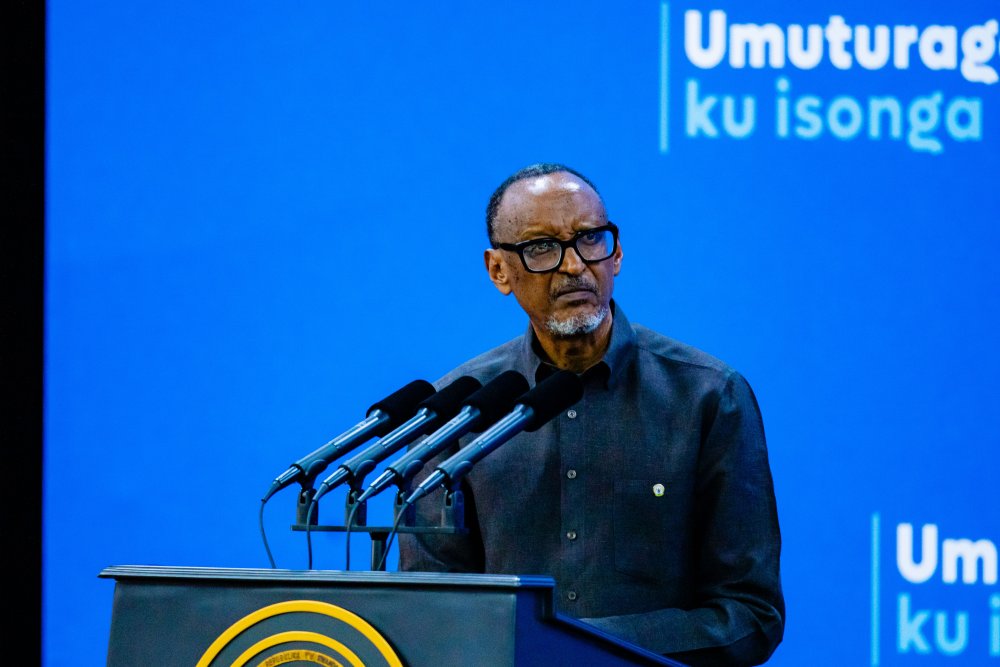
He made the remarks while closing a national meeting of central and local government leaders held at the Gako Military Academy, attended by district officials, cabinet ministers, and other senior government representatives.
The meeting examined ongoing governance challenges, including weak coordination among leaders, inefficiencies in service delivery, and other persistent shortcomings.
In his opening remarks, the Prime Minister cited findings from the National Institute of Statistics, noting a decline in service delivery performance, from 78.2% in 2023 to 75.8% in 2024, and further down to 71.7% in 2025.
Before delivering his address, Kagame was informed that leaders had acknowledged their shortcomings and committed to improving their performance. He questioned whether the issues raised were new to those present.
“Who here is hearing this for the first time? That would mean there are issues beyond what has been acknowledged. Otherwise, we should continuously assess what is not working, put everything in order, and implement corrective measures. But what we end up with is repetition. So what exactly is the problem?” he asked.
The President expressed concern over leaders who repeatedly make the same mistakes, apologise, and promise not to repeat them, only to fall into the same patterns again.
“Making the same mistake repeatedly, apologising for it, and repeating it again, I don’t understand that as a normal way people make mistakes. It becomes a problem. These are mistakes that are repeatedly made by the same individuals, including those in leadership positions,” he said.
He stressed that if a leader continues to repeat the same mistakes, it reflects a lack of understanding that must be addressed.
The Head of State further questioned whether the issue lies in how responsibilities are understood and executed across leadership structures.
“Is the problem within us as Rwandans? All of you seated here understand your responsibilities and what needs to be done, perhaps even better than I do. Yet we still face these challenges,” he said.
He also highlighted weaknesses in planning and implementation, noting that failure to align plans with execution leads to ineffective outcomes.
“Planning must go hand in hand with implementation. Even when plans are well designed, if they are not aligned with execution, it becomes a problem. You cannot expect meaningful results without proper planning,” he noted.
Citing an example from the Eastern Province, Kagame questioned why an irrigation project intended to also supply water to residents had not achieved both objectives.
“You follow up on one component and neglect the other. How can you achieve the intended outcome?” he asked.
The Governor of the Eastern Province, Pudence Rubingisa, explained that while part of the irrigation component had been implemented, the water supply aspect had been overlooked.
Kagame questioned the lack of coordination among stakeholders involved in the project, emphasising the importance of communication in delivering results.
“After this, you go and communicate, something I have not seen in the past 31 years,” he remarked.
Rubingisa acknowledged the communication gap and noted that leaders had committed to improving coordination and ensuring citizen participation in providing feedback on projects affecting them.
President Kagame concluded by stressing the need for urgent behavioural and operational changes among leaders, urging them to move beyond repeated mistakes and apologies, and to fully understand and fulfil their responsibilities.
President Kagame made the remarks while closing a national meeting of central and local government leaders held at the Gako Military Academy, attended by district officials, cabinet ministers, and other senior government representatives.
Over the course of a single week in March 2026, ALX Rwanda hosted and participated in two impactful Women in Tech engagements, one in collaboration with HerinTech on March 14 and another with Lead Access on March 17. While each event had its own focus, both were united by a shared mission of empowering women with the confidence, connections, and capabilities needed to thrive in tech.
Partnership-driven empowerment
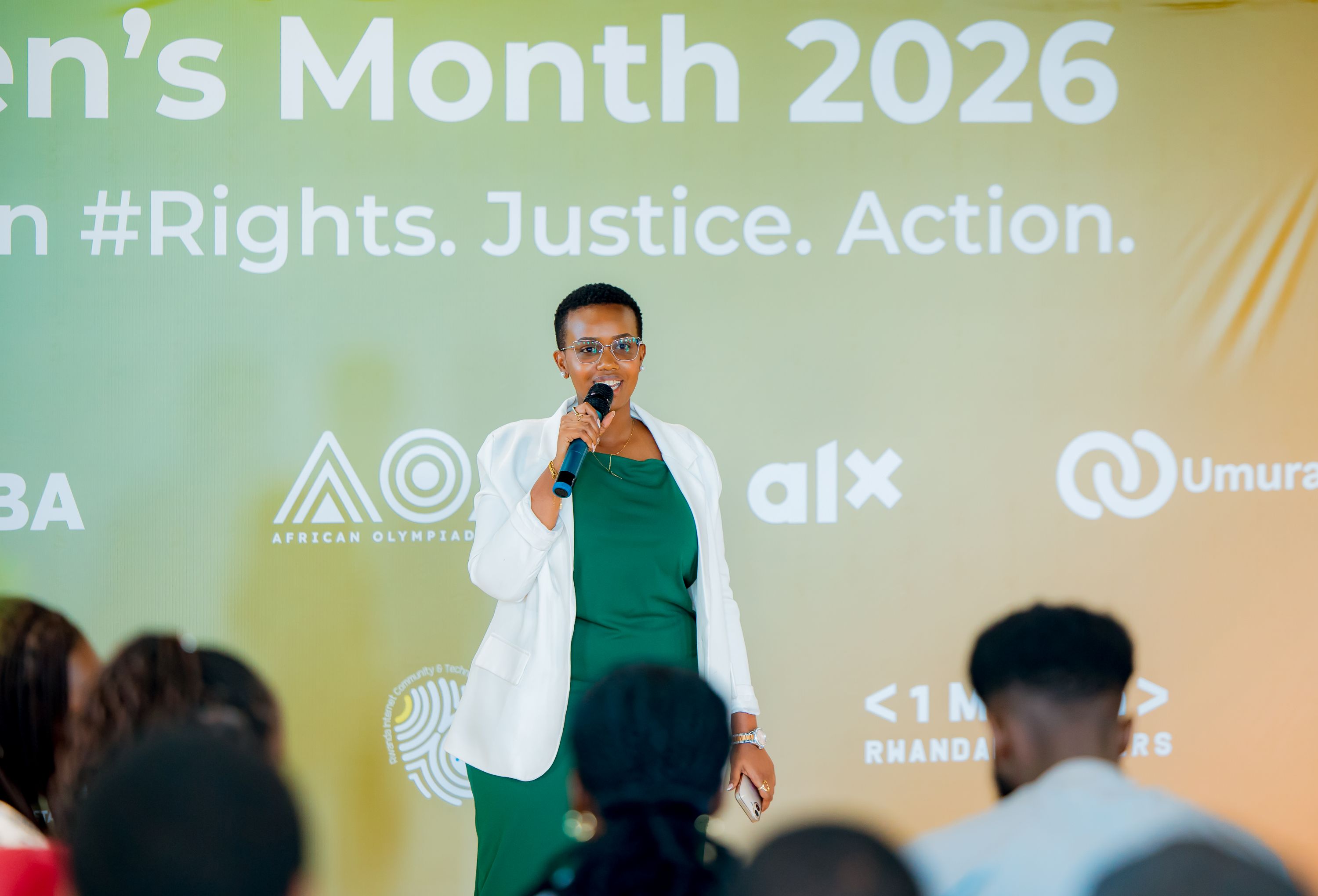
The March 14 engagement, organised in partnership with HerinTech, brought together young women, students, and industry professionals under the theme “Rights. Justice. Action. For All Women and Girls.” The session created a dynamic and inclusive space for learning, dialogue, and inspiration.
While each event had its own focus, both were united by a shared mission of empowering women with the confidence, connections, and capabilities needed to thrive in tech.
Speakers, including Linda Ikirezi, Founder of HerinTech, emphasised the importance of intentional collaboration in creating opportunities for women. Their message underscored a key reality that advancing women in tech requires ecosystems rather than isolated efforts.
The event featured contributions from industry professionals and partners, including Marie Grace Niwemukiza from the Ministry of ICT and Innovation, Arnould Gabiro, Software Engineer at Umurava, and Fleury, a representative from NCBA Bank spoke at the event. Sessions covered a wide range of topics, from career journeys in tech to often-overlooked conversations such as women’s reproductive health, creating a holistic environment that addressed both personal and professional development.
Linda Ikirezi, Founder of HerinTech, emphasised the importance of intentional collaboration in creating opportunities for women.
A panel discussion moderated by Liliose Gashugi brought together experienced professionals, including Simonneta Perles from Westerwelle Startup Haus Kigali, Eliane Irankunda Kamana from Irembo, and Resire Mboneko, a Kigali-based Information Security Manager. They shared candid insights on navigating male-dominated industries, with their collective message resonating strongly with participants.
“Show up—scared, nervous, or uncertain—but always show up.”
The engagement also featured presentations from young innovators, including students from SOS Technical School, demonstrating early-stage creativity and highlighting the importance of nurturing talent from a young age.
Panel discussions featured experienced professionals who shared candid insights on navigating male-dominated industries, with their message resonating strongly with participants.
The keynote speech by Grace Ingabire, CEO of RICTA, left a lasting impression. She spoke about the importance of being audacious, challenging stereotypes, and taking action before feeling ‘ready.’
Her message resonated deeply, noting that growth comes from stepping forward rather than waiting for perfection.
What followed was pure joy, with music, dance, and a lively after-party led by the students themselves. From Amapiano challenges to spontaneous moments of connection, the atmosphere reflected something deeper than fun, showcasing a sense of community, connection, and shared celebration.
ALX workshop with Lead Access
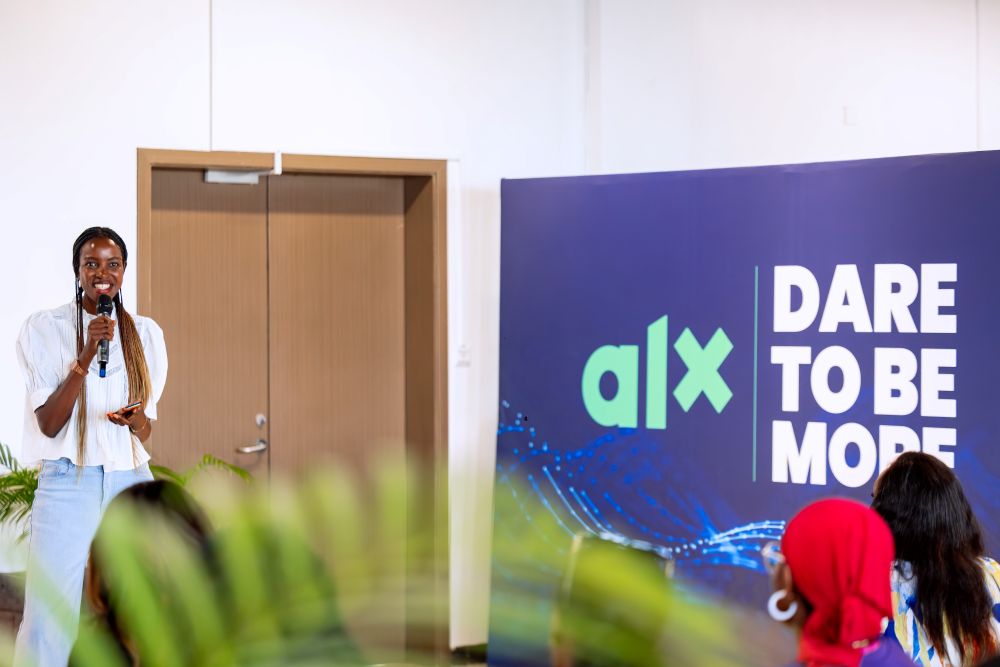
Just days later, ALX Rwanda, in partnership with Lead Access, hosted a Women in Tech workshop at the ALX Rwanda Hub in Nyarutarama. Held under the theme “Give to Gain”, the session brought together aspiring technologists, learners, and industry leaders in an interactive environment centred on mentorship, leadership, and innovation.
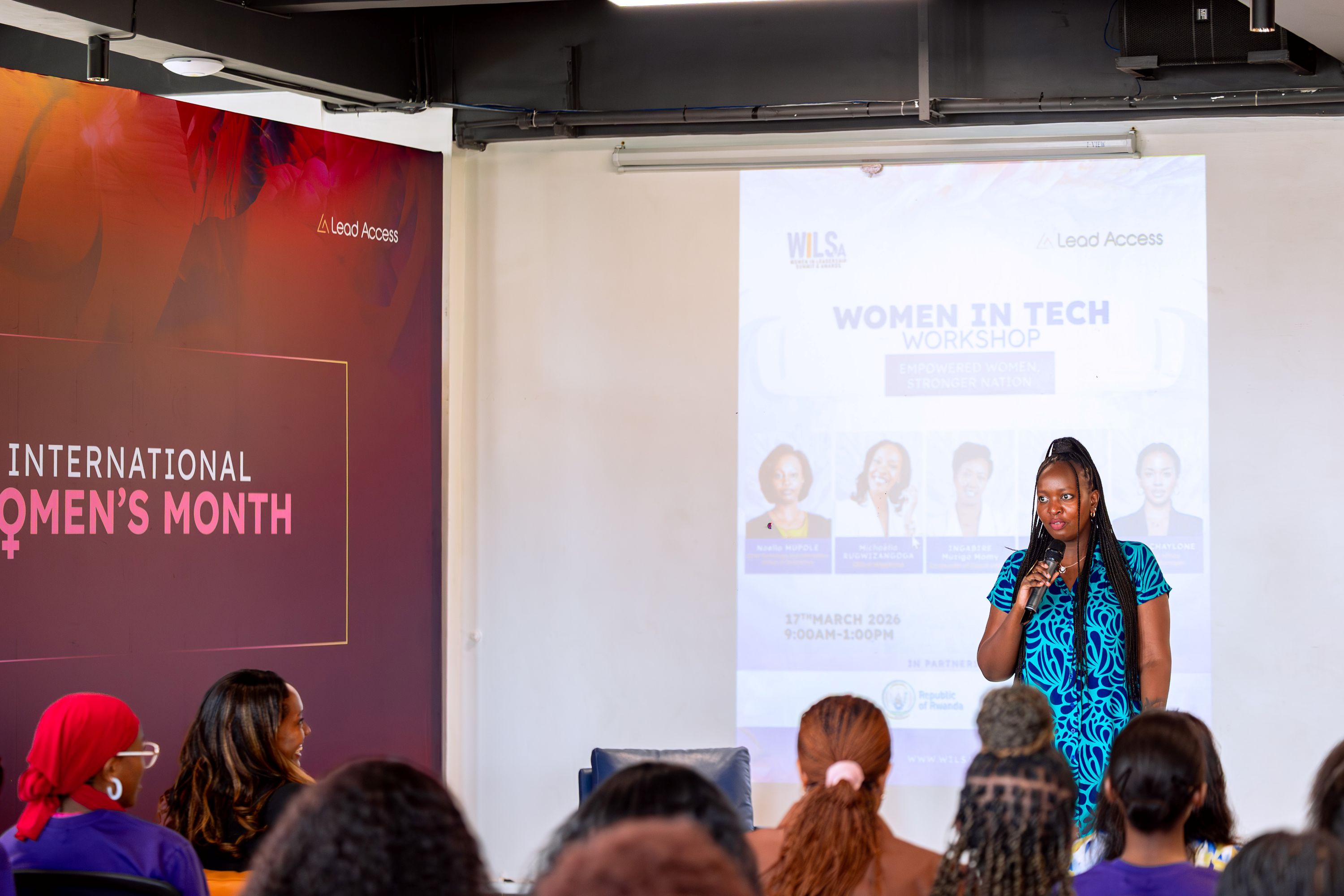
The workshop highlighted Rwanda’s growing position as a hub for digital talent and innovation. Speaking at the event, Sandra Kabongoyi, Partnership Manager at ALX Africa, emphasised the importance of inclusivity in shaping the future of the digital economy.
ALX Women in Tech events coincided with International Women’s Month, highlighting the celebration of women’s achievements while fostering dialogue, collaboration, and empowerment in the tech space.
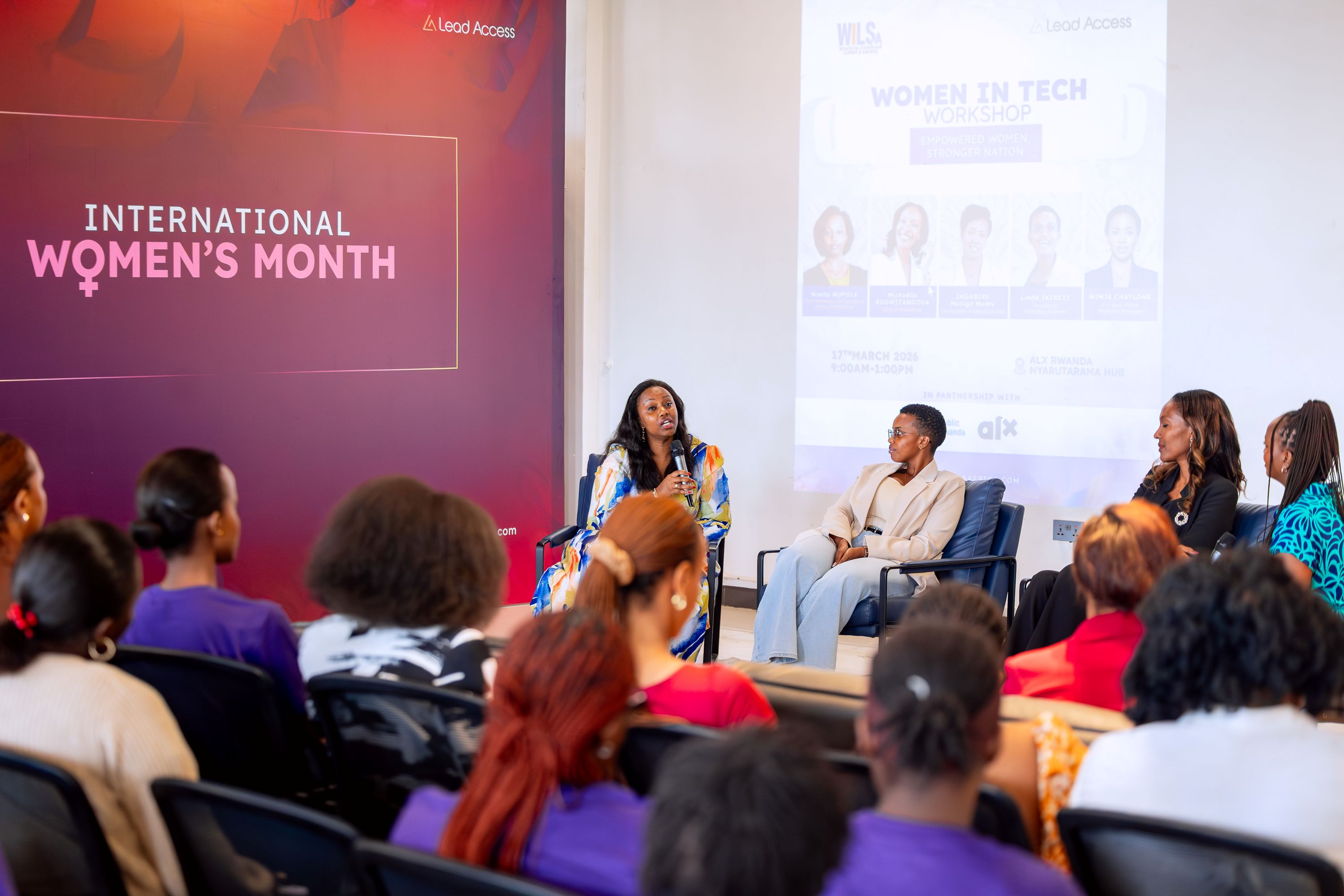
The program featured a panel discussion with prominent women in tech, including Noella Mupole, Chief Technology and Information Officer at Solid Africa, Linda Ikirezi, Founder of HerinTech Rwanda, and Michaëlla Rugwizangoga, CEO of WiseAfrica, moderated by Jacinta Gitau. The discussion explored personal journeys marked by resilience, persistence, and growth, with panellists sharing experiences overcoming gender barriers, self-doubt, and structural challenges.
A key message emerged throughout the session: mentorship and continuous learning remain essential pillars for women building careers in technology.
Michaëlla Rugwizangoga highlighted the broader ecosystem’s role in enabling women’s progress, while Ingabire Muziga Mamy, Co-founder of Charis UAS Ltd, delivered a motivational talk emphasising purposeful innovation and leadership:
“The future digital economy must be built by women, not just used by women.”
The engagements sparked inspiration, learning, and connection.
She further encouraged participants to tackle local challenges as a pathway to global relevance, reinforcing the idea that innovation often begins within one’s immediate environment.
For many participants across both events, the experience went beyond inspiration. It provided practical exposure, meaningful connections, and renewed confidence in their ability to pursue careers in technology.
Learners like Apophia Usanabaganwa from ALX Rwanda described the experience as transformative, noting how interactions with speakers and peers helped restore confidence and reaffirm ambition.
“I’m really happy about what happened today. We’ve been reminded that women are capable of everything,” she said. “My hope had dropped in recent days, but today it rose again because of the engaging words from the guests. Right now, I’m very confident that I’m able to do anything.”
She also highlighted the role of ALX in her personal growth, noting that the program has equipped her with practical skills, including AI Career Essentials, and valuable connections to support her career journey.
For many participants across both events, the experience went beyond inspiration. It provided practical exposure, meaningful connections, and renewed confidence in their ability to pursue careers in technology.
ALX at the centre of a growing ecosystem
Through both engagements, ALX Rwanda played a central role not only as a host but as a convener of partnerships, ideas, and opportunities. By working alongside organisations such as HerinTech and Lead Access, ALX continues to strengthen a collaborative ecosystem that supports women at different stages of their tech journeys.
At the core of ALX’s model is a focus on accessible, flexible, and future-ready learning. Through a hybrid model that combines intensive online technical tracks, ranging from software engineering and data science to AI career essentials, with in-person collaboration at its Kigali Tech Hub, the organisation bridges the gap between traditional education and the modern workforce.
By leveraging strategic partnerships with the Government of Rwanda and global tech entities, ALX focuses on large-scale youth employability, offering fully sponsored programs and advanced AI learning tools like “Chidi” to foster a knowledge-based economy and drive regional innovation.
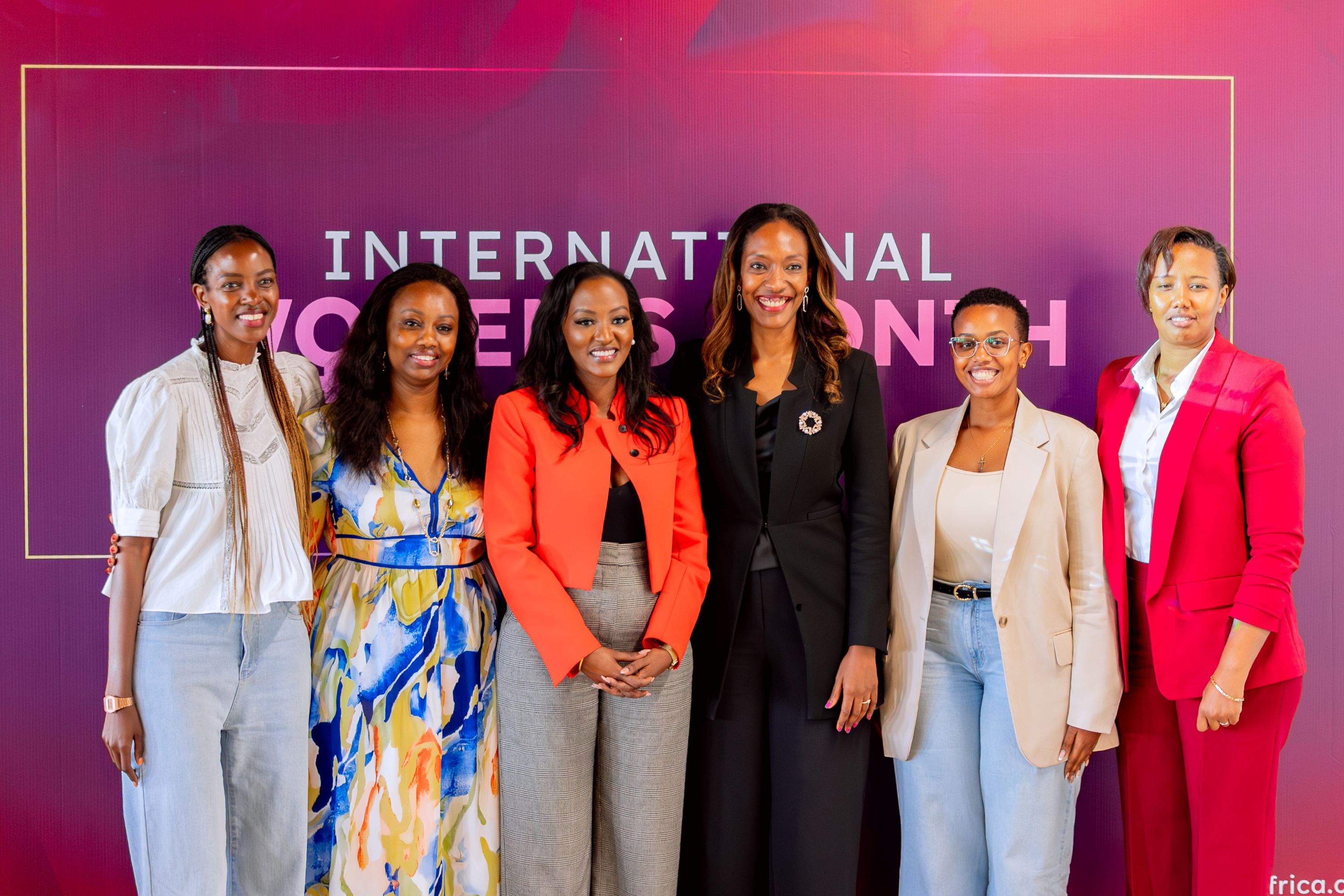
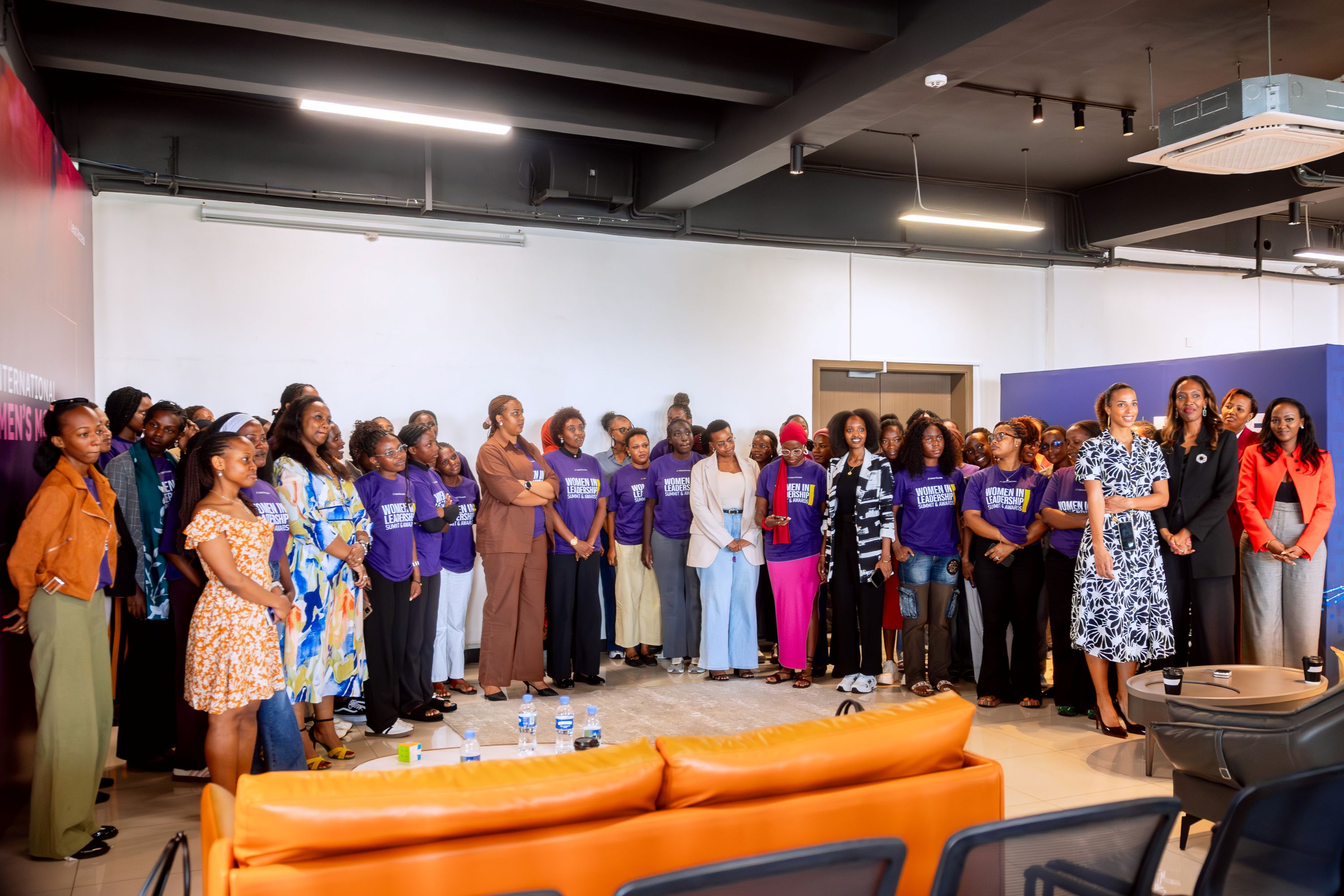
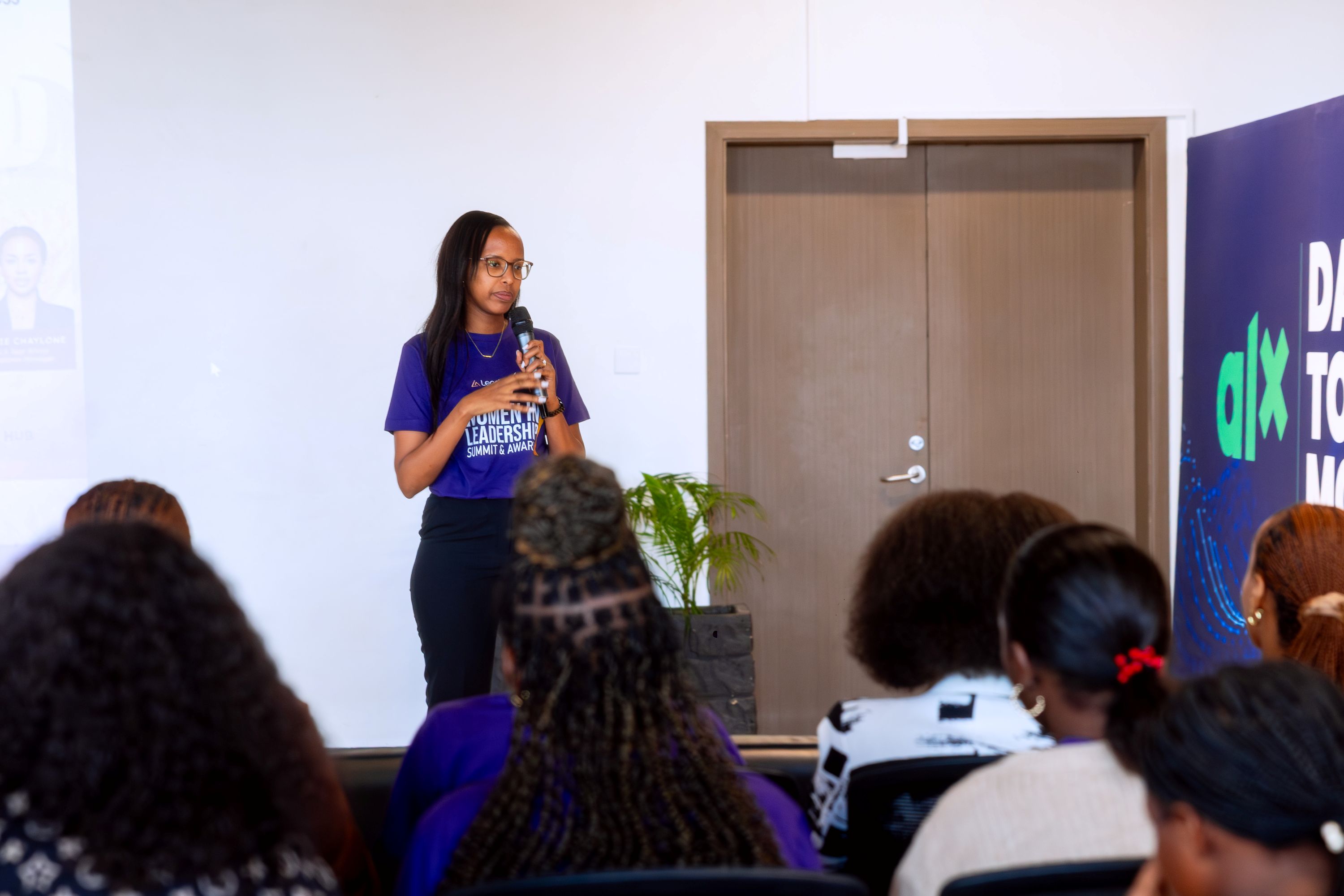
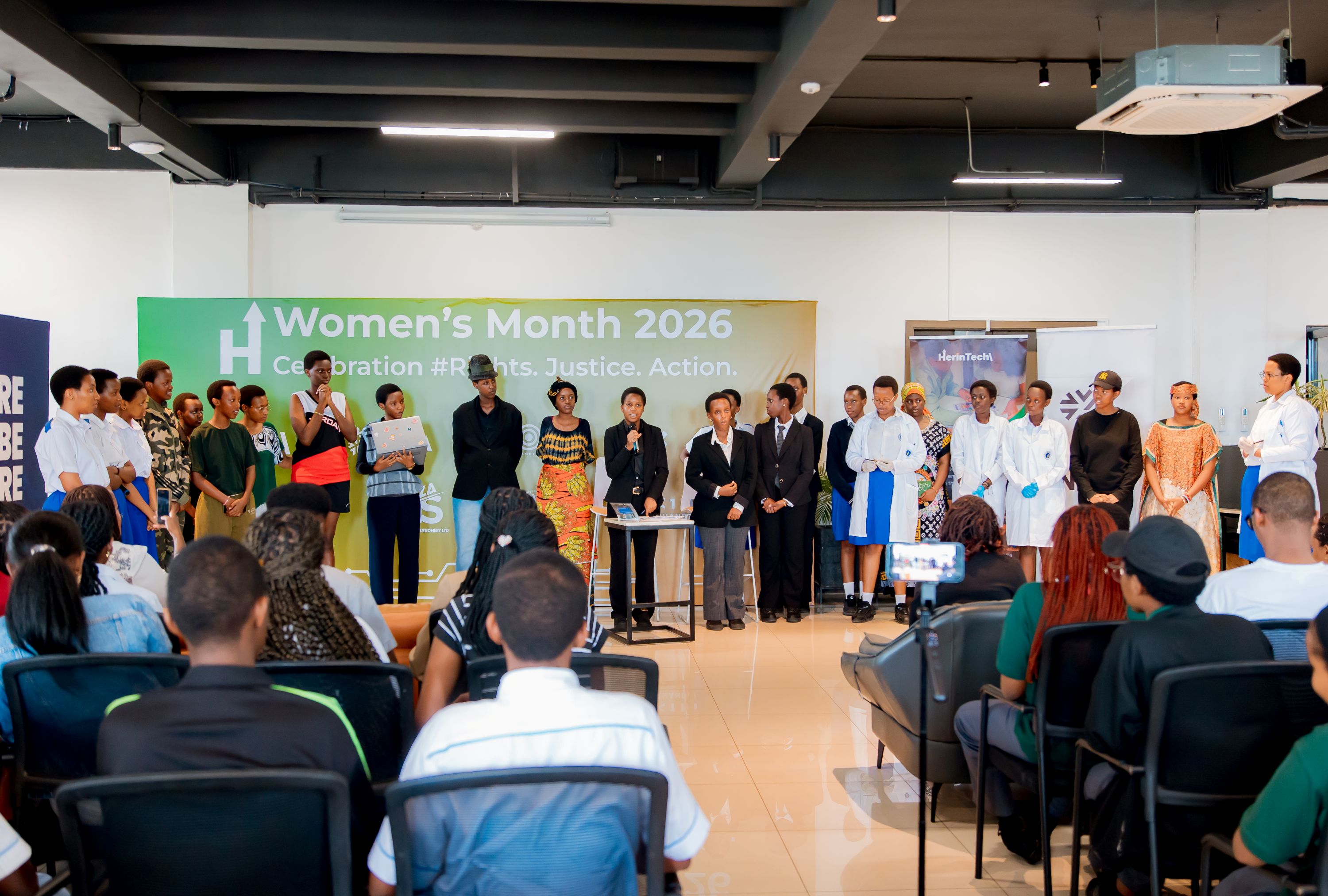
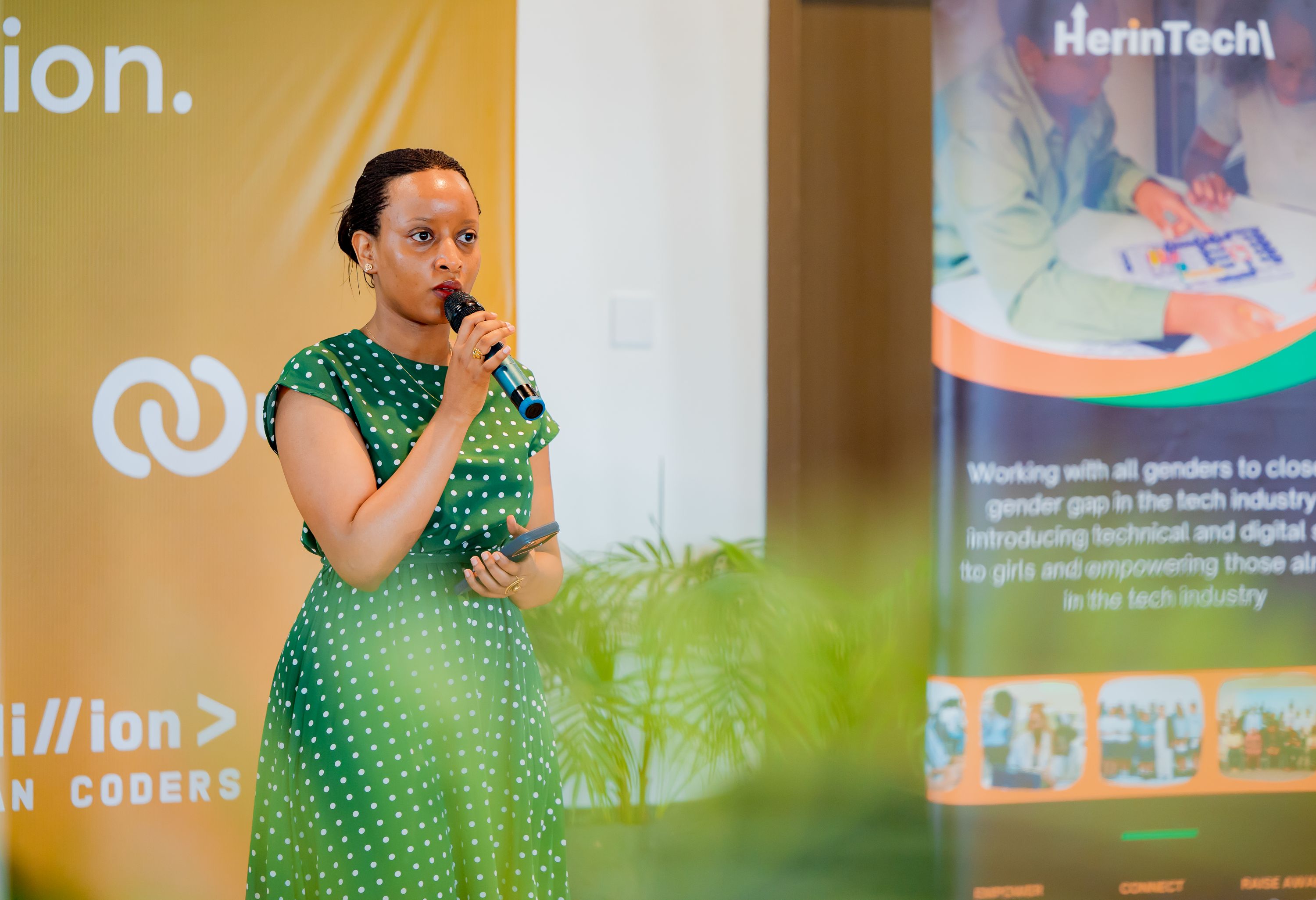
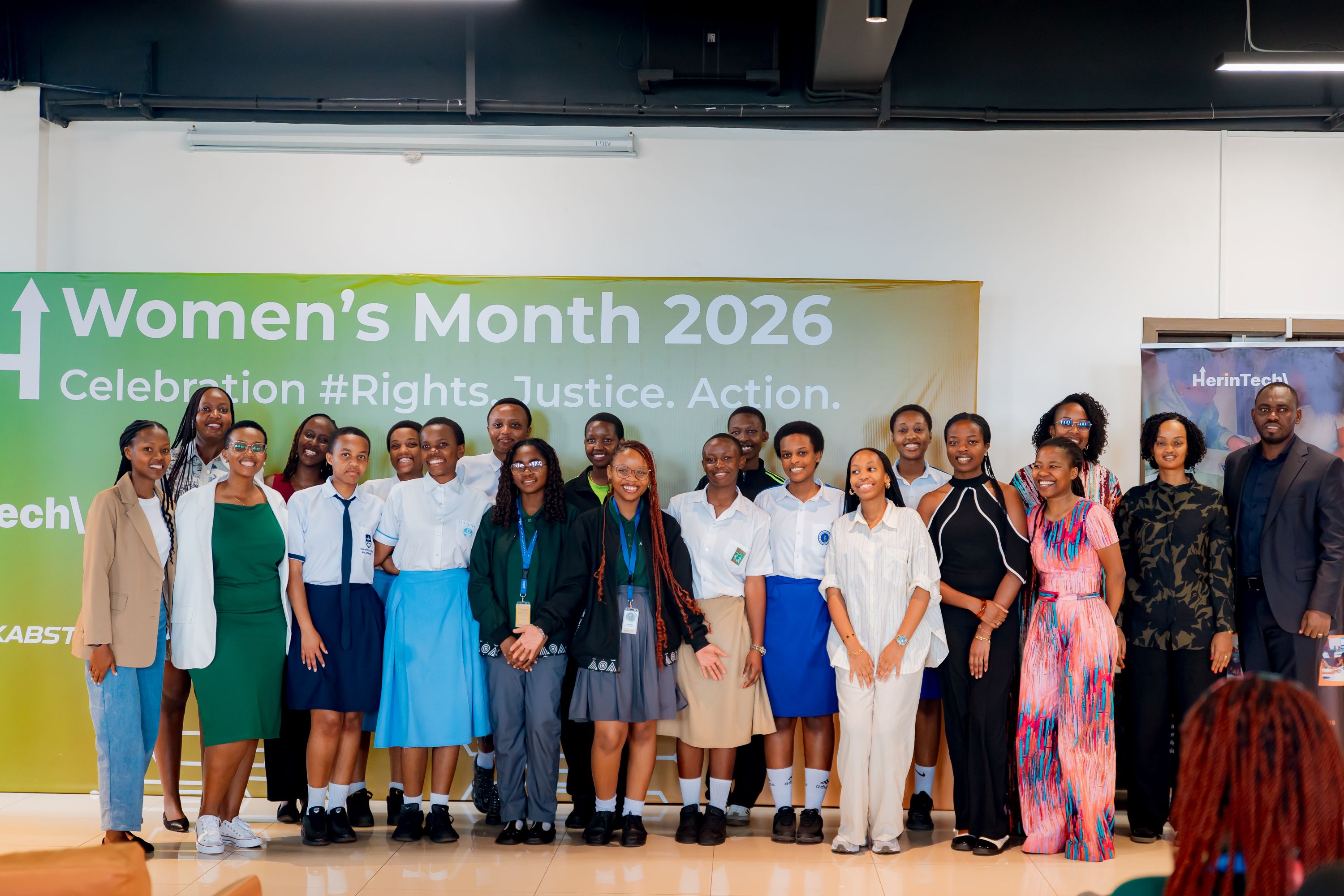
Dozens of young women in tech attended the events.Panellists shared real-world insights on navigating and thriving in tech careers. Held under the theme “Give to Gain”, the session brought together aspiring technologists, learners, and industry leaders in an interactive environment centred on mentorship, leadership, and innovation.Sandra Kabongoyi, Partnership Manager at ALX Africa, emphasised the importance of inclusivity in shaping the future of the digital economy.Through both engagements, ALX Rwanda played a central role not only as a host but as a convener of partnerships, ideas, and opportunities.For many participants, the experience went beyond inspiration, offering practical exposure, meaningful connections, and renewed confidence to pursue careers in technology.Participants gained valuable insights from experienced professionals in the Women in Tech space. The engagement also featured presentations from young innovators, including students from SOS Technical School.The participants cut a cake to mark International Women’s Month.The events offered practical exposure, meaningful connections, and renewed confidence to pursue tech careers.
Miramago was previously the CEO of the Institute of Certified Public Accountants of Rwanda (ICPAR), where he played a pivotal role in advancing the accounting profession and improving financial governance in the country.
His appointment to the PSF comes at a time when the organization continues to play a crucial role in the development of the private sector and the country’s economic growth.
Miramago assumes his new position as PSF recently elected new leaders, including François Twagirumukiza, who has prioritized initiatives like establishing a new insurance fund for traders and encouraging businesses to operate 24/7.
Twagirumukiza emphasized that in the next three years, they will work closely with members, especially to promote participation in the new health insurance fund for traders.
This newly established insurance fund aims to assist traders who are unable to afford conventional insurance by providing a community-based safety net for them during times of crisis. Currently, the fund has nearly 900 members.
Additionally, one of the key initiatives PSF is focusing on is encouraging businesses to operate around the clock to ensure continuous service availability, addressing concerns about the lack of services during nighttime or weekends.
Amin Miramago’s leadership is expected to strengthen PSF’s efforts in advancing the private sector and contribute further to the country’s economic development.
During his tenure at ICPAR, he helped the organization become a permanent member of the International Federation of Accountants (IFAC), and he supported several reforms aimed at enhancing public financial management and transparency in government spending.
Miramago was previously the CEO of the Institute of Certified Public Accountants of Rwanda
He made the remarks during the opening of the one-day consultation meeting of senior government officials and local leaders at Gako Military Academy.
The meeting discussed the ideal conduct for leaders in advancing the country and delivering quality services.
Dr. Nsengiyumva highlighted the importance of improving planning and coordination between various levels of government, stating that working in isolation often leads to inefficiencies and failed projects.
An example was shared about how some ministries implement projects fail to work with private sector partners to build additional infrastructure, which often results in unproductive outcomes.
The meeting takes place at a time when Rwanda Governance Board scorecard shows a decline in service delivery performance from 78.2% in 2023 to 75.8% in 2024, and 71.7% in 2025.
He urged leaders to commit to delivering timely and quality services, emphasizing that citizens have an inalienable right to good service. “We must ensure that citizens see the government as approachable, responsive, and focused on improving their lives,” he said.
The Prime Minister also discussed the worsening issue of drought, exacerbated by climate change, and the importance of leaders being close to the people to identify and address their challenges. He stressed that when leaders are close to their communities, they can identify needs, such as lack of seeds, ensuring that expected results are achieved.
Dr. Nsengiyumva also called on leaders to understand the living conditions of the people they lead and act quickly to address problems. He encouraged timely reporting of issues to higher authorities to allow the government to intervene when necessary. “Leaders must be proactive and ensure they follow up on issues in their communities,” he added.
Addressing the issue of malnutrition, the Prime Minister urged every district to have a target to eliminate malnutrition, particularly among children. He also raised concerns about poor hygiene and inadequate sanitation in some areas, where people live without basic sanitation facilities or with livestock in their homes.
Another critical issue raised was the substandard alcohol being produced, which not only harms citizens’ health but also impedes economic development.
Dr. Nsengiyumva also discussed the failure of many projects due to poor management, stating that stalled projects result in job losses and hinder economic growth. He gave the example of a market in Nyagatare that cost Rwf1.5 billion but was unused for two years, becoming overgrown with grass.
He urged leaders to follow up on projects, ensuring they meet their objectives and addressing any issues that arise. “You must take an active role in planning, monitoring, and solving issues related to the projects in your respective districts as you have what it takes to do so,” he stated.
Dr. Yusuf Murangwa, the Minister of Finance and Planning, emphasized the need for strategic planning to prioritize urgent projects, allocate resources, and ensure timely execution. He also pointed out that some projects are poorly aligned with actual needs, leading to inefficiency.
Mulindwa Prosper, the Mayor of Rubavu, stressed that poor planning erodes citizens’ trust in their leaders, leading to widespread dissatisfaction.
Dr. Nsengiyumva highlighted the importance of improving planning and coordination between various levels of government.