The move, announced by the Ministry of Education on Sunday, is part of enhanced measures in secondary schools aimed at promoting healthier screen habits.
Under the new rules, students’ devices will be kept in designated storage areas or school bags throughout school hours. Schools may, however, grant exceptions in necessary circumstances, the ministry said.
“Screen use among students has been shown to displace important activities such as sleep, physical activity and social interactions with friends and family, and is linked to poorer holistic well-being,” it noted.
The house was built by employees of the City of Kigali who are members of the RPF–Inkotanyi.
The initiative aligns with the RPF–Inkotanyi Manifesto, which prioritises the well-being of citizens, leaving no one behind, and supporting vulnerable populations to achieve sustainable development.
The handover ceremony was attended by the RPF–Inkotanyi Chairperson in Kigali and Mayor of the City, Samuel Dusengiyumva, alongside other officials, party members, and local residents.
In his remarks, Mayor Dusengiyumva commended the City of Kigali staff for turning the initiative into action and encouraged the beneficiary to maintain the property.
“Makuza, and those who have previously received houses in this community, we ask that you take care of your homes, keep them clean, and ensure they remain in good condition. When we conduct follow-up visits, we hope to find them well-kept. As City leadership, we remain committed to providing infrastructure to improve your well-being,” he said.

The house was constructed through collaboration between multiple institutions. The Special Cell of City of Kigali staff carried out community work and contributed funds according to work categories. Ruliba Clay provided bricks, and the Special Cell of Nyarugenge District assisted with purchasing household items.
Makuza Jean Claude expressed his gratitude to all parties involved.
“I am very thankful and promise to take good care of this house, setting an example for others,” he said.
Makuza was selected based on several criteria, including having a disability that prevents him from working, lacking immovable property, being widowed, receiving no other assistance, and supporting a family of eight struggling to meet basic needs. The construction of the house provides an immediate solution to the family’s difficult living conditions while supporting broader efforts to assist the most vulnerable.
Ahead of the handover, leaders and residents participated in tree planting across the village as part of the ongoing #IgitiCyanjye (My Tree) campaign, which aims to plant three million trees over the next five years. The initiative promotes proper tree care and growth while contributing to climate change mitigation efforts.
Inger Andersen, UNEP’s executive director, said on Friday at a briefing that UNEA-7 will take place against a backdrop of a fragile geopolitical landscape, necessitating global solidarity to tackle pressing ecological challenges such as climate change.
“UNEA-7 will focus on how we can strengthen multilateralism to deliver united, inclusive action across every strand of the triple planetary crisis, treating it as the single, interconnected challenge it is,” Andersen said.
More than 3,000 delegates, including 55 environment ministers from across the globe, are expected to participate in UNEA-7 that will run under the theme of “Advancing Sustainable Solutions for a Resilient Planet,” Andersen said.
She added that the five-day forum will discuss 19 draft resolutions and decisions covering artificial intelligence, minerals and metals, tackling wildfires, and hydrological cycles.
While acknowledging that ecological challenges, including pollution, planetary warming, and habitat loss, have intensified, Andersen stressed that UNEA-7 offers a chance to reset global environmental governance and deliver lasting solutions.
Radhika Ochalik, UNEP’s director of governance affairs, said that delegations will share successful case studies on the implementation of international environmental treaties that advance the green agenda.
Besides side events covering a wide range of topics, UNEA-7 will also feature exhibitions, high-level panel discussions, while negotiations on draft resolutions will be conducted throughout the forum, according to Ochalik.
She revealed that draft resolutions have been organised around four clusters: nature and climate; governance and law; chemicals, waste, and pollution; and strategic and procedural matters, such as the approval of UNEP’s medium-term strategy for 2026-2029.
Deborah Barasa, cabinet secretary in Kenya’s Ministry of Environment, Climate Change, and Forestry, said that Kenya will leverage its role as host of UNEA-7 to champion an ambitious and inclusive green agenda that benefits communities and the planet.
Held biennially since 2014, UNEA is the world’s highest-level decision-making body on the environment, enjoying universal membership of all 193 UN member states, alongside major groups like civil society, the private sector, and academia.
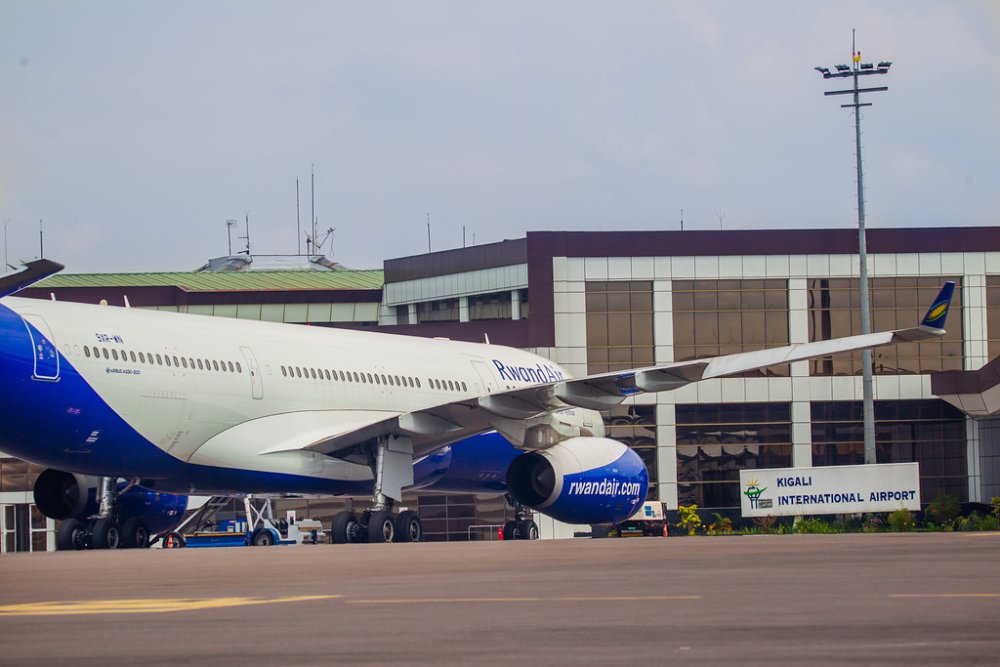
The model, approved by the Cabinet on 28 November, is designed to improve efficiency, passenger experience and accountability across the city’s bus network.
At the centre of the reform is Ecofleet Solutions, a newly created state-owned company that will coordinate, supervise and professionalise bus operations in the capital.
The model shifts focus from revenue-driven operations to service-based performance, a move authorities say will eliminate chronic overcrowding and long waits that have plagued commuters.
{{Ecofleet to oversee all transport operations
}}
Under the new system, Ecofleet Solutions will monitor the city’s entire public transport ecosystem, from route planning and bus deployment to daily service quality. Private operators will continue to own buses and employ staff, but financial management, monitoring and performance evaluation will fall under Ecofleet.
{{Key changes
}}
The new model introduces tighter operational controls across the public transport system, including a strict limit of ten minutes for buses at terminals and no more than three minutes at regular stops.
Fare collection will shift entirely to centralised digital systems, while operators will be compensated based on service quality rather than passenger numbers.
The framework also imposes firm penalties for any cash transactions or other forms of non-compliance, signalling a move toward a more orderly and accountable urban transport network.
The model will remove incentives for operators to overload buses or delay departures, a common source of complaints among Kigali commuters.
{{Technology to drive accountability
}}
Advanced technology will underpin the new transport framework. Real-time systems will track bus movements, delays and overall performance. Updated timetables, both physical and digital, will be displayed at bus stops, while smartphone users will be able to locate nearby stops, track arrival times and view bus routes.
Payment options will widen beyond Tap & Go to include bank cards and Mobile Money, all routed through Ecofleet’s centralised payment system.
{{Electrification at the heart of the reform
}}
Rwanda aims to transition to a fully electric public bus fleet by the end of 2026. Ecofleet will introduce 190 electric buses of its own and lease an additional 110 from private operators. The initial rollout will focus on the Downtown–Sonatubes–Remera corridor before expanding to other key routes, including Sonatubes–Gahanga and Nyabugogo–Gishushu.
The system formally launches on December 2, 2025, with infrastructure preparations nearing completion.
Minister of State for Infrastructure Eng. Jean de Dieu Uwihanganye emphasised that fares will not change during the trial period, urging residents to take advantage of the improved system.
“Buses will be cleaner, safer and more reliable,” he said, adding that senior officials will also rely on public transport to demonstrate confidence in the reform.
The overhaul builds on earlier commitments made during the 18th National Umushyikirano Council in February 2023, when the government pledged to reinforce Kigali’s transport system with more than 300 new buses. With government-backed subsidies, operators have already acquired around 200 buses, all of which have arrived in the city.
Pilot tests on the Kabuga–Nyabugogo corridor in May 2025 helped inform the new model by assessing the feasibility of non-waiting, high-frequency bus operations.
The inaugural Africa Cycling Excellence Awards (ACEA) ceremony honoured Africa’s cyclists of the year on Saturday evening in Kigali, in the presence of Rwanda’s Minister of State for Sports, Rwego Ngarambe, CAC President Yao Allah-Kouamé and Freddy Kamuzinzi, promoter of ACEA.
In the men’s category, Girmay topped the rankings ahead of fellow Eritreans Henok Mulubrhan and Milkias Maekele, who had also been shortlisted in the top three.
The Eritrean has been voted Africa’s best cyclist for the fifth time, following his successes in 2020, 2021, 2022 and 2024. The former Tour de France green jersey winner has once again had a magnificent season, with podium finishes in the biggest races proving his consistency at the highest level worldwide.
On the women’s side, Kim Le Court edged out Ethiopia’s Kahsay Tsige Kiros and Selam Amha Gerefiel.
The Mauritian rider demonstrated her talent this season by winning a stage of the Tour de France and becoming the first African woman to wear the yellow jersey (for four days). She also won the classic Liège-Bastogne-Liège in the spring, the first time an African rider has won a World Tour event.
The finalists had been narrowed down from a larger pool of 18 cyclists, which included two Rwandans: Ingabire Diane and Nirere Xaveline.
For this first award in the amateur category reserved for riders who do not belong to a professional UCI team, Burkina Faso champion Paul Daumont won over the jury members with his dedication and experience, which have made him one of the most successful cyclists on the continent for several years.
He took first place ahead of South African Blaine Kieck, winner of several races in France, and Malian Tiemoko Diamouténé, who won stages in three major national tours, in Mali, Côte d’Ivoire and Togo.
Eritrea’s national team was crowned Team of the Year after outperforming Rwanda and Mauritius.
{{Regional and national winners also recognised
}}
The awards also honoured outstanding cyclists within the East African Community (EAC). In this category, Nsengiyumva Odette from Burundi won the women’s award, while Charles Kagimu of Uganda claimed the men’s title.
In Rwanda, Masengesho Vainqueur of Benediction Club was named the best male cyclist of the year, with Nirere Xaveline, who races for Team Amani of Kenya, winning the women’s award.
Rwanda has also been selected to host the ACEA awards again in 2026 before the event rotates to other countries on the continent.
The three-day meeting, which closed on Friday, November 28, brought together more than 25 stock exchanges, policymakers, institutional investors, and development partners, all converging on Rwanda’s capital to map out strategies for a more interconnected, resilient, and investment-friendly Africa.
{{RSE unveils multicurrency trading platform
}}
One of the most significant announcements came from the Rwanda Stock Exchange (RSE), which launched its Multicurrency Denominated Securities Market Segment (MDS). The new platform will allow securities to be issued and traded in various global and regional currencies, a move expected to deepen market liquidity, attract diverse investors, and simplify cross-border trading.
“This development supports diversified investment opportunities, enhanced market depth, and improved cross-border capital flow efficiency,” said RSE.
{{New green exchange window targets sustainable finance
}}
Sustainability also took centre stage with the unveiling of the Green Exchange Window, another RSE-led innovation. The dedicated platform will facilitate the listing and trading of green bonds, ESG-linked products, and environmentally focused instruments.
The initiative positions Kigali as an emerging hub for sustainable finance in Africa, offering investors greater transparency and expanding avenues for climate-aligned investment.
Delegates said the window is poised to play an essential role in mobilising capital for renewable energy projects, climate adaptation, and conservation efforts, areas expected to attract growing international interest.
{{ASEA strengthens commitments on cross-border market linkages
}}
At the forum, ASEA members renewed pledges under the African Exchanges Linkage Project (AELP), an initiative that seeks to boost cross-border trading by harmonising technology and market infrastructure. The commitment supports wider goals of building deeper, more unified African capital markets capable of attracting global institutional capital.
In a virtual address, the Secretary General of the Africa Continental Free Trade Area (AfCFTA) highlighted the alignment between ASEA’s market integration agenda and the AfCFTA Investment Protocol. He stressed that stronger governance and liquidity will be crucial as Africa positions itself for enhanced competitiveness.
“I believe that the ACFTA protocol on investment is well poised to position our continent for competitiveness. This is where your work becomes indispensable by deepening liquidity, strengthening governance and enhancing cross-border cooperation. Africa’s Securities exchanges are shifting our economies from dependence on short-term lending to more diversified, resilient financial systems”.
{{Africa launches its first Pan-African ESG awards
}}
Another highlight of the Kigali conference was the inauguration of the Pan-Africa ESG Awards, the continent’s first awards dedicated to recognising excellence in environmental stewardship, social impact, and corporate governance.
The awards aim to set new standards in sustainability reporting and encourage companies to adopt stronger ESG practices in line with global investment trends.
Speaking at the closing ceremony, ASEA President and CEO of the Rwanda Stock Exchange, Pierre Celestin Rwabukumba, praised the collective resolve displayed at the conference.
“Hosting ASEA 2025 has demonstrated what is possible when African markets come together with a shared vision,” he said. “The initiatives launched here, including the Pan-African ESG Awards and the Multicurrency Denominated Securities Market Segment, signal a new chapter for our continent. Rwanda is proud to contribute to a future where Africa’s markets are more integrated, more innovative, and more globally competitive.”
The Kigali conference reaffirmed Africa’s commitment to advancing regulatory harmonisation, expanding sustainable finance, strengthening commodities and derivatives markets, and integrating digital infrastructure across exchanges.
As the continent steps up efforts to build more open and resilient capital markets, the measures unveiled in Kigali are expected to shape the next phase of Africa’s financial integration agenda.
The troops completed their basic military training under the guidance of instructors from the Rwanda Defence Force (RDF) on Saturday, marking another milestone in the growing defence cooperation between the two nations.
The pass-out ceremony, held at Camp Kassai Military Barracks in Bangui, was presided over by President Faustin Archange Touadéra, who applauded the newly enrolled soldiers for their commitment and resilience throughout the programme.
Alongside the new recruits, 121 platoon sergeants graduated from a six-month leadership course also delivered by RDF instructors. The group is expected to play a pivotal role in shaping discipline, coordination, and operational efficiency within the ranks of the FACA.
Maj Gen Vincent Nyakarundi, the RDF Army Chief of Staff, attended the ceremony as a distinguished guest. In his remarks, he congratulated the graduates and urged them to uphold professionalism, competence, and discipline as they assume their duties. He encouraged the new platoon sergeants to lead by example and provide consistent support and guidance to their commanders.
Gen Victor Yacoub, Deputy Chief of Staff of the FACA, expressed deep appreciation for Rwanda’s continued support, noting that the RDF has now trained a total of 2,409 soldiers in basic military skills and 300 non-commissioned officers. He commended the trainees for demonstrating discipline and dedication throughout the programme.
The ceremony featured demonstrations of key competencies acquired during training, including marksmanship, martial arts and map-reading skills that highlight the operational readiness of the new recruits.
Rwandan forces first deployed to the Central African Republic in 2014 as part of peacekeeping efforts following civil unrest in 2012. Initially under the African Union mission MISCA, and later the United Nations mission MINUSCA, Rwandan troops have played a key role in protecting civilians, safeguarding UN facilities, and providing security for the Head of State and his family.
In 2020, Rwanda reinforced its support through additional troop deployments and military training programs for the Central African Republic’s armed forces.
According to a statement from the Presidency’s Office of Communication and Public Relations, the new government consists of 23 ministries and five secretariats of state.
Key appointments include Joao Bernardo Vieira as minister of foreign affairs, international cooperation and communities, Mamasaliu Embalo as minister of interior and public order, and former foreign minister Carlos Pinto Pereira as minister of justice and human rights.
All members of the new cabinet are said to be linked to the electoral camp of deposed President Umaro Sissoco Embalo, with four having served in the previous government.
Earlier, Inta-A appointed Tomas Djassi as chief of general staff of the armed forces and Ilidio Vieira Te as prime minister and minister of finance.
Guinea-Bissau held presidential and parliamentary elections on November 23, with Embalo seeking re-election. The results were initially expected on Thursday.
On Wednesday, the military declared it had taken “full control” of state authority to counter “attempts by certain political actors to undermine national stability,” subsequently dismissing Embalo. Senior military officer Inta-A was sworn in as transitional president on Thursday for a one-year term.
According to the country’s Disaster Management Centre (DMC), heavy rains, floods and landslides brought on by the cyclone have destroyed more than 15,000 homes. Nearly 44,000 people have been displaced and are now sheltering in temporary, state‑run centers.
Authorities confirmed that 176 people remain missing, as rescue and relief efforts continue amid challenging conditions.
The government has appealed for international assistance to address the growing humanitarian crisis. Immediately after the emergency declaration, several countries responded with offers of aid.
Rescue operations have been significantly supported by the military, with the army, navy and air force deployed to reach remote and flood‑hit areas, evacuate stranded people and deliver relief supplies.
As floodwaters continue to threaten more regions, especially low‑lying coastal zones and river basins, the authorities have issued widespread evacuation orders. Many residents along flood‑prone areas have been moved to safer zones under escort by security forces.
The scale of the disaster from destruction of homes to displacement of tens of thousands has placed Sri Lanka among the worst‑hit nations in recent years by climate‑related disasters.
International relief agencies and neighbouring countries have begun mobilizing resources to provide urgent humanitarian support.
Known for his groundbreaking Afro-House music events, particularly the Atmosfera series, Lamper’s mission is to elevate Rwanda’s entertainment landscape and showcase its rich cultural heritage to the world.
“Originally from Milan, I moved here almost three years ago, and now I call Rwanda home,” Lamper shared in an exclusive interview with IGIHE, emphasizing the fusion of both cultures that deeply influences his musical work.
Lamper’s love for music began at a young age, though it wasn’t until later in life that he discovered his true calling as a DJ and producer.
In 2018, DJ Lamper graduated with a tourism degree but chose to pursue music mixing instead. Since then, he has performed at various venues in Milan, the economic capital of Italy, as well as in France, Spain, China, Rwanda and more.
For him, each day is filled with creativity and excitement. “I wake up and, honestly, I don’t get much sleep because I work at Lemon. So I gather as much energy as I can,” he laughs. “After waking up, I take a shower, finish my playlist, and do some last-minute edits if needed. I make sure everything is set for the day’s event.”
His dedication to his craft extends beyond his personal routine. “If we have a special guest, I might go pick them up; otherwise, I head straight to Mundi, where the event takes place. My team is always ready, and I communicate with them throughout the day to ensure everything runs smoothly,” he explains.
With the help of his assistant and stage manager, Lamper ensures that the artists and lineup are well-managed, and that the venue is prepared for the show.
{{The vision behind Atmosfera}}
Atmosfera, Lamper’s flagship event series, represents the realization of a long-held dream.
“I have always wanted to bring Afro-House music to Rwanda and make it mainstream here. It’s already a huge genre worldwide, and I wanted to fuse it with Rwandan sounds to create something truly unique,” Lamper explains.
His goal is to create an Afro-House sound that feels distinctly Rwandan, while showcasing local talent alongside global influences.
“Afro-House is a huge genre internationally, and I want to promote Rwanda’s music scene, which is rich with talented singers, DJs, and artists,” Lamper says. “I am here to give my contribution and push Rwandan entertainment to the international stage.”
Despite the challenges posed by Rwanda’s competitive entertainment industry, Lamper has managed to stand out.
“Rwanda’s entertainment scene is tough. There are many DJs, but few spots to perform,” he admits. “To make a name for myself, I had to do something different. That’s why I started shooting videos in iconic places around Rwanda. This helped me get noticed and build my recognition.”
For Lamper, authenticity has been key. “People started recognizing my unique approach, and that’s how I started building my brand,” he explains.
{{Advice for the youth and the future of Atmosfera}}
As a role model for many young Rwandans, Lamper shares valuable advice: “Never give up. Entertainment can be tough, but consistency is key. Whether you’re winning or not, you must always keep pushing. If you stay consistent and professional, you can make it.”
Looking ahead, Lamper has ambitious plans for Atmosfera. “In five years, I want Atmosfera to be a global event that showcases one culture to the world. Starting next year, we are planning to take it to different countries,” he says. “The ultimate goal is to fill up a stadium with people enjoying this Afro-House experience.”
For Lamper, the mission extends beyond hosting events. It’s about creating a movement that transcends borders, bringing people from all over the world together to celebrate music, culture, and unity.
His work with Atmosfera has not only redefined Kigali’s nightlife but also introduced Rwandan culture to an international audience, fostering a sense of unity and self-expression through music.