Ngoma made the remarks in Goma following a ceremony organised by the AFC/M23 alliance to honour 22 civilians from Masisi Centre, in North Kivu Province, who were killed in a drone strike attributed to the DRC armed forces on January 2, 2026.
Speaking to supporters after the ceremony, Ngoma accused President Tshisekedi of responsibility for the attack and vowed accountability.
“He will definitely pay for this. It won’t be long. He will go to court for these things. We will arrest him, and he will go to court,” Ngoma stated.
Meanwhile, AFC/M23 political coordinator Corneille Nangaa accused the Kinshasa government of continued violence against civilians, arguing that the state has failed to distinguish between combatants and non-combatants.
“The false political power that the Kinshasa government has given itself does not have the right to kill its citizens,” Nangaa said. “No elections, no international recognition, and no nationalist rhetoric can justify the killing of civilians.”
Nangaa also sought to reassure residents in areas under AFC/M23 control, pledging that the coalition’s forces would continue to ensure their security.
The AFC/M23 alliance, which controls significant territory in eastern DRC, has in recent weeks accused the Kinshasa administration of launching attacks on its positions and on civilian areas, despite the group’s unilateral declaration of a ceasefire.
The group says its armed struggle is aimed at defending the rights of Kinyarwanda-speaking Congolese communities, who continue to face marginalisation and persecution.
The twins, both males, were discovered on Saturday, January 3, 2026, by community trackers, who observed 22-year-old female Mafuko cradling her newborns. The park confirmed that “both appeared to be in healthy condition at the time of the observation.”
Twin births among mountain gorillas are exceptionally uncommon, occurring in roughly 1% of all births, and require extra care, as newborns rely entirely on their mother for survival during the first months of life. The last birth of mountain gorilla twins in Virunga National Park was in September 2020.
The birth of the twins increases the Bageni gorilla family to 59 individuals, making it the largest family in the park.
“This birth of twins constitutes the first birth recorded in 2026 at the Park. Twin births among mountain gorillas are rare and present additional challenges, particularly during the early months,” the park noted:
Authorities said that “additional monitoring and protection measures will be deployed to closely observe the twins and support their health and survival during this critical early period.”
Virunga National Park, Africa’s oldest and largest protected area, spans 7,800 square kilometers of rainforest, mountains, lakes, and active volcanoes. The park is home to fewer than 1,100 mountain gorillas, which are found only in Virunga and in neighbouring national parks in Rwanda and Uganda.
It is Lee’s first visit to China since he took office, and the two heads of state have met twice and conducted reciprocal visits, reflecting the importance both sides attach to China-ROK relations.
ENHANCING STRATEGIC PARTNERSHIP
China has consistently placed relations with the ROK high on its regional diplomatic agenda and maintained continuity and stability in its policy toward the ROK, Xi said, adding that China is willing to work with the ROK to firmly uphold the direction of friendly cooperation, adhere to the principle of mutual benefit and win-win outcomes, promote bilateral strategic partnership along a healthy path, effectively enhance the well-being of both peoples, and contribute positively to regional and global peace and development.
Xi called on both sides to enhance mutual trust, respect each other’s development paths, accommodate each other’s core interests and major concerns, and resolve differences properly through dialogue and consultation.
Lee said the ROK side hopes to use the first head-of-state diplomatic meeting of the year as an opportunity to consolidate the momentum of the comprehensive recovery and development of bilateral relations, seek common ground while reserving differences, deepen the ROK-China strategic cooperative partnership, and open a new chapter of bilateral relations.
He emphasized that the ROK respects China’s core interests and major concerns, and adheres to the one-China principle.
Dong Xiangrong, senior fellow at the Chinese Academy of Social Sciences, said that head-of-state diplomacy has played a significant guiding role in China-ROK relations, sending a clear positive signal to foster better bilateral ties, and greatly contributing to deepening political mutual trust and promoting economic and trade cooperation.
In the future, both sides need to accommodate each other’s major concerns including the Taiwan question, and maintain a stable cooperative relationship as important trading partners, Dong said.
ACHIEVING MORE COOPERATION RESULTS
China and the ROK share close economic ties with industrial and supply chains deeply interwoven, and the bilateral cooperation is mutually beneficial, Xi said.
He said the two countries should further align their development strategies, strengthen policy coordination, expand the pie of common interests, and achieve more cooperation results in emerging fields such as artificial intelligence, green industries, and the silver economy.
Bilateral economic and trade cooperation has played a positive role in the economic and social development of both countries, Lee said, noting that the ROK looks forward to seizing the opportunities brought by China’s 15th Five-Year Plan to achieve more results in practical cooperation with China.
After their talks, Xi and Lee witnessed the signing of 15 cooperation documents in fields including scientific and technological innovation, ecological environment, transportation, and economic and trade cooperation.
Yang Xiyu, a researcher from the China Institute of International Studies, said that since the establishment of diplomatic relations between China and the ROK, bilateral economic and trade cooperation has always been the stabilizer and propeller of the development of bilateral relations.
He said China and the ROK should leverage their long-standing traditional advantages, and strengthen cooperation with a focus on economy, trade, and technology.
BEARING RESPONSIBILITIES IN PEACE, DEVELOPMENT
China and the ROK shoulder important responsibilities in maintaining regional peace and promoting global development, and share a wide range of common interests, Xi said, noting that the two countries should firmly stand on the right side of history and make the right strategic choices.
More than 80 years ago, the two peoples made tremendous national sacrifices and won the victory against Japanese militarism, he said, adding that the two countries should join hands to safeguard the fruits of the victory in World War II and protect peace and stability in Northeast Asia.
As beneficiaries of economic globalization, China and the ROK must work together to oppose protectionism and practice true multilateralism, contributing to the advancement of an equal, orderly multipolar world and a universally beneficial, inclusive economic globalization, Xi said.
Lee said the ROK is willing to strengthen its multilateral coordination with China and contribute to global prosperity and development, and wishes China every success in hosting this year’s Asia-Pacific Economic Cooperation Economic Leaders’ Meeting.
Dong said amid the recent resurgence of Japanese militarism, China and the ROK should share a common position to maintain regional peace, and the two sides need to jointly address protectionism and defend free trade.
The Extraordinary Meeting of the Specialized Committee of Defense Experts of the ICGLR is expected to lay the groundwork for the Extraordinary Meeting of Chiefs of Defense Forces/Staff scheduled for Friday, followed by the Extraordinary Meeting of the Committee of Ministers of Defense on Saturday.
The meetings aim to forge a unified and coordinated regional response to the security situation in eastern DRC.
Among the key issues under consideration are the Expanded Joint Verification Mechanism Plus (EJVM+), the terms of reference for the ceasefire, and the oversight and monitoring mechanism signed in Doha.
In his opening remarks, Zambia Army Commander Geoffrey Zyeele said the security challenges facing the region call for strengthened collective efforts, deeper information sharing, and enhanced coordinated cross-border operations.
He noted that armed groups have continued to destabilize peace and security in the region, describing the challenges as immense. “Only through unity of purpose and decisive action can we overcome these destabilizing forces and secure a future of lasting stability for the Great Lakes Region,” Zyeele said.
Zyeele added that the humanitarian situation in eastern DRC remains precarious, requiring urgent attention, as families are being displaced and communities continue to live under constant threat.
Yasir Ibrahim Ali Mohammed, deputy executive secretary of the ICGLR, said the humanitarian and security situation in eastern DRC has deteriorated significantly, threatening the sovereignty and territorial integrity of member states and risking peace and stability.
He expressed concern that the situation has worsened following the signing of the Washington Agreements last month, intended to reaffirm commitments to peace and prosperity.
“This underscores the urgent need for all parties to respect their engagements and honor the commitments they have made under regional and international agreements,” he said.
The meeting, he added, is a response to an escalating crisis that demands collective and decisive action.
Xi made the remarks when meeting with Taoiseach of Ireland Micheal Martin in Beijing. The Irish prime minister is on an official visit to China from Jan. 4 to 8.
Both China and Ireland cherish peace, embrace openness and inclusiveness, and strive for self-reliance and progress, Xi said, adding that the Chinese and Irish people won national independence and liberation through struggles and are advancing toward modernization through sustained efforts of successive generations.
Since the establishment of the China-Ireland strategic partnership for mutually beneficial cooperation in 2012, bilateral trade volume has quadrupled, with a balanced development in mutual investment, he noted.
Xi said the two countries should maintain friendly exchanges at multiple levels and across diverse fields, continuously enhance communication and mutual understanding, accommodate each other’s core interests and major concerns, consolidate political mutual trust, and solidify the political foundation of bilateral relations.
Over the next five years, China will continue to promote high-quality development and expand high-standard opening up. Xi said China is willing to strengthen economic and trade cooperation with Ireland, align development strategies in fields such as artificial intelligence, digital economy, and medicine and healthcare, promote two-way investment, leverage each other’s strengths, share opportunities and pursue common development.
The two sides should enhance cooperation in education, culture and tourism to foster greater people-to-people affinity, and China welcomes more Irish youth to come to China for study and exchanges, Xi said.
In a world beset with changes and chaos, unilateral and bullying acts are severely undermining the international order, Xi said. All countries should respect the development paths chosen by the peoples of other nations, and abide by international law as well as the purposes and principles of the UN Charter, he said, stressing that major countries should particularly take the lead in doing so.
As China and Ireland support multilateralism and advocate international fairness and justice, the two countries should strengthen coordination and cooperation in international affairs, and jointly maintain the authority of the United Nations and make the global governance system more just and equitable, he said.
Xi said China and the EU should bear the long-term picture in mind, uphold the positioning of partnership, and view and handle differences objectively and rationally to work for win-win cooperation.
As Ireland will hold the rotating EU presidency in the second half of this year, China hopes Ireland will play a constructive role in promoting the healthy and stable development of China-EU relations, the Chinese president said.
Highlighting a profound and long-lasting friendship between the two countries, the Irish prime minister said Xi’s successful visit to Ireland in 2012 had laid a solid foundation for the development of the Ireland-China strategic partnership for mutually beneficial cooperation in recent years.
Martin said Ireland firmly adheres to the one-China policy, and is committed to developing the strategic partnership for mutually beneficial cooperation.
Ireland is willing to deepen cooperation with China in trade, investment, science and technology, biomedicine, renewable energy, artificial intelligence, education and other fields, he said.
Martin commended China’s indispensable and important role in international affairs and its positive contributions to upholding the authority of the UN and promoting world peace.
He said that any international dispute should be settled in conformity with international law, and Ireland is willing to maintain close communication and coordination with China, safeguard international law, uphold free and open trade, and promote world prosperity and stability.
Noting that the stable development of EU-China relations is of great significance, Martin said the Irish side is willing to play a constructive role in promoting the healthy development of EU-China relations.
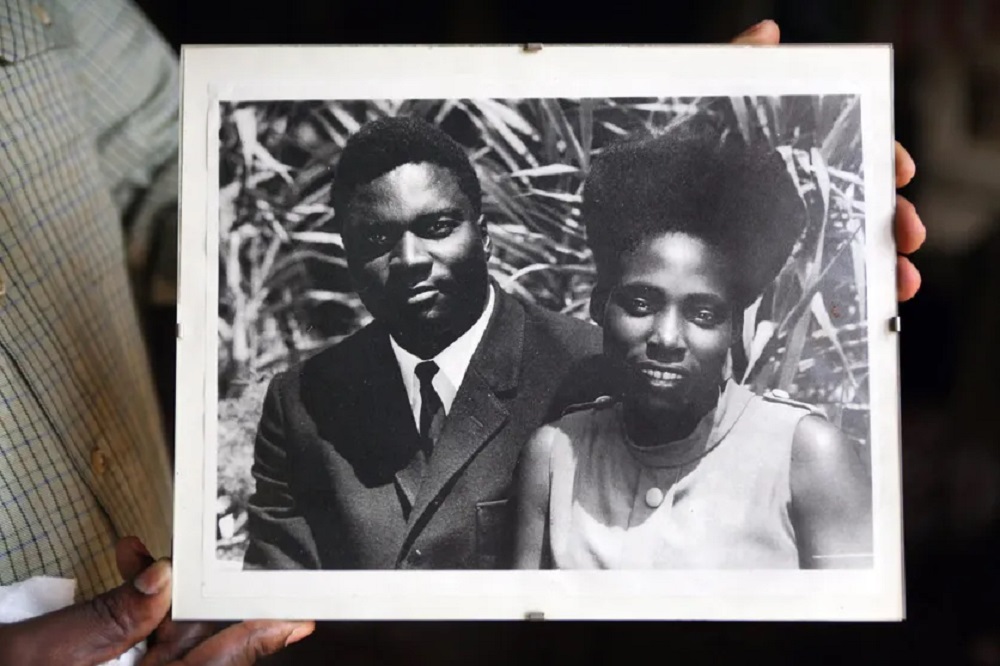
Mitterrand died at the age of 79, shortly after completing 14 years in office. He remains one of the most controversial French leaders in modern history, particularly over his African policy, which critics argue contributed to instability across the continent. His presidency has been closely scrutinised for France’s conduct before, during, and after the Genocide against the Tutsi in Rwanda.
Presidency coinciding with the genocide
Mitterrand’s final term coincided with the 1994 Genocide against the Tutsi, a period during which he was reportedly weakened by illness. Critics maintain that his close personal and political relationship with then Rwandan President Juvénal Habyarimana influenced France’s actions in Rwanda.
That relationship, analysts argue, shaped France’s continued political, military, and diplomatic support for the Habyarimana government, even as preparations for mass violence were underway.
The anti-genocide-denial organisation Survie has documented the involvement of French actors in Rwanda prior to and during the Genocide. Among those cited is Captain Paul Barril, a former French gendarme who had worked closely with senior Rwandan officials from 1989. Barril reportedly operated with the backing of François de Grossouvre, a close adviser and confidant of President Mitterrand.
Barril is accused of having signed an agreement on May 28, 1994, with Rwanda’s Interim Government, represented by Prime Minister Jean Kambanda, to supply weapons and provide military training to forces implicated in the Genocide. Reports indicate that the government at the time agreed to pay France approximately three million US dollars for the arms.
{{Bisesero and accusations of abandonment
}}
French forces have also been criticised for failing to protect Tutsi civilians during massacres in several parts of the country. In Bisesero, where tens of thousands of Tutsi had gathered and attempted to resist attacks, documents later revealed the presence of French mercenaries in mid-May 1994.
Survivors and investigators allege that these mercenaries encouraged continued attacks rather than intervening to protect civilians, leading to the deaths of thousands.
{{Zone Turquoise under scrutiny
}}
Under Operation Turquoise, French forces established what was described as a humanitarian safe zone in parts of Cyangugu, Kibuye, and Gikongoro. However, critics argue that the operation failed to prevent killings of Tutsi who sought refuge in those areas.
Despite Radio Télévision Libre des Mille Collines (RTLM) continuing to broadcast genocidal propaganda into the French-controlled zone, no action was taken to shut it down. French troops also did not arrest members of the Interim Government who fled Rwanda through Zone Turquoise into what is now the Democratic Republic of Congo.
When questioned in the French National Assembly, France’s Foreign Minister at the time stated that the troops had not been given a mandate to investigate crimes or arrest suspects.
While the conduct of French forces has been widely criticised, President Mitterrand consistently defended them, claiming they had saved thousands of lives.
{{Kagame on France and Belgium’s role
}}
In an interview with journalist Mario Nawfal last year, President Paul Kagame stated that France and Belgium played a role in preventing timely United Nations intervention during the Genocide.
“You see an ideological link from the beginning,” Kagame said, referring to Belgium’s colonial legacy and policies that entrenched ethnic divisions.
On France, Kagame described Mitterrand’s relationship with Habyarimana as very close.
“The French president at the time was François Mitterrand. He was a very close friend of Habyarimana. Very close. One was like a father figure to the other,” President Kagame said.
He added that historical records show that Mitterrand bore responsibility comparable to others who enabled the killings.
{{Protection of Agathe Habyarimana
}}
Following the shooting down of President Habyarimana’s plane, Mitterrand facilitated the evacuation of Habyarimana’s widow, Agathe Kanziga Habyarimana, and her children to Europe.
Despite international arrest warrants over her alleged role in the Genocide against the Tutsi, France has neither extradited her to Rwanda nor prosecuted her domestically.
President Kagame once said he raised these issues with individuals close to Mitterrand, including his son, who wielded influence over French policy in Africa, but they consistently rejected any responsibility.
{{Rwanda marginalised after the genocide
}}
After the fall of the Habyarimana government, Mitterrand distanced himself from Rwanda’s new leadership under the RPF-Inkotanyi. Rwanda was sidelined diplomatically at a time when it urgently needed international support.
In November 1994, France hosted the France–Africa Summit in Biarritz, attended by 25 African heads of state. Discussions included France’s relations with Africa and post-genocide Rwanda. However, Rwanda was not invited.
Former presidential adviser Dr Charles Murigande later said the exclusion reflected Mitterrand’s stance toward the new Rwandan government.
“The fact that we were not invited did not surprise us,” Murigande said. “That was his mindset. He had aligned himself with those who had destroyed Rwanda. He carried a burden of shame and could not bring himself to invite the President of Rwanda to Biarritz.
The announcement follows concerns from some residents who, upon attempting to pay their land taxes for the year, discovered that rates had increased. Many were unaware of these changes. The land tax rate is now set at Rwf 80 Rwandan Francs per square meter, a significant rise from the previous rate.
In response, the City of Kigali clarified via its official social media platforms that the new rates were approved by the Kigali City Council on February 21, 2025, and are now being enforced.
“These rates replaced those that were last approved by the District Councils in 2017–2018, which had continued to be applied until the end of 2024,” the City of Kigali explained.
The City further stated that, once finalised, the new tax rates were communicated to the public through multiple channels, including the media, social networks, and online platforms.
The new rates were established based on a Ministerial Order issued by the Ministry of Finance and Economic Planning, which outlines base tax rates for land. Published on November 28, 2023, the order specifies that land tax can range from 0 to 80 Rwandan francs per square meter. Land within Kigali’s Central Business District (CBD), which includes major business and industrial areas, will have tax rates between Rwf 70 and Rwf 80 per square meter. These rates apply to commercial, industrial, and non-residential areas, while residential areas within the CBD are taxed between Rwf 60 and Rwf 80 per square meter.
In less urbanized parts of Kigali, residential areas are taxed between Rwf 40 and Rwf 60 per square meter, and non-residential areas such as business or industrial zones are taxed between Rwf 50 and Rwf 70 per square meter. Agricultural and livestock zones, which are more rural, are taxed between 0 and 0.4 Rwandan francs per square meter.
In areas that have a mix of urban and rural features, such as small business centers or locations with basic infrastructure, residential areas are taxed between Rwf 10 and Rwf 40 per square meter, while non-residential areas such as business and industrial properties are taxed between Rwf 20 and Rwf 50 per square meter.
Finally, rural agricultural zones located between urban and rural areas of Kigali will continue to be taxed between 0 and 0.4 francs per square meter.
The call came at a sensitive moment in the U.S.-Colombia relations, which have been strained over a series of disputes, including disagreements on drug policy and recent U.S. military action in the region. Trump recently called Colombia a “sick man” and suggested military action in the country “sounds good to me.”
According to a Colombian official familiar with the exchange, the leaders discussed issues related to drug trafficking and other disagreements, and both sides considered the dialogue a “180‑degree change” in rhetoric compared with previous statements.
President Trump confirmed the call and described it as “friendly,” even as tensions had escalated recently with sharp public criticism and accusations traded between the two leaders. Trump’s administration previously accused Petro of failing to control drug production and trafficking, and at times used harsh language in public about Colombia’s leadership.
Petro, who is Colombia’s first left‑leaning president in decades, has also been an outspoken critic of some U.S. policies, particularly military actions in neighbouring Venezuela. He condemned what he described as a violation of regional sovereignty and sharply criticized U.S. military involvement.
Despite the earlier tensions, both Trump and Petro expressed satisfaction with the tone of Wednesday’s call. The leaders agreed that diplomatic engagement was a priority and indicated plans to continue discussions and cooperation, including potentially meeting in Washington in the near future to address shared challenges.
The diplomatic shift comes as both countries face pressure to maintain cooperation on issues such as drug trafficking, regional security, and economic ties. Colombia has historically been a key ally of the United States, particularly in efforts to combat drug cartels and organized crime, and the renewed conversation suggests both governments are seeking to manage tensions and strengthen collaboration.
Analysts note that while the phone call represents a positive sign of diplomatic dialogue, significant issues remain unresolved. Both sides are expected to continue negotiations to find common ground on security concerns and policy differences that have previously driven a wedge between the two nations.
The ceremony was held on January 7, 2026, at the RWABG VII Base Camp in Bria, Sector East, Haute‑Kotto prefecture under the United Nations Multidimensional Integrated Stabilization Mission in the Central African Republic (MINUSCA).
The medals were presented to personnel from Rwanda Battle Group VII (RWABG VII) and the Rwanda Level II+ Hospital (RWAMED X).
The ceremony was presided over by the MINUSCA Deputy Force Commander, Major General Maychel Asmi, who commended the Rwandan contingents for their professionalism, discipline, and operational effectiveness.
He particularly highlighted their vital role in supporting the electoral process, in line with MINUSCA’s mandate.
Major General Asmi praised RWABG VII for its sustained efforts in securing the Bria, Ouadda, and Sam-Ouandja areas, and commended RWAMED X for providing critical medical services to both United Nations personnel and the local population.
In his remarks, Lieutenant Colonel Willy Ntagara, Contingent Commander of Rwanda Battle Group VII, described the medal parade as one of the highest honours in a military career. He noted that the recognition serves as strong motivation for continued commitment to the mission’s objectives and mandate.
Similarly, Colonel Dr. Simon R. Nyagasaza, Commander of RWAMED X, highlighted the achievements of the Rwandan level 2+ hospital over the past year since their deployment in January 2025. He said that RWAMED X has provided medical services to MINUSCA personnel and local civilians that contributed to the achievement of their mandate.
The United Nations service medals recognize peacekeepers who have completed their tour of duty with distinction, reflecting discipline, courage, and unwavering dedication to the mission.
The group included Police Constable Patrick Kithinji and Police Constable Ahmed Ali, both attached to the Tononoka Police Station Crime Office in Kenya. They were reportedly pursuing a suspect wanted in Kenya in connection with an alleged fraud case involving obtaining money by false pretence when they crossed into Tanzanian territory on Tuesday.
Also among those detained were the suspect’s wife, Sophia Menza Mbogo, their driver, Abdikadir Adan, and a government official from the Coast Development Authority, who were travelling together in a Kenyan government vehicle.
At the time of their arrest, Tanzanian authorities confiscated two loaded Ceska pistols, each held by one of the police officers, along with ammunition and the vehicle. The Tanzanian side said the group breached immigration laws and East African Community regulations by entering the United Republic of Tanzania without permission and carrying firearms on foreign soil without prior coordination.
Tanzanian officials stated that the group’s actions violated both national immigration laws and the East African Community One‑Stop Border Post Act, 2016, which governs the operation of joint border controls and requires partner states to coordinate cross‑border activities.
“I would like to confirm that five Kenyans were arrested for conducting the arrest of a suspect in violation of the law and the East African Community One‑Stop Border Post (OSBP) Act of 2016. I request that they be presented for further action,” said Earnest Lukaza, the Tanzanian officer in charge of the One‑Stop Border Post (OSBP) at Lunga Lunga, while confirming the arrest.
The detained Kenyans were initially held at the Horohoro border. A letter from Tanzanian authorities to Kenyan border officials notified them that the individuals entered Tanzania unlawfully and lacked the necessary authority to conduct an arrest on Tanzanian soil.
Following diplomatic engagement between the two countries, the five Kenyans were later handed over to Kenyan authorities at Lunga Lunga.