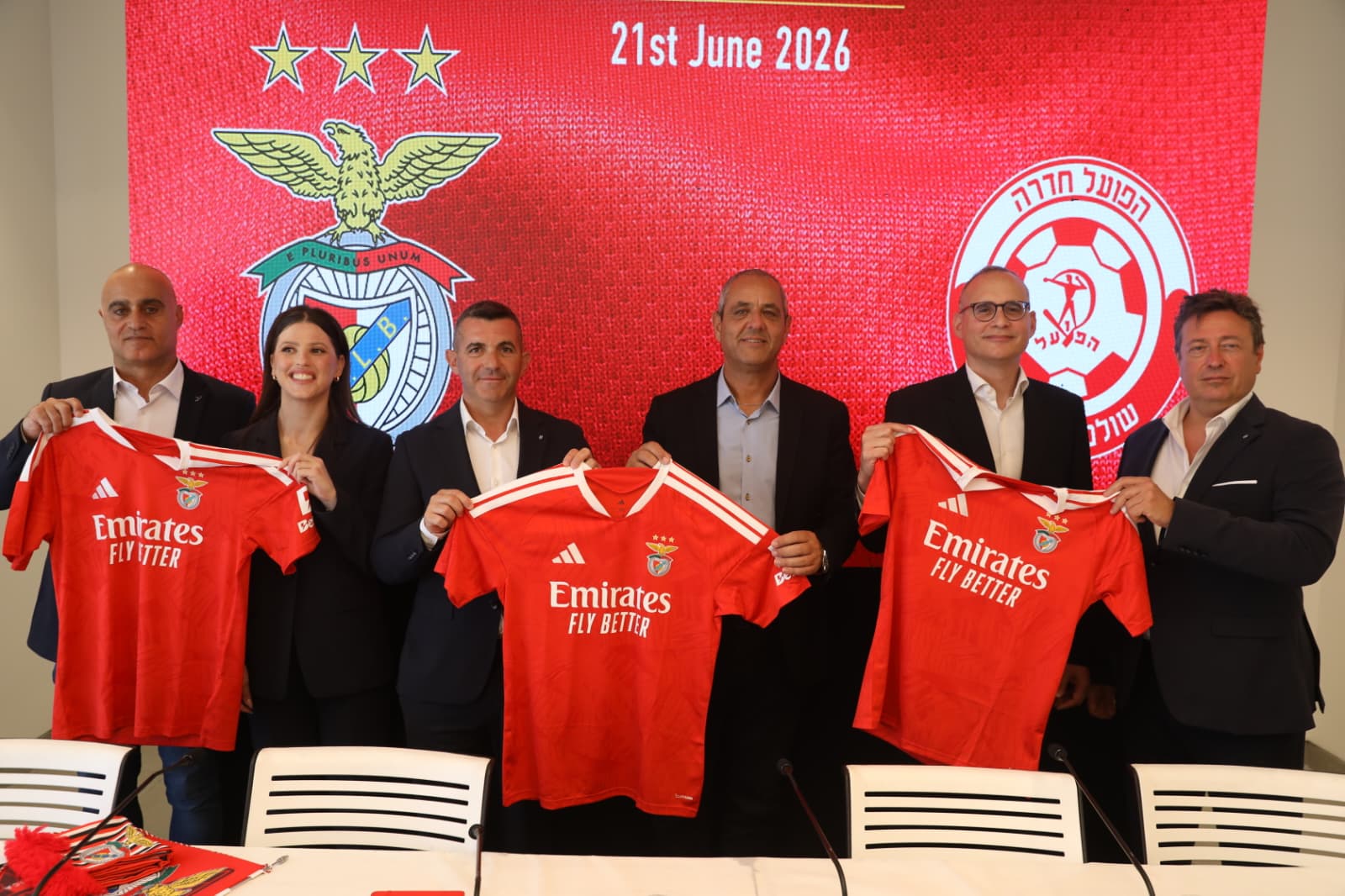
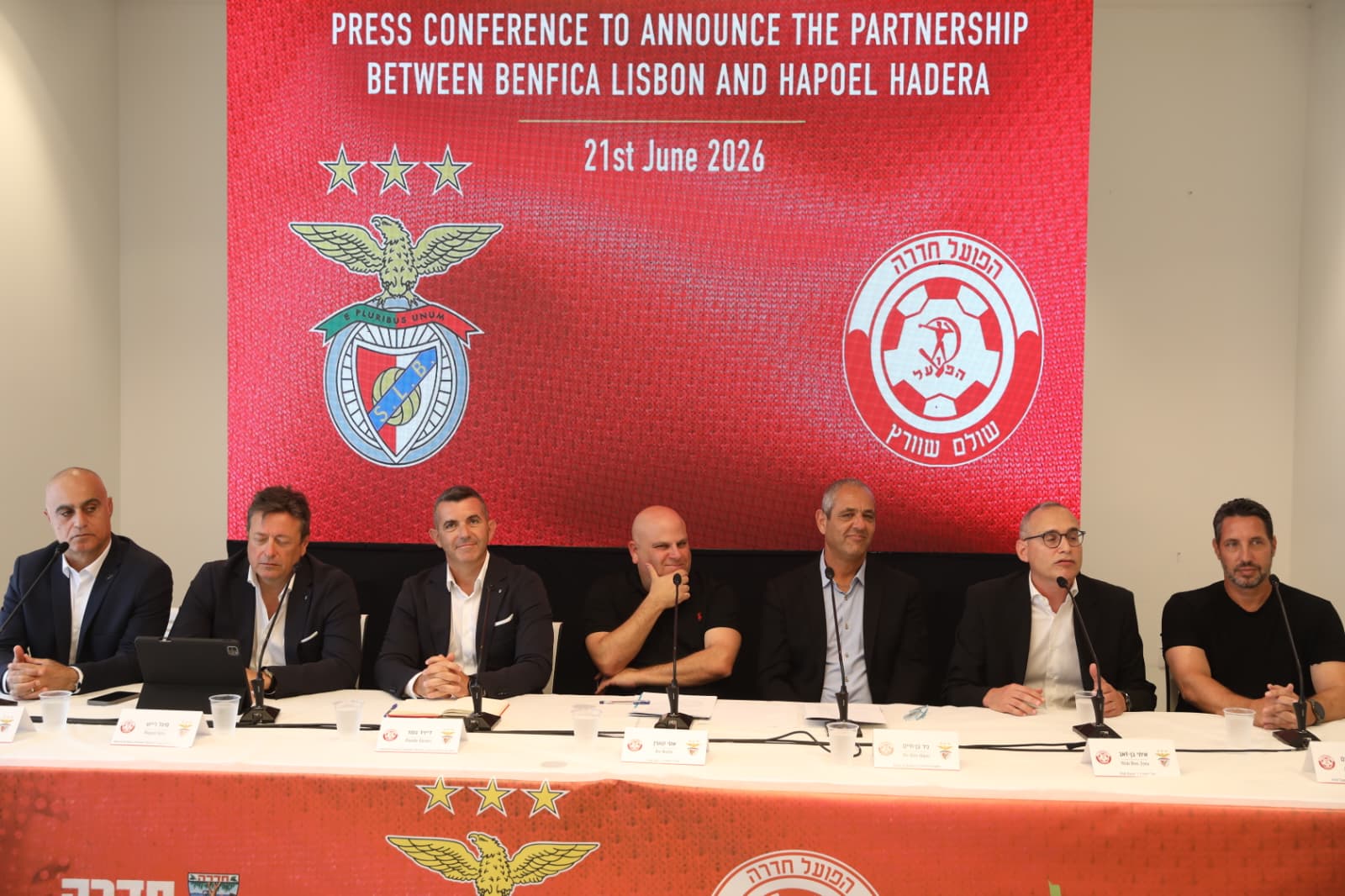
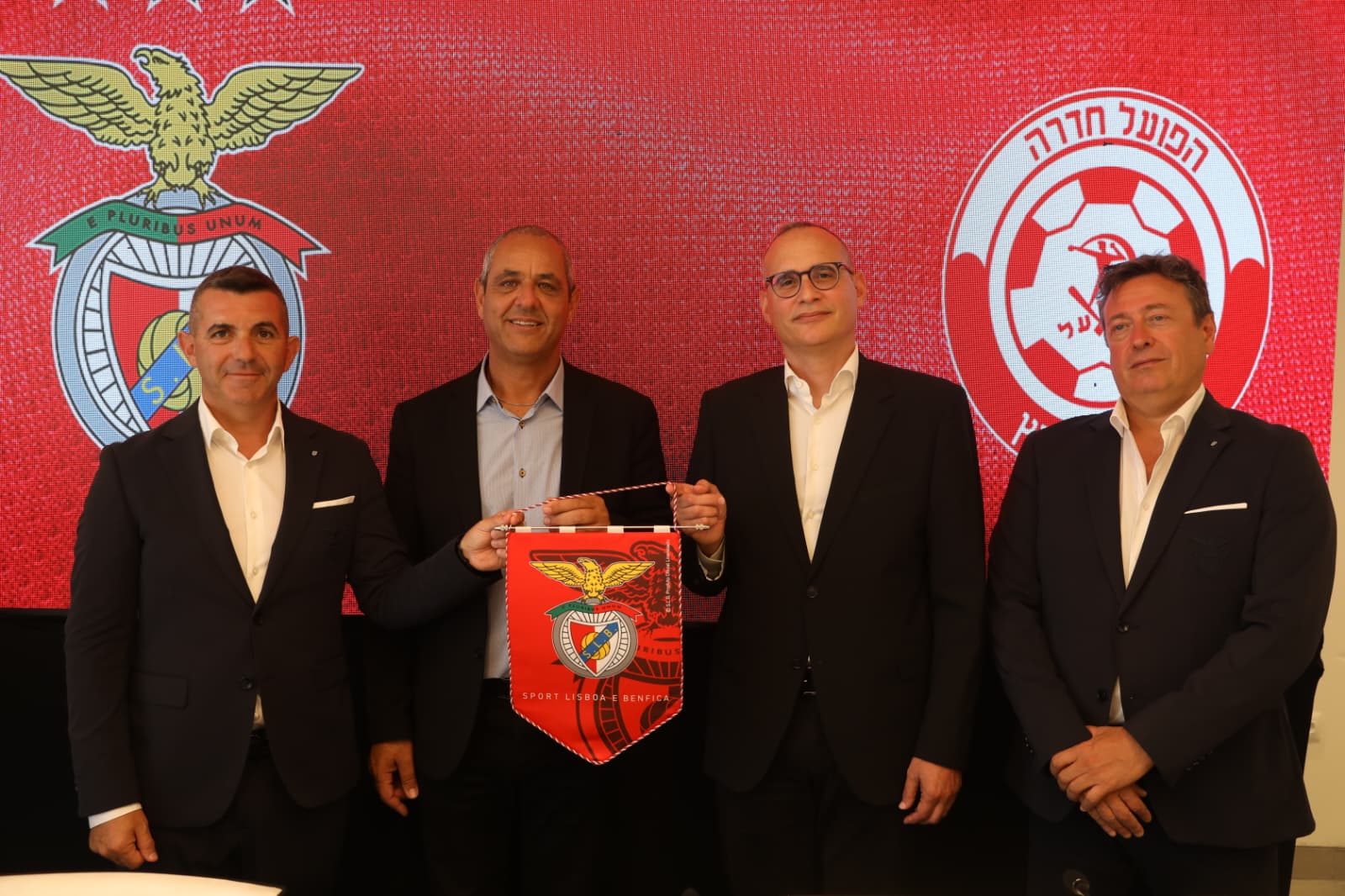
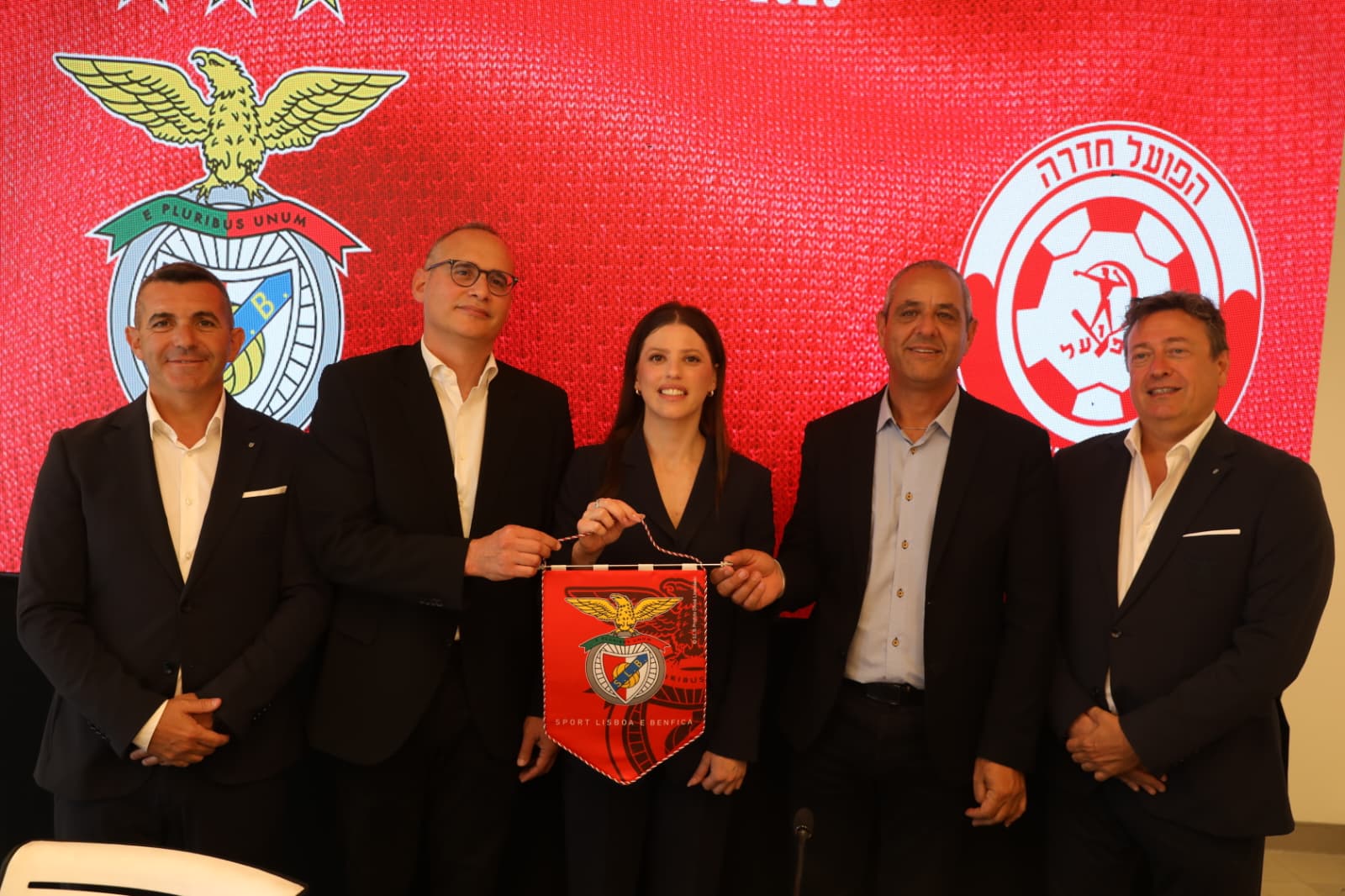
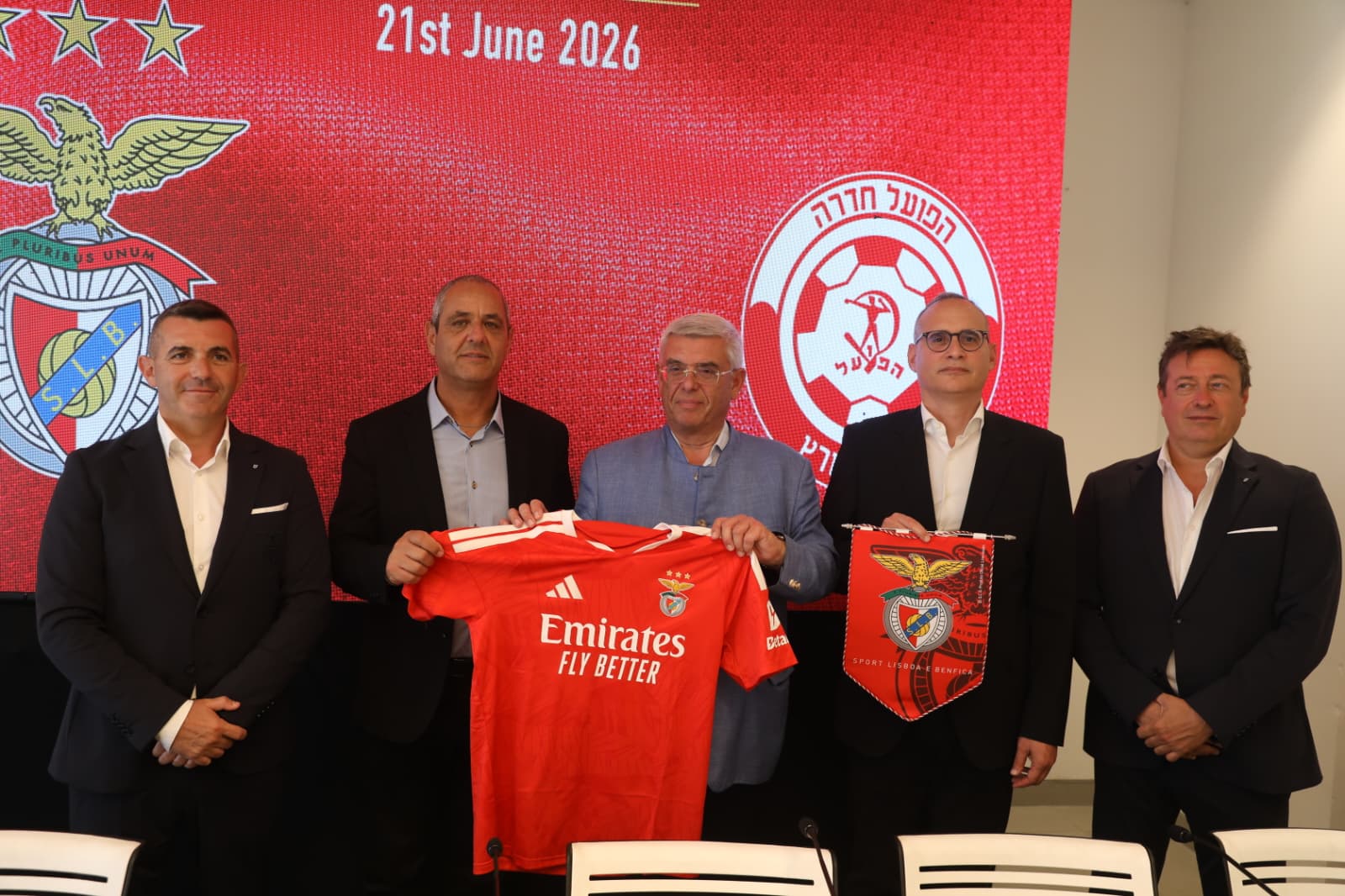
The agreement was formalised on Sunday in Israel, bringing together Hapoel Hadera, Benfica Lisbon and the Tony Rwanda project in a partnership focused on youth development, professional training and creating opportunities for young players.
The signing in Israel also comes at a time when Tony Rwanda and Benfica have been discussing a wider project with the Government of Rwanda.
Sources involved in the talks said Tony Rwanda and Benfica have been in discussions with Rwandan authorities since early last year, following a visit to Portugal by Minister of Sports Nelly Mukazayire, over a broader partnership that would establish a large campus in Rwanda to serve as a regional hub for football talent development.
Some people close to the process say that, as the discussions with Hapoel Hadera have now materialised, Benfica and Tony Rwanda are also holding talks with other African countries over the possibility of establishing the proposed regional hub.
For Rwanda, the Hapoel Hadera and Benfica deal is important because it gives young talents connected to Tony Rwanda a possible pathway into a more competitive football environment outside the country.
In the first phase, a player from Rwanda is expected to join Hapoel Hadera’s youth setup, with the hope that more players could follow if the project succeeds.
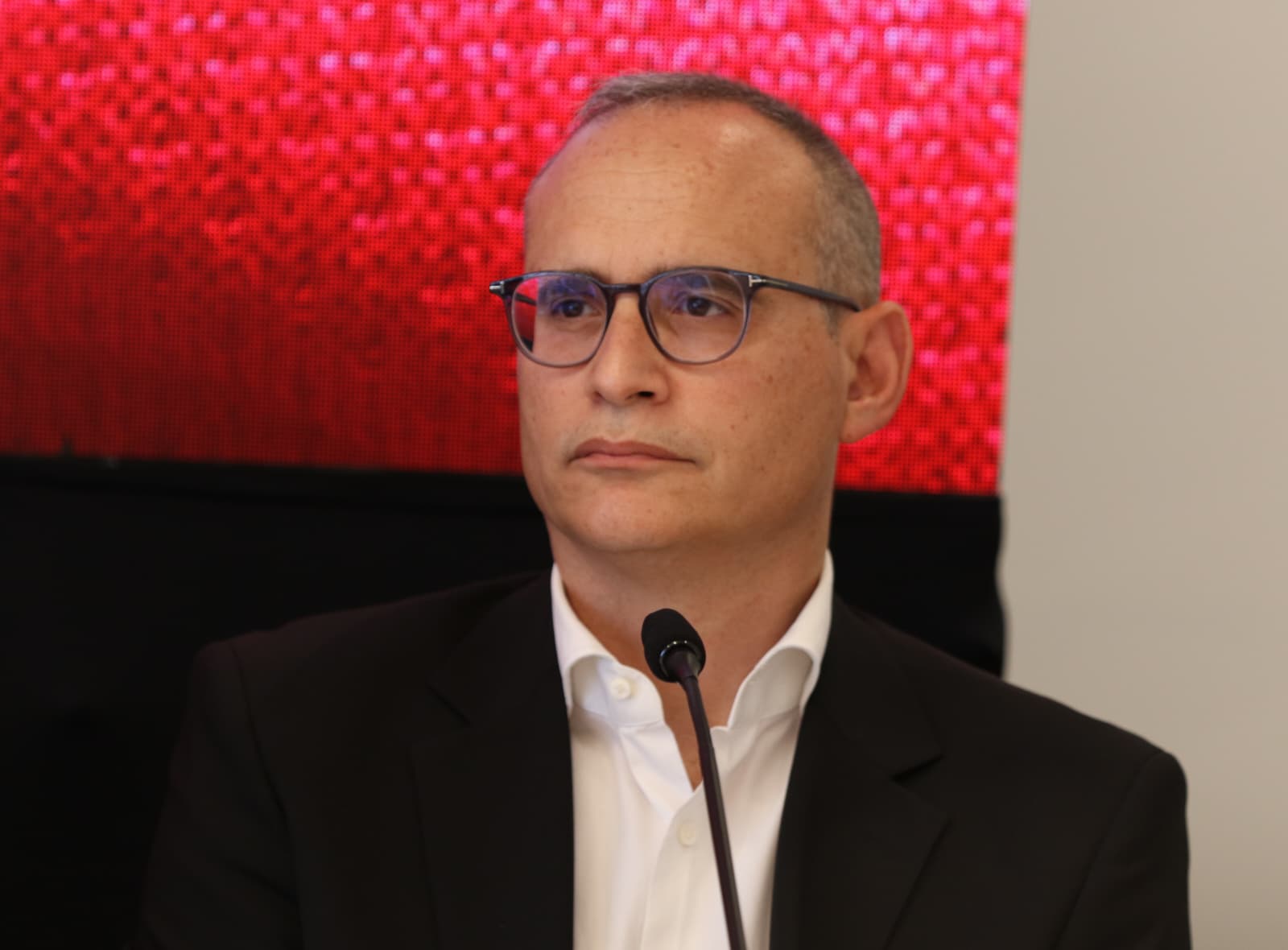
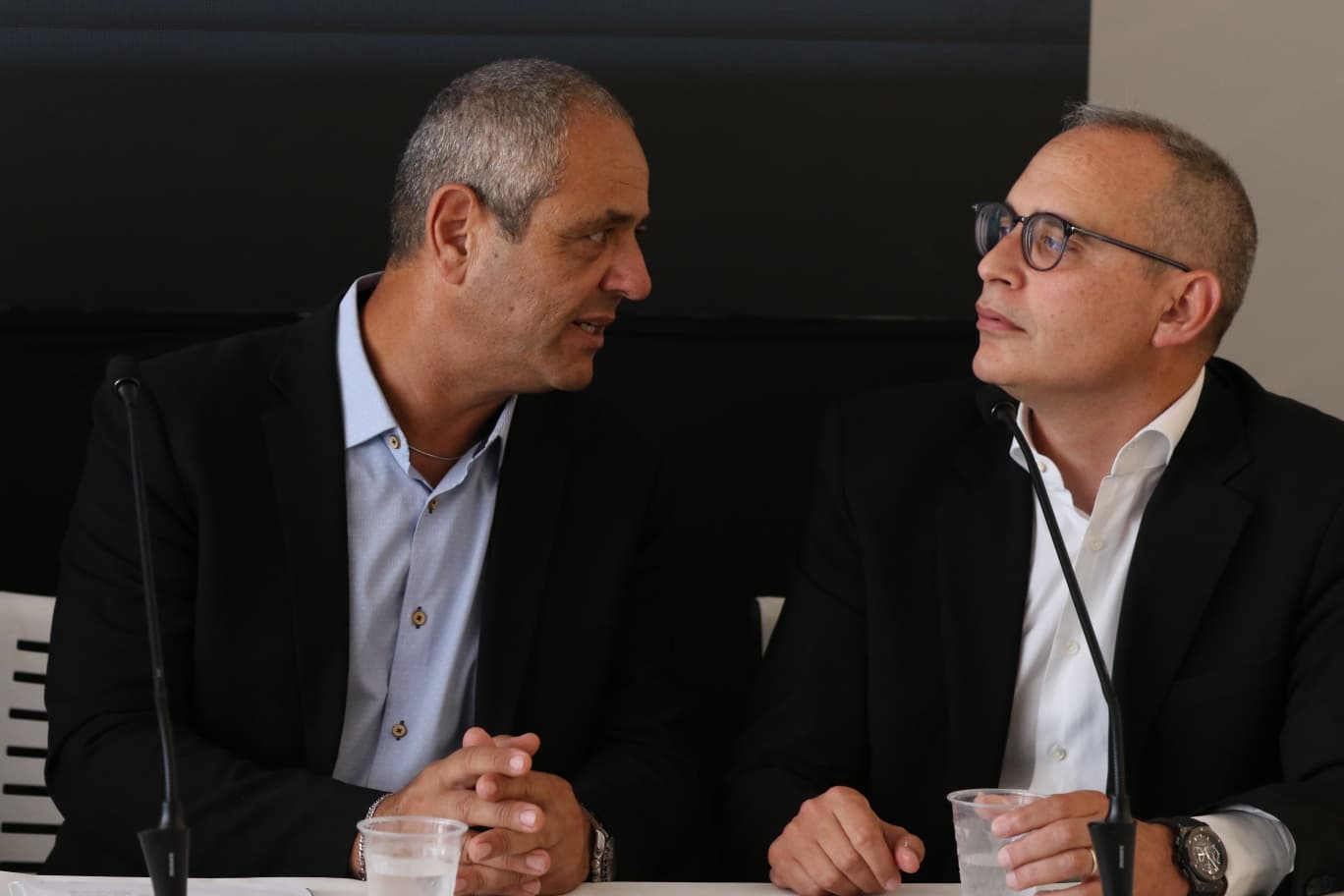
The partnership comes as Hapoel Hadera enters a new phase under the leadership of Itay Ben-Zeev, the CEO of the Israel Stock Exchange, who recently bought the club. Asi Rahamim will serve as the owner’s representative, while continuing his role as sporting director of Tony Rwanda. He will also help strengthen Hapoel Hadera’s professional and operational structure.
Ben-Zeev said the idea was to connect different pieces of the same vision.
“For the past three years, Benfica Lisbon has been working together with Tony Rwanda,” he said during the launch. “When I spoke with Assi Rahamim and Hapoel Hadera, I said: ‘Why don’t we connect everything?’”
He said the project should not only benefit young players in Rwanda, but also create opportunities for children in Israel.
“Now this project will not only affect youth in Rwanda, but also in Israel, in Hadera,” he said.
The agreement was formalised on Sunday in Israel, bringing together Hapoel Hadera, Benfica Lisbon and the Tony Rwanda project in a partnership focused on youth development, professional training and creating opportunities for young players.The signing in Israel also comes at a time when Tony Rwanda and Benfica have been discussing a wider project with the Government of Rwanda.In the first phase, a player from Rwanda is expected to join Hapoel Hadera’s youth setup, with the hope that more players could follow if the project succeeds.
For Rwanda, the Hapoel Hadera and Benfica deal is important because it gives young talents connected to Tony Rwanda a possible pathway into a more competitive football environment outside the country.
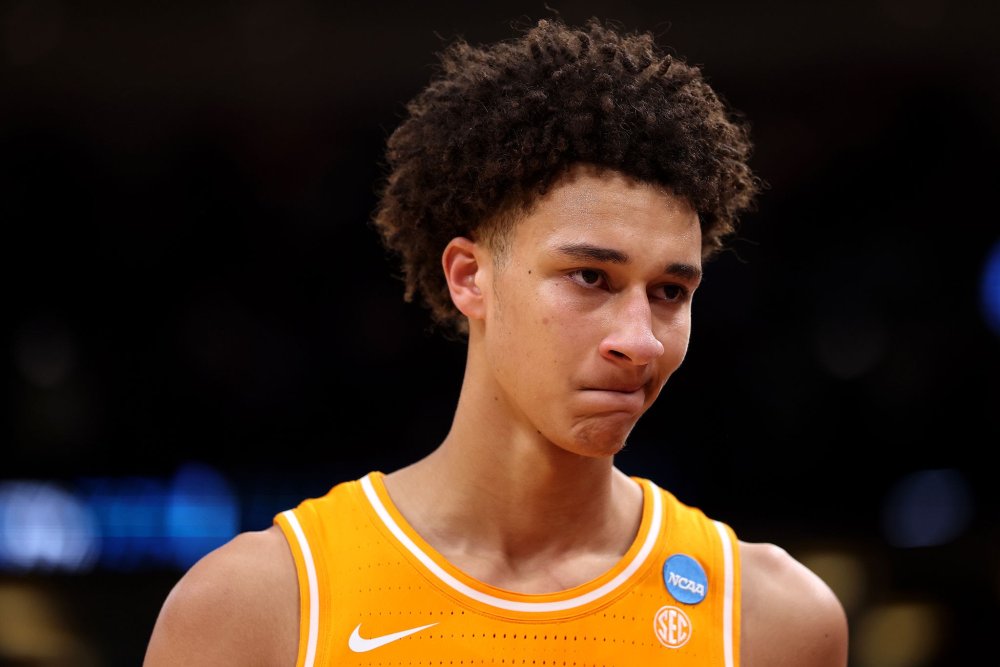
The 6-foot-10 former Tennessee Volunteers forward, who is a projected lottery pick, expressed deep pride in his Rwandan heritage and praised the explosive growth of the sport in his mother’s homeland.
Ament, who is just days away from hearing his name called in the draft, described a mix of excitement and reflection as the big moment approaches.
“Super excited, definitely a little reflective of just all I’ve gone through in my basketball process. You know, it was funny when I’m in, like inviting the people to come out and celebrate with me and watch,” he said.
“I just, you know, think about how much they’ve impacted my career and how much they helped me. I just want to give, you know, a bunch of thanks to those people.”
When asked which NBA teams have shown the most interest in him during the pre-draft process, Ament revealed the franchises he has worked out for.
“Well, I’ve only done four workouts. I’ve done Chicago, Brooklyn, OKC, and the Clippers. So they’ve shown a lot of love.”
With draft projections placing him around the top 10, including a mock selection to the Milwaukee Bucks, Ament said draft position matters less than impact.
“Honestly, I mean, for me, it’s just, you know, the fit, wherever I get drafted, I could, it doesn’t really matter, you know, if I get drafted high or low, I just want to be able to come in and impact the game immediately. So that sounds good to me as long as I’m playing.”
The young star, who grew up admiring Kevin Durant and Russell Westbrook, said the Oklahoma City Thunder trio of Durant, Westbrook, and James Harden was especially influential in his development.
“I was a big KD guy. I loved KD and I also love Russell Westbrook. I loved that OKC team when they had the KD. I had him, Harden, and Russ. That was my favourite team.”
Asked what it would feel like to face Kevin Durant in the NBA, Ament admitted it would be a surreal moment.
“It would be surreal. I mean, I’ve studied so much from his game. We’re from the same area and you hear about, you know, stories about him and, you know, how competitive he was in high school and then all the way into where he is now. So that would just be a surreal moment.”
He also shared a light-hearted remark about his college coach, Rick Barnes, who previously coached Durant at Texas.
“He’ll make comparisons to say that I’m not like KD. He’ll try to make fun of me and try to say like I’m not there yet and light a fire under my butt. But no, he’s great.”
One of the most notable aspects of Ament’s story is his strong connection to Rwanda through his mother’s side of the family.
“Yeah, my mother was born and raised there. I’m half Rwandan. My mom’s brother lives out there.”
Reflecting on his visits to Rwanda, he said each trip has helped him better understand his heritage.
“It’s great. I mean, it’s a different story each time. Just getting older and me being able to understand more about the country. But not only do I learn more about the country, I learn more about my family and our lineage and just what it means to be Rwandan.”
When asked directly whether he would consider playing for Rwanda’s national team, Ament did not hesitate.
“I would entertain it for sure, for sure. I mean, basketball is huge in that country and it means so much to their fans and their community. So I would definitely entertain it.”
Beyond basketball, Ament also spoke about his sporting versatility, including golf, soccer, and a memorable experience working with professional golfer Bryson DeChambeau.
“Yeah, he signed a Reebok, so am I. So it was, they kind of set it up for me. It was great. I don’t know if you saw that video, but I broke his driver. So that was, it was kind of awkward, but no, it was great.”
Explaining the incident, he added humorously:
“Well, it wasn’t his driver. He would never let me use his driver because he’s going to play with it in the tournament. It was the clubhouse’s driver, but he was just teaching me swings. And he was like, this was like my last swing before we had to get going. He was like, I just want you to give everything you have on this swing, let it rip. And I think I let it rip a little too hard and the driver had to go off.”
Despite the mishap, Ament said the experience was motivating.
“IT definitely motivated me a lot. I haven’t played in a minute, so we’ll see next time I get out there, but it definitely motivates me to keep going.”
As the NBA Draft approaches, Ament says he is ready for the next chapter of his career, wherever it begins.
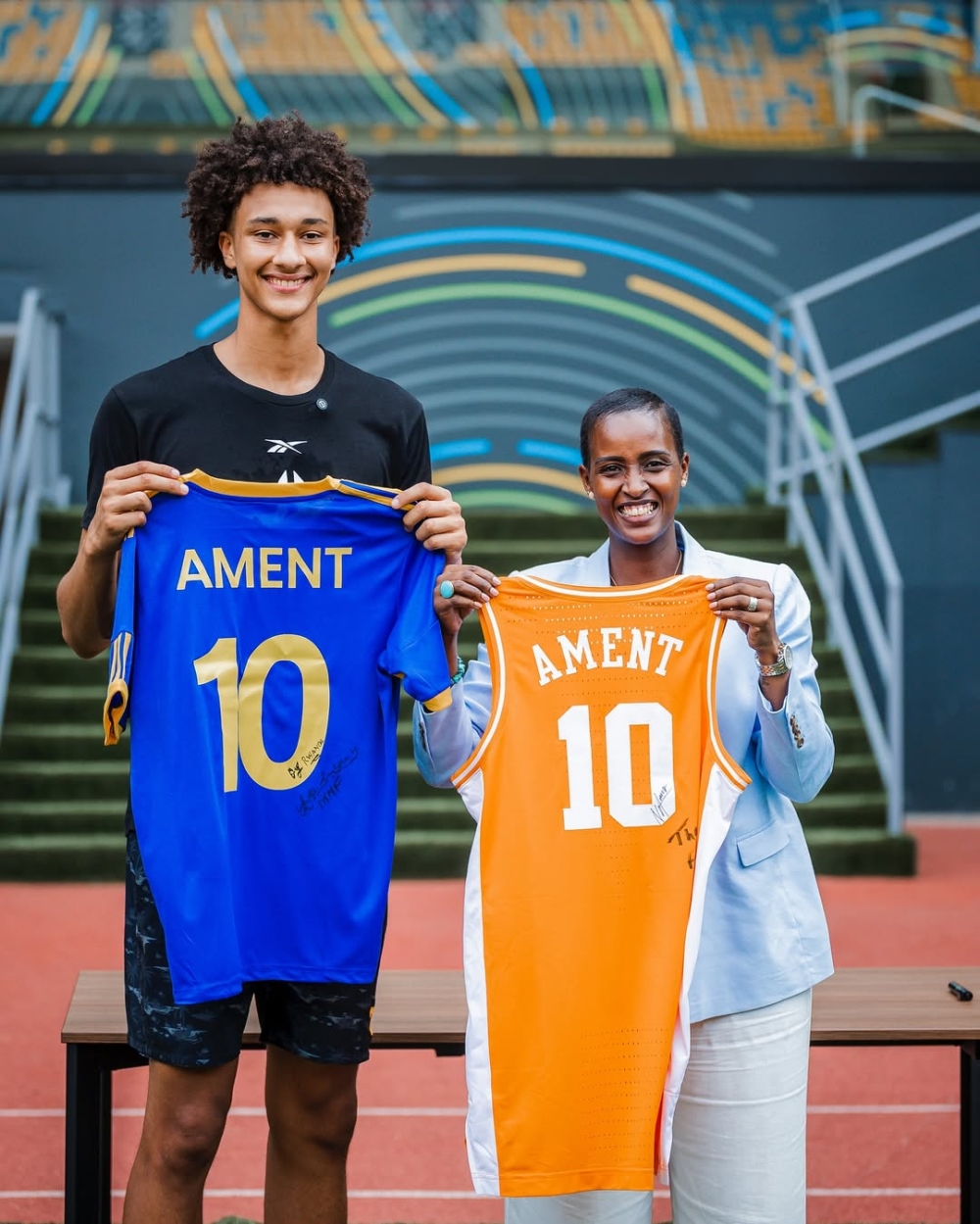
Nate Ament has expressed openness to representing Rwanda ahead of the 2026 NBA Draft.Rwandan-American NBA prospect Nate Ament exchanged jerseys with Sports Minister Nelly Mukazayire during a weeklong visit to Rwanda, his mother’s homeland, from August 9 to 13, 2025.
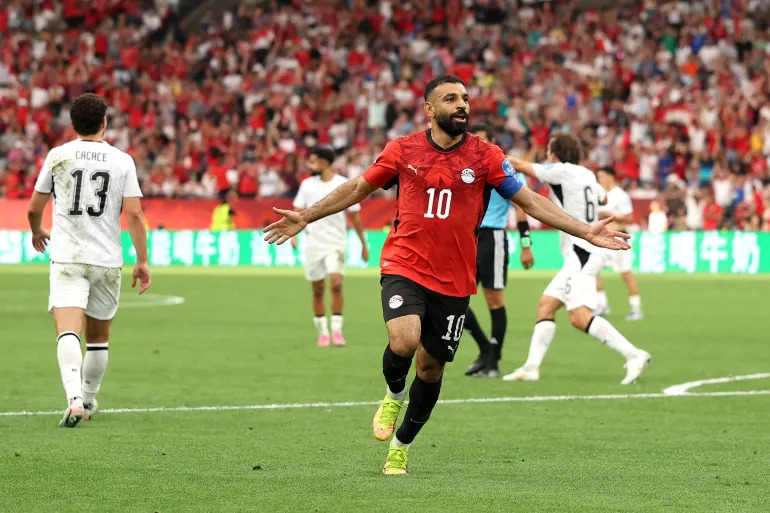
The result marked Egypt’s first win at the World Cup in their ninth appearance, moving them to the brink of qualification for the last 32 and easing the disappointment of previous campaigns.
New Zealand made a bright start and took the lead in the 15th minute when Finn Surman rose to head home from a set-piece, putting Egypt under early pressure. However, the African side responded strongly after the break and turned the match around with a dominant second-half display.
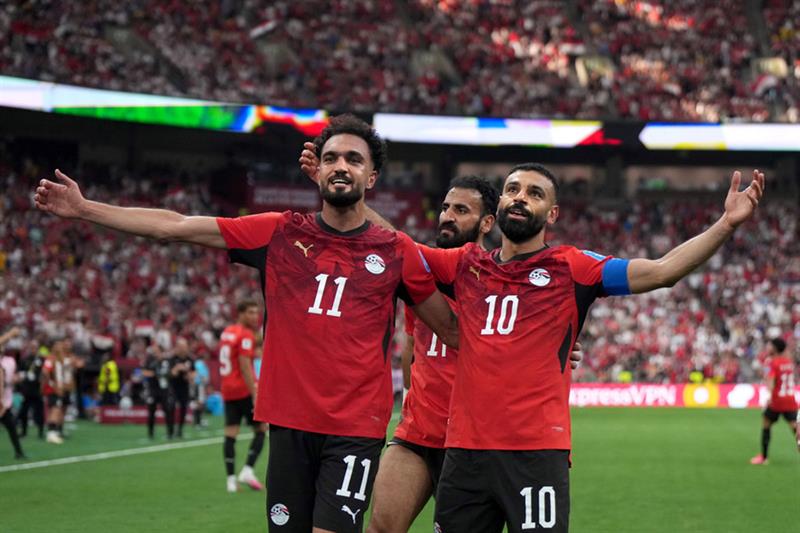
Mostafa Mohamed restored parity in the 58th minute after being set up by Salah, before the Liverpool forward put Egypt ahead just nine minutes later with a composed finish in the 67th minute. Mahmoud Hassan ‘Trezeguet’ sealed the historic victory in the 82nd minute, converting from a well-delivered corner to complete the 3-1 comeback.
Salah’s influence was decisive throughout, as he continued to carry Egypt’s attacking threat after a slow start to the tournament, which had included a subdued performance in their opening draw against Belgium. Just when it seemed his World Cup struggles might continue, the 34-year-old delivered a match-winning display to lift his nation.
The win also highlighted Egypt’s resilience, as they recovered from conceding early to produce one of their most important results in World Cup history. It leaves them in a strong position in Group G and on course for a possible place in the knockout stage.
Egypt will now turn their attention to their final group match against Iran, where another positive result could confirm progression to the round of 32.
Salah, who now has 68 international goals, described the victory as “a great achievement for all the players” and praised the team’s spirit in overcoming adversity on the world stage.
Mixed fortunes for other African nations
While Egypt celebrated a historic triumph, the other African representatives in action on Sunday experienced contrasting fortunes as the second round of group-stage matches continued.
In Group H, debutants Cabo Verde produced a stunning, resilient display to secure a dramatic 2–2 draw against two-time World Cup winners Uruguay at Miami Stadium. The Blue Sharks made history in the 21st minute when Kevin Pina swept home a sensational 34-yard free-kick, recording the nation’s first-ever FIFA World Cup goal.
Uruguay responded aggressively before the break, turning the game on its head with quick-fire goals from Maximiliano Araújo and Agustín Canobbio to take a 2–1 halftime lead.
However, Cabo Verde refused to back down. In the 61st minute, forward Hélio Varela capitalized on a defensive mix-up in the Uruguayan box to slot home a deserved equalizer. The hard-fought point keeps Cabo Verde firmly alive in the race for the knockout rounds, leaving them tied with Uruguay on two points in Group H.
It was a far more sobering evening for Tunisia, who were officially eliminated from the tournament after suffering a heavy 4–0 defeat against a ruthless Japan side at Estadio Monterrey. The Group F clash, which marked the historic 1,000th match in FIFA World Cup history, was entirely dominated by the Asian giants.
Daichi Kamada opened the scoring for Japan after just four minutes, netting the fastest World Cup goal in his country’s history. Striker Ayase Ueda doubled the advantage on the half-hour mark before winger Junya Ito added a third in the 69th minute.
Ueda capped off his stellar performance with a looping header late in the game to complete the rout. The comprehensive loss leaves the Eagles of Carthage bottom of the group without a point, spelling an early exit from the competition.
The victory marked a huge milestone for Egyptian football, ending the nation’s long wait for a first World Cup match win after several appearances on football’s biggest stage.
In a statement released late Saturday, the club said the decision follows “unacceptable behaviour during GMT 2026 that adversely affected the team.”
The club also reiterated its disciplinary stance, stating that it “maintains a zero-tolerance policy on misconduct” and remains committed to “upholding the highest standards of discipline and professionalism.”
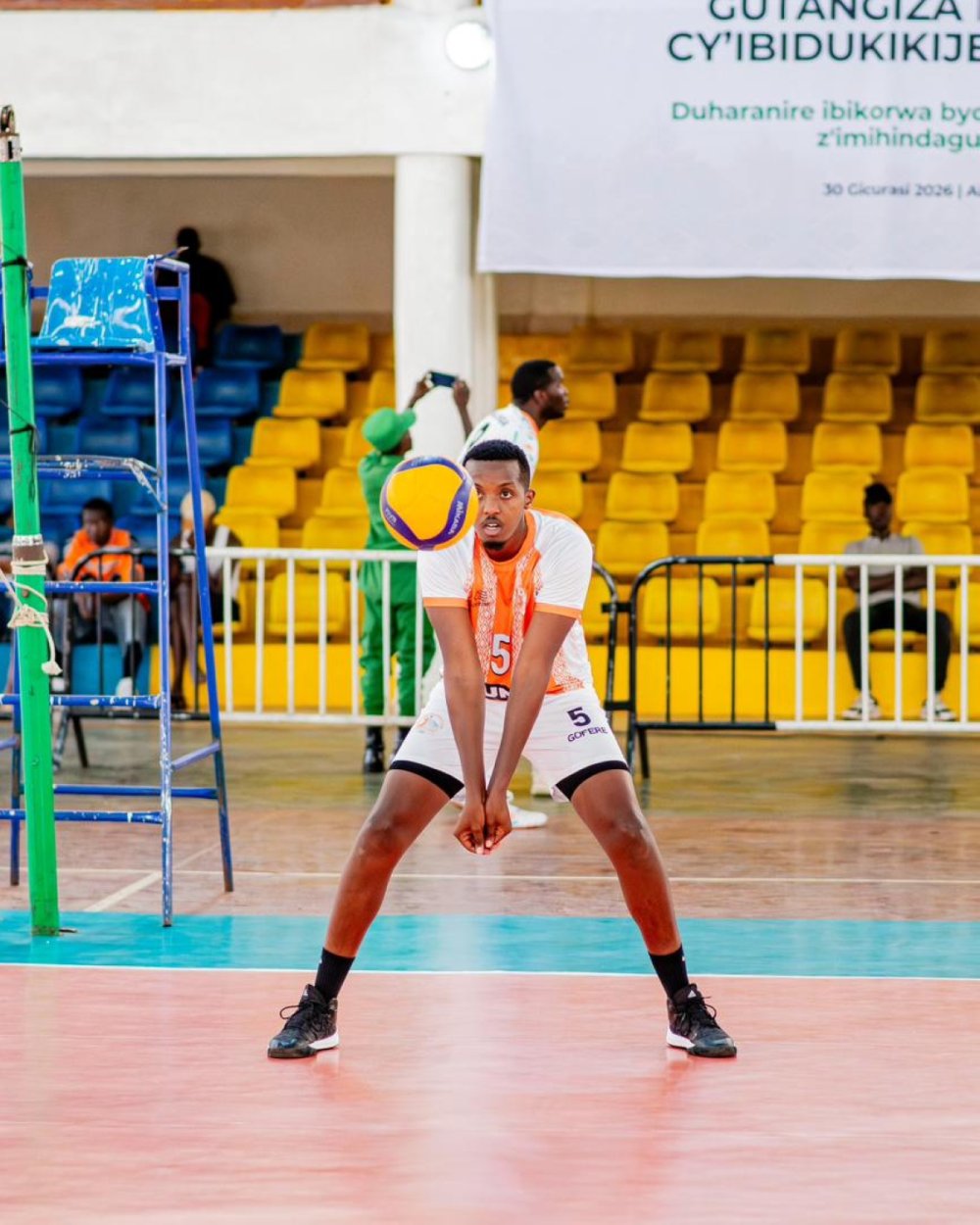
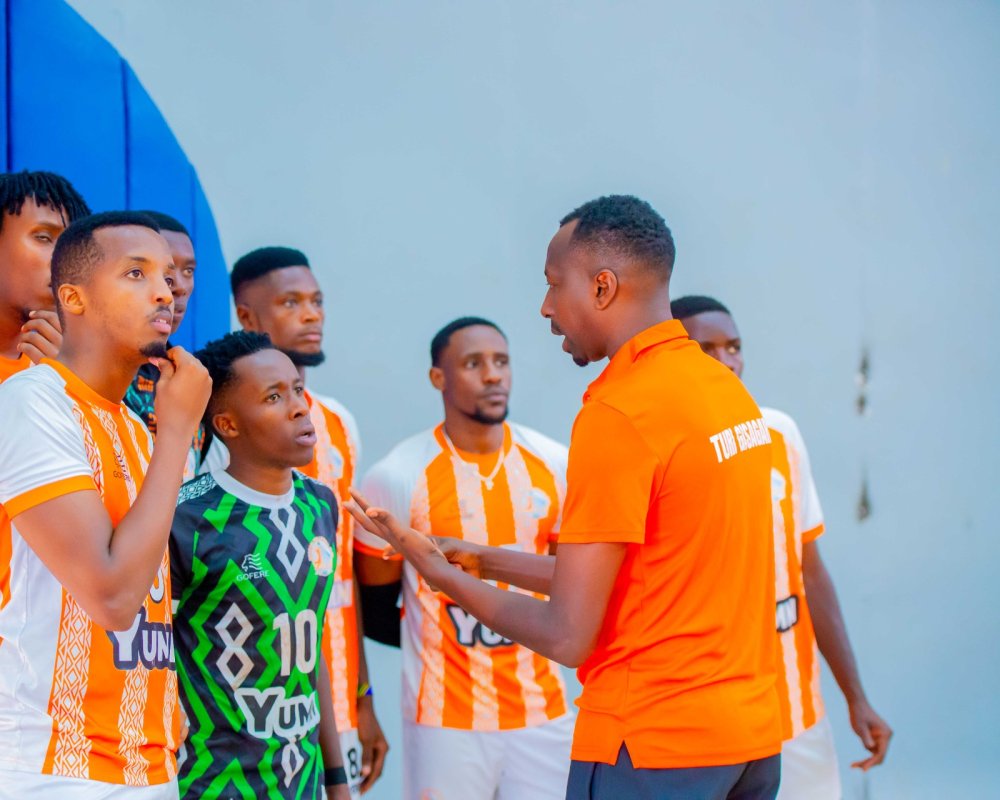
The sanctions come after Gisagara VC arrived late for its quarterfinal match against Police VC, resulting in a walkover defeat and elimination from the competition.
The club recently appointed Kwizera Marchal as head coach, though reports suggest internal tensions within the team, particularly between management and players.
Sources indicate that delayed player salaries have also contributed to unrest, with some players reportedly refusing to feature due to unpaid wages.
The 2026 Kwibuka Volleyball Tournament concludes on Sunday with classification matches across both men’s and women’s categories.
In the men’s category, REG VC will face Police VC in the third-place playoff, while APR VC meet Kepler VC in the final.
In the women’s competition, Police WVC take on Kepler WVC for third place, while APR WVC face KPC WVC in the final.
Gisagara VC has taken disciplinary action against players including Muvara Ronald. Cedric Ngaboyintwari has been suspended for 90 days. Kwizera Marchal is the head coach of Gisagara VC.
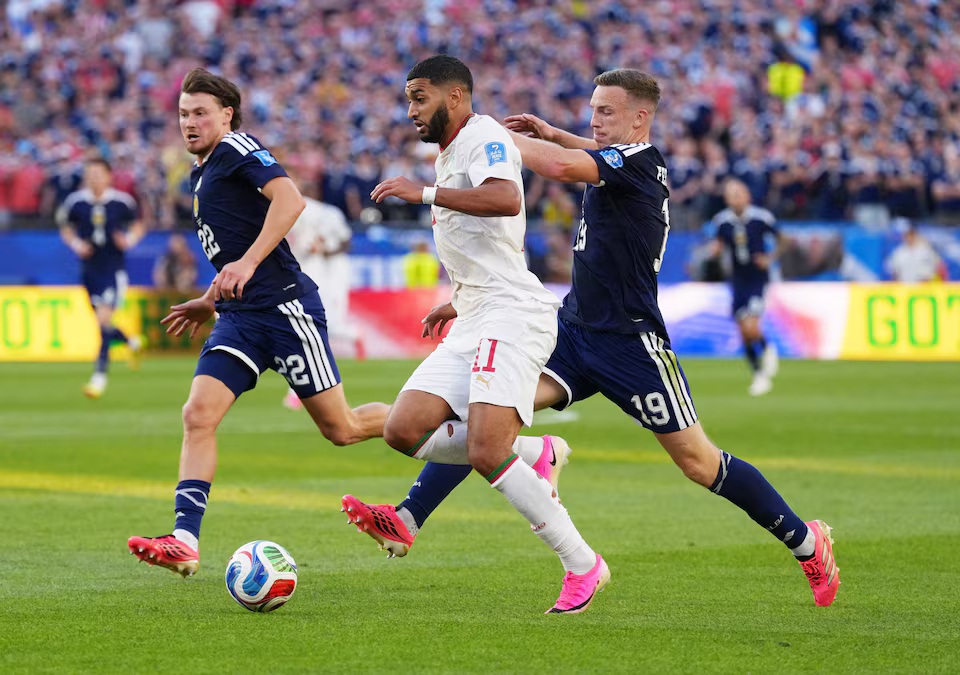
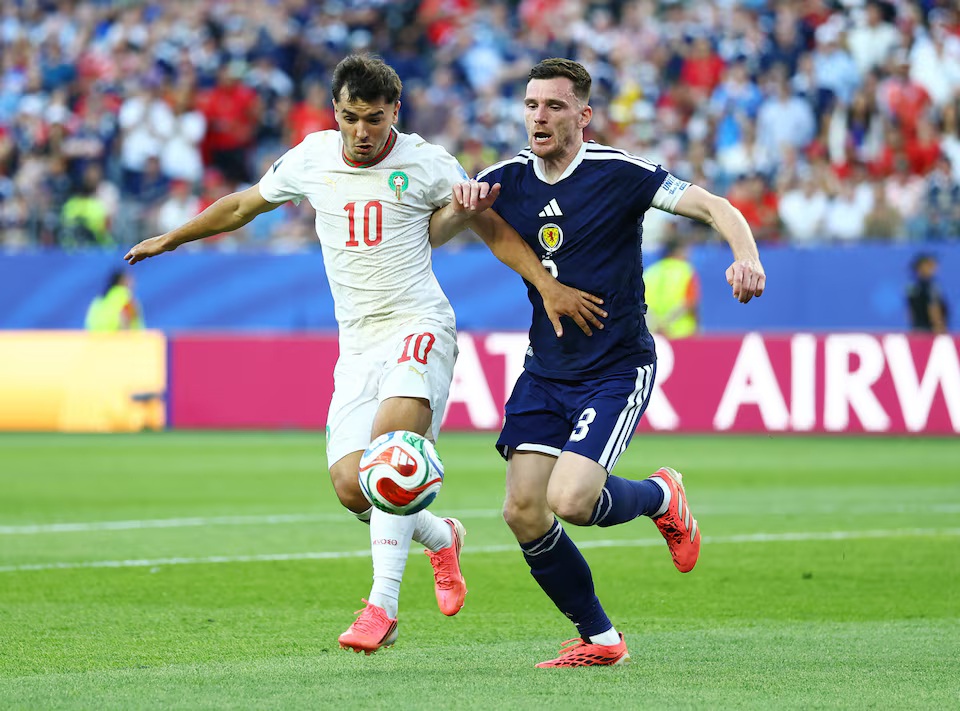
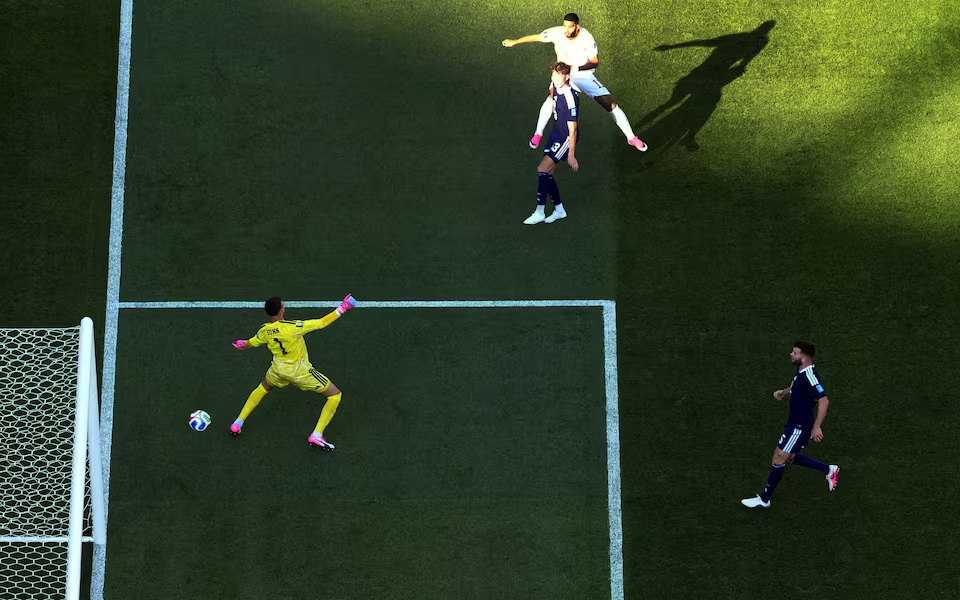
Saibari struck after just 71 seconds, netting the fastest goal of the tournament so far and handing the Atlas Lions a crucial three points. The victory lifted Morocco to four points from two matches and into second place in Group C, level with leaders Brazil but behind on goal difference.
The decisive moment came almost immediately after kickoff. Real Madrid playmaker Brahim Diaz delivered a perfectly weighted pass over the top, and Saibari timed his run to perfection after being played onside by Grant Hanley.
The PSV Eindhoven midfielder controlled the ball expertly before unleashing a powerful finish beyond Scotland goalkeeper Angus Gunn.
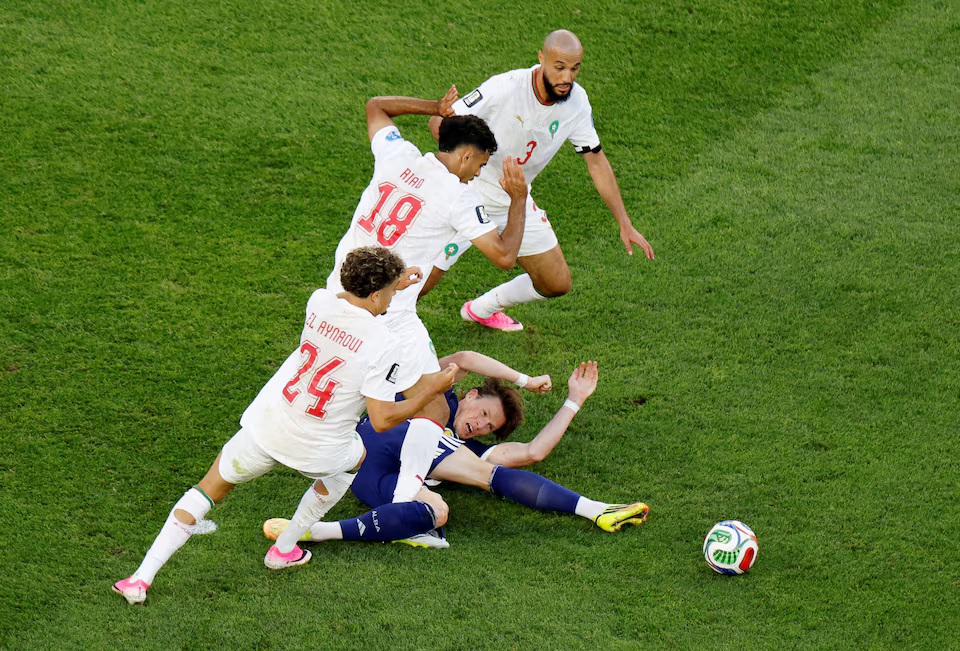
Morocco, who drew 1-1 with Brazil in their opening match, dominated possession and looked dangerous whenever they attacked. Bilal El Khannouss squandered a promising opportunity before the break, while Saibari came close to doubling his tally early in the second half when his effort struck the crossbar following a deflection from Jack Hendry.
Gunn kept Scotland in the contest with a fine save from an El Khannouss header moments later, ensuring the margin remained just one goal.
Scotland, buoyed by their opening victory over Haiti, struggled to create meaningful opportunities against a disciplined Moroccan defence. Their first real threat arrived in first-half stoppage time when Andy Robertson’s cross found John McGinn, but the midfielder could not direct his effort on target.
Steve Clarke’s side improved after the interval, with Ryan Christie firing over from a promising position and Scott McTominay striking the side-netting late on. However, they failed to register a shot on target as Morocco comfortably absorbed the pressure.
Later on Friday, Brazil climbed to the top of Group C with a convincing 3-0 victory over Haiti. Matheus Cunha scored twice on his first start of the tournament, while Vinicius Junior also found the net as Carlo Ancelotti’s side produced a much-improved display following their draw with Morocco. The result eliminated Haiti and left Brazil and Morocco level on four points, with Scotland on three heading into the final round of group fixtures.
Elsewhere on Matchday 9, the United States became the first team from Group D to secure a place in the knockout stage after defeating Australia 2-0, while Paraguay boosted their qualification hopes with a 1-0 victory over Türkiye.
Morocco will book their place in the last 32 with a positive result against Haiti next week, while Scotland face a daunting encounter with five-time champions Brazil as they fight to keep their World Cup dream alive.
Saibari struck after just 71 seconds, netting the fastest goal of the tournament so far and handing the Atlas Lions a crucial three points.Morocco, who drew 1-1 with Brazil in their opening match, dominated possession and looked dangerous whenever they attacked.
Making their first appearance at the tournament since 1974, when the nation competed as Zaire, DR Congo produced a determined display to earn their first-ever World Cup point and frustrate one of the tournament’s favourites.
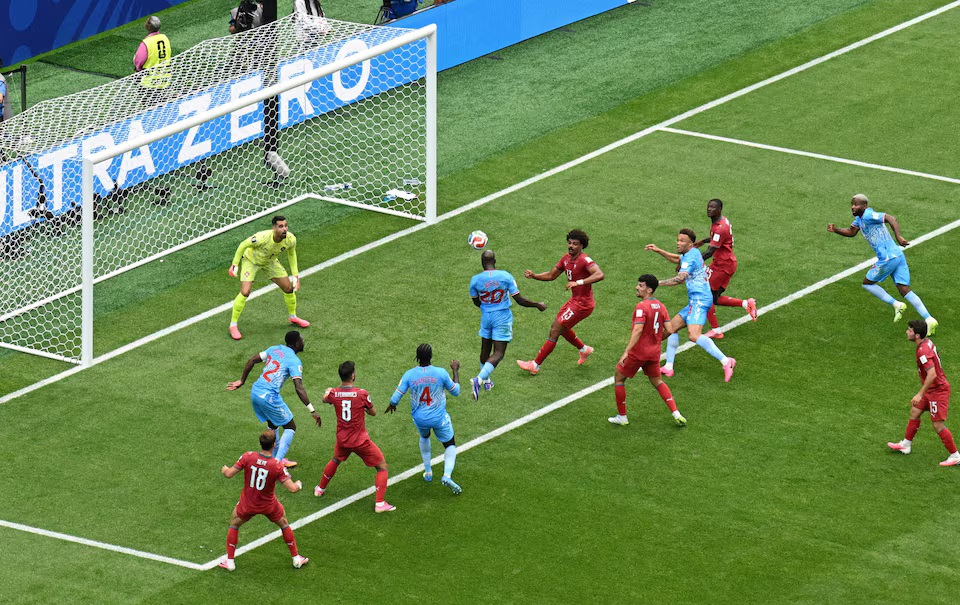
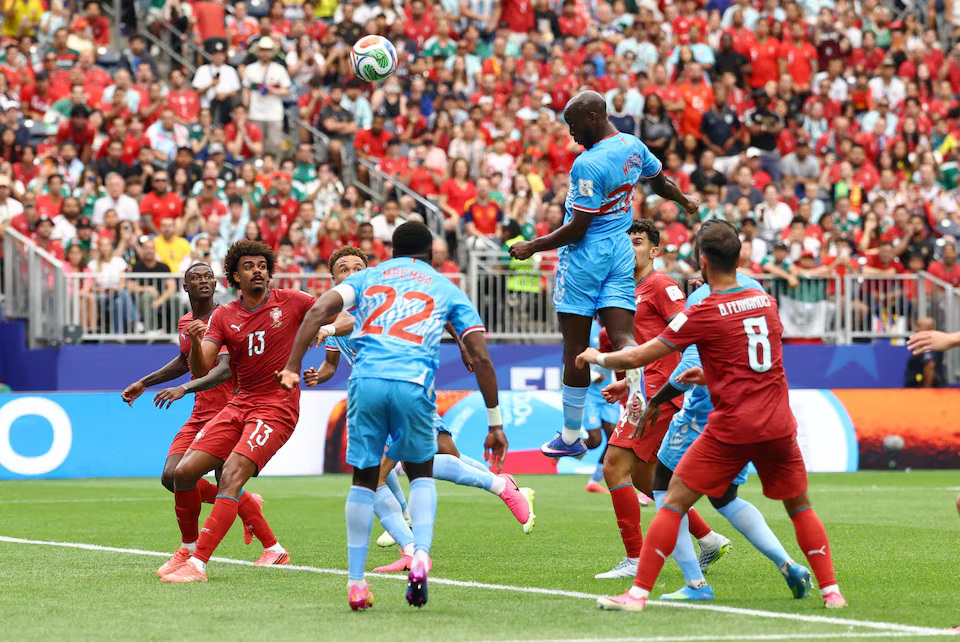
Portugal appeared to be cruising after taking an early lead in the sixth minute. Pedro Neto delivered a precise cross into the penalty area, where midfielder Joao Neves rose above the defense to power a header past the Congolese goalkeeper.
Despite dominating possession for much of the first half, Portugal struggled to create clear scoring opportunities. Their inability to extend the lead proved costly as DR Congo grew into the contest.
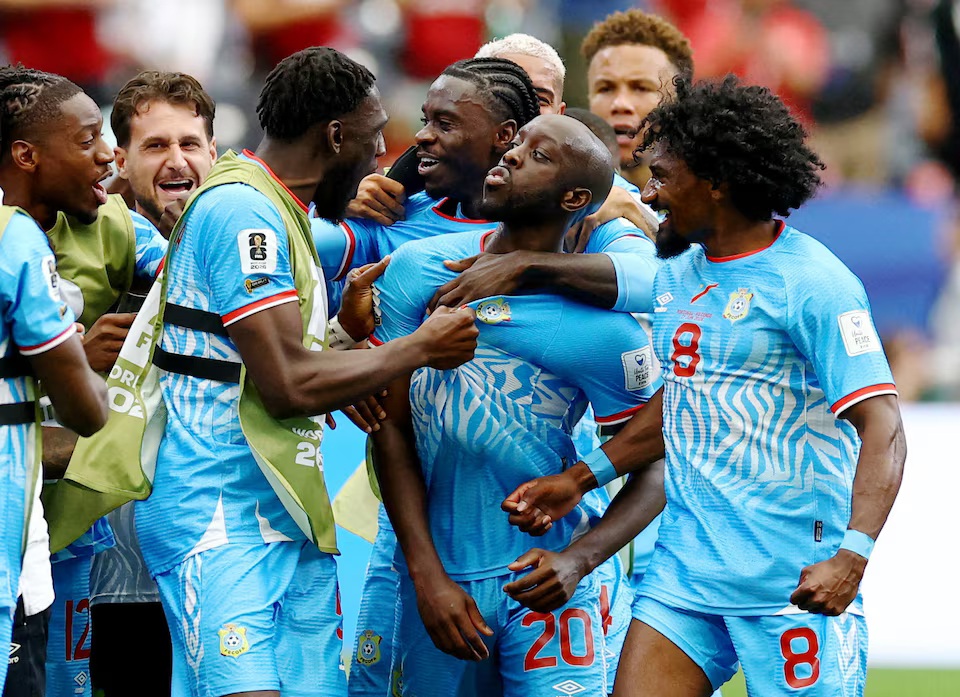
The African side found their breakthrough deep into first-half stoppage time. Arthur Masuaku whipped in a dangerous cross, and Newcastle United forward Yoane Wissa escaped his marker to head home the equaliser, scoring DR Congo’s first-ever World Cup goal and sending their supporters into celebration.
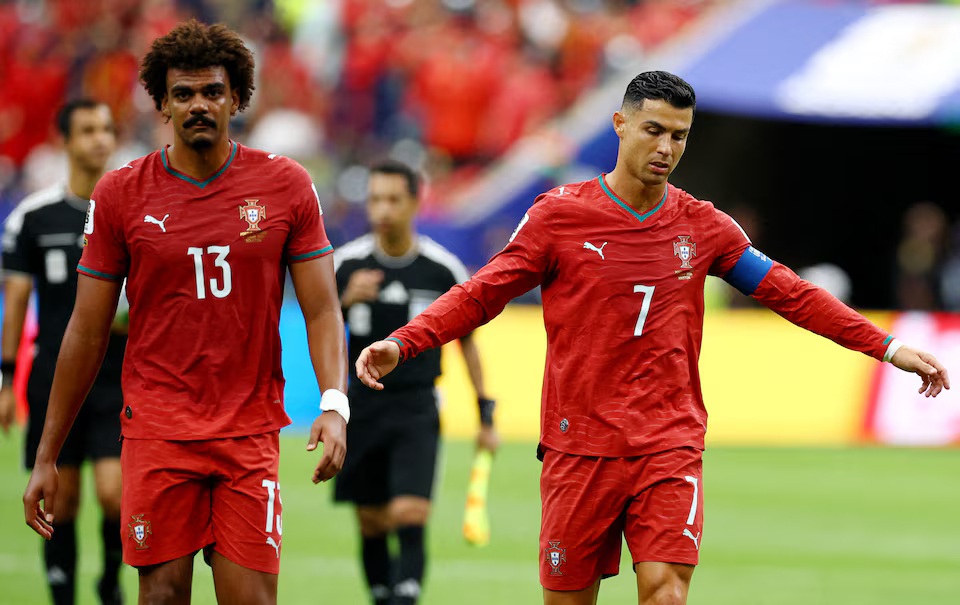
Cristiano Ronaldo, making a record-equalling sixth World Cup appearance at the age of 41, endured a frustrating evening. The Portuguese captain was largely contained by the Congolese defense and missed two promising chances in the second half as Portugal searched for a winner.
DR Congo nearly completed a remarkable comeback when veteran striker Cedric Bakambu struck the post midway through the second half. Portugal thought they had regained the lead through Joao Cancelo, but the effort was ruled out for offside.
After the match, Portugal coach Roberto Martinez admitted his side failed to maintain their attacking intent, while DR Congo coach Sebastien Desabre praised his players for their resilience.
“We didn’t create enough chances and probably we lost that intention of scoring the second goal,” Martinez said. “But I think it’s more the mentality of getting rid of the weight on the shoulders of the players or wanting to win the World Cup.”
Desabre added: “It is a step forward for us to have scored this first goal and to have this first point for our country during this World Cup. We gave everything we had against the team of Portugal. We are delighted.”
The result leaves Group K wide open, with Portugal now under pressure to secure victories in their remaining matches against Uzbekistan and Colombia, while DR Congo will take confidence from a historic point earned on football’s biggest stage.
Pedro Neto delivered a precise cross into the penalty area, where midfielder Joao Neves rose above the defense to power a header past the Congolese goalkeeper.DR Congo players celebrate wildly after Yoane Wissa’s historic equaliser. Cristiano Ronaldo, making a record-equalling sixth World Cup appearance at the age of 41, endured a frustrating evening. The Portuguese captain was largely contained by the Congolese defense and missed two promising chances in the second half as Portugal searched for a winner.
France struggled to find rhythm early on, with Senegal creating the clearer opportunities. Nicolas Jackson struck the post, while Ismaila Sarr missed a golden chance from close range, leaving Senegal frustrated at not taking control of the game. Despite their dominance in chances, they failed to convert, allowing France to stay level at the break.
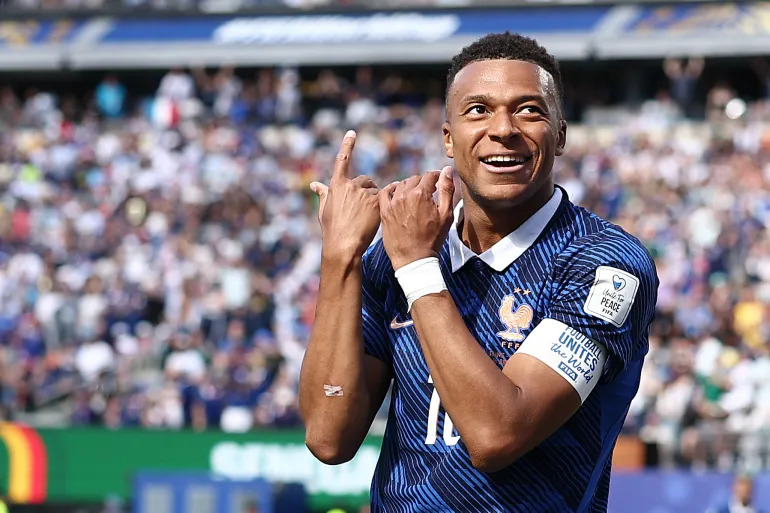
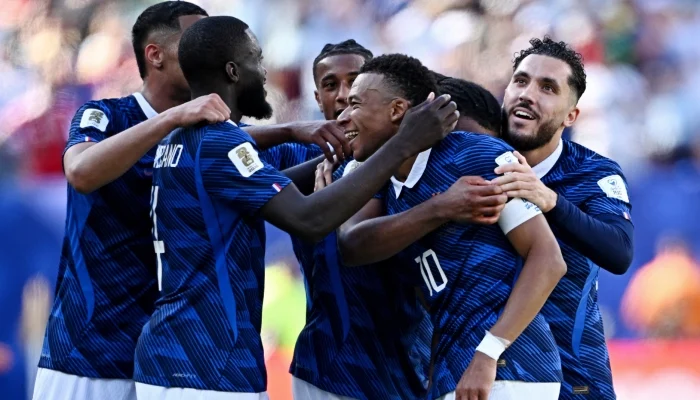
The second half, however, belonged to Mbappé. The French captain and Real Madrid forward broke the deadlock in the 66th minute after a sharp attacking move, finishing calmly past goalkeeper Édouard Mendy. His goal shifted momentum firmly in France’s favour as Senegal began to lose defensive shape under pressure.
Bradley Barcola added a second for France shortly after coming off the bench, finishing with a composed chipped effort that highlighted France’s attacking depth. Senegal responded late in stoppage time through teenager Ibrahim Mbaye, who struck a powerful finish to give his side hope.
However, Mbappé immediately restored France’s two-goal cushion with a stunning long-range strike just moments later, sealing the victory in dramatic fashion and ending any hopes of a Senegal comeback.
The win reinforces France’s status as one of the tournament favourites, with Mbappé once again proving decisive on the world stage. His leadership and clinical finishing turned a difficult match into a controlled victory.
Senegal will be left reflecting on wasted chances and defensive lapses, while France will take confidence from their ability to recover and dominate when it mattered most. With Mbappé in this form, France’s World Cup campaign has begun with a strong warning to their rivals.
Mbappe shoots to score his team’s third goal against Senegal.
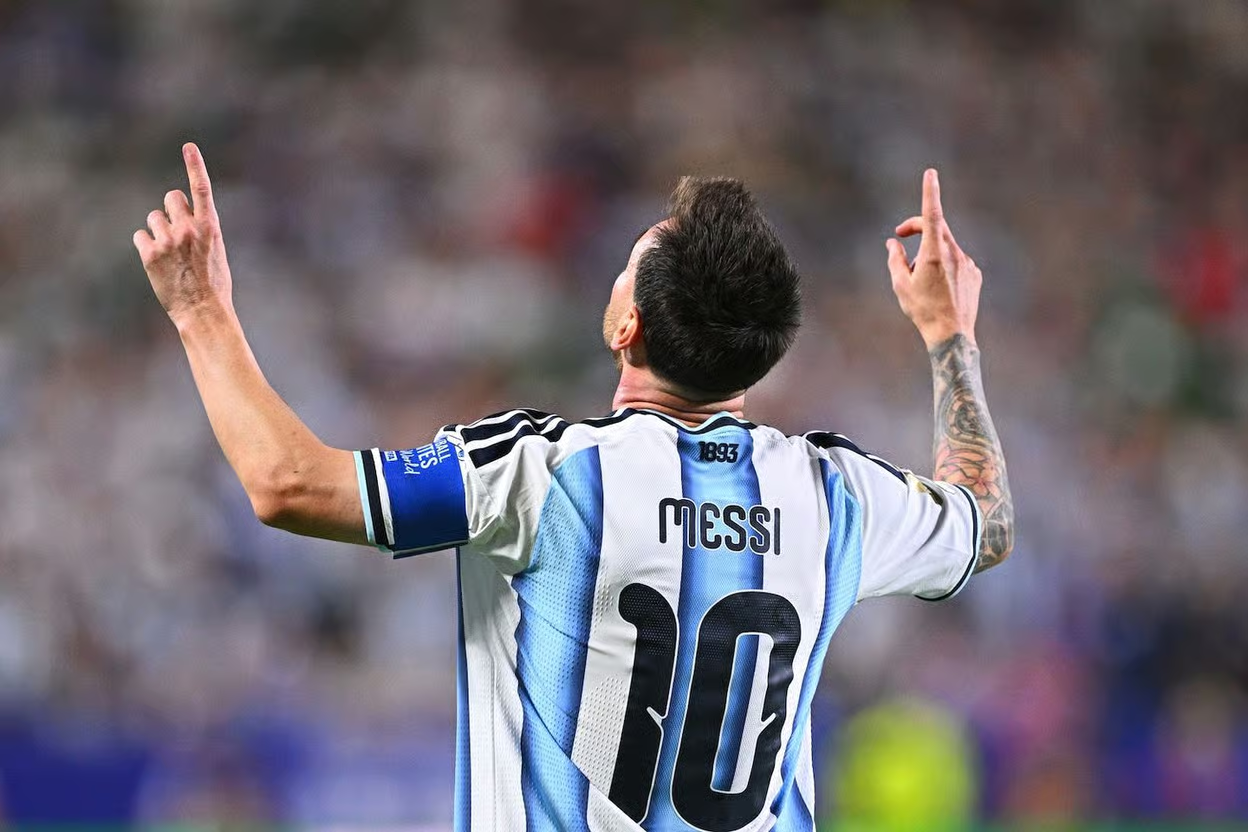
The reigning champions began their title defence in style, with Messi marking his record sixth World Cup appearance by delivering a masterclass that also saw him become the joint-highest goalscorer in men’s World Cup history with 16 goals.
Argentina thought they had struck early when Messi found the net in the eighth minute, only for the goal to be ruled out for offside. The setback was brief.
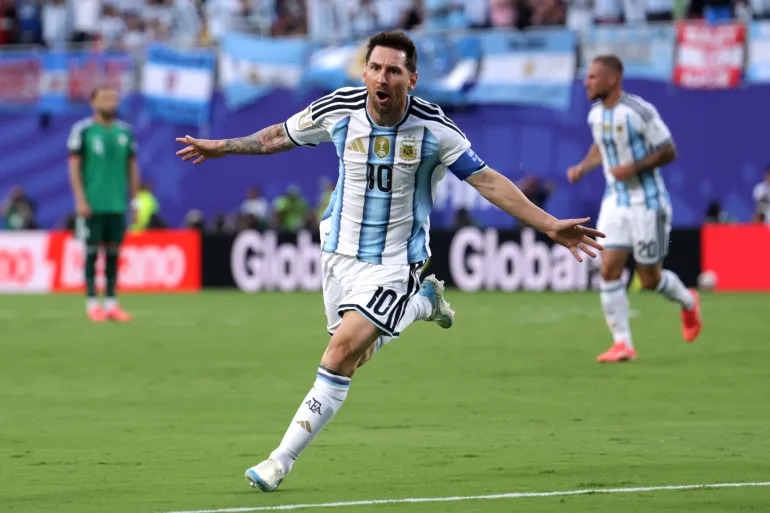
Moments later, the 38-year-old broke the deadlock with a trademark solo effort, weaving past defenders before unleashing a powerful left-footed strike from the edge of the box that left Algeria goalkeeper Luca Zidane helpless.
Argentina’s Lionel Messi celebrates scoring against Algeria in the FIFA World Cup 2026 Group J match at Kansas City Stadium, Kansas City, Missouri, US, June 16, 2026.
Algeria, the 2019 Africa Cup of Nations winners, briefly threatened when Fares Chaibi had a ninth-minute effort disallowed for offside, but they rarely troubled Argentina thereafter.
After the break, Messi doubled his tally in the 60th minute, reacting quickest to a rebound after Alexis Mac Allister’s effort was parried by Zidane, tapping home from close range to extend Argentina’s control.
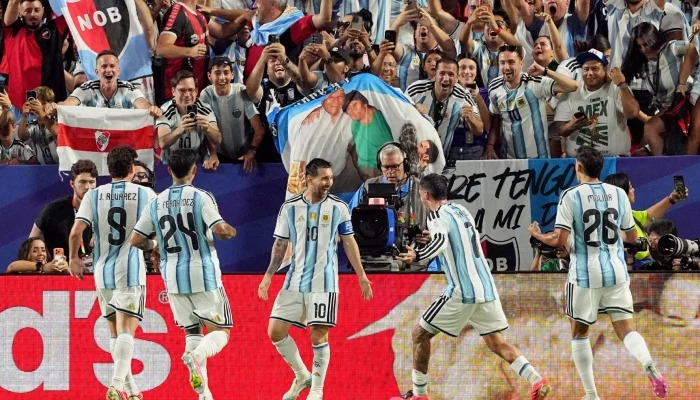
The crowning moment came in the 76th minute when Messi curled a precise low finish from just outside the area into the bottom corner, completing his first-ever World Cup hat-trick and sending the crowd into celebration.
Argentina’s Lionel Messi celebrates with teammates after scoring a goal during the FIFA World Cup 2026 Group J match between Argentina and Algeria at Kansas City Stadium, Kansas City, Missouri, US, June 16, 2026.
He was substituted shortly after to a standing ovation, with Argentina comfortably managing the closing stages. The result ensured a smooth start to their campaign, especially after their shock opening defeat in the previous World Cup in Qatar.
The match also underlined Messi’s longevity, as he reached 200 international appearances dating back to his debut in 2005. It was a night that reinforced his enduring influence on the global stage, even as he continues his career with Inter Miami in Major League Soccer.
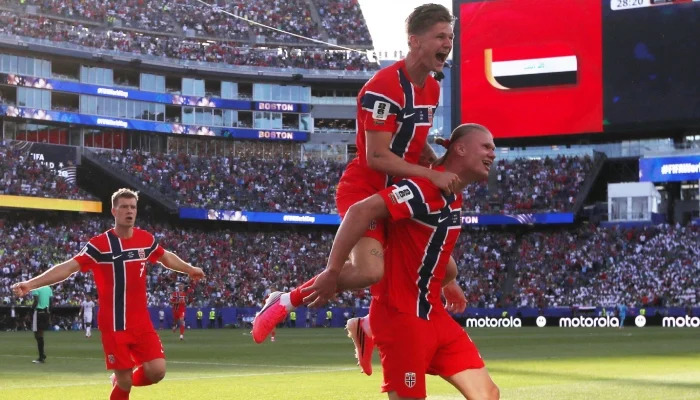
Elsewhere, Kylian Mbappé scored twice as France beat Senegal 3-1, while Erling Haaland also struck twice in Norway’s 4-1 win over Iraq, but it was Messi’s record-breaking display that stole the spotlight as Argentina began their quest to retain the World Cup crown.
Messi’s appearance against Algeria was the 200th of his international career.Kylian Mbappé scored twice as France beat Senegal 3-1.Erling Haaland also struck twice in Norway’s 4-1 win over Iraq.
The World Cup, being hosted across the United States, Mexico and Canada, runs from June 11 to July 19, 2026. The expanded competition features 48 national teams competing in 104 matches, drawing the attention of football fans around the globe.
With matches scheduled at different times due to varying time zones, many supporters are seeking comfortable and convenient venues where they can follow the action live. Zaria Court has opened its doors throughout the tournament, welcoming fans eager to watch matches from the opening fixtures through to the final.
Games are being screened at The Sports Bar, a modern entertainment space located at the entrance of Zaria Court Hotel. Designed with sports fans in mind, the venue can accommodate more than 200 guests and offers a relaxed setting where visitors can enjoy food and drinks while following the tournament.
To enhance the viewing experience, The Sports Bar is equipped with 19 large television screens, ensuring clear visibility from every corner of the venue. Live DJs are also on hand to keep the atmosphere vibrant before and after matches.
The setup allows both indoor and outdoor guests to enjoy uninterrupted coverage of the World Cup, creating an exciting gathering place for football fans throughout the tournament.
Viewers follow World Cup on large screens at The Sports Bar, Zaria Court.Zaria Court has emerged as a prime venue for World Cup fans in Kigali
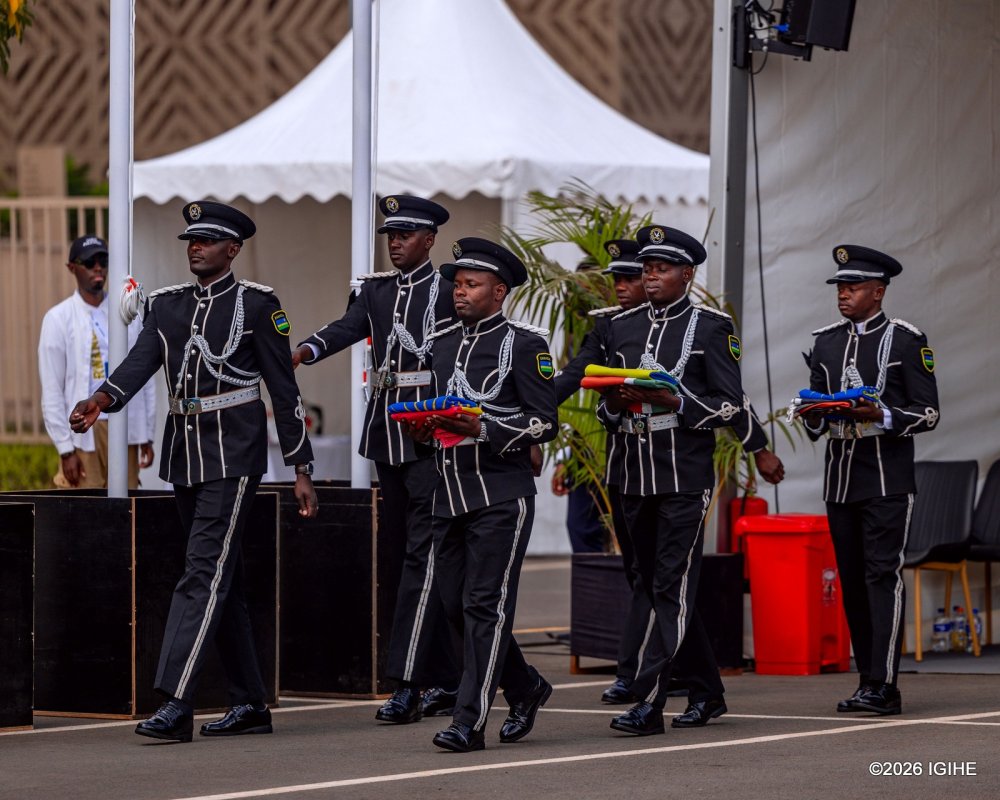
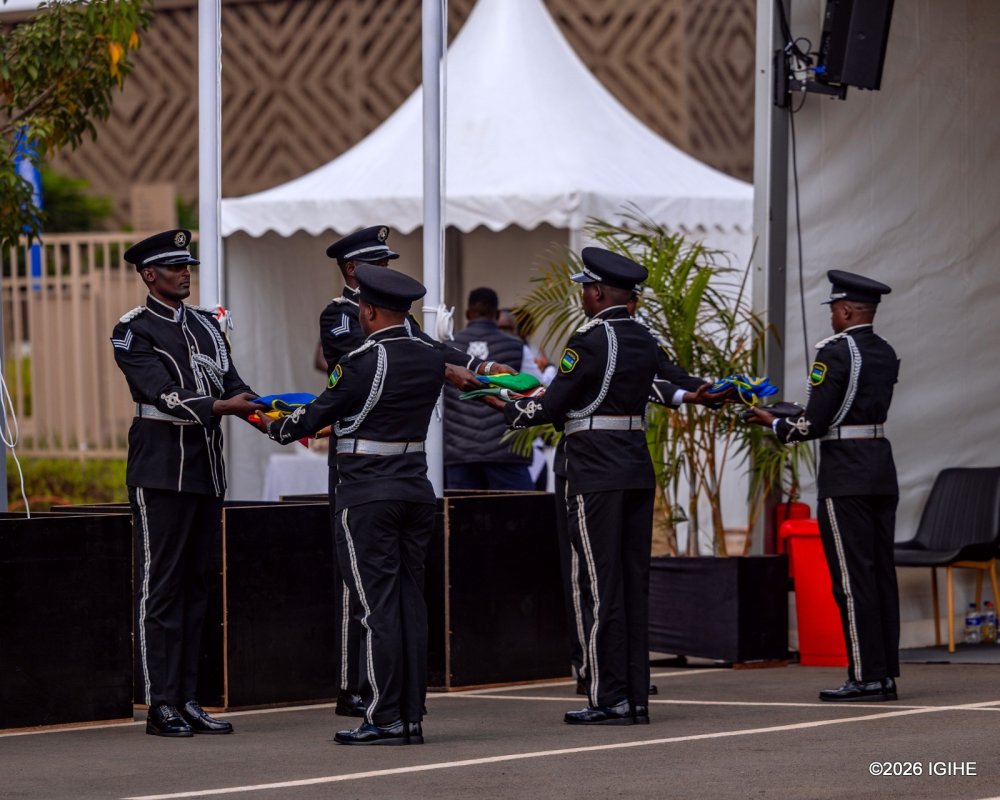
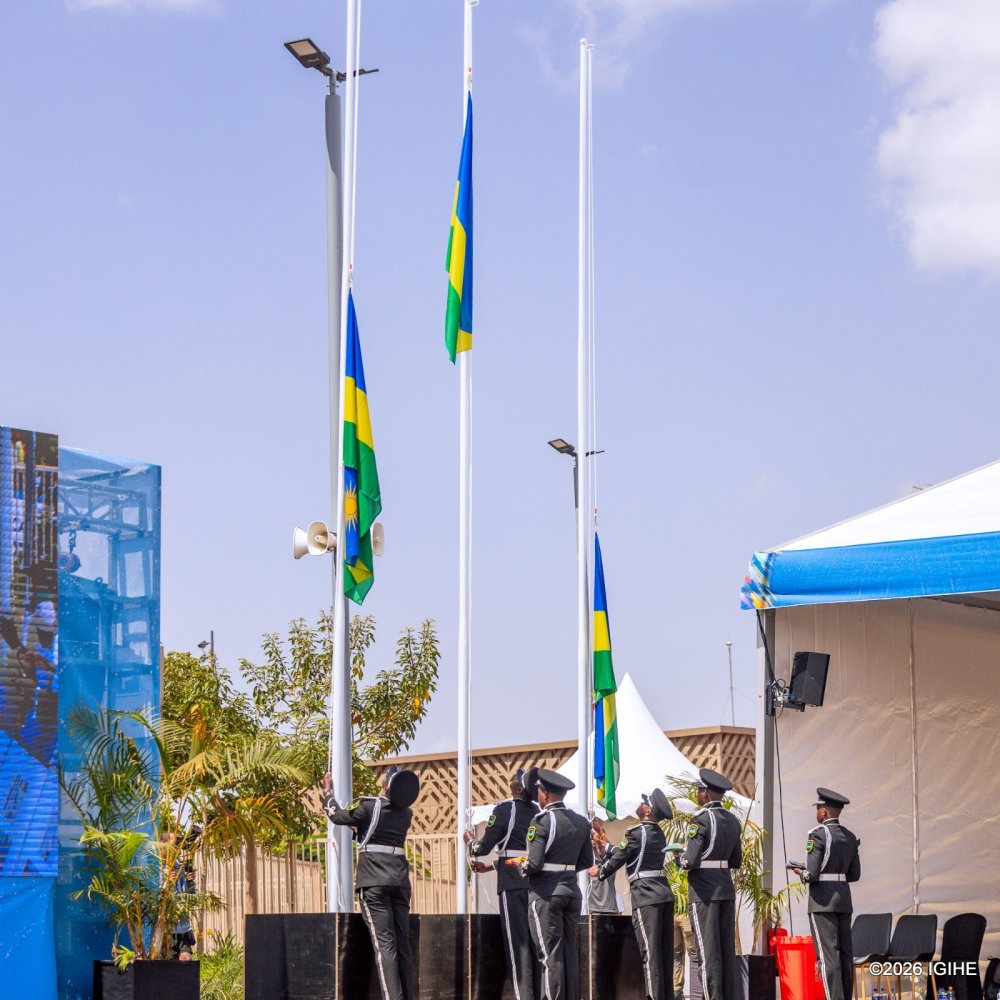
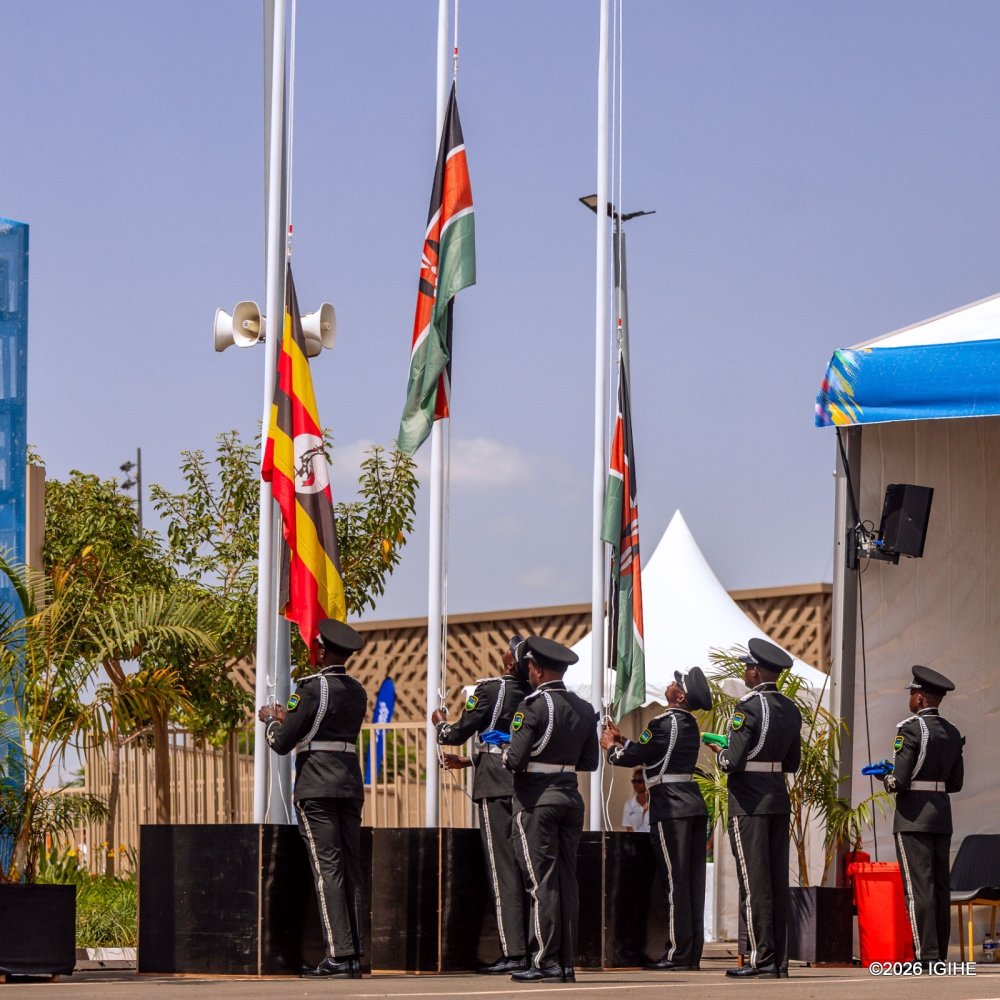
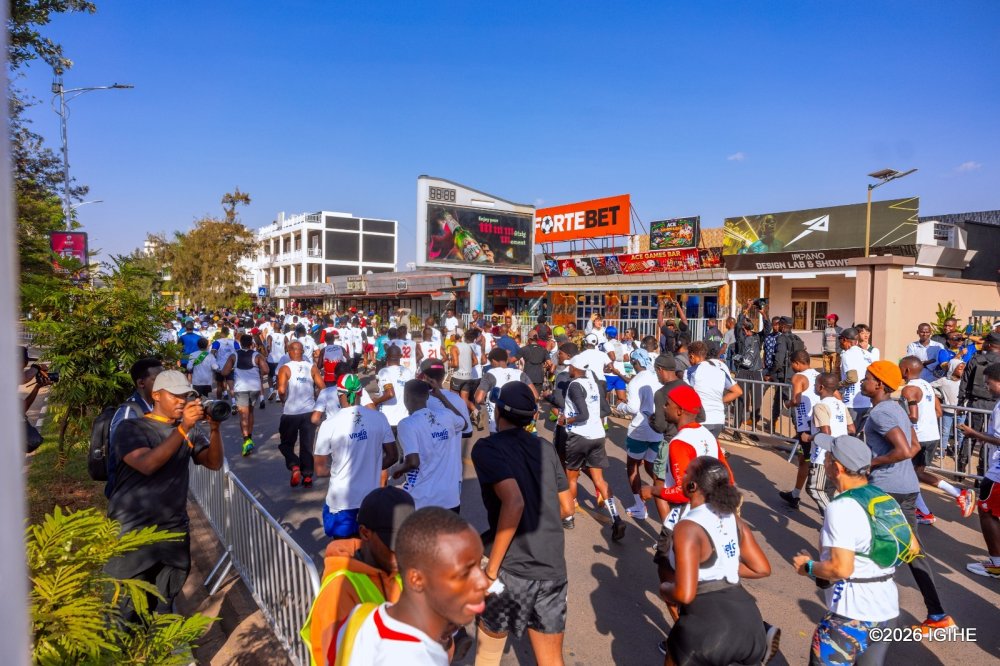
The 21st edition of the peace-themed race, which has been held since 2005, both started and finished at Amahoro Stadium in Kigali.
The event attracted senior officials, including the Permanent Secretary in the Ministry of Sports, Candy Basomingera; World Athletics Vice President Jackson Tuei; and RAF President Col (Rtd) Kayumba Lemuel.
This year’s edition featured only the Full Marathon and Half Marathon on Sunday, following Saturday’s “Run for Peace” 10km race, which attracted 4,197 participants.
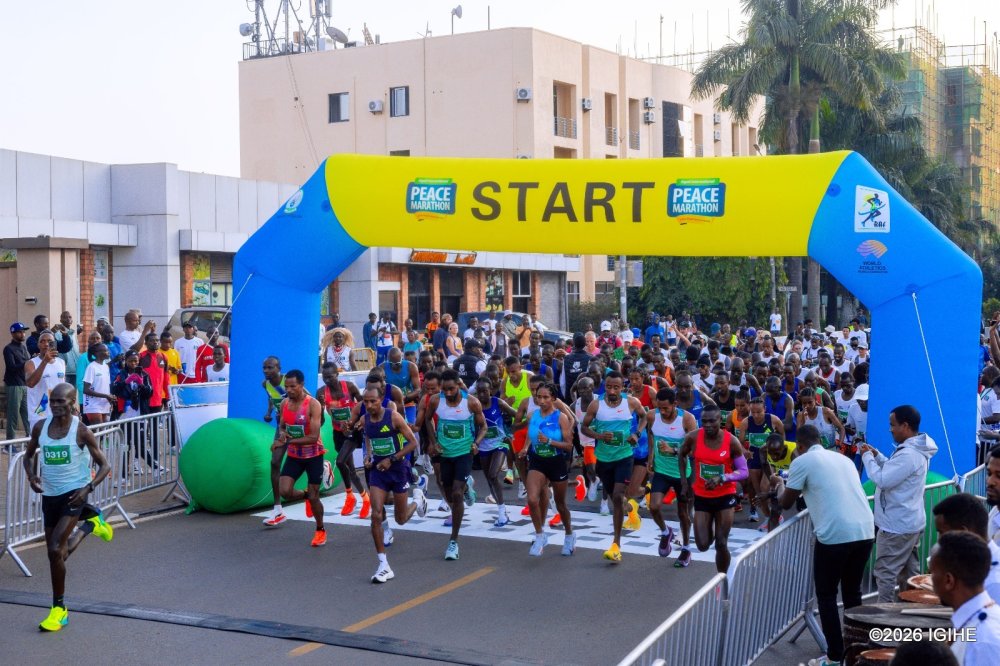
For the first time, the Full Marathon started at 6:30 a.m., a scheduling adjustment aimed at mitigating the impact of Kigali’s rising daytime temperatures.
A total of 518 athletes, including elite international runners, lined up for the marathon following the official start signal from PS Basomingera.
The marathon route ran through key parts of Kigali, including Amahoro Stadium, Chez Lando, Gishushu, MTN Nyarutarama, Kigali Convention Centre, University of Kigali, Kacyiru, MINAGRI, the U.S. Ambassador’s residence area, Kimihurura, Kigali Heights, and surrounding city roads before returning to Amahoro Stadium.
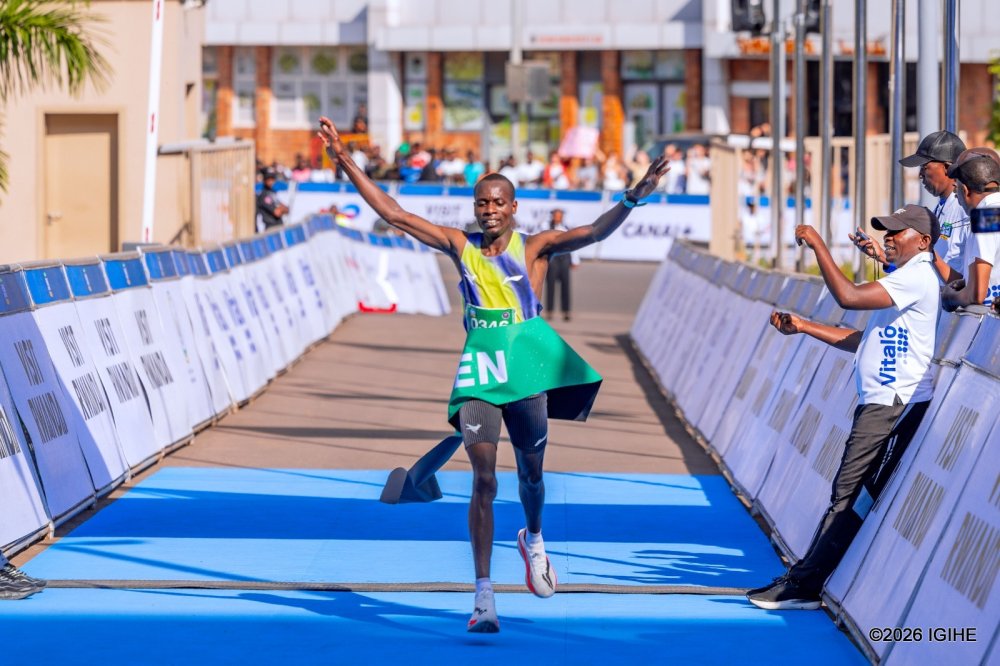
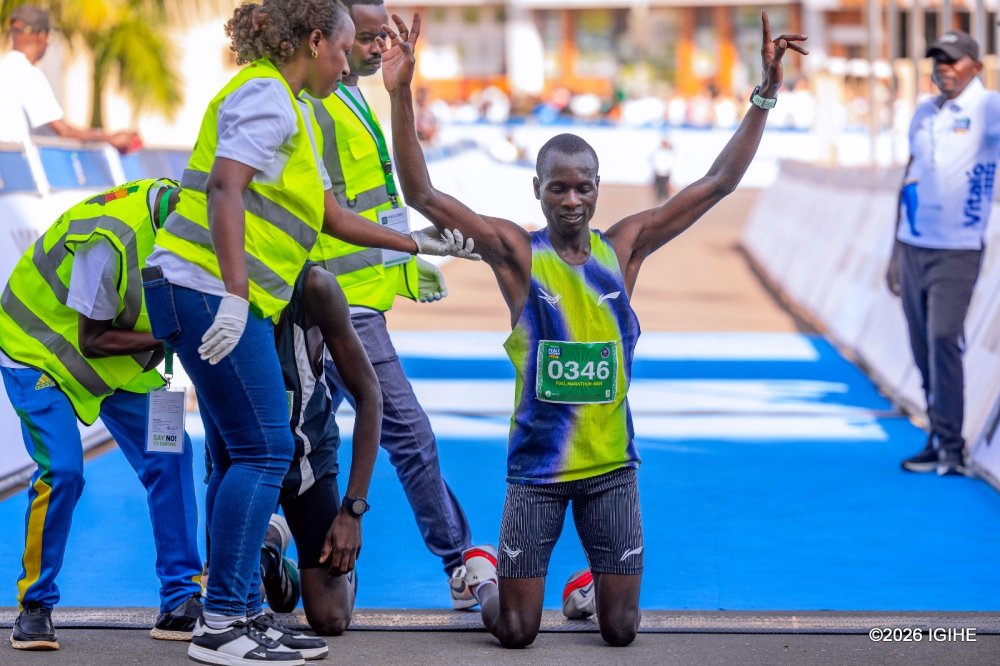
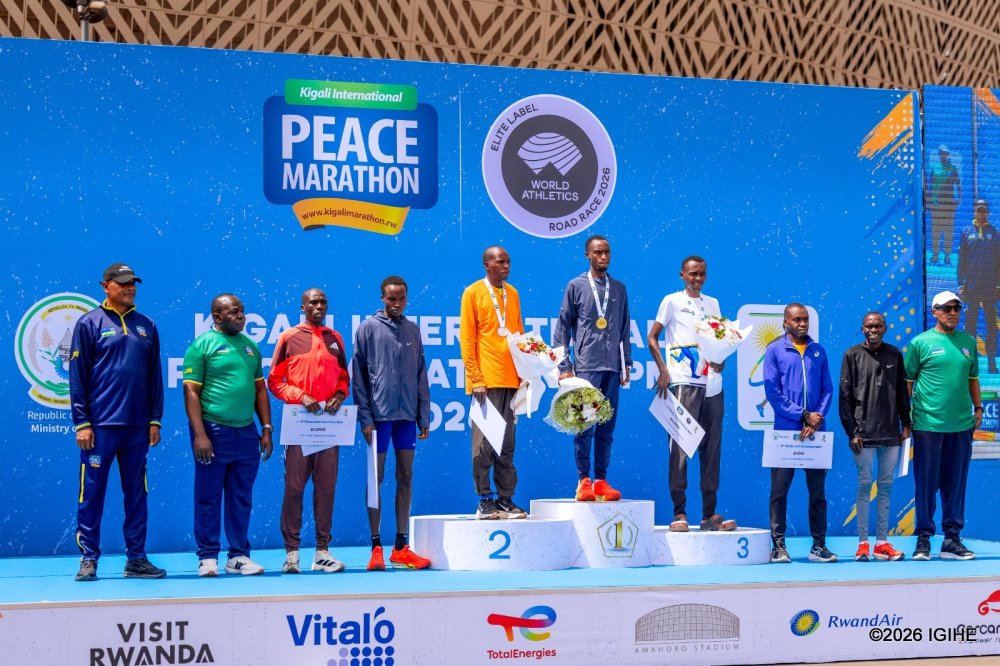
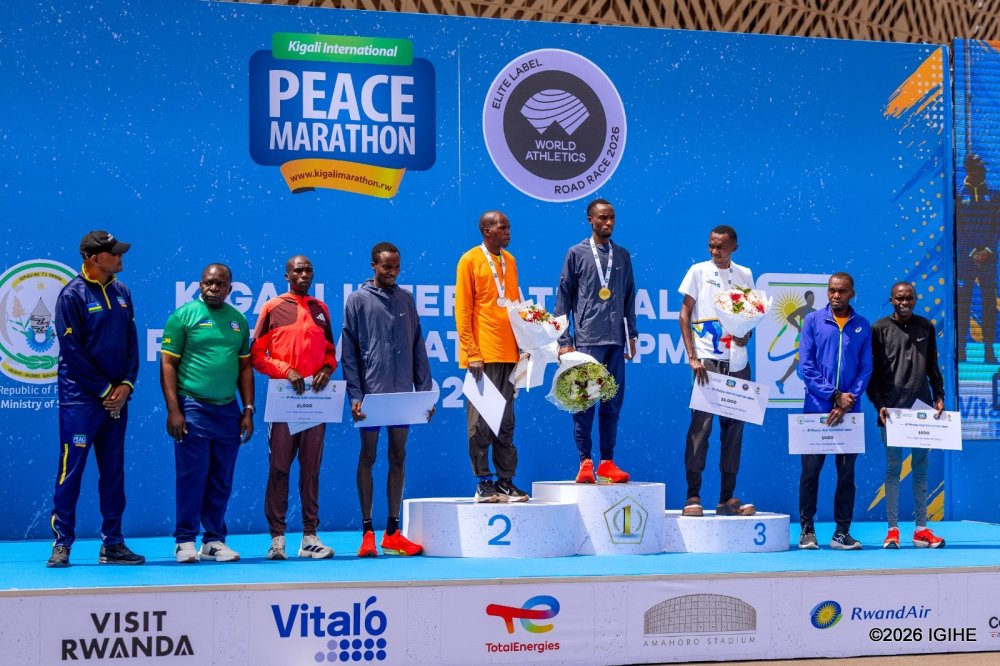
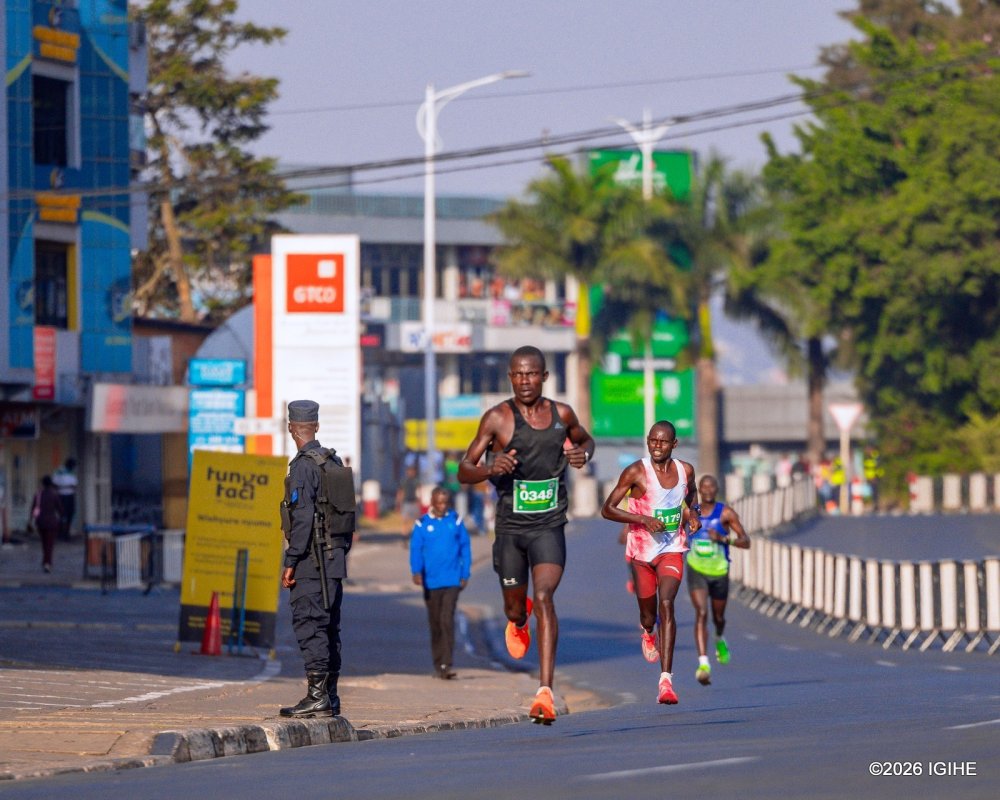
In the men’s Full Marathon, Kenya’s Namutala delivered a record-breaking performance, winning in 2:14:19, the fastest time recorded in the event’s history in Kigali.
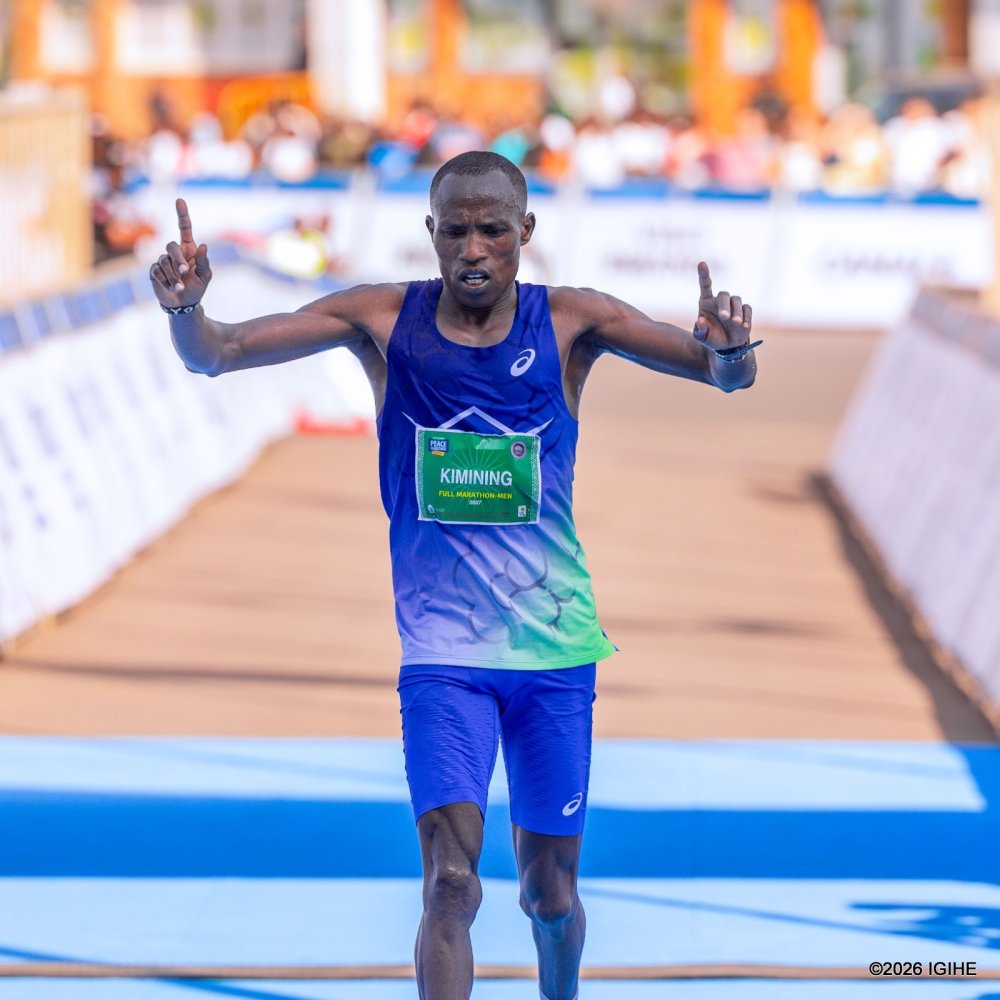
He was followed closely by compatriot Shadrack Kimining, who finished second, while fellow Kenyan Bernard Kipkorir took third place.
The top eight finishers included Bazezew Asmare Belay (Ethiopia), Kaan Kigen Özbilen (Turkey), Julius Ochieng (Uganda), Rwanda’s Ntirenganwa Fidèle, and Kipkirui Langat (Kenya).
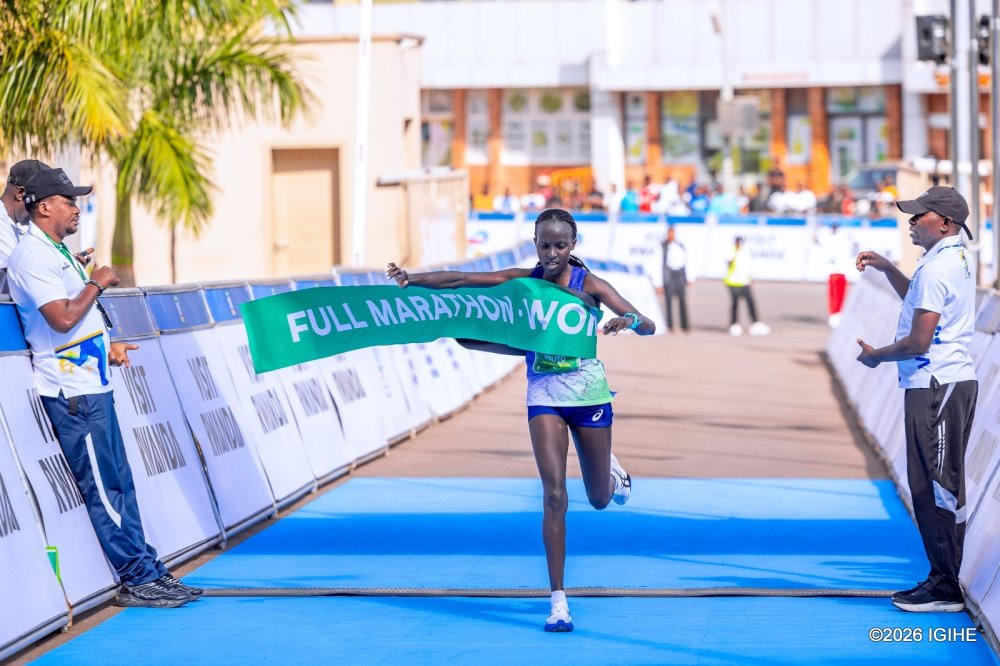
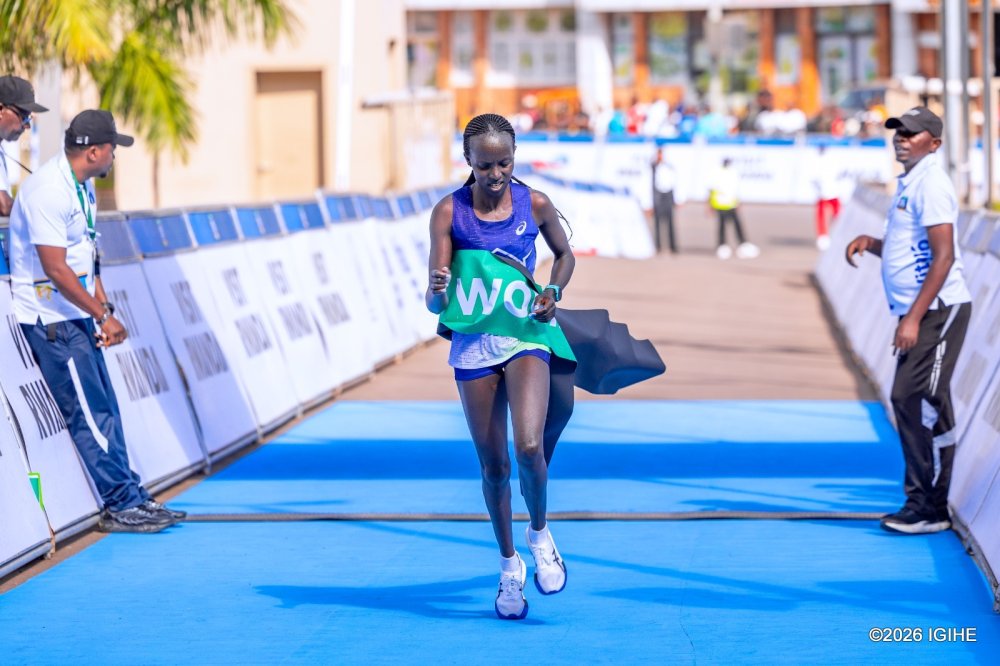
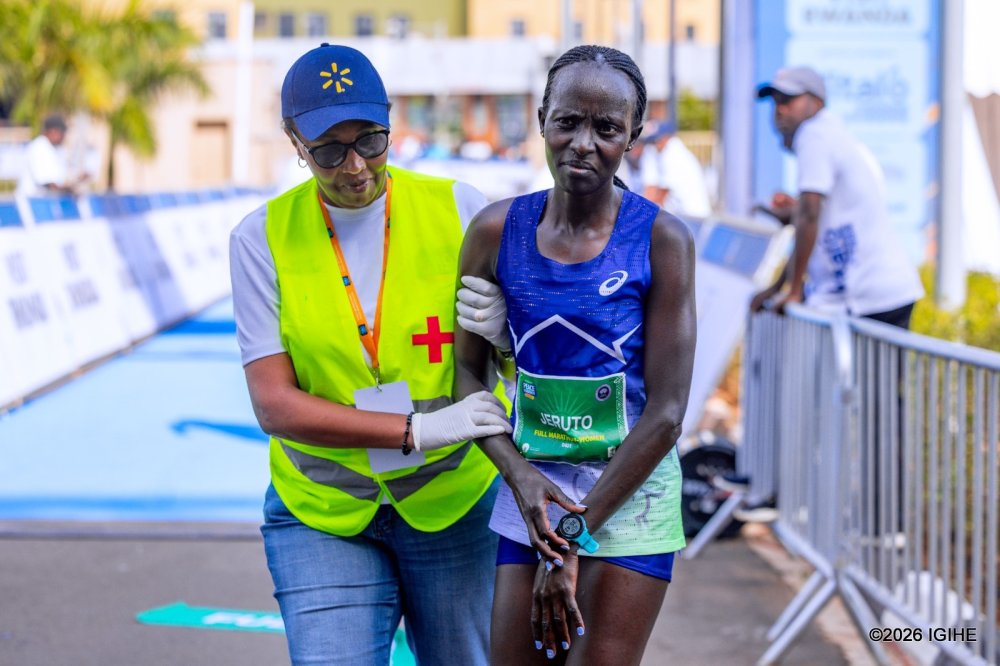
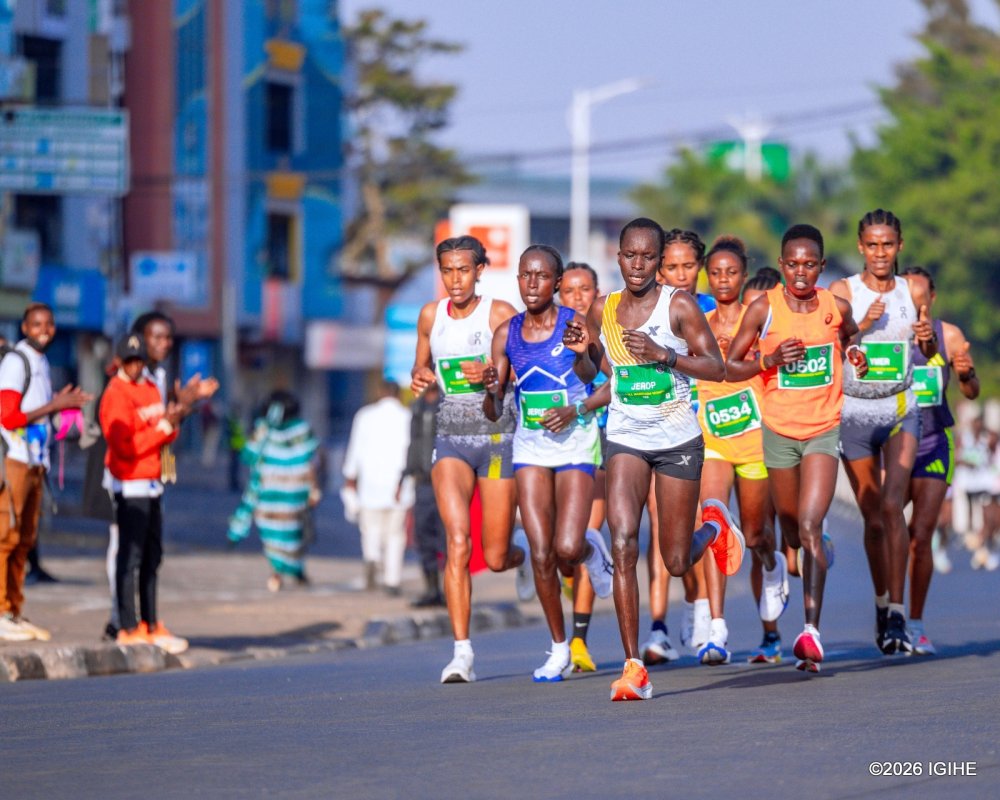
In the women’s Full Marathon, Kenya’s Ivyne Jeruto secured victory in 2:35:35, also setting the fastest women’s winning time in Kigali’s marathon history.
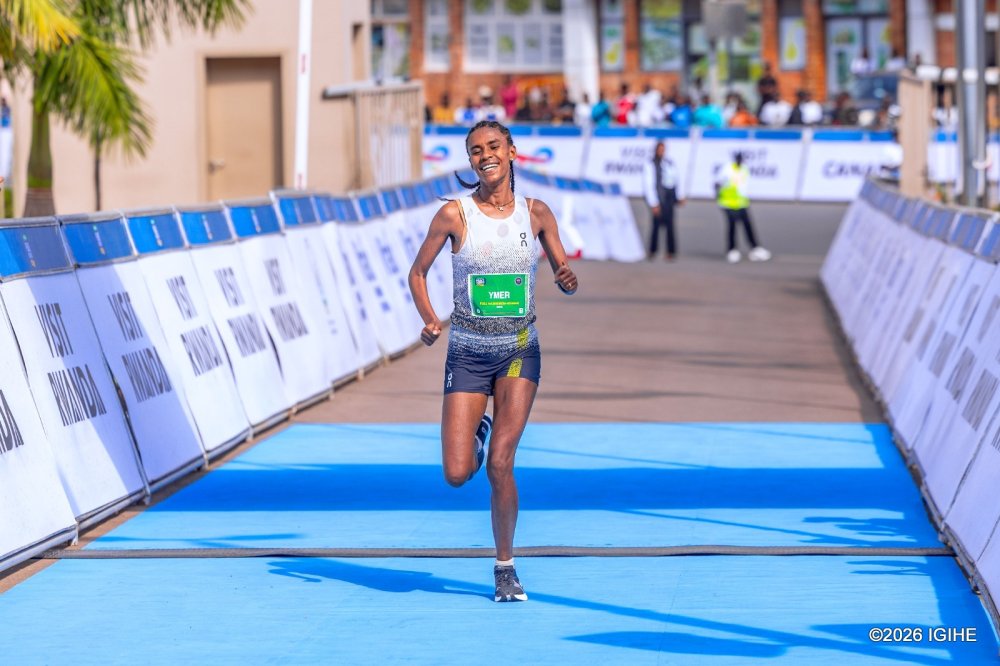
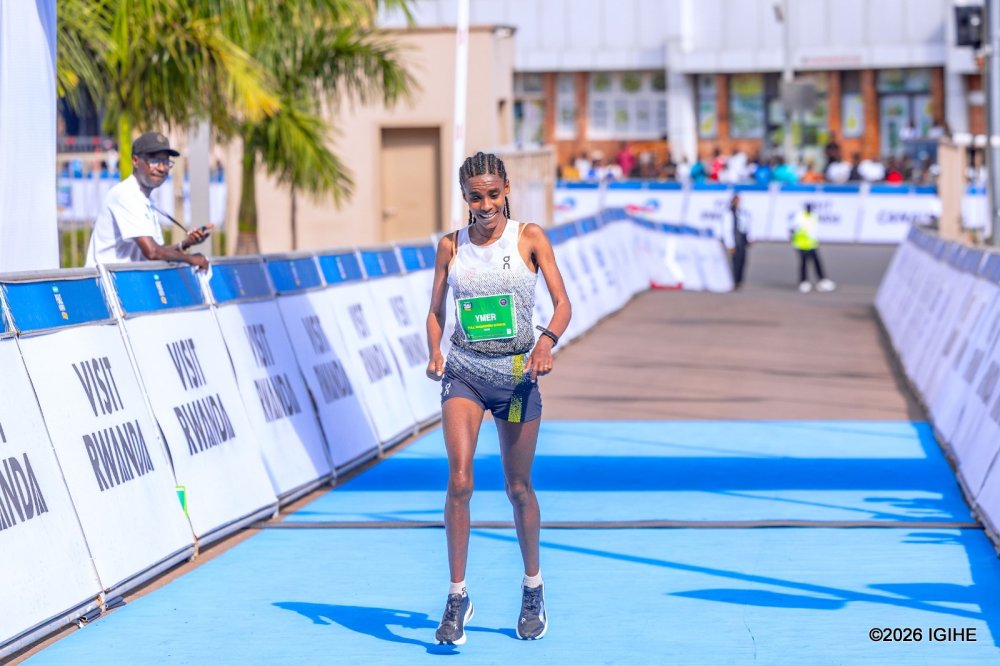
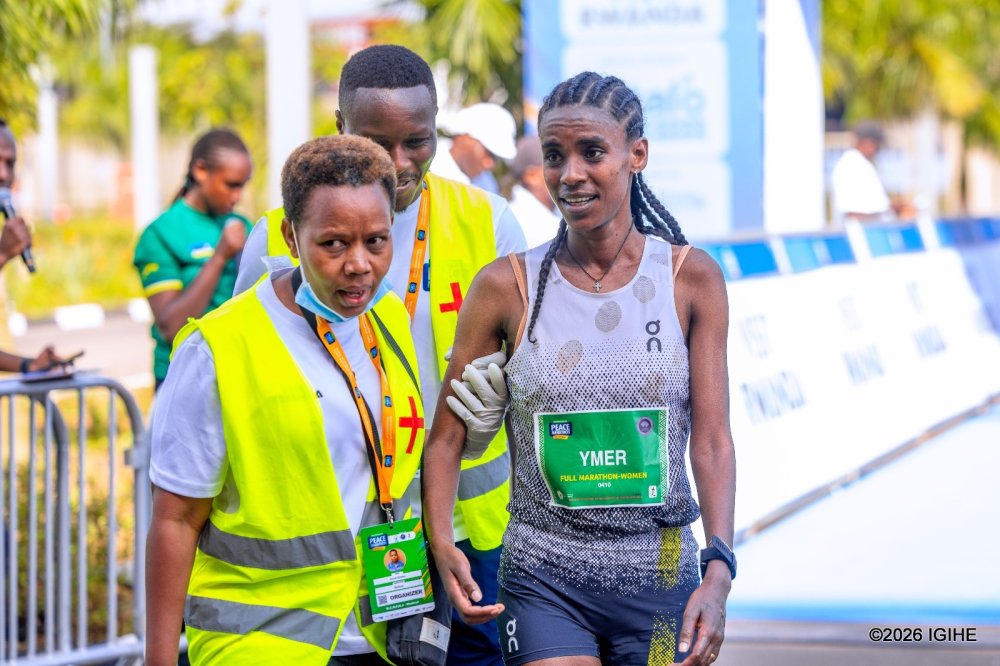
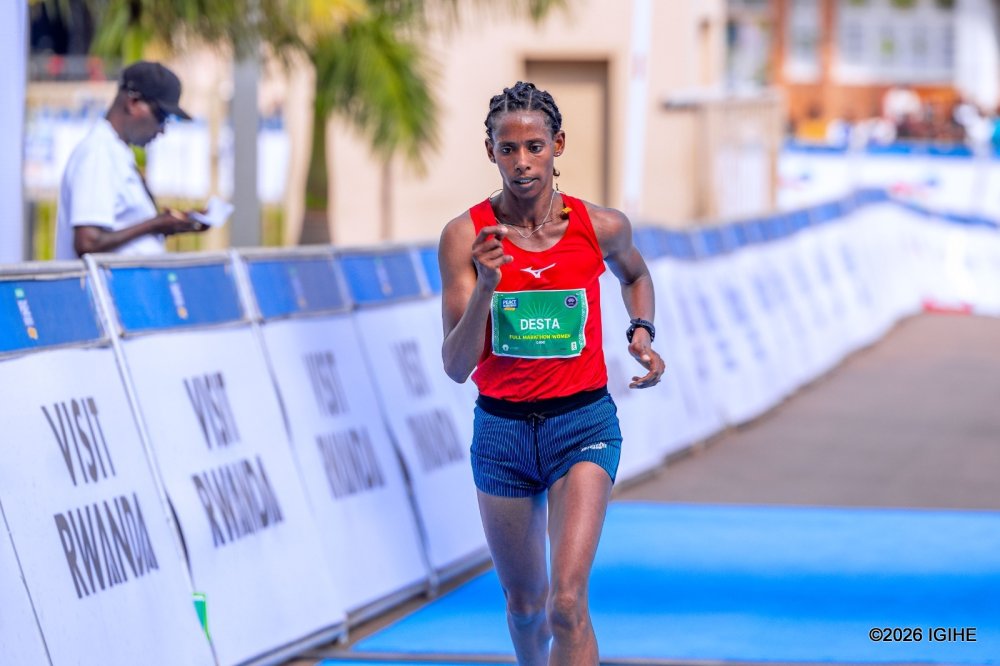
She was followed by Ethiopia’s Tegest Ayalew Ymer, who finished 41 seconds behind, while compatriot Tsega Desta Mehari took third.
Other top-eight finishers included Viola Munerya (Uganda), Dolphine Kemunto Nyagaka (Kenya), Mabre Haile Degefa (Ethiopia), Rita Jelagat (Kenya), and Dorine Jerop Murkomen (Kenya).
The Half Marathon (21km), which featured 2,942 athletes across both categories, began at 8:15 a.m., with runners completing a single loop of the full marathon course.
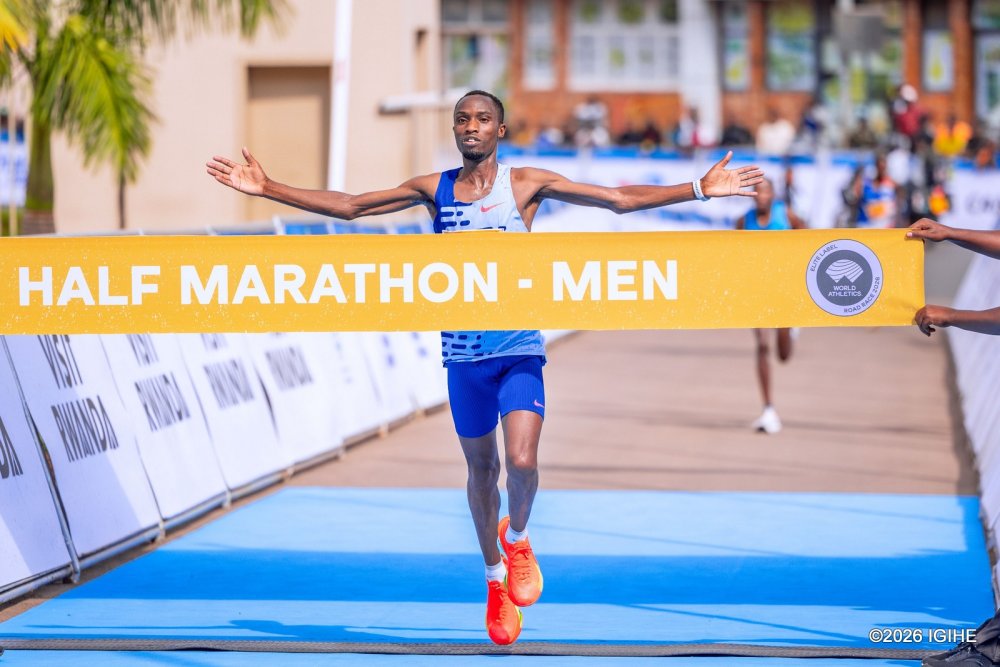
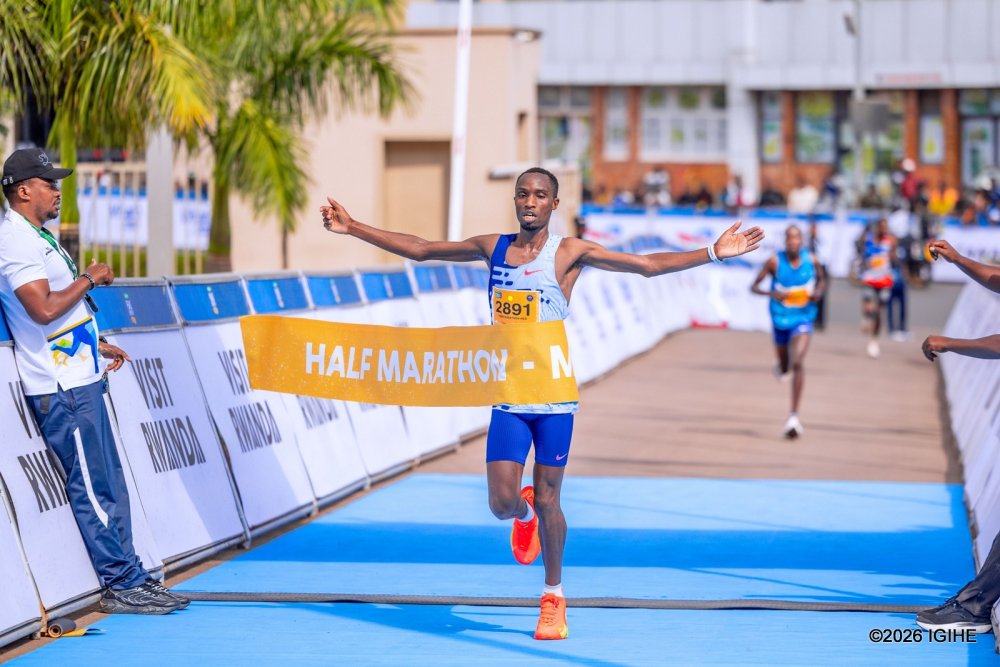
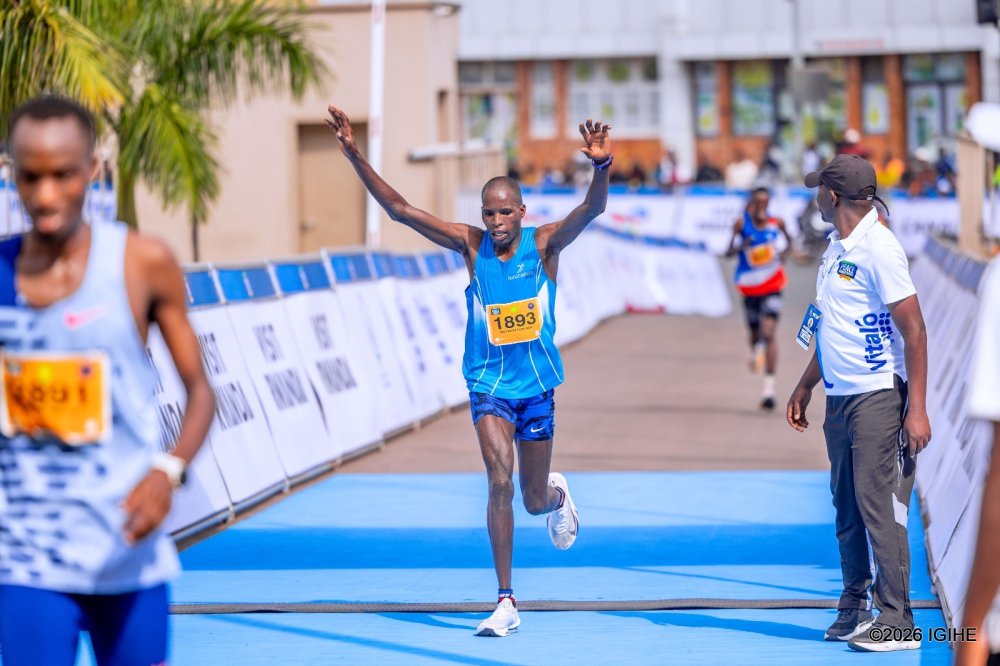
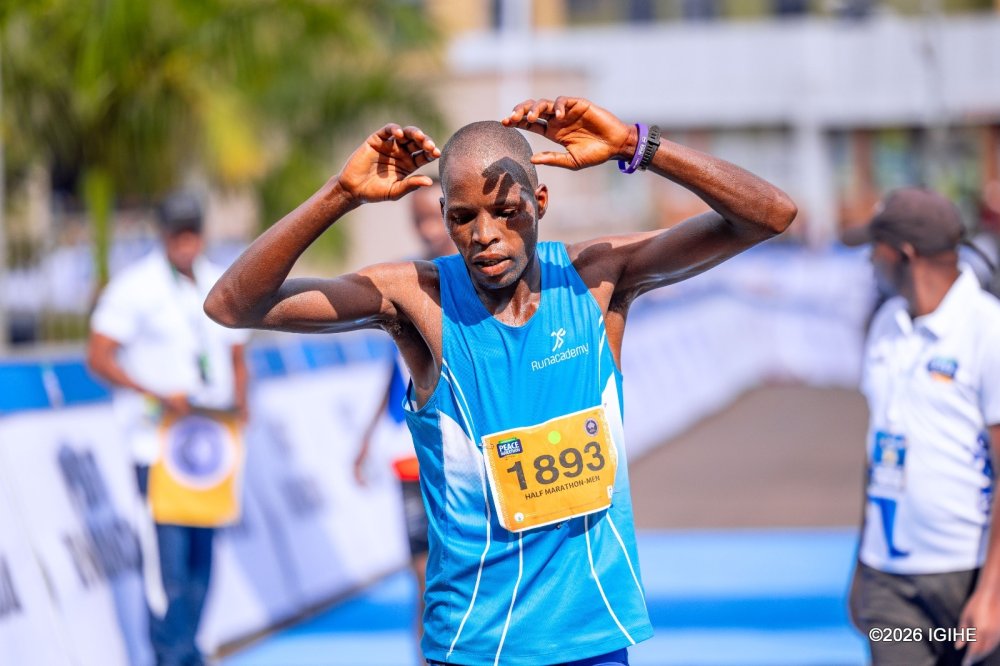
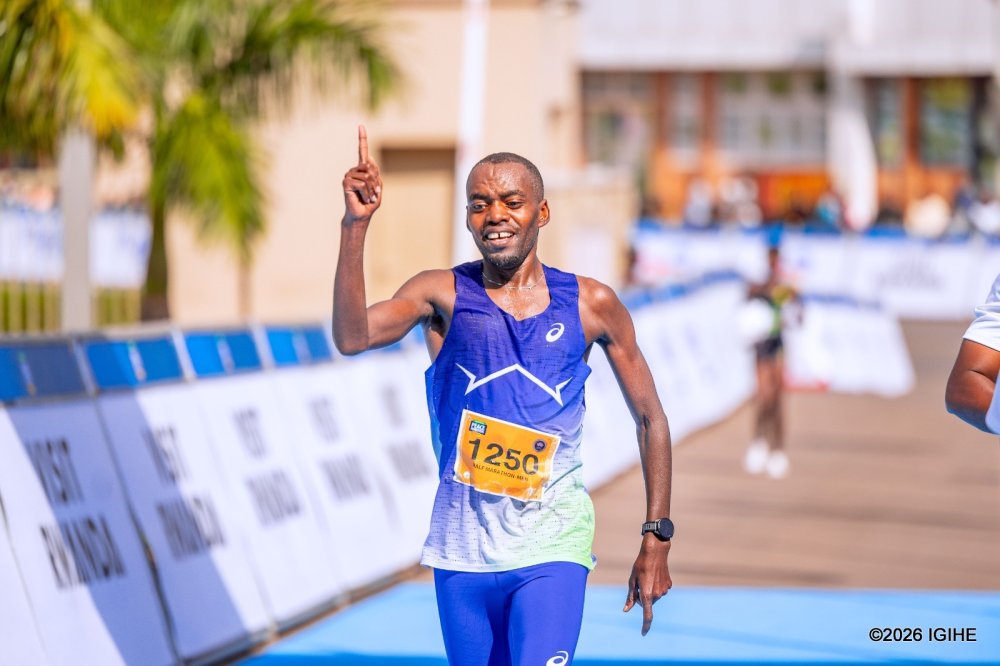
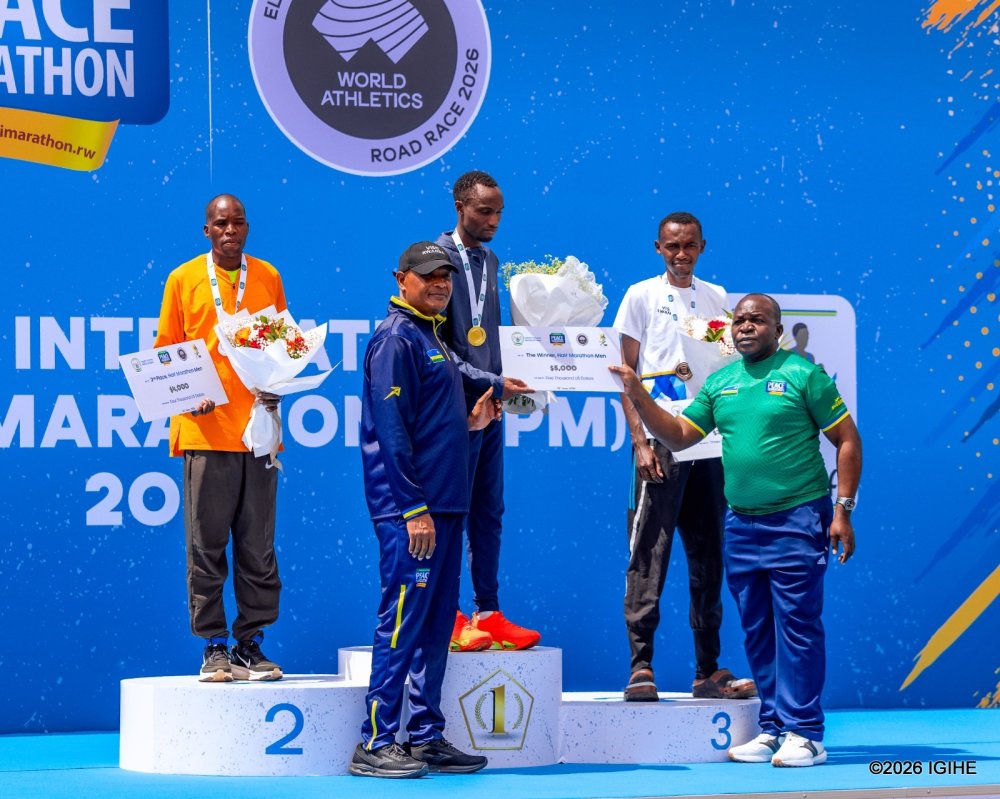
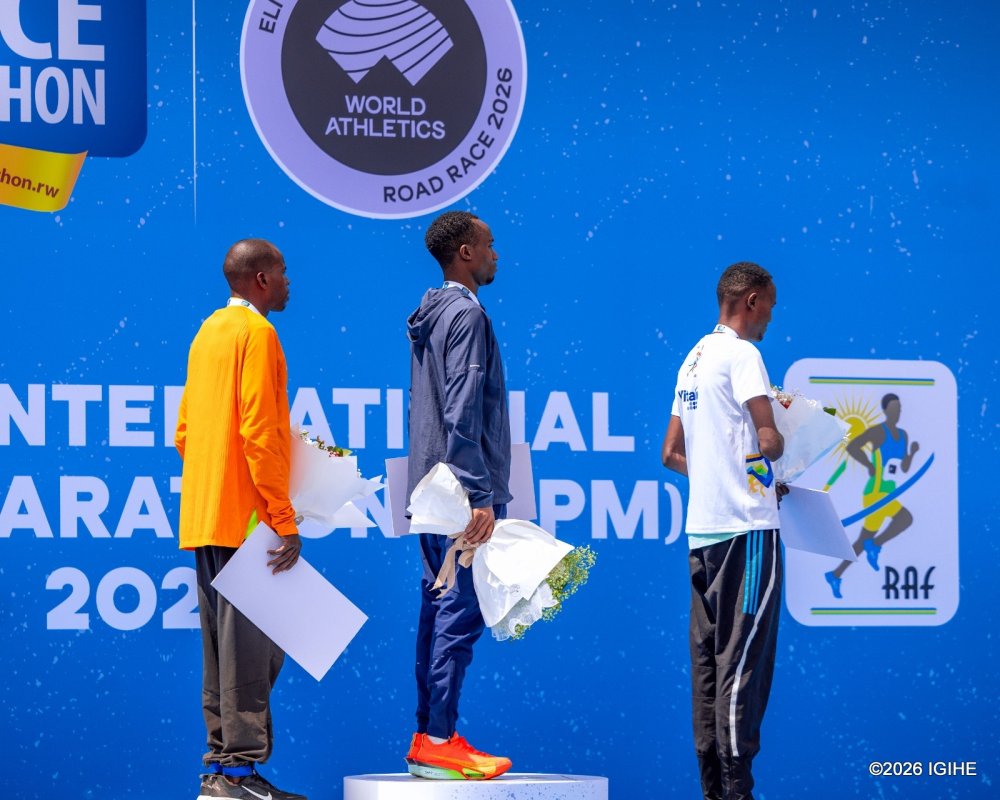
In the men’s Half Marathon, Kenya’s Amos Kirui won in 1:04:16, followed by Uganda’s Oscar Kibet, while Zakariah Kirika Gacugu of Kenya placed third.
Other top-eight finishers included Mark Biryomumeisho (Uganda), Titus Kipchirchir Kibet (Kenya), Tanui Nicholas Kipkoech (Kenya), Jamal Kipron Kipkosgei (Kenya), and Rwanda’s John Hakizimana.
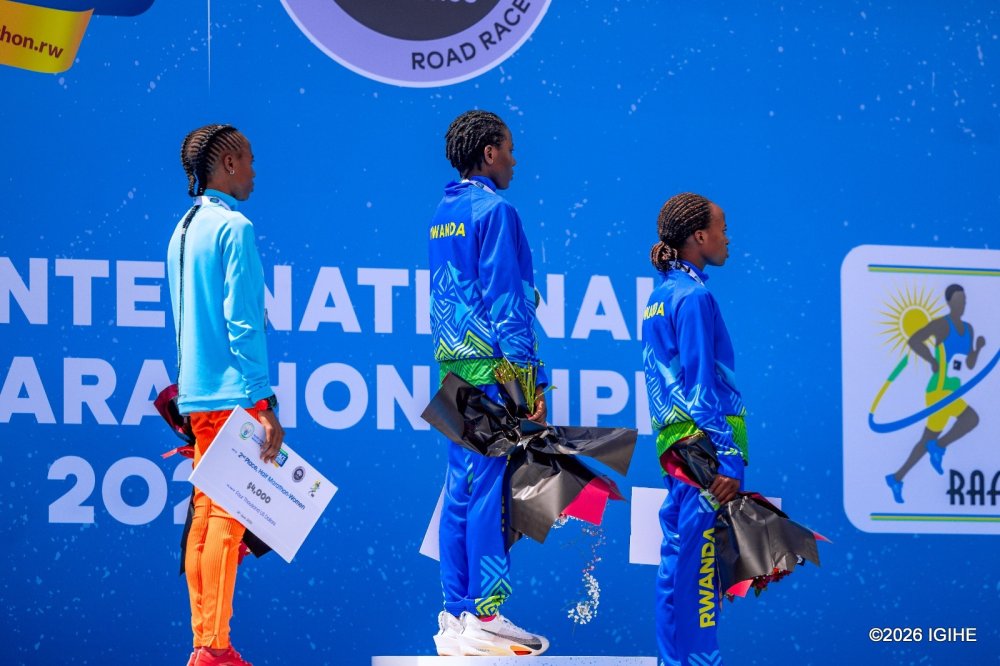
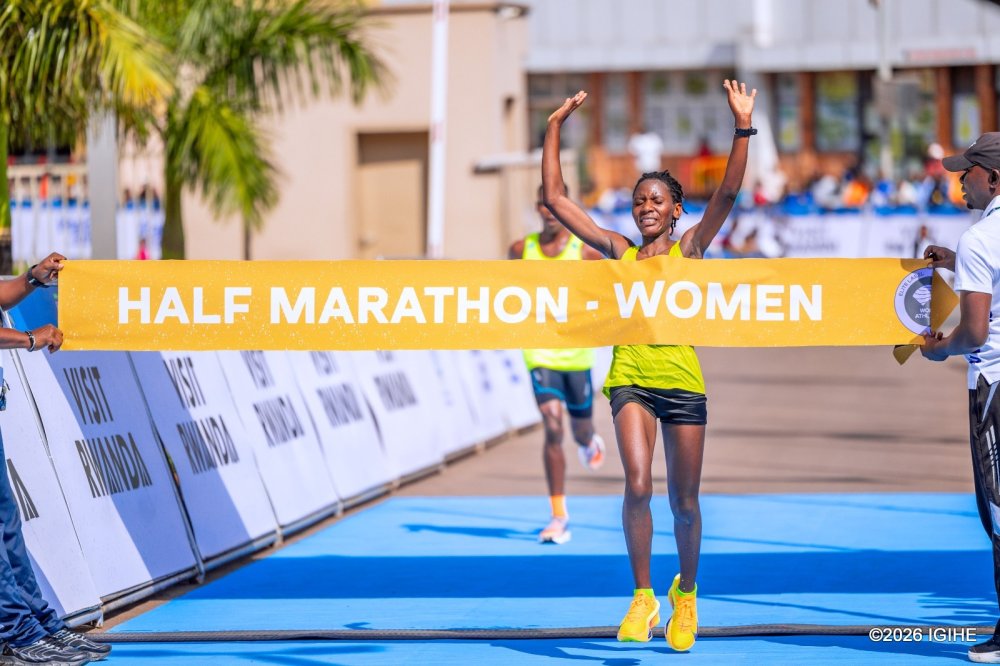
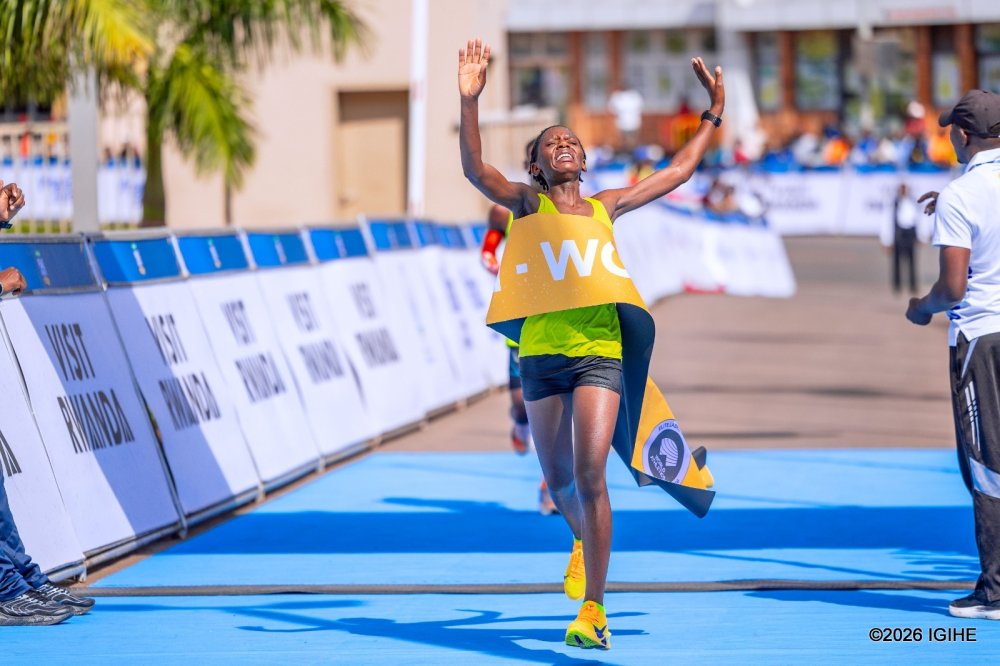
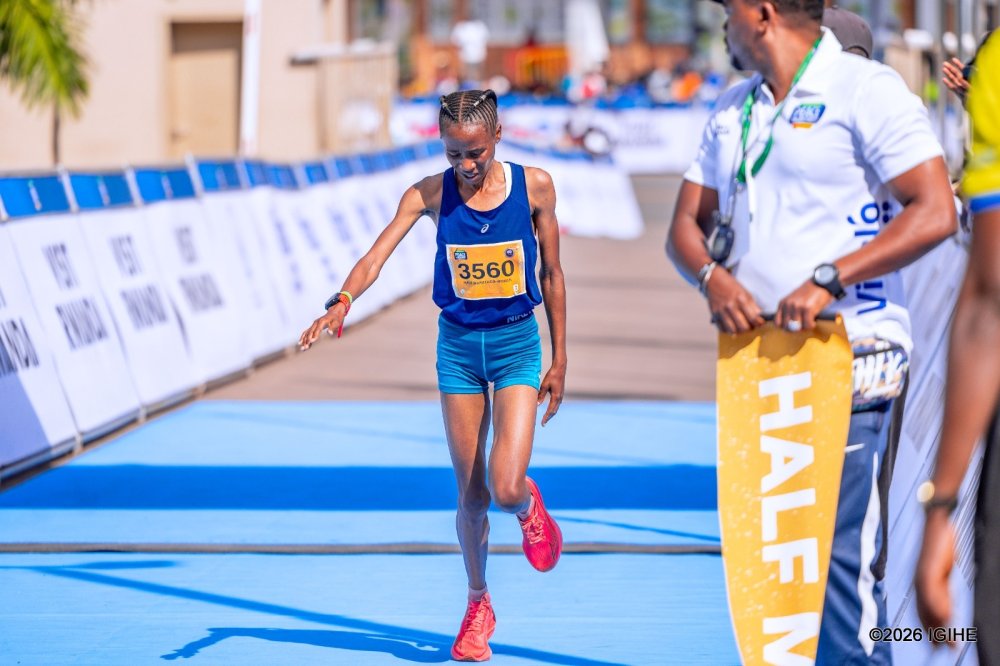
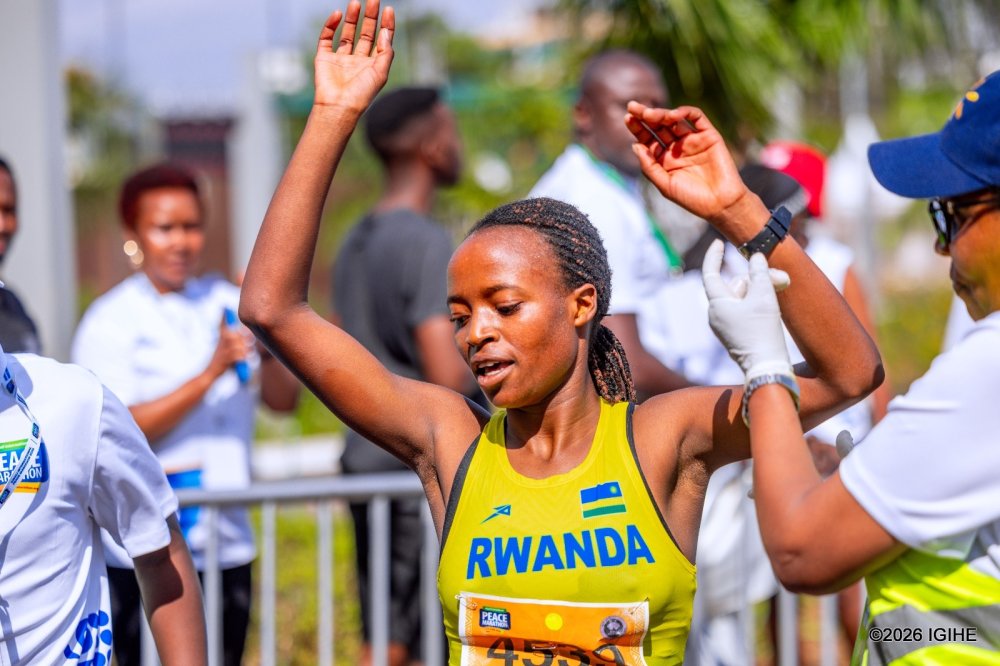
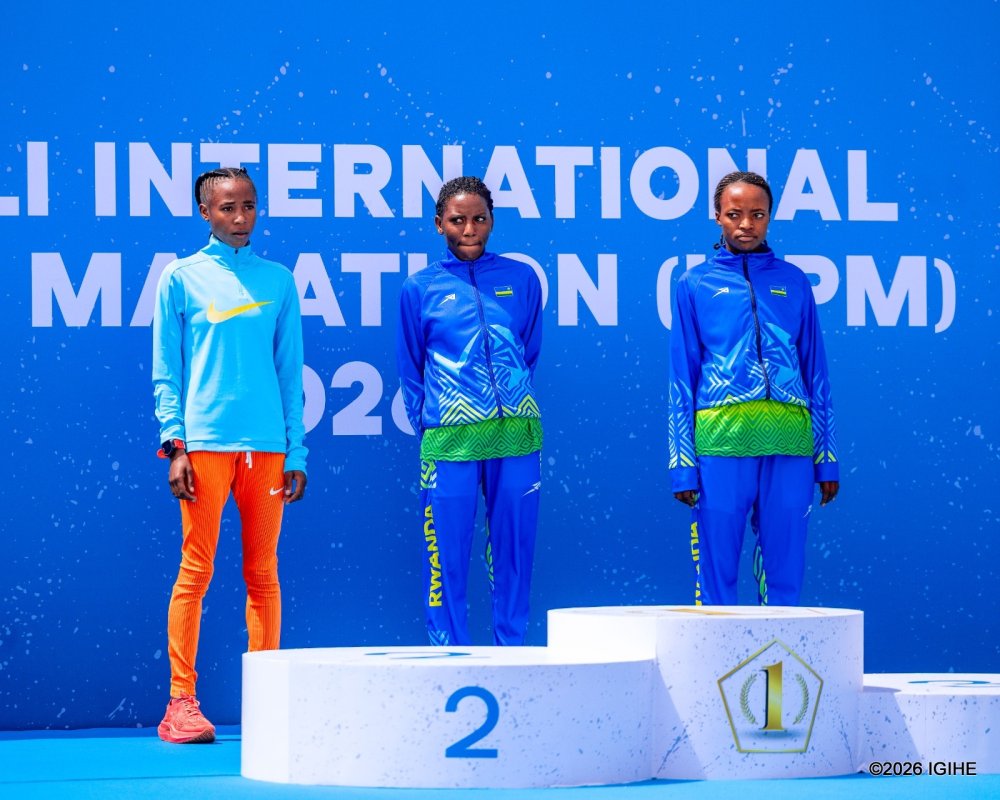
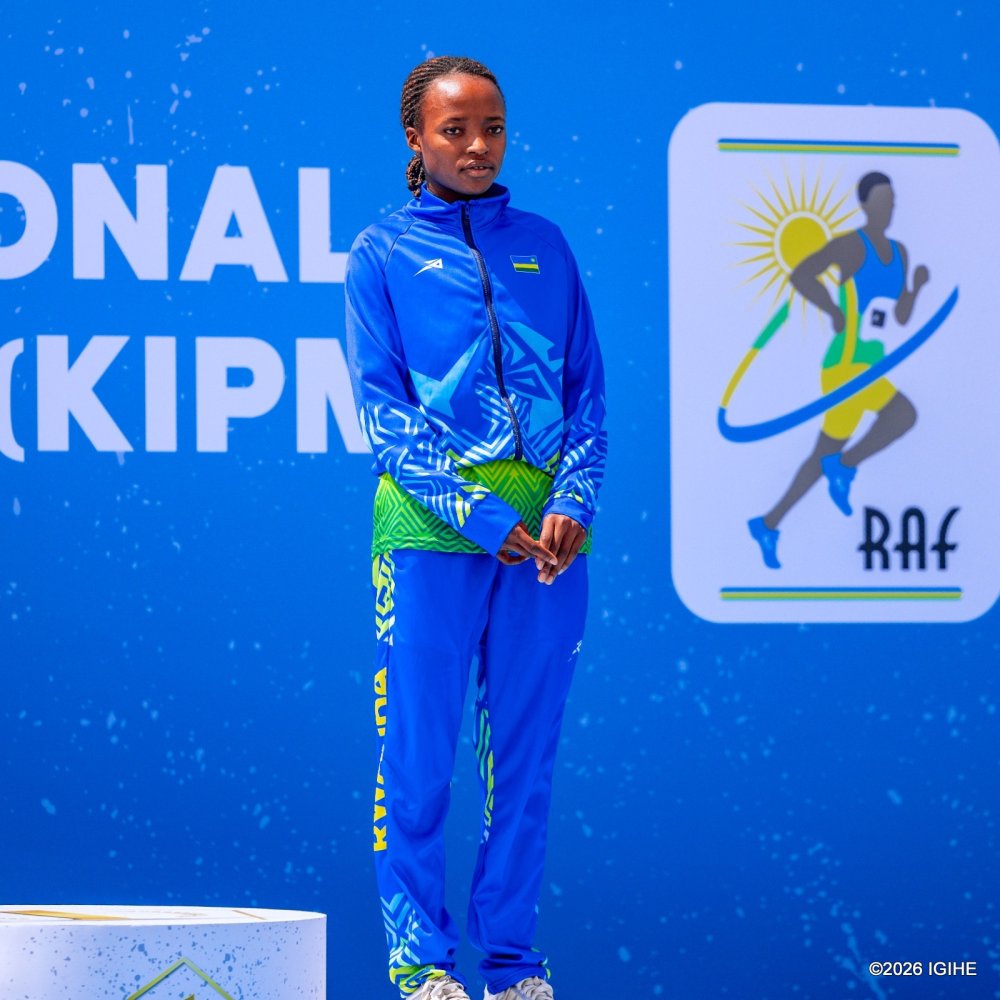
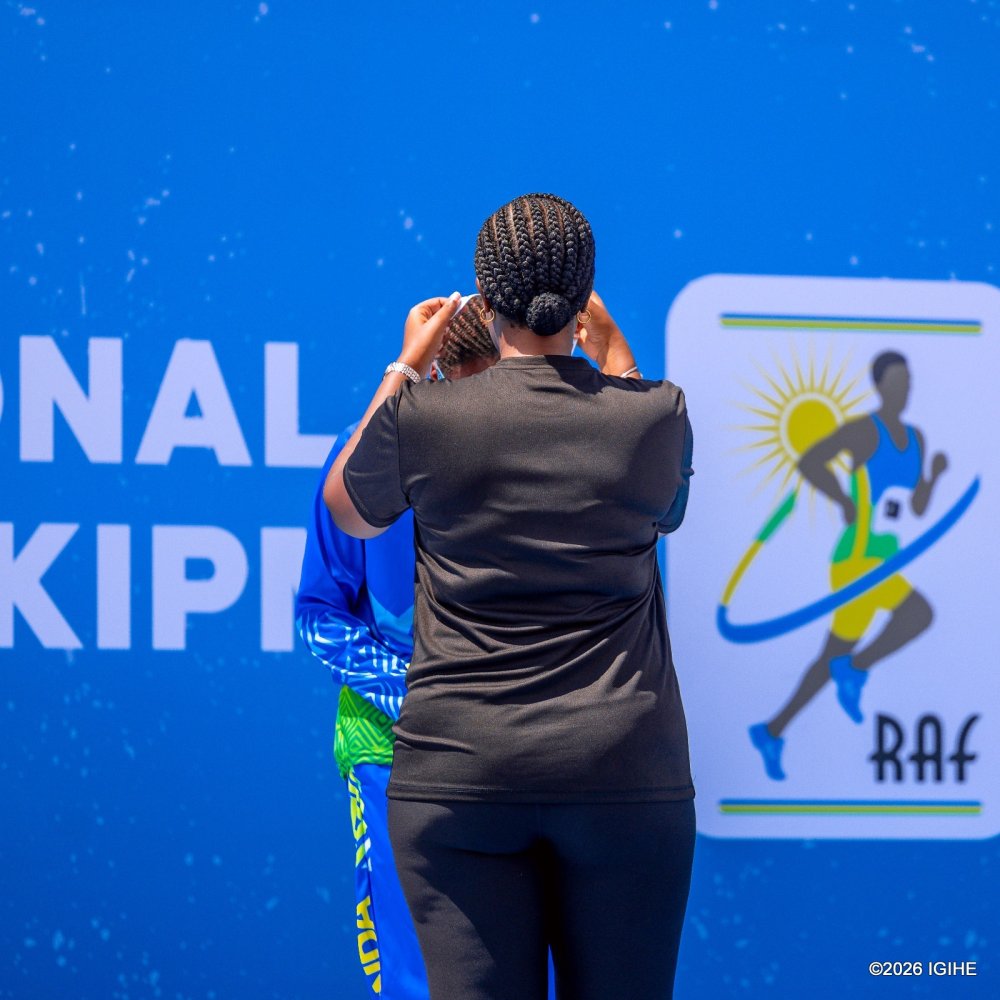
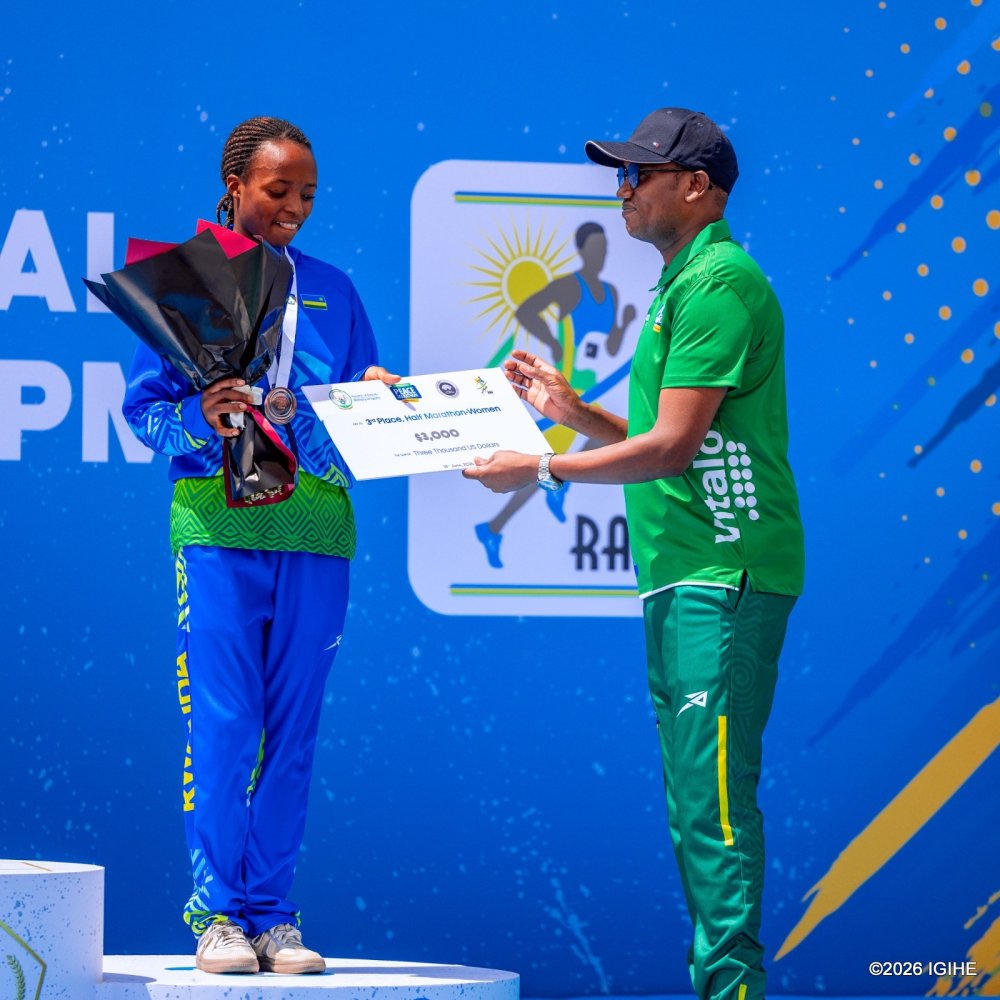
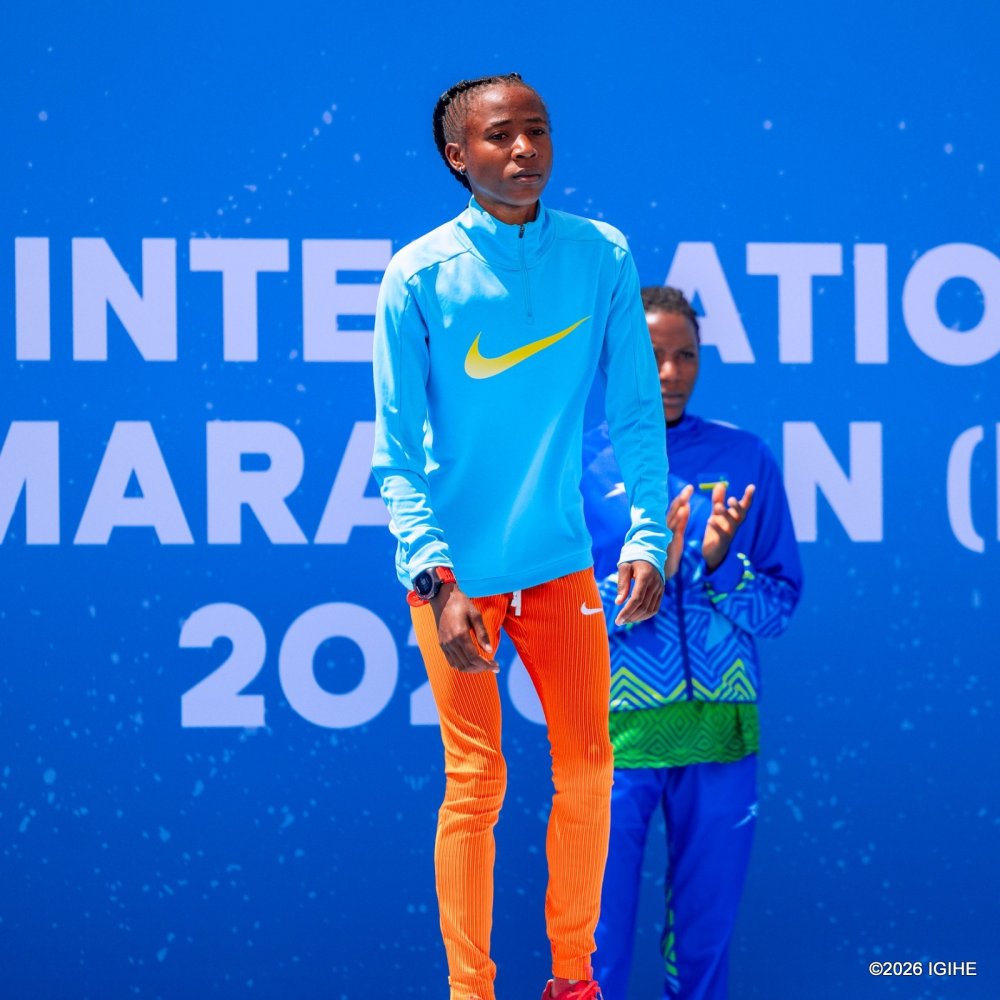
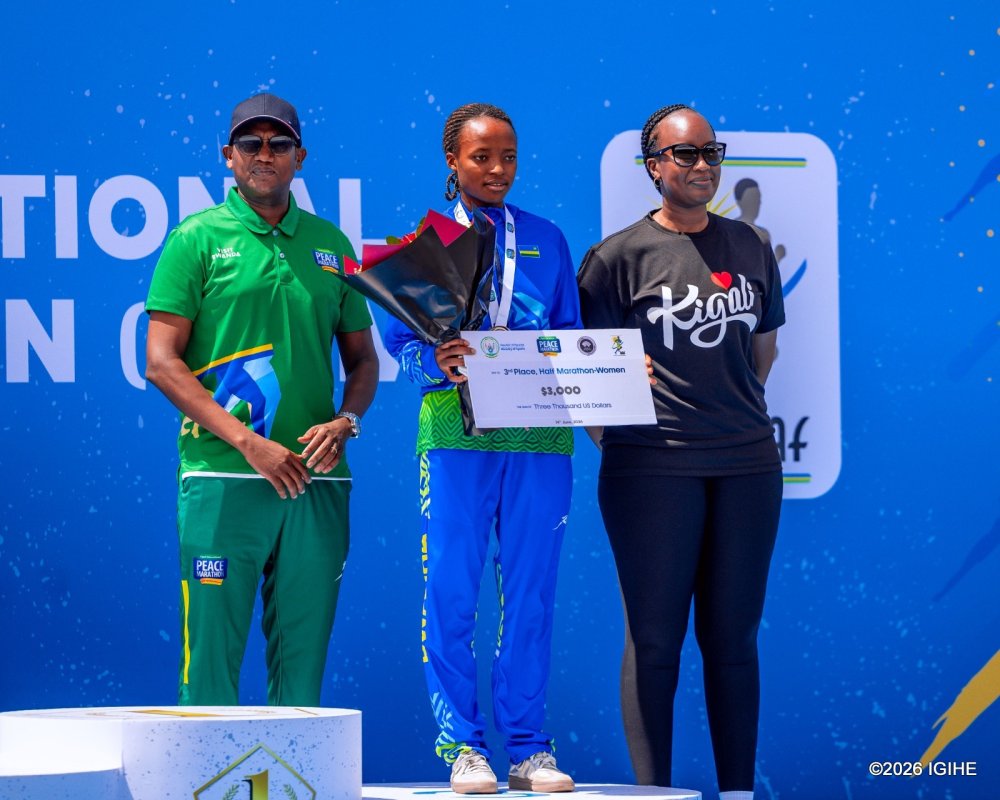
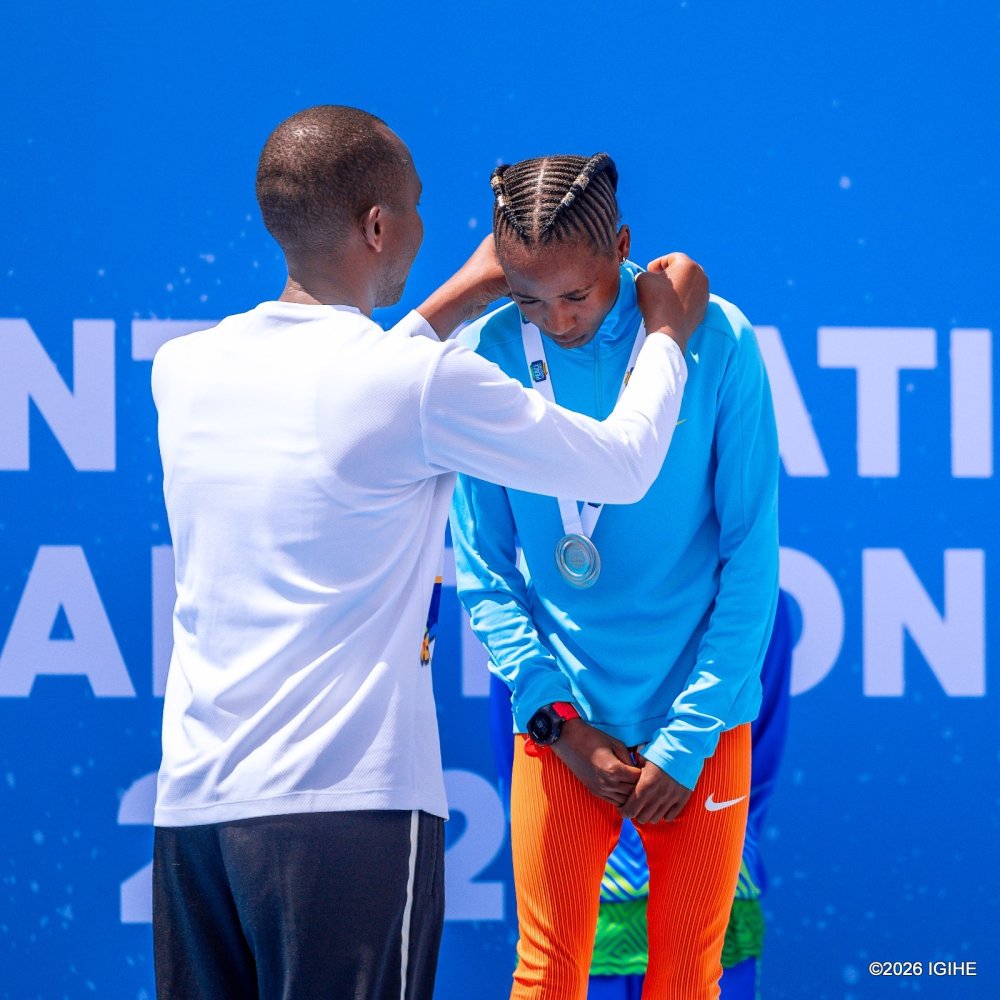
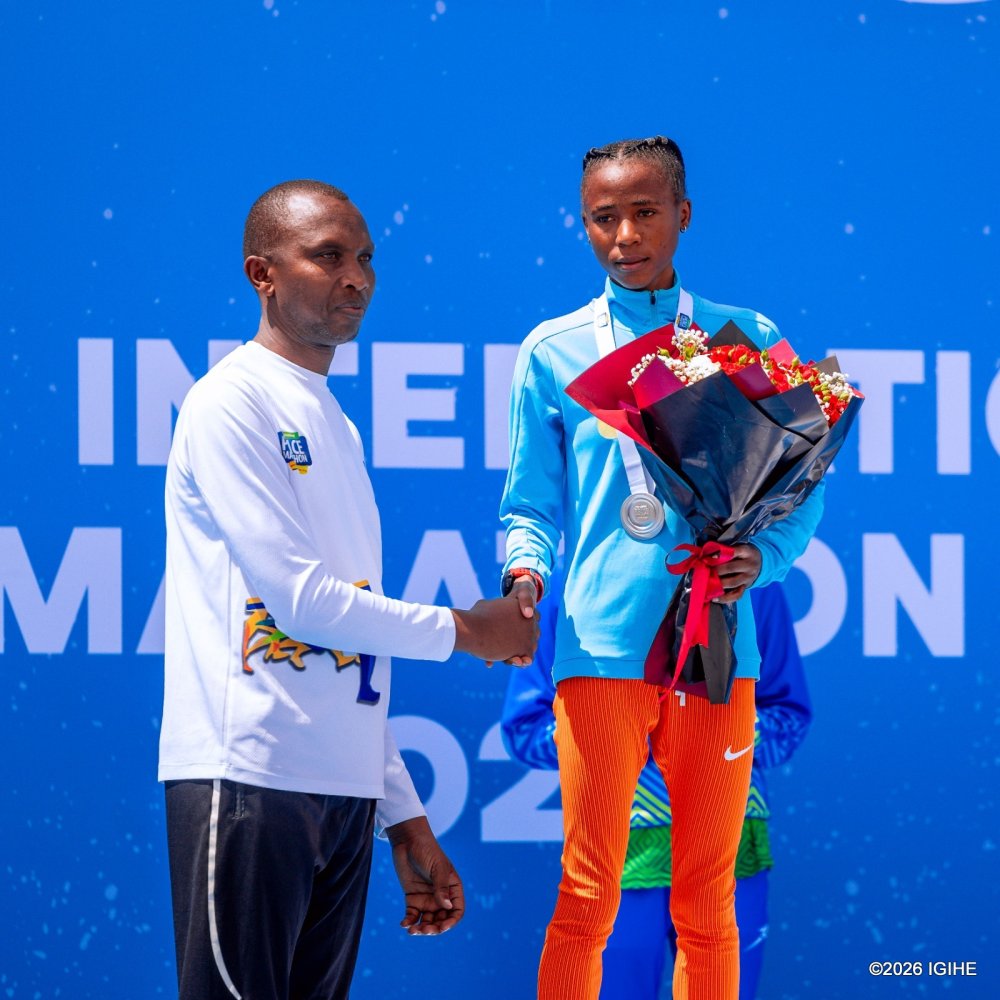
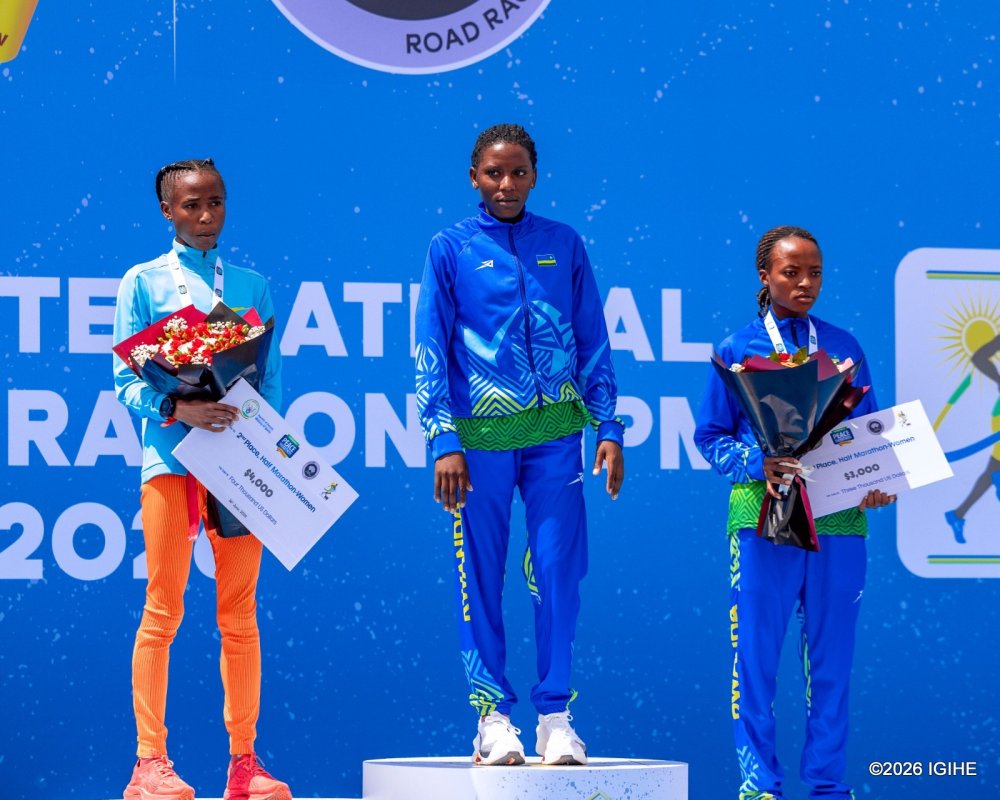
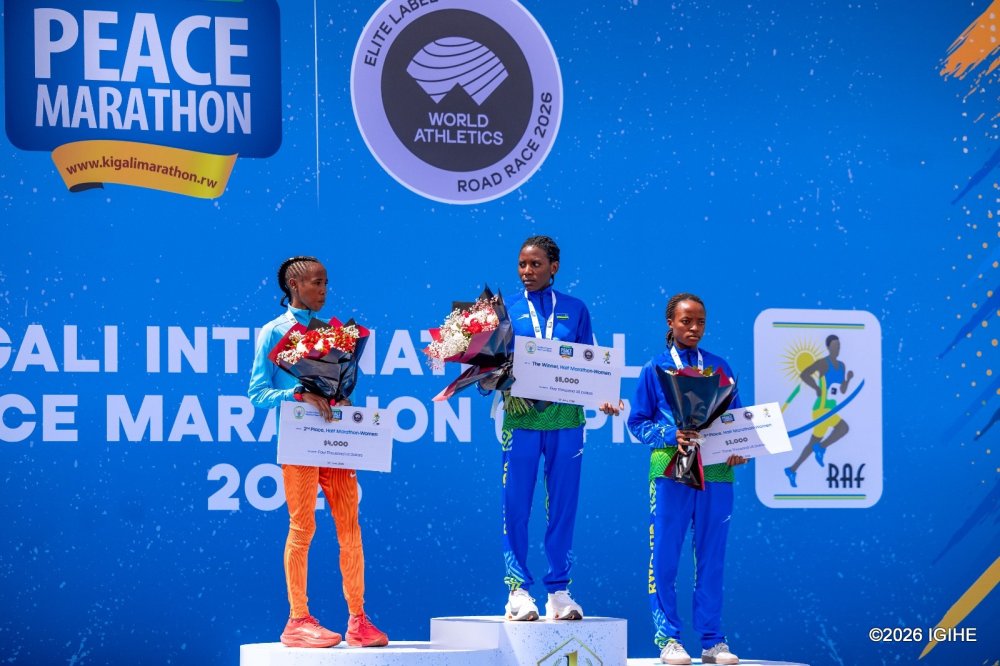
In the women’s Half Marathon, Rwandan athletes delivered a dominant performance, sweeping the podium. Ibishatse Angélique claimed gold in 1:13:30, followed by Mutuyimana Berthilde (silver, +24 seconds) and Tuyambaze Thabita (bronze, +37 seconds).
The result ensured that the women’s Half-Marathon medals remained in Rwanda despite strong competition from international runners.
Other top finishers included Mercy Jepkemoi Kipyego (Kenya), Byukusenge Devotha (Rwanda), Lelei Lilian Jepkemboi (Kenya), Kilel Caroline (Kenya), and Lolima Irine Chepkorir (Kenya).
Prize money for the Full Marathon winners (men and women) stood at $20,000 for first place, $15,000 for second, and $7,500 for third. Fourth place received $5,000, fifth $3,000, while sixth to eighth earned $2,000, $1,500, and $1,000 respectively.
In the Half Marathon, winners in both categories received $5,000, with $4,000 for second place and $3,000 for third. Fourth to eighth places received $2,000, $1,000, $800, $500, and $400 respectively.
The Kigali International Peace Marathon remains a World Athletics Elite Label road race. This year’s edition also featured 22 Gold Label athletes as part of ongoing efforts to elevate its competitive standard.
Kephar Lumbasi Namutala won the 2026 Kigali International Peace Marathon in the men’s category. Shadrack Kimining finished second in the men’s category.
Ivyne Jeruto of Kenya won the 2026 Kigali International Peace Marathon in the women’s category.
Tegest Ayalew Ymer of Ethiopia finished second in the women’s category.
Tsega Desta Mehari finished third in the women’s Full Marathon.
Ibishatse Angélique won the gold medal after finishing first in the women’s Half-Marathon.
Mutuyimana Berthilde finished second in the women’s Half-Marathon.
Byukusenge Devotha finished fifth in the women’s Half-Marathon.
Tuyambaze Thabita finished third in the women’s Half-Marathon.
Kenya’s Amos Kirui won the Half Marathon in the men’s category.
Uganda’s Oscar Kibet finished second in the men’s Half-Marathon.
Rwanda’s John Hakizimana finished eighth in the men’s Half-Marathon.