The findings were published in Monthly Notices of the Royal Astronomical Society and are based on observations from highly sensitive radio instruments.
Using advanced radio telescopes like the Low Frequency Array (LOFAR) in the Netherlands and India’s upgraded Giant Metrewave Radio Telescope (uGMRT), scientists captured detailed images of this eruption. The images reveal new jets of energy bursting out from the galaxy’s center, twisting and turning under the extreme pressure of surrounding hot gas. This is just one example of how these enormous cosmic entities continue to shape their environments in ways we are still learning about.
What makes this discovery particularly interesting is that the black hole has shown signs of being active in cycles, switching between periods of quiet and powerful eruptions over millions of years. In fact, the black hole’s jets appear to have erupted multiple times, with layers of older, faded plasma surrounding the new jets. This suggests that the black hole has experienced repeated bursts of activity over its long history, making it an exceptional case study for astronomers.
The surrounding gas is not just a passive background, either. It actively interacts with the black hole’s jets, shaping their direction and structure. The jets bend and compress as they move, creating intricate patterns in the radio images. Some regions of the gas show signs of having aged and lost energy, revealing the long, complex history of the black hole’s relationship with its galaxy.
This discovery gives scientists new insights into the life cycles of black holes and their role in shaping the galaxies they reside in. By studying how black holes cycle through active and dormant phases, astronomers can better understand the processes that drive galaxy evolution across the universe.
In the future, researchers plan to use even more advanced telescopes to observe this black hole and others like it, aiming to uncover even more about how black holes influence their galaxies and the cosmos as a whole.
Black Hole Awakens After 100 Million Years, Erupts Like a Cosmic Volcano.
In a post shared on X, Musk claimed that Starlink had repeatedly been encouraged to present a Black South African as the head of its local operations in order to secure regulatory approval. He said the company refused to participate.
“We were offered many times the opportunity to bribe our way to a license,” Musk wrote on Sunday, adding that he declined “on principle.” He further argued that Starlink has been unable to launch in South Africa because of ownership rules linked to race.
Musk’s remarks mark his latest criticism of South Africa’s Broad-Based Black Economic Empowerment (B-BBEE) framework, a policy designed to address historical inequalities by promoting economic participation among previously disadvantaged groups. In sectors such as telecommunications, companies are often required to meet local ownership thresholds to obtain operating licences.
The billionaire entrepreneur, who was born in Pretoria, has increasingly framed these requirements as discriminatory. His latest comments also included sharp criticism of South African officials, whom he accused of promoting racism through regulatory policy.
The claims have not been independently verified, and South African authorities have not issued an official response to the allegations.
The dispute intensified following an online exchange with Clayson Monyela, a senior official in the Department of International Relations and Cooperation. Monyela mocked Musk in a social media post, pointing out that hundreds of American companies operate successfully in South Africa while complying with local laws.
Critics of Musk’s claims have also pushed back. Michael de Villiers described the allegations as misleading, noting that many foreign firms, including those led by non-Black executives, continue to operate in the country without facing similar barriers.
Despite Musk’s public stance, Starlink’s regulatory team has maintained that the company supports South Africa’s transformation goals. The company, a subsidiary of SpaceX, has argued that existing telecom regulations enforced by the Independent Communications Authority of South Africa (ICASA) do not fully align with broader empowerment frameworks.
Starlink has proposed using Equity Equivalent Investment Programmes (EEIPs) as an alternative to equity ownership requirements. These programmes allow foreign companies to contribute to economic transformation by investing in local initiatives such as skills development, infrastructure, and education.
According to the company, EEIPs are recognised across several sectors but are not currently accommodated within telecom licensing rules. Starlink has described this as a regulatory inconsistency and has called for reforms.
As part of its proposed entry into South Africa, Starlink has pledged to invest in connectivity initiatives, including providing free hardware and internet services to thousands of rural schools. It has also committed to working with local partners to support rollout and job creation.
Recent developments suggest possible movement on the policy front. Communications Minister Solly Malatsi has directed ICASA to consider incorporating EEIPs into telecom licensing regulations following a public consultation process that drew significant support.
Starlink has expanded its satellite internet footprint across multiple African countries, including Rwanda, targeting underserved regions with limited broadband infrastructure. However, South Africa, one of the continent’s largest economies, remains outside its current coverage.
Musk’s allegations are likely to intensify debate over the balance between economic transformation policies and the need to attract foreign investment, particularly in critical sectors such as telecommunications.
Scientists from Osaka Metropolitan University have discovered that dragonflies can see a type of light that humans cannot detect, giving them a unique visual advantage. While human vision is limited to a certain range of colors, dragonflies are able to perceive extremely deep red light, close to near-infrared.
This allows them to experience a broader visual world and detect details that are invisible to humans. The study highlights how even small insects can possess highly advanced sensory abilities that rival or exceed our own.
This ability comes from special proteins in their eyes called opsins, which are also present in humans. In people, these proteins allow us to see basic colors such as red, green, and blue. However, the researchers found that dragonflies have a modified version of these proteins that is sensitive to longer wavelengths of light.
One of these proteins responds to light at around 720 nanometers, which lies beyond normal human vision. According to the research, dragonflies and humans share a surprisingly similar biological mechanism for detecting red light, despite being very different species.
This finding is an example of parallel evolution, where unrelated organisms develop similar features independently. As the research team led by Professors Mitsumasa Koyanagi and Akihisa Terakita at OMU’s Graduate School of Science explains, this discovery unveils an extraordinary parallel in evolutionary biology.
“This is one of the most red-sensitive visual pigments ever found,” Professor Terakita said. “Dragonflies can likely see deeper into red light than most insects.”
The researchers also noted that this enhanced vision plays an important role in the survival of dragonflies. Because they fly at high speeds, they need to quickly identify other dragonflies, especially potential mates.
Their ability to detect subtle differences in light reflection helps them distinguish between males and females while in motion. This gives them a strong advantage in reproduction and survival within their environment.
Beyond biology, the findings have important implications for medicine and technology. Red and near-infrared light can penetrate deeper into the human body than other types of light, making them useful in medical treatments.
The researchers were able to modify the dragonfly’s light-sensitive proteins so they respond to even longer wavelengths and demonstrated that cells can be controlled using this light. This could be especially useful in optogenetics, a field where light is used to control cells inside the body.
Overall, the study shows how nature can inspire scientific innovation. By studying dragonflies, researchers may develop new tools for treating diseases and exploring the human body, proving that even the smallest creatures can lead to major breakthroughs in science and medicine.
Dragonflies can perceive a color invisible to humans, and it may transform medicine.
Recently, a team of researchers from Cornell University discovered that a compound called JQ1 could stop sperm production in male mice by targeting the sperm‑making process, known as meiosis.
This process is crucial for the development of sperm, and by interfering with it, the compound essentially stops the production of sperm. The most remarkable aspect of this discovery is that it’s reversible. Once the treatment was stopped, the mice were able to resume normal sperm production and even successfully father offspring.
This method represents a major step forward because it focuses on stopping sperm development without harming the stem cells responsible for future sperm production. This is critical because it means that the treatment doesn’t lead to permanent infertility, and sperm production can return to normal once the compound is no longer used.
“We’re practically the only the group that’s pushing the idea that contraception targets in the testis are a feasible way to stop sperm production,” said Paula Cohen, professor of genetics and director of the Cornell Reproductive Sciences Center.
“Our study shows that mostly we recover normal meiosis and complete sperm function, and more importantly, that the offspring are completely normal,” Cohen said.
The findings were published on April 7 in the Proceedings of the National Academy of Sciences.
If successful in human trials, this research could lead to the development of a male contraceptive that’s easy to use and non-hormonal. Unlike hormonal birth control methods, which can cause side effects like mood changes, weight gain, or decreased libido, this non-hormonal approach could offer a safer and more comfortable alternative for men who wish to take control of their reproductive health.
The potential for a reversible male contraceptive is immense. It could provide an option for men who want to delay or avoid fatherhood without relying on traditional methods like condoms or vasectomy. Moreover, this method could be delivered through simple, non-invasive treatments, such as an injection or a patch that needs to be reapplied every few months. This would make it incredibly convenient and accessible.
While this research is still in its early stages and has only been tested in mice, the success of this study represents a significant milestone in the quest for male birth control. As scientists continue to refine this approach and move toward human trials, the future of reproductive health may become more balanced, allowing both men and women to share responsibility for family planning.
The development of a reversible male contraceptive offers a glimpse into a more equitable and flexible approach to reproductive choices, which could revolutionise how we think about contraception in the years to come.
A team of researchers from Cornell University has discover reversible male birth control that stops sperm production.
Recognizing this problem, researchers at Tufts University have developed a new approach that could transform how AI systems are designed and used, making them both much more energy efficient and significantly smarter.
Traditional AI systems, like the large language models many people are familiar with, learn by processing vast amounts of data through trial and error. This method works, but it requires huge amounts of computing power, which translates into high energy demands and large carbon footprints.
To address this, the Tufts research team focused on combining the strengths of two different types of AI reasoning: neural networks (which learn patterns from data) and symbolic reasoning (which uses explicit logic and rules).
The result is called neuro‑symbolic AI, a hybrid system that mimics how humans think by breaking problems down into meaningful rules while still learning from experience. In practical tests, including classic problem‑solving tasks like the Tower of Hanoi puzzle, the neuro‑symbolic AI outperformed more traditional systems.
It solved complex problems more accurately and did so with far less energy. In one example, the new AI used only 1 % of the energy required by a conventional system while still achieving a 95 % success rate in solving difficult tasks.
This breakthrough has wide‑ranging implications. For robotics and visual‑language‑action systems which combine perception and physical movement the energy savings could make real‑world applications far more practical and affordable. The researchers say that by making AI thinking more structured and logical, systems don’t need to rely as heavily on brute‑force data processing, which is a major source of inefficiency in today’s models.
The development of more efficient AI is not only important for reducing environmental impact, but also for promoting broader access to advanced technology.
As AI continues to influence medicine, transportation, education, and industry, making these systems less energy‑intensive could help ensure they are both sustainable and widely available. This new research points toward a future where AI innovations are not just powerful, but also environmentally and economically responsible.
AI breakthrough cuts energy use by 100x while boosting accuracy.
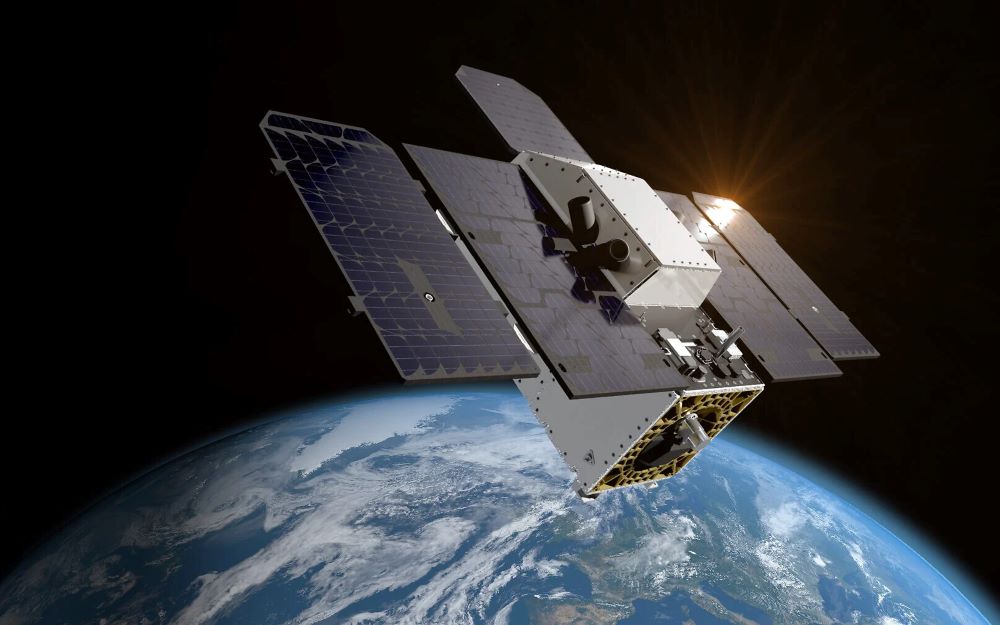
Reuters reported that, in an email to customers, Planet Labs said the U.S. government had asked all satellite imagery providers to place an indefinite hold on publishing images from the conflict zone. The company said the move further expanded a 14-day delay policy it had already adopted last month. Under the latest arrangement, imagery dating back to March 9 will be withheld, and the policy is expected to remain in place until the conflict ends.
Planet Labs said it will adopt a system of managed distribution for some imagery, releasing material only on a case-by-case basis for urgent needs, critical missions or matters deemed to be in the public interest. The company said it was seeking to balance competing demands under what it described as an unusual situation.
Reports said satellite imagery has become increasingly important in modern conflicts, where it can be used for purposes such as target identification, weapons guidance and missile tracking. As commercial remote-sensing capabilities continue to improve, such imagery is playing a growing role in conflict-related analysis while also raising concerns that it could be exploited by parties involved in hostilities.
Reuters reported that another commercial satellite imagery supplier, Vantor, said it has not been directly contacted by the U.S. government, but has long reserved the right to tighten access controls during geopolitical conflicts and has already imposed restrictions on some parts of the Middle East.
The Wall Street Journal also reported on Saturday that the U.S. government is seeking to limit outside access to satellite images of the Iran conflict zone.
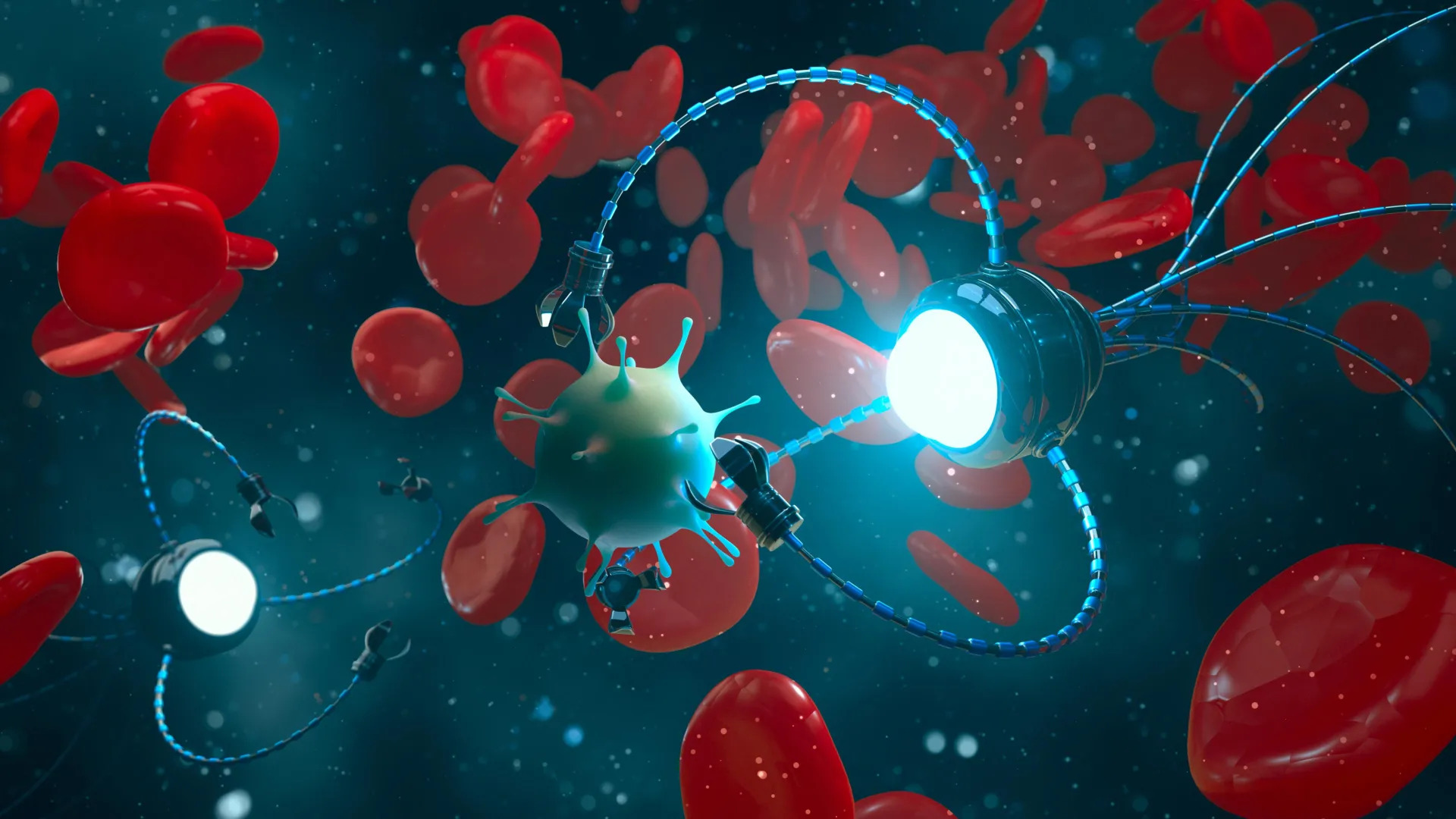
These DNA robots are different from regular robots we see in the physical world. Instead of being made from metal or plastic, they are constructed from strands of DNA that are folded and shaped like molecular origami.
By programming DNA to bend and fold in specific ways, researchers can create machines that perform tasks at a molecular level, much smaller than anything we’ve seen before.
One of the major challenges in creating these DNA robots is controlling their movement within the body. Since they operate inside cells and the bloodstream, their environment is constantly changing.
To solve this problem, researchers have developed ways to control the robots using biochemical processes, like DNA strand displacement.
This method allows the robots to move in response to specific DNA sequences, much like a key fitting into a lock. The robots can also be guided by external signals, like light or magnetic fields, making them highly versatile in how they can be controlled.
The potential uses for DNA robots in medicine are vast. For example, instead of delivering drugs throughout the entire body, these robots could target specific cells, like cancer cells, and deliver medication directly to them.
This approach would reduce side effects and make treatments much more effective. DNA robots could also be programmed to detect harmful viruses, like SARS-CoV-2, and neutralize them before they spread.
Beyond healthcare, DNA robots could revolutionize industries like computing and manufacturing. They can position particles with incredible precision, which could lead to advancements in ultrafast data storage, optical devices, and new computing technologies.
While the potential is huge, DNA robotics is still in its early stages. Scientists are working to overcome challenges like unpredictable movement at the nanoscale and the need for better simulations to predict how these machines will behave in real-world biological environments.
But as the technology advances, DNA robots could become a powerful tool for both medicine and technology, offering new solutions for some of the world’s biggest challenges.
Scientists develop DNA robots that could revolutionize drug delivery and virus detection.
However, no magnetic field is perfect, and eventually some particles escape confinement and move outward toward the divertor, the part of the machine that safely handles these escaping particles.
Experimental data from tokamaks around the world showed that far more particles consistently hit one side of the divertor than the other, but the reason for this asymmetry remained unclear for decades.
New research has now revealed that the rotation of the plasma itself plays a crucial role in creating this uneven particle flow. As plasma spins inside the tokamak, it interacts with sideways drift motions of particles in a way that causes more of them to travel toward one divertor target plate.
This plasma spin, combined with underlying particle drift effects that physicists already knew about, naturally produces the imbalance observed in experiments. Put simply, the plasma’s internal rotation acts like a hidden force that biases the paths of particles as they escape the magnetic cage.
Understanding this mechanism is important for the future of fusion power because it allows engineers and scientists to better predict where heat and particles will strike tokamak components.
If unanticipated particle loads accumulate on one side of the divertor, they can damage materials and reduce the lifetime of key components.
With the new insight that rotation‑driven drift causes asymmetrical exhaust flows, researchers can refine designs and operating strategies to make future devices more robust and efficient.
This breakthrough contributes to the broader global effort to make fusion energy a reality.
Fusion has long been considered the “holy grail” of clean energy because it mimics the processes powering the Sun while producing minimal long‑lived radioactive waste.
By solving mysteries like the plasma exhaust imbalance, scientists are steadily closing the gaps between theoretical understanding and practical, sustained fusion operation.
Physicists crack the fusion puzzle that had experts stumped for years.
According to a post published on Google’s official blog, Gemma 4 is built on the same research and technology foundation as Gemini 3 and is released under the Apache license 2.0.
Google said the new family is intended to make advanced artificial intelligence (AI) capabilities more widely accessible to developers.
Google said Gemma 4 is being released in four different sizes to support a range of hardware from Android devices and laptop GPUs to developer workstations and accelerators.
Gemma 4 is capable of multi-step planning and deep logic, and can be used for building autonomous agents that interact with tools and application programming interfaces, Google said, adding that the four Gemma 4 models also support code generation and can natively process images and video.
According to Google, the edge models feature a 128K context window, while the larger models support up to 256K context. The company also said Gemma 4 was natively trained on more than 140 languages.
Google said Gemma has been downloaded more than 400 million times since the launch of its first generation, and that the “Gemmaverse” community has created more than 100,000 variants.
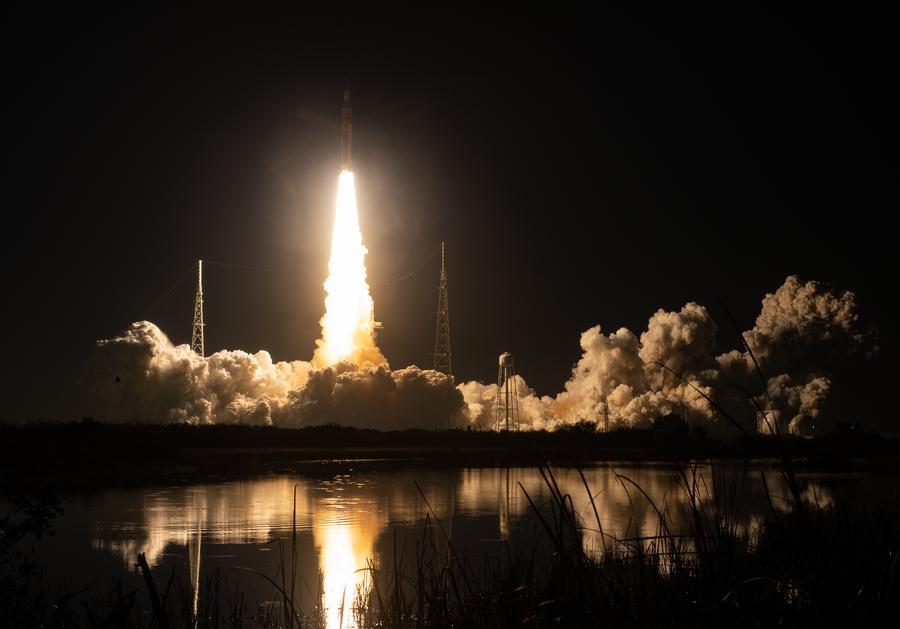
The Space Launch System rocket, with the Orion spacecraft on top, launched from NASA’s Kennedy Space Center at 6:35 p.m. Eastern Time.
It is NASA’s first crewed mission under the Artemis program. The four-member crew consists of NASA astronauts Reid Wiseman, Victor Glover and Christina Koch, along with Canadian Space Agency astronaut Jeremy Hansen.
What’s the purpose?
A sweeping collection of astronaut health studies planned for the mission will soon provide agency researchers with a glimpse into how deep space travel influences the human body, mind and behavior, NASA said on its website.
During an approximately 10-day mission, the astronauts are set to collect and store saliva, wear wrist monitors that track movement and sleep, and provide other essential data for NASA’s Human Research Program and other agency science teams.
The mission will explore how the immune system reacts to spaceflight and evaluate how crew members perform individually and as a team throughout the mission, including how easily they can move around within the confined space of their Orion spacecraft.
Astronauts will also collect a standardized set of measurements spanning multiple physiological systems to provide a comprehensive snapshot of how spaceflight affects the human body.
What’s more, radiation sensors placed inside the Orion capsule cells will collect additional information about radiation shielding functionality and organ-on-a-chip devices containing astronaut cells will study how deep space travel affects humans at a cellular level.
The crew will also conduct science investigations that will inform future deep space missions, including a lunar science investigation as Orion flies about 4,000 to 6,000 miles (approximately 6,400 to 9,600 kilometers) from the Moon’s surface.
As Orion passes on the far side of the Moon, the side that always faces away from Earth, the crew will analyze and photograph geologic features on the surface, such as impact craters and ancient lava flows.
Why is the mission crucial?
The studies focusing on the health of Artemis II astronauts will provide researchers with an unprecedented glimpse into how deep space travel influences the human body, mind and behavior, said NASA.
Results will help the agency develop future interventions, protocols, and preventive measures to best protect astronauts on future missions to the lunar surface and Mars, it said.
“Artemis II is a chance for astronauts to implement the lunar science skills they’ve developed in training,” said Kelsey Young, Artemis II lunar science lead at NASA’s Goddard Space Flight Center in Greenbelt, Maryland.
“It’s also an opportunity for scientists and the engineers in mission control to collaborate during real-time operations, building on the years of testing and simulations that our teams have done together,” she said.
The crew’s observations will also help pave the way for lunar science activities on future Artemis missions to the Moon’s surface, said NASA.
The astronauts could be the first humans to see some parts of the Moon’s far side with the naked eye, it said. During the nine Apollo missions that left Earth’s orbit, astronauts saw parts of the Moon’s far side, but not all of it, limited by which sections were lit during their orbits.
The astronauts may also get to observe flashes of light from space rocks striking the surface, clues that help reveal how often the Moon gets hit, or dust floating above the Moon’s edge, a mysterious phenomenon scientists want to understand, it added.
“Whether they’re looking out the spacecraft’s windows or walking the surface, Artemis astronauts will be working on behalf of all scientists to collect clues to the ancient geologic processes that shaped the Moon and our solar system,” said Cindy Evans, NASA’s Artemis geology training and strategic integration lead.
Why the moon?
The Artemis II mission is part of the Artemis program that aims to return astronauts to the Moon and develop space defense technologies. According to NASA, there will be two more missions under the program in the next two years.
Scheduled for 2027, the Artemis III mission will launch a crew in the Orion spacecraft atop the Space Launch System rocket to test rendezvous and docking capabilities between Orion and commercial spacecraft needed to land astronauts on the Moon.
NASA targets early 2028 for the launch of Artemis IV to lunar orbit, where two crew members will land on the Moon and spend approximately a week near its South Pole, investigating the landforms, rocks and other features around their landing site.
The program envisions humans living beyond Earth’s orbit, said Clayton Swope, deputy director of the Aerospace Security Project at the Washington-based Center for Strategic and International Studies, a think tank.
All roads to the cosmos naturally lead through the Moon, making it ideal for NASA to test new technologies and figure out how to sustain human life far from Earth, thereby preparing for future missions to Mars and beyond, Swope wrote in a commentary on the think tank’s website.
It will serve as a jumping-off point for scientific expeditions, he said, adding that lunar infrastructure will serve as a key waystation and transit hub, possibly within decades, like a service plaza on an interstellar toll road for journeys between Earth and beyond.
The Moon is also important because of its natural resources, he said. “Today, transporting the materials needed to support space activities into orbit, let alone to deep space, is expensive. Water ice on the Moon can be broken down and used for a variety of purposes, such as manufacturing propellant.”
The Moon contains certain resources that may be valuable enough to extract and bring back to Earth, including rare earth elements used in modern electronics, while helium-3 — scarce on Earth but abundant on the Moon — could support future advances in quantum technologies, he added.
Some experts also argue that during a time when Americans are polarized once more and the United States is at war, the program could offer a rare moment of collective national pride.
“Space is one of the few areas that Americans with different political views can enjoy and watch together,” Esther Brimmer, a senior fellow at the Council on Foreign Relations who specializes in space policy, told the BBC.
“The space programme is something that most Americans have grown up with and see as a point of pride,” Brimmer added. “It’s by and large unifying, in terms of the social impact.”
NASA’s Space Launch System rocket carrying the Orion spacecraft lifts off on the Artemis I flight test at NASA’s Kennedy Space Center in Florida, the United States, Nov. 16, 2022.