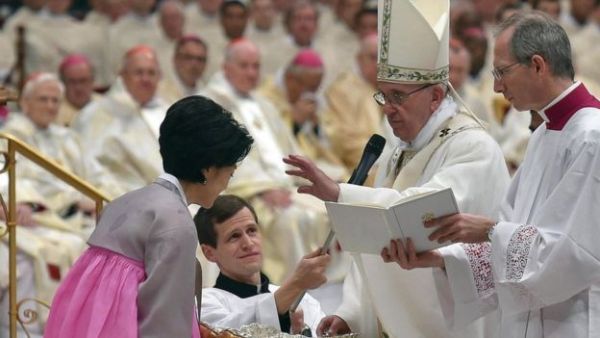
{The Catholic Church, for the third time, plans to launch the new revised version of Holy Bible of which writing errors have stemmed. }
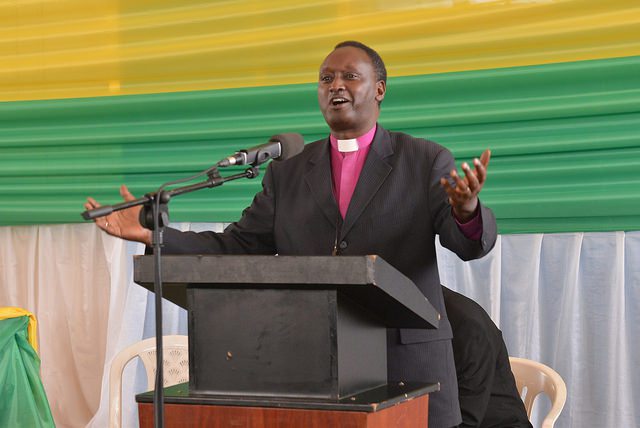
The priest Balthazar Ntivuguruzwa, the secretary of Rwandan Catholic Episcopal commission in charge of Biblical Gospel spreading argued that the revision paid attention to detail to avoid deviation of biblical quality and gospel message.
“The current Holy Bible has had several modifications since its translation and publication in 1990.There is an improved writing style. The first apparition of the Holy Bible had unrealized errors which called for efforts for improvement in tone and flow,”he said.
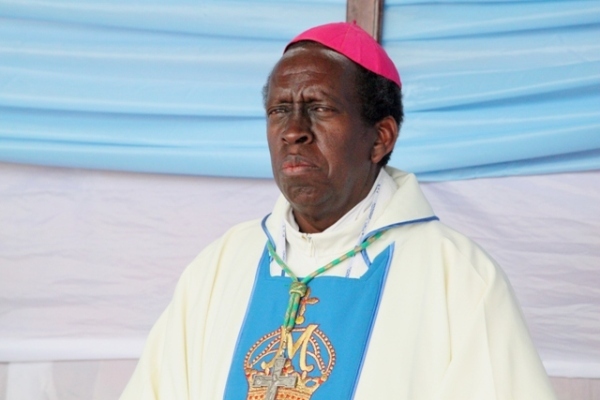
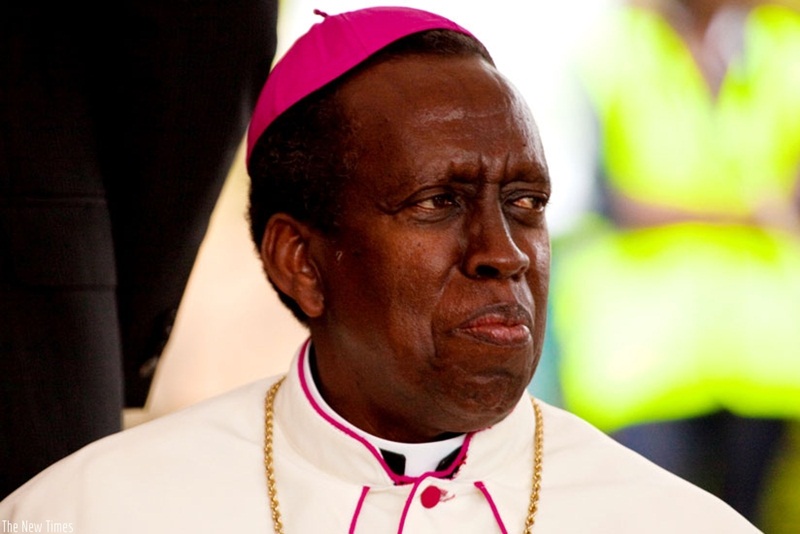
It is the third time the Holy Bible is modified in 25 years. The Bishop of Ruhengeri Diocese, Harorimana Vincent responsible for faith’s doctrine argues that applied modification will not deviate from the gospel and doctrine conveyed in the Holy Bible.
“The modification is meant to popularize the Bible message. These are things we normally do without expected limit.”
He adds that the correction of a particular book is applied in a bid to remove slight mistakes of writers but avoiding diversion of the real meaning.
The Holy Bible was translated into Kinyarwanda in 1990.
The church has a major role to play in helping Rwandans embrace government programmes in order for them to achieve socio-economic development, Prime Minister Anastase Murekezi has said.
The premier was on Saturday addressing the Catholic faithful who had gathered to celebrate the 50th anniversary of Ruhengeri Diocese in Musanze District.
The golden jubilee brought together government officials, papal representatives and different religious congregations of the Catholic Church.
The premier urged the different Christian sects in the country to ensure that the Christian values they preach go hand-in-hand with national policies in order to speed up development.
“I urge the Church to keep mobilising Christians and encouraging them to heed government programmes such as modern farming, investing in businesses, saving, paying community health insurance, promoting education, promoting hygiene and family planning,” Murekezi said.
He said churches should also teach love among Rwandans, adding that it was the lack of love and tolerance that led to the 1994 Genocide against the Tutsi.
“We urge churches to keep preaching love and development, ” said Murekezi.
The premier hailed the Catholic Church and Ruhengeri Diocese, in particular, for its important contribution to different sectors such as education, health and hospitality.
“Particularly, we are proud of concrete achievements of Ruhengeri Diocese visible through various academic institutions, tourism facilities, health facilities and supporting the vulnerable,” he said
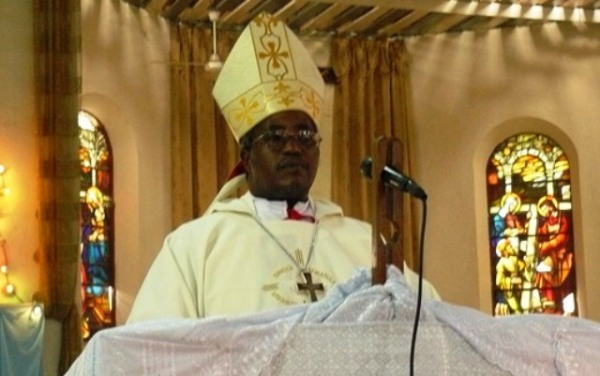
Responding to the premier’s call, the head of Ruhengeri Diocese, Bishop Vincent Harolimana, promised to continue ensuring the welfare of the area residents.
“We will never cease to promote the people’s welfare in education, health, justice and peace in collaboration with the government at all levels,” Harolimana said.
Ruhengeri Diocese established in 1960 by Pope John XXIII, has built over 130 academic institutions starting from nursery school to tertiary level. It has 13 parishes and over 70 priests who serve a flock of over 390,000.
{Vatican City – Italy’s Roman Catholic Church on Wednesday fired a priest who said he could “understand” how paedophilia by clergy could occur because some children yearned for affection.}
The diocese of Trento, in northern Italy, said Father Gino Flaim, aged 75, was removed from his position at a parish and was banned from preaching.
“Unfortunately there are children who seek affection because they don’t get it at home and then if they find some priest he can even give in [to the temptation]. I understand this,” Flaim said in an interview on the private La 7 network on Tuesday.
Asked if the children were in some way responsible, he replied: “In many cases, yes.”
The diocese said in a statement that Flaim’s comments did not reflect the diocese’s position on child sex abuse by clergy and ran counter to “the sentiments of the entire Church community” on the scandal.
The Roman Catholic Church has been rocked for the past 15 years by scandals over priests who sexually abused children and were transferred from parish to parish instead of being turned over to authorities and being defrocked.
Pope Francis has met victims of sexual abuse twice since his election in 2013, the latest during his visit to the United States last month.
The pope offered them his most comprehensive comments on the sexual abuse scandal in his 2-1/2 year papacy and used his strongest language yet in condemning it and promising that “all those responsible will be held accountable”.
The Mufti of Rwanda, Sheikh Ibrahim Kayitare, has called on the faithful to stick to rightful Muslim values to avoid being lured into terrorist acts in the name of ‘jihad’.
Mufti Kayitare was speaking to hundreds of Muslims who gathered at Kigali Muslim Cultural Centre in Nyamirambo, yesterday, for Eid al-Adha prayers.
“Conflicts in the Middle East relating to terrorism acts are the result of some people moving away from the Godly doctrines; Allah asks us to be united as stated in Quran. When unity is lost, as we see it in some parts of the world, we get to know for sure that some Godly principles have not been respected as they should,” he said.
“We call upon Muslims to stay calm, live in harmony and condemn anything that can bring about conflicts.”
Eid al-Adha, also known as the ‘Feast of Sacrifice’, is the second of two annual religious holidays celebrated by Muslims worldwide after Eid al-Fitr.
It honours the willingness of Ibrahim (Abraham) to sacrifice his son as an act of submission to Allah’s command, before Allah then intervened, through Angel Jibra’il and informed him that his sacrifice had already been accepted.
The meat from the sacrificed animal is preferred to be divided into three parts. The family retains one-third of the share; another third is given to relatives, friends and neighbours; and the remaining third is given to the poor and needy.
“This day requires us to be humble and faithful before God, and relates to the history of our Prophets Ibrahim and Ismail and his wife. This is a day when Muslims should share and celebrate together,” Mufti Kayitare said.
“Muslims should reflect on the family relationship between husband, wife and children considering which kind of discussions they can engage in to bring about spiritual and physical development.”
He also urged the youth to shun Islamic State (IS) ideology and stick to true principles of Islam that call for peace and unity among all people.
“Our nation is not an island, we call upon Rwandan Muslims, young and old, to stand up against terrorism and evil in general, to stay true to Godly principles and shun those wrongful beliefs, which have destroyed some countries in the Arab world,” said Kayitare.
The Islamic State is a radical Sunni Islamist militant group that has seized large swathes of territory in eastern Syria and across northern and western Iraq.
Luqman Tuyishimire, 16, said fellow youth should seek Quran-based guidance in whatever they do in the name of the Muslim faith.
In so doing, they will be part of national development rather than being destructive like some Muslim youth who have been lured into terrorism acts, he opined.
Mbarushima’s comments were echoed by Khalid Mwiteteri, 19.“We hurt when we hear of innocent youth being deceived to subscribe to wrongful jihadist beliefs. The Jihad that we know from Quran, is showing people the right way but not killing them. My fellow Muslim youth should seek Allah’s knowledge and guidance and be mindful of such wrong Muslim ideologies,” said Mwiteteri.
Halima Kampire, 38, said Eid al-Adha should be a day of repentance and asking Allah to reveal the true Godly principles.
“Jihad is not about killing and doing all the wrong things, Jihad, is about doing the rightful things in society, to everyone whether a Muslim or not. The youth should know that radical Jihadism is not what Quran teaches us, God should forgive us,” Kampire said.Kayitare also dedicated a prayer to the nation; praying for peace and security.
“We pray to Allah to protect our nation, and safeguard the development we have attained thus far. We pray that He will continue to look after our peace and security and all the initiatives that are aimed at bringing prosperity to Rwandans. We will continue to pray for our leaders so that they are able to fulfill their duties,” Kayitare interceded.
{ {{• 500 delegates to attend, including top scholars from around the world
• The event to discuss true image of Islam and building global peace }}
}
Dakar, 28 July, 2015 – { Under the double patronage of his Majesty Mohamed VI, King of Morocco and Senegalese President Macky Sall, of Senegal, the two day international Conference on Islam and peace is to open on July 28 in the Senegalese capital.}
About 500 delegates are expected to take part in this interfaith and multicultural dialogue.
The conference aims at promoting exchanges around the issue of peace in the world. It will look at enhancing the contributions of women and youth into a sustainable global peace. It also aims at identifying and defining the roles and responsibilities of communities in promoting a culture of peace and sharing good practices for community life.
The event is organized by the Medina Baye Peace Initiative, through the Senegalese branch of the Jamhiyatu Ansaarud -Din association (JAD), with the active support of the Senegalese government. His Excellency Macky Sall, President of the Republic of Senegal and his Royal Highness, the King of Morocco are the official sponsors of the event. Mr Macky Sall will attend and chair the opening ceremony.
The participants invited in Dakar include scholars from different religions, academics and researchers, religious and spiritual leaders, policy makers and civil society activists, representatives of international organizations, peace activists from around the world, as well as technical and financial partners.
“This is a wonderful opportunity to restore the image of Islam which is totally different from the one portrayed by some of its so-called followers, or the one described by its fiercest critics “, said Sheikh Muhammad Ibrahim Khouraichi Niass, Chairman of the the Senegalese branch of the Jamhiyatu Ansaarud-Din. “Through reflection and dialogue between communities, we will demonstrate how Islam can contribute to the achievement of a sustainable global peace”, he added.
Various topics will be discussed during the conference, including solidarity and the role of Islam in the development of interfaith dialogue, or questions about extremism and terrorism, which are a threat to peace.
{The organizing committee for this year’s Uganda Martyrs’ Day celebrations has started renovations of Namugongo shrine. They have thatched the roof, sheltered the open altar at the Martyrs’ man-made lake. }
The annual event, held on June 3, attracts thousands of faithful from around the region and beyond. This year, organisers expect up to a million pilgrims. Pilgrims are expected from countries such as Tanzania, Kenya, Sudan, the DR Congo, Rwanda, Burundi and Malawi.
With less than four weeks to the day, Lira diocese and central organising committee are working around the clock to finish up with the preparations. The Archbishop of Lira, Joseph Franzeli, will be the main mass celebrant.
Twenty two Catholic faithful were burnt alive on the orders of Kabaka Mwanga of Buganda at Namugongo, Wakiso district on June 3, 1885 after they had refused to denounce their faith.
Every year, Christians converge at the venue to celebrate their martyrdom. The martyrs were beatified on June 6, 1920 by Pope Benedict XV and on October 18, 1964, Pope Paul VI canonized them.
The church also celebrates the martyrdom of the blessed Daudi Okello and Gildo Irwa, who were catechists in the northern Uganda and were killed at Paimol in 1918. The two were beatified by Pope John Paul II on October 20, 2002.
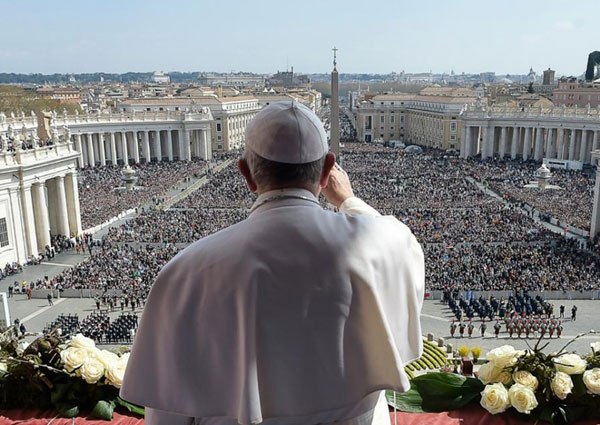
(Vatican Radio) { The orderly development of “a civil, pluralistic society requires” that the “authentic spirit of religion” not be “confined” to “personal conscience but that its significant role in the construction of society is recognized,” said Pope Francis in his remarks to the Italian president.}
Pope Francis met with Italian President Sergio Mattarella at the Vatican Saturday morning. It was their first meeting since the president’s election on 3 February.
“The Church offers everyone the beauty of the Gospel and its message of salvation and, to carry out its spiritual mission, it needs conditions of peace and calm, which only public authorities can promote,” the pope said, reflecting on the collaborative relationship between the Holy See and the Italian state, as defined by the Lateran Pacts and the Italian Constitution.
“On the other hand, public authorities—who are primarily expected to create the conditions for a just and sustainable development, so that civil society can develop all its potentialities—can find a valuable and useful support for their action in the commitment and loyal collaboration of the Church,” he said.
Though independent, church and state share “the common responsibility” of meeting people’s “spiritual and physical needs…with humility and dedication,” he said.
The Pope spoke of the impact of Christianity on Italian culture, including art, architecture, customs and family life. He emphasized the need to care for the environment and to develop employment opportunities for Italian youth.
He also expressed gratitude for Italy’s commitment to welcoming numerous migrants who land on the country’s shores and urged Italian authorities to petition the European and international communities for greater commitment to assistance in the area of migration.
{A high-ranking South Sudanese military commander allied to president Salva Kiir’s government has died after he was allegedly ambushed in Upper Nile state by government forces.}
Major General Bwogo Olieu was killed on Wednesday when gunmen opened fire at his military convoy while on an inspection visit on the outskirts of the state capital, Malakal town, officials said.
Olieu, who was the second in command of the government allied militia forces under the overall command of Major General Johnson Olony, was killed at around 2:00pm on Wednesday at Lul Bridge, located 35 kilometers north of Malakal town towards Akoka.
Local sources said the general, who hails from the minority Shilluk ethnic group in the area was shot dead together with several of his soldiers after a dispute allegedly erupted with soldiers from the Dinka ethnic group over ownership of a tribal territory.
Military sources claimed the general was among 13 fighters killed with him in the clashes.
State officials could not immediately explain the circumstances surrounding his death, saying it remained unclear.
Upper Nile state information minister, Peter Hoth Tuach told Sudan Tribune on Thursday during an exclusive interview that the death of the general was “a terrible tragedy” but asserted that the government had sent in “enough forces to contain the situation from spiraling out of control.”
The state government spokesperson said the death of the senior army officer created tensions within the government’s controlled Malakal town.
“It was a terrible day yesterday (Wednesday). The death of Major [General] Bwogo created a tension not only in the place where the incident took place but also here in Malakal town,” he said.
He said there was great panic as people had to run to protection camp of the United Nations Mission in South Sudan (UNMISS), adding the situation had however returned to normal.
“It is relatively quiet and has calmed down a little bit at the moment,” he added.
Tuach said the state authorities made contacts with the national government and the army until it was resolved to send enough forces to contain the situation from spiraling out of control.
The state official spokesman further added the cause of the killing was not clear, although unconfirmed reports from local authorities indicated that the ambush was allegedly carried out by an armed pro-government youth group from the Dinka ethnic group of Akoka county.
Local sources said the Dinka group thought the commander was involved in the local dispute over the stretch of a disputed area in favour of his Shilluk community.
The spokesperson of the South Sudanese army, Colonel Philip Aguer also confirmed the incident, describing the killing of General Bwogo as unfortunate but said he was still waiting for more details from the local command in order to ascertain what caused the clashes between the allied forces.
The local ethnic militia forces, mainly from the Shilluk ethnic group, have been allied to president Kiir’s government in which they have also involved in the recent offensives in the state against the rebel forces led by former vice-president Machar.
Observers said the death of the second top general of the militia group in the hands of the alleged pro-government group may cause a rift within the allied forces unless measures were quickly taken to resolve the misunderstanding.
Shilluk and Dinka ethnic groups in Upper Nile state have had violent conflict over the ownership of certain territories along their common borders.
{ Islam will be the world’s largest religion after 2070 if current demographic trends continue, projections released Thursday by a leading research group show.}
Between 2010 and 2050, Muslims are projected to increase by 73 percent while the number of Christians is projected to grow by 35 percent, at about the same rate as the global population, Pew Research Center said.
As of 2010, Christianity was the world’s largest religion with an estimated 2.2 billion adherents, 31 percent of all 6.9 billion people on Earth, according to Pew demographers. Islam was second, with about 1.6 billion followers, or 23 percent of the world population.
According to the projections, by 2050 there will be near parity between Muslims and Christians, possibly ending two millennia of Christian dominance in the world.
Some scholars say Christians always have been more numerous than Muslims around the world, while others say the number of Muslims may have exceeded the number of Christians during the Islamic golden age between 11th and 17th centuries.
Globally, Muslims have the highest fertility rate, an average of 3.1 children per woman, the Pew report said. Christians are second, at 2.7 children per woman.
The projections showed that, if current demographic trends continued, the Muslim share of the world’s population would exceed the Christian share after the year 2070. By the year 2100, about 1 percentage point more of the world’s population would be Muslim than Christian.
All of the world’s major religious groups except Buddhists are poised for some growth in absolute numbers in the coming decades, Pew researchers said.
They said low fertility rates and aging populations in countries such as China, Thailand and Japan would keep the global Buddhist population stable.
The projections also revealed that Christians would drop below 50% of the population in several countries including Australia, France, the Netherlands and the U.K.
As of 2050, the largest religious group in France, New Zealand and the Netherlands is expected to be the “religiously unaffiliated,” which include atheists, agnostics and others who do not affiliate with any religion, although this group is projected to shrink as a percentage of the global population, the report said.
In Europe, the Muslim share of the population is expected to increase from 5.9 percent in 2010 to 10.2 percent in 2050 due to migration and other demographic factors, the projections showed.
Hindus are projected to grow by 34 percent, from a little over 1 billion to nearly 1.4 billion, by 2050. Jews are estimated to grow 16 percent, from a little less than 14 million in 2010 to 16.1 million globally in 2050.
In 2050, the world’s total population is expected to rise to 9.3 billion, a 35 percent increase from 2010’s 6.9 billion, according to Pew demographers.
{Pope Francis has reiterated his call for Sri Lankan reconciliation by canonising the country’s first saint as a model for national unity and visiting the war-ravaged north to pray at a shrine revered by both Sinhalese and Tamil faithful.}
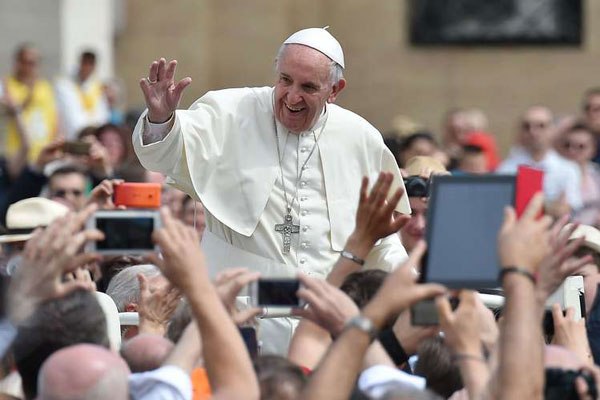
More than half a million people packed the seafront park in Colombo for the mass on Wednesday, with some spending the night under the stars to ensure a good spot. Seemingly rested after a gruelling first day of his Asian tour, the pope arrived well ahead of time to greet the crowd, getting off his popemobile to kiss the sick and disabled.
Bells rang and the crowd applauded when the pope declared the Rev Joseph Vaz a saint at the start of the service. Vaz was a 17th century Indian missionary who revived the faith in Sri Lanka during a time of anti-Catholic persecution by Dutch colonists, who were Protestant Calvinists.
The Catholic church considers Vaz a great model for today’s faithful, ministering to the believers of both of Sri Lanka’s main ethnic groups and putting himself at great risk to spread the faith.
The pope told the crowd that Vaz lived at a time when Catholics were a minority and often persecuted and yet he ministered to all, regardless of their ethnic or religious background.
“St Joseph shows us the importance of transcending religious divisions in the service of peace,” the pope said in his homily, delivered in English and then translated for the crowd in Sinhalese and Tamil. “As the life of St Joseph Vaz teaches us, genuine worship of God bears fruit not in discrimination, hatred and violence but in respect for the sacredness of life, respect for the dignity and freedom of others, and loving commitment to the welfare of all.”
He said the Sri Lankan church wanted to continue Vaz’s legacy of service to all, asking only for the freedom to preach in return. “Religious freedom is a fundamental human right,” he said.
To underscore that point, the pope gave Sri Lanka’s bishops a replica of a 17th-century decree from the then king of Kandy, allowing Catholic conversions of Buddhists – a somewhat provocative message given the recent upswing in violence against Muslims and some Protestant churches by Buddhist extremists who want Sri Lanka exclusively Buddhist.
After mass, the pontiff flew to the northern city of Madhu to pray at the Our Lady of Madhu shrine, a Catholic pilgrimage site that is also a destination for people of other faiths. It is the first visit by a pope to the northern Tamil territory, devastated by Sri Lanka’s 25-year civil war, which erupted over Tamil demands for an independent homeland because of perceived discrimination by the Sinhalese majority.
The pope is expected to call again for reconciliation between Sinhalese and Tamils and people of different faiths to overcome the wounds of the war.
Upon his arrival in Sri Lanka on Tuesday, the pope called for reconciliation but also for the truth about injustices committed during the conflict, which ended in 2009 with the army’s violent crushing of the Tamil Tiger rebels.
Catholics make up slightly more than 6% of Sri Lanka’s population of 21 million. They are by far the largest Christian denomination in the country, but are a distinct minority compared to Buddhists, who make up about 70%, with Hindus comprising 13%. Muslims make up about 10% of the population.
Most Sinhalese are Buddhist and most Tamils Hindu, but the Catholic church counts both ethnic groups as its members, and as a result considers itself a source of unity for the country.