The military said the airstrikes now focus mainly on government targets in Tehran.
Earlier on Wednesday, Iran said 1,045 people had been killed in the country since Saturday as a result of the U.S.-Israeli operation.
Meanwhile, according to Israel’s Magen David Adom rescue service, Iranian missiles have killed at least 10 people in Israel.
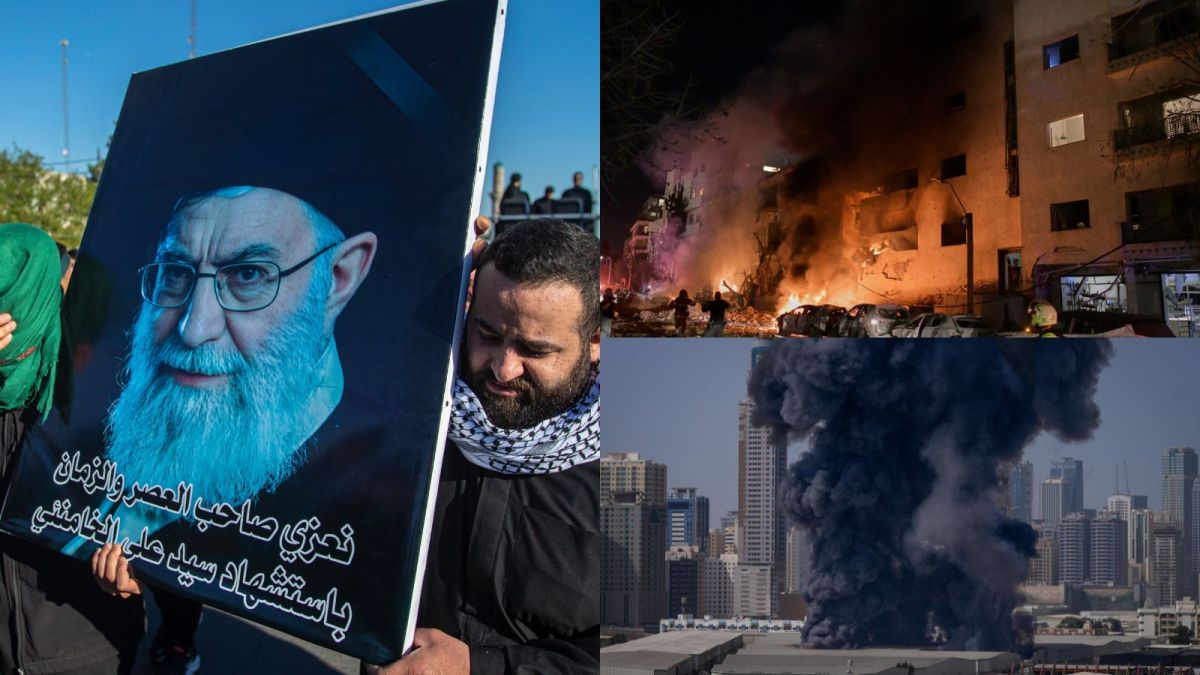
The joint U.S.-Israeli military operation against Iran, entering its fifth day, has triggered a sharp escalation across the Middle East, setting off waves of missile exchanges, mounting casualties, and far-reaching political, security, and economic repercussions.
Iran said at total of 1,045 people had been killed in the country since Saturday as a result of the U.S.-Israeli operation.
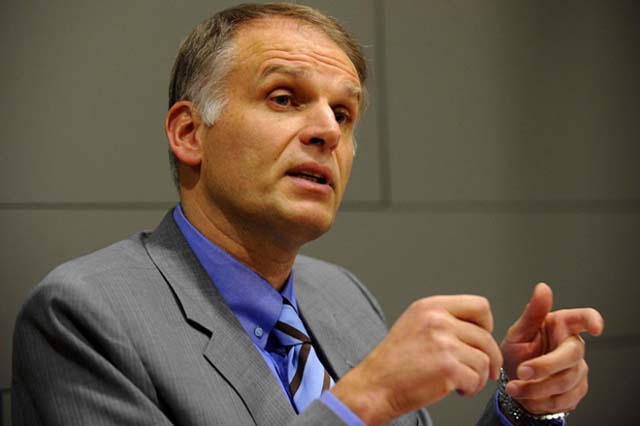
In a post published on X, Destexhe criticised recent U.S. sanctions imposed on Rwanda’s military and defended Kigali’s position in the ongoing eastern Congo conflict.
“It is the DRC (Congo) that should be sanctioned, not Rwanda,” he wrote. “The DRC ignited this conflict by persecuting Congolese Tutsis.”
Destexhe accused Kinshasa of failing to uphold its commitments under international agreements, including United Nations Security Council Resolution 2773, and of maintaining ties with the Democratic Forces for the Liberation of Rwanda (FDLR), a militia group formed by individuals responsible for the 1994 Genocide against the Tutsi who fled to the DRC. He further pointed out that the Congolese government finances extremist Wazalendo militias and collaborates with foreign mercenaries.
According to Destexhe, ongoing bombings in Minembwe and drone strikes in eastern Congo demonstrate what he described as indiscriminate attacks affecting civilians. He argued that the ultimate objective of Kinshasa’s military posture appears to be confrontation with Rwanda.
His comments come days after the U.S. Department of the Treasury’s Office of Foreign Assets Control (OFAC) announced sanctions against the Rwanda Defence Force (RDF) as an institution and four senior military officials, including Chief of Defence Staff Gen. Mubarakh Muganga and other top commanders. Washington accused Rwanda of backing the AFC/M23 rebel coalition operating in eastern Congo, allegations Kigali has consistently denied.
The Rwandan government expressed regret over the March 2, 2026, sanctions, calling them “unjust” and “one-sided.” In a statement, Kigali said the measures misrepresent the conflict and unfairly target only one party to the peace process.
Rwanda and the Democratic Republic of the Congo signed the Washington Accords in Washington, D.C., on December 4, 2025, aimed at restoring stability in eastern Congo. Under the agreement, Kinshasa committed to an irreversible and verifiable end to state support for the FDLR. However, the militia group remains active in the region despite the commitments outlined in the agreement.
Rwanda maintains that its actions along the border are defensive measures prompted by repeated attacks, including cross-border incidents.
In his post, Destexhe sharply criticised Congolese President Félix Tshisekedi, alleging corruption and mismanagement, and arguing that the Congolese military is incapable of securing a decisive victory against M23. He urged U.S. policymakers to reconsider their approach.
“Wake up, America!” he stated.
Alain Destexhe, a former Belgian senator and researcher, has criticised recent U.S. sanctions imposed on Rwanda’s military and defended Kigali’s position in the ongoing eastern Congo conflict.
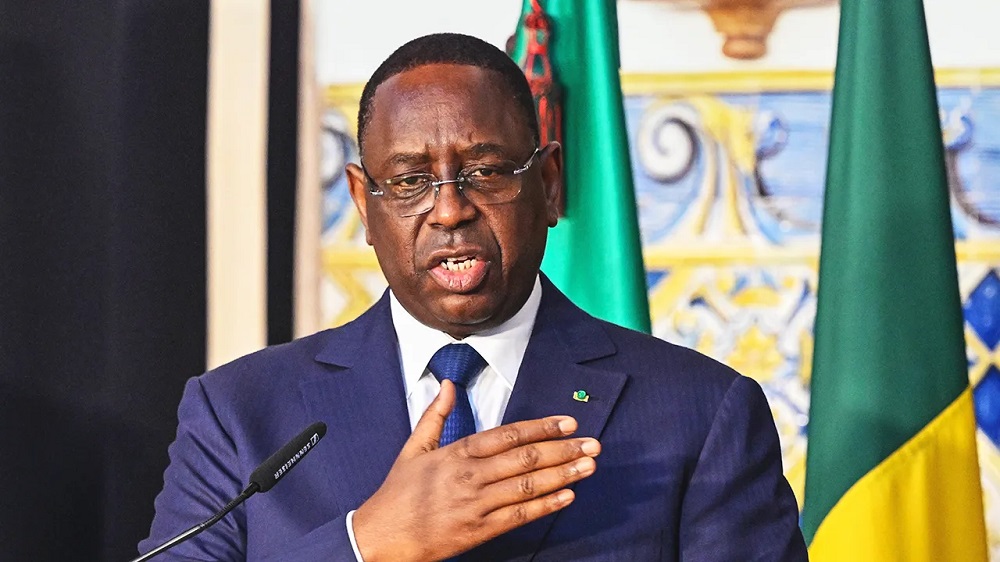
According to media reports, his nomination was put forward by Burundi, which currently chairs the African Union (AU).
The President of the General Assembly has acknowledged receipt of the nomination, formally placing Sall among the candidates seeking to lead the global body.
The next Secretary-General will serve a five-year term starting January 1, 2027, succeeding António Guterres, whose second term ends in December 2026.
Sall, who led Senegal from 2012 to 2024, joins what is shaping up to be a competitive field. Other reported contenders include former Chilean President Michelle Bachelet and Rafael Grossi, Director General of the International Atomic Energy Agency.
Under UN procedures, the Secretary-General is appointed by the General Assembly on the recommendation of the Security Council.
The Council first conducts informal straw polls before forwarding a name for approval. Any of its five permanent members; China, France, Russia, the United Kingdom, and the United States, can block a candidate by veto.
Sall’s candidacy comes amid renewed calls for regional rotation in the UN’s top post, with Africa yet to produce a Secretary-General since the organization was founded in 1945.
The selection process is expected to gather momentum in the months ahead as more nominations emerge and consultations among member states intensify.
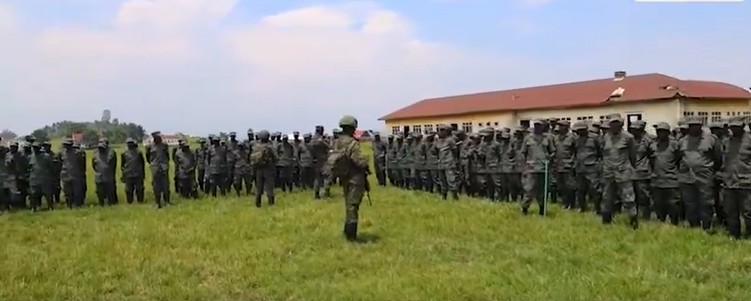
The passout ceremony marking the completion of military training for the recruits was held in Lumangabo on March 2, 2026.
Addressing the new fighters, AFC/M23 military commander Maj Gen Sultani Makenga sharply criticized the Kinshasa administration, accusing it of misrule and fueling insecurity across the country.
He alleged that President Tshisekedi has weakened state institutions and allowed armed groups and irregular forces to operate with impunity.
Maj Gen Makenga claimed that the movement’s objective is to “liberate the country” and end what he described as targeted violence against civilians.
He accused the government of arming militias and incorporating foreign fighters, including elements linked to the FDLR terrorist group, into the national army. He further alleged that such actions had contributed to ethnic tensions and civilian suffering.
According to Maj Gen Makenga, large numbers of Congolese refugees fled to neighboring countries due to violence attributed to FARDC troops and allied groups.
“That is why our movement decided to rise and bring an end to these problems,” he told the recruits. “By joining this force, you must be ready to liberate Congo and protect its people. You must demonstrate discipline and prove that you are different from what the population experienced before.”
He urged former FARDC soldiers now integrated into AFC/M23 to uphold strict ethical standards and avoid misconduct.
“Wherever you pass, civilians should see a difference. They must see protectors, not looters,” he said. “Our people have endured years of suffering; displacement, killings, and exile. It is your responsibility to help end that hardship.”
Maj Gen Makenga reiterated that the coalition seeks what it describes as a reformed and inclusive state, and called on the fighters to remain committed to that objective.
During the ceremony, the recruits responded affirmatively when asked whether they were prepared to remove the current leadership in Kinshasa.
Eastern Democratic Republic of Congo has faced prolonged conflict involving FARDC, Wazalendo local militias, fighters linked to the FDLR, Burundian troops, foreign mercenaries, and AFC/M23 forces.
The coalition maintains that its struggle is aimed at defending communities it says have faced discrimination and violence, while pursuing political change.
The new special force recruits include former members of the Armed Forces of the Democratic Republic of the Congo (FARDC).
The report suggests that the Trump administration has, at least for the time being, shifted away from diplomatic efforts while continuing military actions against Iran.
Witkoff has not spoken with Iranian Foreign Minister Seyed Abbas Araghchi in the days “since this thing went kinetic,” the report quoted a senior Trump administration official as saying.
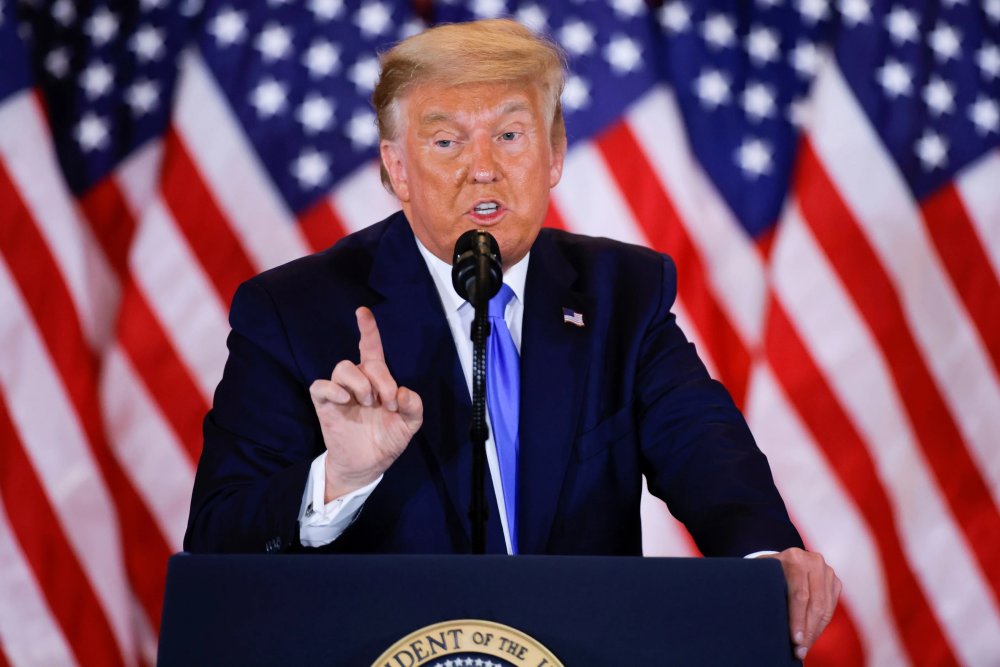
Earlier in the day, U.S. President Donald Trump wrote on social media that it’s too late for U.S.-Iran negotiations, arguing that the United States held the military advantage.
In another post, the U.S. president boasted “unlimited supply” of weapons, dismissing a Wall Street Journal report that highlighted the rapid depletion of air-defense interceptors and other munitions in strikes against Iran, which is reportedly “straining its stockpiles.”
Meanwhile, Trump said Reza Pahlavi, the exiled crown prince of Iran’s last shah, is not someone that the White House has considered for new Iranian leadership, noting he still preferred “someone from within” to take charge.
Trump also admitted there was no evacuation plan for U.S. citizens across the Middle East region before launching the massive military campaign against Iran.
“Because it did happen all very quickly,” Trump told reporters.
The U.S. State Department said Tuesday it is “actively securing” military and charter aircraft to fly Americans from the Middle East to safety as the war has deeply disrupted commercial air travel.
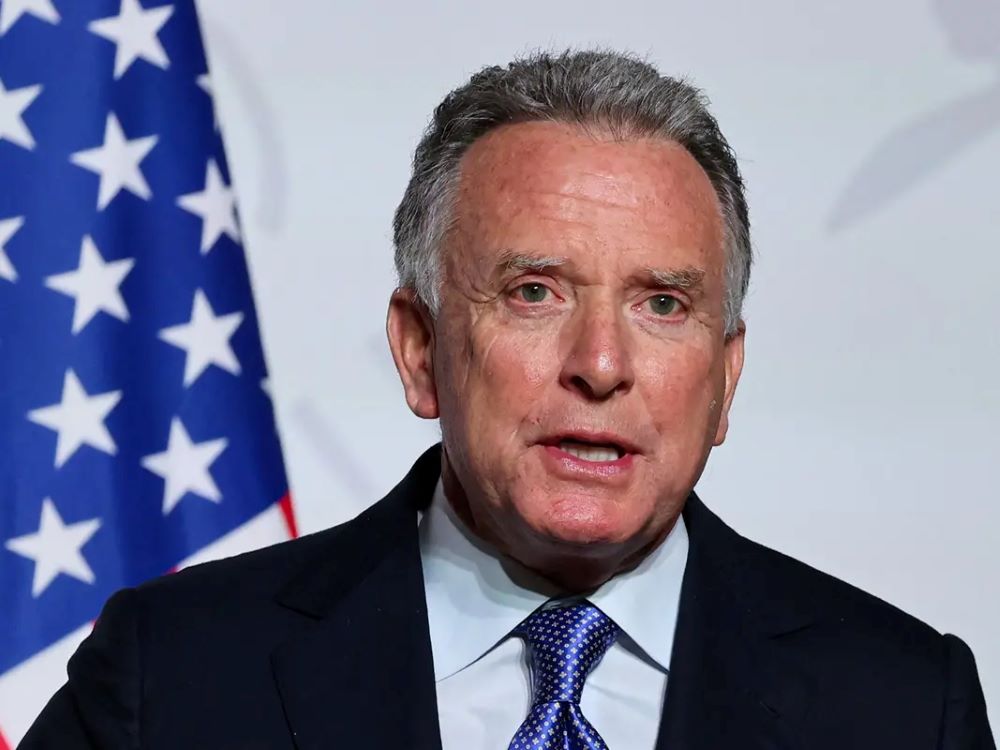
US Special Envoy Steve Witkoff delivers a press conference upon the signing of the declaration on deploying post-ceasefire force in Ukraine, during the ‘Coalition of the Willing’ summit, at the Elysee Palace in Paris, France, January 6, 2026. (Reuters)
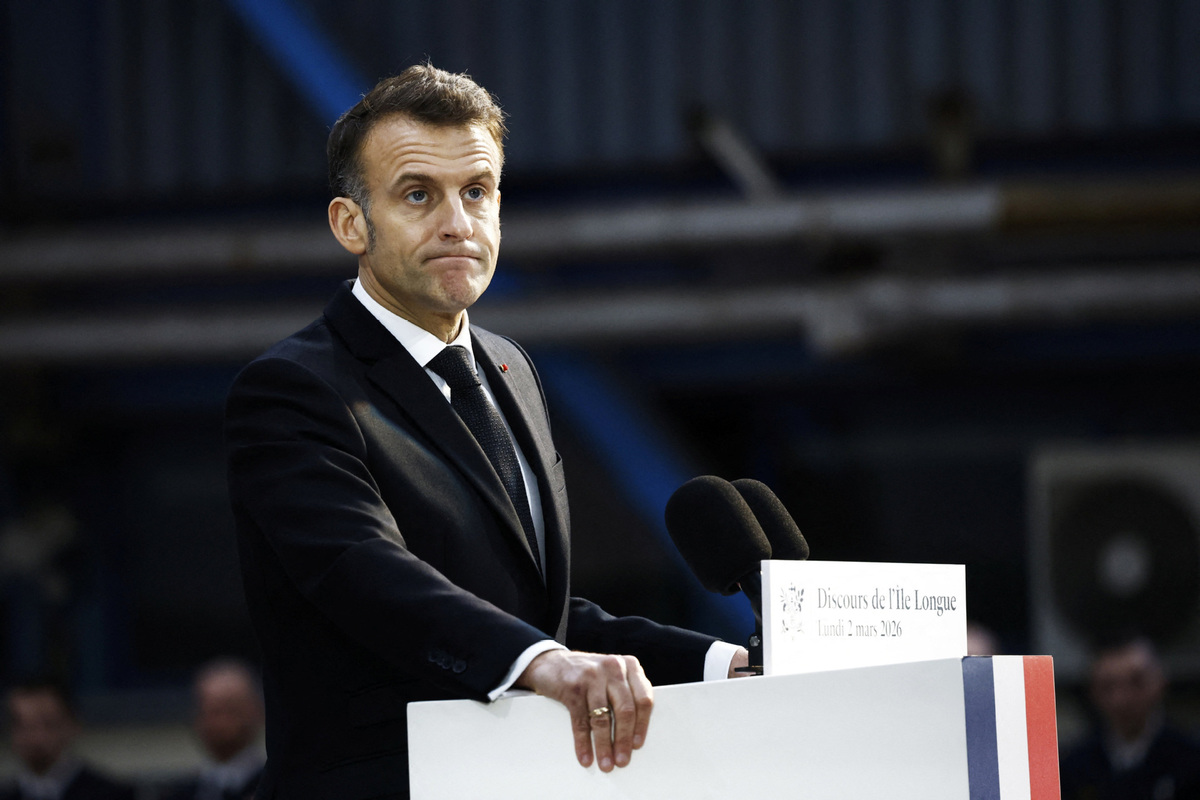
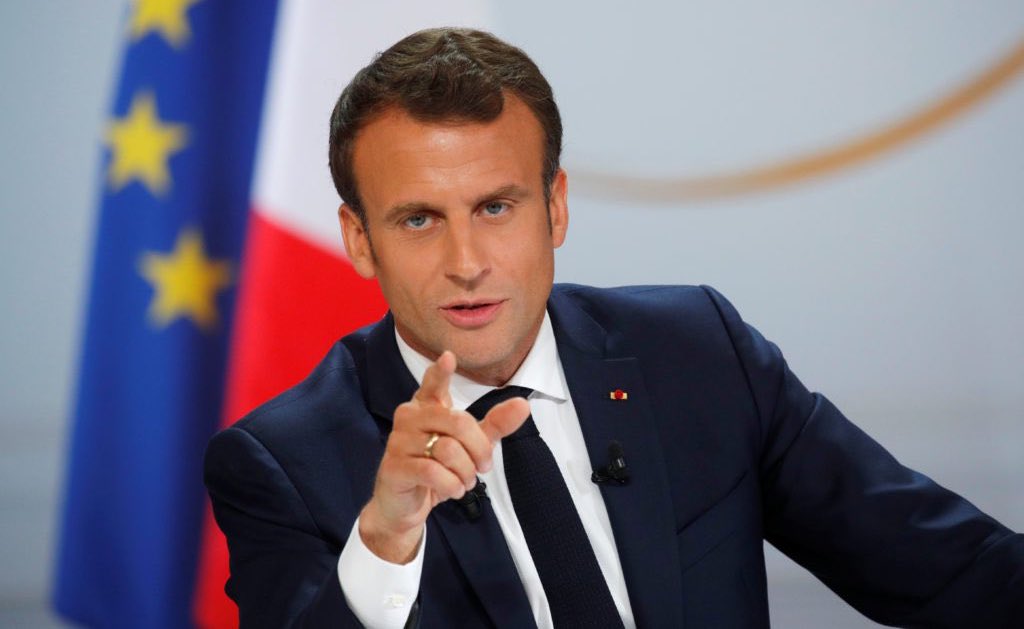
In a televised address on the situation in Iran and the Middle East, Macron said the conflict triggered by the strikes carried out by the United States and Israel was now spreading across the region, posing serious consequences for peace and security.
Macron confirmed that the French aircraft carrier Charles de Gaulle is being dispatched to the Mediterranean Sea in response to the deteriorating situation in the region. The vessel had been in Sweden for military exercises.
He said the frigate Languedoc and additional air defense assets are also being deployed to Cyprus. The British air base at Akrotiri on the southern coast of Cyprus was hit by a drone early Monday.
The French president added that France had responded immediately, shooting down drones “in legitimate defense” from the “very first hours of the conflict” involving Israel, the United States and Iran.
On Sunday, French Minister of the Armed Forces Catherine Vautrin said on social media that a hangar at France’s naval base, located adjacent to an Emirati base, was struck in a drone attack targeting the port of Abu Dhabi. The damage was limited to material losses, and no injuries were reported.
Macron also announced that the first two flights repatriating French nationals from the war-affected Middle East would arrive in Paris on Tuesday evening.
French President Emmanuel Macron confirmed that the French aircraft carrier Charles de Gaulle is being dispatched to the Mediterranean Sea in response to the deteriorating situation in the region.
Since the announcement of the sanctions on the evening of March 2 2026, officials in the DRC government have reacted with extreme delight, thanking the United States for acting on a request they have reportedly pursued for years.
DRC’s Foreign Minister, Thérèse Kayikwamba Wagner, said the U.S. decision demonstrates that no party should ignore agreements, adding that DRC officials remain steadfast in their position.
Makolo responded to Kayikwamba, saying that despite the propaganda and all efforts by the DRC government, the DRC’s support to the FDLR terrorist group is evident.
“The Government of the DRC remains the #1 backer of FDLR, which is an existential threat to Rwanda. No matter how many lies and resources are invested into propaganda to distract from DRC state sponsorship of the FDLR, this problem is not going away,” she said.
She emphasised that the U.S. sanctions on the RDF and some of its senior officials are biased and will likely push the DRC to rely even more on military solutions, thereby prolonging the conflict.
Makolo added: “One-sided sanctions unfortunately only serve to embolden the Government of the DRC in its insistence on a military solution. The result is what we see now: prolongation of the conflict, escalation of violence, lost opportunities and importantly, lost lives.”
Both the DRC and the U.S. accuse Rwanda of supporting the M23/AFC, an alliance was formed to counter politically motivated persecution against Congolese, backed by DRC policies and genocidal ideologies.
DRC’s collaboration with FDLR, left Rwandan territory shelled at different times, prompting Rwanda to strengthen its defensive measures along the border.
In a statement shared on X, Makolo also warned that inflammatory remarks against Tutsis, such as those made by former DRC army spokesperson Gen. Maj. Sylvain Ekenge on state television, risk spreading ethnic violence across the region.
Makolo concluded that addressing these issues requires the consideration of existing facts, not distortion, in the search for a solution to the eastern DRC crisis.
“The way forward to lasting peace and progress is already laid out in agreements reached in the past year, including the comprehensive Washington Accords, but the DRC appears more interested in continued war than in implementing its obligations in the peace processes,” she noted.
Reports from UN experts indicate the DRC continued aiding the FDLR even after the agreement, yet the U.S. has taken no action.
Yolande Makolo is the Spokesperson of the Government of Rwanda.
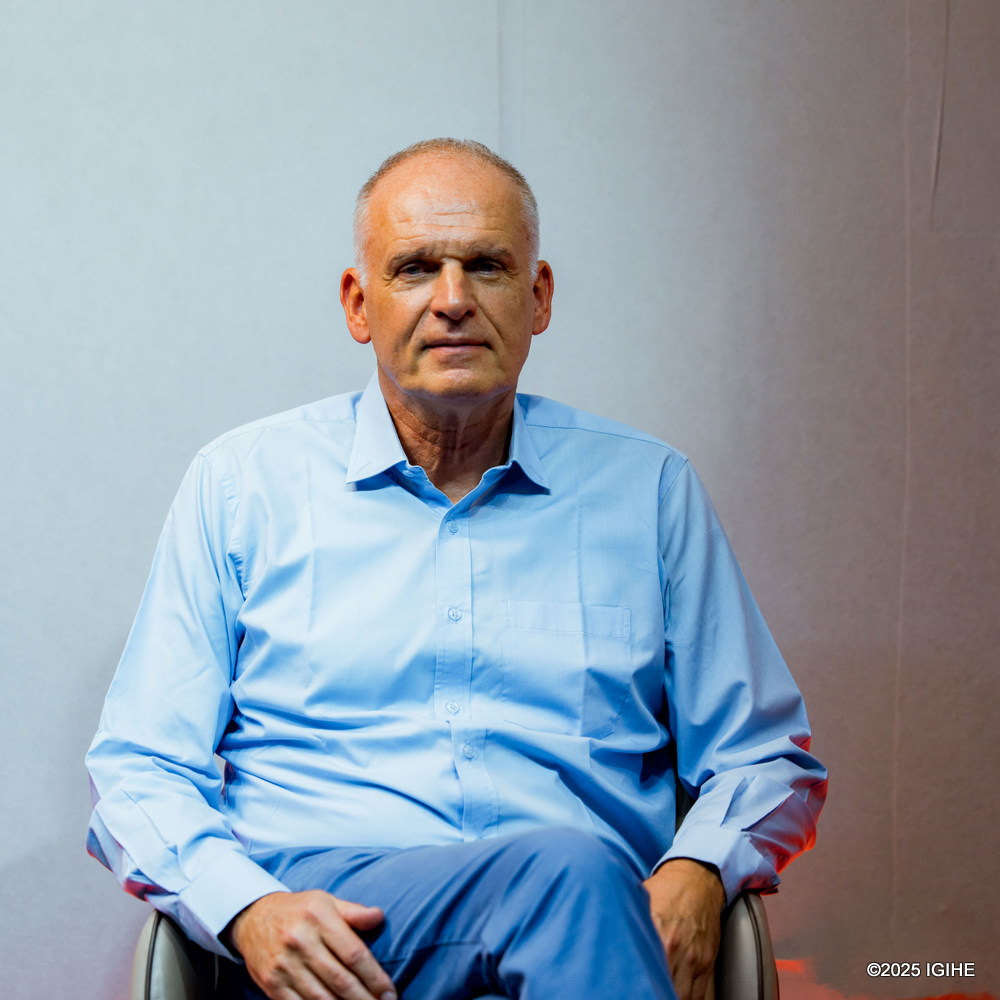
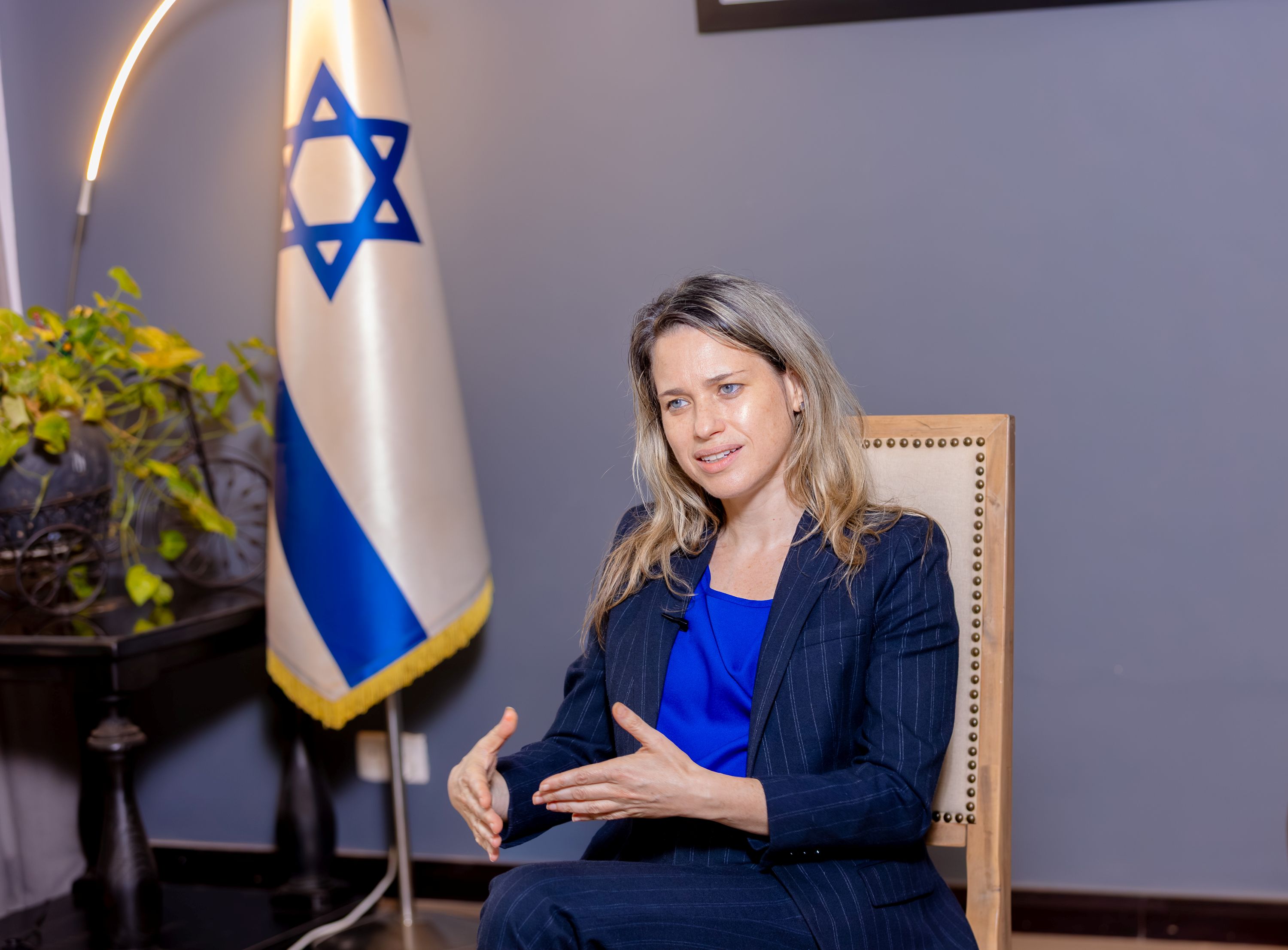
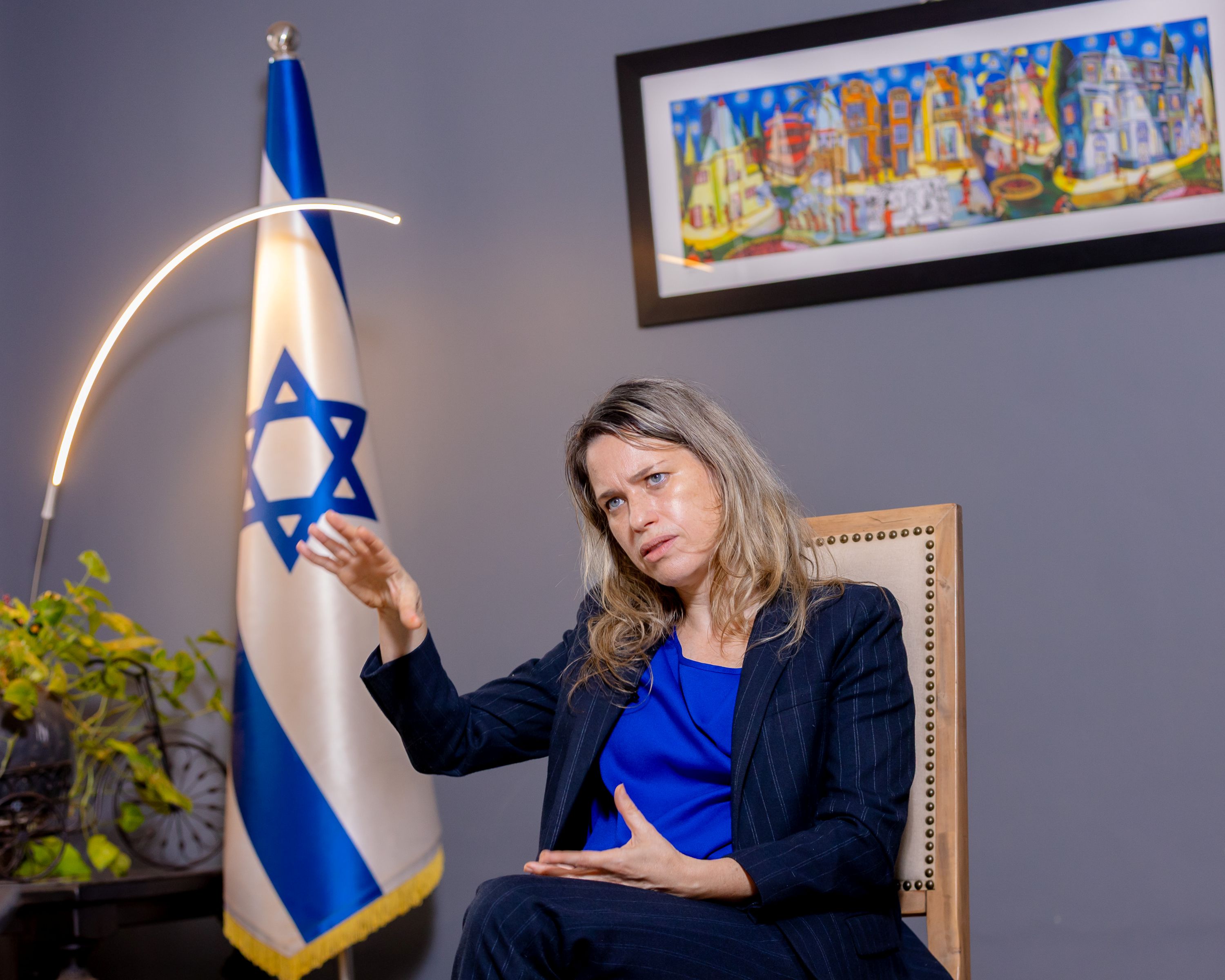
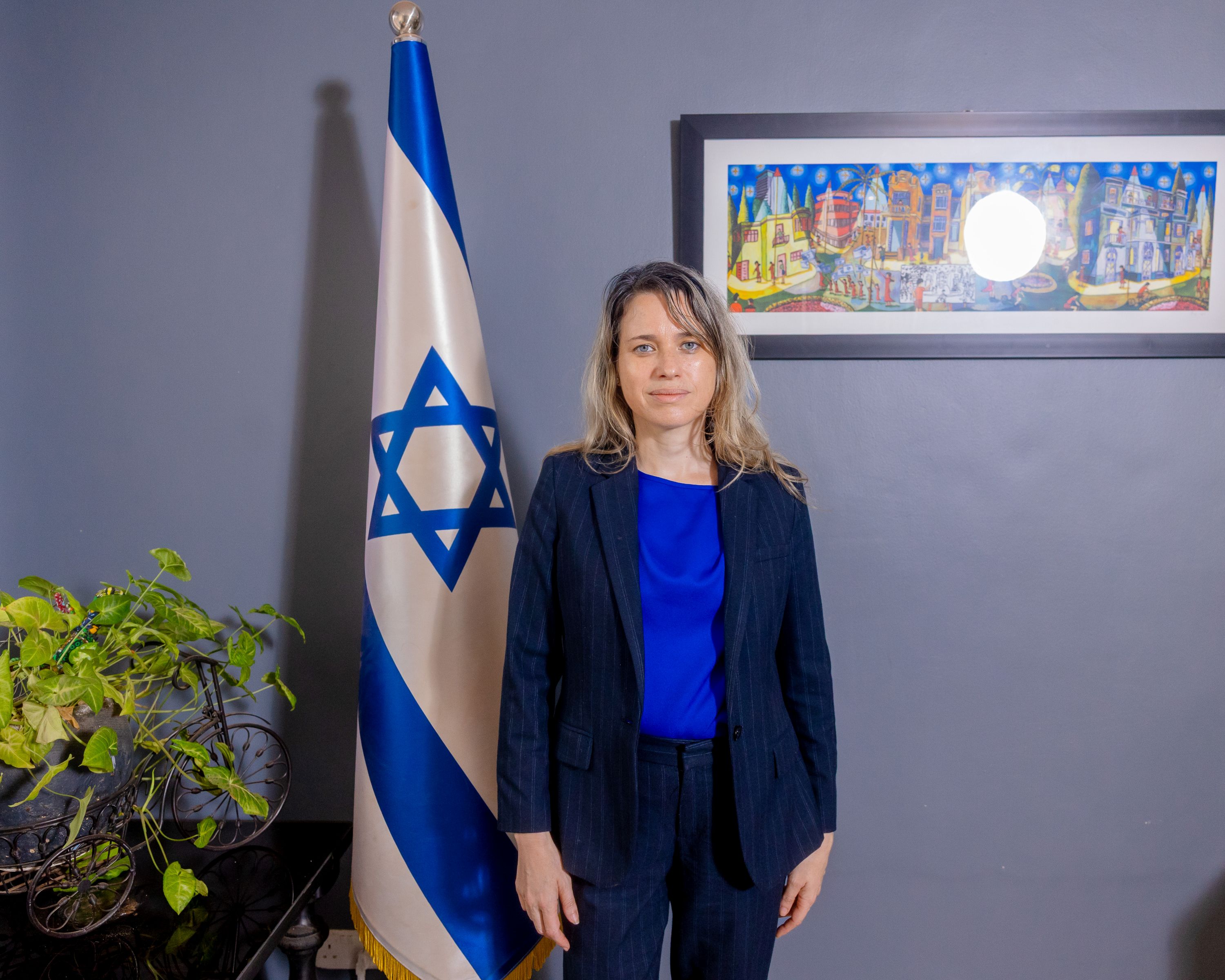
Speaking exclusively to IGIHE, Israeli Ambassador to Rwanda, Einat Weiss, shed light on the crisis, Israel’s objectives, and the safety of foreign nationals in the country, including Rwandans.
The ambassador explained that the strikes were prompted by intelligence showing Iran’s continued development of ballistic missiles and nuclear programs, often hidden underground, despite ongoing negotiations mediated by Oman. She criticised Iran for simultaneously suppressing its own population while claiming to negotiate in good faith.
“The Iranian regime has been on a terror path for over five decades,” Weiss said. “Our goal is to stop Iran’s attacks on Israel, neutralise its proxy networks like Hezbollah, and enable the Iranian people to shape their own future.”
Amb. Einat Weiss explained that the strikes were prompted by intelligence showing Iran’s continued development of ballistic missiles and nuclear programs.
She noted that Hezbollah joined Iran in recent missile strikes, demonstrating the threat Iran poses through its regional proxies.
Regarding Israel’s security, Weiss acknowledged casualties, including nine fatalities in a recent missile strike, but stressed that technology such as the Iron Dome and disciplined public response have minimised harm.
“Even one missile that is not intercepted can cause huge damage,” she said. She reassured Rwandan nationals in Israel, stating that everyone has access to shelters and that warnings from authorities are reliable.
“Rwandans are resilient, and we maintain daily contact with Rwandan officials to address any concerns,” Weiss added.
Iran’s supreme leader, Ayatollah Ali Khamenei, was killed in the opening barrage of the US‑Israeli attacks, prompting a swift and aggressive retaliation across the Middle East.
On the international front, Weiss criticised what she termed as global double standards, noting that while Israel faces criticism for defending itself, Iran’s suppression of its people and funding of terrorist groups like Hamas, Hezbollah, and Houthis is often ignored.
“Israel is defending itself; Iran is deliberately targeting civilians,” she said. Ambassador Weiss also explained why Israel opposes Iran’s nuclear program. While Israel possesses nuclear weapons for defence, Iran openly seeks nuclear capabilities to destroy Israel and exert global influence.
“This intent is alarming and should not be tolerated by the international community,” she warned.
The ambassador highlighted the regional impact of the conflict, pointing to disruptions in oil trade through the Hormuz Strait and the threat Iran poses to the Gulf and Africa through funding terror networks. She emphasised that a shift in Iran’s regime or a halt to its aggression would benefit the Middle East, Africa, and the world.
While the envoy could not predict the end of the war, she emphasised that Israel, in collaboration with the U.S., will continue operations until its objectives are achieved.
Finally, Weiss addressed prospects for de-escalation. While she could not predict the end of the war, she emphasised that Israel, in collaboration with the U.S., will continue operations until its objectives are achieved, aiming for a safer, more stable Middle East.
“This is not only about defending Israel,” she said. “It is about creating a world where terror is reduced, and peace can prevail.”
From Tehran’s viewpoint, the conflict is not seen as a defensive struggle against terror but as a response to what Iranian officials describe as “unlawful aggression” by the United States and Israel. Iran’s government has condemned the February 28 strikes as a “clear act of aggression” that violates international law and the United Nations Charter, asserting that it targeted sovereign territory without justification.
According to the military, Israeli forces have moved beyond the five positions currently held by Israel, expanding their presence further inside southern Lebanon. The deployment, the IDF says, is intended to strengthen defensive lines amid escalating tensions with Hezbollah.
The army said soldiers from the 91st “Galilee” Regional Division are now positioned at several points near the border area under the reinforced defense strategy.
In a statement, the IDF emphasized that the operations are aimed at “creating an additional layer of security for residents of northern Israel,” as cross-border hostilities continue.
The announcement comes as Israel continues air and artillery strikes targeting positions linked to Hezbollah in southern Lebanon.
Hezbollah has stepped up rocket and missile fire toward northern Israel in recent days, saying the attacks are in retaliation for the reported assassination of Ali Khamenei, Iran’s Supreme Leader, over the weekend by joint U.S.-Israel strikes.
The killing has dramatically escalated tensions across the region, drawing in multiple actors and raising fears of a wider conflict.
Israeli officials maintain that operations near the Lebanese border are focused on neutralizing immediate threats and preventing further cross-border attacks.
This picture released by the Israeli army on October 8, 2024, shows Israeli troops operating on the ground near the border with Israel in southern Lebanon.
In a series of posts on X on Monday evening, Kellie Meyer, White House Correspondent for News Nation, said she just spoke to Trump in a two-minute call.
In his first reaction to the attack on the U.S. Embassy in Riyadh, Trump told Meyer that “you’ll find out soon” what his retaliation will be.
When asked on the threshold of U.S. boots on the ground, Trump said, “I wouldn’t give you anything on that. I mean I don’t think they’ll be necessary.”
Trump’s remarks came a few hours after Secretary of State Marco Rubio said the Trump administration believes that its objectives against Iran “can be achieved without ground forces.”
“Right now, our focus is on the destruction of their ballistic missile launchers, their ballistic missile stockpiles and their ballistic missile manufacturing capability, as well as their one-way attack drones and their Navy,” Rubio told reporters on Capitol Hill before a classified briefing for congressional leaders on Monday afternoon.
Meanwhile, Amir Saeid Iravani, Iran’s permanent representative to the United Nations, called on the UN Security Council to “act firmly, clearly, and without ambiguity” in response to the U.S. and Israeli attacks.
In a statement to the press, Iravani said the United States, in full coordination with Israel, launched “a second deliberate and unprovoked” military attack against Iran, which was “a calculated act of aggression.”
Iravani accused the United States and Israel of “deliberately targeting civilians and civilian infrastructure,” resulting in the death of 165 schoolgirls in a school in southern Iran’s Hormozgan province, saying that “these acts constitute aggression. They constitute war crimes. They constitute crimes against humanity.”
U.S. President Donald Trump said on Monday evening that he doesn’t think boots on Iran’s ground will be necessary.