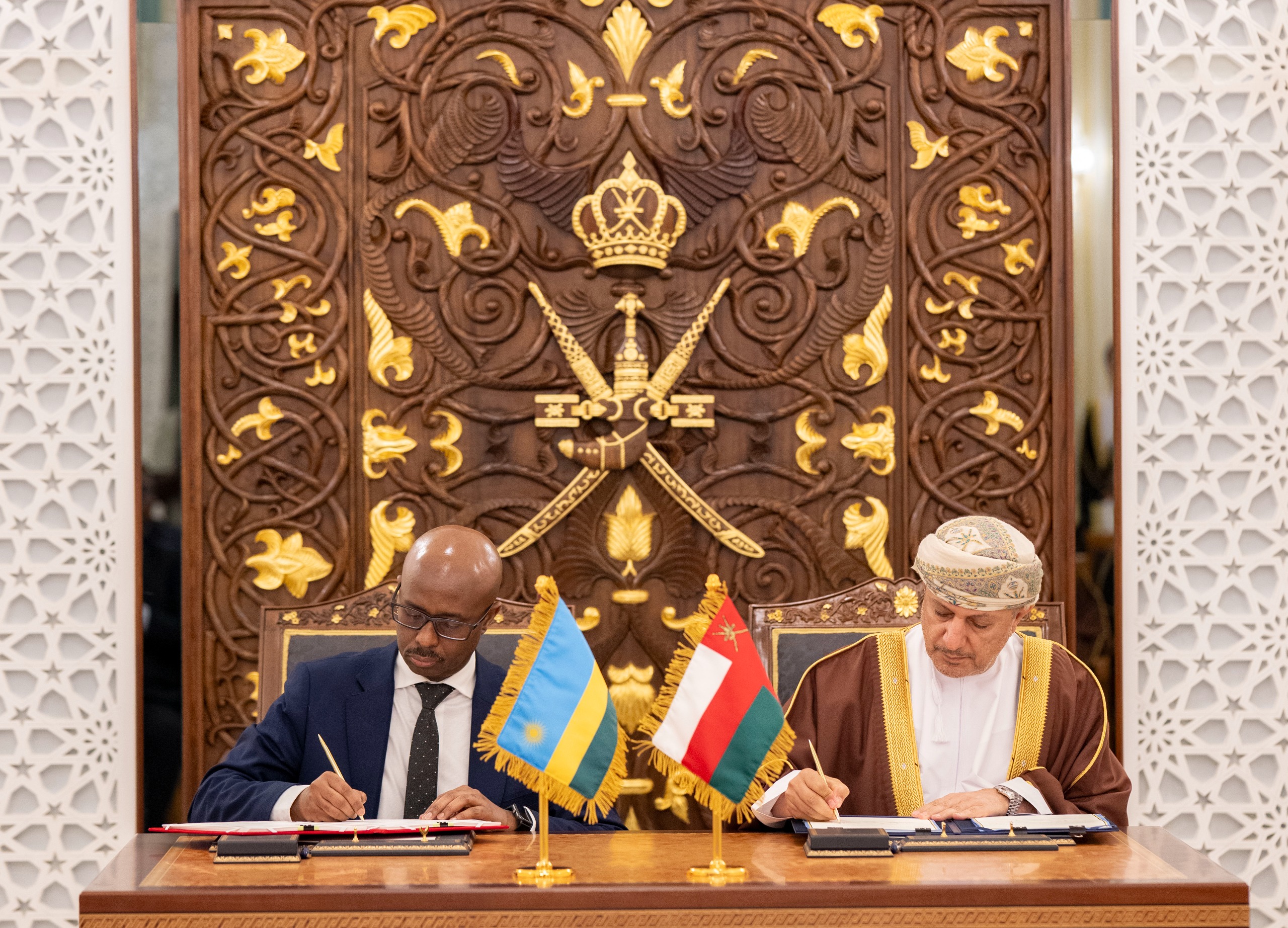
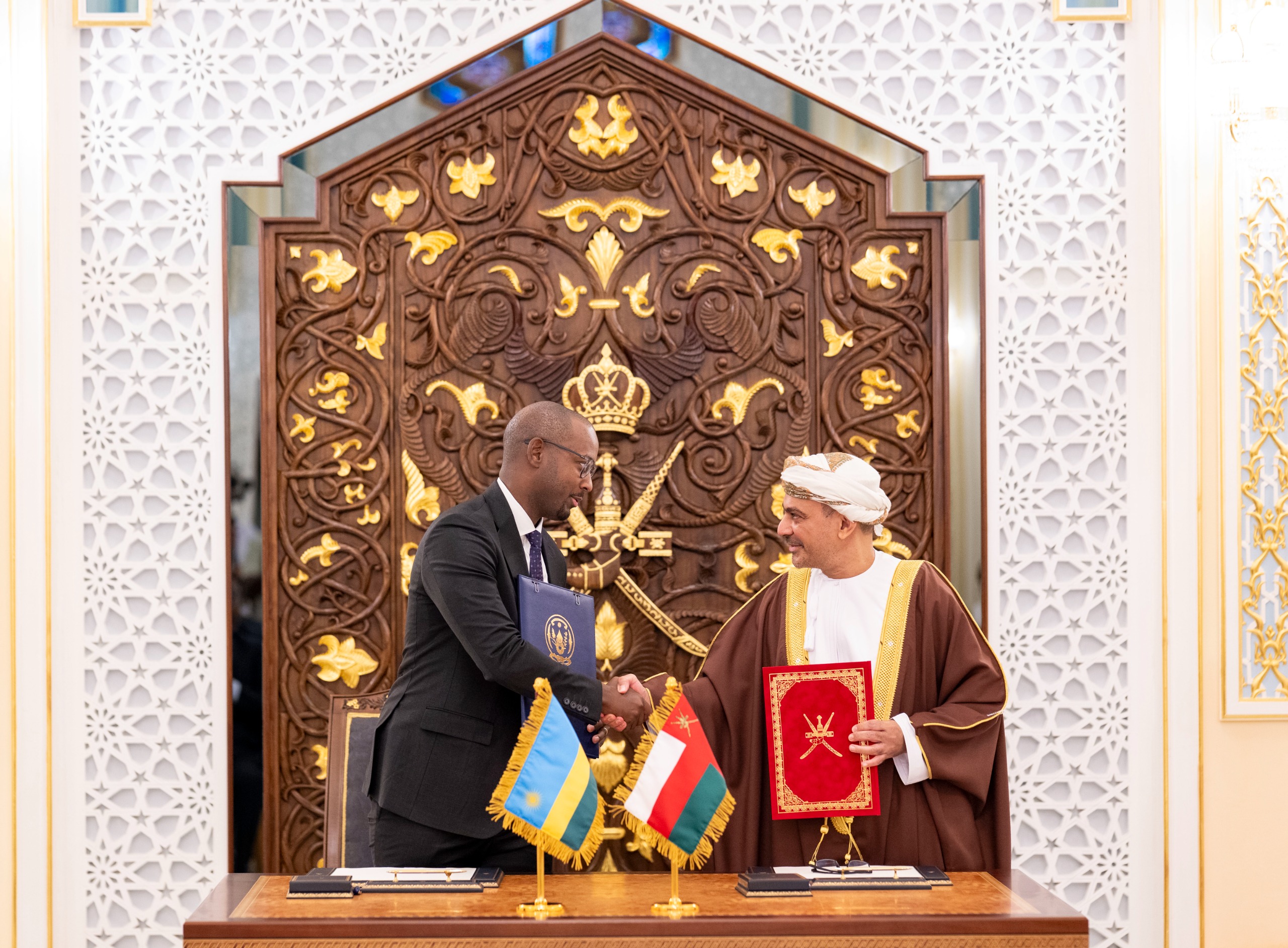
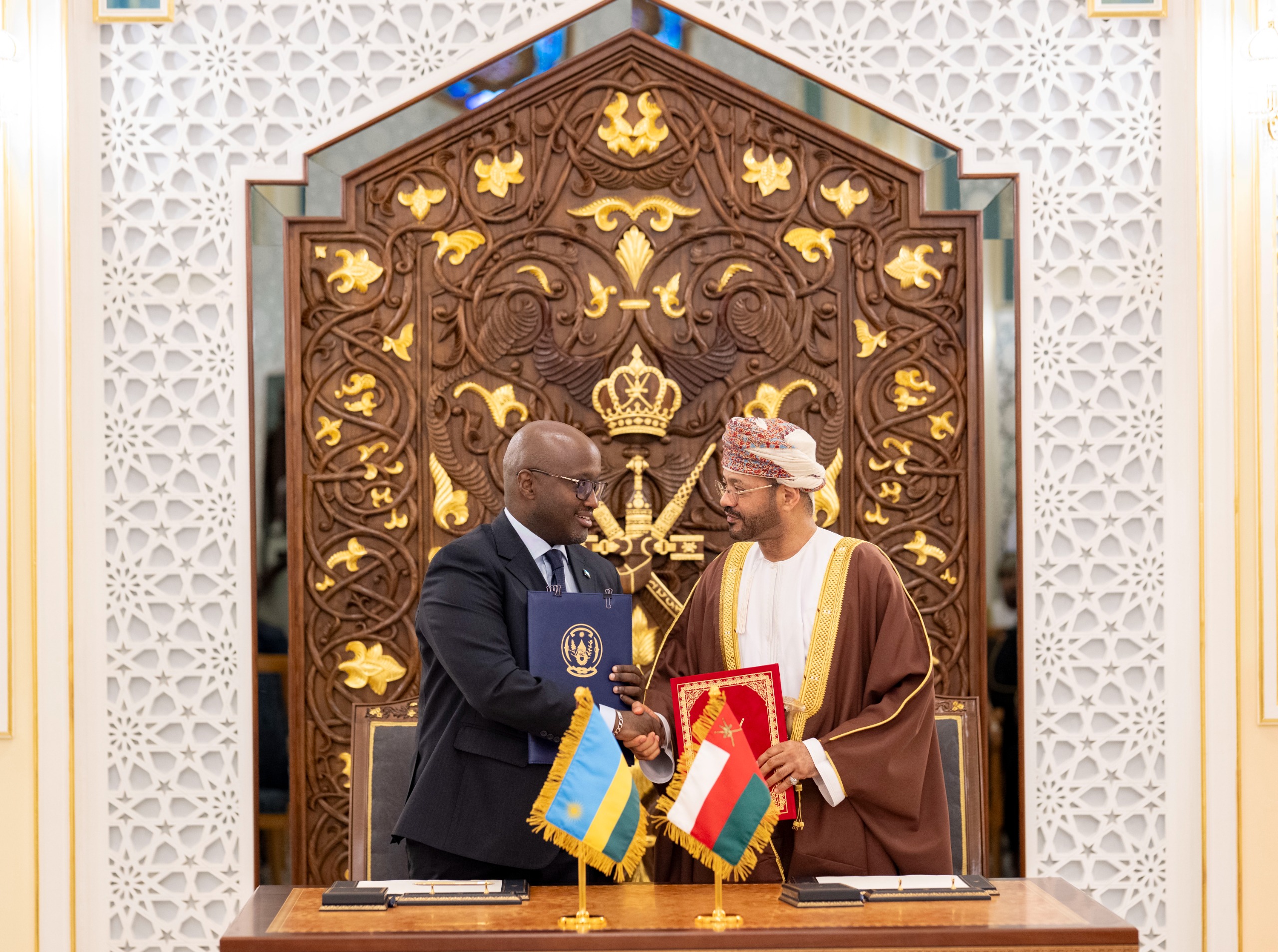
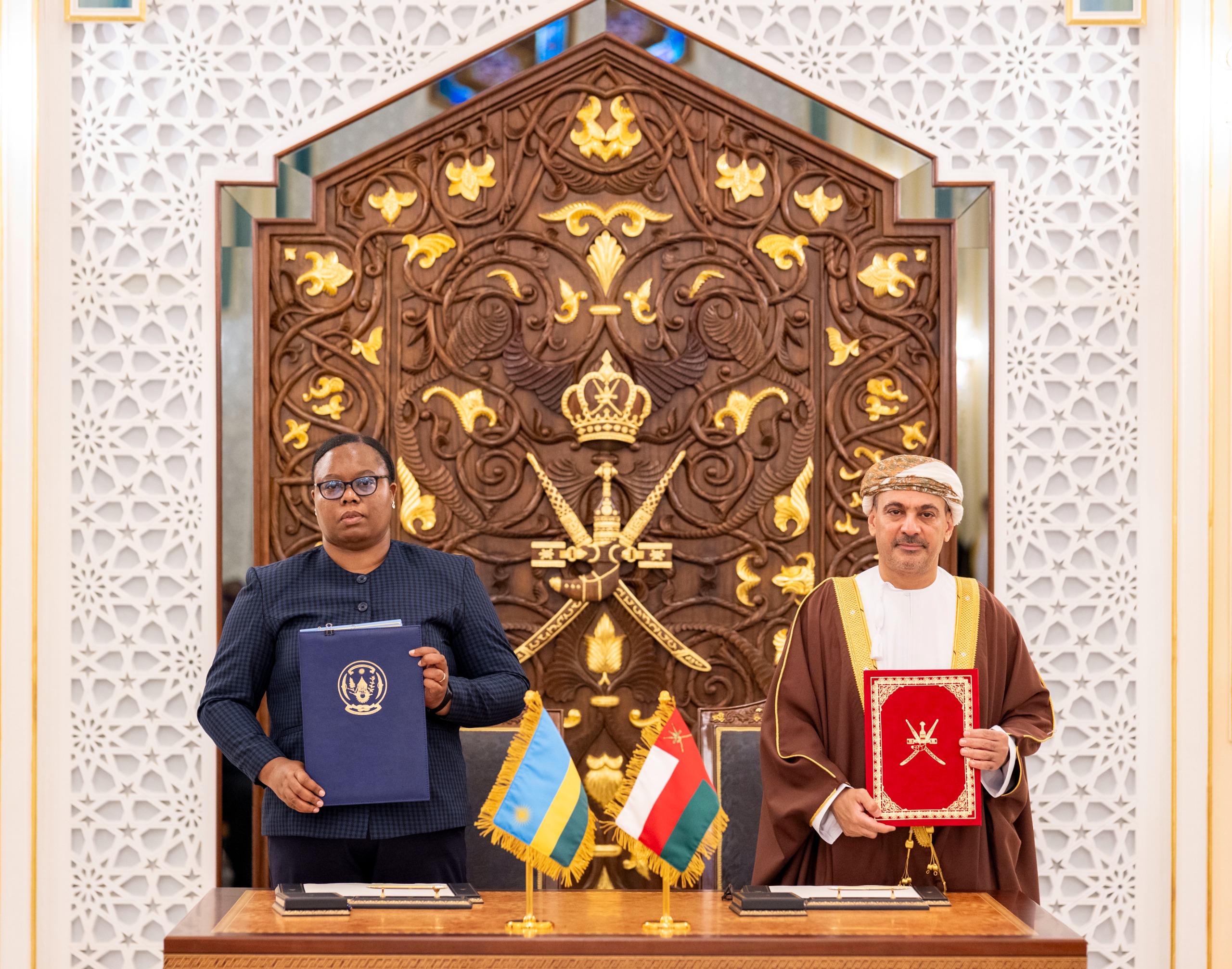
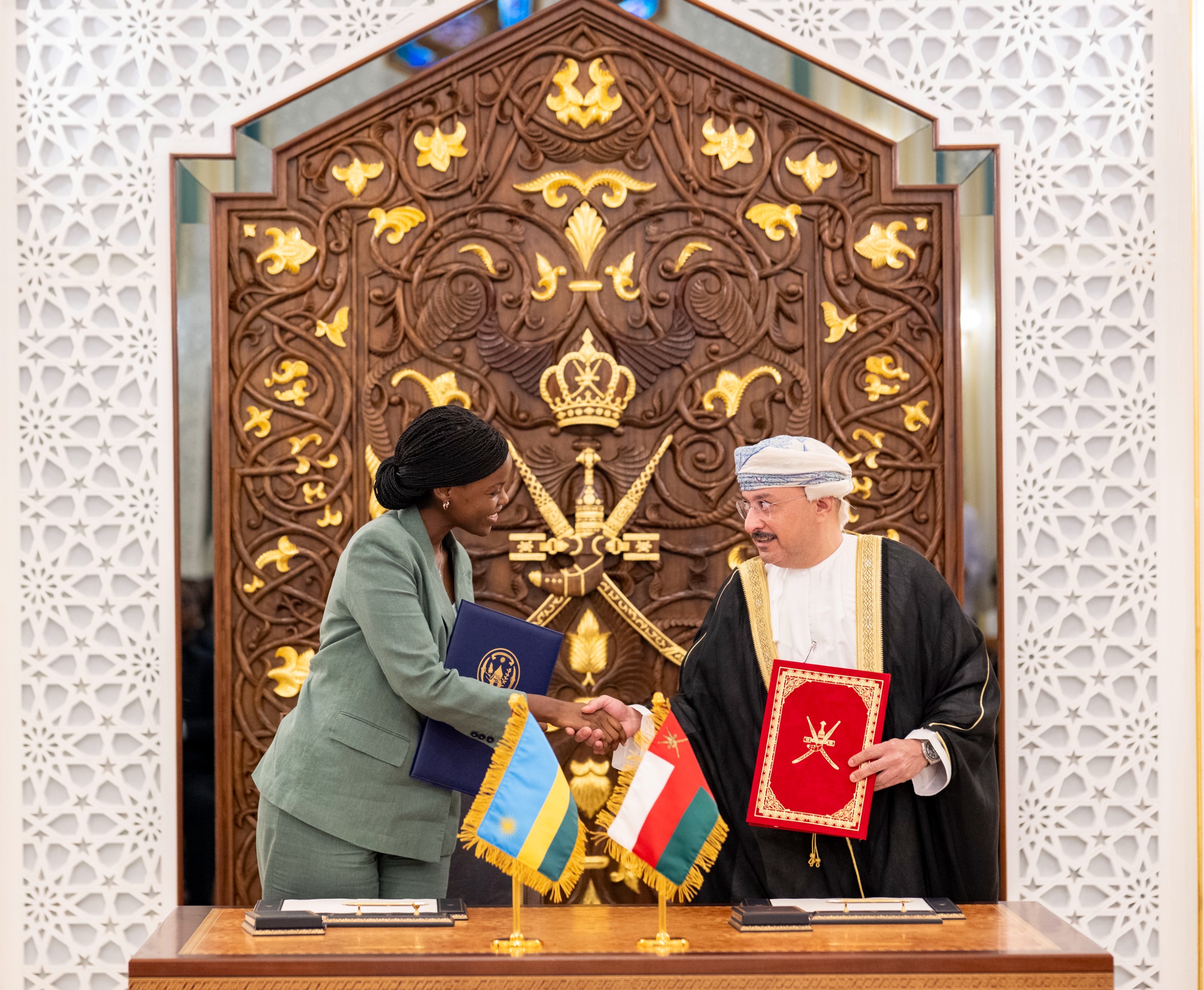
The deals were signed at Al Hosn Palace in Salalah during President Paul Kagame’s two-day official visit to Oman, the first visit by a Rwandan head of state to the Gulf country.
The agreements cover visa exemption for holders of diplomatic, special and service passports, as well as the avoidance of double taxation between the two countries.
The six MoUs provide a framework for cooperation in political consultations, labour, trade and investment, logistics, agriculture, and strategic partnership and investment activation.
The deals were signed at Al Hosn Palace in Salalah during President Paul Kagame’s two-day official visit to Oman.
The signing of the eight deals comes a day after Kagame held bilateral talks with Oman’s Sultan Haitham bin Tariq as the two countries explored ways to strengthen cooperation in sectors of mutual interest.
According to the Office of the President, the two leaders highlighted the longstanding ties between Rwanda and Oman and opportunities to build on them through closer collaboration.
“Both leaders highlighted the historical ties between Rwanda and Oman, and the opportunity this visit offers to build on that strong foundation, including through closer collaboration in multiple sectors including energy, logistics, and food security,” the Office of the President said.
Kagame arrived in Salalah on Monday and was received by Sultan Haitham at Al Hosn Palace, where he was accorded an official welcoming ceremony before the two leaders held talks, later joined by their respective delegations.
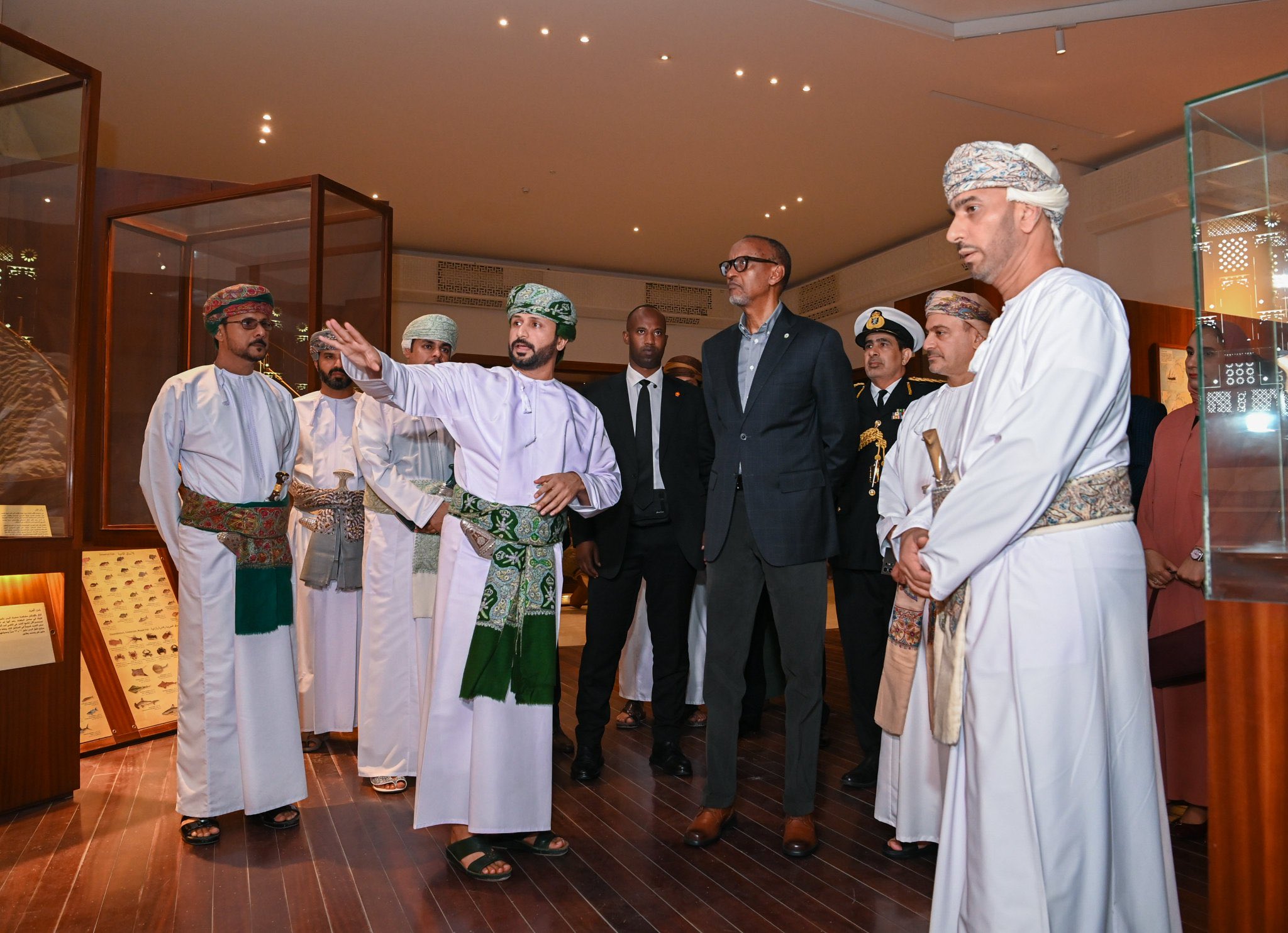
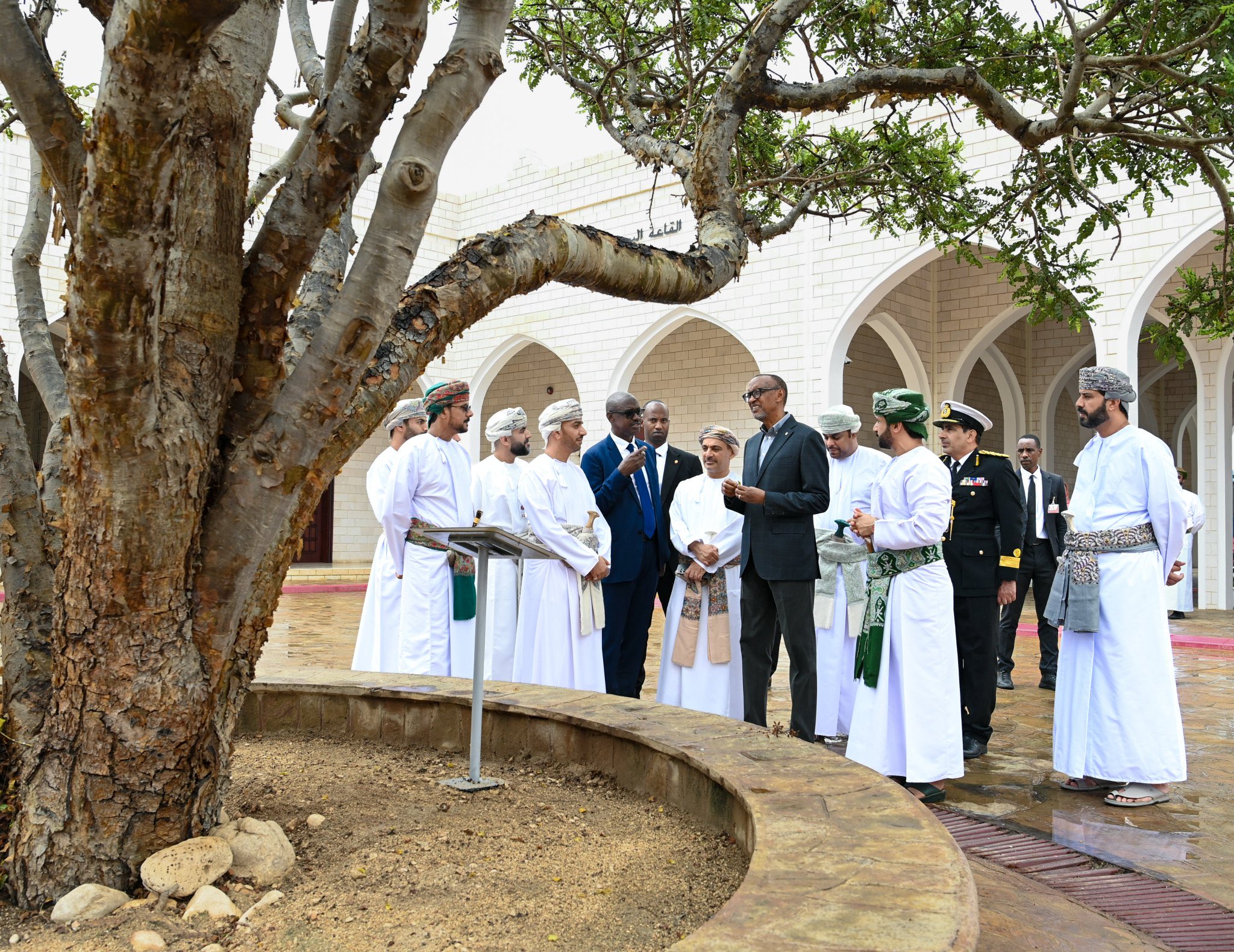
During the second day of his visit, President Kagame toured the Museum of the Frankincense Land, located within the Al Baleed Archaeological Park, a UNESCO World Heritage Site.
President Kagame tours the Museum of the Frankincense Land, located within the Al Baleed Archaeological Park.
The museum documents the history and heritage of the Dhofar region, including the role of the frankincense trade in shaping its social and economic development, as well as Oman’s long history of seafaring and maritime trade.
Rwanda’s relations with Oman have gained momentum in recent years, with the two countries expanding cooperation in areas such as trade, energy, transport and investment.
A key development is an arrangement under which Rwanda will receive direct shipments of refined petroleum products from Oman through Tanzania’s Port of Tanga.
Prime Minister Justin Nsengiyumva has said Rwanda expects to receive one shipment each month, with the imports aimed at strengthening fuel supply security and helping stabilise prices.
The two countries have also strengthened air connectivity. Oman’s SalamAir launched direct flights between Muscat and Kigali on July 21, 2026, creating a direct link between the two countries for travellers, businesses and tourists.
The route is expected to support trade, tourism and investment while giving passengers from Rwanda access to SalamAir’s wider network across the Gulf, Asia and Europe.
The agreements cover visa exemption for holders of diplomatic, special and service passports, as well as the avoidance of double taxation between the two countries.The six MoUs provide a framework for cooperation in political consultations, labour, trade and investment, logistics, agriculture, and strategic partnership and investment activation.
The Burundi government has begun preparations to facilitate the return of its citizens, including sending buses to Kenya and issuing free laissez-passer documents through its embassy in Nairobi.
“Burundi is preparing to send buses to Kenya, and the Embassy of Burundi in Nairobi will issue free laissez-passer documents to facilitate the return to Burundi for those who wish to leave Kenya,” the Ministry of Foreign Affairs, Regional Integration and Cooperation for Development said.
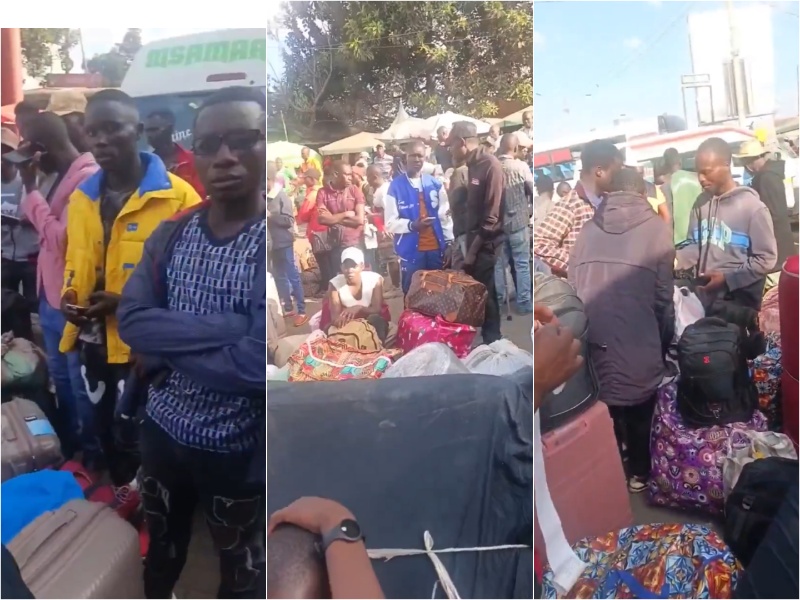
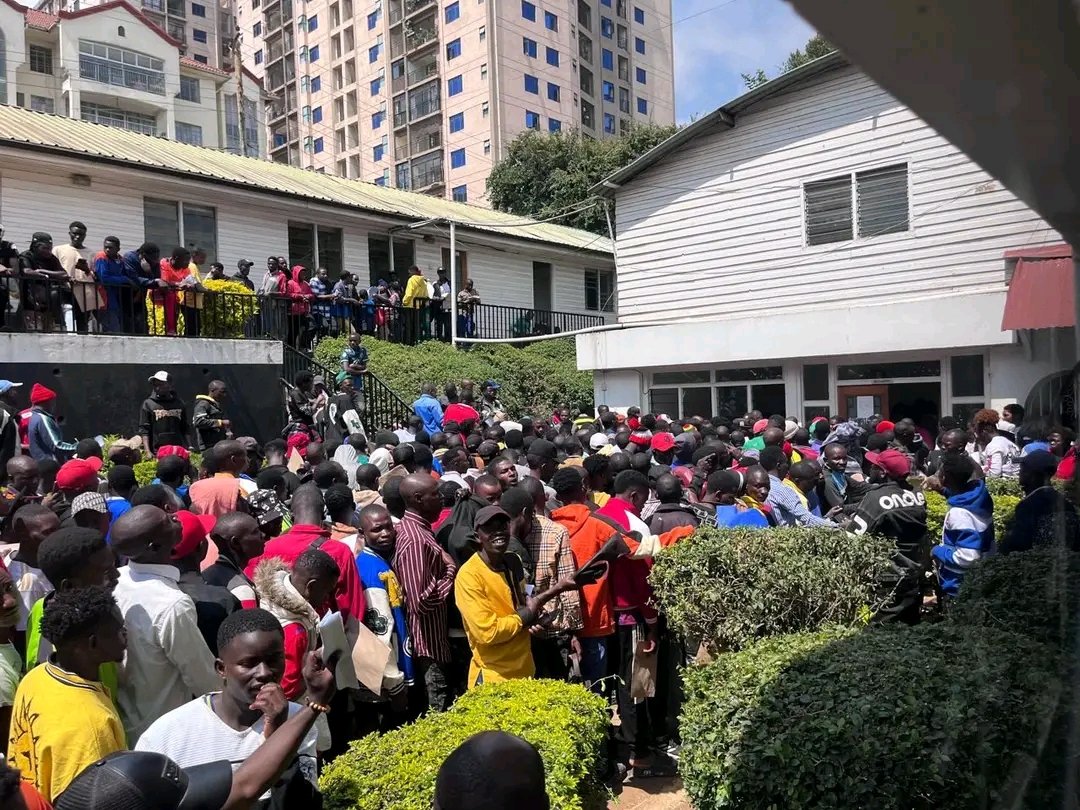
Footage obtained by Kenyan media on Monday, September 7, showed large groups of Burundian nationals with luggage at Nairobi’s Machakos Country Bus Station as they sought transport home.
Burundians flock a cybercafé in Kilimani, Nairobi, as they rush to process travel documents amid threats to leave Kenya pic.twitter.com/dMn8pwKhyy
Similar scenes were reported at the Kenya-Uganda border in Malaba, where travellers were scrambling for bus tickets, while others gathered at the Burundi Embassy in Nairobi to obtain travel documents.
The rush follows remarks by Ruto on September 2, when he directed authorities to dismantle small-scale retail and hawking operations run by foreign nationals, effective September 7.
Addressing small-scale traders at State House in Nairobi, Ruto said Kenya remained open to foreign investment but argued that foreign investors should establish businesses that create jobs and expand production rather than compete with Kenyans in small-scale trading.
“It cannot be that a person comes from China or elsewhere to be a hawker or open a small shop,” Ruto said.
Trade Cabinet Secretary Lee Kinyanjui later said most foreign small-scale traders had violated visa or regulatory requirements. Those meeting the relevant immigration requirements, he said, would need an operating licence to resume their businesses.
The directive has particularly unsettled Burundian traders, with their government raising concerns over reports of violence and the loss of property among its citizens, while also fuelling fears of xenophobic attacks similar to those witnessed in South Africa.
The Burundi Foreign Affairs Ministry said several Burundian traders engaged in small-scale businesses had faced dispossession and what it described as unjustified violence.
It also accused Ruto’s remarks of worsening tensions.
“The Kenyan government will be held responsible for anything that happens to Burundian citizens, and Burundi reserves the right to take the necessary measures under the framework of reciprocity,” the ministry said.
Burundi, however, said it respected Kenya’s right to determine its trade policies, while urging authorities to protect the dignity and safety of its nationals.
The developments have also sparked criticism over the implications of Kenya’s crackdown for the East African Community, which promotes the free movement of people and closer economic integration among member states.
Critics argue that targeting foreign nationals engaged in small-scale trade could undermine the spirit of regional integration, particularly as citizens of EAC member states routinely move across borders for work, trade and business.
The issue has also revived concerns about tensions between local traders and migrants from neighbouring countries, with Burundian nationals among those who have faced accusations of competing with Kenyans for jobs and business opportunities.
The EAC comprises eight member states, including Kenya, Burundi, Rwanda, Uganda, Tanzania, South Sudan, the Democratic Republic of Congo and Somalia.
Kenya hosts hundreds of thousands of refugees and migrants, many of whom live and work outside refugee camps. Government figures showed that the country had about 857,000 registered refugees and asylum seekers by the end of June, with nearly 14 percent living in urban areas.
Kenyan law allows refugees to work and operate businesses provided they obtain the required documentation.
Ruto’s directive has therefore raised questions over how the crackdown will be implemented and how it will affect foreign nationals who are legally authorised to work or operate businesses in Kenya.
For Burundi, the immediate priority has shifted to facilitating the safe return of citizens who no longer feel secure remaining in Kenya.
Sections of the Burundian community have also appealed to Ruto to reconsider or relax the directive, arguing that the announcement left many traders unprepared for its implementation.
Hundreds of Burundians scramble for emergency travel documents at their embassy in Nairobi as President William Ruto’s crackdown on foreign traders sparks panic and a diplomatic row.
In an interview with state-run IRIB TV, which was broadcast Sunday night, Rezaei said that the zone would extend from “the line where the U.S. naval blockade begins to the Strait of Hormuz region and inside the Persian Gulf on the other side (of the strait).”
Ships that enter the zone without coordination with Iran, he added, would face sanctions affecting their insurance coverage and future passage through the waterway.
Rezaei framed the move as part of a broader strategic shift in Iran’s approach to war and diplomacy, aiming at increasing pressure on Washington.
The security official stressed that the Strait of Hormuz is completely closed, dismissing the U.S. claim that ships and oil tankers are crossing the waterway as a “lie.”
While acknowledging that some vessels attempt to cross the strait via a route near Oman, often switching off their navigation systems to evade detection, Rezaei said most of those ships “receive blows.”
Yet he added that Iran does not intend to sink them for now due to environmental concerns.
Rezaei further revealed that Iran had test-fired for the first time a domestically developed anti-destroyer missile above a U.S. aircraft carrier 48 hours ago, describing it as a warning that the U.S. naval blockade is vulnerable.
“The special missile created a hell for the Americans, and they fled,” he said.
Rezaei said the Strait of Hormuz would remain closed unless the United States takes practical steps to fulfill its obligations under a peace memorandum of understanding signed between Tehran and Washington in June.
In the coming days, he added, a new international corridor designated by Iran and Oman for passage through the strait would be announced, emphasizing that the corridor would be under Iran’s management.
Following U.S.-Israeli strikes on Iran on February 28, Tehran restricted passage through the Strait of Hormuz, while U.S. forces imposed a naval blockade targeting vessels traveling to or from Iranian ports and coastal areas.
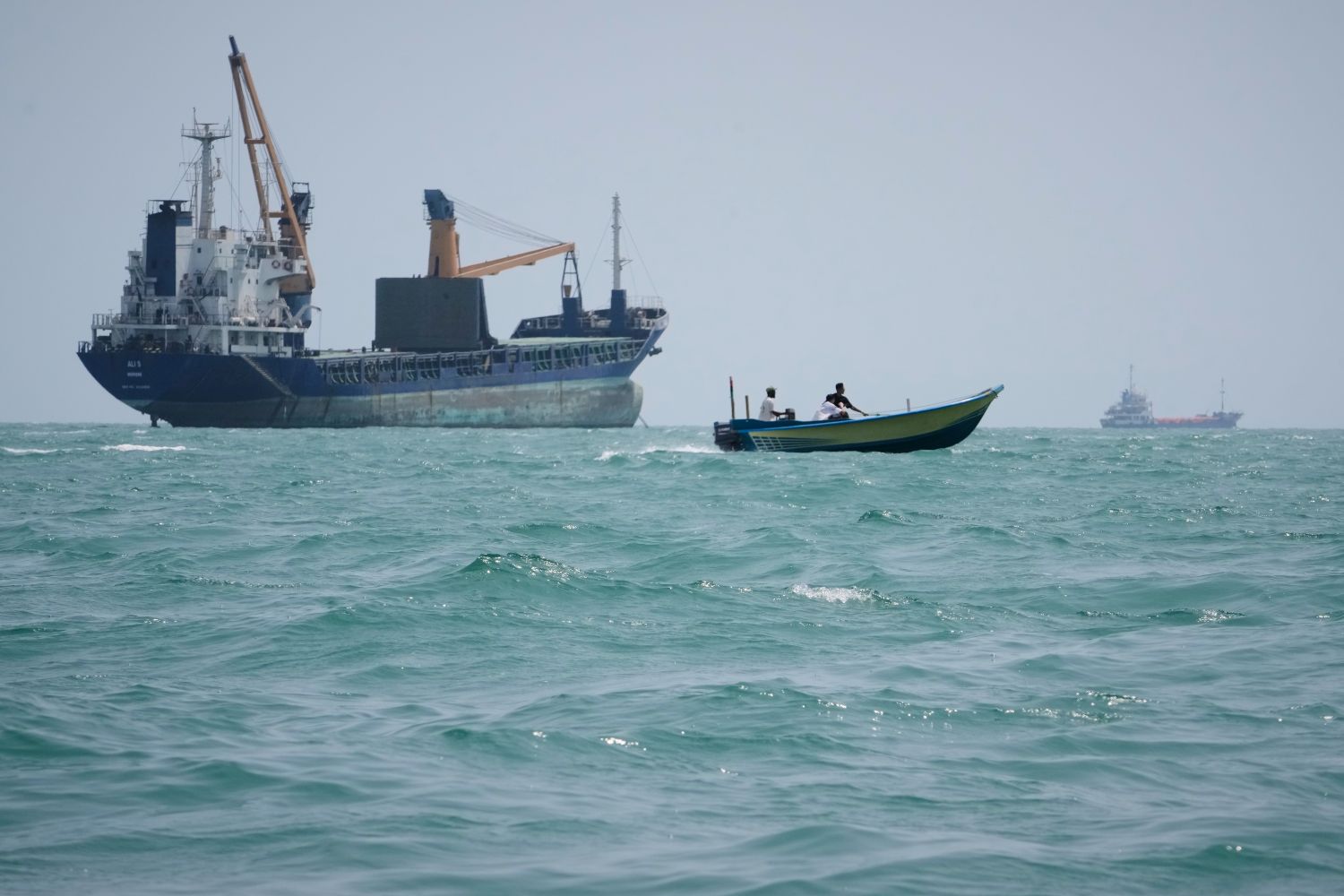
A motorboat passes a general cargo ship anchored in the Strait of Hormuz off Bandar Abbas, Iran, September 6, 2026.
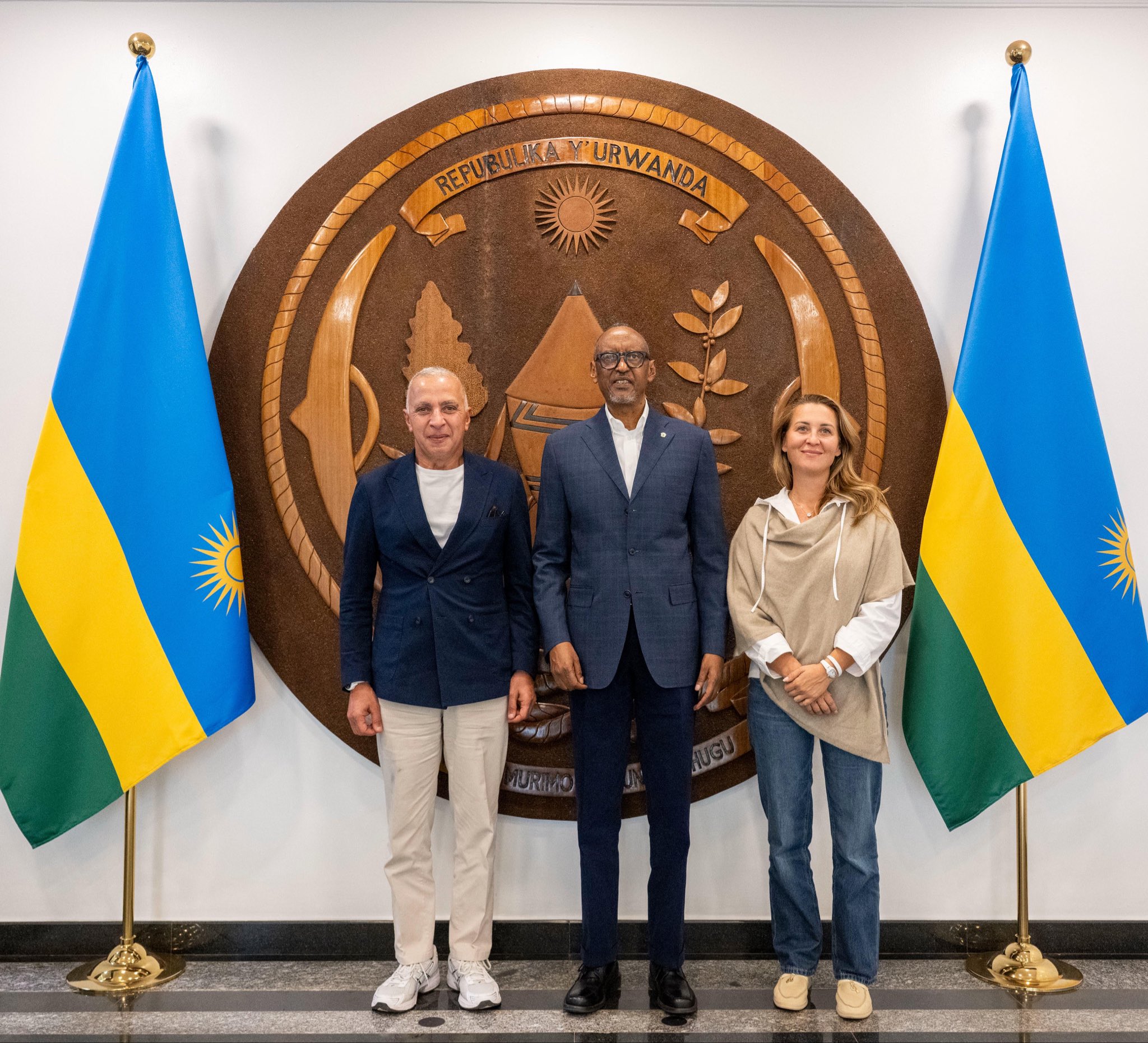
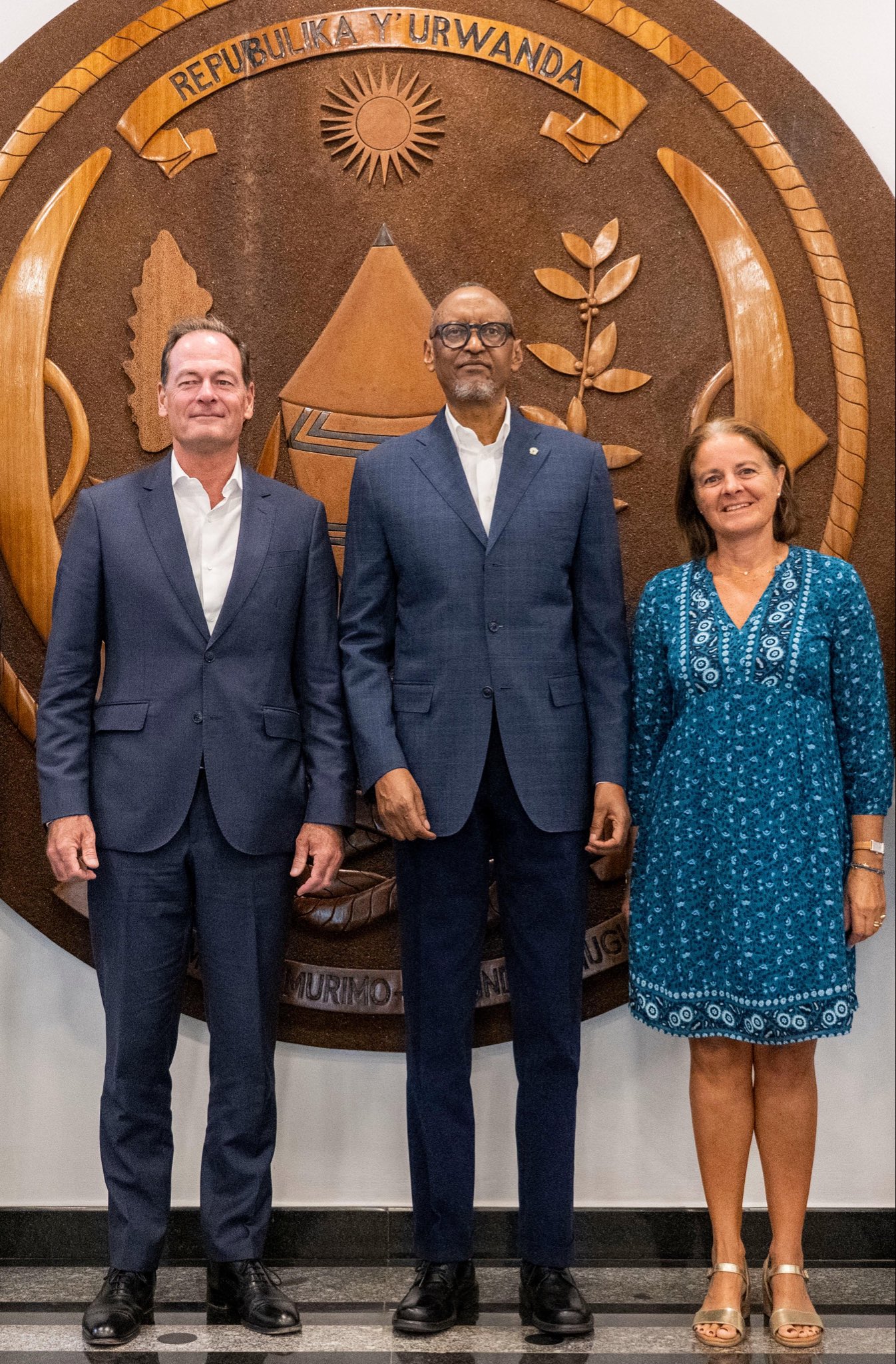
The visitors included Ahmed Sadek Elsewedy, Chairman of Elsewedy Electric, and his wife, Anita Dravec; Miguel Ángel Gil Marín, CEO and majority shareholder of Atlético Madrid; Francesco Calvo, President of Business Operations at Aston Villa; and Olivier Granet, Managing Partner and co-CEO of Kasada Capital, and his wife, Quitterie Granet.
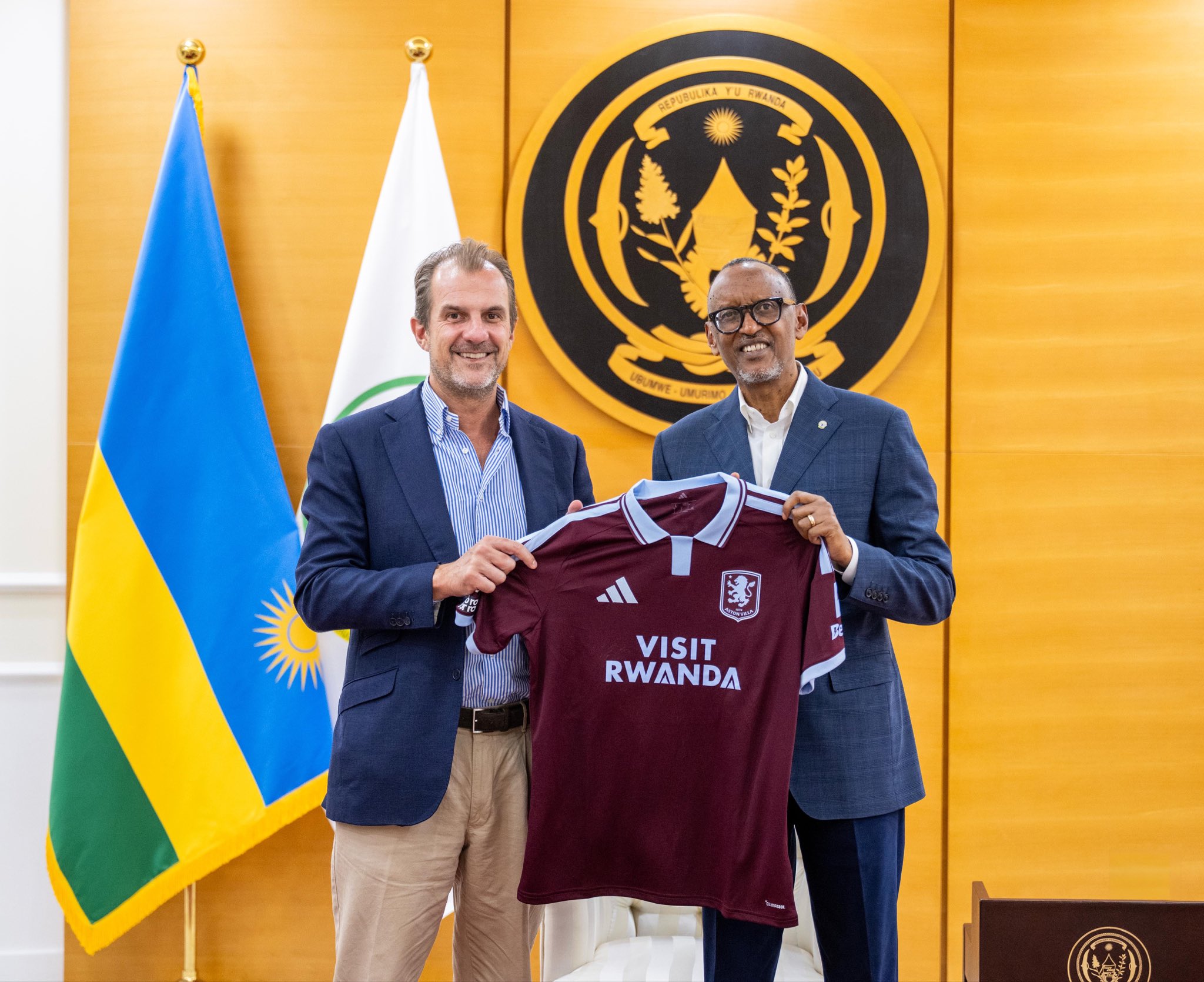
Calvo’s visit comes less than two months after Visit Rwanda signed a landmark partnership with Aston Villa, making the Rwandan tourism brand the English club’s Official Front-of-Shirt Partner, Official Tourism Partner and Official Coffee Provider.
Under the agreement, announced on July 14, 2026, Visit Rwanda branding appears on the shirts of Aston Villa’s men’s, women’s and youth teams, while the partnership also covers tourism promotion, football development, coach education and other exchanges between Rwanda and the club.
Calvo and the other visitors were among the distinguished personalities who named baby mountain gorillas during this year’s Kwita Izina ceremony, held in Kinigi, Musanze District, on Friday, September 4.
The meeting followed a similar engagement on Friday, when President Kagame received several other personalities who participated in the naming ceremony.
Those who met the President included Dominic Barton, Chairman of Rio Tinto and LeapFrog Investments; Shaikha Al Nuwais, Secretary-General of UN Tourism; Paul Danforth, President of CAA Sports; and former Manchester United and France captain Patrice Evra.
The football and business leaders received by President Kagame over the two days were among 22 distinguished namers drawn from the worlds of conservation, tourism, business, sport, entertainment, philanthropy and public service.
Other personalities who took part in the ceremony included Olympic high-jump champion Mutaz Essa Barshim, UCI President David Lappartient, Rwandan gospel singer Israel Mbonyi, filmmaker Marie-Clémentine Dusabejambo and former French international Mamadou Sakho.
The 21st Kwita Izina ceremony brought together communities, conservationists, government officials, international partners and visitors to celebrate Rwanda’s mountain gorillas and the country’s conservation achievements.
Held under the theme “Conservation is Life: Sustaining the Future,” this year’s ceremony saw 22 baby mountain gorillas given names, bringing the number of gorillas named through Kwita Izina since 2005 to 460.
Kwita Izina, which means “to give a name” in Kinyarwanda, is inspired by Rwanda’s centuries-old tradition of naming newborn children in the presence of family and community.
The ceremony became an official annual event in 2005 and has since grown into an international platform for celebrating mountain gorilla conservation and recognising the role of communities and partners in protecting their habitat.
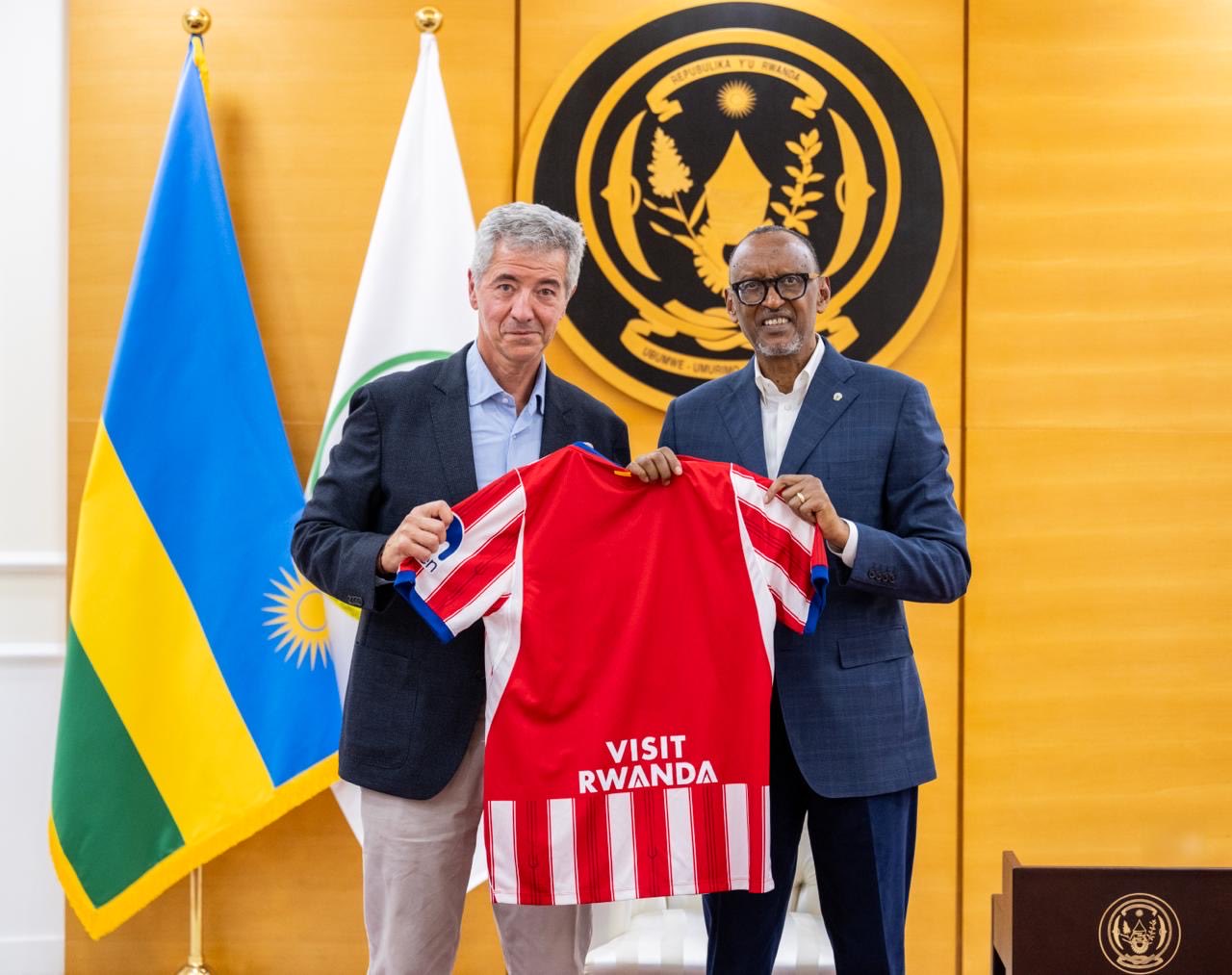
The meetings were held at Urugwiro Village, a day after they took part in the 21st Kwita Izina Gorilla Naming Ceremony.President Kagame poses with Miguel Ángel Gil Marín, CEO and majority shareholder of Atlético Madrid, holding a jersey bearing the Visit Rwanda emblem.President Kagame poses with Francesco Calvo, President of Business Operations at Aston Villa, holding a jersey bearing the Visit Rwanda branding.The visitors were among the distinguished personalities who named baby mountain gorillas during this year’s Kwita Izina ceremony, held in Kinigi, Musanze District, on Friday, September 4.
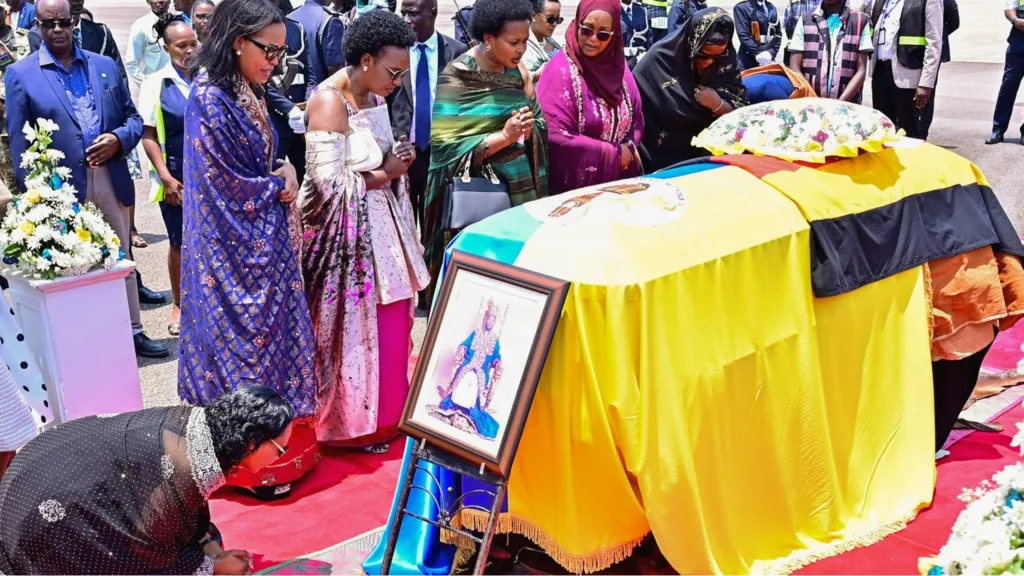
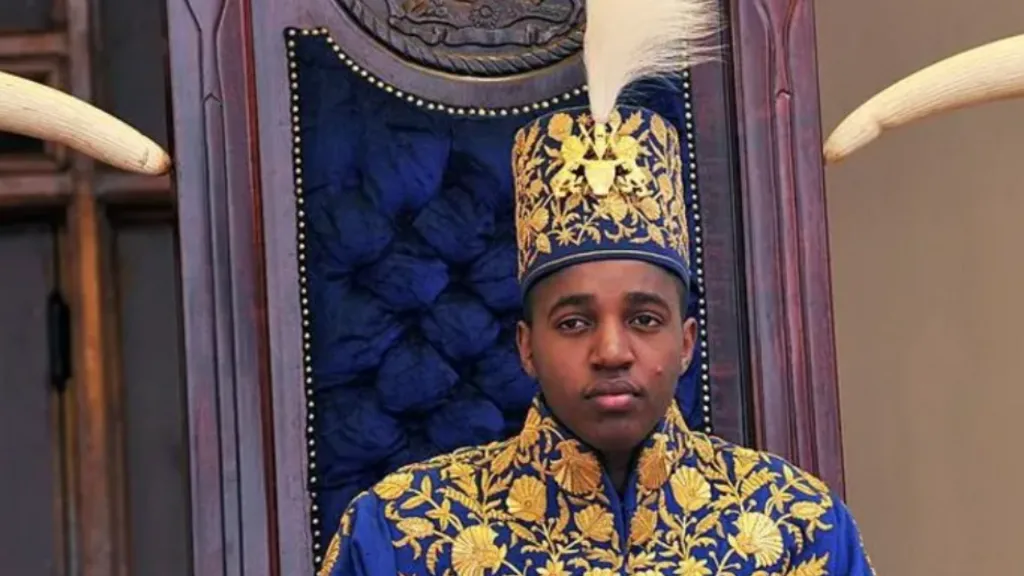
Oyo Nyimba, who died on August 27 aged 34, became king of Tooro in 1995 at just three years old, making him the world’s youngest reigning monarch at the time.
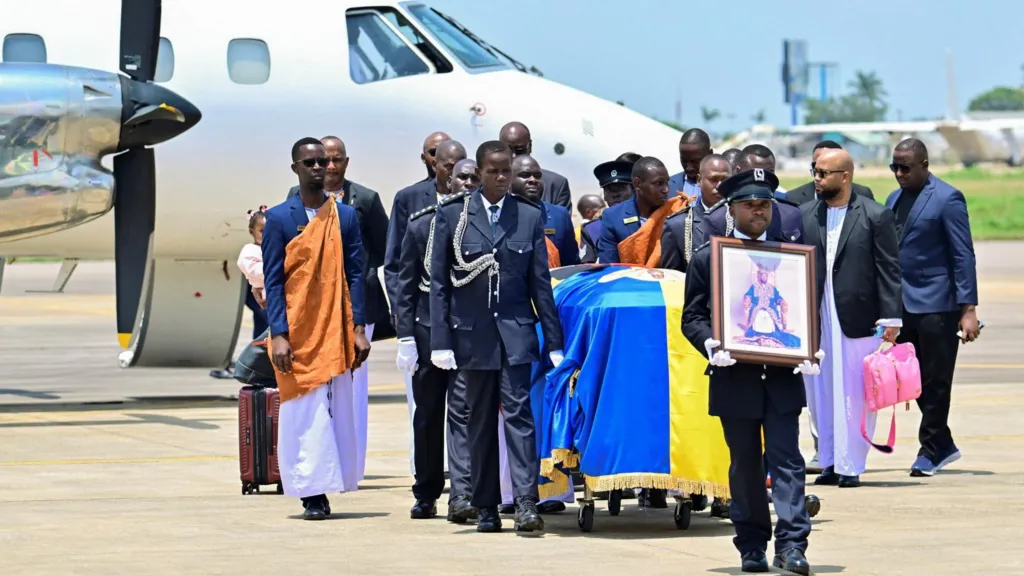
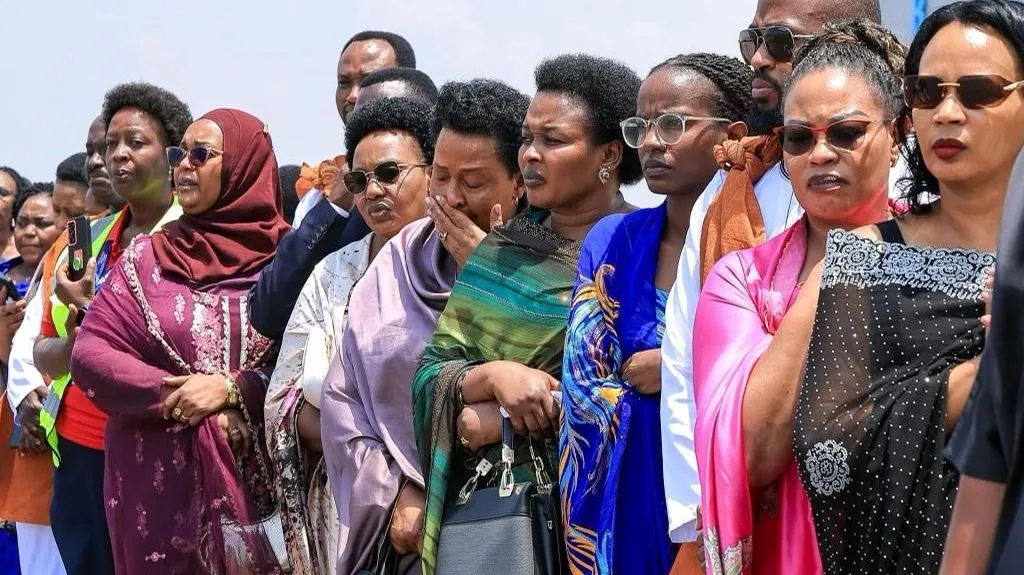
His body arrived at Entebbe International Airport aboard a chartered flight, where President Yoweri Museveni joined a group of dignitaries, members of the royal family and mourners to receive him.
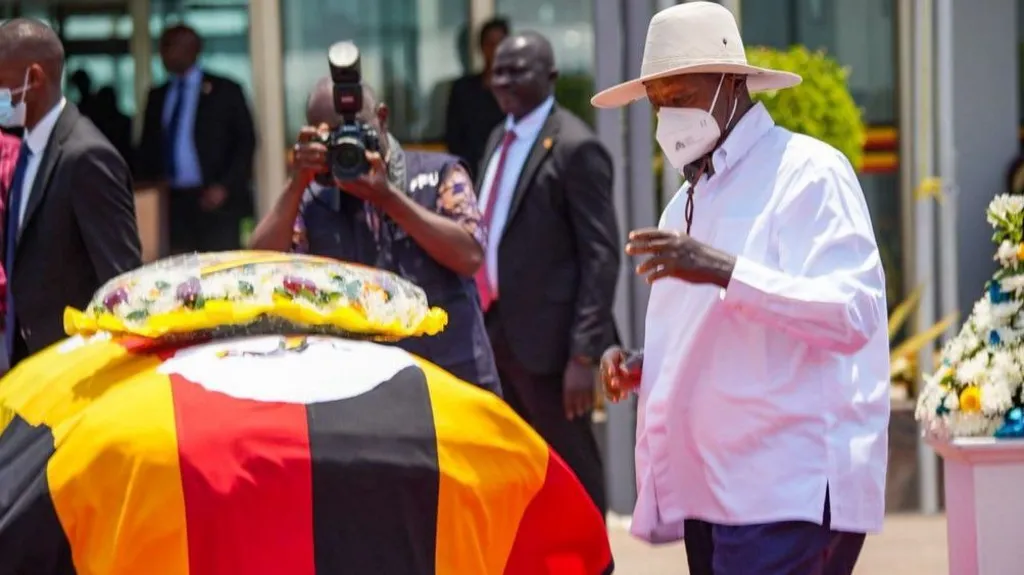
Museveni walked to the casket, which was draped in Uganda’s national flag and the flag of Tooro Kingdom, laid a wreath and bowed before it.
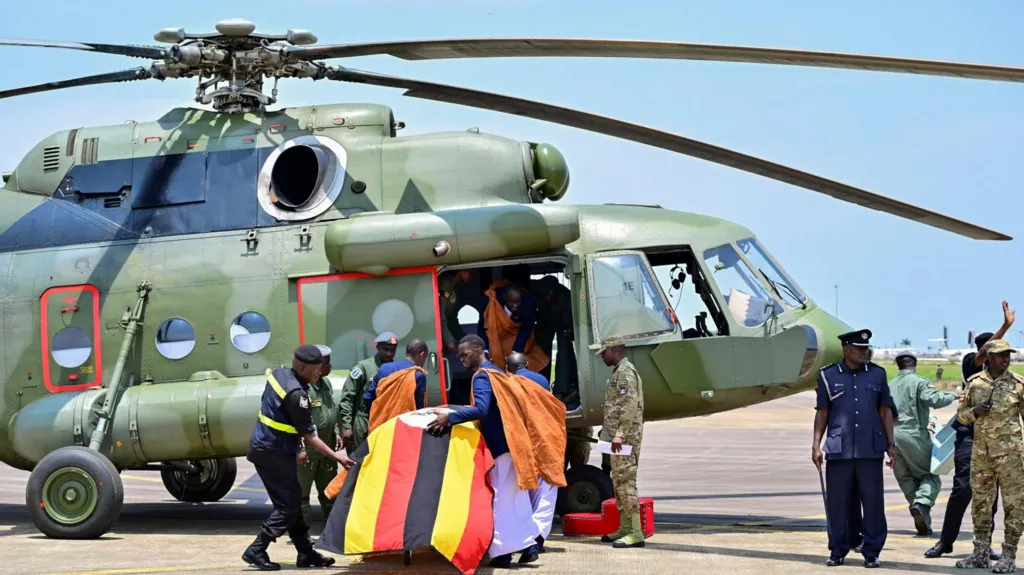
The casket was later transferred to a military helicopter for transportation to Tooro Kingdom in western Uganda, where mourning ceremonies will be held ahead of his burial on September 12.
The king’s death has drawn widespread mourning in Tooro, where he remained a prominent cultural figure despite Uganda’s status as a constitutional republic.
“We don’t really believe that his majesty is no longer with us, (it is) as if we are still dreaming and I wish it could really be a dream,” said lawmaker Jennifer Mujungu, whose constituency is within the kingdom.
Davis Mugenyi, a member of the royal family who attended the reception at the airport, described the death as particularly painful because of the king’s relatively young age.
“It is a painful moment for us… someone who went laughing, someone who had a whole life ahead of him,” he said.
Oyo Nyimba was among Uganda’s traditional monarchs whose institutions survived the end of colonial rule and continue to hold cultural and social significance. His accession at the age of three attracted international attention, with images from his coronation showing the young king seated on the throne beneath an oversized crown and royal robes.
Beyond his traditional role, Oyo Nyimba also served as a United Nations ambassador advocating for the fight against HIV and AIDS. The UN joined those paying tribute to him following his death.
The king was unmarried, but Tooro Kingdom Prime Minister Calvin Armstrong Rwomiire Akiiki said last week that he had left an heir, assuring the continuity of the Crown.
King Oyo’s body arrived at Entebbe International Airport aboard a chartered flight. President Yoweri Museveni joined a group of dignitaries, members of the royal family and mourners to receive him.Family members and other officials receive the coffin at Entebbe International Airport.There was a sombre mood as the police escorted the coffin from the plane.Oyo Nyimba, who died on August 27 aged 34, became king of Tooro in 1995 at just three years old, making him the world’s youngest reigning monarch at the time.
Evra shared his reflections on social media, describing his visit to the memorial as “deep, powerful and emotional” and saying he believes understanding a country’s history is important to understanding its people.
“I want to say sorry for what happened to my Rwandan brothers and sisters,” Evra said on Wednesday. “No words can ever change the past, but seeing what Rwanda has built and how the country continues to move forward is truly inspiring.”
The former left-back also expressed respect for the country’s leadership, recalling that he had met President Paul Kagame in the past.
“I met your President a long time ago, but after seeing and understanding more about Rwanda’s journey, I have an even deeper respect for the way these difficult matters have been handled,” he said.
Evra also visited Kigali Golf Resort & Villas during his stay in the Rwandan capital.
The football legend is among the international guests expected to attend the Kwita Izina gorilla naming ceremony scheduled for September 4, 2026.
He is expected to be joined by other prominent football figures, including former France international Mamadou Sakho, who played for Paris Saint-Germain and Liverpool.
The Kwita Izina ceremony brings together international figures, conservationists, government officials and other guests to celebrate Rwanda’s mountain gorilla conservation efforts.
Evra enjoyed a distinguished career as a left-back, representing several top European clubs, including Manchester United, Marseille and Juventus.
During his time at Manchester United, he won five English Premier League titles and the UEFA Champions League in 2008. He also represented and captained the France national team, making 81 international appearances.
In his message, Evra concluded by calling for Rwanda’s history to be remembered while safeguarding its future.
“Respect Rwanda. The past must never be forgotten, and the future must always be protected,” he said.
My first day in Rwanda 🇷🇼 and I’m not disappointed at all!
Whenever I travel, I feel it’s important to understand the history of the country to truly understand its people. My visit to the Kigali Genocide Memorial was deep, powerful and emotional. ❤️🇷🇼
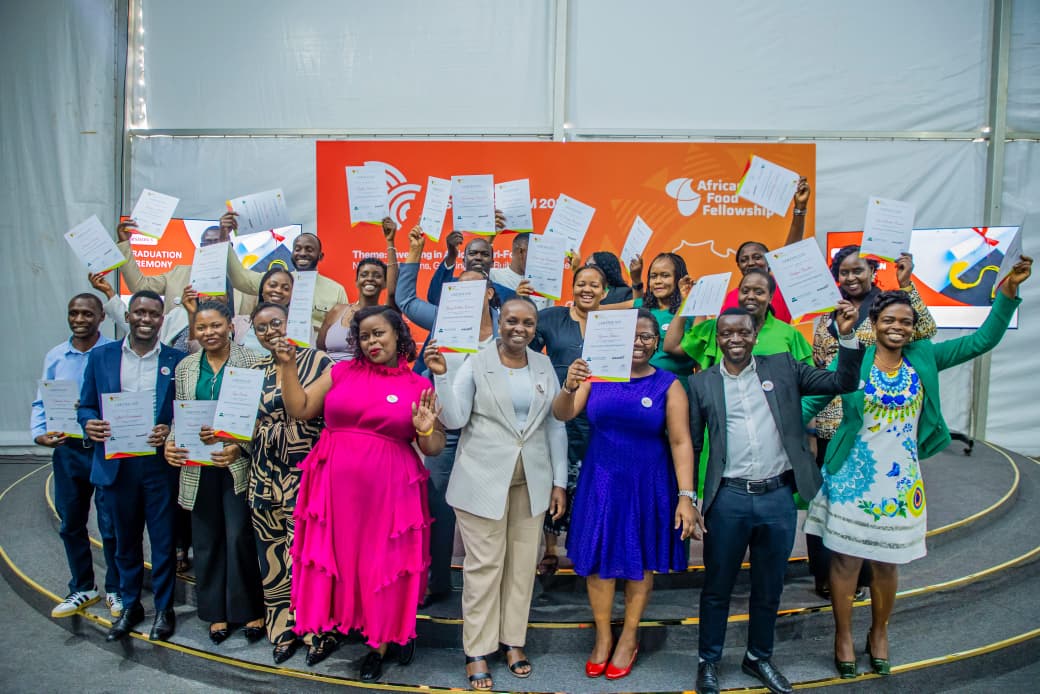
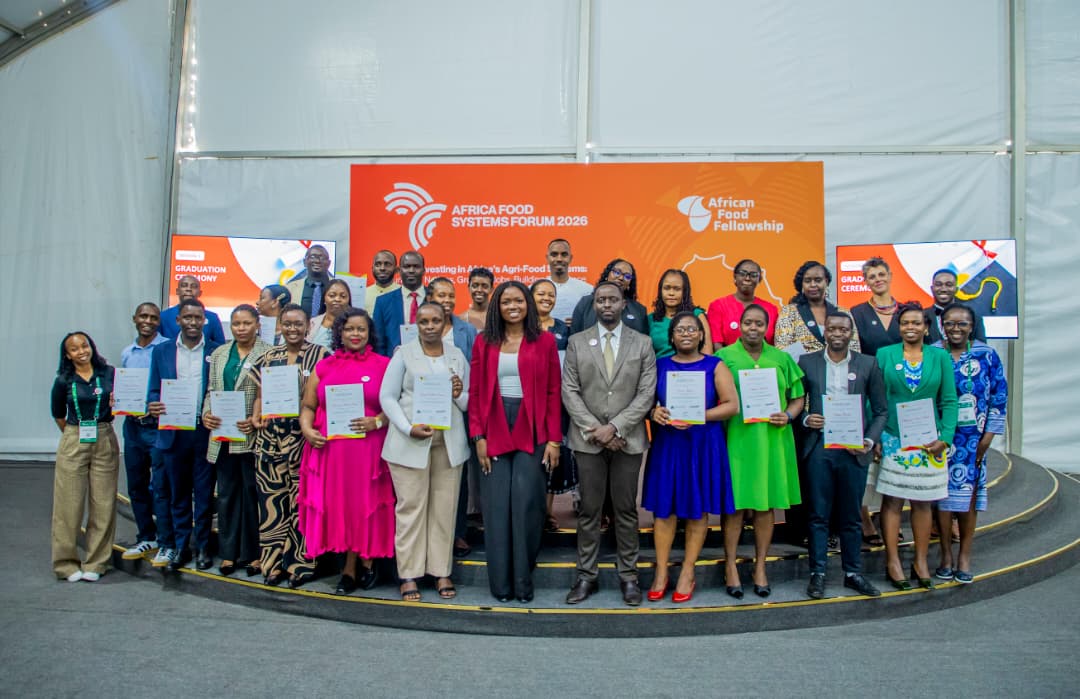
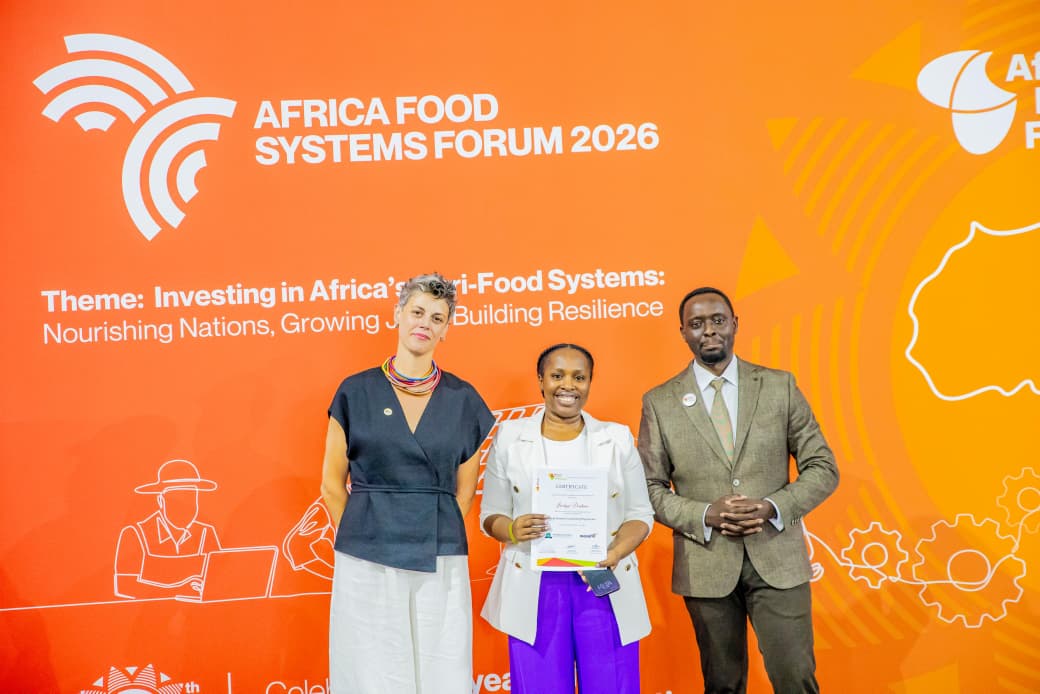
The latest graduates completed a 10-month programme focused on equipping leaders to address complex challenges facing Africa’s food systems, including food waste, food safety, market access, agricultural financing and climate-smart agriculture.
The graduation ceremony was held on Monday in Kigali as part of the launch of the Africa Food Festival, organised on the sidelines of the 2026 Africa Food Systems Forum.
The new graduates join a growing network of nearly 400 fellows from Rwanda, Kenya and Zambia, representing more than 200 organisations working across Africa’s food systems.
The latest graduates completed a 10-month programme focused on equipping leaders to address complex challenges facing Africa’s food systems.
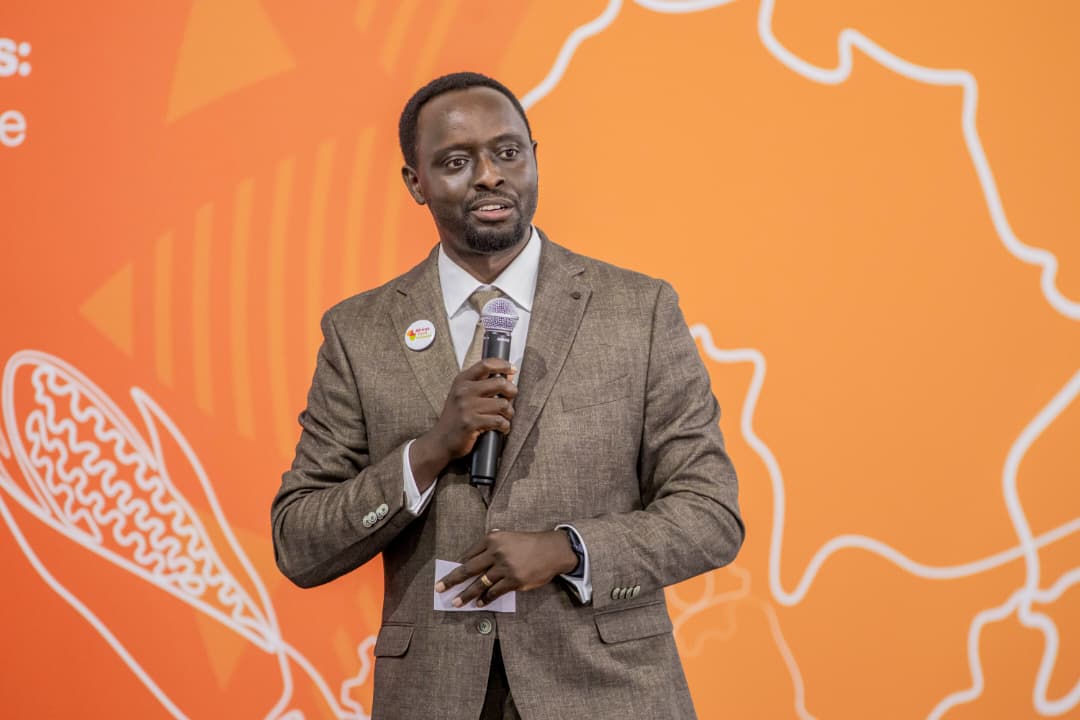
Pascal Murasira, Executive Director of the African Food Fellowship, said the organisation plans to significantly expand the network over the next decade.
“Today we have about 400 fellows who come from 203 organisations in three countries. We are targeting that by 2035 we will be in 15 African countries and will be a network of 2,750 leaders,” he said.
Murasira said the fellowship’s next phase would focus on strengthening leadership and infrastructure while using technology and partnerships to expand its reach.
He highlighted that the programme had evolved from a leadership initiative launched in 2021 into a wider alumni network that is increasingly becoming a critical mass within food systems in the countries where it operates.
An evaluation published in July found that fellows reported improvements in their leadership skills and ability to act, although it also identified a gap in translating those gains into the next stage of impact.
Murasira said the fellowship would therefore place greater emphasis on leverage, including the use of technology to enable a small team and its partners to achieve more, as well as partnerships at national, continental and global levels.
“We are trying to achieve much more as a network,” he said.
Murasira said the fellowship’s next phase would focus on strengthening leadership and infrastructure while using technology and partnerships to expand its reach.
Turning leadership into action
Anysie Ishimwe, Lead of the African Food Fellowship in Rwanda, stressed that the programme was built on the belief that investing in leaders is critical to transforming complex food systems.
She said Africa’s food systems face problems that cannot be addressed by a single institution or programme because they often have multiple causes and require coordinated action among different actors.
Ishimwe pointed to childhood malnutrition as an example, noting that responsibility for the problem cuts across health, education, families, farmers, markets and other actors.
She highlighted that fellows are therefore trained in systems thinking, foresight and scenario planning to help them understand both current challenges and how food systems could evolve in the future.
“Every ecosystem leader eventually encounters a problem larger than themselves,” Ishimwe said, explaining that such challenges often exceed the capacity, budgets or expertise of individual organisations.
The fellowship seeks to bring leaders from different parts of the food system together so they can identify shared challenges and build partnerships rather than attempting to solve complex problems independently.
Ishimwe cited the experience of a fellow who had spent years promoting regenerative and conservation agriculture but struggled to increase adoption.
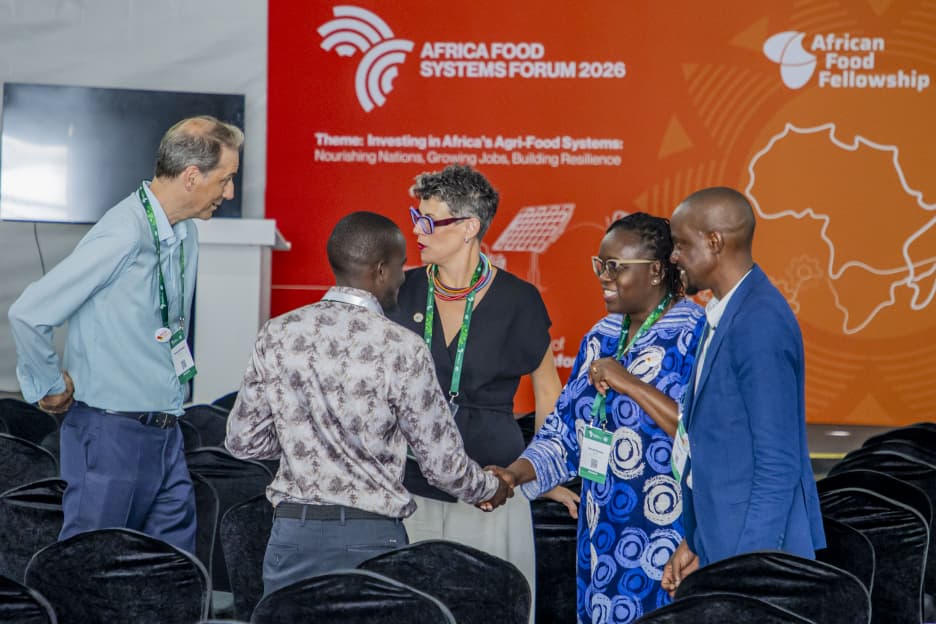
Fellowship brings food systems leaders together to tackle shared challenges and build partnerships.
The fellow later brought together 14 organisations into a coalition, which helped shape a national target to increase land under conservation agriculture from about 1,200 hectares to nearly 100,000 hectares by 2028–2029.
For Ishimwe, the example demonstrates the value of networks in turning individual ideas into broader action.
She said the fellowship is not intended to produce “brilliant individuals working alone” but to build a network that allows leaders to identify who they need to work with when tackling complex challenges.
From training to practical action
The fellows are also leaving the programme with projects targeting specific challenges across Rwanda’s food system.
Among the initiatives is Kamanzi Jean Pierre’s project to strengthen market access for smallholder farmers by linking them with agribusiness buyers and expanding contract farming in the chilli value chain.
The project targets more than 500 smallholders over two to five years, while its maize component has recorded an estimated 25–35% increase in farmer incomes and payments made two to four weeks faster.
Manasseh Manirakinga is developing a Poultry Centre of Excellence to equip secondary-school graduates with practical poultry production, business management and entrepreneurship skills.
The initiative aims to train more than 500 young people over two to five years and support the creation of youth-led poultry enterprises.
For Manirakinga, the fellowship has changed how he approaches food systems challenges.
“The FSA journey has been challenging but strengthened my systems-thinking approach, refined the Centre of Excellence concept, expanded my network, and increased my confidence in designing a scalable solution,” he said.
Other fellows are also tackling specific challenges. Joselyne Dushime is developing a hydroponic agriculture investment playbook to help investors, financial institutions and entrepreneurs evaluate and finance hydroponic projects in Rwanda. The project seeks to address gaps in local investment evidence, business models and risk assessment tools.
In nutrition, Pacifique Umuhire is developing NutriRwanda, a Kinyarwanda-first, offline-friendly nutrition application offering local meal ideas, voice tips and household guidance to help users make healthier food choices. The project aims to reach 200,000 users over two to five years.
The graduation ceremony was held on Monday in Kigali as part of the launch of the Africa Food Festival, organised on the sidelines of the 2026 Africa Food Systems Forum.
129 Rwandans have graduated
The latest cohort brings the total number of people who have graduated from the African Food Fellowship programme in Rwanda to 129.
The fifth Rwanda cohort is part of the fellowship’s broader network spanning Kenya, Rwanda and Zambia, with nearly 400 fellows representing more than 200 organisations.
Ishimwe urged the new graduates to take the knowledge and connections gained through the 10-month programme into their organisations and wider networks.
She said the transformation of Africa’s food system would require multiple leaders working across institutions rather than relying on a single organisation or intervention.
“The effect we mentioned, hopefully, will start to show the changes, because we all believe this: Africa’s food system will not be transformed by one institution, and definitely not by one innovative programme,” she said.
The fellowship now plans to use its growing network, technology and partnerships to scale its work beyond the three countries where it currently operates, with the long-term goal of reaching 15 African countries and 2,750 leaders by 2035.
The 2026 edition of the AFS Forum, which is also celebrating its 20th anniversary, has brought together more than 5,000 delegates from over 50 countries, including government leaders, investors, farmers, scientists and young entrepreneurs.
Rwanda’s Minister of State for Youth and Arts, Sandrine Umutoni, has urged young people to critically examine the forces influencing their fashion and dress choices, as debate over decency and dress codes continues to grow.
Umutoni made the remarks amid renewed debate over dress and decency among young people, following an incident at the Diamond Platnumz Experience at the BK Arena Parking Lot on Saturday, August 29, where some attendees, particularly young women, were reportedly stopped from entering over clothing deemed too revealing.
The police action has sparked debate, with some young people describing the enforcement as harassment and questioning the extent to which authorities should regulate personal dress choices.
Rather than reducing the debate to whether the State is attempting to control people’s bodies, Umutoni said there was a need to examine the wider forces influencing fashion trends.
“I have been reflecting on the debate around how some of our young people dress, and I wonder whether we are asking ourselves the deeper questions,” she said in a social media post on Sunday.
“When concerns are raised about increasingly revealing fashion trends, the conversation quickly becomes: ‘Why does the State want to police our bodies?’ But perhaps we should also ask: who is shaping these trends in the first place, and why?”
Umutoni said young people, particularly girls, are increasingly exposed to messages linking appearance and femininity with displaying the body, arguing that such ideas are reinforced through fashion, advertising, music, films, music videos and social media.
She, however, stressed that the debate should not be framed as an indictment of women’s bodies or as an argument that women and girls are responsible for managing other people’s sexuality.
“This is not an argument that the female body is inherently provocative. It is not. Nor should women and girls be made responsible for managing other people’s sexuality by simply being told to cover themselves,” she stressed.
Instead, she questioned why the female body is so frequently commodified by cultural and commercial industries.
Umutoni also linked the discussion to cultural identity, saying Rwanda should consider how it can develop a contemporary fashion identity rooted in its own culture while remaining open to global influences.
She pointed to Nigeria as an example of a country where traditional fabrics, patterns, craftsmanship and aesthetics have been incorporated into contemporary fashion.
“What does contemporary Rwandan fashion look like when it is confident enough to draw from who we are, while remaining creative, youthful and open to the world?” she asked.
According to Umutoni, embracing local cultural influences does not mean prescribing one way of dressing or rejecting foreign influences.
“Culture has always evolved. The question is whether we are participating in that evolution as creators, or simply consuming what others create for us,” she noted.
Her comments come against the backdrop of a broader push by authorities to address what they consider indecent behaviour and misconduct among young people.
In a joint press briefing on August 8, 2026, Rwanda National Police spokesperson ACP Boniface Rutikanga warned that authorities would not tolerate public nudity, indecent dressing, disorderly conduct or sexually explicit content.
Rutikanga said personal freedoms have limits when they conflict with public order and cultural norms.
“We will not continue to tolerate indecent conduct, disorderliness or people exposing themselves… under the excuse that they are young and modern. We do not want that dirt… Rights have limits,” he said.
Police have also warned owners and managers of bars, nightclubs and event venues that they could be held legally responsible for indecent behaviour, underage drinking and reckless conduct occurring on their premises.
Authorities further announced increased monitoring of social media platforms, particularly TikTok, targeting content deemed sexually explicit or indecent.
Police cited Article 143 of Rwanda’s Penal Code, which criminalises public indecency and provides for a prison sentence ranging from six months to two years.
For Umutoni, however, the conversation should extend beyond enforcement and focus on whether young people understand the cultural and commercial forces shaping what they perceive as fashionable or desirable.
She urged both young women and men to question the trends presented to them and consider who benefits from them and who defined them as desirable.
“Freedom is not only the ability to choose. It is also the ability to understand what is shaping our choices, and the confidence to create alternatives of our own,” Umutoni remarked.
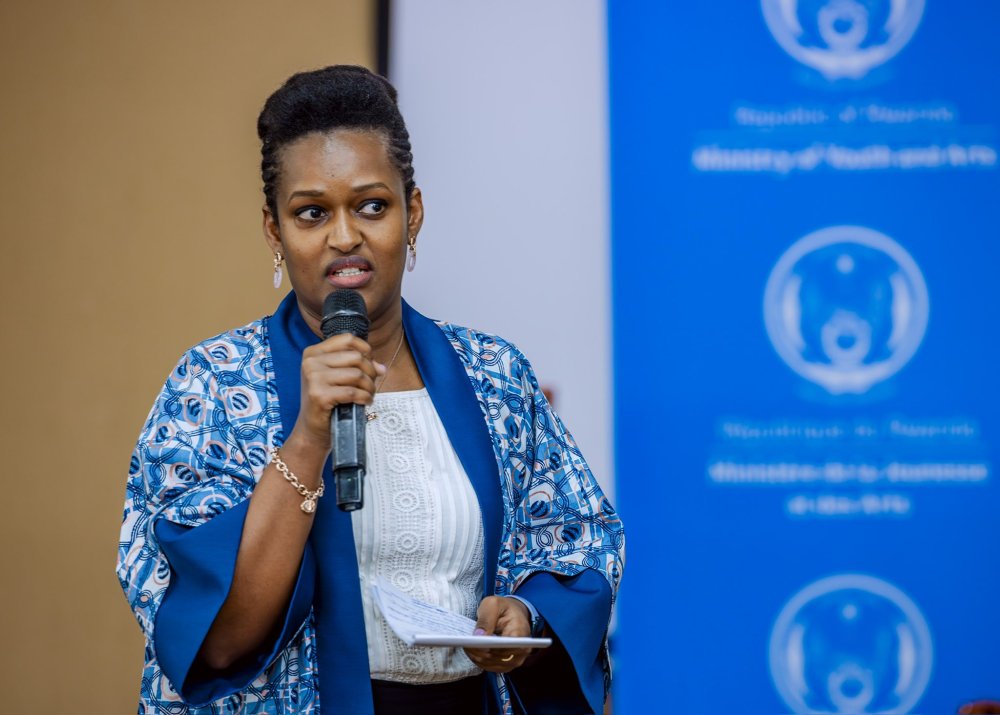
Rwanda’s Minister of State for Youth and Arts, Sandrine Umutoni, urged young people to critically examine the forces influencing their fashion and dress choices, as debate over decency and dress codes continues to grow.
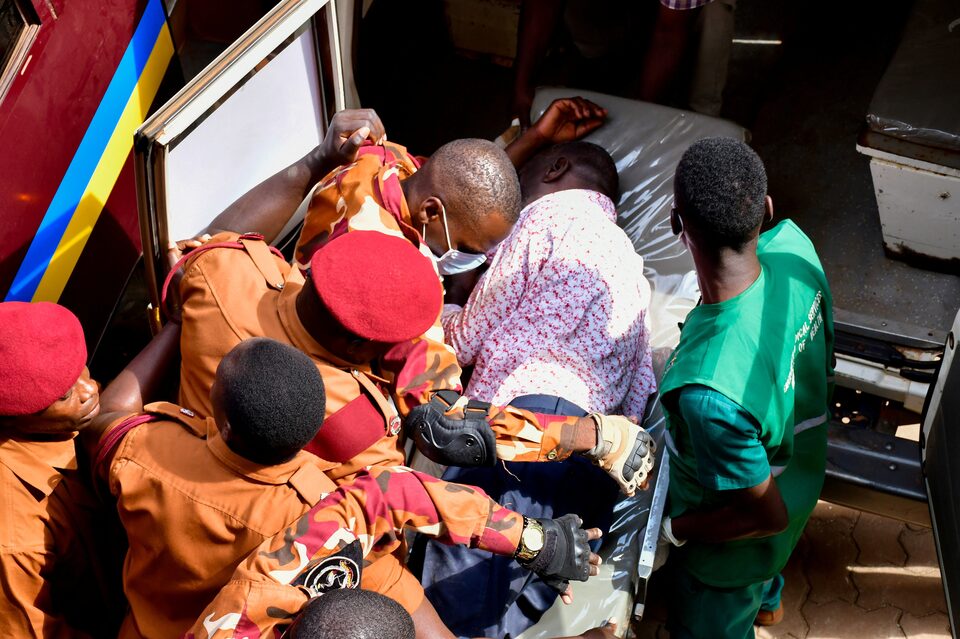
Byanyima said Besigye was transferred after dark to the Joint Clinical Research Centre (JCRC) hospital along Entebbe Road, about 10 kilometres from Kampala.
She said the 70-year-old opposition leader remained severely weak and continued to struggle with basic movements and communication following his health problems in recent months.
“After dark, Dr Kizza Besigye was moved from Luzira Prison to JCRC hospital today. He is still very weak. He struggles to walk, speak, write or even hold anything steadily,” Byanyima said.
Besigye’s health has been a concern since he collapsed during a court session in Kampala on July 29 while attending proceedings in his treason case.
He was subsequently taken by ambulance to the Intensive Care Unit at Mulago National Referral Hospital, where his family said he remained unconscious and unresponsive to pain stimuli for several days before his condition improved.
Besigye spent about 10 days at Mulago before being transferred back to Luzira Prison on August 7. His family later said he remained extremely weak and had difficulty walking and speaking.
On August 24, Byanyima said Besigye had been returned from the prison hospital to his cell, while his sisters, who had been caring for him, were sent away.
A medical assessment conducted after his July collapse found that Besigye remained alert and able to understand information but had difficulty speaking and writing. Doctors recommended continued speech, language, physical, occupational and neurological rehabilitation.
The family has asked Ugandan authorities to allow Besigye to travel to Geneva, Switzerland, for specialised medical care and support from his family. They have also raised concerns about chronic complications affecting his lungs and spine, which they say have been worsened by prison conditions.
Besigye has been in custody since November 2024 after being arrested in Kenya alongside Hajj Obeid Lutale and Capt. Denis Oola. They face treason-related charges stemming from allegations that they travelled to Kenya and held meetings aimed at plotting to overthrow the Ugandan government. The three have denied the allegations.
His trial has continued despite his health challenges, with the court allowing proceedings to proceed in his absence on medical grounds.
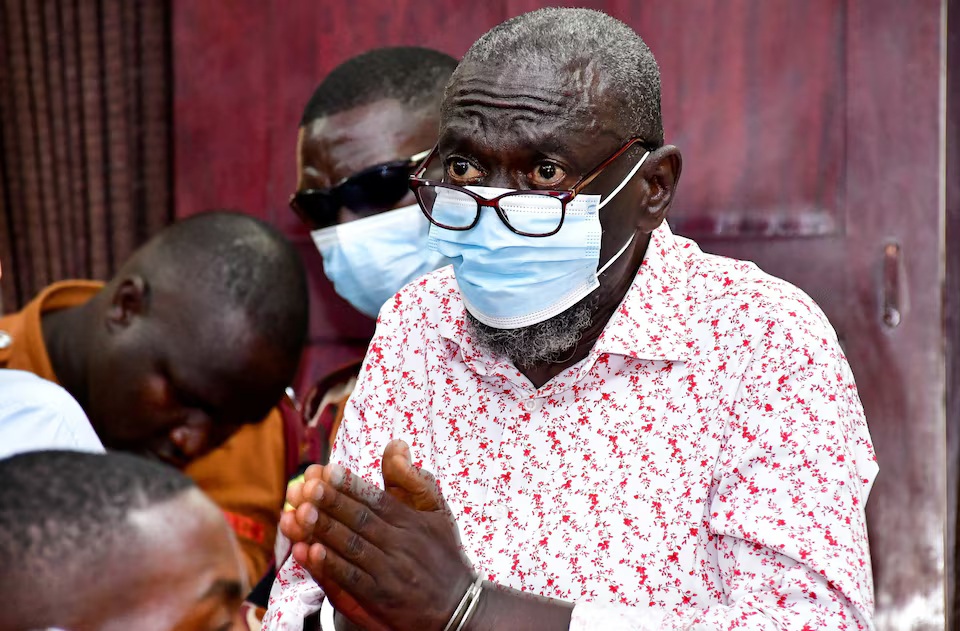
Besigye’s health has been a concern since he collapsed during a court session in Kampala on July 29 while attending proceedings in his treason case.
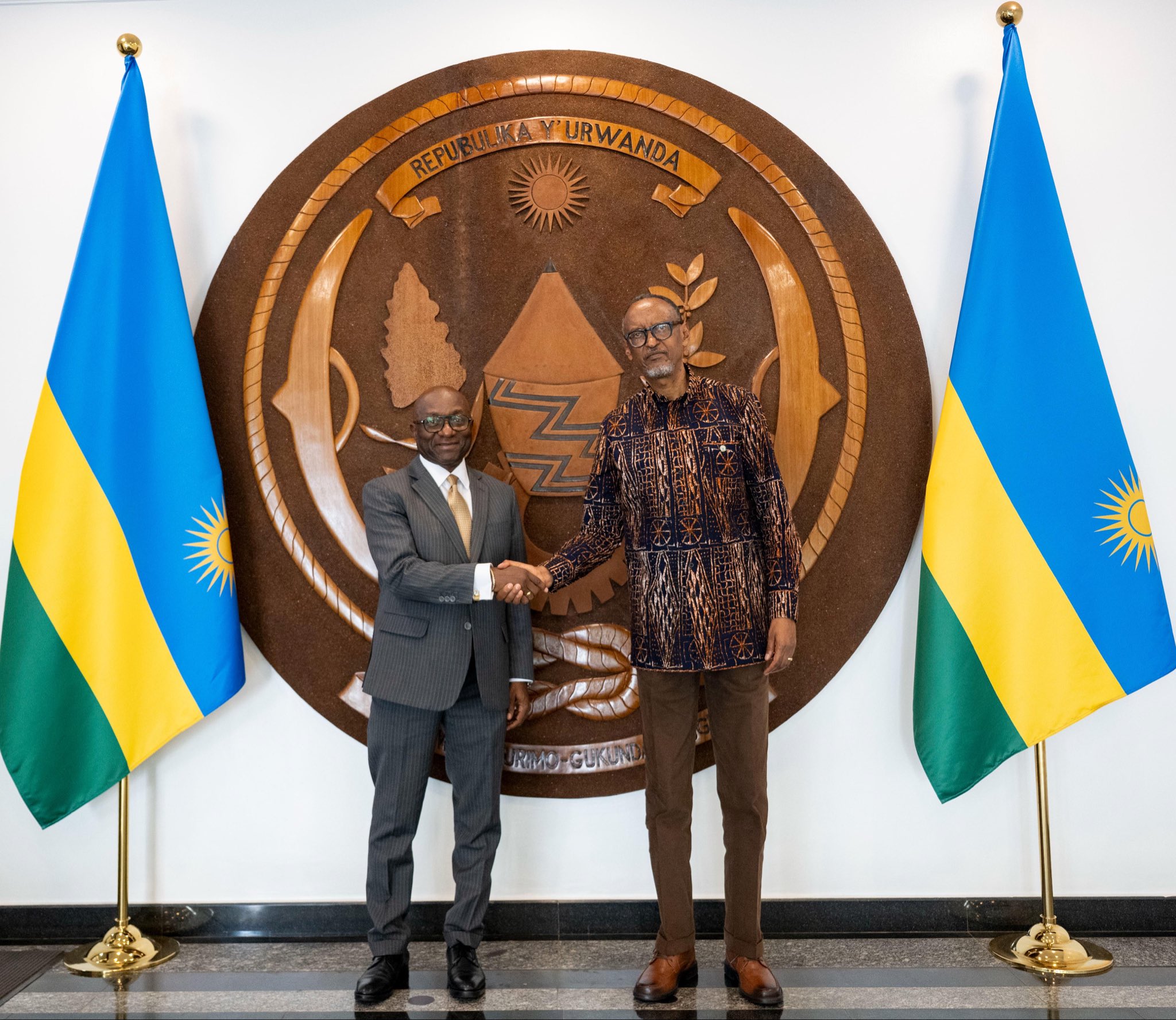
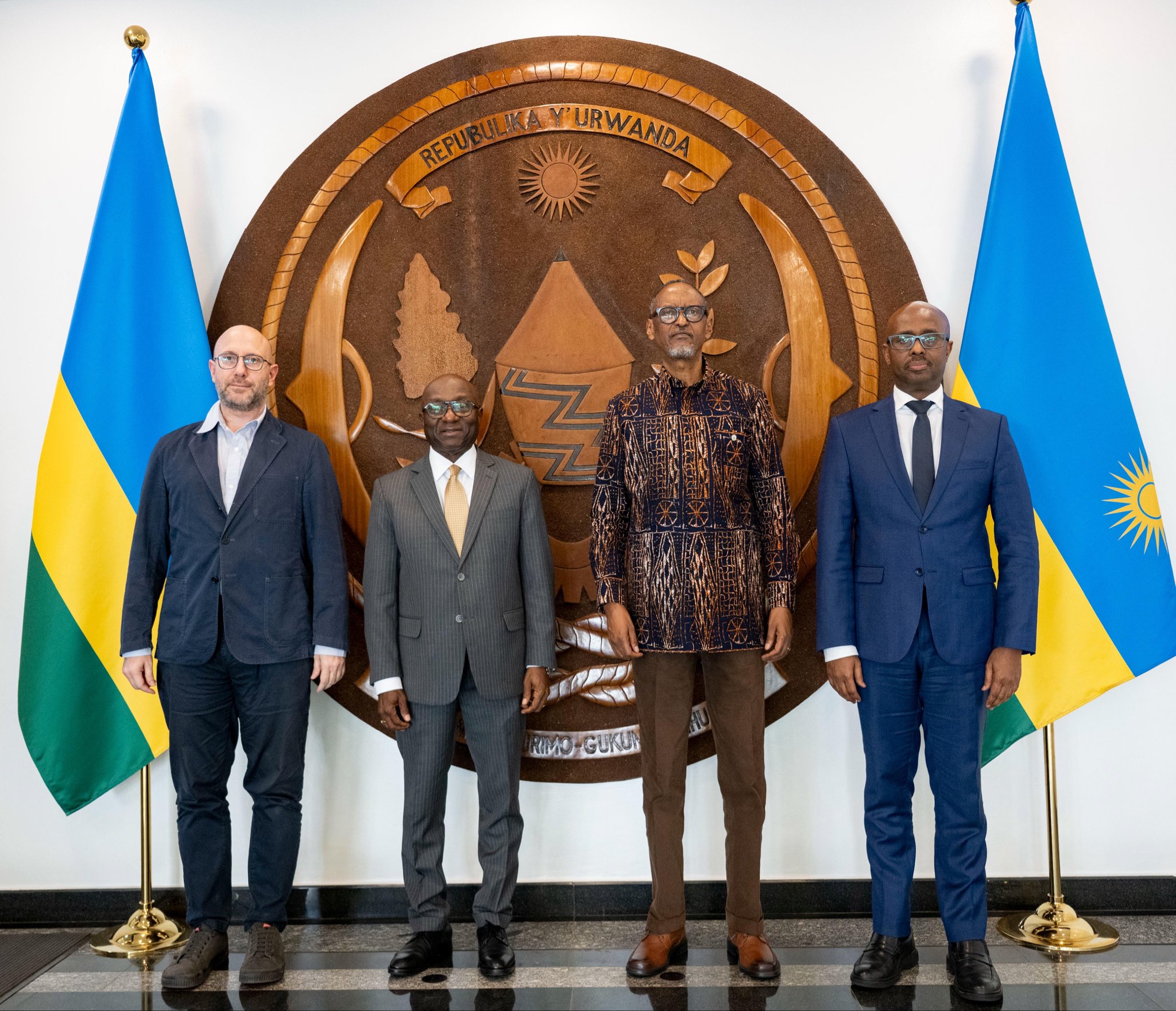
Kagame first met Sahr Kpundeh, the outgoing World Bank Country Manager for Rwanda, for a farewell meeting.
Their discussions focused on Rwanda’s longstanding partnership with the World Bank and continued collaboration in support of the country’s development priorities.
Kpundeh has served as the World Bank’s Country Manager for Rwanda, working with the government on development programmes and initiatives across various sectors.
Discussions with the outgoing World Bank representative focused on Rwanda’s longstanding partnership with the World Bank and continued collaboration in support of the country’s development priorities.
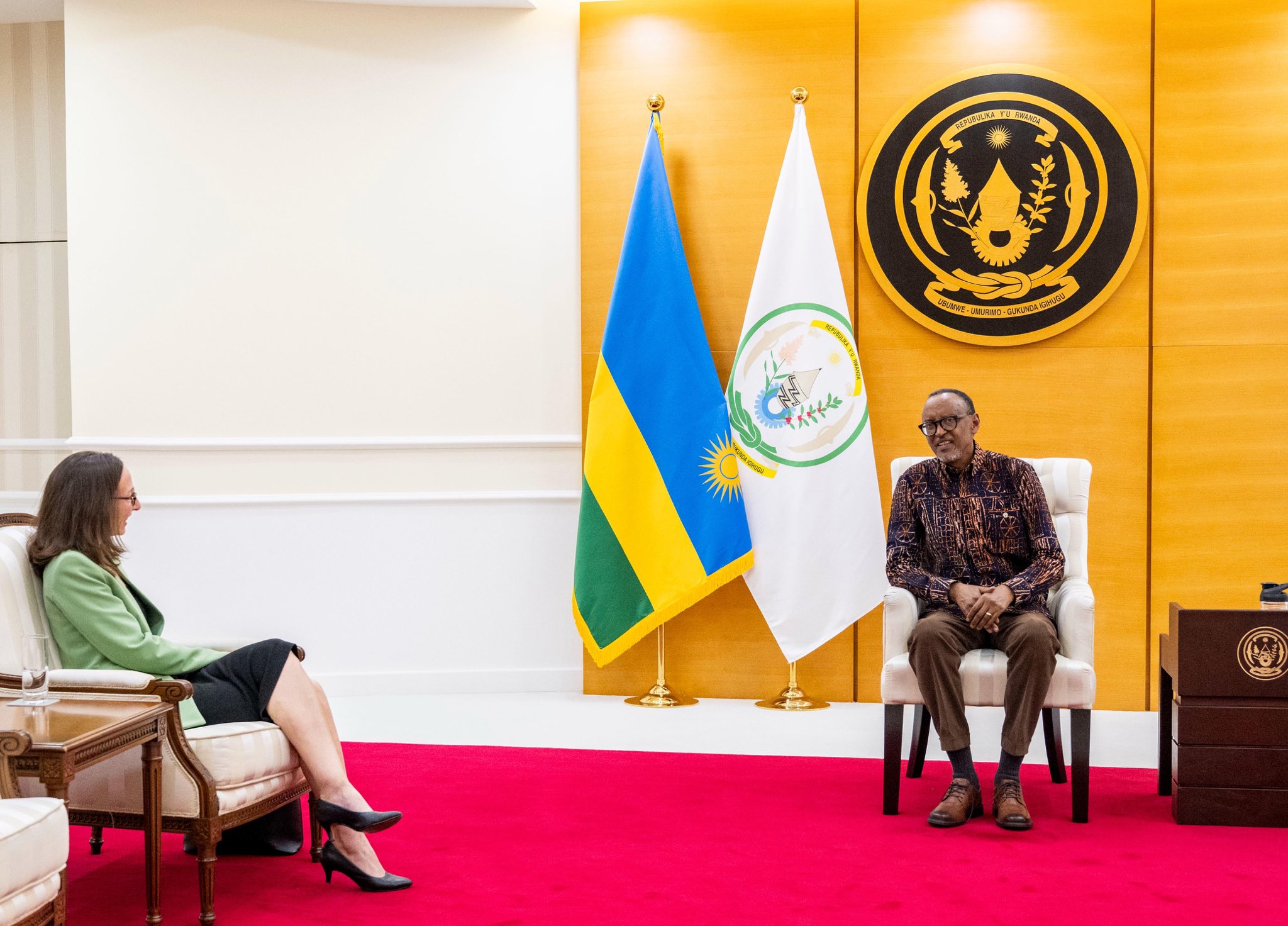
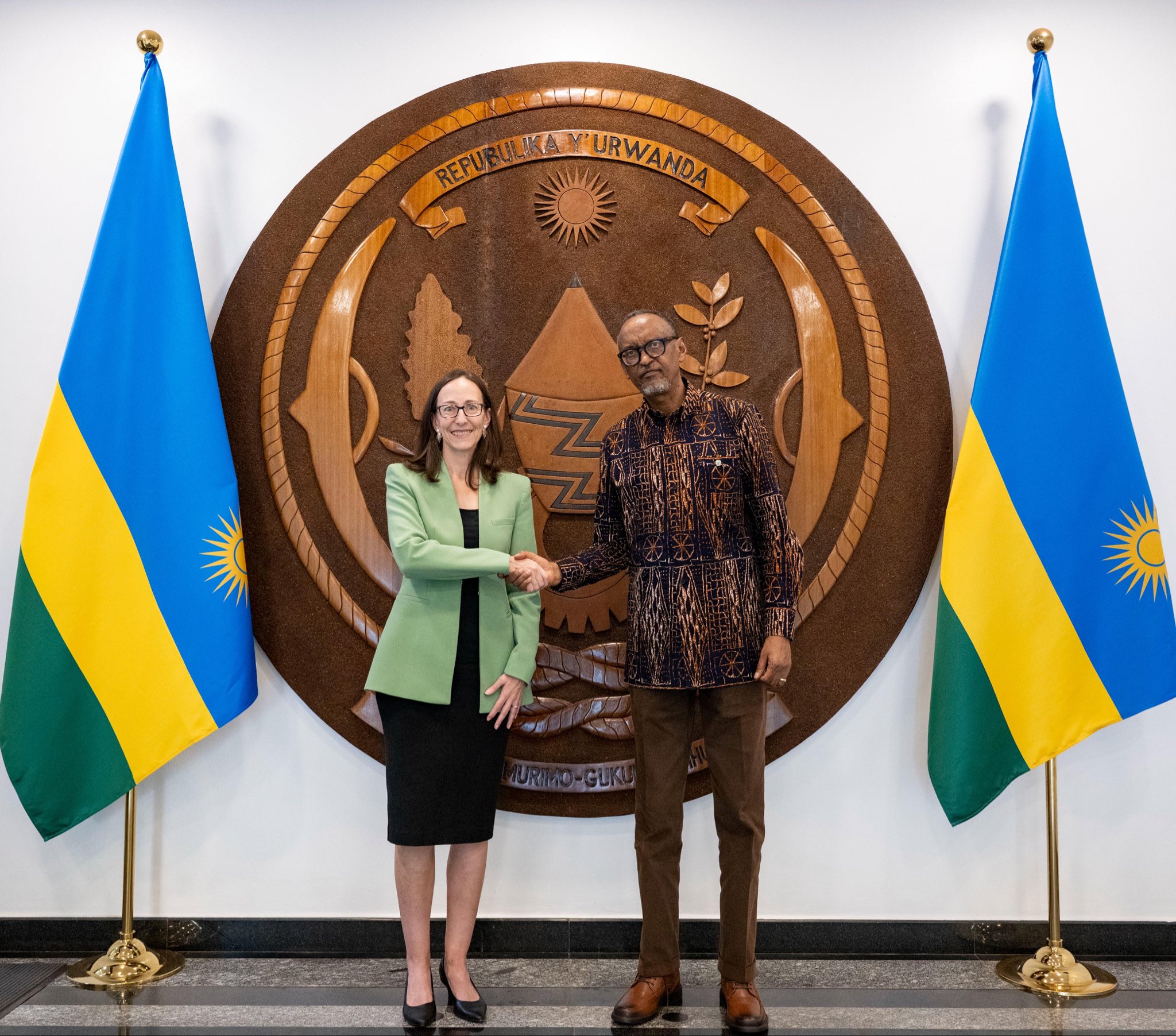
Later in the afternoon, Kagame received Julie Crowley, the outgoing High Commissioner of Canada to Rwanda, as she concludes her tour of duty.
The two discussed Rwanda-Canada relations and efforts to further strengthen bilateral cooperation in areas of mutual interest.
The meetings come as both Kpundeh and Crowley conclude their respective assignments in Rwanda, with Kagame reflecting on the partnerships between Rwanda and the institutions and countries they represented.
President Kagame also received Julie Crowley, the outgoing High Commissioner of Canada to Rwanda, as she concludes her tour of duty.The two discussed Rwanda-Canada relations and efforts to further strengthen bilateral cooperation in areas of mutual interest.