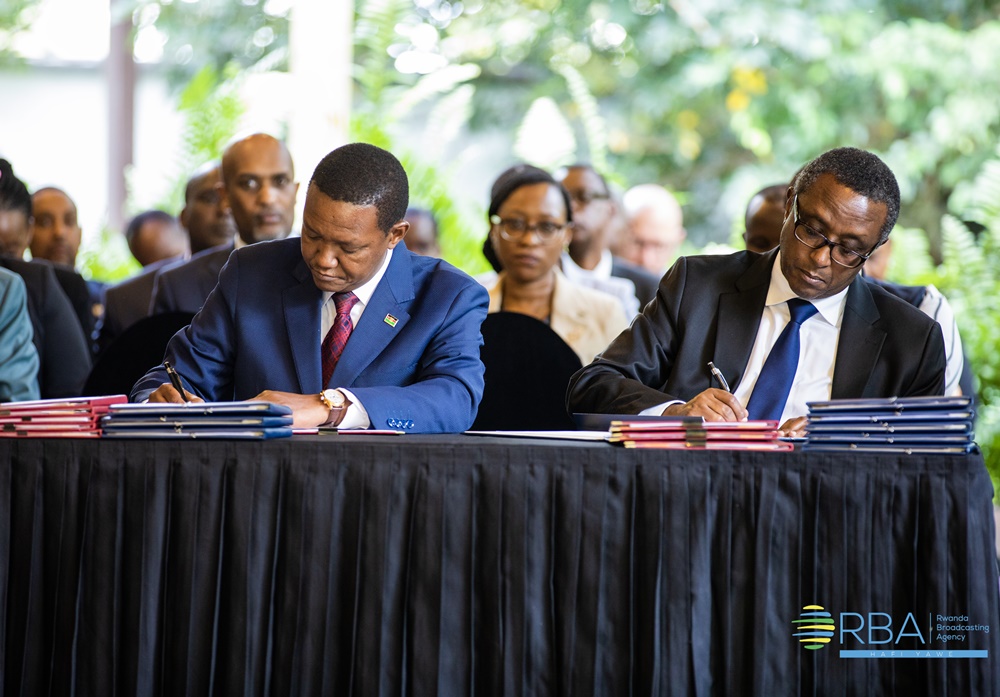
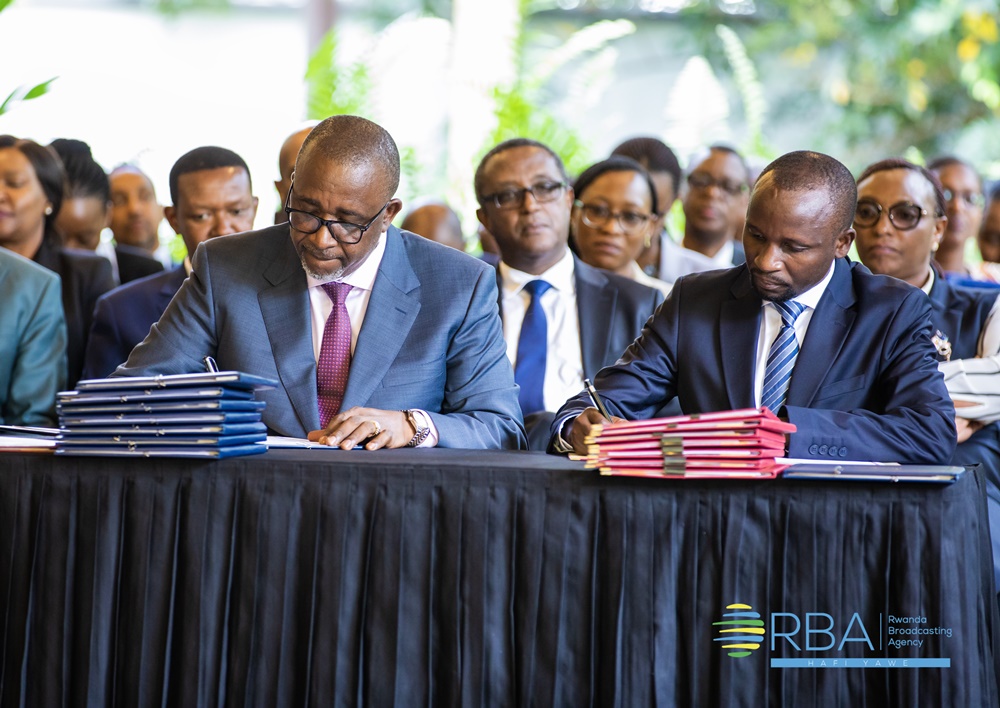
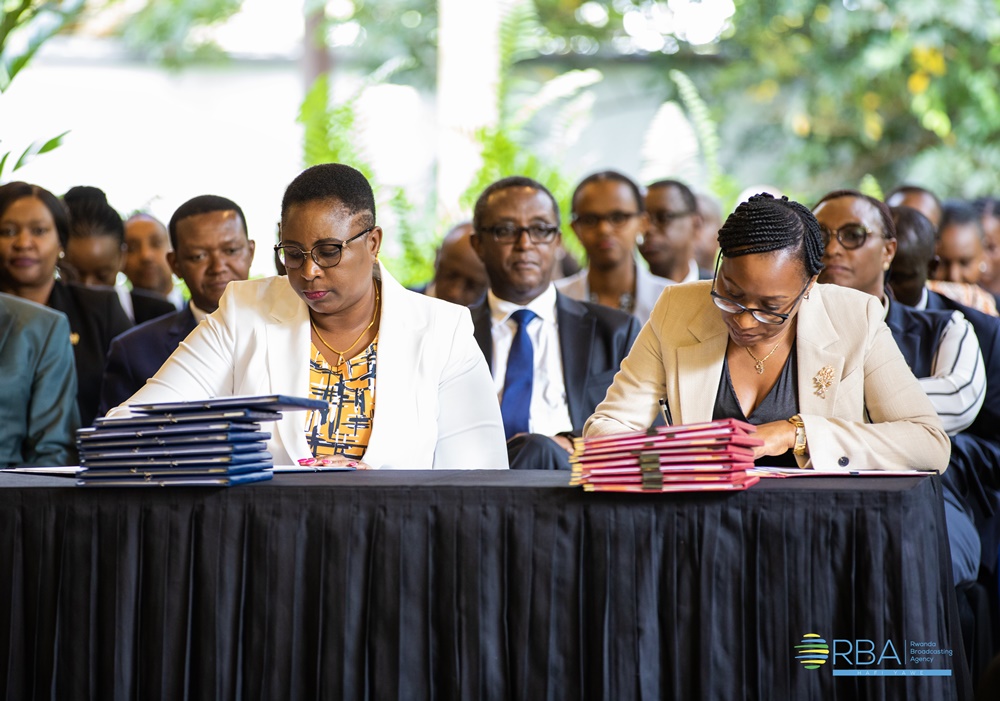
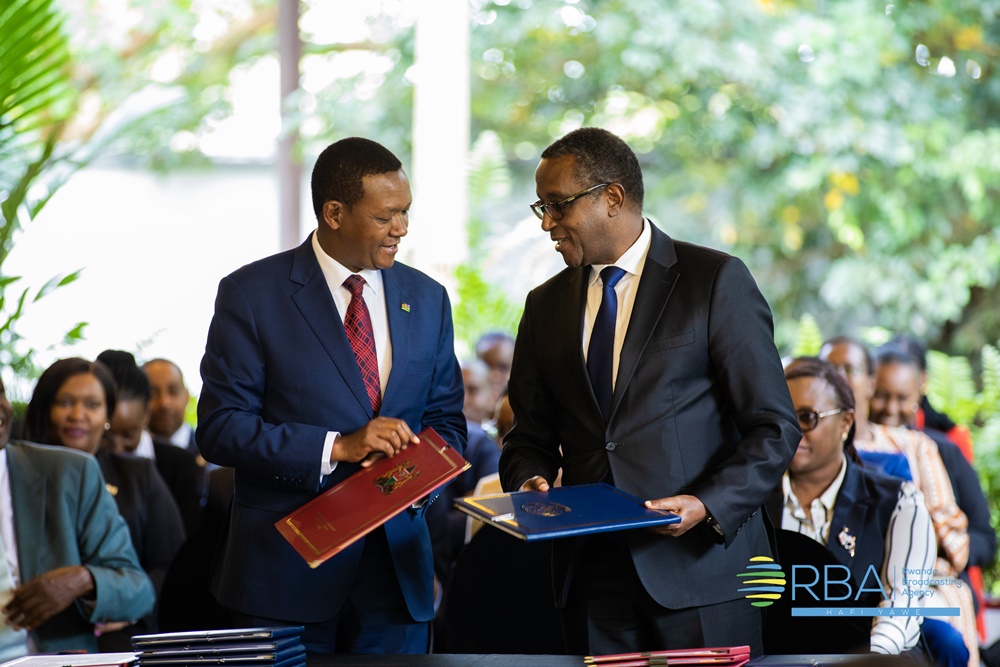
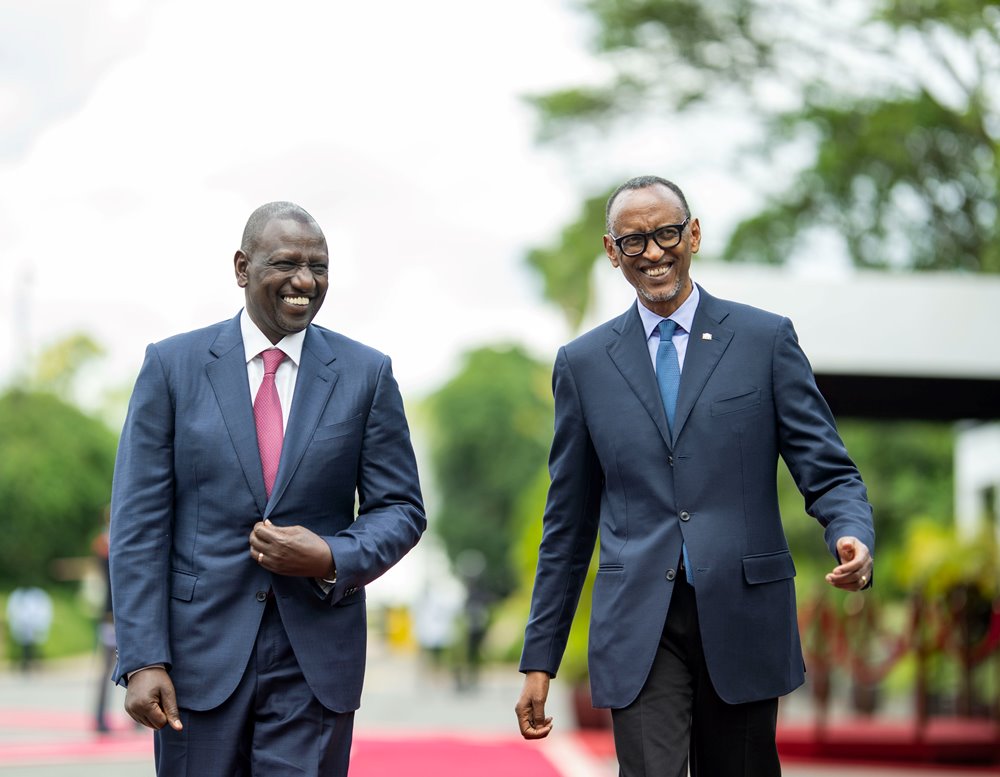
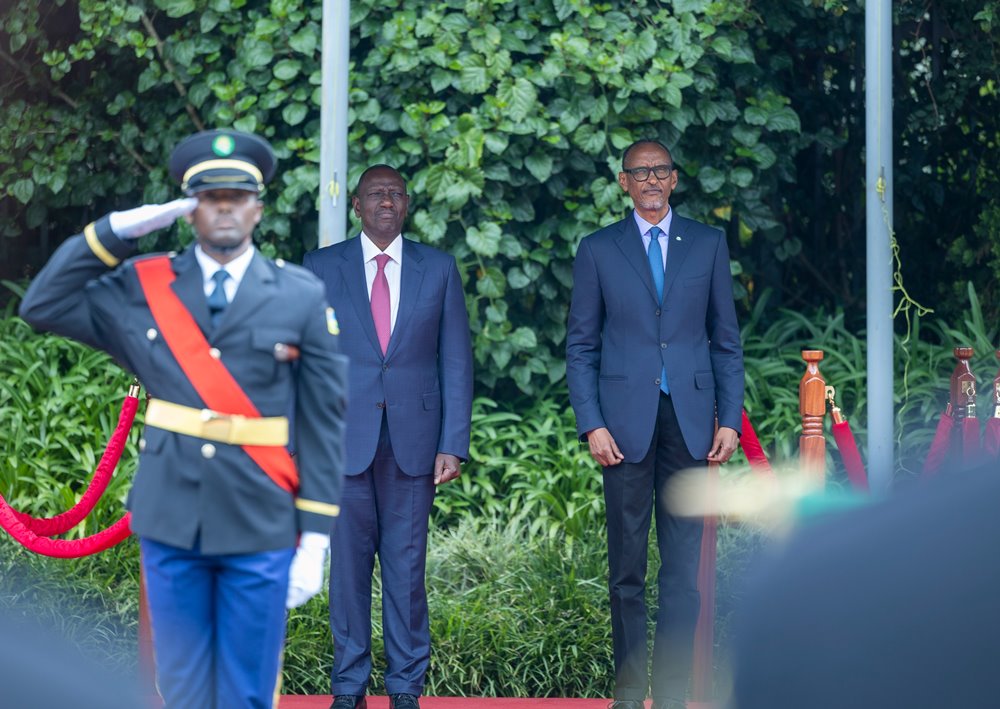
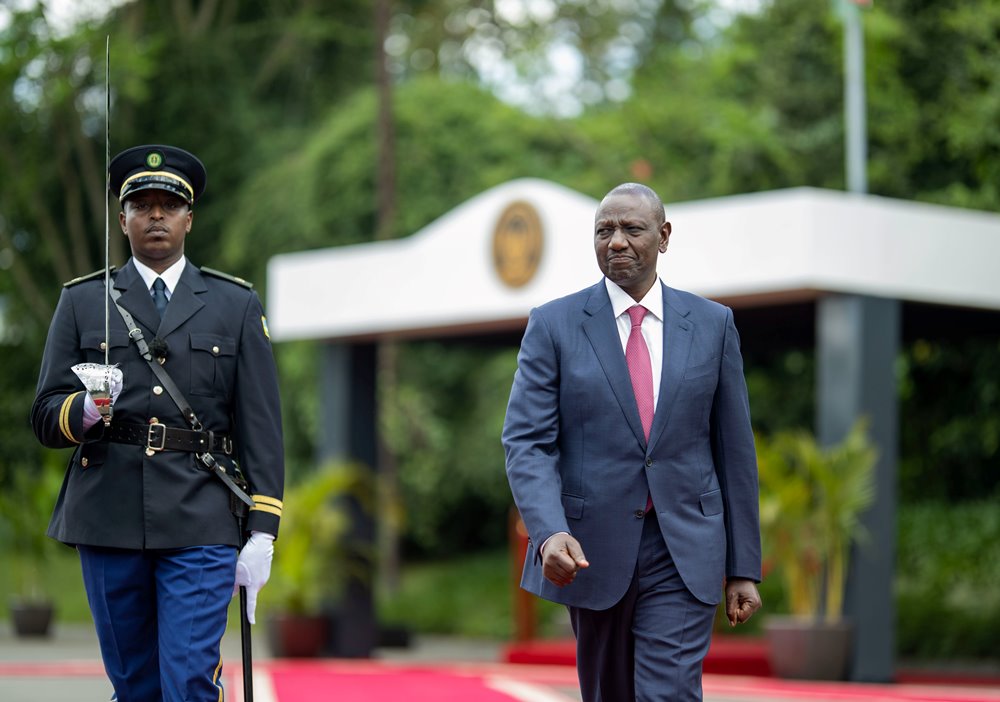
Of the agreements inked on Tuesday 4th March 2023, six were signed by both countries’ Ministers of Foreign Affairs, Dr. Vincent Biruta and his counterpart Alfred Mutua. These include correctional services, diplomatic training, ICT, health, youth, and cooperative development. In addition, three agreements in education, agriculture, and gender were signed by each country’s respective ministers.
Rwanda and Kenya have enjoyed cordial bilateral ties across different sectors of development for a long time. Kagame said that the new areas of cooperation will bring people in both countries even closer, with regional integration and trade being a big part of the equation of private sector growth.
“We are happy that Rwanda is home to a large and vibrant Kenyan community, we are grateful for their contributions to our development. I hope that we can leverage this shared interest to equip our youth with the skills and knowledge to innovate and compete,” he added.
Kagame noted that the people of Rwanda and Kenya are also united by a common vision for a more stable region. Ruto said that the signed MoUs in different sectors will consolidate the relationship between the two countries, present a new momentum, and create new impetus for the expansion of engagements between both countries.
“Just like Rwanda is a gateway for us in the Great Lakes Region, we are also aware that Mombasa is an important port for the people of Rwanda and creates the synergy between our two economies, and we will continue building the network necessary for us to benefit from it,” he added.
Regarding the ongoing education system reform in Kenya, Ruto stated that the agreement in the education sector will assist in tackling the significant challenge of financing university education. The aim is to share experiences and identify ways to make education more relevant, easily delivered, and cost-effective.
Furthermore, Ruto highlighted that there will be an exchange of expertise and resources between the large referral hospitals in both countries in the health sector.
Ruto also affirmed the positive relationship between the two countries and their desire to strengthen and expand their friendship and unity.
It is worth noting that Rwanda and Kenya have ratified the One Area Network, which allows for reduced call rates between both countries, thus facilitating business growth.
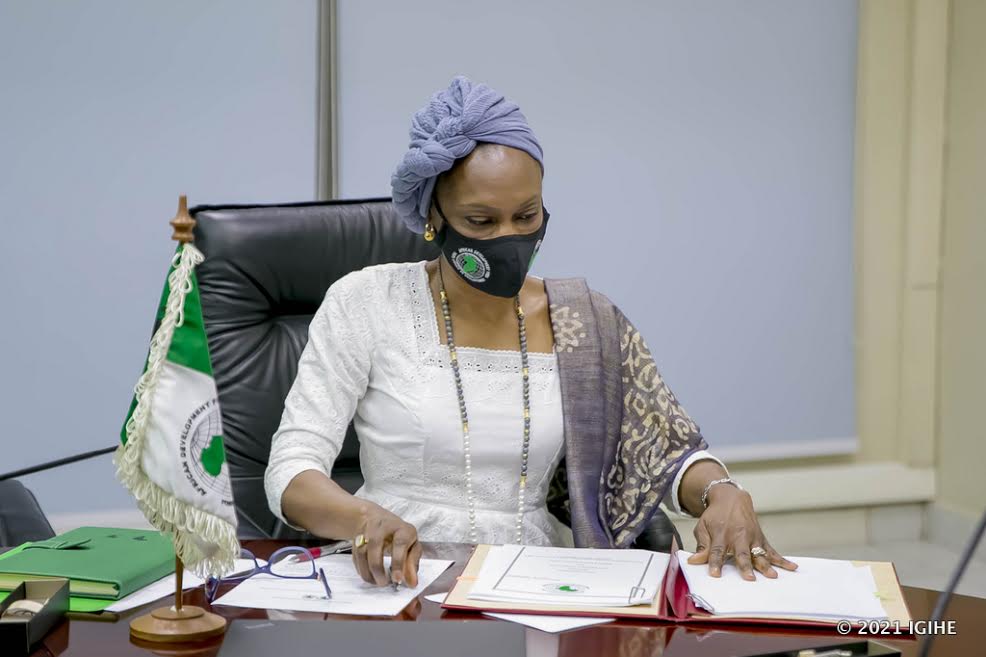
To shed more light on the bank’s impact and future plans in Rwanda, IGIHE had a conversation with the Country Manager for Rwanda, Aissa Touré. Appointed to the role in December 2020,she provided insights into the Bank’s operations, including its activities and opportunities for the private sector.
{{Excerpts:}}
{{IGIHE: Which mega projects currently being implemented by the AfDB in collaboration with the Government of Rwanda?}}
{{Aissa Touré:}} The bank has been working with Rwanda since 1974, since then we have provided US$2.9 billion worth investments in many sectors. As we speak, we have a portfolio of 26 projects worth US$1.5 billion. These projects are mainly in the area of infrastructures including water, sanitation, transport and energy. This accounts for 87% of our entire portfolio.
The remaining projects are in skills development and human capital in general and interventions to support the private sector to thrive and be able to contribute to the socio-economic transformations of Rwanda.
Within infrastructures, 46% of our projects are for energy, 28% are in water and sanitation and 13% in transport.
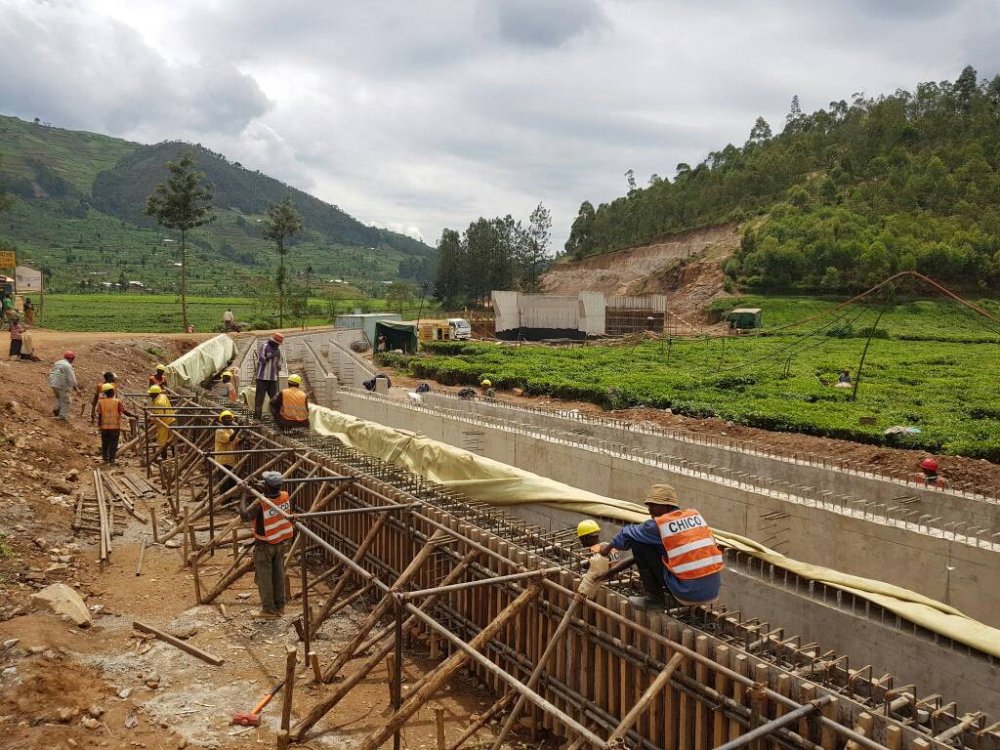
These include Kivu Belt game changing project, Carnegie Mellon University – Africa, School of Architecture and Built Environment (SABE), Kagitumba-Kayonza- Rusumo and Base-Rukomo-Nyagatare roads, the Kivu Watt project and Kigali Bulk Water Project to name few.
The impacts of these investments are massive because we believe that providing services such as water and sanitation, roads and energy, education, access to schools and hospitals facilitate a lot in many aspects because when you have electricity , you can go for agro-processing , you can have start businesses. Our impact has been massive.
During COVID-19, the Bank provided US$100 million as direct financing public support as a contribution to the recovery fund the government put in place.
It is a long partnership, we are a trusted partner, and the second largest development partner of Rwanda after the World Bank.
We are currently preparing a new project in transport that will need public investment to get the infrastructure done. Once this investment is done next year, we will come with private sector investment because the government has requested the bank to support on electric buses.
This is something that we are very excited to do because this is a new avenue for development in Rwanda. We are happy to be part of it.
Lastly, as part of the new international airport in Bugesera and the expansion of the airplane fleet in the country require qualified human capital to manage, operationalize and sustain these investments the Bank will support to the government to set up a Centre of Excellence for Aviation Skills (CEAS).
It is a project of around US$24 million to set up an academy where all the skills that are needed in the aviation value chains, from pilots and other people working at the airport will be trained.
{{What are projections to help Rwanda achieve its goals?}}
In Rwanda, the bank has what we call a country strategy paper which defines what the bank could be doing in the country for a period of time.
In Rwanda, the country strategy runs from 2022 to 2026. It is designed around two mutually reinforcing pillars. The first one is strengthened physical infrastructure to enhance productive resources and reduce the cost of doing business; and the second one is around improve skills and financial capabilities to foster private sector and productivity-led growth. because these are critical for meeting NST1 and would even be more critical for the NST2 that is in the making.
We have that strategy, it has been formulated with the government and it is really a participatory process. Within that, we have what an indicative pipeline which runs from 2022 to 2024, we have discussed with the government what they will be doing and what they want us to focus on.
We provide resources to countries. We are very soon going to disclose to all country members including Rwanda what the allocation will be from 2023 to 2024.
{{ How do you promote private sector development in Rwanda?}}
In 2023, Rwanda got a very consistent private sector window under the AfDB Window of US$242. Usually, this window finances lines of credit to Band of Kigalu, BRD, Equity among others but we really want the private sector to come and have direct access.
The Bank needs to do more outreach and awareness raising on its Private sector financing opportunities. In May this year, we will have a private sector road show to engage with the private sector federation, RDB and big players on private findings opportunities.
We look forward to having this dialogue with the private sector for them to know the instruments that we have, the conditions and the sectors that they can use it for.
{{How are you working with countries to tame rising inflation?}}
Economic hardships started with COVID-19 which has been challenging for all countries especially African ones with borders closing and lockdowns etc… When countries like Rwanda were starting to slowly recover, we had the Ukraine and Russia war.
When COVID-19 hit, the Bank and the Government agreed the financing of the year 2020 would go to the budget support. We provided the entire envelope to the COVID 19 recovery fund.
When the Ukraine-Russia crisis hit last year, the bank quickly put in place the African Emergency Food Production Facility provide 20 million African smallholder farmers with certified seeds. Initially, Rwanda was not a beneficiary of this facility.
We had to make a case and that facility has been exhausted but Rwanda with US$1 million. Discussions are on-going with the Ministry of Agriculture on how that money could be used.
We had last December the Dakar Summit on agriculture and because you see that inflation is mainly in food items especially for Rwanda.
Rwanda presented a very good case in Dakar last year, and we are trying to unpack different investment schemes especially because the private sector is key to making those investments a reality.
We are working to see how we can better support countries, address and mitigate the impact of inflation.
Last year, we also gathered all Eastern African countries, made a study on the impact of inflation and the Ukraine-Russia crisis. Each country had an opportunity to present measures put in place. It was also a good moment to learn from each other.
TeensCanCode, founded by Queen’s Young Leader award winner Isaac Damian Ezirim, provides training and development opportunities to young people looking to get into the technology industries and provides a plethora of programmes dedicated to advancing internet safety.
Crucial will partner with the team to run Nigeria’s first Safe Gambling Hackathon on April 17th, bolstering its emerging African strategy.
The event will also see the launch of Nigeria’s first youth gambling attitudes survey, lifting the lid on how gambling is affecting the millions of young people in the densely populated country.
Speaking on the partnership; TeensCanCode founder, Isaac Damian Ezirim said: ‘We are excited to be doing this with Crucial Compliance and Adam Bradford Agency as this falls in line with our Virtually Safe initiative to help keep young Africans safe while using the internet, in Lagos where I live there’s a betting shop on almost every street and most times young people are their major customers and users, many of these young people do this without any guidance or adequate information plus the laws that regulate this industry is not stringent enough which exposes everyone even the vulnerable and this can push many of them into depression and loss of money. This partnership can help kick start the needed conversations around gambling, its safety and addiction.’
Crucial successfully ran interactive hackathon events in January and February of this year bringing together young people, parents, industry professionals and others to explore the topic of gambling related harm and how gaming can constructively contribute to the communities in which it is doing business.
Crucial Compliance will run a second Hackathon in Kigali on 19th April, providing real investment, mentorship and support to youth-led tech initiatives and programmes which safeguard against the pitfalls of gaming and gambling and which strengthen the sector.
Crucial already powers ‘BetProtect’, a digital therapy tool accessible by phone or web, which provides an additional layer of awareness and support to people who might be at risk.
Crucial is also investing in the idea of Eric Kalisa, who will begin conducting research to look into the prevalence of gambling and the attitude of Rwandans towards it and the addiction, which his team have observed anecdotally across communities in the country.
Commenting on the development, Paul Foster, CEO of Crucial Compliance, said: “We are delighted to be working with Damian and his team on this important initiative as well as our existing partners.
We are aware of the high rates of gambling and potential for gambling addiction to affect lives in the country and through our Africa development strategy are keen to provide advice, regulatory guidance and solutions which can help. We are excited to have launched our Rwanda hub to power our African business and are impressed by the country and its development agenda.”
For more information on the Hackathons and to get involved, visit www.safegamblinghackathon.com.
Additionally, Rwanda has accused the DRC of collaborating with the Democratic Forces for the Liberation of Rwanda (FDLR), a terrorist group responsible for the 1994 Genocide against the Tutsi.
This coalition has led to several provocations, including shelling of Rwandan territory and Congolese soldiers storming Rwanda with rapid fire.
The DRC has also violated Rwanda’s airspace with fighter jets. Despite regional efforts to resolve the conflict, the DRC has repeatedly resorted to war.
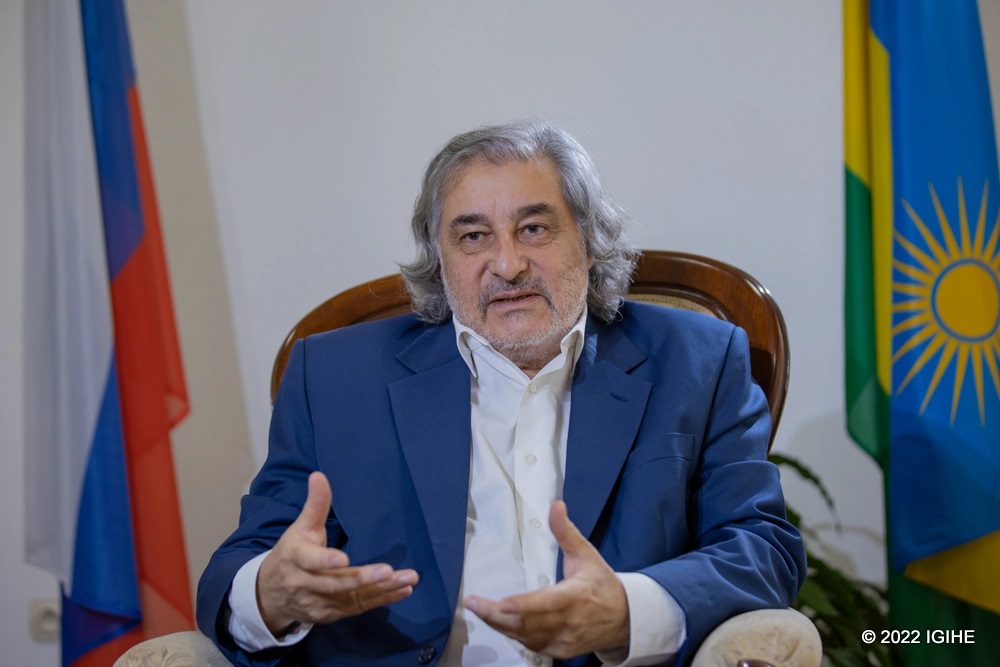
During an exclusive interview with IGIHE, the Russian Ambassador to Rwanda, Karen Chalyan has shared his views on the situation, including alleged presence of Wagner Group in DRC and his country’s involvement in various activities across Africa.
Excerpts:
{{IGIHE:}} The resumption of fighting between the Democratic Republic of Congo (DRC) and the M23 rebel group has left many civilians dead and others displaced. What do you think is the root cause of the clashes?
{{Amb.Karen Chalyan: }} As a permanent member of the UN Security Council, Russia is deeply concerned by the situation in the east of the DRC.
Decades of instability in that area, which are a consequence of the colonial past, are exacerbated by the tragedy of many years of civil strife as well as the selfish and greedy behavior of transnational economic actors who for all practical purposes act as agents of neocolonial oppression.
The only remedy is the strengthening of the institutions of state in the DRC for the benefit of the population as a whole, irrespective of ethnicity or creed.
{{In your opinion, what would be a durable solution?}}
Force alone cannot ensure stability. There needs to be dialogue, as well as the introduction of effective confidence-building measures. We must all keep working to come up with political and non-violent solutions for eastern DRC.
Once found, these will allow for a comprehensive cessation of hostilities and create practical conditions for lasting stability. In the long run, everyone will benefit.
Constructive interaction at the regional level is key to resolving the existing security problems. We welcome the commitment of all states in the region to overcome tensions in the east and launch new settlement mechanisms.
We appreciate the mediation efforts of President Lourenco of Angola and former President Kenyatta of Kenya, as well as those of the International Conference on the Great Lakes Region. We are closely monitoring the Nairobi process, and welcome the establishment of the EAC Regional Force. These decisions need to be implemented with the support of the global community.
This combination of efforts and initiatives is meant to be mutually complementary and serve the goal of bringing peace and socio-economic development to all those who live in the Great Lakes Region. Russia is ready to do its part to achieve quality results.
{{It has been reported that the DRC sought support from the Wagner Group. Is it true they are present in DRC?}}
I wish I had Rwf1,000 for every time I have had to answer this question. Then, instead of doing international relations, I would be a very rich man spending his days in the world’s fanciest casinos.
Let me once again say that there are no Wagner personnel in the DRC. And, to preempt a possible further question, no agents of the Russian Government are involved in any advisory capacity in eastern DRC, much less doing any fighting.
{{Do you have an idea on possible origins of these individuals?}}
I have been told that there have been sightings in the east of foreigners in uniform, and someone somewhere may have heard Russian coming from the general direction of some of them. I have no idea who these personnel are, how many they are, and where they came from. I have heard that some of them may be from Ukraine and Georgia.
Let me remind you that the Russian language is lingua–franca for hundreds of millions of people. To try to present all speakers of Russian in this world as some kind of extended arm of Moscow would be a variation of hate speech similar to insisting that all Kinyarwanda speakers are agents of Kigali.
{{What is your perception of the image of Wagner Group?}}
I see that the Wagner mystique has even reached IGIHE. Personally, I find it amusing that the myth created by the Western media of an ever-present, omnipotent and all-powerful Wagner has permeated popular imagination to such an extent.
This is a classic case study of the folly of believing self-generated propaganda. In fact, Wagner is simply a volunteer formation, albeit with strictly enforced military and personal discipline.
{{We frequently hear about Russians being involved in various activities across Africa? Is there a specific reason behind this?}}
Russians have been “involved” in Africa for a very long time, in my own case since 1975. In the days of the Soviet Union, many thousands of us assisted the nations of this continent in their national-liberation struggle and in strengthening the new counties’ defence and economic capabilities, that is their independence and sovereignty. We continue to do the same today.
Accusing Russia of having dark and nefarious designs on Africa has always been a fashion in the West. These days it is a growing trend in quarters that have in the past several years experienced political setbacks in the Central African Republic, Mali, Guinea and Burkina Faso, countries that all possess a common characteristic, the wonderful French language.
The best French of all, of course, is spoken by those who having failed in their grand ambitions in Africa and politely been requested to cease and desist in the further pursuit of same, have for some strange reason decided that Africans’ disappointment with their policies and practical actions is somehow the Russians’ fault.
So once you establish where anti-Russian criticism comes from, a great many things become clear. What distinguishes our actions from what many others do in Africa is that we never go where we are not invited.
During his trip, he plans to meet with the Kenyan diaspora residing in Rwanda to discuss matters concerning the diaspora and government policies.
The Kenyan embassy in Kigali has reported that this meeting will allow the Kenyan community to engage in dialogue with their president. After taking office, President Ruto has made efforts to enhance regional ties and integration in East Africa, recently advocating for the elimination of trade barriers in the sub-region.
Ruto’s visit to Rwanda aims to strengthen regional relations and promote increased cooperation between the two nations. He also intends to hold bilateral talks with his Rwandan counterpart, Paul Kagame, to discuss strengthening the Kigali-Nairobi axis and other areas of shared interest.
Among others, Ruto plans to visit the Kigali Genocide Memorial to pay homage to the victims of the 1994 Genocide against the Tutsi. The memorial visit holds significance as it coincides with the 29th commemoration of the Genocide set to begin on Friday.
President Paul Kagame will host a state banquet in honor of President Ruto, highlighting the importance of bilateral relations and regional cooperation between the two nations.
The two leaders last met in November 2022 before the United Nations Climate Conference (COP27) in Egypt, where they discussed sustaining positive and constructive bilateral relations between Kenya and Rwanda.
Ruto’s visit to Rwanda underscores the importance of their relations and their determination to foster cooperation for the region’s benefit.
According to the Kenyan embassy in Kigali, President Ruto’s meeting with the Kenyan diaspora in Rwanda will provide an opportunity for them to engage in dialogue with him on matters relating to the diaspora and government policy, as stated in a dedicated statement by the embassy.
The duo was at the time found in possession of 100 litres of diesel, which they had siphoned from a parked truck in Kicukiro District.
Chief Inspector of Police (CIP) Sylvestre Twajamahoro, the Police spokesperson for the City of Kigali, said that the duo was arrested at about 09:30a.m. after reports from the people.
“Earlier that night, they siphoned 100 litres of diesel from a Howo truck, which was parked at Kicukiro centre, loaded five jerrycans of diesel in another vehicle and left.
Following information on the criminal act, Police trailed them and intercepted them along Muhima-Nyabugogo road in Nyarugenge District,” CIP Twajamahoro said.
One of the suspects is a turnboy of the Howo truck, who hired another vehicle to transport the stolen fuel to Nyabugogo.
The second suspect is a driver, whom the turnboy had paid Frw20,000 to transport the stolen fuel. They were handed over to RIB at Muhima station.
CIP Twajamahoro thanked those who reported the illegal act and lauded the impact of neighborhood watch against lawlessness.
He further warned against illegal sell of petroleum products.
Article 6 of Law No 85/2013 of 11/9/2013 regulating petroleum and petroleum products trade in Rwanda provides that; any person, who shall perform any type of petroleum and petroleum products trade shall have a license from the competent Authority.
In article 22, the petroleum and petroleum products stores and other places exclusively reserved for the parking of petroleum and petroleum products tankers shall be determined by the competent authority.
Article 166 of law determining offences and penalties in general states that; any person convicted of theft is liable to imprisonment for a term of not less than one year and not more than two years and a fine of not less than Frw1 million and not more than Frw2 million, community service in a period of six months or only one of these penalties.
Article 167 provides a double penalty, if the offender committed the crime through burglary, climbing or possession of keys other than the owner; the theft is carried out during the night or the theft is carried out by more than one person.
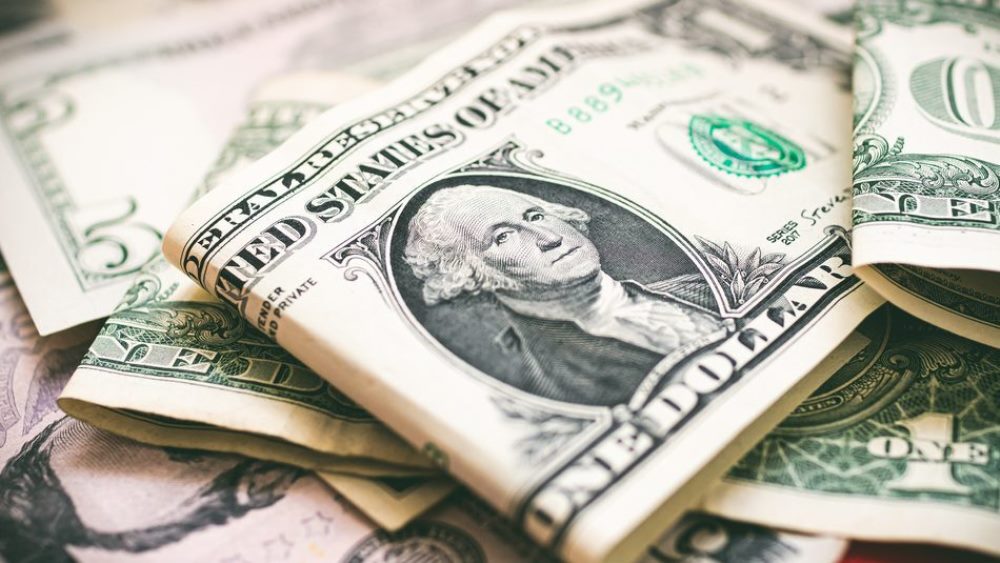
Among the most profound impacts of this conflict is the acceleration of global power distribution towards multipolarity and the trend of de-dollarisation. In this article, we will explore the reasons behind this shift, the role of sanctions, and the impact of the conflict on the global economy.
{{De-dollarisation: A Long-Term Trend}}
Although de-dollarisation has been a long-term process, the Ukraine conflict has intensified this trend. Despite the US economy representing a shrinking share of global output, the dollar still plays an outsized role in global markets. However, central banks are increasingly moving away from the greenback as a reserve currency, with a quarter shifting into the Chinese renminbi and three-quarters into currencies of smaller countries.
{{Reasons for De-dollarisation}}
Several factors have contributed to the de-dollarisation trend, including the wide-ranging impact of US-led economic sanctions. With a quarter of the global population suffering from these sanctions, countries have sought alternatives to the dollar to survive and thrive.
Sanctions have also played a critical role in the ongoing conflict in Eastern Europe, prompting Eastern powers like Russia and China to reduce their reliance on the US currency.
{{Russia’s De-dollarisation Efforts}}
Russia began its de-dollarisation process around 2014 in response to Western sanctions following its annexation of Crimea.
The outbreak of the Ukraine conflict and subsequent economic sanctions have only accelerated this process. Excluded from the SWIFT system, Russia has turned to alternative assets, hiked interest rates, and insisted on ruble payments for its exports.
Moscow has also pursued bilateral fuel deals involving ruble payments and reduced its reliance on the dollar for collateral.
{{China’s Growing Economic Influence}}
China’s growing economic power poses a significant threat to the dollar’s status as the world’s reserve currency. Its forays into Middle Eastern markets, particularly Saudi Arabian oil, could tip the scales toward widespread adoption of the Chinese yuan.
The US dollar’s role as the de facto currency in global commodities markets, known as the “petrodollar,” has historically underpinned its credibility. A shift towards the Chinese yuan in these markets could have significant implications for the global economy.
The Ukraine conflict has accelerated the trend of de-dollarisation, driving countries to seek alternatives to the US currency amid a shift towards multipolarity in global power distribution.
This shift, driven by factors such as economic sanctions and the growing influence of China, could have lasting effects on the global economy and reshape the financial landscape for years to come.
The De-dollarisation Challenge: The United States Faces a New Economic World Order
The de-dollarisation trend, which has been accelerated by geopolitical events and a shift toward multipolarity, is reshaping the global financial landscape. As countries increasingly turn to alternative currencies and challenge the US dollar’s dominant position, the United States faces significant implications for its standing as the world’s number one superpower.
{{Reduced Global Influence}}
The US dollar’s historical status as the dominant global reserve currency has granted the US significant sway over international trade, finance, and geopolitics. However, as countries increasingly adopt alternative currencies, the United States may lose some of its leverage in these areas, leading to a potential decline in its global influence.
{{Weakened Economic Power}}
The widespread use of the dollar for international transactions and as a reserve currency has generated substantial demand, maintaining its value and supporting the US economy. De-dollarisation could weaken this demand, causing a depreciation of the dollar and potentially diminishing US economic power.
{{Higher Borrowing Costs}}
The dollar’s dominance has enabled the US government to borrow at lower interest rates due to consistent demand for US Treasury bonds. As demand for the dollar decreases, borrowing costs could rise, making it more expensive for the US government to finance its debt and potentially impacting fiscal policy.
{{Diminished Policy Effectiveness}}
The US has often utilized sanctions and other financial measures as tools for implementing its foreign policy. However, with the de-dollarisation trend, the effectiveness of these tools may decline as countries find ways to bypass the US financial system and conduct transactions in other currencies, limiting America’s ability to exert financial pressure on its adversaries.
{{Erosion of the Petrodollar System}}
The petrodollar system, in which oil sales are predominantly conducted in US dollars, has been crucial in maintaining the dollar’s global supremacy. As countries like China expand their influence in the commodities markets and challenge the petrodollar, the US could lose this critical source of support for its currency, further eroding its economic clout.
{{Shift Towards Multipolarity}}
De-dollarisation is part of a broader move towards a more multipolar world where economic power is distributed more evenly among several major players. As countries like China and Russia continue to grow in economic influence and adopt alternative currencies, the United States may find its position as the world’s undisputed superpower increasingly challenged, heralding a new era of global power dynamics.
the de-dollarisation trend could have far-reaching effects on the US as the world’s number one superpower, leading to a decline in global influence, weakened economic power, and a shift towards a more multipolar world. As the international financial landscape evolves, the United States must adapt and find new ways to maintain its position in a changing world order. Navigating these challenges will require innovative strategies and a willingness to engage with emerging economic powers to ensure America’s continued prominence on the global stage.
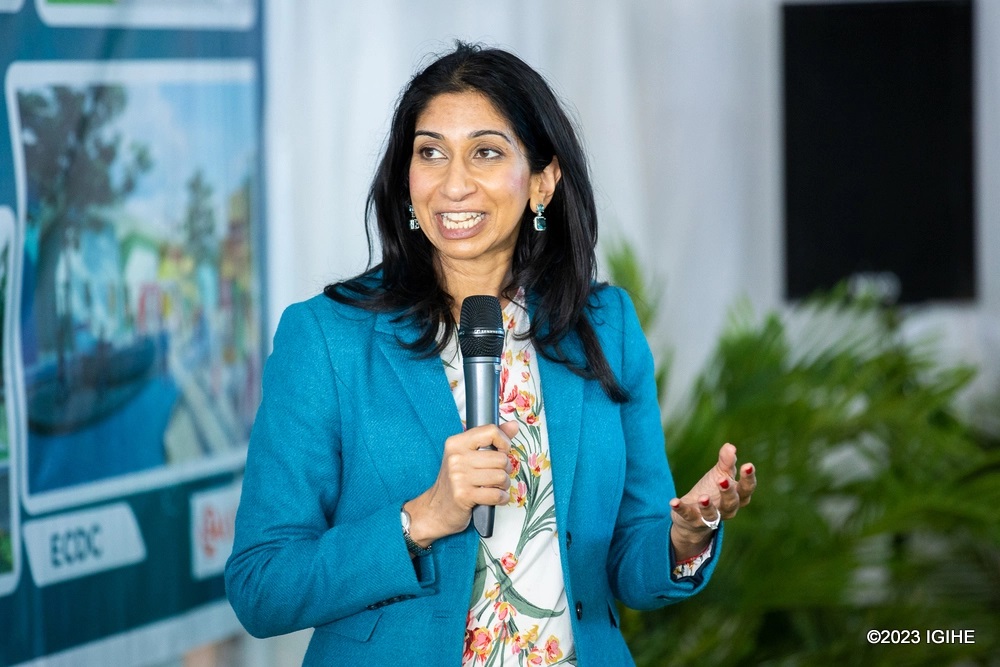
In response to a question asked by BBC on Sunday about a 2018 protest in a Rwandan camp, Braverman admitted to not being familiar with the case, but claimed to be “on strong ground” in stating that Rwanda was a secure destination. She went on to suggest that Rwanda is the ideal solution for the small boats problem facing Britain.
During a recent interview with the media, Braverman stated that the High Court had examined the details of their agreement with Rwanda and concluded that the country was safe and that their arrangements were lawful.
She added that they are considering relocation options beyond 2023. Braverman, who visited Rwanda last month, refrained from providing a specific date for the first flight to leave.
In April last year, Rwanda and the United Kingdom signed the Migration and Economic Development Partnership.
The deal signed in 2022 paves the way for deportation to Rwanda of migrants and asylum seekers staying in the UK illegally.
The UK made the decision to discourage people crossing to the country illegally and reduce the budget spent on them every year.
This year, Rwanda and UK signed additional agreement aimed at expanding the provision of support for migrants to be deported to Rwanda.
The UK believes that agreements signed with Rwanda will pave the way for a solution for increasing illegal migrants to the country.
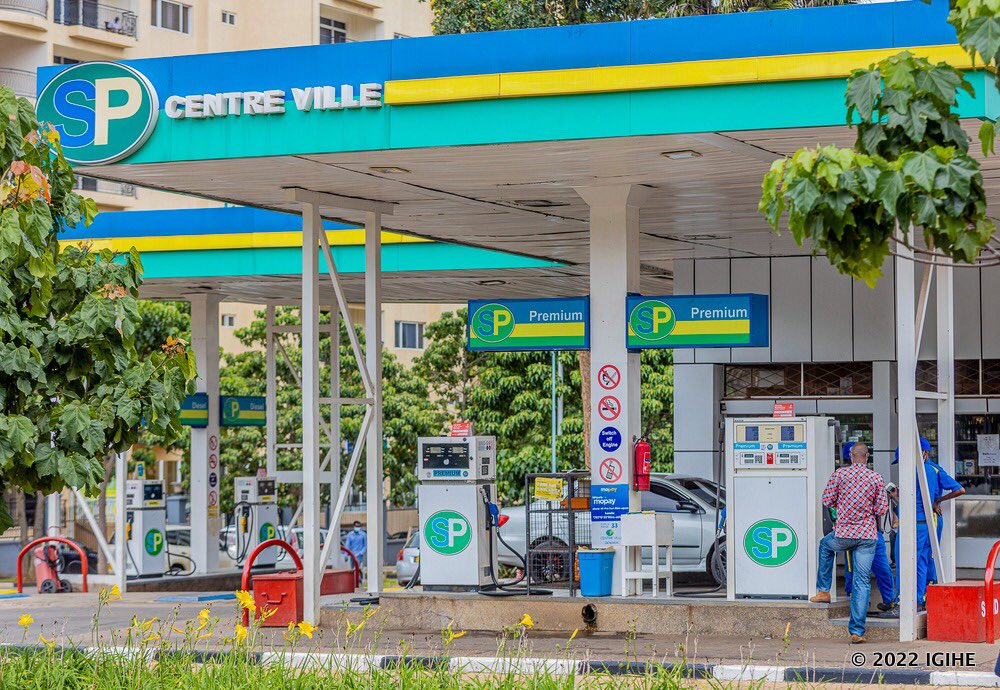
The Rwanda Utilities Regulatory Authority (RURA) has implemented this decision, which will see a slight reduction in the prices of petroleum products.
A liter of petrol will cost 1,528 Rwf instead of 1,544 Rwf, and diesel will cost 1,518 Rwf instead of 1,562 Rwf, compared to the previous announcement made in February.
The decision to reduce fuel prices comes after a period of rising fuel prices worldwide.
The announcement, made on Sunday evening, will take effect on the same day at 7:00 p.m.
This move is aimed at relieving financial pressure on Rwandan households and stimulating the country’s economy. Over the past two years, the Rwandan government has subsidized petroleum product prices to help manage inflation rates and rising prices of goods and services in the country.
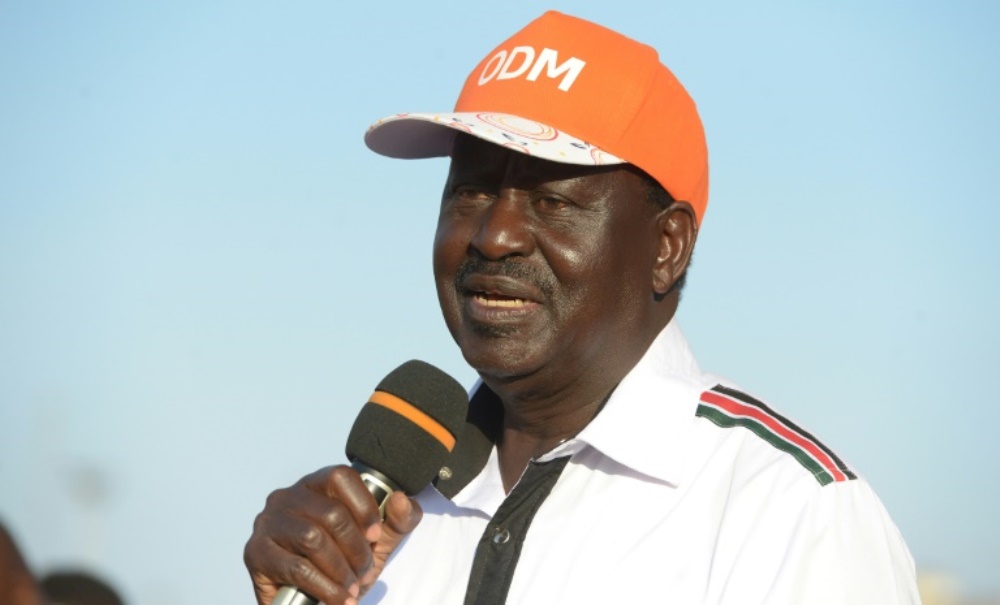
Odinga’s supporters have taken to the streets in recent weeks, protesting against high living costs and alleged fraud in last year’s election.
However, the protests have been marred by violence, with at least three people killed, 400 wounded, and some businesses looted.
In response to Ruto’s suggestion of creating a bipartisan parliamentary committee to address the opposition’s concerns, according to Al Jazeera, Odinga announced on Sunday that he was ready for negotiations, describing the president’s statement as an olive branch and a “positive development”.
“We stand down our demonstrations for Monday…But in doing so, we want to emphasize that the right to assemble, to demonstrate, petition, and speak are iron-clad as provided for in our constitution,” Odinga said. However, he also emphasized that his party “reserve[s] the right to call for demonstrations should this process not bear fruit”. The opposition has been pushing for electoral commission reforms, including stronger assurances that the president cannot pack the body with supporters.
Ruto’s government has scrapped subsidies on fuel, maize, and electricity, which has led to a high cost of living for many Kenyans. Odinga pledged to engage the government on the issue, suggesting subsidies to reduce the cost of living. He also warned that if there was no meaningful engagement or response from Ruto, the protests would begin again in one week.
In 2007, post-election violence in Kenya left over 1,200 people dead, prompting religious groups to urge the government and opposition to engage in dialogue to prevent a similar situation from happening again. The international community has also expressed concern over the recent violence in Kenya, with the United States, United Kingdom, and African Union calling for a peaceful end to the chaos.