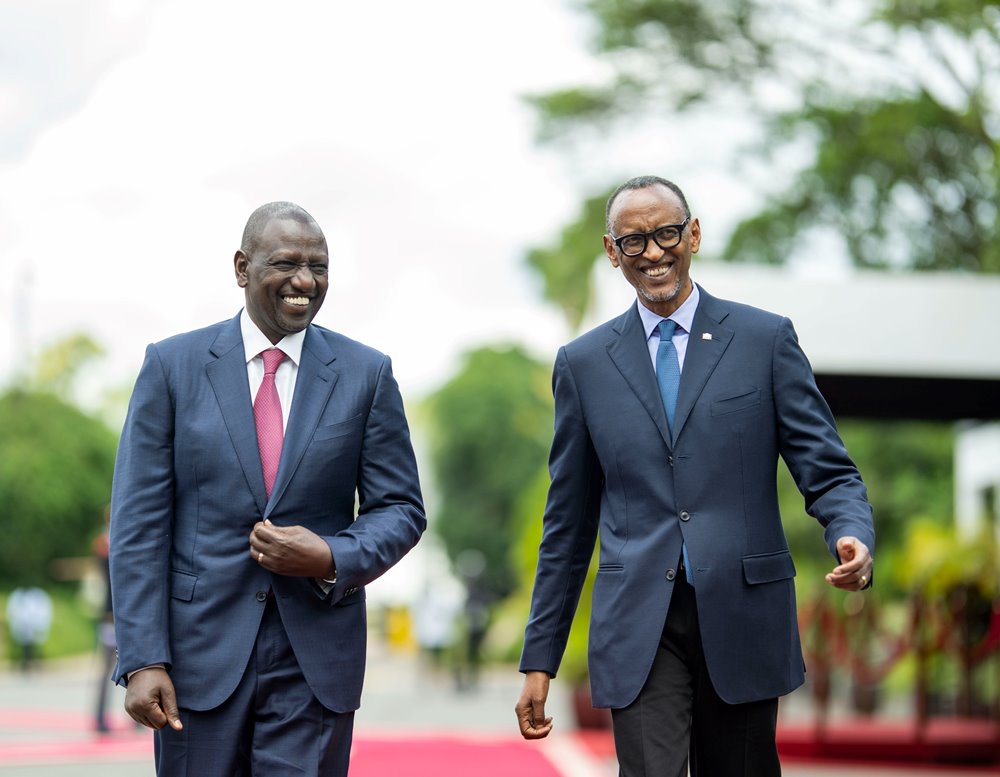
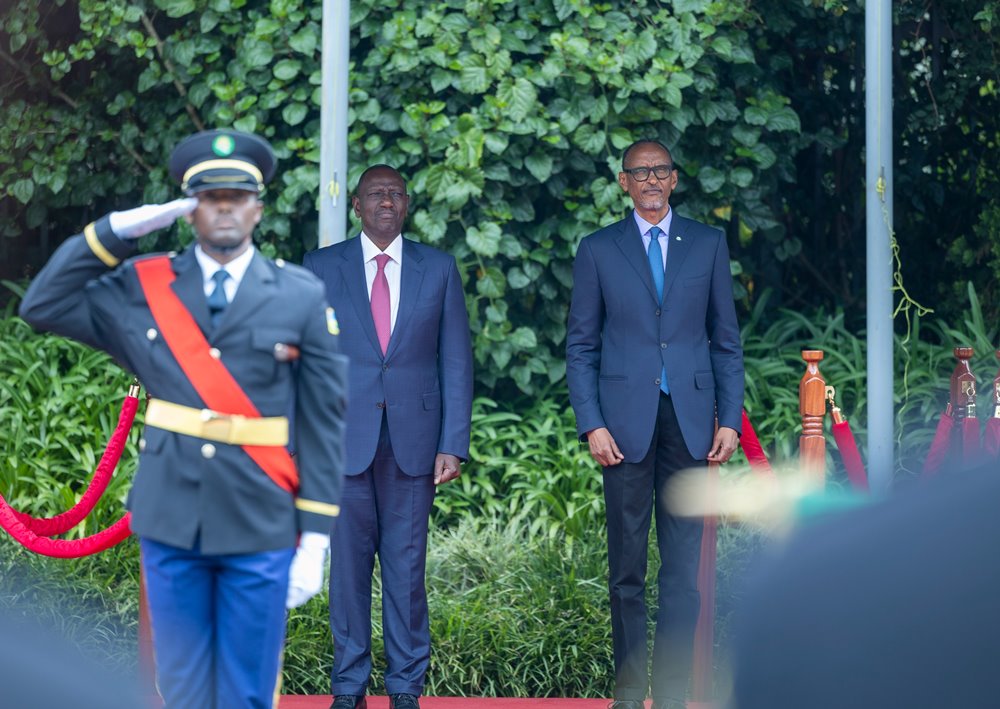
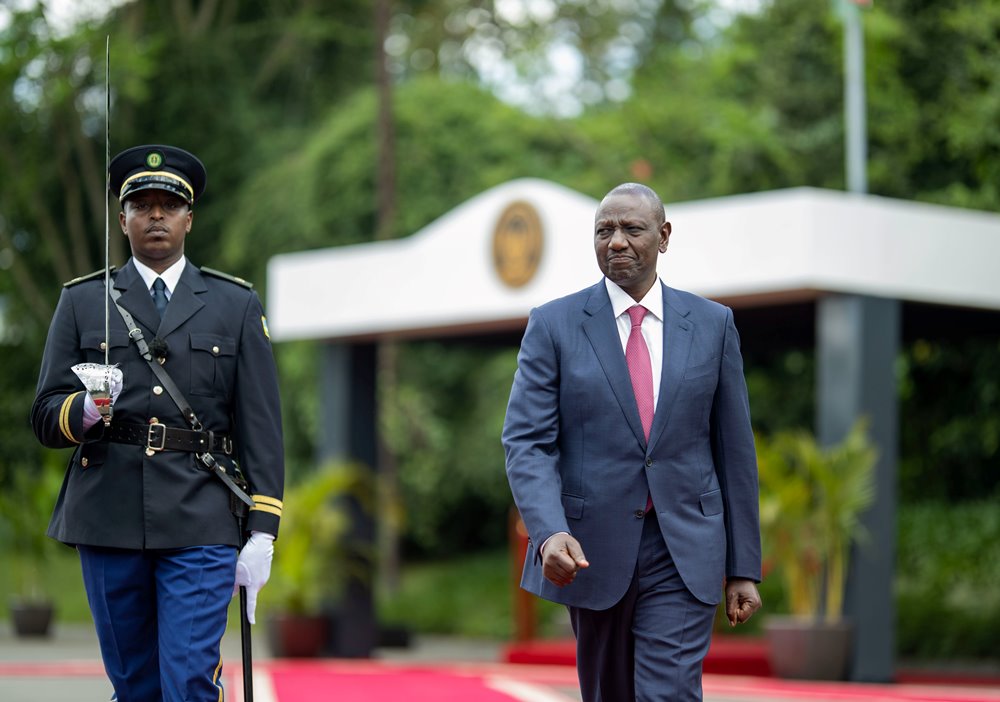
During his trip, he plans to meet with the Kenyan diaspora residing in Rwanda to discuss matters concerning the diaspora and government policies.
The Kenyan embassy in Kigali has reported that this meeting will allow the Kenyan community to engage in dialogue with their president. After taking office, President Ruto has made efforts to enhance regional ties and integration in East Africa, recently advocating for the elimination of trade barriers in the sub-region.
Ruto’s visit to Rwanda aims to strengthen regional relations and promote increased cooperation between the two nations. He also intends to hold bilateral talks with his Rwandan counterpart, Paul Kagame, to discuss strengthening the Kigali-Nairobi axis and other areas of shared interest.
Among others, Ruto plans to visit the Kigali Genocide Memorial to pay homage to the victims of the 1994 Genocide against the Tutsi. The memorial visit holds significance as it coincides with the 29th commemoration of the Genocide set to begin on Friday.
President Paul Kagame will host a state banquet in honor of President Ruto, highlighting the importance of bilateral relations and regional cooperation between the two nations.
The two leaders last met in November 2022 before the United Nations Climate Conference (COP27) in Egypt, where they discussed sustaining positive and constructive bilateral relations between Kenya and Rwanda.
Ruto’s visit to Rwanda underscores the importance of their relations and their determination to foster cooperation for the region’s benefit.
According to the Kenyan embassy in Kigali, President Ruto’s meeting with the Kenyan diaspora in Rwanda will provide an opportunity for them to engage in dialogue with him on matters relating to the diaspora and government policy, as stated in a dedicated statement by the embassy.
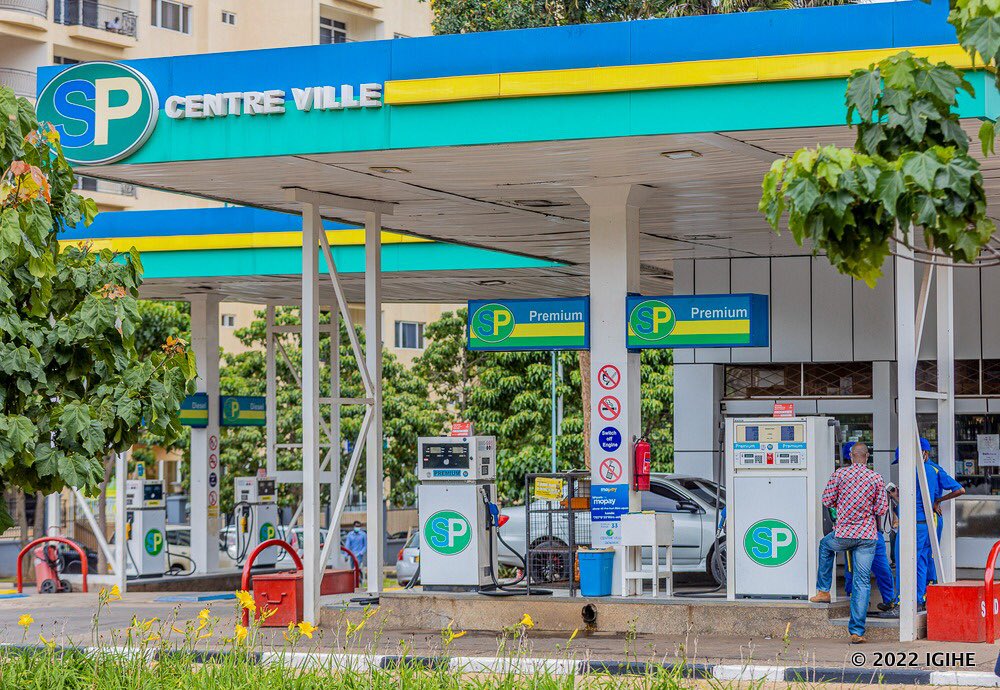
The duo was at the time found in possession of 100 litres of diesel, which they had siphoned from a parked truck in Kicukiro District.
Chief Inspector of Police (CIP) Sylvestre Twajamahoro, the Police spokesperson for the City of Kigali, said that the duo was arrested at about 09:30a.m. after reports from the people.
“Earlier that night, they siphoned 100 litres of diesel from a Howo truck, which was parked at Kicukiro centre, loaded five jerrycans of diesel in another vehicle and left.
Following information on the criminal act, Police trailed them and intercepted them along Muhima-Nyabugogo road in Nyarugenge District,” CIP Twajamahoro said.
One of the suspects is a turnboy of the Howo truck, who hired another vehicle to transport the stolen fuel to Nyabugogo.
The second suspect is a driver, whom the turnboy had paid Frw20,000 to transport the stolen fuel. They were handed over to RIB at Muhima station.
CIP Twajamahoro thanked those who reported the illegal act and lauded the impact of neighborhood watch against lawlessness.
He further warned against illegal sell of petroleum products.
Article 6 of Law No 85/2013 of 11/9/2013 regulating petroleum and petroleum products trade in Rwanda provides that; any person, who shall perform any type of petroleum and petroleum products trade shall have a license from the competent Authority.
In article 22, the petroleum and petroleum products stores and other places exclusively reserved for the parking of petroleum and petroleum products tankers shall be determined by the competent authority.
Article 166 of law determining offences and penalties in general states that; any person convicted of theft is liable to imprisonment for a term of not less than one year and not more than two years and a fine of not less than Frw1 million and not more than Frw2 million, community service in a period of six months or only one of these penalties.
Article 167 provides a double penalty, if the offender committed the crime through burglary, climbing or possession of keys other than the owner; the theft is carried out during the night or the theft is carried out by more than one person.
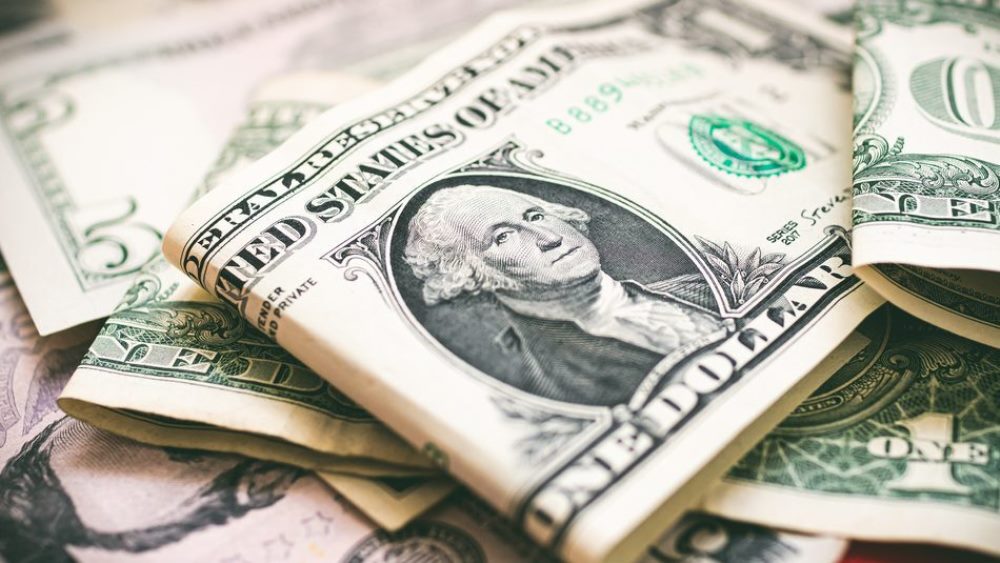
Among the most profound impacts of this conflict is the acceleration of global power distribution towards multipolarity and the trend of de-dollarisation. In this article, we will explore the reasons behind this shift, the role of sanctions, and the impact of the conflict on the global economy.
{{De-dollarisation: A Long-Term Trend}}
Although de-dollarisation has been a long-term process, the Ukraine conflict has intensified this trend. Despite the US economy representing a shrinking share of global output, the dollar still plays an outsized role in global markets. However, central banks are increasingly moving away from the greenback as a reserve currency, with a quarter shifting into the Chinese renminbi and three-quarters into currencies of smaller countries.
{{Reasons for De-dollarisation}}
Several factors have contributed to the de-dollarisation trend, including the wide-ranging impact of US-led economic sanctions. With a quarter of the global population suffering from these sanctions, countries have sought alternatives to the dollar to survive and thrive.
Sanctions have also played a critical role in the ongoing conflict in Eastern Europe, prompting Eastern powers like Russia and China to reduce their reliance on the US currency.
{{Russia’s De-dollarisation Efforts}}
Russia began its de-dollarisation process around 2014 in response to Western sanctions following its annexation of Crimea.
The outbreak of the Ukraine conflict and subsequent economic sanctions have only accelerated this process. Excluded from the SWIFT system, Russia has turned to alternative assets, hiked interest rates, and insisted on ruble payments for its exports.
Moscow has also pursued bilateral fuel deals involving ruble payments and reduced its reliance on the dollar for collateral.
{{China’s Growing Economic Influence}}
China’s growing economic power poses a significant threat to the dollar’s status as the world’s reserve currency. Its forays into Middle Eastern markets, particularly Saudi Arabian oil, could tip the scales toward widespread adoption of the Chinese yuan.
The US dollar’s role as the de facto currency in global commodities markets, known as the “petrodollar,” has historically underpinned its credibility. A shift towards the Chinese yuan in these markets could have significant implications for the global economy.
The Ukraine conflict has accelerated the trend of de-dollarisation, driving countries to seek alternatives to the US currency amid a shift towards multipolarity in global power distribution.
This shift, driven by factors such as economic sanctions and the growing influence of China, could have lasting effects on the global economy and reshape the financial landscape for years to come.
The De-dollarisation Challenge: The United States Faces a New Economic World Order
The de-dollarisation trend, which has been accelerated by geopolitical events and a shift toward multipolarity, is reshaping the global financial landscape. As countries increasingly turn to alternative currencies and challenge the US dollar’s dominant position, the United States faces significant implications for its standing as the world’s number one superpower.
{{Reduced Global Influence}}
The US dollar’s historical status as the dominant global reserve currency has granted the US significant sway over international trade, finance, and geopolitics. However, as countries increasingly adopt alternative currencies, the United States may lose some of its leverage in these areas, leading to a potential decline in its global influence.
{{Weakened Economic Power}}
The widespread use of the dollar for international transactions and as a reserve currency has generated substantial demand, maintaining its value and supporting the US economy. De-dollarisation could weaken this demand, causing a depreciation of the dollar and potentially diminishing US economic power.
{{Higher Borrowing Costs}}
The dollar’s dominance has enabled the US government to borrow at lower interest rates due to consistent demand for US Treasury bonds. As demand for the dollar decreases, borrowing costs could rise, making it more expensive for the US government to finance its debt and potentially impacting fiscal policy.
{{Diminished Policy Effectiveness}}
The US has often utilized sanctions and other financial measures as tools for implementing its foreign policy. However, with the de-dollarisation trend, the effectiveness of these tools may decline as countries find ways to bypass the US financial system and conduct transactions in other currencies, limiting America’s ability to exert financial pressure on its adversaries.
{{Erosion of the Petrodollar System}}
The petrodollar system, in which oil sales are predominantly conducted in US dollars, has been crucial in maintaining the dollar’s global supremacy. As countries like China expand their influence in the commodities markets and challenge the petrodollar, the US could lose this critical source of support for its currency, further eroding its economic clout.
{{Shift Towards Multipolarity}}
De-dollarisation is part of a broader move towards a more multipolar world where economic power is distributed more evenly among several major players. As countries like China and Russia continue to grow in economic influence and adopt alternative currencies, the United States may find its position as the world’s undisputed superpower increasingly challenged, heralding a new era of global power dynamics.
the de-dollarisation trend could have far-reaching effects on the US as the world’s number one superpower, leading to a decline in global influence, weakened economic power, and a shift towards a more multipolar world. As the international financial landscape evolves, the United States must adapt and find new ways to maintain its position in a changing world order. Navigating these challenges will require innovative strategies and a willingness to engage with emerging economic powers to ensure America’s continued prominence on the global stage.
In response to a question asked by BBC on Sunday about a 2018 protest in a Rwandan camp, Braverman admitted to not being familiar with the case, but claimed to be “on strong ground” in stating that Rwanda was a secure destination. She went on to suggest that Rwanda is the ideal solution for the small boats problem facing Britain.
During a recent interview with the media, Braverman stated that the High Court had examined the details of their agreement with Rwanda and concluded that the country was safe and that their arrangements were lawful.
She added that they are considering relocation options beyond 2023. Braverman, who visited Rwanda last month, refrained from providing a specific date for the first flight to leave.
In April last year, Rwanda and the United Kingdom signed the Migration and Economic Development Partnership.
The deal signed in 2022 paves the way for deportation to Rwanda of migrants and asylum seekers staying in the UK illegally.
The UK made the decision to discourage people crossing to the country illegally and reduce the budget spent on them every year.
This year, Rwanda and UK signed additional agreement aimed at expanding the provision of support for migrants to be deported to Rwanda.
The UK believes that agreements signed with Rwanda will pave the way for a solution for increasing illegal migrants to the country.
The Rwanda Utilities Regulatory Authority (RURA) has implemented this decision, which will see a slight reduction in the prices of petroleum products.
A liter of petrol will cost 1,528 Rwf instead of 1,544 Rwf, and diesel will cost 1,518 Rwf instead of 1,562 Rwf, compared to the previous announcement made in February.
The decision to reduce fuel prices comes after a period of rising fuel prices worldwide.
The announcement, made on Sunday evening, will take effect on the same day at 7:00 p.m.
This move is aimed at relieving financial pressure on Rwandan households and stimulating the country’s economy. Over the past two years, the Rwandan government has subsidized petroleum product prices to help manage inflation rates and rising prices of goods and services in the country.
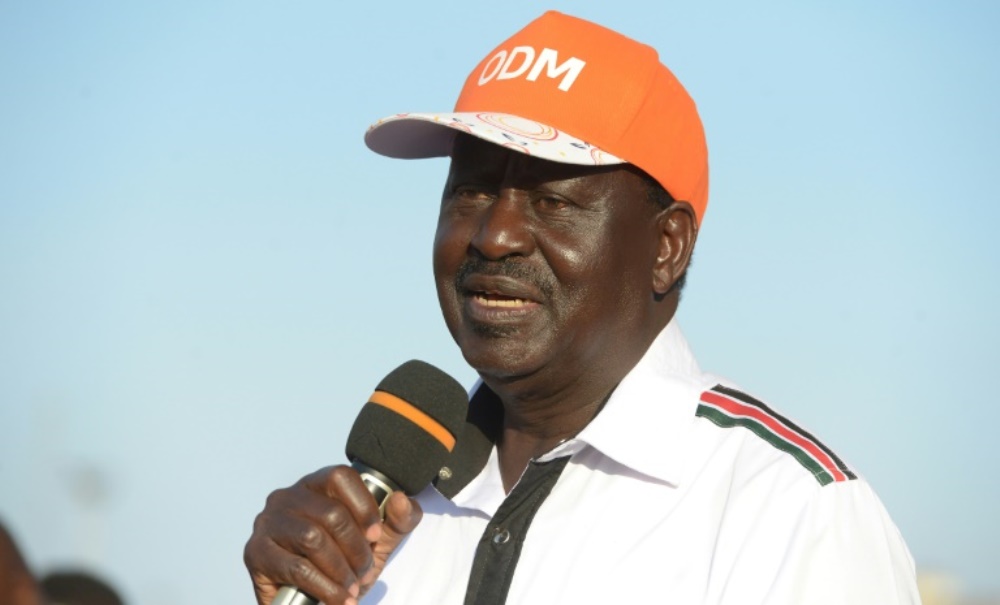
Odinga’s supporters have taken to the streets in recent weeks, protesting against high living costs and alleged fraud in last year’s election.
However, the protests have been marred by violence, with at least three people killed, 400 wounded, and some businesses looted.
In response to Ruto’s suggestion of creating a bipartisan parliamentary committee to address the opposition’s concerns, according to Al Jazeera, Odinga announced on Sunday that he was ready for negotiations, describing the president’s statement as an olive branch and a “positive development”.
“We stand down our demonstrations for Monday…But in doing so, we want to emphasize that the right to assemble, to demonstrate, petition, and speak are iron-clad as provided for in our constitution,” Odinga said. However, he also emphasized that his party “reserve[s] the right to call for demonstrations should this process not bear fruit”. The opposition has been pushing for electoral commission reforms, including stronger assurances that the president cannot pack the body with supporters.
Ruto’s government has scrapped subsidies on fuel, maize, and electricity, which has led to a high cost of living for many Kenyans. Odinga pledged to engage the government on the issue, suggesting subsidies to reduce the cost of living. He also warned that if there was no meaningful engagement or response from Ruto, the protests would begin again in one week.
In 2007, post-election violence in Kenya left over 1,200 people dead, prompting religious groups to urge the government and opposition to engage in dialogue to prevent a similar situation from happening again. The international community has also expressed concern over the recent violence in Kenya, with the United States, United Kingdom, and African Union calling for a peaceful end to the chaos.
Composed of about 40 military personnel, the first South Sudanese contingent, transported by the Kenyan army plane, will be deployed around Goma for peacekeeping operations.
“As of this Sunday and during the coming week, we begin the deployment of our colleagues from South Sudan who will join the other colleagues already deployed on the ground,” Emmanuel Kaputa, deputy commander of the EAC regional force, declared at the Goma airport.
This deployment came a few days after the deployment of nearly 1,000 Ugandan soldiers in the territory of Rutshuru of North Kivu.
South Sudan is, therefore, the fourth country to officially join the EAC regional force aimed at ending the violence in eastern DRC, after Kenya, Burundi and Uganda.
In 2022, the EAC countries set up a regional force to intervene in eastern DRC, in particular, to stem the advance of the March 23 Movement rebel group.
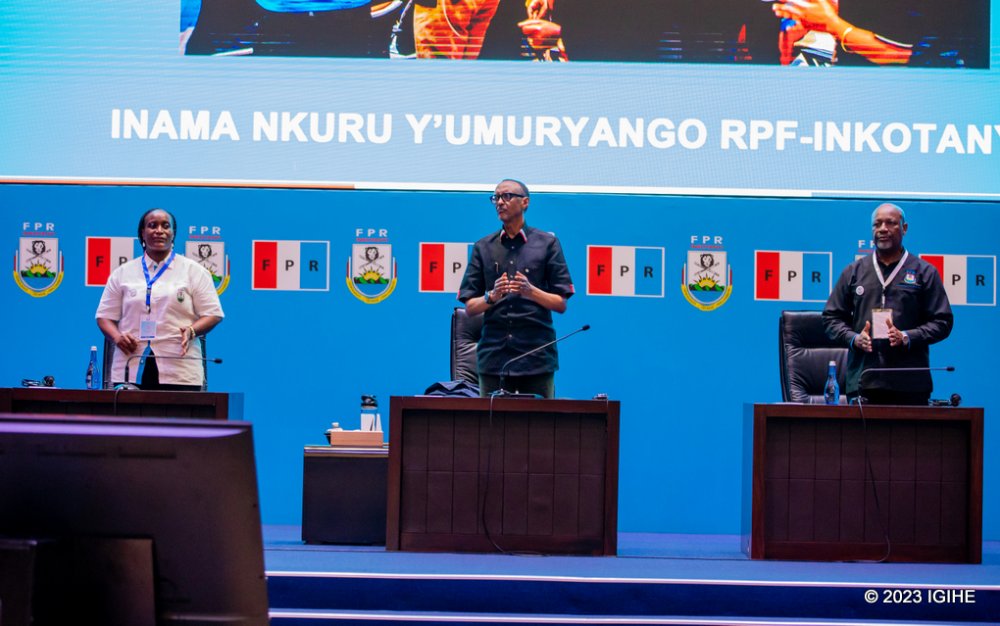
The President’s candidacy was seconded by Senator Marie-Rose Mureshyankwano, who praised him as a selfless leader who has delivered positive results to the party.
Kagame’s only challenger was Abdul Karim Harerimana, who announced his candidacy but was only able to secure three votes out of 2,102 voters.
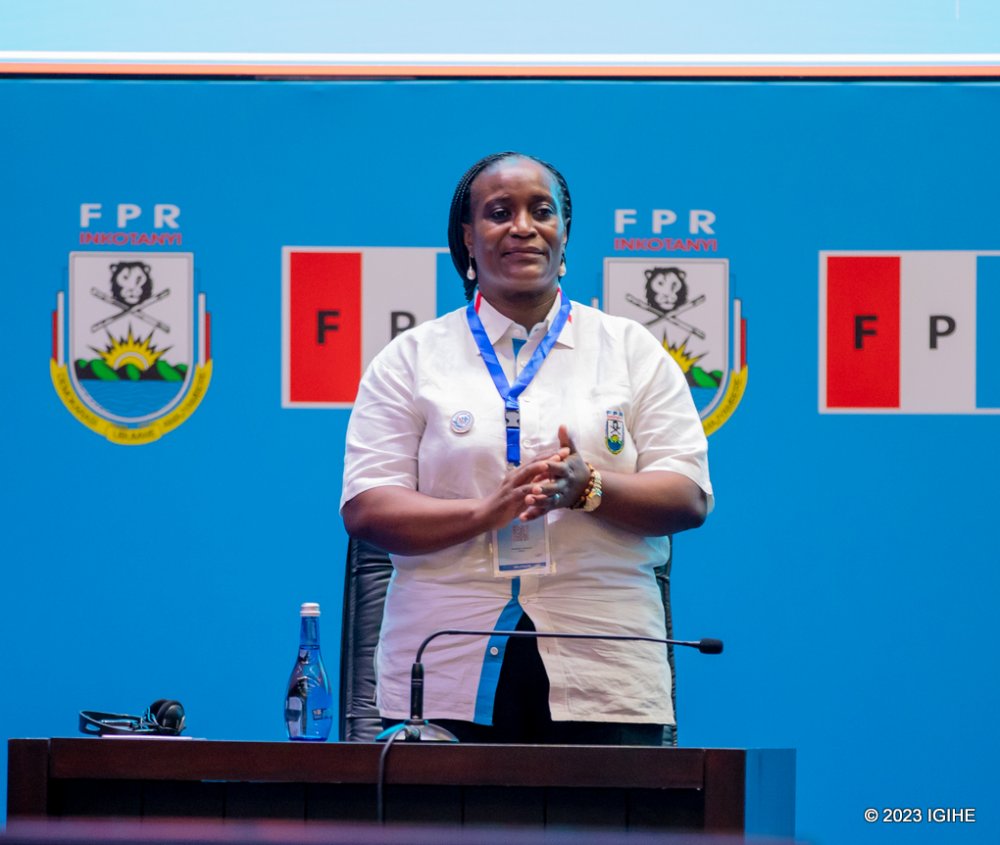
In addition to the re-election of President Kagame, on 2nd April 2023, the congress also saw the election of the party’s first-ever female Vice President, Consolee Uwimana, who was endorsed by party elder Tito Rutaremara and received 1,945 votes.
Uwimana’s election is a significant milestone for the party, as it marks the first time a woman has been elected as the party’s number two.
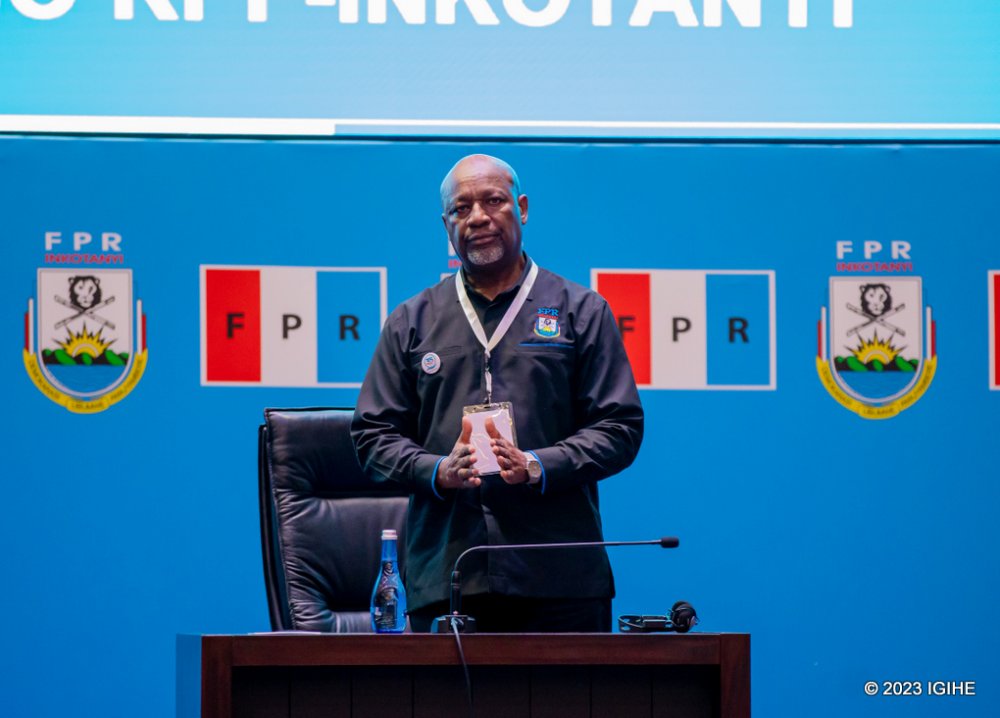
The congress also elected a new Secretary General, Wellars Gasamagera, who received 1,899 votes. Gasamagera replaces François Ngarambe in the role. Uwimana, on the other hand, replaces Christophe Bazivamo.
IBUKA-Canada is headquartered in Toronto, Canada’s economic capital. The newly elected leadership committee includes President Léo Kabalisa, who resides in Toronto, and is deputized by Marie Josée Gicali living in Montréal, and Eugène Nshimiyimana, who resides in Hamilton. Gustave Mukurarinda living in Ottawa-Gatineau was selected as secretary.
Kabalisa expressed his satisfaction with the establishment of IBUKA Canada after a long period of conceptualization.
“The establishment of this organization is crucial for many reasons. Here in Canada, the majority of Rwandans living here are survivors of the Genocide against the Tutsi. IBUKA Canada will bring together different organizations aimed at remembering and restoring the dignity of our relatives who were killed with extreme cruelty and most of us were not able to lay them to rest decently,” he said.
IBUKA Canada aims to provide a platform for survivors of the Genocide against the Tutsi, which took the lives of over 1 million victims in just 100 days, to connect with each other.
Kabalisa also expressed his gratitude for the fact that IBUKA Canada will contribute significantly to the efforts to fight against people trivializing the Genocide against the Tutsi.
He emphasized that it is also a platform for young people to gain a deeper understanding of the history of the Genocide against the Tutsi, stating that “they will be responsible for preserving history tomorrow to prevent a recurrence of what happened during the Genocide against the Tutsi.”
“We live in foreign countries, but nationals also want to know who we are and our history. The fact that the Genocide is a crime against humanity raises alarm and attracts global attention beyond the place where it happened. That is why we have the responsibility to share our history with the world, starting with the places where we live in Canada, to know the truth and prevent a recurrence of what happened,” Kabalisa added.
Kabalisa further stated that “Ibuka-Canada” complements other organizations responsible for the preservation of the history of the Genocide against the Tutsi, including Ibuka Belgique, Ibuka Suisse, Ibuka Rwanda, Ibuka Italie, Ibuka Hollande, Ibuka France, Ibuka Allemagne, Ibuka USA, Ibuka Sénégal, Ibuka Suède, and Ibuka Danemark.
This is a significant step for the future of air transport in Africa. The official signing ceremony to mark the country’s entry into the organization took place on March 30 in Kigali, paving the way for the Rwandan parliament to ratify the air navigation agency’s convention.
The agreement was signed by the president of its Committee of Ministers, Oumarou Malam Alma, and Ernest Nsabimana, the Rwandan Minister of Infrastructure.
This membership will allow Rwanda to benefit from ASECNA’s expertise, network, and technology in assisting with navigation and securing airspace.
This is also a move forward in the process of liberalizing the African sky and implementing the African Single Air Transport Market (MUTAA) by 2063, led by 18 countries, including Rwanda.
By joining ASECNA, Rwanda will become the first East African country to be part of the organization and will be able to benefit from its expertise in air navigation.
This is expected to improve the safety and efficiency of the management of Rwandan airspace, as well as facilitate trade and travel between ASECNA member countries.