Representing Zimbabwe, Foreign Affairs and International Trade Minister Frederick Shava, along with two other cabinet ministers, led the delegation.
Rwanda’s Minister of Foreign Affairs and International Cooperation, Dr. Vincent Biruta, represented the country during the signing ceremony.
Notably, Dr. Shava emphasized the importance of implementing the agreements and urged both countries to work diligently to ensure their full implementation.
He also acknowledged the strong bilateral relations between Rwanda and Zimbabwe.
Meanwhile, Dr. Biruta highlighted the existing economic partnership as a noteworthy aspect of cooperation between the two nations.
He emphasized the deep-rooted trade relations and the potential for further expansion.
Both countries recognize the urgent need to enhance trade and economic cooperation, aligning with the amicable relations enjoyed by both nations.
Residents in the conflict zones are facing acute shortages of basic services, food, electricity, and water supply, while the situation has been exacerbated by air bombardments and looting of major local markets.
This has disrupted the supply of daily necessities, sent the prices of food commodities to skyrocket, and raised fears about an inflation surge that could push millions of Sudanese to the edge of starvation.
Mohamed Noureddine Hashim, a Sudanese economist, told Xinhua that “major food commodity factories and import companies of the country are in Khartoum, but most of those factories have now been vandalized to closure.”
He warned the number of citizens in need of urgent aid will likely increase “as millions of employees are currently unable to work because of the war.”
“Prices have increased dramatically for staple goods and there are shortages of imported goods such as wheat flour, oil, and tomato paste,” said the United Nations Office for the Coordination of Humanitarian Affairs, citing a report by the Mercy Corps.
“In some areas, shops have closed because of insecurity or lack of goods. Access to cash remains a significant issue in Khartoum and South Darfur, while the increase in fuel prices and transportation costs has hindered both daily life and the ability of people to move out of insecure areas,” the report said.
Residents of Khartoum are suffering from frequent power outages for long hours due to the suspension of purchasing electricity through bank applications or direct sales windows, according to the National Electricity Corporation.
“There is no electricity in the northern Al-Shabiya area (a neighborhood north of Khartoum),” Tariq Hanafi, a resident of the Al-Shabiya neighborhood, told Xinhua on Tuesday.
Hanafi said that some residents had to resort to other alternatives, such as generators, but failed to operate them due to a lack of fuel. The power outages also disrupted the water supply.
In addition, the disruption of the education system is causing deep concerns in the country, as observers said it could leave the future of thousands of students uncertain.
Salah Abdel-Ghaffar, a Sudanese academician and educational supervisor, said on Tuesday that over 500,000 students were scheduled to take the Sudanese certificate exams next June, but now their fate is uncertain.
“If the crisis prolongs, the academic year will be blown in the air,” said Abdel-Ghaffar, who also expressed concerns about the “psychological effects of war on children.”
Eyewitnesses reported direct clashes on Tuesday between units of the Sudanese Army and RSF fighters in the Jabra area in the south of Khartoum, as well as Arkaweet, Al-Mamoura and El-Jeraif in the east of the capital.
The Sudanese Doctors Union said on Tuesday in a statement that the civilian death toll has climbed to 822 since the clashes broke out on April 15.
The event brought together officials from the United Nations Office for Disarmament Affairs (UNODA) as well as the 15 member states of the Regional Center on Small Arms in the Great Lakes Region, the Horn of Africa and Bordering States (RECSA) to review ways of preventing the diversion of small arms and light weapons for illegal activities and hence contributing to the implementation of the African Union Silencing the Guns initiative.
In his opening remarks, Ivor Richard Fung, chief of the Conventional Arms Branch at the UNODA, said that one way of eradicating the illicit trade in small arms and light weapons is through strengthening national arms regulations. “These weapons also need to be marked so that they are given a specific identity so that they can be easily traced and recovered.”
Badreldin Elamin Abdelgadir, executive secretary of the RECSA, said that combating the unregulated trade in small arms and light weapons in all its aspects, as well as addressing the impact of misuse of legally owned weapons requires examining the human factors behind the supply, demand, and misuse of such weapons.
He noted that all the spheres of society have to be integrated and mobilized to ensure that all actors and institutions play a role in preventing the illicit arms flows, and diversion of weapons into the illegal and criminal networks.
Wilson Njega, principal administrative secretary in Kenya’s Ministry of Interior and National Administration, said that the country is about to fulfill one of its commitments to regional and international treaties on arms control as it nears completion of its marking of firearms and ammunition.
Njega said that the National Police Service has already marked 98 percent of its firearms stock while the Kenya Defence Forces 70 percent. “Considering that small arms and light weapons are responsible for many deaths and injuries in armed conflicts, it is imperative that we enhance the traceability of our firearms and ammunition.”

PCH operates a global network of internet exchange points including Ricta, an institution mandated to manage the .RW country code top level domain.
The firm is also in the business of providing equipment, training, data, and operational support to organizations and individual researchers seeking to improve the quality, robustness, and Internet accessibility.
PCH global provides operational and cybersecurity support to Ricta and the many other hard working IXP operators who keep the internet bits flowing.
An IXP is an essential technical infrastructure where networks come together to connect and exchange Internet traffic.
As of 2022, major PCH projects include building and supporting nearly half of the world’s approximately 700 internet exchange points (IXPs) and maintaining the canonical index of Internet exchange points.
On the same day, President Kagame met with Dr. Lassina Zerbo, Chairperson of Rwanda Atomic Energy Board (RAEB) and Dr. Fidel Ndahayo, CEO of RAEB.
Rwanda’s Presidency has revealed that they discussed the importance of nuclear energy for Africa’s future and the need to invest in capacity building to take advantage of ongoing innovations, including the development of small modular reactor technology.
The event is part of a series of events piloted by the Delegation of the European Union in Rwanda in the runup to the Women Deliver 2023 conference from 17 until 20 July 2023 in Kigali. In a #TeamEurope effort, several themes closely related to the cross-cutting issues of gender equality and women’s empowerment will be highlighted.
This Tuesday on 16th May 2023, the Embassy of Belgium in Kigali, the Belgian development agency Enabel, Wallonie-Bruxelles International (WBI) and European and Rwandan partners have brought together women entrepreneurs in the cultural and creative industry in Rwanda and gave them the opportunity to showcase their companies, products and services.
Visual artists, advocates of the Rwandan culinary culture, illustrators, fashion designers, authors, etc., a wide range of talented creators responded to the call and came to celebrate their achievements with an audience of 200+ participants from different backgrounds : entrepreneurs, private sector development experts, government bodies, artists, institutions, etc.
The cultural fair was animated by an artistic program, curated by L’Espace, which is a creative lab, arts gallery and theatre space in Kigali headed by a female entrepreneur. The guests were treated to a variety of musical performances, theater reading, poetry, slam and dance, all performed by talented Rwandan artists.
Special honors went to one Rwandan cultural entrepreneur in particular: Credia Umuhire Ruzigana, winner of Enabel’s Awa Prize 2022. With her company, Imanzi Creations, Credia develops entertainment and educational tools for youth, based on Rwandan cultural references. With illustrated story books, games and puzzles, Imanzi takes inspiration from forgotten Rwandan heroes. In doing so, she promotes Rwandan heritage and makes an impact on society.
Her efforts were crowned by victory in the category ‘Scale-up’ of the first edition of the Awa Prize, Enabel’s new initiative for women entrepreneurs. With co-laureats from from Burundi, Mali and Marocco, she received the prize a first time on 26 January 2023 from the hands of Her Royal Highness Queen Mathilde of Belgium and Belgian Minister for Development Caroline Gennez. The idea behind the prize is to show women and men that entrepreneurship can be synonymous with social success, personal development and positive effects on the community – without upsetting the family balance.
“I feel honored to be among the winners of this first edition of the Awa Prize” the winner said. “The exposure, the network and the platform will be good for us. It’s also an opportunity for me to meet new people, to develop partnerships to grow the business and create more value and impact in my country and beyond.”
In his opening speech, Mr. Versmessen, Belgian Ambassador to Rwanda, highlighted:
“Women empowerment is a joint ambition of Rwanda and our Team Europe. This event is meant to inspire us. How can we contribute to further enable female entrepreneurship in the Rwandan cultural industries?”
Team Europe is a strong partner of the Rwandan authorities and society to promote women’s entrepreneurship. The development of women entrepreneurship is a global challenge, including in Rwanda. Indeed, globally, one in three businesses is owned by a woman. Encouraging and supporting women’s entrepreneurship is therefore tantamount to taking action to achieve several Sustainable Development Goals (SDGs), by fighting poverty (SDG 1), taking a step towards gender equality (SDG 5), promoting the creation of and access to decent jobs and participating in economic growth (SDG 8).
The Awa Prize will be awarded again between 5th and 15th September, 2023. Pre-registration is already possible on https://stories.enabel.be/awa-prize/
Thirty-five law enforcement officers from 10 African countries are part of the 11th PSCSC intake. The Police students are from Ethiopia, Kenya, Malawi, Namibia, Lesotho, Nigeria, Somalia, South Sudan, Tanzania and Rwanda.
The external study tour is held under the theme: “Socio-economic development, good governance and justice as pillars of sustainable peace and security.”
On the first day of the tour on Monday, the students visited Botswana Police Service, where they were given insights into various disciplines of security, peace, justice and governance.
Presentations focused on the impact of law enforcement agencies in socio-economic development and justice, and how intelligence contributes to the protection of individual rights, prevention of crime and how it sets ground for economic development and justice.
They were also explained on how financial intelligence contributes to stabilizing financial system, including fighting money laundering and terrorism financing, among others.
Botswana Police Service Deputy Commissioner for Operations, Solomon S. Mantswe, who received the law enforcement students, lauded the existing “good bilateral relations” between Botswana Police and Rwanda National Police (RNP).
The two police institutions signed a cooperation agreement in January this year, to formalized partnership in fighting transnational organized crimes including terrorism related activities, human trafficking, hi-tech and cybercrime as well as exchange of information related to criminal elements.
Other areas of partnership include capacity development through training, and sharing of expertise.
“Ensuring effective policing requires an agile, highly motivated and digitized police service capable and ready to invest more in human capital development, partnership, research, innovation and modern technology,” Mr. Mantswe reiterated.
He urged the PSCSC students to take advantage of the course, share experiences, and benchmark best practices in law enforcement for their personal and institutional development.
The NPC commandant, Commissioner of Police (CP) Rafiki Mujiji, who heads the delegation, thanked the Botswana Police Service for hosting this year’s external study tour.
He noted that study tours translate theoretical learning into reality and that visiting Botswana was a deliberate decision to benchmark from good practices.
The one year PSCSC has five main components; a Master’s in Peace Studies and Conflict Transformation, operational and routine staff work, strategic leadership and management, international computer driving license, and peace support operations.
Tea was the highest contributing export, with a total of 510.3 tons valued at US$1,308,800. The main destinations for Rwandan tea were Pakistan, the United Kingdom, Kazakhstan, and Iran.
Horticultural exports amounted to 707.5 tons, generating US$930,989. The primary markets for Rwandan vegetables included the Democratic Republic of Congo (DRC), United Arab Emirates (UAE), the United Kingdom, France, and the Netherlands.
Besides, Rwanda exported 0.77 tons of coffee, earning US$6,166. The major importers of Rwandan coffee were Switzerland, Zambia, and Oman.
The Head of State made the advice as he interacted with students from Harvard Business School at Urugwitro Village on Monday 15th May 2023.
Reflecting on Rwanda’s remarkable transformation after the 1994 Genocide against the Tutsi, he attributed the country’s success to its refusal to remain mired in darkness.
“The country we inherited here was completely crushed. First impression, anybody would come and say, will these people ever find a way up? Even those of us, some of them would be wondering, shall we ever rise from this?”
The President said that this also happens in daily life but stressed the need to keep soldiering on to forge the way forward.
“The first lesson, no matter how down you are brought by any factors or forces, just don’t accept staying down, find a way up. Don’t despair,” he advised.
Kagame said that developing resilience is paramount for the pursuit of dignity.
“Second, how do you realize that? There are certain goods that must be available to you to realize that. That freedom to be able to go to school, to have health provision, to have food on the table, to do business, to think and become productive by yourself between you and somebody else and in the country,” he stated.
Kagame also highlighted that working with people has been the key enabler for Rwanda to achieve current transformations after the 1994 Genocide against the Tutsi.
He is among leaders that often deliver talks to students from Harvard Business School where he shares Rwanda’s resilience journey after Genocide against the Tutsi, serving as a source of inspiration and motivation for others who seek to overcome challenges and create positive change.
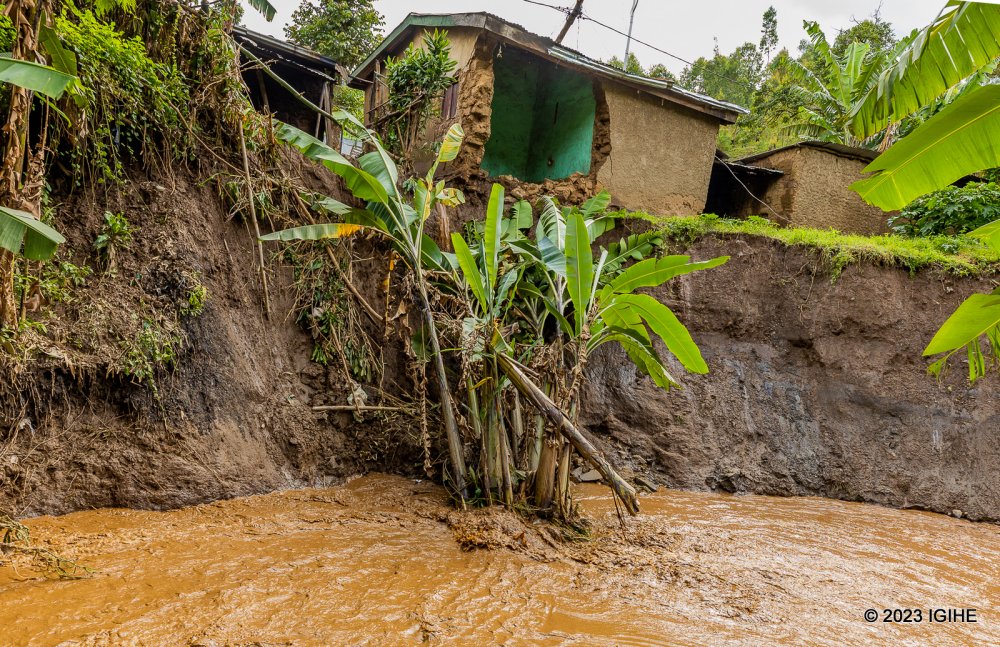
As of today, around 30,326 individuals have been displaced and are currently being accommodated at various provisional sites.
Several countries including China, France, Turkey, China, Barbados, Saudi Arabia, UAE, Qatar, Israel, Mozambique, Zimbabwe and Senegal among others sent their condolences following the floods and landslides.
Moussa Faki Mahamat, Chairperson of the African Union Commission, Coumba Dieng Sow, the Country Representative of the Food and Agriculture Organization of the United Nations (FAO) in Rwanda and Rolande Pryce, the World Bank Group Country Manager for Rwanda are among other leaders who sent their condolences to Rwandans.
On Monday 15th May 2023, President Kagame took to Twitter to commend the leaders and friends of Rwanda for their ongoing expressions of solidarity during this difficult period.
“Thank you to all the leaders and friends who sent condolence messages following the loss of lives from the devastating floods and landslides in Rwanda. We are grateful for your solidarity and support to the people of Rwanda. As we work to rebuild and provide assistance to the survivors, your messages are a reminder that we will overcome these challenges,” he tweeted.
Rwanda continues to receive support from individuals and private institutions to bolster its emergency response to the recent disasters.
Philippe Habinshuti, the Permanent Secretary in the Ministry of Emergency Management (MINEMA), has told IGIHE that the country is receiving assistance in the form of various essential items and cash donations.
MINEMA has reported that approximately Rwf119 million in funding has been raised through contributions via mobile money and bank accounts to aid the affected individuals.
Last week, President Kagame visited the disaster-hit areas in Rubavu District, including Mahoko, Pfunda, and Nyundo. He also visited the affected residents temporarily housed at the Inyemeramihigo, Nyamyumba, Kanyefurwe, and Vision Jeunesse Nouvelle sites, where he assured them of government support in returning to normalcy.
According to the Ministry of Infrastructure, the Rwandan government requires about Rwf110 billion (approximately 98 million U.S. dollars) to rebuild the infrastructure damaged by the heavy rains across the country.
In response, the cabinet recently approved the National Disaster Risk Reduction and Management Policy, which aims to strengthen the legal and institutional framework for disaster management and enhance disaster management capacity at all levels.
Additionally, an emergency response plan was approved to reinforce efforts in providing urgent relief to communities affected by disasters, as stated in a recent announcement by the Office of the Prime Minister.
The resolution was reached following a tripartite meeting held in Geneva, Switzerland on 15th May 32023 at the United Nations (UN) headquarters to discuss the perspectives for voluntary repatriation of Congolese refugees in Rwanda and Rwandan refugees in the DRC.
The meeting was convened by Filippo Grandi, the UN High Commissioner for Refugees, and attended by delegations from both countries.
The purpose of the meeting was to discuss the modalities for voluntary repatriation of refugees in both countries and facilitate reintegration for those who choose to stay. The resolutions of the meeting, released through a joint communiqué on May 15, 2023, acknowledged the provisions of the tripartite agreement signed in 2010 involving the DRC, Rwanda, and UNHCR.
Both countries agreed to engage in constructive dialogue to create conditions conducive to the sustainable return of refugees and to uphold the principles of safe and dignified voluntary returns. They also resolved to address challenges related to security for returnees, exchange comprehensive information on areas of return, and ensure support for sustainable reintegration.
Additionally, they agreed to ensure continued access to asylum for those in need of international protection according to relevant international conventions. The parties decided to hold a technical tripartite meeting in Nairobi within one month to define practical modalities for reactivating commitments and structures contained in the 2010 Tripartite Agreements and develop a Comprehensive Roadmap for voluntary repatriation.
Since 1999, Rwanda has received thousands of Congolese refugees. However, there has been no coordinated voluntary repatriation for these refugees by the DRC or UNHCR.
The recent Luanda Roadmap, signed on January 11, 2023, demanded the DRC to facilitate the voluntary repatriation of Congolese refugees, but the DRC officials including Minister of Education, Muhindo Nzangi Butondo and Patrick Muyaya, Minister of Communication and government spokesperson, Patrick rejected their refugee status.
This rejection indicates that the DRC government does not consider the request to provide a dignified life and opportunities for its citizens across different camps in the region. Rwanda, on the other hand, remains open for Congolese refugees but has repeatedly called on the international community to take responsibility for finding a sustainable solution for these “forgotten” refugees.
Rwanda has proven to be a safe place that offers protection to people in need of emergency assistance. The country has received over 130,000 refugees from various countries, including more than 80,000 from the Democratic Republic of Congo. The Congolese refugees in Rwanda are residing in different towns and camps, with specific figures indicating the distribution among various locations.
The majority of Congolese refugees in Rwanda are aged 17 and below, accounting for 50% of the refugee population. Those aged between 18 and 59 represent 45% of the population, while the remaining refugees are above the age of 59. Most of these refugees fled from the Northern Kivu Province (86.6%), with smaller percentages coming from the Southern Kivu Province, Haut Katanga (1.6%) , and other areas (1.4%).
After many years of rejecting them, the DRC government announced in March 2023 that the parliament would approve a resolution in the near future to determine the modality for repatriation of refugees accommodated in Rwanda.