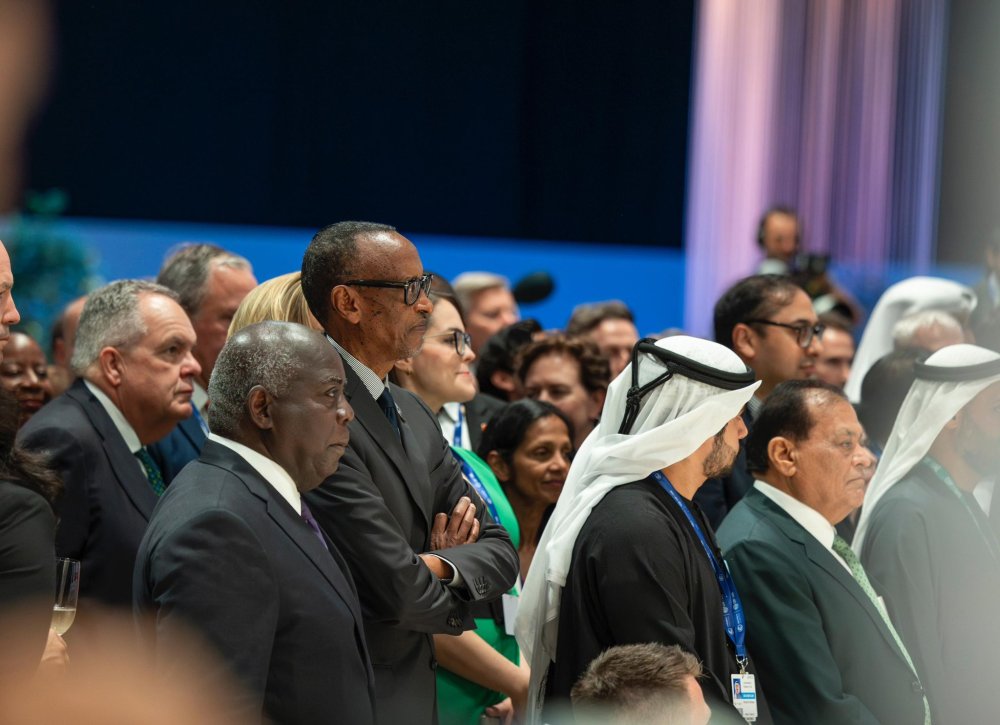
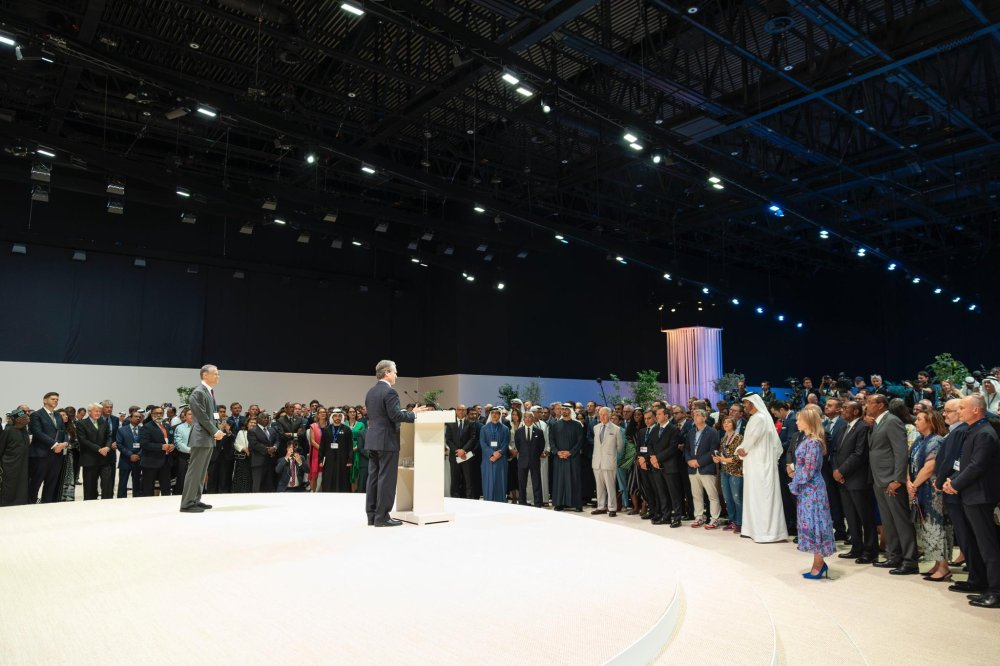
He made the call as he officiated the opening ceremony of the Commonwealth Local Government Conference (CLGC) on November 14, 2023, at the Kigali Convention Center, where he emphasized the significance of collaboration.
The CLGC, convening from November 14 to 17, 2023, brought together local leaders from member countries, including Ministers of Local Government, district and city mayors, among others.
Rwanda’s Minister of Local Government, Jean Claude Musabyimana, expressed pride in hosting the conference for the first time.
He highlighted that discussions would encompass common challenges faced by member countries, notably the COVID-19 pandemic, with a primary focus on grassroots leadership and its pivotal role in overcoming emerging challenges.
Musabyimana disclosed that the conference’s agenda extends beyond the pandemic, covering democracy, climate change, finance, and the role of local governments in fast-tracking Sustainable Development Goals.
The overarching theme of the conference, “Building Local Government Resilience to Future Shocks,” aligns with contemporary trends and serves as a reminder for nations to collaborate in overcoming challenges, including those posed by COVID-19, climate change, economic instability, and conflicts.
Premier Ngirente drew attention to alarming statistics, noting that Commonwealth countries collectively lost over US$1000 billion of their Gross Domestic Product (GDP) in 2020, attributing a substantial portion of these losses to the effects of climate change. He warned that if no action is taken, climate-related impacts could push 100 million people into extreme poverty by 2030.
The Premier emphasized that the conference presents a crucial opportunity to discuss reinforcing the capacity of local governments to withstand these shocks. Despite Rwanda’s considerable efforts in this regard, Dr. Ngirente acknowledged that there is still a long journey ahead.
He outlined key priorities, such as citizen-centered governance, effective service delivery, inclusive development, the introduction of performance contracts, and transparency and accountability.
Ngirente highlighted specific successes, including building capacity for local leaders, integrating technology in service delivery, and allocating budgets for districts’ development projects.
These endeavors, he emphasized, have contributed to Rwanda’s progress in building a safe, united, and prosperous nation over the past 29 years.
The biennial conference, last held physically in 2017, was disrupted by the COVID-19 pandemic. Its resumption in 2023 underscores the importance of fostering international cooperation to address the complex challenges facing nations today.
Akufo-Addo made the appeal at the opening of the Accra Reparations Conference in the Ghanaian capital of Accra, describing these reparations as long overdue.
The Ghanaian president said the reparations must go along with the restitution of African cultural properties stolen from the continent.
“The effects of the slave trade have been devastating to the continent and the African diaspora. The entire period of slavery meant that our progress, economically, culturally, and psychologically, was stifled,” he said.
Akufo-Addo, who raised the issue of reparations earlier in his address at the 78th session of the UN General Assembly in September, said, “It is time for Africa’s 20 million of whose sons and daughters had their freedoms curtailed and sold into slavery, also to receive reparations.”
The four-day event, on the theme of “building a united front to advance the cause of justice and the payment of reparations to Africans,” brought together many African heads of state and government, alongside scholars, legal experts, and representatives of civil society organizations.
The Uganda Red Cross Society (URCS) said Monday night that the refugees had entered through the border district of Bundibugyo, Western Region of Uganda.
“Authorities in Bundibugyo have guided that they are hosted at Bubukwanga Transit Center in Bundibugyo where government and other partners can offer humanitarian assistance to them,” said Irene Nakasiita, URCS spokesperson, in a statement.
Nakasiita said that new arrivals were duly registered, and the URCS simultaneously provided immediate first aid to the injured and subsequently referred them to a local health facility for further care. “We are supporting the restoration of family links, especially for the unaccompanied minors and separated family members who need reunification.”
Since 2022, a joint military operation involving Ugandan and DRC forces has been pursuing the ADF, an active group in the DRC with ties to the Islamic State, dismantling their camps and significantly reducing their numbers.
Uganda hosts at least 1.5 million refugees mostly from the DRC, South Sudan, Burundi, Eritrea and Somalia among others.
The week-long conference took place in Jinja City, Uganda, and brought together PR professionals, industry experts, and thought leaders to exchange insights, cultivate networks, and explore the evolving trends and optimal strategies within the PR landscape. The EAPRW assumed a paramount role in East Africa, serving as a crucial platform for the advancement of PR excellence, with a thematic focus on “Advancing PR Excellence as a Key Driver for East African Unity.”
A central highlight of the conference was the emphasis on the instrumental role that PR plays in effective storytelling. Attendees collectively explored countless ways PR serves as a powerful catalyst in narrating compelling stories.
Insights shared during the conference underscored the multifaceted nature of storytelling through PR. Attendees articulated strategies to infuse narratives with authenticity, capturing the essence of the message and resonating with target audiences. From leveraging digital PR and social media platforms to crafting impactful press releases, the discourse covered the spectrum of tools available to PR professionals for wide-reaching story dissemination.
Discussions extended beyond the tactical aspects of storytelling, touching upon the ethical dimensions inherent in PR. Speakers emphasized transparency, accuracy, and ethical considerations in shaping narratives that withstand scrutiny and build trust. This holistic approach underscored the significance of PR not only as a strategic communication tool but also as a custodian of credibility and integrity in storytelling.
{{Digital PR in East Africa }}
The conference shed light on the evolving landscape of PR in East Africa and its intertwining with the broader context of regional unity. By recognizing PR as a key driver, discussions underscored its potential to bridge cultural divides, foster understanding, and contribute to a shared narrative transcending borders. The realization that effective PR can play a pivotal role in uniting diverse communities highlighted the transformative power it wields in shaping perceptions and fostering a sense of collective identity.
Furthermore, East Africa PR Week served as a melting pot for innovative ideas, with attendees sharing case studies and success stories showcasing the tangible impact of PR on various initiatives. Whether promoting social causes, launching impactful campaigns, or navigating crisis communications, the showcased examples illustrated how adept PR strategies can elevate narratives and amplify the impact of diverse stories.
The collaborative spirit of the event fostered meaningful connections among professionals, paving the way for future collaborations and knowledge exchange. Networking opportunities provided a platform for participants not only to learn from each other but also to cultivate relationships extending beyond geographical boundaries, reinforcing the notion of a unified East African PR community.
The East Africa PR Week Conference provided a comprehensive exploration of the profound synergy between PR and storytelling. The event served as a testament to the transformative power of PR in shaping narratives, fostering unity, and building a collective identity within the East African context. As the echoes of the conference reverberate, it is evident that the elevation of storytelling through effective PR is not just a professional endeavor but a communal one, contributing to the shared narrative of a united and dynamic East Africa.
Gaining valuable insights into the power of PR in elevating storytelling, the conference emphasized the role of PR in shaping and disseminating compelling narratives. Attendees shared valuable insights and tips on how PR can effectively contribute to storytelling, highlighting the importance of crafting authentic and engaging narratives that resonate with diverse audiences.
The event provided a platform for exploring innovative strategies for leveraging PR to amplify stories and create meaningful connections, encompassing digital platforms and traditional media channels. It also shed light on the evolving landscape of PR in the digital age, delving into ways PR professionals navigate new communication channels and engage with audiences dynamically.
Moreover, the EAPRW Conference served as a forum for fostering collaboration and partnerships within the PR community. The exchange of ideas and experiences underscored the collective effort to elevate storytelling through PR, with participants gaining valuable insights into diverse approaches to storytelling.
The conference highlighted the ethical considerations inherent in PR storytelling, emphasizing transparency, authenticity, and integrity. By upholding ethical standards, PR practitioners can build trust and credibility, thereby enhancing the impact of their storytelling efforts.
The EAPRW Conference provided a rich and immersive experience, underscoring the power of PR in elevating storytelling. The event served as a catalyst for advancing PR excellence and fostering unity within the East African region.
As a participant, I left the conference with a deeper appreciation for the transformative role of PR in shaping narratives and driving meaningful connections. I am confident that the insights gained from this conference will continue to inform and inspire my approach to storytelling within the realm of PR.
{{The writer is a digital strategist}}
[Follow on X: @Migisha->https://twitter.com/Migisha]
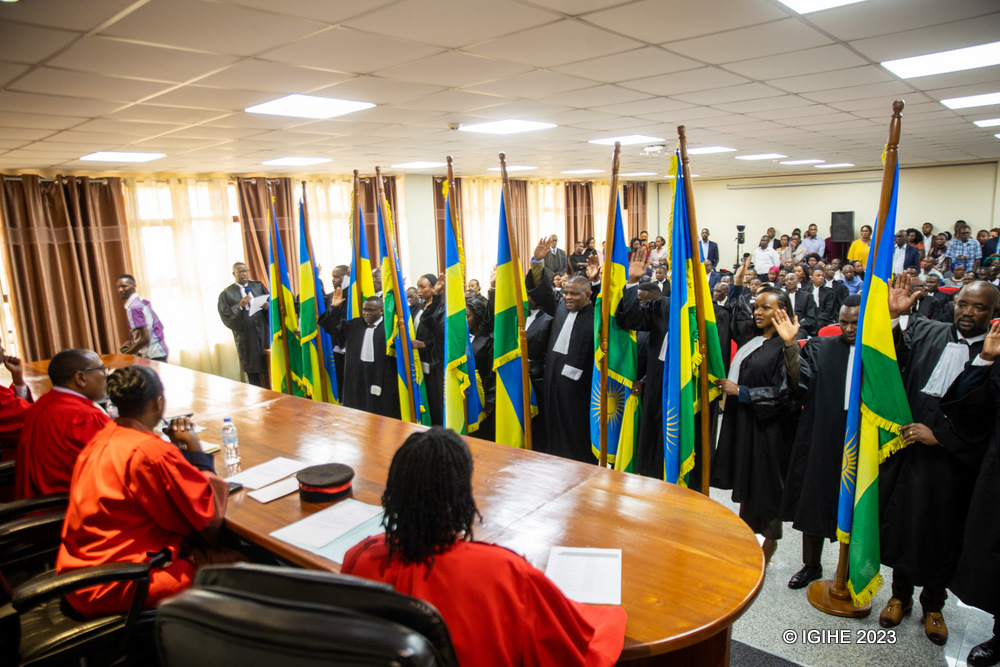
The newly appointed officials include Supreme Court judges Jean-Bosco Kazungu and Isabelle Kalihangabo, Court of Appeal judges Xavier Ndahayo and Angeline Rutazana, High Court President Jean-Pierre Habarurema, and Deputy Secretary-General of the Rwanda Investigation Bureau (RIB) Consolée Kamarampaka.
During the ceremony held on Tuesday, November 14, Kagame emphasized the importance of upholding the law.
He advised the justice sector officials to be exemplary in their commitment to justice, stressing that the country’s orderliness hinges on the fair dispensation of justice to all Rwandans.
“The country cannot do well if it doesn’t provide justice to all Rwandans equally. We know our history, what lacked in regards to justice and affected the politics of the country and the lives of Rwandans.
I believe we know this so well enough that we learned many lessons that will make us work better for our country and Rwandans,” Kagame remarked.
The head of state of reminded the newly sworn-in officials the significance of prioritizing equality within the legal system, urging them to exemplify compliance with the law.
The focus now turns sharply to Cleverly as he undergoes scrutiny for his Ministry’s response to the imminent Supreme Court evaluation of the plan to deport illegal immigrants to Rwanda on Wednesday, November 15.
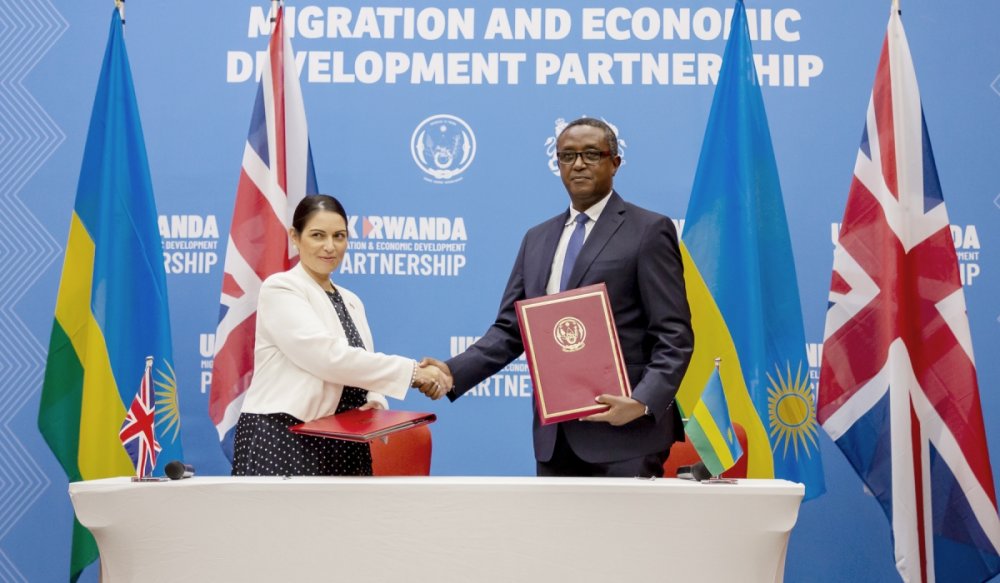
This deportation initiative finds its roots in the Migration and Economic Development Partnership between Rwanda and the UK, strategically crafted to address the persistent challenge of illegal migration.
The Supreme Court asserts the legal soundness of deportation to Rwanda, placing Cleverly at the helm to ensure compliance, from preparedness for the process to managing potential protests. If the court were to disagree, Cleverly would wield a pivotal role in formulating the subsequent steps in implementing the agreement.
Cleverly’s inaugural press statement resounded with support for Rishi Sunak’s strategy to combat illegal immigration, with a particular emphasis on addressing small boat crossings, underscoring his commitment to fulfilling promises made to the public.
Six months ago, upon assuming power, Sunak pledged to prevent illegal migrants from entering the UK, as outlined in the agreement with Rwanda. The responsibility for executing this decision now rests squarely on Cleverly’s shoulders as Braverman’s successor in the Home Office.
While Braverman supported the plan to send migrants to Rwanda, his perceived arrogance and suggestion of withdrawing from the European Court of Human Rights (ECHR) contributed to his unpopularity. This move contradicted Sunak’s vision, aiming to maintain ties with the ECHR and distinguish the UK from Belarus and Russia, as reported by the Independent newspaper.
In his role as the new Minister of Interior, Cleverly aligns with Sunak’s perspective on remaining within the European Court. Despite the court’s prior abandonment of the Rwanda deportation plan, Cleverly remains confident in the UK’s ability to influence the court judges to align decisions with the country’s interests.
Drawing from his experience as Minister of Foreign Affairs before his current role, Cleverly highlighted his extensive efforts in addressing the immigration issue during his tenure. His recent visit to Albania, one of the countries with illegal immigrants to the UK, aimed to assess collaboration efforts in curbing immigration.
Additionally, Cleverly is committed to extending agreements with other countries for migrant relocation, following the Rwanda model. Ongoing discussions with Turkey, Iraq, and Egypt are in progress, while talks with India and Georgia have been announced, building upon initiatives outlined by Braverman before her departure.
Ndimbati, bourgmestre of the former Gisovu commune, Kibuye prefecture, and a member of the National Revolutionary Movement for Development (Mouvement révolutionnaire national pour le développement party), was first indicted by the ICTR in November 1995.
He was charged with seven counts of genocide, complicity in genocide, direct and public incitement to commit genocide and the crimes against humanity of extermination, murder, rape and persecution.
It is alleged that at the onset of the Genocide, Ndimbati traveled around Gisovu commune publicly calling for the elimination of Tutsis.
According to a statement released by IRMCT , Ndimbati together with other local leaders including the fugitive Charles Sikubwabo, then organized between April and June 1994 attacks against Tutsi refugees in locations throughout Gisovu commune and the Bisesero area.
Ndimbati was alleged to have personally organized and directed massacres and killings of thousands of Tutsis at locations including Bisesero hill, Kidashya hill, Muyira hill, Nyakavumu cave, Gitwe hill, Rwirambo hill, Byiniro hill and Kazirandimwe hill.
In July 1994, Ndimbati and his family fled Rwanda for then-Zaire, where they resided in Kashusha camp. He later traveled with some family members to Kisangani. In or around June 1997, Ndimbati returned to Rwanda via a UNHCR repatriation flight from Kisangani to Kanombe.
Following a comprehensive and challenging investigation, the OTP was able to conclude that Ndimbati died by around the end of June 1997 in the area of the current Gatore Sector, Kirehe District, Eastern Province, Rwanda.
While the exact circumstances of his death have not been determined owing to the confusion and absence of order at the time, the evidence gathered by the OTP demonstrates that Ndimbati did not leave the Gatore area, and that he was never seen or heard from again.
“No reliable and corroborated evidence of him being alive after that time has been identified. Ndimbati’s death at this approximate time and place was independently confirmed by the National Public Prosecution Authority of Rwanda following its own investigation,” reads part of the statement.
While the survivors and victims of Ndimbati’s crimes will not see him prosecuted and punished, IRMCT has said that this result ‘may help bring some closure in the knowledge that Ndimbati is not at large and he is unable to cause further harm to the Rwandan people’.
There are now only two outstanding ICTR fugitives: Charles Sikubwabo and Ryandikayo. Between May 2020 and today, the OTP’s Fugitive Tracking Team has arrested two fugitives, Félicien Kabuga and Fulgence Kayishema, and confirmed the deaths of another four fugitives, Augustin Bizimana, Protais Mpiranya, Phénéas Munyarugarama and now Aloys Ndimbati.
He elaborated on Rwanda’s extensive efforts to protect human rights, leading to remarkable milestones that offer valuable insights to the world after the 1994 Genocide against the Tutsi.
These achievements encompass the establishment of unity and reconciliation programs, decentralized justice systems, and the promotion of gender equality, among other initiatives.
Dr. Ugirashebuja reflected on these efforts on Monday 13th November 2023, at the National Dialogue Council on Human Rights aimed at discussing national priorities to uphold human rights principles in Rwanda.
The dialogue, organized by the Ministry of Justice, National Commission for Human Rights (NCHR), and One UN Rwanda, is part of the preparations for International Human Rights Day, commemorating the 75th anniversary of the Universal Declaration of Human Rights (UDHR) adopted by the United Nations General Assembly on December 10, 1948.
Key figures at the event include Providence Umurungi, the Chairperson of the National Commission for Human Rights, and Mama Keita, Director of the UN Economic Commission for Africa in Eastern Africa.
Mama Keita acknowledged Rwanda’s significant progress in human rights, attributing it to home-grown solutions and unwavering commitment at the highest levels.
While welcoming Rwanda’s efforts in monitoring UPR recommendations and Sustainable Development Goals, Mama Keita emphasized the potential for greater achievements through collaborative action, placing human rights at the core of all initiatives.
Rwanda and other UN member countries will gather recommendations from such dialogues for discussion at celebrations in Geneva on December 13, 2023.
NCHR Chairperson Umurungi highlighted the importance of citizens’ enlightenment about their rights through collaborative efforts with relevant partners, making it easier to pinpoint areas of priority. Additionally, she emphasized the diligent follow-up of government recommendations to ensure their smooth and effective implementation.
Rwanda faced criticisms from Western countries at various times, with reports and publications accusing the nation of human rights violations. Minister Ugirashebuja contends that these nations are not exempt from imperfections, urging them to refrain from teaching human rights lessons to African countries.
Explaining Rwanda’s commitment to safeguarding human rights, he highlighted the establishment of mechanisms and institutions such as investigation bodies, courts, and the National Commission for Human Rights.
Minister Ugirashebuja revealed that Rwanda’s unique approach involves providing a platform to different organizations, including the civil society platform, fostering consultations between universities and the government to identify and address existing problems.
He underscored the ongoing nature of this journey, emphasizing the integral role of human rights in achieving sustainable development.
Meanwhile, the Civil Society Platform recommends reinforcing leaders’ proficiencies to enhance their familiarity with human rights issues and improve service delivery.
The WFP said in its food security update that protracted and newly emergent conflicts, persistent fragile macroeconomic conditions, and high cost of living will continue to impact the food security and nutritional status across the East Africa region. “Ethiopia, Somalia, South Sudan, and Sudan remain key countries of concern moving into 2024.”
In addition to macroeconomic factors, the WFP said conflicts in Ethiopia, South Sudan, and Sudan are likely to exacerbate the needs of the most vulnerable, such as the displaced populations and refugees.
Some 62.6 million people were food insecure as of September, with four of the nine countries in the region — Ethiopia, Somalia, South Sudan, and Sudan — among the worst affected by the global food crisis, the WFP said.
According to the UN food agency, some 18.2 million people are displaced internally or abroad, including 5 million refugees and asylum seekers and 13.2 million internally displaced persons (IDPs). Since the conflict started in Sudan, more than 4 million people have been displaced internally, and more than 1 million people have moved across borders.
It said persisting macroeconomic challenges, coupled with high production and transportation costs and international trade dynamics, continue to weigh on the cost of food commodities in local markets across the region.
According to the WFP, a strong El Nino and peak-positive Indian Ocean Dipole (IOD) are expected to result in above-normal rainfall from November to January 2024 across equatorial and southern East Africa, mainly in southern Ethiopia, Somalia, and Kenya. “Forecast above-average rainfall is expected to have positive outcomes for agriculture, livestock productivity and reproduction.”
The WFP, however, noted that localized severe flooding in lowland and riverine areas, crop and livestock losses, infrastructure damage, displacement of affected populations, and infectious disease outbreaks are also likely to occur.
Bringing together government officials, business leaders, tech experts and investors, the festival aims to explore the future of Africa’s digital transformation.
Speaking at a ministerial forum held on the sidelines of the festival, Philemon Mapulane, South Africa’s deputy minister of communications and digital technologies, said the festival marks a significant milestone in Africans’ collective pursuit of a digitally empowered continent.
“We are here not merely as representatives of our respective nations and organizations, but we are here as architects of a shared vision and future that envisions an Africa propelled into a future where possibilities of connectivity are boundless,” Mapulane said.
“The collaboration with Huawei, a global technology leader, underscores the importance of international partnerships in shaping Africa’s digital future,” he added.
Chen Lei, president of Huawei Sub-Saharan Africa Region, urged countries to focus on constructing national broadband backbone networks extensible across multiple domains.
“Let’s bear in mind coverage gaps still remain in the continent, therefore it is important to cover more people through various connectivity technologies such as 4G and 5G,” Chen said while delivering his speech at the forum.
Highlighting recent successes in continental digital connectivity, Chen applauded collaborative efforts that resulted in the deployment of high-speed internet on Tanzania’s Mount Kilimanjaro and Africa’s first 5G-enabled coal mine in South Africa.
Featuring two main events — AfricaCom and AfricaTech, the festival delves into such topics as connectivity, digital inclusion, enterprise transformation and emerging technologies.