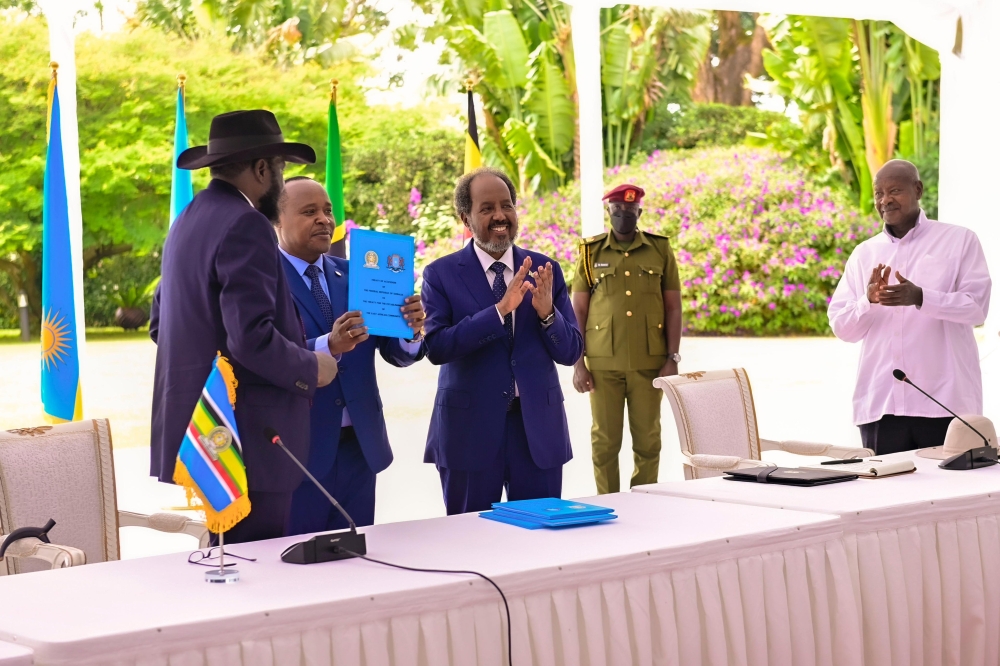
The signing ceremony, attended by Uganda’s President Yoweri Kaguta Museveni, witnessed the formalization of Somalia’s entry into the seven-member EAC. President Salva Kiir of South Sudan, Chairperson of the Summit of EAC Heads of State, joined Somalia’s President Sheikh Hassan Mohamud in signing the treaty.
Kiir emphasized that Somalia’s accession is a “major boost” to the regional integration agenda, recognizing the EAC’s achievements in its pillars of integration. President Mohamud expressed immense pride in Somalia’s entry, stating that it symbolizes hope for a future filled with possibilities.
“Our mission is clear; strengthen friendship, contribute to prosperity, and actively shape a brighter future for the population of this Community,” said Mohamud, emphasizing Somalia’s role in enhancing the bloc’s trade and investment potential.
Ugandan President Museveni, one of founders of the EAC, highlighted the significance of the bloc’s re-establishment, emphasizing the original goals of prosperity, strategic security, and regional unity. EAC Secretary General Peter Mutuku Mathuki, present at the event, explained that Somalia now has six months to undertake internal processes, including ratification of the EAC Treaty, before fully participating in the bloc’s activities.
The EAC Summit on November 24 had already approved Somalia’s full membership, and the subsequent signing of the Treaty of Accession marks a crucial step towards Somalia’s integration into the East African Community.
The call was made by the Peace and Security Council of the AU in a statement issued Friday that followed the council’s recent meeting that dwelt upon the promotion and protection of the rights and welfare of children in situations of conflict in Africa.
The council “reaffirmed Africa’s commitment to continue to take appropriate measures to promote and protect the rights and welfare of the African child,” the statement read.
It underscored the need to prevent the grave violations against children’s rights and welfare, which include wanton killing and maiming of children, recruitment or use of children in armed forces and groups, attacks on schools and hospitals, rape and other grave sexual violence, abduction, and denial of humanitarian access.
The council called on AU member states to redouble efforts and prioritize local programs, which promote the rights and protection of children and anchor a culture of child protection both in peacetime and conflict situations.
It further called on African countries to promote the exchange of best practices, fostering regular exchanges, as well as establishing and strengthening existing capacity-building efforts that promote children’s rights and welfare.
It emphasized the imperative to develop a continental child justice framework addressing both punitive measures as well as the recourse and restitution elements for child survivors.
The council further stressed that child protection should be gender transformative and mainstreamed in all governance, peace and security mechanisms and processes, including early warning, conflict prevention, management, resolution, peace support operations, and post-conflict reconstruction and development.
Commending AU member states that have signed, ratified and domesticated the African Charter on the Rights and Welfare of the Child, the council further urged the remaining five AU member states, which are yet to sign, ratify and domesticate the charter, to follow suit in order to make the charter fully owned by the entire continent.
This decision follows the expiration of a 72-hour ceasefire that had been reportedly established between the Congolese army (FARDC) and the M23 rebels on December 11.
Quoting a senior US official, it has been stated that “there has been a two-week extension to the ceasefire” in eastern DR Congo. The United States, through National Security Council Spokesperson Adrienne Watson, expressed its support for the ceasefire, emphasizing its importance for regional stability.
The statement from the White House highlighted the significance of a stable environment for the upcoming scheduled elections on December 20, asserting that “having an election when there is active conflict is not in anyone’s interest.”
The parties involved had been maintaining a delicate ceasefire since November 2022, which was unfortunately shattered on October 1 when hostilities resumed. This development posed a serious threat to the peace efforts in the region.
Ugandan troops, part of the East African Community Regional Force (EACRF), have successfully concluded their withdrawal from eastern DR Congo following the expiration of the Force’s mandate on December 8.
This exit process, initiated in early December, saw the departure of the first group, Kenyan troops, from Goma International Airport on December 3. The EAC army chiefs, meeting in Arusha, Tanzania, on December 6, adopted the regional force’s exit plan. The complete withdrawal of the EAC Regional Force is expected to conclude by January 7.
The decision for withdrawal was prompted by Kinshasa’s refusal to renew the mandate, communicated to the EAC Summit on November 24. Major General Jeff Nyagah, the Regional Force’s first commander, had resigned in April, citing threats to his security. Kinshasa’s desire for the regional force to combat the M23, which was not within its operational mandate, further complicated the situation.
Eastern DR Congo, home to numerous armed groups, has been a hotspot of conflict for nearly three decades. Despite multiple interventions, including the UN’s peacekeeping mission MONUSCO, violence persists. The UN Secretary-General Antonio Guterres communicated plans for the withdrawal of MONUSCO in August, marking what experts deem a “monumental failure” for the peacekeeping force.
As tensions continue to simmer in the region, the extension of the ceasefire offers a brief respite, underscoring the delicate balance required to navigate peace efforts in eastern DR Congo.
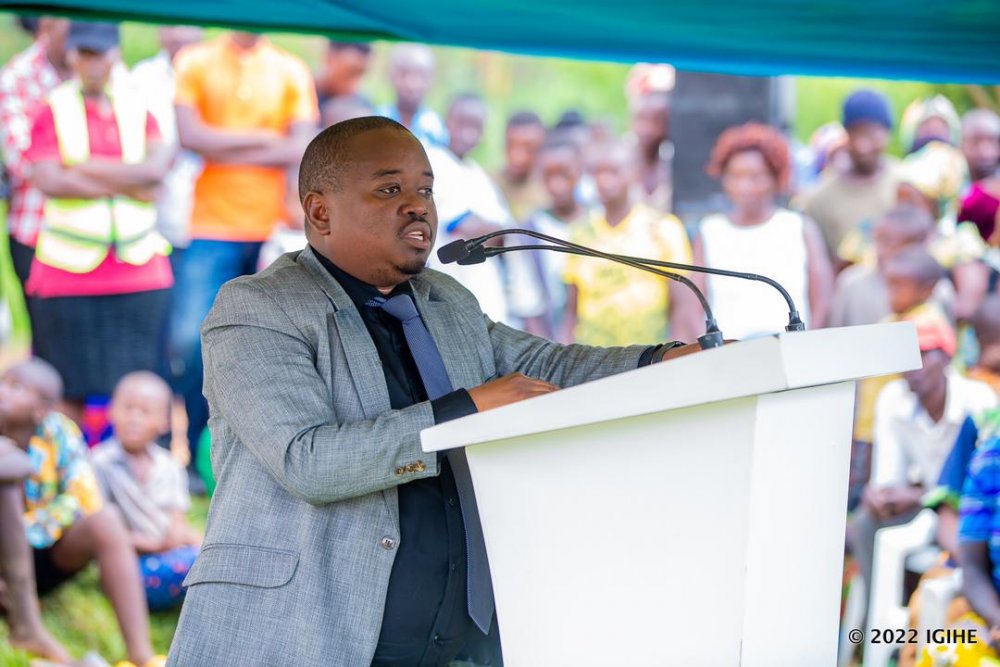
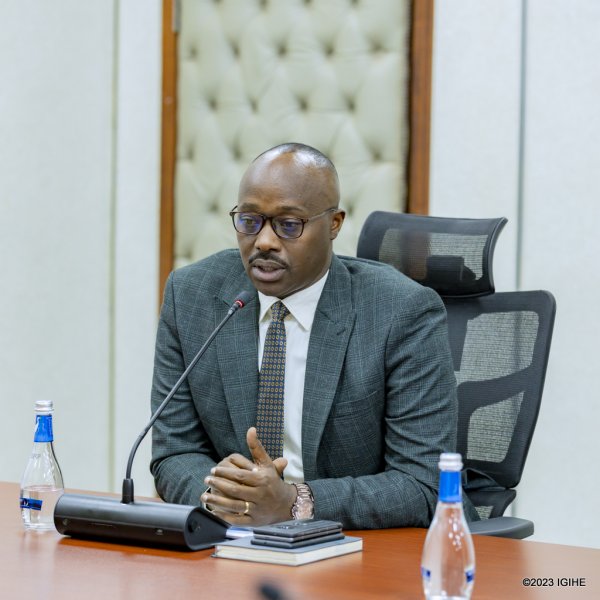
Dusengiyumva, the former Permanent Secretary at the Ministry of Local Government, secured 532 out of 638 votes cast in the poll held on Friday, December 15, at the City Hall. His contender for the position was Rose Baguma, the Director General of Education Policy and Analysis at the Ministry of Education.
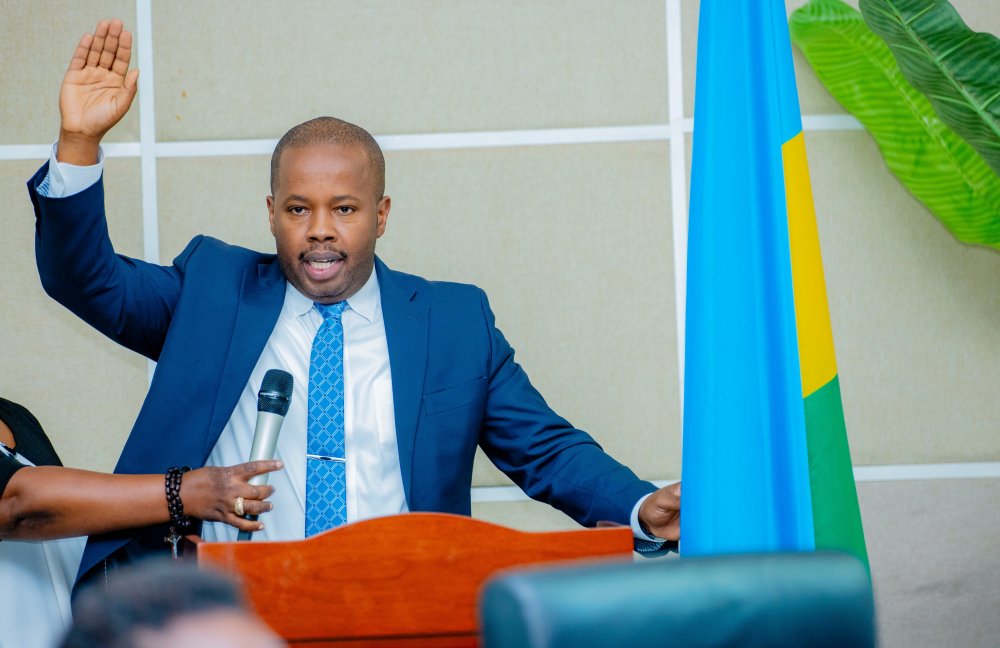
The by-election took place following the swearing-in ceremony of Samuel Dusengiyumva and Solange Ayanone as new members of the City of Kigali Council, an event presided over by the High Court. President Paul Kagame appointed Dusengiyumva and Ayanone as Council members on Thursday, December 14.
City Executive Committee members, including the Mayor and both Vice Mayors in charge of Urbanisation and Infrastructure, and Socioeconomic Affairs, also serve as members of the city council.
On December 14, shortly after announcing the appointment of Dusengiyumva and Ayanone, the City of Kigali revealed that Merard Mpabwanamaguru was no longer a Council member.
Mpabwanamaguru, formerly the Vice Mayor in Charge of Urbanisation and Infrastructure, was replaced, while Martine Urujeni retained her position as Vice Mayor in charge of Socioeconomic Affairs.
Following his swearing-in, Dusengiyumva expressed gratitude to President Paul Kagame and the voters, acknowledging the trust placed in him.
He stated, “I receive the responsibilities of leading Kigali City with humility. It is demanding work, but with your support and assistance, I am committed to delivering. Good service delivery should not be considered extraordinary but rather a standard expectation.”
The Minister of Local Government, Jean Claude Musabyimana, urged the new mayor to continue guiding the progress of Kigali City, emphasizing that addressing residents’ issues should be a top priority.
Musabyimana stated, “Solving problems affecting Kigali City residents is a priority not only in the city but also in other positions of local governance to ensure citizens live safely.”
Spanning 730 square kilometers, Kigali City is home to 1,745,555 people, constituting 13.2% of the country’s total population, with a population density of 2390 people per square kilometer.
Historically, Kigali’s roots date back between 8000 and 3000 BC, evolving from the creation of the country of Gasabo, which later expanded to form present-day Rwanda. The city itself, founded in 1907 by German Richard Kandt, has a 116-year history marked by gradual infrastructure development.
Since 1975, Kigali City has been led by 12 mayors, including Francois Karera (1975-1990), Col Renzaho Tharcisse (1990-1994), Rose Kabuye (post-Genocide), Protais Musoni (1997-1999), Marc Kabandana (1999-2001), Théoneste Mutsindashyaka (2001-2006), Aissa Kirabo Kacyira (2006-2011), Fidèle Ndayisaba (2011-2016), Monique Mukaruliza (2016), Pascal Nyamulinda (2017-2018), Marie Chantal Rwakazina (2018-2019), and Pudence Rubingisa (2019-2023).
Dusengiyumva becomes the 11th mayor of Kigali City after the 1994 Genocide against the Tutsi.
The funds include an immediate disbursement of SDR 36.97 million (approximately US$ 49.49 million) under the RSF and SDR 66.75 million (about US$ 89.35 million) under the SCF. The RSF arrangement, approved on December 12, 2022, amounts to SDR 240.3 million (around US$ 321.66 million or 150 percent of quota), with the first reviews completed on May 24, 2023.
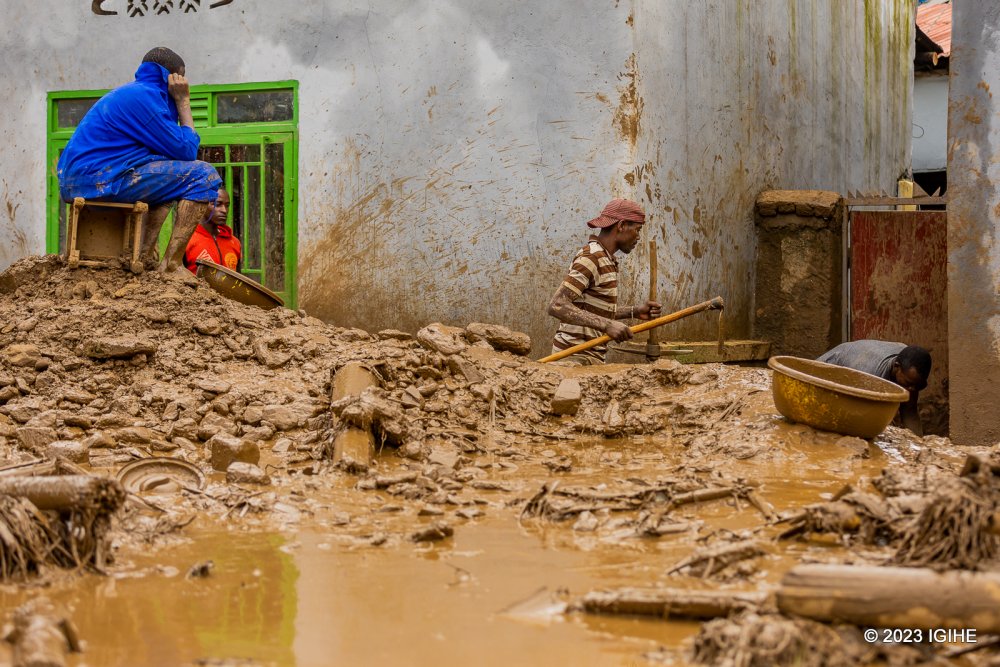
Rwanda’s robust economic growth faces challenges from macroeconomic imbalances, compounded by factors such as repeated droughts, severe floods in May 2023, and global uncertainties like the war in Ukraine. The approved credit aims to provide policy space to address these challenges, with a focus on rebuilding external buffers, curbing inflation, and improving debt sustainability. Despite expected growth moderation, the IMF emphasizes the resilience demonstrated by Rwanda’s economic policies.
The Executive Board’s assessment, delivered by Mr. Bo Li, Deputy Managing Director, underscores Rwanda’s commitment to macroeconomic stability and strong performance under the PCI and RSF. While acknowledging the impact of recent floods, Li emphasizes the need for a balanced fiscal consolidation in the medium term. The IMF encourages comprehensive tax reforms and spending rationalization to achieve developmental goals, advance the climate agenda, and ensure sustainable debt management.
The approved SCF arrangement will play a crucial role in recalibrating the near-term policy mix. Monetary policy actions and exchange rate flexibility are highlighted as essential for containing inflationary pressures and preserving external stability. The IMF also applauds Rwanda’s commitment to building a resilient and greener economy, emphasizing the importance of maintaining momentum on RSF-supported climate-related reforms.
The approved funding reflects the IMF’s confidence in Rwanda’s economic policies and commitment to navigating challenges, fostering resilience, and advancing sustainable development.
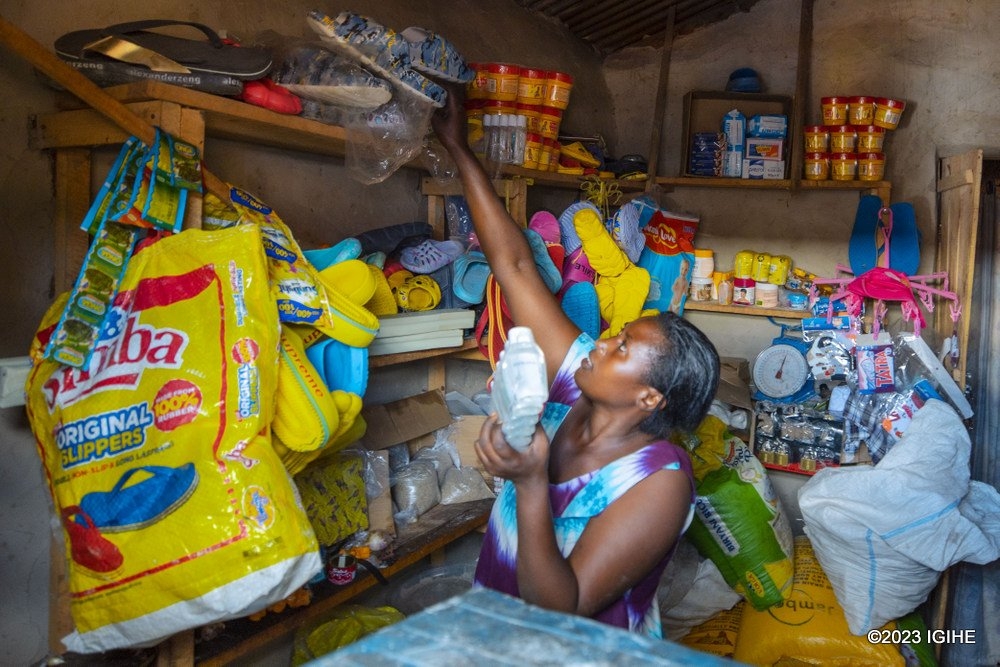
This investment will support local, private sector enterprises, with a specific focus on businesses operating in refugee hosting communities in six African countries.
Commenting on the development, Aretha Mutumwinka Rwagasore, Managing Director of Inkomoko Rwanda said that Inkomoko’s goal is to enable 600,000 people to lift themselves out of poverty by 2027 through growing sustainable businesses.
“As the largest lender to refugees in Africa, Inkomoko knows direct investment in refugees and host communities is pivotal to building thriving communities and creating opportunities for self-sufficiency,” she noted.
This investment aims to directly impact 90,000 refugee and host community businesses across Ethiopia, Kenya, South Sudan, Rwanda -where Inkomoko is headquartered and has been operating for the last 11 years- as well as two other countries in the coming years.
Inkomoko’s investments will also have a significant emphasis on inclusivity, with 60% of the supported businesses led by women and 50% by youth, ensuring equal opportunities for those often excluded from traditional finance.
At the inaugural Forum in 2019, Inkomoko had pledged -and has now provided-support to 35,000 refugee and host community entrepreneurs with business development support services and low cost loans in East Africa.
In Inkomoko’s track record of investing in marginalized communities, the repayment rate of 97% demonstrates that investing in refugee communities is a sustainable approach to economic development.
{{About Inkomoko}}
Inkomoko supports micro and small enterprises across Africa so that they can grow to improve livelihoods and create jobs and thriving communities.
Inkomoko is a Kinyarwanda word meaning “origin,” a recognition that for many, Inkomoko’s services are the beginning of sustainable business growth.
With operations in Ethiopia, Kenya, Rwanda, and South Sudan, Inkomoko is Africa’s largest investor in refugees with a vision to improve livelihoods for 7.6M people by 2030.
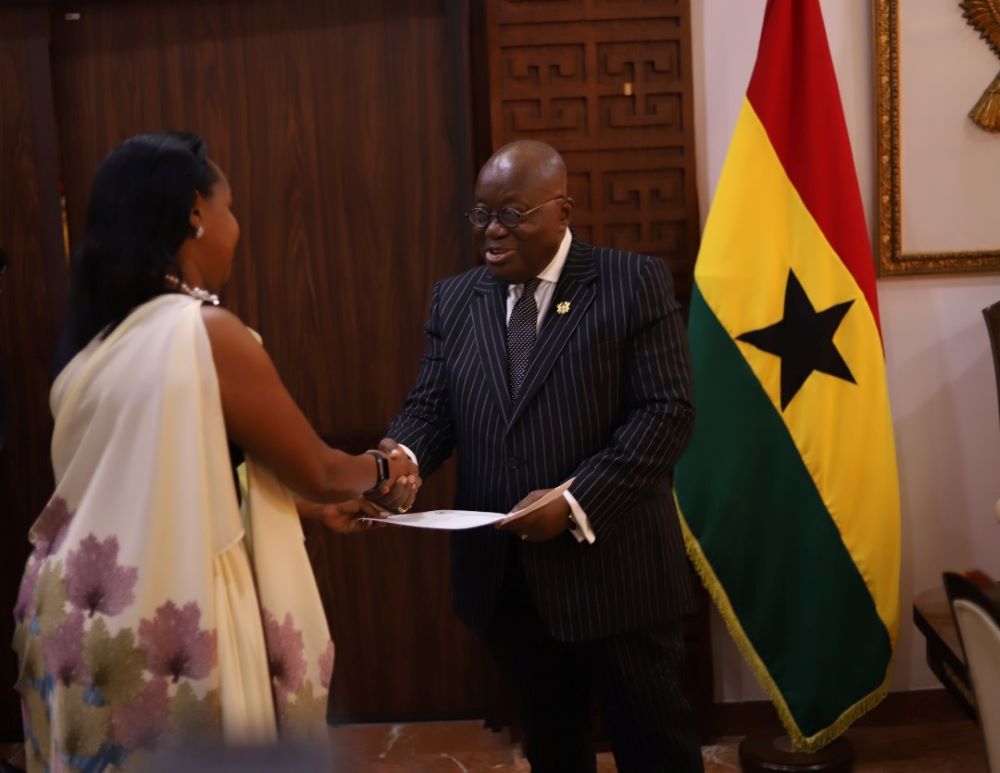
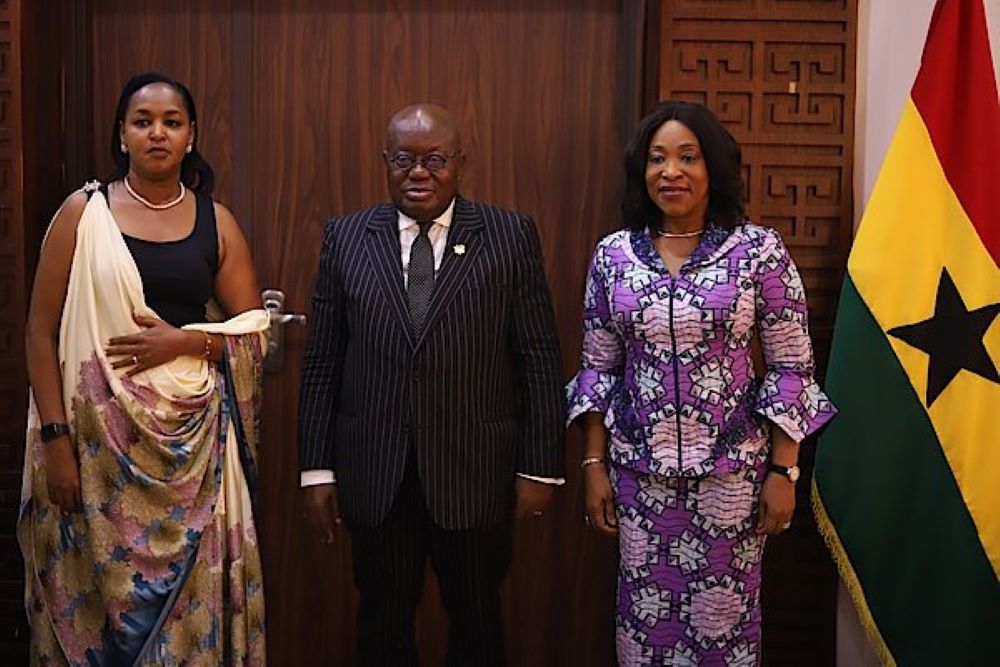
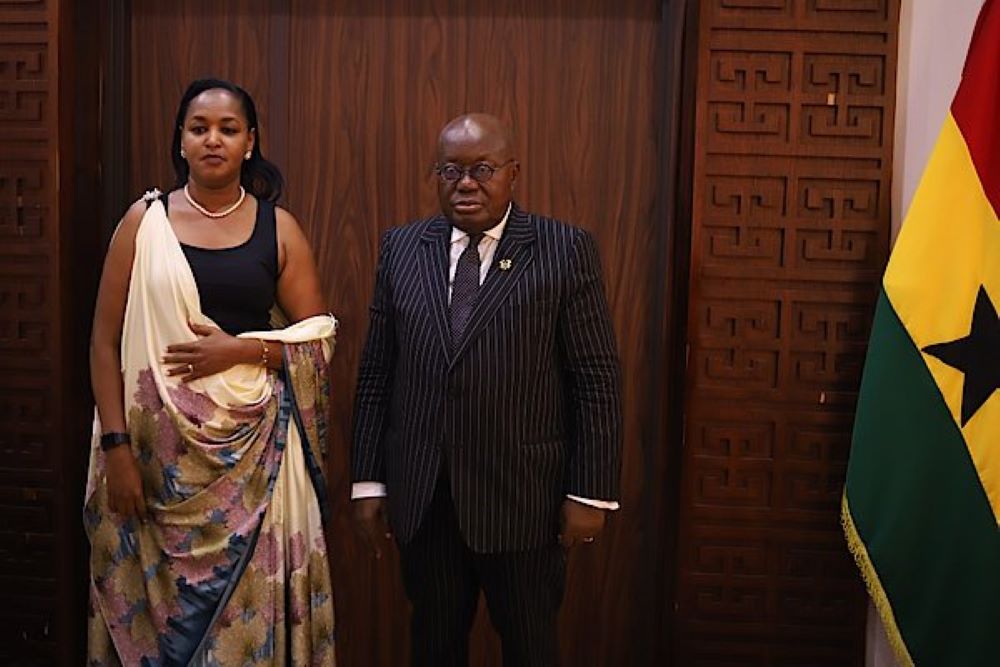
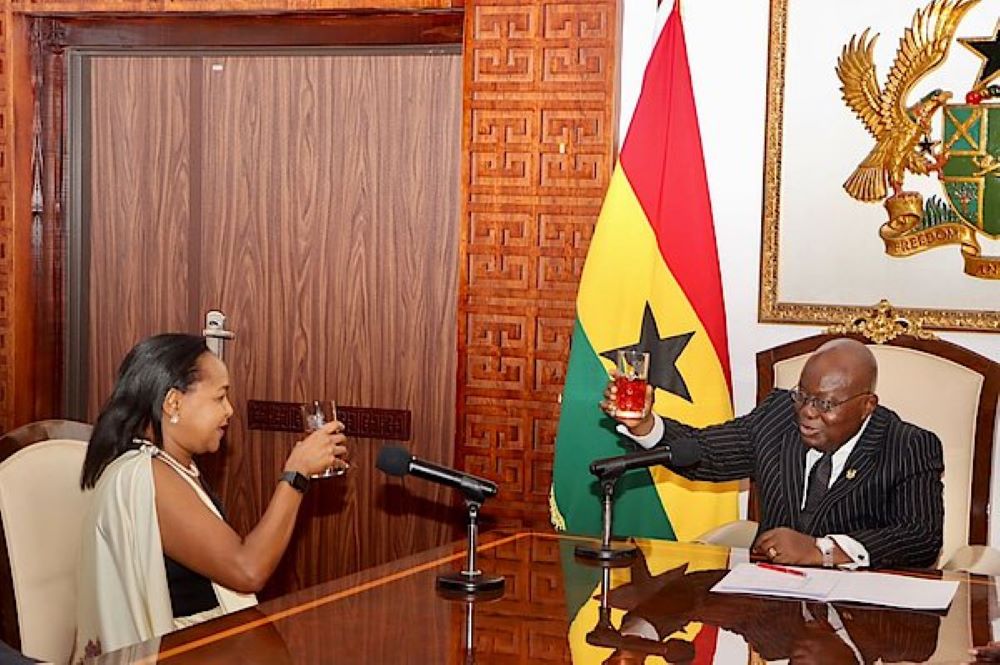
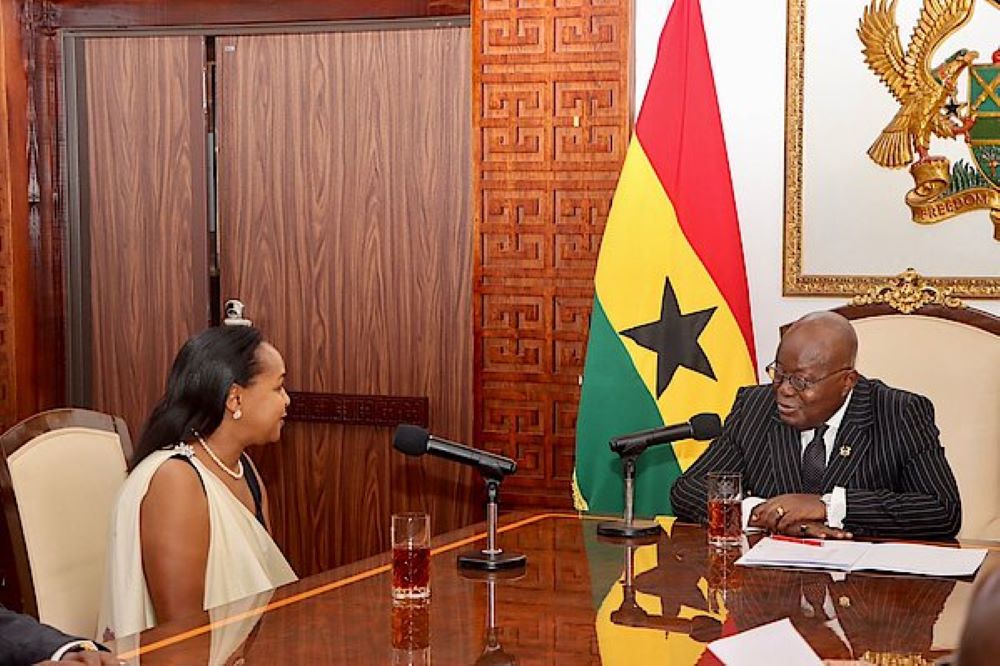
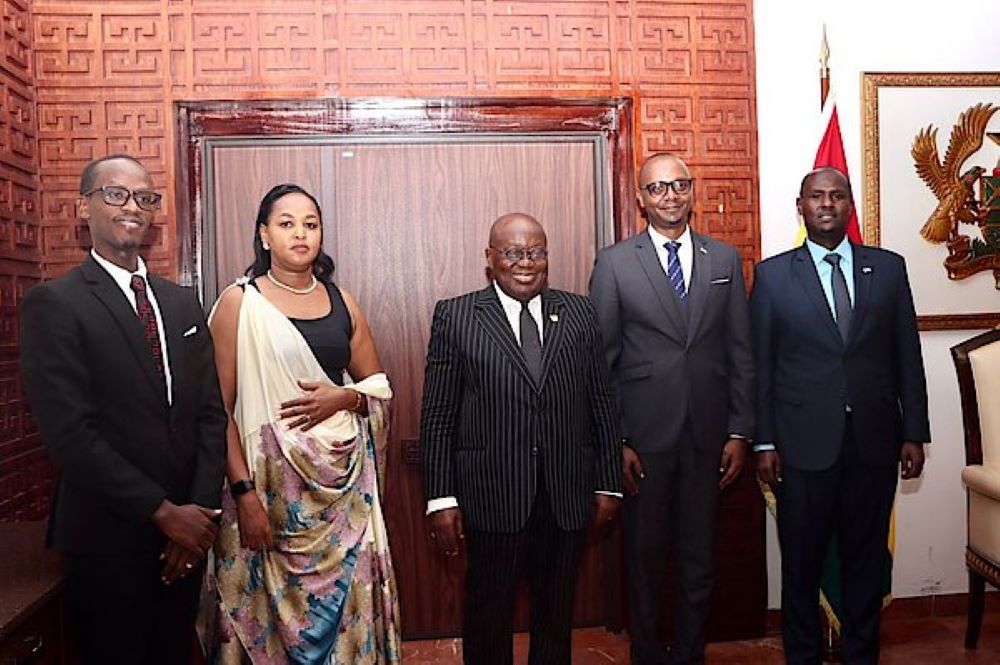
The event held on Thursday 14th December 2023, was a brief but impressive ceremony where the President also had other senior government officials including the Chief of Staff in the Presidency Frema Opare and Minister of Foreign Affairs and Regional Integration, Shirley Ayorkor Botchwey.
Mbabazi, who previously served as the Minister of Youth and Culture in Rwanda now becomes the second resident High Commissioner of Rwanda to be appointed to Ghana since the establishment of the mission in Accra in 2020.
Following the presentation of credentials, High Commissioner Mbabazi conveyed warm wishes from President Paul Kagame to the Government and people of Ghana and expressed the desire of the Government of Rwanda to strengthen bilateral relations between the two countries.
“The relationship between Rwanda and Ghana has since this time continued to deepen, collaborating bilaterally and on multilateral fronts to further our shared interests on the continent and beyond.
For close to four years, Rwanda and Ghana have continued to deepen ties with a growing list of agreements and memoranda of understanding which have been signed to build an effective framework for collaboration,” she said.
Expressing commitment to leverage gains to achieve more, she added “I will build on what has been achieved these last four years and I am assured that with your support and in collaboration with the good people of Ghana, we will further this mission and contribute to the continued rise of a prosperous and self-reliant Africa through south-south cooperation.”
Highlighting the upcoming commemoration of 30 years since the end of the 1994 Genocide Against the Tutsi in Rwanda, High Commissioner Mbabazi solicited Ghana’s collaboration with Rwanda in the continued fight against genocide denial and revisionism.
She also mentioned that after these years, it was unfortunate that there are still many fugitives who are still “roaming freely in Africa and globally. We count on your collaboration to bring them to book”.
On his part, President Nana Akufo-Addo congratulated High Commissioner Mbabazi on her appointment and expressed the Government of Ghana’s readiness to cooperate and support the High Commissioner to achieve her mandate.
“I wish to assure that the Minister for Foreign Affairs and the team at the Presidency are all at your disposal to support and facilitate wherever you need assistance so that your tour of duty is a successful one,” he said.
President Nana Aku-Addo hinted that to further enhance the relations between Rwanda and Ghana, a fully-fledged Resident High Commission of Ghana will be opened in Rwanda.
On issues concerning trade, President Akufo-Addo, urged the new Ambassador to explore the trade opportunities provided by the African Continental Free Trade Area (AfCFTA) to boost the economic cooperation between Ghana and Rwanda adding: “Rwanda and Ghana worked closely to support the operationalization of the Continental Free Trade Area Agreement and I assure you that this work will continue in order to open up trade and free movement of people for the prosperity of our continent.”
Speaking at the United Nations Partnership Meeting for Road Safety, Gatete said that the disproportionately high rate of road traffic deaths in Africa is alarming, especially as the continent has barely 3 percent of the world’s vehicle fleet, UNECA’s statement quoted Gatete as saying on Thursday.
Gatete said Africa needs support in developing its road safety management to curb the high rate of road crashes which are blight on the continent’s development
“Equally alarming, road traffic fatalities in Africa increased by 15 percent between 2019 and 2020,” Gatete said.
The World Health Organization (WHO) estimates the road traffic fatality rate on the continent to be 26.6 deaths per 100,000 people compared to 17 in Southeast Asia, 9.3 in Europe and the world’s average of 17.5, the statement said.
The 2023 WHO Global Status Report on Road Safety, launched this week, indicates that approximately 1.19 million people die each year as a result of road traffic crashes, with road traffic injuries being the leading cause of death for children and young adults aged 5-29 years.
“Road safety management is foundational to curbing road deaths, yet it remains a major challenge in Africa,” he said.
Gatete urged the UN Road Safety Fund (UNRSF) to consider allocating more resources to projects in Africa due to the magnitude of the road safety problems on the continent.
He also called on UN organizations to assist in improving the reliability of road safety data in Africa by supporting the Africa Road Safety Observatory (ARSO).
“Lack of reliable data on road safety is another challenge that Africa grapples with,” Gatete said, calling for the speedy implementation of the African Road Safety Observatory which will help address this issue through evidence-based decision-making on the continent.
Calling on UN organizations to support the digitalization of road safety in Africa, Gatete said the continent needs capacity building, technical assistance, research, and financial support to deal with the problem.
According to the 2023 WHO Global Status Report on Road Safety, 92 percent of the world’s fatalities on the roads occur in low- and middle-income countries and road traffic crashes cost most countries 3 percent of their gross domestic product.
Merard Mpabwanamaguru, formerly the Vice Mayor in Charge of Urbanisation and Infrastructure, concluded his tenure as a member of the City Council.
The city’s Executive Committee, comprising the Mayor and Vice Mayors overseeing Urbanisation and Infrastructure, as well as Socio-Economic Affairs, also holds membership in the city council.
Rubingisa, former Mayor of the City of Kigali, bid farewell to his position and assumed the role of the new Governor of Eastern Province, as per an announcement from the Office of the Prime Minister.
This transition followed the arrest of Emmanuel Gasana, the previous provincial governor facing charges related to abuse of office.
The Prime Minister’s statement also introduced two new members to the Council of the City of Kigali – Samuel Dusengiyumva and Solange Ayanone. A subsequent tweet from City Hall confirmed their appointments, signaling a comprehensive reshuffling of the city’s leadership.
With these changes, only one member of the city’s Executive Committee remains in the Council—Urujeni Martine, the Vice Mayor in charge of Socio-Economic Affairs.
The Council of the City of Kigali, responsible for decision-making, strategy formulation, and issuing directives, plays a pivotal role in guiding the city’s development strategies, budget, and execution.
The departure of Mpabwanamaguru from the city council signifies his removal from the executive committee, as council membership is a prerequisite for committee involvement. Consequently, new elections are imminent to select leaders to fill the vacancies left by the exits of Rubingisa and Mpabwanamaguru.
Presently, Kigali City boasts 11 councilors: Dr. Kayihura Muganga Didas, Nishimwe Marie Grace, Baguma Rose, Bizimana Hamiss, Kajeneri Mugenzi Christian, Muhutu Gilbert, Urujeni Martine, Rutera Rose, Umutesi Geraldine, Samuel Dusengiyumva, and Solange Ayanone.
Rubingisa assumed the role of Kigali City Mayor in August 2019, becoming the 10th person to hold this position after the 1994 Genocide against the Tutsi. On the other hand, Mpabwanamaguru was elected Kigali City Vice Mayor in Charge of Urbanization and Infrastructure in August 2021.
Spanning 730 square kilometers, Kigali City is home to 1,745,555 people, constituting 13.2% of the country’s total population, with a population density of 2390 people per square kilometer.
Historically, Kigali’s roots date back between 8000 and 3000 BC, evolving from the creation of the country of Gasabo, which later expanded to form present-day Rwanda. The city itself, founded in 1907 by German Richard Kandt, has a 116-year history marked by gradual infrastructure development.
Since 1975, Kigali City has been led by 12 mayors, including Francois Karera (1975-1990), Col Renzaho Tharcisse (1990-1994), Rose Kabuye (post-Genocide), Protais Musoni (1997-1999), Marc Kabandana (1999-2001), Théoneste Mutsindashyaka (2001-2006), Aissa Kirabo Kacyira (2006-2011), Fidèle Ndayisaba (2011-2016), Monique Mukaruliza (2016), Pascal Nyamulinda (2017-2018), Marie Chantal Rwakazina (2018-2019), and Pudence Rubingisa (2019-2023).
Rubingisa, former Mayor of the City of Kigali, steps into the role previously held by Emmanuel Gasana, currently facing legal challenges related to alleged abuse of office.
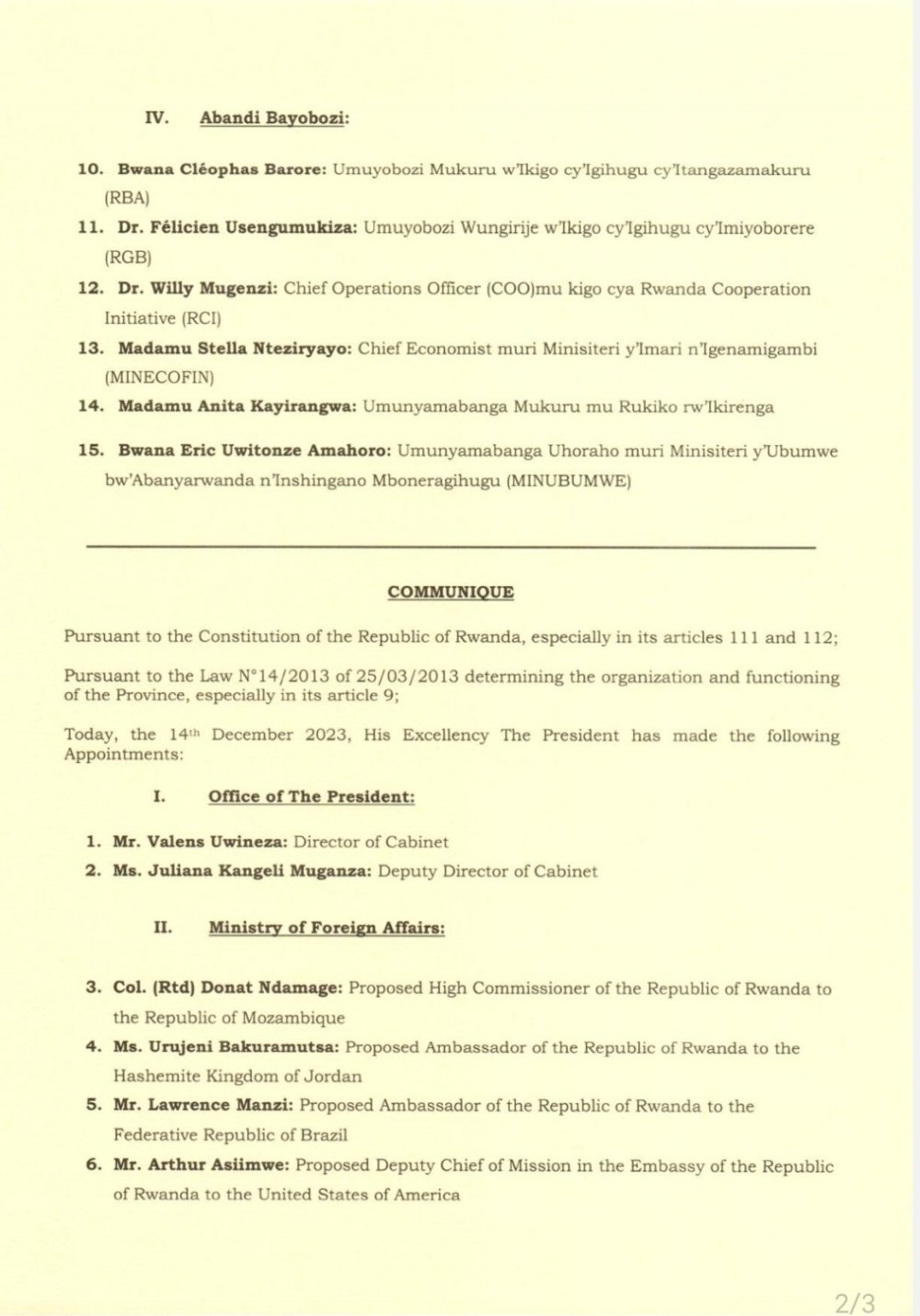
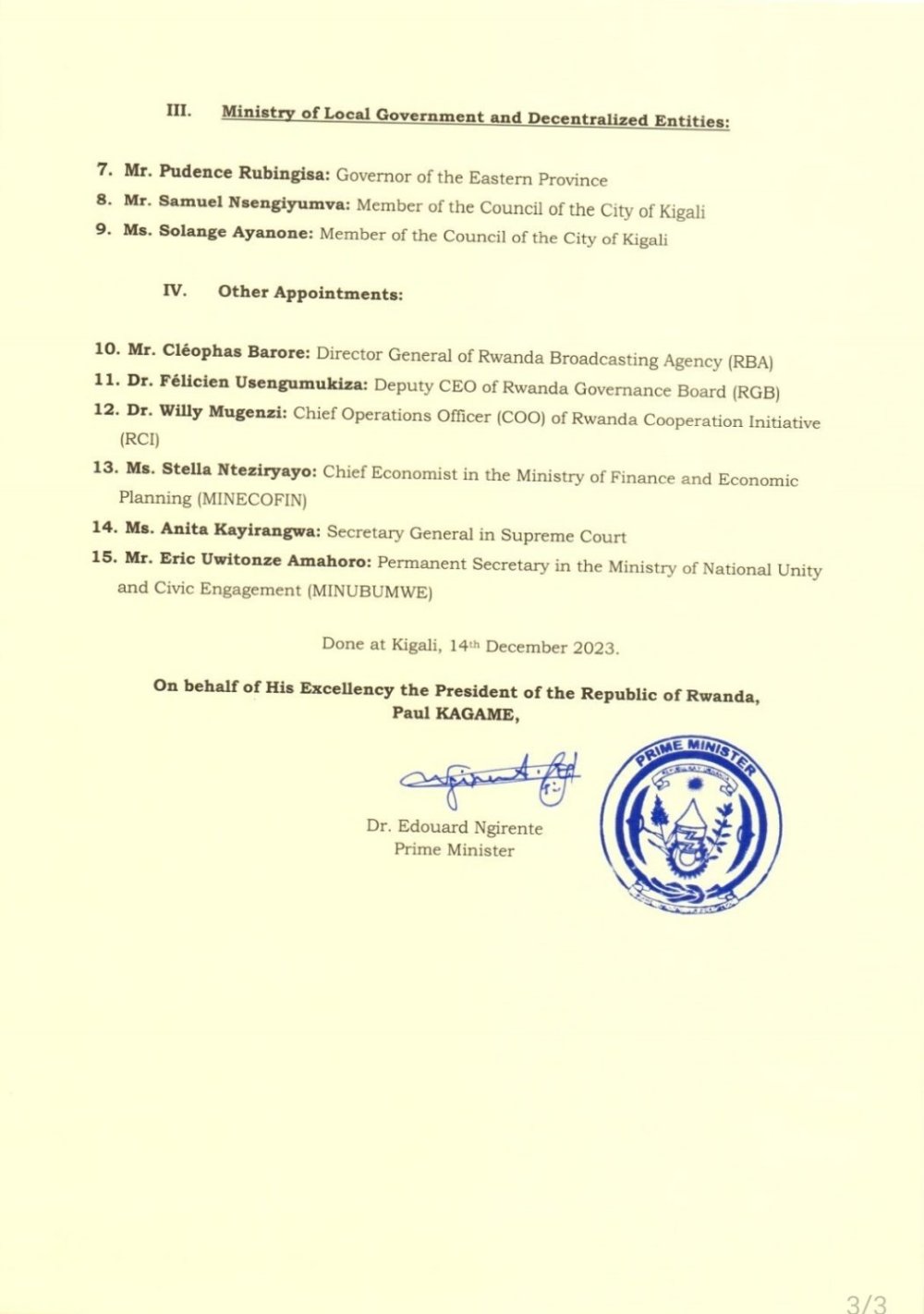
Meanwhile, Barore, who also chairs the Rwanda Media Commission, assumes the position of RBA Director General, succeeding Arthur Asiimwe, appointed as Deputy Chief of Mission in the Rwandan embassy in the United States.
Additionally, Samuel Dusengiyumva and Solange Ayanone join the Council of the City of Kigali. Dusengiyumva, formerly the Permanent Secretary at the Ministry of Local Government, and Ayanone, a media consultant, bring diverse expertise to this municipal body.
Valens Uwineza takes charge as the Director of Cabinet in the Office of the President, succeeding Urujeni Bakuramutsa, who transitions to the role of Ambassador-designate to the Hashemite Kingdom of Jordan. Col (Rtd) Donat Ndamage is proposed as Rwanda’s envoy to Mozambique, succeeding Claude Nikobisanzwe, who held the post since 2019.
Lawrence Manzi, previously the first counselor at the Rwandan embassy in the US, assumes the role of Ambassador-designate to the Federative Republic of Brazil. Juliana Kangeli Muganza becomes the Deputy Director of Cabinet in the Office of the President, elevating from her previous position as a policy analyst.
In other significant moves, Felicien Usengumukiza rises to the position of Deputy Chief Executive at the Rwanda Governance Board (RGB), Willy Mugenzi, a former journalist, becomes the Chief Operations Officer of Rwanda Cooperation Initiative, and Stella Nteziryayo is appointed Chief Economist at the Ministry of Finance and Economic Planning.
Anita Kayirangwa moves to the Supreme Court as Secretary General, transitioning from her role as Executive Director, National Unity, Itorero, and Citizenship Education at the Ministry of National Unity and Civic Engagement.
President Kagame also appointed Eric Uwitonze Mahoro, formerly a senior executive at Never Again Rwanda, as the Permanent Secretary at MINUBUMWE, rounding out the extensive array of changes in key positions across the Rwandan landscape.