The meeting occurred on Thursday, July 26, 2024, before the opening ceremony of the Olympic Games, which bring together over 10,000 athletes from various sports disciplines.
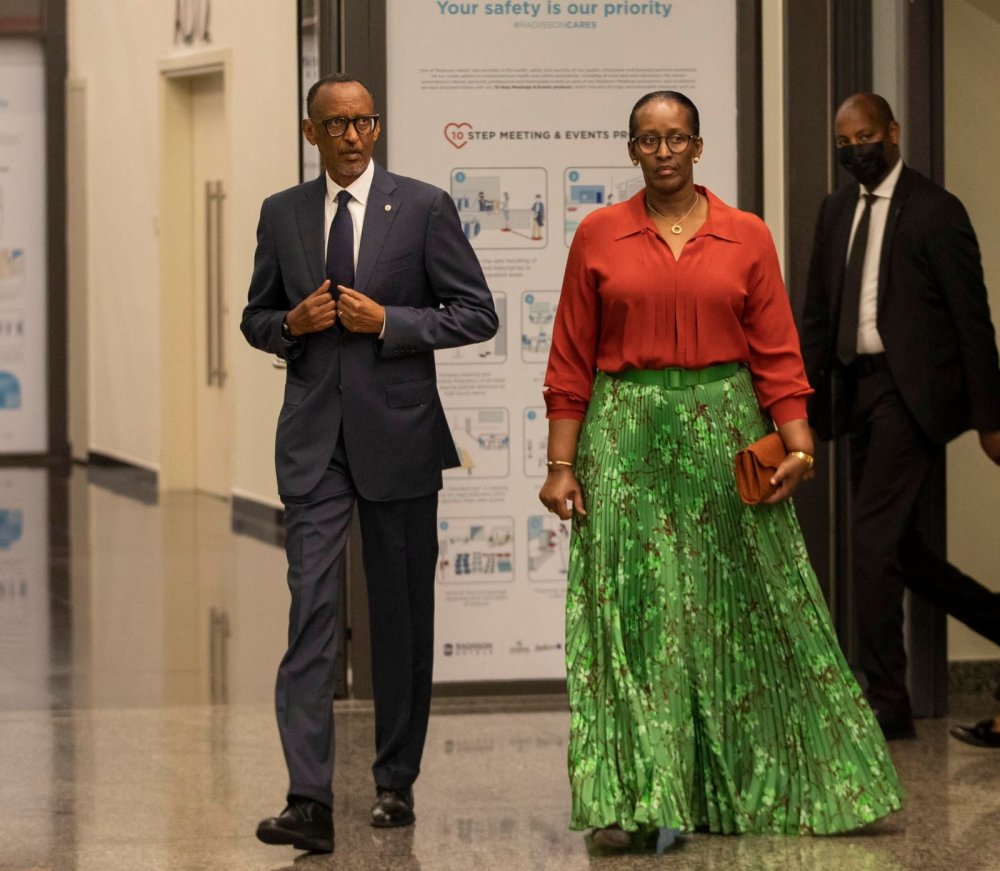
“President Infantino and President Kagame met at FIFA’s new offices in Paris ‘to discuss ongoing cooperation and new opportunities to further develop football in Rwanda,” reads a statement from the President’s office.
During the 2024 Paris Summer Olympic Games, Rwanda is represented by eight individuals who will compete in cycling, athletics, swimming, and fencing.
Last year, Infantino was re-elected to head the Federation of International Football Associations (FIFA) for a second term running from 2023 to 2027, during the 73rd FIFA Congress held in Kigali.
President Kagame thanked him for his role in the initiative to renovate Amahoro Stadium, which is among the top stadiums in Africa.
Murangira B. Thierry, the RIB spokesperson, stated that these incidents have occurred since 2019. However, the number of cases has shown a gradual decline: 91 cases in the 2019/20 fiscal year, 61 cases in 2020/21, 41 cases in 2021/22, a slight rise to 58 cases in 2022/23, and 46 cases in 2023/24.
Youth make up 90% of these victims, with 168 individuals aged between 18 and 30, 102 under the age of 18, and 27 over the age of 30. Additionally, women constitute 75% of the trafficked individuals, while men account for 25%.
Murangira explained that the trafficked individuals include both Rwandans and foreigners transiting through Rwanda due to its well-established international transportation network.
Many are enticed by promises of jobs and other opportunities abroad, particularly in Asia, but often fall victim to human trafficking due to naivety and a lack of critical thinking, trusting strangers who offer help without expecting anything in return.
“There is an element of human gullibility because the victims often do not receive complete information from their traffickers. Some people leave to marry someone they met on Facebook or Instagram, without knowing anything more about them,” Murangira noted.
“Others are lured by promises of education or marrying wealthy men abroad. Some knowingly go to work as prostitutes under the impression that it is respectable, only to find themselves exploited,” he added.
Murangira emphasized that people should not be swayed by everything that glitters, mistaking it for gold, and should be cautious of strangers offering lucrative jobs without knowing them. As he explained, every country has unemployed citizens, noting that such offers should raise suspicion.
Regarding the tactics used, Murangira said, “The first thing traffickers do is tell the victim to keep everything secret, warning them that ‘if you talk about this, it won’t happen.’ This secrecy is intended to prevent the victim from seeking advice and questioning the trafficker’s intentions.”
He also mentioned that some individuals are intercepted at borders, appearing reluctant to disclose their destination, and are subsequently returned. Parents have also approached RIB upon noticing their children seeking travel documents under suspicious circumstances, believing they are being lured by promises of education or marriage abroad.
From 2019 to June 2024, 85 people have been rescued through collaboration with the Rwandan Ministry of Foreign Affairs, with 79 of them being women. These individuals often used social media, particularly WhatsApp, to send distress messages back to Rwanda, prompting RIB to coordinate their rescue with other agencies.
Murangira called on the public to avoid being lured by vague promises of benefits abroad, as this provides loopholes for trafficking. He revealed that some of those rescued now work with RIB in campaigns against human trafficking.
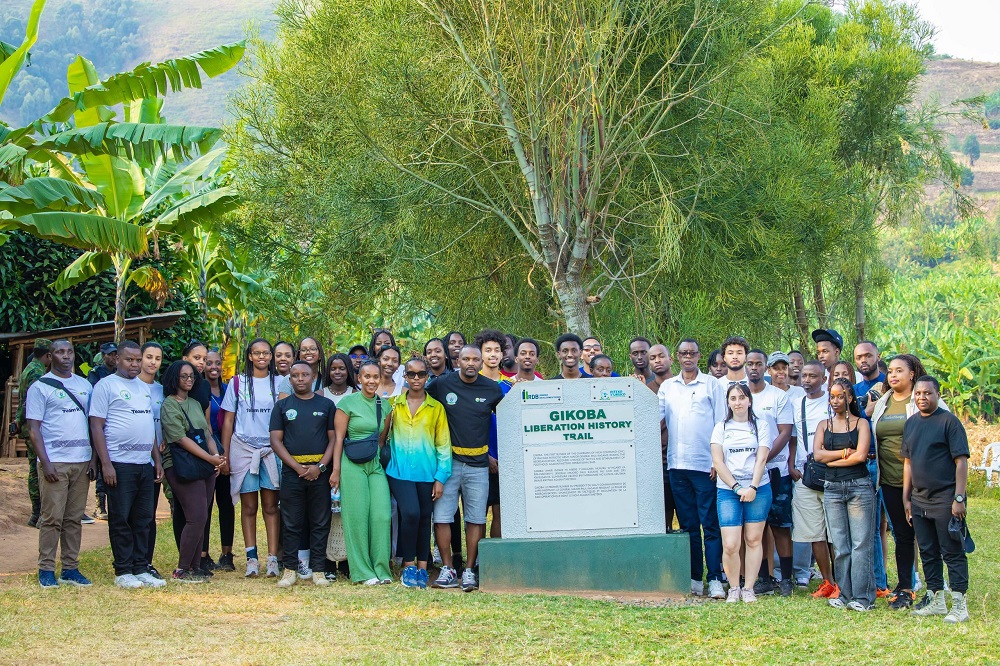
Kabarebe made the remarks on Thursday, July 25, 2024, while taking youths from the diaspora on a tour of the Gikoba Liberation Trail in Nyagatare District, a site used by the Rwandan Patriotic Army (RPA) during its liberation struggle from 1990 to 1994.
At the time, Gen (Rtd) Kabarebe was the commander of the forces protecting the RPA leader Kagame during the war.
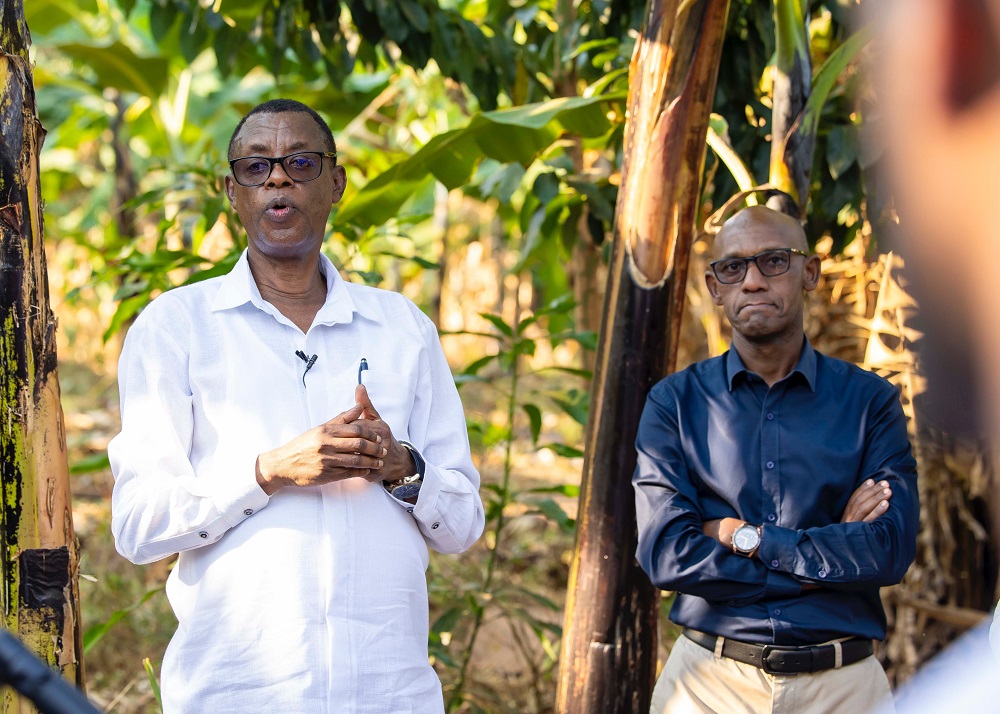
During the tour, Kabarebe told the Rwandan youth from various countries that during the early months of the war, there was constant fighting day and night as government forces attempted to dislodge them, but their determination helped them to prevail.
From January to May 1991, the struggle consisted of guerrilla attacks aimed at weakening and confusing the enemy, causing him to disperse his forces.
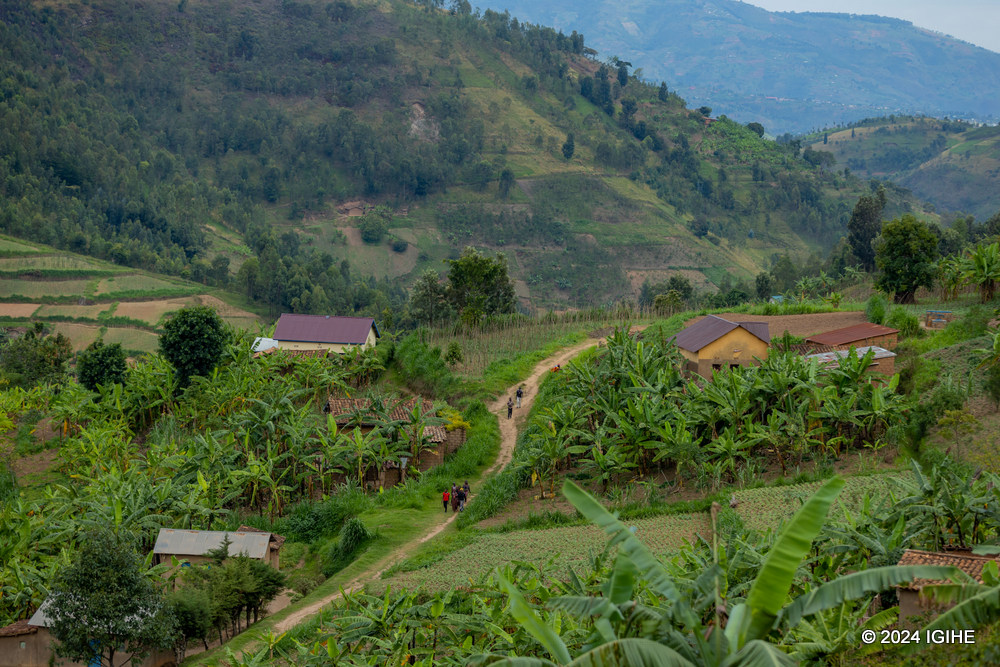
In June of that year, Kagame, who was the commander of the RPA, decided to send his troops to an area called Muvumba, choosing it because the abundant banana groves provided good cover and food to sustain the troops.
Gen (Rtd) Kabarebe revealed that they were preparing to engage in a new, entrenched form of combat rather than guerrilla attacks.
“He decided to move the troops from the mountains, changed the tactics from mobile guerrilla warfare to positional warfare. He instructed all the commanders and the soldiers to dig trenches just across here. He brought all the military leaders to show them his trench and asked them to dig their own. They were to face the enemy. The enemy well equipped with artillery, with mortars, with APCs, armored personnel carriers, helicopters, and everything,” he revealed.
Kabarebe disclosed that he was the one who dug that historic trench, which is still visible today.
“I was the commander of the force that protected the president and I am the one who dug this trench,” he added.
Gen (Rtd) Kabarebe noted that the battle was tough because then Rwandan President Juvénal Habyarimana had put all his efforts into fighting the RPA forces. However, sustained attacks on the government army forced the former Head of State to give some concessions, allowing for peace negotiations in Arusha, Tanzania.
“There was a time when Habyarimana sent many troops, heavily armed. The fighting was intense. Do you know what the Chief of Staff told us? He said, ‘We will never leave this place, even if we have to dig trenches under those mountains and hide there, but we will stay here.’”
“He wanted to tell us that no matter what happens, we should not leave this area and fight until we win.”
From that time, the RPA forces began to encircle the enemy, digging trenches that surrounded the government forces, cutting off all supply routes for food and other necessities, and also blocking their own escape routes.
Whoever starved first would be forced to abandon their positions.
“There was no point in time when our force ever succumbed and left its defence because of hunger. Our level of resilience was very, very high,” he stated.
The war would go on for more than three years until the RPA forces captured Kigali and ended the 1994 Genocide against the Tutsi.
Meanwhile, during the tour, Gen (Rtd) Kabarebe urged the young people from the diaspora to emulate the patriotism of the youth who sacrificed their lives during the liberation struggle.
In a brief interview with IGIHE, RIB spokesperson Dr. Thierry B. Murangira confirmed the development.
“The investigation involving Dr. Jeanne d’Arc Mujawamariya and Permanent Secretary Patrick Karera are based on the mismanagement of forest conservation projects,” he said.
Murangira added that the investigation extends to other individuals. “It’s not only them being investigated; all those involved in forest project management are under scrutiny,” he noted.
The spokesperson assured Rwandans that the Bureau is responsible for investigating and prosecuting anyone who violates the law, emphasizing the importance of legal compliance.
“RIB has the responsibility and authority to pursue anyone who does not adhere to the law. Anyone who violates the law will face justice,” he said.
In 2020, Patrick Karera was appointed as the Permanent Secretary in the Ministry of Environment, after serving as an advisor to the Minister of Environment in 2019.
On the morning of Thursday 25th July 2024, the Office of Prime Minister released a communique announcing the dismissal of Dr. Jeanne d’Arc Mujawamariya who has been serving as the Minister of Public Service and Labor, citing matters of accountability under investigation.
Dr. Mujawamariya was the Minister of Environment before she was moved to the docket of Public Service and Labor.
From 2013 to 2019, she served as Rwanda’s Ambassador to Russia. Prior to that, she had been the Vice Chancellor and Rector of the Kigali Institute of Science and Technology (KIST) from 2011 to 2013.
Between 2008 to 2011, she held the position of Minister of Gender and Family Promotion.
She was the Minister of Education from 2006 to March 2008, after serving as the State Minister in Charge of Higher Education within the same ministry, a year earlier.
Between 2003 and 2005, she was the Minister of State for Primary and Secondary Education
Mujawamariya worked as a lecturer of Physical Chemistry at the University of Rwanda from 2001 to 2003.
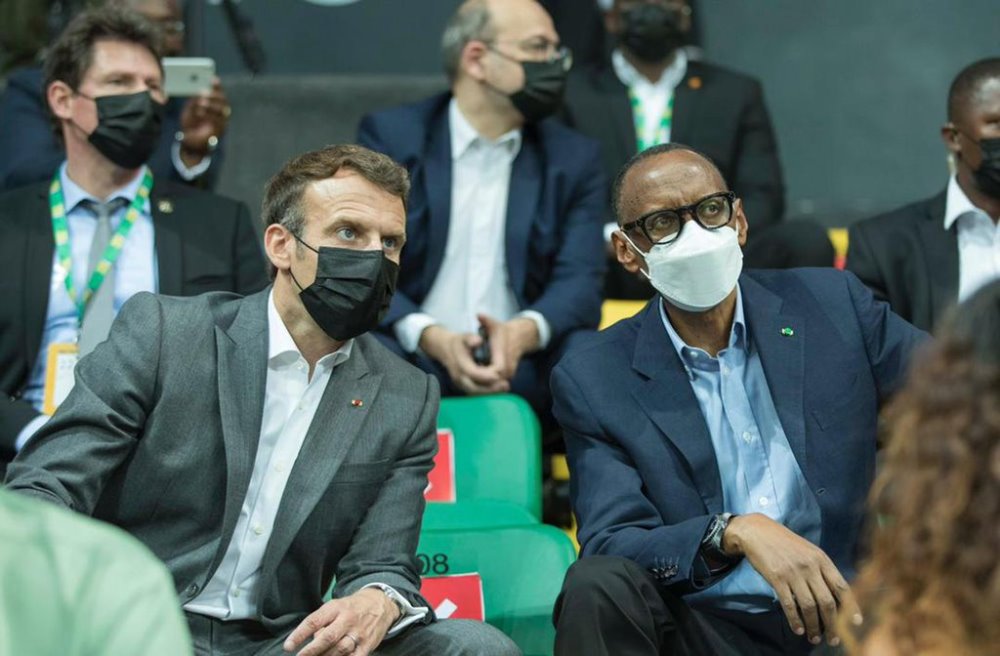
“President Kagame has done exceptionally well in recent years. I saw it myself during the basketball competition in Kigali,” Macron said in reference to a shared experience of watching a basketball game together at the BK Arena.
In 2021, President Paul Kagame and his French counterpart watched the quarter-final game of the Basketball Africa League (BAL) together, where Rwanda’s Patriots BBC defeated Mozambique’s Ferroviário de Maputo.
Macron made these remarks during the International Summit on Sport and Sustainable Development held at the Louvre on Thursday, July 25, 2024.
The French leader, highlighted the importance of investing in sports infrastructure to engage youth in sports and improve accessibility calling upon the international community to support and fund countries hosting various competitions as a way of achieving shared goals.
“We must work harder and faster to achieve this objective. It is key. At the same time, we must help Africa, the Pacific, and Latin America further develop infrastructure for major events,” he said.
In the past five years, Rwanda has completed the BK Arena and renovated Amahoro Stadium to a 45,000 seater, offering the country an outstanding eligibility in Africa to host international sports competitions.
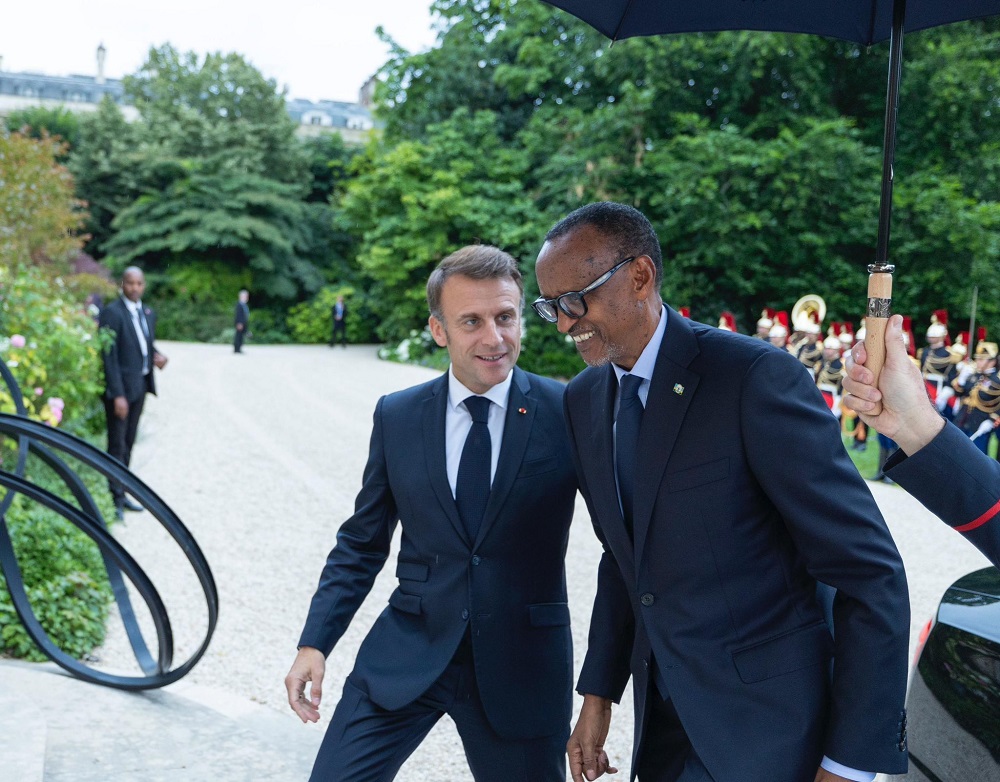
President Paul Kagame and First Lady Jeannette Kagame are in France to attend the official opening ceremony of the Paris 2024 Olympic Games, set to take place along the Seine River on Friday July 26, 2024.
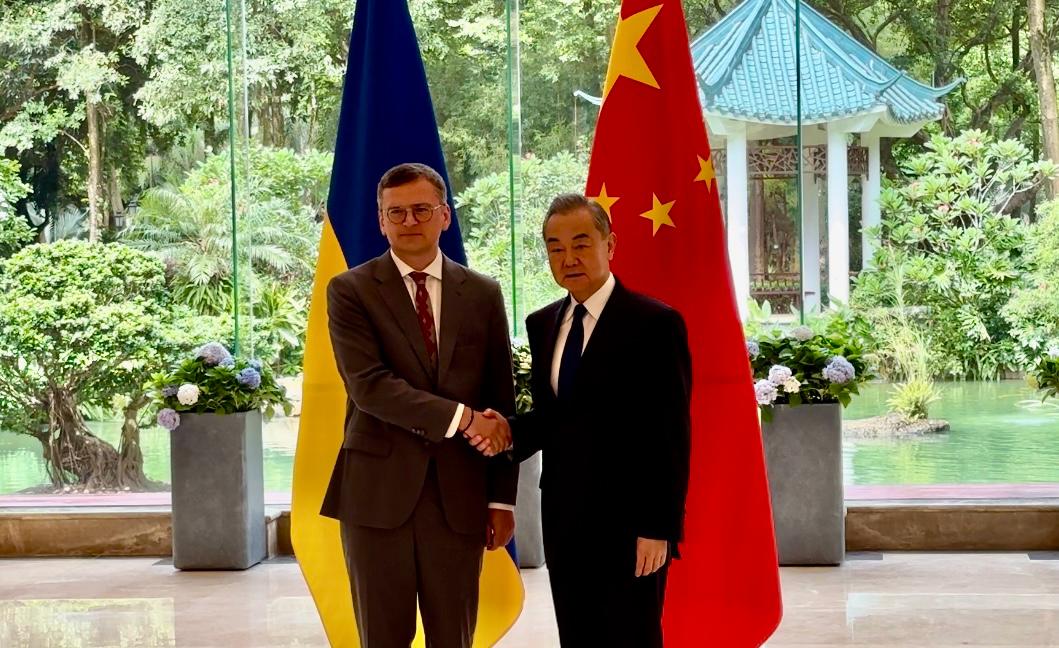
This follows a recent meeting between Chinese officials and Dmytro Kuleba, the Minister of Foreign Affairs of Ukraine, who visited China from July 23 to 25, 2024.
During the meeting, China, which was seen as one of Russia’s major backers in the wake of the 2022 invasion, also assured that it would not supply weapons to Russia.
The visit of a Ukrainian official at this level to China was the first in many years, Ukrainian official Vasyl Ivashko said in a statement.
“This is a clear signal of Beijing’s openness to dialogue with Kyiv,” Ivashko stated.
The official further affirmed Ukraine’s readiness for a diplomatic settlement of the war with the Russian Federation but accused Russia of lacking such commitment.
“Moscow is not ready to conduct negotiations in good faith,” Ivashko added.
Following the recent talks, the Ukrainian side has invited China to a second summit aimed at securing lasting peace with the Kremlin after more than two years of war. The country says efforts are ongoing to attract Russian representatives to the meeting.
The first summit was held in Switzerland in June and was attended by delegations from 92 countries. Russia was not represented at the meeting.
“Ukraine is convinced that a just peace in Ukraine corresponds to China’s strategic interests, and China’s role as a global peace force is important,” Ivashko noted.
Russia launched a full-scale invasion of Ukraine on February 24, 2022. This marked a dramatic escalation of a conflict that had been simmering since 2014, when Russia annexed Crimea and supported separatists in eastern Ukraine.
The invasion was a surprise to the world and widely condemned as an illegal act of aggression. The conflict has caused a massive humanitarian crisis, with millions of Ukrainians displaced and thousands killed.
{{Global Impact
}}
The invasion has had far-reaching consequences, including economic sanctions on Russia, a surge in energy prices, and a strengthening of NATO. The war continues, with intense fighting in various parts of Ukraine.
According to Rwanda’s Presidency, President Kagame commenced his visit on Thursday, July 25, 2024, by participating in the Sports for Sustainable Development Summit held at the Louvre.
Organized by the French Presidency and the International Olympic Committee (IOC), with support from the Agence Française de Développement (AFD), the Summit offers a unique platform for Heads of State and Government, international organization leaders, athletes, and representatives of the sporting movement and development finance sectors to come together.
On Friday, July 26, President Kagame and First Lady Jeannette Kagame will attend a reception hosted by President Emmanuel Macron, followed by the Olympics Opening Ceremony.
The Paris 2024 Olympic Games, scheduled from July 26 to August 11, 2024, are the 33rd Summer Olympics since the inaugural event held in Athens, Greece, in 1896.
Rwanda first participated in these Games in 1984 in Los Angeles, with three athletes competing in track events. Since then, Rwanda has consistently participated, gradually increasing the number of athletes over the years.
Notably, 10 Rwandan athletes competed in the 1992 Barcelona Games, and five athletes represented Rwanda in the 2020 Tokyo Games, held in 2021.
For the Paris 2024 Olympic Games, Rwanda is fielding eight athletes across various disciplines, including cycling, swimming, track events, and fencing.
Clémentine Mukandanga will compete in the 42-kilometer marathon, while Yves Nimubona will run the 10-kilometer race.
The cycling team includes Eric Manizabayo, who will compete in the road race, Diane Ingabire, who will participate in both the road race and the individual time trial (ITT) for women, and Jazilla Mwamikazi, who will compete in mountain biking.
In swimming, Oscar Peyre Mitilla Cyusa will compete in the 100-meter butterfly, and Lidwine Umuhoza Uwase will participate in the 50-meter freestyle. Tufaha Uwihoreye will represent Rwanda in fencing.
Additionally, Rwandan Jean de Dieu Mukundiyukuri will make history as the first black referee to officiate Beach Volleyball events at the Olympic Games.
“The Rusizi-Bugarama road was built in 2004 and was expected to last 15 years according to the initial study. This indicates that the road exceeded its designed lifespan in 2019, and since then, it has shown significant deterioration,” RTDA said in a statement.
RTDA is awaiting sufficient funds to comprehensively rebuild the road.
“While we await adequate funding for a durable reconstruction of this road, the current activity is ongoing maintenance to address the existing damage with the available budget.” reads the statement.
“In this regard, a 12-kilometer section of this road has been repaired, including filling potholes over a 7-kilometer stretch, building a 300-meter wall, and constructing a 2.4-kilometer segment in the Nzahaha area.”
RTDA’s announcement comes amid concerns from residents about the state of the road.
Aloys Hitimana, from Karagizwa Village, Kigenge Cell, Nzahaha Sector, told IGIHE that the dust on this road is troubling.
He said, “It’s a problem because the dust covers dishes, clothes, and fruit tree leaves. What we desire is for them to repair the road so we can get rid of the dust.”
Anne Marie Dusabe, a mother, voiced worries that the dust could lead to respiratory infections for both her and her children.
RTDA has stated that they are collaborating with other entities to rebuild the road, but in the meantime, they are focusing on repair works.
The implementation of these activities is expected to begin at the end of August 2024.
This came during the first preparatory committee meeting for the fourth International Conference on Financing for Development (FfD4), which is held in Addis Ababa, the Ethiopian capital, on July 22-26.
UN Secretary-General Antonio Guterres, addressing the meeting in a video message, highlighted the persistent challenges developing nations face and the imperative for ambitious global financial reforms.
The UN chief said the fourth International Conference on Financing for Development, which will be held in Spain next year, provides a unique opportunity to tackle these challenges head on.
“Together, we can deliver not only a financial system, but a world that is more just, equitable and sustainable,” said Guterres.
Calling on world leaders to adopt ambitious reforms to deliver affordable long-term financing at scale and deliver the SDG stimulus, Guterres said the upcoming conference is an opportunity to reform an international financial system that is “outdated, dysfunctional and unfair.”
He called for “maximum political will” to act and rescue the 2030 Agenda for Sustainable Development.
UN Deputy Secretary-General Amina Mohammed told the meeting the “disheartening reality” that only 17 percent of SDGs targets are on track, pointing to severe financial constraints facing developing countries.
“Many developing countries cannot invest in their future as they struggle to meet their immediate needs – paying salaries and meeting debt service,” Mohammed said. “The economic outlook for developing countries remains bleak. While the global economy has been described as resilient, there is a soft landing in the North but there is a crash landing in the South.”
She highlighted that the need for reform was evident in 2015, and the shocks since 2020 underline the urgency of delivering on commitments and creating an international financial architecture that can overcome global financial divisions.
“If we are to rescue the SDGs, we need much greater urgency, and much higher ambition,” Mohammed stressed, outlining six key areas for action — tackling the debt and development crisis, enhancing access to long-term, affordable financing, closing gaps in the global financial safety net, establishing a fair and effective international tax system, harnessing international capital markets, and responding to calls for global economic governance reform.
Ethiopia’s Finance Minister Ahmed Shide called on all stakeholders to exert concerted efforts in undertaking a comprehensive reform of the global financing system.
The preparatory committee meeting starts the process culminating with the FfD4 in Spain in June-July 2025. More preparatory committee sessions are scheduled to be held in New York in December and Mexico City in February next year.
In a continued effort to boost food security, the Rwandan government has been urging landowners to either make productive use of their agricultural land or hand it over to those who can cultivate it.
According to a ministerial order relating to temporary requisition of land and termination of land ownership contract issued on July 11, 2024, any agricultural land of five hectares or more that remains unused can be temporarily requisitioned.
Article 5 of the order allows the City of Kigali or any district with legal status to request the Minister to seize such unexploited land if it has been idle for at least one year without a reasonable excuse. If local authorities have previously notified the landowner to utilize the land, and there has been no compliance without a valid reason, the land can be seized. However, it is crucial to have evidence that these notifications reached the landowner.
Before any seizure, a 90-day notice is given to the landowner. If the landowner presents a plan to use the land within a year or leases it to someone capable of productive use, the seizure is halted. The order specifies that the temporary seizure lasts for three consecutive years for agricultural or livestock land and ten years for forestry land from the date the Minister notifies the landowner.
The seized land is managed by the Ministry responsible for land, but the Minister can assign it to individuals who have the capability to use it productively. This delegation can also be done to improve someone’s welfare upon request from the Mayor of the City of Kigali or the relevant district mayor.
Applicants seeking to utilize the requisitioned land must submit their plans to the City of Kigali or the district, demonstrating their technical and financial capability. They must also agree to compensate for any damage to existing property on the land. If the delegation aims to improve welfare, the government maintains the necessary infrastructure.
The order also allows landowners to terminate their land agreements if they no longer need the land. This can happen if the land is situated where basic infrastructure like roads, water, and electricity have been established, or where construction permits have been granted but the land remains unused for five consecutive years.
Additionally, land agreements can be terminated for land located in areas designated for land use and management plans or in model areas set by the Kigali City Council or district council.
Upon finding valid reasons for terminating a land agreement, the City of Kigali or the district submits a request to the Chief Registrar of Land Titles. If validated, the Chief Registrar issues a 90-day written notice to the landowner.
If the landowner fails to provide a valid reason for non-compliance within these 90 days, the agreement is terminated. The land is then assessed for value, and the new user compensates the former landowner for the infrastructure minus its cost. Subsequently, the land is registered in the new user’s name.