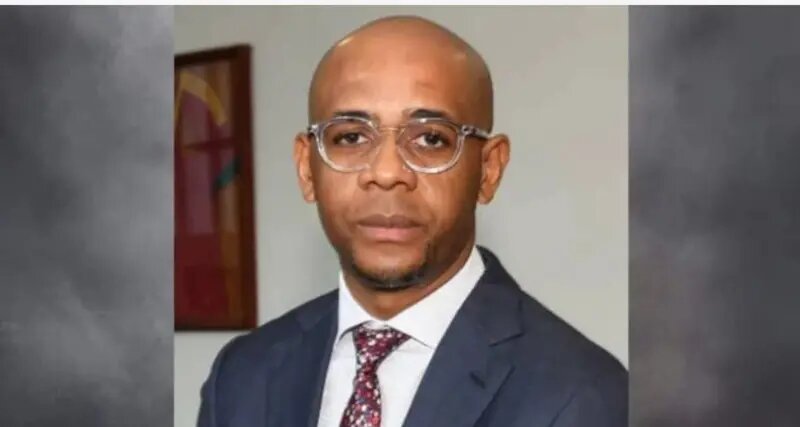
She takes over from Patricia Scotland, who became the first woman to hold the position in 2015. Patricia Scotland expressed her delight at being succeeded by another woman and affirmed her confidence that Botchwey would achieve much in advancing the Commonwealth
“It is an honor to pass on the leadership to my sister Shirley Ayorkor, who will succeed me as Commonwealth Secretary General. May she find the same fulfillment I did in leading and serving this esteemed organization,” Scotland said in a statement.
Rwanda’s Minister of Foreign Affairs, Olivier Nduhungirehe, joined others in wishing Shirley Ayorkor success in her new role.
Shirley Ayorkor Botchwey, on her part, thanked the Commonwealth leaders who entrusted her with this position, pledging to enhance cooperation that would enable them to achieve their shared goals.
“I am honored with the confidence placed in me by the Commonwealth leadership. Together, we will continue our work and create a new Commonwealth that serves the interests of all its citizens,” she said.
Shirley Ayorkor Botchwey has held various roles, including chairing the ECOWAS Council of Ministers.
During her tenure, she advised ECOWAS Heads of State and governments on various pathways to achieving peace and security in the Sahel region, reforming some democracy and governance agreements, making changes to the ECOWAS Commission, budget adjustments, and more.
She also participated in discussions aimed at transitioning power to civilians in West African countries affected by coups since 2020, such as Guinea and Burkina Faso, and was one of the mediators appointed by ECOWAS for Mali.
A seasoned diplomat, she previously served as Ghana’s Deputy Minister of Foreign Affairs under President John Agyekum Kufuor from 2006-2009.
In Ghana, she is credited with contributing to the country’s strong international reputation under President Nana Addo Dankwa Akufo-Addo’s leadership.
She also served as Deputy Minister of Information from 2005-2006 and Deputy Minister of Trade and Industry from 2007-2008.
Botchwey was also a member of the ECOWAS Parliament, where she chaired various committees, including those focused on gender and children’s issues to promote inclusivity.
Before joining politics, Shirley Ayorkor led a marketing and communications firm, served as an advisor in the Ministry of Tourism, and worked in several other organizations.
She holds a Master’s degree in Project Management, another Master’s in Communications, a Bachelor’s degree in Law, and an undergraduate degree in Public Relations and Marketing.
The mother of two completed most of her education in Ghana and the UK at the University of London and the University of Westminster.
The new officers passed out on Friday, October 25, 2024, after completing a nine-month Basic Police Course at the Police Training School in Gishari, Rwamagana District. Among the graduates are 1,777 men and 479 women.
During the ceremony, presided over by the Minister of Interior, the officers demonstrated some of the skills they acquired, including crowd control, shooting, hostage rescues, drills, martial arts, and various self-defence techniques.
The Director of the Gishari Police Training School, CP Robert Niyonshuti, said the officers underwent rigorous training to prepare them for service in the Rwanda National Police.
While 2,135 students initially enrolled, 26 did not complete the training due to various reasons. An additional 147 students trained at the Musanze Police College, where they also began university studies. Some of these graduates will join the Rwanda National Police, while others will serve in the National Intelligence and Correctional Services.
Minister Biruta highlighted that Rwanda’s historical journey has made security a top priority, enabling the country to rebuild and advance significantly over the past 30 years through unity and collaboration.
He stated, “To continue on this path, it’s essential to maintain a professional police force that is skilled, equipped with modern tools, and has the discipline derived from training like today’s and other programs.”
Minister Biruta acknowledged the general sense of safety in Rwanda but noted that certain crimes, such as drunkenness, theft, assault, drug abuse, and road accidents, still pose challenges.
“There are criminals who continuously learn and adapt their tactics, including using technology to commit crimes. This necessitates ongoing training, increasing the number of officers, and enhancing our resources to prevent and combat all forms of crime,” the minister added.
He praised the Rwanda National Police for its valuable contributions to national security since its establishment, which has also supported Rwanda’s consistently growing economy. He also thanked the parents who allowed their children to undergo this police training, integrating them into a team of dedicated officers.
The minister encouraged the new officers to uphold discipline, professionalism, diligence, integrity, and pride in serving Rwanda and its citizens wherever they may be posted.
Mugisha Steven, who graduated top of the class, expressed pride in joining the Rwanda National Police, saying it has been a lifelong dream.
“My goal now is to work alongside my colleagues, as a young officer, to support others and contribute my energy to the team,” he said.
Mirembe Liliane, the second-ranked graduate, also shared her excitement, stating her commitment to ensuring lasting security in collaboration with her peers.
The College of Arts and Social Sciences graduated 760 students, the College of Agriculture, Animal Sciences, and Veterinary Medicine (CAVM) had 722 graduates, the College of Business and Economics (CBE) awarded degrees to 1,453 students while the College of Education graduated a whopping 2,308 graduates.
The College of Medicine and Health Sciences (CMHS) had 1,157 while the College of Science and Technology graduated 1,663.
Prime Minister Dr. Edouard Ngirente presided over the graduation ceremony. In his keynote speech, he congratulated the University for making significant strides in development and delivering quality education.
“I have no doubt that the university has provided you with the necessary knowledge, skills, and values, and we expect you to contribute to solving various issues related to the country’s development. As you go on to serve the nation, we look forward to seeing you bring about substantial change that will improve the lives of Rwandans,” Ngirente said.
He urged the graduates to think broadly and help society find solutions to pressing issues that lead to development. “You must think widely, innovate solutions for development, and initiate impactful projects that benefit both yourselves and the country. Remember that the nation’s progress begins with you. That’s why I encourage you to seize every opportunity your country provides,” he stated.
Dr. Ngirente emphasized that having international students among the graduates is clear evidence of the advancing quality of education offered by the university. “The fact that 126 international students from various countries have graduated today shows that the University of Rwanda has achieved its goal of expanding its reach. This progress must continue,” he affirmed.
“We are pleased that the University of Rwanda continues to enhance the quality of education it offers, making it attractive even to students from outside Rwanda. Improving education quality must continue, and we celebrate that the progress made so far will not be reversed,” he added.
He also mentioned that once all reforms are fully implemented, the University of Rwanda will establish a strong international reputation. “Our universities must strengthen their research capacities and equip graduates with the relevant knowledge to support our country’s economic growth and development efforts,” he said.
He pointed out that this can be achieved through partnerships between private sector stakeholders and the university by refining the curriculum, providing internships, and creating job opportunities.
On his part, Dr. Didas Muganga, the Vice-Chancellor of the University of Rwanda highlighted that this 10th graduation ceremony marked a celebration of reforms that have enabled the university to produce skilled graduates ready for the job market.
“As you receive your degrees, you have overcome challenges that prepared you to be leaders, innovators, and thinkers for the future,” he said.
Muganga reminded the graduates that their time in school should have shaped them into experts poised to offer top-tier services in the future. “The knowledge you have gained can bring change, spark innovation, and drive development. This is our commitment as a university,” he said.
He also noted that in the past decade, significant changes have been made in higher education in Rwanda, particularly through the unification of public institutions to form the University of Rwanda, which has promoted quality education across all levels.
Minister of Education Joseph Nsengimana acknowledged the hard work of the graduates and expressed optimism about their contributions to the country’s development. He noted that the University of Rwanda is not just an educational institution but a place for nurturing future leaders who will drive sustainable development in the country.
Reflecting on Rwanda’s two-year term as Commonwealth Chair-In-Office, the Rwandan Head of State noted the particular climate vulnerabilities faced by small island nations like Samoa, which this year became the first Pacific island state to host CHOGM.
“Temperatures are rising, and for small island developing states in the Pacific and the Caribbean, this is literally a matter of survival,” Kagame emphasized.
As the world prepares for the forthcoming COP-29, an annual international conference that addresses climate change, President Kagame stressed the need for genuine commitments, specifically urging wealthy nations to increase climate financing for developing countries without adding to their debt burdens.
“What will make us cross the finish line in the fight against climate change is more finance from wealthy countries. Still, our collective efforts must not stop there,” Kagame stated.
“The terms must be favourable, without pushing developing countries into more debt,” he added.
Rwanda, he noted, continues to back the Sustainable Markets Initiative led by King Charles III, advocating for green investments across Commonwealth countries.
President Kagame also highlighted the need to empower young people, whom he described as the Commonwealth’s comparative advantage—a unique and valuable asset for the 56-member community.
“Creating digital jobs for women and young people should remain at the top of the agenda this year,” he added.
He also stressed the Commonwealth’s potential to harness technology for sustainable development, saying, “We must rely on the potential for innovation and technology to resolve the daunting challenge of rising unemployment and irregular migration.”
“Artificial intelligence should not become a problem. If we use it responsibly and establish sound policies, we can transcend the realm of our imagination and become even more resilient.”
President Kagame has served as Chairperson of the Commonwealth since June 2022, after Rwanda successfully hosted CHOGM.
During the opening ceremony on Friday, he congratulated Samoa Prime Minister Fiamē Naomi Mata’afa and wished her success as Chair, assuring her of Rwanda’s support.
“It has been a great honour for Rwanda to serve as Chair-in-Office for the past two years,” he stated.
This year, Rwanda will be represented by the National Agricultural Export Development Board (NAEB) and Bella Flowers, in collaboration with its embassy in the Netherlands.
Last year, the Export and Innovation Department of NAEB stated that the trade fair is an opportunity for Rwanda to expand its market to the international scene.
In an interview with IGIHE, Rwanda’s former Ambassador to the Netherlands, Olivier J.P. Nduhungirehe, confirmed that the trade fair enhances the value of Rwandan flowers in different markets.
“We firmly believe that the flower farming and trading sector, which we started less than ten years ago, will continue to grow,” he said.
“As we continue to expand, so will the market for our flowers. This is crucial for the growth of the flower business, especially as we still import flower seeds from other countries. It is important for the government to establish research mechanisms that will allow us to produce our own seeds,” he added.
NAEB statistics on flower farming in Rwanda show that over 23 million rose stems and more than 8 million summer flowers were exported from Rwanda in 2022-2023, generating $4.5 million in revenue. Additionally, 98% of these flowers were sent to the Netherlands, with expanding markets in Australia and the United Kingdom.
Last year, Rwandan representatives from different companies involved in flower farming and trading, such as Duhamic-Adri and Bright Harvest, expressed their satisfaction with participating in the event.
Karemera Annonciathe, a representative from Bright Harvest, said that it was her first time attending the trade fair, and it left her with valuable insights, including discovering new types of flowers that could be grown in Rwanda.
“It was my first time attending this event, and I was impressed to find that flowers are a significant investment. I realized that we are missing out on many varieties of flowers that are on demand at the international market. This motivated me to think about producing new types of flowers in Rwanda,” she said.
Janvier Ugeziwe, a representative from Duhamic-Adri, was also pleased with how they showcased flowers grown in Rwanda, presenting more than 18 varieties that attracted a large number of buyers.
Statistics show that flower farming generates substantial income for the country, with over $6.85 million earned in the past five years.
Horticulture, including flowers, fruits, and vegetables, brought in over $42.86 million for Rwanda in the 2021/22 fiscal year, with flowers alone contributing $6.85 million.
Rwanda’s Embassy has announced that visitors are welcome to visit Rwanda’s stand, number 5.06, located in “Hall C.”
IGIHE will keep you up to speed on the developments, for the eighth consecutive year regarding Rwanda’s floriculture at the trade fair. The event provides the Rwandan delegation with the opportunity to strengthen trade relations and promote the quality of Rwandan flowers.
These photos depict Rwanda’s vibrant participation in the 2023 event.
{{karirima@igihe.com}}
The two leaders discussed ways to enhance bilateral relations between their nations, as confirmed by Rwanda’s Presidency.
President Kagame arrived in Samoa’s capital on Tuesday evening, where he was welcomed by Deputy Prime Minister Tuala Tevaga Iosefo Ponifasio.
Following his arrival, President Kagame met with Samoa’s Prime Minister, Afioga Fiamē Naomi Mata’afa, to explore avenues for strengthening cooperation between Rwanda and Samoa.
Kagame also met with the Prime Minister of Antigua and Barbuda, Honourable Gaston Browne. The two leaders focused on fostering stronger diplomatic ties and exploring new areas of collaboration across various sectors.
In addition to these discussions, President Kagame attended the Sustainable Markets Initiative (SMI) hosted by King Charles III.
The initiative focuses on sustainable development and climate action, key issues on this year’s agenda.
The Commonwealth, which consists of 56 member countries from all continents, includes 33 small states, of which 25 are island nations. By 2023, the Commonwealth’s population had grown to approximately 2.5 billion people.
President Kagame has served as Chairperson of the Commonwealth since June 2022, after Rwanda successfully hosted CHOGM that year.
This year’s meeting marks the end of Rwanda’s two-year chairmanship, with Samoa set to take over as Chair-In-Office.
Additionally, a new Secretary-General for the Commonwealth is expected to be elected during this year’s summit, replacing Patricia Scotland, who has held the position since March 2016.
CHOGM 2024 is a historic event, being the first-ever meeting held in a Pacific Small Island Developing State and the first since Gabon and Togo officially joined the Commonwealth, raising the total membership to 56 nations.
This year’s discussions will address critical global challenges, including economic, environmental, and security issues.
Leaders are also expected to focus on enhancing resilience, boosting trade, fostering innovation, and empowering the Commonwealth’s youth to build a more peaceful and sustainable future.
The main CHOGM event will take place on October 25, 2024, preceded by side meetings such as the Youth Forum, the Women’s Forum, and the Foreign Ministers’ Meeting on October 24.
Xi made the remarks when addressing the 16th BRICS Summit held in Kazan, Russia.
Russian President Vladimir Putin chaired the summit, which was also attended by Egyptian President Abdel-Fattah al-Sisi, Ethiopian Prime Minister Abiy Ahmed, Indian Prime Minister Narendra Modi, Iranian President Masoud Pezeshkian, South African President Cyril Ramaphosa, the United Arab Emirates’ President Sheikh Mohamed bin Zayed Al Nahyan.
Brazilian President Luiz Inacio Lula da Silva participated in the summit via video link.
During a small-group meeting, Xi welcomed new members to the BRICS family and invited many countries to become partner countries.
Xi pointed out that the enlargement of BRICS is a major milestone in its development history, and a landmark event in the evolution of the international situation. It is for their shared pursuit and for the overarching trend of peace and development that BRICS countries have come together, he said.
Stressing that the world is undergoing accelerated changes unseen in a century, marked by new trends of multipolarity and the risks of a “new Cold War,” Xi said BRICS countries should seize the historical opportunity, take proactive steps, remain committed to the original aspiration and mission of openness, inclusiveness and win-win cooperation, conform to the general trend of the rise of the Global South, seek common ground while reserving differences, work in concert to further consolidate common values, safeguard common interests, and strengthen BRICS countries through unity.
“We must work together to build BRICS into a primary channel for strengthening solidarity and cooperation among Global South nations and a vanguard for advancing global governance reform,” Xi said.
He stressed that the more turbulent the world is, the more BRICS countries should uphold the banner of peace, development and win-win cooperation, refining the essence of BRICS and demonstrating its strength. BRICS countries should raise the voice of peace, advocating a new path to security that features dialogue over confrontation and partnership over alliance.
Xi urged BRICS countries to jointly pursue a path of development, advocate a universally beneficial and inclusive economic globalization, and stay committed to the principle of common development. He said BRICS countries should consolidate the foundation of cooperation, deepen cooperation in traditional areas such as agriculture, energy, minerals, economy and trade, expand cooperation in emerging areas such as green, low-carbon and artificial intelligence, and safeguard trade, investment and financial security.
The Chinese president then attended a large-scale meeting, made important statements on BRICS’ future development and put forward five suggestions.
“As the world enters a new period defined by turbulence and transformation, we are confronted with pivotal choices that will shape our future. Should we allow the world to descend into the abyss of disorder and chaos, or should we strive to steer it back on the path of peace and development?” Xi said.
He stressed that the more tumultuous our times become, the more firmly we must stand at the forefront, exhibiting tenacity, demonstrating the audacity to pioneer and displaying the wisdom to adapt, adding that China is willing to work with all BRICS countries to open a new horizon in the high-quality development of greater BRICS cooperation.
“We should build a BRICS committed to peace, and we must all act as defenders of common security,” Xi said. Only by embracing the vision of common, comprehensive, cooperative and sustainable security can we pave the way for universal security, he added.
Xi urged the BRICS countries to uphold the three key principles: no expansion of the battlefields, no escalation of hostilities, and no fanning flames, and strive for swift deescalation of the situation in Ukraine.
He also urged BRICS countries to promote an immediate ceasefire in Gaza, and make unremitting efforts toward a comprehensive, just and lasting resolution of the Palestinian question.
“We should build a BRICS committed to innovation, and we must all act as pioneers of high-quality development,” Xi said. “We must keep pace with the times and foster new quality productive forces.”
Xi said China has recently launched a China-BRICS Artificial Intelligence Development and Cooperation Center, and will establish a BRICS Deep-Sea Resources International Research Center, a China Center for Cooperation on Development of Special Economic Zones in BRICS Countries, a China Center for BRICS Industrial Competencies, and a BRICS Digital Ecosystem Cooperation Network, welcoming active participation from all interested parties.
“We should build a BRICS committed to green development, and we must all act as promoters of sustainable development,” Xi said.
He noted that China’s high-quality production capacity, as exemplified by its electric vehicles, lithium batteries and photovoltaic products, provides a significant boost to global green development.
Xi said China is willing to expand cooperation with BRICS countries in green industries, clean energy and green mining, and promote green development through the entire industrial chain, so as to increase the “green quotient” of our cooperation and upgrade the quality of our development.
“We should build a BRICS committed to justice, and we must all act as forerunners in reforming global governance,” Xi said.
He said the international power dynamics is undergoing profound changes, but global governance reform has lagged behind for a long time, urging BRICS countries to champion true multilateralism and adhere to the vision of global governance characterized by extensive consultation, joint contribution, and shared benefits.
Xi said BRICS countries must ensure that global governance reform is guided by the principles of fairness, justice, openness and inclusiveness, and enhance the representation and voice of developing nations in global governance.
Xi said BRICS countries should promote the connectivity of financial infrastructure, apply high standards of financial security, expand and strengthen the New Development Bank, ensuring that the international financial system more effectively reflects the changes in the global economic landscape.
“We should build a BRICS committed to closer people-to-people exchanges, and we must all act as advocates for harmonious coexistence among all civilizations,” Xi said.
Stressing that it is important that BRICS countries promote the spirit of inclusiveness and harmonious coexistence among civilizations and enhance the exchange of governance experiences among BRICS countries, Xi said he is delighted to see that the initiative for BRICS digital education cooperation has become a reality, and China will implement a capacity-building program for BRICS digital education, open 10 learning centers in BRICS countries in the next five years, and provide training opportunities for 1,000 local education administrators, teachers and students.
China is willing to work with BRICS countries to open a new horizon in the high-quality development of greater BRICS cooperation, and jointly promote the building of a community with a shared future for mankind, Xi concluded.
Under the theme of “Strengthening Multilateralism for Just Global Development and Security,” the participating leaders exchanged in-depth views on BRICS cooperation and major international issues of common interest.
The leaders made positive comments on the development of BRICS institutions and the important role they have played in addressing global challenges, expressing the belief that BRICS countries, with their large population, rich resources, huge development potential, growing appeal and international influence, have become a model of multilateralism.
They called on BRICS countries to uphold the BRICS spirit, strengthen solidarity and coordination, deepen the strategic partnership within greater BRICS, enhance cooperation in politics and security, economy, trade and finance, people-to-people and cultural exchanges, promote an equal and orderly multipolar world, a universally beneficial and inclusive economic globalization, and sustainable development of the world, and further increase the voice and representation of the Global South in international affairs, and promote the building of a more just and equitable international order.
The leaders vowed to safeguard multilateralism, uphold the core role of the United Nations in the international system, and support the United Nations in playing an important role in global governance such as artificial intelligence.
They also expressed commitment to peacefully resolving disputes through dialogue and consultation, support all efforts conducive to a peaceful settlement of crisis, and respect the legitimate security concerns of all countries.
The leaders agreed to promote reform of the existing international economic and financial architecture and build the New Development Bank into a new type of multilateral development bank for the 21st century.
They also commended the UN General Assembly for adopting relevant resolutions on the China-proposed International Day for Dialogue among Civilizations, calling for respect for the diversity of world civilizations and strengthening exchanges and mutual learning among different civilizations.
The Kazan Declaration of the 16th BRICS Summit was issued and the establishment of BRICS partners was announced at the summit.
During the summit, the BRICS leaders also heard reports on the work of President of the New Development Bank Dilma Rousseff and other heads of BRICS institutions.
The center aims to train 10,000 tech experts over the next five years, with a focus on those already working in the technology field, who will receive advanced knowledge using various technological tools. Its goal is to help Rwanda achieve its target of building a technology-driven economy.
Additionally, the center will support the Rwandan government’s plan to train a million people, mainly youth, in technology-related courses like coding over the next five years, and 500,000 others in advanced technology training.
During the center’s official launch on October 23, 2024, the Managing Director of Vuba Technologies Limited, Srimal Rajapaksha, said the center aims to bridge the skills gap between what students learn in school and the skills needed in the job market. Many graduates find themselves lacking sufficient expertise to handle challenges in their fields.
“Often, the knowledge provided in schools is purely theoretical and doesn’t sufficiently prepare students for the workplace. We established this center to provide hands-on training, allowing tech experts to learn through practical, work-based experiences,” Rajapaksha explained.
The center is envisioned to become a model for Africa, with tech experts from countries like Malawi, Zambia, and other African nations coming to Rwanda for training. This will help reduce the number of people traveling abroad to seek modern technological education.
Currently, the center is collaborating with government institutions, schools, and private sector companies to foster partnerships aimed at promoting the technology sector. Students who complete the training will receive internationally recognized certificates that validate their acquired skills.
The center offers training in various fields, including networking, data processing and analysis, cybersecurity, artificial intelligence (AI), software development, and more. Graduates will also be supported in obtaining internationally recognized certifications after completing their courses.
In addition to Rwandans, the center is expected to welcome international students from different African countries, with training provided either through technology-based methods or in-person.
With an investment of over 200 million RWF, the school is poised for future expansion into other regions of the country. The planning and development of the center has been underway since 2019.
At an event held on October 23, 2024 to present the company’s environmental audit report, Peter Geleta, the Chief Executive Officer (CEO) highlighted the critical role of environmental sustainability in the mining industry and emphasized the importance of aligning mining operations with international standards.
“The days of mining companies heading into Africa, pillaging resources, and leaving a trail of environmental damage are gone. We see ourselves as stewards of the environment and are committed to responsible mining that adheres to the highest international standards,” he said.
The assessment was conducted on Trinity’s three major mines which include Rutongo mines, Musha mines and Nyakabingo mines and represents a comprehensive review of the environmental and social impacts associated with their operations.
The last similar assessment was conducted in 2015, making this latest review particularly timely as the company works to improve its environmental footprint and adopt more sustainable practices.
“Since our last assessment nearly a decade ago, the mining industry in Rwanda, has evolved significantly. We embarked on this journey last year to update our environmental and social impact studies, recognizing that this is key to our long-term success and sustainability,” Geleta noted.
Geleta explained that the company is focused on leaving the environment in a state that is safe and conducive for future use once mining operations are complete.
“We need to ensure that we do our environmental planning properly, that we manage our closure planning responsibly, and that we leave the environment in a good state for the next generation,” he emphasized.
Trinity Metals is also making strides in the social impact arena. With a workforce of over 7,000 employees, 99% of whom are Rwandans, the company has been a major contributor to local communities, providing jobs and opportunities for economic development.
Furthermore, the company has made a concerted effort to promote gender equality within the mining sector, with women now making up 18% of the workforce across its mines, a figure expected to raise to 30% in the coming years.
The CEO also underscored the importance of international partnerships and investments in ensuring that Trinity Metals operates at the highest standards.
The unveiling of these findings, along with the company’s approach to sustainable mining, signals a good will for the Rwandan mining industry as Innocent Safari, the Chief Finance Officer at the Rwanda Mining Board (RMD) explains.
“Mining companies are expected to balance economic growth with environmental responsibility by aligning their operations with international standards,” he said.
Safari expressed gratitude for Trinity metals for positioning itself as a leader in responsible mining and setting an example for other companies in Rwanda.
He called out for the general public, the wider mining community and stakeholders to follow suit and practice responsible mining by doing it in a way that benefits both the economy and the environment, ensuring a future that everyone can be proud of.
Fidele Ruzigandekwe, an expert consultant in environmental impact assessment revealed that water pollution, soil erosion, air and noise pollution are some of the findings that were identified in this particular ESIA.
“Unregulated mining practices lead to significant environmental and social inequalities. Trinity’s forward-thinking approach, coupled with its commitment to sustainable practices, is paving the way for a modern era in Rwandan mining,” he said.