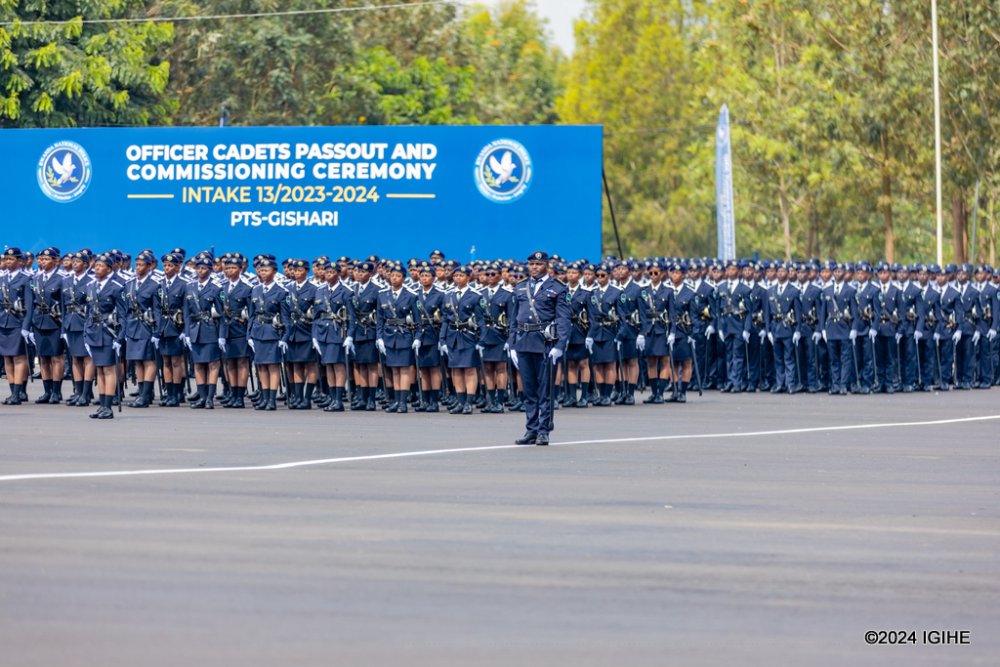
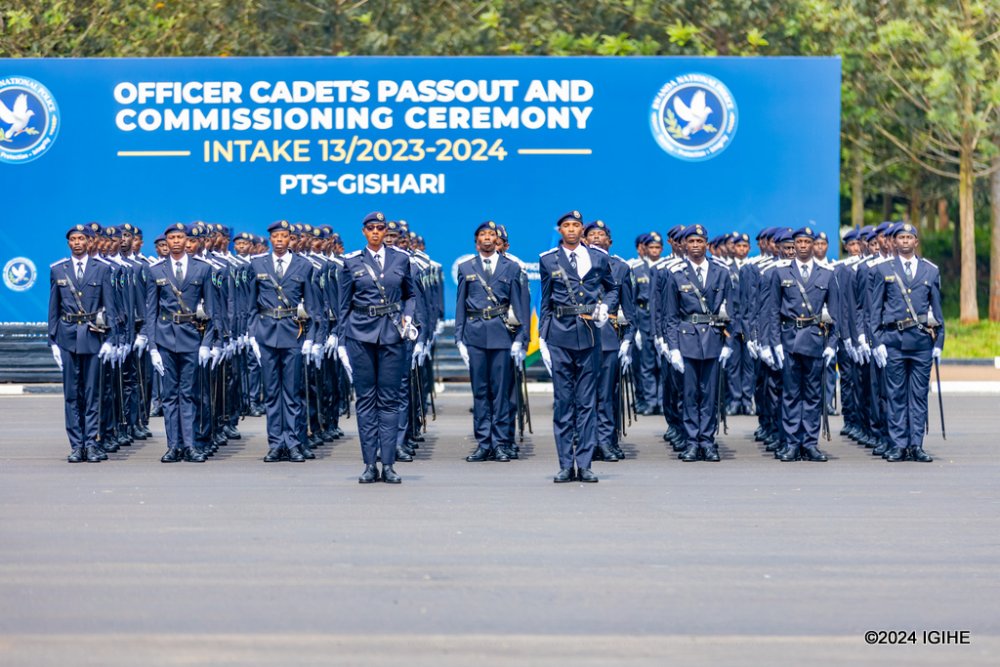
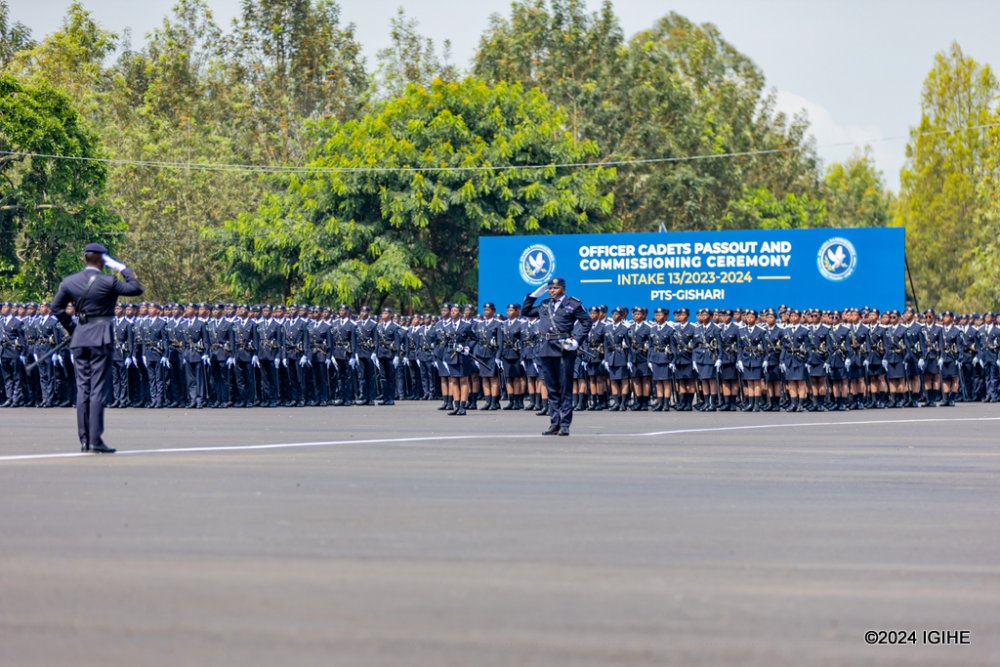
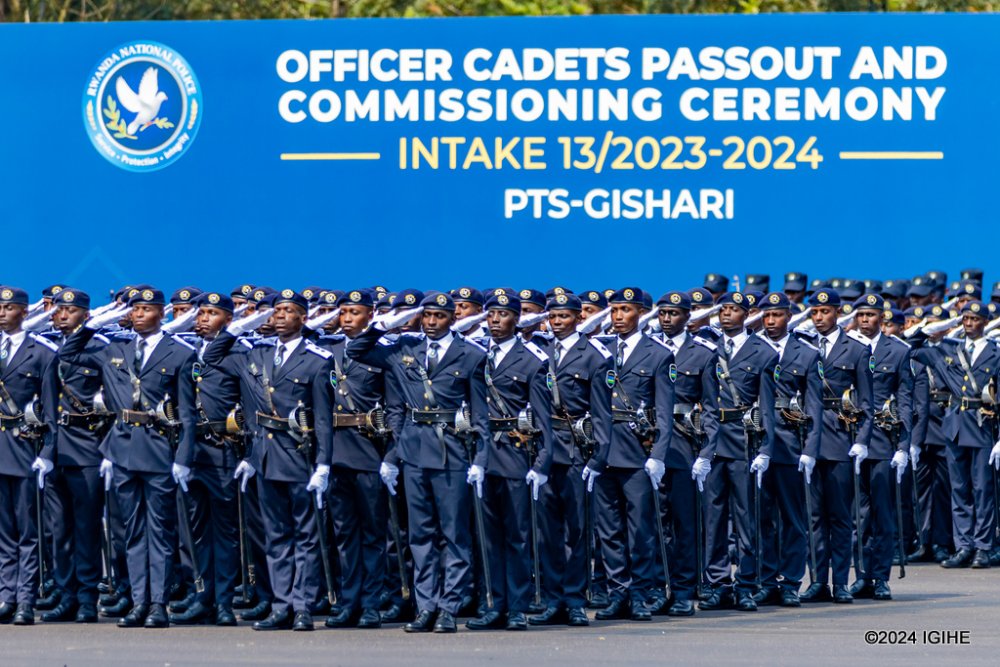
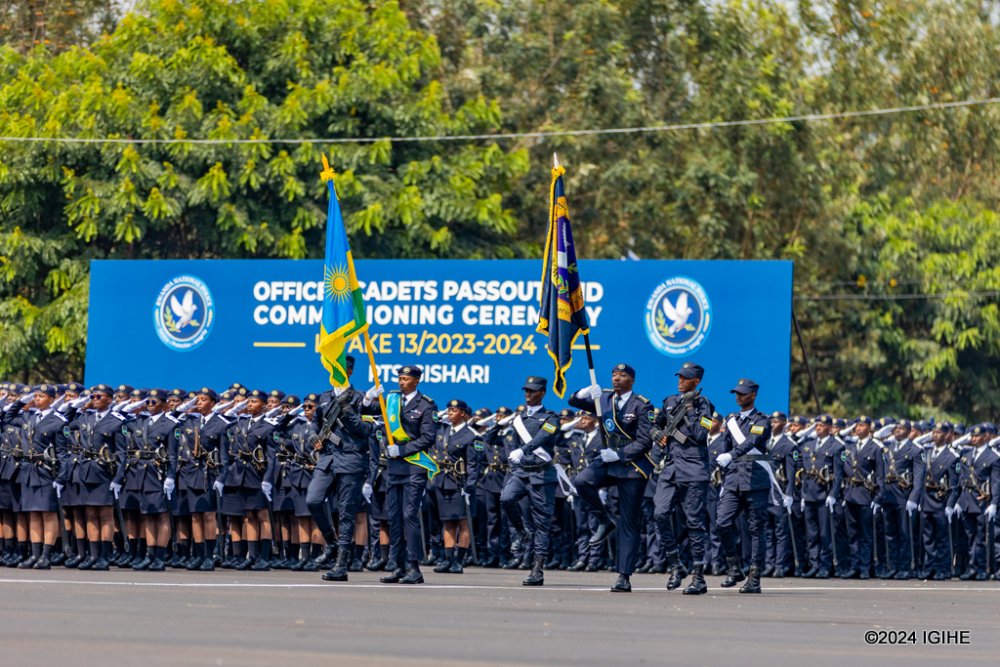
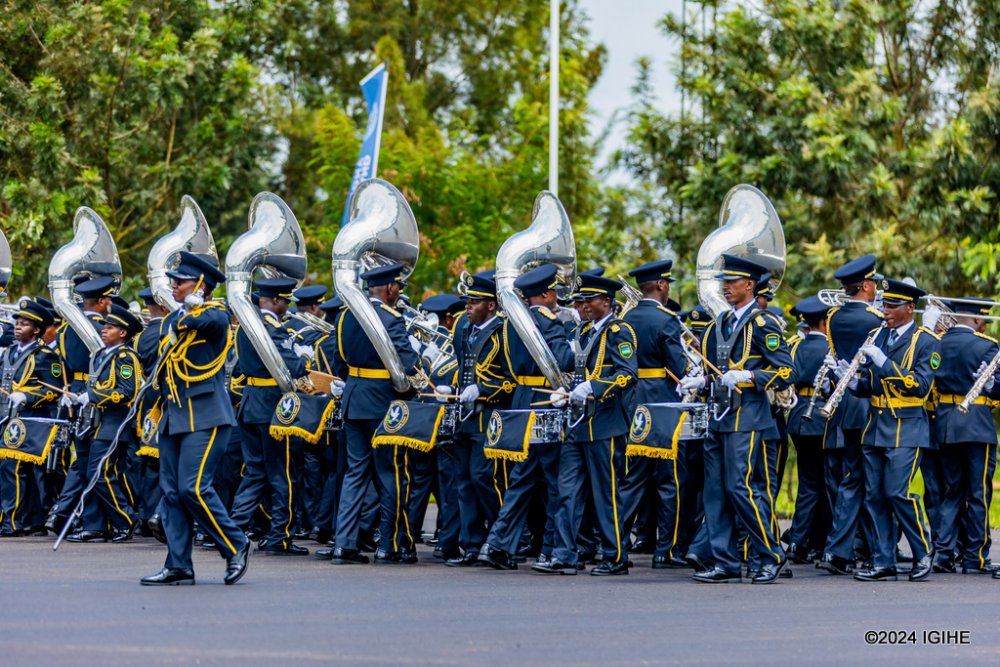
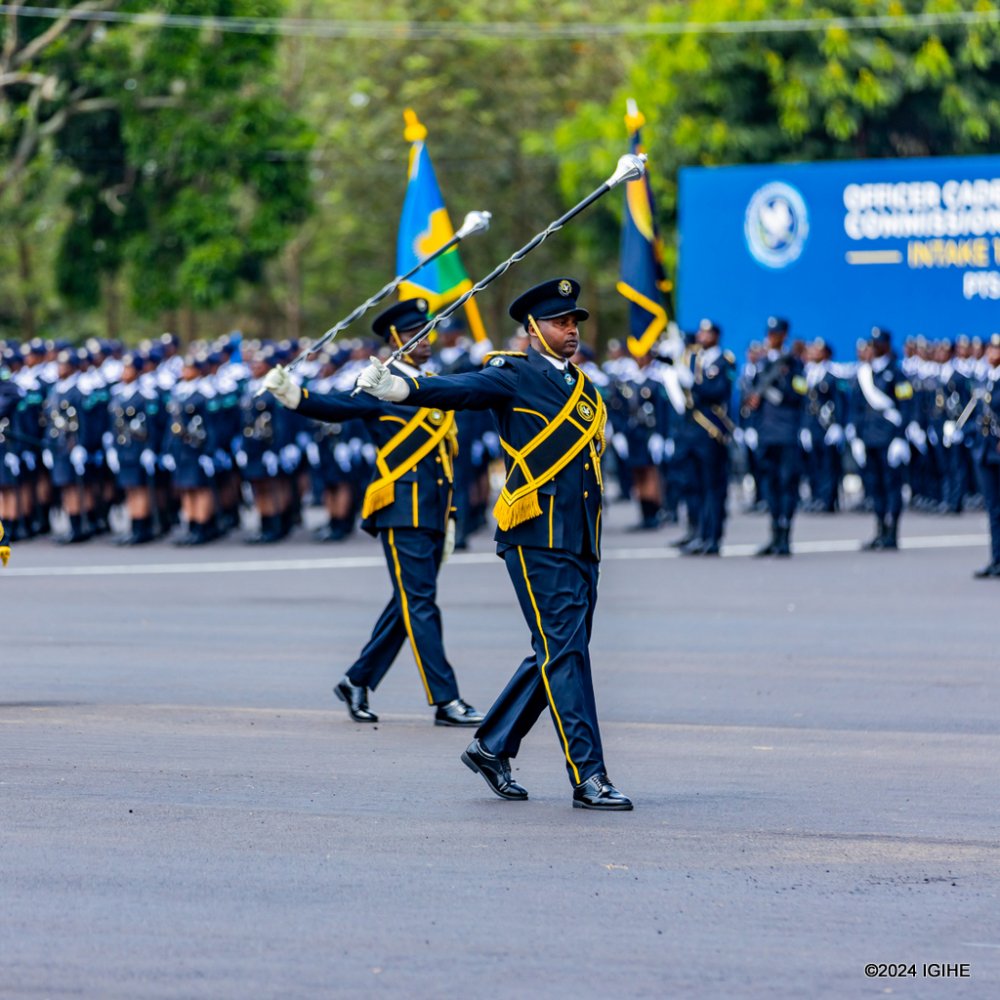
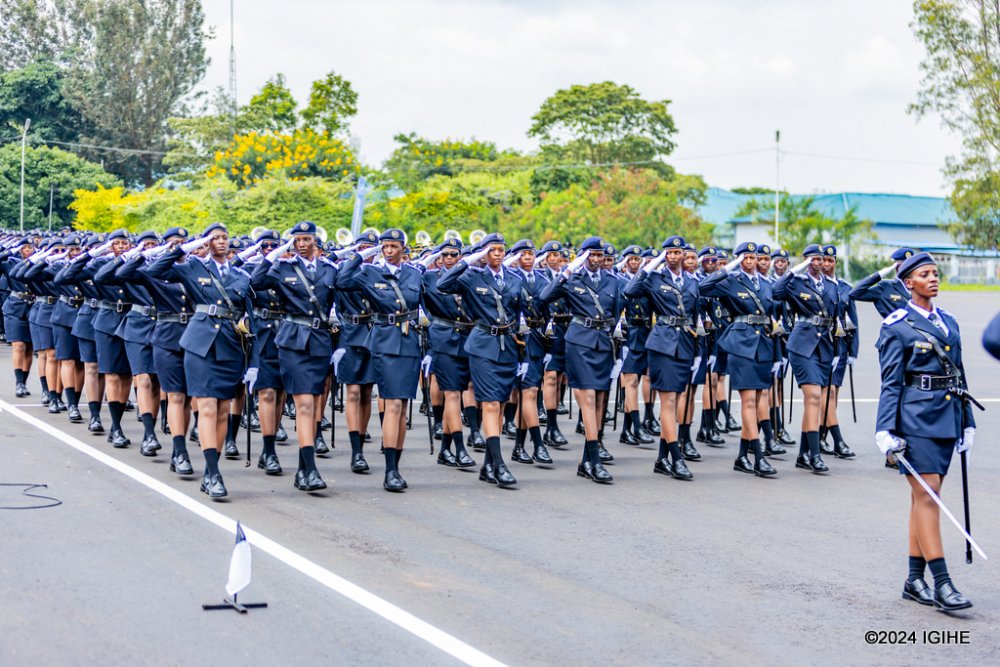
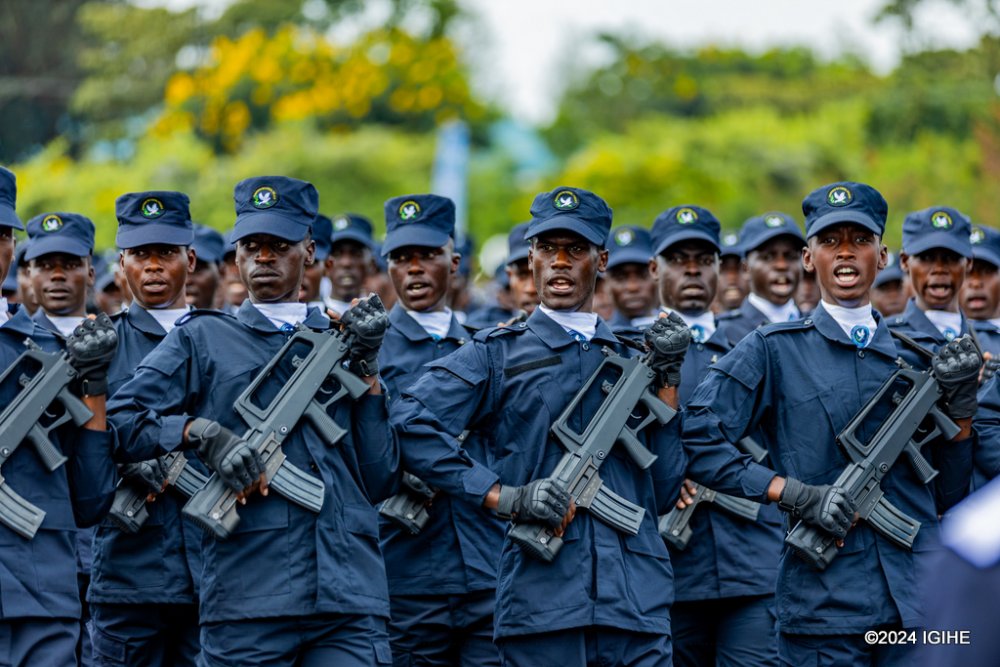
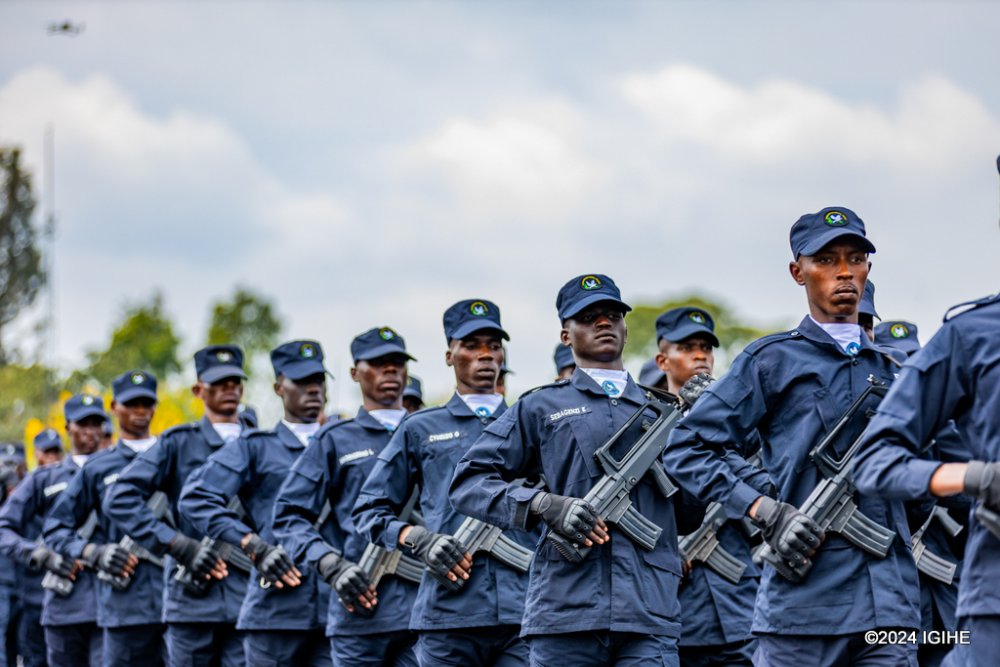
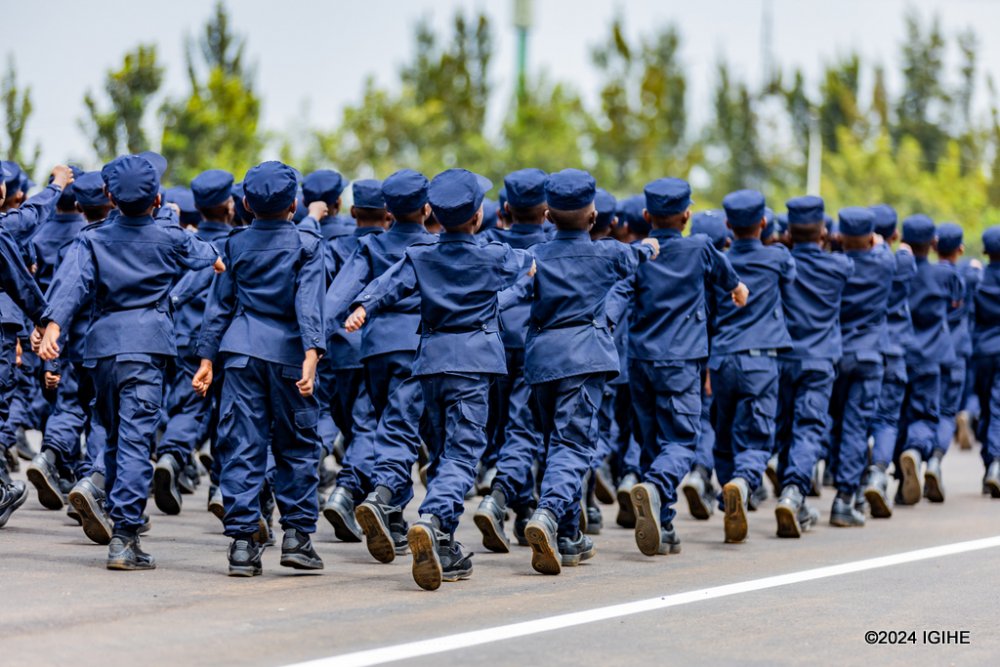
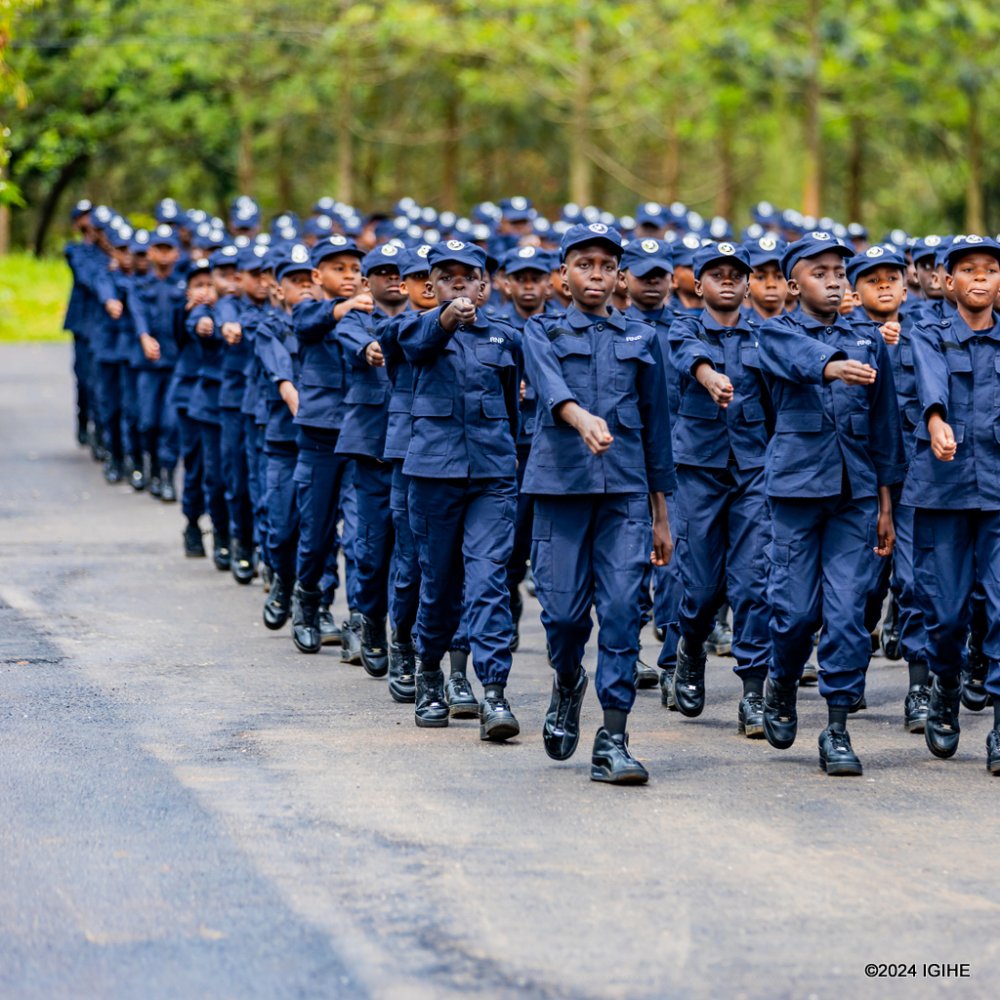
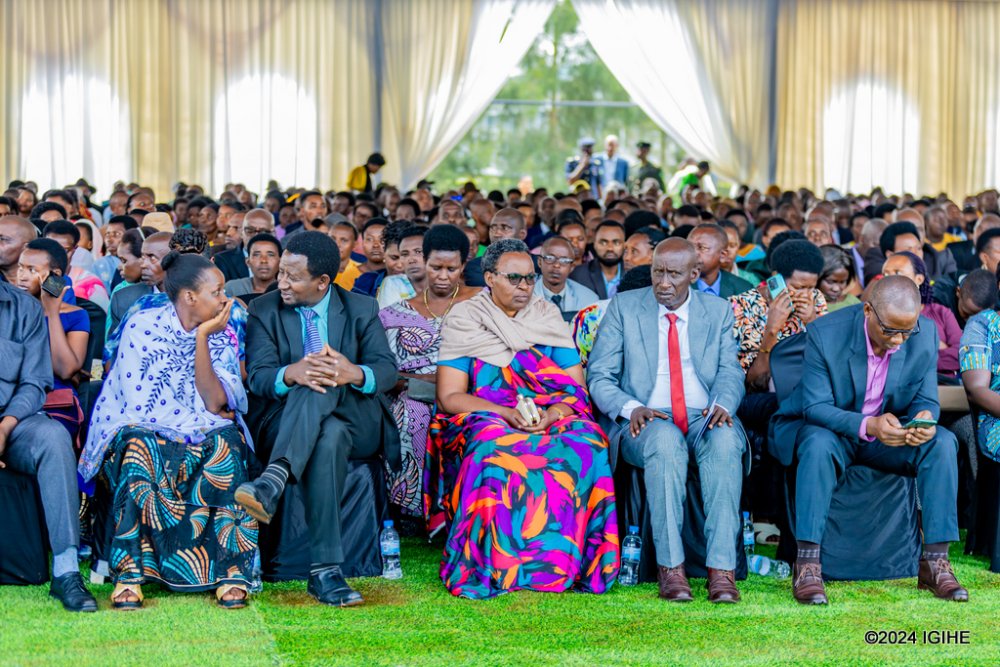
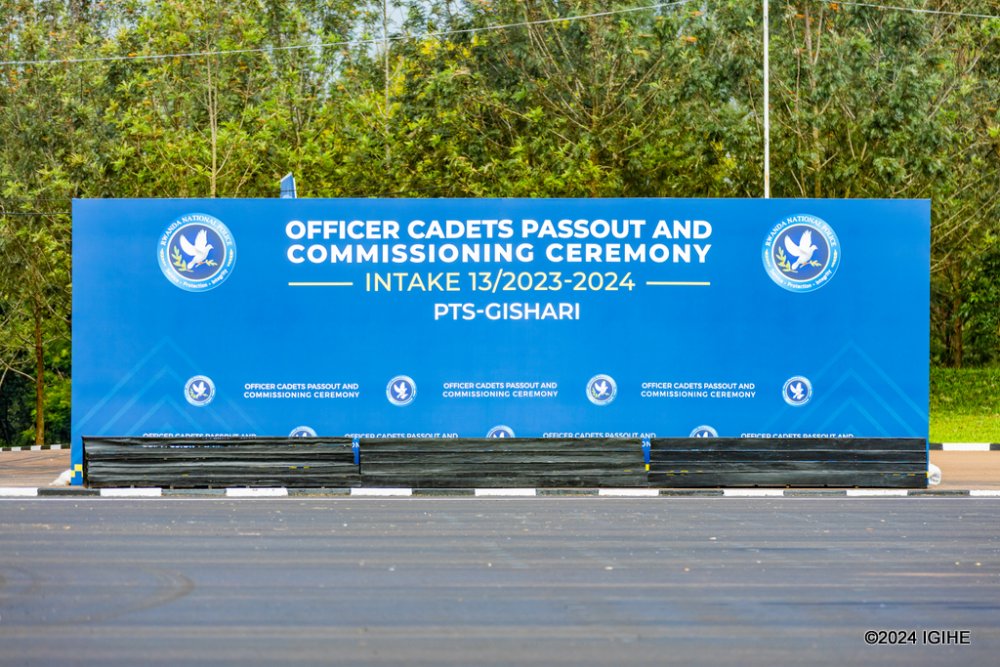
Prime Minister Dr. Edouard Ngirente presided over the event, commissioning the graduates to the rank of Assistant Inspector of Police (AIP). He also recognized the top three performers: Frederick Ndinzi, Felix Nahimana, and Eric Manzi.”
Dr. Ngirente emphasized the importance of security as a foundation for Rwanda’s development. He praised the Rwanda National Police for collaborating with citizens and other security agencies to fulfil its responsibilities effectively, promoting trust among Rwandans and international partners.
He noted that despite Rwanda’s current state of peace, global threats to security—such as cross-border crimes, drug trafficking, and cybercrimes—require continuous vigilance.
The Prime Minister urged the police to remain prepared, engage with citizens to report crimes promptly and participate in national development activities.
Dr. Ngirente reaffirmed the government’s commitment to strengthening the police force by providing equipment, infrastructure, personnel, and training to ensure public safety.
He called on the new officers to uphold integrity, professionalism, and their oath of service, while making the most of their opportunity to serve the nation.
The 12-month training program covered leadership, weapon handling, values, and discipline.
Among the 635 graduates, 527 were men and 108 women. Some of the graduates were already part of the police force, while others came from civilian backgrounds. A few represented other agencies, including the Rwanda Investigation Bureau (RIB), the National Intelligence and Security Service (NISS), and the Rwanda Correctional Service (RCS).
The program also featured four weeks of field practice and involvement in the July 2024 presidential and parliamentary elections, which provided hands-on experience.
CP Robert Niyonshuti, the Commandant of Gishari Police Training School, highlighted that two Rwandan trainees had studied at Singapore’s Home Team Academy.
He noted that out of the 641 initial trainees, six did not complete the course due to health and other challenges. He encouraged the graduates to demonstrate professionalism and ethical conduct in their duties.
The ceremony was attended by key officials, including the Minister of Defense, Juvenal Marizamunda; Chief of Defense Staff of the Rwanda Defense Force, Gen Mubarakh Muganga; Inspector General of Police (IGP) Felix Namuhoranye; Secretary General of the National Intelligence and Security Service (NISS), Aimable Havugiyaremye; Minister of Justice, Dr. Ugirashebuja Emmanuel; and other security and national leaders.
The parents and guardians of the graduates also attended to support them on this important milestone.
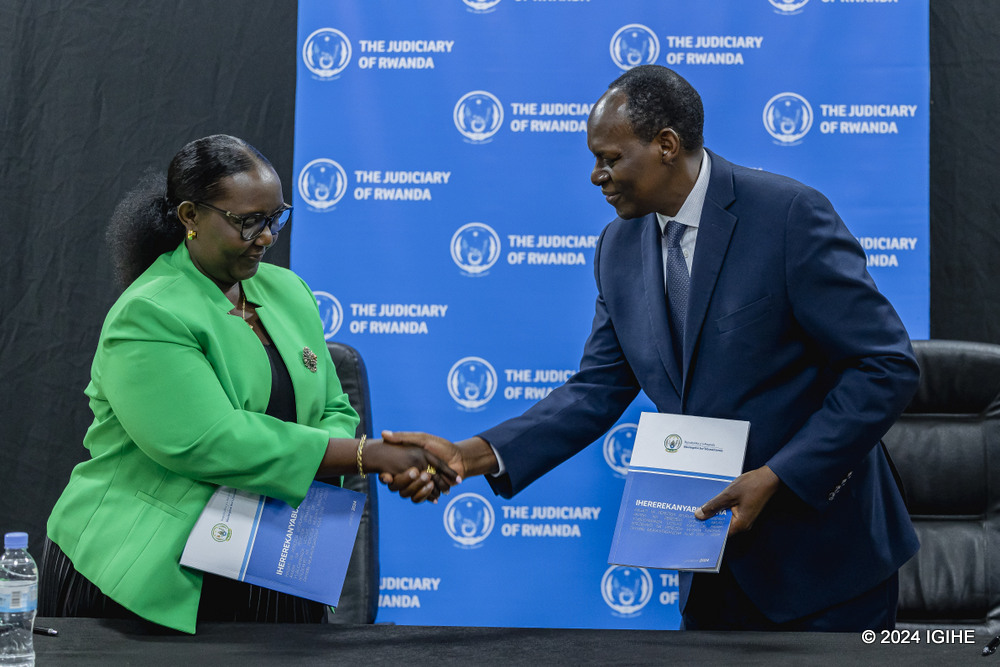
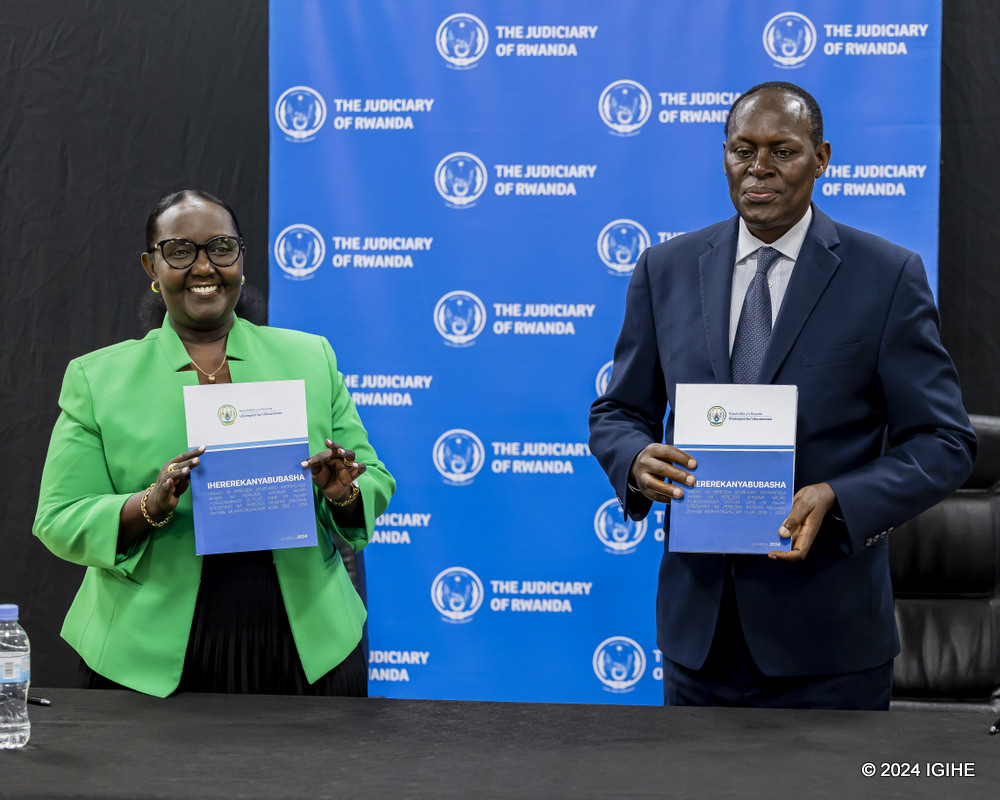
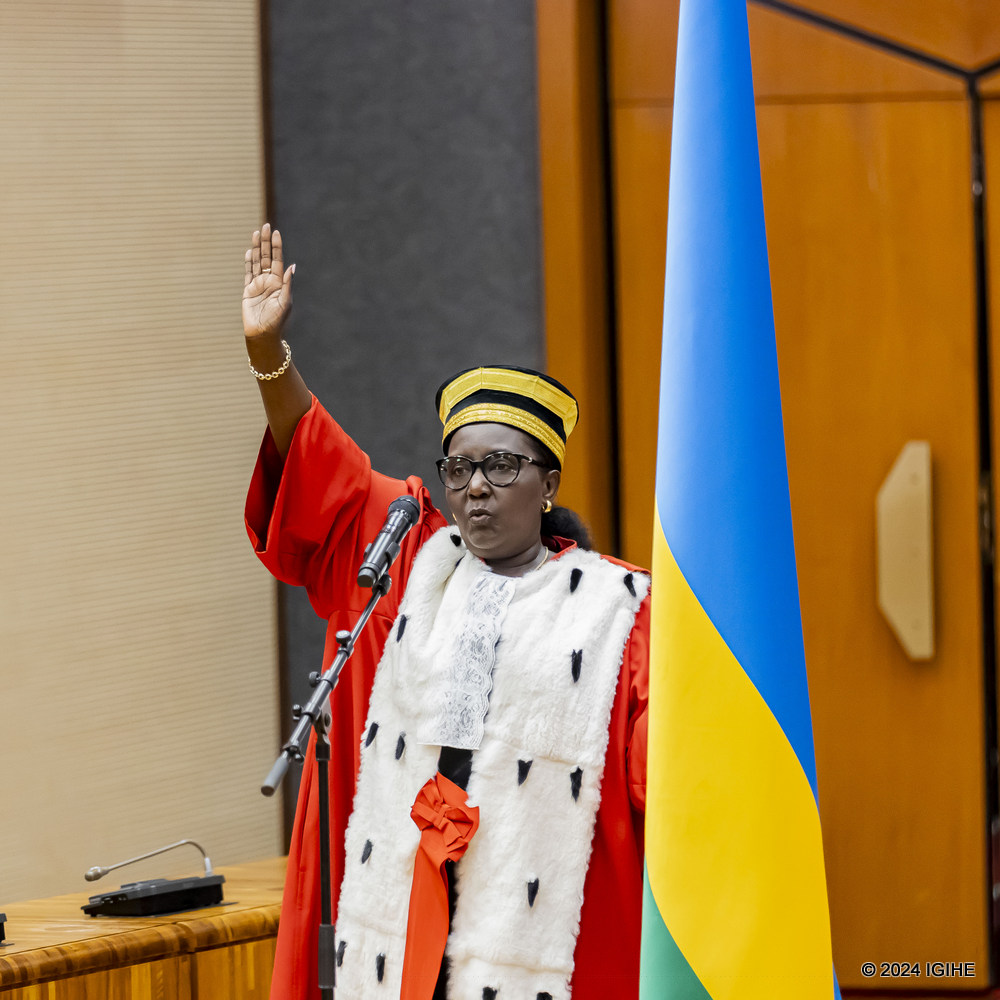
In an exclusive interview with IGIHE following her swearing-in ceremony on December 12, 2024, Justice Mukantaganzwa highlighted her key priorities: tackling the backlog of cases, promoting alternative dispute resolution, and combating corruption within the judiciary.
Upon assuming office, Mukantaganzwa stressed the importance of understanding the judicial system’s structure and personnel, with a goal to address the inefficiencies that hinder the timely delivery of justice.
{{Tackling the case backlog}}
One of the most pressing challenges facing Rwanda’s judicial system is the backlog of cases. Mukantaganzwa acknowledged this issue as a major barrier to delivering swift and fair justice.
To address this, she has proposed a categorization of cases to better understand their nature and complexity.
“For example, in civil cases, we can assist the parties in reaching a settlement. Even in criminal cases, some can be resolved through mediation, which can help speed up the justice process,” she said.
The Chief Justice believes that mediation, especially for less serious offenses, could significantly ease the burden on courts.
Mediation, according to Mukantaganzwa, is an effective tool in ensuring that both parties come to an understanding, even if the case is resolved outside the courtroom.
She emphasized that the primary goal is to “resolve the issue and have both parties reconcile,” which would ultimately lead to positive outcomes for society as a whole.
In her view, resolving cases outside the courtroom would not only save time but also reduce the overcrowding in prisons—a problem that is intricately linked to the backlog of cases.
“Not all cases are of the same nature or weight,” she pointed out. Some cases, she noted, are simple and could be resolved much quicker without formal court proceedings.
By promoting alternative dispute resolution methods, Mukantaganzwa believes that a significant portion of disputes could be settled without overwhelming the judicial system.
{{Strengthening public trust and fighting corruption}}
A major theme of Mukantaganzwa’s vision is cementing public trust in the judiciary. The Chief Justice highlighted that one of the core reasons behind public dissatisfaction with the judicial process is the perception of corruption.
To counter this, she emphasized the need for a transparent and unbiased judiciary.
“Corruption is an individual problem, not an institutional one,” Mukantaganzwa asserted.
She made it clear that any judge or judicial employee found involved in corruption would face strict legal consequences, including criminal prosecution and removal from office.
The aim, she explained, is to foster public confidence by ensuring that the judiciary remains free of corruption.
In her view, the fight against corruption must go hand-in-hand with a broader effort to educate the public about the importance of trust and fairness in the legal system.
“Ultimately, the responsibility is to build confidence in the judiciary,” she added. “We must continue to foster trust by ensuring the justice system is transparent, unbiased, and fair.”
{{Leveraging technology}}
While technology has been playing a role in streamlining processes across various sectors, Mukantaganzwa recognizes that it is not a one-size-fits-all solution for the judiciary.
She expressed openness to using technology where it can assist in speeding up case processing but cautioned that technology should not be seen as a magical fix for the backlog.
“The backlog is more related to our mentality as Rwandans,” she explained.
In her view, many cases brought before the courts could be resolved through other means, such as community mediation or restorative justice, without the need for lengthy legal battles.
{{Upholding judicial integrity}}
The Chief Justice also emphasized the critical role of integrity in the judiciary. In her message to those working within the judicial system, she urged them to remain firm in their commitment to fair and transparent justice.
Mukantaganzwa highlighted the national implications of judicial decisions and the importance of making choices that promote unity and public trust.
“We must always ask ourselves, ‘Do the citizens perceive this decision as fair?’” she remarked. For her, the law is the ultimate guide, and decisions must be rooted in it.
She believes that the judiciary’s decisions have far-reaching consequences, and therefore, judges and court personnel must always ensure their actions align with the law, ensuring fairness and justice for all.
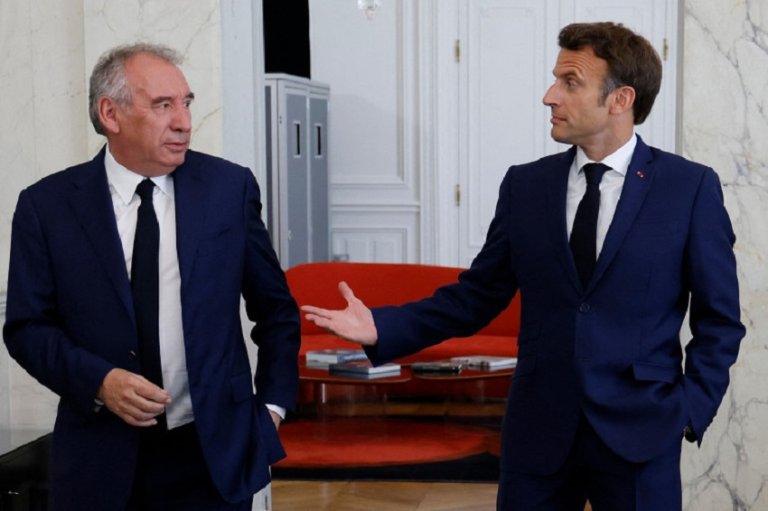
François Bayrou has been tasked with forming a new government in the near future. He will lead the French government during challenging economic times, with the budget deficit continuing to rise, from 5.5% last year to 6.6% this year.
Bayrou served as Minister of Education from 1993 to 1997 and as Minister of Justice in 2017. The 73 years old veteran politician who founded the “Mouvement Democrate” party, as Minister of Education during the 1994 Genocide against the Tutsi in is
He is one of the French political figures who deny their country’s involvement in these historical events.
In May 2021 when President Macron visited the Kigali Genocide Memorial, he expressed his support for survivors, and offered an apology for France’s failure to protect the Tutsi during the Genocide.
Bayrou was a big critic of President Macron’s statements, arguing that France has nothing to apologize for since, according to him, France had no role in the genocide.
“If evidence emerges, France will acknowledge mistakes, but I don’t like this policy of asking for forgiveness,” he said.
In an interview with France TV in June 2021, he revealed that the information he had, was given to him by former President François Mitterrand, who led France from 1981 to 1995, during their many discussions.
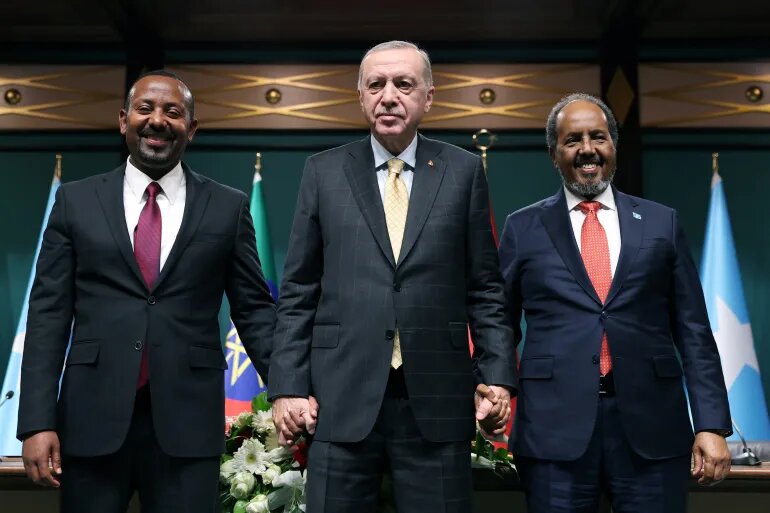
Ethiopia and Somalia reached an agreement on Wednesday after Turkish-mediated negotiations in Ankara, marking a breakthrough in resolving misunderstandings between the two nations.
Tensions had been escalating between Ethiopia and Somalia after Ethiopia and Somaliland signed an agreement earlier this year allowing Ethiopia access to the Red Sea in exchange for its recognition of Somaliland as an independent state. Somalia, which considers Somaliland part of its territory, described the agreement as having no legal force.
“The chairperson welcomes the communique signed by Somali President Hassan Sheikh Mohamud and Ethiopian Prime Minister Abiy Ahmed on Dec. 11 in Ankara, under the auspices of Turkish President Recep Tayyip Erdogan,” the AU said in a statement issued on Thursday.
The AU chief praised “this important act of high responsibility on the part of the leaders of Somalia and Ethiopia.” Faki encouraged them to implement the agreed-upon measures without delay.
Following the agreement, Abiy and Mohamud issued a joint statement emphasizing cooperation and dialogue between the two countries.
Both leaders reaffirmed their respect and commitment to one another’s sovereignty, unity, independence, and territorial integrity and agreed to work together to finalize arrangements which will allow Ethiopia to enjoy access to and from the sea.
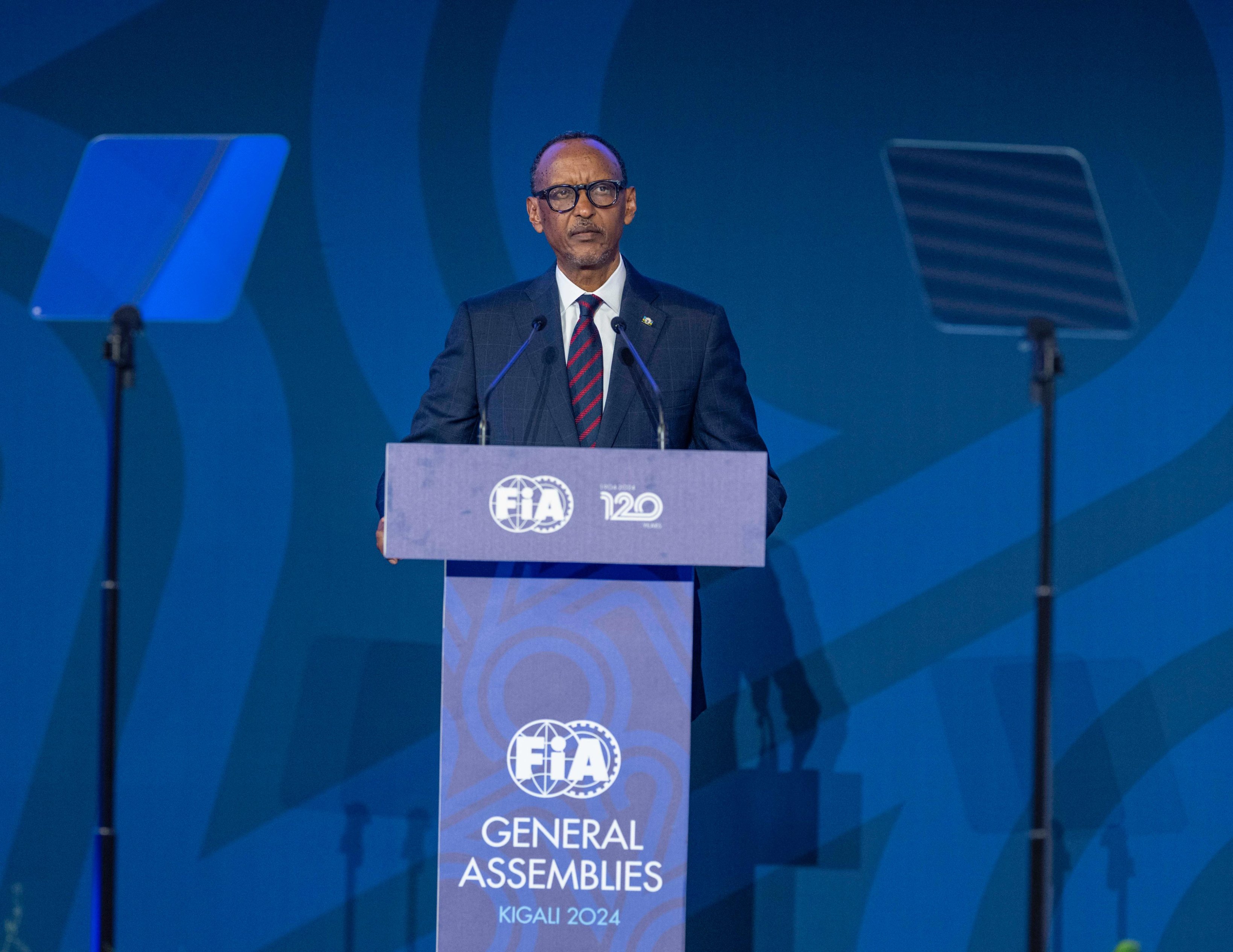
The Head of State made the announcement during the FIA General Assembly held at the Kigali Convention Center, following months of reports of Rwanda’s push to host the high-profile sporting event.
In his speech, Kagame expressed delight at the progress made so far, acknowledging the positive discussions with Formula 1 officials, led by CEO Stefano Domenicali.
Rwanda’s bid to host the Grand Prix is part of a broader strategy to attract high-profile sports events to Africa—a continent that has not hosted a Formula 1 race since the 1993 South African Grand Prix.
“I am happy to formally announce that Rwanda is beginning to bring the thrill of racing back to Africa by hosting the Formula 1 Grand Prix. A big thank you to Stefano Domenicali and the entire team at Formula 1 for the good progress in our discussions so far,” President Kagame stated.
“I assure you that we are approaching this opportunity with the seriousness and commitment it deserves. Together, we will build something we can all be proud of,” he added.
At the same time, President Kagame emphasized the unifying power of sports in a fragmented world.
“In a world where various forces are pushing us apart, the values of sportsmanship should bring us even closer together. It all comes down to respect and giving everyone the chance to contribute where they can. That’s why it is so important for countries in every region and at every income level to have a fair shot at hosting international sporting events.”
He criticized detractors who have questioned Rwanda’s efforts to host international events like the FIA General Assembly, stating, “Sometimes, when a non-traditional host country is announced, it is as if we did something wrong, especially if you judge by the media reaction. These attitudes have to be left in the past, and the role of sports governing bodies is absolutely central.”
The initiative to host major events ties into Rwanda’s broader economic transformation plan, which includes significant investments in sports infrastructure, such as the BK Arena, the renovated Amahoro Stadium, and the upcoming Zaria Courts Complex.
“Our philosophy has always been to make the most of our valuable resources. We understand that sports is not just about buildings or events but requires an entire ecosystem to cultivate talent and excite fans. This has a real and tangible impact, not only on our economy but also on our people. For every hotel, recreation facility, or restaurant that gets built, new jobs are created,” the president added.
Hosting a Formula 1 race would not only bolster Rwanda’s motorsport ambitions but also create jobs, boost tourism, and enhance the nation’s position as a key player in international sports.
The 2024 FIA General Assembly in Kigali is set to conclude on Friday evening with an awards ceremony honouring notable figures, including Formula 1 champion Max Verstappen.
The Head of State was speaking at a welcome cocktail held at the Kigali Convention Centre on the evening of December 12, 202.
“I want to thank from the bottom of my heart FIA and Mohammed bin Sulayem [FIA President] and his team for putting all this together and doing Rwanda proud to be able to host you. We appreciate that and I hope for all the time you are going to be here, you are going to enjoy your stay.”
The welcome cocktail was held at the Kigali Convention Centre, attended by conference participants, high-profile guests, and leaders from various sectors in Rwanda.
Among those present were Clare Akamanzi, CEO of NBA Africa, Amadou Gallo Fall, President of the Basketball Africa League, and renowned comedian and actor Steve Harvey.
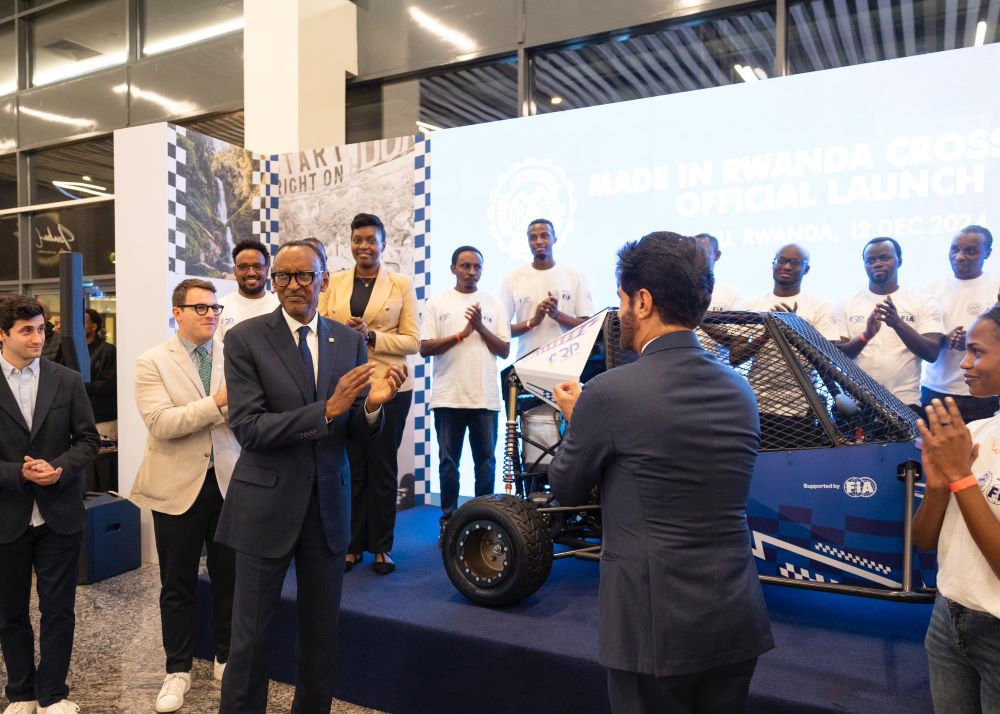
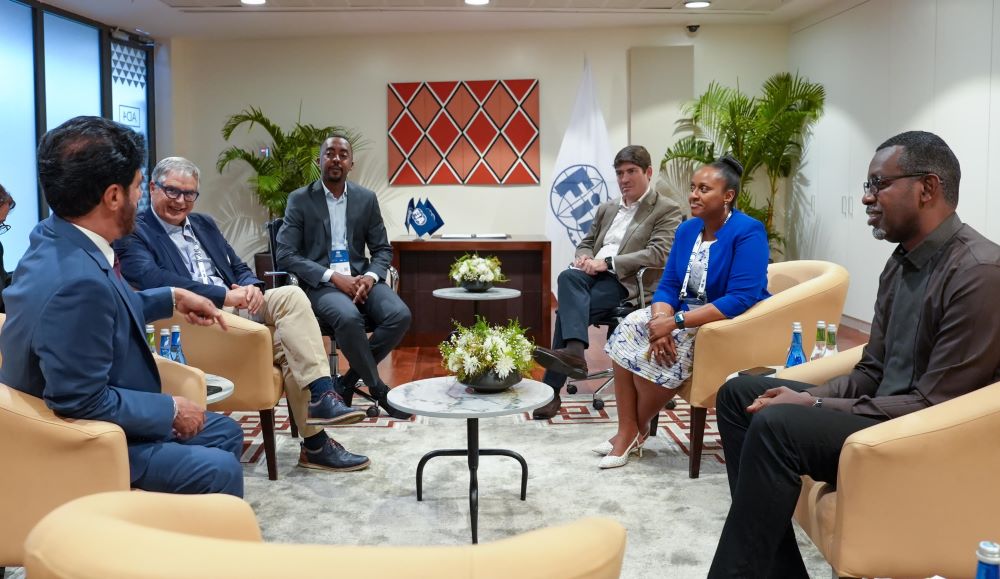
Before the cocktail reception, President Kagame, together with FIA President Mohammed bin Sulayem, unveiled the first-ever FIA Level 2 Affordable Cross Car produced in Africa, an innovative project developed through collaboration between Rwandan polytechnic students, the FIA, and the Rwanda Automobile Club.
Kagame expressed his gratitude to the FIA for supporting the project, highlighting its role in facilitating knowledge transfer and encouraging the development of local talent and skills in various creative fields.
Kagame remarked that the initiative was not just important for Rwanda, but for the entire African continent, as many opportunities had long been overdue.
He acknowledged that while Africa is rich in talent, access to opportunities remains a major challenge.
Kagame emphasized that Africa should not only focus on exporting talent but also become a place where people from other parts of the world are attracted to come, contribute, and help develop the continent’s potential.
On his part, Sulayem praised the close collaboration between FIA and Rwanda in organizing the General Assembly, highlighting that it was the first time the event had been hosted with the head of state personally welcoming the attendees.
He expressed his gratitude to President Kagame for the trust placed in the FIA and thanked all attendees for traveling from around the world to participate.
The evening also celebrated the work of Rwandan artists who created pieces commemorating the FIA’s 120th anniversary. Ishimwe Gad, a student from Rwanda Polytechnic-Kigali College, was awarded first prize for his artwork, which will be displayed at the FIA headquarters in Paris, France.
From December 10 to December 13, 2024, Rwanda is hosting the FIA General Assemblies, which will culminate in the award ceremony at the BK Arena on the evening of December 13.
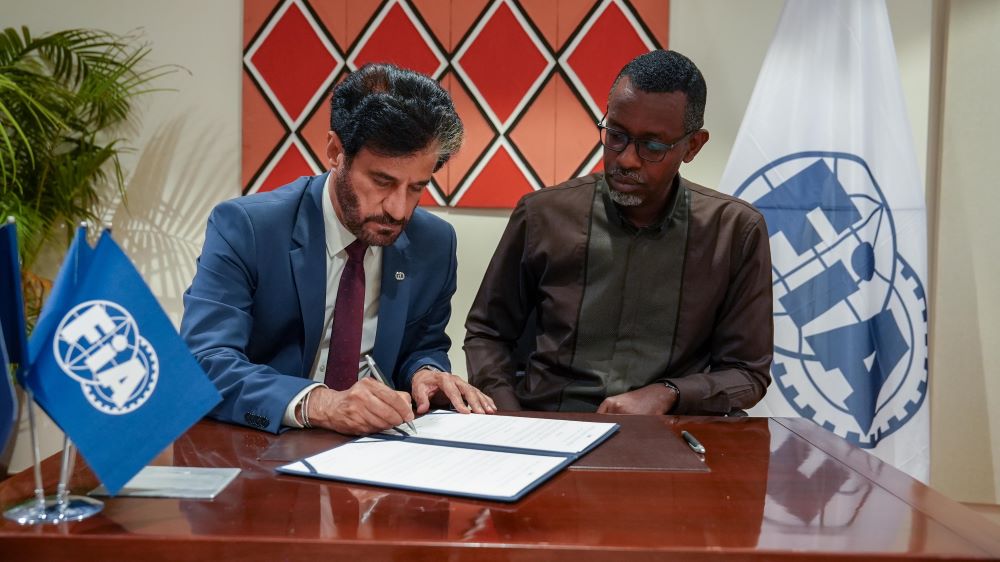
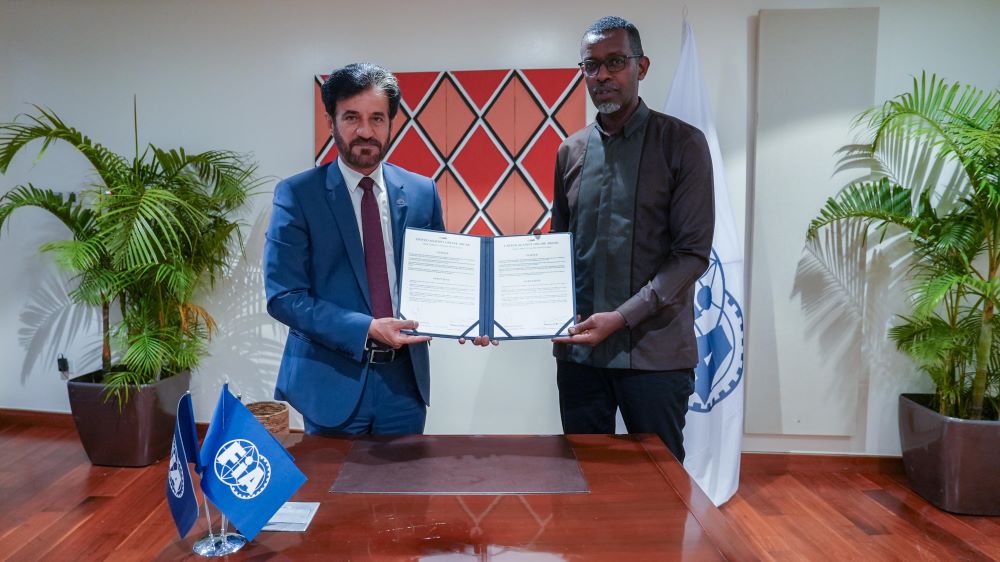
The signing ceremony was held during the 2024 FIA General Assemblies in Kigali.
The UAOA campaign highlights the need for collective action among governments, technology platforms, and sporting organizations to ensure safer digital spaces for athletes, fans, and stakeholders.
At the signing, FIA President Mohammed Ben Sulayem said that their presence in Rwanda for such an important moment in the FIA’s calendar is a testament to the strength of this nation, in particular its growing influence in motorsport.
“We are aligned on our values and shared goals across key sectors such as innovation, sustainability, and road safety, and I look forward to our continued partnership. The future of motorsport in Africa, and in Rwanda, is bright,” he noted.
Rwanda’s Minister of Sports, Richard Nyirishema noted that the step aligns with Rwanda’s values of inclusivity and accountability.
“We are proud to join the ‘United Against Online Abuse’ campaign and contribute to fostering a safer digital environment in sports,” he stated.
The President of the International Automobile Federation (FIA), Mohammed Ben Sulayem arrived in Rwanda on Monday to attend the federation’s General Assembly, scheduled for Friday, December 13, 2024.
Since then, he has participated in various activities including engagement with young girls at the BK Arena for the “Girls on Track” program welcoming over 100 young women from schools across Kigali.
The girls took to the track in karts for the first time as well, challenging themselves on the simulators, trying their hands at different sporting challenges.
On Thursday, Sulayem along with President Paul Kagame unveiled the first-ever FIA Level 2 Affordable Cross Car produced in Africa at Kigali Convention Centre.
This project was developed in collaboration with Rwandan polytechnic students, the FIA, and the Rwanda Automobile Club.
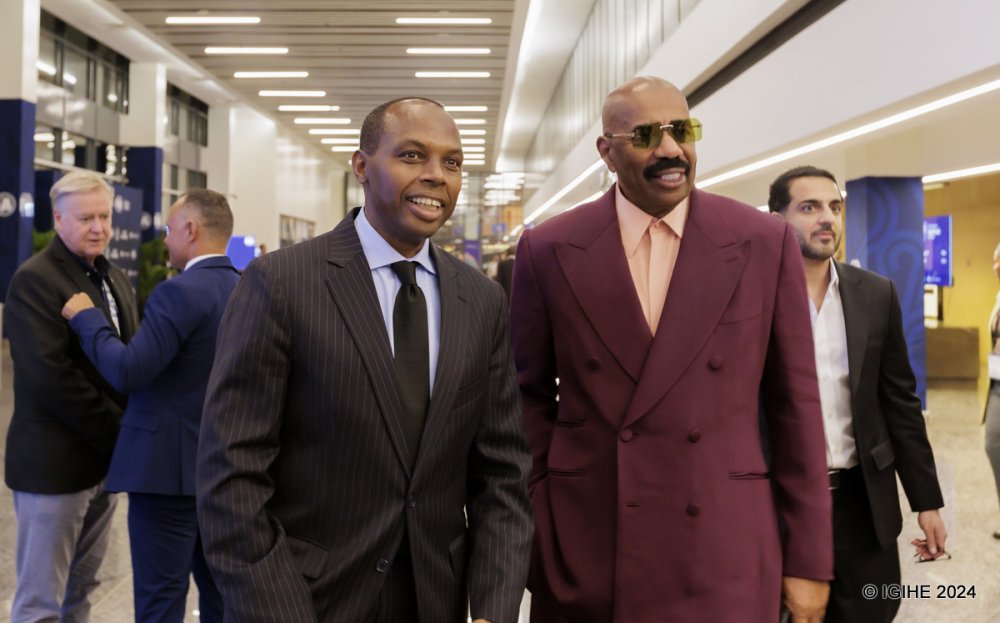
American comedian and television host Steve Harvey Harvey also attended the event, marking his second visit to Kigali in one month.
This project was developed in collaboration with Rwandan polytechnic students, the FIA, and the Rwanda Automobile Club.
The event, held on Thursday December 12, 2024 at Kigali Convention Centre also saw the presence of President Paul Kagame and the President of the International Automobile Federation (FIA).
Harvey’s visit coincides with the ongoing General Assembly of the FIA, which will conclude on Friday, December 13, 2024. This marks his second visit to Kigali, following his first trip in November 2024.
During that earlier visit, Harvey engaged in discussions with President Kagame on potential investment opportunities in Rwanda’s events and entertainment sectors.
At the time, Harvey took to social media to share his admiration for Rwanda and President Kagame, saying, “We had the pleasure of sitting and meeting His Excellency my brother President Paul Kagame. I was truly inspired by his strength and humility. A testament to Rwanda’s resilience and acts of forgiveness.”
Known for his work on The Steve Harvey Morning Show, Family Feud, Celebrity Family Feud, and his long-running role as the host of Miss Universe, Harvey’s career spans decades.
From his stand-up comedy days in the 1980s to his rise in the 2000s with The Original Kings of Comedy, he has become one of America’s most beloved personalities.
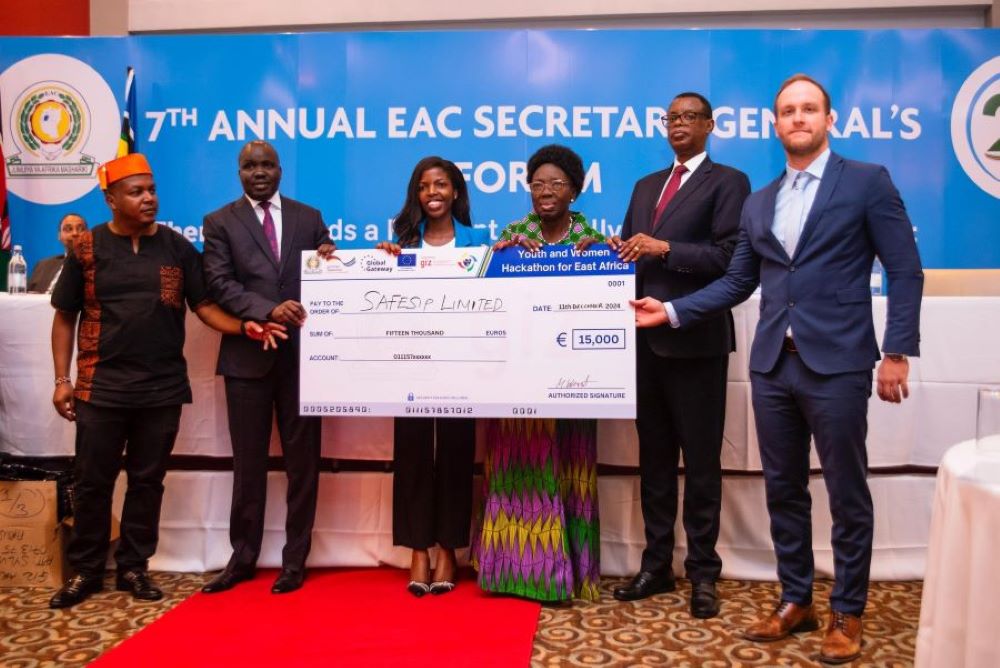
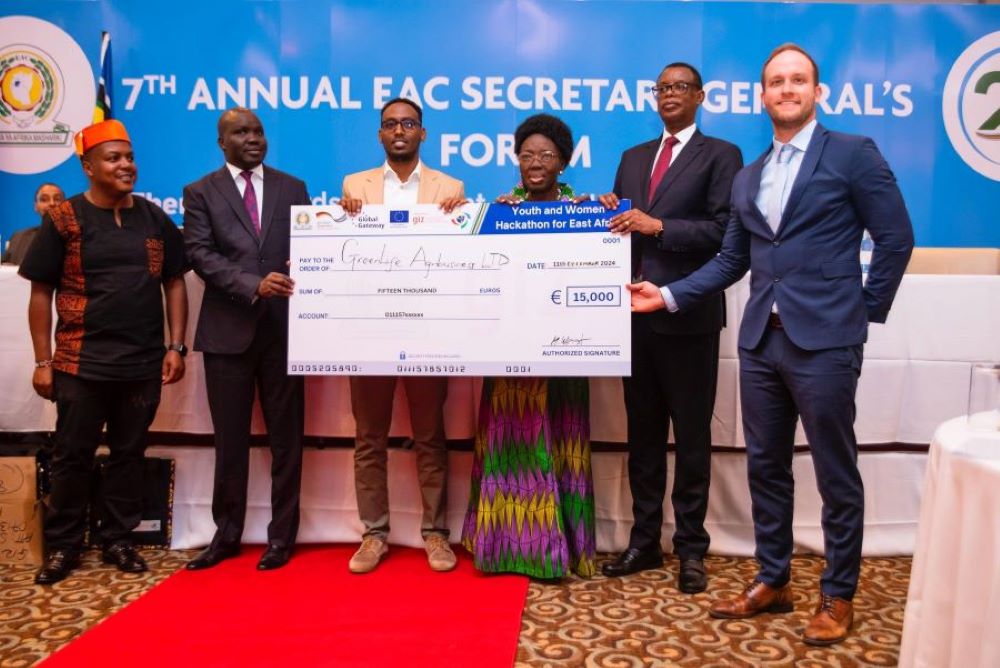
The awards were presented during the EAC Regional Hackathon held in Nairobi, Kenya, as part of the 7th Annual Secretary General’s Forum.
The event focused on fostering collaboration for regional growth and integration, under the theme “Towards a Resilient and Fully Integrated East Africa.”
The hackathon attracted over 1,000 innovative solutions, particularly targeting sectors such as tourism, agribusiness, environmental protection, trade, digitalization, and financial services.
Projects presented by the innovators tackled critical issues related to regional economic integration. Each of the eight winning projects, four led by women and four by youth, was awarded €15,000 to help accelerate their impact.
Among the winners was Niyonkuru Kevin from Burundi, founder of SPOTA Company, and Cirhuza Birhaheka Onesphore from DR Congo, who runs AGRIMOD SARL.
Kenya’s Tayba Hatiym of BAUS Taka Enterprise and Rwanda’s Pacifique Niyorurema, who runs Fresco Fruits, were also recognized for their innovative contributions.
Somalia’s Mohamed Osman Abdulkadir, representing Greenlife Agribusiness LTD, and Anok Athor Deng from South Sudan, behind Future of Family Planning, were among the recipients.
Additionally, Faith Kuya from Tanzania, who founded SafeSip Limited, and Munyasa Hellen of Uganda’s Helton Traders Limited also received the award.
During the event, EAC Secretary General Veronica M. Nduva praised the hackathon as a testament to the region’s commitment to inclusive development.
She emphasized that women and youth are the driving forces behind innovation and economic resilience, noting that the hackathon was not just about competition but about fostering collaboration, learning, and growth.
Uganda’s 1st Deputy Prime Minister and Minister for East African Community Affairs, Rebecca Kadaga, commended the EAC for its leadership, stressing the importance of collaboration in unlocking the potential of youth and women for regional prosperity.
Rwanda’s Gen (Rtd) James Kabarebe, Minister of State for Foreign Affairs in charge of Regional Cooperation highlighted the significance of such platforms in empowering the region’s youth and women, noting that the EAC continues to lead by example in fostering economic integration and innovation.
Kenya’s Principal Secretary, Abdi Dubat, spoke about the critical discussions that took place, which illuminated both the challenges and opportunities within the region.
He expressed confidence that shared commitment and collaboration would guide the path to a resilient, integrated East Africa.
Mr. Marius Weist, GIZ’s Component Lead for Organizational Development and Outreach, further emphasized the importance of empowering women and youth to help achieve EAC’s economic goals.
He praised the participants for their creative solutions to the region’s challenges, emphasizing that GIZ’s support would continue to foster an inclusive economy for all.
The forum concluded with several key recommendations aimed at advancing regional integration, including removing barriers to the free movement of goods and services, enhancing youth representation in policy-making, and boosting digital infrastructure in rural areas to support small and medium enterprises (SMEs).
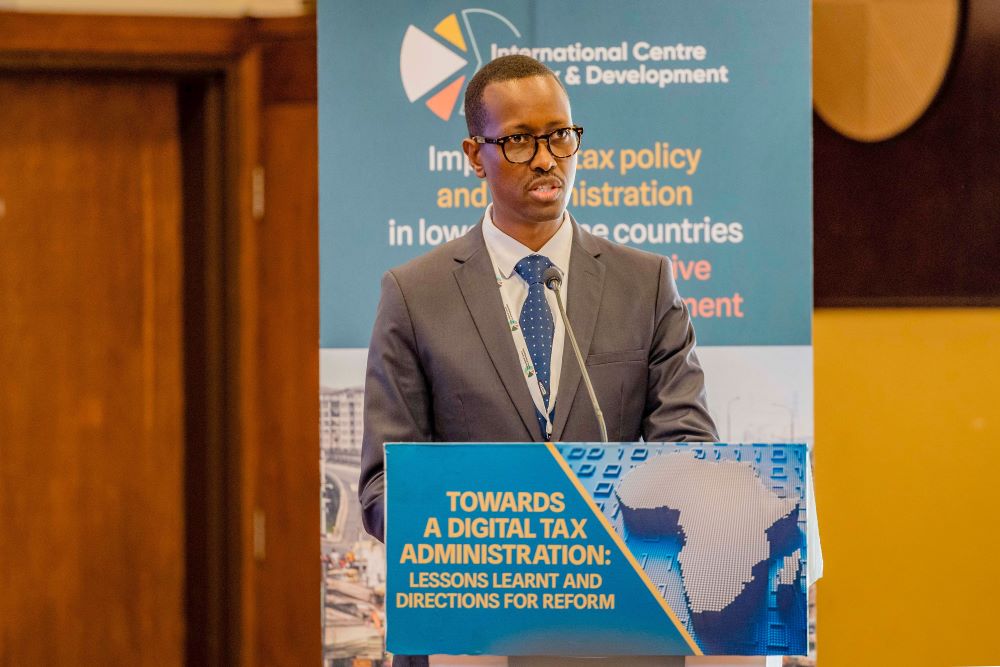
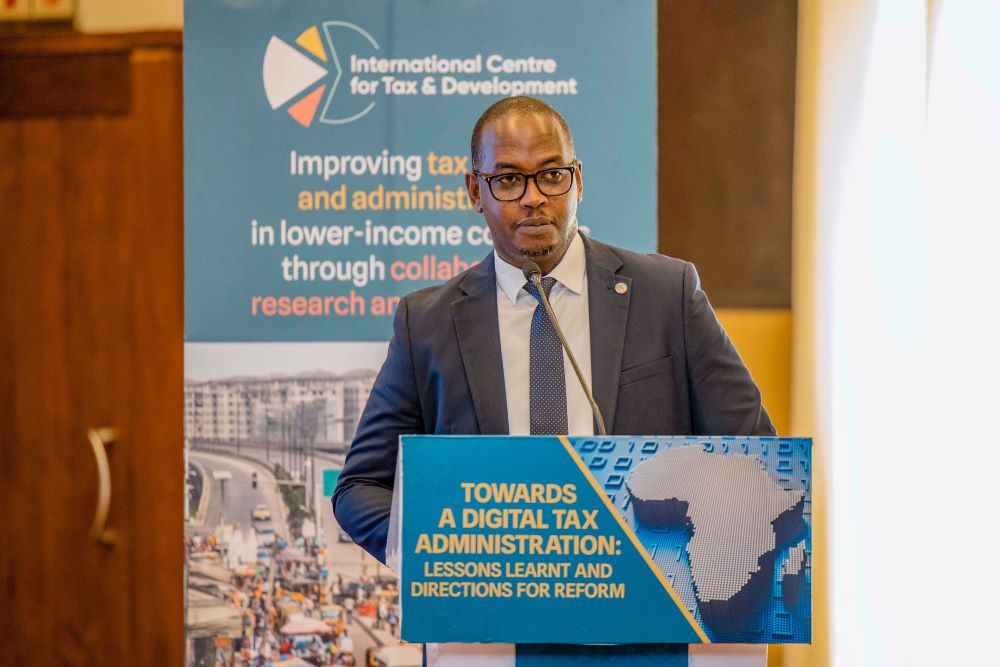
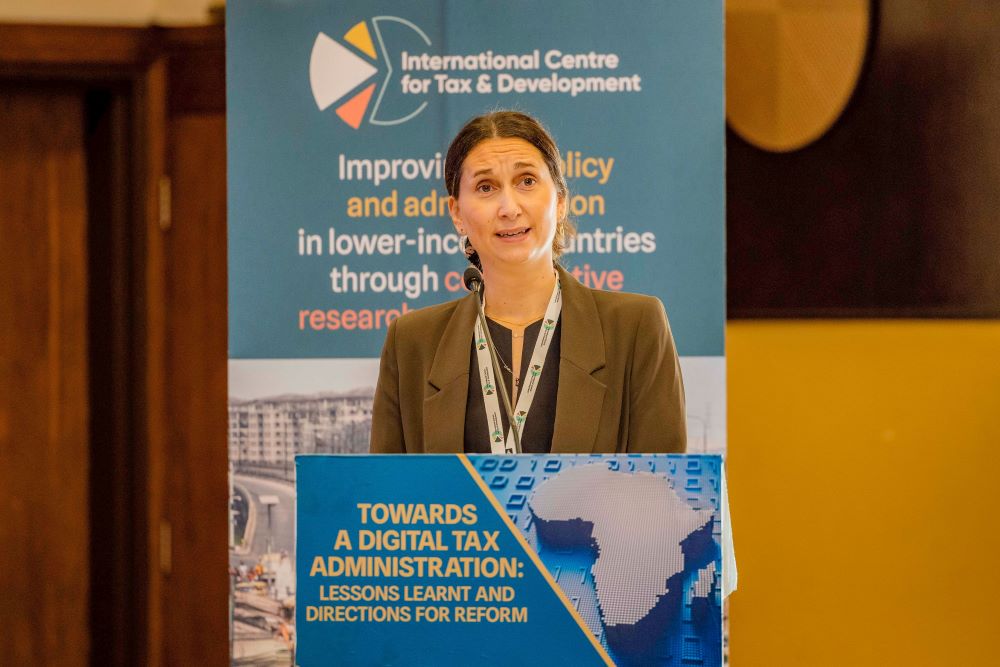
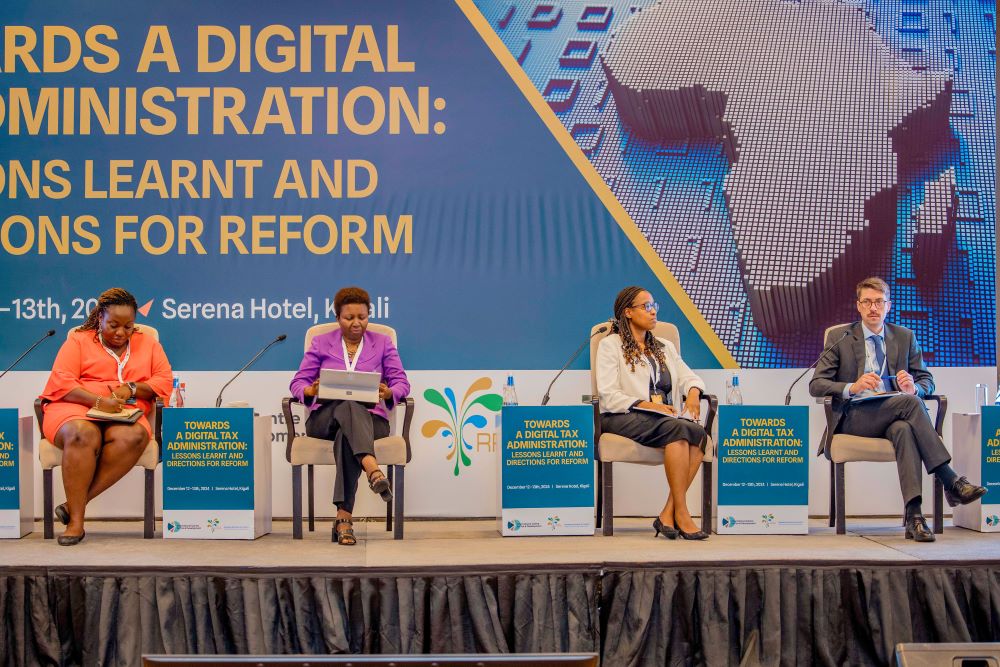
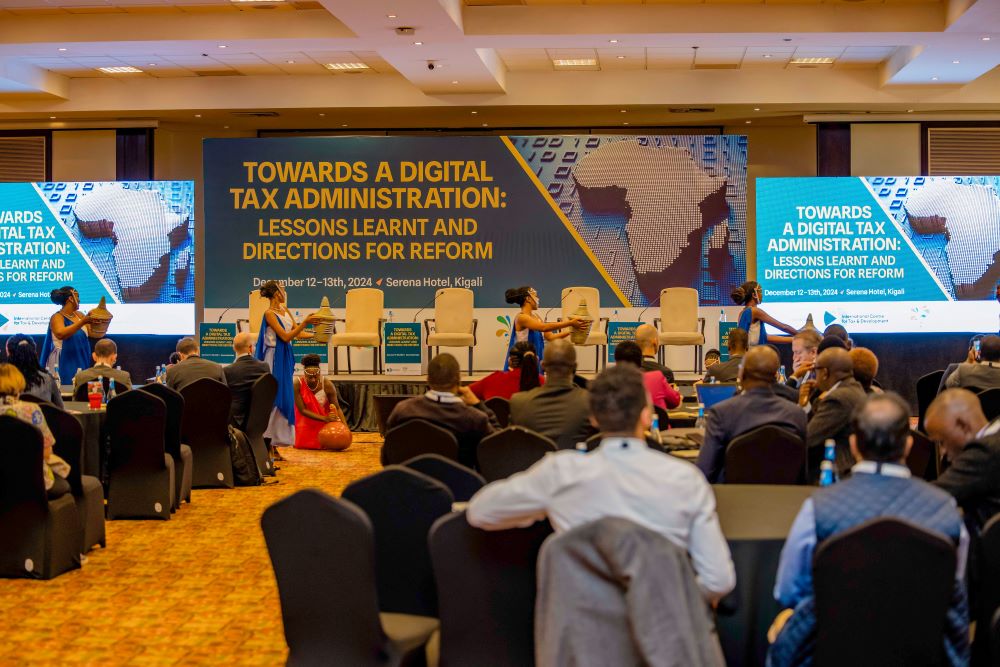
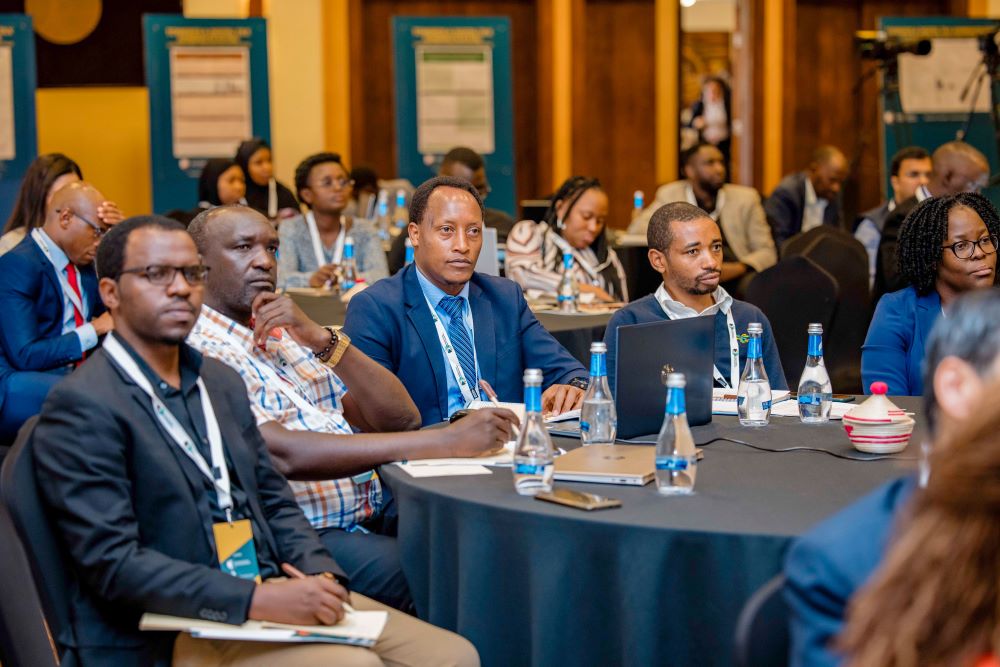
The two-day conference that started on Thursday, December 12, was organized by the International Centre for Tax and Development (ICTD) in partnership with Rwanda Revenue Authority (RRA) under the theme: “Towards a digital tax administration: Lessons learnt and directions for reform.”
Tax experts delved on adopting artificial intelligence (AI) to enhance the efficiency and effectiveness of their systems.
Antoine Sebera, the Government Chief Innovation Officer at the Rwanda Information Society Authority (RISA), emphasized the transformative role of AI highlighting Africa’s rapid digital transformation, with governments leveraging technology to bridge economic disparities, foster inclusion, and enhance public administration by streamlining bureaucratic processes and building trust.
In Rwanda, significant progress has been made in digital governance, with all essential government services now accessible online. The country aims to achieve universal access to e-government services by 2029.
Despite the advancements, Sebera said challenges persist in leveraging technology for tax administration. He observed that fragmented and incomplete data hinder accurate tracking and assessment of digital transactions, necessitating secure data-sharing mechanisms and interoperability. Additionally, deploying advanced tools for monitoring, analyzing, and enforcing tax compliance, he said, requires technological expertise and infrastructure.
“Building capacity in data analytics, artificial intelligence, and cybersecurity is essential in overcoming these obstacles. Particularly, AI has a very big potential to revolutionize digital tax administration and governance in low-income countries,” Sebera said.
“AI can significantly improve the efficiency and effectiveness of tax systems. For example, AI-driven tools can help identify patterns of tax evasion, optimize resource allocation and provide real-time support to the taxpayers,” he added.
He called for international partnerships with organizations and the private sector to address challenges hindering digitalization progress.
Sebera stressed that ethical and regulatory concerns, such as data privacy, algorithmic bias, and accountability, should not be overlooked.
“Developing countries must establish robust legal frameworks and ethical guidelines to govern the use of AI in public administration. Infrastructure challenges, including reliable internet access, electricity, high-performance computing servers, and data centers must be addressed.
Rwanda has made significant progress in digitalizing its tax administration. Notable milestones include the introduction of the Automated System for Customs Data (ASYCUDA) ++ system in 2004, later upgraded to ASYCUDA World in 2012, which halved customs clearance times and saved $6.8 million annually in trade costs, according to the TradeMark East Africa. ASYCUDA is a computerized customs management system that covers most foreign trade procedures.
In 2011, Rwanda Revenue Authority (RRA) launched the E-Tax system to revolutionize tax filing and payments, reducing errors and administrative burdens. The 2013 introduction of Electronic Billing Machines (EBMs) enhanced VAT compliance and curbed tax evasion. The EBM2 system upgraded in 2017 provide real-time data capture and improved fraud prevention.
“Between 2017 and 2022, VAT collection increased by 61%, and income tax collection has surged by 95%. In 2021, income tax overtook PAYE as the second largest revenue contributor, driven by the use of EBM in every taxable activity, a policy initiated in 2020,” said the RRA Commissioner General, Ronald Niwenshuti.
Studies conducted by RRA and the Tax Administration Research Centre further demonstrate the impact of digital reforms. For example, VAT increased by 5.4% in tax-to-GDP ratio, and EBM2 adoption led to a 12% rise in VAT collection among new users. Firms using EBM-supported goods achieved an average revenue increase of $33,400 compared to non-users.
These advancements reflect Rwanda’s progress toward self-reliance, the RRA CG said. Today, domestic revenue fund over 54% of the national budget, up from 51.2% the previous year. “This aligns with national strategies such as Vision 2020, Vision 2050, and the National Strategy for Transformation,” Niwenshuti added.
Giulia Mascagni, the Executive Director of the International Centre for Tax and Development (ICTD), commended Rwanda’s leadership in digital tax transformation.
She highlighted the 10-year collaboration between ICTD and Rwanda, which has facilitated data sharing for rigorous research, policy analysis, and evaluation, contributing to improved revenue collection and taxpayer services.
Mascagni emphasized the importance of digitization in tax administration, which enabled the ICTD to explore emerging trends in digital financial services, mobile money, and their implications for tax administration.
“This conference is an opportunity to learn from one another and lay the foundation for the next decade of progress in digitizing tax administration and government services,” Mascagni concluded.
During the two-day conference, panelists will explore key elements related to Other data management and governance, digital inclusion, digital public infrastructure, improving data quality and integrity, digital payments, data exchange systems; and underscored the need for robust tax ecosystems that foster fairness and innovation.
The ICTD is a global research body on tax and development, particularly in low-income countries, providing governments with robust evidence to help them design and implement more effective and equitable tax systems.