The official news agency IRNA, citing Iranian officials, reported that the total death toll stood at 3,468, including 1,460 civilians.
Jamshid Nazmi, a senior adviser to the head of Iran’s Foundation of Martyrs and Veterans Affairs, gave the figures at a press conference in Tehran, according to IRNA.
He said the civilian dead included women, men, children and older adults, and added that citizens of Lebanon, Palestine, Iraq and Pakistan were also among those killed.
At the same briefing, Farideh Oladqobad, a deputy head at the foundation, said 499 of the victims were women and 2,969 were men. She also said the military death toll was 2,008.
The report did not provide details on how the figures were verified or independently confirmed.
Iranian officials have said the fighting began on February 28, when Israel and the United States launched joint strikes on Tehran and other Iranian cities. Iranian authorities said senior military figures were killed in the opening attacks.
Iran responded with waves of missile and drone strikes targeting Israel and U.S. bases and military assets in the Middle East, according to officials on both sides.
A ceasefire was reached on April 8, and follow-up talks were held in Pakistan on April 11 and 12, but they ended without an agreement, according to previous reports.
The official news agency IRNA, citing Iranian officials, reported that the total death toll stood at 3,468, including 1,460 civilians.
A U.S. Secret Service agent was shot in protective gear on Saturday at the White House Correspondents’ Dinner and has been hospitalized, U.S. media reported.
In a post on Truth Social, Trump shared a photo of the suspected gunman, who appears to have been subdued, with his hands bound behind his back and lying face down on the ground.
In a press conference at the White House late Saturday evening, Trump said that the alleged shooter lives in the state of California and law enforcement agents went to his apartment.
When asked by a reporter whether the shooter acted alone, Trump said that “they seem to think he was a lone wolf, and I feel that too.”
In response to a question about whether this shooting could have been linked to the war in Iran, Trump said, “I don’t think so. But you never know.”
“Quite an evening in D.C. Secret Service and Law Enforcement did a fantastic job. They acted quickly and bravely. The shooter has been apprehended,” Trump said in an earlier post on Truth Social shortly after the incident.
In another post later, Trump said that “law enforcement has requested that we leave the premises, consistent with protocol, which we will do, immediately,” noting that “The First Lady, plus the Vice President, and all Cabinet members, are in perfect condition.”
He added that the White House Correspondents’ Dinner will be rescheduled within 30 days.
The U.S. Secret Service said in a post on X that it is investigating “a shooting incident near the main magnetometer screening area” at the White House Correspondents’ Dinner, in coordination with the Metropolitan Police Department.
“The president and the first lady are safe along (with) all protectees,” the statement said. “One individual is in custody. The condition of those involved is not yet known, and law enforcement is actively assessing the situation.”
Trump has been evacuated from the Dinner after the shooting at the Washington Hilton Hotel. Attendees were seen on the live broadcast ducking around their tables and taking cover.
This would mark Trump’s first time attending the White House Correspondents’ Dinner.
In a joint press conference, Washington, D.C. Mayor Muriel Bowser said all guests at the dinner were safe, while U.S. Attorney for D.C. Jeanine Pirro said the suspect now faces charges including using a firearm during a crime of violence and assault on a federal officer with a dangerous weapon.
The suspect named Cole Allen by U.S. media, 31, of Torrance, California, was armed with a shotgun, a handgun and multiple knives, police said.
Political violence has been frequent in the U.S. in recent years. Trump has been the target of multiple assassination attempts and death threats during his presidential campaign and as the president.
The most prominent example is the July 2024 assassination attempt in Butler, Pennsylvania, which Trump narrowly survived while campaigning for president.
In a press conference at the White House late Saturday evening, Trump said that the alleged shooter lives in the state of California and law enforcement agents went to his apartment. When asked by a reporter whether the shooter acted alone, Trump said that “they seem to think he was a lone wolf, and I feel that too.” Police officers stand guard near the Washington Hilton Hotel, where the White House Correspondents’ Dinner was held, in Washington, D.C., the United States, April 25, 2026.
A delegation of staff from Rwanda’s sovereign wealth fund visited the memorial on April 24, 2026, where they received a historical briefing on the Genocide against the Tutsi in the area. The delegation paid tribute to the victims and provided assistance to survivors.
Emmy Musinguzi, the manager of the Bisesero Memorial, explained that attacks against Tutsi in Bisesero began on April 8, 1994. He noted that residents initially resisted using rudimentary weapons such as spears, sticks, and stones, managing to repel Interahamwe militia attacks by the end of April.
However, this resistance prompted local leaders to convene a meeting in Kibuye attended by 188 participants. The meeting resolved to deploy heavily armed forces and soldiers to Bisesero. A large-scale assault was subsequently launched on May 13, 1994, during which more than 30,000 people were killed.
AgDF Chief Executive Officer Ulrich Kayinamura said the institution chose to commemorate at Bisesero because of its distinct historical significance.
“Commemoration is a responsibility for every Rwandan. It provides an opportunity to reflect on our country’s painful history and strengthens efforts to combat genocide ideology that led to the loss of more than one million lives,” he said.
Kayinamura added that AgDF remains committed to supporting national development and standing in solidarity with survivors.
“By visiting memorials and supporting survivors of the 1994 Genocide against the Tutsi, we reaffirm our solidarity with them in the journey of remembrance and rebuilding. We also extend our condolences to survivors’ families and reiterate our commitment to ensuring that such atrocities never happen again,” he said.
Esther Uwayisenga, one of the beneficiaries, expressed appreciation for the support, noting that it would help her continue rebuilding her life.
“Visits like these help survivors overcome isolation and remind them that they are not alone and that the country cares about them,” she said, offering gratitude and blessings to the donors.
Julienne Ntakirutimana, Vice Mayor of Karongi District in charge of Economic Development, also praised the initiative, describing it as exemplary.
“They are the first group to visit us during this year’s 100 days of commemoration. Last year, we also received many visitors who provided support, including over 100 cows and financial assistance to various individuals. Today, AgDF has donated five million Rwandan francs to five beneficiaries, meaning each received one million francs,” she said.
The Bisesero Genocide Memorial is one of four memorial sites in Rwanda recognised as UNESCO World Heritage sites. It is the final resting place of more than 50,000 victims.
AgDF staff take part in candle-lighting to honor victims of the 1994 Genocide against the Tutsi laid to rest at the Bisesero Genocide Memorial.Gasimba Narcisse, a survivor of the 1994 Genocide against the Tutsi in Bisesero, commended the government for its continued support and solidarity with Bisesero survivors.AgDF Chief Executive Officer Ulrich Kayinamura laid a wreath in honour of the victims of the 1994 Genocide against the Tutsi at Bisesero.The CEO said the institution chose to commemorate at Bisesero because of its distinct historical significance.Survivors of the 1994 Genocide against the Tutsi in Bisesero have commended staff from the Agaciro Development Fund (AgDF) for their visit to the Bisesero Genocide Memorial.Julienne Ntakirutimana, Vice Mayor of Karongi District in charge of Economic Development, also praised the initiative, describing it as exemplary.
According to a communique from the office of the president, the proposed investment aligns with the “country’s industrialisation and e-mobility priorities.”
Chery Holding is one of China’s largest automotive manufacturing groups and a globally expanding mobility player. Founded in 1997 in Wuhu, Anhui Province, the company has grown into a Fortune Global 500 enterprise, producing more than 2.6 million vehicles annually and exporting to markets across Asia, Africa, Europe, and Latin America.
The group operates a multi-brand portfolio spanning conventional vehicles, hybrid models, and electric mobility solutions, including Chery New Energy, Exeed, Jetour, Omoda, and other emerging EV-focused brands. It has also developed joint ventures and technology partnerships in advanced driver assistance systems and electrification, reflecting its growing emphasis on smart and low-carbon mobility.
Chery has been among the earlier Chinese automakers to invest in electric vehicle development, launching EV programs as early as the late 2000s and gradually scaling up its new energy vehicle platforms and battery-electric technologies. In recent years, the company has accelerated its global EV strategy, including partnerships and investments aimed at expanding production capacity and strengthening its technological footprint.
The discussions in Kigali also come as Rwanda intensifies its push toward green mobility and industrial transformation. The government has recently directed public institutions to ensure that at least 30 percent of newly procured vehicles are electric, a policy aimed at reducing emissions and accelerating the transition away from fossil fuels.
The potential establishment of an electric vehicle assembly plant aligns with Rwanda’s broader ambition to position itself as a regional hub for e-mobility manufacturing, assembly, and innovation, while supporting job creation and technology transfer in the automotive sector.
President Paul Kagame meets Xu Hui, Chairman of Rich Resource International Investments (RRII), Vice President and Board Secretary of Chery Holding.The office of the president said discussions focused on potential investment opportunities.
Speaking at a Symposium on Genocide Prevention organised by the Embassy of Rwanda in Kenya as part of the 32nd commemoration of the Genocide against the Tutsi on Wednesday, Lumumba paid tribute to Rwanda’s recovery journey, saying the country has risen “like the phoenix from the ashes” to become a reference point for effective governance and development.
“We are gathered here 32 years since the genocide against the Tutsi in Rwanda,” Lumumba said, noting that the commemoration is not ceremonial but a reminder of humanity’s duty to prevent recurrence of such atrocities.
He warned against historical revisionism and denialism, stressing that the world must remain vigilant.
“If we choose to consign these things to the museums of history, then it will be repeated again,” he said.
Global failures and lessons from history
Lumumba traced the roots of genocide and mass atrocities to historical injustices, including slavery, colonial partitioning of Africa at the Berlin Conference of 1884–1885, and global failures to act decisively in the face of warning signs.
He criticised the international community for its inaction during the 1994 Genocide against the Tutsi, saying world powers, the United Nations, and regional actors “watched in silence for 100 days” as atrocities unfolded in Rwanda.
More than a million people were killed during the 1994 Genocide against the Tutsi, while survivors continue to live with the scars of one of the worst tragedies of modern history.
Critique of international justice systems
The scholar also questioned the effectiveness of international legal systems in delivering justice and preventing atrocities, arguing that global institutions have often failed to act in time.
He contrasted international mechanisms with Rwanda’s community-based Gacaca courts, which he praised as an example of African-led justice and reconciliation.
“The Gacaca system is African, Afrocentric, and authentic,” Lumumba said, noting that while international tribunals handled fewer than 100 cases, Gacaca courts processed nearly 1.9 million, helping communities begin the process of healing.
Rwanda’s reconstruction as a model
Lumumba lauded Rwanda’s post-genocide reconstruction, crediting national leadership led by President Paul Kagame and citizen resilience for the country’s transformation.
“Rwanda, like the phoenix, rose from the ashes,” he said, highlighting improvements in infrastructure, governance, public service delivery, and technology adoption.
He described Kigali as a “model city” for urban planning, infrastructure development, and anti-corruption enforcement, saying it has become a benchmark for African development.
“If you want to see how roads ought to be built, you go to Kigali. If you want to see how roundabouts are manicured, you go to Kigali. If you want to move away from the disorderly borders, you go to Kigali,” he remarked.
“If you want to see policemen who reject your money when you want to corrupt them, you go to Kigali. If you want to see how football stadia and basketball pitches are built within time and within budget, you go to Kigali. Kigali has become our pride.”
While praising Rwanda’s progress, Lumumba cautioned that the risk of mass atrocities persists in the modern era, especially with the rise of digital technology and misinformation.
“We are today in the era of artificial intelligence. Today it would be quicker. Today, in the days of fake news, in the days of Instagram, in the days of WhatsApp, in the days of all these things, if the genocide wanted to commit genocide, they would do it in the twinkling of an eye. Today they would use drones,” he warned, amid concerns over rising ethnic slurs targeting Banyamulenge and Tutsi communities in the eastern DRC.
He urged global institutions and regional bodies, including the East African Community, to move beyond rhetoric and take concrete action to ensure prevention of future atrocities.
Lumumba emphasised that genocide prevention is a shared moral duty rooted in all major faith traditions and ethical systems, citing teachings from Christianity, Islam, Judaism, Hinduism, and African traditional beliefs.
“Never again must not be a slogan; it must be a commitment,” he said, urging the international community to uphold its responsibility to protect vulnerable populations.
Speaking at a Symposium on Genocide Prevention organised by the Embassy of Rwanda in Kenya on Wednesday, Lumumba paid tribute to Rwanda’s recovery journey, saying the country has risen “like the phoenix from the ashes” to become a reference point for effective governance and development.
The unrest, which involved heavy exchanges of gunfire between the two branches of the Democratic Republic of the Congo’s (DRC) security forces, reportedly stemmed from a disputed arrest operation.
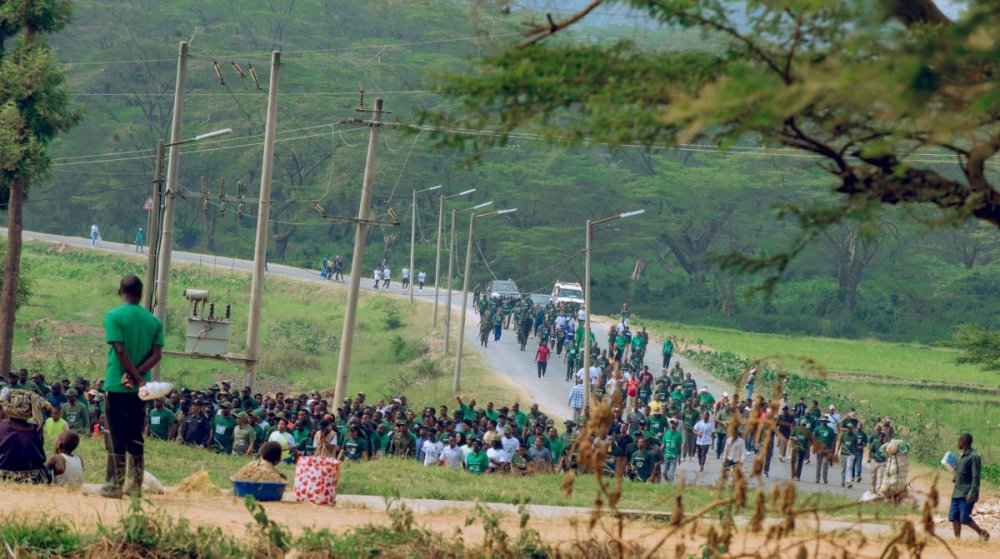
The clashes ignited on the afternoon of April 21 in the Mabulu area along Elengesa Road. According to local reports, officers from a police rapid response unit were in the process of arresting several youths suspected of theft.
The situation escalated when FARDC soldiers stationed nearby intervened to obstruct the arrests. Witnesses noted a troubling development as some of the youths, allegedly members of the notorious Kuluna criminal gangs, aligned themselves with the soldiers to confront the police.
The fighting quickly spread from Elengesa Road toward Kibambi 1 Road, eventually reaching a police station on Kimfumu Road. As the gunfire intensified, students at a nearby school were forced to lie on the floor to avoid stray bullets, while residents fled the area or barricaded themselves in their homes as the standoff transitioned from a local dispute into a broader tactical skirmish.
The violence resulted in significant property damage, including the complete destruction of a small police station and the reported looting of several residential houses during the chaos.
Makala Mayor Ngudia Kabongo confirmed the extent of the damage on April 22 but offered a reprieve regarding casualties.
“No fatalities have been recorded in these clashes,” Kabongo stated, though he acknowledged that the destruction of the police post and the trauma to the community were significant.
By the evening of April 22, the central government moved to de-escalate the situation. A joint team of senior military and police officials was deployed to Makala to conduct coordinated security operations and re-establish a unified command structure.
The clashes ignited on the afternoon of April 21 in the Mabulu area along Elengesa Road. According to local reports, officers from a police rapid response unit were in the process of arresting several youths suspected of theft.
The UKMTO said it had received a report of an incident about 8 nautical miles west of Iran. The master of a cargo ship outbound from the Gulf reported that the vessel came under fire and was stopped in the water.
All crew members are safe and accounted for, and there are no reports of damage to the vessel, it said.
In a separate incident, a container ship was fired upon by a gunboat believed to be linked to Iran’s Islamic Revolution Guard Corps off the coast of Oman, damaging the vessel’s bridge.
The ship’s master reported that the gunboat approached and opened fire without issuing any VHF challenge, the UKMTO said.
All crew members are safe, and no fire or environmental damage has been reported, it added.
The International Maritime Organisation has warned that the situation remains volatile and urged vessels to exercise maximum caution when transiting the area.
Two commercial vessels were reportedly fired upon in separate incidents near the Strait of Hormuz, with all crew members safe, according to warnings issued Wednesday by the United Kingdom Maritime Trade Operations (UKMTO).
Edwin Njuguna Ngugi, a driver from Malava in Busia County, was transporting goods from Mombasa to Bunia when he ran into trouble. His truck reportedly broke down in the volatile Ituri province, an area plagued by armed groups.
According to his family, Njuguna’s last known contact was on April 3 at exactly 2:22 p.m., when his phone went silent.
His mother, Rose Ngugi, said he had earlier expressed fear for his life.
“I started speaking with him on April 2 when he complained that the vehicle had broken down in a dangerous place and he was in the wrong hands,” she told the Kenyan media.
In a final call to his cousin in Mombasa, Njuguna described the dire situation he was facing.
“You can see the trouble I have encountered here. The road is very bad, the truck broke down yesterday and the trailer got stuck. I am now being guarded by soldiers… yesterday I was almost attacked by people with machetes who wanted to rob me, but luckily soldiers came because I am in the bush… the cargo owner said he would bring another truck to transfer the load and then burn this trailer, so I am waiting for them,” he said.
Desperate for safety, Njuguna reportedly sought protection from local soldiers. However, his family alleges that the same soldiers later took his money and abandoned him.
He is believed to have been subsequently attacked by armed groups, killed, and his truck looted.
Days later, fellow Kenyan truck drivers operating in the region discovered his decomposing body and shared images in a WhatsApp group in an attempt to identify him. It was through these images that his family confirmed his death, nearly ten days after he went missing.
His body is currently at Bunia Main Hospital, while the truck remains at the scene of the attack.
The family says it lacks the financial means to travel to the DRC to retrieve the body and is now appealing to the Kenyan government for assistance with repatriation.
Eastern DRC remains one of the most unstable regions in Africa, with hundreds of armed groups operating in the region. Ituri province, where Bunia is located, has faced persistent violence from militias, including the Allied Democratic Forces (ADF) and local ethnic groups such as Cooperative for Development of the Congo (CODECO).
Edwin Njuguna Ngugi, a driver from Malava in Busia County, was transporting goods from Mombasa to Bunia when he ran into trouble. His truck reportedly broke down in the volatile Ituri province, an area plagued by armed groups.
The commemoration ceremony took place at the Ruhuha Genocide Memorial. It was preceded by a wreath-laying ceremony at the Akanyaru River, followed by a moment of silence in honour of Tutsi victims who were thrown into the river and the Rwabusoro swamp.
The remains laid to rest belong to a mother and three siblings of Mukasine Speciose. They were exhumed in Nyarugenge Sector from a farm owned by a resident who had purchased the land from a Genocide perpetrator who fled the country.
Speaking during the ceremony, Mukasine said the discovery of her relatives’ remains brought her long-awaited relief, after years of anguish caused by not knowing their whereabouts or being able to bury them with dignity.
“It had left me with deep emotional wounds to the extent that I never joined IBUKA associations. I would think about how others commemorate their loved ones because they were able to bury them, while I did not know where mine were and sometimes wondered if they might still be alive. When I was informed that my relatives had been found, I thanked God and felt a sense of peace in my heart,” she said.
The Mayor of Bugesera District, Richard Mutabazi, said the act of dumping victims into water bodies underscores the extreme cruelty with which the Genocide was carried out.
“These waters, once a source of life, were turned into instruments of death. At the same time, they remain silent witnesses to the atrocities committed against those killed during the Genocide against the Tutsi,” he said.
Mutabazi added that the continued discovery and burial of victims more than three decades later, despite perpetrators knowing where bodies were disposed of, continues to reopen wounds for survivors who have made significant strides in rebuilding their lives.
Jean Claude Rugero, the Coordinator of Dukundane Family, called for the installation of memorial markers at rivers and wetlands where many victims were killed, to support remembrance and preserve historical memory.
“We have worked with local authorities to establish memorial markers in several locations, including Cyome in Ngororero, Kirinda in Karongi, along the Akanyaru River in Nyaruguru, on the Nyabarongo in Nyarugenge, and at the confluence of the Nyabarongo and Akagera rivers. We are requesting that a similar marker be installed here so that residents can also have a place to remember,” he said.
In recent weeks, Bugesera District has also witnessed the dignified burial of 52 other Genocide victims, as the recovery of remains continues to bring long-awaited closure to bereaved families across the district.
Residents of the former Ngenda Commune paid tribute to the victims laid to rest at the Ruhuha Genocide Memorial. Four bodies of victims of the Genocide against the Tutsi were accorded a dignified burial at the Ruhuha Genocide Memorial.Mukasine Speciose, who laid her relatives to rest 32 years after the Genocide against the Tutsi, said she felt a deep sense of relief in her heart.The Mayor of Bugesera District, Richard Mutabazi, said the act of dumping victims into water bodies underscores the extreme cruelty with which the Genocide was carried out.Jean Claude Rugero, the Coordinator of Dukundane Family, called for the installation of memorial markers at rivers and wetlands where many victims were killed, to support remembrance and preserve historical memory.
According to RIB data, 47 cases of genocide ideology were recorded during the period from April 7 to April 13, 2026, representing a 38.2% decrease compared to 76 cases reported during the same period in 2
The number of suspects arrested also declined by 27.2%, falling from 81 in 2025 to 59 in 2026.
Cases related to discrimination and divisionism similarly decreased, with five recorded cases compared to six in the previous year, a 16.7% reduction.
By region, the Southern Province recorded the highest number of arrests with 14 cases, accounting for 29.8% of the total. The Eastern Province recorded 13 cases, the Western Province 10, while Kigali had seven cases. The Northern Province recorded three cases.
The government has repeatedly stated that, despite 32 years since the end of the Genocide against the Tutsi, genocide ideology remains a concern both domestically and abroad.
On April 8, 2026, during the launch of the International Conference on Genocide Prevention, Minister of National Unity and Civic Engagement Bizimana Jean Damascène called for stronger efforts to combat such ideology.
He stated that in some contexts, international actors would strongly condemn collaboration with perpetrators of Nazi-era crimes, yet similar responses are not always seen in relation to groups accused of promoting genocide ideology in the Great Lakes region.
He specifically cited the presence of the armed group FDLR, which he said continues to spread genocide ideology and operate in cooperation with actors in the region, including authorities in the Democratic Republic of the Congo.
He urged the international community not to remain passive in the face of continued spread of genocide ideology in the region.
The Rwanda Investigation Bureau (RIB) has confirmed that 59 people were arrested during the national commemoration week of the 1994 Genocide against the Tutsi on suspicion of genocide ideology and related offences.