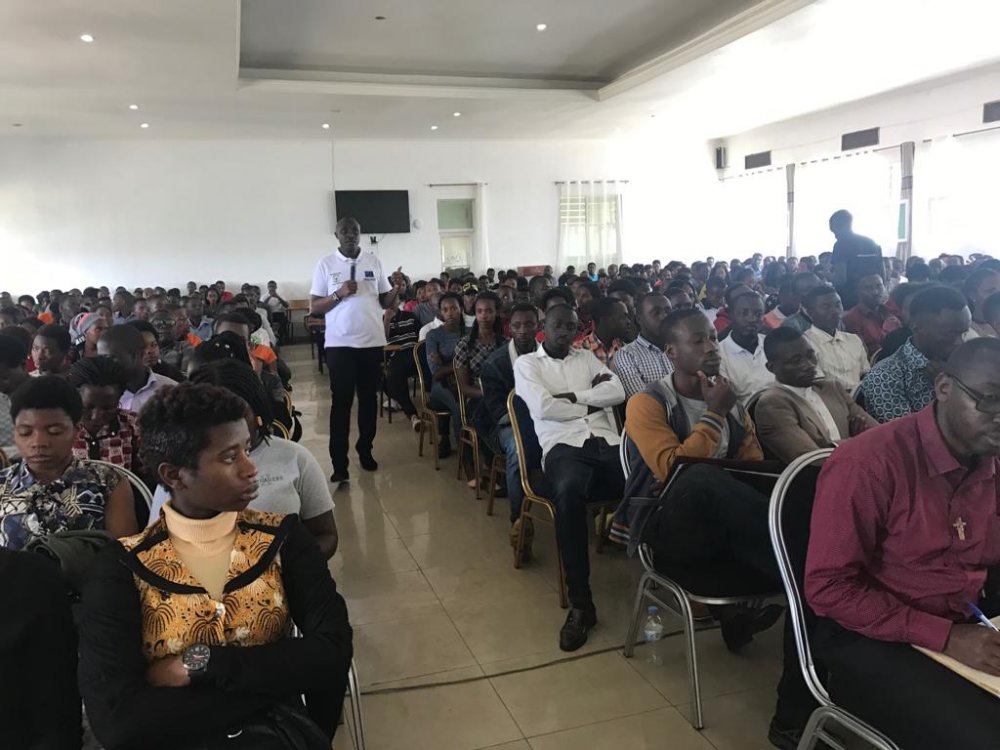
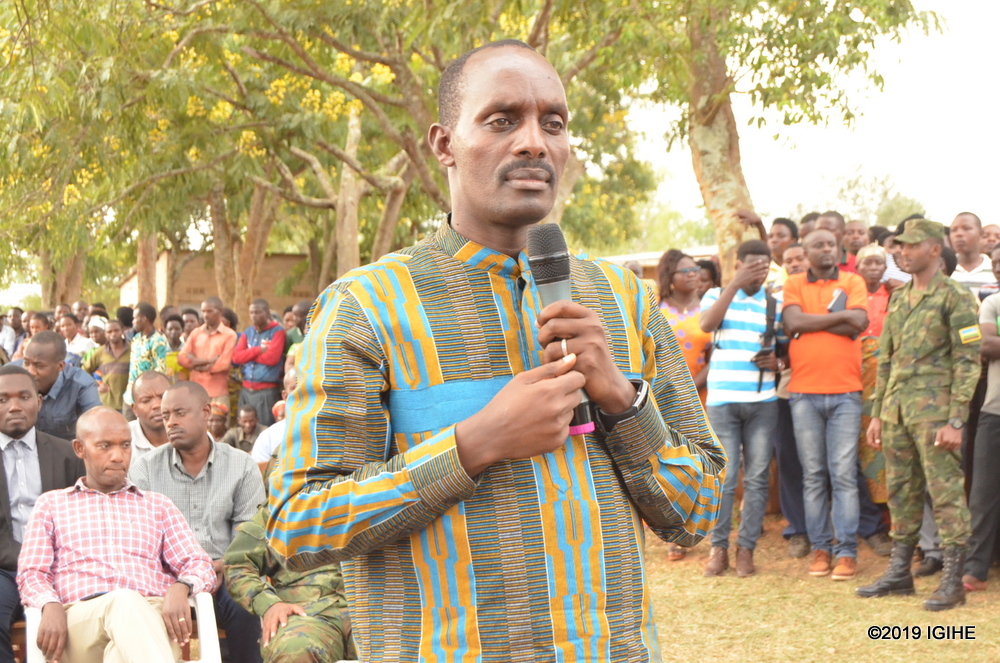
The message was delivered on Wednesday in Musanze district during discussions with students held at INES Ruhengeri as part of ongoing judicial week that run from 18th to end on 22nd March 2019.
The chairperson of the Rwanda Law Reform Commission (RLRC), Aimable Havugiyaremye reminded them that prevention of crimes requires concerted efforts from different actors.
“Fighting and preventing crime is our daily duty. Those directly involved are not enough with the absence of beneficiaries. When they properly understand inconveniences of crime, prevention methods and how to provide early information; our work becomes easy. That is why we organize such discussions countrywide for better understanding of judicial process undertakings,” he said.
Participants pledged to give their contribution increasing awareness among citizens on
crime prevention measures.
“We have been reminded of our role in preventing crime early. Our contribution will be
providing explanations to citizens how to avoid crime and update them on related
punishments. This will undoubtedly reduce criminals,” said Gedeon Rutayisire a student in the department of law.
Discussions during the judicial week are held on different topics including citizens’ involvement in crime prevention, prevention of drugs, defilement, corruption and
cyber crimes among others.
In his visit to Ethiopia on March 14 this year, President Macron said France will be represented in the 25th commemoration of the 1994 genocide against Tutsi.
“It is true that Rwanda invited us in commemoration activities. We received the invitation and I am sure that France will be represented,” President Macron said.
Berville is a 29 year-old French Member of Parliament who was elected to the French National Assembly on 18 June 2017, representing En Marche!, the centrist party founded by the current French President Emmanuel Macron. He is also spokesperson of this party.
A survivor of the genocide against Tutsi in 1994, Hervé Berville was born in Rwanda in 1990 and he was adopted by the French couple who took him to France in 1994 after some of his family members were killed during the genocide.
He graduated from the London School of Economics and worked for Stanford University’s Kenya Campus before joining politics in 2016.
This follows the signing of agreements to open airspace enabling RwandAir flights to Kinshasa and vice versa for Congo Airways.
Rwanda’s delegation was in DRC at the beginning of this week in talks with their Congolese counterparts and DRC president, Félix Tshisekedi.
Part of Rwanda’s delegation were Yvonne Manzi Makolo, the CEO of RwandAir and Silas Udahemuka, Director General, Rwanda Civil Aviation Authority.
Makolo has told IGIHE that ‘Kigali-Kinshasa flights will start mid-March 2019 while flights to Guangzhou are expected to begin on 18th June this year.’
Following recent talks, the senior advisor to president Thsisekedi, Nicole Ntumba Bwatshia who was part of the delegation explained that the talks aimed at seeking together with the head of state how Rwanda and DRC may reach consensus in opening airspace for air transport.
Bwatshia explained that RwandaAir aircraft will soon use DRC airspace and vice versa that both countries will be able to maximize benefits from bilateral relations.
With 12 airplanes, RwandAir conducts flights to 26 destinations in East, Central, West and Southern Africa; Europe and Asia.
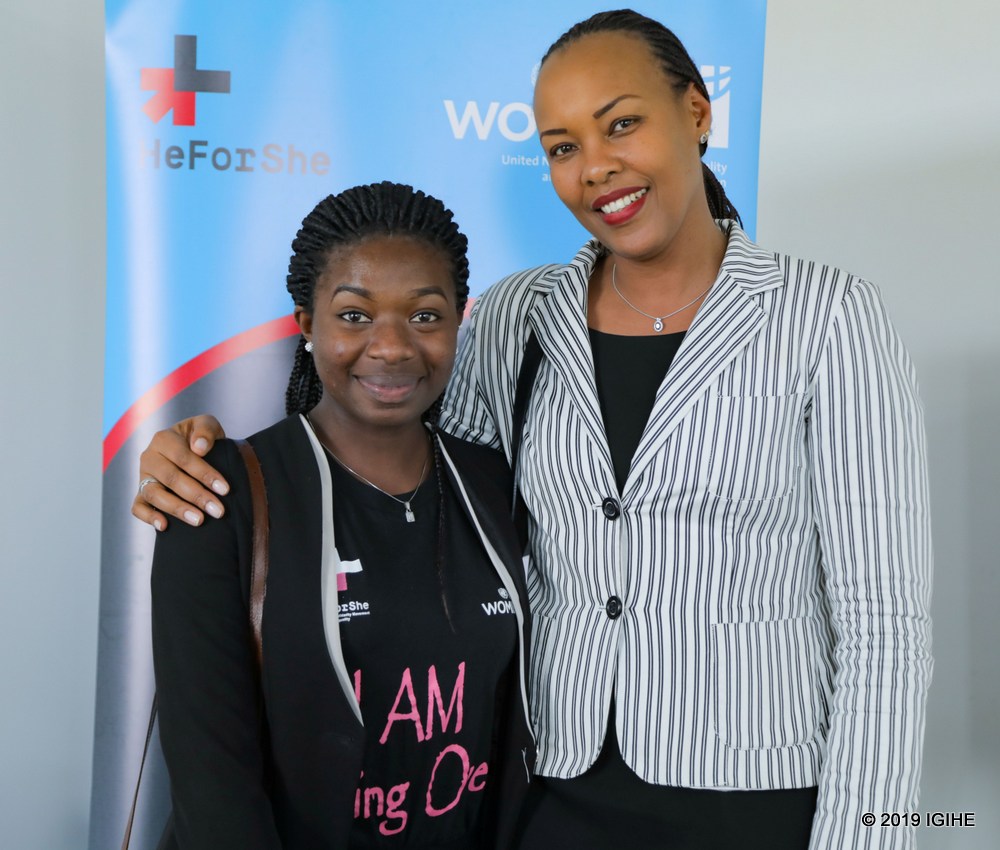
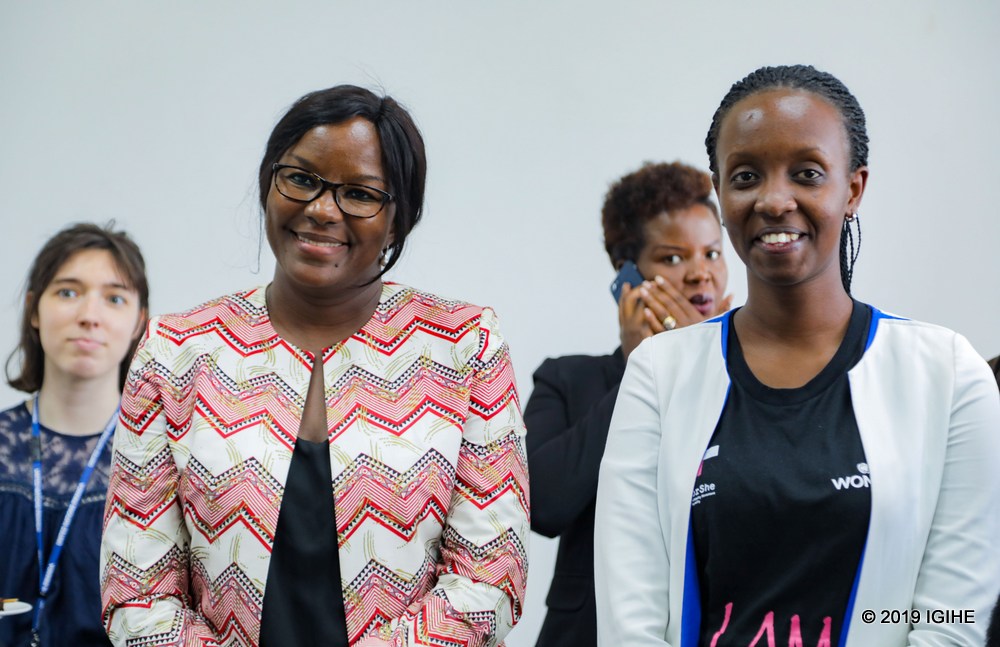
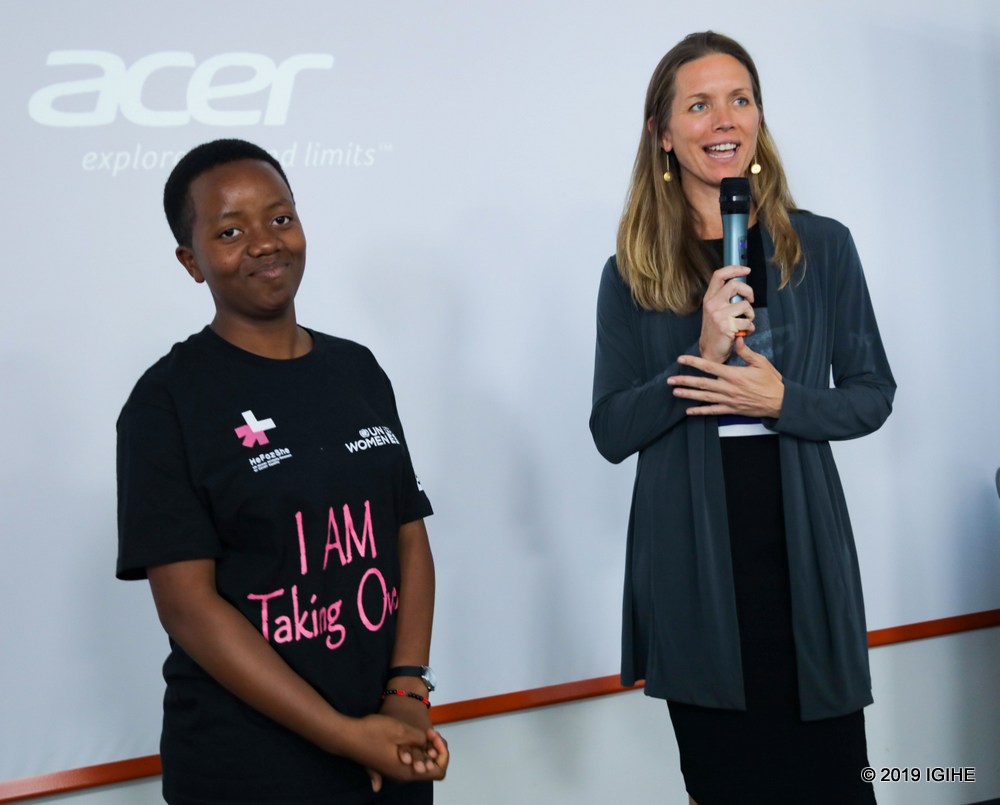
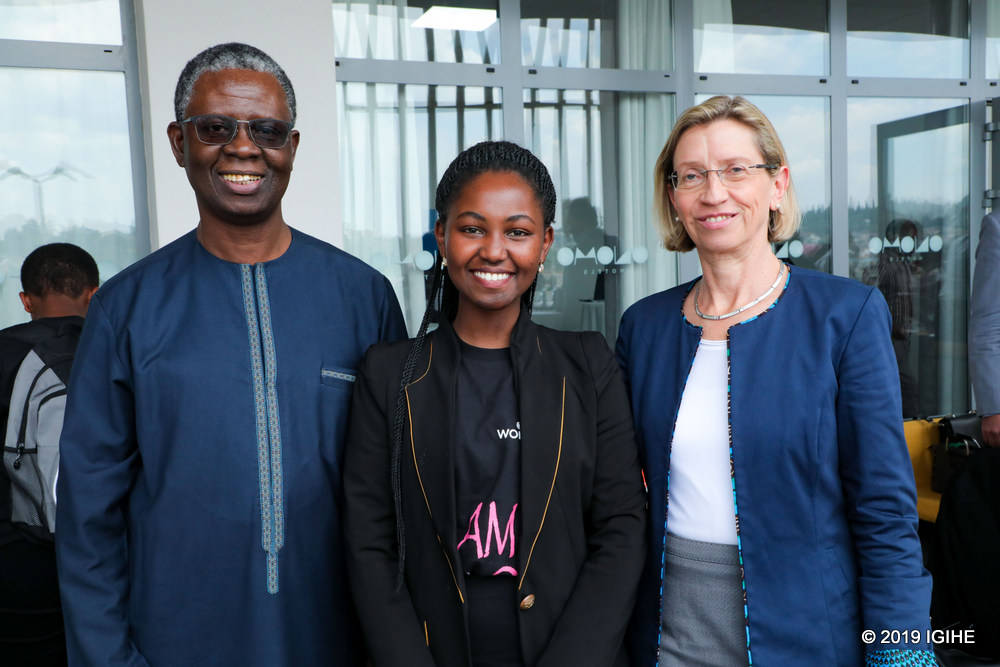
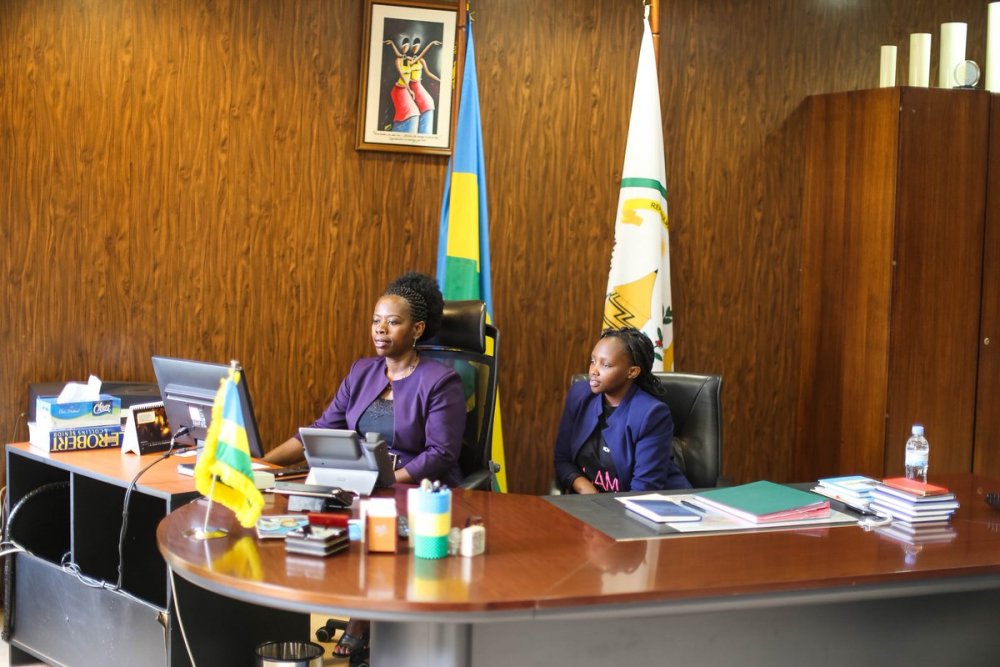
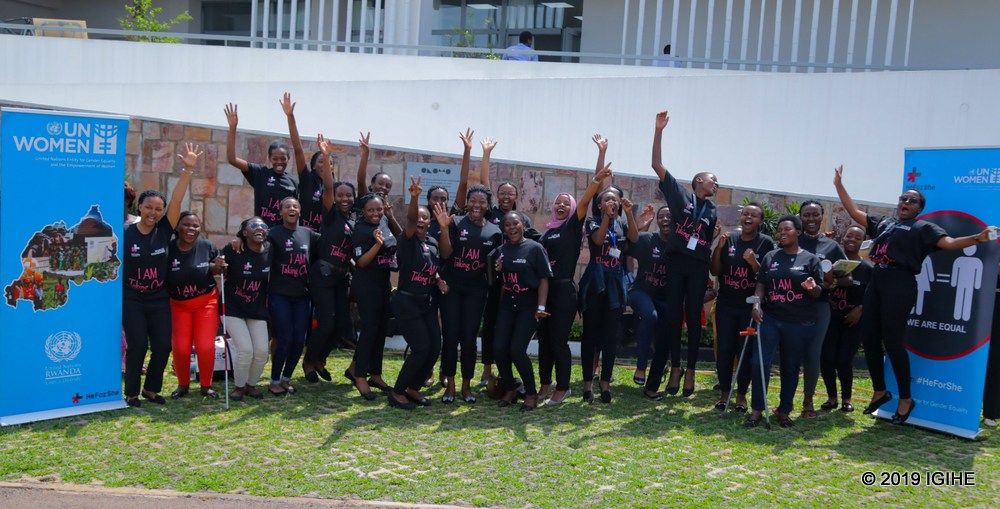
The “Girls Take Over” Initiative aimed at providing a shadowing experience to young women in Rwanda by offering them role models in the field of their career choice, helping them realize their potential, build their capacities and strive to make their dreams true.
Girls who benefited from the initiative were selected among students from Gashora Girls Academy, Akilah Institute for Women, FAWE Girls School and the Rwandan Organization of Women with Disabilities (UNABU). The young women acquired insightful career advice and first-hand experience from leaders in different Rwandan and international organizations.
The young women were received in by the Heads of the following Institutions; UN Women, the Embassies of Kenya, Congo, Netherlands and Germany to Rwanda, The Swiss Development Cooperation, the United States Agency for International Development (USAID), the Friedrich Ebert Stiftung Foundation, the UN Resident Coordinator and United Nations Population Fund (UNFPA), the African Development Bank (AfDB), the National Bank of Rwanda (BNR), Bank of Kigali and BK Capital, Ecobank, the Commercial Bank of Africa, SONARWA Life, Volkswagen Rwanda, AC GROUP, Rwandair, Engen Ltd, the Kanombe Military Hospital and the Rwanda National Olympic and Sports Committee (CNOSR).
They were taken through the operations of the institutions, daily work challenges and how they are addressed and discussed with their mentors their journeys to success and lessons they learnt from them.
Brigitte Musabwasoni is a young woman, living with disabilities and a player at Rubavu Sitting Volleyball Club. She was received by the Vice President of Rwanda National Olympic and Sports Committee (CNOSR), Ms. Felicite Rwemarika.
“I talked with her (Rwemarika) a lot about women sport development and Paralympic sports in particular. I told her about my projects and dreams to play for the national team. She advised me to never give up because she also faced obstacles as she was pursuing her dream career but she kept up with her journey until she reached her goals,” Brigitte Musabwasoni said, “I am going back home a new person and with a new friend, Felicite”.
The various leaders who received these young women said this was a golden opportunity to share their experiences, a chance they hoped they would have gotten when they were starting their career. They were also impressed by the challenging questions they were asked by the young women and indicated it had been an eye-opener for them as well.
Dr. Claire Karekezi, the first Rwandan female neurosurgeon, received Blandine Ineza at Kanombe Military Hospital. Ineza finished her secondary studies at Groupe Scolaire de Butare in Physics, Chemistry, and Biology (PCB) Option last year and wants to become a cardio-thoracic surgeon.
“The young woman I received dreams of becoming a surgeon. It is a great dream and as a female neurosurgeon, I made that she knows that it is possible. The way ahead of her is not quite easy but it is possible if we work together,” Dr. Claire Karekezi said.
The UN Women Representative in Rwanda, Fatou A. Lo said that the ‘Girls Take Over’ Initiative created a platform of intergenerational dialogue for young women to be mentored but also to share key insights on how they view the field and what could be improved because as she stated “these young women are not only the future, they are actually the present.”
“Hearing messages from these girls has been tremendously inspiring. The girls were not only very well prepared and they asked very relevant and tough questions but they also inspired us. They brought energy, great insights and they reminded us that we have all been there in their shoes.”
Going forward, through the initiative, UN Women Rwanda intends to reach those who are left farthest behind including the school dropouts, young women who do not have access to existing opportunities and those who may not be in leading educational institutions.
The “Girls Take Over” Initiative is a continuation of the various mentorship and career guidance activities such as the “Speed Mentoring” organized as part of the 2018 edition of Youth Connekt Africa Summit, where UN Women held mentoring sessions with 150 youth and leaders from various sectors, as well as the Mentoring Moments launched by the Career Women’s Network in Kigali.
He revealed this in a press conference alongside President João Lourenço concluding the visit as indicated on the twitter account of Rwanda Presidency.
“There are many things that bind our two countries, through history, culture and ideologically. What we believe in is developing our people and doing everything we can for the transformation of our people,” he said.
He highlighted that Rwanda and Angola can achieve more through investment with and in each other.
“In the level of relationship we have developed between Angola and Rwanda, we have looked at areas where we can cooperate and learn from each other, across sectors. There are no limitations to what we can do together or how much we can benefit from each other,” he said.
President Kagame thanked Angola for warm hospitality received since he arrived in Angola.
Rwanda and Angola have existing bilateral ties in different areas including air transport, security, justice, free movement between both countries’ people, ICT, and governance.
The visit follows recent agreements in February this year where both countries signed cooperation agreements fostering security and public order in the interest of their citizen.
The two governments last year signed a Bilateral Air Service Agreement under which the national carrier, RwandAir, and Angola’s national airline TAAg got seven frequencies a week on either side.
Rwandan citizens traveling to Angola are not required to have visas to enter Angolan territory.
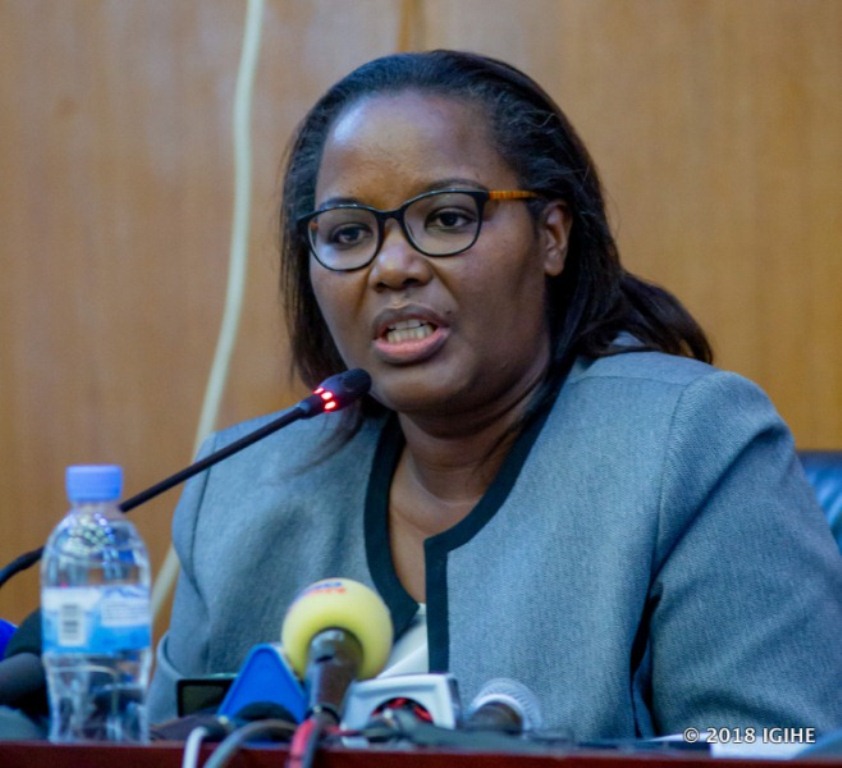
The dissatisfaction was expressed yesterday as she responded for the second time to the summon of parliament that was not satisfied with provided explanations.
Following unappealing answers last time, Dr Mukeshimana returned to the parliament yesterday with a written response to the 28 questions she had been asked.
The responses were in relation to; inadequacy of multiplied seeds, malfunctioning milk collection centers, agribusiness produce lacking market and irrigation problems where farmers lament over expensive irrigation equipment.
She was asked to provide clarifications on poor implementation of post-harvest handling leading to poor quality produce, lack of market over poor quality standards, high taxes paid by rice farmers in rehabilitated marshlands among others.
Minister Mukeshimana tried to answer some of these questions though parliamentarians were not satisfied.
Concerning ineffective performance of milk collection centers, she explained that most of the matter was caused by inadequate electricity supply that they are working with other institutions to address.
Concerning irrigation problems, Minister Mukeshimana said that Rwanda has 36 500 irrigated hectares in marshlands and on hillsides and designing a master plan to identify areas of priority.
She explained that they are going to work with concerned institutions to fix the issue of high taxes charged to rice farmers in marshlands. These taxes range from Rwf 80,000 to 100,000.
Concerning expensive irrigation equipment, Minister Mukeshimana said that they have introduced Nkunganire program catering for 50% of the cost spent to such equipment.
She revealed that the ministry is putting in much effort to multiply seeds locally . Currently, the country imports 50% of seeds.
Parliamentarians were however not satisfied with the explanations.
“ The first commission pointed out problems, the auditor general indicated that agricultural services don’t benefit farmers, RGB report indicated that citizens are satisfied with such services at below 50% yet you have provided explanations proving how the situation is better. What can we take as the truth?” wondered MP Euthalie Nyirabega.
Veneranda Nyirahirwa observed that there is a need for reforms considering the problems rampant in agriculture yet it is practiced by 70% of Rwandans.
She however noted that reforms cannot be possible if there is no acknowledgement of existing problems.
“Based on provided answers, it seems like all problems in the agriculture sector are fixed yet it is not the case. When we visited farmers; they had a serious problem of seeds and fertilizers. The produce cannot be good while they still plant seeds that existed for 11 years like rice,” she said.
Another MP, Marie Thérèse Murekatete highlighted that ‘the number of cattle and the quantity of milk don’t match. We have the problem of malnutrition among children.’
Only 26 of 66 MPs who attended the hearing were satisfied with explanations from MINAGRI.
They agreed on establishing a special commission to investigate problems in agriculture and livestock farming of which outcomes will be reported to the general assembly.
With the capacity of treating over 5000 cubic meters a day, Mpanga water treatment plant was launched in 2017 to feed different sectors of Nyanza district.
Some residents are however frustrated as they fetch water from marshlands exposing them to risks of diseases yet water from the plant is distributed to far distant population.
“Imagine how frustrating it is having a water treatment plant in this village that can’t help us to get safe water while it supplies water to Bugesera district. You understand that it benefits only that area leaving us helpless,” said Révérien Mureramanzi.
“We don’t have water at homes. We fetch from marshlands. This has resulted into contamination of infectious diseases like verminosis and malaria,” said another resident Annonciate Mukahigiro from Nyamazi village, Mpanga cell of Mukingo sector.
As he attended the launch of Water Supply and Sanitation policy week yesterday, the mayor of Nyanza district, Erasme Ntazinda explained that water will be made available to residents gradually.
He this will go hand in hand with upgrading Shyogwe-Mayaga, Butansinda-Agahombo-Mulinga and Busasamana-Rwabicuma-Nyagisozi watercourses.
“We have projects to make safe water available by next year. Other areas of focus include Mukinga and Mpanga where the water treatment plant is constructed. We agreed with WASAC to make water accessible there,” said Ntazinda.
It is said that two of the three men were in military uniform.
The incident took place around 10:00 pm last night.
The police spokesperson in Kigali city, CIP Marie Gorette Umutesi has told IGIHE that they were three thieves who left a car along the way.
“They went to steal in a shop and asked licensing documents for lottery machines impersonating as security officers. Two of them wore military uniform, and had concealed the number plate of the car with cow dong. They parked the machines as owners tried to get documents,” she said.
Umutesi explained that one of residents alerted Kanyinya police station as the suspects were departing.
“After providing information that the car was driving to Kigali, police went on the road to stop it and the driver was shot escaping,” she said.
Gako Military Camp is located in the forest covering Rweru, Rilima, Gashora, Mayange, Kamabuye and Ngeruka sectors of Bugesera district.
The warning was made by the RDF Division commander for the City of Kigali and Eastern Province, Gen Mubarak Muganga yesterday in a meeting that brought together Eastern Province Governor Fred Mufulukye, security organs and residents living in the camp’s neighborhood.
Some residents go into the camp’s premises for hunting purposes, collecting firewood, burning charcoal and grazing.
Gen. Mubarak explained that some of them tend to confront soldiers as they go into the forest to hunt different animals including gazelles and hares.
“We have two soldiers admitted at Kanombe who have recently been stabbed by residents who came to hunt in this forest. You understand that they started going beyond limits,” he said.
He also revealed that some residents pass through the forest trafficking drugs from Burundi and reminded them that whoever is caught again will be seriously punished.
Eastern Province Governor, Mufulukye also warned residents against such illegal entries and urged them to make a good use of the land the camp gave them.
Talking to IGIHE, Maurice Musine one of the residents attributed the illegal entry to lack of firewood.
“We often go into the forest to collect firewood but there are those who take the opportunity to hunt or traffic drugs through the forest,” he said.
Musine asked the district to facilitate easy access to gas following the notice prohibiting them from accessing the forest.
The mayor of Bugesera district, Richard Mutabazi said they are going to look for a partner to make it possible.
“We take pride to have the population with such advanced mindsets. Following their request, we will look for a partner who can provide affordable Gaz matching with their financial means,” he said.
Bugesera district advisory committee agreed on Rwf 150,000 fines for illegal movements to Gako Military Camp premises.
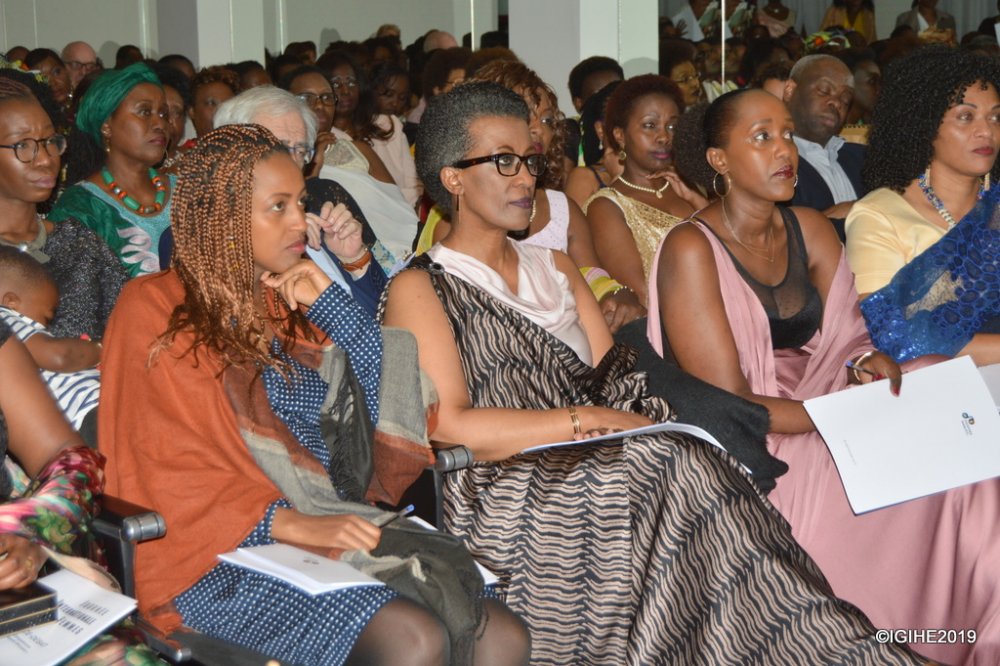
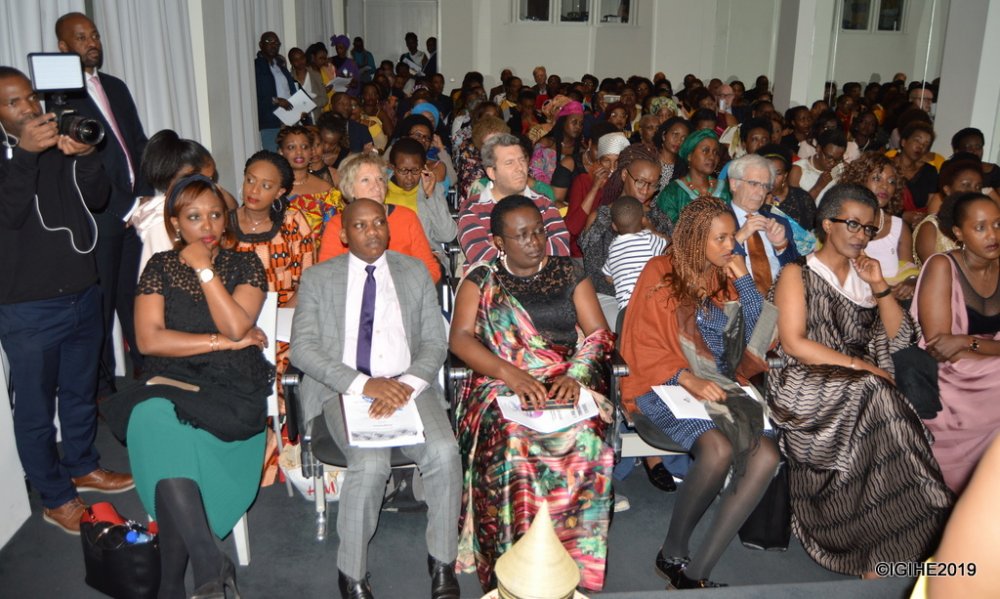
The day is usually celebrated on 8th March every year at the international level.
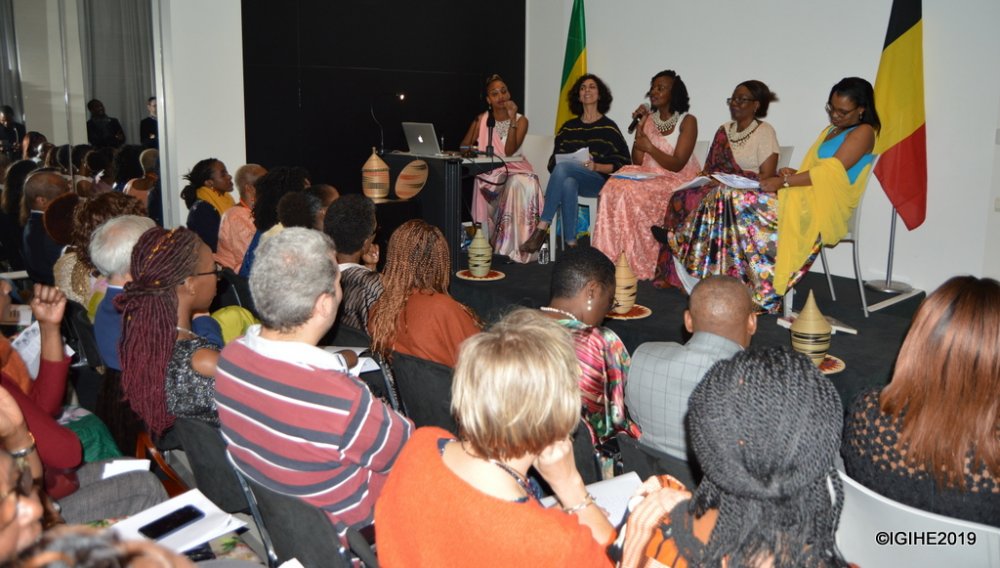
The event was organized by gender equality commission of Rwanda’s diaspora in Belgium in partnership with Rwanda’s embassy in the country.
The senior advisor to Rwanda’s ambassador in Belgium, Bosco Ntibitura told IGIHE that the event is ‘a platform fostering discussions on valuing the power and knowledge of women abroad’.
Present at the event was panelists including Marie Arena, Belgian native coordinating Women’s Rights and Gender Equality commission at European Union parliament.
“A lot needs to do here in Europe because areas where gender equality is not respected still exist,” she said.
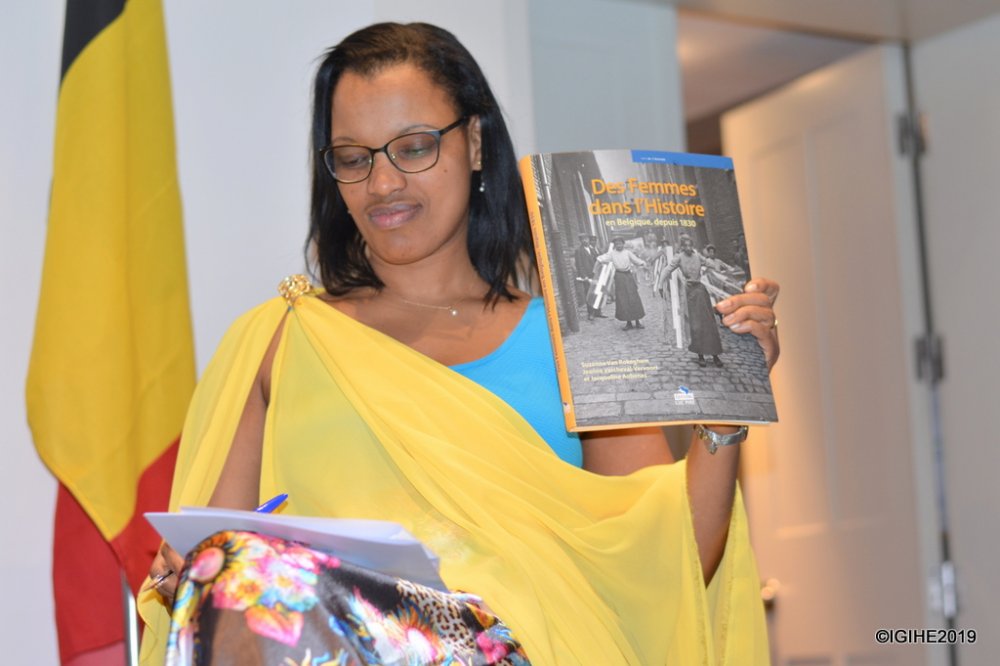
Marie Pierre Nyatanyi who is among founders of a non-profit organization (Djaili Mbock asbl) based in Belgium and the writer of “Plurielles, Femmes de la diaspora africaine”; Dr Uwizeyimana Emeline, a researcher and writer of a book dubbed “Le micro-crédit à l’épreuve des inégalités de genre”; and Olivia Ingabire, a Belgium based entrepreneur exhibiting Made in Rwanda products were also among panelists.
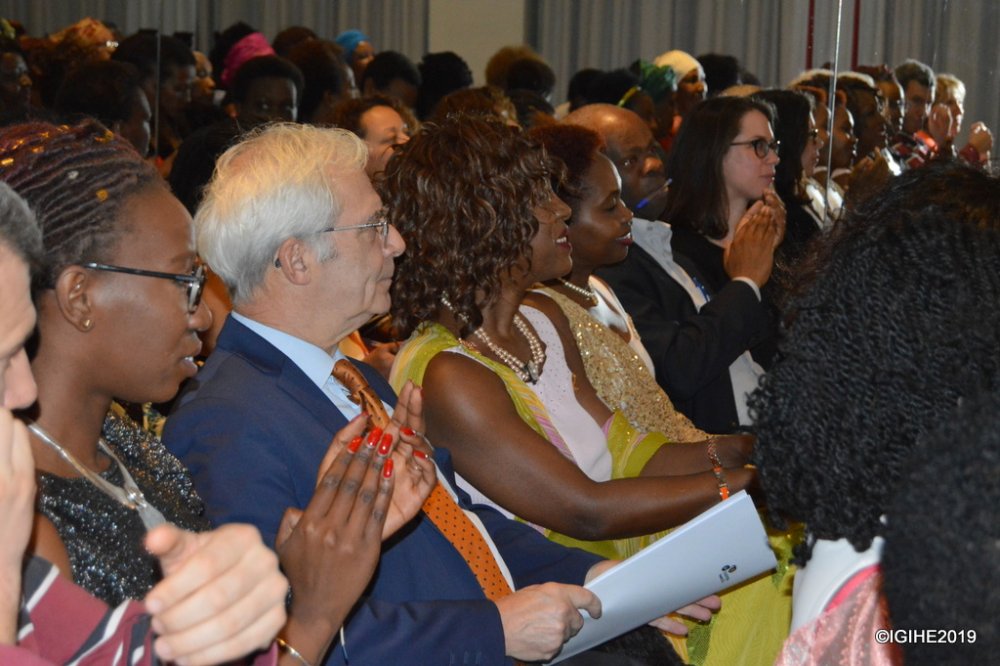
Rwandans attending the event lauded President Paul Kagame for his role model with non-discriminatory leadership giving women representation in all government positions.
The celebration was characterized by traditional dances and sharing dinner.