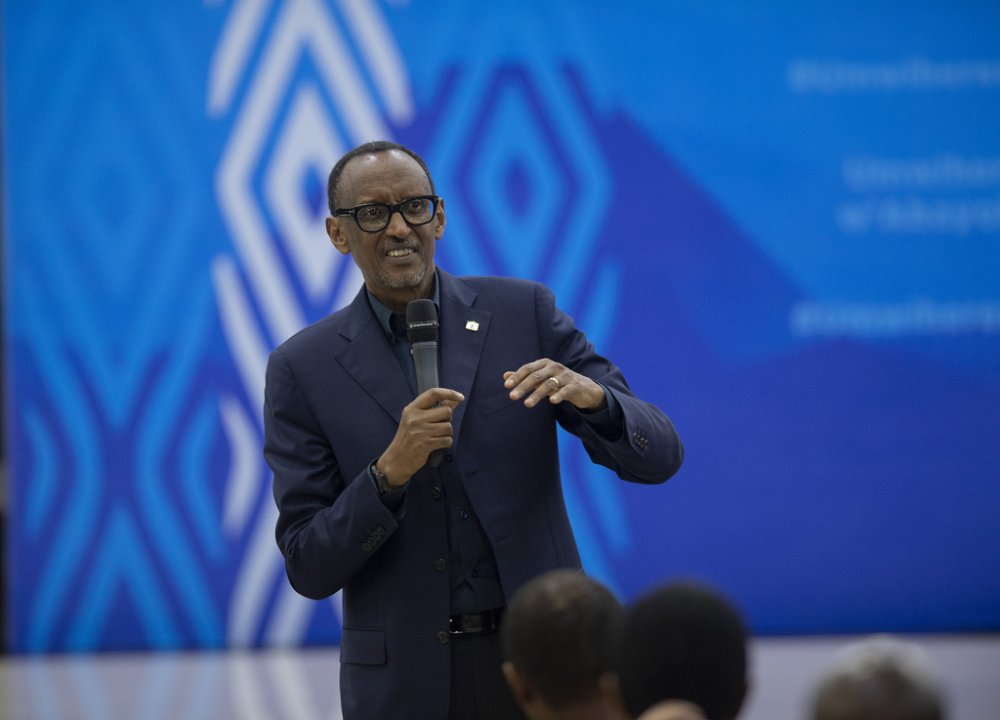
Kenyatta told the government, private sector leaders gathered at the retreat, how he was very impressed on how it was held.
“When he told me you meeting and having a retreat, I told him that as a friend, a brother and a neighbor, I would like to come and see how you people run the affairs of Rwanda. And I must say that indeed I am quite impressed, to the point that I am going to copy this,” he said
President Kenyatta also noted that among the many things that pleased him was the bilateral relationship between Rwanda and Kenya, which he named as one of the ‘best’ relations that Kenya has.
“The things we that we have been able to do together, in terms of easing movement of our people, in terms of the linkages and what we did especially in the ICT sector, telecommunications sector. We have many Kenyans living and working here in Rwanda and feeling very much at home, we have many Rwandans living and working in Kenya, really showing that we are brothers and sisters, bound at the hip.” He noted
Kenyatta said he was very proud of the manner in which Rwanda has turned around, “from a country that was heavily, heavily hit, especially during the Genocide period, a country that was on its knees, to one of the brightest stars on the African continent, in a very short space of time. Really showing clear direction and clarity from the top, all the way to all of you who have been part and parcel of making this Rwandan dream a reality.”
“Lives have changed, the progress you have made in healthcare, the progress you have made in ICT, look at Kigali today… I keep telling my brother here, that I am fighting very hard to overtake him in terms of ease of doing business, and he keeps telling me ‘do your best’.” President Kenyatta said
“At the end of the day, all we are trying to do is to improve the environment for business, to improve the environment for our people, improve their living conditions, build infrastructure, connect ourselves to each other. At the end of the day, Kenya alone cannot make it, Rwanda alone cannot make it, but together we have huge and tremendous potential for growing prosperity for our people and for our countries.” Kenyatta observed.
The more we meet, the more we interact, we don’t need protocol and many appointments for each other- no. We should wake up in the morning and be in Nairobi and in the evening be back in Kigali – that’s the way we want it to be. And all of us feel at home in our respective capitals.
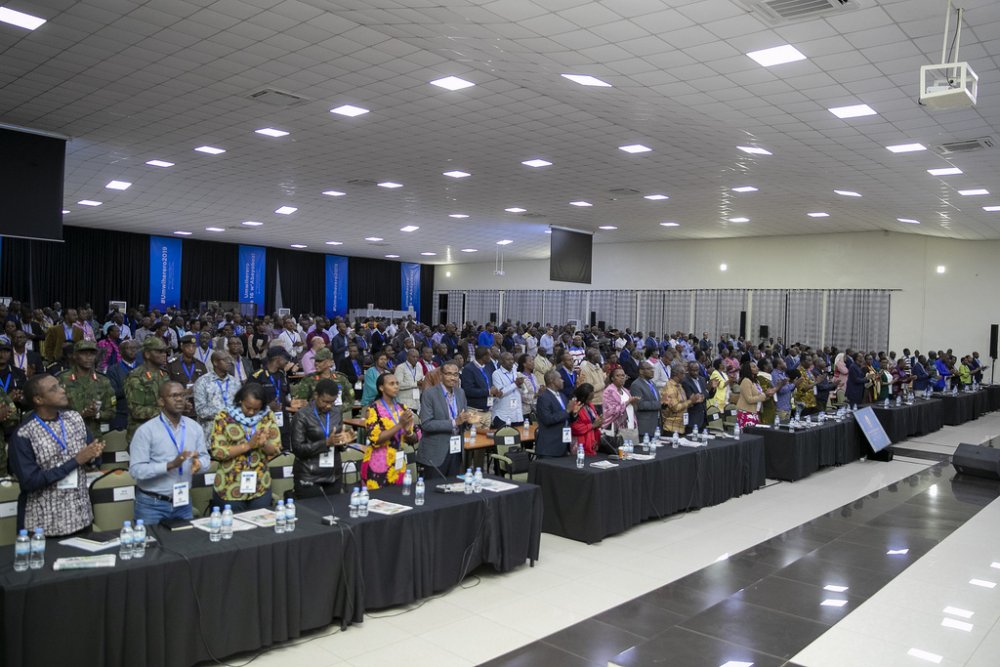
The Head of State said this on Monday while closing the 16th National retreat that was happening at the Gabiro Military Barracks, since March 9th, 2019. The retreat brought together about 350 government and private sector leaders.
President Kagame told the leaders to have a better attitude, the correct mindset and the implementation based on some of the good policies Rwanda actually has.
“We should not just be coming here to repeat apologies. We need to be explaining why we are falling short on our goals.” Kagame observed.
“Everyone is committed and claims they want to do their best. How can we turn things around, so that the commitment portrayed from you, actually matches the results we get?” Kagame noted.
The Head of State challenged the leaders on how they can turn things around and stop giving the same explanations and all kinds of reasons that always move in the direction that justify failure.
“We need to turn around our attitude of when there is a task ahead of us, we start with the attitude that it is hard to do or impossible before you have even tried, even when the information available in advance is proving to us that it is doable. Don’t start by thinking things are not doable, start by thinking they are doable, if they become difficult along the way that is ok, you will have tried.” He observed
Kagame also expressed his appreciation to leaders who gave new ideas during the retreat, saying “Thank you for the spirit, the idea you contributed and the promise you have made that you are going to do and be better, that is what our country is going to be built on and reflect.”
He further encouraged them to go home, rest because the country is very secure.
“You may hear all kinds of stories. As you go home, relax. When you go to bed, have your sleep. When you wake up in the morning ready to work, you just know the country is very fine. For security, we are very fine.” Kagame told the leaders
“Do the things we have agreed you are going to do to develop our country, to grow our economy, to build capacities, to improve the quality of services we give to our people and so forth. We cannot be fine if we are not together. Let’s be together and God Bless you.” Kagame concluded
The current standoff is happening only weeks after President Yoweri Museveni gave a highly acclaimed speech to fellow African heads of state at the African Union in Addis Ababa in defense of regional integration and President Paul Kagame assumed chairmanship of the East African Community. That the two could be close to war shows the distance between aspiration and action.
The problems between Uganda and Rwanda can easily be solved if Museveni upheld his core ideological position i.e. that regional integration is critical for Africa’s future, and that the differences between our countries are smaller compared to the strategic need for and benefits of cooperation. From this view, if any two nations have differences they should seek to listen to each other and solve them. The problem between Uganda and Rwanda – as I know it – is the refusal of Kampala to listen to the concerns of Kigali and/or put her own grievances on the table for discussion.
For example, Rwanda has complained severally to Uganda both formally and informally about the presence of persons hostile to the government in Kigali. It says these people abuse their refugee status in Uganda by indulging in politically hostile actions against the government in Kigali. Rwanda has further complained that these persons (many of whom it has named) are actively aided by Ugandan intelligence to recruit Rwandans from refugee camps and take them to DR Congo for training in rebel camps.
Kigali has always wanted and actively sought to discuss these matters with Kampala. It has been met with stone silence. Instead, Kigali has been reading in Ugandan traditional and social media that it is the government of Rwanda planning regime change in Kampala. Websites allied to State House in Uganda are leading this charge. Some security chiefs in Uganda have said similar. Yet Kampala has never made a formal or informal complaint to Kigali on these allegations. This has placed the government of Rwanda in a difficult situation on how to respond to media rumors when government of Uganda has never owned them.
This situation could have been arrested long ago. However, all efforts to begin a dialogue between the two countries have been thwarted by Uganda. The most serious one was mid last year when I worked with Gen. Salim Saleh to send a delegation to Kigali or invite a Rwandan delegation to Kampala for discussions. We even greed on the team of Ugandan officials. I talked to Kagame who readily nominated a team of officials to meet the Ugandan side. On the last minute Museveni personally cancelled the plan saying he will handle this matter directly with Kagame.
I personally tried several times to interest Museveni in the issues Rwanda was raising but he either expressed indifference or paid leap service or said he will discuss them directly with Kagame, which he rarely did. This was especially frustrating for me because between 2011 I worked closely with the Ugandan president to repair our relations with Kigali. During that time I was impressed by Museveni’s boldness, courage, and strategic foresight. His subsequent loss of interest without explanation was confusing.
While Museveni has promised to discuss these matters directly with Kagame and which he has done on occasion, there has been no follow up by Kampala. I am aware that whenever Museveni has met Kagame, he has never raised the issue of regime change by Kigali against him. Kagame has told Museveni that Uganda’s Chieftaincy of Military Intelligence (CMI) actively works with Rwandan dissidents. Museveni has promised to verify the claims and end the problem. The last I heard is that Uganda sent one such person to Norway.
CMI has been detaining Rwandan nationals in illegal facilities, torturing and deporting them to Rwanda. CMI accuses these people of spying but has never produced them before courts of law. Neither has Uganda complained to Rwanda about this. Kigali has protested these detentions and deportations formally and informally. Again it has been met with stone silence. Meanwhile, Uganda accuses Rwanda of kidnapping and killing Rwandans in Uganda and of seeking regime change but never provides names or any evidence and has never made a formal or informal protest to Rwanda.
I have told officials of Uganda that even if these allegations of kidnappings and killings are true, Rwanda is supposed to be our ally. When an ally behaves like that, you don’t stop talking to them. Israel is an ally of America. On many occasions, its intelligence services have been caught either kidnapping people from America or infiltrating US intelligence and stealing highly classified information. These actions by Israel have been a great irritant to the USA, but they have never formed a basis for the break in relations. Recently America was caught tapping calls of leaders of nations among her NATO allies but this did not lead to the break in relations.
Museveni is one of the most strategic-minded persons I have read and listened to. I do not think he would preside over the collapse of a strategic relationship with an ally because of such infringements. Such infringements are the reason to dialogue, not break-up. The only conclusion I can infer from his attitude towards Kigali is that either he does not consider Rwanda an ally or he does not think our relationship with her is strategic – or both. I have increasingly come to believe that Museveni sees Kagame’s Rwanda as a threat, a factor I will write about in detail in my next post.
Now here is the slippery slope to war: if Rwanda is convinced Kampala is seeking regime change against Kagame, it will not sit idly and watch. Uganda has enemies too. It follows that Kigali will be driven to aid them. Given the interpenetration of the two societies and government systems, Kampala will finally get the hard evidence of this aid. Thus what began as empty claims that Kigali is seeking regime change against Museveni will now be fact with evidence!
{{This article was written by Andrew Mwenda and was first published on the [Independent->https://www.independent.co.ug/the-rwanda-uganda-conflict/] }}
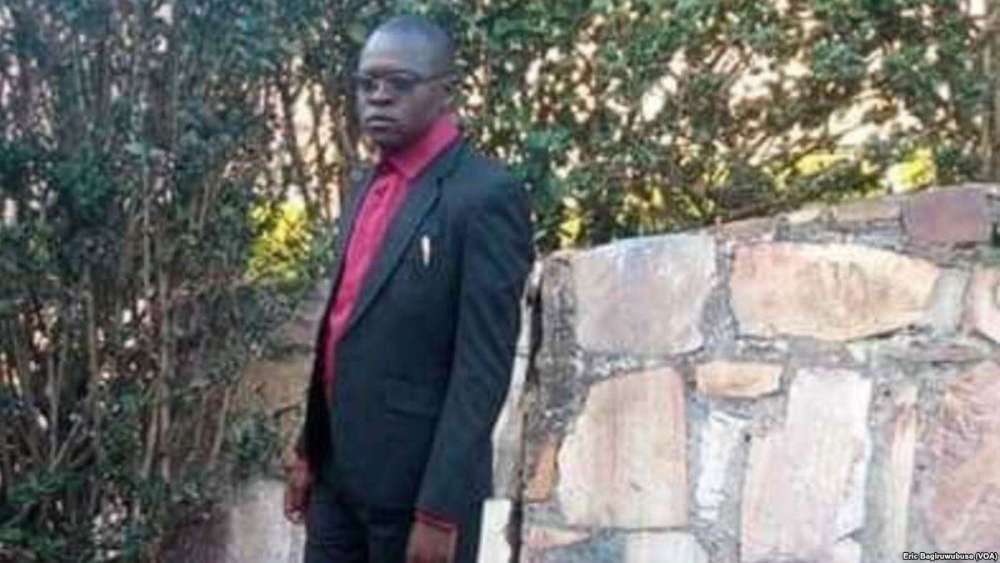
The deceased was identified as Mutuyimana Anselme, a 30-Year- old who had gone missing for three months.
According to Chief Inspector of Police (CIP) Innocent Gasasira, the Police spokesperson for the Western region, investigations into the killing are ongoing.
The body which was found by an Intersec Security (ISCO) Officer around 6 Am, was found without bruises.
The mood was somber at the home of Anselme Mutuyimana as the family was told of the news.
The deceased’s elder brother, Augustin Tubanambazi, who is also Mukungu Village Chief, said that it had been three months since Mutuyimana had been at home, but that he had called them on March 08th, 2019, saying that he would come to visit the family.
Mutuyimana’s body was found around Gishwati Forest and was later taken to the Hospital for post-mortem as investigations get underway. He was born in Cyivugiza Cell, Nyabirasi Sector in Rutsiro District.
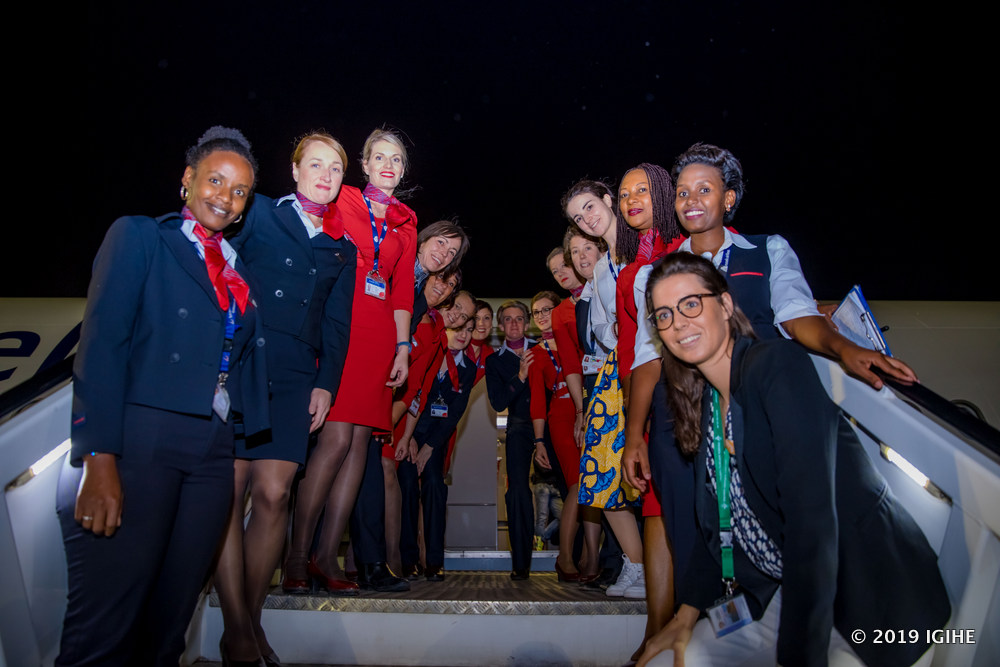
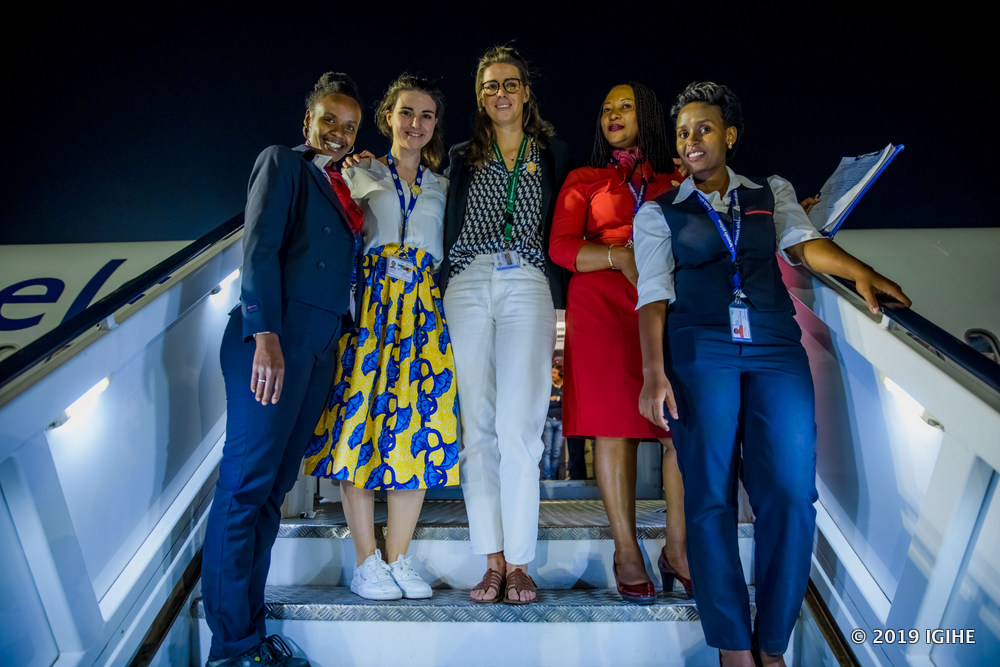
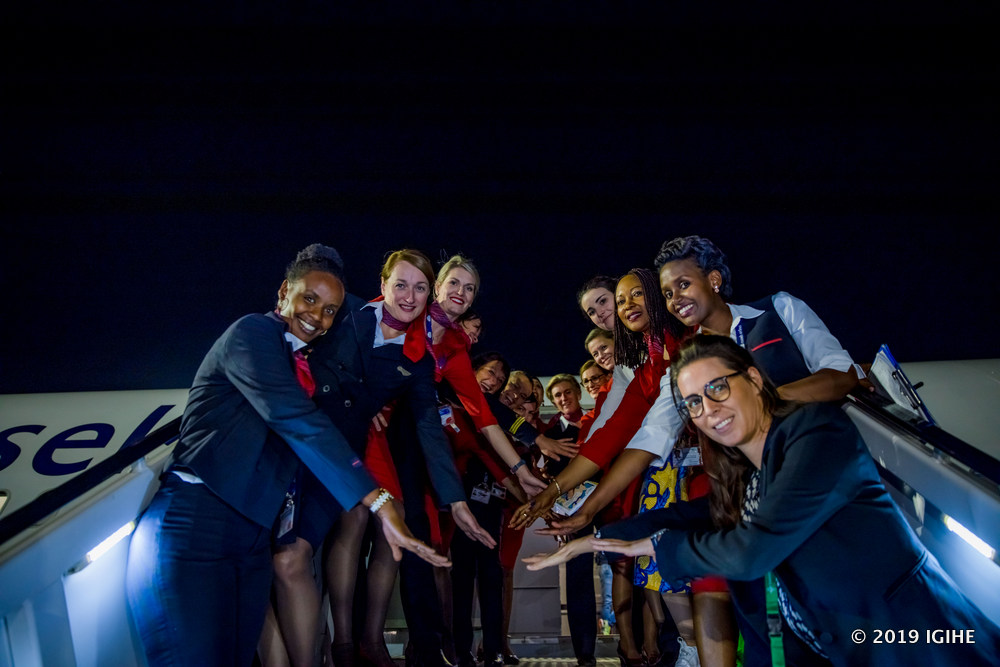
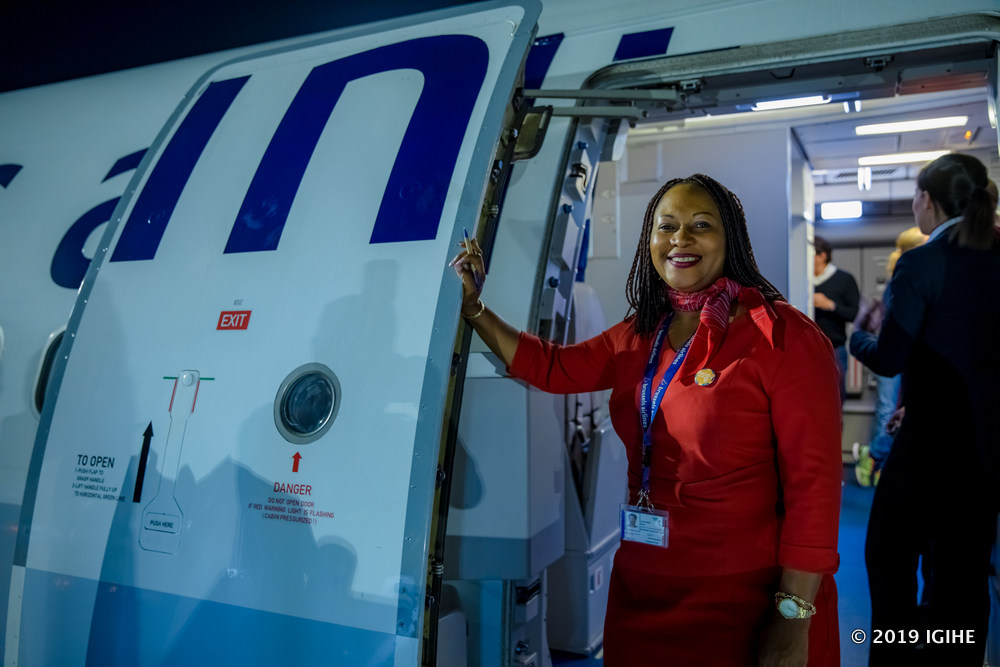
On a slightly chilly Friday night (March 8); the flight SN467 landed in Kigali from Brussels around 7:20 Pm before continuing off to Entebbe. From pilots to cabin crew, engineers to load controllers and flight dispatchers, the flight was operated by women. This highlighted the integral role played by Brussels Airlines’ female workforce.
Brussels Airlines’ Country Manager in Rwanda, Coline Everard, observed that the event was an opportunity to raise awareness on Gender equality in the Aviation Industry.
“Although 51.7% of our workforce is female, you’ll find that some positions like pilots still have few women, being 10.2% of the company’s pilots. Thus, today was an occasion to raise awareness about gender inequality in Europe as well as in Africa,” Everald said
Everald who is also the first women Country Manager of the Airlines in Rwanda said that she was proud to represent other women, especially in a country that is earnest to see gender equality and women empowerment.
First Officer Katty Wellekens echoed Ms. Everald’s remarks, saying that women should believe in themselves and their dreams. ‘Piloting is for women too, not only men.’
Brussels Airlines advocates equal rights between men and women and – from a broader perspective – a more inclusive world in general.
“I really feel equal to my male colleagues at work and I actually don’t really think about it that much. Never have I had the feeling that I couldn’t go forward with my career because I’m a woman. Although there are moments when it looks like I have a very different approach to some things, that just seems appreciated. No matter if you are a boy or a girl, man or a woman, every job is made for everybody, as long as you love what you do!” said Isabelle Careme – Cabin repair Technician at Brussels Airlines.
The Airline, which is very visible in Africa, strives to support all employees, men, and women, to ensure that every colleague can reach their full career potential while maintaining a good work-life balance.
“Gender inequality denies women and girls much-needed access to health services. When we developed Rwanda’s Universal Health Coverage (UHC) framework, we were mindful of creating gender-centric policies that address barriers in women’s right to health care,” said Hon. Rwakazina.
The closing plenary also saw the official launch of the Women in Global Health Africa Regional Hub, a platform that aims to bring gender equality to global health leadership.
The conference concluded with the release of an official communiqué, providing a blueprint for achieving UHC in Africa. In the declaration, African health leaders called for an increase in domestic financing and greater political prioritization for evidence-based, cost-effective solutions that would expand access to quality health services and achieve the Sustainable Development Goals by 2030. Eleven parliamentarians from Ghana, Kenya, Rwanda, Senegal, Tanzania, and Zambia also launched the ‘Kigali UHC communiqué’, committing to strengthen health systems, address health inequities, support community health and ensure universal access to immunization to drive progress on UHC in their countries.
“We are delighted at the diverse participation of leaders from across sectors and are thankful for their contributions to improving health care in Africa. The conference communiqué, released today, calls for increased political commitment to financing UHC, an investment in Africa’s future health workforce, and accountability and inclusion mechanisms allowing people to make their voices heard,” said Dr. Githinji Gitahi, Group CEO, Amref Health Africa.
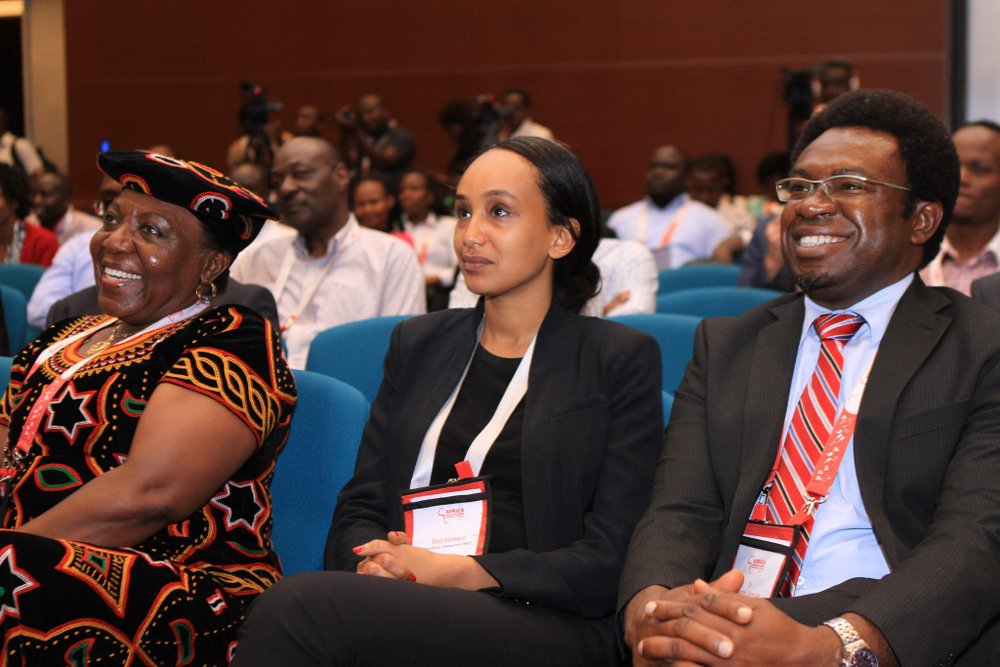
The 3-day conference was co-hosted by Rwanda’s Ministry of Health and Amref Health Africa, to discuss the progress made toward UHC in Africa and accelerate indigenous solutions to address some of the continent’s greatest health challenges. The conference brought together over 1,500 participants, including health ministers, the private sector and civil society leaders, representatives from multilateral organizations, media and vital voices from 49 countries.
On the first day of the conference, President Paul Kagame received the “UHC Presidential Champion” award for his relentless political leadership and accountability to advance UHC in Rwanda and serving as an example for the region. In the past few years, Rwanda has significantly improved its focus on health care and managed to bring 90% of its population under the popular community-based insurance scheme. “Thank you Amref Health Africa for this recognition, on my behalf and on behalf of the people of Rwanda. We owe this progress to partners like you who have joined forces with us in our journey to deliver a dignified and healthy life for all Rwandans,” said President Kagame.
Health ministers from Rwanda, Ethiopia, Kenya and Uganda also shared their countries’ progress on UHC at the meeting and reaffirmed commitment to achieve UHC by 2030, in line with the Sustainable Development Goals. “I am thankful to my counterparts and political leaders from other countries who have participated in this very important conference. Africa stands at a critical juncture on the path to universal health coverage – it is crucial that we view health system strengthening, expansion of health coverage and improvements in quality of care not as a cost to our nations, but as an investment for the future,” said Hon. Dr Diane Gashumba, Minister of Health, Rwanda.
GlaxoSmithKline (GSK), a sponsor of the conference, brought together leaders from government, NGOs and the private sector, to discuss harnessing the role of community health workers to achieve UHC. In the last six years, GSK has reinvested 20% of its profits generated in the least developed nations. This has helped support the training of 40,000 health workers and reached 11 million people across 35 countries with improved access to healthcare.
The conference consisted of scientific tracks, main plenaries, thematic symposia and interactive workshops on important topics including financing of quality health services, ensuring access to health services in conflict-affected countries and regions, and the centrality of primary health care in the UHC agenda.
The Africa Health Agenda International Conference (Africa Health 2019) is an African-led global convening, bringing together diverse stakeholders to address how Africa can accelerate progress toward UHC and to collectively chart a course forward, from commitment to action.
Today, on International Women’s Day, as we celebrate those who make up the majority of our society, build our families and are key to transformative change, this is a pivotal occasion and opportunity to think “outside the box” in order to accelerate gender equality. As stressed by UN Secretary-General, Antonio Guterres, it is a pressing priority:
{“On present trends, it will take two centuries to close the gender gap in economic empowerment. I do not accept a world that tells my granddaughters that economic equality can wait for their granddaughter’s granddaughters. Our world cannot wait.”
}
This year, the Day is commemorated under the theme: “Think Equal, Build Smart, Innovate for Change”, a call for policy-makers, leaders from all sectors and activists to leverage the vast potential available to us through innovation. Thus, we will build solutions to remove barriers for women and girls, especially those that are left farthest behind. It is important to highlight the critical role played by education in the theme of this year. It requires to change mindsets, push the boundaries of knowledge, be smart and innovate; but to make the process more relevant to gender equality let us have more girls in sciences, technologies, engineering and mathematics.
As thrive to realize the gender-equal world envisioned in the Agenda 2030, building on our achievements, let us not forget the origins of this day.
The International Women’s Day is a result of labor movements at the start of the twentieth century in North America and across Europe. These movements sought to challenge the poor working conditions, low pay and absence of voting rights that women faced. This led to the establishment of the first National Women’s Day in 1909. In the following years, UN Member States made several commitments for gender equality, such as the Convention on the Elimination of all Forms of Discrimination against Women (1979), the 1993 Declaration on Ending Violence against Women (VAW), the 1995 Beijing Declaration and Platform for Action as well as the set of UN Security Council Resolutions on women and peace and security.
These global commitments, and others at regional and national levels, guide the efforts in fighting gender-based violence, an issue that still affects one out of three women worldwide. They also provide possibilities to ensure equal economic opportunities for women and men, unleashing a potential to add up to $28 trillion per year to the global Gross Domestic Product, boosting the global economy by a third. This amount represents 4 to 5 times the annual financial needs to achieve the Sustainable Development Goals. Therefore, gender equality is not only a human right but it is also an economic imperative. No other policy measure would have such a tremendous positive impact on our economic fortunes. It would secure equal access to services for all, including the 740 million women who make their living from the informal economy. The deliberate implementation of these commitments offers a clear pathway towards development as shown by the example of countries like Rwanda.
Rwanda’s ambitions set under its Vision 2050 and National Strategy for Transformation (NST1) 2017-2024, makes gender equality a key determining indicator to measure the achievement of its development targets. The role of women in the country in relation to peacebuilding, governance and leadership foster a more inclusive economic development. According to the IMF2, Rwanda’s GDP growth rate averaged 2.2 percentage points above the EAC and sub-Saharan African between 2005 and 2014 with evidence that fostering gender equality has contributed 1⁄2 percentage points to this growth differential.
The country’s rank in the World Economic Forum 2018 Gender Gap Report, 6 out of 144 countries, proves that the nation’s efforts to put women at the forefront of its development is widely recognized. Hence, the great strides that many countries have made in mainstreaming gender equality in various sectors, should be acknowledged, but increased efforts to maintain and accelerate them are needed.
Inequality between women and men is one of the greatest challenges to sustainable development, so let us not give it as a toxic legacy to future generations. They deserve a better heritage: men and women equally thriving. The avenues to make the much-needed changes are well known. It starts from respecting women’s rights and demonstrating accountability to international, regional and national commitments on gender equality and women’s empowerment. It also requires the design of human-centered and smart infrastructure, taking into consideration the particular experience of women and men, and addressing their voiced and unvoiced needs.
Examples include a new generation of infrastructure that incorporates a design of public spaces to curb sexual harassment and gender-based violence and the provision of social protection schemes that alleviate poverty for those who are unable to access basic services as well as simple measures at workplaces for better integration of women.
Inclusive technology could help close the widening gender digital divide in Africa where fewer women and girls are innovators, designers, or at the helm of technological transformations, resulting in infrastructure and services that are less likely to respond to their specific needs. Tracking and closing gender gaps, including in emerging sectors of development, is critical to building more inclusive, peaceful and resilient societies. For instance, Artificial Intelligence (AI), a critical in-demand skillset of the future, which only attracts 22% of female professionals, compared to 78% male, based on a LinkedIn survey. This accounts for a gender gap of 72% that has remained constant over the years and could increase if nothing is done to reverse the trend.
Gender equality is paramount to UN work. The ONE UN family remains dedicated to its partnership with the Government of Rwanda, all Development Partners, the private sector, the civil society and academia to ensuring that women and girls are equally included in all sectors of development and humanitarian response settings. Our United Nations Development Assistance Plan (UNDAP 2018-2023) is anchored on a strong gender strategy. This supports mainstreaming gender across all its components. Within that framework, the UN will continue to leverage the expertise of its 22 agencies and its global network to support the implementation of the important laws and policies on gender equality and women’s empowerment and the contribution of women and men, boys and girls to innovation leading to transformative change.
This is a more important and relevant endeavor in a country like Rwanda which aims to become a knowledge-based economy by 2035.
The UN is engaged in this much needed journey with enthusiasm and our strong conviction that with a shared vision and committed leadership, the right mindsets, policies and strategies, innovation and creativity will transform our world, Africa and Rwanda to a better place for all, where girls and women will thrive equally with boys and men. The examples below in cooperation with national stakeholders show that the option of inclusivity be it looking at disabilities, at gender equality or any other factor of discrimination, is not only necessary but also feasible.
The UN in Rwanda has been supporting innovative approaches to gender equality in different settings. These include the eradication of gender barriers in education, through the enhanced use of ICT to transform teaching and learning; the promotion of climate-smart agriculture and use of digital technologies to empower women farmers; or the promotion of social entrepreneurship and the development of innovative solutions to provide sexual & reproductive health information and services among the youth, and combat pressing challenge of teenage pregnancy.
Building on the commendable progress already achieved, we encourage all development partners, public and private sector institutions, and the citizens of the Republic of Rwanda to continue to actively contribute to the great progress we have made in the empowerment of women and girls.
{{Happy International Women’s Day to all the women in Rwanda. Turi kumwe! Abishyize hamwe ntakibananira! }}
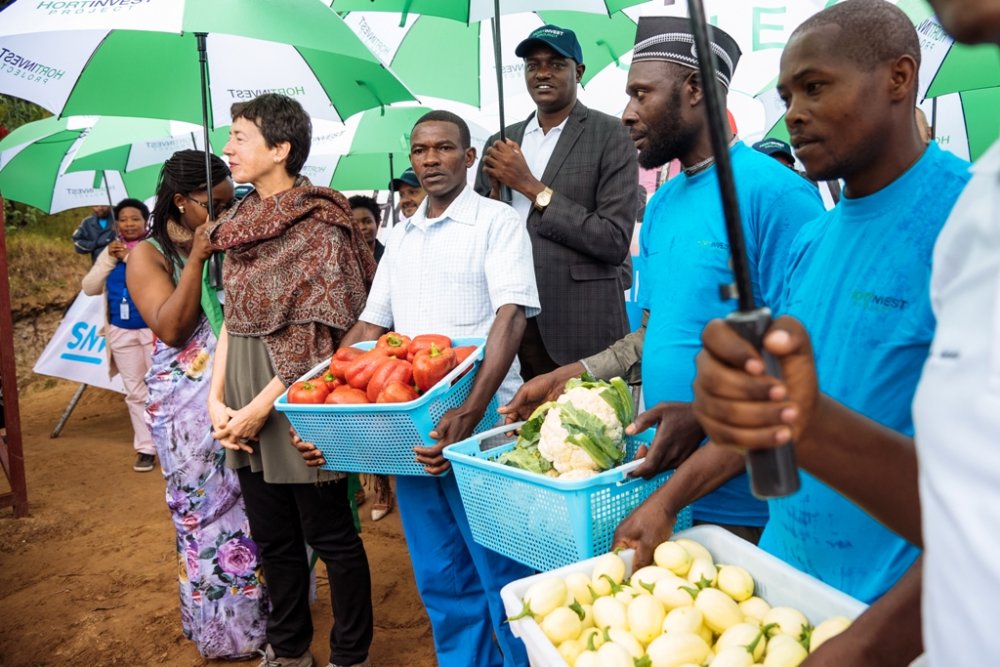
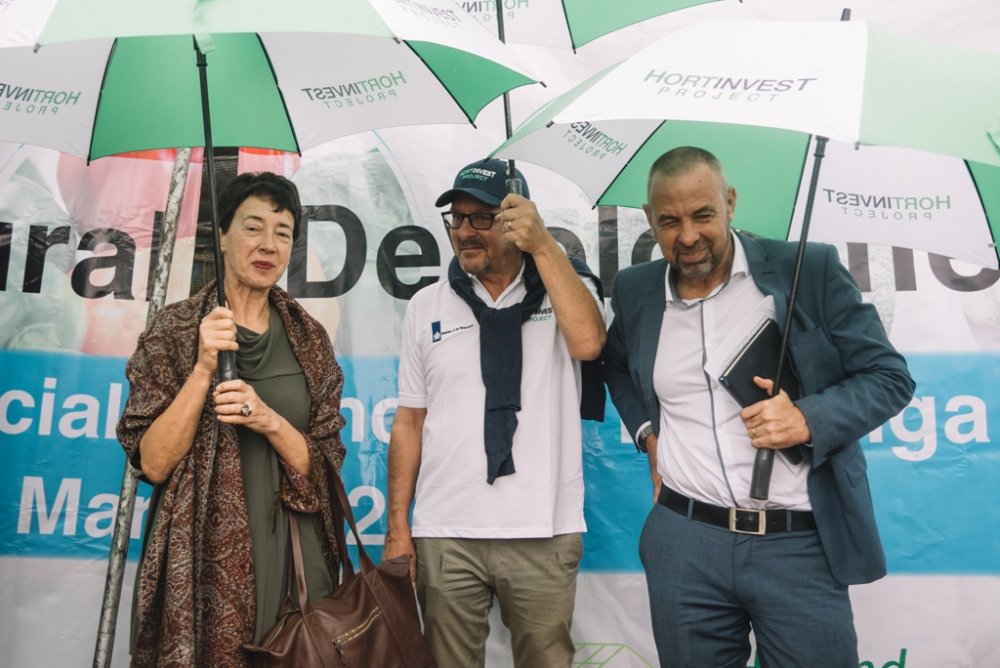
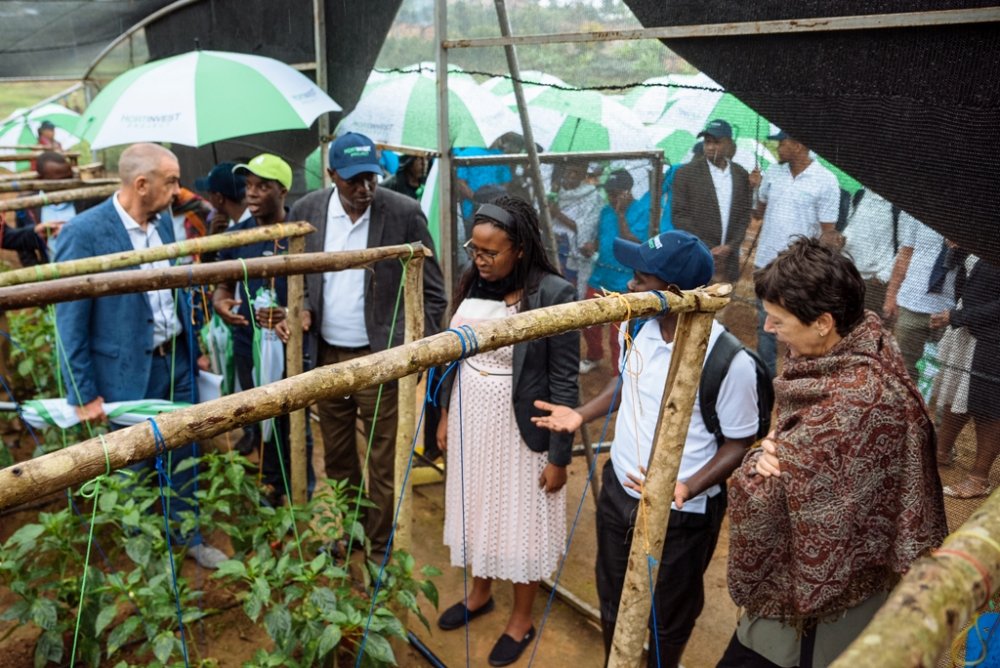
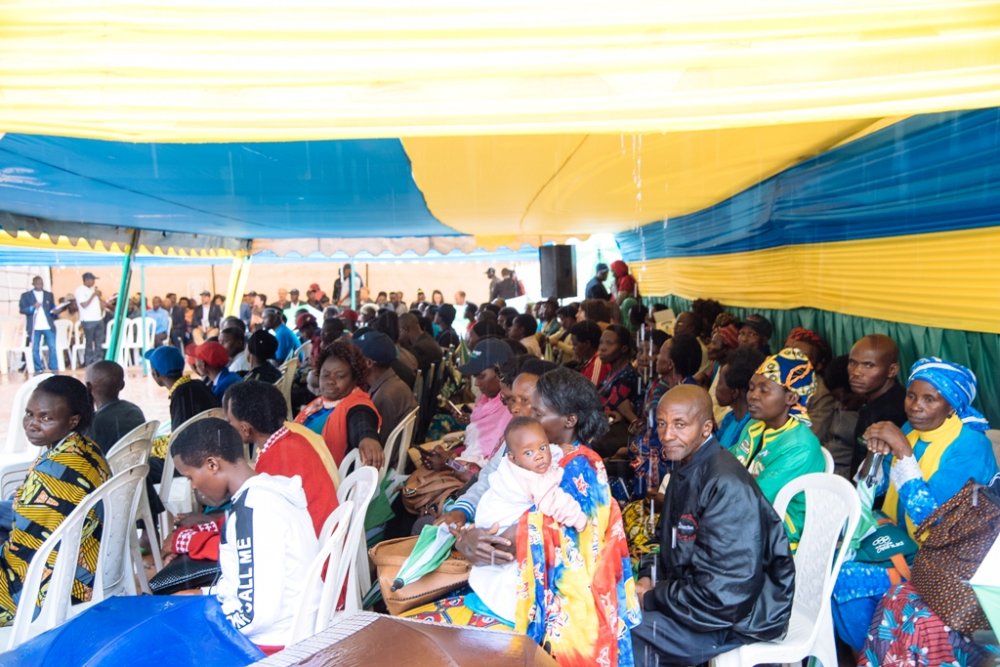
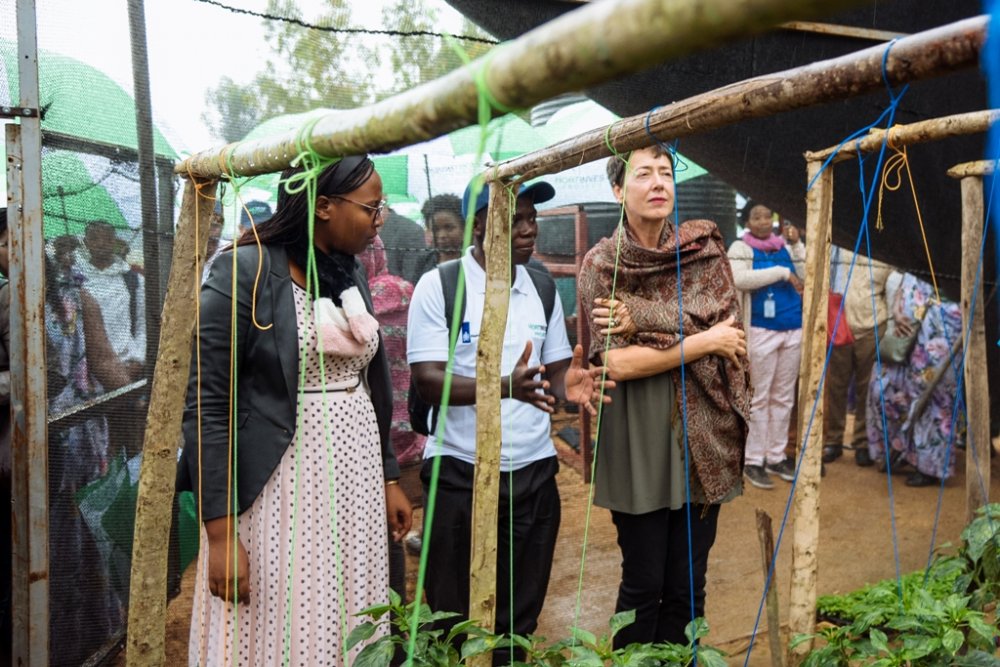
The project which started last year was officially inaugurated recently in Muhanga district, Southern Province and will extend support to farmers in Karongi, Rutsiro, Nyabihu, Rubavu and Ngororero districts.
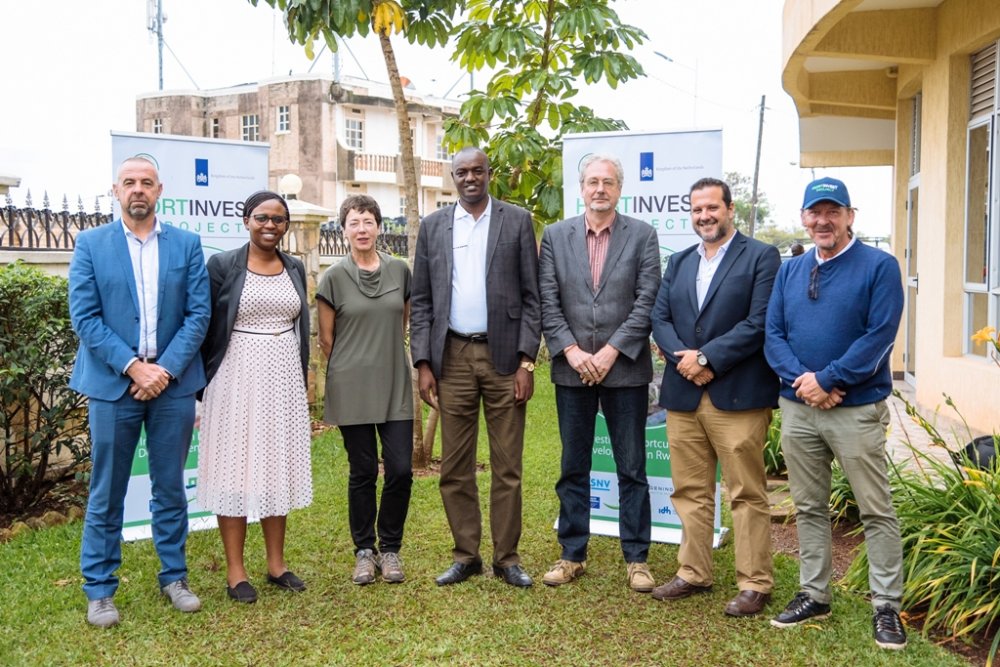
Dubbed Hortinvest, the project was funded by Netherlands’ embassy to Rwanda. It is implemented by SNV Rwanda in partnership with the Ministry of Agriculture and Animal Resources (MINAGRI) and other partners, ending in 2021 .
Damien Ngwabije, one of farmers in Karongi district who benefited from the project at the outset said that the project supports them get skills in modern farming of onions, tomatoes, tree tomatoes, pineapples, Passiflora edulis and pepper among others.
“Before the project we planted in a disorganized way but today we have got enough training. We learn that the secret to increased yields lies in giving attention to crops, timely weeding, and mulching,” he said.
Through the project, farmers get training on advanced practices of planting fruits and vegetables, using compost and other fertilizers, land preparation, combating pests and proper harvest handling.
They are also trained in managing farmers’ cooperatives to increase yields and commercialization of farming.
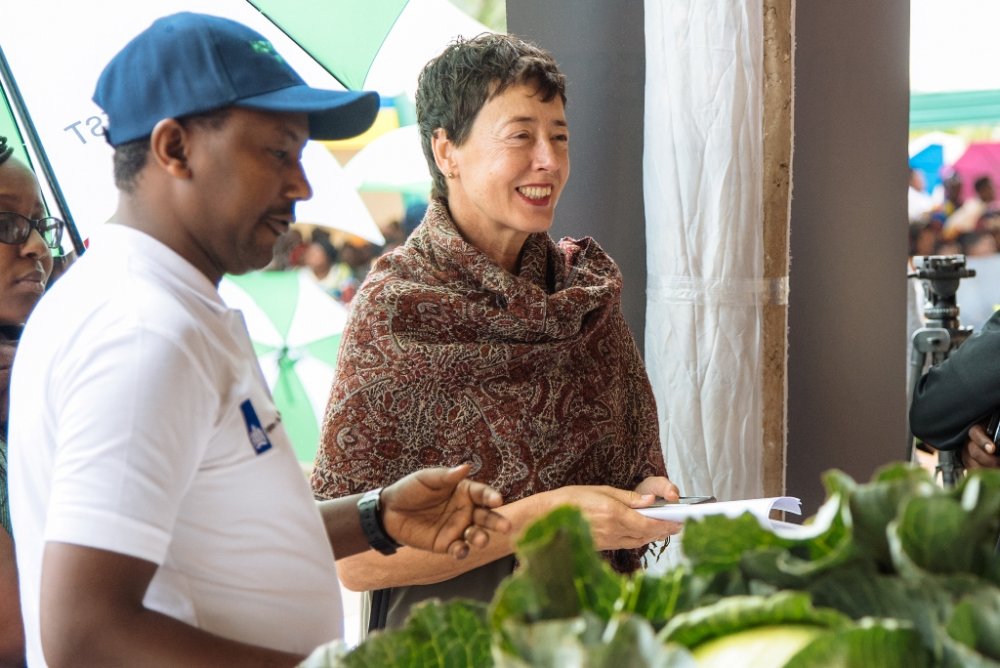
Netherlands’ ambassador to Rwanda, Frédérique de Man said that both countries enjoy long standing cooperation in the promotion of horticulture. He expressed optimism that the project will especially combat stunting among children, improve farmers’ incomes and national economic performance.
“Firstly, the project aligns with policies to combat malnutrition. You know that such issue requires special efforts to be addressed. Secondly, it is about increasing value to agricultural yields through various projects of planting fruits and vegetables,” she said.
The 2015 Demographic and Health Survey (DHS) conducted once per five years indicated that 38% of children under five are suffering from stunting.
Amb. Frédérique said that farmers have been acquainted with necessary knowledge within a year observing that farmers still need a lot to increase the value of their produce to attract local and international markets.
Sandrine URUJENI, the Deputy Chief Executive Officer at National Agricultural Export Development Board (NAEB) said: “The project is promising, demonstrates the importance of horticulture on the side of increasing exports and combating malnutrition.”
The national airline has issued a statement on its Twitter Wall to apologize to its passengers.
“We wish to inform Rwandair passengers that due to strikes at Kenya International Jomo Kenyatta Airport (JKIA), our flight from WB452 to Nairobi to Entebbe is postponed. Travelers assigned to Entebbe will be put on flight WB434. We apologize for the inconvenience,” reads the tweet.
Kenya’s strike began on Tuesday night. The unions are opposed to a plan whereby Kenya Airways, a loss-making company, would take over the management of Kenya Airports Authority (KAA) airports.
Aviation workers also complain about the hiring of unfair personnel, low pay and the fact that the proposed takeover would put their jobs at risk.
The agreement was signed between Finance Minister Uzziel Ndagijimana and Dr. Sidi Ould Tah, CEO of the Arab Bank for Economic Development in Africa (BADEA).
“This loan will be used for the electrification of rural areas in both Nyamagabe and Nyaruguru Districts in the South Province,” the minister told the press, expecting that this loan granted at a very low-interest-rate is enough to connect to the network.
An additional 24,000 households will have been connected by March 2023.
The Minister of Infrastructure and Energy, Ambassador Claver Gatete revealed that the two districts with a population of 846,000 inhabitants will have 33 to 52% household connections by 2023.